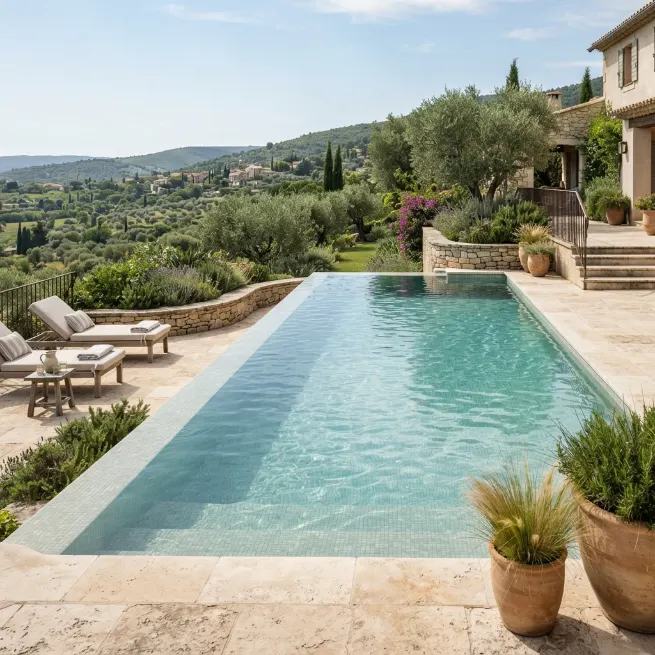
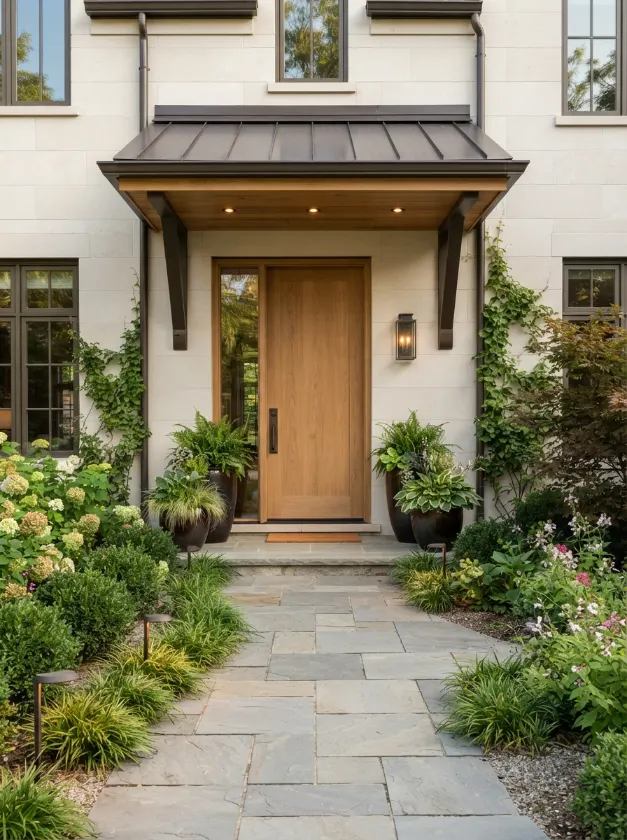
18 Brilliant Deck Privacy Ideas for a More Comfortable Outdoor Space
Deck privacy means blocking specific sightlines — a neighbour’s window, the street, or an overlooking balcony — rather than walling off the whole deck. A deck privacy screen works best when it targets only what can actually be seen, so before buying anything, stand and sit on the deck at different times of day and note exactly which views need blocking.
A deck should feel like an extension of your home, not a place where you constantly wonder whether the neighbors can see you. The right deck privacy ideas can make an outdoor area feel calmer, more comfortable, and much more intentional without turning it into a completely enclosed space.
Privacy does not always mean building a tall solid wall around your deck skirting too. In many homes, the best solution comes from combining screening, plants, furniture placement, shade, and architectural details. This creates separation while still allowing sunlight, fresh air, and an open view.
Whether you have a small elevated deck, a spacious backyard design entertaining area, or a narrow outdoor platform, there are plenty of ways to create a more private setting while keeping the space stylish.
- Slatted screens
- Fences and walls
- Planters and green screens
- Pergola panels
- Outdoor curtains
- Layered combinations
1. Add a Slatted Privacy Screen

A vertical slatted screen is one of the most versatile ways to make a deck feel more secluded. The narrow gaps between the boards allow light and airflow through while reducing direct views from neighboring properties.
For a contemporary look, use warm natural wood with evenly spaced vertical boards. Dark-stained timber can create a more dramatic appearance, while pale cedar gives the deck a lighter and more relaxed feel.
A slatted screen does not have to cover the entire deck. Installing one strategically beside the seating area can provide enough separation without making the outdoor space feel boxed in.
For a family that eats outside most evenings, a single slatted panel beside the dining chairs can block a neighbour’s kitchen window without closing off the garden.
Louvered screens take the same idea a step further: angled slats block a direct line of sight while still letting light and breeze pass through. With adjustable louvres, you can tilt them down for privacy and glare control during the day, then open them up again for breeze and a view of the sky.
2. Create a Green Privacy Wall

Plants can soften the appearance of a deck while providing natural screening. Tall ornamental grasses, bamboo varieties suitable for your climate, evergreen shrubs, or climbing plants can all help create a living barrier.
Large planters are especially useful when you cannot permanently alter the property. Position several containers along the exposed edge of the deck and choose plants with different heights and textures.
The result is more than privacy. A green screen introduces movement, color, and a stronger connection between the deck and the surrounding garden.
For cover that lasts all year, start with evergreens: columnar plants from the arborvitae and cedar family hold their shape through winter, while ornamental grasses and seasonal flowers add movement in summer but thin out when cold weather arrives. Clumping bamboo can work in a container, but avoid running bamboo, which spreads aggressively and is hard to remove once established. On a raised deck, remember that a large planter is far heavier when its soil is wet, so check the deck can carry the load and plan for regular watering, since containers dry out faster than garden beds. A renter who cannot fix anything to the structure, for example, can simply line up three tall planters along the exposed edge to screen a morning coffee spot.
3. Use Tall Planters Around the Seating Area

Sometimes the entire deck does not need privacy. You may simply want to shield a dining table, lounge chair, or conversation area.
Tall planters make this easy.
Choose oversized containers and combine them with upright plants to create visual boundaries around the seating zone. This approach works particularly well for smaller decks because the planters can define separate areas without requiring a permanent structure.
For a polished look, repeat the same planter finish throughout the space rather than mixing too many styles.
Two tall planters flanking a pair of lounge chairs, for example, can give a retired couple a sheltered reading corner without screening the whole deck.
4. Install a Pergola With Privacy Panels
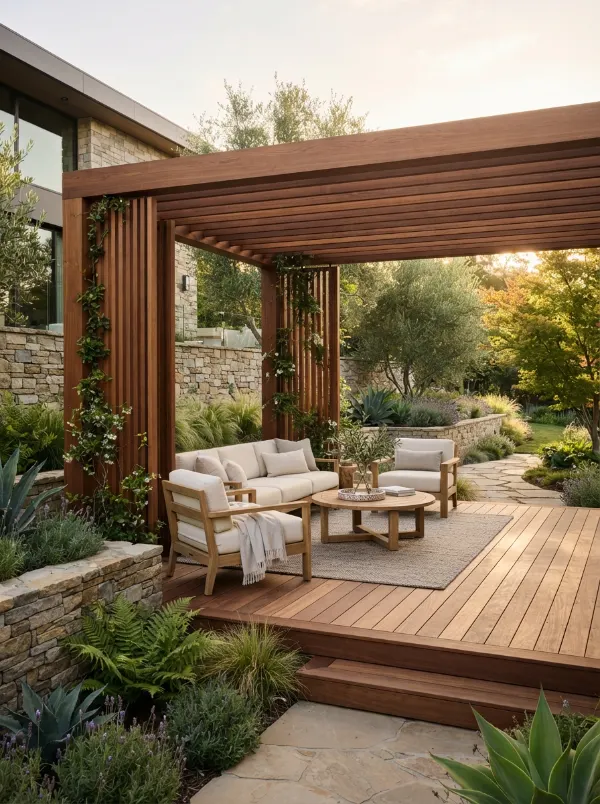
A pergola can provide shade from above while also creating opportunities for privacy along the sides.
Add narrow timber panels, climbing plants, outdoor curtains, or decorative screens to one or two sides. This creates a more intimate outdoor room while keeping the top partially open.
A wood pergola works beautifully with neutral outdoor furniture, natural stone, textured cushions, and warm lighting.
If the deck is used for evening entertaining, add subtle lighting to the pergola structure for an inviting atmosphere.
Do not forget the view from above: a retractable canopy, a shade sail, or drop-down shades can block sightlines from an upper-storey window or a balcony overlooking the deck. An open pergola alone does not block side views, so pair overhead cover with side panels on the exposed side. A family whose dining table sits below a neighbour’s upstairs window, for example, gains far more privacy from a canopy plus one side panel than from a pergola roof on its own.
5. Hang Outdoor Curtains

Outdoor curtains can make a deck feel surprisingly private without requiring a permanent wall.
Install weather-resistant curtain panels along a pergola, covered deck, or sturdy overhead frame. Keep them open during the day and close them when you want more privacy.
Light-colored fabric creates an airy appearance, while charcoal, taupe, or warm beige can give the deck a more sophisticated character.
Choose outdoor-rated fabric designed to handle moisture and sunlight so the curtains remain practical as well as attractive.
For the most flexibility, try two layers: sheer curtains by day to soften the view while keeping light, and a heavier opaque layer drawn at night for full privacy. In wind, keep panels tied back with sturdy tie-backs so they do not billow or tangle, and choose a shorter drop on the windward side. Curtains fail on a fully exposed, windy deck with no overhead frame, so there a fixed screen or a row of planters will hold up far better. A couple who hosts evening drinks on a sheltered patio, for example, can close the opaque layer only after sunset and leave the sheers open all day.
6. Position Furniture to Improve Privacy

Privacy is not always a construction project. Sometimes changing the arrangement of your furniture can make a major difference.
Instead of placing every chair toward the garden or street, create a conversational arrangement where seating faces inward. A sectional sofa can work particularly well because its back naturally creates a visual barrier.
Place taller furniture, planters, or storage pieces along the most exposed side and keep the main seating area behind them.
This simple change can make the deck feel more private without adding another structure.
Turning a sofa so its back faces the street, for example, can shield a morning coffee spot from passing walkers without building anything new.
7. Combine Wood and Greenery

One of the most attractive approaches is to combine a solid material with plants.
For example, a warm timber privacy panel can form the foundation while climbing vines or tall planters soften its edges. This prevents the screen from looking too heavy and helps it blend with the surrounding landscape.
The combination works across several design styles, from modern and contemporary decks to rustic and organic outdoor spaces.
Keep the palette restrained for a more expensive-looking result. Natural wood, muted greenery, stone, and neutral textiles work particularly well together.
A timber panel softened with tall planters, for example, can screen a reading chair from a side path while still letting dappled light through the leaves.
8. Try a Decorative Outdoor Screen

Privacy panels do not have to look like fences.
Decorative metal screens with geometric patterns can provide partial screening while becoming a design feature in their own right. They work especially well behind a dining area, outdoor sofa, or fire feature.
Choose a pattern that complements the architecture of your home rather than competing with it.
A simple geometric design can give a modern deck a sophisticated architectural detail while still allowing light to pass through.
Think in types: a solid screen gives full cover but blocks light and breeze, a slatted screen keeps airflow, a louvered screen adjusts that balance, and frosted glass or polycarbonate lets light through while blurring outlines. At seated eye level, choose a denser pattern where neighbours can see straight in, and a more open pattern above that line. A dense patterned panel behind a dining table, for example, can shield seated guests from a nearby path without darkening the whole deck.
9. Use a Privacy Fence as a Design Feature

If your deck needs stronger screening, a privacy fence can be designed to look intentional rather than purely functional.
Horizontal timber boards create a clean contemporary appearance. Vertical boards can make a fence feel taller and more architectural.
You can also break up a long fence with planter boxes, built-in seating, lighting, or sections of decorative screening.
Instead of treating the fence as something separate from the deck, connect its materials and colors with the rest of the outdoor design.
For the build itself, board-on-board gives the most complete block because each board overlaps the next, while shadowbox alternates boards on either side of the rails so air moves through and the fence looks finished from both sides. Where only one neighbour overlooks the deck, a partial section on that side alone often does the job. Remember that a ground-level fence does not screen a raised deck, since people on the deck look over it, so raise the screen to deck level instead. A shadowbox section on the neighbour side, for example, can give a family privacy at the table while keeping the garden feeling open.
10. Add a Green Screen With Climbing Plants

Climbing plants can transform a simple frame into a living privacy screen.
Install a sturdy trellis along the exposed side of the deck and train suitable climbing plants across it. Depending on your climate, options may include jasmine, clematis, climbing roses, or other locally suitable varieties.
The advantage is that the screen becomes softer and more natural over time.
Before planting, check the mature size and growing behavior of the plant. A beautiful privacy screen should not become a maintenance problem later.
For year-round cover, lean on evergreens first: columnar plants from the arborvitae and cedar family keep their shape through winter, while climbers such as jasmine, clematis, and climbing rose add scent and flowers in season but may thin out when cold weather arrives. Ornamental grasses give quick summer height, and clumping bamboo can work in a container — but avoid running bamboo, which spreads aggressively and is hard to remove once established. On a raised deck, a large planter is far heavier when its soil is wet, so check the deck can carry the load and plan for regular watering, since containers dry out faster than garden beds. A trellis of jasmine beside a breakfast table, for example, can screen a morning seating spot while scenting the air.
11. Build a Narrow Privacy Wall

When space is limited, a narrow privacy wall can provide a useful amount of separation without consuming much floor area.
A low or partial wall can be paired with a raised planter, timber screen, or decorative panels. This layered approach often looks more sophisticated than a single tall barrier.
Use the wall to frame the deck rather than surround it completely.
That distinction helps maintain the feeling of an outdoor room rather than an enclosed courtyard.
For seated privacy without blocking the sky, try a half-wall of about 36 to 42 inches, topped with integrated planters or low lighting so it reads as a design feature rather than a barrier. If you cannot build anything new, fix solid railing infill, a bamboo roll, mesh, or a hedge panel to the existing railing instead. A low wall with planters along one edge, for example, can shield seated guests from a neighbouring garden while leaving the view of the sky completely open.
12. Create a Private Outdoor Dining Zone
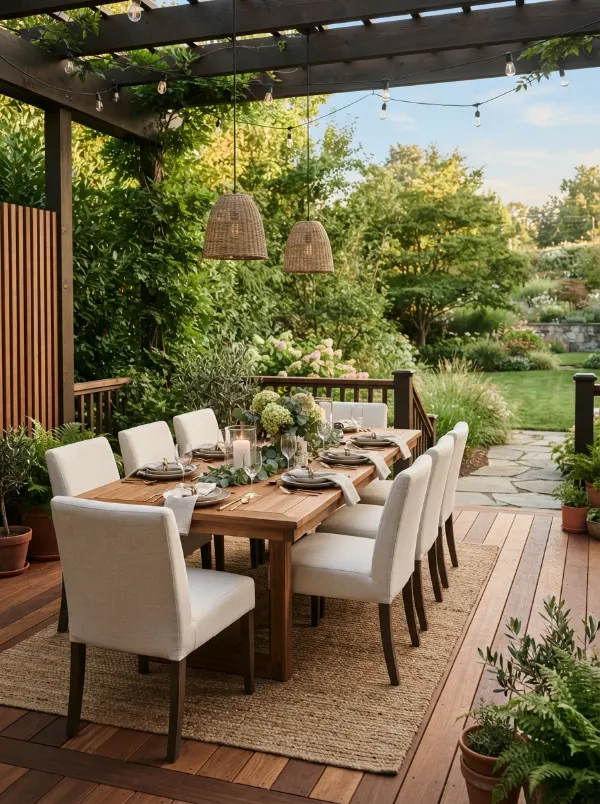
If your main concern is privacy while eating, focus the screening around the dining table instead of the entire deck.
A pergola, tall planters, outdoor curtains, or a partial screen can create a defined dining area.
Choose a round or rectangular table according to the available space, then position greenery or screening behind the chairs most exposed to neighboring views.
This makes the dining area feel intentional and gives the deck a stronger sense of purpose.
A tall planter behind one end of the table, for example, can shield diners from a side path while leaving the rest of the deck open for conversation and views.
13. Add Layered Privacy Instead of One Large Barrier

Layering is often more effective than relying on one massive privacy feature.
For example, combine a medium-height wood screen with tall planters and a pergola. Each element blocks part of the view, but together they create much stronger privacy.
Layering also adds depth.
Instead of seeing one flat wall, you see different textures, heights, shadows, and materials. This makes the deck more visually interesting.
Visual screening plus gentle sound masking makes a deck feel secluded: a small water feature beside the seating area, for example, can soften street noise and make evening conversation feel far more private.
14. Use Lighting to Create Evening Privacy

Outdoor lighting can influence how private a deck feels after sunset.
Rather than using one bright overhead fixture, layer warm lighting throughout the space. Add subtle lights to steps, planters, railings, walls, or pergola posts.
Avoid excessive brightness directed toward neighboring properties. The goal is to create a comfortable glow within your own outdoor area.
Warm illumination can make a screened deck feel particularly inviting during evening gatherings.
Low lights along a screened seating corner, for example, can let a family enjoy dinner outside after dark without lighting up the whole garden for neighbours to see into.
15. Make a Small Deck Feel More Private

Small decks can benefit from privacy improvements even more than large ones because every design decision is visible.
Use slim vertical screens, narrow planters, compact furniture, and wall-mounted lighting. Avoid filling the entire perimeter with bulky structures.
A small deck usually benefits from one strong privacy feature combined with a few softer elements.
For example, a narrow slatted panel behind a compact sofa can provide enough screening while keeping the remaining sides visually open.
Movable or folding screens are ideal here because they can be set out only when needed and stored flat afterwards, and a corner nook works well: place a bench in the corner with a stepped screen beside it so the seating feels enclosed without screening the whole deck. Screen just one zone — the chair or table that actually faces the overlooked side — and keep doors, stairs, and walking routes clear so the deck still feels easy to move through. A folding screen pulled around a single reading chair, for example, can give a renter a private corner on a tiny balcony deck without blocking the door.
16. Match the Privacy Design to Your Home

The most successful privacy solution usually feels connected to the architecture of the house.
A modern home may suit clean horizontal or vertical timber screens. A traditional property may look better with painted wood, latticework, or structured greenery.
Look at the existing exterior materials before choosing your privacy treatment.
Repeating one or two colors from the house can make the deck feel like a planned part of the property rather than an addition.
A timber screen stained to match the house trim, for example, can shield a seating area from the street while looking like it was always part of the home.
17. Keep Privacy Comfortable, Not Completely Closed
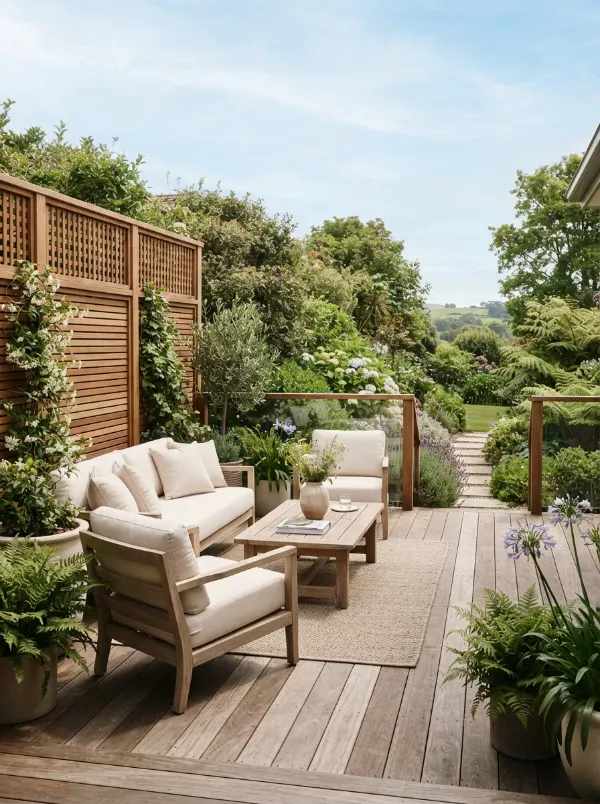
The purpose of privacy is to make the deck more comfortable, not to eliminate every connection with the outdoors.
Leave some openings where possible. Preserve views toward attractive parts of the garden and allow natural light to enter.
A partially screened deck can often feel more relaxing than a completely enclosed one because it gives you protection without removing the sense of being outside.
Think about where you actually need privacy and screen those areas first.
To keep light, choose the light-keeping set first: slatted screens, lattice, sheer curtains, frosted glass or polycarbonate, and open pergola roofs all blur a view without shutting out daylight, while a solid wall trades that brightness for complete cover. A lattice panel with sheer curtains behind a breakfast table, for example, can soften a neighbour’s view while keeping the morning sun.
18. Choose Materials That Age Well Outdoors

A privacy structure is exposed to weather, so material choice matters.
Wood brings warmth and character but may require periodic maintenance. Powder-coated metal can provide a more contemporary appearance with relatively straightforward upkeep. Composite materials can also be useful where low maintenance is a priority.
Whatever you choose, consider sunlight, rain, humidity, cleaning requirements, and the overall style of the property.
A beautiful screen is much more useful when it remains attractive after years of outdoor exposure.
A cedar screen beside a sunny seating area, for example, can stay handsome for years with an occasional wash and re-oil, while a low-maintenance metal panel beside the same chairs keeps its finish with little more than cleaning.
How to Choose the Right Deck Privacy Solution
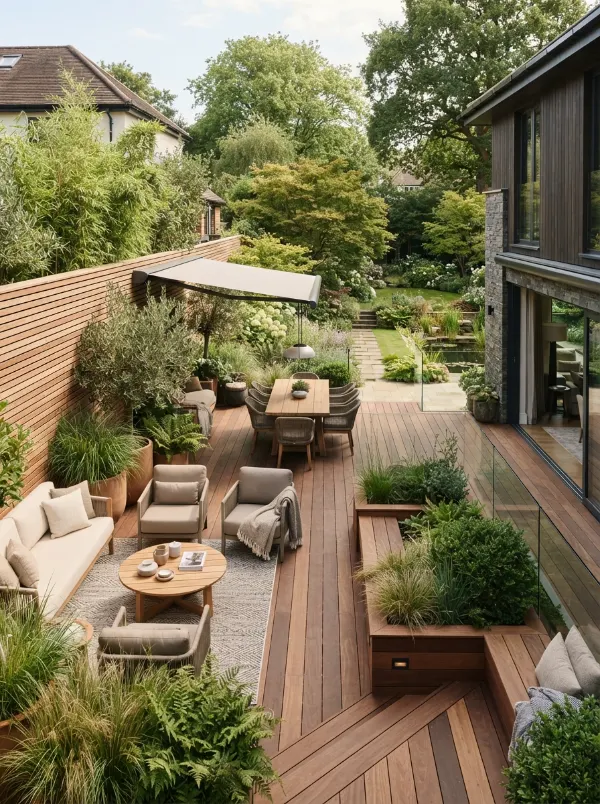

Before buying materials or starting construction, look at the deck from different positions.
Stand where you normally sit. Then look toward neighboring properties, nearby roads, upper windows, and other areas from which the deck may be visible.
Ask yourself three questions:
- Where is privacy actually needed?
- Do I want complete screening or partial separation?
- Which areas should remain open for light and views?
Once you know the answers, the right solution becomes easier to identify.
For a small privacy problem, planters or curtains may be enough. A larger visual exposure may call for a pergola, slatted wall, fence, or combination of several elements.
On a raised or second-storey deck, start higher: a ground-level fence will not help, so use taller screens fixed at deck level, pergola side panels, screens attached to the railing, and overhead cover for views from above, while also checking what can be seen from below through open railings or gaps.
On a small deck, screen only the seating spot that faces the overlooked side, using slim panels, narrow planters, or a folding screen, and leave the rest open so the space still feels roomy.
When only one neighbour overlooks the deck, screen that side only — a single well-placed panel or planter row there usually gives more privacy than low screening all around, and it keeps light and views from the other sides.
Work up the budget ladder in order: start with outdoor curtains, then a bamboo roll, then lattice, then a slat screen, and finally a built-in wall — and price the full job each time, including posts, supports, fixings, and hardware, not just the panel or fabric itself.
Finally, respect the practical limits: tall screens catch wind and need solid fixings, a large wet planter can be very heavy on a raised deck, and screen height, placement, and permits are governed by local rules and any homeowners association — so check your local rules before building.
| Option | Privacy level | Light/airflow | Cost tier | Best for |
|---|---|---|---|---|
| Slatted screen | High, partial | Good | Mid-range | Everyday seating areas |
| Solid fence/wall | Very high, full | Low | Mid to high | Maximum screening on one side |
| Outdoor curtains | Adjustable, partial to full | Good when open | Low | Flexible, sheltered decks |
| Louvered screen | Adjustable, high | Good, adjustable | Mid to high | Seating needing light control |
| Planters/green wall | Medium, grows over time | Good | Low to mid | Renters and soft screening |
| Frosted glass or polycarbonate | High, blurred | Good for light, less airflow | Mid to high | Bright decks needing cover |
| Pergola + panels | Medium to high, side-dependent | Good with an open roof | Mid to high | Dining and entertaining zones |
Deck Privacy FAQs
What is the cheapest way to add privacy to a deck?
The cheapest route usually starts with no purchase at all: move seating so its back faces the overlooked side, then screen only that one side. After that, outdoor curtains and a bamboo roll fixed to the existing railing are usually the lowest-cost buys, followed by lattice, with a built-in wall the most expensive step — and remember to price fixings and supports, not just the panel or fabric, before comparing options.
How can I add privacy to a deck without blocking light or airflow?
Choose screens that blur a view instead of sealing it off: slatted screens, lattice, louvered screens with the slats tilted open, sheer curtains, and frosted glass or polycarbonate all keep daylight coming through, while gaps, slats, and open pergola roofs keep air moving. Screen only the overlooked side and only up to seated eye level where possible, so the rest of the deck stays bright and breezy.
How do I add privacy to a raised or second-storey deck?
Start at deck level, not ground level: a ground-level fence will not screen people standing on a raised deck, so fix taller screens to the deck itself, add side panels to a pergola, attach screens or solid infill to the railing, and add overhead cover such as a canopy for views from above. Also check what can be seen from below through open railings or gaps, and make sure tall screens and heavy planters are firmly fixed and properly supported.
How high should a deck privacy screen be, and do I need a permit?
For seated privacy, a screen that reaches just above seated eye level on the overlooked side is usually enough, while standing privacy needs a taller screen — but the exact height limit, and whether a permit is needed, varies by location and by any homeowners association rules, so check your local rules before building. Movable planters, curtains, and folding screens usually avoid the fixed-structure rules, while a tall built-in wall is the most likely to need approval.
Do outdoor curtains really work for deck privacy, or does wind ruin them?
Yes, on a sheltered deck with a sturdy overhead frame — and that is the key condition. Use two layers, sheer by day and a heavier opaque layer at night, with sturdy tie-backs and a shorter drop on the windward side so the fabric does not billow constantly. On a fully exposed, windy deck with no overhead frame, however, curtains will flap, tangle, and leave gaps, so a fixed screen or a row of tall planters is the better choice there.
Final Word
Good deck privacy ideas do more than block unwanted views. They help turn an exposed outdoor area into a place where you can relax, dine, read, entertain, and spend time comfortably.
The best design does not necessarily create the tallest wall. It creates the right amount of separation using thoughtful materials, greenery, furniture placement, shade, and lighting.
Whether you choose a warm timber screen, a living plant wall, outdoor curtains, a pergola, or a combination of several solutions, focus on creating privacy that still feels connected to the garden and the sky.