Rock Landscaping Isn’t Boring—You’re Just Using It the Wrong Way
Rock Landscaping gets a bad reputation when it is treated as a pile of stones instead of a design material. Used thoughtfully, rocks can shape pathways, frame planting beds, create focal points, add texture, and give a yard structure through every season. The difference is not how many rocks you use; it is how intentionally you place them.
The best Rock Landscaping designs balance hard and soft elements. Smooth river stones can sit beside bold boulders, flowering plants can soften a stone border, and warm lighting can make a simple dry stream feel completely different after sunset. The goal is to create movement and contrast without making the yard look busy.
Below are ten practical directions that take the look beyond the basic “rocks around plants” approach. Each one can be adapted to a small front yard, a backyard garden, a side path, or a larger outdoor entertaining area. That flexibility is one reason Rock Landscaping works across many home styles.
1. Layered Stone Borders That Make Flower Beds Feel Designed

A curved stone border can instantly give a garden bed a stronger shape. Instead of placing identical stones in a straight line, combine larger natural rocks with smaller pieces and let the border follow the natural curve of the lawn or walkway.
This approach works especially well with cottage-style planting. Roses, grasses, low ground covers, and seasonal flowers soften the rough texture of the stone. Repeat a few flower colors through the bed so the planting feels intentional rather than scattered.
For a polished result, place the largest stones first and use smaller stones to close visual gaps. Slightly burying some pieces also makes the border feel established rather than freshly installed.
2. A Fire Pit Garden Framed With Stone Paths

One of the strongest ways to use Rock Landscaping is to make it part of an outdoor gathering area. A circular fire pit surrounded by natural stone, gravel, and stepping stones creates a clear destination without needing a solid wall.
Use large boulders around the outer edges and flatter stones where people walk. The contrast in scale gives the space depth while keeping the center visually calm. Wooden seating adds warmth against the harder materials.
Lighting can completely change the atmosphere. Low lanterns, subtle path lights, and warm illumination tucked behind rocks create a cozy evening setting. Keep the light soft and below eye level so the landscape remains the focus.
3. A Minimal Zen Garden With Raked Gravel and Stepping Stones
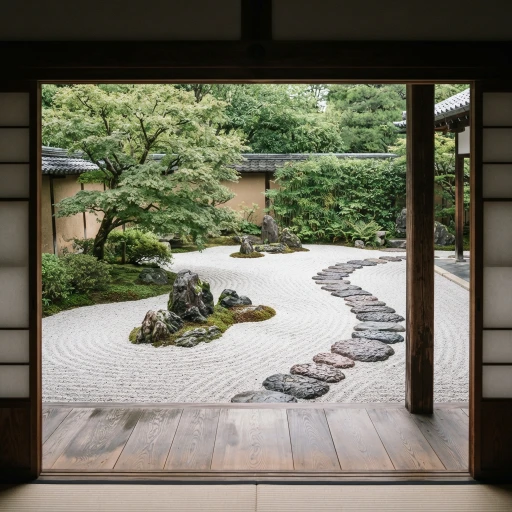
Rock Landscaping does not always need colorful flowers or a large lawn. A restrained Zen-inspired garden can use pale gravel, dark stepping stones, moss, and one sculptural tree to create a peaceful outdoor composition.
The secret is negative space. Leave open areas around the major stones instead of filling every corner with plants. Rake the gravel into gentle lines to create the impression of movement, then place stepping stones along a slightly irregular route.
Avoid making everything perfectly symmetrical. Natural asymmetry keeps the garden relaxed and prevents it from looking like a showroom. Choose a small plant palette and let texture do most of the visual work.
4. A Dry Rock Stream With Warm Evening Lighting

A dry stream is one of the easiest ways to give an awkward section of a yard a clear purpose. Shape the channel with gentle curves, make it wider in some areas, and narrow it near transitions so it resembles the movement of natural water.
Start with a few large boulders as anchors, then fill the channel with medium stones and smooth pebbles. Add grasses and low plants along the edges so the hardscape blends into the surrounding garden.
This is also an excellent place for landscape lighting. Small warm lights tucked between stones can highlight curves and create depth after dark. Hide the fixtures slightly behind plants or rocks so you see the glow rather than the hardware.
5. A Lush Rock Border With a Small Water Feature

For a softer interpretation of Rock Landscaping, surround a small pond or bubbling feature with layered stones and dense planting. The water provides reflection and movement while the rocks create a natural transition between lawn and garden.
Use large stones close to the water feature, medium rocks around the planting zone, and smaller pebbles along the outer edge. This gradual change in scale makes the composition feel more organic.
Planting should vary in height and leaf shape. Combine compact shrubs, grasses, ground covers, and flowering plants instead of repeating one plant everywhere. A slightly relaxed, abundant appearance often feels more natural than a perfectly clipped border.
6. A Colorful Stepping-Stone Path With Groundcover

A path becomes much more interesting when the spaces between stones are treated as part of the design. Place broad stepping stones through a bed of low-growing groundcover, leaving enough room for the plants to soften the edges.
Choose groundcovers that suit the light and climate of the space. Creeping thyme, sedum, or other low-growing options can work well where conditions are appropriate. Their texture prevents a stone pathway from feeling cold or overly hard.
Keep the colors coordinated. A few repeating flower shades are more effective than every color in the garden appearing at once. The result is playful, but still visually controlled.
7. A Natural Pond With a Layered Rock Waterfall

A pond can become the main focal point of a backyard when the surrounding stonework looks connected to the landscape. Instead of building a perfectly uniform rock wall, overlap stones of different sizes and partially embed some into the soil.
A small waterfall adds sound and movement, while aquatic plants soften the water’s edges. Place taller plants behind the waterfall and lower greenery near the front so the feature remains visible from the main viewing area.
For the most natural appearance, avoid lining every edge with the same size stone. Variation is what makes the installation resemble a small piece of terrain rather than a constructed display.
8. A Modern Curved Border With Two-Tone Pebbles

Rock Landscaping can also look crisp and contemporary. A curved border made from contrasting light and dark pebbles can define a lawn without making the garden feel overly rustic.
This style works especially well beside modern homes with simple architecture. Repeat one or two plant forms, such as rounded shrubs, hydrangeas, ornamental grasses, or compact evergreens, to maintain a clean rhythm.
Edging is important here. A crisp transition between lawn and stone makes the entire installation look more finished. Keep the material palette limited so the curve remains the main visual feature.
9. A Desert-Inspired Rock Garden With Sculptural Plants

For sunny, dry spaces, combine rocks with architectural plants such as agaves, yuccas, aloe, and other suitable succulents. The strong shapes of these plants pair naturally with boulders and gravel.
Use different stone sizes to create depth. A few large statement rocks can anchor the planting while smaller gravel fills the remaining spaces. Avoid placing everything at equal intervals; clustered groupings usually feel more natural.
Drainage is especially important in this type of garden. Choose plants suited to local conditions and use a well-draining planting mix where required. Good design should look attractive while also supporting healthy plants.
10. A Contemporary Layered Rock Garden With Strong Structure

The most architectural version of Rock Landscaping uses levels, stone terraces, gravel zones, planted pockets, and a defined pathway. This approach is useful when a yard feels flat or lacks a strong focal point.
Begin with the largest structural elements. These might be retaining walls, large boulders, raised beds, or stone steps. Then add medium rocks and gravel before introducing smaller plants.
Dark stone against pale gravel creates strong contrast, while evergreen shrubs and sculptural plants keep the garden visually interesting throughout the year. Let pathways remain slightly irregular so the space still feels connected to nature.
How to Make Rock Landscaping Look Expensive Instead of Random
Good Rock Landscaping is less about buying more stone and more about editing the design. Start with a limited material palette and repeat it in several areas of the yard. This simple rule gives Rock Landscaping a visual language instead of a collection of unrelated materials.
Scale matters just as much. Large rocks should act as anchors, medium stones should build transitions, and small gravel or pebbles should fill spaces. When every stone is the same size, the landscape can look flat.
Planting is the other half of the composition. Use greenery to soften edges, create height, and introduce movement. Grasses are especially useful because their fine leaves contrast beautifully with solid stone.
Lighting can add another layer after sunset. Warm path lights, hidden uplights, or small lanterns can reveal texture without overpowering the garden. Water features can do something similar during the day by adding sound and reflection.
Common Rock Landscaping Mistakes to Avoid
The first mistake is spreading rocks evenly across the entire yard without a clear purpose. Rocks look better when they define a path, frame a planting area, anchor a feature, or separate two zones.
Another common problem is using too many stone colors. Choose one main stone family and perhaps one contrasting material. Repetition creates cohesion.
Poor edging can also ruin an otherwise good design. If gravel keeps spilling into the lawn, the boundary quickly looks messy. Use suitable edging and refresh the border when necessary.
Finally, do not forget drainage. Rock areas can change how water moves through the yard. Plan slopes, drainage routes, and planting conditions before installing a large amount of stone.
Final Word
The strongest Rock Landscaping designs do not try to hide the rocks. They use them as structure and then balance them with plants, water, lighting, wood, and open space. That is what turns a collection of stones into a complete landscape.
Start with one area instead of redesigning the entire yard at once. A small Rock Landscaping project is easier to balance, maintain, and repeat. A curved border, dry stream, stepping-stone path, or small fire-pit zone can give you a clear starting point. Once the materials and shapes feel right, repeat those choices elsewhere for a connected look.
Rock Landscaping can be modern, cottage-inspired, Zen, desert-style, woodland, or completely personal. The trick is to design with the rocks rather than simply placing them around the garden