Pond Landscaping Isn’t About Water—It’s About What Happens Around It
A pond can be the most memorable feature in a garden, but the water itself is only the beginning. The planting, paths, seating, stones, lighting, and transitions around the edge determine whether the space feels natural, polished, peaceful, or overly constructed. Great Pond Landscaping makes the pond feel connected to the whole outdoor room rather than placed in the middle of it.
1. Design the Pond Edge as a Living Transition
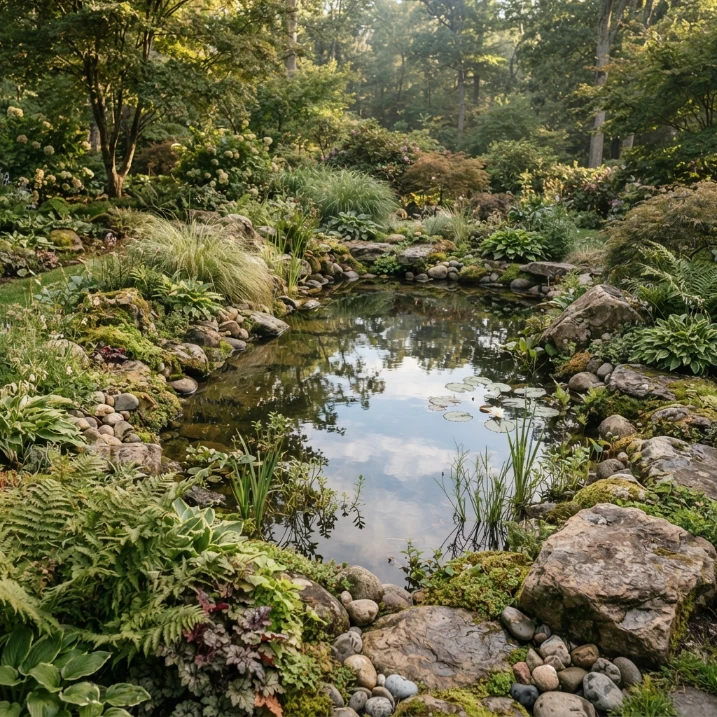
A hard, uninterrupted border can make a pond look like a separate object. Instead, soften the edge with layers of planting, irregular stones, gravel, and groundcover. Use different heights: low plants near the water, medium foliage behind them, and a few taller shapes farther back. This creates a gradual transition from water to garden.

2. Build a Natural Stone Composition
Stone gives the pond structure and helps it feel rooted in the landscape. Combine two or three related stone colors rather than using many competing materials. Large feature rocks can anchor corners, while smaller stones fill gaps and create a believable shoreline. Avoid placing every stone at the same distance or angle.
3. Add Planting That Frames the View
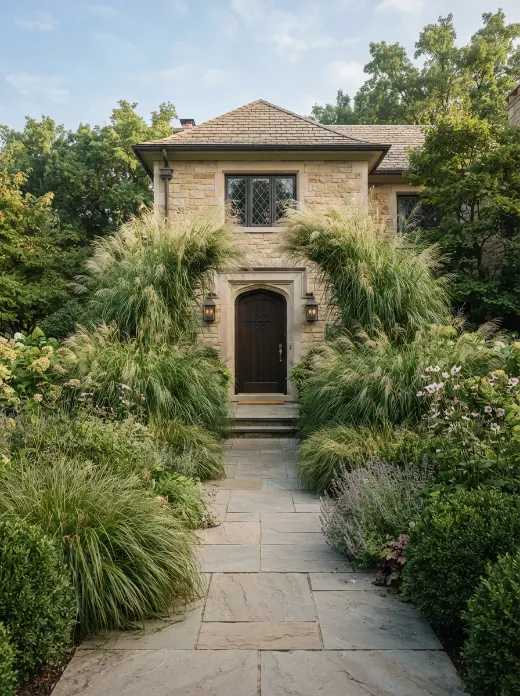
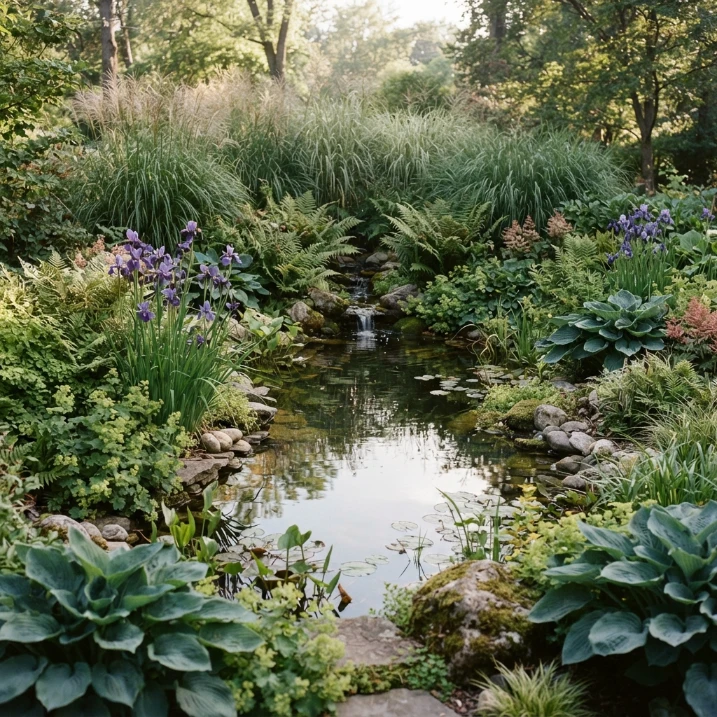
Plants should guide the eye toward the water without hiding every part of it. Ornamental grasses, ferns, hostas, iris, rushes, and moisture-loving perennials can create a soft frame. Repeat a few plant types throughout the garden so the pond feels connected to nearby beds instead of becoming a disconnected theme.
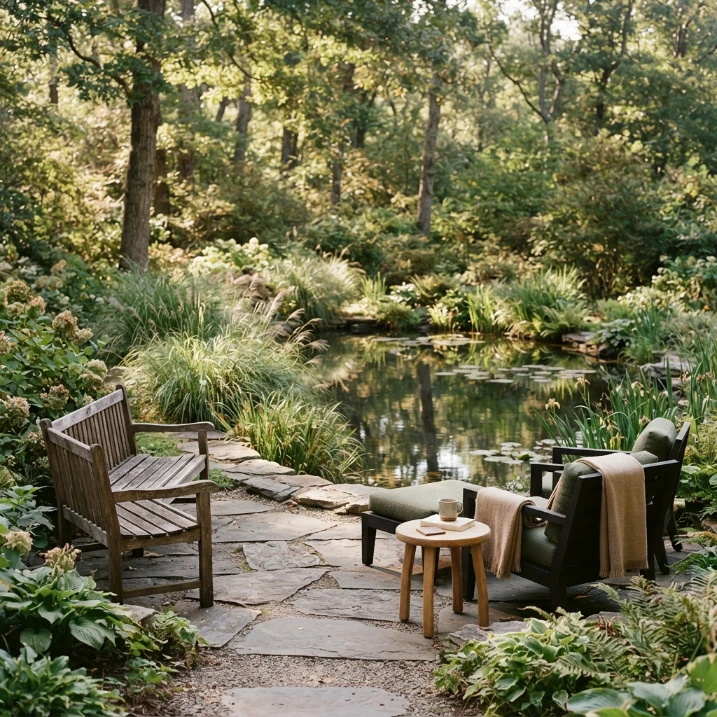
4. Create a Small Seating Moment
A pond becomes more useful when it offers a reason to stay. Add a bench, two weather-resistant chairs, or a simple timber seat where the water can be viewed comfortably. Place seating slightly away from the edge for safety and give it a clear view through the planting. A small side table makes the area feel like an outdoor room.
5. Connect the Pond to a Garden Path
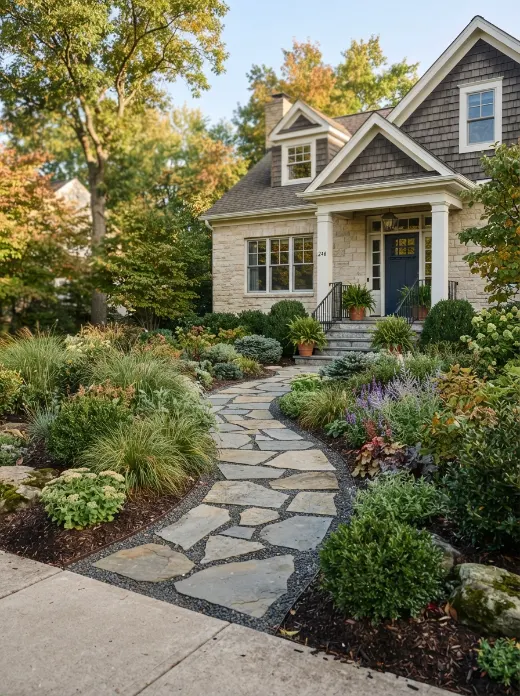
A curved path can make the pond feel discovered rather than displayed. Use gravel, stepping stones, brick, or natural pavers to lead visitors toward the water. Curves usually feel softer than rigid straight lines, while one deliberate landing area can create a pause beside the pond.

6. Use Reflections as Part of the Design
Water reflects sky, foliage, architecture, and light. Keep one section of the pond visually open so those reflections remain visible. Place taller plants and sculptural objects to the sides rather than filling the entire surface with leaves. The result feels calmer and gives the pond changing character throughout the day.
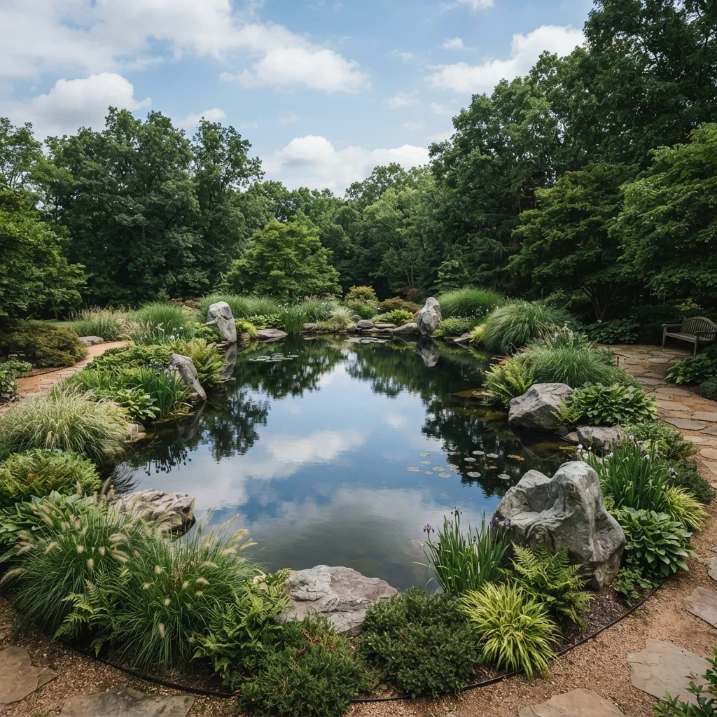
7. Introduce a Gentle Water Movement
A small cascade, bubbling stone, or narrow spillway can add sound and movement. Keep the feature proportional to the pond; a tiny garden pond rarely needs a dramatic waterfall. Natural stone, mossy textures, and a restrained flow usually feel more elegant than a highly artificial feature.

8. Layer Texture Around the Water
Use a mix of textures to keep the area interesting: smooth water, rough stone, feathery grasses, broad leaves, timber, and gravel. Texture is especially important in gardens with a limited color palette. It creates depth without requiring excessive decoration.
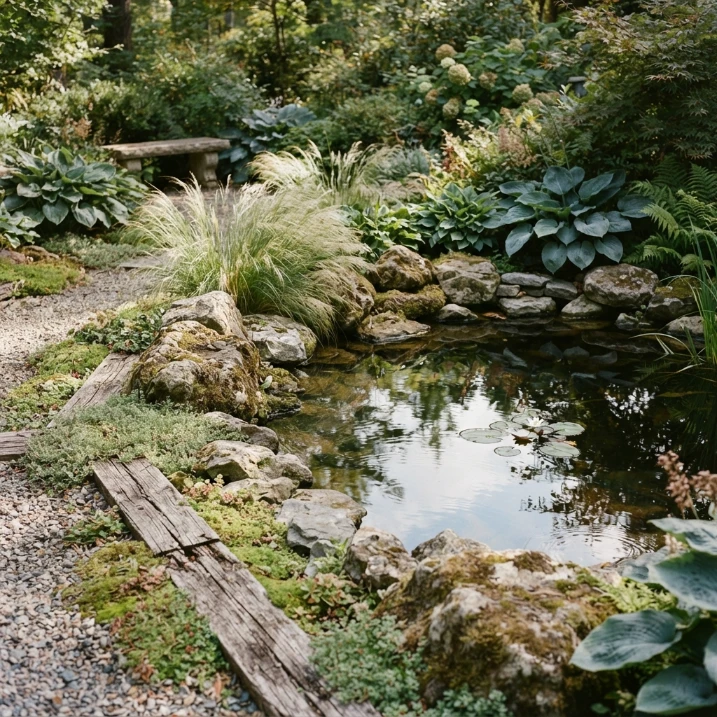
9. Choose a Calm, Coordinated Color Palette
Successful Pond Landscaping often works best with a restrained palette such as moss green, olive, soft gray, warm brown, and muted cream. Add seasonal flowers in small groups for contrast. Repeat the same tones in pots, seating, fences, or nearby planting to create visual continuity.

10. Add Evening Lighting with Restraint
Lighting should reveal the pond edge and make the garden feel safe after sunset. Use low-level warm lights along paths, discreet uplighting on a tree, or a soft glow near seating. Avoid bright lights aimed directly at the water because they can flatten reflections and make the space feel harsh.

11. Give the Pond a Wildlife-Friendly Feel
Planting, shallow margins, stones, and quiet corners can make a pond more welcoming to birds, insects, and other garden life. Provide varied cover without allowing the entire pond to become overcrowded. If wildlife is a priority, avoid unnecessary chemicals and choose plants suited to the local climate.

12. Balance Open Water with Greenery
The best pond compositions usually contain both open water and planted areas. Too much open water can feel exposed; too much planting can hide the pond’s shape and reduce reflections. Step back from several viewpoints and adjust the balance until the water remains the clear visual anchor.
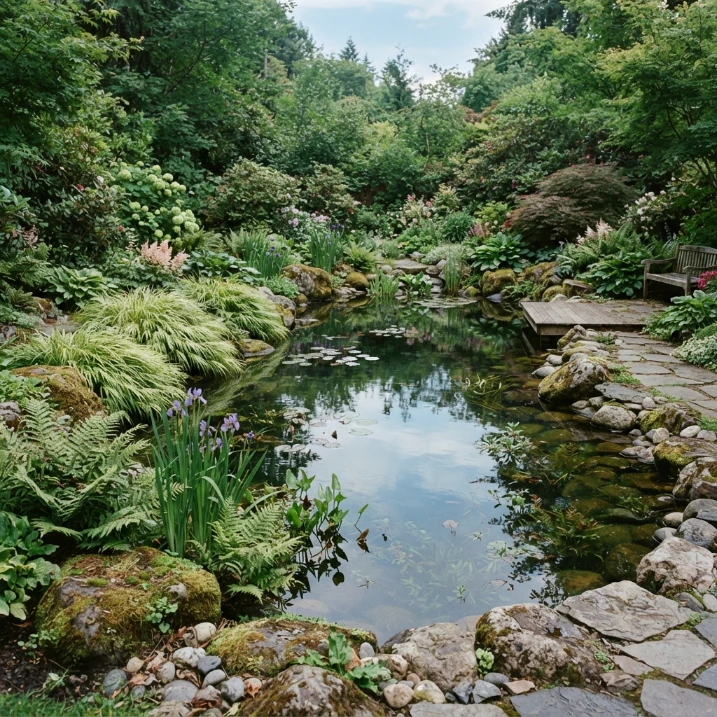
13. Make the Surrounding Garden Feel Finished
The area beyond the pond matters just as much as its immediate edge. Repeat materials from nearby patios, fences, raised beds, or garden furniture. Keep weeds controlled, define planting borders, and use a consistent maintenance style. A beautifully designed pond can still feel unfinished if the surrounding garden is neglected.

14. Keep Maintenance in the Original Design
Plan for access to pumps, filters, edges, and planting beds before installation. Choose plants that suit the amount of sun and moisture available. Leave enough room to remove fallen leaves and trim growth. A pond that is easy to care for will look better for longer and remain enjoyable rather than becoming a constant chore.

Frequently Asked Questions
What plants work well around a pond?
Choose plants according to your climate and moisture levels. Grasses, ferns, iris, hostas, rushes, and other moisture-tolerant plants are common choices, but always check whether a species is suitable and non-invasive in your area.
How can I make a pond look more natural?
Use irregular stone placement, layered planting, curved paths, and a mixture of open water and greenery. Avoid perfectly symmetrical edges and repeated objects placed at equal intervals.
Should pond lighting be bright?
No. Warm, low-level lighting usually creates a more relaxing atmosphere and preserves reflections. Use brighter lighting only where it is needed for safe movement.
Final Thoughts
The strongest Pond Landscaping ideas focus on everything surrounding the water: the edge, planting, stone, paths, seating, sound, reflections, and evening atmosphere. When these elements work together, the pond becomes a natural part of the garden’s story. Start with one clear mood, repeat a small group of materials, and leave enough open space for the water to breathe.