11 Stunning Front Yard Heuchera Ideas for Better Curb Appeal
Heuchera, also called coral bells, is one of those plants that can change the character of a front garden without demanding a complete redesign. With rounded foliage, compact growth, and colors ranging from soft peach and silver to burgundy, plum, bronze, and lime, it can bring structure and color to spaces that might otherwise feel flat.
If your front planting needs more texture, rhythm, or personality, front yard heuchera can be a smart place to start. The plant works especially well in borders, along paths, beneath shrubs, and in partially shaded areas. Most varieties prefer light or dappled shade and well-drained soil, while darker-leaved types can often tolerate more sun.
The key is not simply to place coral bells wherever there is an empty spot. A polished landscape uses them with intention. Think about the path, the house facade, nearby shrubs, stone, mulch, and the colors already present. Then use heuchera to connect those elements.
1. Bridge the Path and Planting Bed
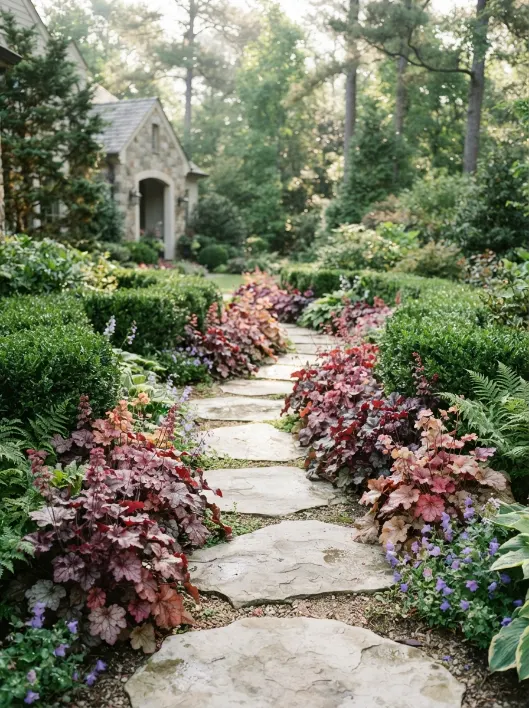
One of the easiest ways to use front yard heuchera is to soften the meeting point between a hardscape and a planted border. Place compact coral bells beside large stepping stones, pavers, or a brick walkway so their rounded leaves soften the straight edges.
This works particularly well when the foliage color echoes something elsewhere in the landscape. Burgundy leaves can relate to a dark door, while peach or bronze foliage can warm up gray stone.
Keep the planting relaxed rather than perfectly linear. A few repeated clusters will feel more natural and visually connected than a single continuous row.
2. Create a Ripple Along a Curved Walkway

Curved paths become more interesting when the planting follows their movement. Instead of placing one plant every fixed distance, group front yard heuchera in small waves that widen and narrow as the path turns.
Try repeating two or three foliage colors. For example, dusty rose, wine red, and soft green can create a gentle transition without making the border look busy.
A pale gravel edge can make the foliage stand out even more. The result is a walkway that feels designed rather than simply planted.
3. Build Layers from Low to Tall

A front garden can look unfinished when every plant sits at roughly the same height. Front yard heuchera are naturally useful as the low layer because their compact mounds can sit in front of shrubs, boxwood, ornamental grasses, or taller perennials.
Use the tallest plants near the house or fence, medium shrubs in the middle, and coral bells toward the path. This creates depth while keeping the entrance visually open.
The layered approach also helps a small front yard feel fuller without requiring a huge number of plant varieties. For another approach to layered planting, see our ornamental grasses ideas.
4. Contrast Fine Foliage with Bold Leaves
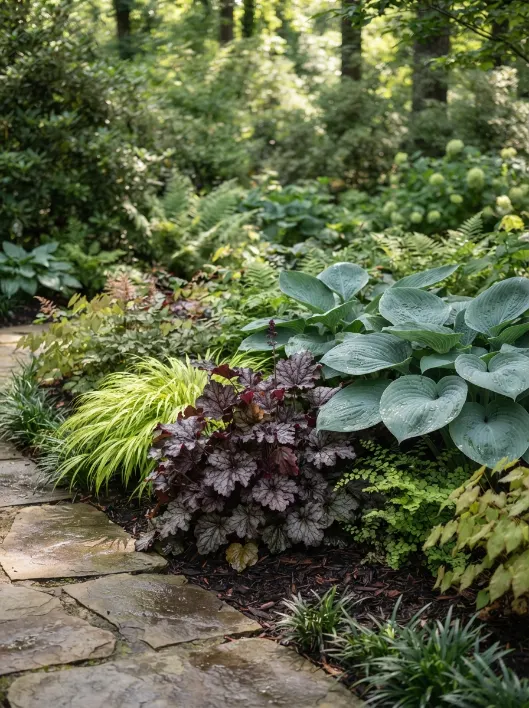
Color is only one part of a good planting scheme. Texture can make an even bigger difference. Pair front yard heuchera with plants that have larger, broader, or more architectural leaves.
Hostas are a classic partner in shady areas, while ornamental grasses can add movement where conditions allow. The contrast between ruffled coral-bell foliage and larger leaves gives the border more visual definition.
Keep one plant dominant and let the other support it. Too many competing leaf shapes can make a small bed look cluttered.
5. Repeat the Same Color for Visual Rhythm

Repetition is a simple landscape-design tool that makes separate planting areas feel connected. Choose one or two front yard heuchera colors and repeat them at intervals along a path, beneath windows, or around the entrance.
You do not need every cluster to be identical. Vary the size of each group while keeping the same foliage family.
This approach is especially useful when the front yard has several small beds. Repeating a burgundy or bronze tone can visually tie the whole frontage together.
6. Frame Dark Foliage with Light Stone

Deep red, plum, and burgundy coral bells can look dramatic when they are planted beside pale stone. Use light river rock, limestone-colored gravel, or warm cream mulch to create a clear visual boundary.
The contrast gives front yard heuchera more presence and keeps dark foliage from disappearing into a green background.
For a refined look, keep the stone area clean and use a consistent edging line. The simple background lets the foliage become the focal point.
7. Shape the Border with Soft Curves

Straight planting lines can make a small garden feel rigid. A curved border creates a more relaxed transition between lawn, walkway, and house.
Lay out the curve with a garden hose before digging. Step back toward the street and check how it looks from the main viewing angle. Then place front yard heuchera along the front edge, leaving enough room for each mound to grow.
Gentle curves are particularly effective around porches and front steps because they guide the eye toward the entrance.
8. Use Peach and Apricot Foliage for Warmth

Peach, apricot, and copper-toned heuchera can make a front entrance feel softer and warmer. They work beautifully with cream siding, warm brick, natural stone, cedar details, and muted blue-gray doors.
Use front yard heuchera in these warm tones where you want to create a welcoming transition between the public walkway and the front door.
For the most cohesive effect, repeat one warm tone in a planter, outdoor cushion, door color, or nearby flowering plant rather than introducing many unrelated colors.
9. Bring Sophistication with Burgundy Leaves
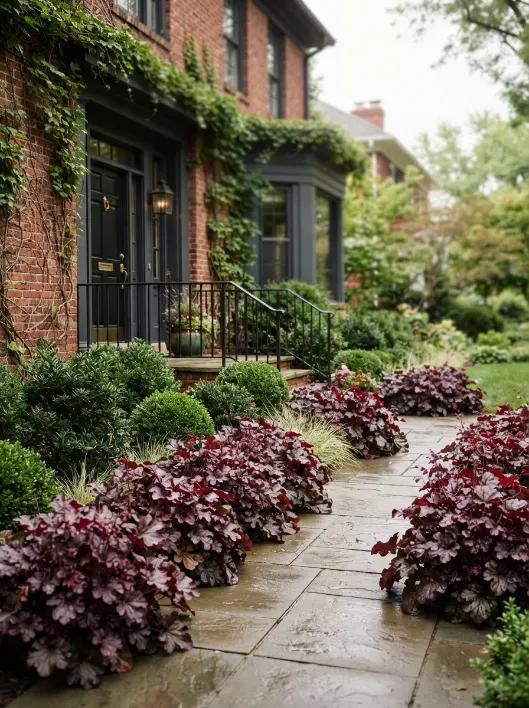
Burgundy foliage gives a front border more visual weight and can make traditional architecture feel especially polished. It pairs naturally with brick, charcoal, deep green, cream, and navy.
Plant front yard heuchera in burgundy as a repeated accent instead of covering the entire bed with dark foliage. A few substantial groups can create more impact than dozens of scattered plants.
If the home already has dark window trim or a dark front door, repeating that tone in the planting creates an intentional connection between the house and garden.
10. Add Fresh Energy with Lime Green

Chartreuse and lime foliage can brighten a shady corner and create a crisp contrast against gray stone, dark mulch, or evergreen shrubs. This is a useful option when a front garden feels visually heavy.
Use front yard heuchera with bright foliage as an accent rather than filling every bed with it. A repeated line along a path or a pair of matching clusters near the entrance can be enough.
Because pale and golden foliage can scorch in strong sun, check the needs of the specific cultivar and site before planting.
11. Make the Entry Feel Like a Designed Garden

The strongest front yard heuchera layouts connect the planting to the architecture. Look at the front door, porch steps, windows, path, and existing shrubs as one composition rather than separate pieces.
Repeat a foliage color near the entrance, use a consistent stone or mulch edge, and keep the tallest plants from blocking the door. A bench, lantern, or simple planter can provide a small architectural pause without overwhelming the planting.
The goal is a front yard that feels intentional from the sidewalk all the way to the threshold.
How to Keep Heuchera Looking Good in the Front Yard
Heuchera are valued for foliage, compact form, and relatively easy care, but location still matters. Most prefer partial or dappled shade and soil that stays reasonably moist without remaining waterlogged. Pale-leaved cultivars can be more vulnerable to strong summer sun, while darker foliage may tolerate brighter conditions.
Plant the crown at the same level it was growing in its container, or slightly high, rather than burying the center of the plant. Water newly planted heuchera consistently while roots establish, then adjust watering to the local weather and soil.
A light mulch layer can help conserve moisture, but keep it away from the crown. Remove tired flower stems and damaged foliage when needed, and divide older clumps when they become woody or overcrowded.
Before planting a large group, check the specific cultivar’s light, moisture, and hardiness requirements for your area. The RHS Heuchera growing guide notes that most heucheras prefer light or partial shade and well-drained soil.
How to Choose the Right Heuchera Colors
Think about the colors that already exist around your front door. If the house is neutral, almost any foliage color can become a focal point. If the exterior is colorful, choose heuchera that repeat or gently complement one existing shade.
A simple palette usually looks more polished than a collection of every color available. Try one dominant foliage color, one supporting shade, and plenty of green from surrounding shrubs.
For front yard heuchera to look intentional, repeat the chosen color in at least two places. This could be the front path and window bed, or the porch border and mailbox planting.
A Front Yard That Feels Thoughtful, Not Overworked
You do not need a complete landscape renovation to make the entrance feel more finished. Heuchera can provide color, texture, repetition, and a soft edge around hardscape while taking up relatively little space.
The best front yard heuchera designs use the plant as part of a larger composition. Pair the foliage with stone, shrubs, grasses, pathways, and the architecture of the home. Use curves where you want a softer feeling, repeat colors for rhythm, and create contrast with both foliage and hardscape.
With a little planning, coral bells can turn an ordinary planting bed into a front garden that feels welcoming, layered, and carefully designed. For another curb-appeal planting idea, explore our front porch flower pots guide.