19 Beautiful Backyard Decor Ideas That Turn Your Yard Into an Outdoor Retreat
Good backyard decor ideas turn an ordinary patch of grass into a place you actually want to spend time in, with clear zones for sitting, eating, and relaxing, plus lighting and planting that make the space feel finished rather than forgotten. You do not need a huge budget or a professional designer to get there. A few well-chosen pieces, a simple layout, and layers of light and texture can transform even a plain yard into a comfortable outdoor retreat you will use every week.
Start by deciding how you want to use the space, then build around that one purpose before adding anything decorative. If you love evening gatherings, a fire pit and seating come first; if slow weekend breakfasts matter more, a dining set earns the best spot. Measure the space before you buy anything, and photograph it in morning and evening light so you can see where shade and sun actually fall, noting which corners stay damp after rain and which get the harshest afternoon glare.
The same zone-first thinking works on a patio too, and these patio decor ideas show how to layer furniture, rugs, and plants on a smaller hard surface. The nineteen ideas below work for large yards and modest ones alike, and most of them can be finished in a single weekend.
Key Takeaways
What is the easiest way to decorate a backyard? Start with one anchor piece, usually a seating group or a fire pit, then add an outdoor rug beneath it to define the zone. Lighting comes next, because string lights and lanterns change the mood of the whole yard for very little money, and a single rug plus two or three matching cushions is often enough to make the seating group look planned rather than random.
How can I decorate my backyard on a budget? Focus on high-impact, low-cost changes first: a rug, cushions, string lights, and potted plants. Paint an old bench, add a thrifted side table, and grow fast climbers on a fence instead of buying expensive structures. A coat of exterior paint on a tired fence and a few terracotta pots grouped by the door can refresh the whole view for less than the cost of one new chair.
What makes a backyard feel private? Layered screening works best, combining a fence or screen panel with tall plants such as bamboo, grasses, or climbing roses. The plants soften the hard edges, while the screen blocks sightlines immediately. For the fastest result, pair a slatted panel with a large planter of tall grasses at each end, so the screening reads as garden rather than a wall.
How do I make my backyard usable at night? Use three layers of light: warm string lights overhead, lanterns or candles at table height, and a few solar path lights along walkways. Keep the glow warm and low so the space feels calm rather than floodlit. Battery lanterns on side tables and a couple of low solar stakes along the lawn edge are enough to fill the gaps without adding any wiring.
1. How Can a Fire Pit Anchor Your Backyard?
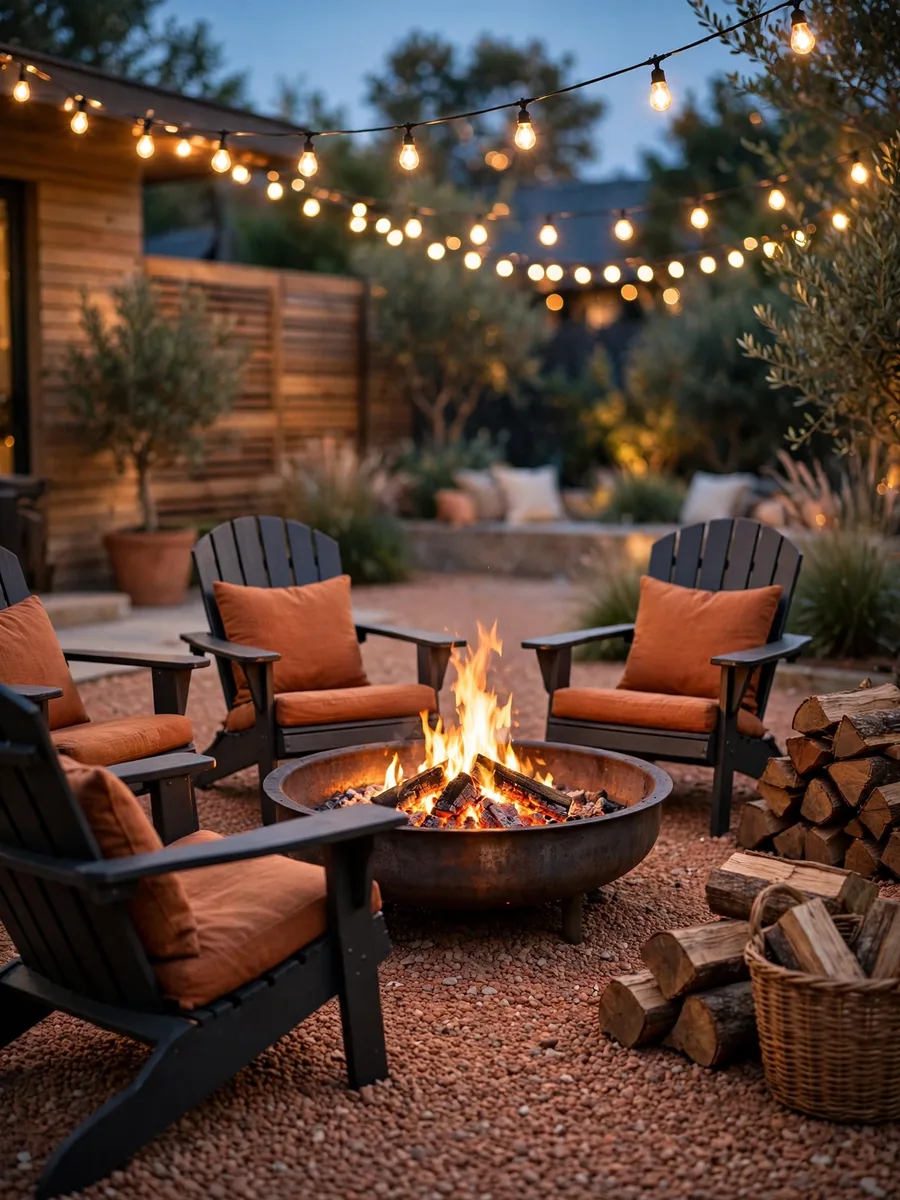
A fire pit gives your yard a natural centre, a warm gathering point that pulls chairs, cushions, and conversation into one circle. Place it on gravel, pavers, or a heat-safe pad, leaving at least three feet of clear space around the rim for safety and easy movement. A low stone or brick edging around the gravel keeps it tidy, and a small side table beside each chair holds drinks so nobody has to balance a glass on the ground.
Picture a round steel fire bowl set on a bed of terracotta-toned gravel, ringed by four low Adirondack chairs in charcoal and rust cushions, with a small stack of split logs tucked beside a woven basket. String lights arc overhead, and the glow turns an ordinary evening into the part of the day everyone looks forward to.
Quick tip: Choose a smokeless fire pit if your neighbours sit close, and keep a lidded metal bucket nearby for ash.
2. How Do String Lights Create a Ceiling Outdoors?
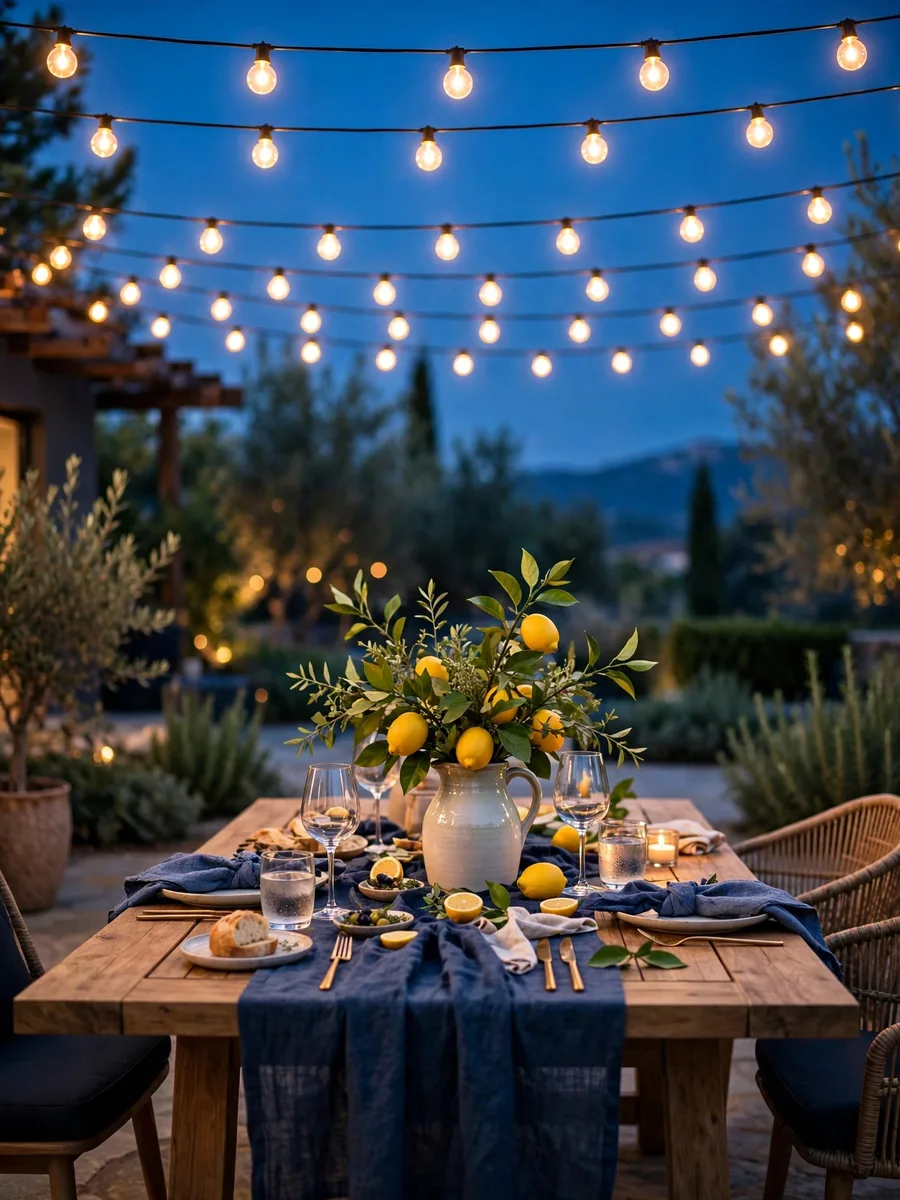
String lights hung overhead create the feeling of a ceiling, turning open sky into a room. Drape them in gentle swags from a fence to the house, or zigzag them across a pergola, keeping the lowest point high enough to walk under without ducking.
Try warm-white globe bulbs on black wire, strung in three parallel lines above a wooden dining table dressed with navy linen and a jug of lemon branches. As dusk falls, the bulbs glow amber against the deep blue sky, and the table below feels like a restaurant terrace rather than a patch of lawn.
Quick tip: Use outdoor-rated, shatterproof bulbs and a timer plug so the lights switch themselves on at dusk.
3. How Does an Outdoor Rug Define a Room Outside?
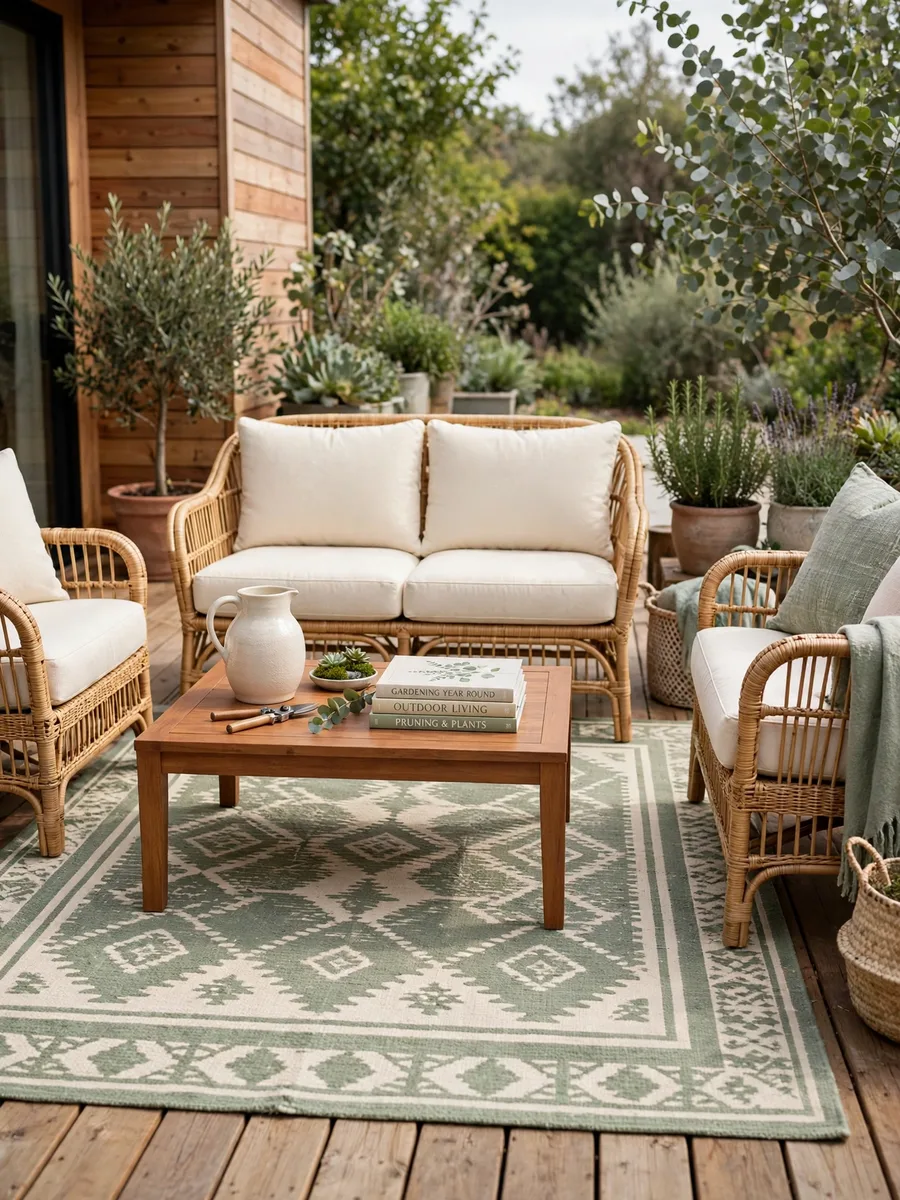
An outdoor rug works exactly like a rug indoors: it marks where the room begins and ends, pulls furniture together, and adds colour underfoot. Lay one beneath a seating group with at least six inches of rug showing on every side so chairs sit fully on it. A rug in a bold pattern also hides the odd grass stain or muddy footprint far better than a plain pale one.
Imagine a sage-green and cream flatweave rug under a rattan loveseat and two armchairs, with a low teak coffee table in the middle holding a ceramic pitcher and a stack of garden books. The rug turns a bare stretch of deck into a lounge that invites people to sit down and stay.
Quick tip: Pick a polypropylene rug that hoses clean, and lift it monthly so the deck or grass beneath can dry.
4. How Can Privacy Screens Make a Yard Feel Secluded?
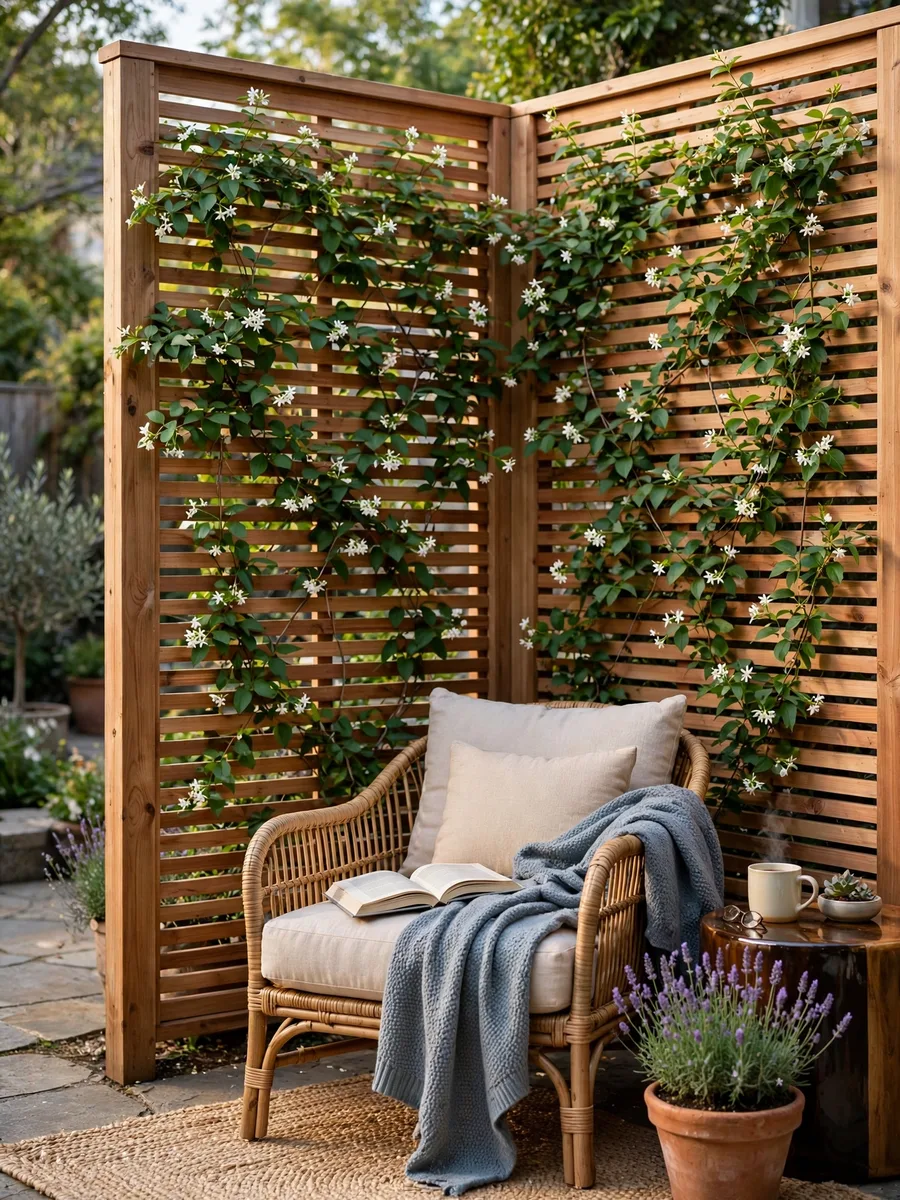
Privacy screens block sightlines fast, giving you a secluded feeling without waiting years for a hedge to grow. Freestanding slatted panels, lattice sections, or tall planters with trellis tops all work, and they double as a backdrop for climbing plants.
Set two cedar slat panels at right angles behind a reading chair, then train emerald jasmine up the slats and place a terracotta pot of lavender at the base. Within one season the green softens the wood, and the corner reads as a private garden room rather than an exposed fence line.
Quick tip: Angle screens slightly instead of placing them dead straight, so the yard still feels open and airy.
5. What Are the Best Renter-Friendly Backyard Ideas?
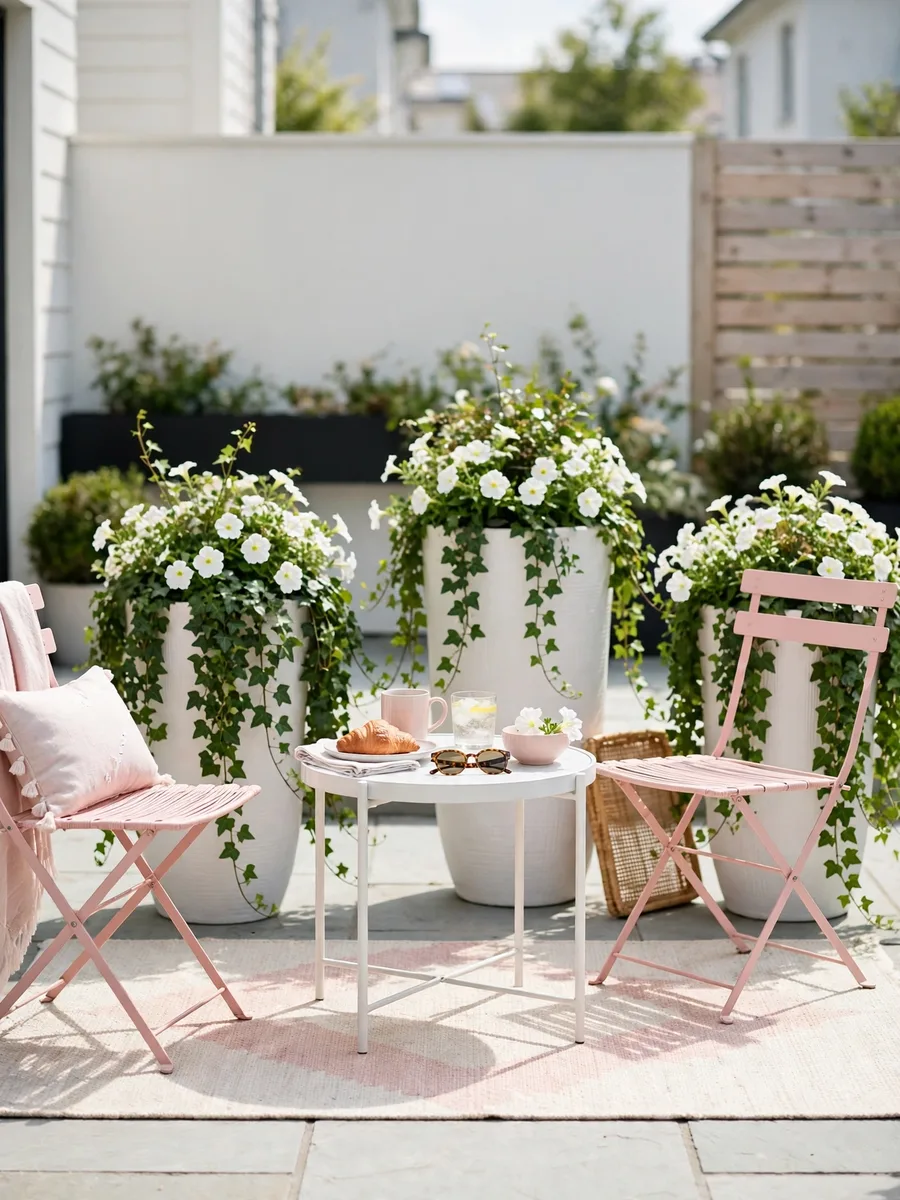
Renters can still enjoy a beautiful yard by choosing pieces that move, not things that need drilling or digging. Folding furniture, freestanding planters, outdoor rugs, and battery lanterns transform a space without a single permanent change.
Picture a blush-and-white setup that packs up in an afternoon: two folding bistro chairs, a small round side table, three large planters filled with trailing ivy and white petunias, and a soft outdoor rug rolled out over the patio slabs. When moving day comes, everything goes with you, and the landlord never needs to know.
Quick tip: Use freestanding umbrella bases and weighted planters instead of anything screwed into walls or fences.
6. How Do You Set Up an Outdoor Dining Area?
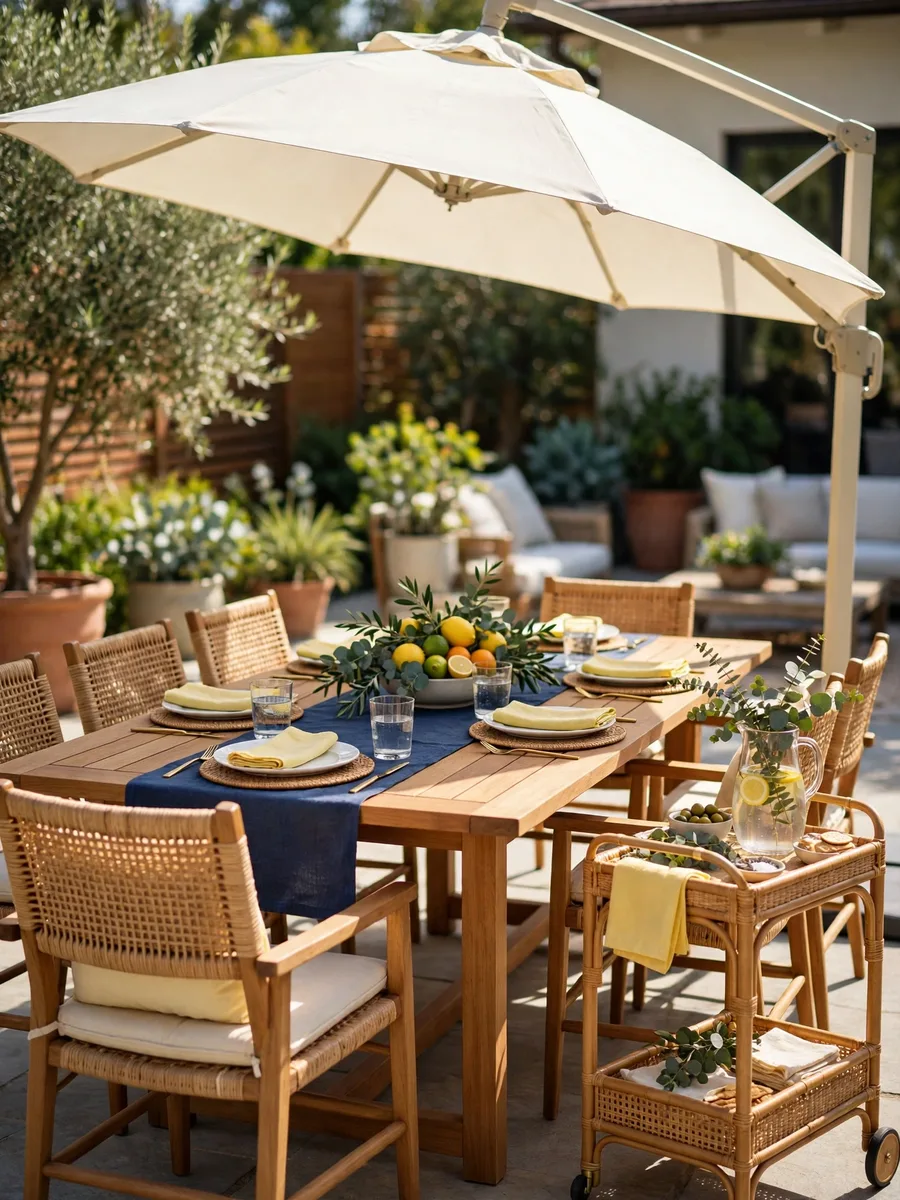
An outdoor dining area needs a flat surface, shade, and seating that stays comfortable through a long meal. Place the table where the ground is level, add an umbrella or a sail shade, and choose chairs with cushions that dry quickly after rain.
Think of a six-seat teak table under a cream cantilever umbrella, dressed with a navy runner, lemon-yellow napkins, and a low bowl of citrus and eucalyptus. Melamine plates in a matching navy, a jug of iced water with mint, and a citronella candle at each end keep the table practical as well as pretty through a long evening. A rattan serving trolley stands ready beside it, and dinner outside suddenly feels like an occasion rather than a compromise.
Quick tip: Keep a lidded storage box near the door for cushions and table linen so setup takes two minutes.
7. How Can You Create a Lounge Zone for Slow Afternoons?
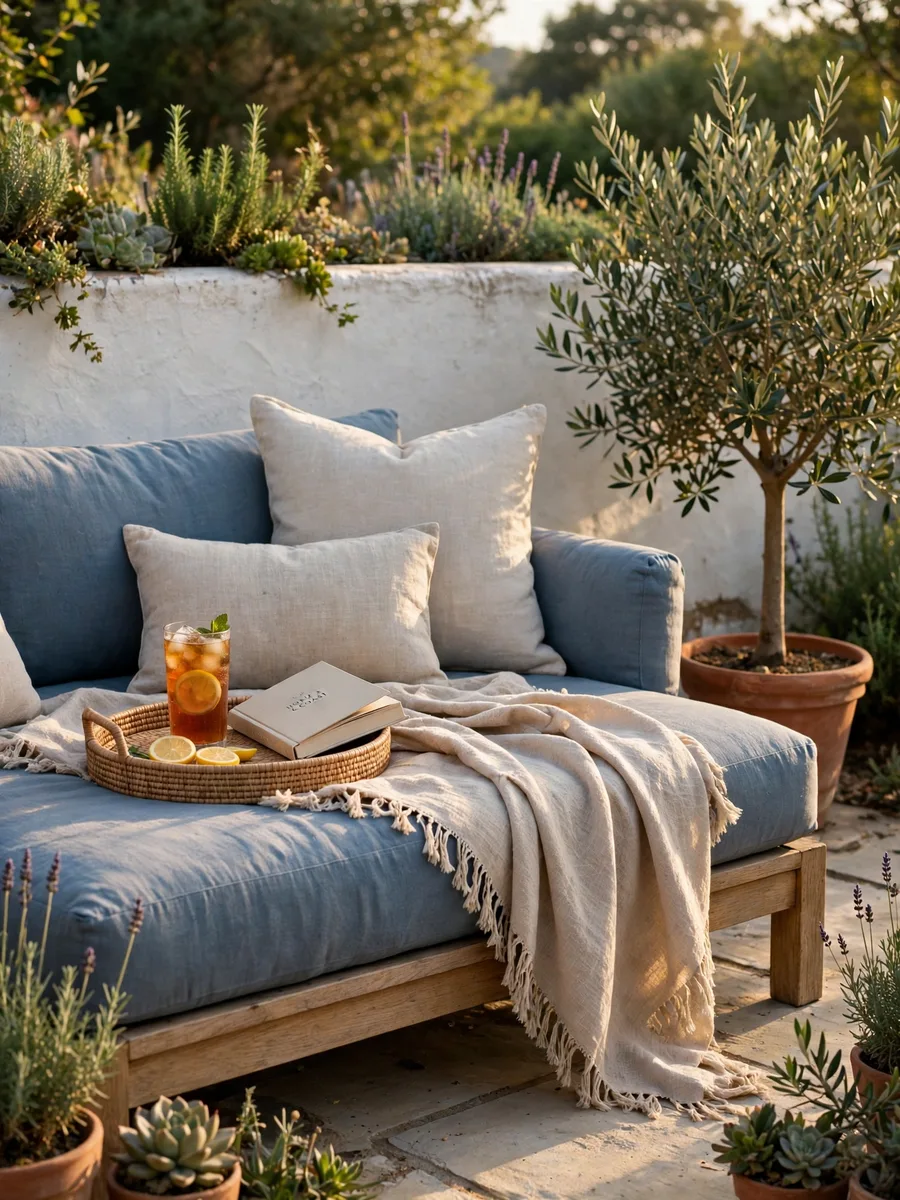
A lounge zone is the backyard equivalent of a living room, a soft, low space built for reading, napping, and long conversations. A daybed, a deep loveseat, or a pair of loungers sets the tone, with side tables and soft throws finishing the comfort.
Imagine a dusty-blue outdoor daybed dressed with sand-coloured linen cushions and a fringed throw, set against a low whitewashed wall with a potted olive tree beside it. A small rattan tray holds iced tea and a paperback, and the whole corner feels like a boutique hotel terrace at home.
Quick tip: Face loungers toward the prettiest view, even if that means turning your back to the house.
8. How Do Raised Garden Beds Double as Decor?
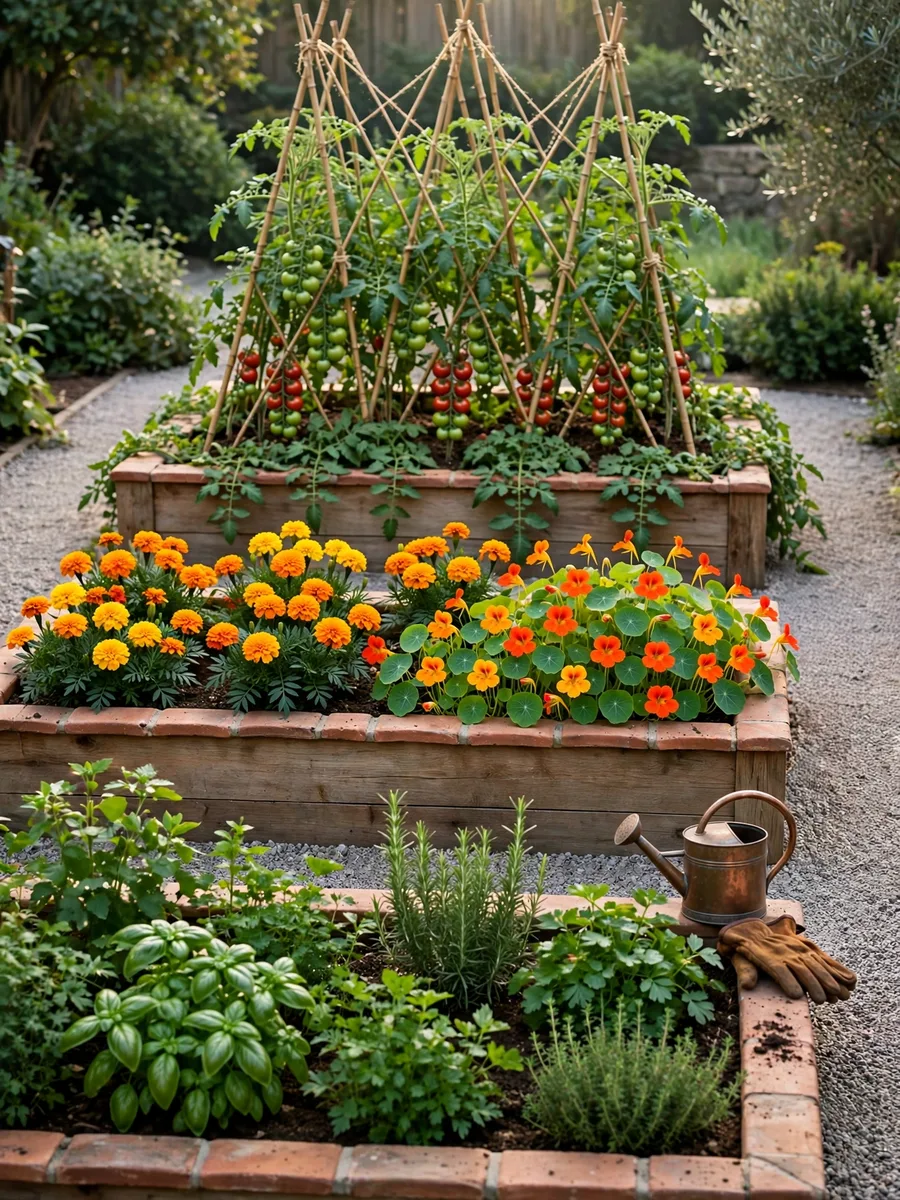
Raised beds bring order and height to planting, turning vegetables and herbs into a design feature instead of a messy patch. Timber, brick, or corten steel beds in neat rows create structure, while the planting inside adds colour and scent.
Picture three terracotta-edged timber beds edged with gravel paths, one full of leafy herbs, one of bright nasturtiums and marigolds, and one of trailing tomatoes tied to slim bamboo canes. Label each row with small wooden markers, and tuck a pot of chives and a pot of mint at the ends so everyday cooking herbs are always within arm’s reach. A small watering can and a pair of gloves rest on the edge, and the beds look as good as the food they grow tastes.
Quick tip: Line the inside of timber beds and leave a gap for drainage so the wood lasts many seasons.
9. How Does a Water Feature Change the Mood of a Yard?
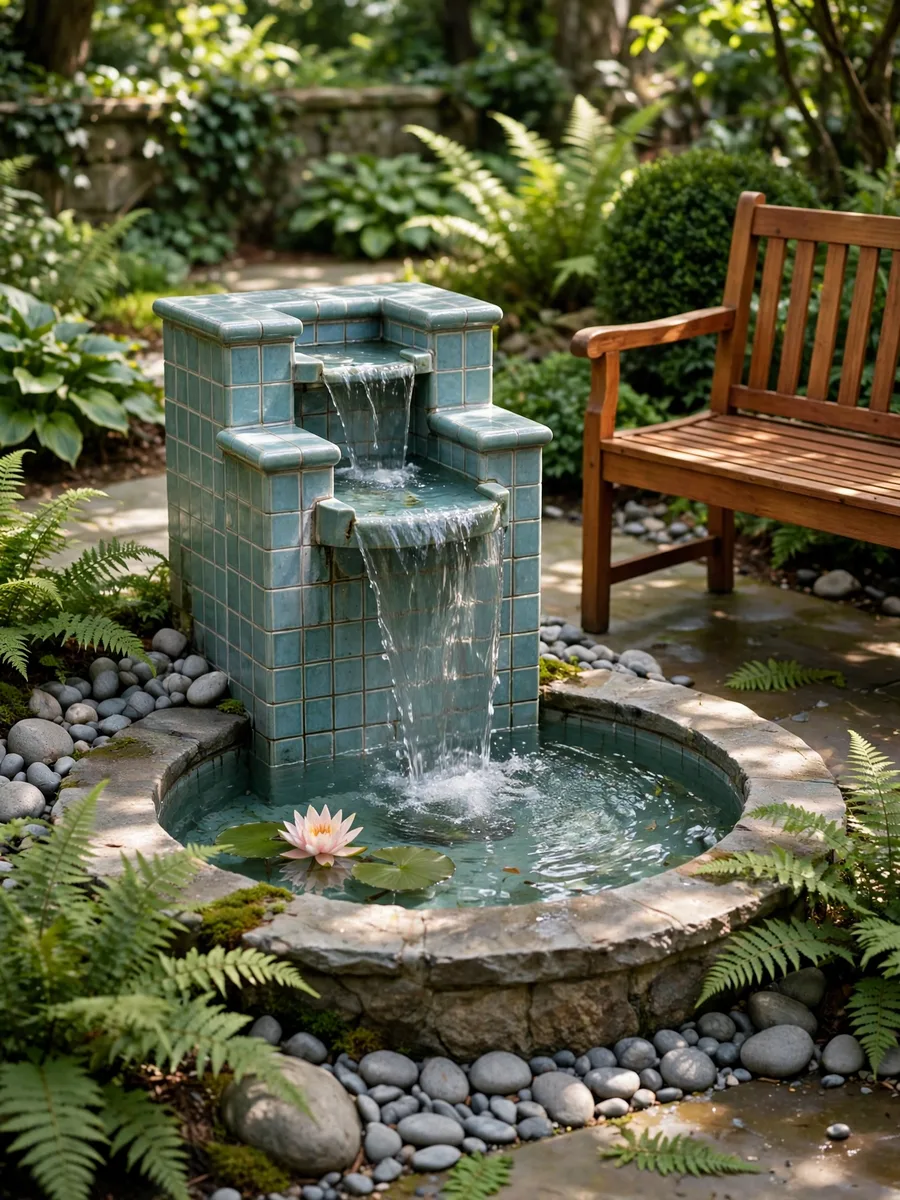
Moving water adds sound that masks traffic and neighbours, making a yard feel calmer the moment it is switched on. Even a small solar fountain or a wall-mounted spout creates that gentle background murmur without plumbing work.
Imagine a compact stone fountain with aqua glazed tiles, set among ferns and smooth grey pebbles, its water spilling into a shallow basin where a single water lily floats. A teak bench sits a few feet away, and the corner becomes the quietest seat in the whole garden.
Quick tip: A solar pump keeps running costs at zero; just top the basin up weekly in hot weather.
10. How Should You Style a Pergola for Everyday Use?
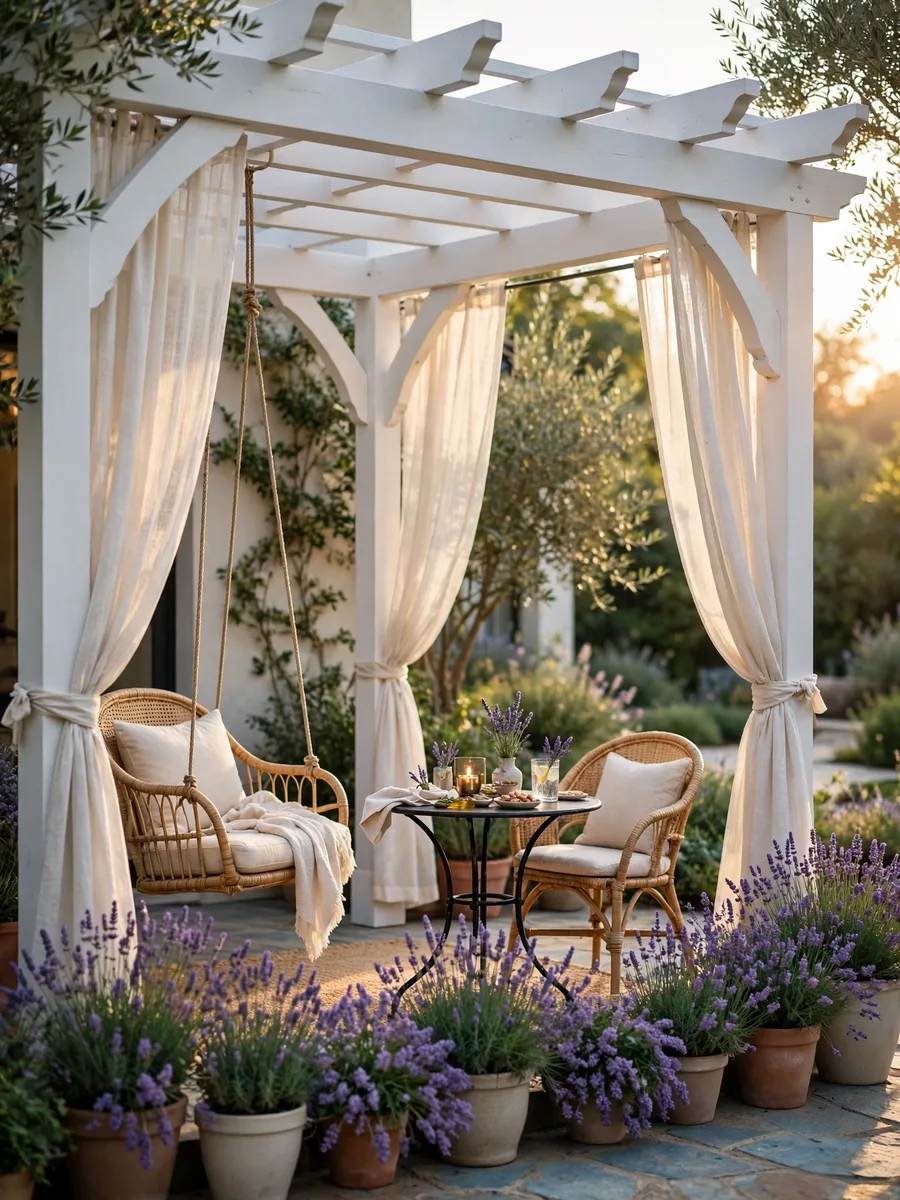
A pergola gives shade and structure, but it only feels like a room once it is styled with fabric, light, and plants. Outdoor curtains, climbing roses, and a hanging lantern turn bare posts into a sheltered retreat you can use all day.
Picture a white timber pergola with sheer cream curtains tied back at the corners, lavender spilling from pots along the base, and a wicker swing chair hanging from one beam. A small bistro set sits beneath it, and the space works for morning coffee, afternoon reading, and evening drinks alike.
Quick tip: Grow one fast climber per post and guide the stems sideways for shade within a single season.
11. How Can You Build an Outdoor Kitchen or BBQ Corner?
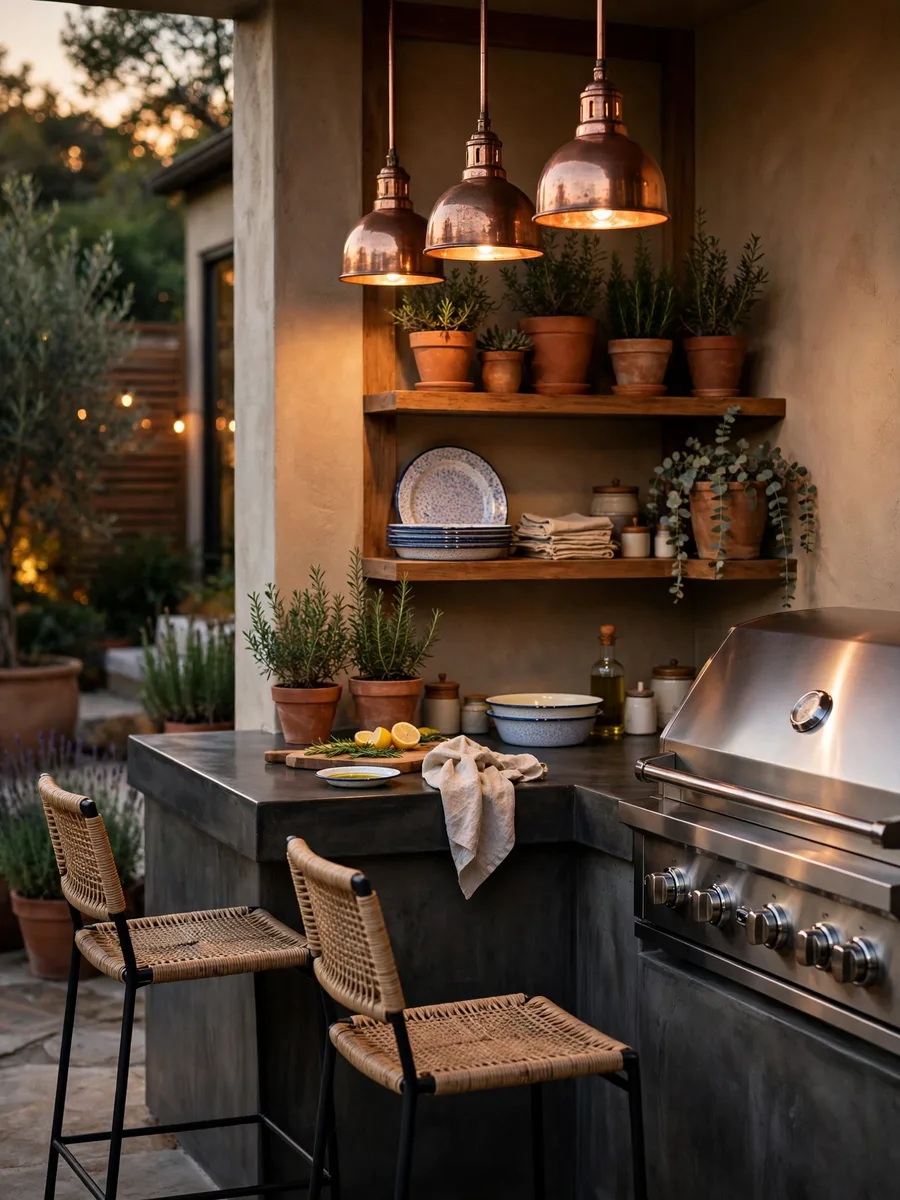
An outdoor kitchen keeps the cook outside with everyone else instead of running back indoors. A grill, a prep counter, and a little storage are enough; the rest is styling that makes the corner feel like part of the home. Leave a clear metre of counter beside the grill for plates and tongs, and add a small shelf above it for salt, oil, and a stack of serving bowls.
Think of a charcoal counter run with a stainless grill, copper pendant lights above the prep surface, and open shelving holding terracotta pots, olive oil, and a stack of enamel plates. Two bar stools pull up to the counter, so guests can chat while dinner cooks beside them.
Quick tip: Use a weatherproof cover for the grill and keep utensils in a lidded box to stop rust.
12. Why Add a Hammock or Swing to Your Backyard?
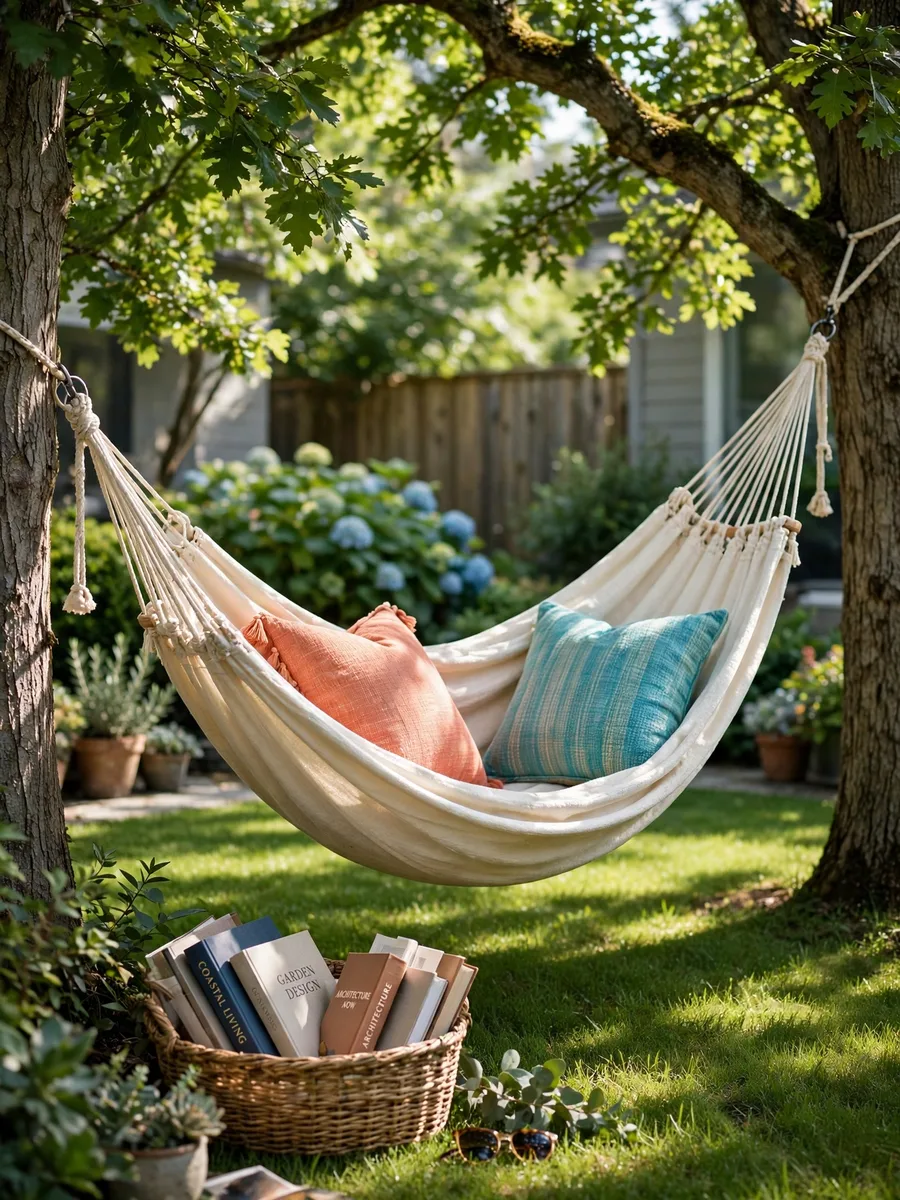
A hammock or swing adds movement and play to a yard, and it costs far less than a full furniture set. Strung between two sturdy trees or on a freestanding frame, it becomes the seat everyone argues over on a warm afternoon.
Imagine a cream canvas hammock with coral and turquoise cushions swaying between two mature trees, a woven basket of books on the grass below, and dappled light falling across the lawn. It is the simplest luxury a backyard can offer, and it takes ten minutes to hang.
Quick tip: Check the trees or frame rating first, and hang the hammock with a gentle sag, not pulled drum-tight.
13. How Do Pathways Make a Backyard Feel Designed?
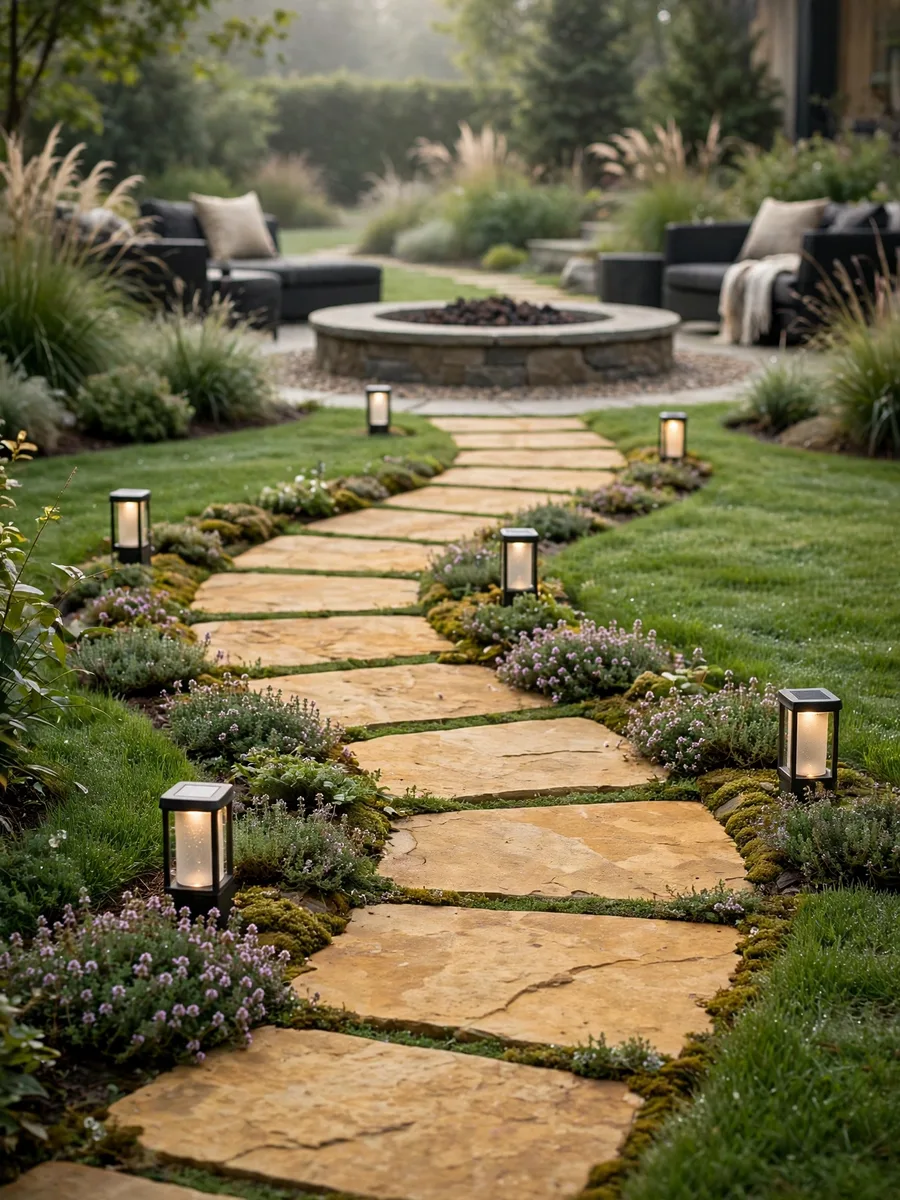
Pathways guide the eye and the feet, connecting the door to the seating area, the beds, and the back gate in a way that feels intentional. Stepping stones, gravel, or brick all work, especially when planting softens their edges.
Picture honey-coloured stepping stones curving through the lawn toward the fire pit, edged with moss, low thyme, and small solar lanterns. The walk slows you down, makes the yard feel larger, and turns a simple trip across the grass into a small garden moment.
Quick tip: Space stones a natural stride apart and set them slightly below the grass line for easy mowing.
14. How Do You Layer Lighting for Warm Evenings?
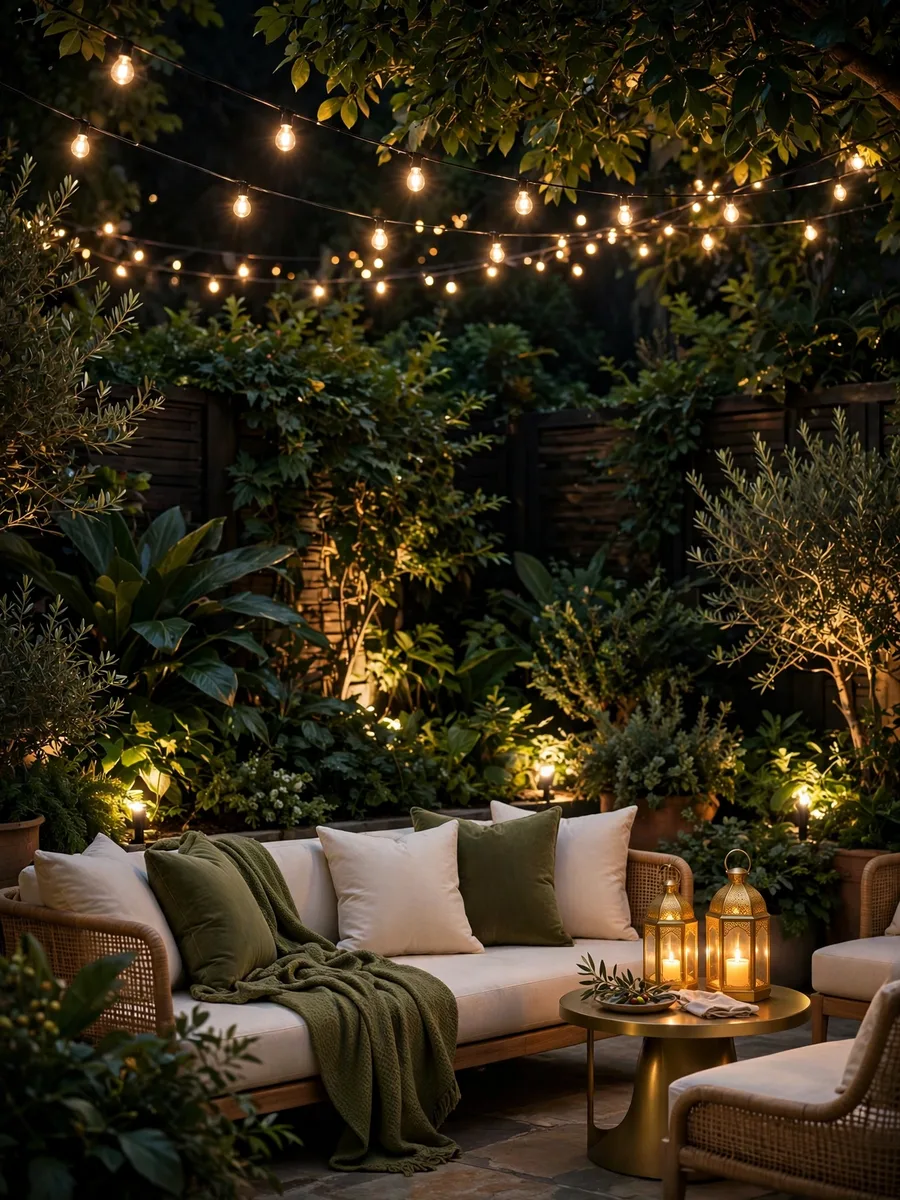
Layered lighting mixes heights and sources so no single glare dominates the yard. Combine overhead string lights with low lanterns, a few uplights in planting, and candles on tables for a glow that feels warm and expensive.
Imagine deep-green foliage lit from below by small warm spotlights, gold lanterns glowing on a side table, and a canopy of string lights above a seating group dressed in cream and olive cushions. Add one uplight behind a favourite tree or large planter, and the yard gains a focal point that draws the eye after dark. The yard looks layered and alive, and the light flatters everyone sitting in it.
Quick tip: Stick to warm white, around 2700K, for every bulb so the layers blend instead of clashing.
15. How Can Seasonal Touches Keep a Backyard Fresh?
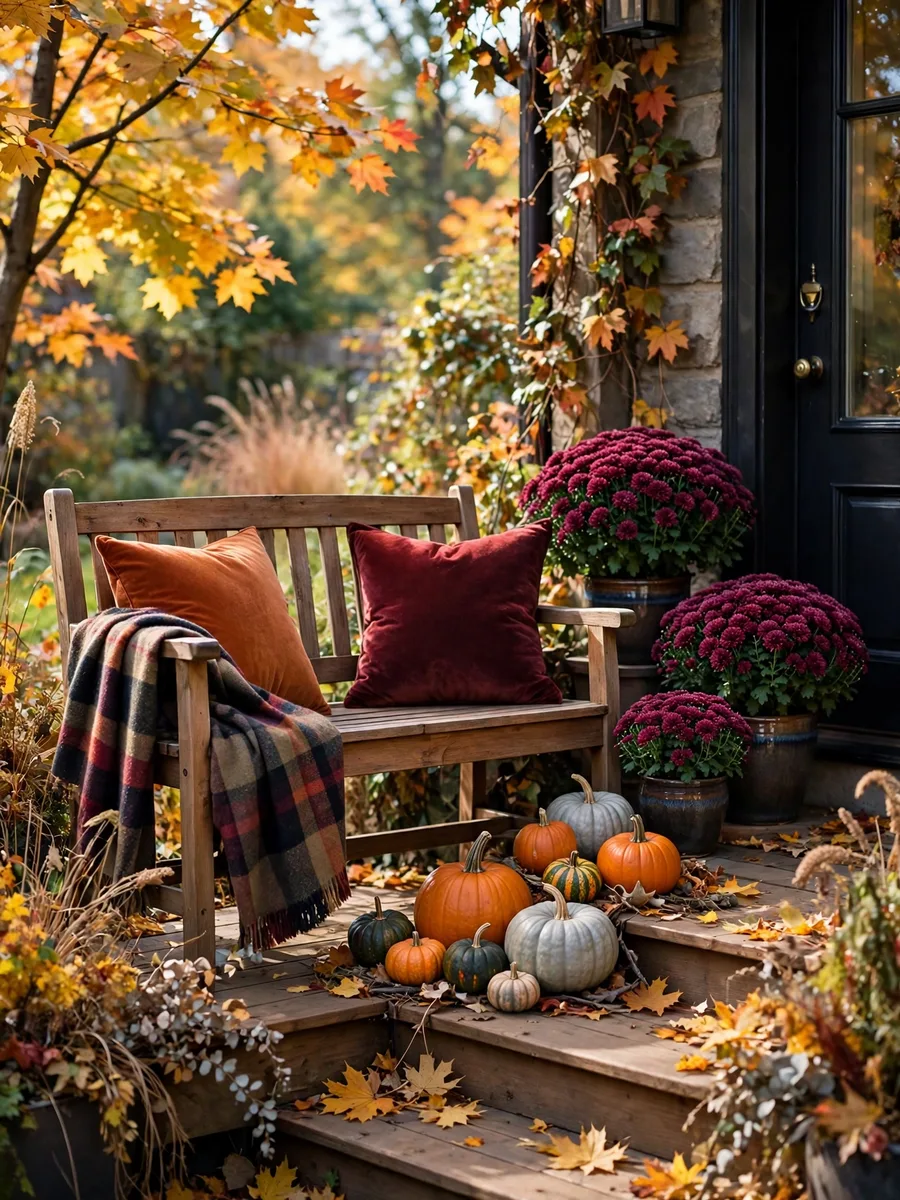
Seasonal touches are the cheapest way to make a yard feel current, because swapping cushions, pots, and small accessories takes minutes. Change the palette with the season and the whole space feels newly decorated four times a year.
Picture an autumn refresh: burnt-orange and burgundy cushions on the bench, a cluster of small pumpkins and gourds on the steps, a plaid throw over the armrest, and pots of deep plum chrysanthemums by the door. Nothing structural changed, yet the yard looks completely different from its summer self.
Quick tip: Keep a labelled storage tote per season so swaps take an hour, not a weekend.
16. How Do You Lay Out a Small Backyard So It Feels Bigger?
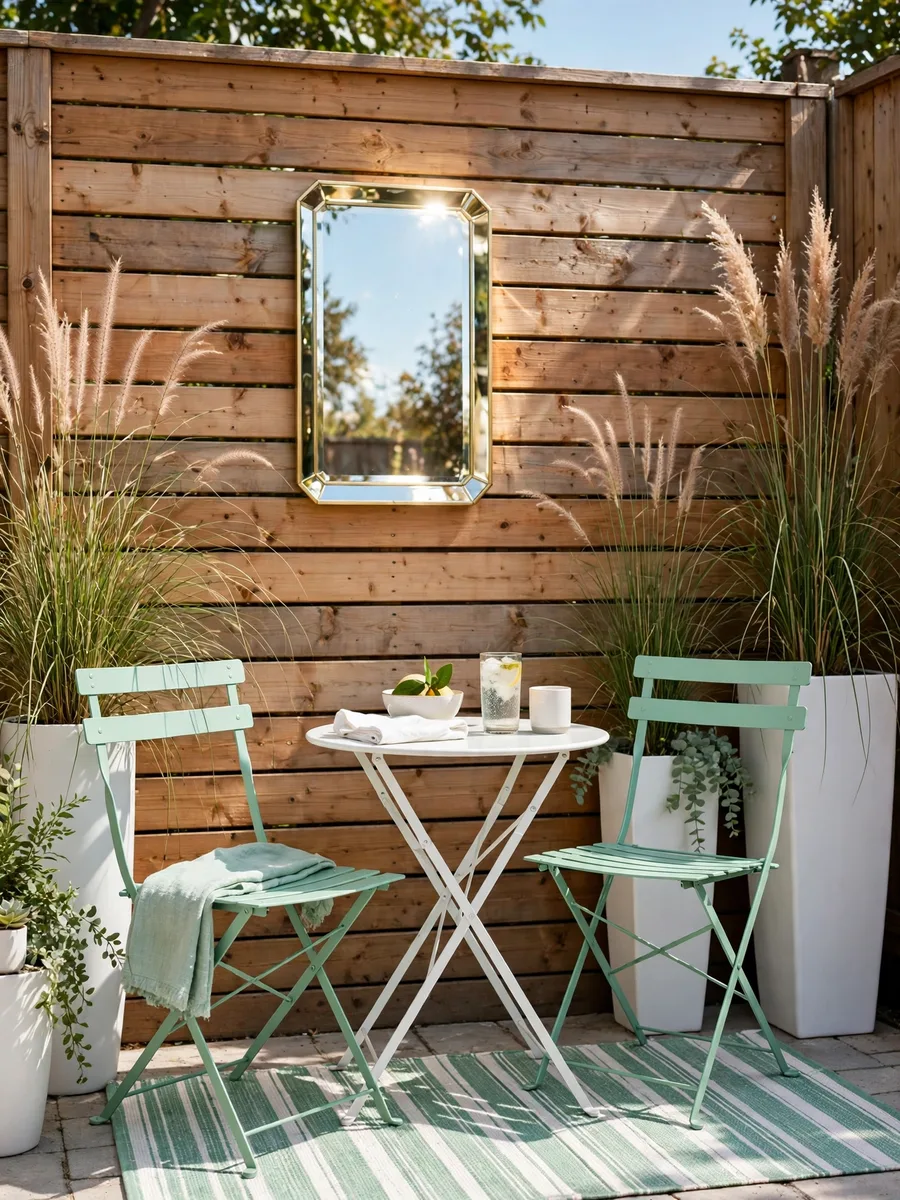
A small yard feels bigger when every piece earns its place and the layout stays simple. Choose one seating spot, one focal plant, and vertical storage, then leave open floor in the middle so the eye can travel across the space.
Try a mint-and-white scheme: a slim folding bistro set against the fence, tall narrow planters with grasses drawing the eye upward, and a weatherproof mirror on the wall that bounces light back across the patio. Even a tiny balcony uses the same tricks, and these small balcony decor ideas show how foldable furniture and vertical planters free up floor space.
Keep the palette pale and the furniture slim, and the yard will feel twice its size. A narrow wall-mounted shelf for a few small pots and a folded throw keeps the ground clear, and choosing one strong accent colour, like mint or soft blue, stops the small space from looking cluttered.
Quick tip: Draw the layout on paper first, measuring each piece, before buying anything for a small space.
17. How Can You Add a Kids’ Corner Without Spoiling the Style?
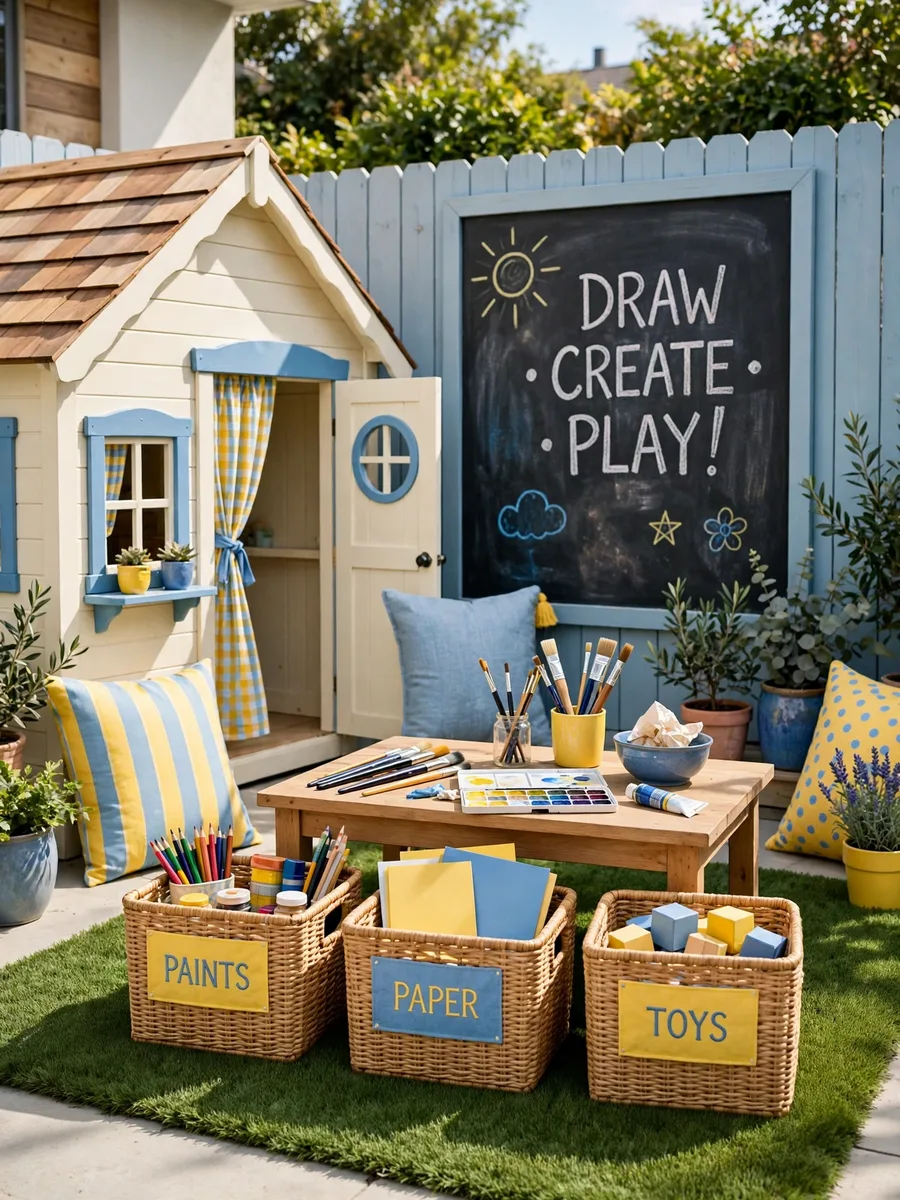
A kids’ corner works best when it has a clear boundary, so toys stay in one zone and the rest of the yard keeps its calm. A low fence, a rug, or a planting border marks the spot while still letting children feel part of the garden.
Imagine a sunny yellow and sky-blue corner: a small wooden playhouse painted cream, a chalkboard panel on the fence, a low table with pots of paintbrushes, and a soft artificial-grass mat for bare feet. Storage baskets in matching colours swallow the toys at dusk, and the corner looks charming rather than chaotic.
Quick tip: Pick washable, outdoor-rated storage so the tidy-up takes five minutes at the end of the day.
18. What Makes a Backyard Pet-Friendly and Still Stylish?
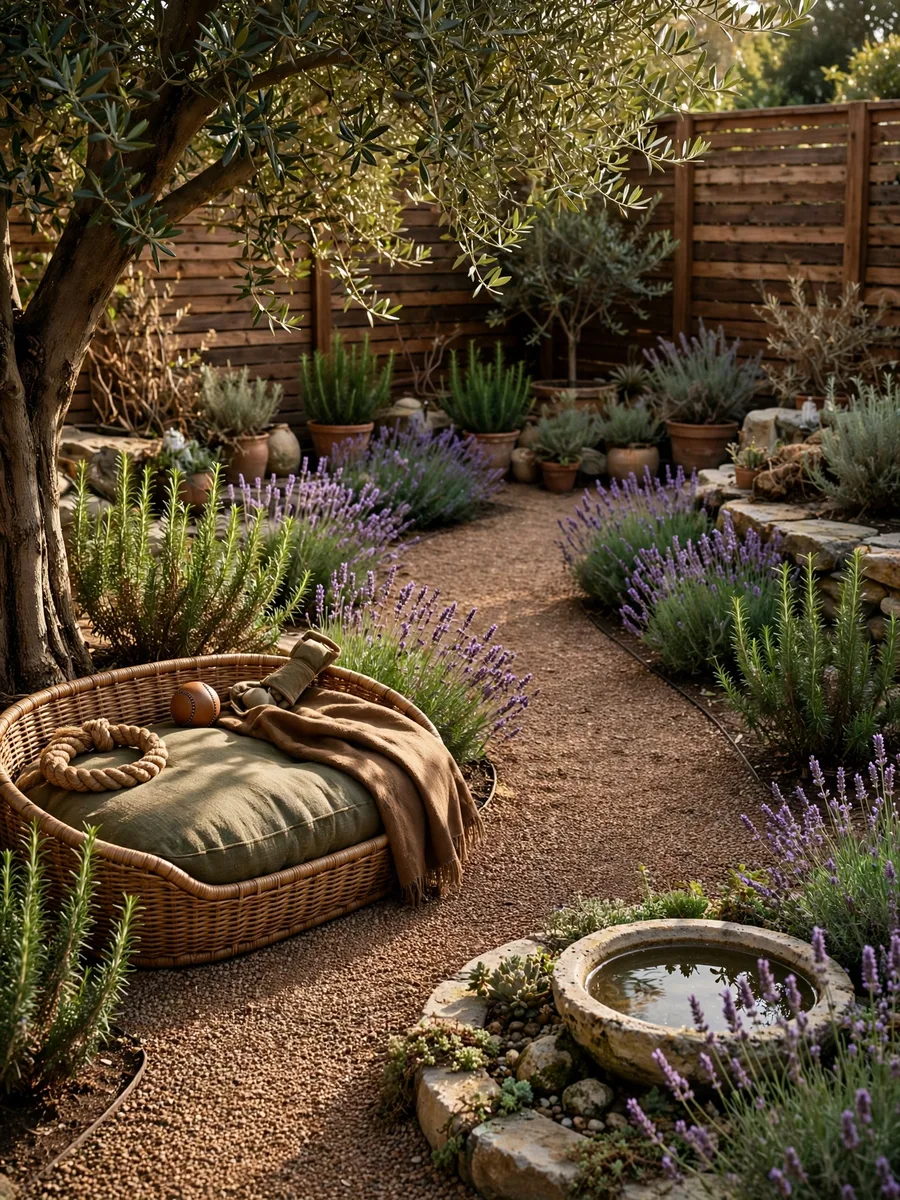
Pet-friendly yards choose tough materials and safe plants, so dogs and cats can enjoy the space without wrecking it. Durable turf or gravel paths, sturdy furniture, and non-toxic planting keep the yard good-looking and safe at the same time.
Picture a warm brown and olive scheme: a shaded corner with a woven dog bed under a tree, a gravel run edged with hardy rosemary and lavender, and a low stone water bowl that doubles as a garden feature. The furniture is washable, the plants are pet-safe, and the yard still looks like a designed garden.
Quick tip: Avoid cocoa mulch, lilies, and sago palm, all of which are toxic to pets.
19. How Can a Budget Makeover Transform a Tired Backyard?
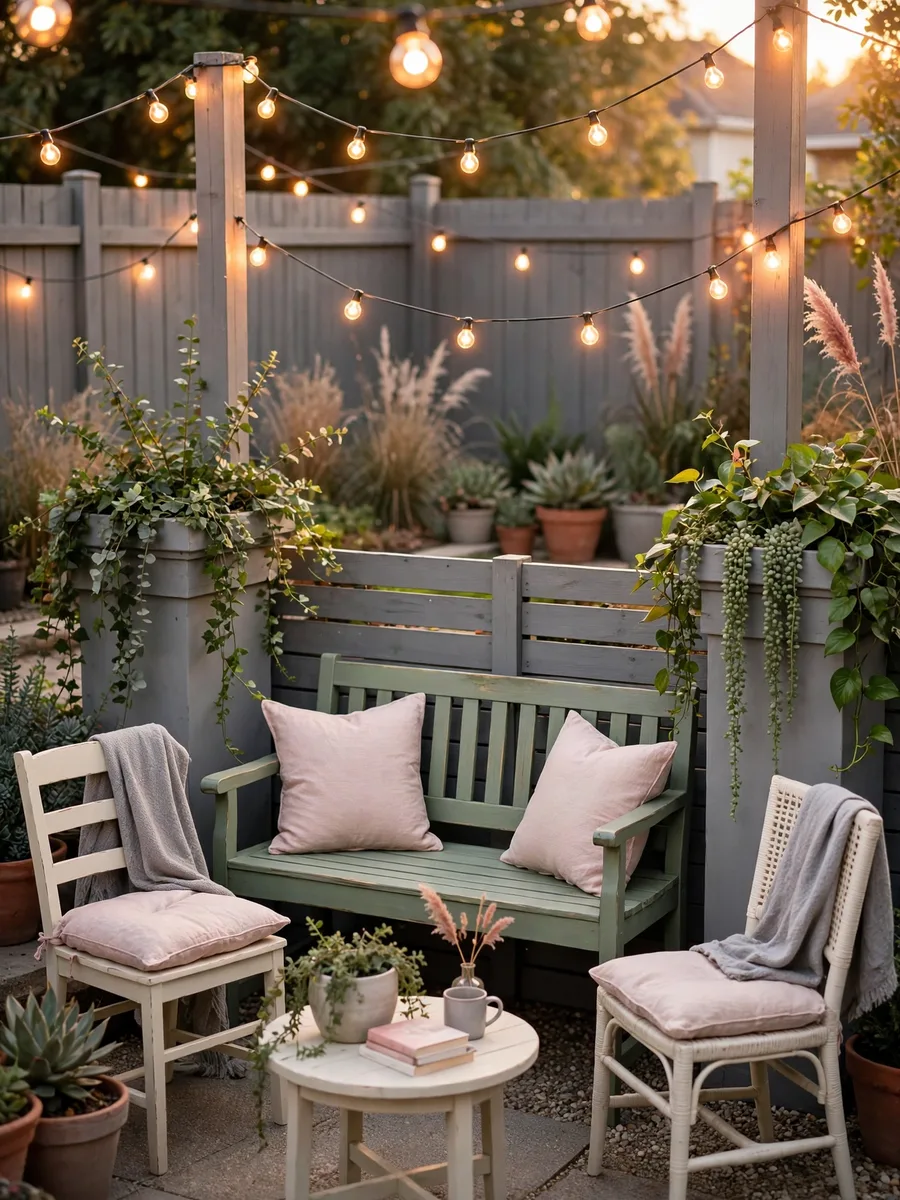
A budget makeover works by changing what the eye notices first: paint, textiles, and light. Those three cheap layers can hide worn furniture and tired fences, giving a yard a fresh look for the price of a single new chair. Of all the backyard decor ideas in this guide, this one delivers the biggest visible change for the smallest spend, which is why it is the best place to start when money is tight.
Think of a soft pink and grey refresh: a second-hand bench repainted sage, mismatched chairs unified with one coat of cream paint, new cushion covers in blush linen, and a string of warm lights zigzagging overhead. Add two large planters of trailing greenery, and a yard that looked forgotten suddenly looks loved.
Quick tip: Paint the fence first; a fresh fence colour makes every other change look twice as good.
Frequently Asked Questions
How much does it cost to decorate a backyard?
A simple refresh costs very little: an outdoor rug, cushions, string lights, and a few potted plants often come in under one hundred dollars. Second-hand furniture repainted in exterior paint and a bag of gravel for a small seating pad can add a finished look for very little extra. A fuller makeover with a fire pit, seating, and a pergola can run into the low thousands, so start with the pieces you will use daily and add the rest over time.
How do I decorate a small backyard?
Keep the layout simple with one seating area, slim foldable furniture, and vertical planting on fences and walls. A pale palette, a mirror, and a single focal plant make the space feel larger, while multi-use pieces such as storage benches save floor space.
How can I make my backyard more private?
Combine a screen or fence with layered planting. Slatted panels or lattice give instant cover, while tall grasses, bamboo in containers, and climbing plants soften the edges and add greenery. Check local rules before building anything over six feet tall.
What backyard decor survives rain and sun?
Look for powder-coated metal, teak, polypropylene rugs, and solution-dyed acrylic cushions, all of which resist fading and moisture. Untreated pine, untreated steel, and ordinary indoor cotton fade or rust within one season, so they are worth avoiding even when they cost less upfront. Store soft furnishings in a lidded box during storms, and bring cushions indoors over winter to extend their life.
Can renters decorate a backyard?
Yes, with portable pieces only. Freestanding planters, folding furniture, outdoor rugs, battery lanterns, and freestanding screens need no drilling or digging, and everything can move with you when the tenancy ends.
Conclusion
These backyard decor ideas share one simple principle: start with how you want to live outside, anchor the space with one strong feature, then layer rugs, plants, and warm light until the yard feels like a room. Pick the idea that fits your space and budget, finish it this weekend, and enjoy the outdoor retreat you already own. Even one finished corner changes how the whole yard feels, and each small layer you add next will build on it.