Top 15 Brilliant Minimalist Bedroom Ideas That Keep Your Personality
A minimalist bedroom is a bedroom built around fewer, better pieces, a calm neutral palette, and clear surfaces — so the room feels restful instead of busy. It is not an empty room: it is an edited room, where texture, warm light, and one or two personal details do the work that a dozen decorations used to do. A calm bedroom does not have to feel anonymous. The most successful minimalist bedroom ideas designs use fewer pieces, stronger materials, and carefully chosen personal details so the room feels peaceful without looking unfinished. The goal is not to remove personality; it is to give your favorite details enough space to matter. If your taste runs warmer and more relaxed, the same edited approach appears with softer, collected layers in these curated boho bedroom ideas.
1. Start With a Quiet Neutral Foundation
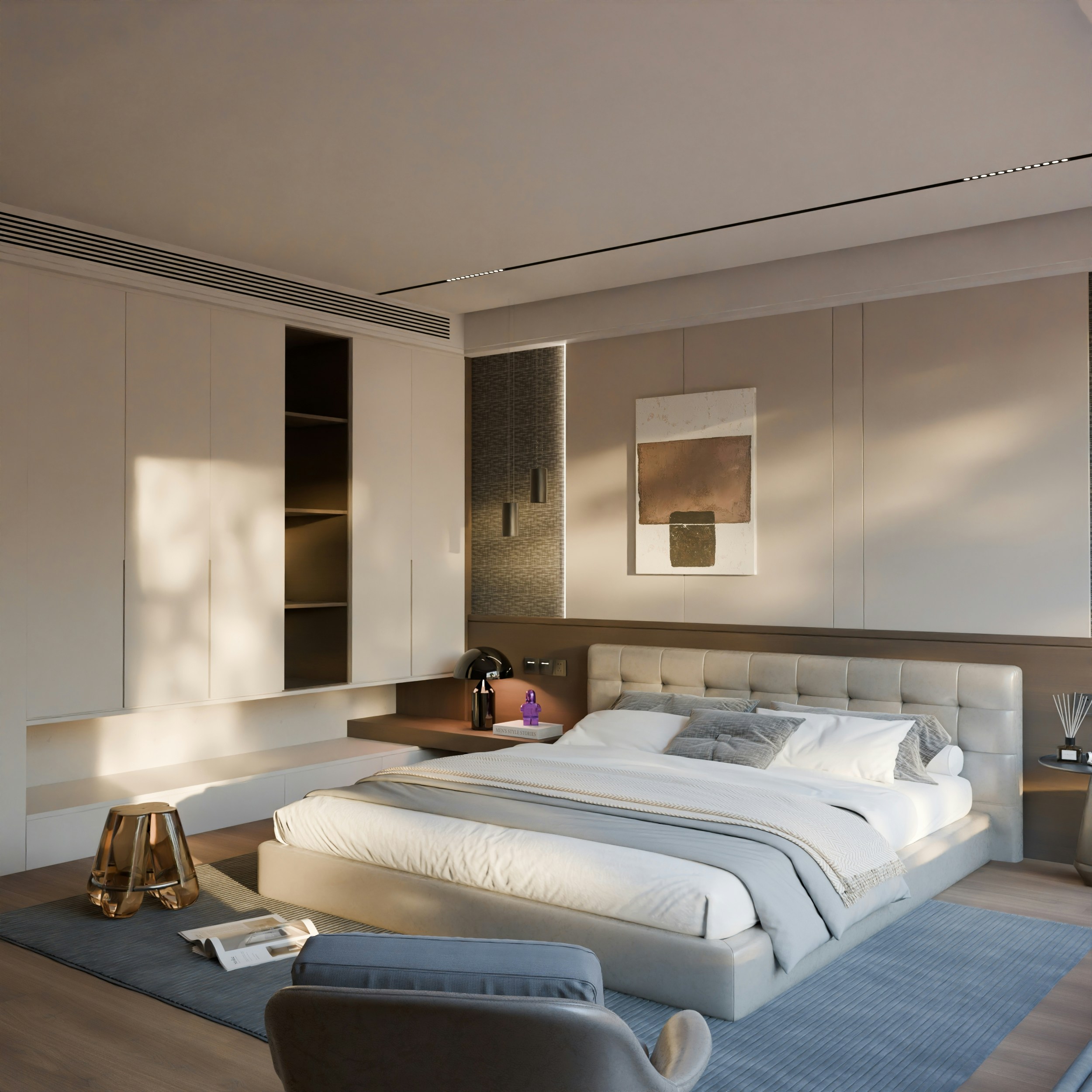
Begin with a restrained palette of warm white, ivory, beige, taupe, or soft gray. These shades create a flexible backdrop for a minimalist bedroom and make natural materials feel more noticeable. Instead of introducing several accent colors, choose one subtle secondary tone and repeat it through bedding, artwork, or a small accessory.
The trick is contrast rather than clutter. A creamy wall beside oatmeal linen and a medium-toned wood floor can create plenty of visual interest without a busy color scheme.
For a concrete version of this foundation, try warm white walls with oatmeal linen bedding and one medium oak tone repeated in the nightstand and a picture frame. The single secondary tone is sage, carried only by a throw and one cushion.
Watch out for the cold version of this idea, though: stark blue-white walls and grey-only textiles can read clinical rather than calm. The warm-minimalist fix is warm white, beige, oatmeal, and muted grey, with light wood as the repeating warm accent.
Warm vs cool minimalist palettes — at a glance
| Palette | Walls + bedding | Wood + accent | Best for / watch out |
| Warm minimalist | Warm white walls, oatmeal or beige bedding | Light oak, one sage or clay accent | Best for rooms that feel cold or north-facing; watch: keep the accent to one tone only. |
| Cool minimalist | Soft dove-grey walls, crisp white bedding | Walnut or black metal, one blue-grey accent | Best for bright, sun-filled rooms; watch: without wood or texture it reads clinical fast. |
| Earthy minimalist | Warm sand walls, cream + terracotta bedding | Mid-tone wood, one olive accent | Best for grounded, Japandi-leaning rooms; watch: keep terracotta to bedding and one cushion, not walls and rug together. |
2. Layer Texture Instead of Adding More Decor
When a minimalist bedroom starts to feel too plain, reach for texture before buying another decorative object. Combine crisp cotton, relaxed linen, a chunky knit throw, boucle upholstery, or a softly woven rug. The room stays visually simple while the materials create depth.
Keep the palette related so the textures do the talking. This approach makes the space feel cozy, sophisticated, and intentional rather than over-accessorized.
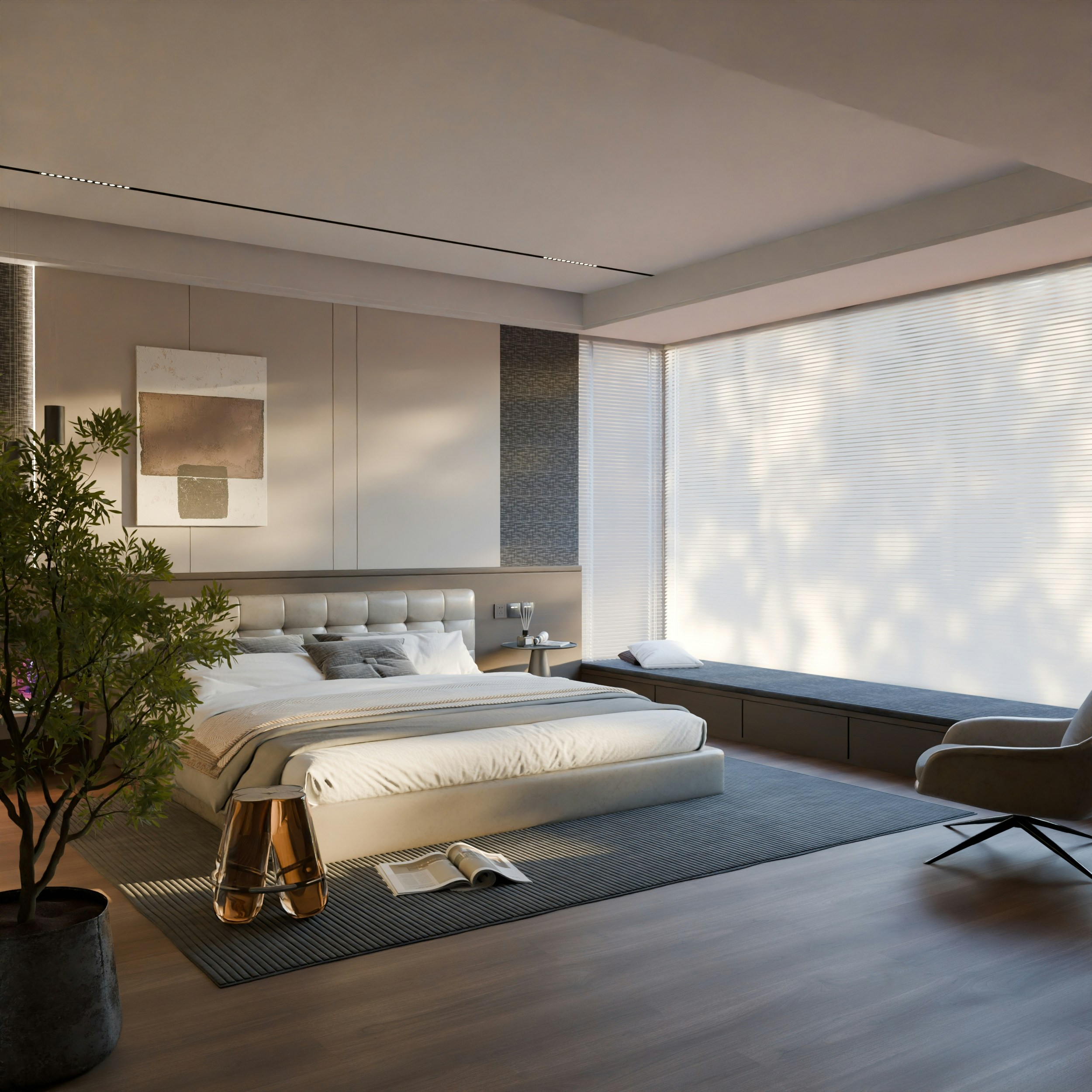
Try this exact combination: crisp white cotton sheets, a relaxed linen duvet, one chunky knit throw at the foot, and a flat-weave wool rug. That is four textures, one palette, and zero extra ornaments. This section is the answer to “cozy, not cold”: warmth comes from these inputs — palette, texture, and light — not from the number of objects in the room.
3. Choose Natural Wood for Warmth
Natural wood is one of the easiest ways to keep a minimalist bedroom from feeling clinical. An oak bed, walnut nightstand, ash dresser, or simple wooden bench introduces warmth without requiring visual clutter.
Choose one dominant wood finish and use smaller natural accents around it. A woven basket, bamboo tray, or rattan lamp can reinforce the organic feeling while keeping the overall design cohesive.
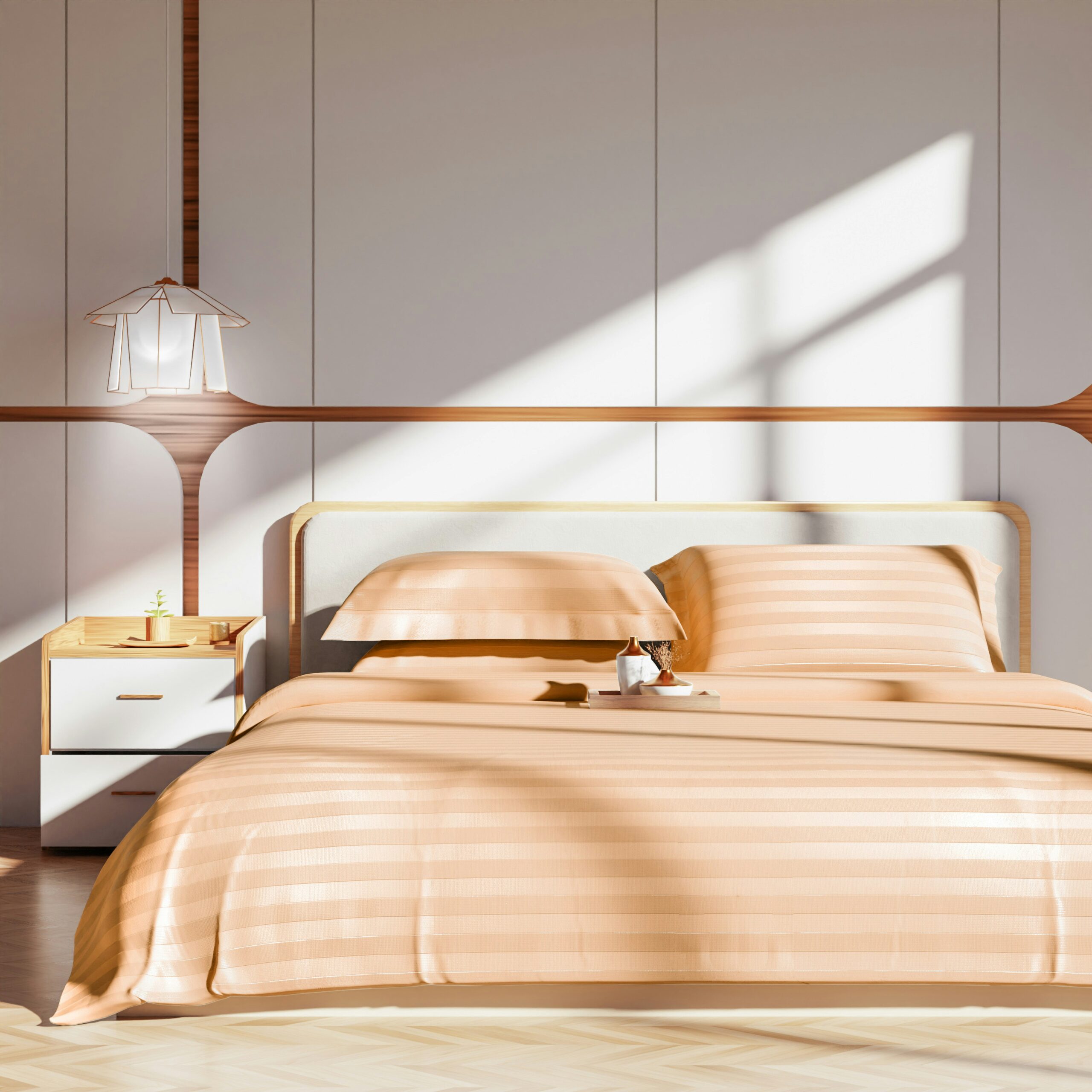
Keep it to one dominant wood: an oak bed frame, with smaller accents limited to a woven basket for throws and a bamboo tray on the dresser. No second wood tone is introduced.
4. Make the Bed the Visual Anchor for Minimalist Bedroom ideas
A minimalist bedroom works best when the bed has a clear, uncomplicated silhouette. Look for a low-profile frame, softly upholstered headboard, or streamlined wood design with little ornamentation.
Then give the bedding enough attention to make the focal point feel luxurious. Crisp white sheets, stone-colored linen, and two or three carefully selected pillows can look far more elevated than a bed covered in layers of decorative cushions.
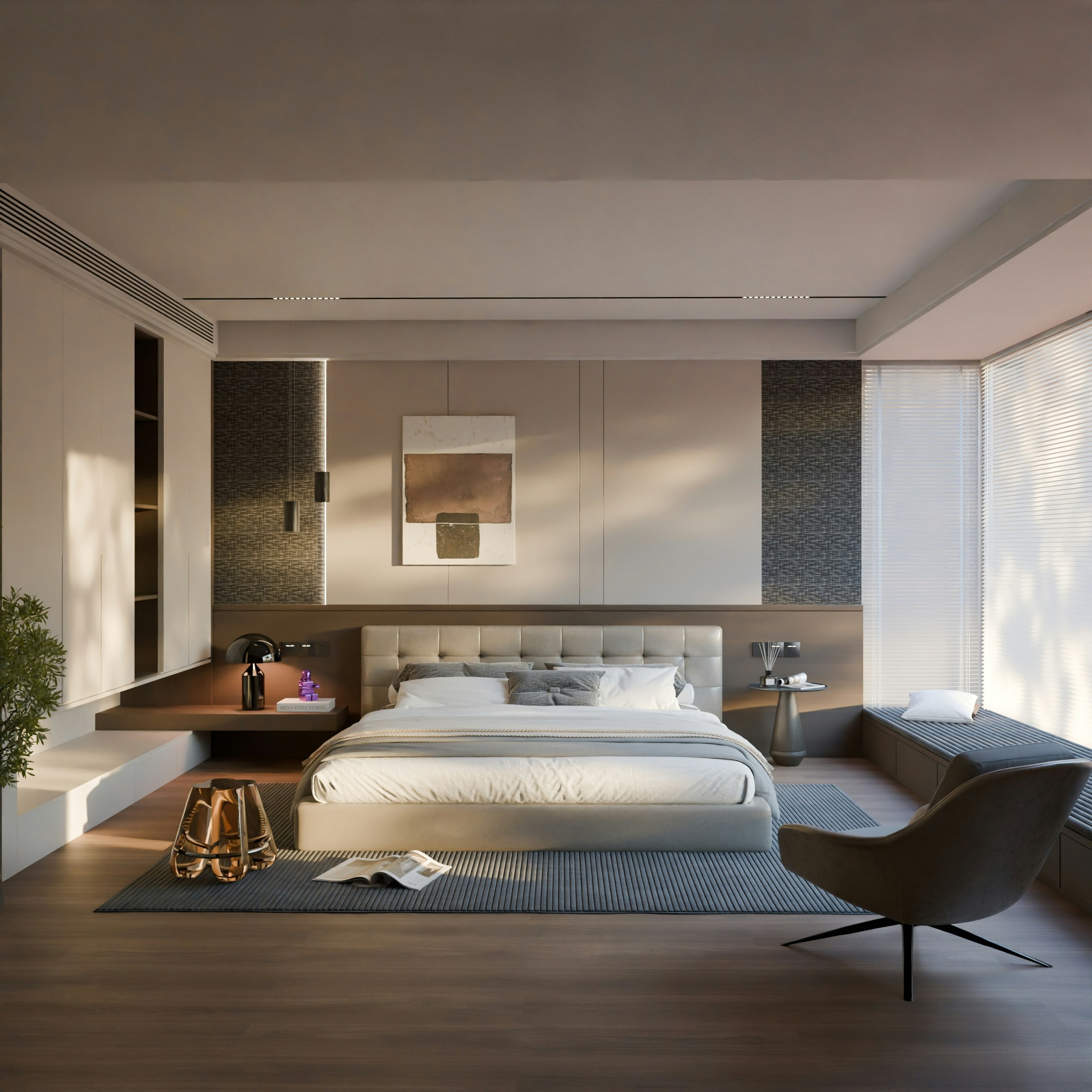
Use a low upholstered bed in stone linen, with two sleeping pillows plus one lumbar cushion only. The bedding formula is simple: a linen or cotton base, one wool or knit throw, and stop there. In larger or master rooms, symmetry helps: matching nightstands and one pair of simple lamps give the room order without adding objects.
5. Use Low-Profile Furniture to Create Breathing Room
Furniture that sits lower and has a lighter visual footprint can make a minimalist bedroom feel more spacious. Consider a slim nightstand, a low dresser, an armless chair, or a simple bench at the foot of the bed.
Every piece should have a reason to be there. If a chair is useful for reading or getting dressed, keep it. If a table only collects objects, it may be better left out.
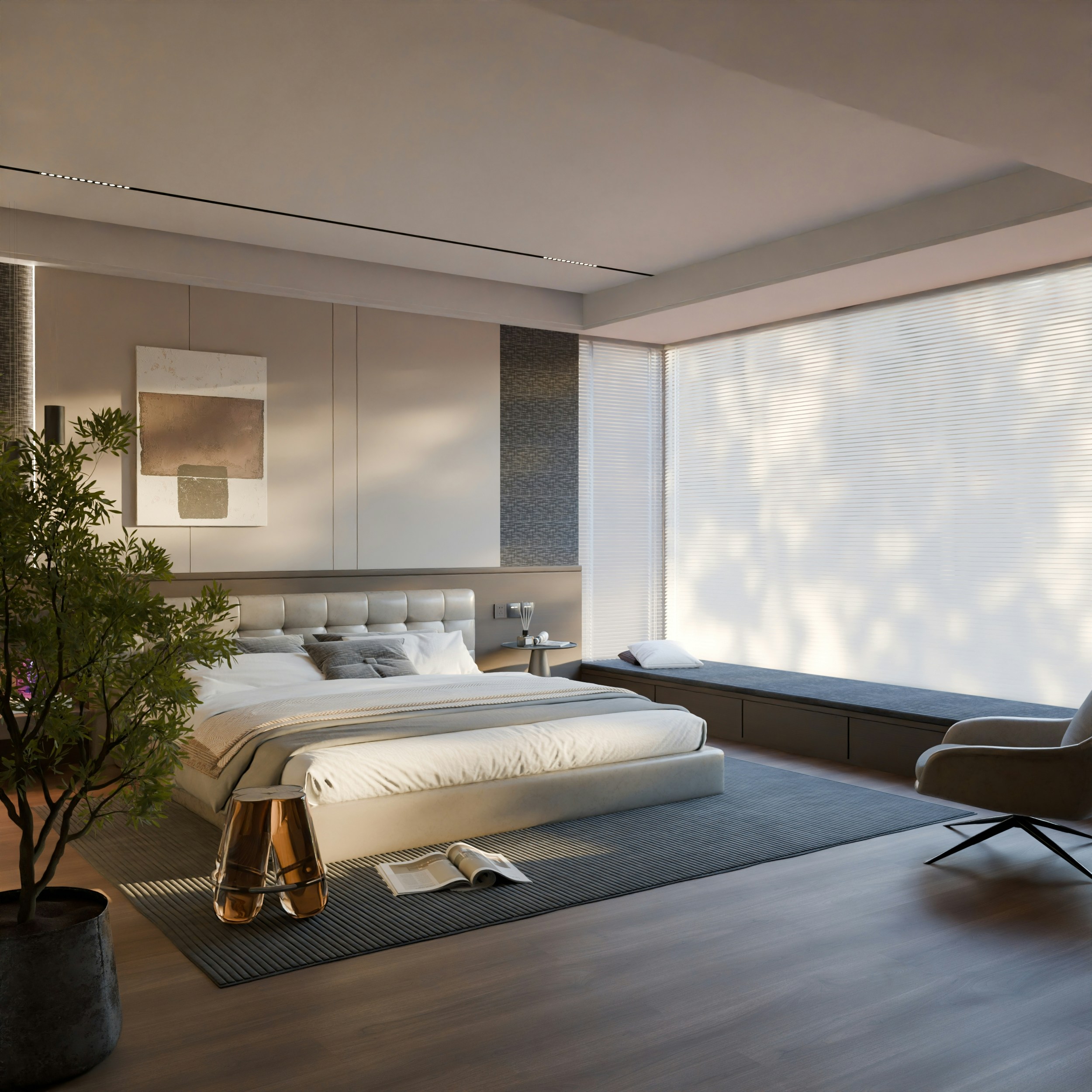
A count that fits is bed plus two slim nightstands plus one dresser plus one bench, and nothing else. Keep the nightstands at or below mattress height so the wall stays visible.
6. Hide Everyday Clutter With Smart Storage
Clean surfaces are essential to a minimalist bedroom, but real bedrooms still need chargers, books, clothing, and personal items. Solve that tension with closed storage. Under-bed drawers, built-in wardrobes, streamlined dressers, and nightstands with drawers can keep daily essentials accessible without putting them on display.
A useful rule is to give frequently used items a dedicated home. Once everything has a place, maintaining the calm look becomes much easier.
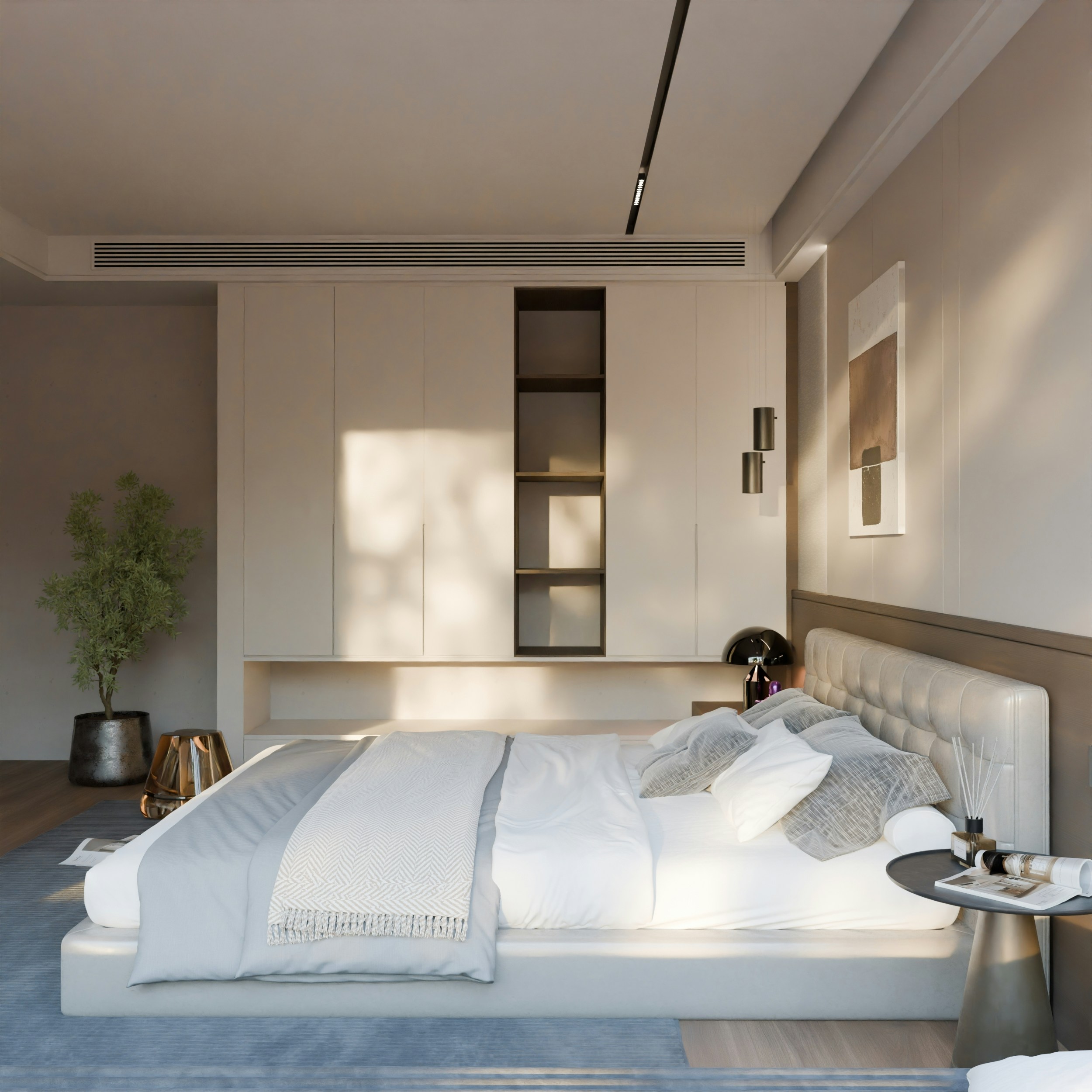
Zone it by zone: under-bed drawers for spare bedding, a nightstand drawer for charger, book, and hand cream, and a closed wardrobe for clothes. Nothing is stored on top of the dresser.
7. Add One Sculptural Light Fixture
Lighting is an opportunity to add personality without filling the room with accessories. Choose one memorable pendant, sculptural bedside lamp, paper lantern, or slim wall sconce.
Warm light is especially effective in a minimalist bedroom because it softens neutral finishes in the evening. Keep the fixture visually distinctive but avoid combining several competing statement pieces.
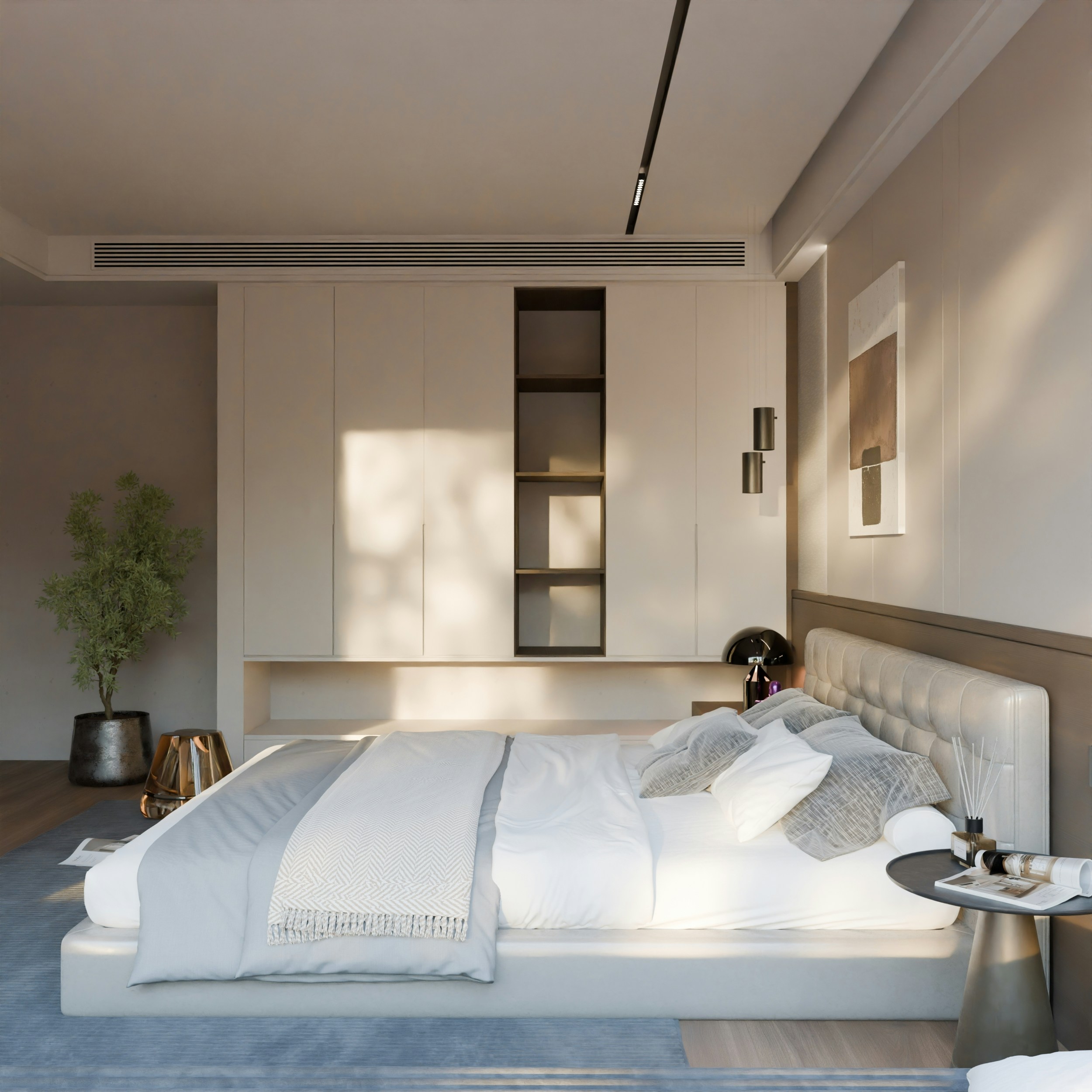
Use one paper pendant over the bedside plus one slim wall sconce for reading, both on warm 2700-3000K bulbs. The nightstand stays lamp-free.
8. Give the Wall Behind the Bed Subtle Character
You do not need a dramatic feature wall to personalize a minimalist bedroom. A muted sage, dusty clay, warm gray, or soft mushroom shade can create a quiet backdrop behind the bed.
Another option is limewash-style texture, simple paneling, or a restrained plaster finish. Keep the treatment subtle enough that the bed and textiles remain the main visual focus.
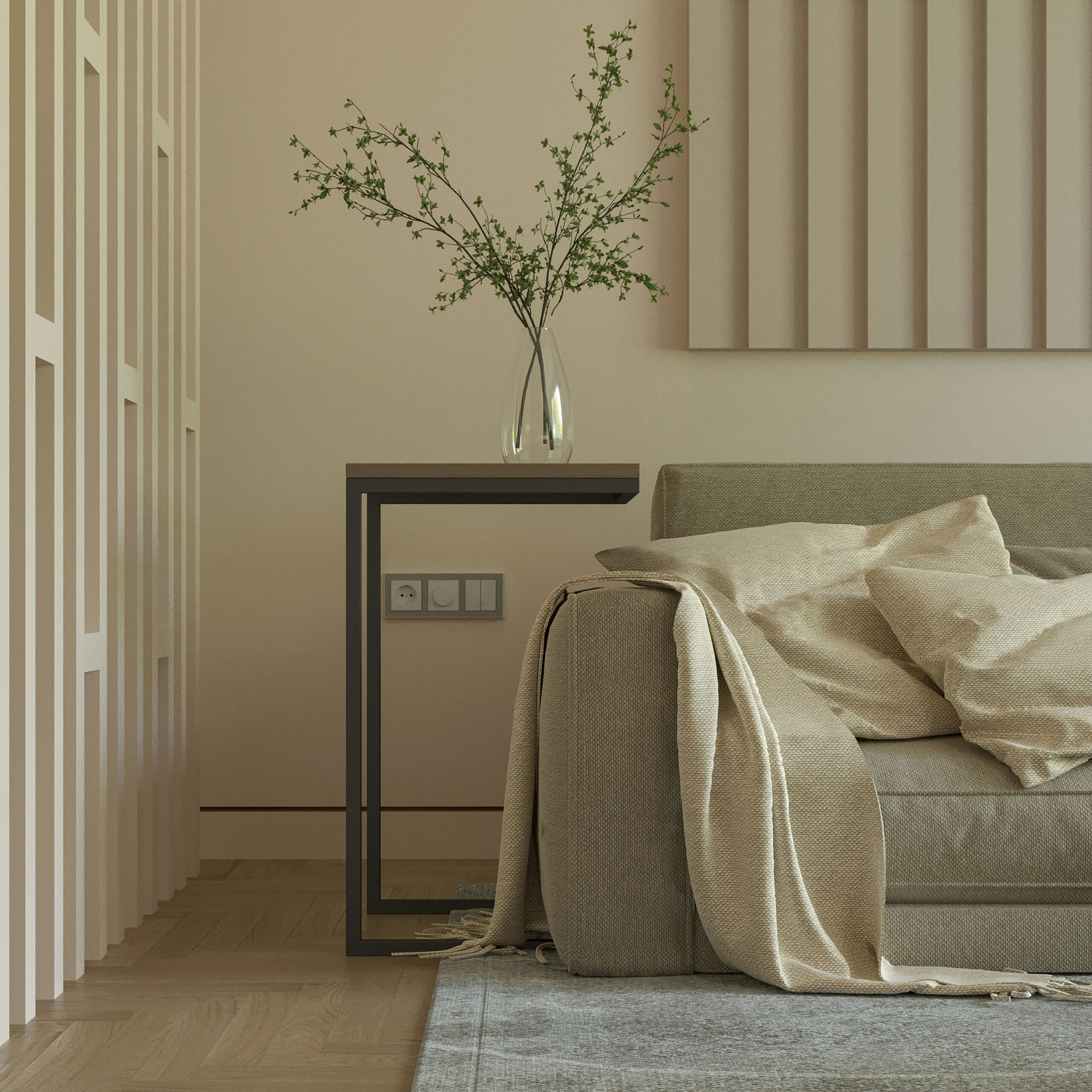
Choose one quiet treatment only: a dusty-clay limewash panel behind the bed, or wood slats just around the headboard. Renters can use removable textured wallpaper in the same tone. For the same quiet backdrop in deeper tones, see these dark elegant bedroom ideas.
9. Display Personal Art With Plenty of Negative Space
Personality belongs in a minimalist bedroom, and artwork is one of the best ways to show it. Instead of covering an entire wall, choose one large print or a small group of related pieces.
Repeat a frame finish—black, oak, or warm white—to keep the display cohesive. The artwork can be expressive; the presentation can remain disciplined. This balance lets meaningful pieces stand out without turning the room into a gallery wall full of competing focal points.
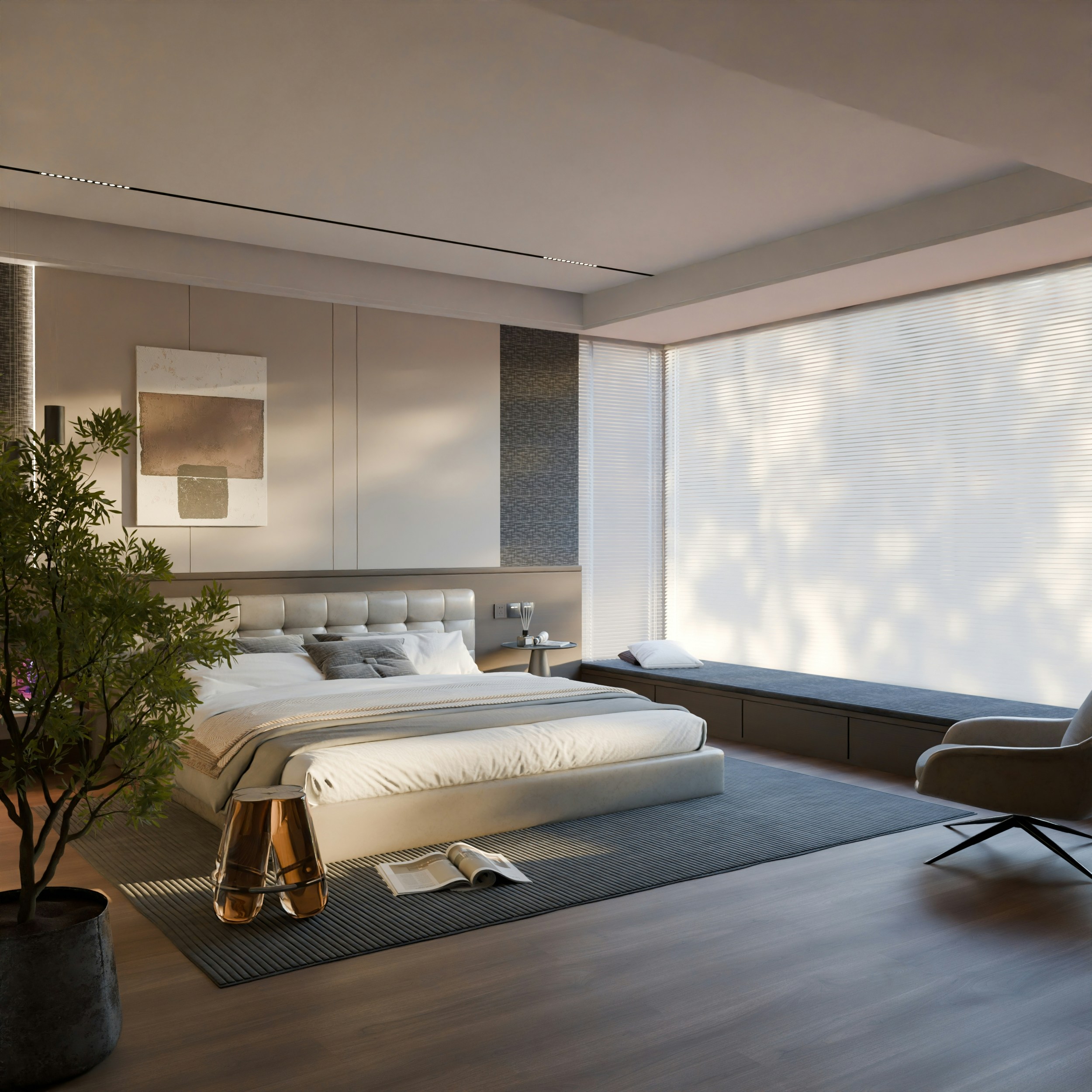
Use one large framed black-and-white travel print above the bed in a black frame, repeated nowhere else. Every other wall stays empty.
10. Use a Statement Mirror to Expand the Room
A large mirror can make a minimalist bedroom feel brighter and more open by reflecting daylight and visually extending the room. Choose a simple arched, rounded, or rectangular shape with a slim frame.
Leaning an oversized mirror against the wall can create a relaxed designer feel, while a wall-mounted version works well when floor space is limited. Either way, let the mirror remain a single strong element rather than surrounding it with lots of small decorations.
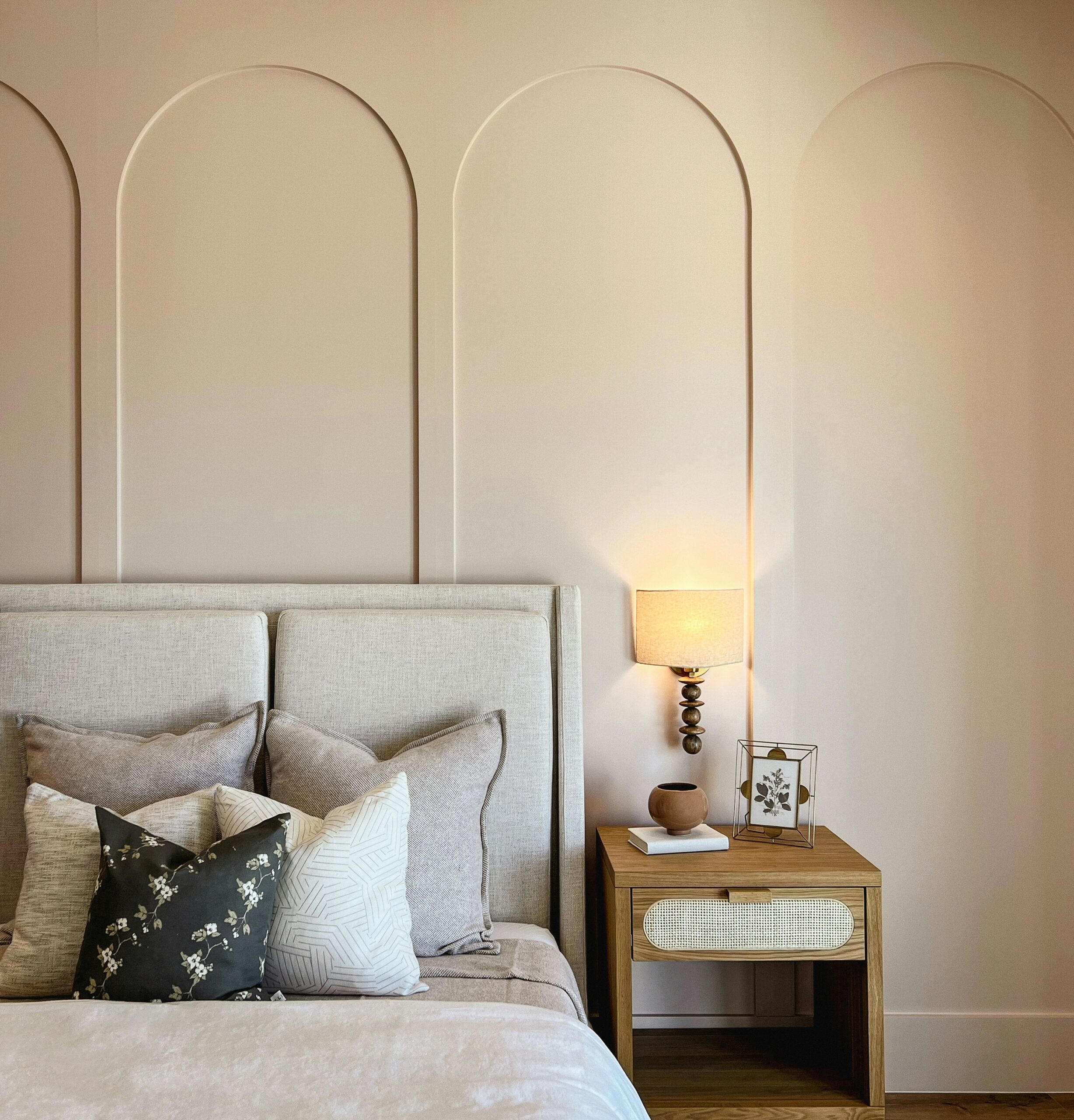
Use one arched mirror in a slim oak frame, leaned against the wall opposite the window so it doubles the daylight. Nothing clusters around its base.
11. Bring in One Meaningful Personal Detail
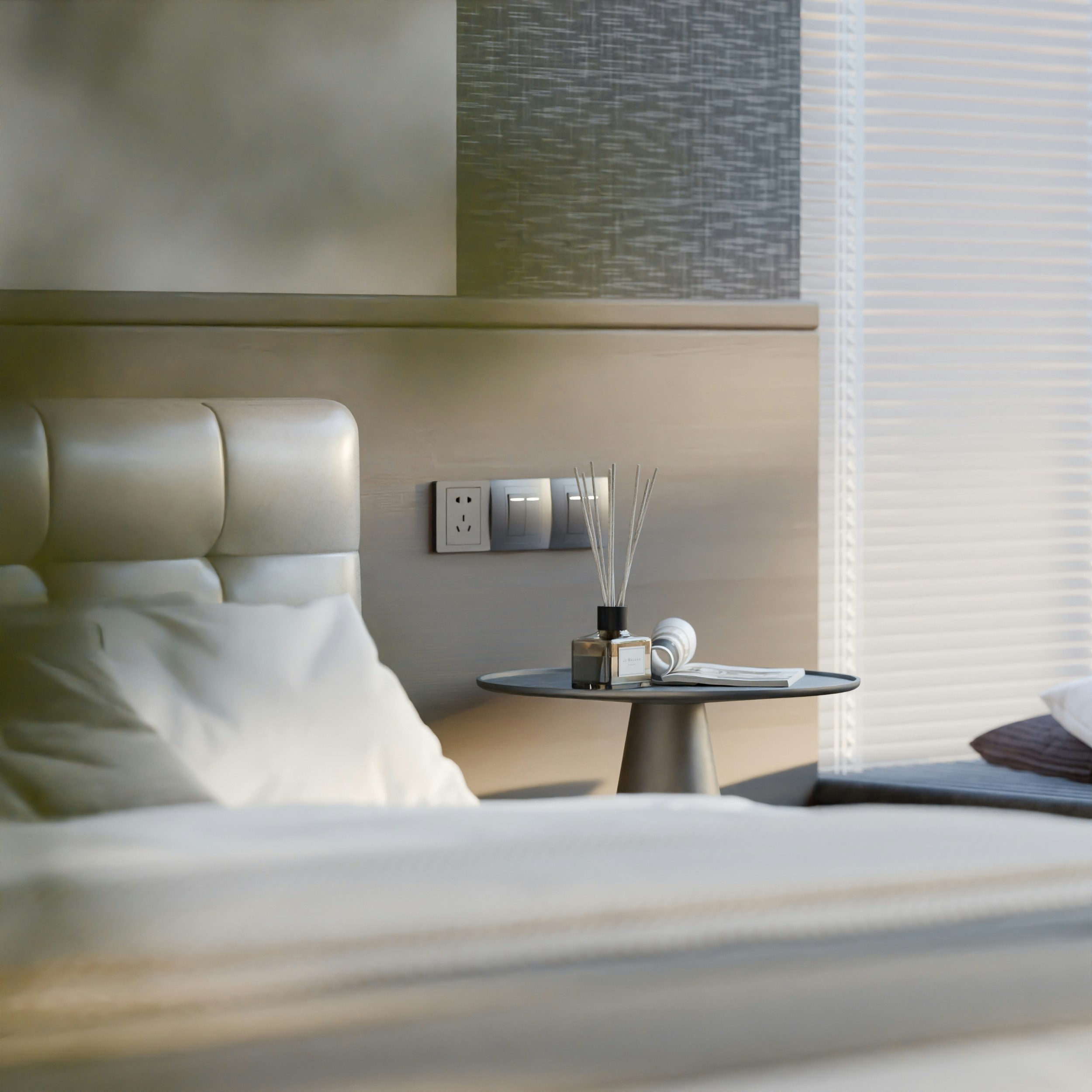
The easiest way to keep a minimalist bedroom from feeling generic is to include something that actually belongs to you. It could be a framed travel photograph, a handmade ceramic, a vintage book, a favorite textile, or a small object with sentimental value.
Choose one or two meaningful pieces instead of displaying everything at once. Personality becomes stronger when it is edited rather than scattered across every surface.
Use one handmade ceramic vase from a trip, placed on the dresser alone. The rest of the collection stays stored and rotates in one piece at a time.
12. Keep the Styling Intentional From Every Angle
Before you finish the room, stand at the doorway and look at the whole composition. Is your eye immediately pulled toward the bed? Are the colors connected? Do the furniture pieces leave enough breathing room? Are there objects that could be removed without reducing comfort or function?
These final edits are what turn a collection of nice furniture into a convincing minimalist bedroom. The room should feel effortless, but the calm usually comes from thoughtful decisions.
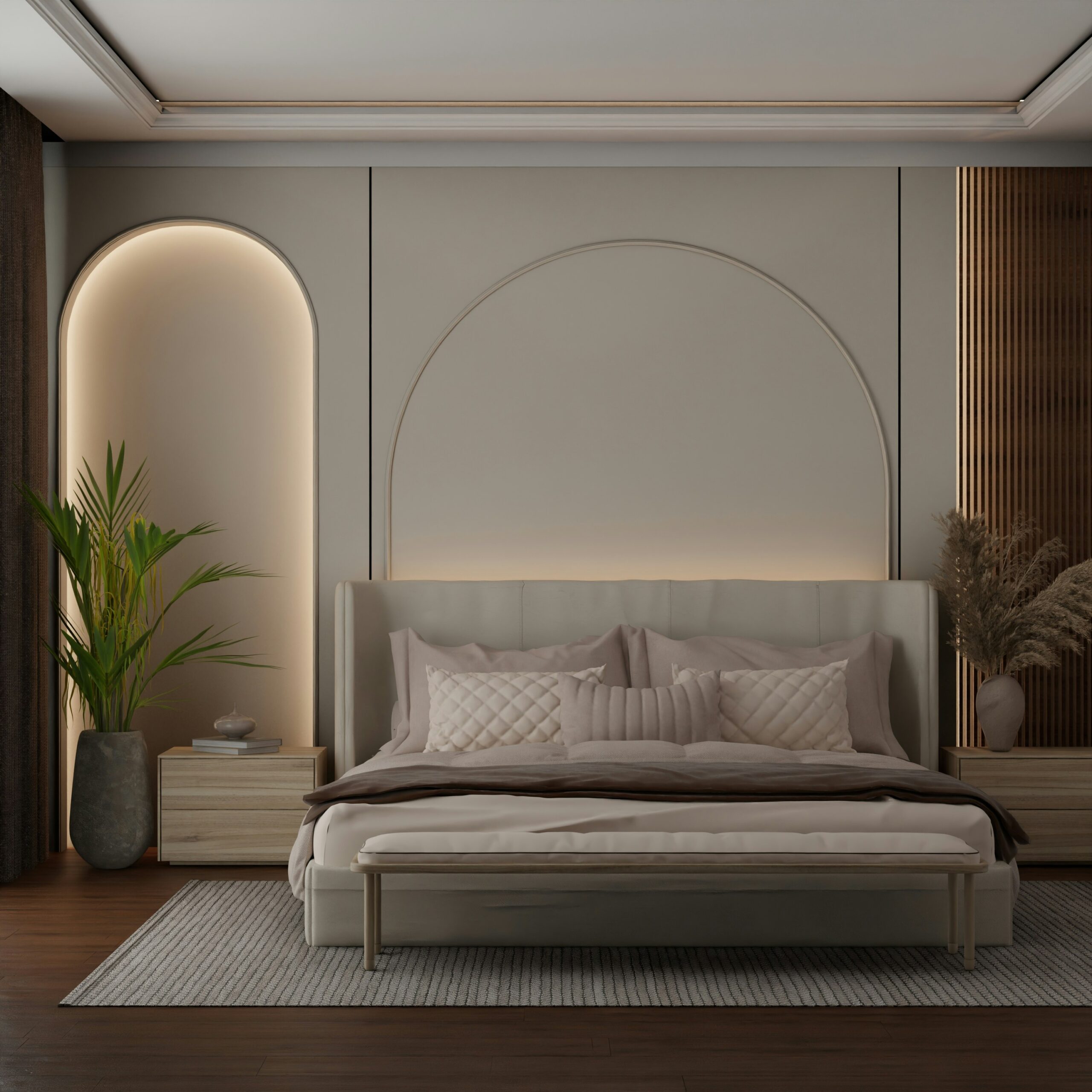
Run this 60-second doorway test: your eye lands on the bed first, the colours connect, the floor is clear, and anything untouched for a week leaves the room.
13. Try a Japandi Direction for a Warmer Minimalism
Japandi blends Japanese restraint with Scandinavian warmth, so it suits a minimalist bedroom that still needs to feel inviting. Keep furniture low and close to the floor, let pale woods carry the room, and use darker accent woods sparingly so the contrast feels deliberate rather than busy.
Try a low platform bed, one dark-walnut stool, linen bedding in warm sand, and a single ceramic on the nightstand. Add clay, charcoal, or muted-olive notes only as small accents, and keep what sits out on display stricter than in a standard minimalist room — one or two pieces, not a collection.
Quick tips:
- Keep furniture low and close to the floor.
- Let one dark accent wood stand out against pale woods.
- Limit open display to one or two pieces.
14. Make Minimalism Work in a Small Room or a Rental
In a small room, set the bed position first, because it decides what else can fit and how much floor stays clear. Choose furniture with visible legs and a rug that extends past each side of the bed, so more floor shows and the room reads larger than its measurements.
Renters can get the same effect without drilling or painting: let the palette live in the bedding, use a plug-in sconce instead of a wired light, add removable wallpaper to one accent wall, and choose freestanding storage instead of built-ins.
Quick tips:
- Place the bed first, then fit everything else around it.
- Show more floor with slim legs and a correctly sized rug.
- Use bedding, plug-in light, and removable wallpaper in rentals.
15. Run a Keep-or-Remove Pass Before You Buy Anything
Work surface by surface, in this order: nightstand first, then the dresser top, then the floor, then the wardrobe. Clearing one surface at a time keeps the pass manageable and shows progress quickly.
For each item, ask whether it is used daily, supports rest, or is the one focal or personal piece. Anything untouched for a week leaves the room. Buy nothing until the emptied room shows what is actually missing.
Quick tips:
- Start at the nightstand, then the dresser top, floor, and wardrobe.
- Keep only daily-use, rest-supporting, or focal pieces.
- Buy nothing until the empty room shows the gap.
How to Keep Minimalism Personal, Not Generic
The secret to a memorable minimalist bedroom is editing, not emptiness. Start with a calm foundation, introduce natural materials, layer tactile fabrics, and then choose a few details that genuinely reflect your taste.
Minimalist Bedroom Ideas FAQs
How do I make a minimalist bedroom cozy, not cold?
Warm the inputs, not the object count. Start with warm neutrals and one light wood accent, then layer three bed textures: linen, wool, and one woven piece, and finish with low, warm light from a wall sconce or a pendant.
What colors work best in a minimalist bedroom?
Build the base from warm white, beige, oatmeal, taupe, and muted grey, then add one accent only, such as sage, clay, olive, or blue-grey. Avoid stark blue-white walls and grey-only schemes, which read cold without a warm wood or texture to balance them.
Can a minimalist bedroom work in a small room or a rental?
Yes, and small rooms often gain the most, because the system is mostly removal. Renters can use a bedding palette, plug-in sconces, removable wallpaper, and freestanding storage, so nothing permanent is needed.
What should I keep on a minimalist nightstand?
Very little belongs there: the book you are reading and one small closed spot, such as a tray or a drawer, for tiny items. Move the lamp to the wall, so the surface starts empty. Anything untouched for a week belongs elsewhere.
How should I layer minimalist bedding?
Layer by texture, not by piece count. Start with a lightest-neutral linen or cotton base, add one wool or knit throw at the foot, then stop. Two textures in different finishes read warmer than four layers of the same smooth fabric.
Do I have to get rid of everything to have a minimalist bedroom?
No, minimalism is intentionality, not emptiness. Keep what serves sleep or dressing, plus one or two meaningful pieces, and let the rest go gradually, one surface at a time.
Final Thoughts
A minimalist bedroom should make it easier to rest, not make you feel like you are living in a showroom. Use fewer but better pieces, give every object breathing room, and let texture, natural materials, lighting, and personal art provide the character.
When the essentials are carefully chosen, even a quiet room can feel distinctive. That is the real advantage of minimalist design: simplicity creates the space, while your choices make it yours.