18 Cozy Winter Bedding Ideas for Warm Layers That Still Sleep Cool
Winter bedding ideas start with one rule: layer thin, breathable pieces you can add or remove, instead of one heavy blanket that traps heat. A good winter bed pairs brushed flannel or cotton sheets with a wool blanket, a duvet matched to your room temperature, and a throw folded at the foot, so you stay warm at bedtime and cool by morning. This guide gives you 18 layered beds for cold sleepers, hot sleepers, and guest rooms, with fabric facts and a simple layering order for each one.
Build the bed from the skin outwards: fitted sheet, flat sheet, a light wool blanket, then the duvet, and finally a throw folded across the foot, so every layer can be pushed aside on its own through the night. Brushed cotton flannel is the warmest sheet choice, and a heavyweight flannel around 170 GSM feels noticeably warmer than a light 120 GSM one, while cotton percale and linen stay cooler because their open weave lets air move freely. If you are planning the whole room, not just the bed, these Master bedroom decor ideas show how bedding, lighting, and colour work together, and the same layering logic applies there too. Keep the bedroom at 16 to 19 degrees Celsius, choose a duvet by tog rating rather than thickness alone, and let the top throw be the layer you reach for first, because it warms you without warming the whole bed.
Key Takeaways
What is the best way to layer winter bedding? Work from the skin outwards: fitted sheet, flat sheet, wool blanket, duvet, then a throw at the foot. Each layer should move on its own so you can add or remove warmth without rebuilding the bed.
How warm should flannel sheets be? Look for heavyweight brushed cotton flannel around 170 GSM for a genuinely warm sheet. Lighter flannel near 120 GSM suits mild winters or sleepers who run warm.
Can a hot sleeper use winter bedding? Yes, with breathable layers. Choose cotton percale or linen sheets, a lightweight quilt instead of a heavy duvet, and a thin throw you can kick off, so the bed feels warm at bedtime and cool by 3 a.m.
How many layers does a winter bed need? Three to five layers cover most sleepers. Cold sleepers use all five, hot sleepers use three, and a guest bed sits at five so every guest can adjust it to their own comfort.
1. How Does a Flannel Sheet Set Warm a Cold Sleeper First?
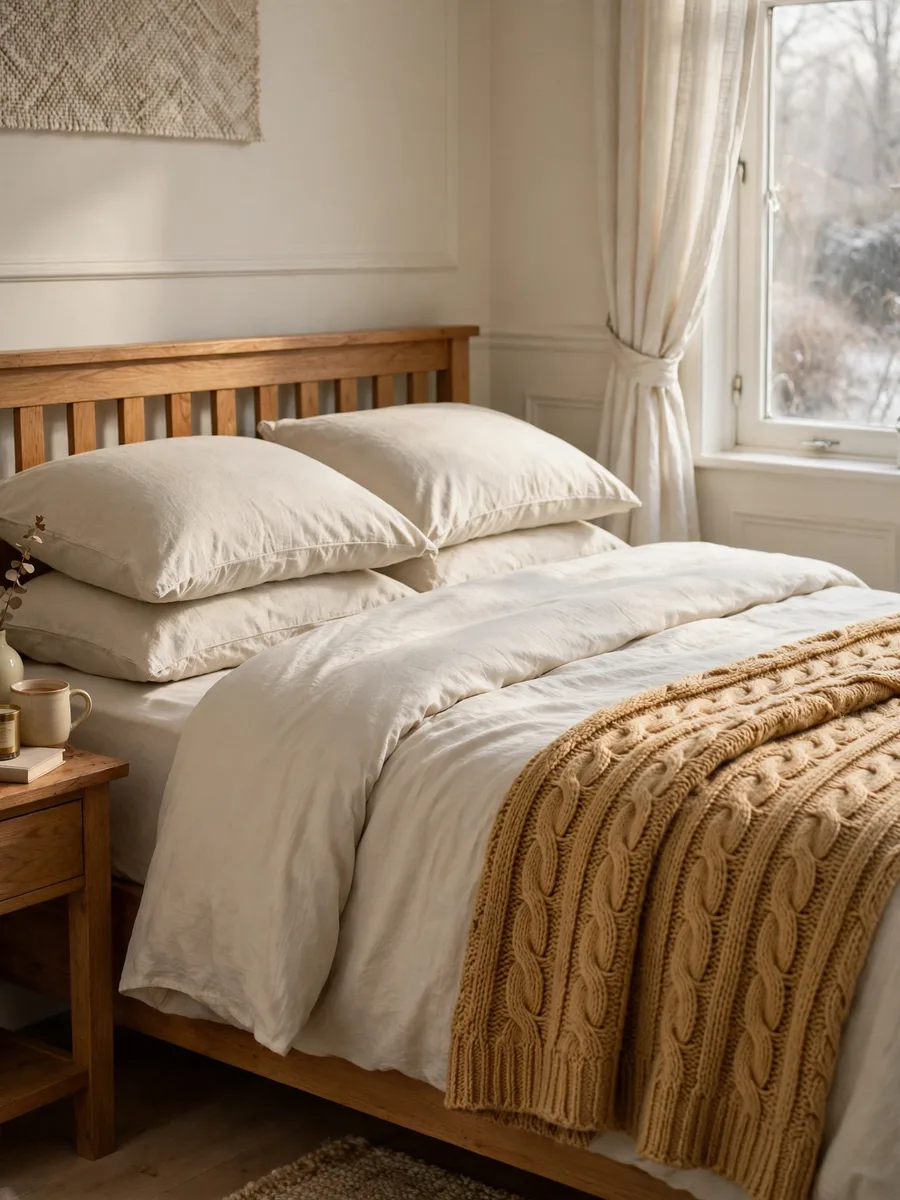
A brushed flannel sheet set warms a cold sleeper before any blanket is added, because the raised cotton fibres trap warm air against the skin. Heavyweight flannel around 170 GSM feels soft, cosy, and noticeably warmer than plain cotton.
A concrete example is an ivory flannel fitted sheet and flat sheet in a honey and oatmeal bedroom, with the flat sheet folded back over a cream wool blanket and a chunky honey knit throw at the foot. The brushed surface feels warm the moment you climb in, so the bed needs no preheating, and the oatmeal pillowcases pick up the warm tones of the wooden bed frame. Wash flannel on a gentle cycle and skip fabric softener, which flattens the brushed fibres.
Quick tip: Choose 170 GSM flannel for cold rooms and 120 GSM for mild winters.
2. Why Does a Wool Blanket Belong Between Sheet and Duvet?

A wool blanket between the sheet and the duvet adds warmth without weight, because wool fibres trap air and still breathe. It also regulates temperature, so it warms you up and then stops overheating you.
A concrete example is a charcoal wool blanket with a cream ticking stripe laid flat over ivory sheets, under a light grey duvet, with mustard cushions against the headboard for a warm accent. The blanket sits close to the body where it does the most work, while the duvet stays loose on top, and the ticking stripe gives the bed a tailored, classic look. Fold the blanket back with the sheet at the top so both layers turn down together.
Quick tip: Lay the wool blanket flat, never bunched, so it insulates evenly.
3. How Heavy Should a Winter Duvet Be for a Cold Sleeper?
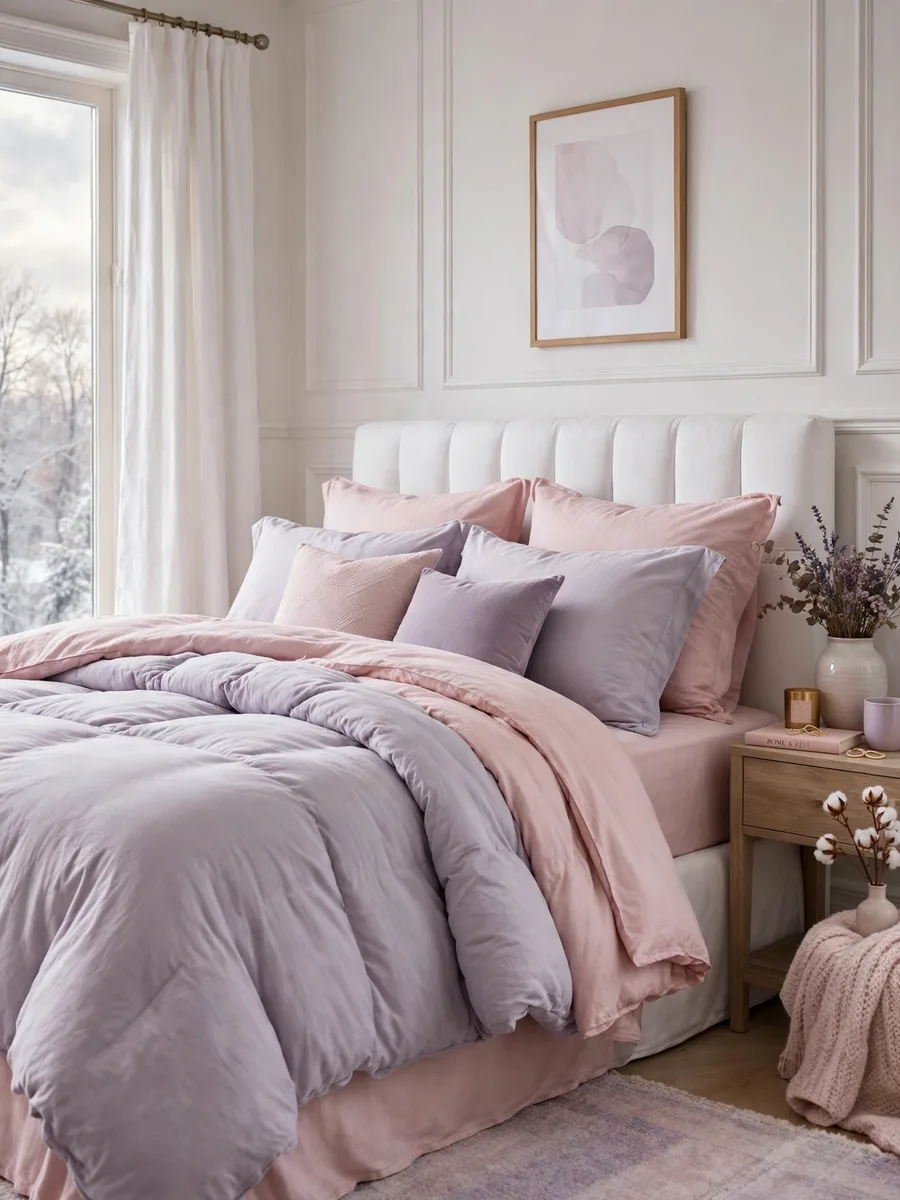
A cold sleeper needs a winter duvet of 10.5 to 13.5 tog, with down or a high-loft synthetic fill for the warmest result. Tog measures insulation, not thickness, so check the label rather than judging by how puffy the duvet looks.
A concrete example is a blush and lavender bedroom with a 13.5 tog duck down duvet in a pale lavender cover, layered over blush flannel sheets and a thin cream wool blanket. The duvet lofts high over the bed, the blush tones keep the room soft rather than heavy, and the lavender pillow shams add a cool contrast that stops the palette feeling too warm. Air the duvet outside on a dry day once a month to keep the fill fresh.
Quick tip: Match tog to room temperature, not to how cold you feel at bedtime.
4. What Makes a Velvet Coverlet the Coziest Top Layer?

A velvet coverlet is the coziest top layer because its dense pile feels warm and soft the moment it touches your hands. It adds instant luxury and a rich colour, while the layers underneath do the real insulating work.
A concrete example is a crisp white bed dressed with white percale sheets and a light wool blanket, finished with a cobalt velvet coverlet folded back to show the white layers beneath. The cobalt reads bold and glamorous against the white, the velvet catches the lamplight beautifully, and two white euro pillows keep the look balanced. Brush the velvet lightly after washing so the pile stays even.
Quick tip: Fold velvet back at the top so it frames the pillows, not the whole bed.
5. How Do Chunky Knit Throws Add Warmth Without Weight?
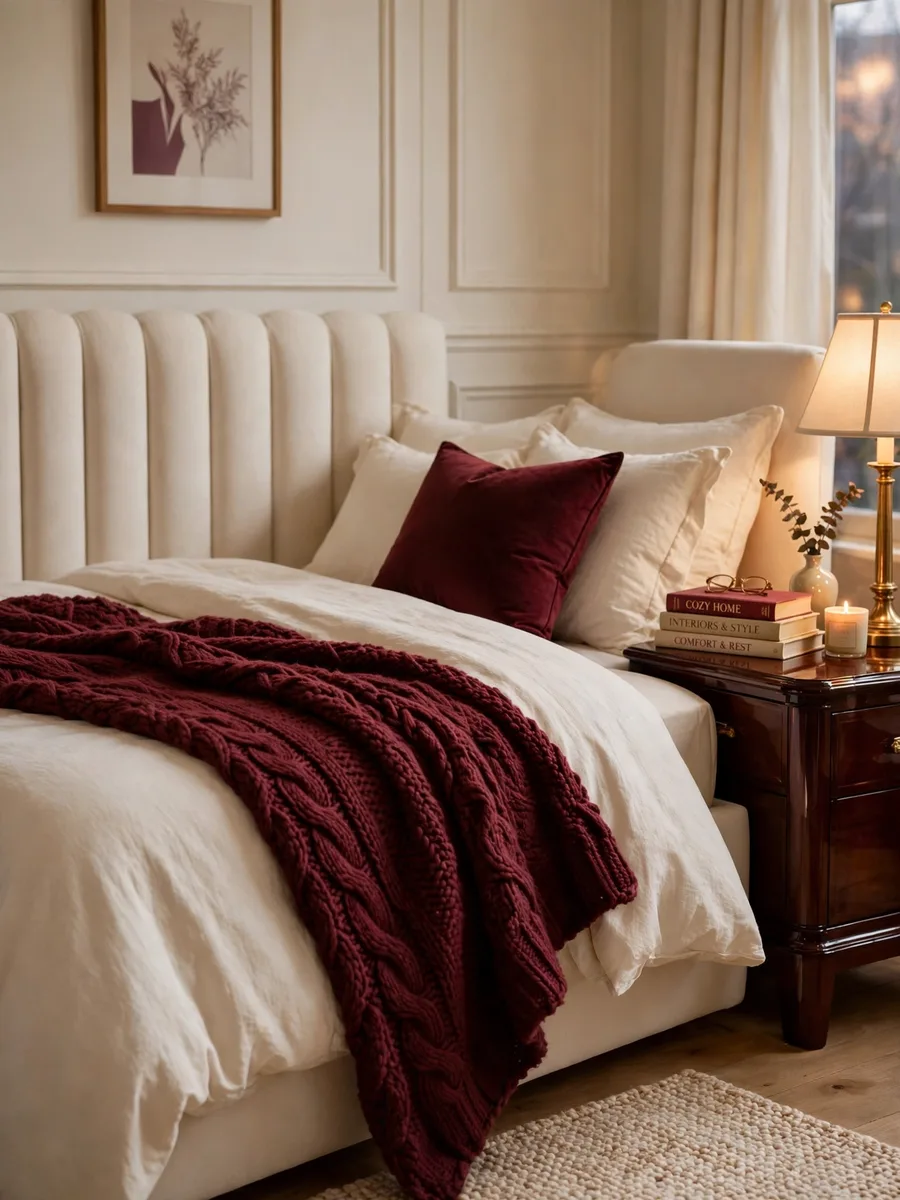
A chunky knit throw adds warmth without weight because its thick yarn traps air in open loops, warming you like a blanket at half the bulk. It is the easiest layer to grab, fold, or kick off during the night.
A concrete example is a cream winter bed with a burgundy chunky knit throw draped diagonally across the foot, its thick cable stitches catching the light, with a matching burgundy cushion and a small stack of books on the bedside table. The throw warms your feet first, which is where cold sleepers feel the chill earliest, and its deep burgundy colour turns a plain cream bed into a winter scene. Drape it loosely rather than tucking it in, so it stays easy to reach.
Quick tip: Keep the throw at the foot, where cold feet need it most.
6. Why Is a Plaid Wool Blanket a Cold Sleeper Classic?
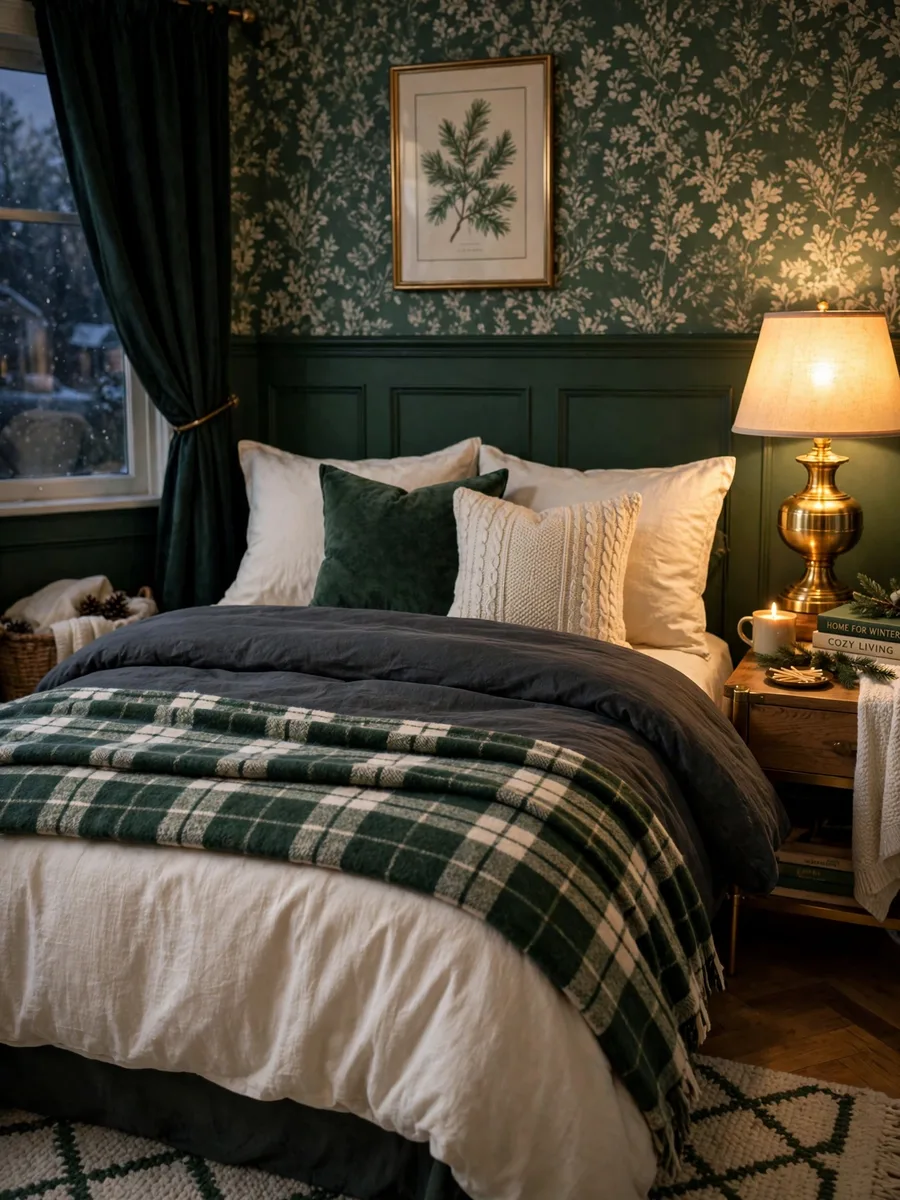
A plaid wool blanket is a cold sleeper classic because wool insulates even when damp, and the plaid pattern hides creases and wear. It is the blanket that has warmed winter beds for generations, and it still works.
A concrete example is a forest green and cream plaid wool blanket folded across the foot of a bed dressed in cream flannel sheets and a charcoal duvet, with a brass lamp glowing warm on the bedside table. The green plaid brings a cabin feeling to the room, the wool layer sits under the duvet for extra insulation on the coldest nights, and the brass light warms the whole colour story. Shake the blanket outside weekly to keep the wool fresh and lofty.
Quick tip: Use plaid as the accent layer so it never overwhelms the bed.
7. How Can a Hot Sleeper Stay Warm Without Overheating?
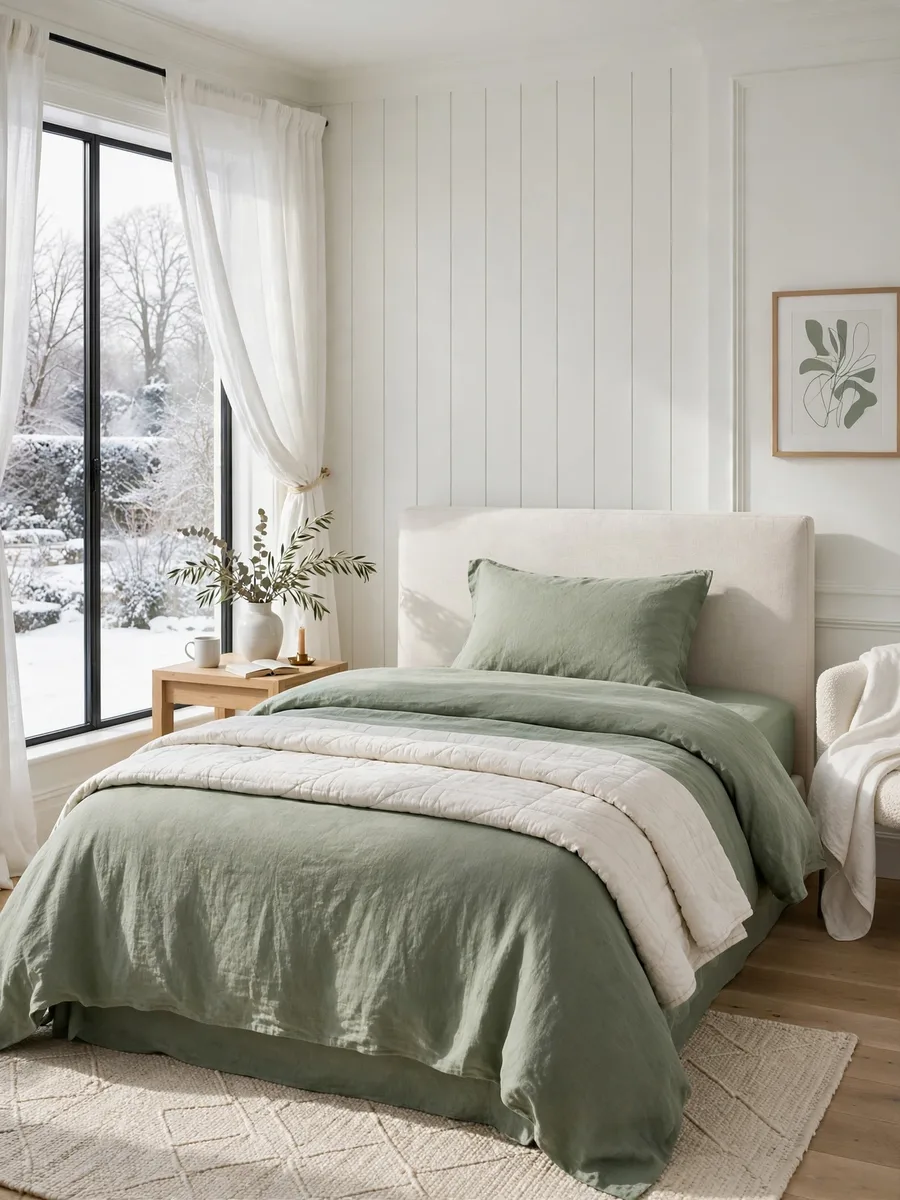
A hot sleeper stays warm without overheating by choosing breathable layers that can be peeled away one at a time. Cotton, linen, and light wool let heat escape, so the bed feels cosy at bedtime and cool by morning.
A concrete example is a sage and white bedroom with linen sheets, a thin cotton blanket, and a lightweight quilt folded at the foot instead of a heavy duvet. The sage linen duvet cover looks calm and wintry, the quilt waits at the foot for the coldest hour, and a single linen pillow keeps the bed simple. Keep one layer folded back at the top so you can pull it up or push it down without waking fully.
Quick tip: Start the night with fewer layers and add the quilt later if needed.
8. Why Are Cotton Percale Sheets the Hot Sleeper’s Winter Pick?

Cotton percale sheets are the hot sleeper’s winter pick because their crisp, open weave lets air move freely through the night. They feel cool and fresh against the skin, even under a warm duvet.
A concrete example is a pale grey bedroom with white cotton percale sheets, a light grey wool blanket, and a slim white duvet, with fresh eucalyptus sprigs in a vase on the bedside table. The percale stays crisp and cool where it touches the skin, the wool blanket adds warmth without trapping heat, and the eucalyptus scent keeps the room feeling fresh. Wash percale in cool water so the crisp finish lasts longer.
Quick tip: Pair percale sheets with a wool blanket, not a synthetic one.
9. How Does a Lightweight Quilt Replace a Heavy Duvet?
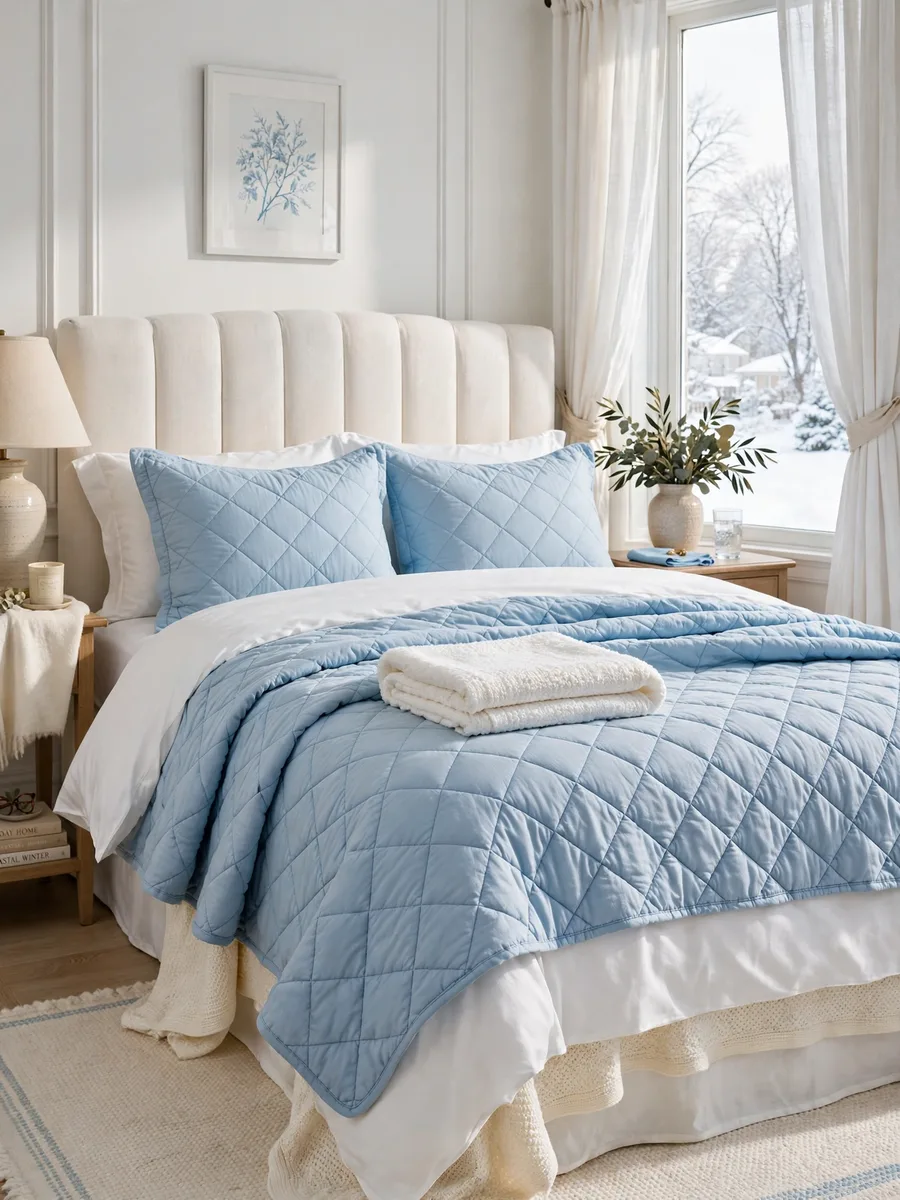
A lightweight quilt replaces a heavy duvet for a hot sleeper because it gives even, breathable warmth with far less bulk. Quilts also stay flat, so they never bunch up and trap heat around your body.
A concrete example is a sky blue and white bedroom with a lightweight cotton quilt in a soft sky blue stitch pattern, layered over white percale sheets and a thin cream blanket. The quilt covers the bed neatly to the floor on both sides, the blue stitching adds texture without weight, and a white throw folded at the foot waits for colder nights. Choose a cotton-filled quilt rather than polyester for the best breathability.
Quick tip: Use the quilt alone on mild nights and add a blanket underneath when it turns cold.
10. What Makes Linen Layers Work in a Warm Bedroom?

Linen layers work in a warm bedroom because linen fibres absorb moisture and release it quickly, keeping the skin dry all night. Linen also softens with every wash, so it feels better the longer you use it.
A concrete example is a terracotta and sand bedroom with washed linen sheets, a linen duvet cover in warm sand, and a terracotta linen throw folded across the foot. The relaxed, slightly rumpled linen looks effortless, the terracotta warms the room without heating the sleeper, and the sand tones keep the palette light. Research has found linen sheets improved sleep in a warm room, which makes them a smart winter choice for overheated bedrooms.
Quick tip: Let linen dry naturally so it keeps its soft, airy texture.
11. How Do You Layer a Bed You Can Kick Off at 3 A.M.?
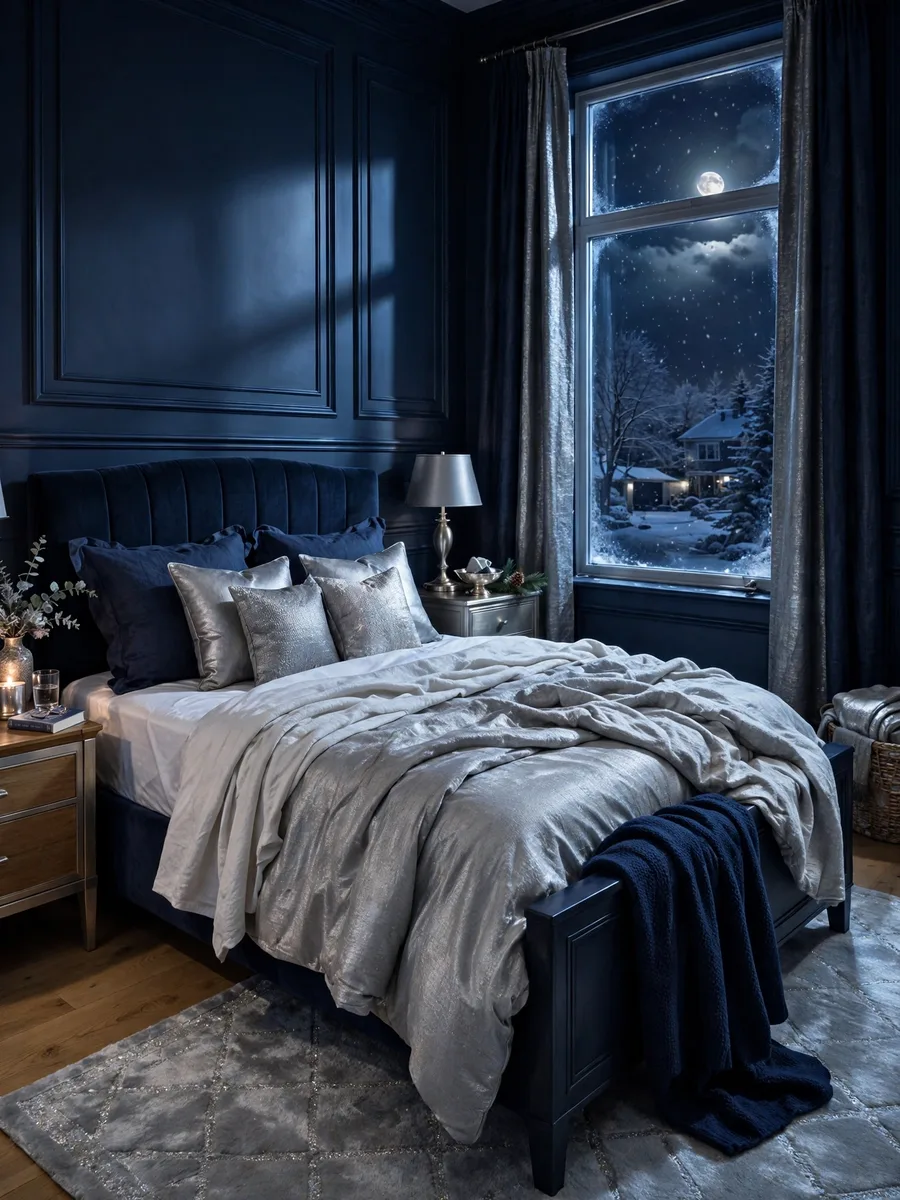
A bed you can kick off at 3 a.m. needs loose, separate layers with nothing tucked in tight. Each layer should slide away on its own, so a half-asleep sleeper can cool down without a struggle.
A concrete example is a navy and silver bedroom with a flat sheet, a light cotton blanket, and a silver-grey duvet all left loose and untucked, with a navy throw draped over the footboard. The silver duvet cover catches the moonlight, the navy throw adds colour without weight, and the loose layers mean one kick clears the heat in seconds. Leave the bottom corners untucked on purpose, even if it looks less tidy.
Quick tip: Never tuck in the top layers if you wake up hot at night.
12. Which Fabrics Breathe Best When the Heating Is On?

The fabrics that breathe best when the heating is on are cotton percale, linen, and light wool, because their fibres move air and moisture away from the skin. Velvet, sherpa, and faux fur feel warm, but they belong on top where they can be folded back.
A concrete example is a mint and cream bedroom with percale sheets, a linen-look cotton duvet cover, and a thin mint wool throw, with the heating set low and a window cracked open for fresh air. The mint tones feel cool and calm, the breathable layers stop the room feeling stuffy, and the throw is the only warm layer that touches the body directly. Use the table below to match each fabric to the sleeper it suits best.
| Fabric | Warmth | Best sleeper type |
|---|---|---|
| Brushed cotton flannel | Very warm | Cold sleeper |
| Cotton percale | Light | Hot sleeper |
| Washed linen | Light to medium | Hot sleeper |
| Wool blanket | Warm, breathable | Both sleeper types |
| Down duvet | Very warm | Cold sleeper |
| Velvet and faux fur | Warm, decorative | Cold sleeper, top layer only |
Quick tip: Put breathable fabrics next to the skin and warm fabrics on top.
13. How Do You Build a Five-Layer Guest Bed?
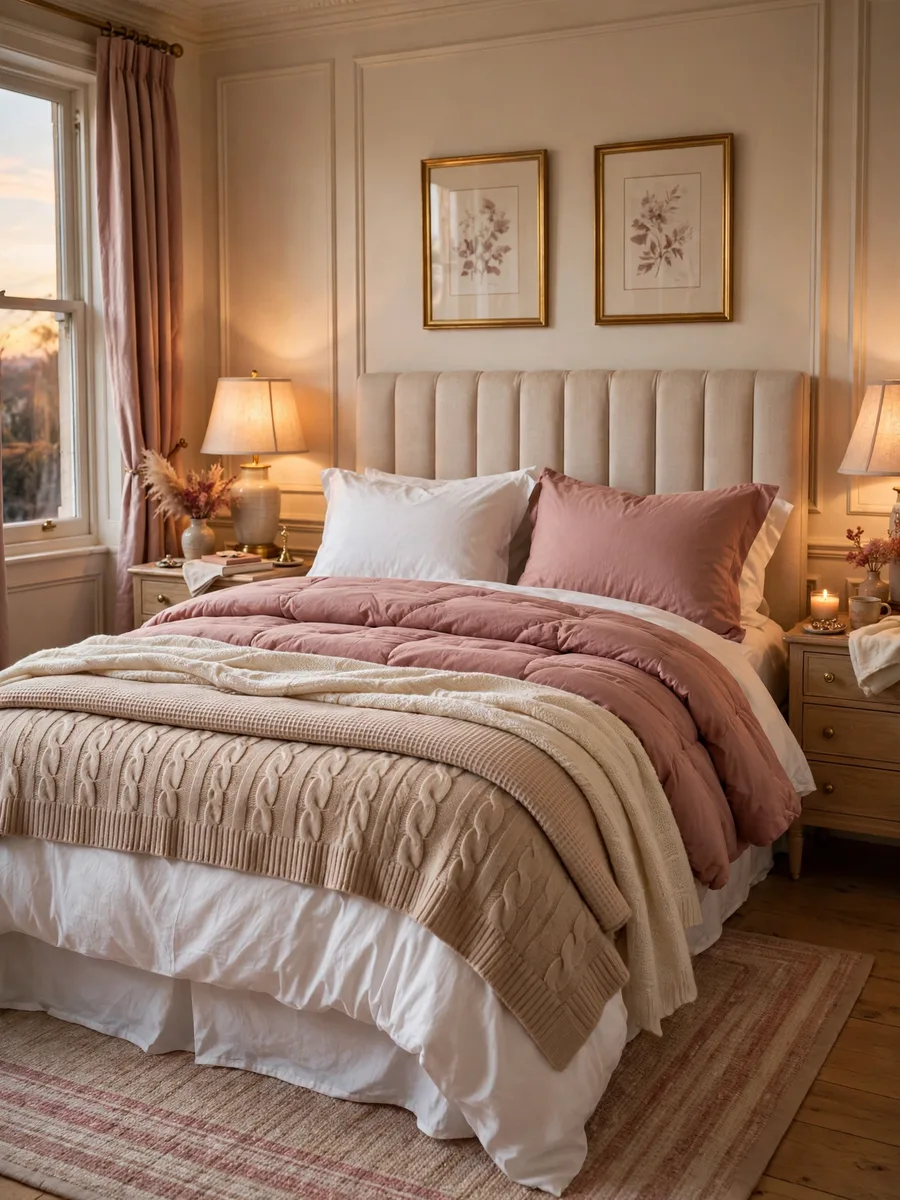
A five-layer guest bed gives every guest their own comfort setting, because each person can add or remove layers through the night. The layers run from fitted sheet to flat sheet, wool blanket, duvet, and a throw at the foot.
A concrete example is a dusty rose and champagne guest room with a five-layer bed: white cotton sheets, a champagne wool blanket, a dusty rose duvet, and a cream throw folded at the foot, with two pillows in different firmnesses on each side. Guests who run cold take all five layers, guests who run hot take three, and nobody needs to ask for an extra blanket. Leave a spare folded blanket on the chair so guests can help themselves.
Quick tip: Show guests the layers at check-in so they know they can adjust them.
14. What Makes a Guest Bed Feel Like a Boutique Hotel?
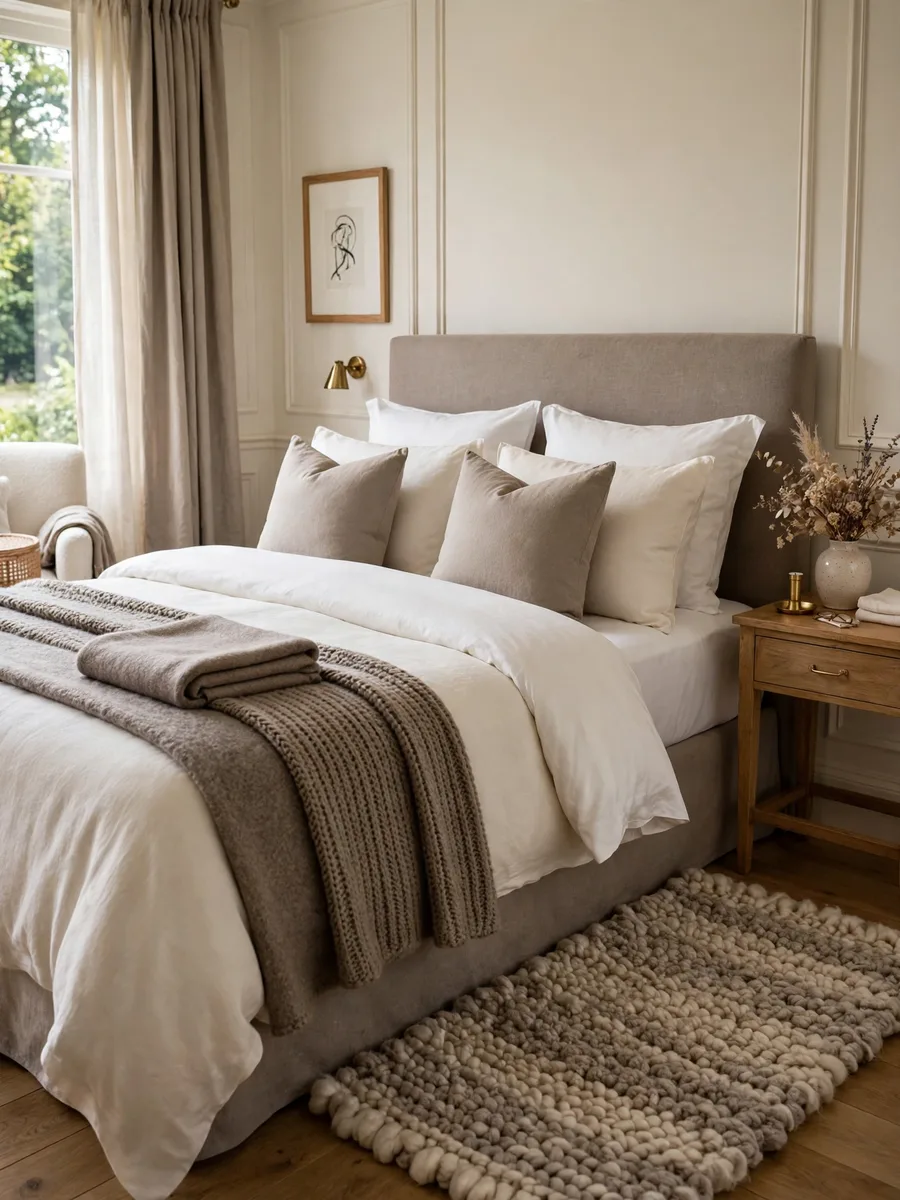
A guest bed feels like a boutique hotel when the layers look crisp, the pillows are plentiful, and a small luxury sits on top. White sheets, a folded throw, and a scented candle on the bedside table do most of the work.
A concrete example is a taupe and ivory guest room with a white percale sheet set, a taupe wool blanket, an ivory duvet, and a folded taupe throw, finished with four pillows and a small vase of dried flowers. A thick rug under the bed warms bare feet in the morning, and for floor ideas that pair with this look, browse these Bedroom rug ideas before choosing the size. Press the top sheet fold flat so the turn-down looks hotel crisp.
Quick tip: Add one scented detail, like a candle or linen spray, for the hotel feeling.
15. How Do You Dress a Guest Bed for a Holiday Stay?

A guest bed dressed for a holiday stay needs just one festive layer, because a single seasonal accent feels welcoming without overwhelming the room. Choose a plaid throw or a velvet cushion and keep the rest of the bedding calm.
A concrete example is a plum and gold guest room with cream flannel sheets, a plum duvet, a gold velvet cushion, and a plaid wool throw in plum and cream folded at the foot. The festive layer sits where guests see it first, the cream sheets keep the bed feeling fresh, and a small sprig of pine on the pillow adds a holiday scent. Keep the festive layer removable so the room works again in January.
Quick tip: Pick one festive layer only, never a full festive bedding set.
16. Why Does a Silver and White Guest Bed Sleep So Well?

A silver and white guest bed sleeps well because pale, cool colours feel calm and the layers stay light and breathable. The silver adds a touch of glamour, while the white sheets keep the bed feeling clean and fresh.
A concrete example is a silver and white guest room with white cotton sheets, a silver-grey wool blanket, a white duvet with a subtle silver stripe, and two shimmering silver cushions against the headboard. The cool palette suits guests who run warm, the wool blanket adds warmth without weight, and a soft lamp glow keeps the silver from feeling cold. Choose a matte silver rather than a shiny one so the room stays restful.
Quick tip: Warm silver with soft lamplight so the room never feels cold.
17. How Do You Layer a Small Guest Room Bed?
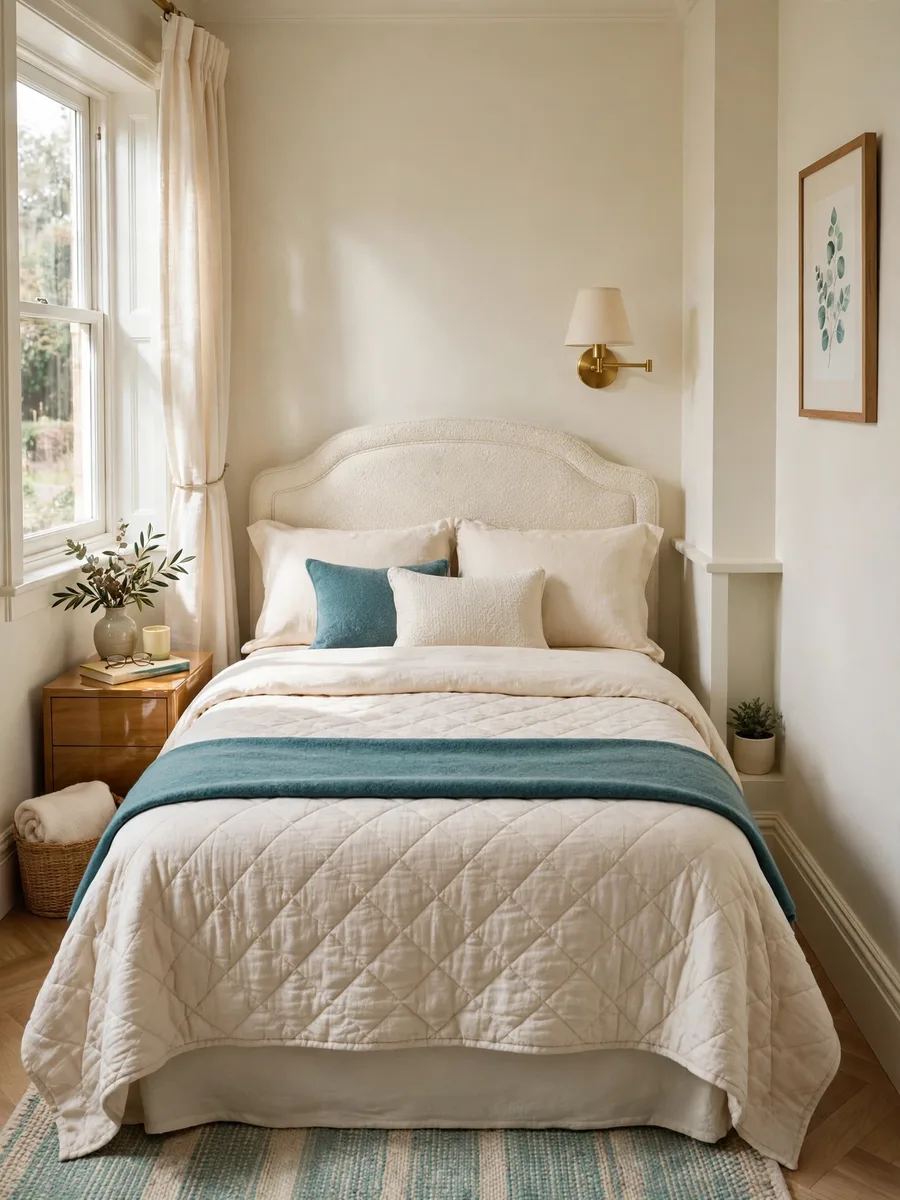
A small guest room bed layers best with slim, flat layers that stack neatly instead of bulky ones that spill over the edges. Thin wool blankets and a lightweight quilt give warmth without eating up floor space.
A concrete example is a teal and cream guest room with a double bed dressed in cream sheets, a thin teal wool blanket, and a cream quilt, with the throw folded into a narrow band across the foot. The teal adds depth without darkening the small room, the slim layers keep the bed looking tidy, and a wall-mounted lamp frees the bedside table. Fold the throw narrow so it reads as a stripe, not a pile.
Quick tip: Choose slim layers and fold throws narrow in small rooms.
18. What Is the Easiest Winter Bedding Swap for Any Guest Room?
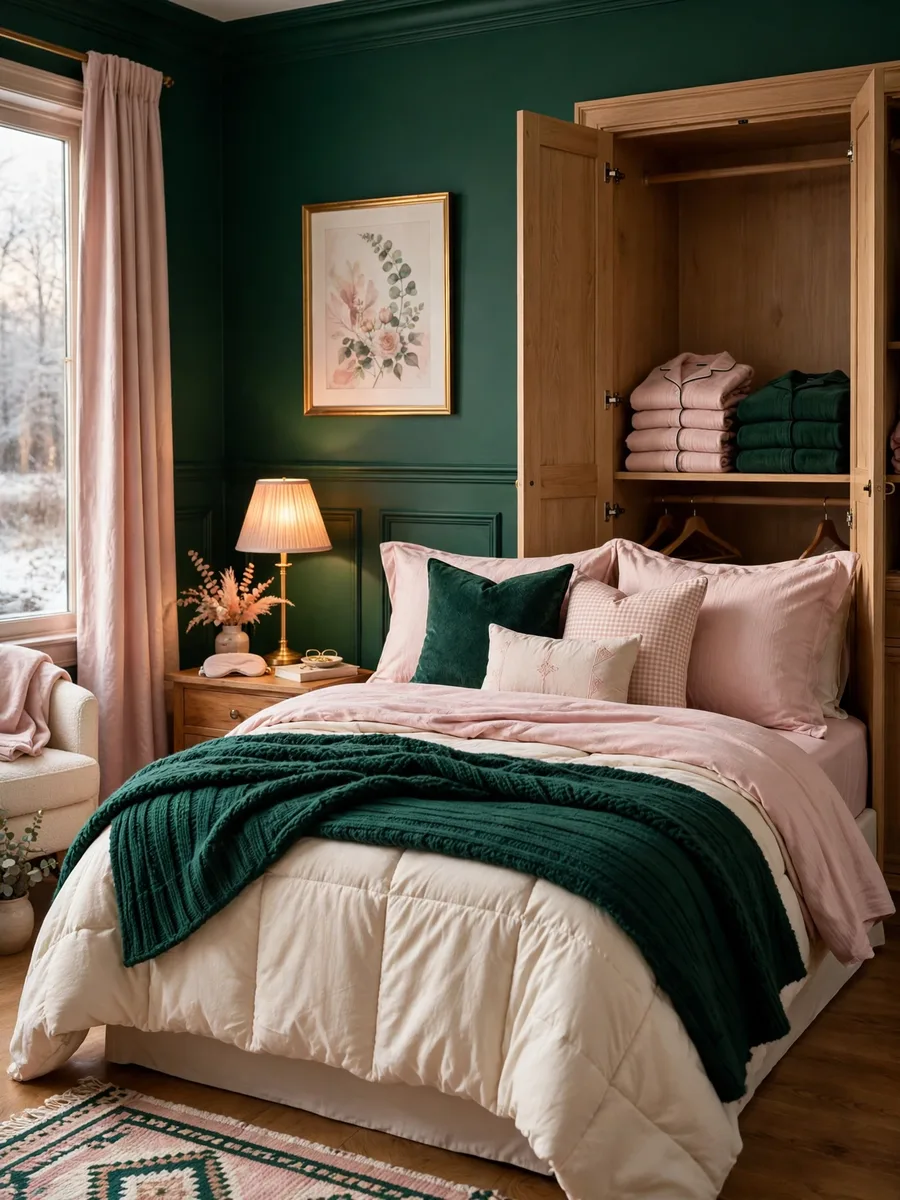
The easiest winter bedding swap for any guest room is changing the flat sheet to flannel and adding one wool blanket. Two changes take five minutes and turn a summer bed into a winter bed.
A concrete example is an emerald and blush guest room where the summer cotton sheets stay on the fitted side, but the flat sheet becomes a blush brushed flannel and an emerald wool blanket goes between sheet and duvet. The emerald adds rich winter colour, the blush flannel warms the skin on contact, and the existing duvet stays exactly as it was. Keep the spare flannel set in the guest room wardrobe so the swap takes minutes.
Quick tip: Swap the flat sheet and add a wool blanket, and the room is winter-ready.
Frequently Asked Questions
What is the warmest bedding for winter?
The warmest bedding for winter is a heavyweight brushed flannel sheet set around 170 GSM, a wool blanket, and a down duvet of 10.5 to 13.5 tog. Together they trap warm air in three separate layers, which insulates better than one thick blanket alone. Add a throw at the foot for extra warmth on the coldest nights.
How do I keep warm in bed without overheating?
Layer breathable fabrics you can remove one at a time, such as cotton percale sheets, a light wool blanket, and a lightweight quilt. Start with fewer layers and add the quilt later if you feel cold. Keep the bedroom at 16 to 19 degrees Celsius and leave the top layers untucked so you can kick them off easily.
Are flannel sheets good for winter?
Yes, flannel sheets are one of the best winter choices because the brushed cotton fibres trap warm air against the skin. Heavyweight flannel around 170 GSM suits cold sleepers and cold rooms, while lighter flannel near 120 GSM suits mild winters. Wash flannel gently and skip fabric softener to keep the brushed surface soft.
What tog duvet should I use in winter?
Choose a 10.5 to 13.5 tog duvet for a cold sleeper in a cool bedroom, and a 7.5 to 10.5 tog duvet for a warm sleeper or a heated room. Tog measures insulation, so check the label instead of judging by thickness. A wool blanket under the duvet adds warmth without needing a heavier tog.
How do I layer bedding for guests?
Build a five-layer guest bed: fitted sheet, flat sheet, wool blanket, duvet, and a throw at the foot. Guests who run cold use all five layers and guests who run hot use three, so everyone sleeps comfortably. Leave a spare blanket on a chair so guests can adjust the bed themselves.
Conclusion
These 18 winter bedding ideas prove warmth never has to mean overheating. Start with the right sheets for your sleeper type, add a wool blanket and a duvet matched to your room, and finish with a throw you can reach for or kick off. Layer it well tonight, and the bed will take care of the cold for you.