Coastal Home Decor: 17 Relaxed Ideas for a Calm, Breezy Home
Good coastal rooms are not built around seashell signs, nautical prints, or a room full of blue. The most inviting spaces borrow the feeling of the coast instead: natural texture, soft light, weathered materials, breathable layouts, and colors that feel easy on the eyes. That is what makes coastal home decor so useful for everyday homes. You can create the mood without making the room look themed.
The best part is that you do not need an ocean view or a major renovation. A woven pendant, warm wood, linen curtains, a sandy neutral rug, or a few faded blue accents can shift the atmosphere quickly. I’ve found that the strongest coastal home decor schemes usually rely on fewer decorative pieces and better material choices.
Below are 17 practical ideas you can use room by room. Each one focuses on a detail that changes how the space feels, not just how it photographs.
1. Start With a Soft Sand and Sea Palette
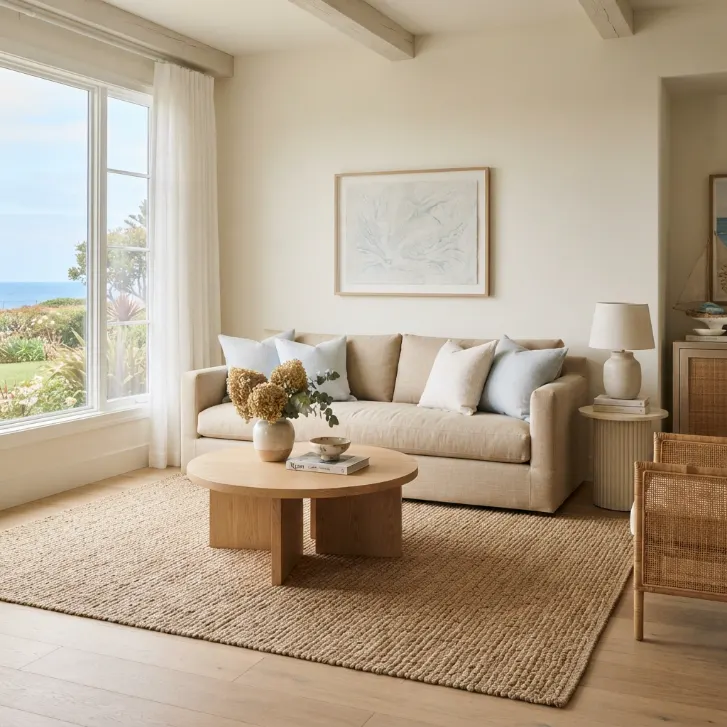
A relaxed coastal palette begins with warm white, sand, oatmeal, soft beige, and pale taupe. Add washed blue, muted sage, or a small touch of faded coral for contrast. This keeps the room connected to the colors of nature without making the theme obvious.
For a small room, keep the largest surfaces light and introduce color through pillows, art, ceramics, or one accent chair. If your room already has dark flooring, use cream walls and lighter upholstery to balance the visual weight.
2. Layer Natural Wood Instead of Matching Everything
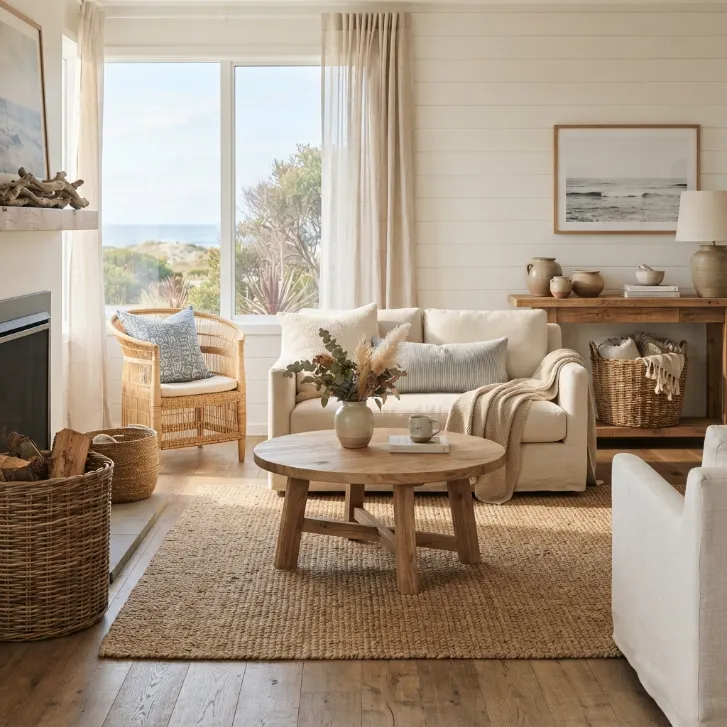
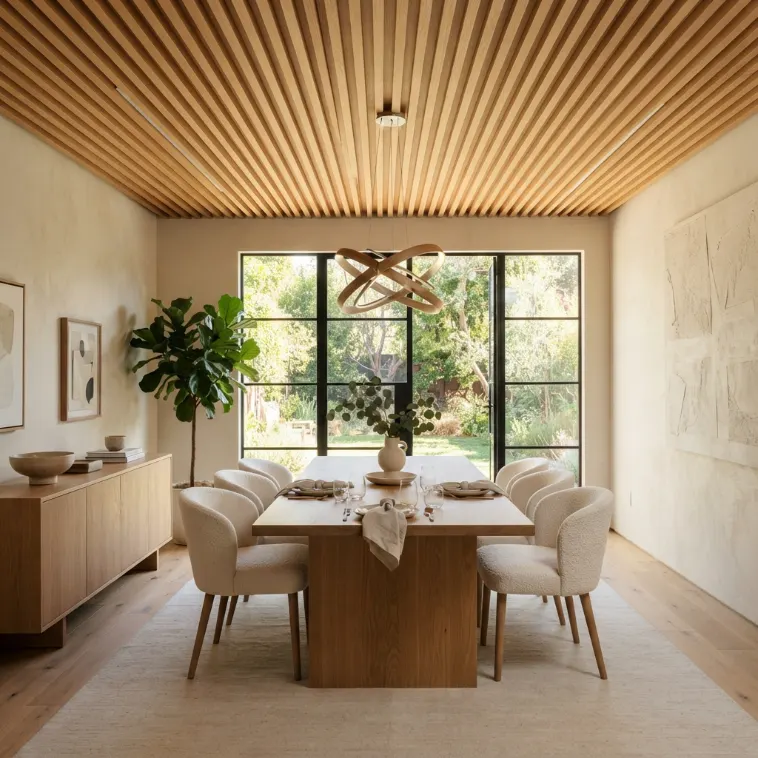
Wood is one of the easiest ways to give coastal home decor warmth and prevent pale colors from feeling cold. Try a light oak coffee table with a slightly darker console, or pair a weathered dining table with woven chairs. The pieces do not need to come from the same collection.
That small variation is important. Natural wood has grain, knots, and changes in tone, so the room feels collected rather than perfectly matched. In my experience, one beautiful wood piece often does more for a room than several small decorative accessories.
3. Use Woven Lighting as a Focal Point
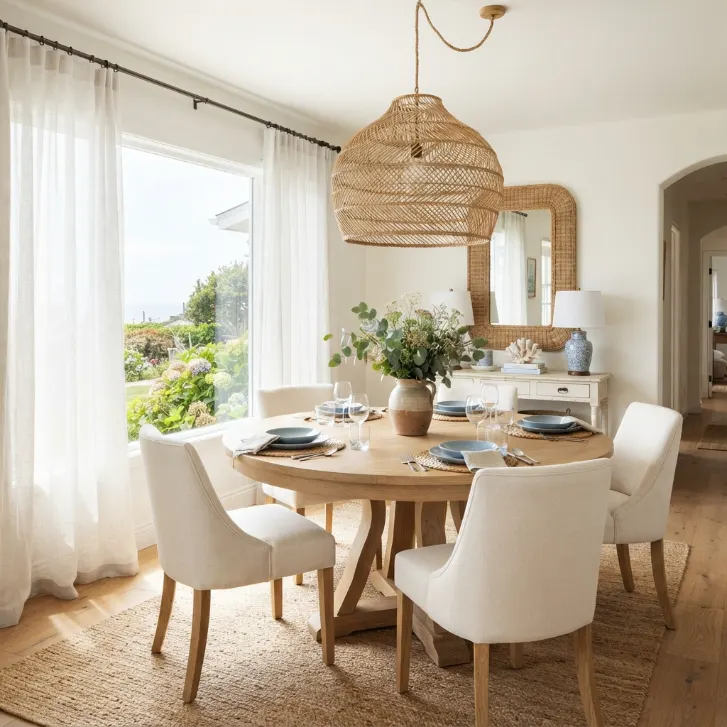
Rattan, cane, seagrass, and woven fiber lighting add texture from above while keeping the overall mood light. A large pendant over a dining table or kitchen island can become the main visual feature without needing bright color.
Choose a shape that has some air around it. Open weaving lets light pass through and creates soft shadows on nearby walls. For a low ceiling, select a wide flush or semi-flush woven fixture instead of a long pendant.
4. Choose Linen Curtains for a Breezy Look
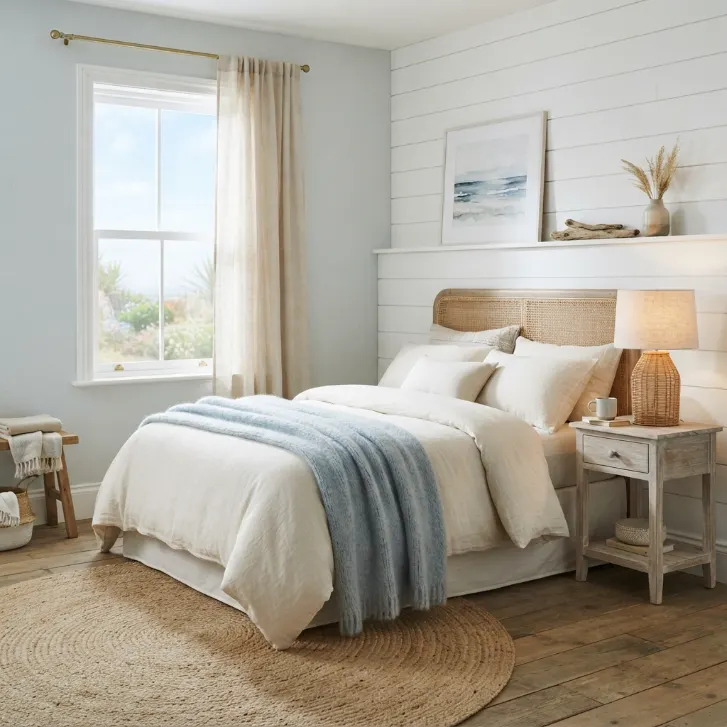
Linen curtains work because they soften windows without making them look heavy. Choose ivory, natural flax, or a very pale beige. Hang them close to the ceiling and let the fabric fall near the floor to create longer visual lines.
If privacy is a concern, pair sheer linen with a simple roller shade. During the day, filtered daylight becomes part of the room’s design rather than something blocked behind thick fabric.
5. Bring in Blue Through Small Repeated Accents
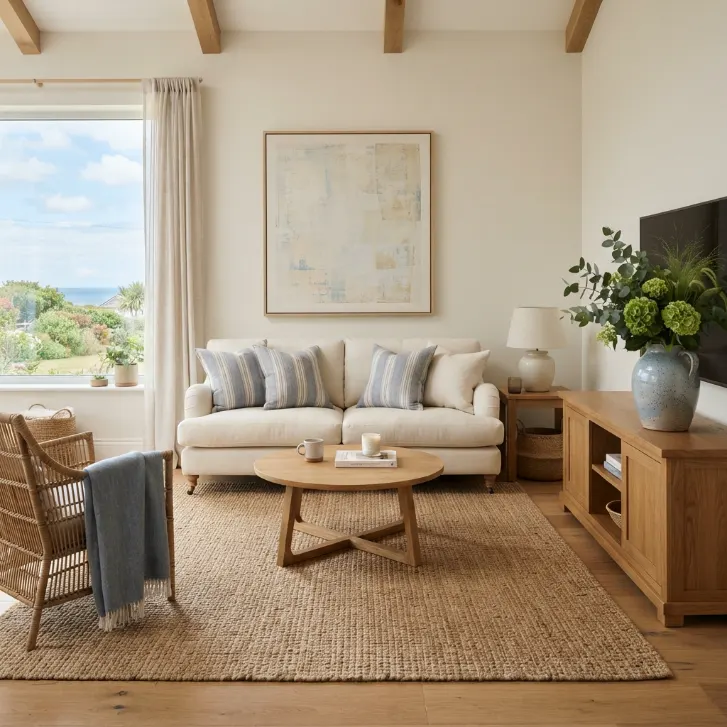
Blue works beautifully in coastal home decor, but using it everywhere can make a room feel overly nautical. Instead, repeat one or two blue tones in several small places. A striped cushion, ceramic vase, framed artwork, and throw can create enough connection.
Try dusty blue or faded denim rather than highly saturated navy. The result feels quieter and more sophisticated while still giving the room a clear coastal identity.
6. Let Texture Do More Work Than Color
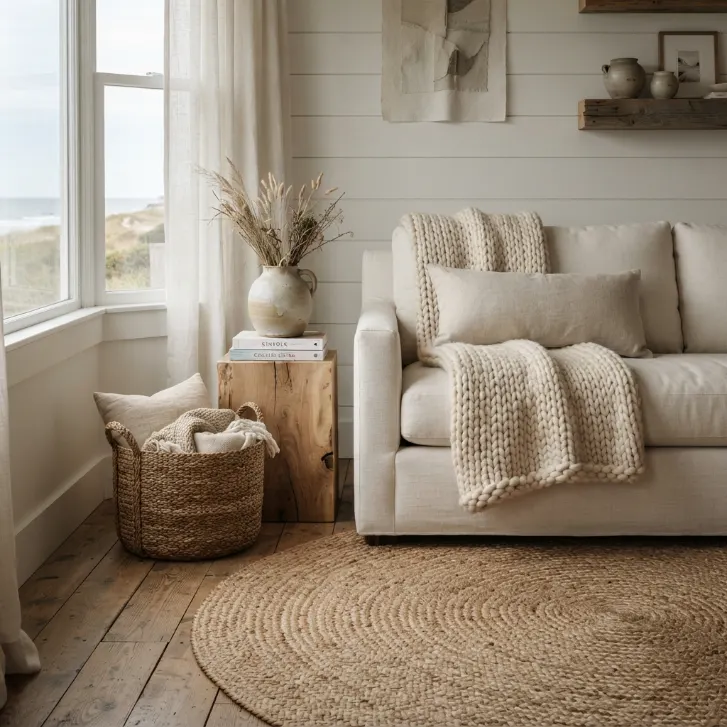
When the palette is neutral, texture keeps the room from looking flat. Combine jute, linen, cotton, rattan, unfinished wood, stone, and soft wool. You can use the same color across several materials and still create plenty of visual interest.
A cream sofa becomes much more inviting with a chunky cotton throw, a woven rug, and a textured pillow. The room stays simple, but your eye has something to explore.
7. Keep Coastal Shelving Useful and Light
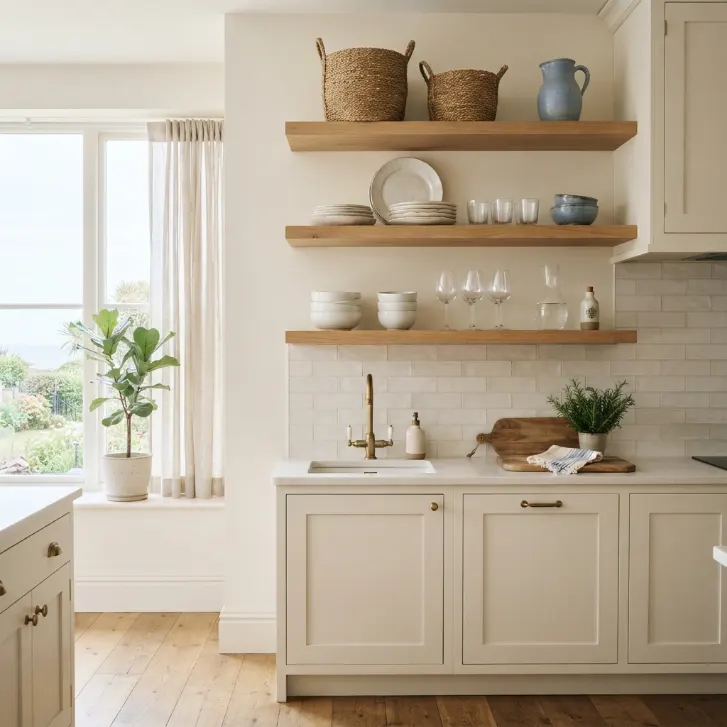
Open shelves can add personality, but they need breathing room. Display everyday dishes, glassware, cookbooks, baskets, ceramics, and a few natural accents rather than filling every inch.
Use a simple rhythm: one taller object, a small group of horizontal pieces, then an open section. If your kitchen follows coastal home decor, keep the practical items within easy reach and let the decorative pieces support the palette.
8. Add Weathered Wood Without Making the Room Rustic
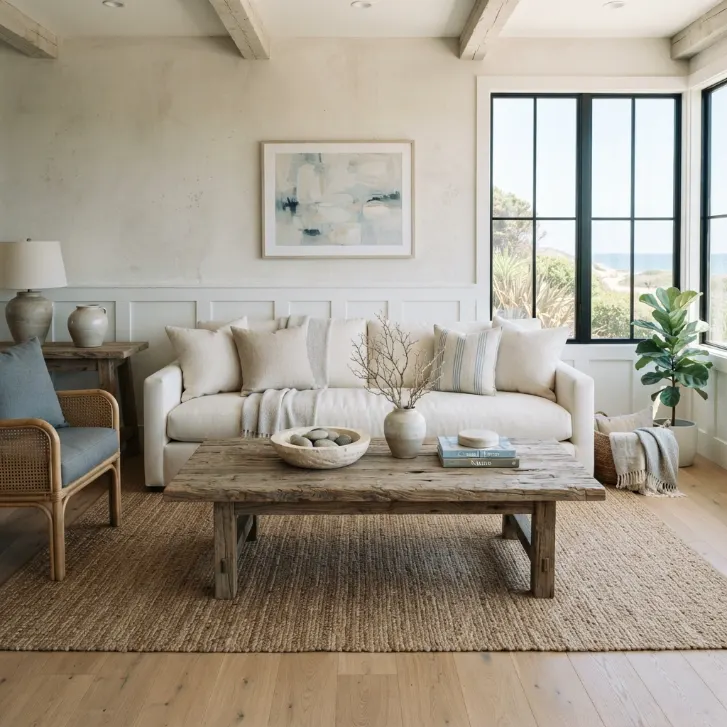
Weathered wood is useful because it brings age and character into a clean room. The trick is to use it selectively. One reclaimed coffee table, a framed wood mirror, or a narrow console can be enough.
Balance rough wood with smoother surfaces such as plaster walls, cotton upholstery, glass, or simple stone. That contrast keeps coastal home decor relaxed rather than turning the room into a rustic cabin.
9. Use Oversized Art With Muted Coastal Colors
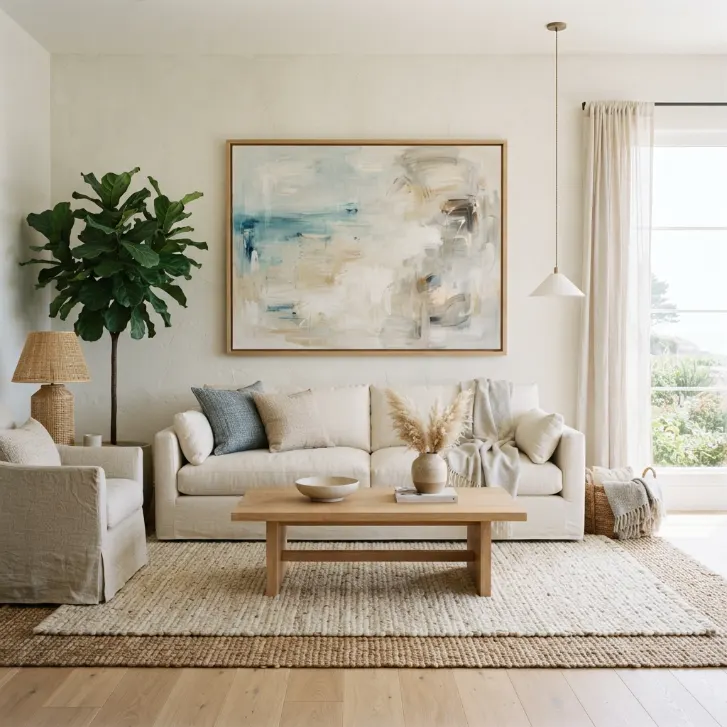
One large artwork can make a room feel finished faster than a collection of tiny prints. Look for abstract ocean movement, soft landscapes, botanical forms, faded blue brushwork, or sandy neutral compositions.
Keep the frame simple. Pale oak, natural wood, white, or thin black frames can all work depending on the rest of the room. The goal is to suggest the coast rather than literally illustrate it.
10. Create a Coastal Bedroom With Layered Bedding
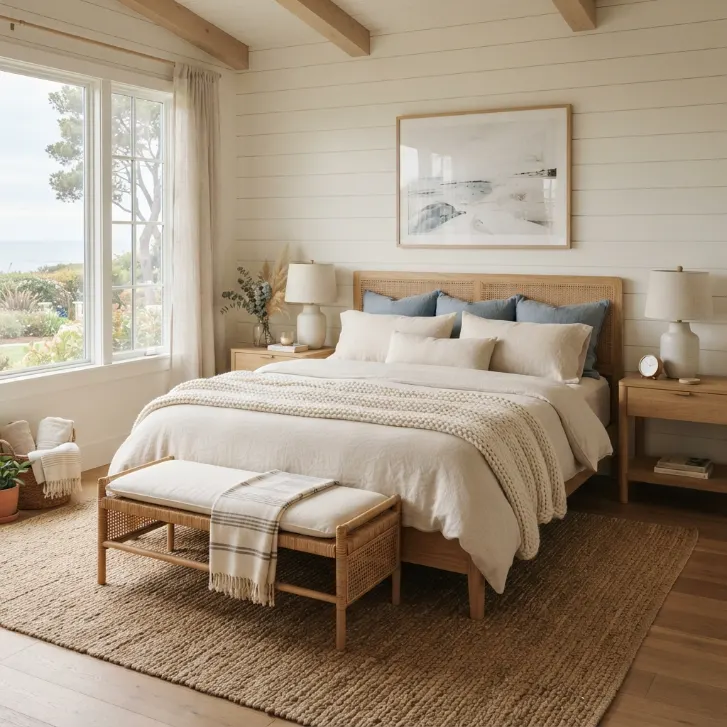
Bedrooms benefit from the softer side of coastal home decor. Start with white or warm ivory sheets, add a linen duvet, then layer one or two textured throws and a few pillows in faded blue or sand tones.
A woven bench at the foot of the bed, a jute rug, and a wood nightstand can reinforce the look without adding clutter. Keep bedside styling simple so the room still feels restful at night.
11. Make a Small Coastal Corner Feel Intentional
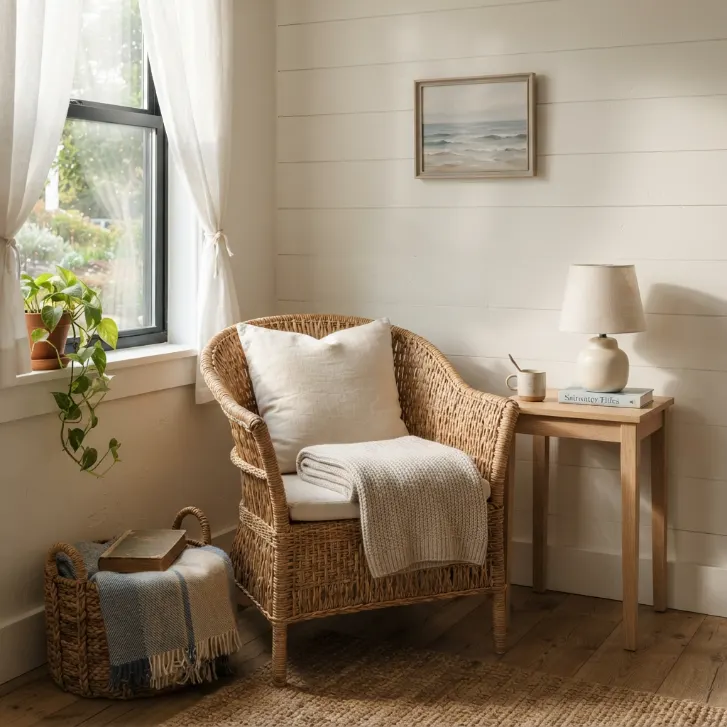
You do not need to redecorate an entire room. A small reading chair, console, entry table, or empty corner can carry the aesthetic by itself. Start with one useful piece of furniture and add three supporting elements with different heights.
For example, pair a woven basket with a ceramic lamp and a small piece of muted artwork. This gives the corner a clear visual story while keeping the footprint small.
12. Bring Coastal Warmth Into the Kitchen
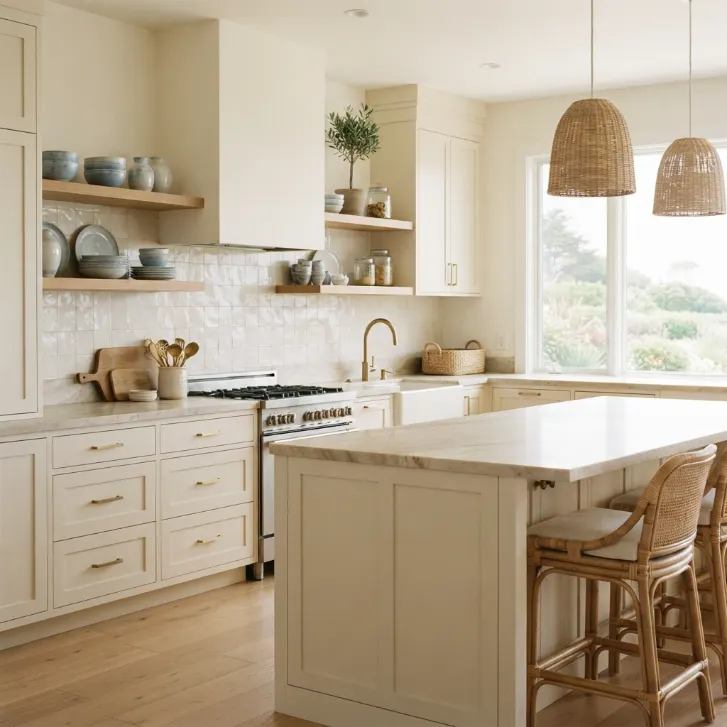
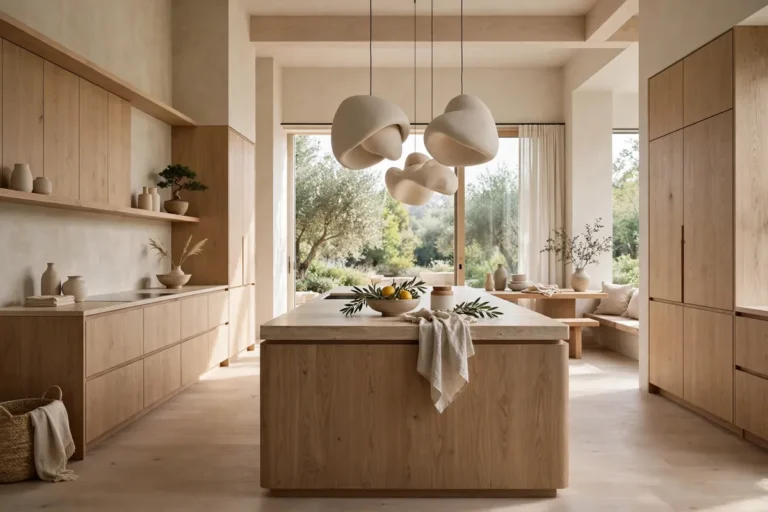
A kitchen styled with coastal home decor can feel fresh without relying on blue cabinets or obvious beach accessories. White or warm cream cabinetry, light wood shelving, natural stone, brushed metal, and woven stools create the right balance.
If you enjoy open shelving, repeat the same wood tone on two or three shelves and leave generous gaps between objects. For another calm kitchen direction, see our Japandi kitchen ideas, which also use natural materials and restrained styling.
13. Use Woven Baskets for Practical Storage
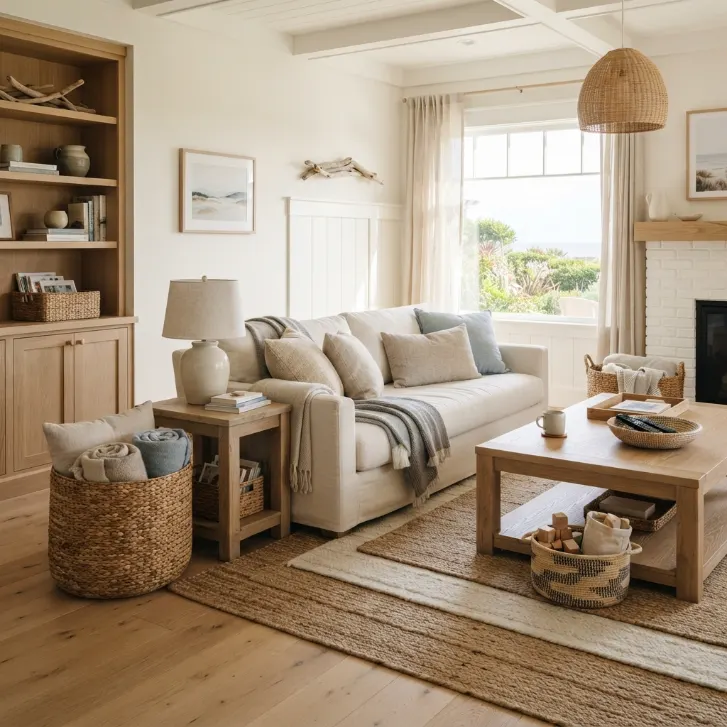
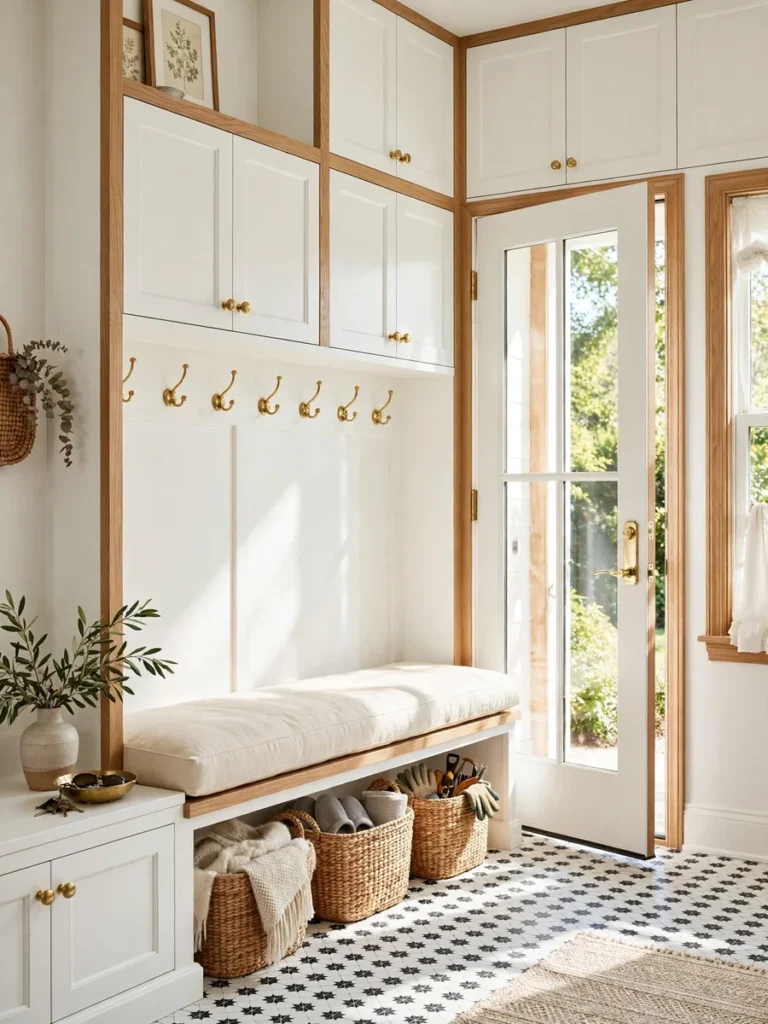
Baskets are one of the easiest ways to add coastal texture while solving a real storage problem. Use them for blankets, toys, towels, magazines, or everyday clutter that needs a quick home.
Choose baskets with slightly different shapes but similar natural tones. Too many identical baskets can look staged, while a small mix feels more relaxed and useful.
14. Connect Indoor and Outdoor Spaces
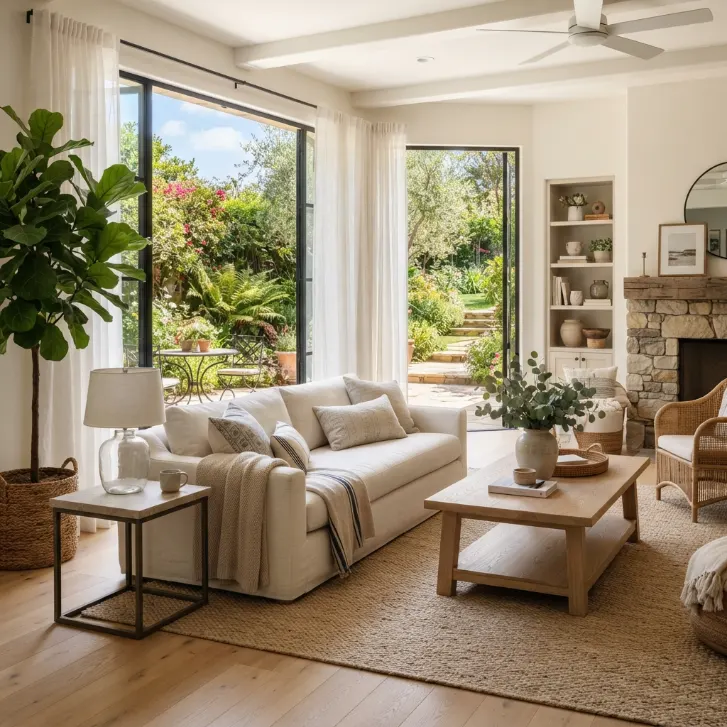
If your home has a patio, balcony, garden door, or large windows, let the view become part of the room. Keep window treatments light, use similar materials indoors and outdoors, and avoid placing bulky furniture directly in front of the opening.
Plants can also strengthen the connection. A simple olive tree, palm, fern, or leafy branch in a natural planter can bring the outside feeling indoors without adding a literal beach theme.
15. Warm Up White Rooms With Earthy Details
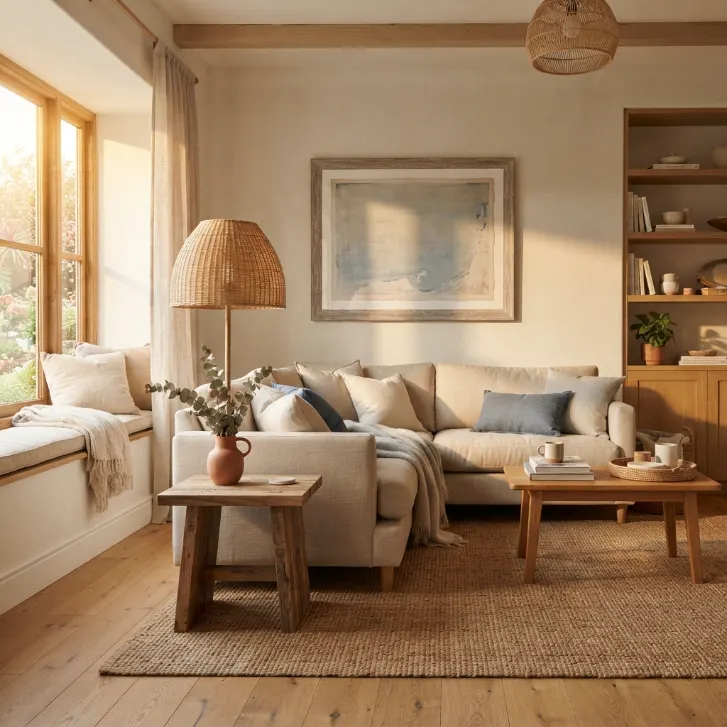
All-white rooms can look beautiful in photos but sometimes feel stark in daily life. Warm them up with beige upholstery, honey-toned wood, terracotta ceramics, woven shades, or a natural fiber rug.
This is one of the easiest coastal home decor adjustments because you can make it gradually. Start with the floor or largest textile, then add smaller warm details until the room feels balanced.
16. Mix Clean Lines With One Organic Shape
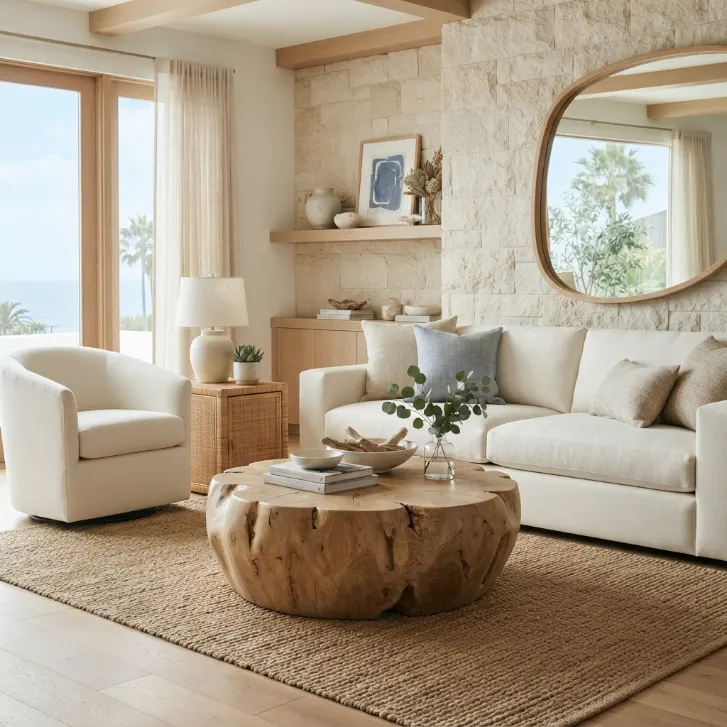
In coastal home decor, straight architectural lines often look better when they meet softer forms. Try a round coffee table in a room with a rectangular sofa, a curved mirror above a straight console, or an organic-shaped ceramic vase on a square shelf.
You only need a few curved forms. Too many can make the room feel deliberately themed. One strong organic shape can soften an otherwise structured space.
17. Keep the Final Layer Personal and Unfussy
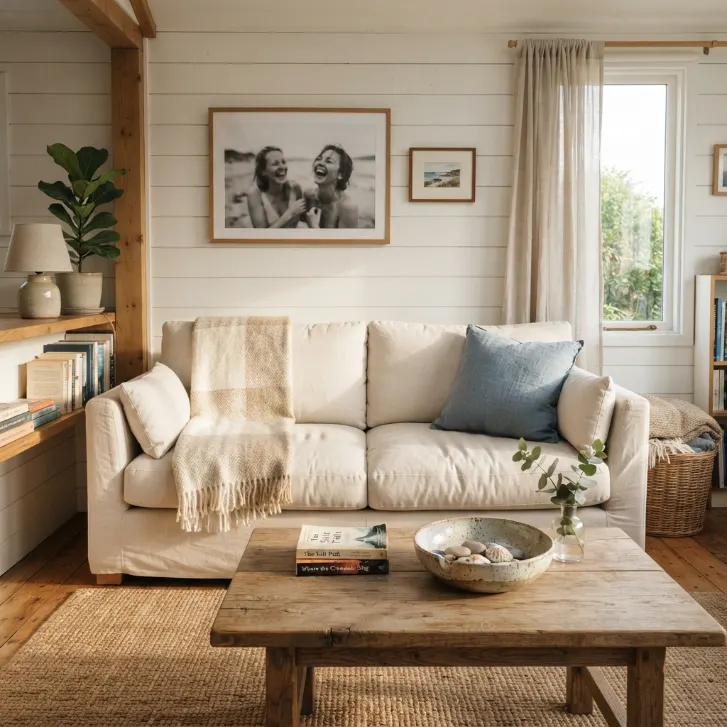
The finishing touch should make the room feel lived in. Add a stack of books you actually read, a bowl used for keys, a handmade ceramic piece, family photographs in simple frames, or a blanket that gets used every evening.
This is where coastal home decor becomes more than a visual trend. The room should support real routines. If an object is beautiful but always has to be moved before you can cook, sit, clean, or relax, it probably does not belong there.
Frequently Asked Questions About Coastal Home Decor
What colors work best for coastal home decor?
Warm white, ivory, sand, beige, pale blue, muted green, and soft gray are reliable choices. You can add navy or coral in small amounts when the room needs stronger contrast.
How can I make my home look coastal without using beach decorations?
Focus on natural materials, soft light, linen, woven textures, weathered wood, relaxed furniture, and a restrained color palette. These elements create the feeling of the coast without anchors, shells, or large nautical signs.
Can coastal style work in a small apartment?
Yes. Keep the largest pieces light in color and avoid visually heavy furniture. Use mirrors, woven lighting, open shelving, light curtains, and a limited palette to maintain a sense of openness.
Is coastal decor the same as nautical decor?
No. Nautical decorating often uses stronger maritime symbols such as navy stripes, anchors, ropes, and ship-inspired details. Modern coastal home decor is usually more subtle and focuses on natural texture, light, and relaxed colors.
How do I make coastal home decor feel more modern?
Reduce the number of themed accessories, choose simple furniture silhouettes, and use natural materials with clean lines. A modern coastal home decor scheme usually feels more refined when texture replaces decoration.
What should I avoid in a coastal home decor scheme?
Avoid filling the room with matching beach accessories, overly bright blues, too many small objects, and heavy furniture that blocks natural light. Coastal home decor works best when there is space for the eye to rest.
Conclusion
The most successful coastal home decor does not try to recreate a beach inside the house. It borrows the qualities people love about coastal living: light, texture, natural materials, easy colors, open space, and a relaxed sense of comfort.
Start with one area rather than changing everything at once. Replace a heavy curtain, add a woven light, introduce warmer wood, or layer a few natural textiles. Small decisions can gradually create a home that feels calmer, brighter, and more personal.
Most importantly, let the style support the way you actually live. The best coastal room is not the one with the most beach references. It is the one that makes everyday life feel a little lighter.