






Thanksgiving Decor Ideas That Feel Warm, Not Cluttered
These thanksgiving decor ideas should make your home feel warm, welcoming, and ready for a long meal — not crowded with stuff you will box up the next morning. The best approach is simple: pick a palette that works from early autumn through the holiday, decorate the places guests actually gather, and let a few natural pieces do most of the work.
If you only do three things, make them these: set a low centerpiece people can talk across, light candles at different heights, and style one surface near the door so the welcome starts before anyone sits down. Everything else in this guide builds on those three moves.
1. Thanksgiving Decor Ideas Start With a Palette That Lasts
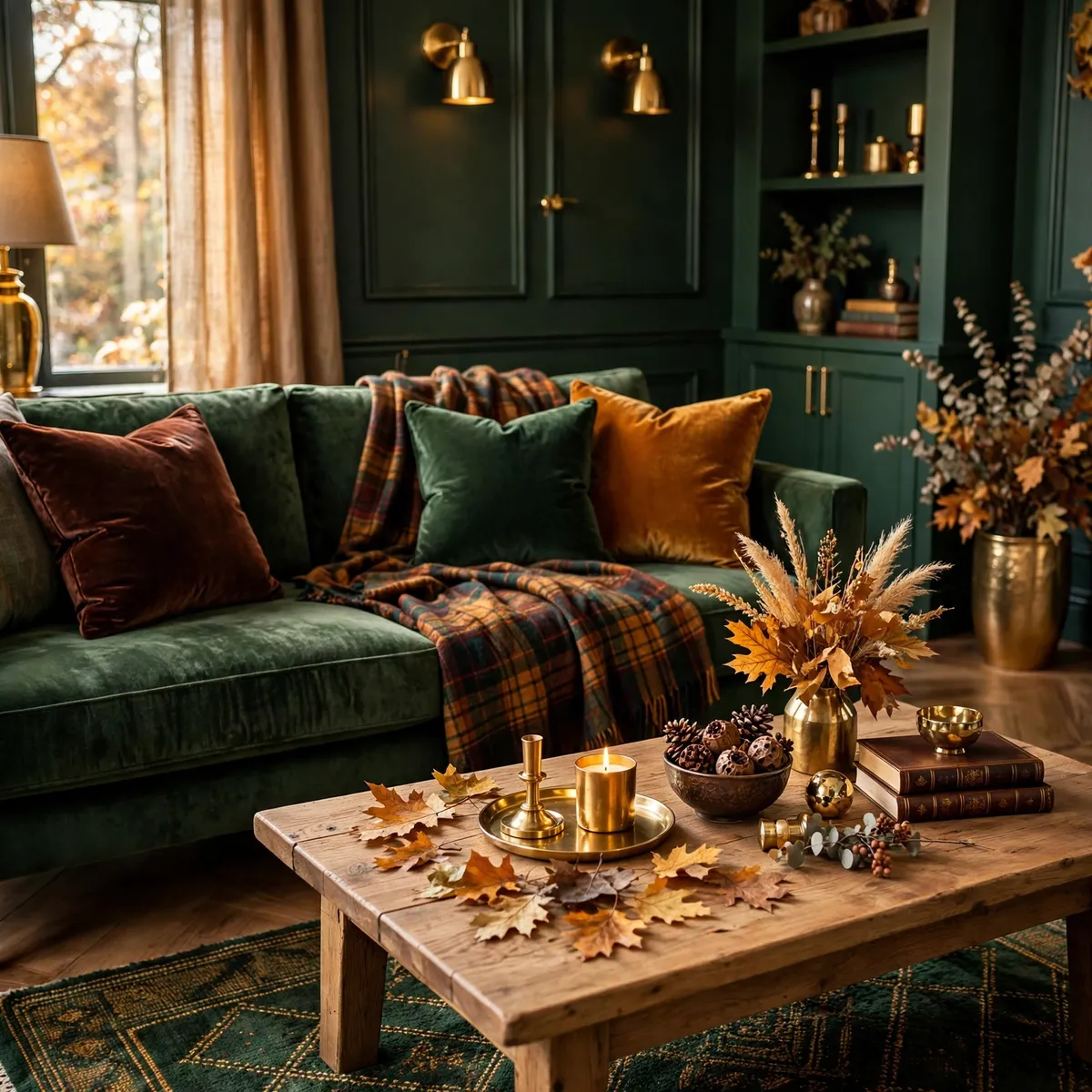
The smartest Thanksgiving decorating decision happens before you buy or gather a single pumpkin: choose a palette with a longer shelf life than the holiday itself. Instead of decorating for one day, decorate for the whole season. A base of warm neutrals — cream, oatmeal, warm wood, soft taupe — lets you layer in autumn color that still looks right in mid-October and stays right through the Thanksgiving table.
From there, add depth with amber and earthy tones, a metallic accent like brass or copper, and one moody jewel tone for contrast. Oxblood, forest green, or deep purple each bring a grown-up richness that keeps amber from turning cartoonish, and because these colors are rooted in fall rather than in turkey-shaped novelty, nothing looks out of place the week before or the week after the feast.
Once the palette is set, repeat it in at least three places — the table, the mantel or sideboard, and the entry — so the house reads as one thought instead of three separate displays. That repetition is what makes a home look styled rather than stuffed: the same amber in a throw pillow, a candle, and a vase of branches ties rooms together without matching sets.
Keep the boldest color to smaller pieces you can swap easily, like napkins, a runner, or a few cushions, and let the larger pieces stay neutral. That way, if you tire of oxblood by December, you are changing accents, not furniture.
Quick tips
- Pick 3 colors: one neutral base, one warm autumn tone, one deep accent.
- Repeat each color at least 3 times across the rooms guests will see.
- Keep big pieces neutral; put the bold color in small, swappable accents.
2. A Front Door That Welcomes Before Anyone Knocks

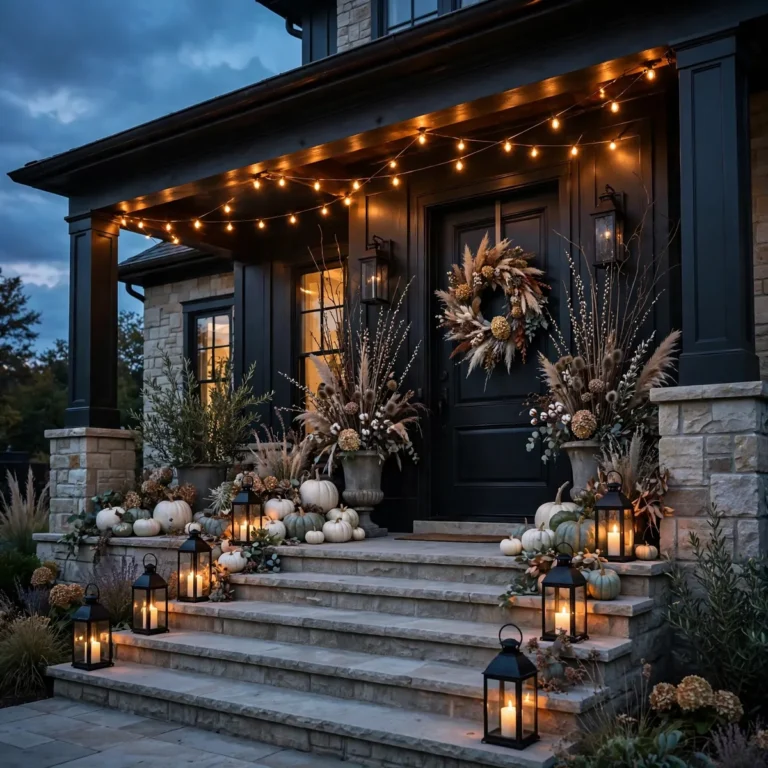
The front door sets the tone for the whole visit, and it takes surprisingly little to get it right. A wreath of dried leaves, grasses, or preserved eucalyptus reads more sophisticated than a plastic harvest sign, and it survives weeks of weather without looking tired. Flank the door with two lanterns or a pair of potted mums, add a couple of pumpkins in different sizes — real or good-quality faux — and you have a welcome that photographs well and feels intentional rather than staged.
Quick tips
- One strong wreath beats five small door decorations.
- Use odd groupings: three pumpkins or two lanterns, never a single lonely one.
- Keep the path clear; guests carrying dishes need room to walk.
3. A Centerpiece Guests Can Actually Talk Across

The table is where Thanksgiving happens, so the centerpiece deserves the most thought — and the most restraint. The rule that matters most is height: keep the centerpiece low, or use a tall piece so narrow that it never blocks a face. A long, low runner of eucalyptus or autumn branches, dotted with small pumpkins and a few candles, gives you the look of abundance without anyone having to peer around a tower of gourds to pass the gravy. If you love a tall arrangement, place it on a sideboard instead, where it can be admired without interrupting conversation.
Build the centerpiece in layers. Start with a runner or a strip of linen down the middle of the table, then add your longest element — a garland, a row of branches, or a line of small vases. Next come the mid-height pieces: candle holders, small pumpkins, a bowl of pears or acorns. Finally, scatter a few leaves or nuts to fill the gaps. This layered approach looks full from every seat and costs far less than one giant arrangement. For more table inspiration, see these fall table decor ideas that work from early autumn right through the holiday.
Quick tips
- Keep centerpieces under 12 inches tall, or tall and narrow only.
- Leave room for serving dishes — decor should never crowd the food.
- Use unscented candles on the table so they never compete with dinner.
4. Mantel and Sideboard Styling
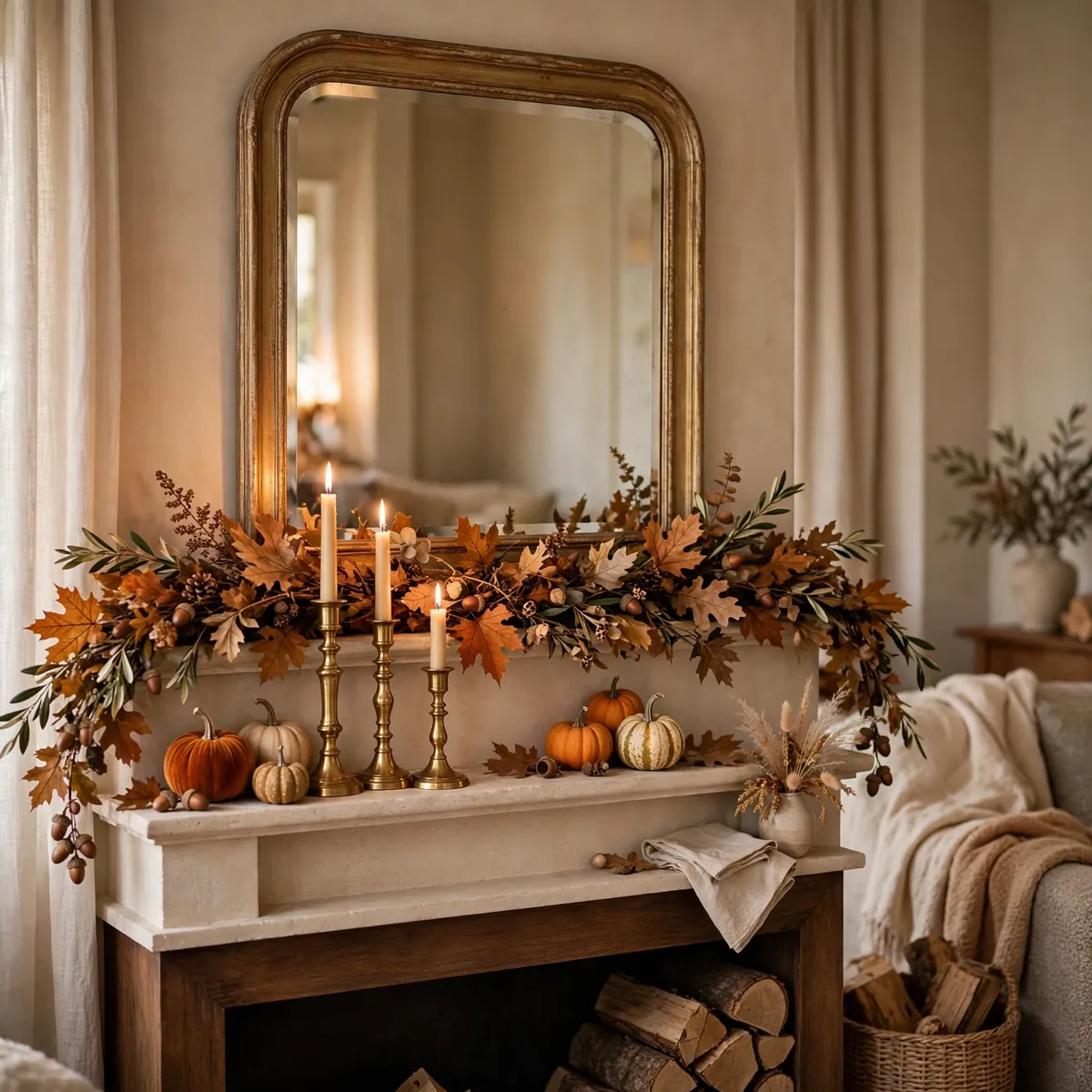
If your table is the star, the mantel or sideboard is the supporting cast — the surface guests notice while they wait for dinner. A garland of autumn leaves or dried branches along the mantel, anchored by brass candlesticks and a few small pumpkins, gives the room a finished feel in about fifteen minutes. On a sideboard, the same idea works horizontally: a tray with a vase of branches, two candle holders, and one bowl of seasonal fruit is plenty.
Quick tips
- Anchor each end of a garland so it drapes in a soft, even curve.
- Group items in threes and leave breathing room between groups.
- Keep anything flammable well away from candle flames.
5. Candles and Lighting That Do the Heavy Lifting
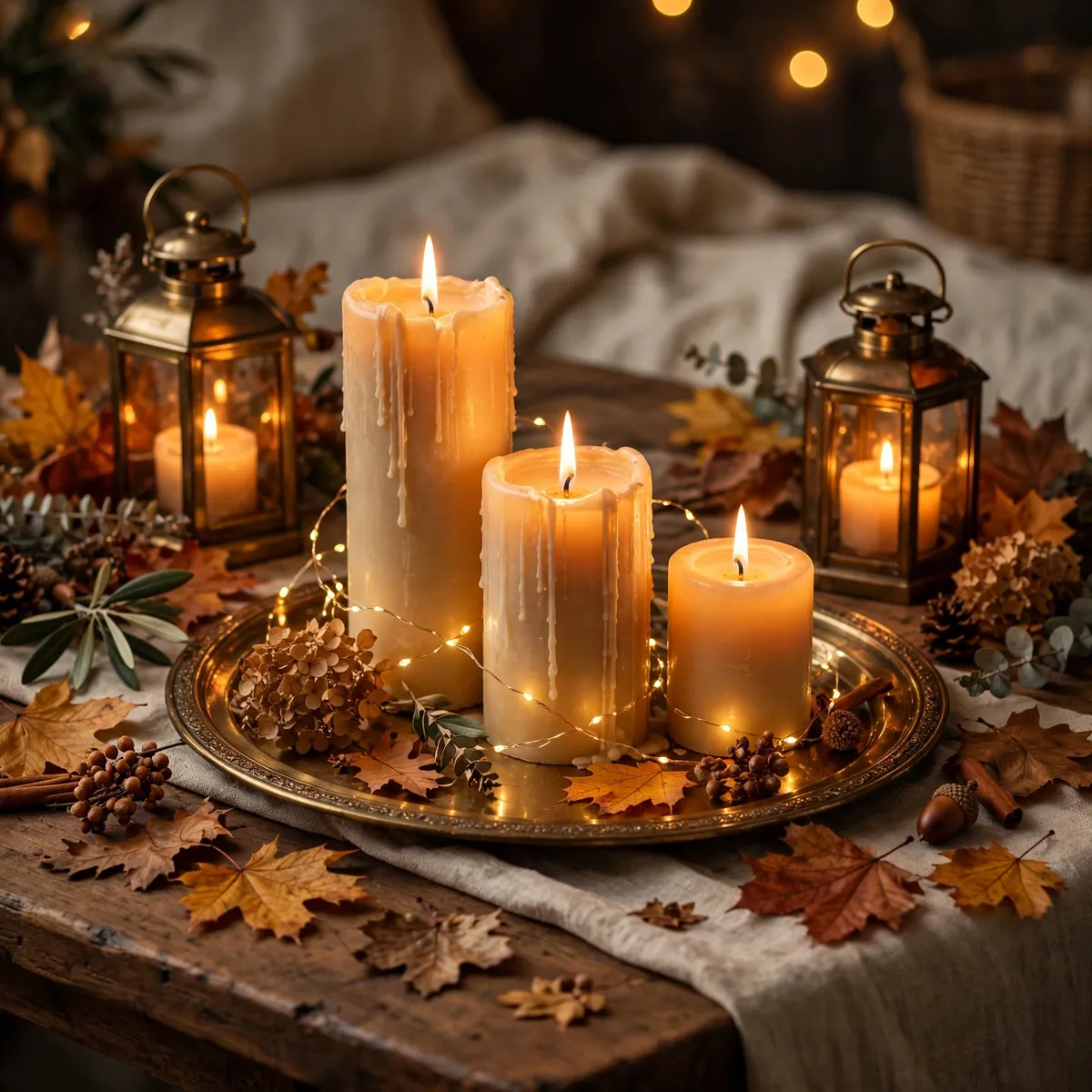
Nothing changes a room faster than light. As the afternoon fades and dinner stretches into evening, candles turn an ordinary dining room into a place people want to linger. The trick is height variety: pillar candles at three different heights, a few tea lights scattered between them, and one or two lanterns on the sideboard create depth that a single row of matching candles never will. Dim the overhead lights a little and let the warm glow do the work.
Quick tips
- Group candles in odd numbers and vary their heights.
- Use real candles where safe, flameless ones near kids, pets, and garlands.
- One scent in the entry only — keep the dining room fragrance-free.
6. Foraged Elements That Cost Almost Nothing

Some of the most beautiful Thanksgiving decor does not come from a store at all. A walk through a park or garden can supply branches, pinecones, acorns, seed heads, and interesting leaves — the textures that make a table feel gathered rather than bought.
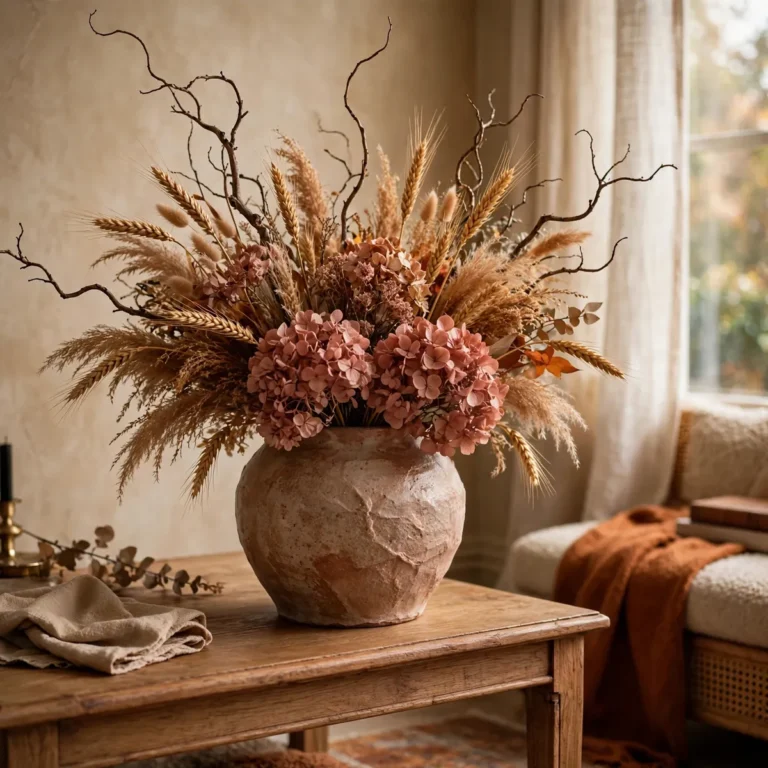
A bundle of wheat stalks in a tall vase, a shallow bowl of acorns, or a handful of oak leaves scattered down the table runner all carry the harvest feeling more honestly than another plastic pumpkin ever could. Foraged pieces also solve the budget problem quietly: when the structure of your decor is free, the few things you do buy — good candles, real linen — stand out more.
Use foraged pieces with a little care. Shake branches outdoors before bringing them in, wipe pinecones and acorns clean, and keep anything dusty or shedding away from plates. If you gather greenery, let it dry for a day so it holds its shape indoors. And if foraging is not an option where you live, a farmers market bunch of dried stems or a single grocery-store bouquet of eucalyptus gives you the same effect for very little money.
Quick tips
- Gather branches, pinecones, acorns, and seed heads — textures matter more than color.
- Clean and dry foraged pieces before placing them near food.
- Pair foraged pieces with one or two quality items so the look stays refined.
7. Thanksgiving Decor in a Small Apartment

A small apartment does not need less Thanksgiving — it needs more focused Thanksgiving. When floor space is tight, go vertical: a wall shelf with a candle, a small pumpkin, and a vase of branches gives you the season without eating a single inch of table space. Then choose one statement piece for the table itself — one generous centerpiece, one beautiful runner, one set of candles — and let it carry the whole room. One confident arrangement always looks better than five small ones competing for attention in a tight space.
Quick tips
- Decorate upward: shelves, walls, and the top of a bookcase.
- Pick one statement piece for the table and keep everything else simple.
- Use candles at varied heights to add atmosphere without bulk.
8. A Beautiful Table on a Budget
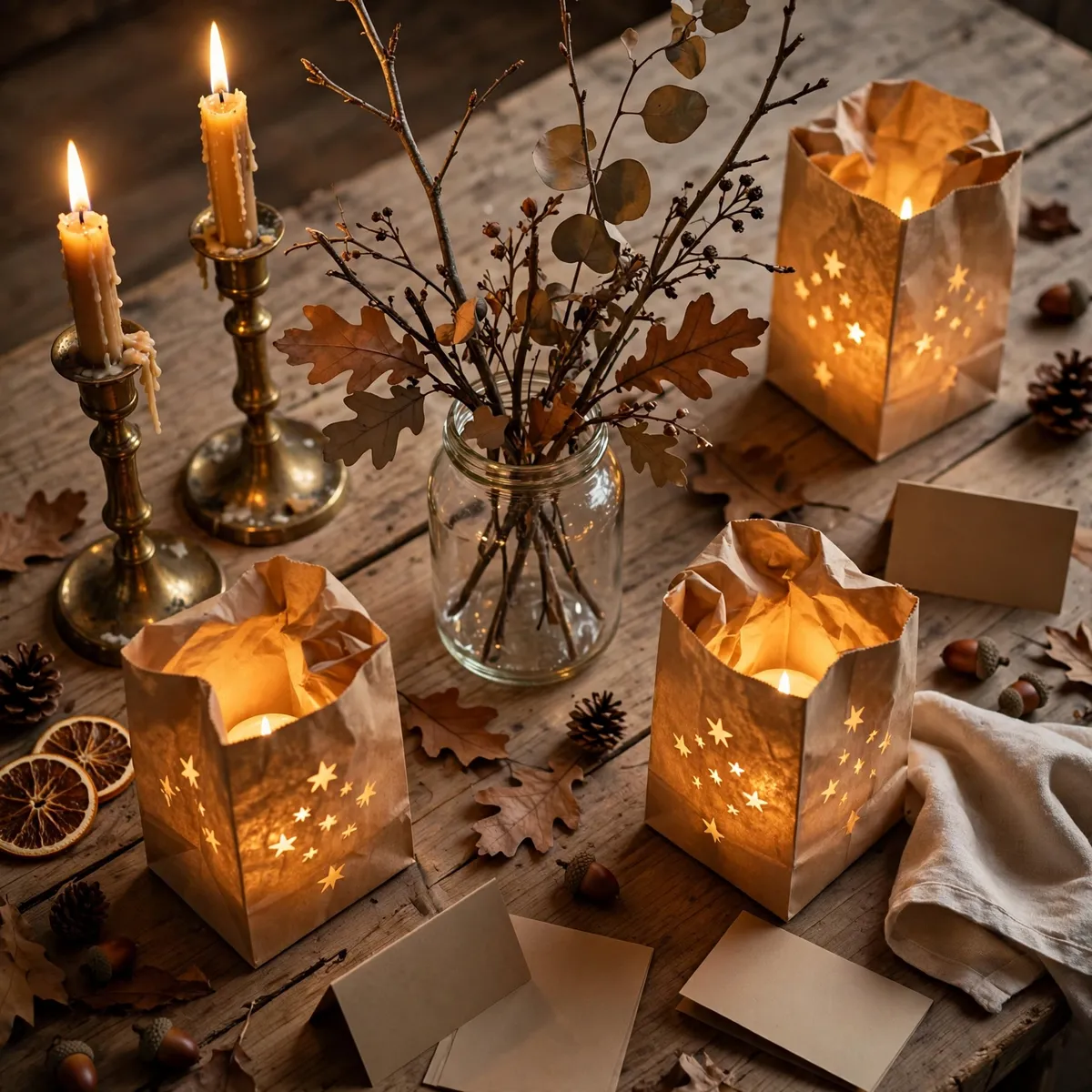
A memorable Thanksgiving table is about composition, not cost. Start with what you already own: a plain white or cream tablecloth, your everyday dishes, and any glass jars or vases. Add a kraft-paper runner — brown paper from a roll, torn neatly — and hand-write place cards or a simple menu on it. Foraged branches in a jar, a few grocery-store pumpkins, and candles you already have will do the rest. The result looks deliberate because it is deliberate: every piece earned its place.
Quick tips
- Shop your own home first — jars, trays, and plain linens are the base.
- Spend on candles and one fresh element; forage or DIY the rest.
- Hand-written place cards cost pennies and feel more personal than printed ones.
9. How to Mix Metals Without Clashing
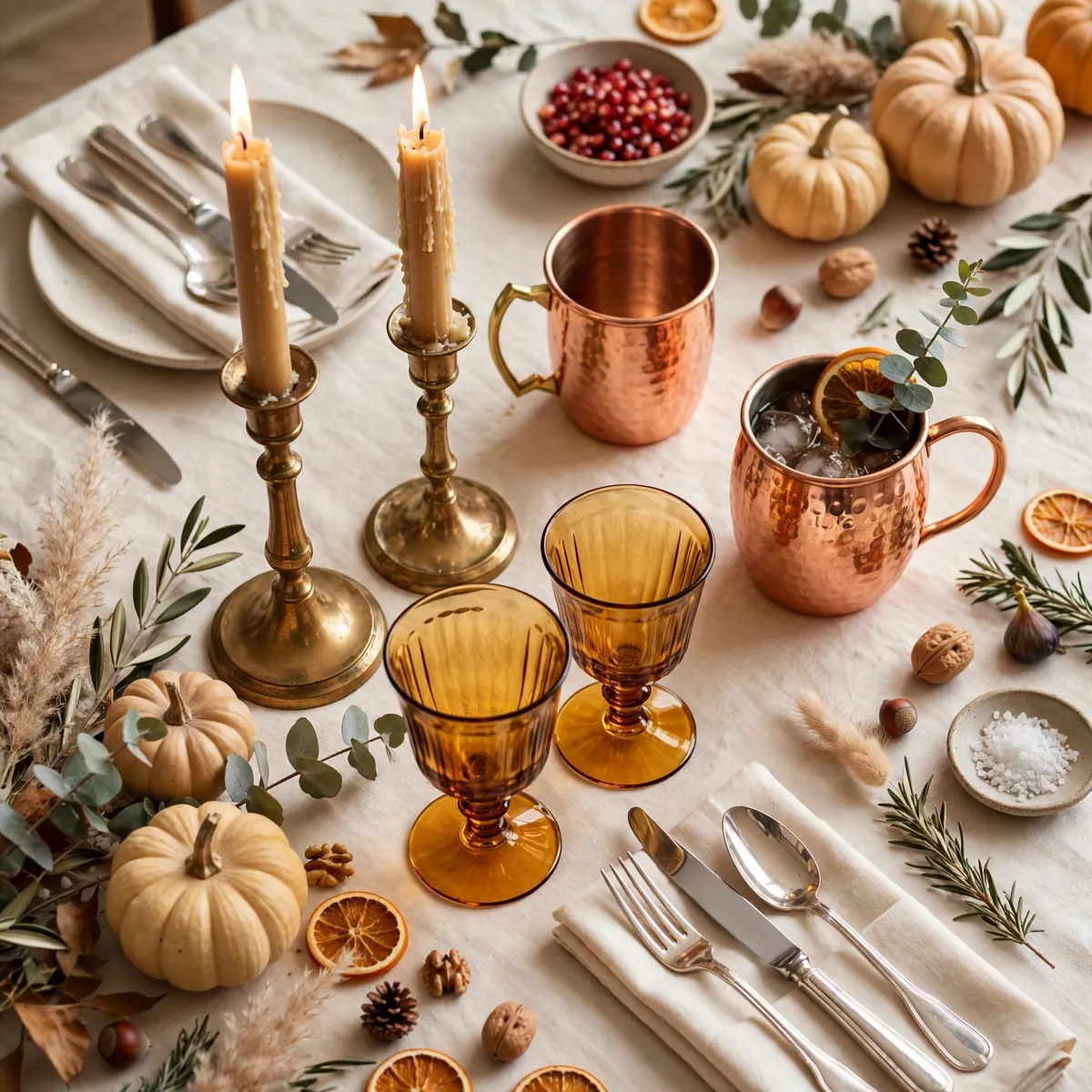
Mixed metals look rich and collected — when one metal clearly leads. Choose a dominant metal, usually warm brass or copper for Thanksgiving, and let it appear in the largest pieces: candle holders, a tray, the flatware or serving spoons. Then add a second metal in smaller doses, like silver cutlery or a pewter bowl, and keep it to about a third of the metallic mix. A shared finish helps: metals with a similar warmth or a similar brushed texture blend more easily than one shiny chrome piece next to aged bronze.
Quick tips
- Pick one dominant metal and let it cover roughly two-thirds of the metallic pieces.
- Add a second metal in small accents only.
- Match finishes — brushed with brushed, polished with polished — for a calm mix.
10. Cozy Layers for the Living Room
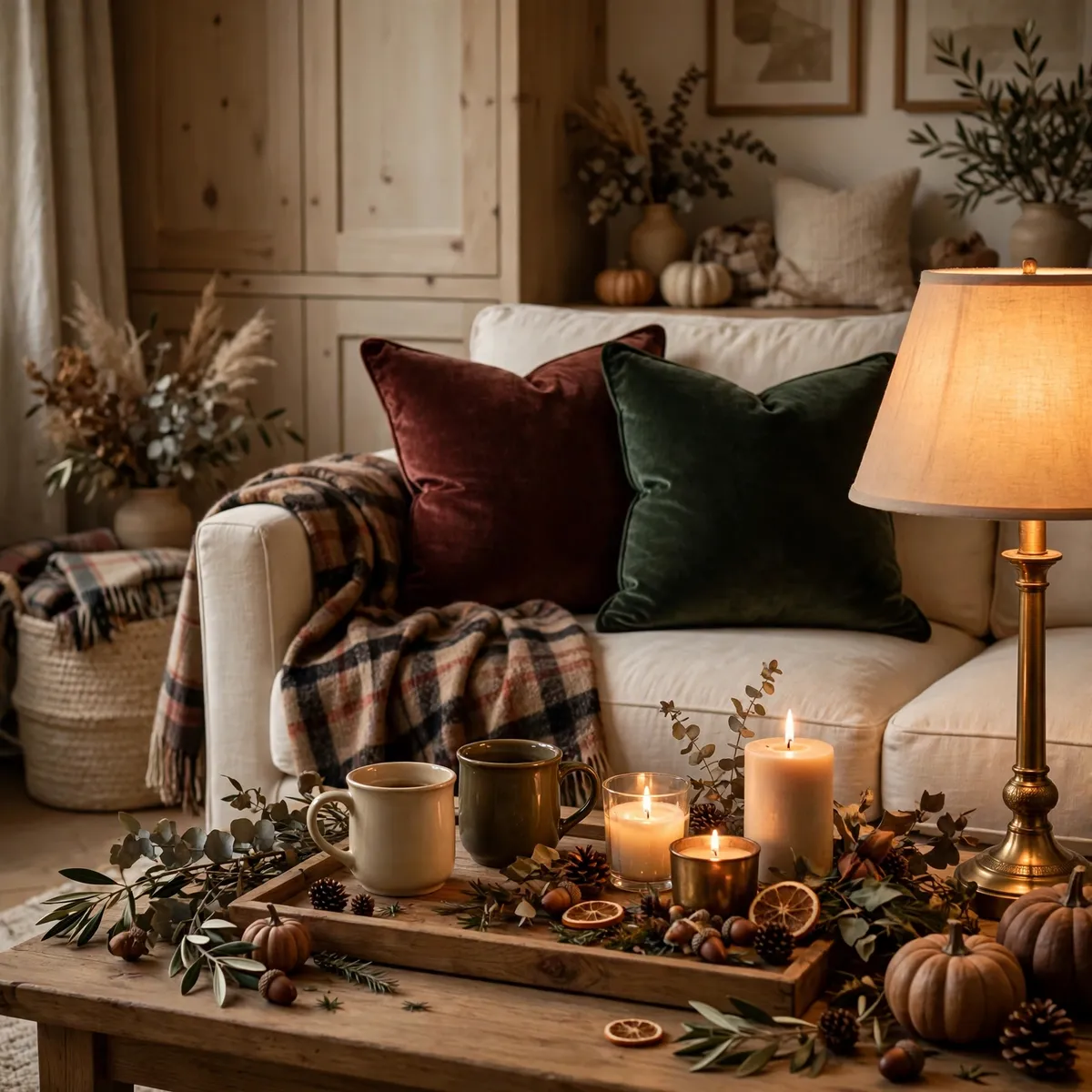
Before and after the meal, guests gather in the living room, so it deserves a little of the same attention as the table. A plaid or chunky-knit throw draped over the sofa arm, two cushions in your palette’s deep accent color, and a tray with candles and a small vase of branches are enough. The goal is a room that invites people to settle in, not a second display to admire from a distance.
Quick tips
- Two accent cushions and one throw are enough — more reads as clutter.
- Add a candle tray to the coffee table so the room glows like the dining table.
- Clear a landing spot for drinks so guests relax instead of balancing glasses.
11. Style the Kitchen and Serving Station Too
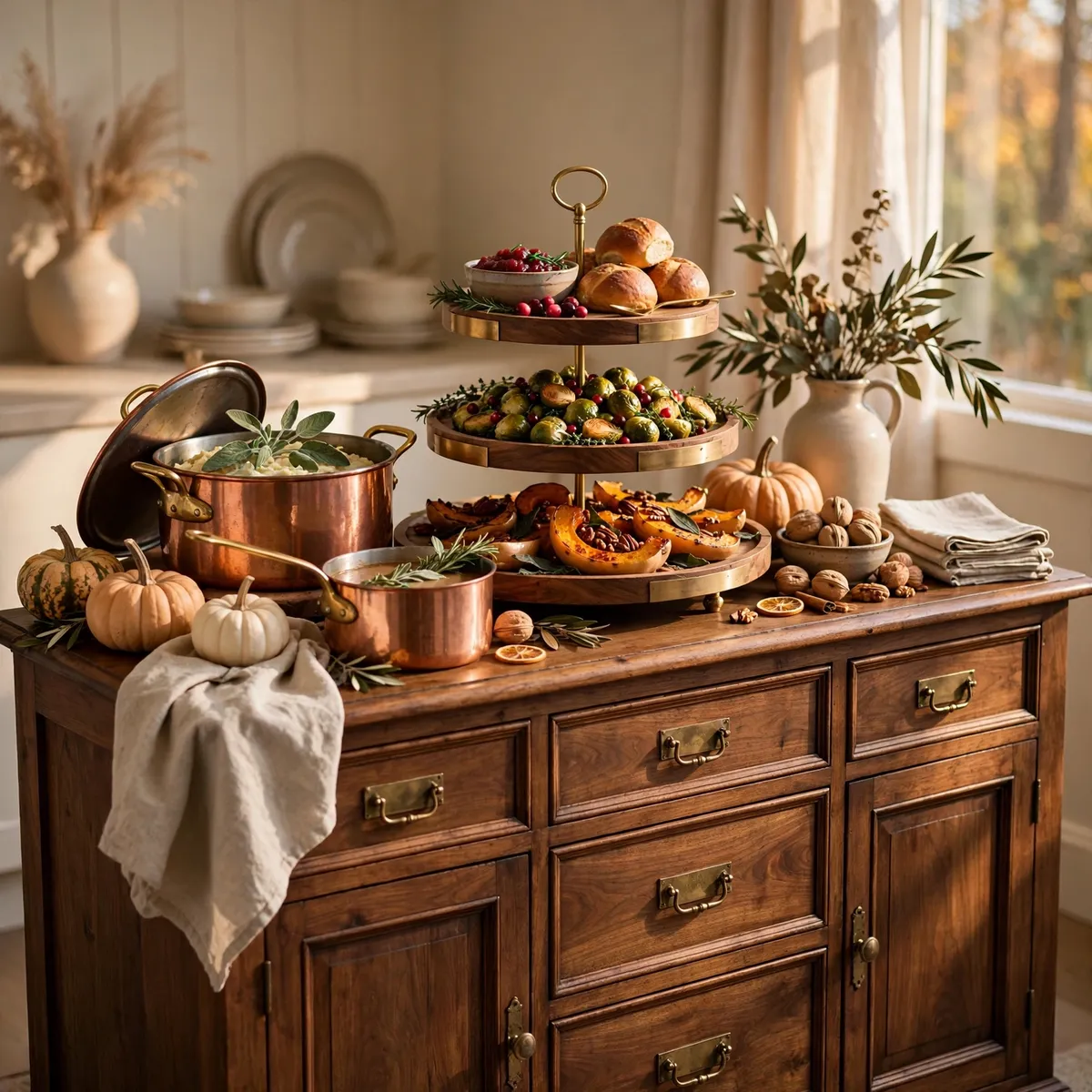
The kitchen works hard on Thanksgiving, so keep its decor simple and out of the cook’s way. A small pumpkin or two on the windowsill, a linen towel in your palette, and one vase of branches on a far counter are all you need. If you serve buffet-style, the serving station gets the real styling: a sideboard or console with tiered trays, labeled dishes, and a few autumn pieces at the ends makes serving feel like part of the celebration rather than a queue.
Quick tips
- Keep counters mostly clear — decor should never block prep space.
- Label dishes with small cards so guests serve themselves easily.
- Put the prettiest pieces on the serving station, not the cooking counter.
12. The Night-Before Finishing Touch
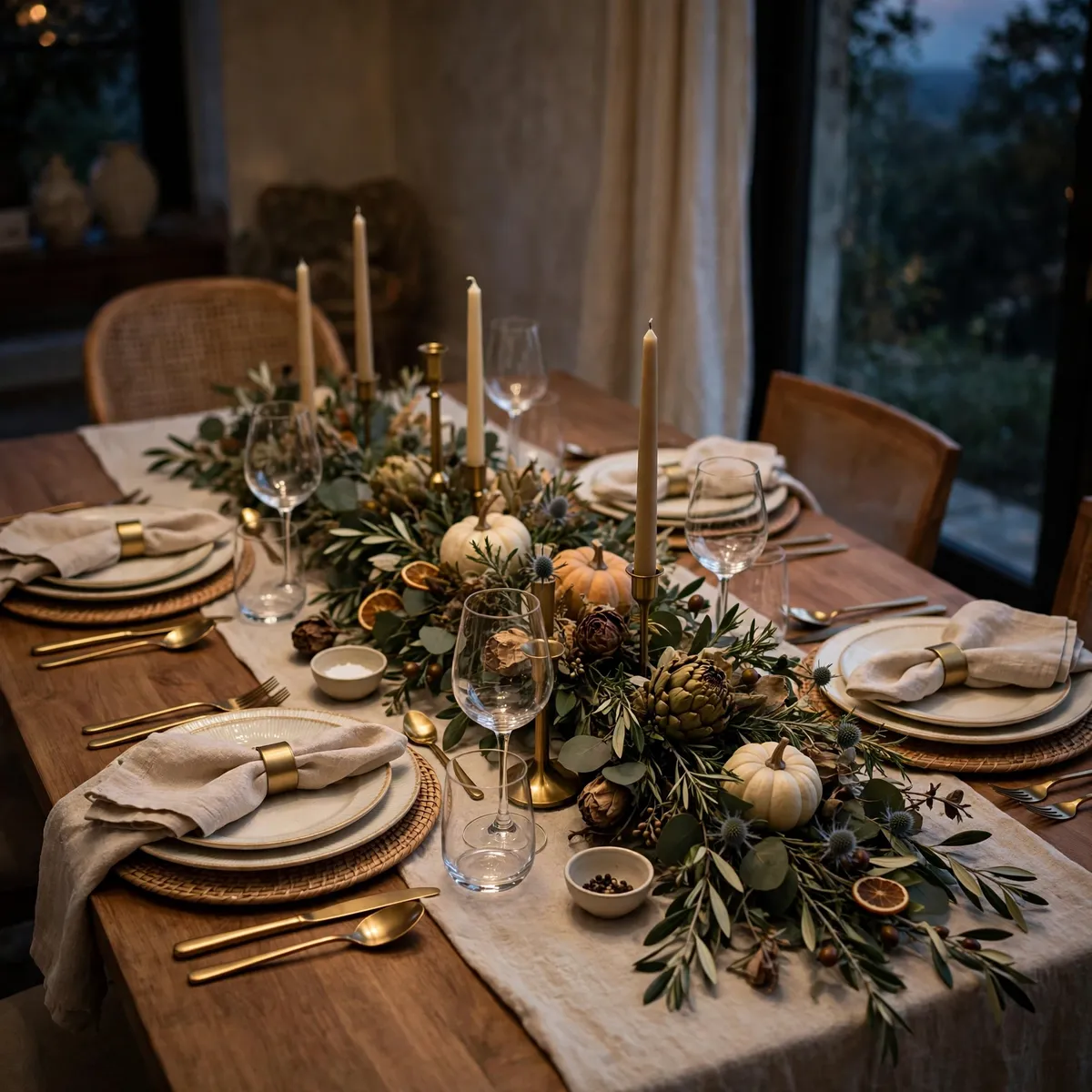
The calmest Thanksgiving mornings belong to the people who set the table the night before. With the food prepped and the table fully laid — plates, glasses, napkins, centerpiece, candles ready to light — the morning becomes a short list of finishing touches instead of a scramble.
Walk through the house once, room by room, with fresh eyes: straighten the runner, fluff the cushions, set out the guest towels, and put a small arrangement in the bathroom. Then stop. A home that is 95 percent ready and a host who is rested will always feel more welcoming than a perfect house and an exhausted one.
Quick tips
- Set the full table the night before; light candles the morning of.
- Style the table the night before or the morning of — whichever leaves you calmer.
- Do one final walk-through, then stop decorating and enjoy the day.
Frequently Asked Questions
How do you decorate for Thanksgiving?
These thanksgiving decor ideas start with a warm autumn palette, then focus on the three places guests notice most: the front door, the table, and one surface like a mantel or sideboard. Keep the centerpiece low, add candles at varied heights, and bring in natural pieces like pumpkins, branches, and acorns. Decorate indoors from mid-October and style the table the night before or the morning of the feast.
What are popular Thanksgiving decor colors?
Amber, earthy tones, and warm metallics like brass and copper are the classic base. In 2026, the look leans muted and sophisticated, with moody jewel tones — oxblood, forest green, deep purple — used as accents against warm neutrals like cream and oatmeal.
How do you decorate Thanksgiving on a budget?
Use what you already own for the base — plain linens, jars, trays — and add foraged branches, pinecones, and acorns for free texture. Spend on a few good candles and one fresh element, and make hand-written place cards instead of buying printed ones.
When should you start Thanksgiving decorating?
Start indoor decorating in mid-October with versatile fall pieces that work all season, then add Thanksgiving-specific touches like the table setting and place cards the night before or the morning of the holiday.
Conclusion
Good Thanksgiving decor is not about filling every surface — it is about choosing a palette that lasts, styling the places people gather, and letting natural pieces and candlelight do the quiet work. Start with color, welcome guests at the door, keep the table low and warm, and finish the night before so you can actually enjoy the day. That is the whole formula, and it works in a farmhouse, a city apartment, and every home in between.