







Fall Mantel Decor Ideas That Feel Warm and Elegant
A beautiful fall mantel does not need a lot of stuff. It needs a clear palette, a few layers, and one strong focal point. The short answer: start with warm browns, creamy whites, and one deep accent, layer from the back forward, and finish with a cluster of pumpkins, candles, or dried branches.
That simple formula works on a wide farmhouse mantel, a small apartment shelf, and everything in between.
Fall mantels look best when they feel gathered rather than arranged — like the season itself, a little full, a little uneven, and warm. The ideas below follow that feeling. Pick two or three that suit your room, repeat them with restraint, and leave some breathing room.
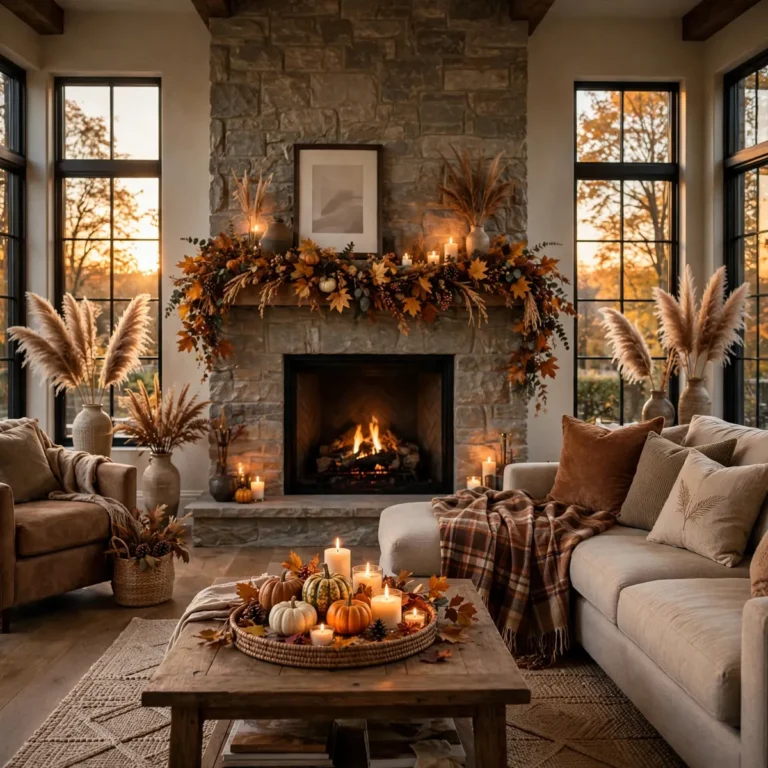
If you want the rest of the room to feel just as seasonal, carry the same palette into your fall living room decor with a throw, a cushion, or a bowl of pumpkins on the coffee table.
1. Fall Mantel Decor Ideas: Start With a Warm, Grounded Palette
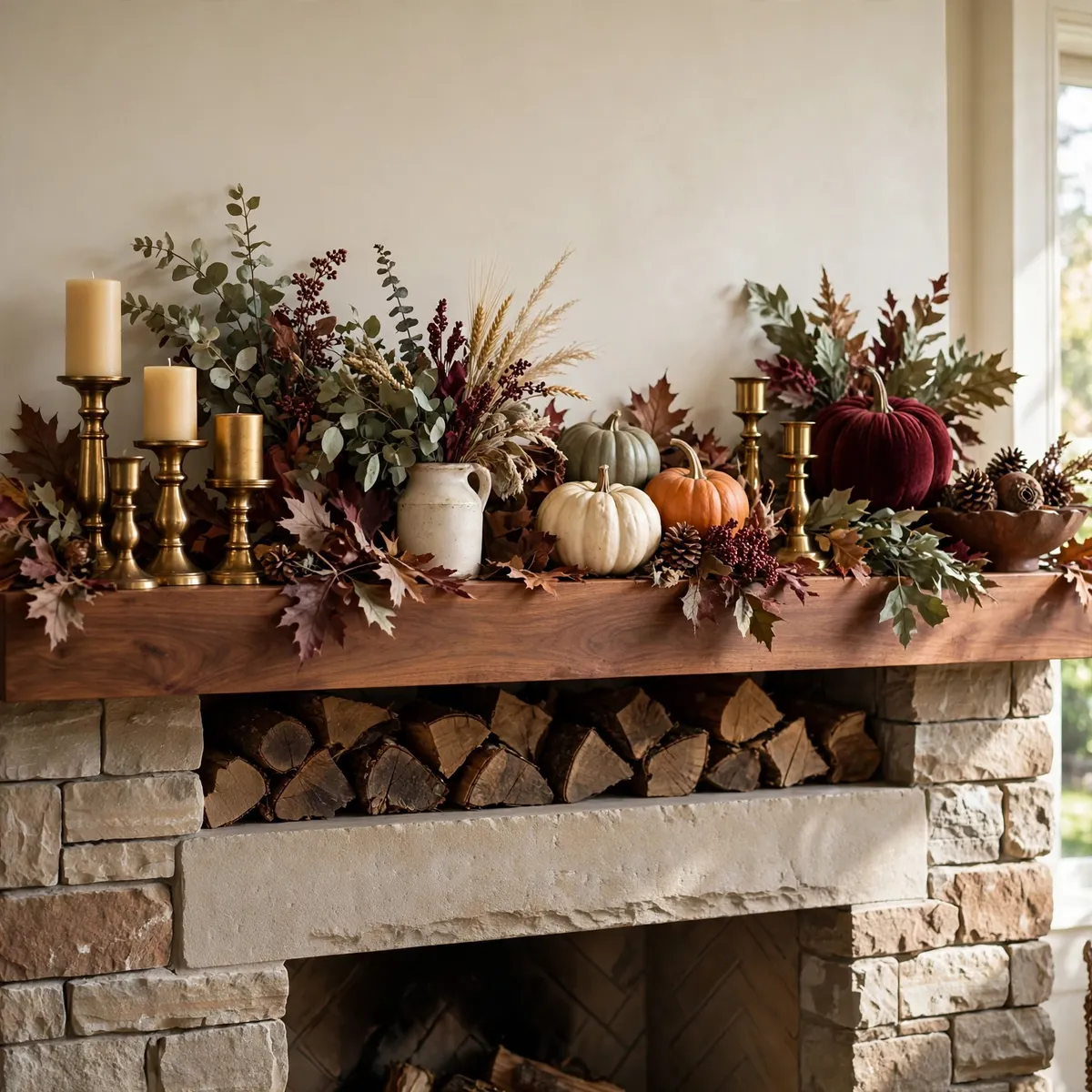
This season, the strongest fall palettes are warm and grounded rather than bright or icy. Rich browns, warm woods, creamy whites, muted greens, and a deep burgundy or oxblood do most of the work. When the colors share the same warmth, even a simple mantel looks intentional, and pieces you already own — a wooden bowl, a brass candlestick, a cream vase — suddenly belong together.
Start with two neutrals as your base, then add one accent color and repeat it at least three times across the mantel so the eye reads it as a choice, not an accident.
- Quick tips:
- Pick a base of brown + cream, then add muted green or burgundy as the accent.
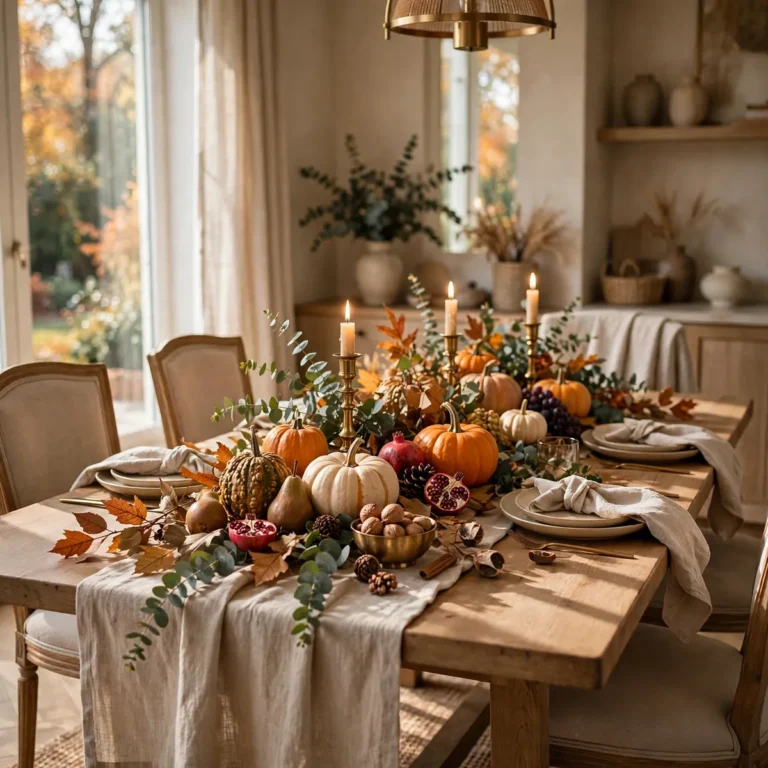
- Repeat the accent in three spots: a pumpkin, a candle, and a sprig of foliage.
- Keep metals warm — brass, bronze, and aged gold suit fall better than silver.
2. Layer Back to Front, Tallest First

Layering is what separates a styled mantel from a shelf with things lined up on it. Work in three depths: tall pieces against the wall, medium pieces in the middle, and small pieces at the front edge. A mirror or large piece of art goes at the back, a garland or branch sits in front of it, and pumpkins, candles, and small vessels fill the front.
Step back after each layer. If you can still see every piece, the layering is working; if the front row hides the middle, pull the front pieces apart or swap one for something shorter.
- Quick tips:
- Back layer: mirror, art, or tall branches.
- Middle layer: garland, medium vases, stacked books.
- Front layer: small pumpkins, votives, and one low bowl.
3. Try Asymmetry Before Defaulting to Symmetry
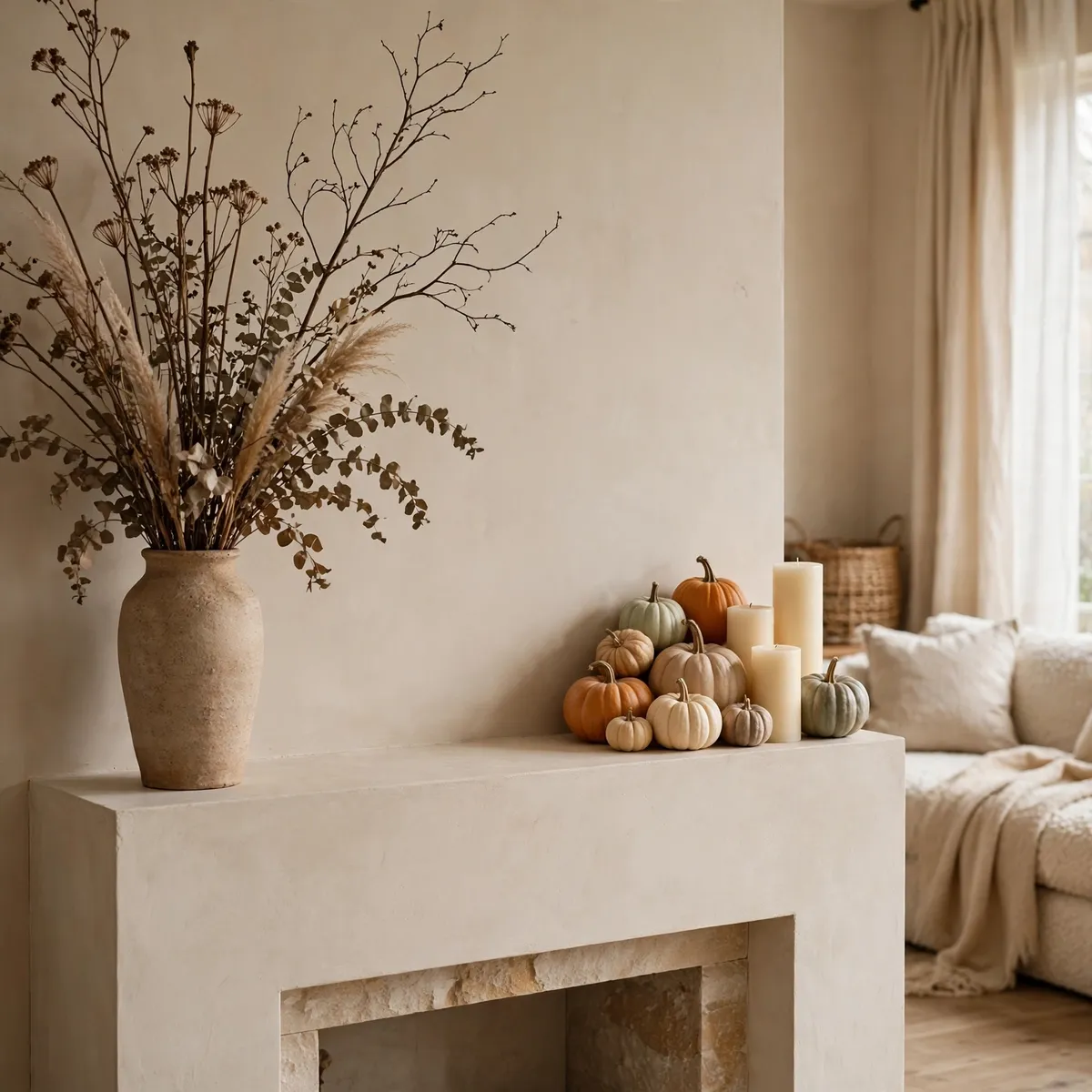
Symmetry feels calm and formal: matching candlesticks on both ends, a centered wreath, everything mirrored. Asymmetry feels relaxed and current: a tall vase of branches on one side, a low cluster of pumpkins and candles on the other, and open space in the middle. Neither is wrong, but asymmetry is more forgiving — it hides an off-center fireplace, works with a mantel that has a TV or a door nearby, and looks less like a showroom.
If your room already has a lot of symmetry, an asymmetrical mantel adds life. If your room feels busy, a symmetrical mantel can bring order. Let the room decide, and commit to one approach rather than mixing both.
- Quick tips:
- For asymmetry, make one side tall and one side low, with empty space between.
- Balance visual weight, not object count — one large vase can balance three small pumpkins.
- Squint at the mantel: the two sides should feel roughly equal in weight, not identical.
4. Drape a Natural Garland, Not a Plastic One
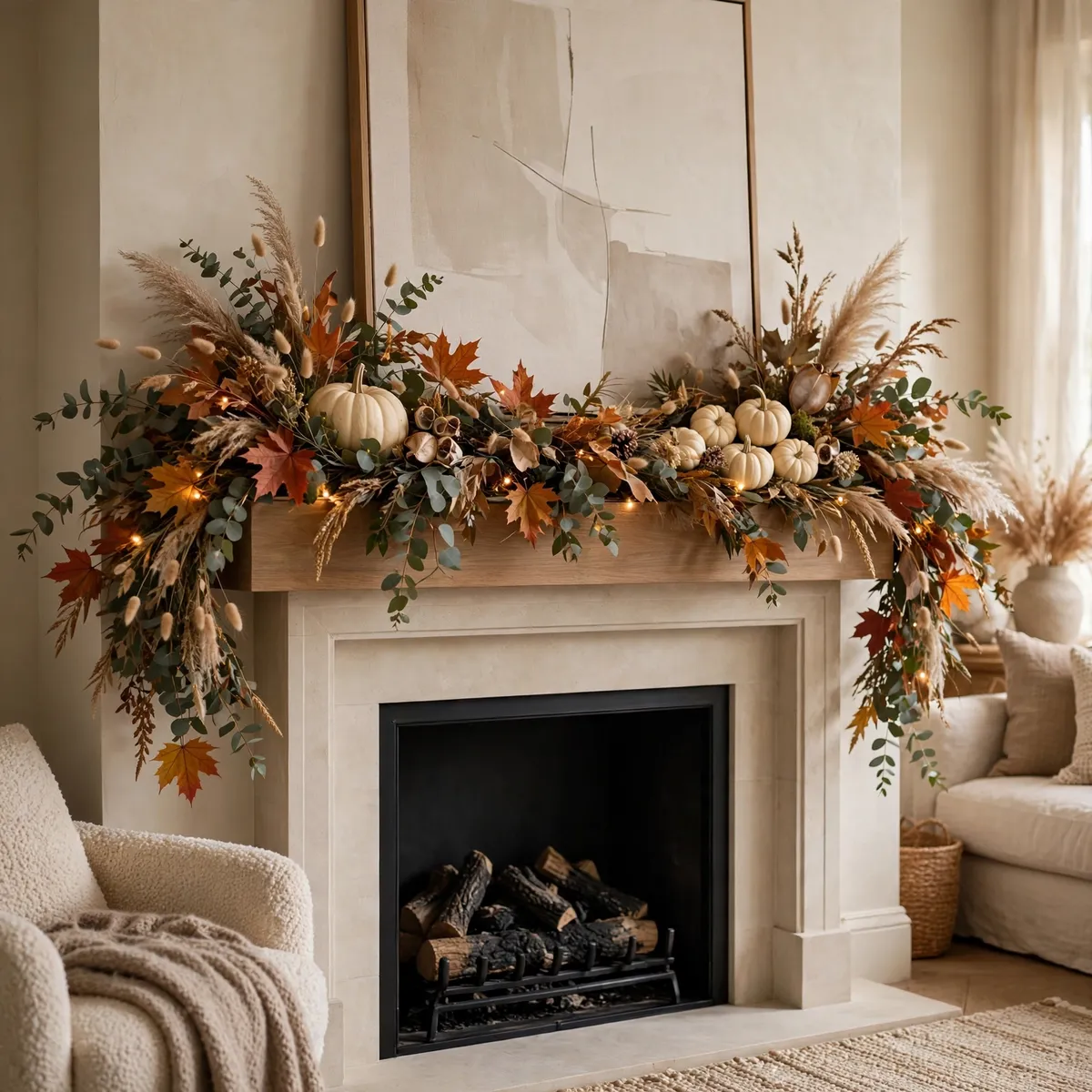
A garland is the easiest way to make a mantel feel like fall in one move, and a natural one beats a shiny synthetic one every time. Eucalyptus, dried grasses, maple branches, or a mix of faux stems in matte, realistic tones will drape softly and catch the light the way real foliage does.
Let the garland fall a little below the mantel edge on one side, tuck in a few cream pumpkins or dried seed heads, and resist the urge to add a second garland on top of it. One generous garland, well placed, is enough; the rest of the mantel should stay quiet so the garland can do its job.
- Quick tips:
- Drape the garland slightly off-center so one end hangs lower than the other.
- Tuck pumpkins into the garland instead of lining them in front of it.
- Skip glitter and bright orange leaves — matte, muted foliage reads more expensive.
5. Group Pumpkins by Three, Not by Dozens
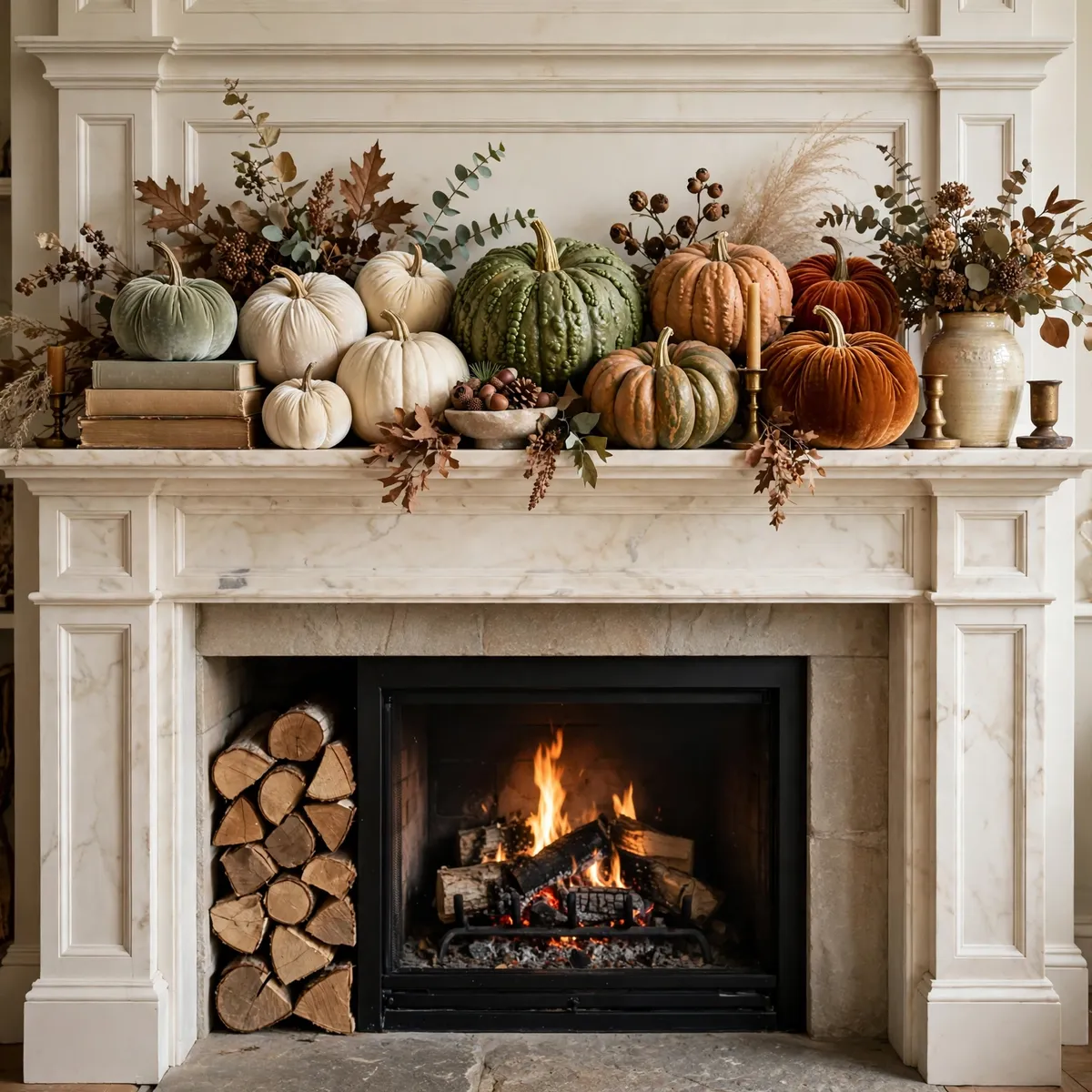
Pumpkins are the most recognizable sign of fall, and also the easiest to overdo. A mantel covered edge to edge in pumpkins reads as a display, not decor. Group them instead: three pumpkins of different sizes and textures — a real heirloom pumpkin, a velvet one in cream or rust, and a small carved or ceramic one — set close together reads as one deliberate cluster.
Leave space between clusters. Two clusters on a wide mantel are plenty; on a narrow mantel, one cluster is enough. Mixing textures matters more than mixing colors: matte velvet, rough ceramic, and smooth real pumpkin skin keep a single-color group interesting.
- Quick tips:
- Use odd numbers: groups of three look more natural than pairs or rows.
- Vary size and texture before you vary color.
- Set one pumpkin on a stack of books to add height without adding clutter.
6. Set Candles and Lanterns at Varied Heights
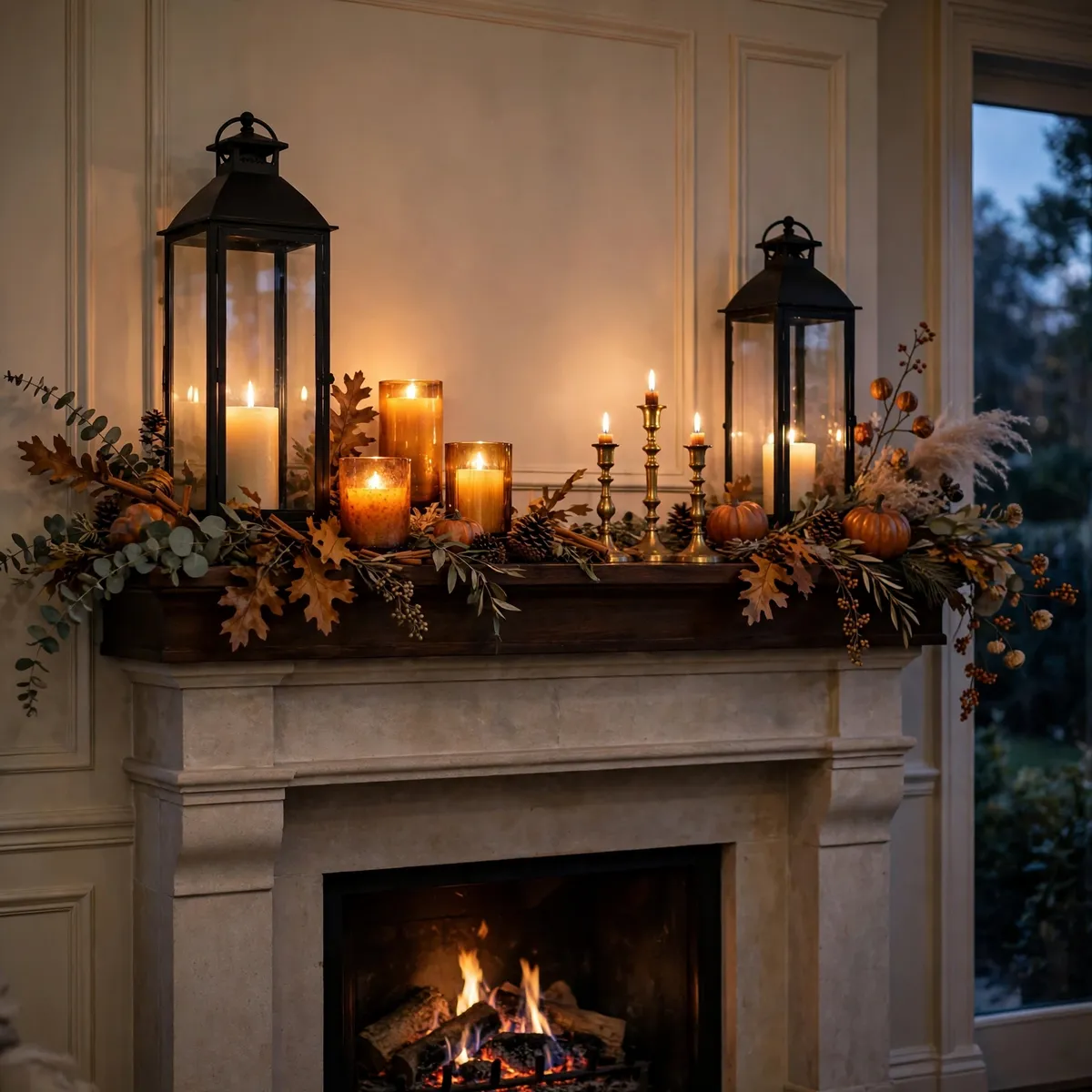
Candlelight is what makes a fall mantel feel warm after dark, and height is what makes the candle arrangement look styled. A row of identical candles at the same height looks flat; candles at three heights — tall lanterns, medium pillar candles, and small votives — create a gentle staircase of light.
Use flameless candles if you have children, pets, or dried foliage nearby, and keep real flames away from garlands and branches. Amber glass holders, brass sticks, and black metal lanterns all suit the season. Choose one metal and repeat it so the candle group feels cohesive rather than collected at random.
- Place the tallest lantern or candlestick first, near one end.
- Add a medium pillar candle a few inches in front of it.
- Finish with a small votive or two at the front edge.
- Quick tips:
- Three heights beat three identical candles every time.
- Keep flames clear of garlands, branches, and fabric.
- Use one scent, or none, so the mantel does not compete with the kitchen.
7. Make Dried Branches the Focal Point
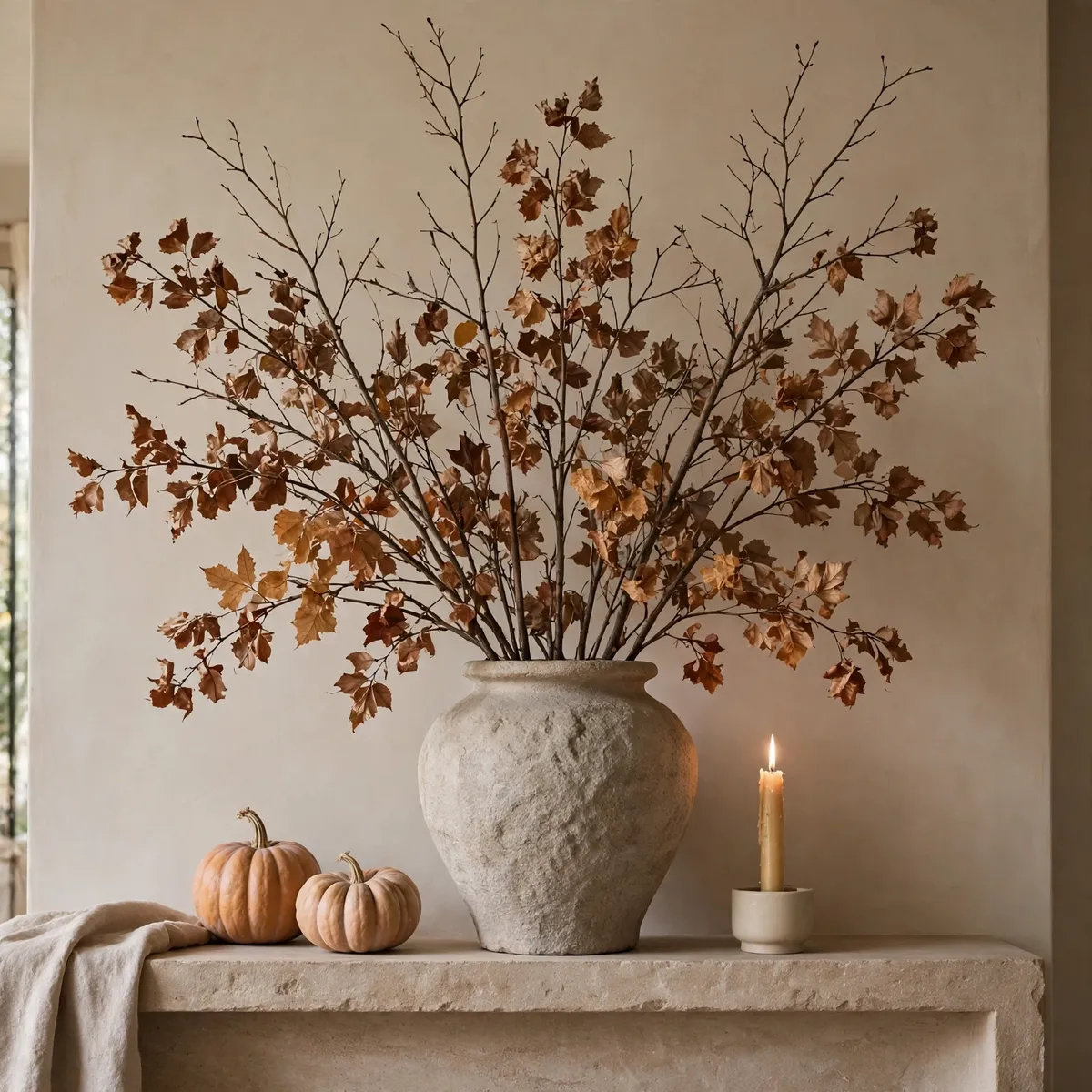
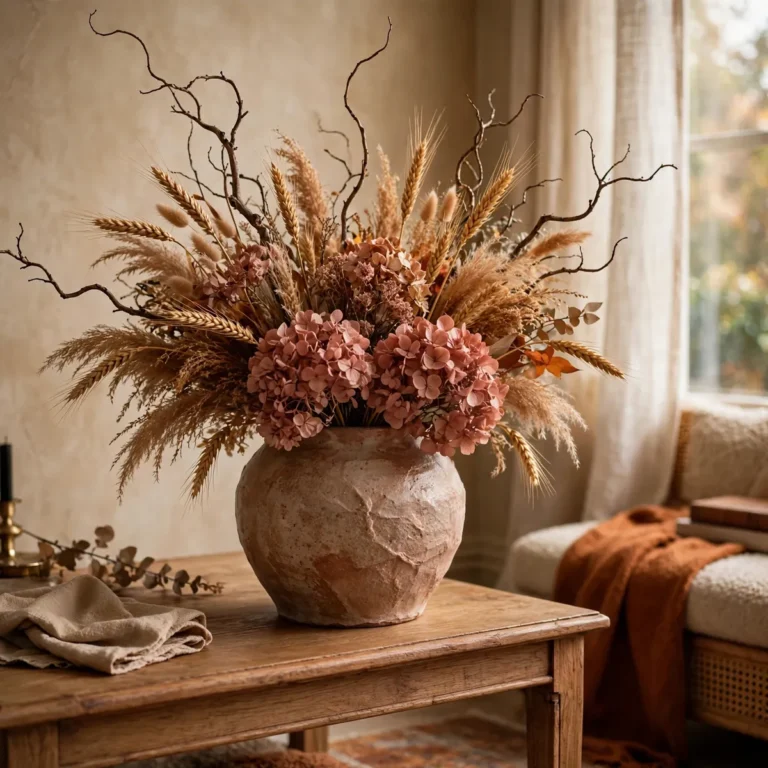
Every good mantel needs one thing the eye lands on first, and dried branches are one of the best focal points for fall. They are tall, sculptural, and free if you prune them yourself — and they add the height a mantel often lacks without adding visual bulk.
Set a generous bunch in a heavy stone, ceramic, or glass vase at one end of the mantel, let a few stems arc naturally, and keep everything else lower and simpler so the branches stay the star. If the branches feel bare, add two or three dried stems with seed heads or a few faux autumn leaves clipped near the top. Take a branch that is too perfect and bend one stem out of line; a little wildness is what makes it look gathered rather than bought.
- Quick tips:
- Choose a heavy vase so tall branches cannot tip.
- Let branches rise at least a foot above the mantel’s back layer.
- Keep the rest of the mantel low so the branches stay the focal point.
8. Anchor the Mantel With a Mirror or Art
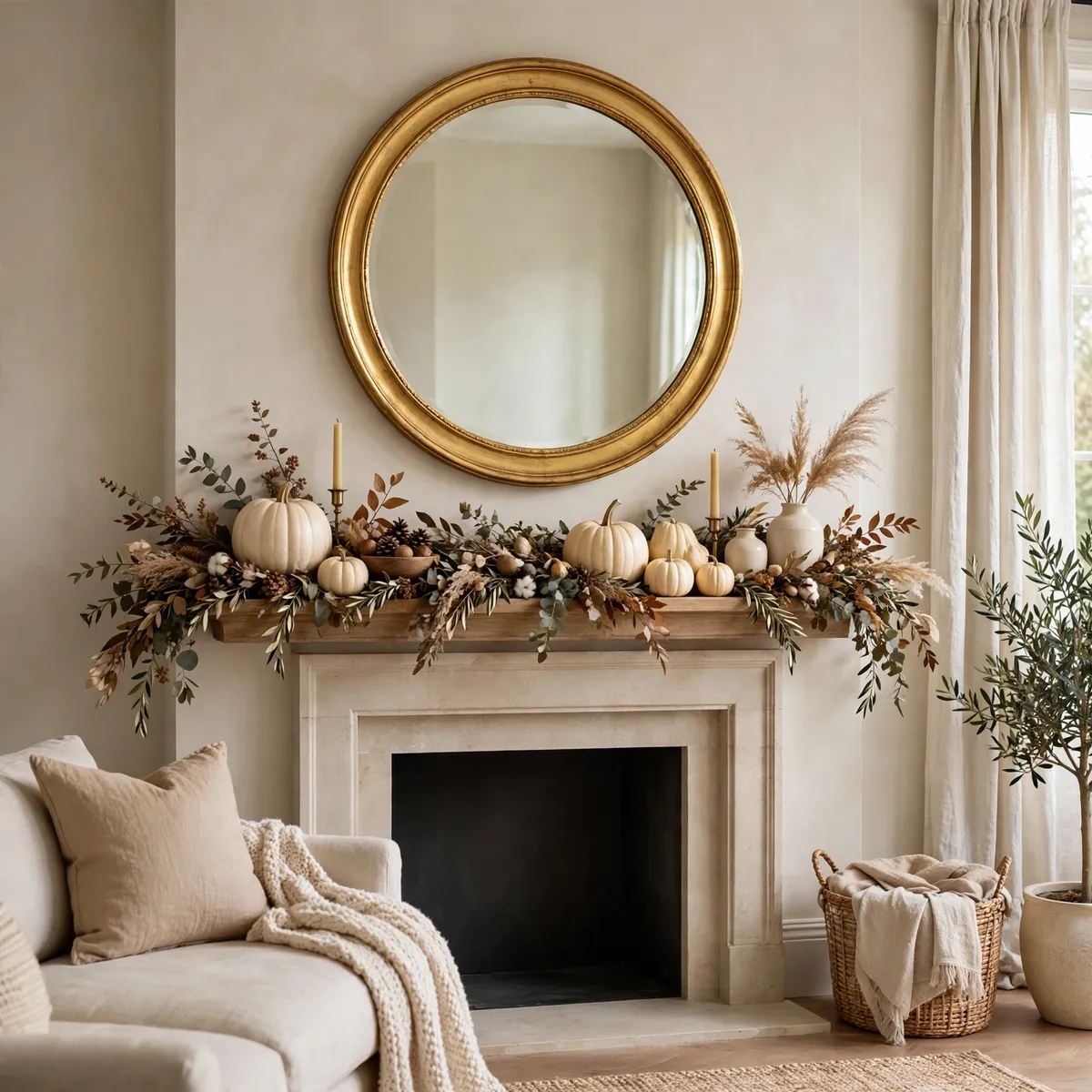
A large mirror or a single piece of art hung or leaned above the mantel gives the whole arrangement a center and a frame. Without an anchor, even a well-styled mantel can look like objects floating on a shelf.
A round or arched mirror reflects light and makes a small room feel larger, while a landscape print or a moody still life adds depth and color. Lean the piece rather than hanging it if you want a relaxed look, and overlap the bottom edge slightly with the garland or a branch so the layers connect. Keep the frame in the same metal or wood tone as the rest of the mantel so the anchor feels like part of the styling, not an afterthought.
- Quick tips:
- One large anchor beats three small frames.
- Lean art for a relaxed look; hang it for a formal one.
- Let the garland or a branch overlap the frame’s lower edge to connect the layers.
9. Go Moody With a Brown Mantel
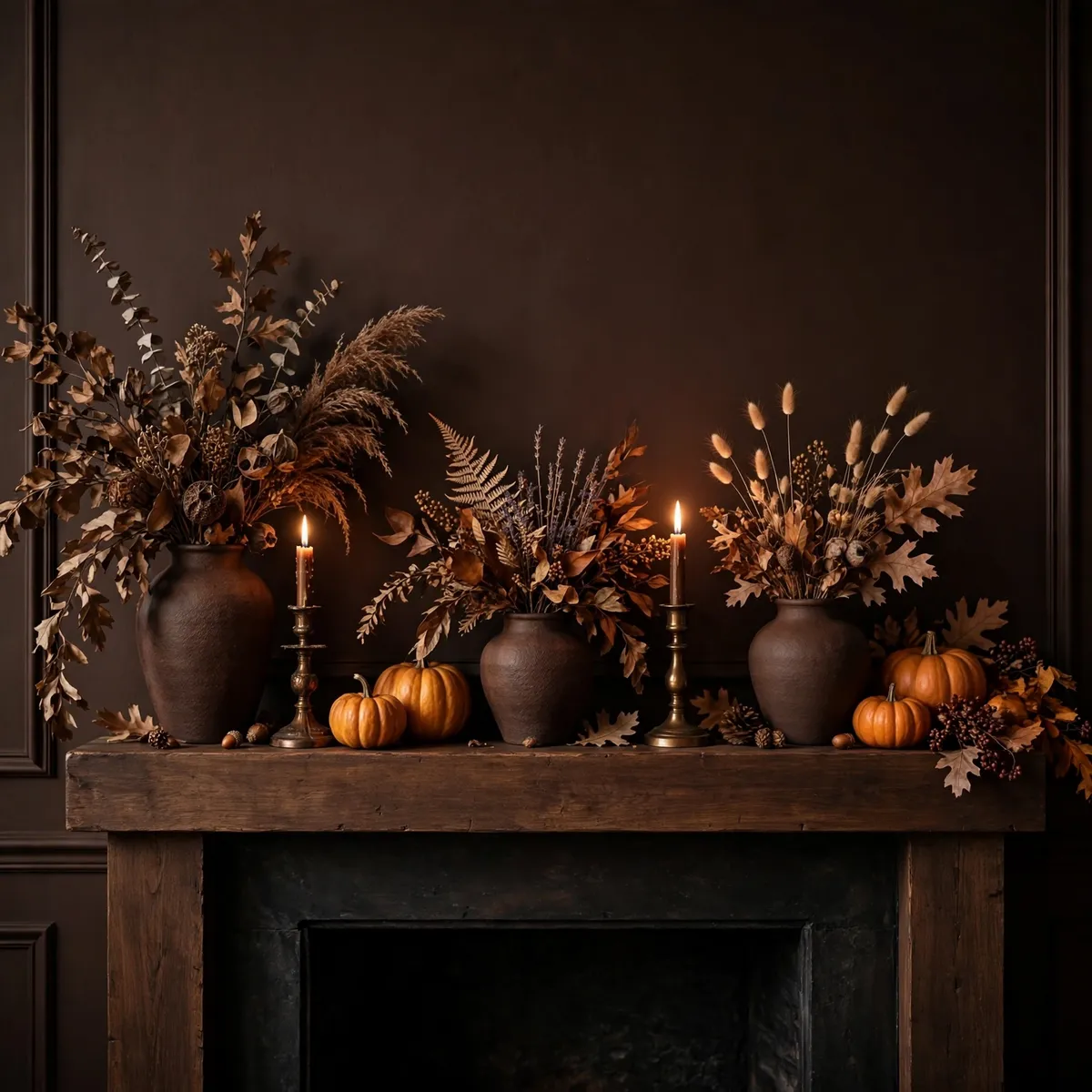
If your room can handle depth, a moody brown mantel is one of the most striking ways to do fall. Chocolate pottery, bronze candle holders, amber pumpkins, and dried foliage against a dark brown wall or a dark-stained wooden mantel create a rich, cocooning look that feels far more grown-up than bright orange.
The key is contrast: keep a few creamy or pale elements — a cream pumpkin, a pale vase, a light candle — so the dark pieces do not melt into the background. Texture does the rest. Matte pottery, hammered bronze, rough dried stems, and soft velvet pumpkins keep a dark mantel from looking flat, even in low light. This is also the palette where a single burgundy accent, like a deep red pumpkin or a sprig of dark berries, earns its place.
- Quick tips:
- Pair dark pieces with two or three pale ones for contrast.
- Mix matte, hammered, and velvet textures so dark tones stay interesting.
- Add one burgundy accent and repeat it once, not everywhere.
10. Keep It Elegant in White and Gold
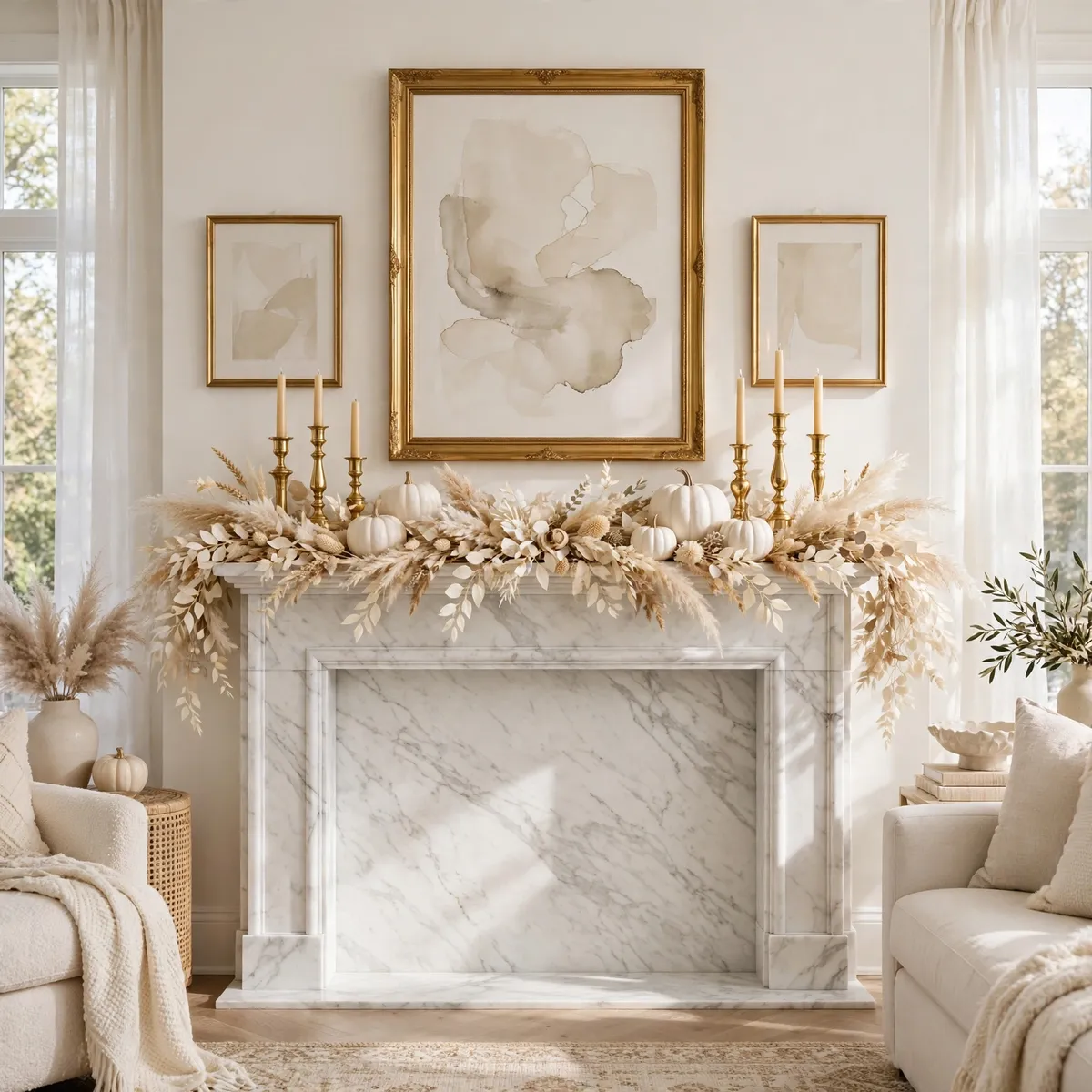
Not every fall mantel needs to be dark. A white-and-gold mantel is the elegant option: white pumpkins, cream foliage, gold candle holders, and a gold-framed mirror or print, all on a light marble or white-painted mantel. It works especially well in bright rooms, small rooms, and homes where the rest of the decor is already light and neutral.
The trick is to keep the gold warm and the white varied — mix pure white, cream, and ivory so the mantel does not look sterile. A few natural touches, like a wooden bowl or a sprig of dried wheat, keep the elegance from feeling cold and remind the eye that it is fall, not a wedding table.
- Quick tips:
- Mix white, cream, and ivory rather than using one flat white.
- Keep gold warm and brushed, not shiny or yellow.
- Add one natural texture — wood, wheat, or linen — to soften the polish.
11. Style a Small Mantel Without Crowding It
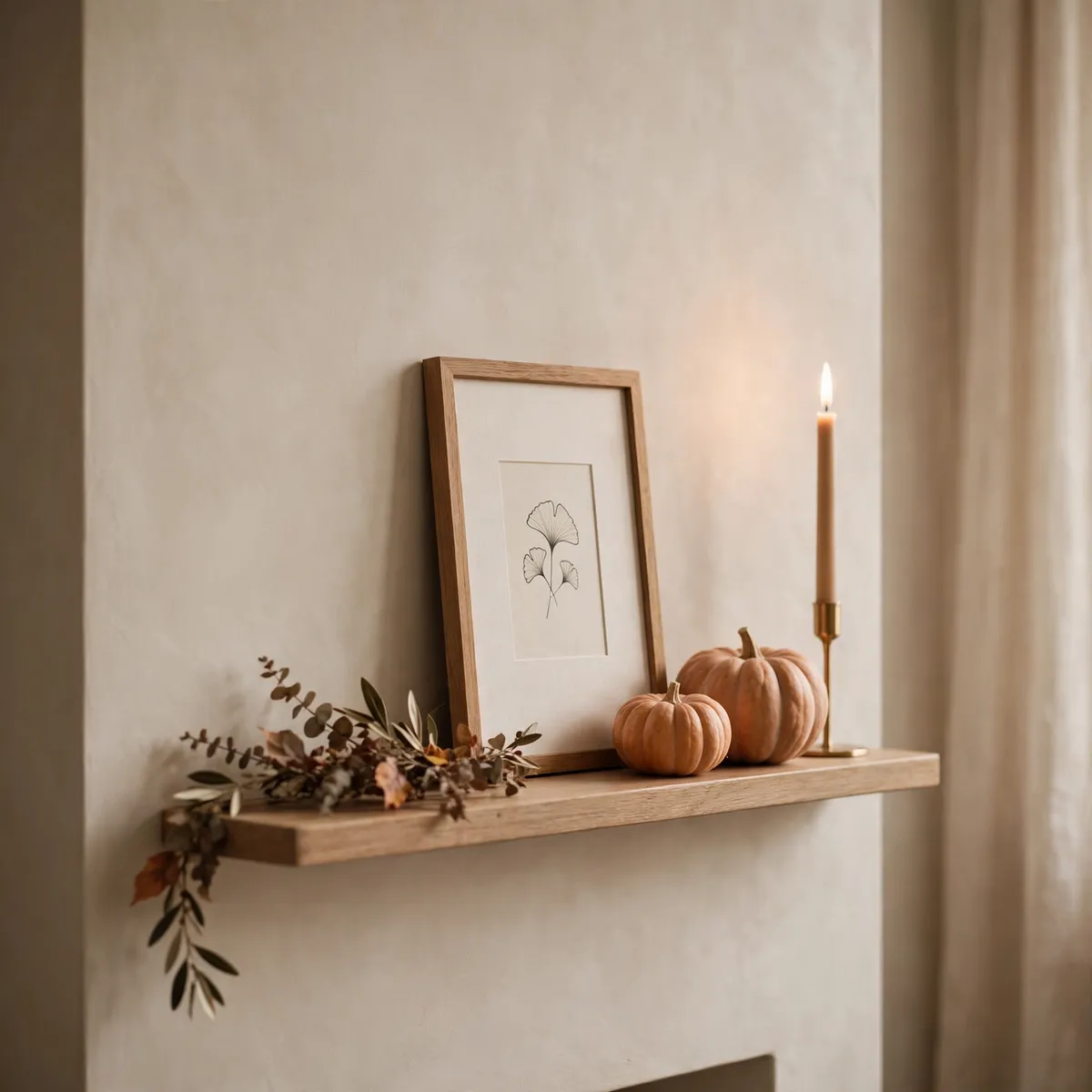
A small mantel needs less, not smaller versions of everything. Choose three pieces: one tall, one medium, one small. A slim vase with two or three branches, one small garland or a single trailing stem, and one mini pumpkin or one candle is a complete mantel. The most common mistake on a small mantel is filling every inch — the eye needs the empty space to see the pieces that are there.
If your mantel is also a shelf, a TV stand, or the top of a radiator cover, the same rule applies: three intentional pieces and clear space around them will look more styled than ten small ones squeezed together.
- Quick tips:
- Three pieces are enough: one tall, one medium, one small.
- Leave at least a hand’s width of empty mantel between pieces.
- Use vertical height — branches, a leaning print — instead of spreading sideways.
12. Forage, Shop Your Home, and Carry the Look to Thanksgiving
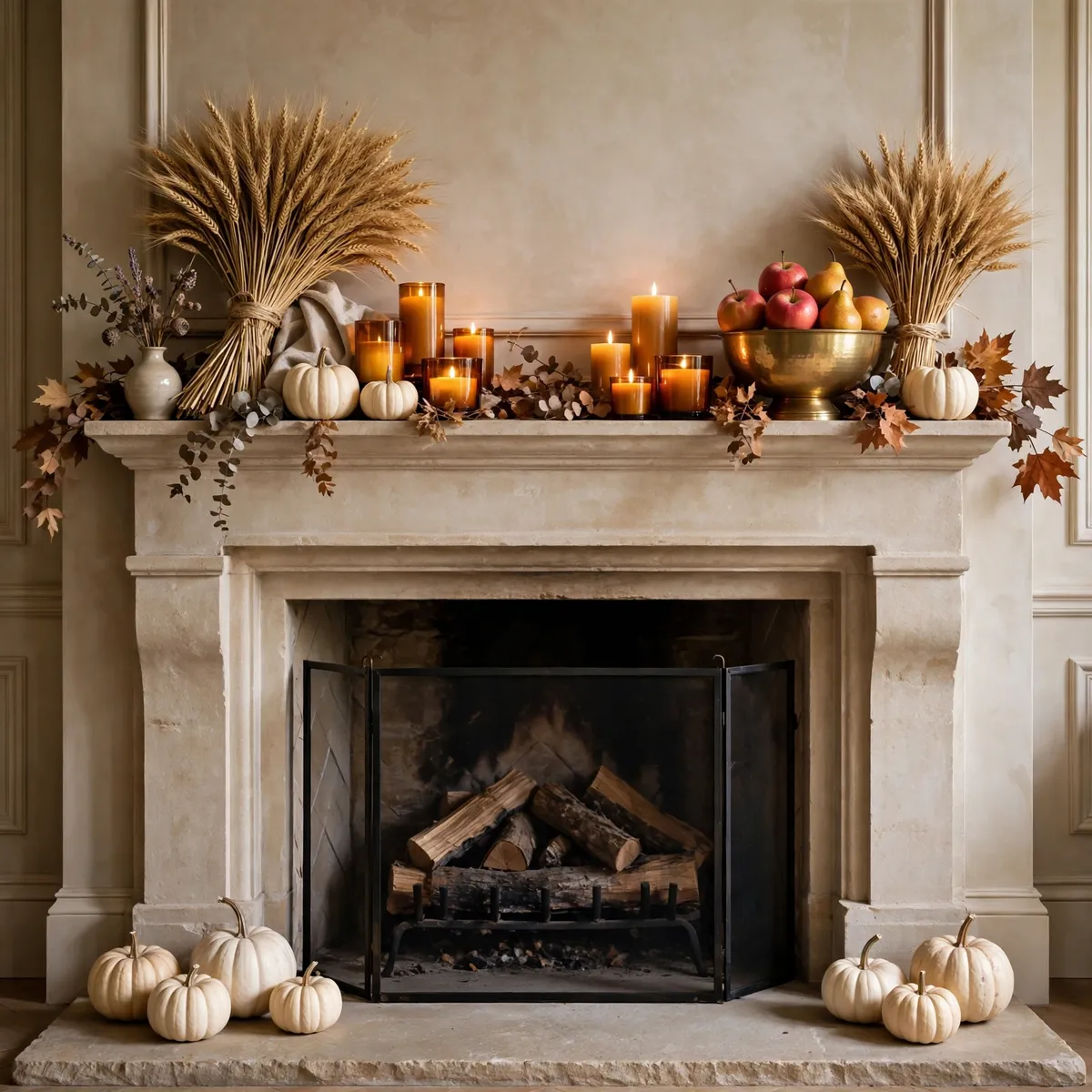
The best fall mantels are often the least expensive, because the season itself supplies the decor. Foraged branches, dried grasses, pinecones, acorns, and seed heads cost nothing and look more authentic than most store-bought stems.
Shop your home next: a ceramic vase from the bedroom, a wooden bowl from the kitchen, a brass candlestick from a drawer, and a linen runner folded along the mantel can all become fall decor with a change of context. Buy only what fills a real gap — usually one garland, one set of candles, or three velvet pumpkins — and let the foraged and found pieces do the rest.
Then, when Thanksgiving approaches, you do not need to restyle from scratch. Swap one pumpkin cluster for a brass bowl of apples and pears, add a bundle of dried wheat, and set out one more candle. The mantel already has the palette, the layers, and the warmth; Thanksgiving just asks for a slightly fuller harvest feeling, and a mantel built on foraged and natural pieces is ready for it.
- Quick tips:
- Forage branches, grasses, pinecones, and seed heads before buying anything.
- Shop your home first — vases, bowls, candlesticks, and books all count as fall decor.
- For Thanksgiving, swap one pumpkin cluster for fruit and wheat; keep everything else.
Frequently Asked Questions
How do I decorate my mantel for fall?
Start with a warm palette of browns, cream, and one deep accent. Add one anchor above the mantel — a mirror or art — then layer back to front: tall branches at the back, a garland in the middle, and pumpkins and candles at the front. Finish by stepping back and removing one item.
How do I layer a fall mantel without clutter?
Work in three depths and leave space between pieces. Keep the back layer tall, the middle layer medium, and the front layer small and low. If you cannot see every piece, or if two pieces touch, remove one or move it to another spot.
What colors work for a fall mantel?
Rich browns, warm woods, creamy whites, muted greens, and burgundy or oxblood work best this season. Keep the palette warm, repeat the accent color three times, and keep metals in warm brass, bronze, or aged gold.
How do I style a small mantel for fall?
Use three pieces: one tall, one medium, one small. A slim vase with branches, a short garland or trailing stem, and one mini pumpkin or candle is enough. Leave clear space between pieces instead of filling every inch.
Conclusion
A fall mantel does not need to be full to feel like fall. It needs a warm palette, honest layers, and one strong focal point — and the confidence to leave space around them. Start with the palette, build back to front, and let one idea lead: branches, a garland, or a cluster of pumpkins. Step back, remove one thing, and light the candles. That is the whole secret, and it works on every mantel, in every home, all season long.