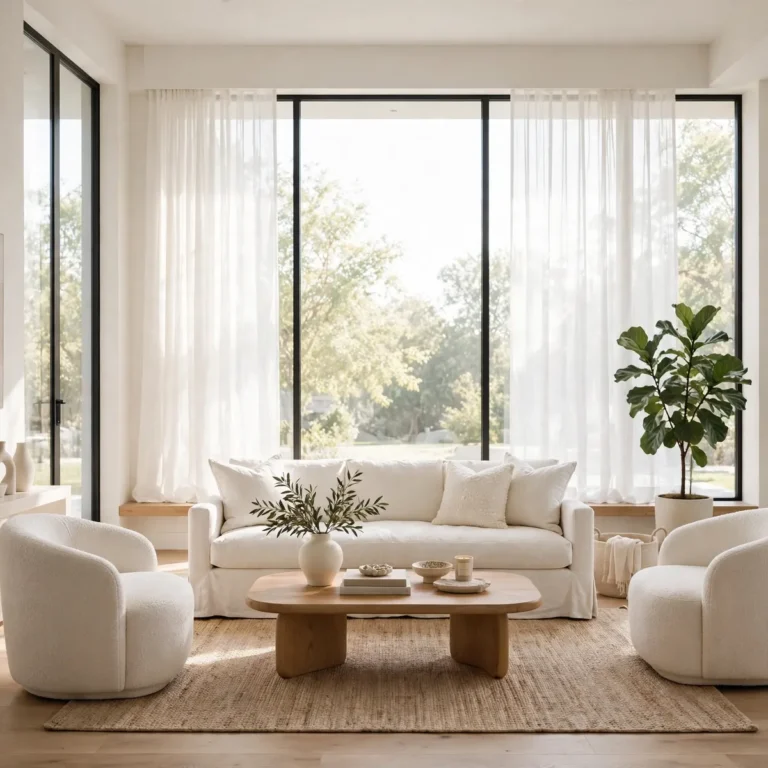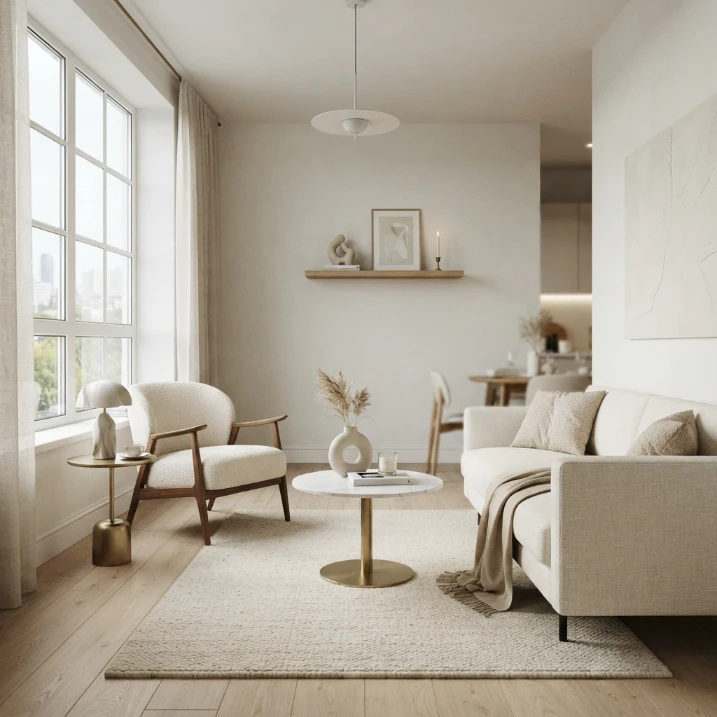
Chocolate Brown Living Room Ideas That Feel Warm, Not Heavy
Chocolate brown is one of the easiest colors to build a living room around. It is a warm, natural neutral — deep enough to ground a room, soft enough to pair with almost any accent color.
The best chocolate brown living room ideas all solve the same problem: keeping the richness of the brown without letting the room feel dark or heavy.
The formula is simple for chocolate brown living room ideas: start with a chocolate brown anchor piece, usually a sofa. Surround it with lighter tones like cream, ivory, or warm white.
Add texture through velvet, wool, leather, and linen so the brown reads as layered rather than flat. And bring in one contrasting accent — emerald green, navy, teal, or rust — to give the palette energy. If you want seasonal warmth to go with it, our guide to fall living room decor pairs beautifully with these palettes.
1. Chocolate Brown Living Room Ideas Start with the Right Anchor
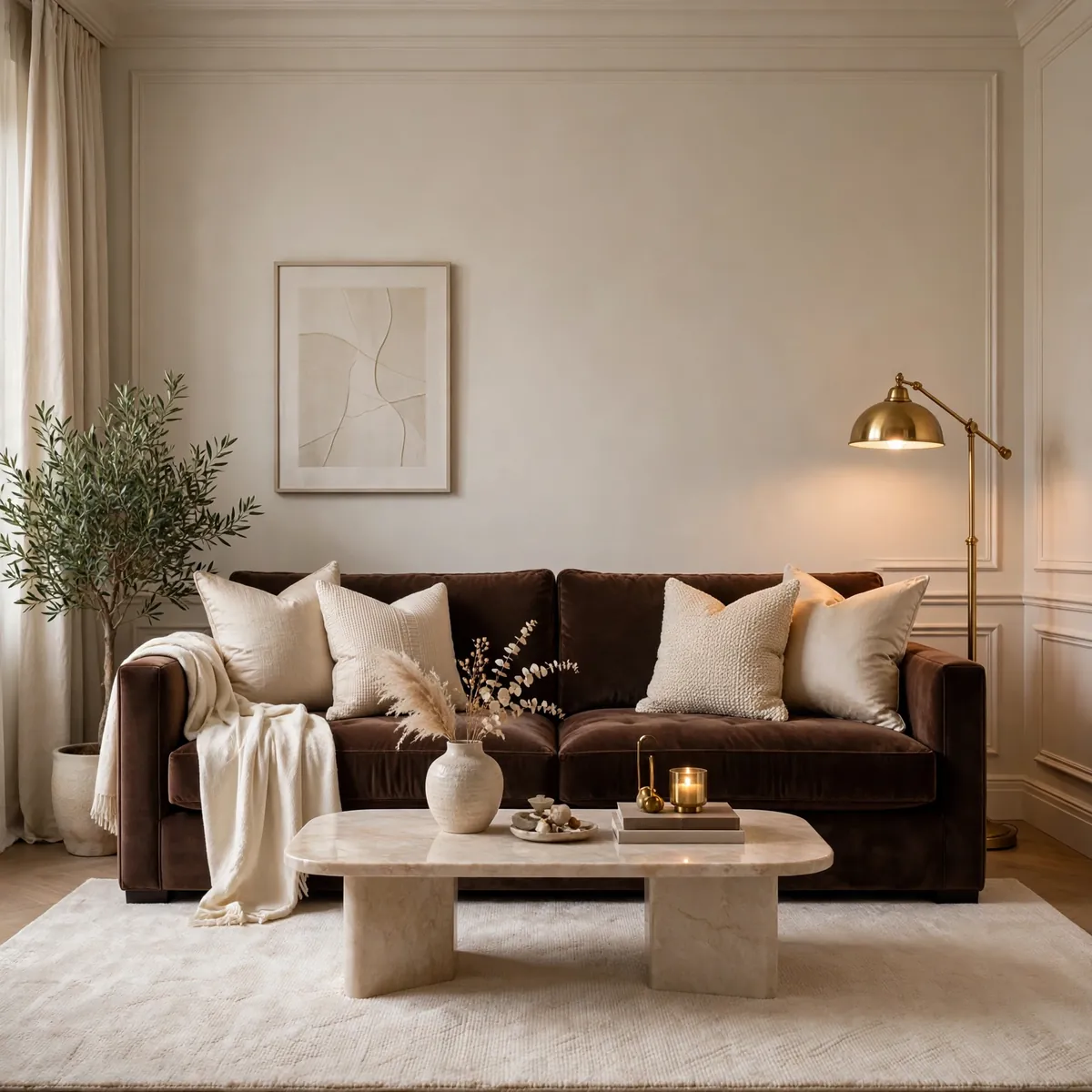
Most chocolate brown living rooms begin with one anchor: the sofa. A chocolate brown couch — leather or velvet — sets the mood for everything else, and it is forgiving in real life: the dark tone hides everyday marks better than light upholstery.
Once the sofa is in place, every other choice is about balance.
- Quick tips:
- Keep the largest brown piece low and clean-lined so it grounds rather than dominates.
- Echo the brown in small doses — a leather pouf, wooden tray, or picture frame — to tie the room together.
2. Pair Chocolate Brown with Cream and Ivory
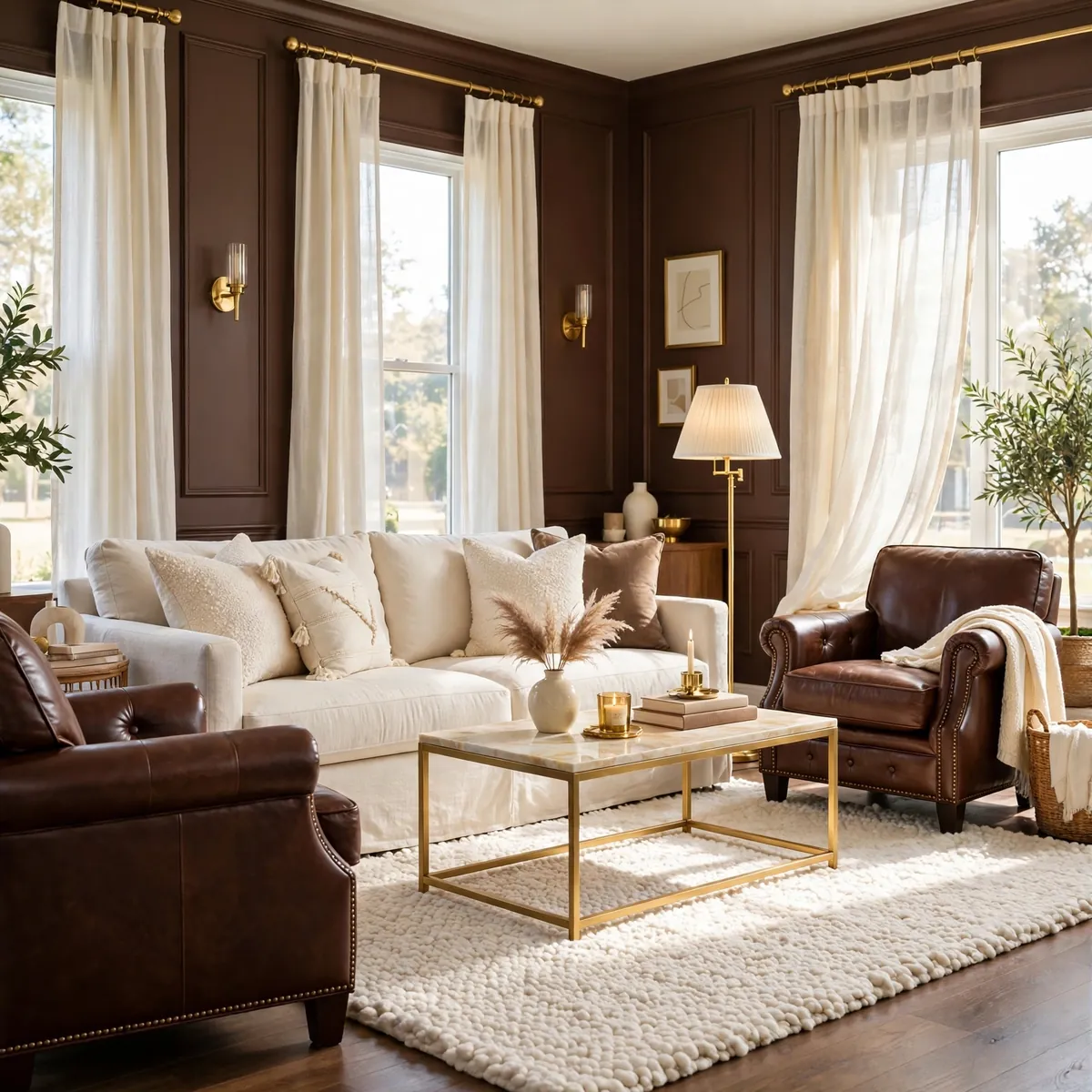
Cream is chocolate brown’s most natural partner. The soft warmth of cream or ivory lightens the palette instantly, giving the brown room to breathe.
A cream linen sofa opposite a chocolate brown armchair, an ivory boucle rug underfoot, sheer cream curtains — these combinations feel calm, classic, and endlessly livable. This pairing works in traditional rooms, but it is just as effective in modern spaces that need warmth without clutter.
- Quick tips:
- Use at least three cream or ivory pieces so the lightness feels deliberate, not accidental.
- Pick creams with a warm undertone; stark white can make brown look muddy by comparison.
3. Add Jewel Tones for a Rich, Luxurious Look
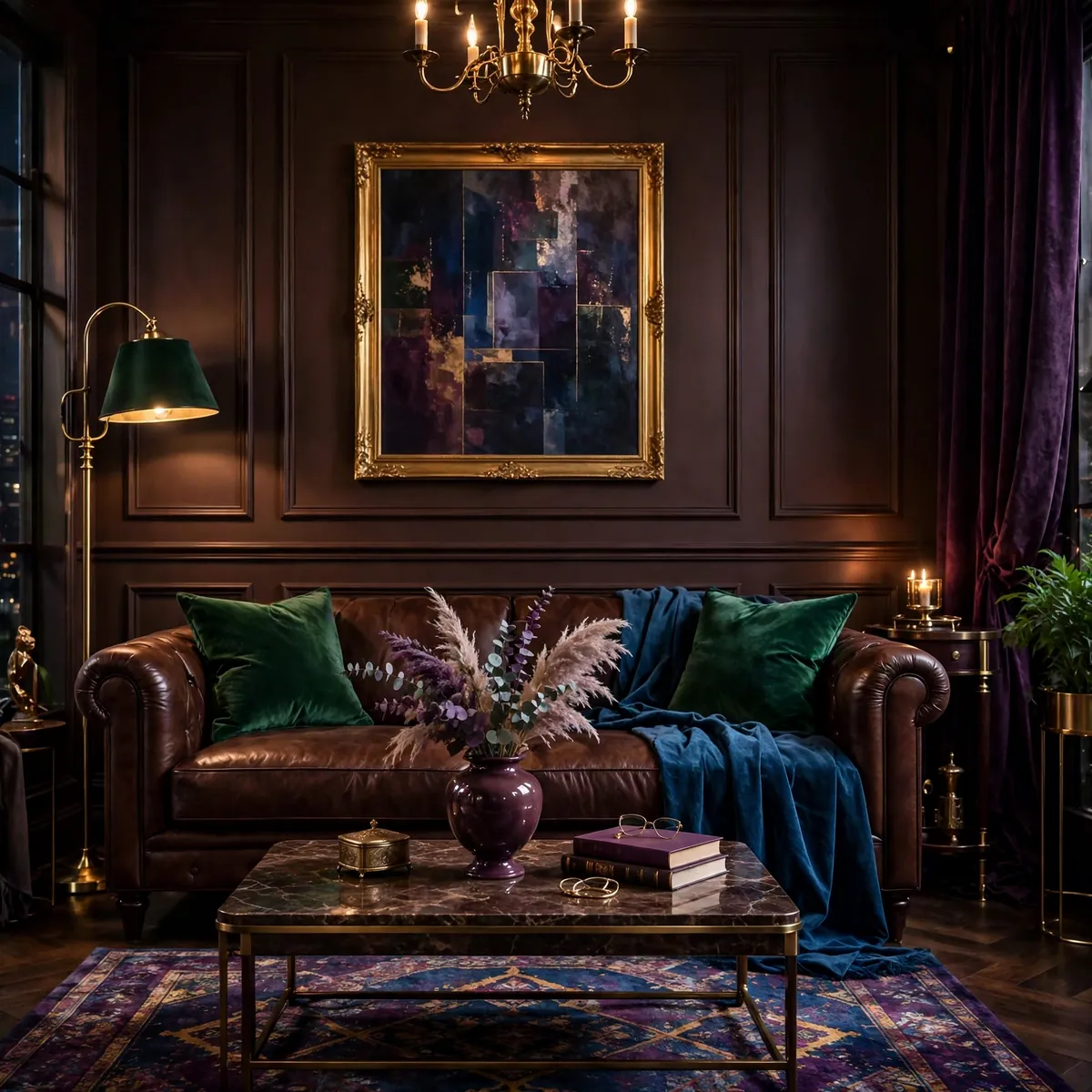
If your chocolate brown room feels flat, jewel tones are the fastest fix. Emerald green, sapphire blue, and deep plum all sit beautifully against dark brown because they share its depth while adding color.
Keep the big pieces brown and use jewel tones in the layers: velvet cushions, a throw, a vase, a piece of framed art. Gold or brass with this combination reads as pure luxury — a brass floor lamp or gilt frame pulls the whole palette together.
- Quick tips:
- Limit jewel tones to two colors per room so the look stays rich, not chaotic.
- Velvet finishes make jewel tones look deeper against chocolate brown.
4. Cool the Warmth with Navy or Teal
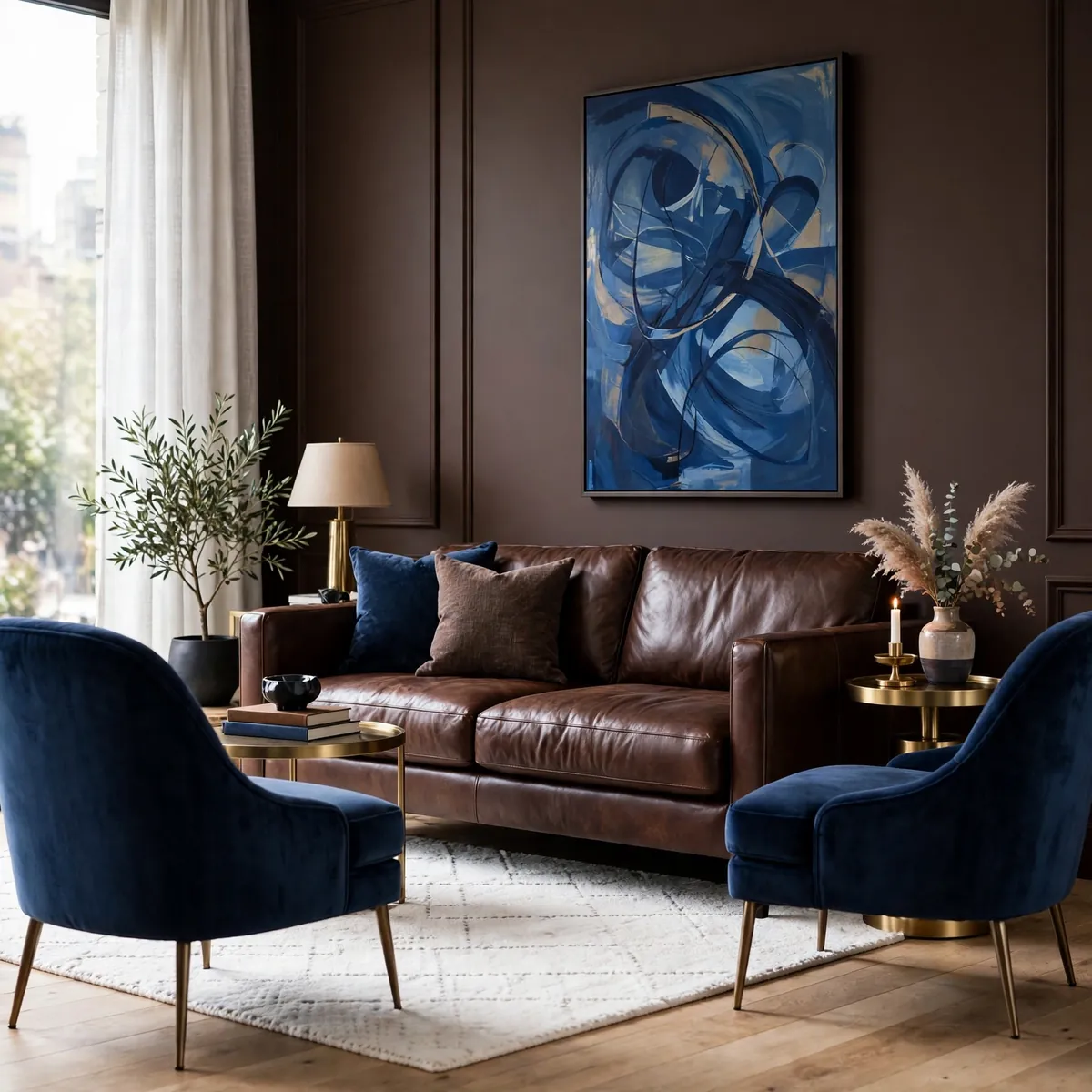
Chocolate brown is a warm color, so a cool contrast keeps it from feeling one-note. Navy blue is the classic choice — a navy velvet armchair beside a chocolate brown sofa looks tailored and confident.
Teal works similarly but brings more energy; turquoise goes further still, toward a vibrant, eclectic feel. The rule is balance: let brown hold the foundation and give the cool tone about a third of the visual weight.
- Quick tips:
- Repeat the cool accent at least twice — chair plus artwork, or cushions plus a rug border.
- Add brass or gold somewhere to bridge the warm and cool sides of the palette.
5. Choose Wall Colors That Lift the Brown
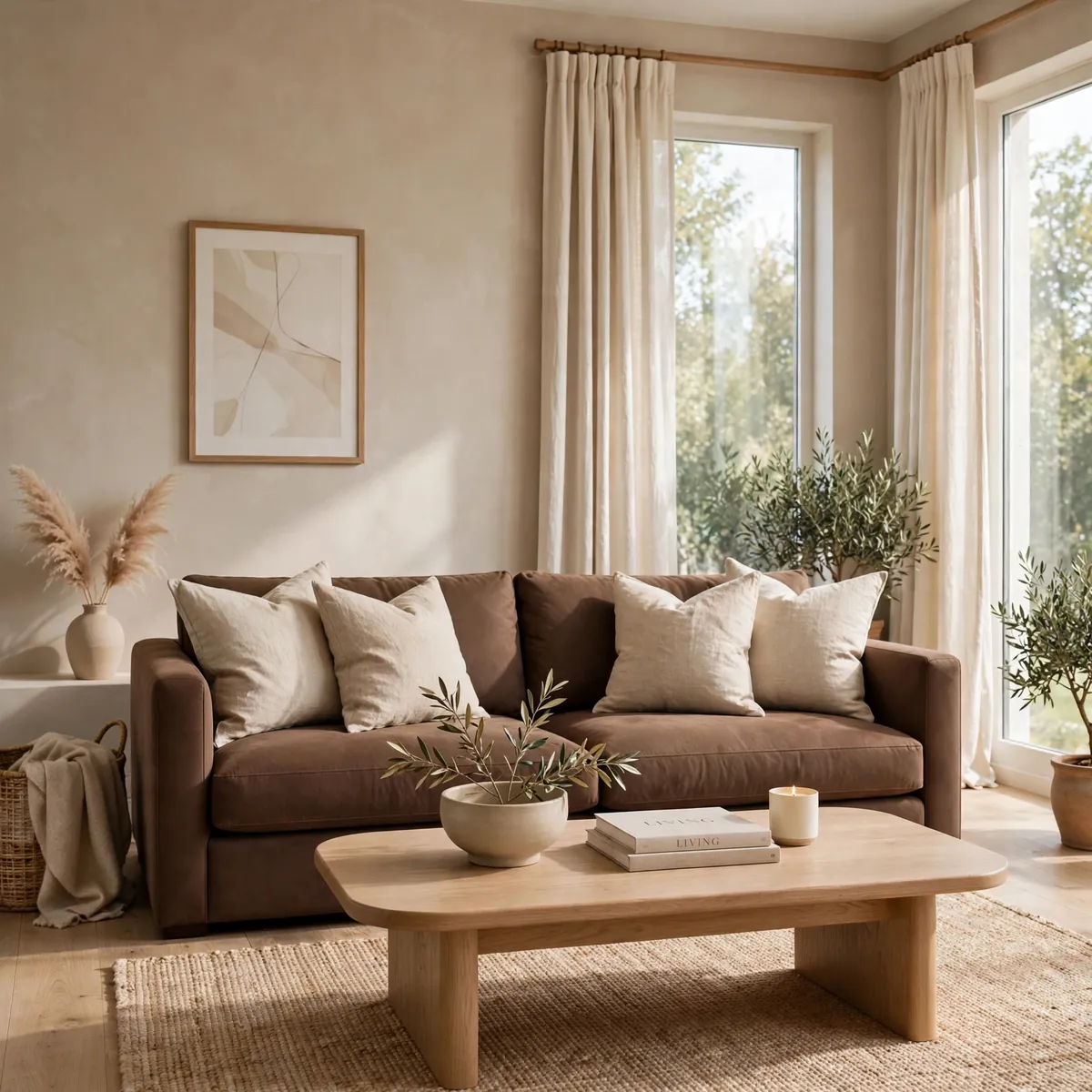
Wall color decides whether chocolate brown furniture feels rich or heavy. The safest choices are light and warm.
- Warm white — the simplest way to brighten a room with a brown sofa; keeps everything airy.
- Greige or light taupe — adds warmth while staying light enough to contrast the furniture.
- Soft beige — a cozy, traditional pairing that never fights the brown.
- Deep green or charcoal (for one accent wall) — a moody choice that makes chocolate brown look intentional and dramatic.
Whichever you choose, test paint samples on the wall and look at them in daylight and lamplight before committing — brown undertones shift noticeably with lighting.
- Quick tips:
- One chocolate brown accent wall can work, but only with light furniture and plenty of lighting.
- Keep ceilings white or very light to preserve a sense of height.
6. Layer Textures So the Palette Feels Rich, Not Flat
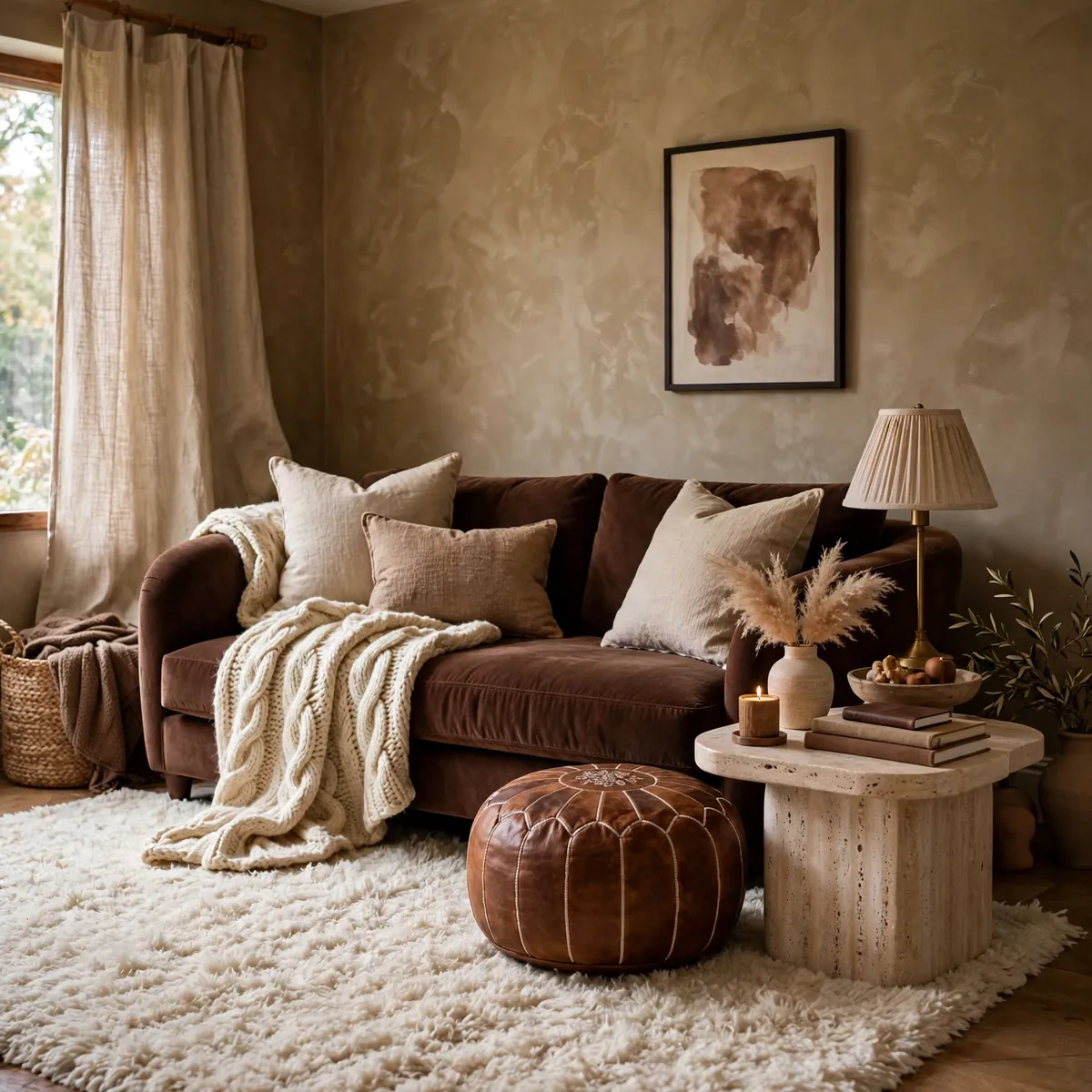
A room built on one color family lives or dies on texture. When brown is the dominant hue, mixing materials is what keeps it interesting: a velvet sofa, a chunky knit wool throw, linen cushions, a leather pouf, a shaggy rug.
Each surface catches light differently, so the brown reads as layered and complex instead of a single flat note. This is the difference between a room that looks designed and one that looks like it happened by accident.
- Quick tips:
- Aim for at least four different textures in the seating area.
- Mix matte and sheen — velvet against matte wool, leather against linen — for the most depth.
7. Bring in Greenery for a Natural Contrast
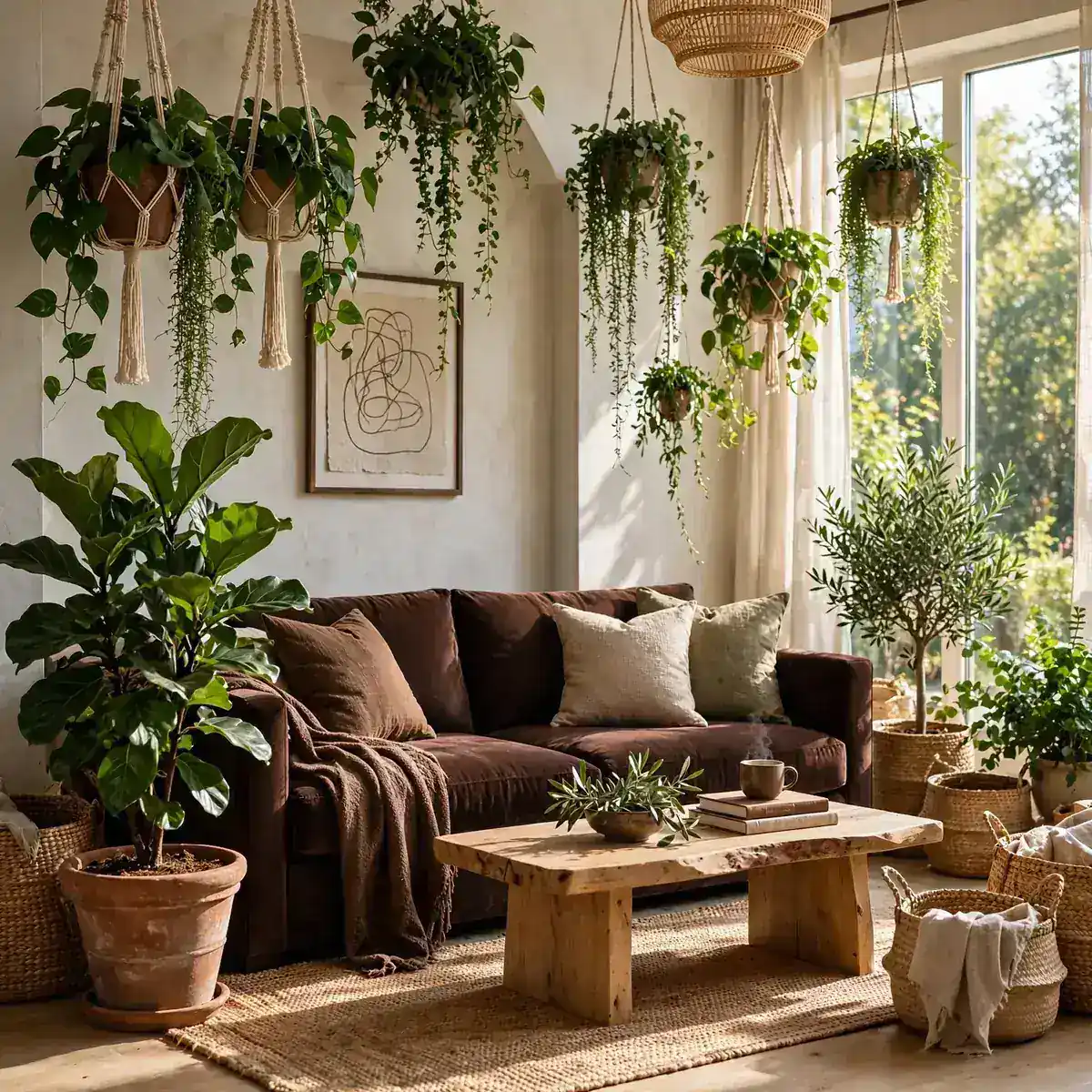
Green plants are one of the simplest upgrades for a chocolate brown living room. Green sits opposite brown’s warmth on the color wheel’s logic of nature — think forest floor — so foliage looks vivid and fresh against dark upholstery.
A large floor plant like a fiddle-leaf fig anchors a corner; smaller tabletop plants soften shelves and side tables. Terracotta or brass planters extend the warm palette instead of fighting it.
- Quick tips:
- One large plant beats five small ones for visual impact.
- Place greenery where it catches natural light — backlit leaves glow against brown beautifully.
8. Warm It Up with Rust, Mustard, and Burnt Orange
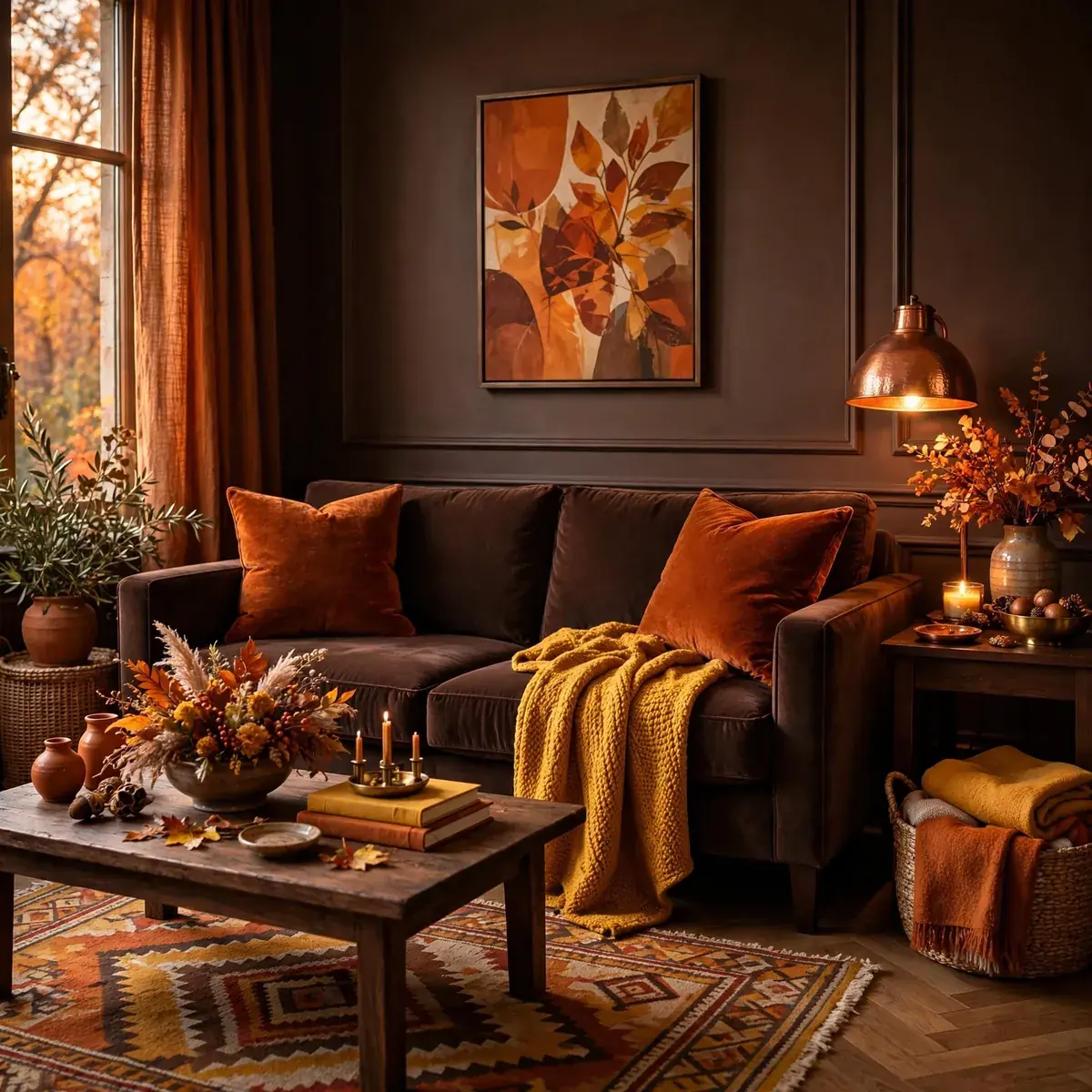
Rust, mustard, and burnt orange are chocolate brown’s autumnal cousins. They share its warm undertones, so the combination feels harmonious rather than contrasting — cozy, retro, and a little nostalgic.
This palette is a natural fit for fall and works year-round if you keep the accents to textiles and art rather than permanent fixtures. A mustard throw, rust velvet cushions, a burnt-orange art print: small doses, big warmth.
- Quick tips:
- These tones fade into brown if overused — keep them in accents, not large furniture.
- Copper and aged brass accessories strengthen the palette.
9. Try a Boho-Chic Take with Rattan and Woven Textures
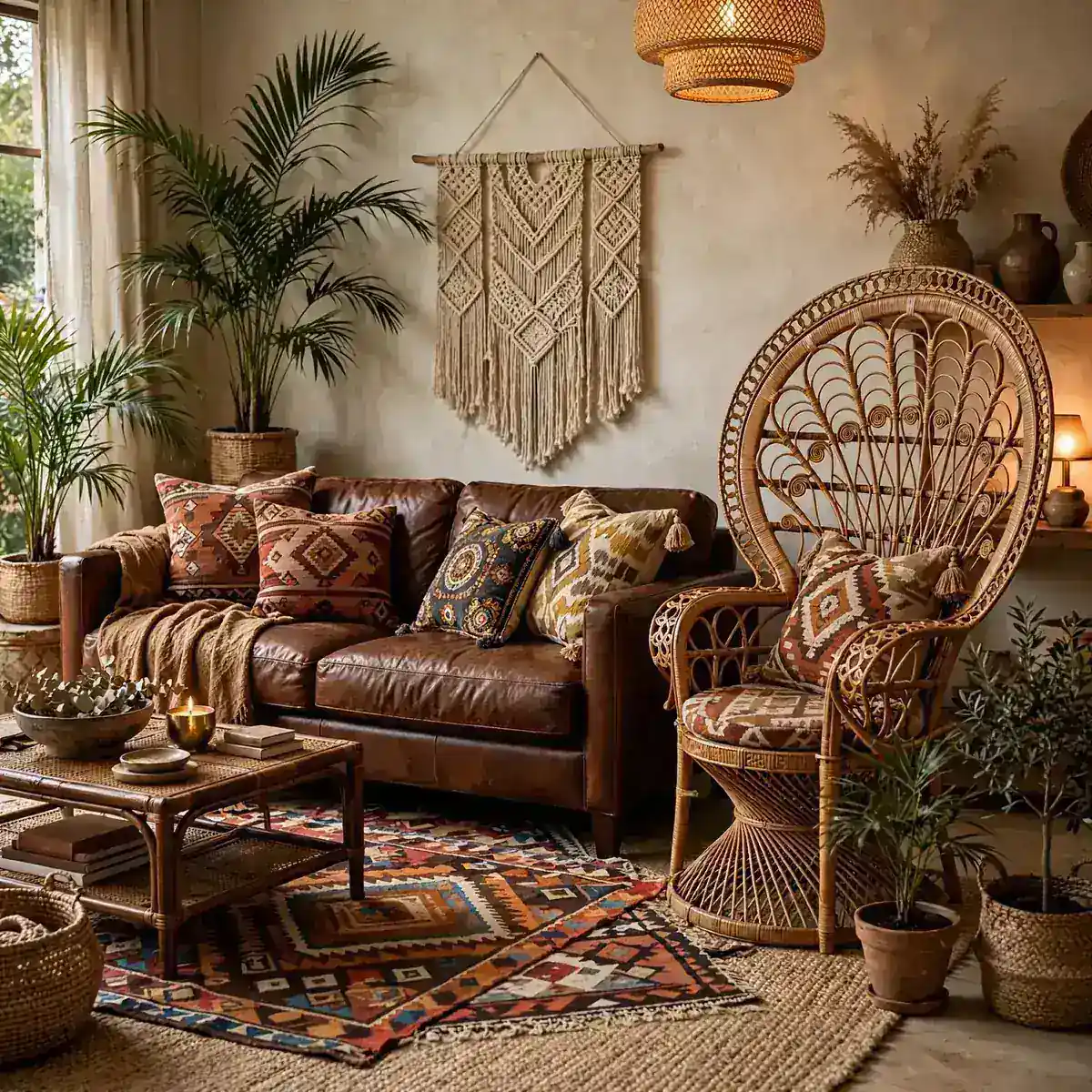
Brown is a natural fit for boho style because the look is built on earthy materials. A chocolate brown leather sofa with a rattan accent chair, layered jute and kilim rugs, woven baskets, and a macramé wall hanging creates a relaxed, collected room that never feels staged.
Houseplants finish the look. The key to keeping boho brown from tipping into clutter is editing: every woven or patterned piece should earn its place.
- Quick tips:
- Layer two rugs — a large natural jute base with a smaller patterned rug on top.
- Mix global-inspired textiles but keep them in the same warm color family.
10. Go Modern Minimalist with Brown and Soft Gray
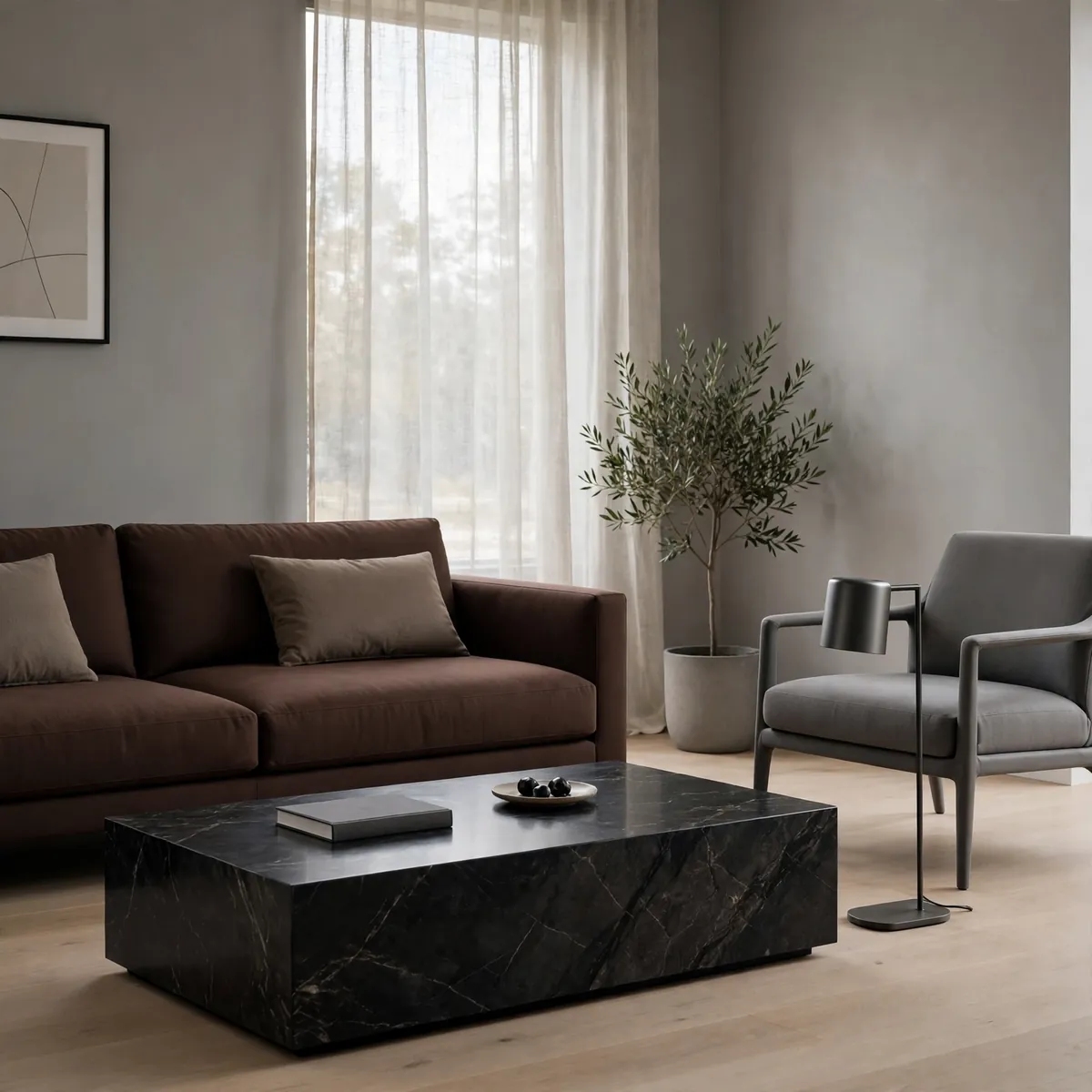
Chocolate brown and gray are both neutrals, and together they make a surprisingly sleek modern palette. The trick is keeping the gray soft — warm greige or light stone rather than icy blue-gray — so it cools the brown without clashing with it.
Keep furniture lines clean, clutter minimal, and finishes matte. A black marble coffee table or slim metal lamp adds the sharp edge that makes this combination feel contemporary rather than safe.
11. Anchor the Room with the Right Rug
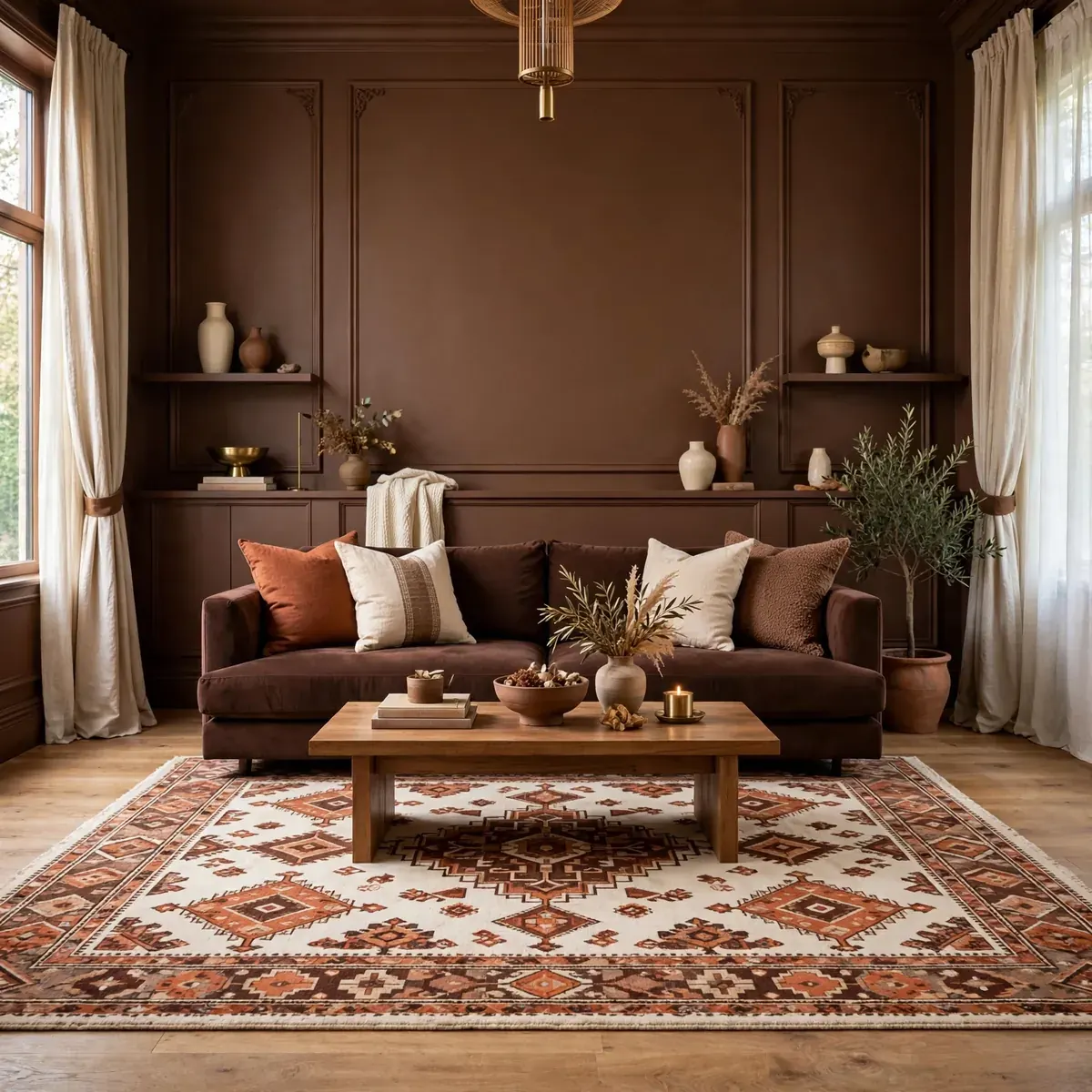
The rug is what connects a chocolate brown sofa to the rest of the room, so choose it deliberately. Light rugs — cream, ivory, or warm white — create the contrast that keeps brown furniture from feeling heavy.
Patterned rugs with warm undertones (terracotta, mustard, muted reds) add interest while staying in the family. Size matters more than pattern: the front legs of the sofa and chairs should all sit on the rug, or the seating area will feel disconnected.
- Light and solid — cream or ivory for maximum brightness and calm.
- Warm-toned pattern — terracotta, rust, or tribal prints for character.
- Natural fiber — jute or sisal for texture in casual and boho rooms.
- Quick tips:
- Avoid dark rugs under a dark sofa — the furniture visually sinks into the floor.
- Low-pile rugs are easier to keep clean around a well-used brown couch.
12. Keep It Light in Small Rooms
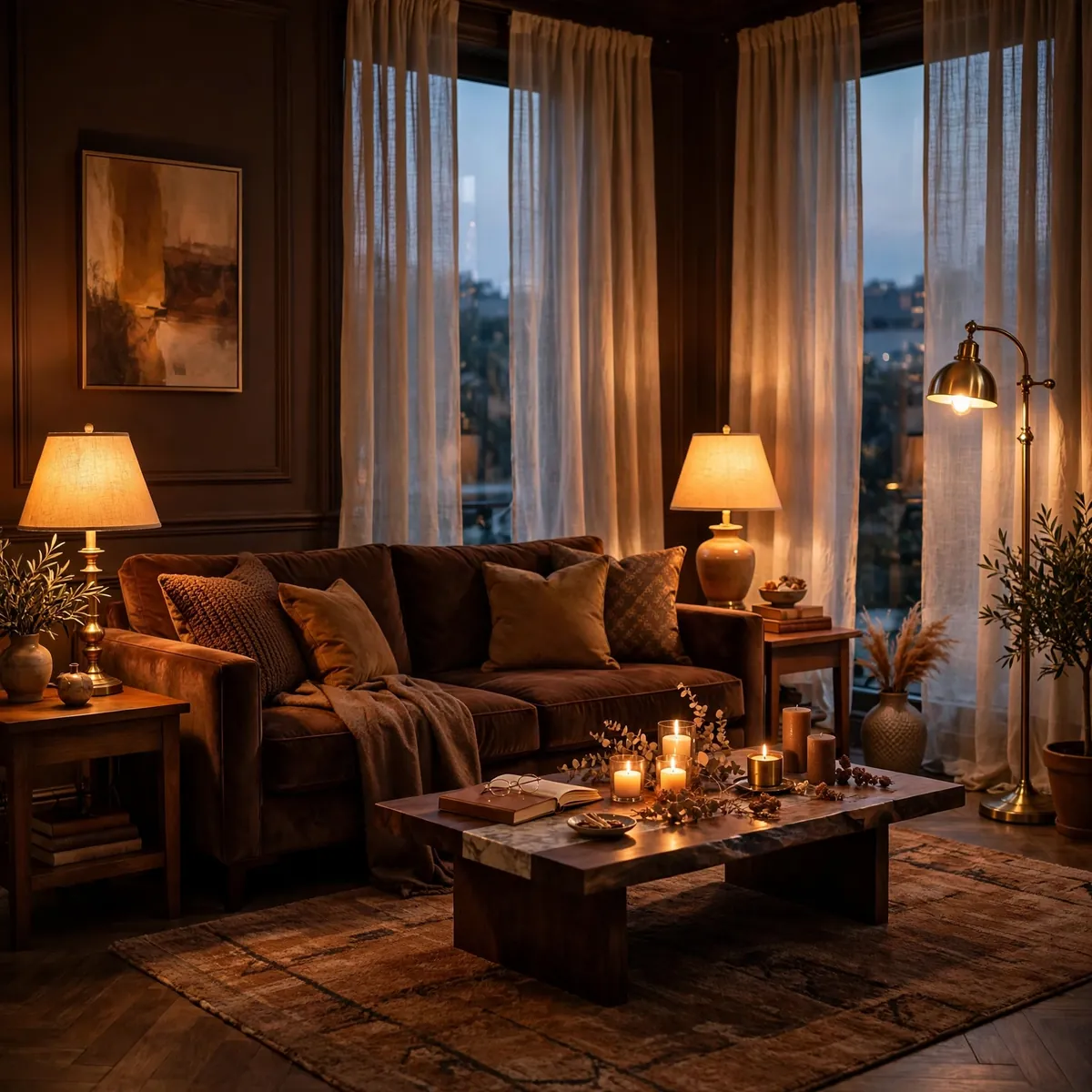
A chocolate brown sofa can absolutely work in a small living room — it just needs more light doing more work. Pale walls, a light rug, and a mirror or two bounce daylight around the space.
In the evening, layered lighting takes over: a floor lamp, a table lamp, and warm-toned bulbs keep the brown glowing instead of looming. Scale matters too — choose a sofa with visible legs and a lower back so it takes up less visual weight.
- Quick tips:
- Use warm-toned bulbs (2700K–3000K); cool white light makes brown look dull.
- Float the sofa slightly off the wall if space allows — it makes small rooms feel larger.
Frequently Asked Questions
What colors go with a chocolate brown couch?
Cream, ivory, and beige are the safest pairings for a soft, neutral look. For contrast, try olive or forest green, navy or teal blue, or warm accents like rust and mustard. Jewel tones such as emerald and sapphire add richness, while soft gray gives a modern edge.
How do I keep a chocolate brown living room from feeling dark?
Lighten the surroundings: pale walls, a light-colored rug, and cream or ivory textiles. Add texture through velvet, wool, and linen so the brown looks layered, and use warm layered lighting — floor lamps, table lamps, candles — in the evening.
What wall color works best with a chocolate brown couch?
Warm white, greige, and light taupe are the most reliable choices because they contrast the dark furniture while staying warm. Soft beige suits traditional rooms; a single deep-green or charcoal accent wall works for a moodier, dramatic look.
Can a small living room handle a chocolate brown couch?
Yes. Pair it with light walls, a light rug, and good lighting, and choose a sofa with visible legs and a lower profile to reduce visual bulk. Mirrors and reflective accents help bounce light around the room.
Conclusion
These chocolate brown living room ideas show why the color is a forgiving, versatile foundation for a living room — warm by nature, easy to pair, and practical for everyday life. The rooms that get it right all follow the same principles: lighten the surroundings, layer the textures, and give the brown one good contrasting partner.
Start with the sofa, build outward with cream and an accent color you love, and the richness takes care of itself.