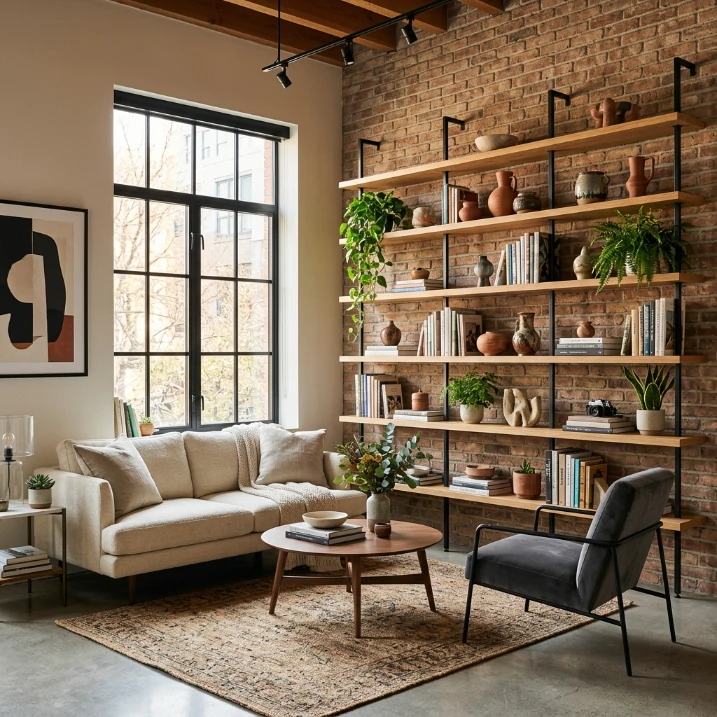
How to Create a Primitive Living Room With Intention
A primitive living room can feel warm, grounded, and full of character without looking like a themed cabin. The key is choosing materials, furniture, colors, and handmade details that feel connected rather than filling the room with old-looking objects.
A thoughtful primitive living room with intention focuses on honest materials, useful pieces, soft imperfections, and a restrained color palette. Instead of trying to recreate another era exactly, you can borrow the visual qualities that make primitive interiors appealing and adapt them to the way your home is actually used.
Here are practical ways to build that look while keeping the room comfortable, attractive, and easy to live with.
Start With A Room That Feels Collected, Not Decorated
Primitive style works best when the room appears to have developed over time. Start with the largest pieces first: the sofa, chairs, rug, coffee table, and storage. Choose silhouettes that are sturdy and simple rather than highly sculpted or glossy.
A slipcovered sofa in oatmeal, warm beige, or faded brown can provide a quiet base. Pair it with one wooden chair, a low bench, or a spindle-back accent chair. The goal is not to make every piece rustic. A few strong natural elements surrounded by calm furnishings usually look more convincing.
- Choose furniture with visible grain or simple construction.
- Mix one or two older-looking pieces with cleaner basics.
- Leave enough open floor space for the room to feel comfortable.
Let Rough Wood Become The Main Character
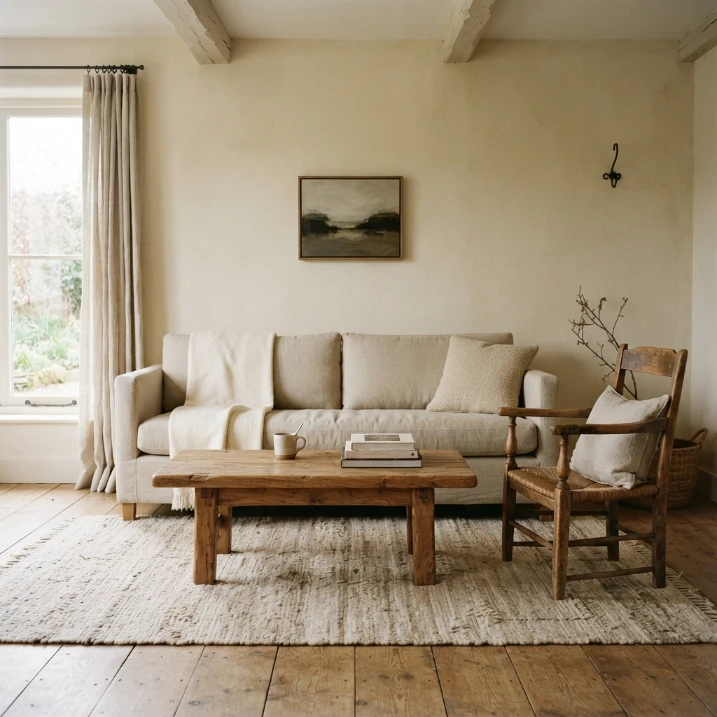
Wood is one of the easiest ways to establish a primitive feeling. Look for rough-sawn boards, reclaimed timber, aged oak, pine, walnut, or pieces with a softly worn finish. A chunky coffee table can become the visual anchor without needing decorative objects piled on top.
You can also bring wood into the room through a simple bench, exposed shelving, a vintage cabinet, ceiling beams, or a carved stool. Keep the finish matte or low-sheen so the material feels natural rather than showroom-polished.
If several wood tones are used, repeat one dominant tone across at least two or three pieces. That small connection keeps a varied room from becoming visually scattered.
Build A Warm Earth-Toned Palette

Primitive interiors benefit from colors that look close to natural materials. Think warm cream, clay, tobacco brown, muted mustard, olive, faded red, charcoal, and soft taupe. These shades give the room age and warmth without requiring heavy decoration.
Use a light warm neutral on the walls if the room is small. Deeper tones can then appear in the rug, upholstery, curtains, artwork, or wood furniture. In a larger room, a clay, mushroom, or muted olive wall can create a beautiful backdrop for lighter textiles.
Try the 60-30-10 approach loosely: let a neutral dominate, use a natural mid-tone for furniture and textiles, and reserve the strongest color for a few accents. Primitive rooms usually look better when the palette feels edited rather than perfectly matched.
Choose Textiles That Look Handmade
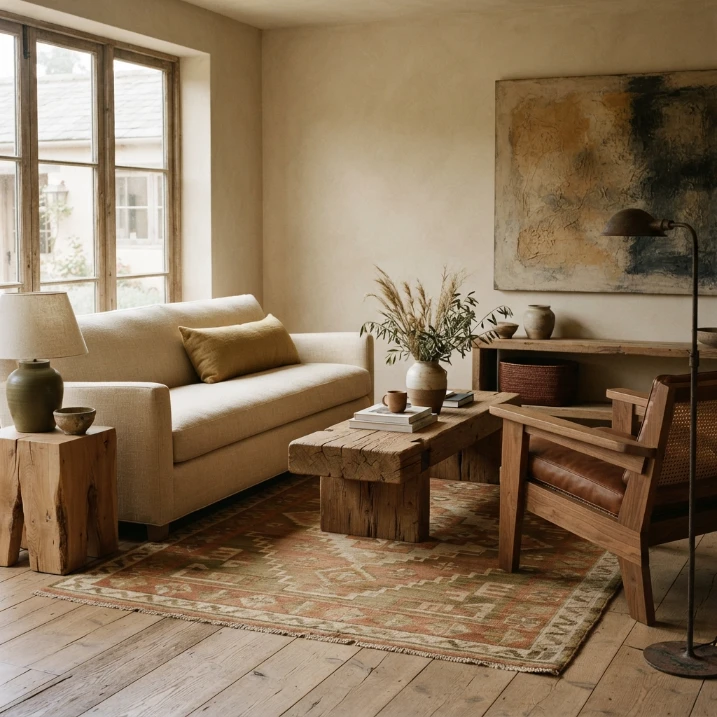
Textiles soften the hard surfaces that naturally come with primitive furniture. Linen, cotton, wool, ticking stripes, woven blankets, simple quilts, and nubby fabrics work particularly well.
Instead of using many decorative pillows, choose a few with visible texture. A folded wool blanket over a wooden bench or a faded quilt across the sofa can provide more personality than a collection of small accessories.
For the windows, consider relaxed linen panels, simple cotton curtains, or woven shades. Avoid overly formal treatments if you want the room to retain its simple, practical character.
Give The Fireplace A Strong, Simple Presence
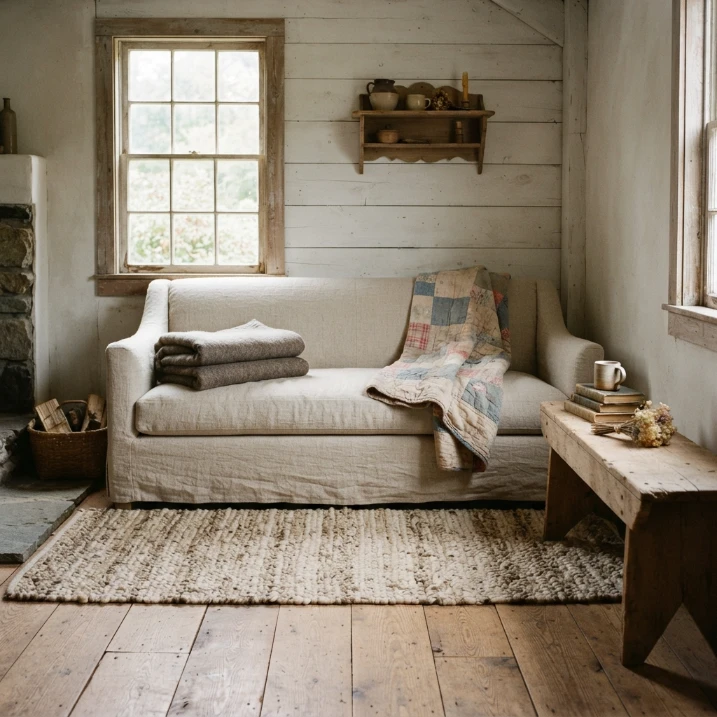
If your living room has a fireplace, let it become one of the room’s strongest architectural elements. A stone surround, aged brick, plaster finish, or dark timber mantel can immediately support a primitive aesthetic.
Keep the mantel styling restrained. One large pottery vessel, a small stack of old books, a candle, or a simple piece of folk-inspired artwork is often enough. Too many objects can hide the texture that makes the fireplace interesting in the first place.
If there is no fireplace, create a similar focal point with a substantial wooden cabinet, a large piece of handmade art, or a tall antique-style cupboard.
Use Pottery And Handcrafted Objects Sparingly
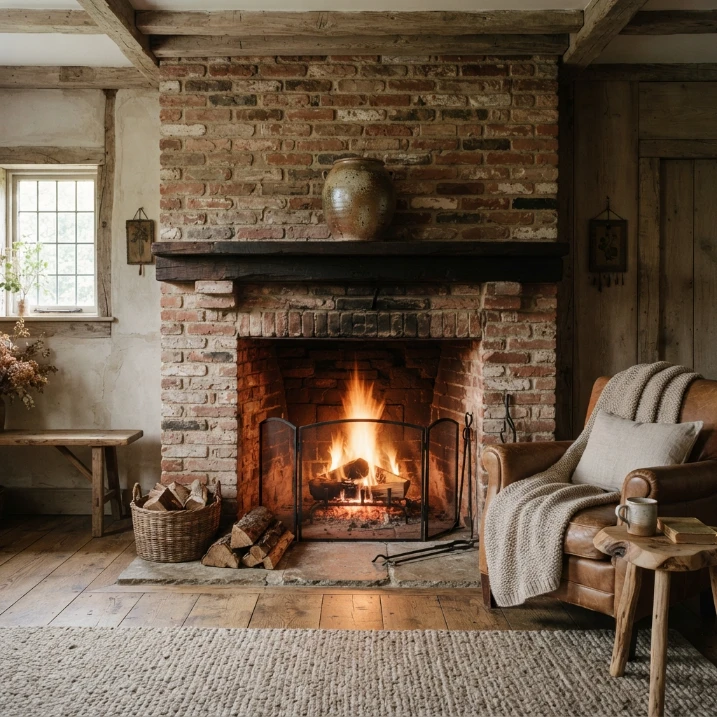
Handmade ceramics are excellent for adding primitive character because their irregular shapes and natural finishes bring visual warmth. Look for stoneware crocks, earthenware bowls, handmade pitchers, wooden bowls, woven baskets, and simple carved objects.
The important part is restraint. A single large ceramic vessel can have more impact than ten small objects. Group two or three related pieces on a shelf or cabinet, then leave the surrounding area open.
Choose objects that could plausibly have a purpose. Functional-looking decor helps the room feel authentic rather than staged.
Create A Wall That Tells A Quiet Story

Primitive living rooms do not need a traditional gallery wall filled from edge to edge. Instead, choose a few pieces with a strong sense of age or craftsmanship.
Consider a framed botanical print, folk-inspired artwork, an old landscape painting, a simple textile, a carved wooden piece, or a collection of small vintage-style tools. Arrange them with breathing room so each item can be seen.
For a more contemporary version, place one oversized piece above the sofa and keep the rest of the wall relatively quiet. This gives the room a stronger editorial quality while preserving the primitive mood.
Mix Old Character With Comfortable Modern Pieces

A successful primitive living room should still work for everyday life. You do not need to fill it entirely with antiques. In fact, a modern comfortable sofa can make an old wooden table or vintage cabinet feel even more special.
Think of the room as a conversation between generations: a new upholstered chair beside an aged stool, a contemporary lamp on an antique side table, or a modern rug beneath a weathered coffee table.
This approach also makes the style easier to maintain. You can replace worn upholstery, improve lighting, or add practical storage without losing the overall character.
Keep Lighting Soft And Layered
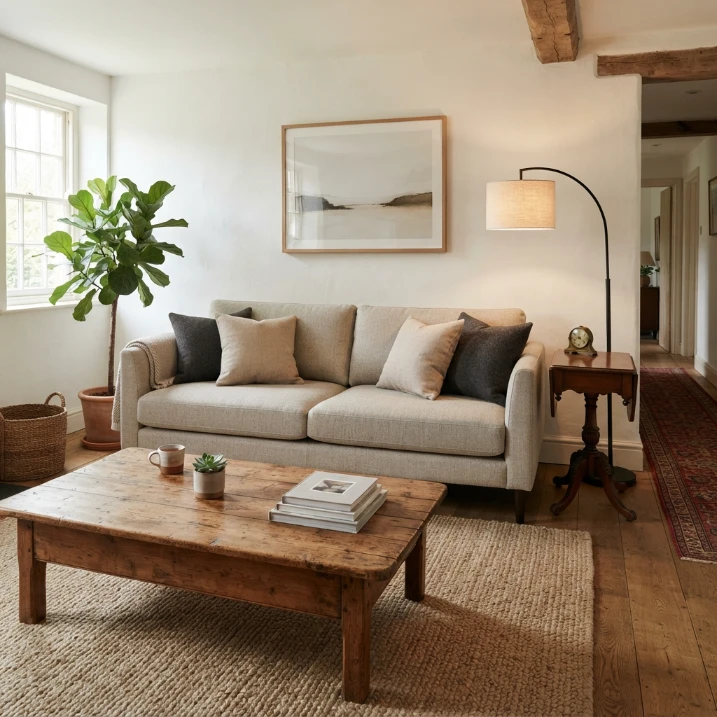
Lighting can completely change how primitive materials appear at night. Avoid relying on one bright ceiling fixture. Instead, combine a warm floor lamp, table lamp, wall light, and the room’s natural daylight.
Lamps with ceramic, aged metal, linen, or wood details complement the material palette. Warm bulbs help bring out the grain of wood and the texture of woven fabrics.
Place one light near the sofa for reading and another near a cabinet, chair, or artwork. This creates small pools of light that make the living room feel intimate without making it dark.
Let Imperfections Add Personality

Primitive design has an advantage that highly polished interiors do not: small irregularities can make the room better. A slightly uneven ceramic bowl, visible knots in timber, faded fabric, or a repaired wooden surface can add character.
That does not mean everything should look damaged. Balance worn pieces with clean, comfortable elements. If the coffee table is heavily weathered, keep the sofa and lighting more refined. If the furniture is simple and new, add character through handmade pottery or an aged textile.
Keep The Layout Practical

Beauty should never make the living room difficult to use. Arrange seating around conversation first, then add decorative pieces. Keep the main walkway clear and make sure every seat has access to a table or surface for a drink and a lamp.
A sturdy rectangular coffee table works well in many primitive rooms because it provides useful surface area without demanding attention. In a smaller room, a round wooden table can soften the layout and make movement easier.
If you are working with a compact space, keep the number of major furniture pieces low. The style becomes stronger when each piece has enough room around it to be appreciated.
Finish With A Few Details That Feel Personal
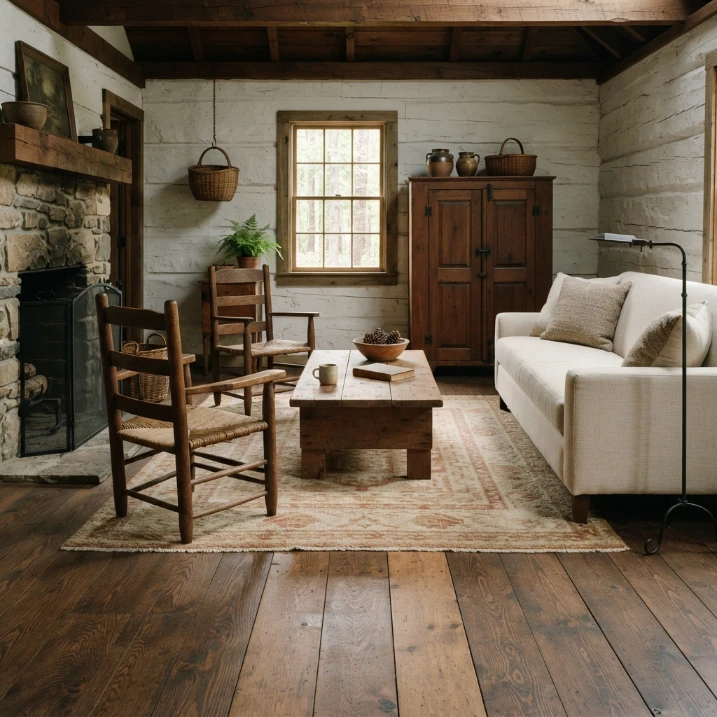
The final layer should make the room feel like a home rather than a design display. Add a stack of well-loved books, a family-style photograph in a simple frame, a woven basket for blankets, a handmade candle holder, or a small collection that has meaning to you.
Choose details because they belong in your life, not simply because they fit the primitive label. That distinction is what gives the room authenticity.
How To Keep A Primitive Living Room From Looking Too Rustic

The easiest way to avoid an overly rustic result is to edit the room. You do not need reclaimed wood on every surface, multiple animal motifs, distressed finishes, and heavy dark colors all at once.
Instead, select two or three defining elements. For example, use rough wood, handmade pottery, and a warm woven textile. Then let the sofa, walls, lighting, and layout remain relatively simple.
You can also introduce a little refinement through tailored upholstery, clean-lined lamps, smooth plaster walls, or a carefully chosen contemporary rug. The contrast keeps the room from becoming visually predictable.
Final Thoughts
Creating a primitive living room with intention is less about copying an old-fashioned room and more about choosing things that feel honest, useful, and connected to natural materials. Rough wood, handmade pottery, warm textiles, earth-inspired colors, and soft lighting can create the mood without turning the room into a museum.
Start with the furniture and layout, build a restrained material palette, then add a few pieces with visible craftsmanship or personal meaning. When every item has a reason to be there, the room can feel rustic, elegant, comfortable, and genuinely lived in at the same time.
If you are also refining other living room styles, see our guides to the collected coastal living room look and the modern retro living room comeback for more ideas.