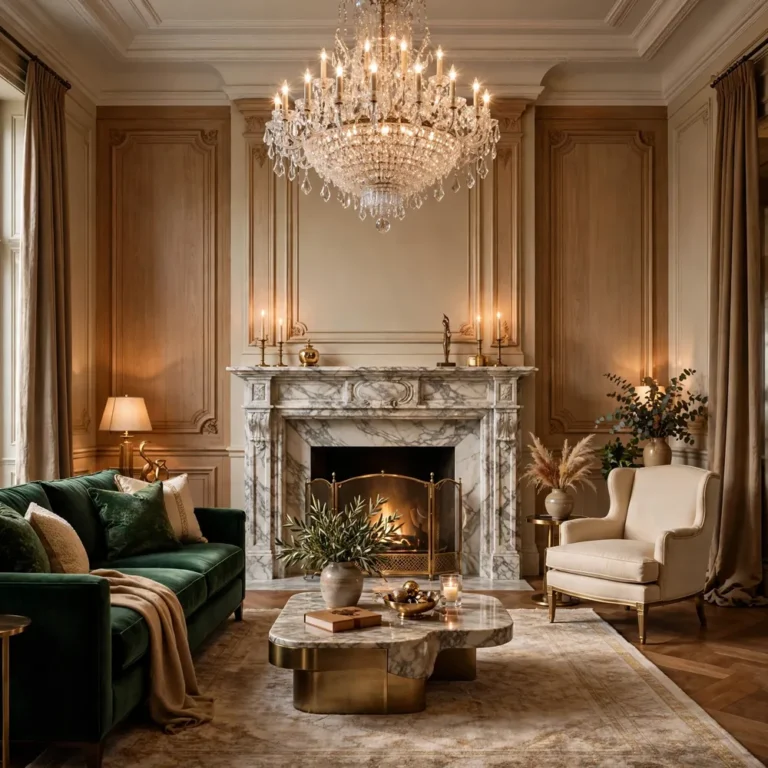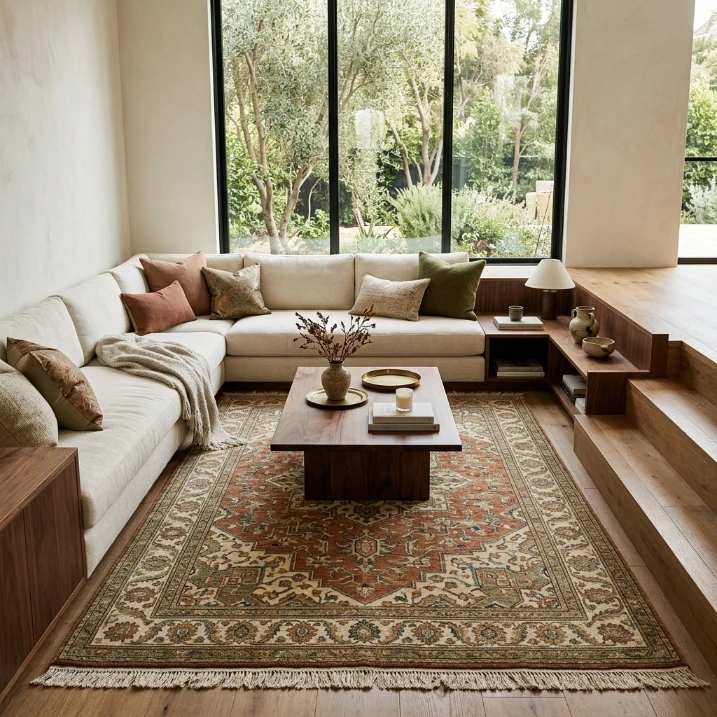
20 Stunning Fireplace Design Ideas That Feel Like Pure Luxury ♥ [Hearth Glow]
Why Fireplace Design Ideas Deserve Center Stage
Here is the definition worth holding onto: great fireplace design rests on three pillars — color, space, and flame. The fireplace is the living room’s main event — it controls the mood and flow of the entire room, not just a decorative detail. Yet most fireplaces are neglected, treated as an awkward afterthought instead of the design centerpiece they can be.
Master how color, space, and flame work together and everything changes: color guides the eye, breathing room lets the architecture speak, and the flame becomes the heartbeat of the home. These 20 fireplace design ideas show how to build a hearth that anchors the whole room — from earthy stone to sculptural modern statements.
1. Let Earthy Color Do the Talking
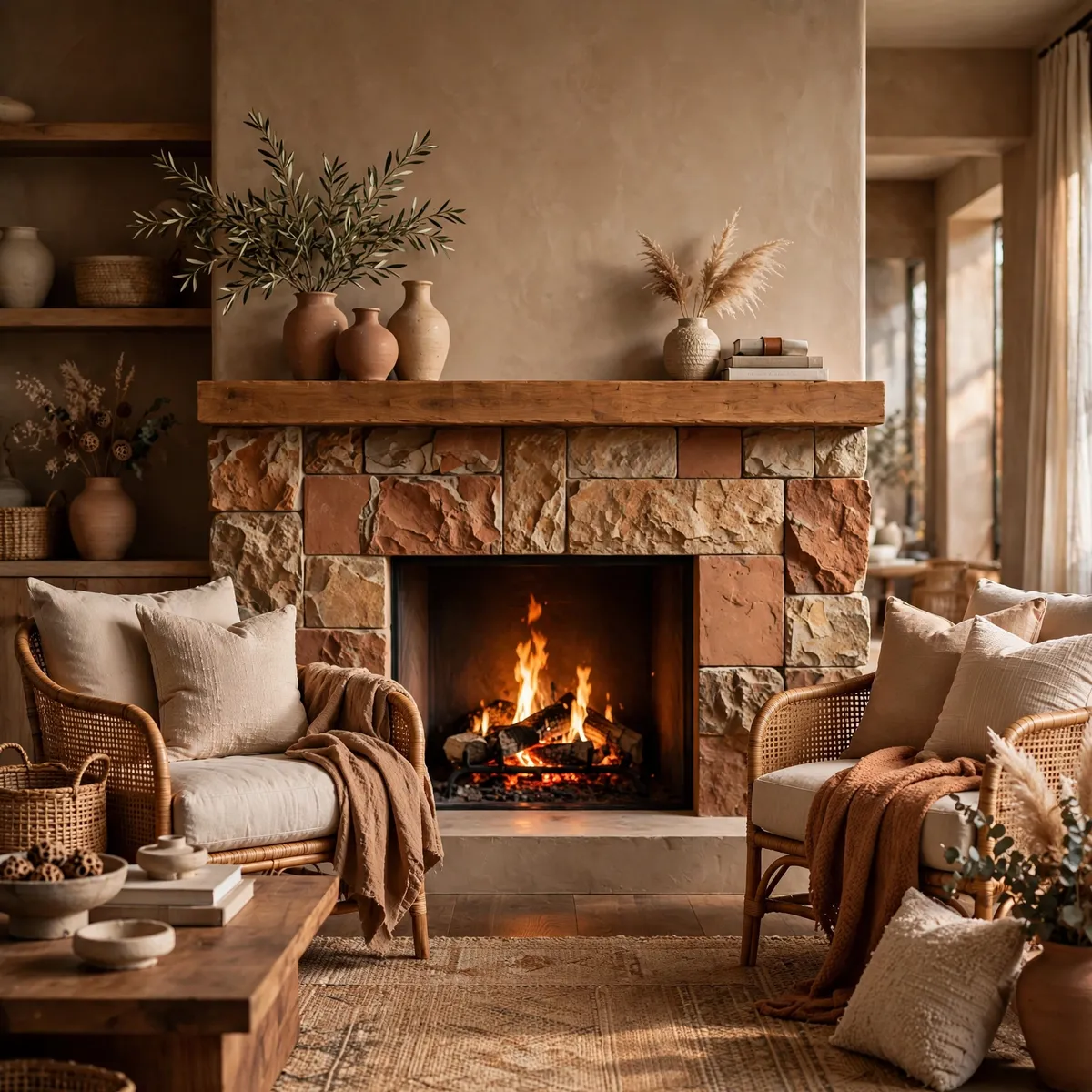
Terracotta, olive, and deep brown paired with natural textures — rattan, linen, real wood — make even the heaviest fireplace feel warm and inviting. This is one of the most forgiving fireplace design ideas for rustic-modern or cozy-cabin rooms, because the palette does the emotional work before you add a single accessory. Keep the surrounding walls soft so the earthy surround reads as the room’s anchor, not its loudest voice.
Quick tips
- Repeat one earthy tone in textiles so the surround feels connected.
- Use matte finishes — they keep warm colors from going glossy and cold.
2. Go Dark and Dramatic for Sculptural Contrast
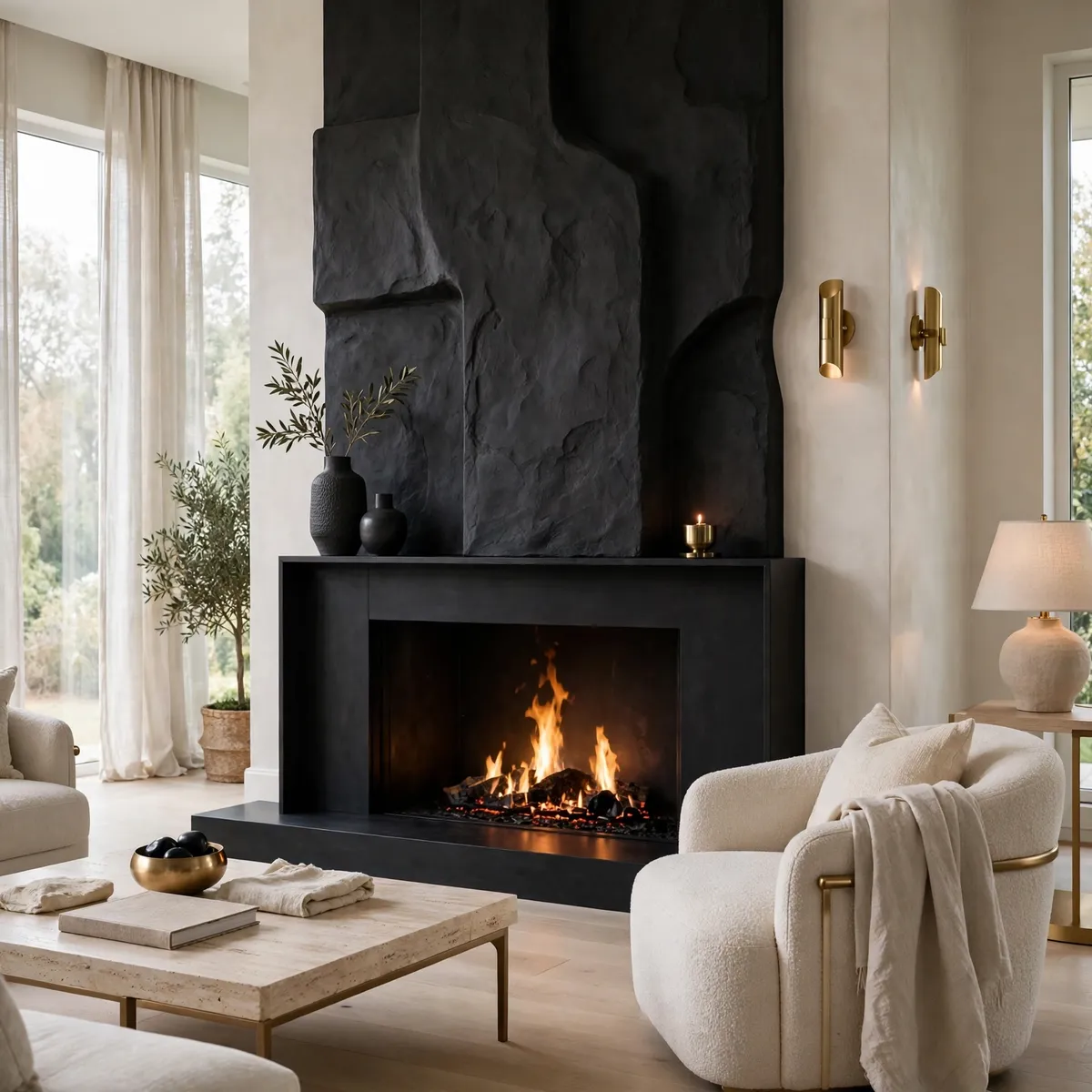
Charcoal, espresso, or midnight blue set against a light, airy room turns the fireplace into a bold, sculptural statement that grounds the space. Strong contrast draws the eye exactly where you want it — the hearth becomes the exclamation point of the room. Keep the mantel styling minimal so the color itself stays the star, which is why these high-contrast fireplace design ideas feel timeless rather than trendy.
Quick tips
- One dark wall is enough — let the fireplace own it.
- Warm metals nearby keep deep colors from feeling chilly.
3. Keep It Soft With Limewashed Neutrals
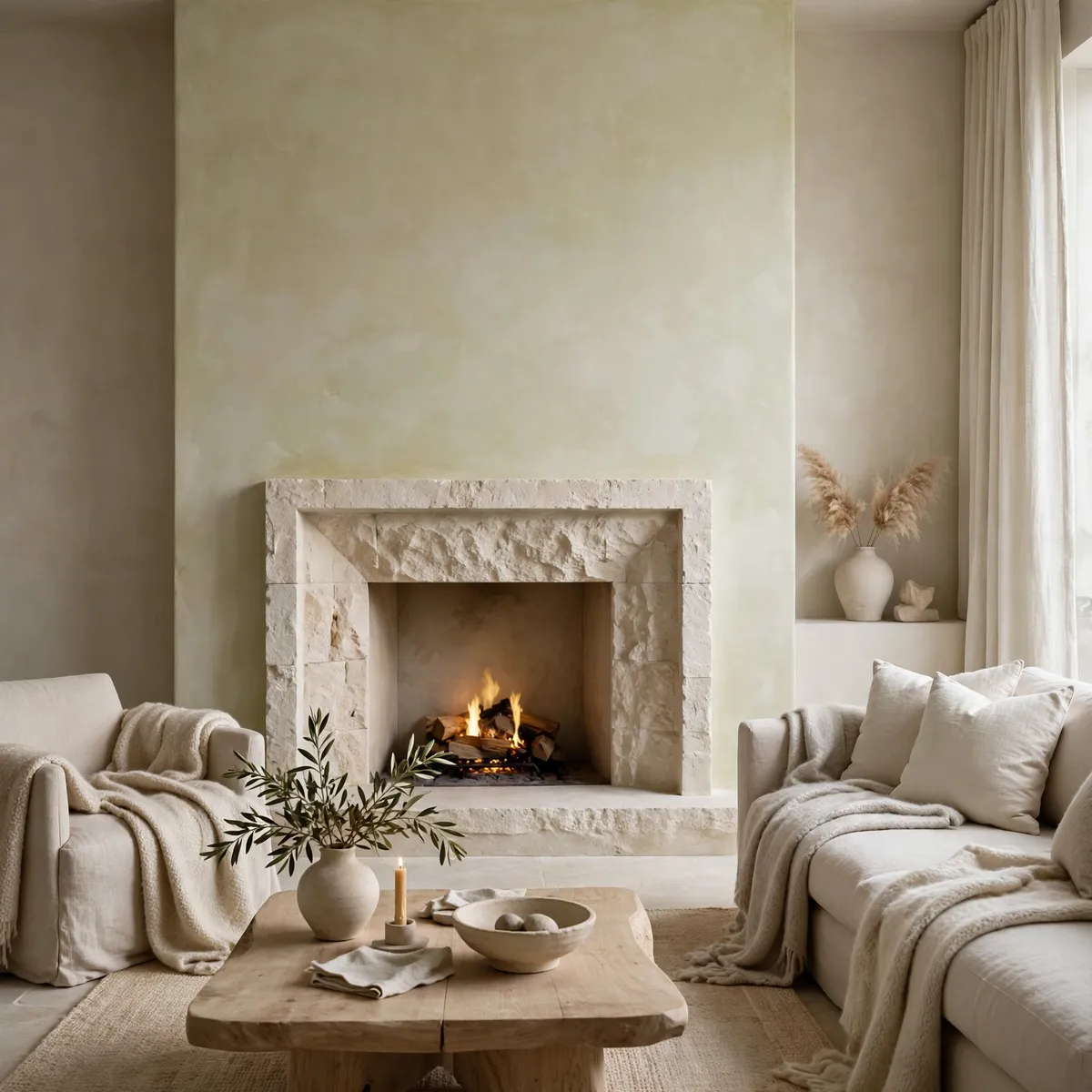
Soft ivory, greige, and crisp white plus real surface texture — plaster, limewash, limestone — let the fireplace stay present without dominating. Among calm fireplace design ideas, this is the gentlest: neutrals step back so the flame becomes the only lively element in the composition. Texture keeps the quiet palette from reading flat or boring.
Quick tips
- Limewash adds movement that flat paint cannot.
- Warm the grout and trim tones so neutrals never go icy.
4. Let Natural Stone Lead the Palette
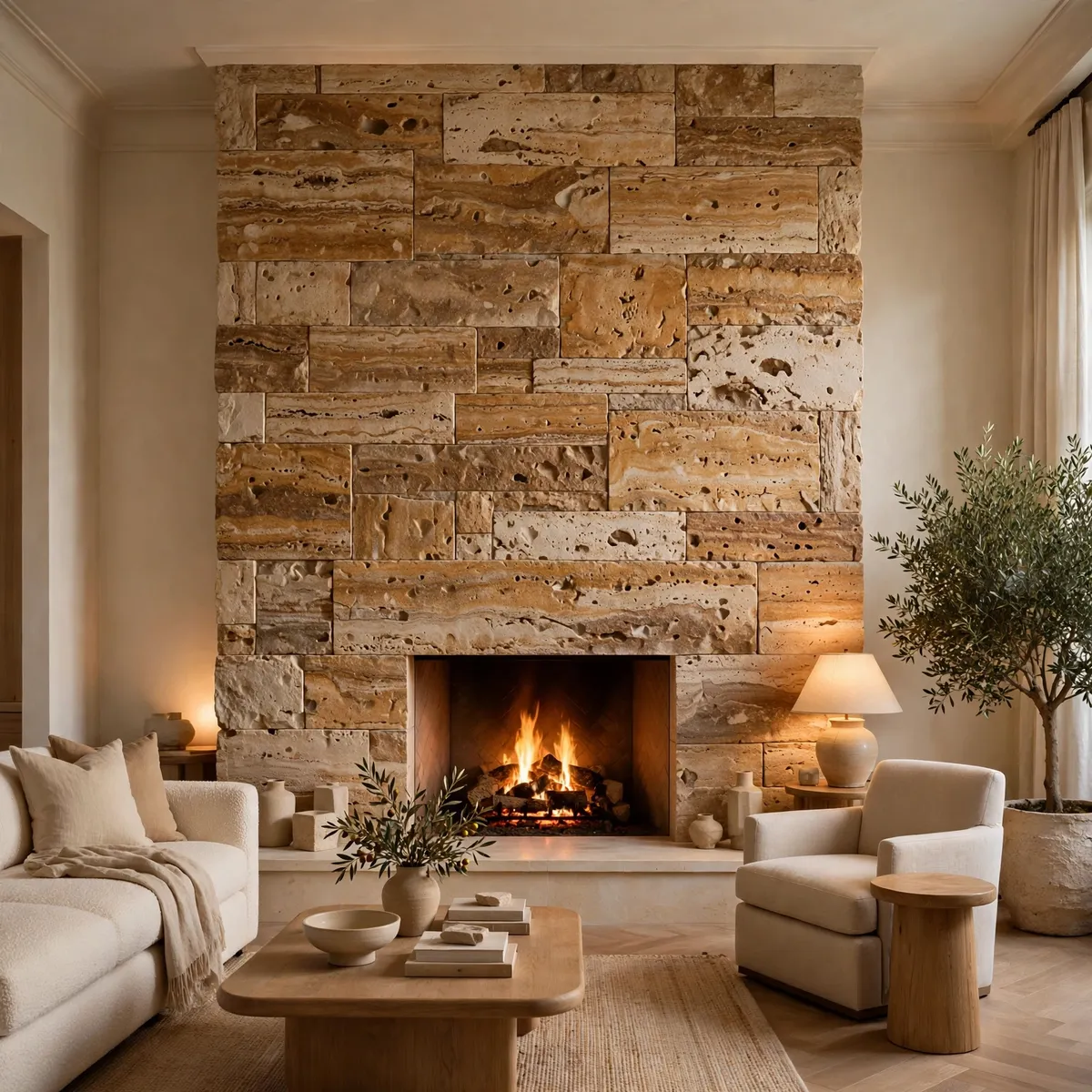
Stone arrives with its own color story — warm travertine, cool gray slate, creamy limestone — and the smartest move is to let it lead. Among natural-stone fireplace design ideas, pulling two or three tones from the stone into the room’s textiles and wood makes the fireplace feel inevitable rather than installed. Keep furniture silhouettes simple so the stone’s natural variation stays the headline.
Quick tips
- Seal natural stone so it resists soot and stains.
- Echo one stone tone in the rug or throw pillows.
5. Tame Bold Brick With Restraint

Brick arrives with loud, opinionated color — from the clay to the mortar to the joints — so the rest of the room should stay restrained. These grounded fireplace design ideas work because the brick is allowed to be the single bold voice while everything around it whispers. A deep hearth bench in quiet wood or stone finishes the composition.
Quick tips
- Keep art and shelving minimal near loud brick.
- Whitewashing is reversible — test one section first.
6. Paint It Matte Black

Painted finishes give you total color control, and matte black is the boldest commitment. These striking fireplace design ideas relate the black to the room’s trim, flooring, or metal finishes so it reads as intentional rather than random. Against pale walls, a black surround frames the flame like a piece of art.
Quick tips
- Use heat-rated paint on any surface near the firebox.
- Matte hides imperfections better than satin or gloss.
7. Go Sleek With a Linear Modern Firebox

A long, low ribbon of flame set into a flush wall is the signature of contemporary fireplace design ideas — no protruding surround, no fuss, just a clean horizontal line of fire. These minimalist fireplace design ideas pair best with a wide, uncluttered wall and low, long furniture that echoes their lines.
Quick tips
- Hide remotes and controls in a nearby drawer.
- A floating hearth shelf keeps the line continuous.
8. Sculpt the Mantel as a Clean Underline
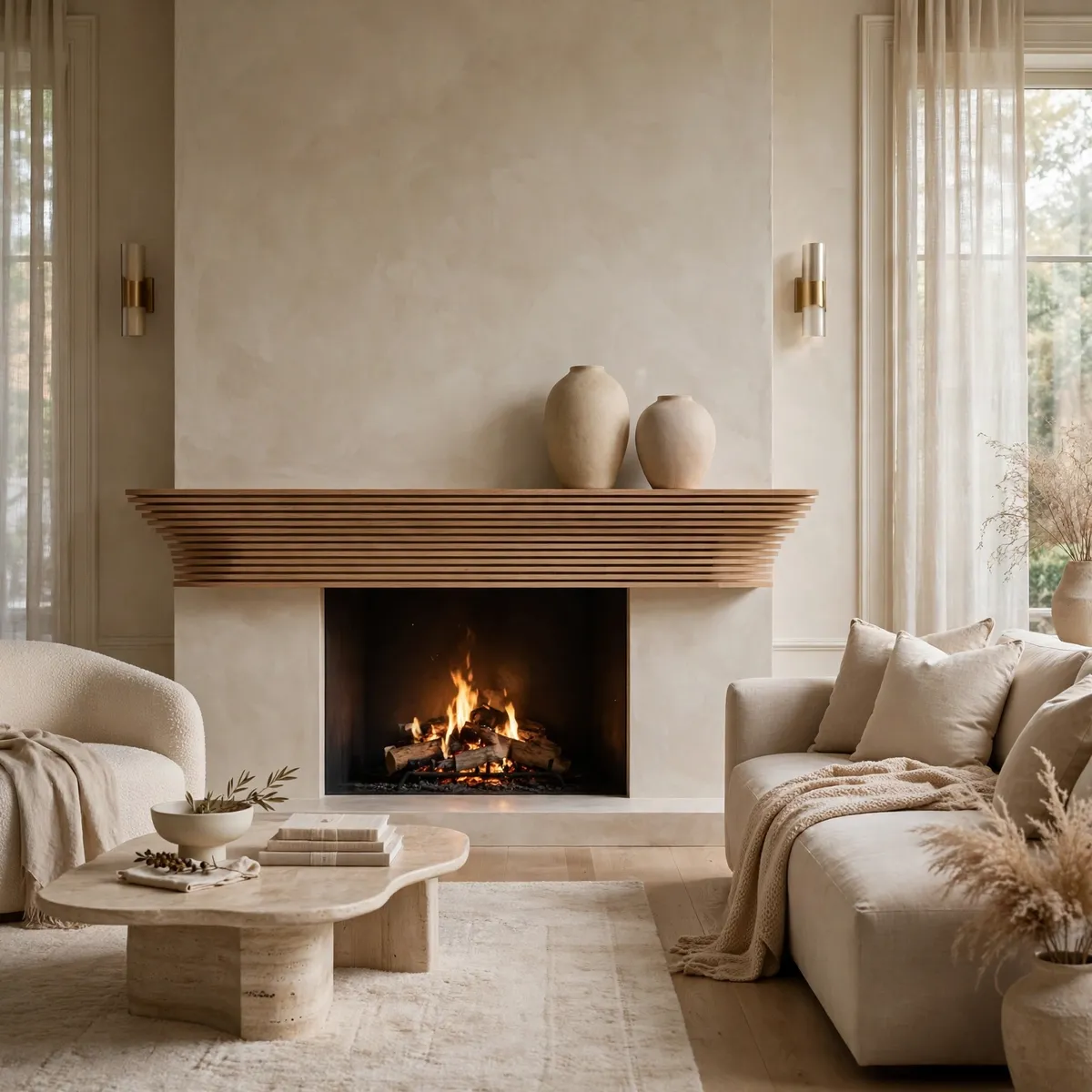
The mantel should be a clean sculptural underline beneath the architecture — slatted wood reads light and airy, while plaster or stone reads solid and permanent. Simple fireplace design ideas like this one prove that proportion is everything: too thick overwhelms the fire, too thin disappears against the wall. Style it with two or three objects and stop.
Quick tips
- Size the mantel to roughly the firebox width, never wider.
- Keep decor low so the flame stays the focal point.
9. Flank the Hearth With Sconces

Sconces on either side of the fireplace create vertical rhythm and make the whole hearth feel larger and more composed. A pair of slim, warm sconces draws the eye upward and frames the fire symmetrically — some of the most elegant layered-lighting fireplace design ideas start right here. Dimmable sconces let the wall glow without competing with the flame.
Quick tips
- Mount sconces at eye level for the most flattering glow.
- Match metal finishes to the firebox trim for cohesion.
10. Layer Warm Light Around the Fire
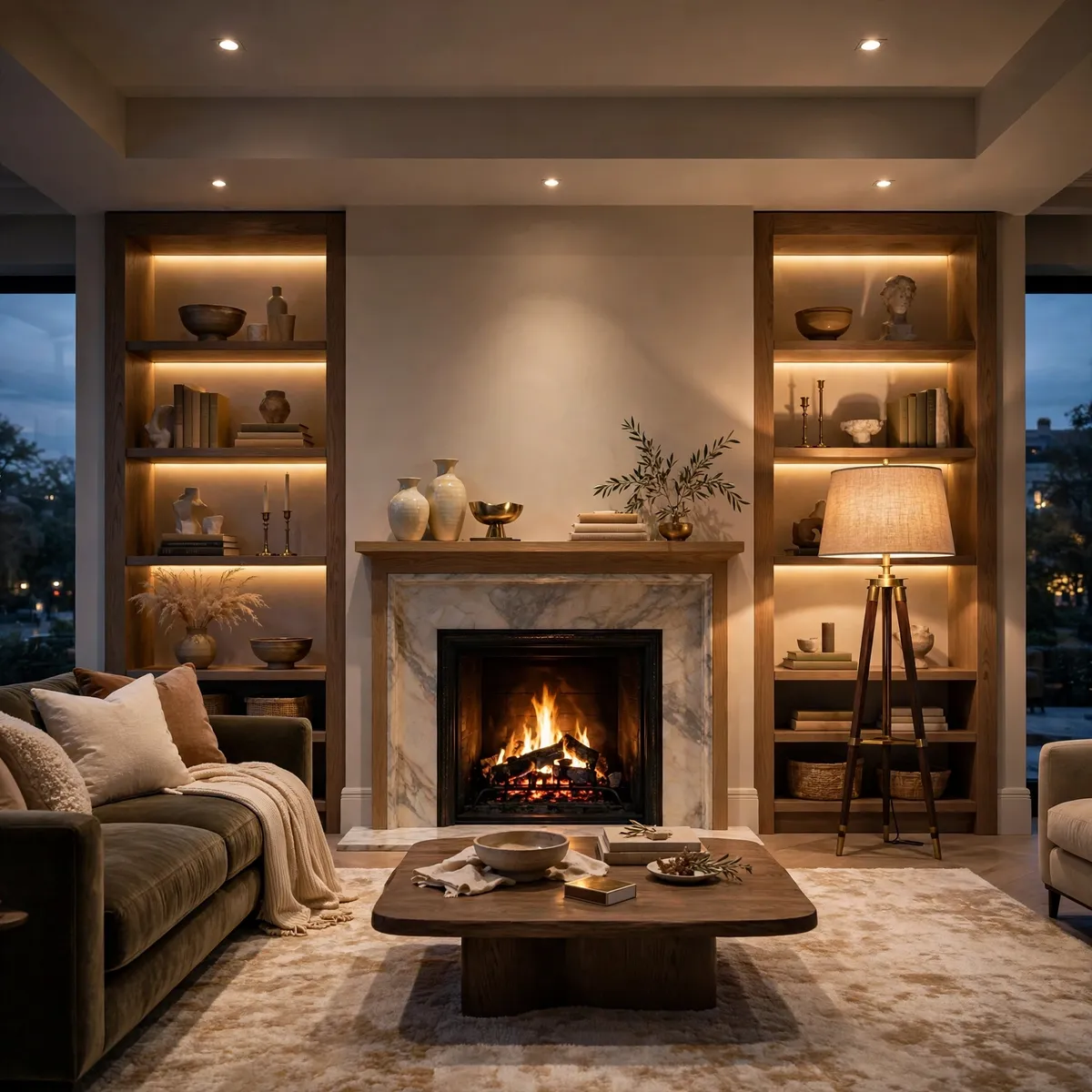
The fire is the visual star — everything else plays backup. Build the supporting light in layers so the hearth always glows, even when the fire is off:
- Start with dimmable recessed lights angled toward the surround.
- Add a floor lamp with a fabric shade for soft fill.
- Finish with LED strips tucked behind built-ins for a halo effect.
Keep every bulb around 2700K — warm, candle-like light. Cold white light kills the mood instantly.
Quick tips
- Put every layer on a dimmer for full control.
- Never aim a spotlight directly at the firebox glass.
11. Embrace Negative Space Around the Hearth
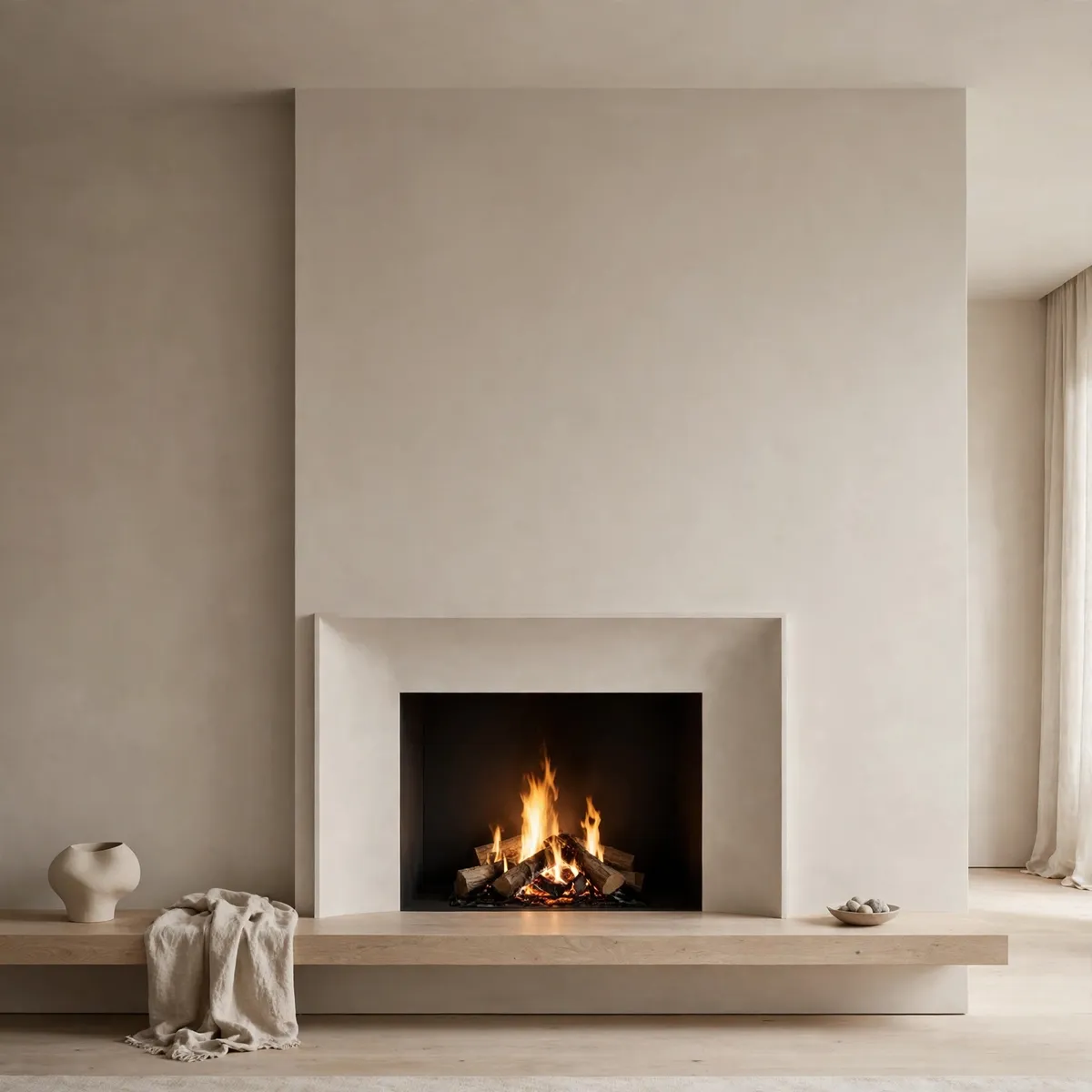
What you leave out around the fireplace matters as much as what you include — oversized art, crammed bookshelves, furniture crowding the hearth, and over-accessorized mantels all shrink the fire’s presence instead of growing it. A bare stretch of wall, proportionate furniture pulled back to a comfortable distance, and genuine restraint give the fireplace the presence of an architectural feature rather than a decorated corner, because the flame reads best when nothing competes with it. Resist the urge to fill every inch: a single piece of art at the right scale beats a gallery wall here, one stack of books on the hearth bench beats a tower, and a quiet floor lets the firelight do the decorating. Among all fireplace design ideas, this one costs nothing and changes everything — space is the pillar most people forget, and it is the one that makes the other two shine.
Quick tips
- Leave at least 18 inches of clear wall on each side.
- Edit the mantel down to three objects, maximum.
12. Float a Minimal Hearth Bench

Floating-hearth fireplace design ideas start with a bench of pale oak or honed stone that extends the hearth horizontally and doubles as extra seating or a display ledge. Keep it low and deep enough to sit on, and style it with a single cushion and a stack of art books. The clean cantilever keeps the floor open and the composition modern.
Quick tips
- Anchor the bench into studs — it must hold real weight.
- One cushion and one stack of books is plenty of styling.
13. Stack Firewood as Decor
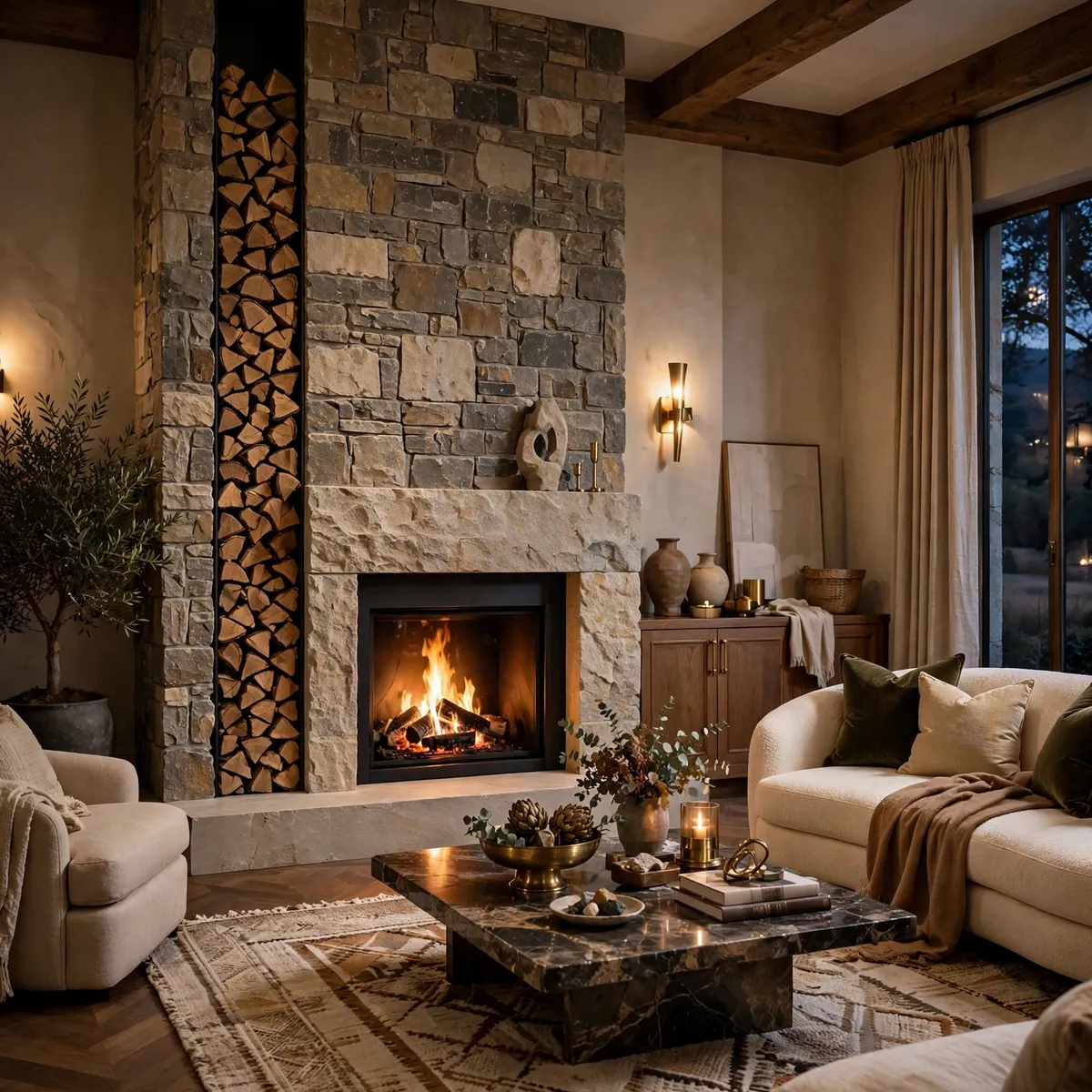
Among rustic fireplace design ideas, a built-in log niche turns fuel into art. Stack split logs in a tall vertical slot or a low cubby beside the firebox and the wood becomes texture, color, and story all at once. Round logs against a square surround also add the organic contrast that makes modern fireplaces feel human.
Quick tips
- Keep the niche deep enough that logs sit fully inside.
- Burn only seasoned hardwood to protect the flue.
14. Run the Surround Floor to Ceiling
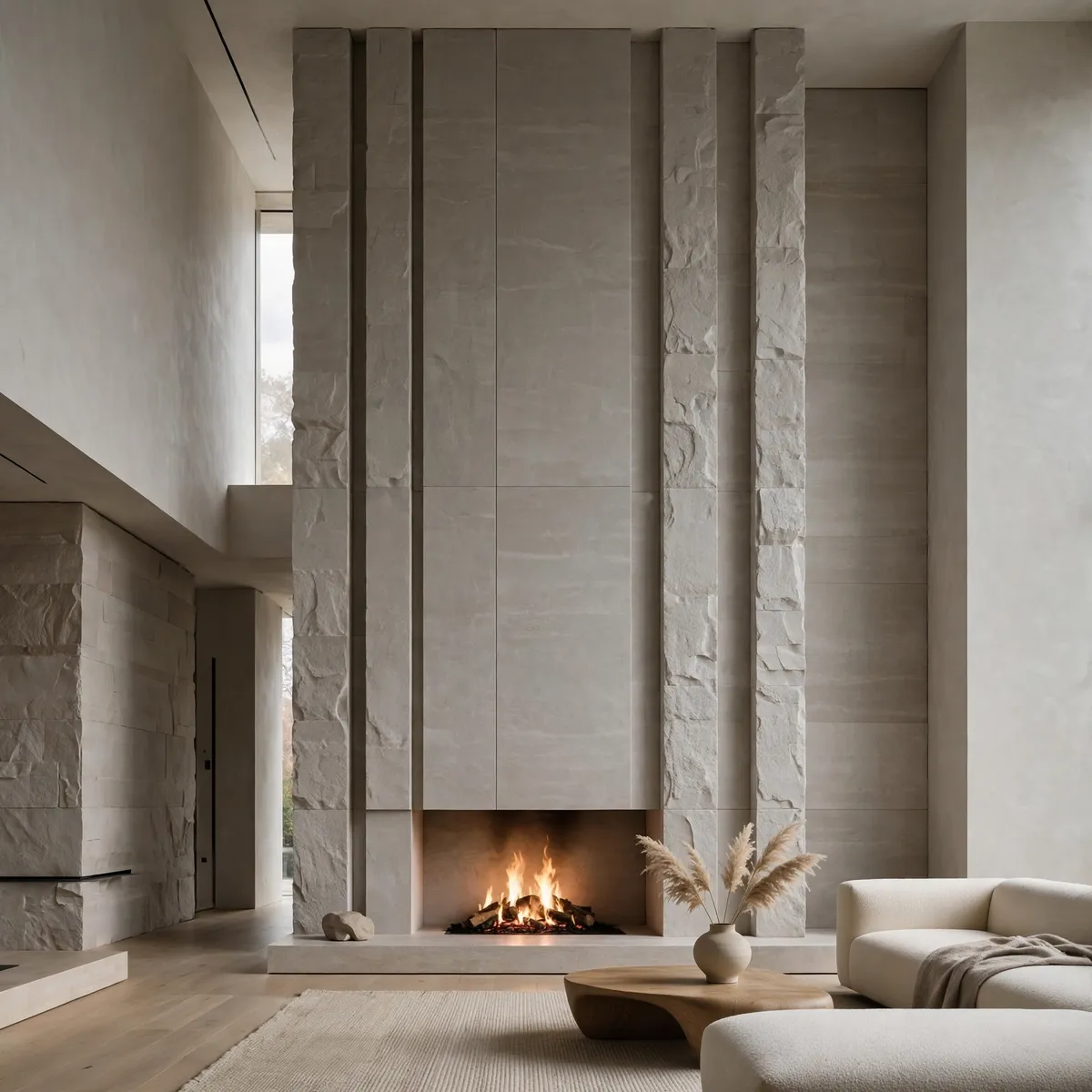
Taking stone, plaster, or paneling all the way up makes the fireplace the undisputed spine of the room. These full-height fireplace design ideas add drama without clutter — height does the talking, so the styling can stay whisper-quiet. In rooms with tall ceilings, this is the move that makes everything else feel proportionate.
Quick tips
- Carry the material into the ceiling soffit for a seamless look.
- Keep the TV off this wall — the surround deserves it.
15. Frame It With Balanced Built-Ins

Built-in shelving on both sides can frame the fireplace beautifully — as long as it stays balanced, not crammed. Leave breathing room on every shelf, repeat two materials across both sides, and keep the center surround the hero. The same collected-layering discipline behind great farmhouse living room ideas applies here: edit until every object earns its place.
Quick tips
- Mirror the styling loosely — match, don’t duplicate.
- Integrated lighting inside the shelves adds evening glow.
16. Pair Marble With Warm Brass
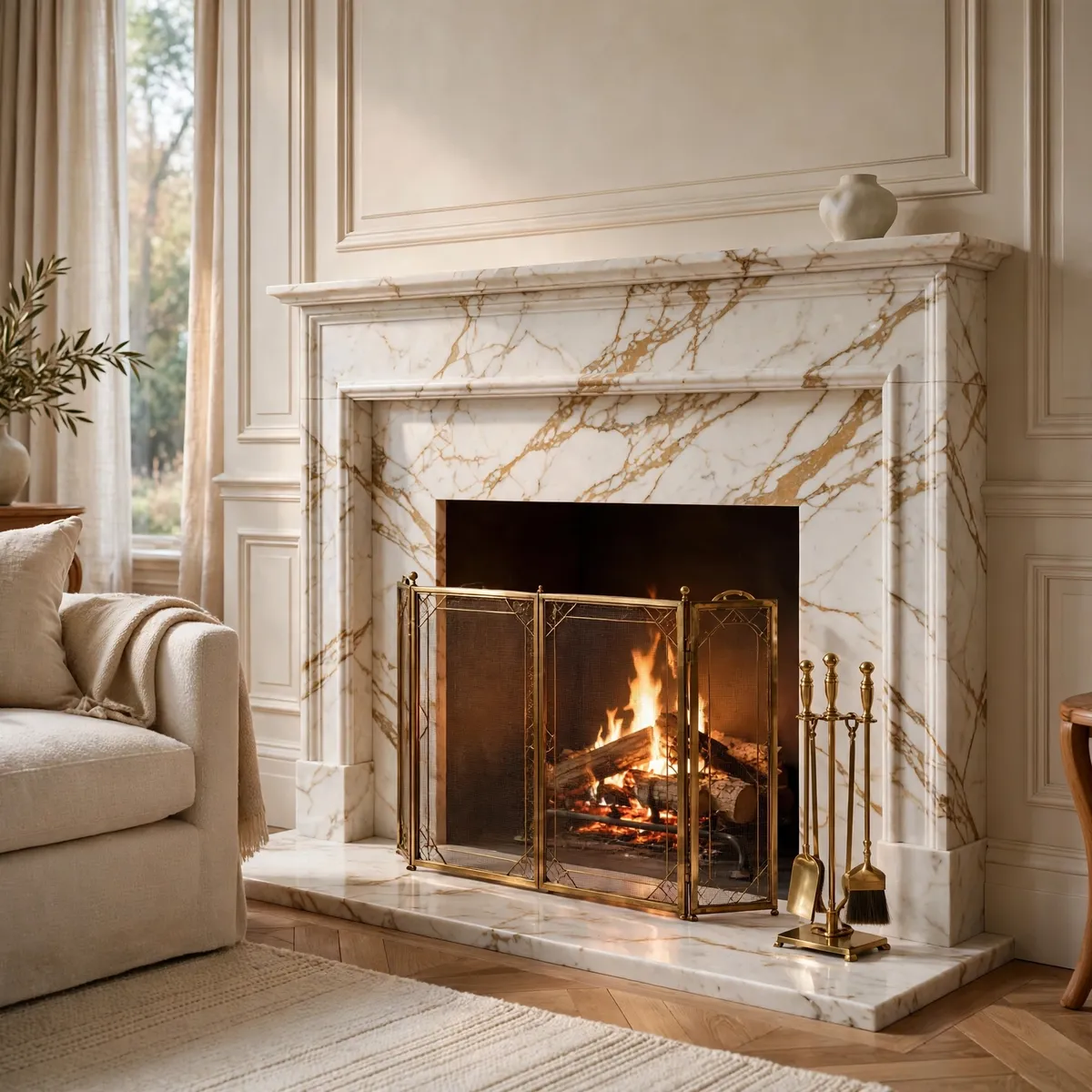
White or warm-gray marble veined with gold reads as quiet luxury, and a brass fire screen, tool set, or trim warms the cool stone beautifully. This pairing is timeless — it photographs like a hotel suite and lives like a home. Keep the mantel nearly bare and let the materials carry the room.
Quick tips
- Unlacquered brass patinas; lacquered stays bright — choose on purpose.
- Hone marble rather than polishing for a softer glow.
17. Try a Double-Sided See-Through Fireplace
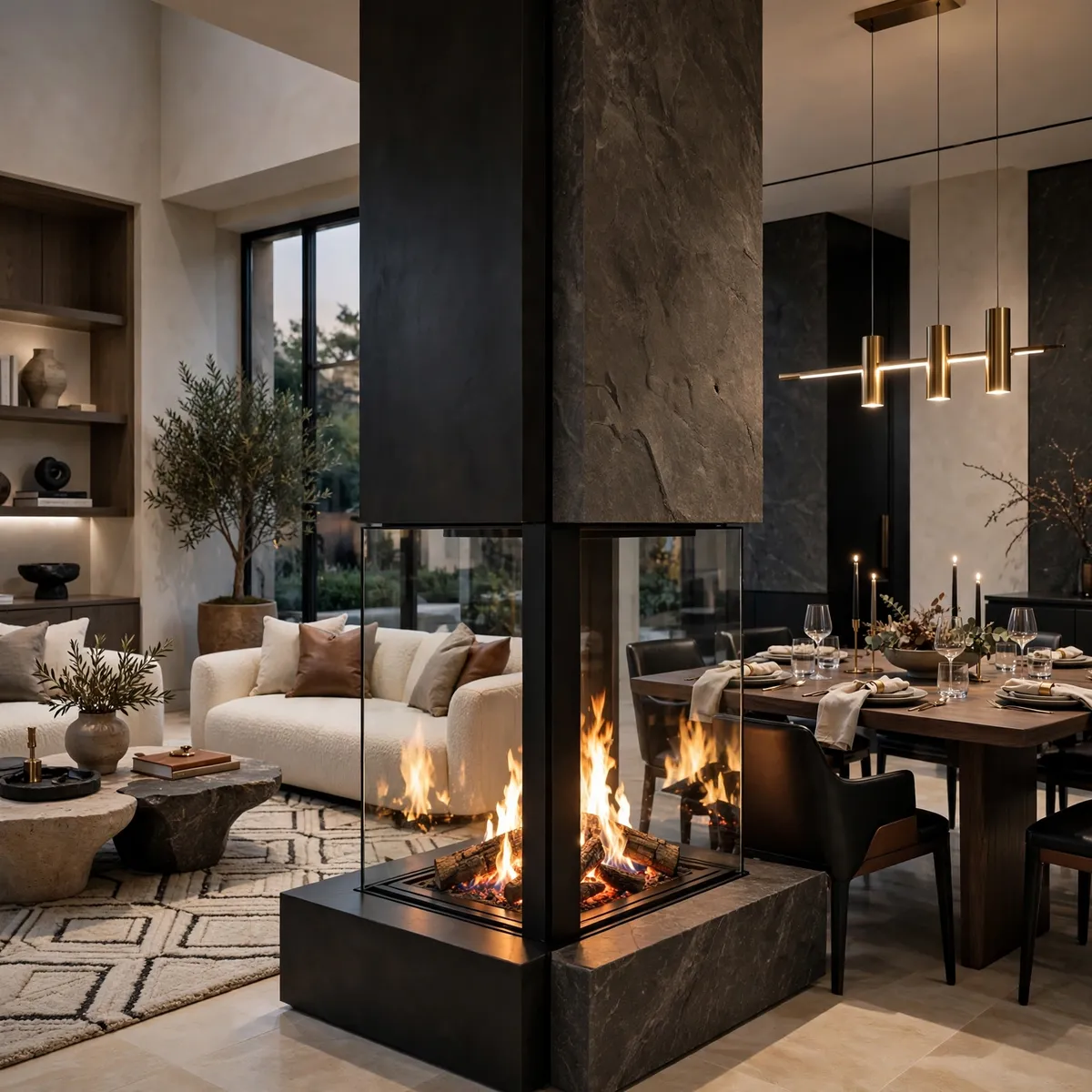
A see-through firebox shared between the living room and an adjoining space — dining room, study, or bedroom — doubles the impact of one flame. These dramatic double-sided fireplace design ideas need a clean surround with no protruding mantel so the view stays uninterrupted. It is the boldest architectural move on this list, and it pays off daily.
Quick tips
- Check local codes — double-sided units have specific venting rules.
- Keep sightlines clear on both sides of the glass.
18. Rethink the Corner Fireplace

Corner fireplaces often feel awkward, but angled right they become the room’s pivot point. Some of the cleverest small-space fireplace design ideas build the surround into the corner with a tall, narrow profile, then arrange seating in an arc facing it — suddenly the awkward angle is the coziest seat in the house. A corner hearth works hardest in smaller living rooms where wall space is precious.
Quick tips
- Angle a rug with the fireplace, not against it.
- Keep the corner mantel low to preserve sightlines.
19. Set a Rustic Beam Against Modern Lines
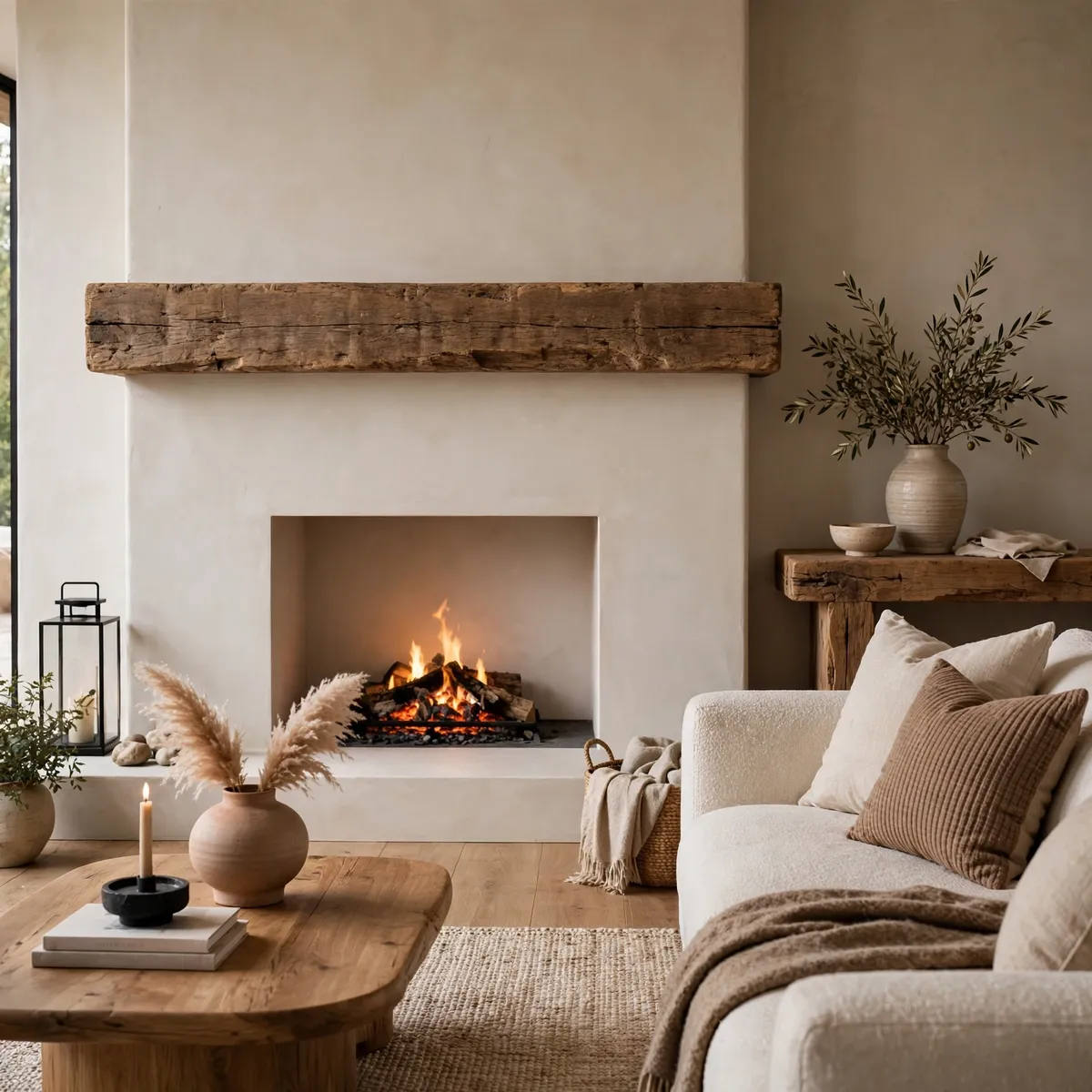
A chunky reclaimed-wood beam mantel laid across a clean, modern surround is contrast done right — the rough against the smooth, the old against the new. The beam adds warmth and history to minimalist architecture without a single rustic cliché. One beam, one warm wood tone repeated once more in the room, and the tension resolves beautifully.
Quick tips
- Check clearances — wood mantels need distance from the firebox.
- Seal the beam so it resists heat and soot.
20. Style the Mantel With Seasonal Restraint

The final skill is restraint: let the mantel change with the seasons but never crowd the flame. A branch of eucalyptus in spring, a bowl of pinecones in winter, one candle cluster year-round — small rotations keep the hearth feeling alive. The best fireplace design ideas end where they began: the fire is the star, and everything else is backup.
Quick tips
- Swap one element per season, not the whole display.
- Keep heights varied for a natural, collected look.
Frequently Asked Questions
What are the three pillars of fireplace design?
The three pillars of fireplace design are color, space, and flame. Color guides the eye and sets the mood, space (breathing room and restraint) gives the architecture presence, and flame is the heartbeat that brings the whole composition to life.
How do I make my fireplace the focal point of the room?
Give it contrast and breathing room: use a surround color that stands out from the walls, leave clear space on both sides, arrange seating to face the hearth, and keep the mantel styled with three or fewer objects so the flame stays the star.
What is the best color for a fireplace surround?
There is no single best color — it depends on the room. The most versatile fireplace design ideas use earthy tones for rustic spaces, dark contrast colors for modern drama, and soft neutrals when the flame should be the only lively element. Match the surround color’s temperature to the room’s palette for a cohesive look.
Should a fireplace match the wall color or contrast it?
Both work, but they create different moods. Matching the wall color makes the fireplace feel seamless and architectural, while contrasting makes it a bold sculptural statement. Choose contrast when you want the hearth to anchor the room, and blending when you want calm.
The Glowing Takeaway
A fireplace is never just a heat source — it is the living room’s main event. Start with color that speaks, give it space to breathe, and let the flame do the rest. Build around those three pillars and your hearth will hold the room together for every season ahead. ♥