The Kind of Vibrant Living Room That Still Looks Right Five Years From Now
A vibrant living room does not have to look like every color in the paint store landed in the same space. The most lasting colorful rooms have a clear visual plan: one or two dominant shades, a few supporting tones, varied textures, and enough quiet space for the eye to rest. That balance lets you enjoy expressive color today without making the room feel tied to a single decorating trend.
If you want a living room with personality that can still feel attractive years from now, think beyond simply adding brighter accessories. Use color to define the mood, shape the seating area, highlight architecture, and connect furniture with artwork. These ideas take a more flexible approach to vibrant decorating so you can make a bold room feel collected rather than temporary.
Start With One Color That Sets The Mood
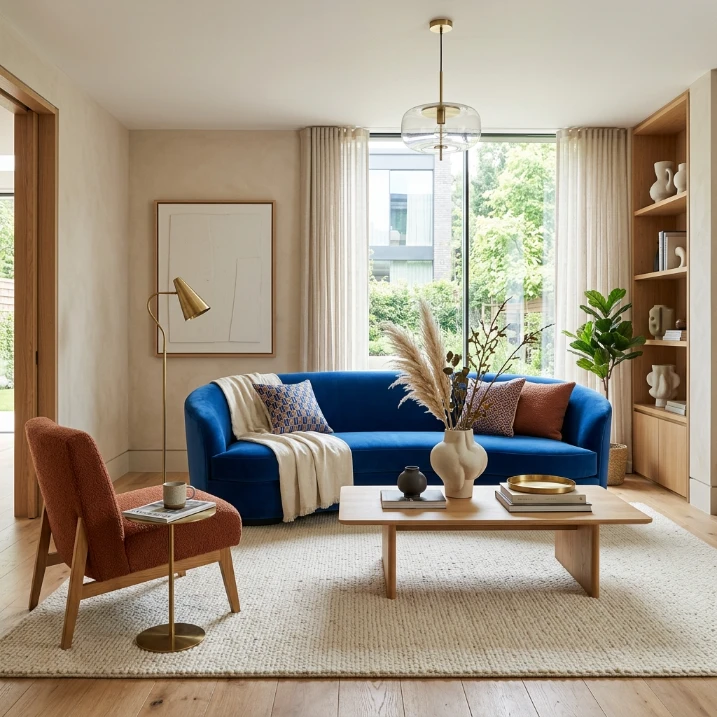
The easiest way to make a colorful living room feel intentional is to choose one shade that carries the visual weight. It could be emerald green, cobalt blue, warm coral, mustard yellow, rich teal, or even a saturated pink. Let that color appear in one major piece, such as a sofa or rug, and repeat it in smaller details around the room.
Repeating the same color does not mean buying matching furniture. Instead, vary its texture and intensity. A velvet cushion, painted cabinet, ceramic lamp, and woven throw can all interpret the same color differently. This creates rhythm while keeping the palette easy to live with.
Pair Bold Furniture With A Calm Architectural Backdrop

If you love a dramatic sofa, colorful armchair, or patterned sectional, give it room to stand out. Warm white, soft beige, muted greige, or a gentle clay tone can keep the walls and larger architectural surfaces from competing with your furniture.
This approach is especially useful if you expect your taste to change. A calm backdrop can stay in place while the colorful pieces evolve. You can replace a chair, artwork, rug, or curtains without rebuilding the entire room.
Let The Rug Introduce Several Colors At Once
A multicolor rug is one of the most useful starting points for a vibrant living room because it gives you a ready-made palette. Look for an abstract, painterly, geometric, or vintage-inspired pattern that includes two or three colors you genuinely like.
Pull the quieter colors from the rug into the sofa, curtains, and larger furniture, then reserve the brightest shade for accessories. This makes a colorful room feel connected even when the furniture styles are different.
Create A Jewel-Toned Corner With Layered Texture

You do not need to make every wall and furnishing equally bold. A jewel-toned corner can create enough drama for the whole room. Try a deep teal reading chair, ruby cushion, plum curtain, or emerald cabinet against a softer background.
Texture matters as much as color here. Velvet, boucle, aged wood, brushed brass, glass, and natural stone reflect light differently, so the room feels rich rather than flat. Keep the number of strong colors limited and allow materials to provide some of the variation.
Use A Gallery Wall To Build A Personal Color Story
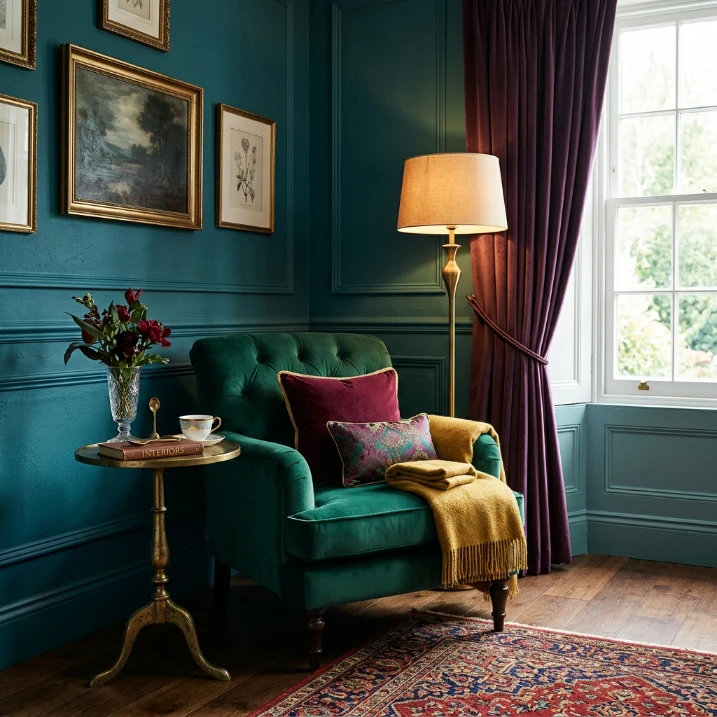
A gallery wall can bring vibrant color into the room without requiring brightly colored furniture everywhere. Mix paintings, photography, prints, small textiles, and decorative objects, but connect them through a loose palette.
For a more collected look, vary the frame sizes and shapes while repeating two or three colors. Leave enough breathing room around the arrangement if the rest of the room is already busy. If you prefer a denser wall, balance it with a simple sofa and uncluttered coffee table.
Try Color Blocking Instead Of Covering Everything In Pattern

Color blocking is a practical way to create a strong visual effect without relying on many prints. Paint a fireplace wall, alcove, built-in shelving unit, or lower section of a wall in a confident color. Then repeat that shade through a chair, artwork, or small accessory.
The result feels graphic and modern, but it can be changed more easily than a room filled with permanent patterned surfaces. If you are renting, use removable wallpaper or concentrate the color on furniture and artwork instead.
Bring Vibrant Color Into An Open-Plan Living Area

Open-plan rooms need a little more coordination because the living room shares its visual space with dining or kitchen areas. Choose one accent shade and repeat it across zones rather than giving every area a completely different palette.
For example, a blue living room chair can connect with blue dining chairs, artwork, or a small kitchen accessory. The pieces do not need to match. Repetition simply gives the larger room a sense of flow.
Choose Curved Furniture For A Softer Vibrant Look

Color can feel even more playful when it is paired with curved forms. A rounded sofa, oval coffee table, arched floor lamp, or soft-edged accent chair adds movement without needing another complicated pattern.
This works particularly well with warm shades such as terracotta, ochre, coral, and caramel. Balance those colors with cream, natural wood, or soft stone so the room stays comfortable rather than overly theatrical.
Make One Unexpected Piece The Conversation Starter

Every memorable vibrant living room benefits from one element that feels personal. It might be an unusual sculptural chair, oversized ceramic lamp, colorful vintage cabinet, artistic coffee table, or large piece of handmade wall art.
The trick is not to surround the unusual piece with five more unusual pieces. Give it enough visual space to be noticed. A single distinctive object often has more impact than a collection of novelty accessories competing for attention.
Use Metallic Details To Make Strong Colors Feel Refined
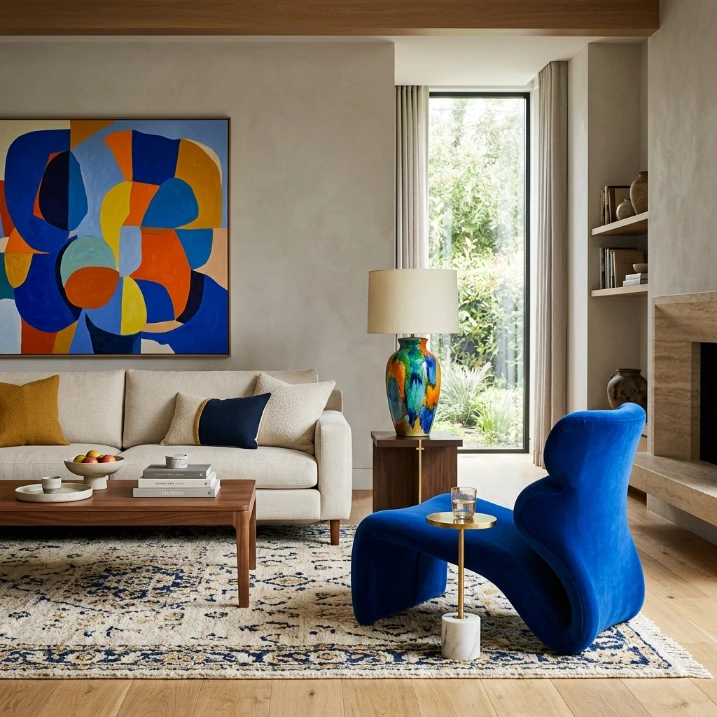
Brass, aged gold, chrome, and bronze can help colorful interiors feel polished. Choose one dominant metal finish for the room and repeat it in small ways through lighting, hardware, frames, or decorative objects.
Warm metals pair beautifully with teal, green, burgundy, coral, and mustard, while chrome can sharpen blues, pinks, and cooler palettes. Keeping the metal finish consistent is a simple way to make several bold colors feel like part of one design.
Keep The Floor And Ceiling From Competing With The Palette

When the furniture and walls are colorful, the floor and ceiling can provide visual relief. A natural wood floor, soft neutral rug, or simple ceiling finish gives the room a stable base.
If you want a more adventurous look, use the ceiling as the surprise instead. A muted version of the room’s accent color can make the space feel finished without adding another unrelated hue.
Build A Vibrant Living Room That Can Evolve

The most practical long-term approach is to make your expensive pieces relatively adaptable. A quality sofa, useful storage, good lighting, and durable flooring can remain while color moves through replaceable layers such as cushions, curtains, artwork, throws, and occasional chairs.
This is also where your personal style becomes more important than copying a particular trend. If you love saturated colors, use them. If you prefer a bright accent against mostly neutral furniture, that can be just as expressive. The goal is to create a room where the color choices feel connected to the people who live there.
Final Thoughts
A lasting vibrant living room is built on confidence and editing. Start with a clear color direction, repeat important shades, mix textures, and give bold pieces enough space to breathe. You do not need every surface to make a statement.
For more living room inspiration, you can also explore our Western living room decor ideas, our whimsigoth living room aesthetic, and ideas for making a small apartment living room feel finished.