20 Stunning Mid Century Modern House Exterior Ideas You’ll Love ♥ [Atomic Ranch]
What Makes a Mid Century Modern House Exterior Iconic?
Here is the definition worth holding onto: a mid century modern house exterior is the outward expression of the postwar modernist movement — low horizontal lines, walls of glass, natural materials, and a seamless connection to the outdoors, designed roughly between 1945 and 1975. You can spot one from the street in seconds: the roof sits low and wide, the facade mixes wood and stone with glass, and the whole house hugs the landscape instead of dominating it.
These 20 mid century modern house exterior ideas break that iconic look into moves you can use. Whether you own a true atomic-era ranch or are building new with a retro soul, each idea shows how to make your curb appeal unmistakably mid century.
1. Embrace the Low-Slung Ranch Silhouette
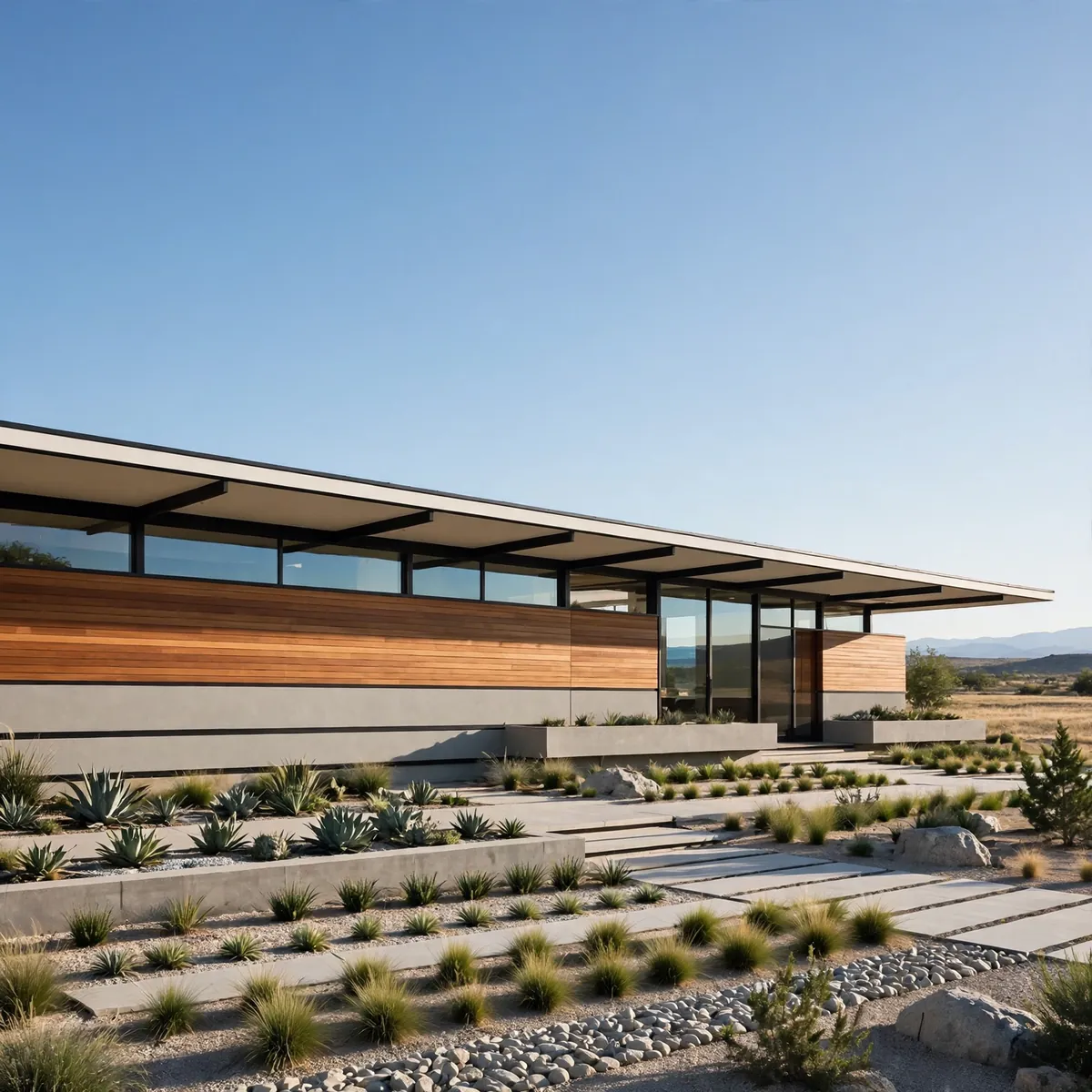
Nothing says mid century modern house exterior like a roofline that stretches long and low. The ranch silhouette keeps the home’s center of gravity near the ground, which makes even a large house feel relaxed and approachable. The trick is proportion: wide eaves, a strong horizontal emphasis, and no tall gables competing for attention.
Quick tips
- Keep the roof pitch at 4:12 or lower for a true horizontal read.
- Extend eaves at least 24 inches to sharpen the low profile.
2. Go Bold With a Butterfly Roof
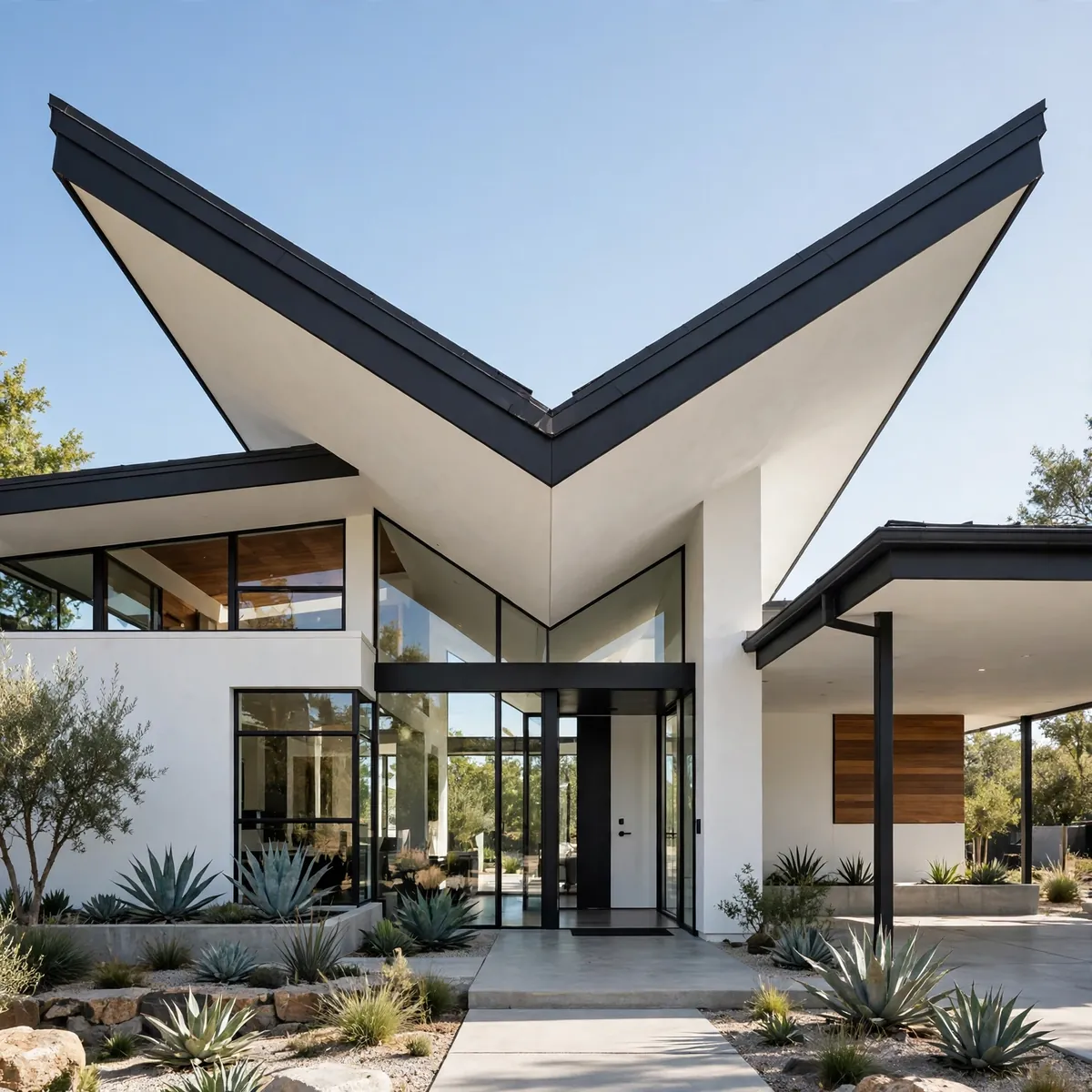
The butterfly roof — two planes dipping toward the center like wings — is the most dramatic move in the book. It flips the traditional gable upside down for a sculptural silhouette, and the inverted valley channels rainwater to a central point that original architects often turned into a planted courtyard drain. Bold, functional, pure 1950s optimism.
Quick tips
- Use the roof valley as a design feature, not a problem to hide.
- Pair it with clerestory windows to fill the high wing with light.
3. Open Up With Floor-to-Ceiling Glass Walls
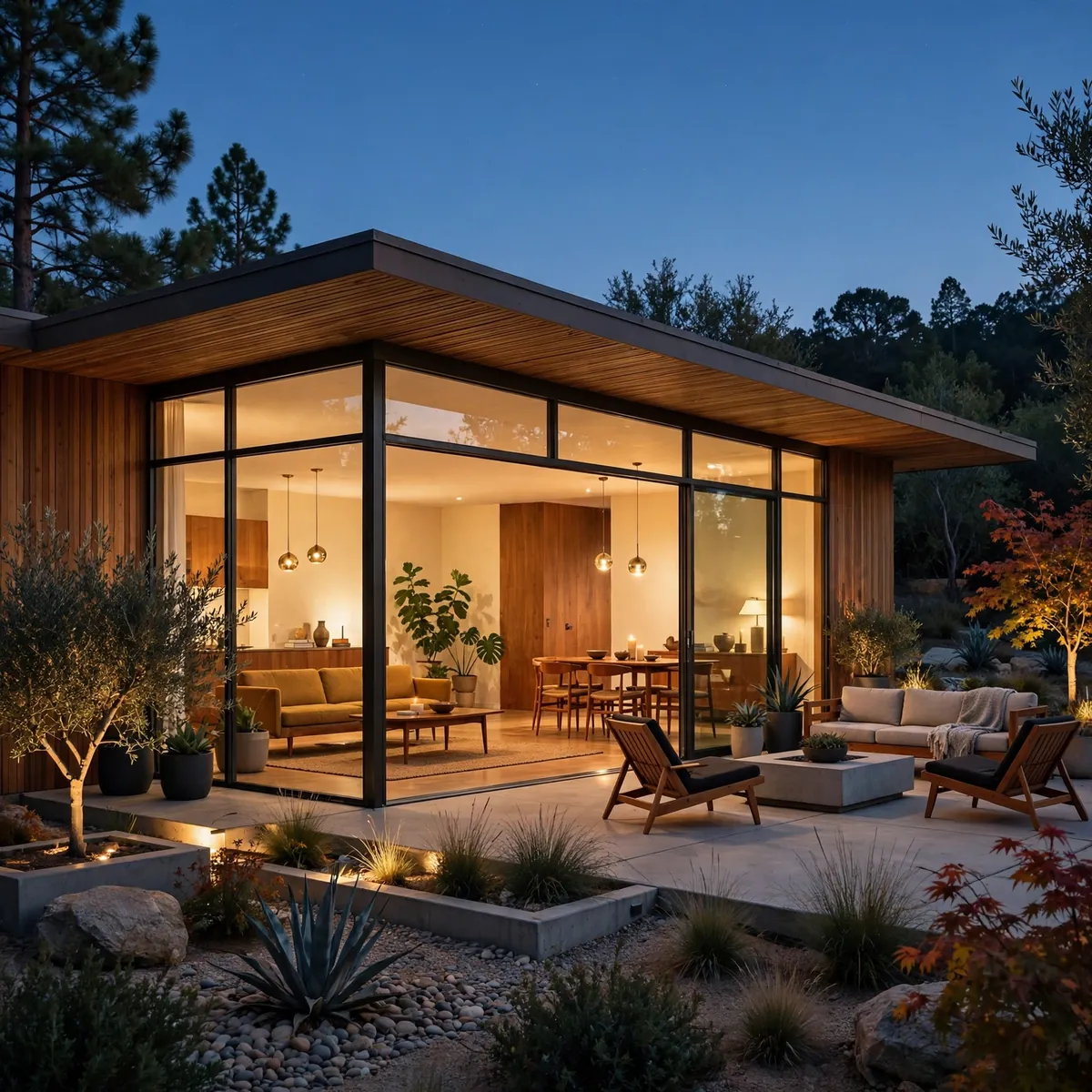
Glass is the soul of the style. A mid century modern house exterior dissolves the boundary between inside and out with full-height glazing that turns the living room into a lantern at night. From the curb, those glowing walls become the home’s best feature — use slim-framed sliding panels or fixed glass to keep the look crisp.
Quick tips
- Choose low-E glass to keep the retro look with modern efficiency.
- Keep window frames slim and dark for a true period profile.
4. Add Clerestory Windows for Sky Views
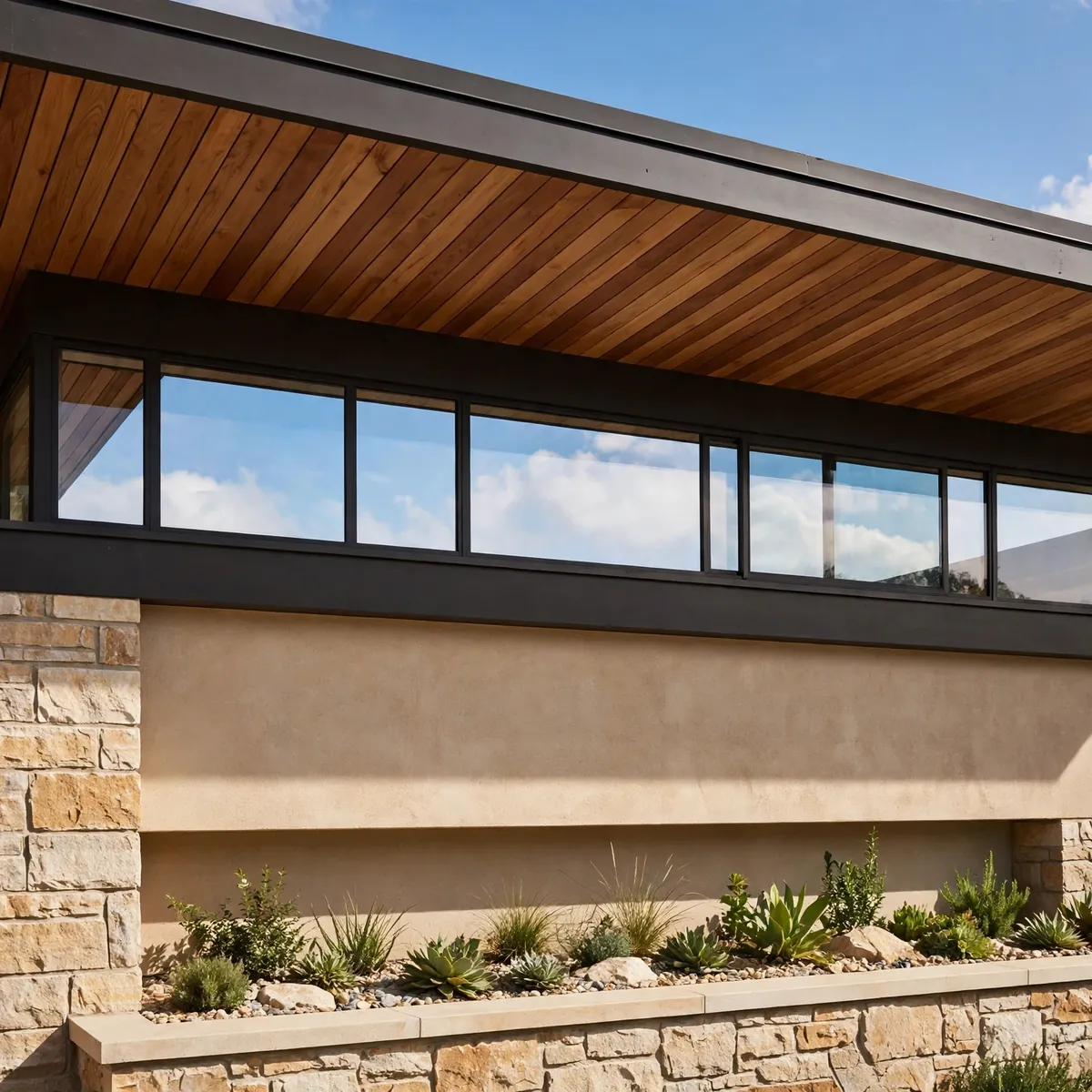
Clerestories — high ribbons of glass tucked just under the roofline — pour daylight deep into the house while keeping main walls solid for privacy, and from outside they make the roof appear to float. Any mid century modern house exterior gains instant authenticity with a band of clerestory glass above the entry or garage: light without exposure, drama without noise.
Quick tips
- Run clerestories along the south side for maximum daylight.
- Frost or tint them where neighbors are close.
5. Warm It Up With Natural Wood Siding
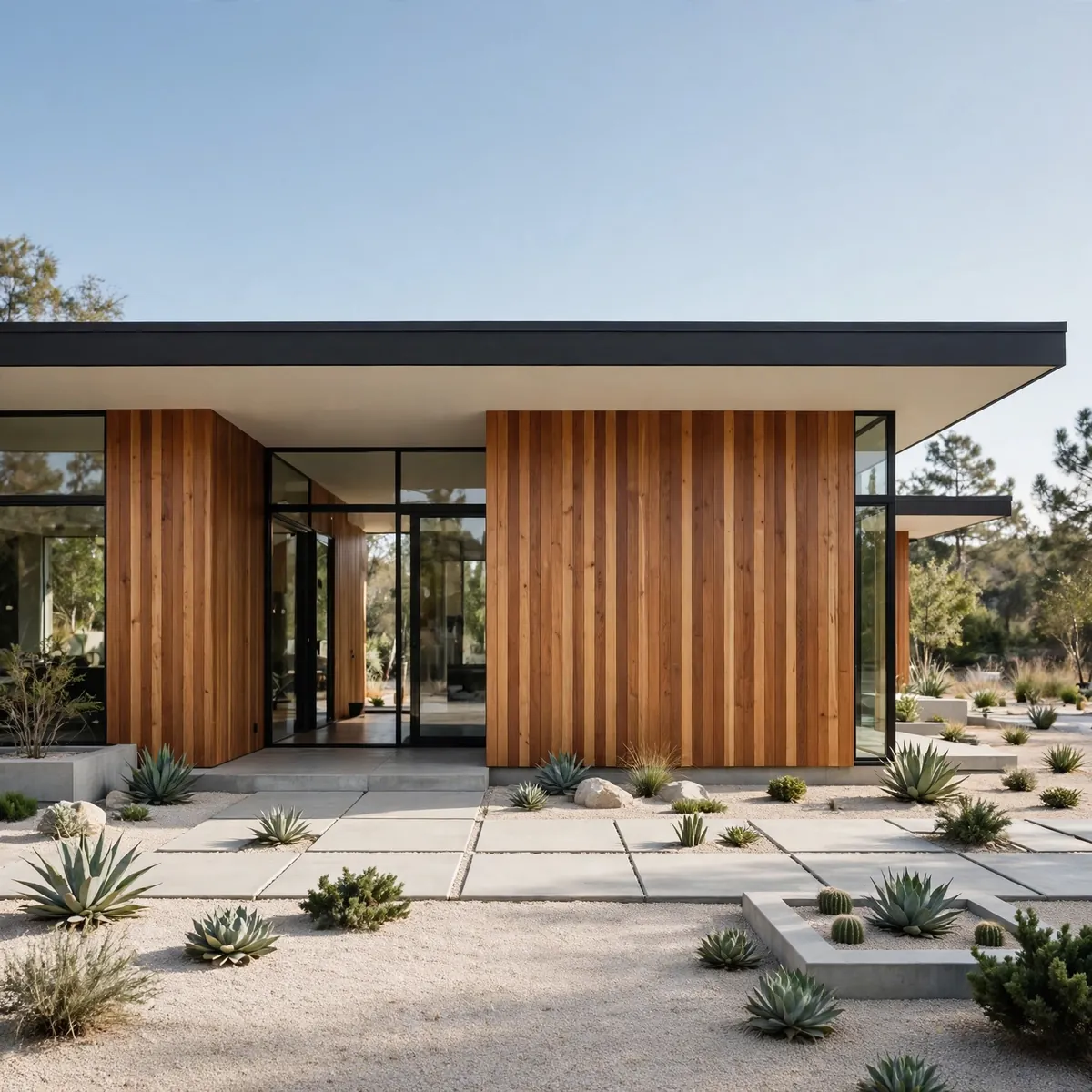
Redwood, cedar, and vertical-grain fir gave the mid century modern house exterior its warmth. Wood siding softens the geometry of glass and stucco, and it ages into a silvered patina that only gets better. Get it right in three moves:
- Run siding vertically to stretch the facade visually.
- Leave it natural or use a clear sealer — never high-gloss stain.
- Contrast it against one smooth surface, like white stucco.
Quick tips
- Fiber-cement boards can mimic the vertical grain look for less.
- Re-seal natural wood every 3 to 5 years in harsh sun.
6. Anchor the Facade With a Stone Accent Wall
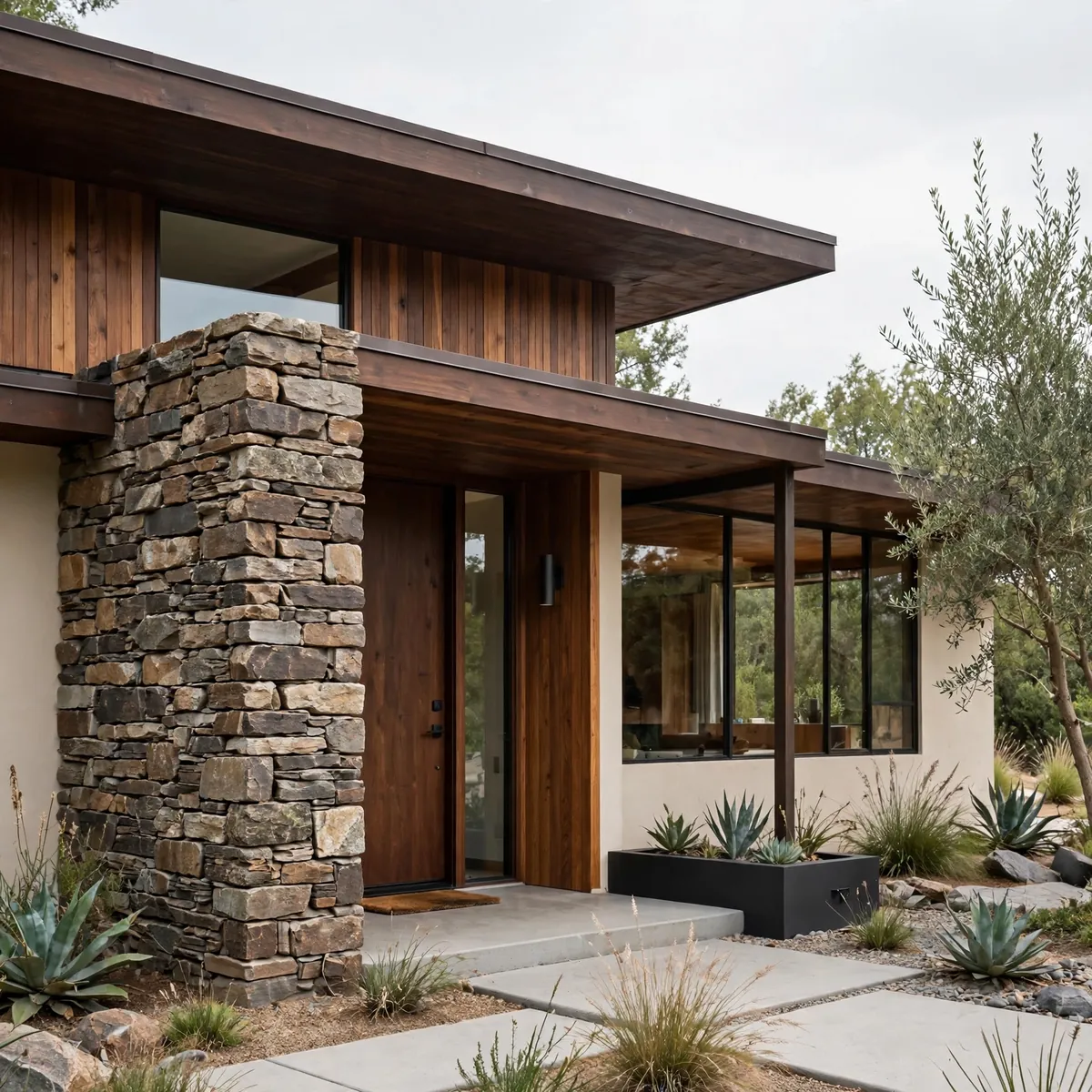
One rugged stone wall against crisp modern lines is a signature contrast move. Irregular stacked stone grounds the house beside all that smooth glass and stucco. On a mid century modern house exterior, the stone wall usually frames the entry or the fireplace mass. One wall is enough; restraint is what makes it sing.
Quick tips
- Use the stone on the entry or chimney mass for maximum impact.
- Keep mortar joints tight and shadowed for a modern feel.
7. Add Privacy With Decorative Breeze Blocks
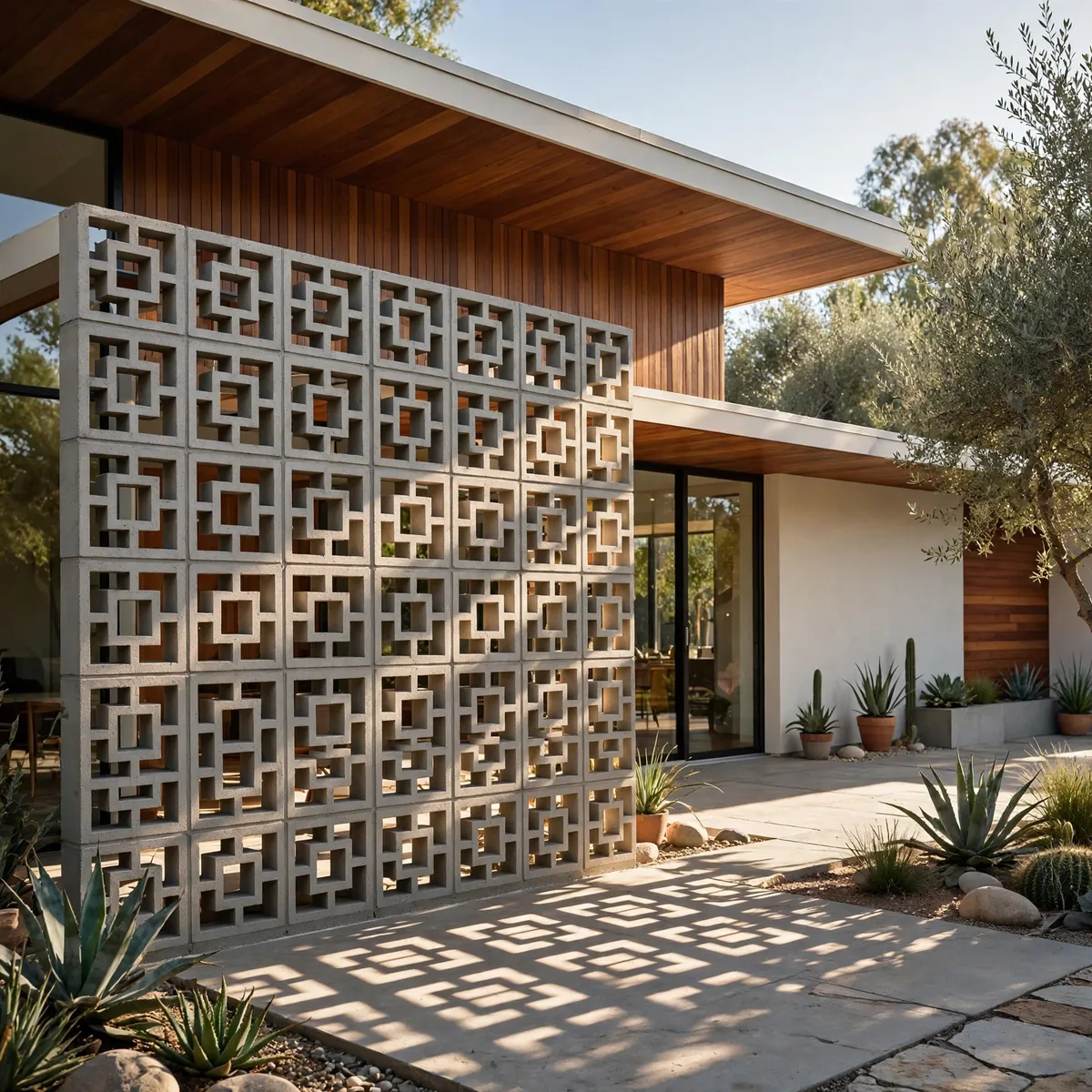
Breeze blocks are the most charming privacy solution ever invented: hollow concrete blocks stacked into a screen that filters sun, catches breezes, and throws patterned shadows across the facade. Mid century architects used them for carport walls, courtyard screens, and clerestory infill. A breeze-block screen beside the entry gives any mid century modern house exterior instant period credibility and real function in one move.
Quick tips
- Classic patterns: starburst, clover, and simple square grids.
- Seal the blocks to prevent water staining on the pattern.
8. Choose a Carport Over a Closed Garage
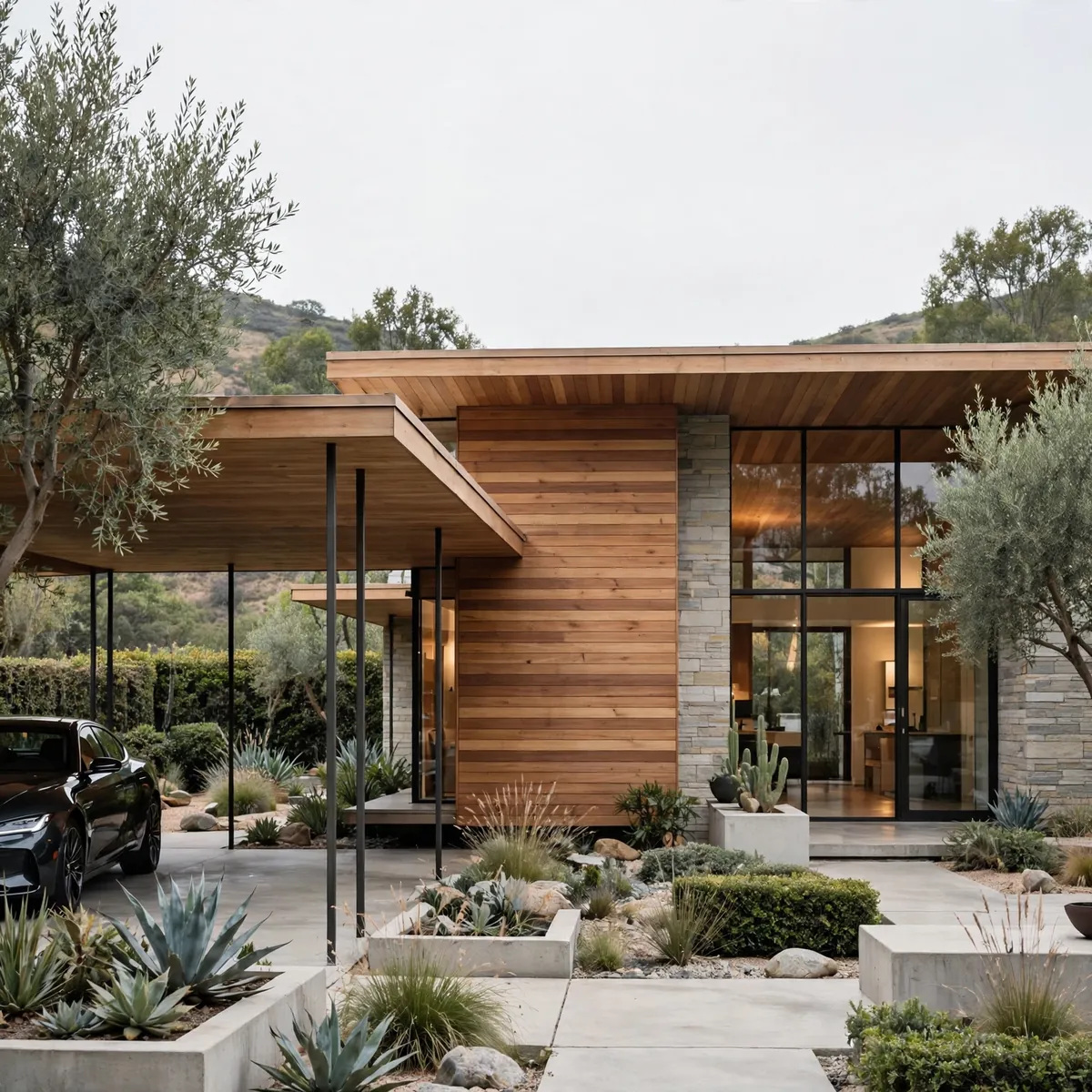
The carport is pure mid century optimism: a thin roof plane floating on slender columns, car sheltered, architecture uninterrupted. Unlike a bulky attached garage, a carport keeps the facade light and lets the house’s true geometry show. Many originals paired it with a breeze-block screen wall for privacy without weight — not a compromise, but a design feature.
Quick tips
- Use the thinnest columns the structure allows for a floating look.
- Match the carport roofline to the main roof for one gesture.
9. Make an Entrance With a Statement Front Door
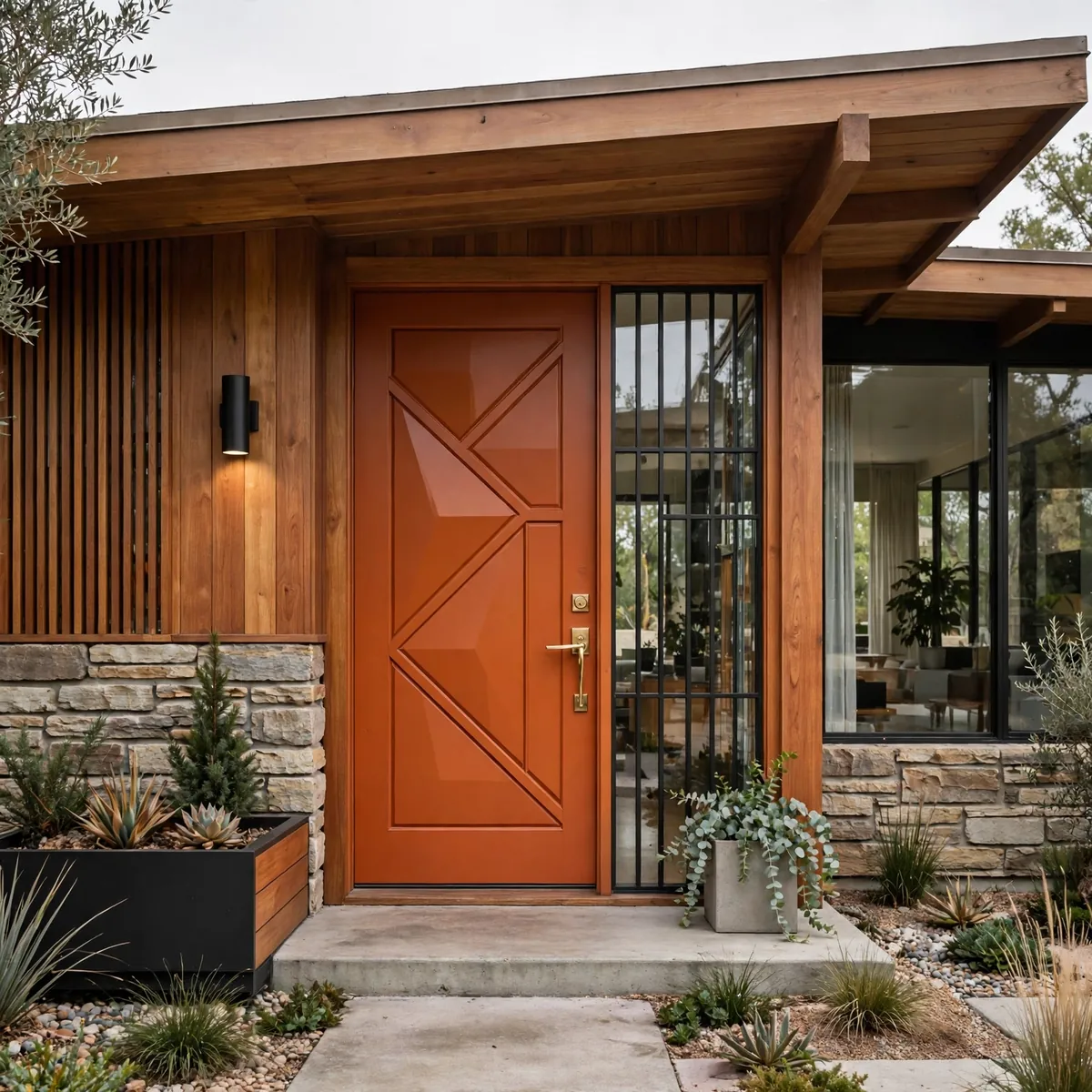
Mid century doors were never shy: burnt orange, teal, mustard, or natural walnut with geometric panels and long vertical pulls. The front door is the one place the palette gets to shout, so let it. Flank it with a sidelight so daylight spills into the foyer, and keep the porch minimal — the door is the jewelry.
Quick tips
- Paint the door a saturated retro hue; keep everything around it neutral.
- Choose a long bar pull instead of a traditional knob.
10. Let the Entry Float on a Covered Walkway
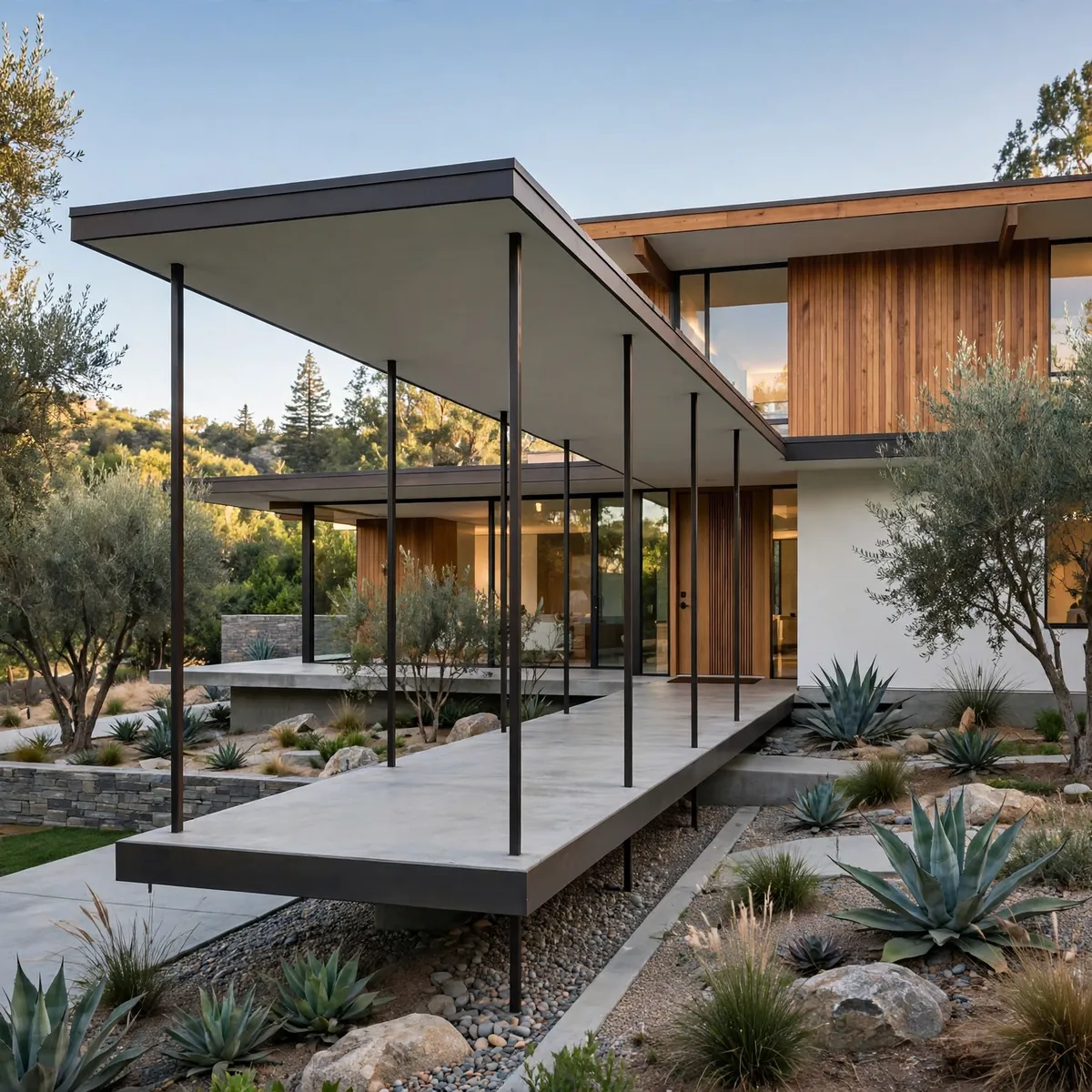
Instead of a door slapped on the facade, mid century architects choreographed the arrival: a covered walkway — a thin roof plane on slender posts — guides you from the carport or street to the entry in a slow reveal. That slow reveal is pure mid century modern house exterior theater: a processional moment and a dry, shaded threshold. Extend it past the door and you gain sheltered outdoor living for free.
Quick tips
- Keep the walkway roof as thin as possible for elegance.
- Light it from above with recessed cans for a runway effect.
11. Light the Entry With Sculptural Fixtures
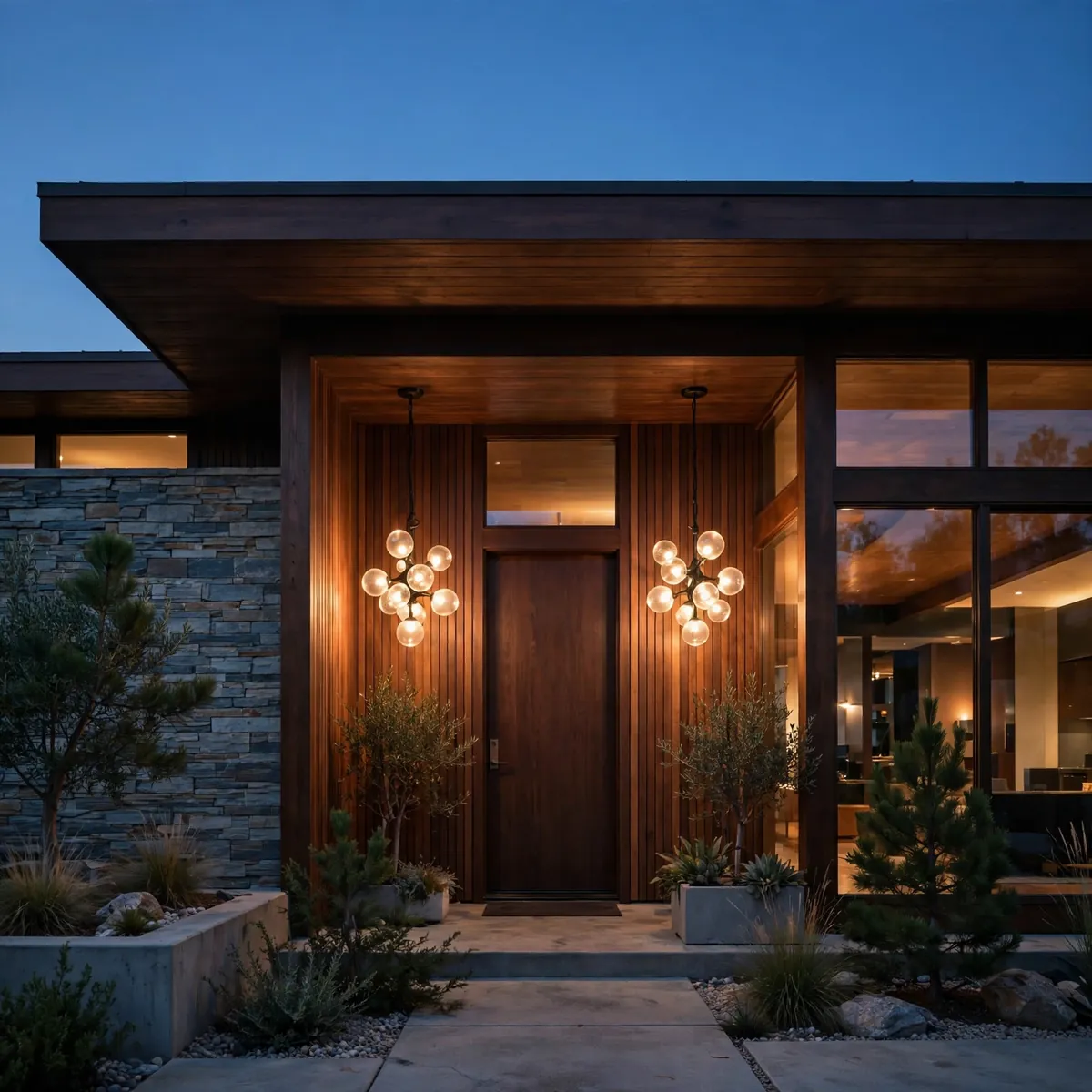
Here is where a mid century modern house exterior shows its personality after dark, and the rule is simple: fixtures are sculpture first, lighting second. Think milky globe pendants in a row beneath the entry canopy, or cone sconces washing the wood siding in warm light. The originals favored 2700K warm bulbs placed to create pools of glow rather than flood the facade evenly. One dramatic pendant over the front door beats a dozen path lights, giving visitors a single luminous focal point. Keep hardware quiet — brushed brass, matte black, opal glass — and resist fixtures everywhere: a dark facade with two perfect globes reads far more luxurious than a house lit like a parking lot.
Quick tips
- Stick to 2700K warm bulbs everywhere outside.
- One statement fixture beats five forgettable ones.
12. Design a Courtyard That Connects In and Out
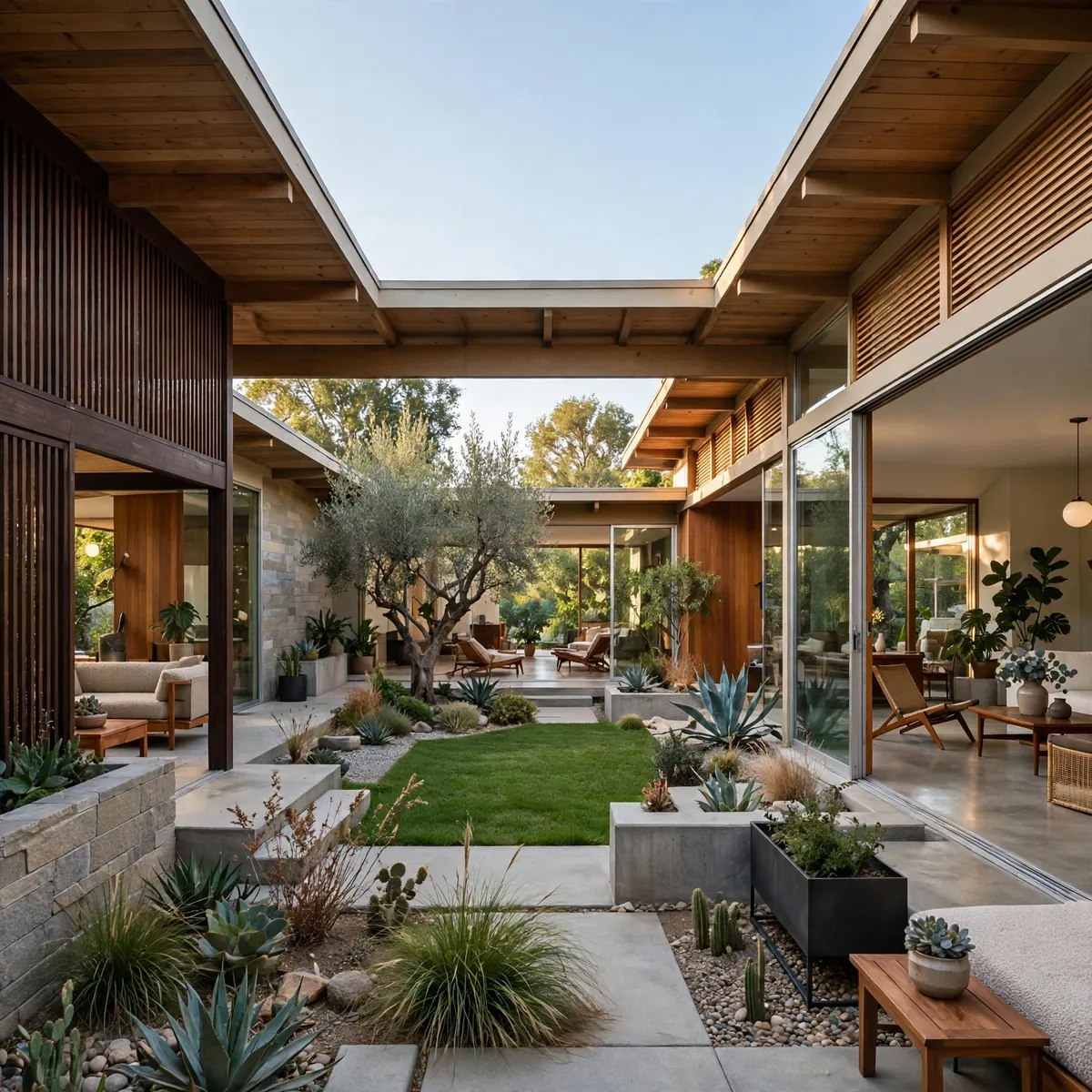
The atrium courtyard is the style’s secret weapon: an open-air room wrapped by the house, where glass walls erase the line between living room and garden. Plant it simply — one sculptural tree, gravel, a few architectural grasses — and it becomes a private outdoor gallery. For relaxed, layered planting ideas, these boho garden ideas pair beautifully with clean architectural lines. Add a stone pad and the courtyard becomes the home’s second living room.
Quick tips
- Keep courtyard planting to three or four species for calm.
- One specimen tree gives the whole space a focal point.
13. Plant Sculptural Landscaping That Echoes the House
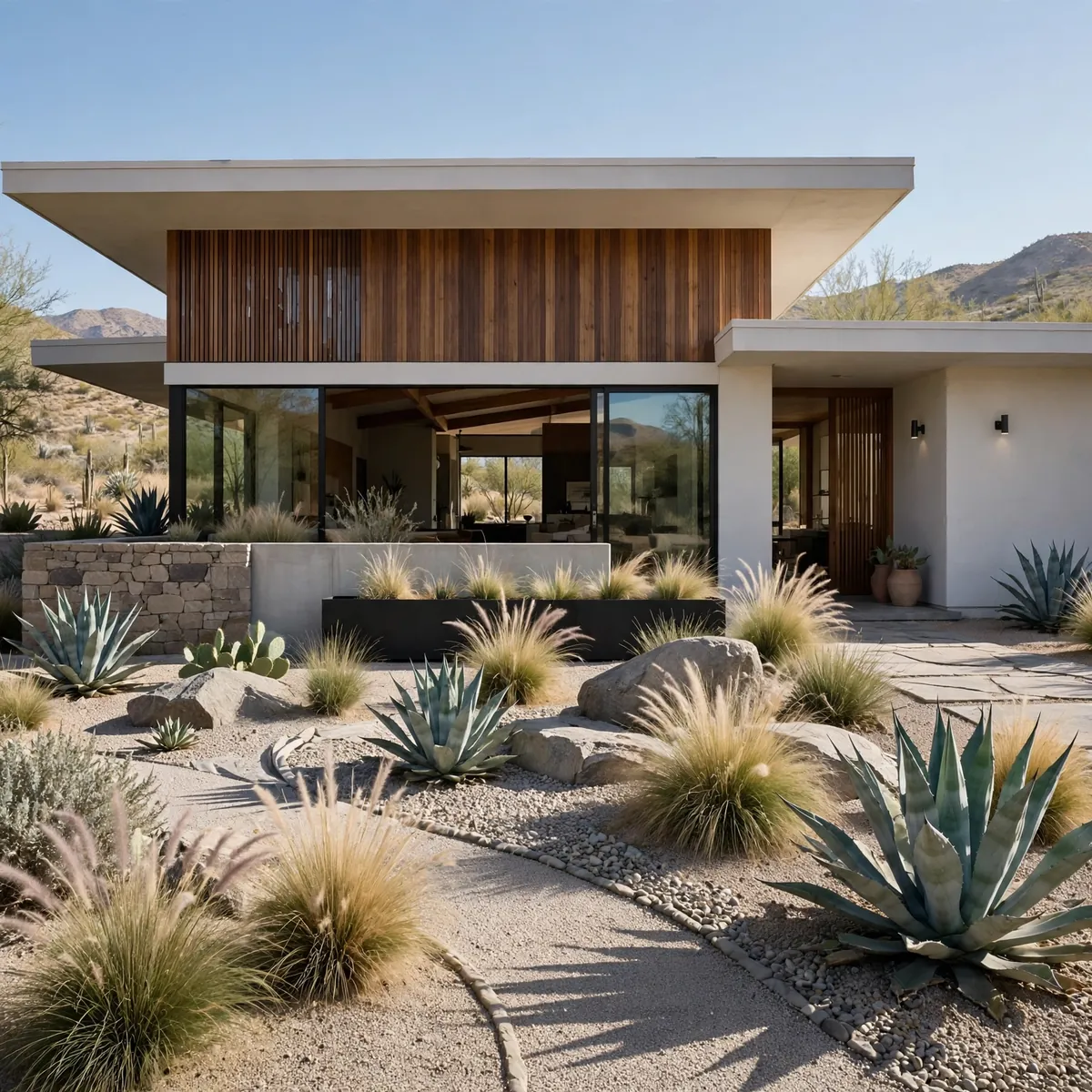
Mid century landscaping is architecture’s quiet partner: it never competes, it completes. Choose plants with strong shapes — agave rosettes, sculptural yucca, sweeps of ornamental grass — and arrange them in clean drifts echoing the house’s horizontal lines, using rounded forms to balance the crisp geometry. Repeat the shapes and let negative space do half the work.
Quick tips
- Repeat each plant in groups of three, five, or seven.
- Use gravel or decomposed granite instead of thirsty turf.
14. Lay a Floating Paver Pathway
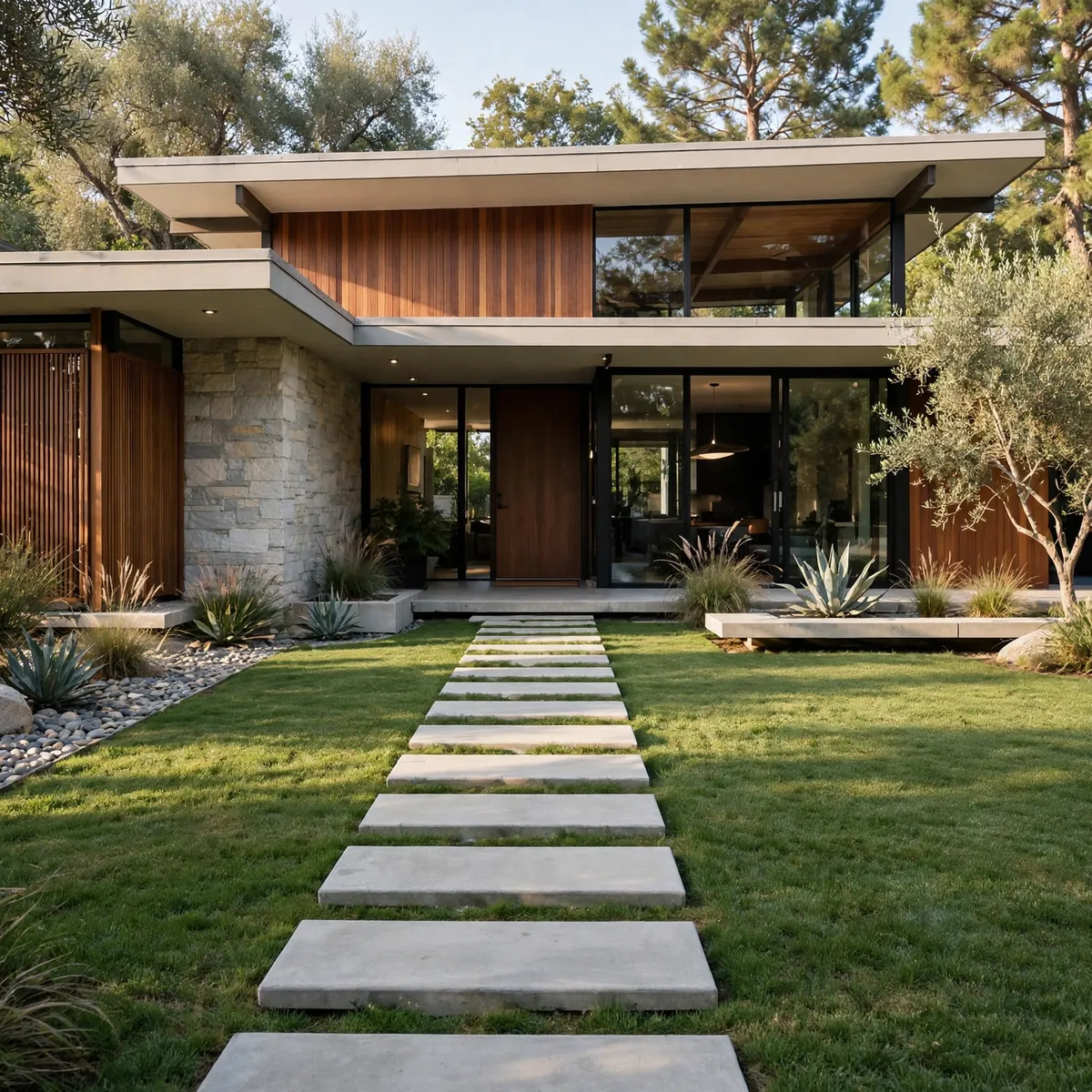
Ditch the solid concrete slab. Oversized pavers set with wide gravel joints turn the walk to the door of a mid century modern house exterior into a rhythmic, floating composition. Build it right:
- Use large square pavers, at least 24 inches across.
- Leave 2 to 4 inch joints filled with gravel or groundcover.
- Run the path slightly off-axis for a designed feel.
Quick tips
- Wide joints make the path feel lighter and more modern.
- Light the path with low, shielded fixtures that vanish by day.
15. Frame the House With Low Stone Walls
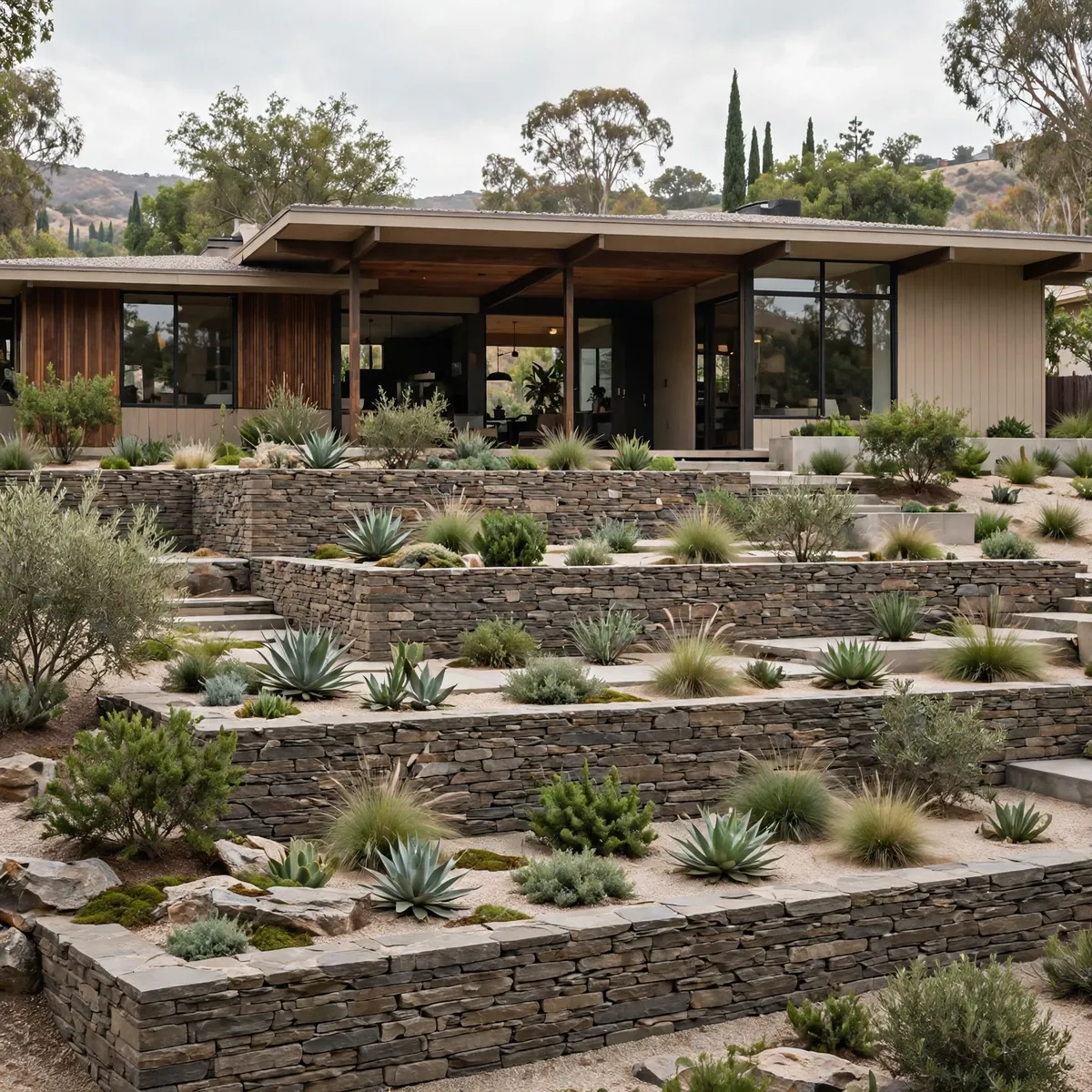
Low stacked-stone walls do triple duty: they terrace a sloped lot, edge the planting beds with a natural line, and echo the stone accent wall on the house itself. Keep them under 24 inches so they read as landscape jewelry, not fortress walls. For extra presence, add taller stone piers flanking the entry walk — vertical rhythm against horizontal lines gives the approach real ceremony.
Quick tips
- Match the wall stone to the house’s accent stone for cohesion.
- Cap the walls with a flat stone for a clean, finished top.
16. Add a Reflecting Pool or Water Feature
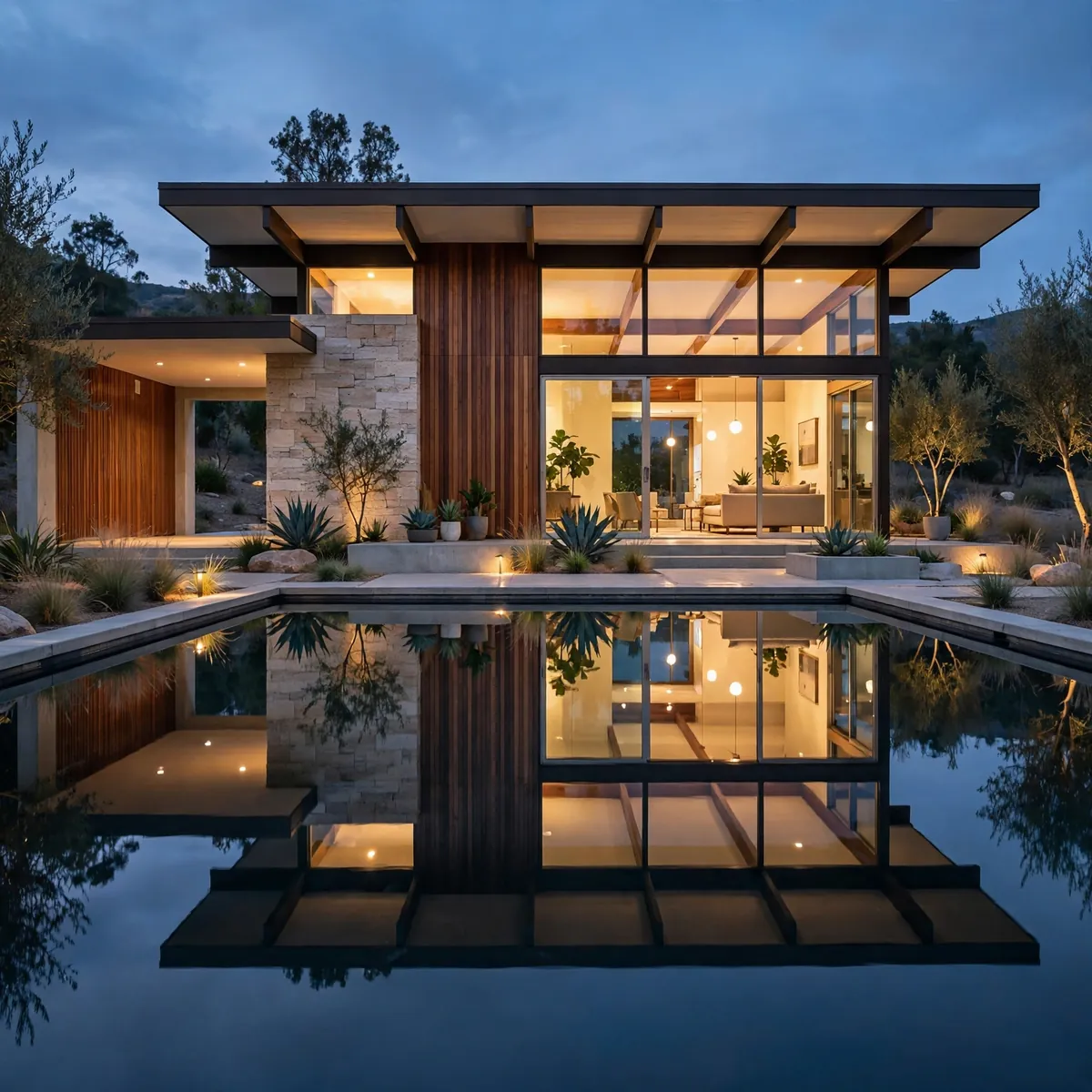
Still water doubles the architecture. A shallow reflecting pool set parallel to the facade mirrors the roofline and glass, turning the front yard into a gallery. Even a narrow rill or dark-bottomed basin delivers the mirror effect. Water works best here as a quiet plane, not a splashing fountain: calm, geometric, and perfectly still.
Quick tips
- Dark pool interiors reflect better than light ones.
- Keep the water’s edge razor-straight for a modern read.
17. Show Off Exposed Post-and-Beam Structure
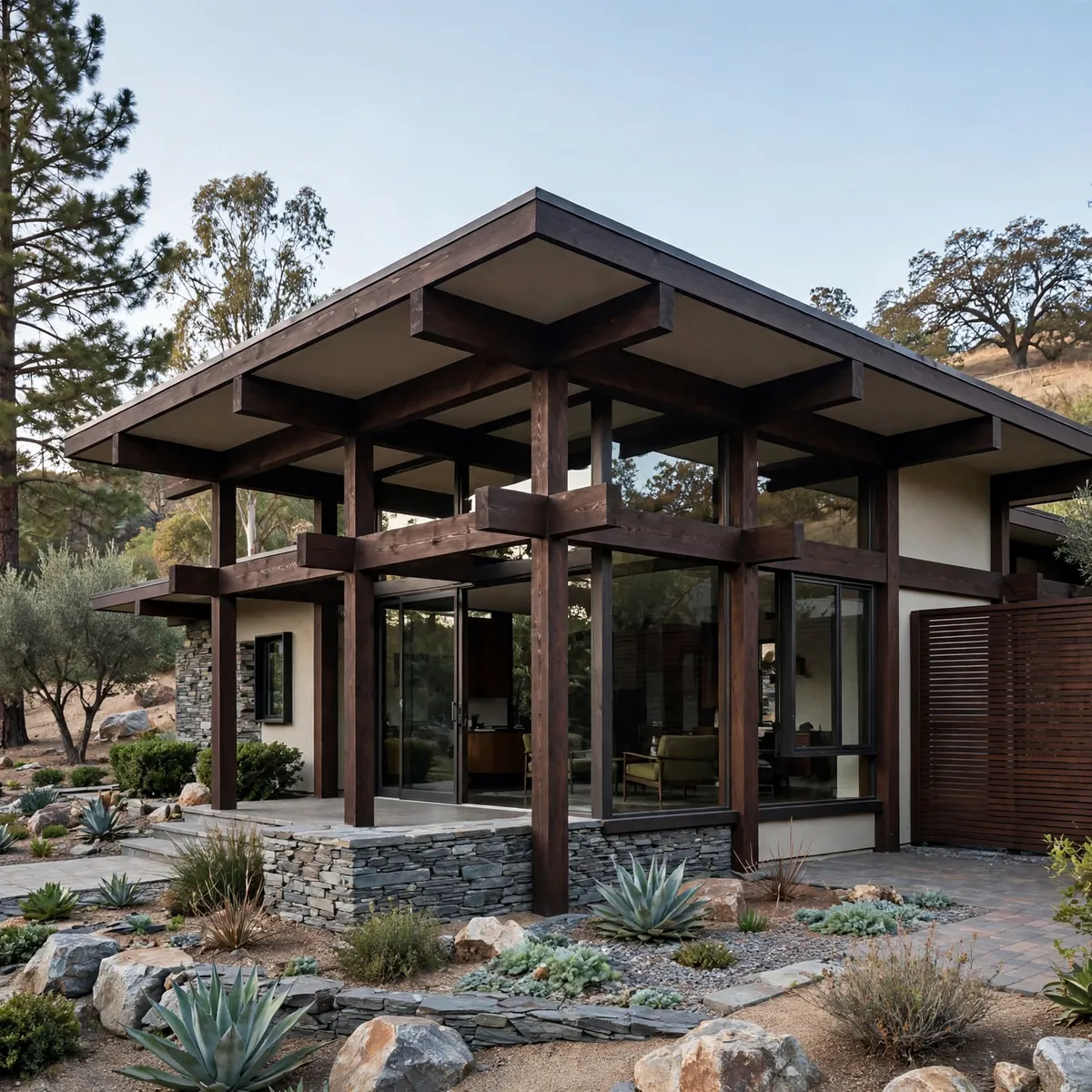
Let the skeleton show. Exposed posts and beams — dark-stained wood or black steel — turn the structure itself into the decoration. The rhythm of repeated verticals against horizontal glass is the heartbeat of the style. And do not fear a curve: a single round porthole window in a long facade adds playful personality — echo it with a round stepping stone or spherical planter.
Quick tips
- Stain beams dark to make them read as graphic lines.
- Repeat beam spacing exactly for a disciplined rhythm.
18. Pick the Iconic MCM Paint Palette
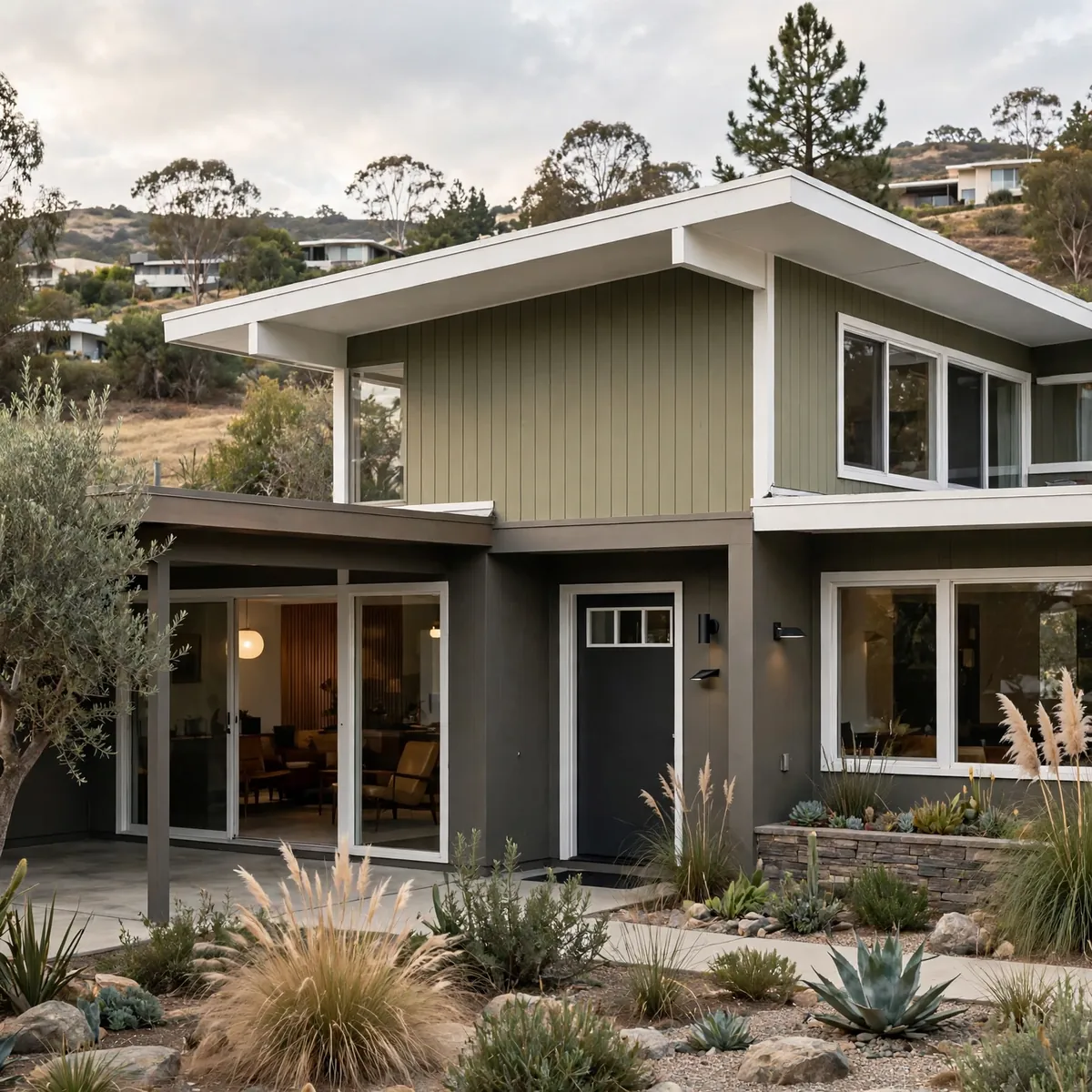
The period palette is muted, earthy, and confident — never bright, never boring. Build yours in three layers:
- Body: warm olive, soft charcoal, muted ochre, or warm gray.
- Trim: crisp white or warm off-white for sharp contrast.
- Accent: one retro pop — burnt orange, teal, mustard — on the door only.
Then stop: a true mid century modern house exterior rarely mixes more than three materials, so let the paint do quiet work and let the materials speak. Restraint is the luxury here.
Quick tips
- Test swatches on the actual facade in morning and evening light.
- Keep the body color muted so wood and stone stay the stars.
19. Keep House Numbers and Fixtures Period-Right
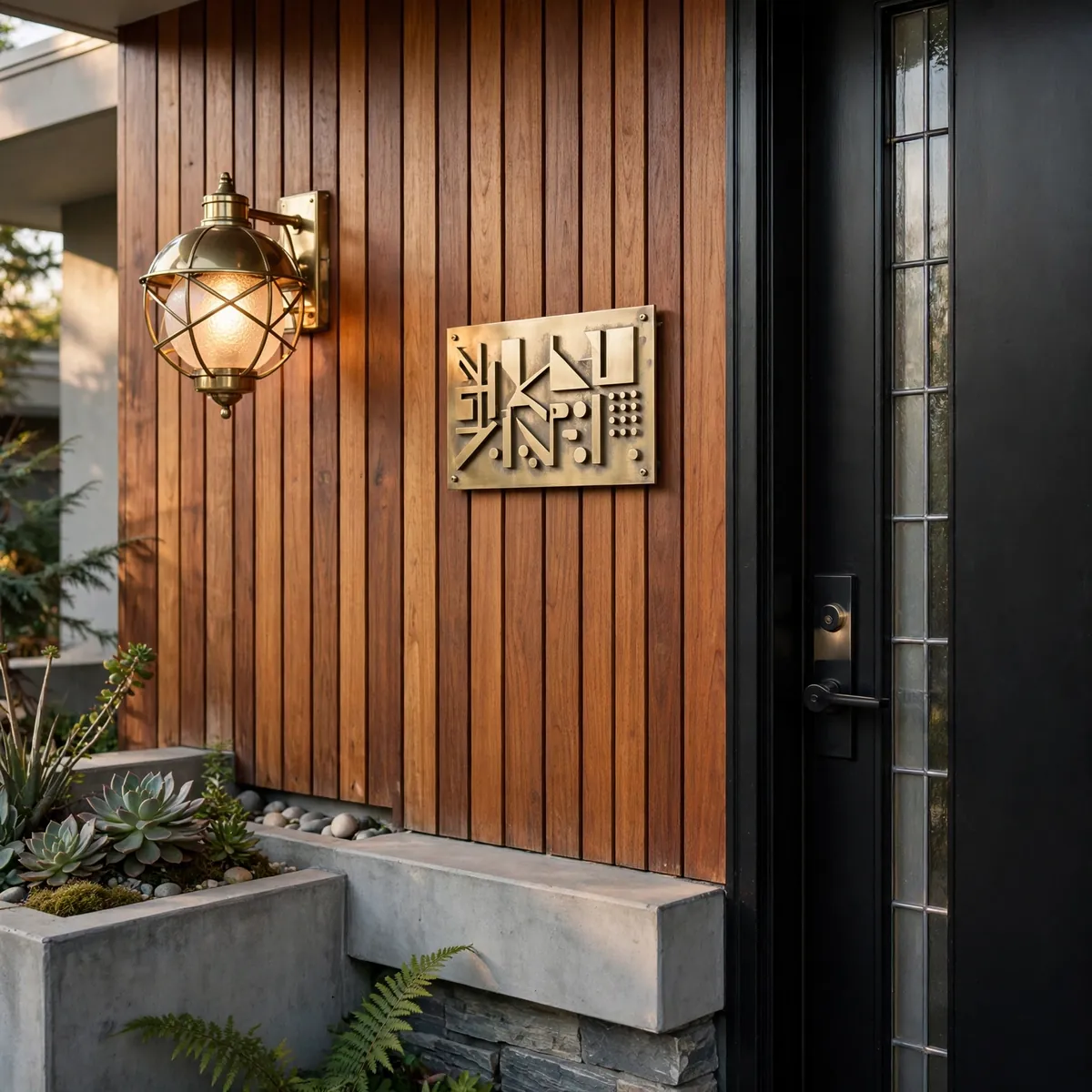
On a mid century modern house exterior, the details seal the deal. Atomic-era house numbers in a clean sans-serif font, mounted on a simple backplate or directly on the wood siding, signal the style instantly. Pair them with a period-correct mailbox and one great wall lantern by the door — brushed brass or matte black — and the entry reads as intentional down to the last inch. Small moves, outsized authenticity.
Quick tips
- Mount numbers at eye level where they catch the entry light.
- Choose one metal finish and repeat it on every fixture.
20. Light the Facade for Magic After Dark
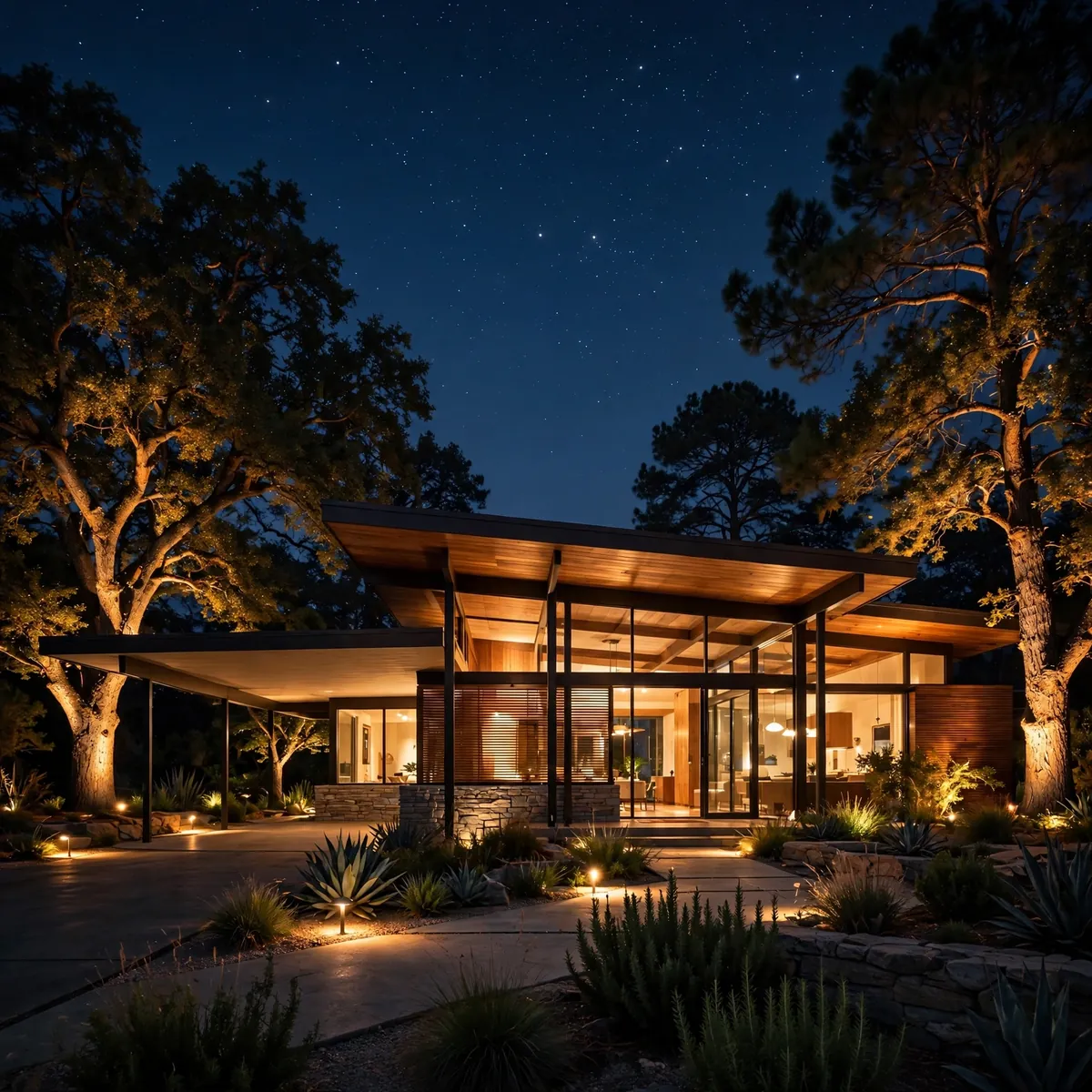
A mid century modern house exterior earns its keep at night, when warm light turns glass walls into glowing volumes and uplights sculpt the trees into silhouettes. Wash the stone accent wall with a soft uplight, graze the wood siding with warm downlights, and let the interior glow do the rest. Keep landscape lighting low and shielded so the stars stay visible and the architecture stays the hero.
Quick tips
- Uplight one feature wall and one specimen tree — that is enough.
- Use fully shielded fixtures to avoid glare from the street.
Frequently Asked Questions
What is a mid century modern house exterior?
A mid century modern house exterior is the outside of a home designed in the modernist style popular from roughly 1945 to 1975. It is defined by low horizontal rooflines, large glass walls, natural materials like wood and stone, open carports, and a strong indoor-outdoor connection to the landscape.
What are the key features of a mid century modern house exterior?
The key features are a low-pitched or flat roof with deep overhangs, floor-to-ceiling glass, clerestory windows, wood siding, a stone accent wall, exposed post-and-beam structure, breeze blocks, a carport, and sculptural landscaping.
How can I get the look without a full remodel?
Start with high-impact, low-cost moves: paint the front door burnt orange or teal, add atomic-era house numbers, install sculptural globe lighting, lay a floating paver path, and simplify the planting. These surface changes transform a plain facade for a fraction of a rebuild.
What colors work best on a mid century modern house exterior?
Muted earth tones work best: warm olive, soft charcoal, muted ochre, and warm gray for the body, with crisp white or warm off-white trim. Wood and stone provide natural color, and one saturated accent — burnt orange, teal, or mustard — belongs on the front door only.
Your Atomic Ranch Awaits
Great mid century design was never about more — it was about the right moves made with conviction. One bold roofline, one honest material, one wall of glass, and a landscape that lets the house breathe: that is the formula that still turns heads seventy years on. Pick the ideas that fit your home and commit to them fully. ♥