The Real Design Rules Behind Cozy Cottagecore Living Rooms
Cozy living rooms feel inviting for a reason: the room gives your eyes somewhere calm to rest, your body somewhere comfortable to settle, and the materials a natural sense of warmth. Cottagecore takes that idea and adds vintage character, botanical patterns, handmade textures, and a gentle connection to the outdoors.
But a cottage-inspired room can quickly become crowded when every surface gets a floral print, antique accent, or woven basket. The better approach is to build comfort in layers. Start with the layout, choose a quiet color story, then add natural materials and a few pieces with personality. These cozy living rooms show how to create that relaxed cottage feeling without making the space look like a themed set. These rules also work in tight quarters — see our guide to small apartment living rooms for a compact-space take.
Start With A Soft, Grounded Color Story
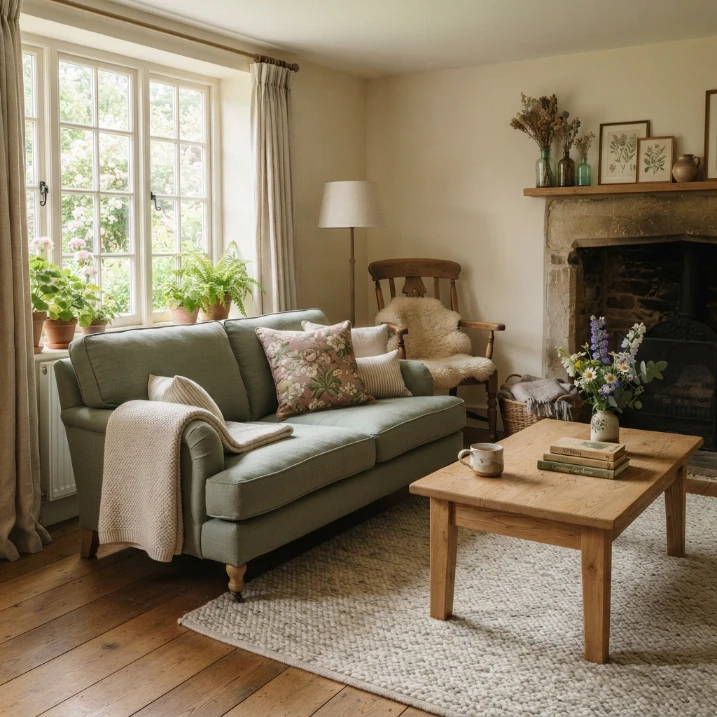
Cottagecore looks most natural when the palette feels borrowed from a garden, old farmhouse, or wooded landscape. Think warm ivory, muted sage, dusty blue, faded rose, oatmeal, clay, and soft brown rather than a collection of unrelated bright shades.
Choose one dominant wall or upholstery color and let the rest support it. A sage sofa can sit comfortably with cream walls, oak furniture, and small touches of faded floral fabric. If you already have colorful artwork or a patterned rug, use its quieter tones to guide the rest of the room. This keeps the room layered while still giving it visual breathing room.
Let The Fireplace Or Focal Wall Anchor The Room
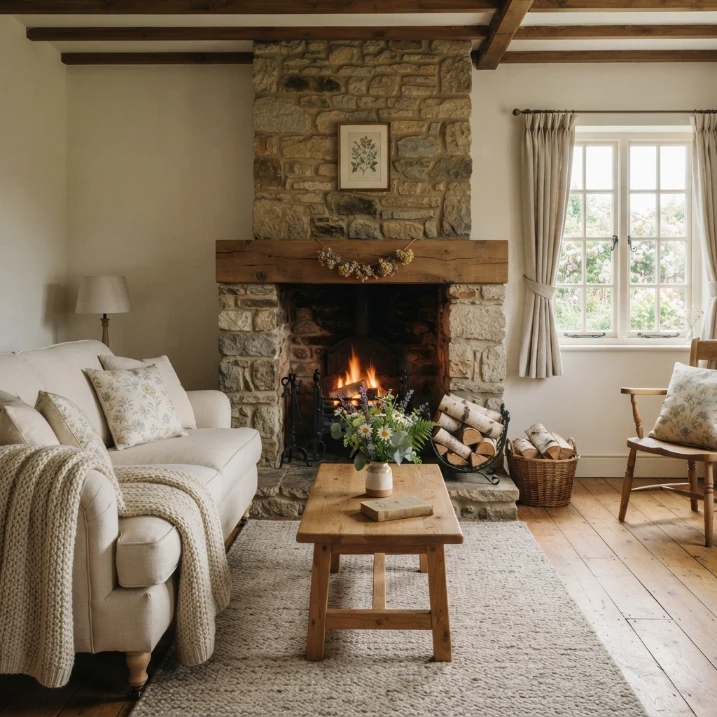
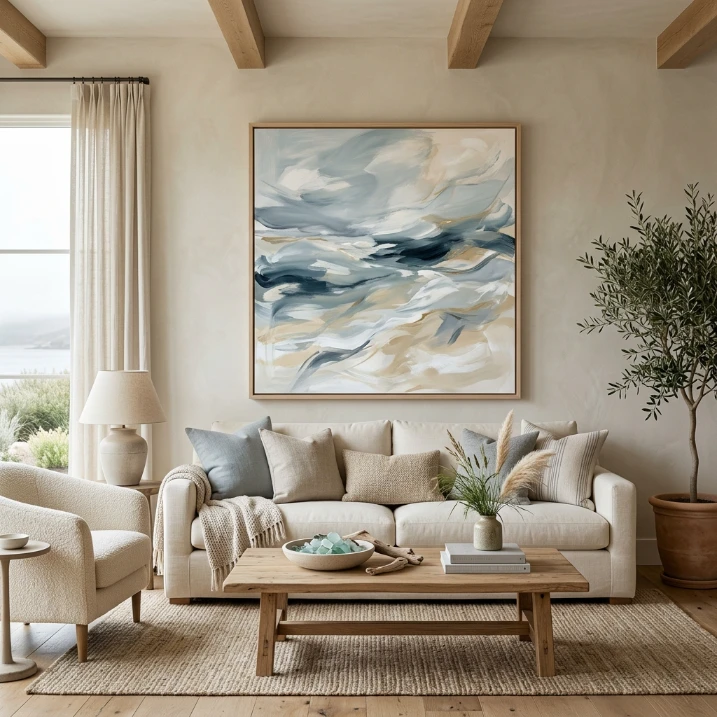
A strong focal point gives cozy living rooms a sense of order. A traditional fireplace is ideal, but the same principle works with a large antique cabinet, built-in bookcase, arched wall treatment, or oversized piece of art.
Keep the largest furniture pieces oriented toward that anchor instead of scattering them around the room. A substantial rug can connect the seating area, while a coffee table gives the center a practical purpose. When the main arrangement is clear, you can add cottage details without the room feeling disorganized.
Choose Upholstery That Looks Comfortable, Not Perfect
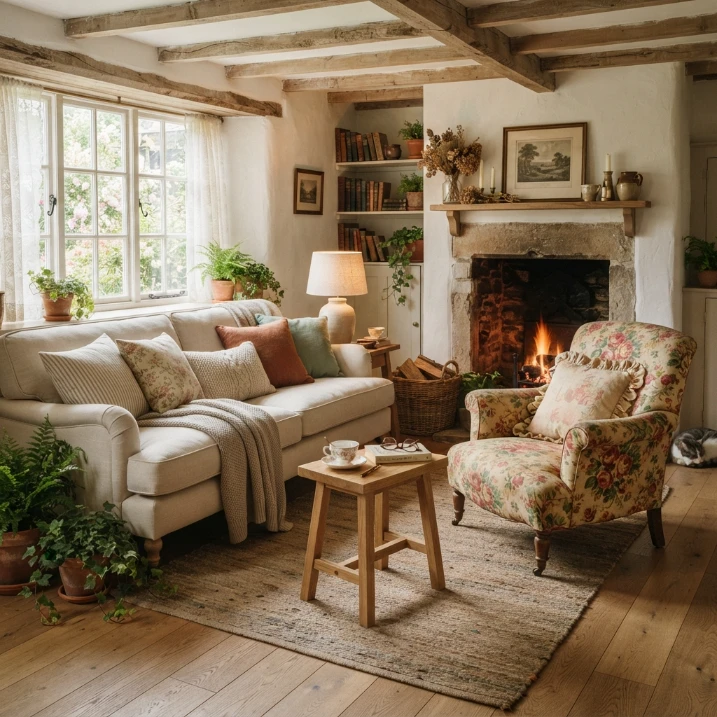
The seating is where the cozy part has to feel real. Slipcovered sofas, rounded armchairs, linen upholstery, washed cotton, and textured cushions all work because they look easy to live with. Avoid making every seat match perfectly. A vintage-style chair beside a simple sofa can create more character than a coordinated furniture set.
For a polished result, repeat one fabric tone or pattern across two or three pieces. For example, a small floral cushion can echo the colors in a nearby footstool or curtain. That little repetition creates connection without turning the room into a pattern catalogue.
Use Floral Patterns In Small, Intentional Doses
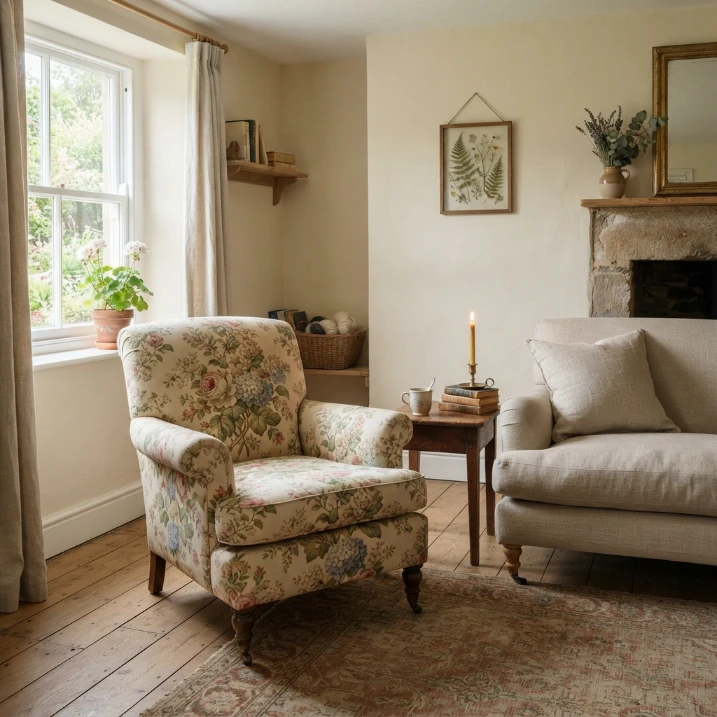
Florals are closely associated with cottage interiors, but they do not need to cover every wall. One floral accent can become the character piece while solid upholstery and simple wood furniture keep the room balanced.
Try a botanical curtain, floral armchair, vintage-inspired rug, or framed pressed-flower artwork. If you use wallpaper, choose a pattern with enough quiet space around it. Smaller botanical motifs often feel more timeless than oversized prints when the room already contains several decorative elements.
Bring In Natural Wood With Visible Character
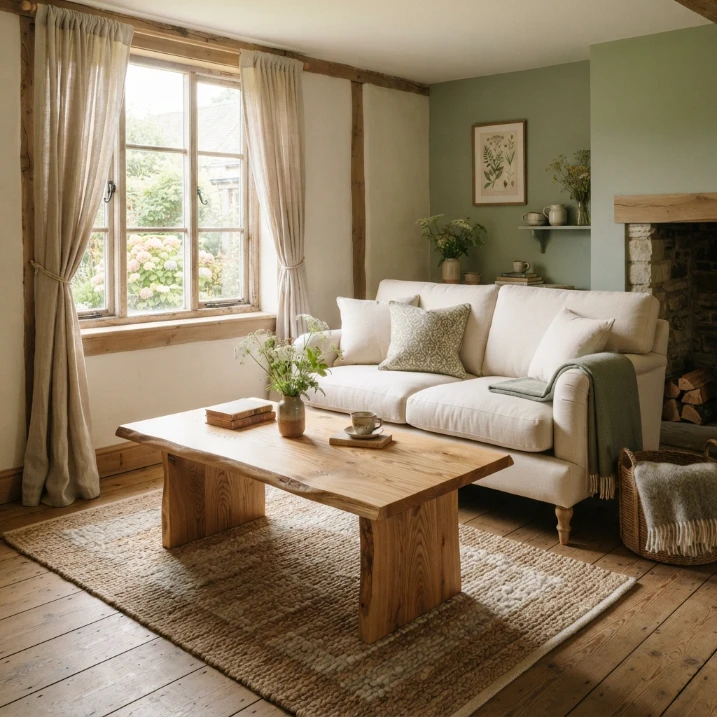
Wood adds the visual warmth that helps cottagecore feel grounded. Look for oak, pine, walnut, or reclaimed finishes with visible grain instead of overly glossy surfaces. A wood coffee table, open shelving, sideboard, or exposed beam can provide enough rustic texture without making every item in the room look farmhouse-inspired.
Mixing wood tones is fine when they share a similar warmth. If one piece is very orange and another is cool gray, the combination can feel accidental. Repeat a warm wood tone at least twice so it reads as part of the design rather than a random furniture choice.
Build A Reading Corner Instead Of Filling Every Wall
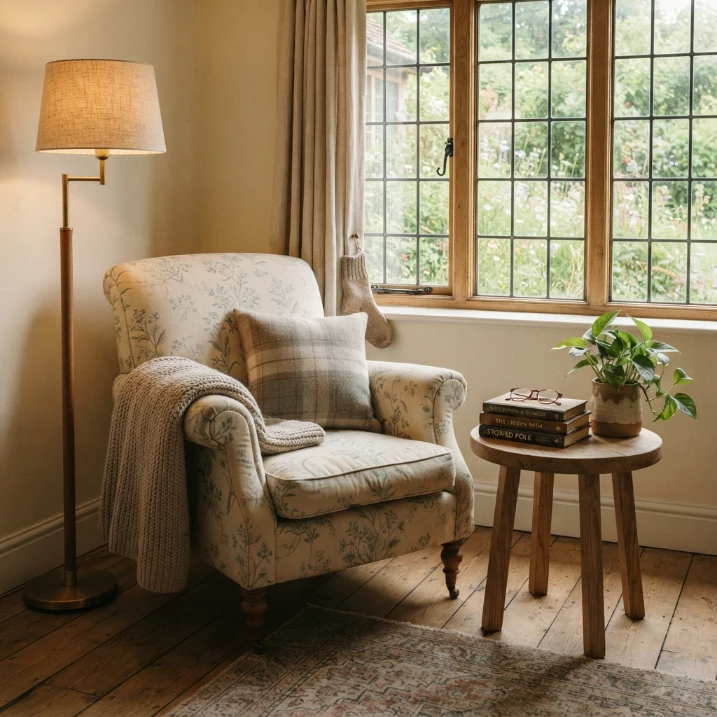
A small reading corner can make a living room feel personal without adding much furniture. Place a comfortable chair beside a narrow table, floor lamp, and compact stack of books. A nearby plant or framed botanical print can complete the area.
The important part is leaving space around it. Cottage-inspired rooms feel relaxed when not every corner has a purposefully styled collection. A little empty space makes the useful pieces feel more special and keeps the room easy to move through.
Layer Linen, Wool, Cotton, And Woven Fibers
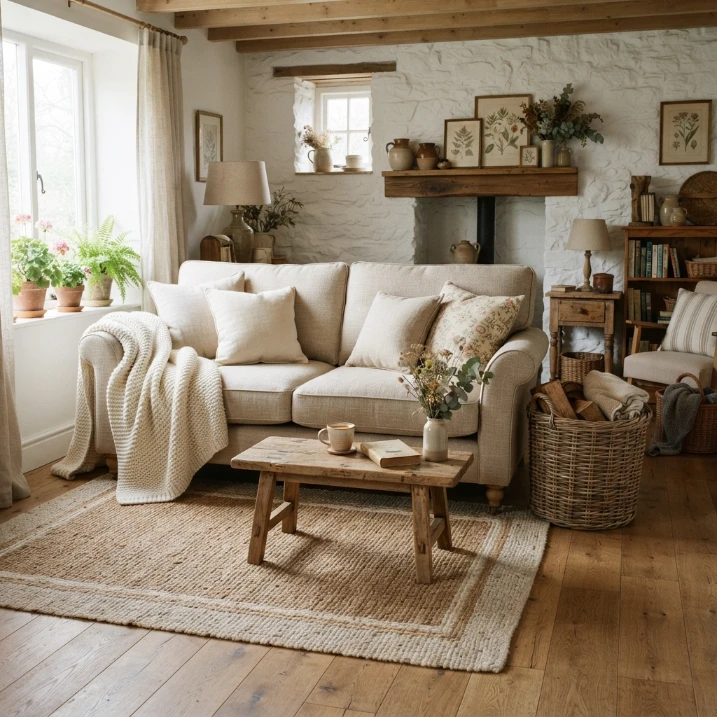
Texture can create more warmth than adding another color. Layer linen curtains with a cotton sofa, a wool or jute rug, a knitted throw, and a woven basket. The materials do not need to match; they simply need to feel comfortable beside one another.
Keep each surface from becoming overloaded. A textured throw is enough on one chair. A pair of cushions may be enough on the sofa. The goal is to make the room inviting to touch, not to cover every piece of furniture with accessories.
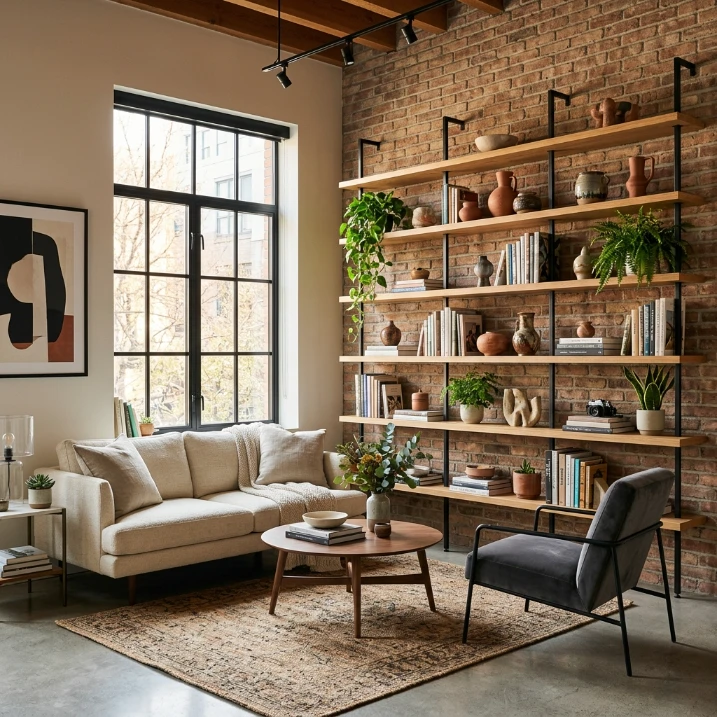
Style Shelves Like A Real Collection
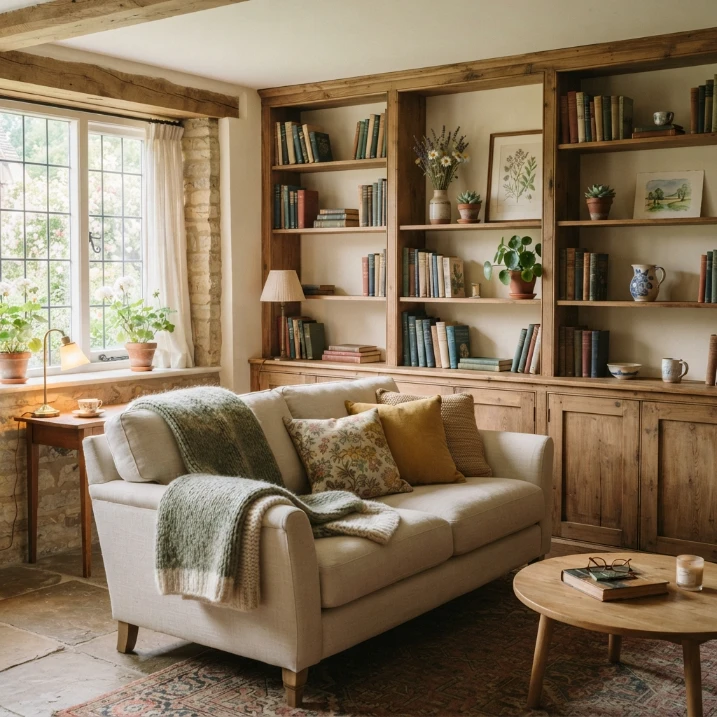
Open shelves can make cottage living rooms feel wonderfully personal when they hold a mix of books, ceramics, small framed art, baskets, and plants. Avoid spacing every object at the same height. Group a few items together, leave visible gaps, and let some shelves remain partially empty.
Use books for genuine personality as well as color and texture. A stack beside a ceramic vase feels more believable than a shelf filled entirely with decorative objects. This is one of the easiest ways to make a room feel collected over time.
Use Plants To Connect The Room With The Outdoors
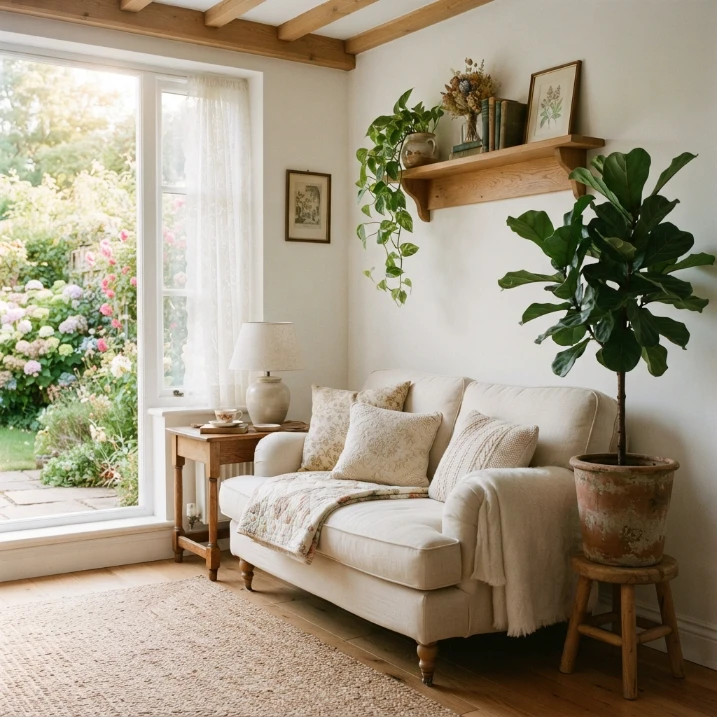
Plants add movement and soften hard architectural lines. Choose varieties that suit the actual light in your room rather than choosing them only because they look cottage-inspired. Trailing plants work well on shelves, while a taller leafy plant can fill an empty corner without adding another piece of furniture.
Keep the planters simple. Terracotta, aged ceramic, stoneware, and woven baskets naturally support a cottage palette. You do not need a plant on every surface; a few well-placed varieties create a stronger connection to nature.
Make Lighting Warm And Layered
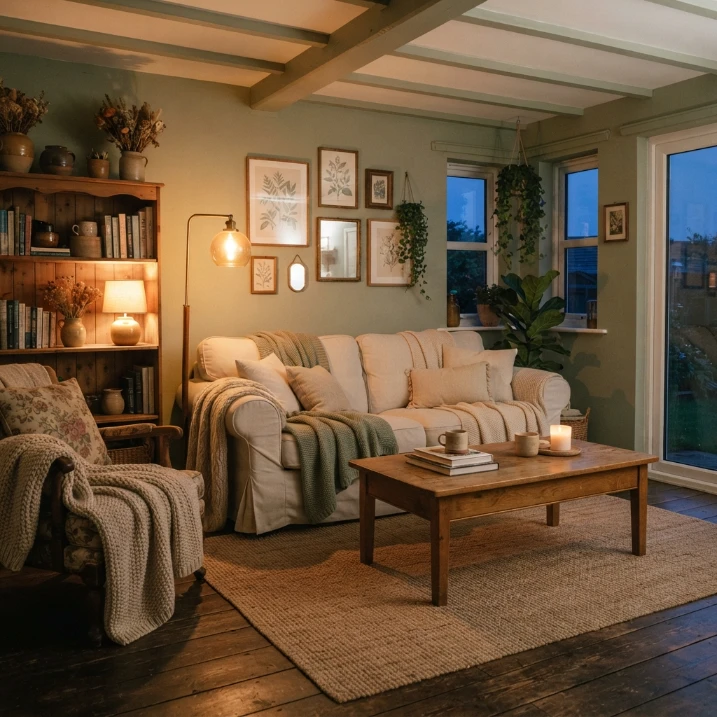
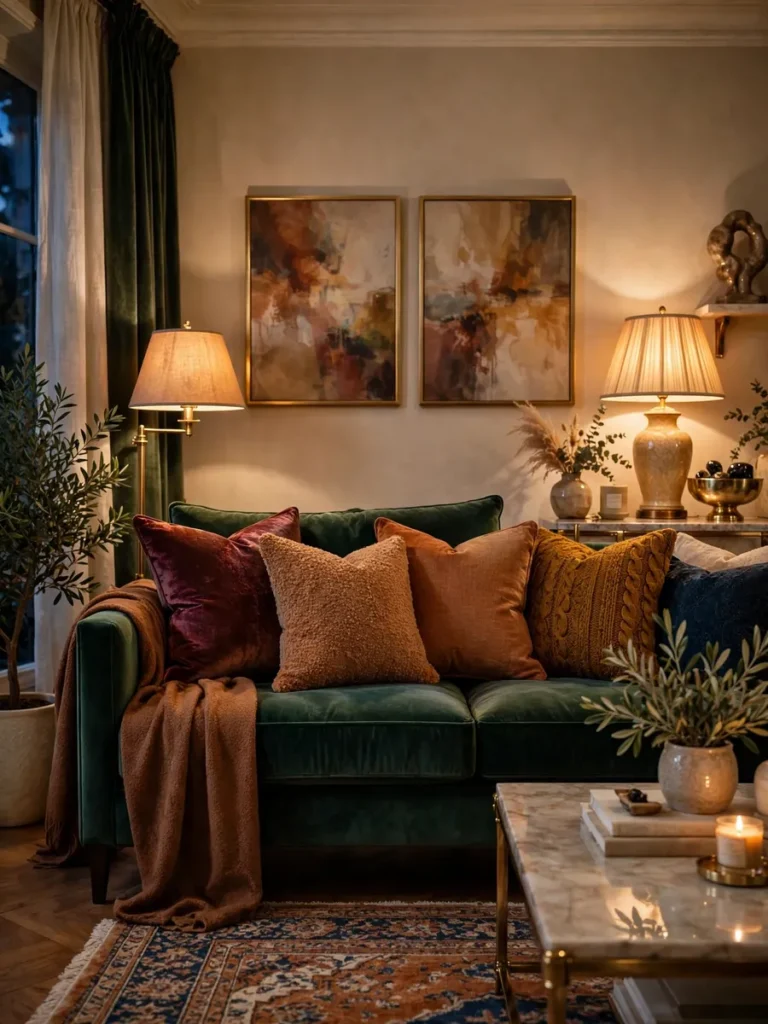
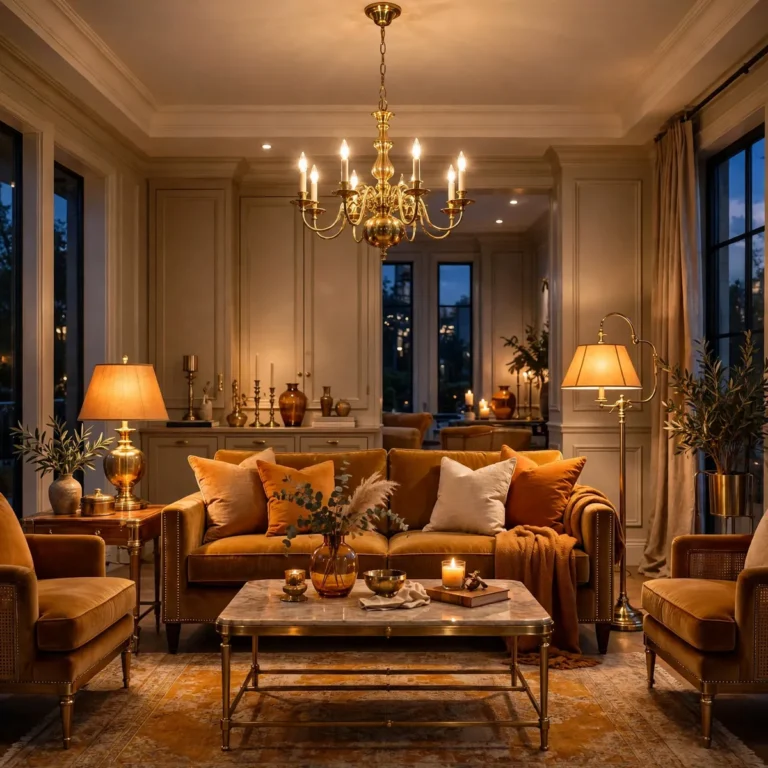
Lighting can completely change how cozy living rooms feel after sunset. Instead of relying on one bright ceiling fixture, combine a floor lamp, table lamp, wall light, or softly shaded pendant. Warm bulbs help wood, linen, and muted colors look richer in the evening.
Place lights at different heights so the room has several gentle pools of illumination. A lamp beside the sofa can support reading, while a smaller light on a shelf can highlight books or artwork. Keep the brightest light away from the center of the room whenever possible.
Mix Vintage Pieces With Simple Modern Basics

A room made entirely from vintage-looking furniture can start to feel like a period set. Mixing old and new keeps the style comfortable for everyday life. Pair a traditional wood side table with a clean-lined sofa, or place an antique mirror above a simple console.
Choose vintage details for character rather than quantity. One old trunk, brass lamp, framed landscape, or carved chair can provide enough history for the room. The surrounding pieces should give that special item room to stand out.
Create Coziness With A Rug That Defines The Seating Area

A rug is one of the easiest ways to make a living room feel connected. Choose a size large enough for at least the front legs of the main seating to sit on it. This makes the furniture read as one conversation area instead of separate pieces floating around the room.
For cottagecore, faded patterns, subtle checks, natural fibers, and muted vintage-inspired motifs work particularly well. If your upholstery is patterned, choose a quieter rug. If your furniture is mostly solid, the rug can carry more visual interest.
Let Windows Keep Their Connection To Nature
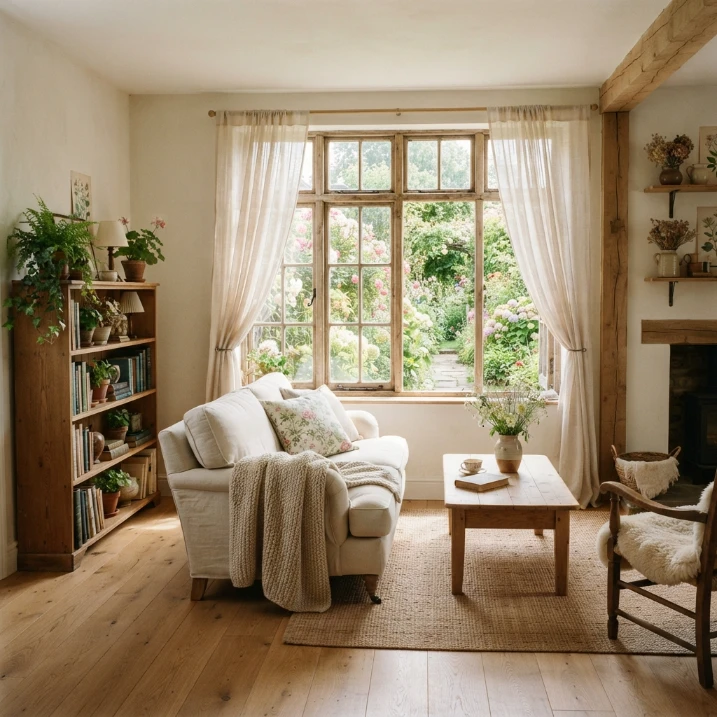
Natural light is especially valuable in cottage-style spaces because it prevents warm wood and layered fabrics from becoming visually heavy. Use sheer curtains, lightweight linen panels, or simple Roman shades when privacy allows.
If the window looks toward a garden, trees, or even a small balcony, avoid blocking that view with oversized furniture. The outdoor scene can act like living artwork and make the room feel more connected to the landscape.
Keep Decorative Objects Useful Or Meaningful
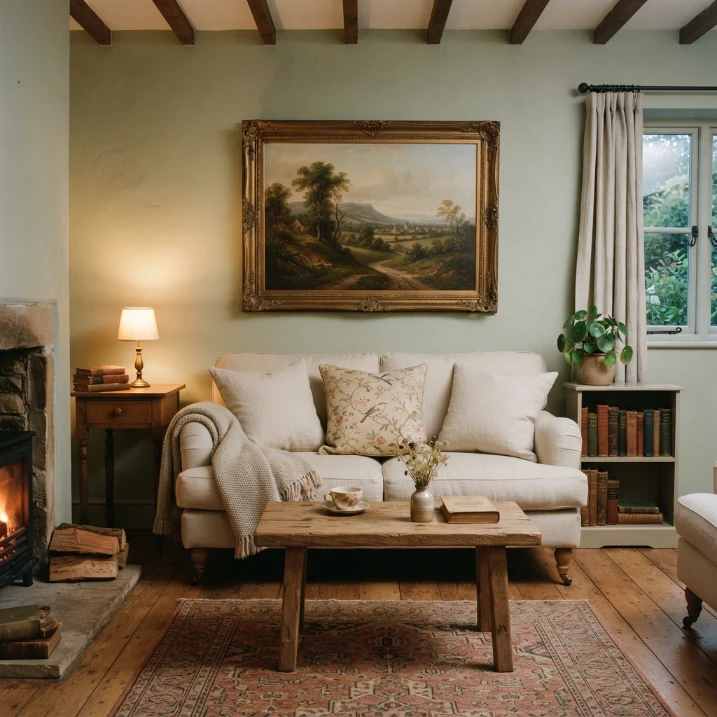
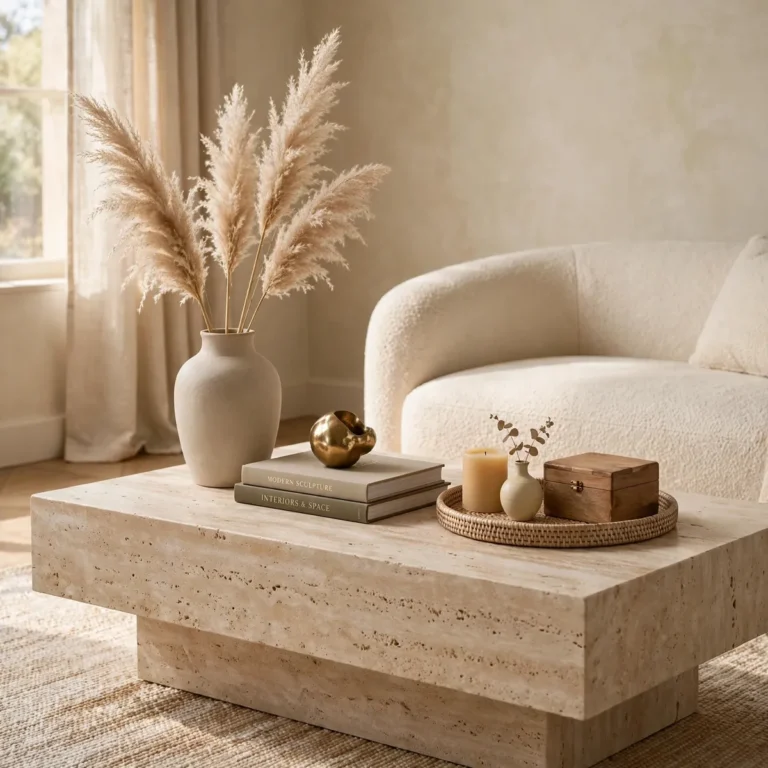
The strongest cottagecore rooms usually contain objects that suggest a life rather than a shopping trip. A ceramic bowl can hold keys, a basket can store blankets, and a vintage cabinet can hide everyday items. Useful pieces make decorative styling feel natural.
Before adding another accessory, ask whether it adds texture, function, memory, or a useful contrast. If it does none of those things, leave the surface open. That small pause is often what keeps cozy living rooms from becoming cluttered.
Make A Small Living Room Feel Cottage Cozy
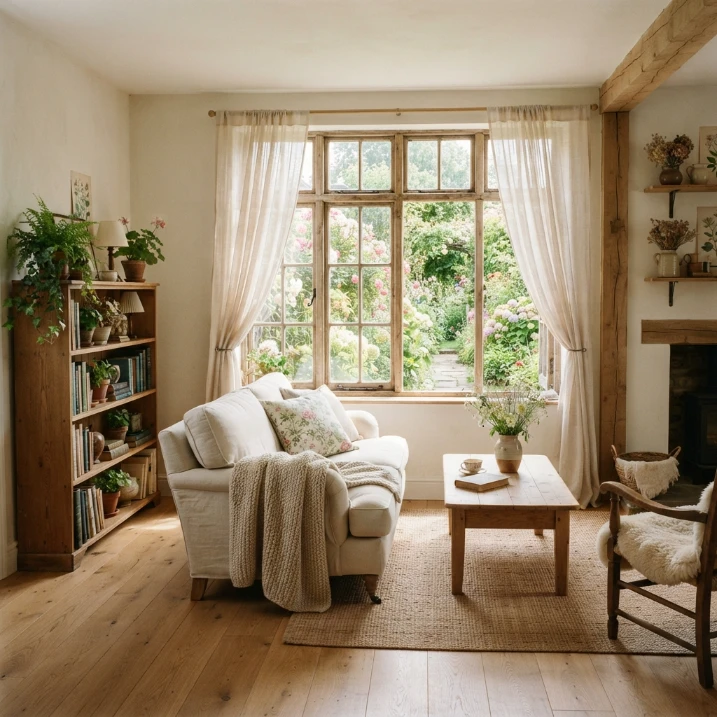
You do not need a large farmhouse to create this look. In a smaller room, choose furniture with visible legs, use one main seating arrangement, and take advantage of vertical storage. A narrow bookcase or wall-mounted shelves can bring in the collected feeling without consuming much floor space.
Keep the palette light if the room receives limited daylight. Add warmth through wood, woven materials, soft lighting, and one or two vintage accents instead of filling the space with decorations. For another small-space approach, keep storage vertical and seating to one main arrangement.
Give The Room One Memorable Personality Piece
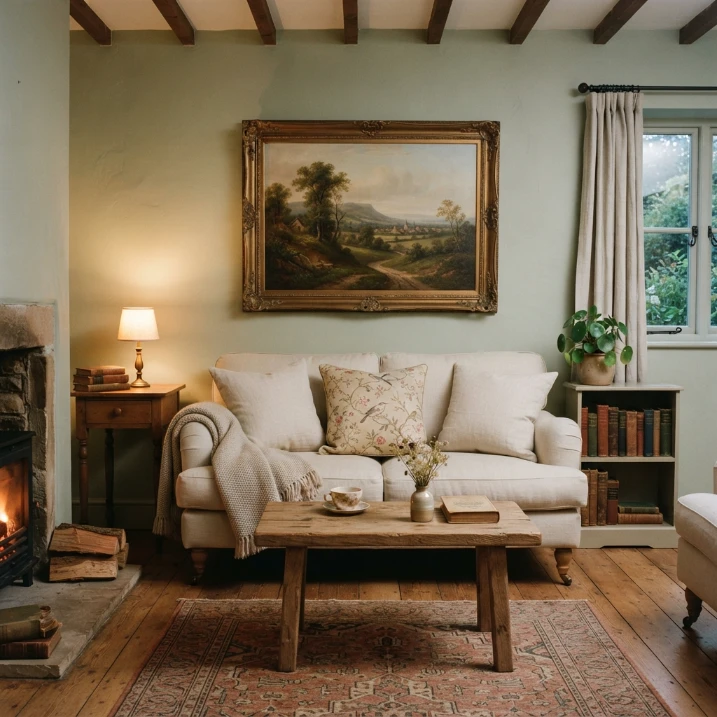
Every comfortable room benefits from one detail that makes it recognizable. It could be an old landscape painting, a curved antique mirror, a patterned chair, a dramatic botanical wallpaper panel, or a beautifully worn cabinet.
Build the rest of the room around that piece rather than competing with it. This approach gives you the charm of cottage decorating while maintaining a clear visual hierarchy. If you prefer a more expressive living room, our guide to vibrant living rooms offers another way to use a strong focal element.
The Final Formula For Cozy Cottagecore Living Rooms
The most successful cozy living rooms are not built by adding as many cottage details as possible. They work because the major choices support one another. A calm palette makes patterned fabric easier to use. Natural wood gives soft upholstery more weight. A clear furniture layout makes vintage accessories feel intentional. Layered lighting makes the same room feel intimate at night.
Start with comfort, then add character slowly. Choose materials you enjoy touching, colors that make the room feel restful, and a few meaningful pieces that give the space its own story. When every addition has a purpose, cottagecore can feel warm, personal, and timeless instead of crowded or overly themed.