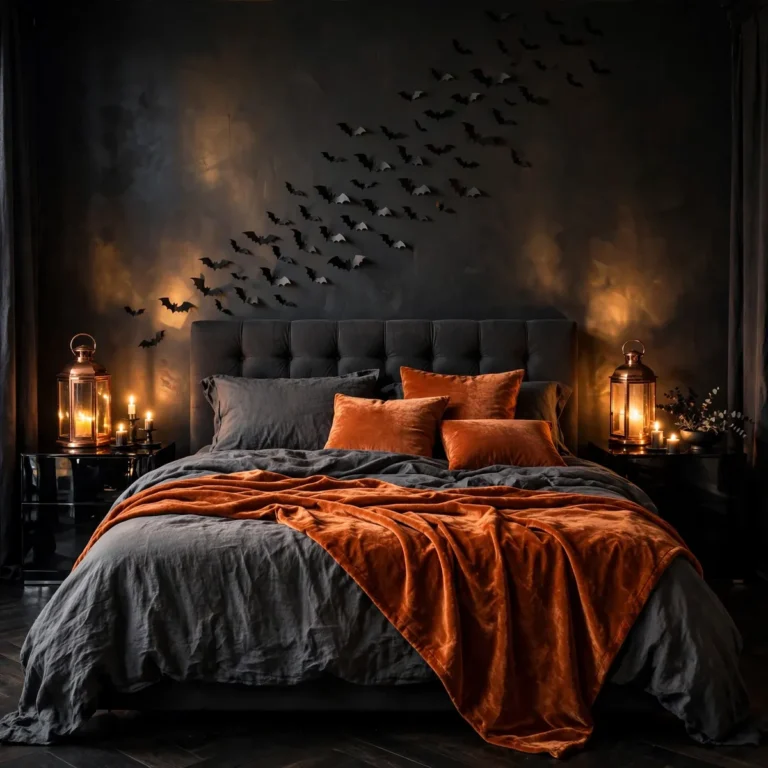
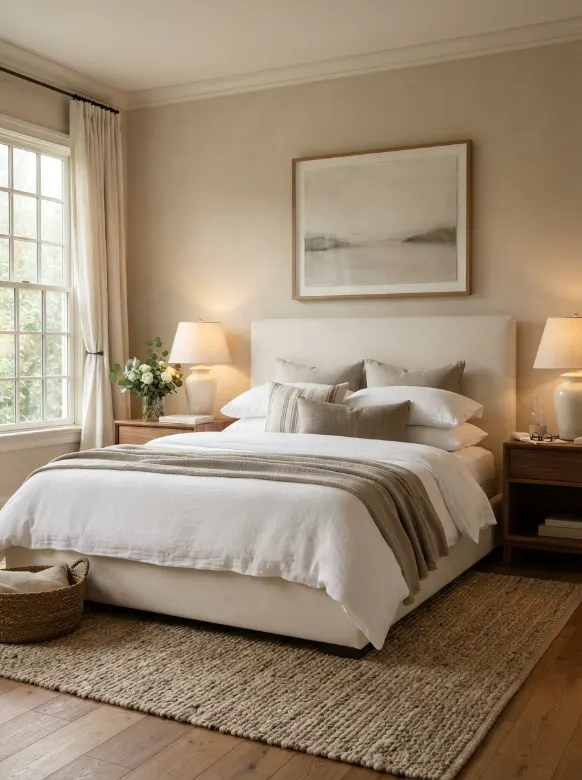
23 Dramatic Black Bedroom Ideas for a Luxurious Sleep Sanctuary
Black bedroom ideas work best when black is treated as a backdrop, not the whole room: one or two dark surfaces, warm materials like wood and brass, layered lighting, and pale bedding keep the look luxurious instead of gloomy. A matte black accent wall behind the bed, charcoal bedding, and warm 2700K lamps are the simplest starting point, and the 23 ideas below cover every version, from a single painted wall to a full cocoon room, plus renter-friendly options that need no paint at all.
Black walls make a bedroom feel private and cocoon-like, which suits sleep, and they make everything placed against them look sharper: white bedding looks crisper, brass glows warmer, and artwork pops. If black feels like a big leap, our pink bedroom ideas show how a bold color can still feel soft and restful, and the same layering rules apply here, just with a darker base.
Key Takeaways
Q: Will a black bedroom feel too dark?
A: Not if you layer light and texture. Three light sources, warm bulbs, and pale bedding keep a black room cozy rather than cave-like.
Q: What is the best black paint for a bedroom?
A: A warm soft black such as Sherwin-Williams Iron Ore or Benjamin Moore Black Beauty in a matte finish suits most bedrooms, while a true black like Tricorn Black suits large, bright rooms.
Q: How much black is too much?
A: In a small room, limit black to one wall, the bed, or the trim. In a large room with good light, two walls or a full cocoon treatment can work.
1. How Do I Start With a Matte Black Accent Wall?
Paint the wall behind the bed in a matte black and leave the other three walls pale. The dark wall frames the bed like a headboard and limits the risk to one surface you can repaint in an afternoon.
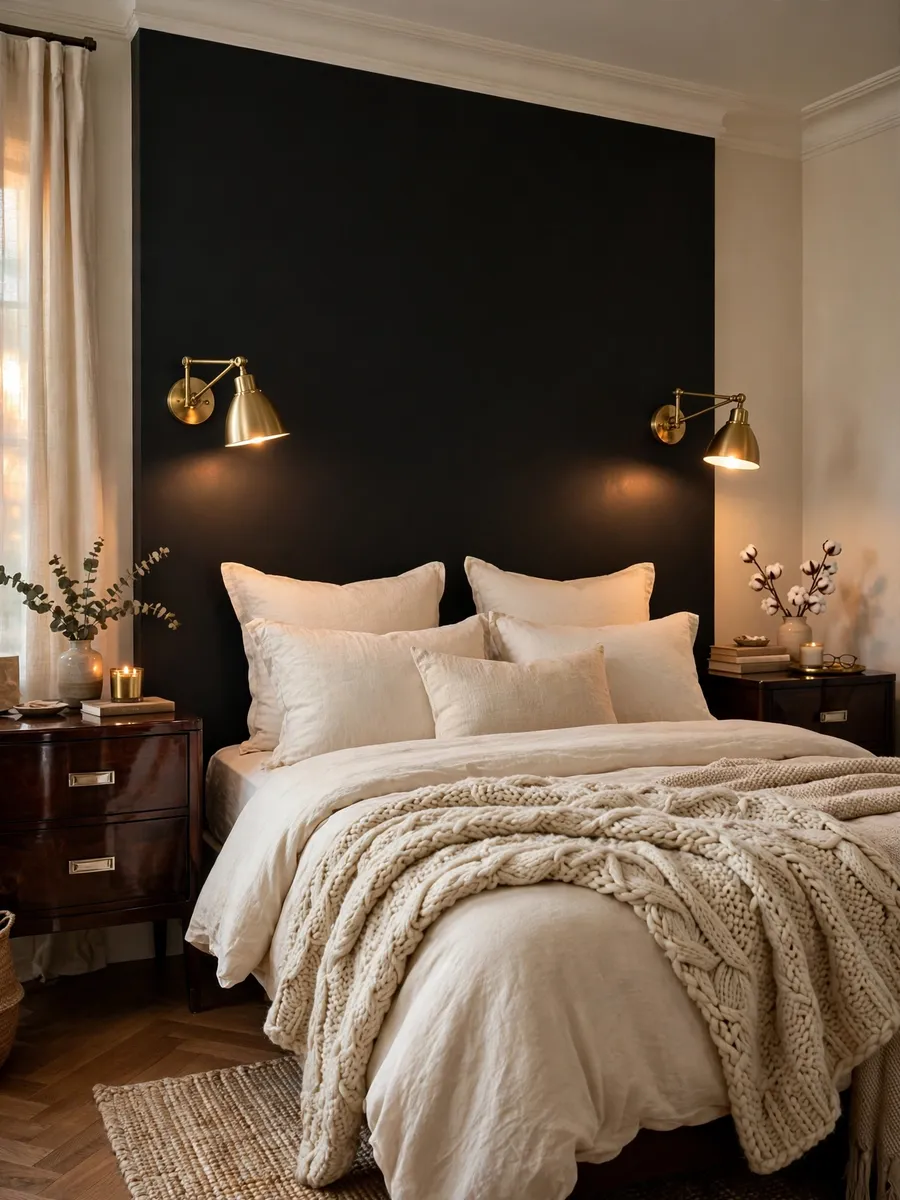
Matte hides bumps and reads as soft velvet in low light, while cheap semi-gloss highlights every flaw. For example, one couple painted only the headboard wall, added two brass sconces, and kept cream linen bedding, and the room felt hotel-calm.
Quick tips:
- Paint the wall behind the bed, never the wall opposite the window.
- Use a warm black in north-facing or low-light rooms.
2. Which Black Paint Finish Should I Choose?
Choose matte for bedroom walls, eggshell or satin where you need wipe-clean durability, and high gloss only on trim, doors, and cabinetry. The finish changes how black behaves in light more than the shade itself does.
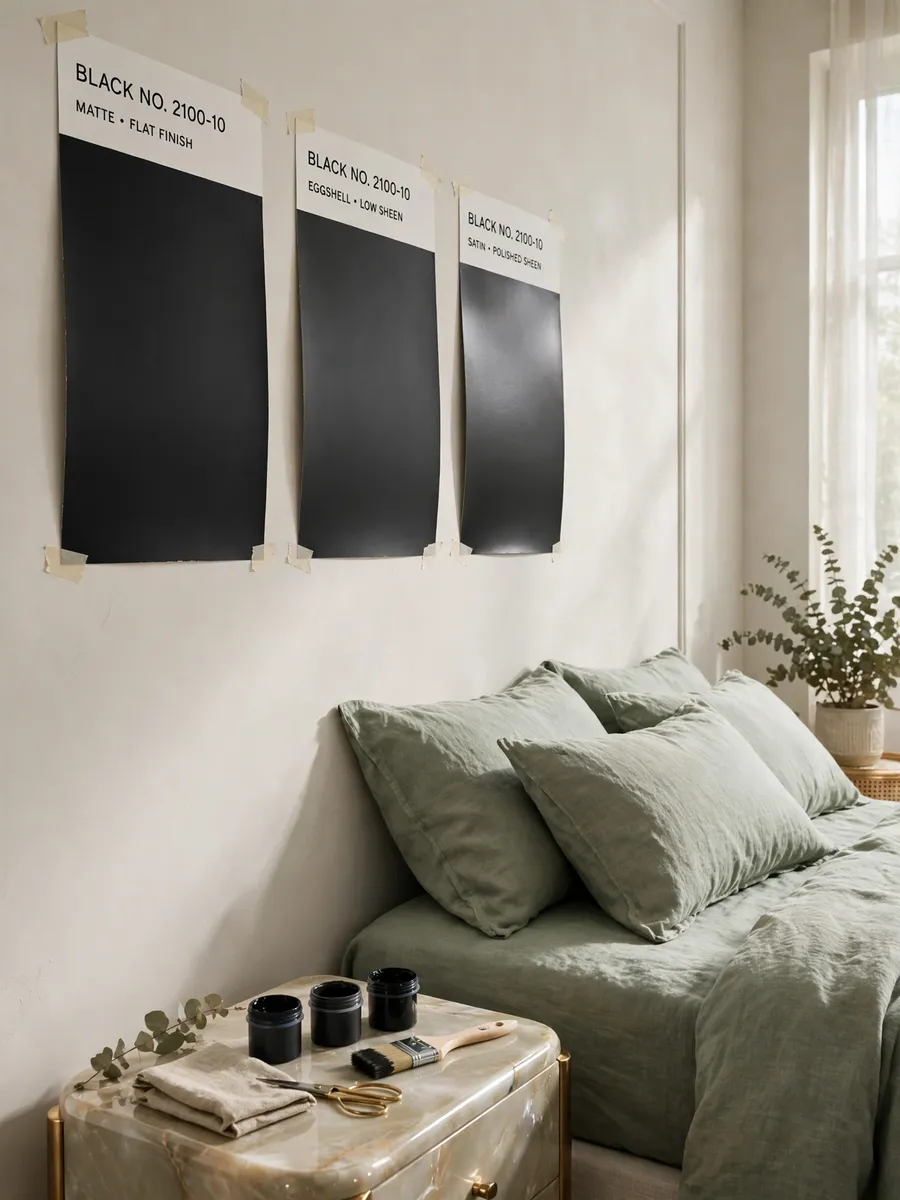
Paint makers publish a light reflectance value, or LRV, from 0 to 100 for every color. That is why a soft black is the safer pick for a small or dim bedroom.
| Finish | Look | Best for | Watch out for |
|---|---|---|---|
| Matte / flat | Velvety, soft, no shine | Bedroom accent walls | Shows fingerprints and scuffs |
| Eggshell | Soft glow, slight sheen | All four walls, low-light rooms | Shows roller marks if rushed |
| Satin | Warm sheen, reflects some light | Kids’ rooms, high-traffic walls | Less of that flat, moody depth |
| High gloss | Mirror-like shine | Trim, doors, wardrobes | Highlights every wall flaw |
For example, testing three 2-foot squares of Iron Ore, Tricorn Black, and a soft charcoal on one wall for three days shows which shade stays warm at night, before you buy a gallon.
Quick tips:
- Never buy the gallon until you have lived with a sample for two nights.
- Matte hides flaws; satin survives wiping.
3. How Do I Add Gold Without Going Over the Top?
Use gold and brass as jewelry, not furniture: sconces, drawer pulls, a mirror frame, and one lamp. Small warm-metal touches cancel the coldness of black and make the whole room read expensive.
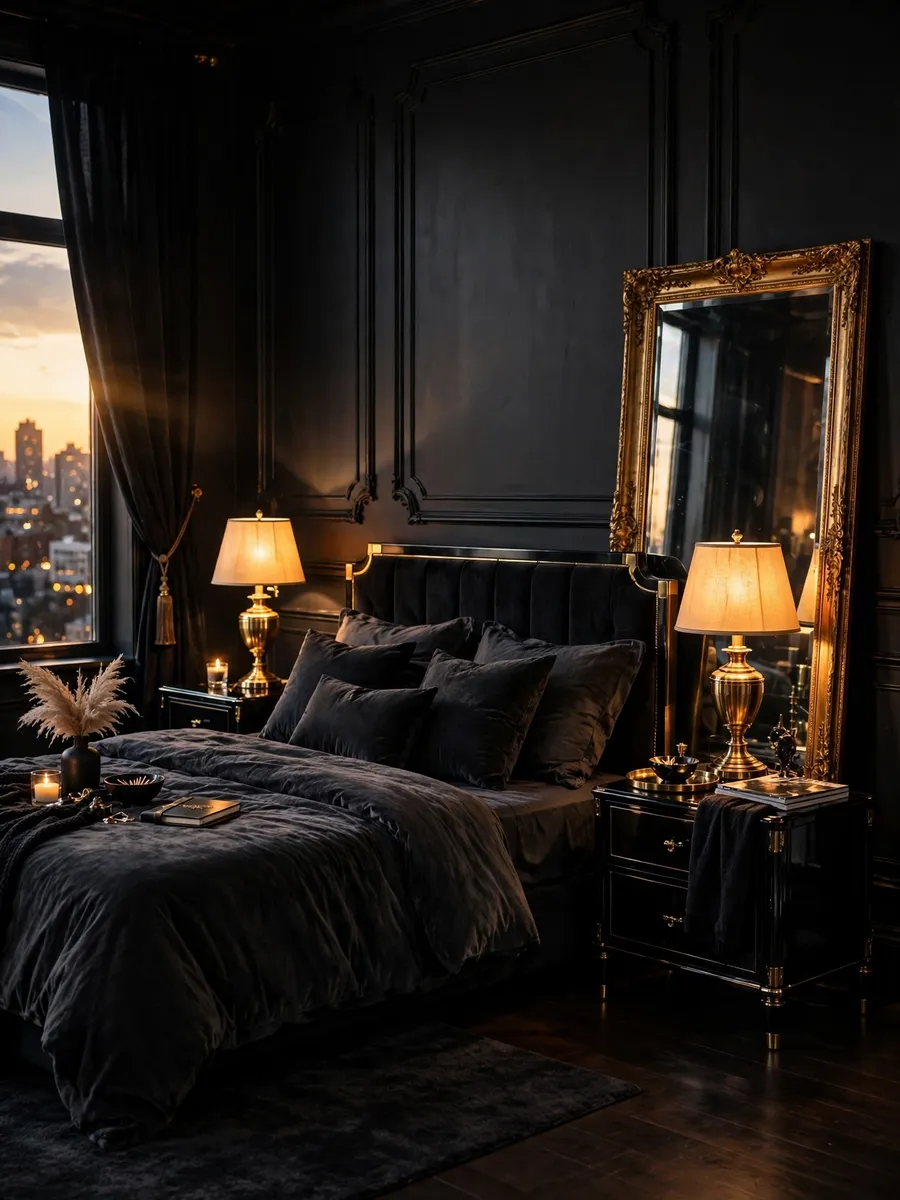
Brass carries its own visual warmth, so it works against black in a way chrome and silver do not. For example, swapping plain black drawer pulls for brushed brass and adding a brass picture light made black walls look intentional instead of stark, for under a hundred dollars.
Quick tips:
- Repeat the same metal in at least three small places.
- Lean a gold-framed mirror against the wall for a relaxed look.
4. Can Black and White Really Feel Cozy?
Yes, when white does the softening and black does the framing. Crisp white bedding, pale curtains, and a light rug against black walls create the highest contrast in the house, and texture is what keeps it cozy instead of stark.
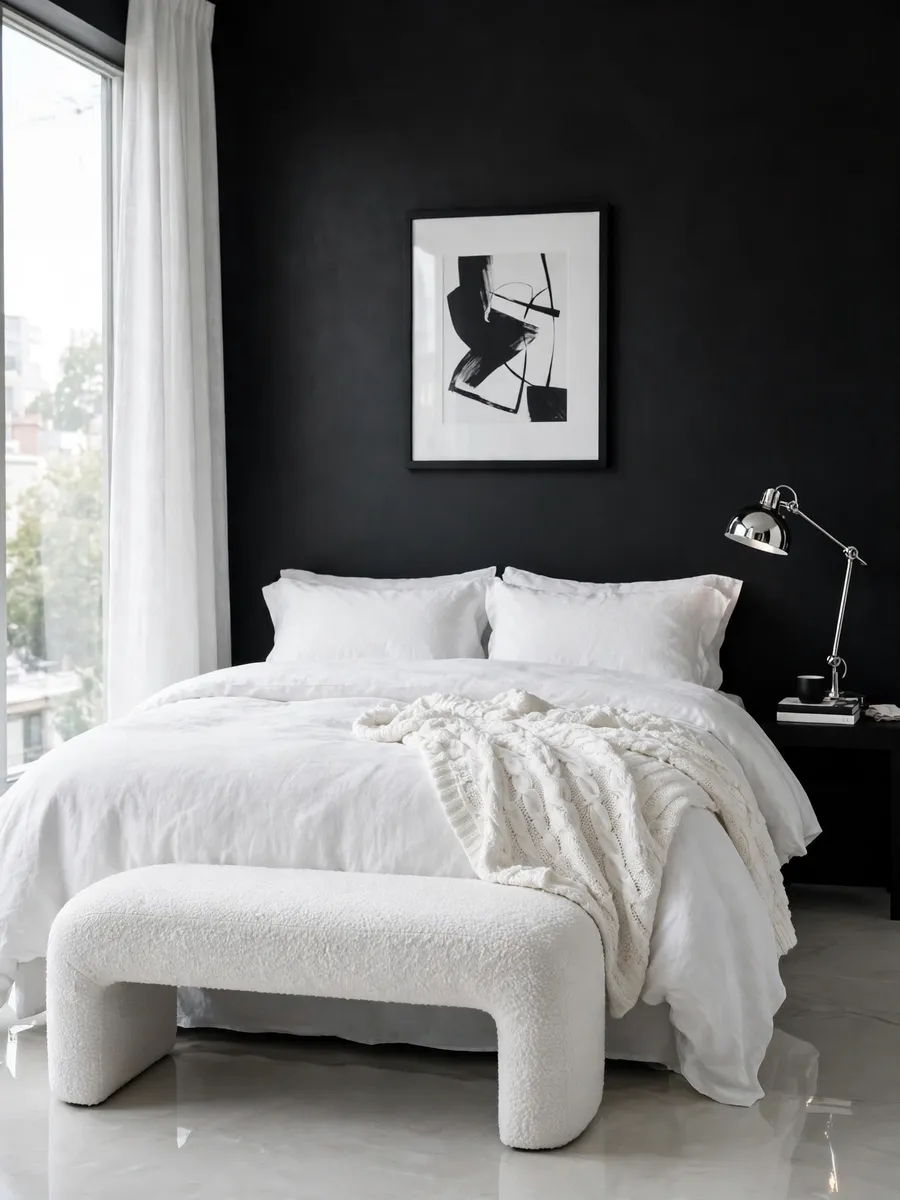
Let white cover the surfaces you touch: a washed linen duvet, chunky knit throw, and soft wool rug. For example, a white bouclé bench at the foot of the bed and a black-framed abstract print above it made one black-and-white bedroom feel like a gallery suite, not a chessboard.
Quick tips:
- Put texture on every white surface: linen, knit, wool, bouclé.
- Keep the ratio near 60 percent light, 30 percent black, 10 percent accent.
5. What If I Love Black Furniture but Not Black Walls?
Keep the walls pale and let black furniture carry the drama. A black bed frame, dresser, and nightstands ground a light room, anchor the layout, and give you the moody look with zero paint and zero commitment.
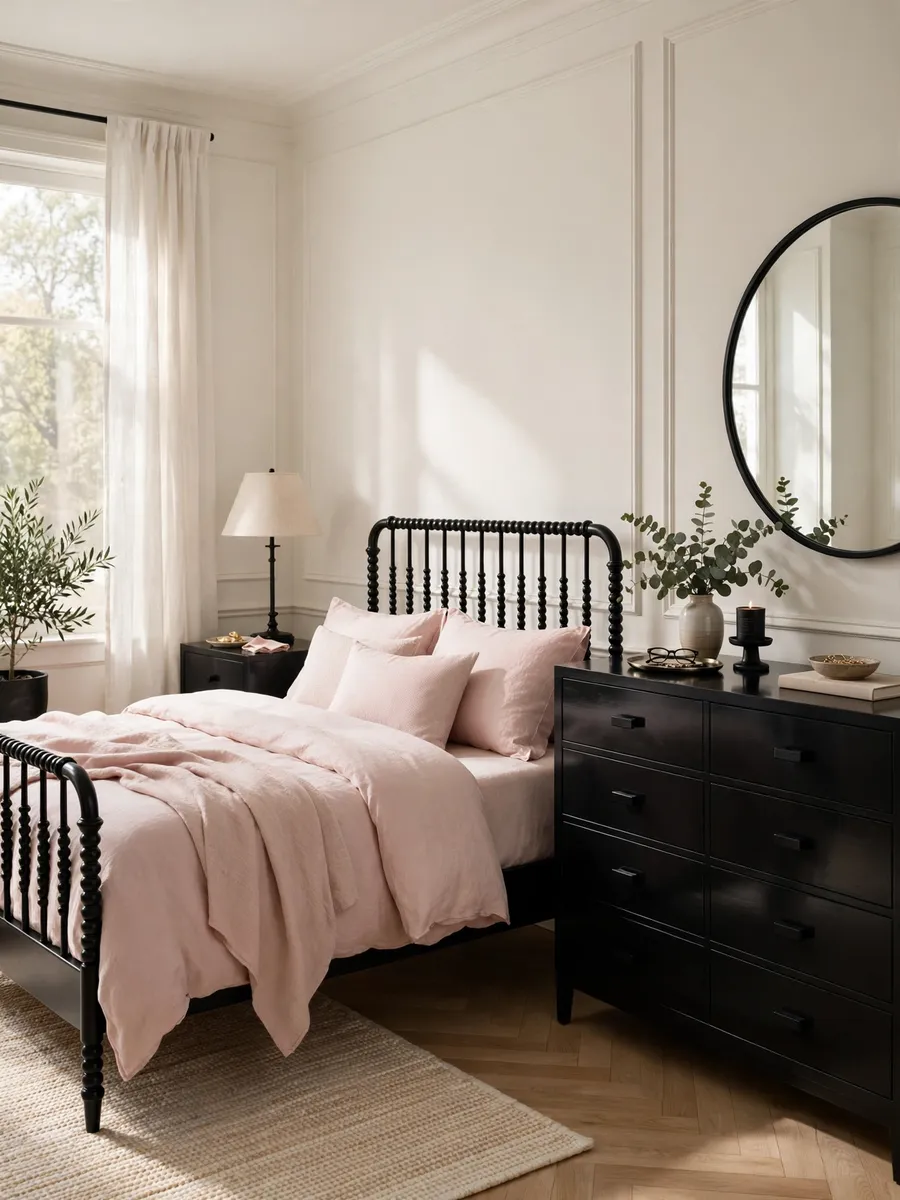
Black furniture works with almost any wall color you already have, which makes it the easiest entry point into this palette. For example, a renter who could not paint swapped a pale pine bed for a black spindle bed, and the room gained the same depth as a painted accent wall.
Quick tips:
- Repeat black in at least three furniture pieces so it looks planned.
- Pair black furniture with warm bedding to soften its weight.
6. Should I Paint the Ceiling Black?
Paint the ceiling black only with 9-foot ceilings or higher. A black ceiling wraps a tall room in warmth but feels oppressive in a low one.
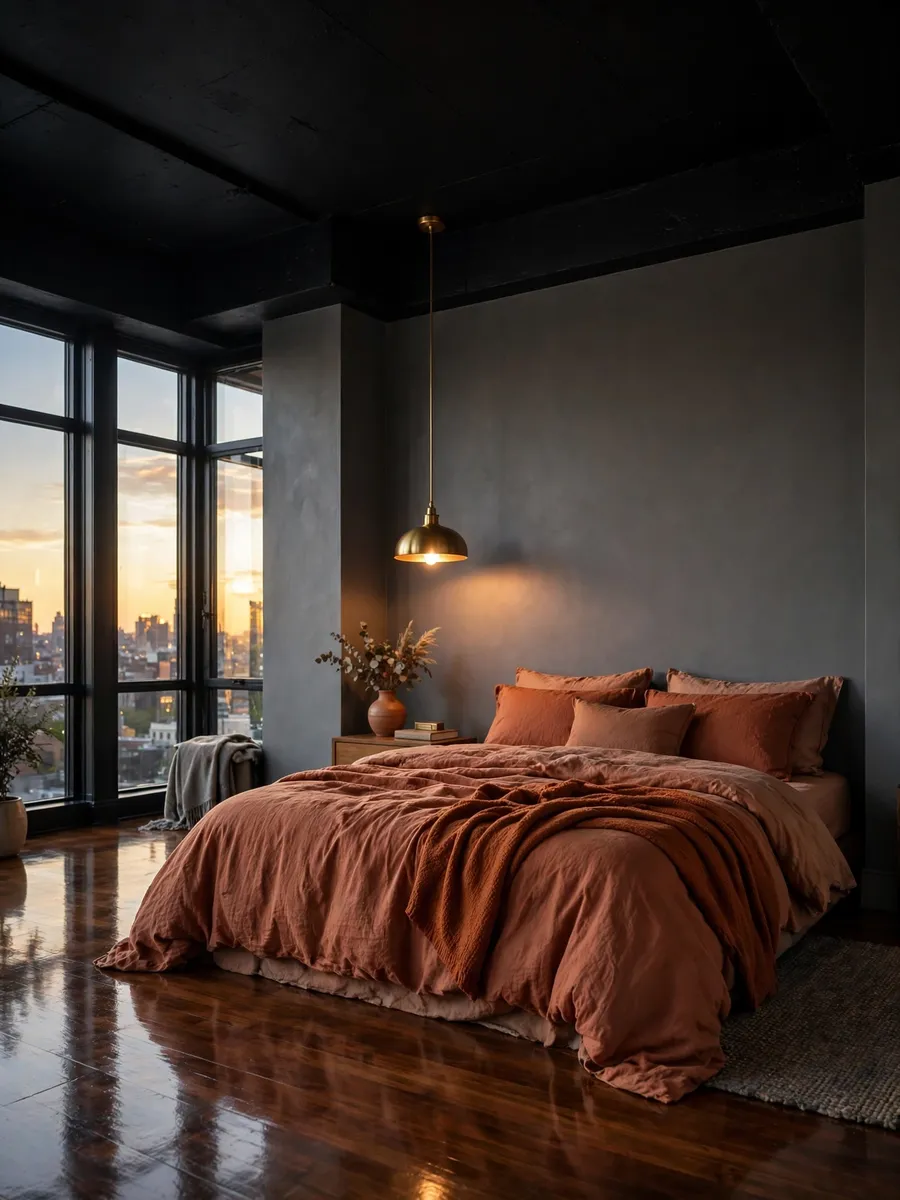
In a tall bedroom, a black ceiling makes the proportions feel intimate instead of echoing — one of the boldest black bedroom ideas — and it hides ceiling flaws the way matte black hides wall flaws. For example, a loft bedroom with a 10-foot ceiling, a black ceiling, terracotta bedding, and one brass pendant feels like a private cocoon at night.
Quick tips:
- Needs 9-foot ceilings or a sloped ceiling to work.
- Keep walls lighter than the ceiling so the room does not feel lidded.
7. Is a Black Velvet Headboard Worth It?
Yes, because velvet solves black’s biggest problem: flatness. A tall black velvet headboard adds softness, absorbs sound, and gives the bed a padded, upholstered presence that paint alone cannot deliver.

Velvet catches light differently from every angle, so a black velvet headboard never reads as one flat slab of darkness. For example, a plain black wall behind a bed felt unfinished until a tall black velvet headboard went in, and the wall, bed, and cushions suddenly read as one composition.
Quick tips:
- Go tall: a headboard near the ceiling anchors the wall.
- Tufting or channel stitching adds shadow so black never looks flat.
8. How Does Wood Warm Up a Black Bedroom?
Wood is the fastest way to warm a black room: warm grain against cool paint, natural against made. A walnut bed frame, oak nightstands, or a slatted wood panel behind the bed will do it.
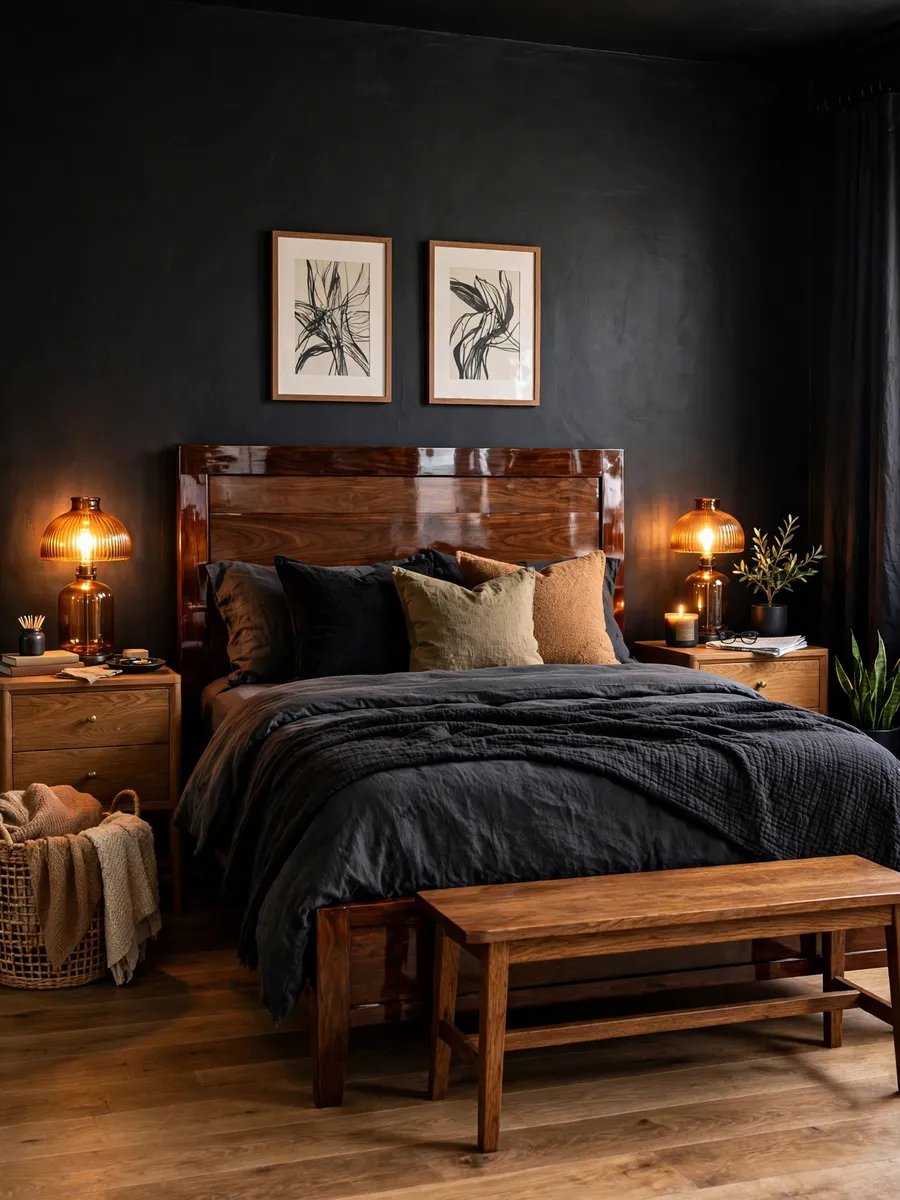
Choose one wood tone and repeat it: walnut for a dark, moody room, pale oak for a softer Scandinavian feel. For example, black walls with a bare black bed felt cold until the owner swapped in a walnut frame and oak nightstands, and the same walls suddenly read as warm and deliberate.
Quick tips:
- One wood tone, repeated three times, beats three different woods.
- Walnut suits moody rooms; pale oak suits softer schemes.
9. How Do I Light a Black Bedroom Properly?
Layer three kinds of light: ambient, task, and accent. Black absorbs light instead of bouncing it back, so the single overhead light that worked on white walls will not be enough here.
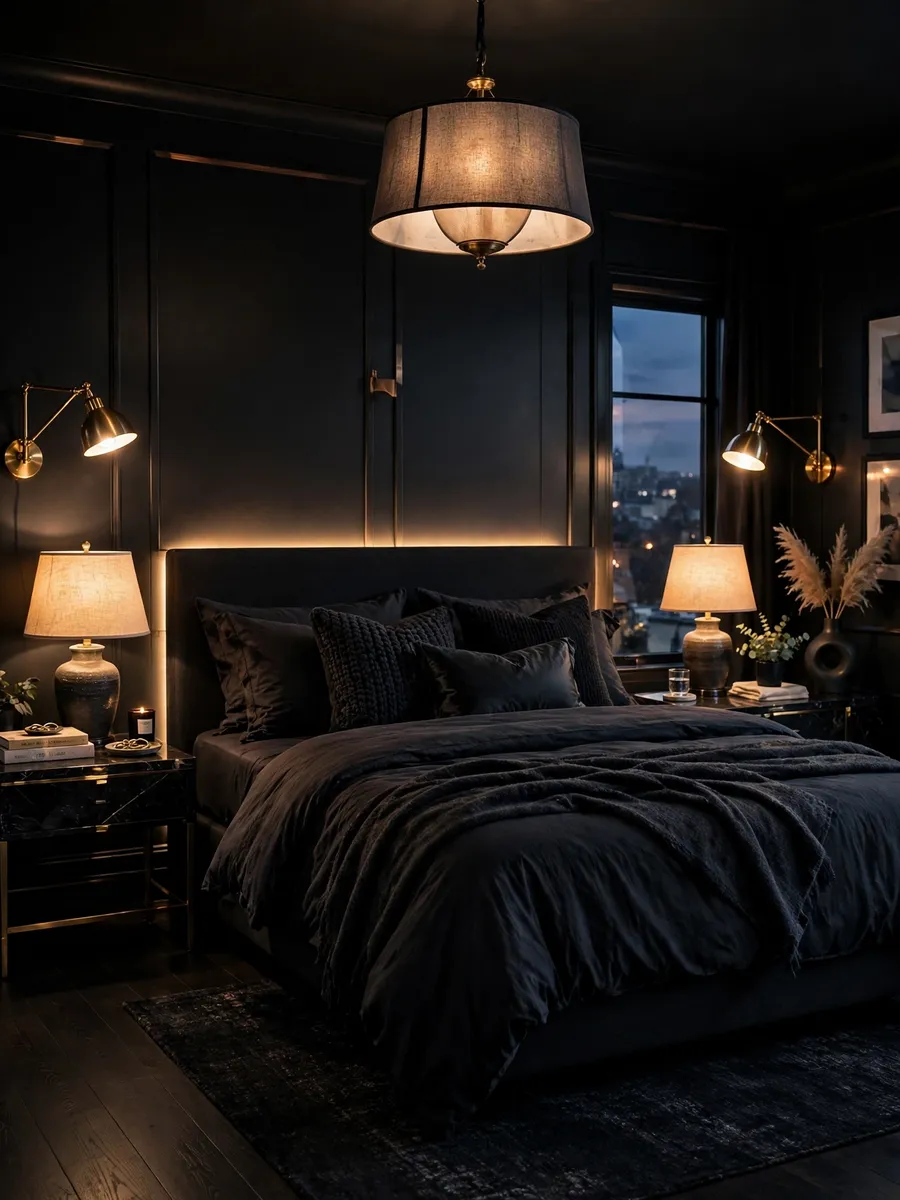
Start with warm bulbs around 2700K, because cool white bulbs make black walls look grey and clinical. For example, a black bedroom with one ceiling light felt like a cave until the owner added two brass sconces and a warm LED strip, and the same walls began to glow.
Quick tips:
- Three light sources minimum: ceiling, bedside, accent.
- Warm 2700K bulbs; cool bulbs turn black walls grey.
10. What Bedding Works Best Against Black Walls?
Pale, textured bedding: cream or white linen, a waffle-weave duvet, and a chunky knit throw. Light bedding is the single biggest brightener in a black room, and texture stops the contrast from looking flat or clinical.
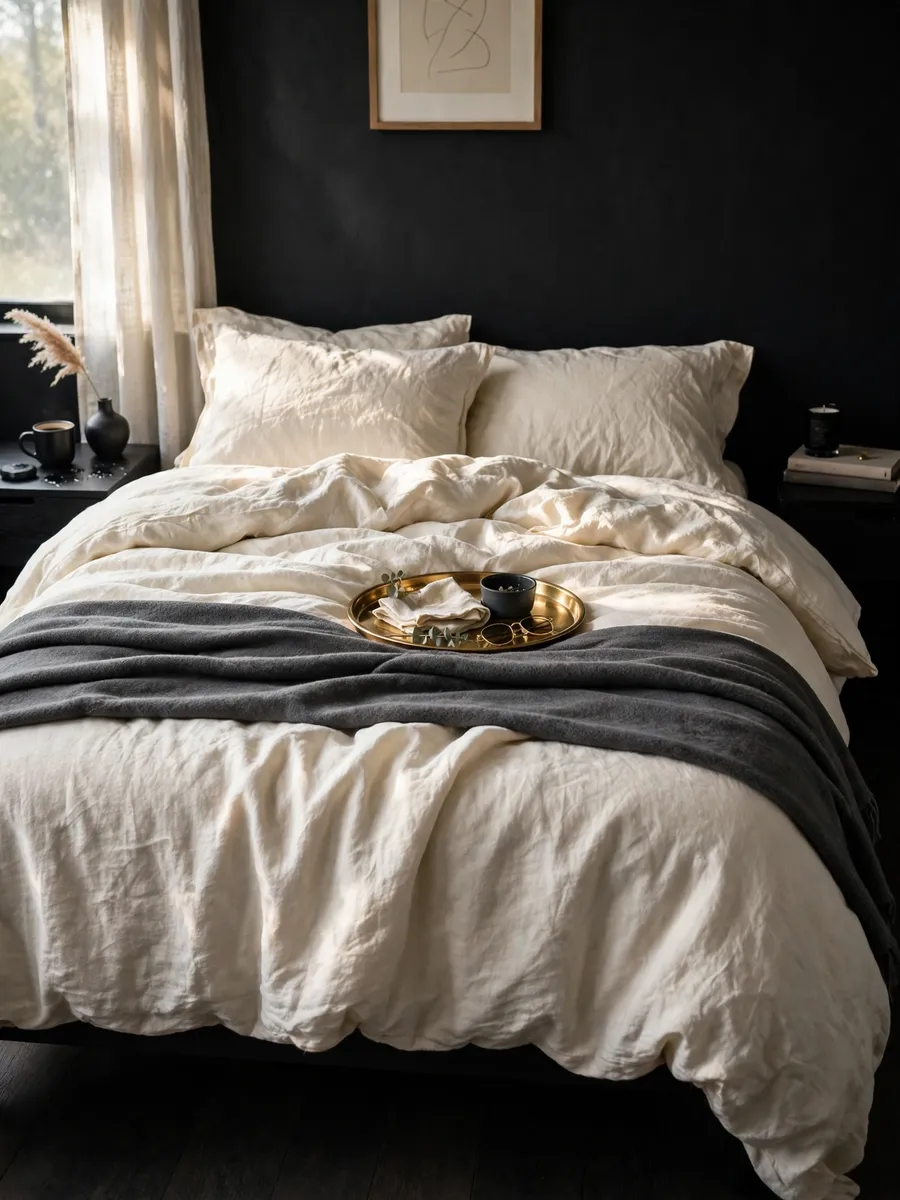
Washed linen in off-white wrinkles beautifully and catches light, which is exactly what a matte black wall needs next to it. For example, swapping a flat black duvet for cream linen with a charcoal throw changed one black bedroom from heavy to hotel-like overnight, with nothing else touched. For more on choosing the right rug to ground all that pale bedding, see our bedroom rug ideas for sizes and placements that work under a dark bed frame.
Quick tips:
- Cream or white linen is the safest, brightest bedding choice.
- A charcoal throw bridges pale bedding and dark walls.
11. Can a Small Bedroom Handle Black Walls?
Yes, if light decides the dose. A small room with a good window handles one black wall better than a large room with poor light, so limit black to the headboard wall.
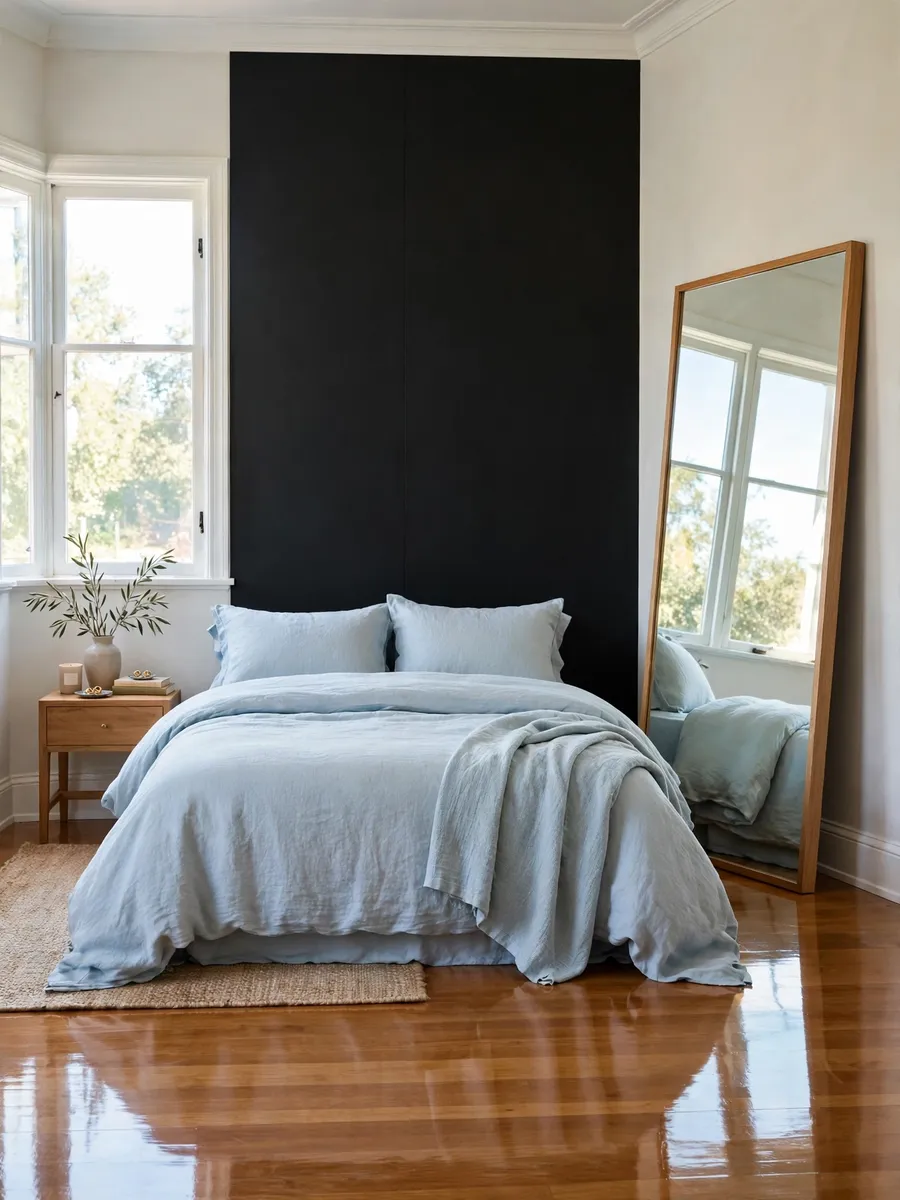
In a room under 120 square feet, a single black wall behind the bed creates depth without shrinking the space. For example, an 11-by-12-foot bedroom with one window facing a brick wall felt bigger, not smaller, after the headboard wall went matte black.
Quick tips:
- One black wall only in rooms under 120 square feet.
- A large mirror opposite the window doubles the daylight.
12. How Do I Soften Black With Blush?
Pair black with blush pink and dusty rose in the textiles: blush bedding, rose cushions, and a pale pink throw. Blush is black’s gentlest partner because it adds warmth and softness without breaking the moody atmosphere.
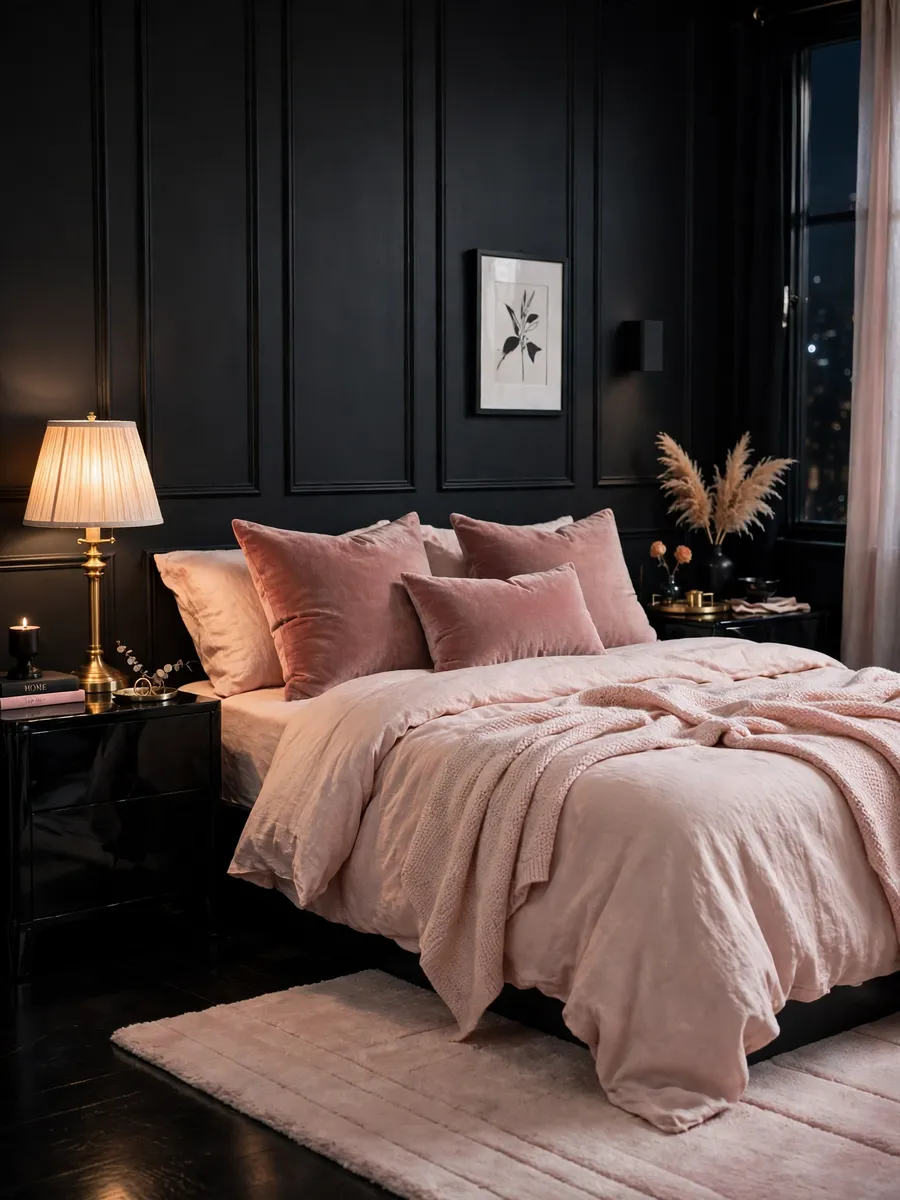
Keep the blush in fabrics, not on the walls, so the black stays the structure and the pink stays the softness. For example, a black bedroom that felt too severe softened completely when charcoal bedding was swapped for blush linen and dusty rose cushions, with no paint changed at all.
Quick tips:
- Keep blush in textiles, not on the walls.
- Two rose tones maximum, or the palette turns sugary.
13. Is Black Wallpaper Better Than Black Paint?
Wallpaper wins when you want pattern or texture that paint cannot give; paint wins when you want a cheaper, easier-to-change finish. A black grasscloth or dark botanical print adds movement to a wall that flat paint leaves still.

Grasscloth in black has a subtle sheen and woven texture that catches lamplight beautifully, while a dark botanical print gives the wall a pattern to look at instead of a flat void. For example, a black grasscloth wall behind a bed with deep teal velvet cushions looked layered and expensive, because the woven texture caught the sconce light all evening.
Quick tips:
- Use wallpaper on the headboard wall only to control cost.
- Grasscloth adds sheen and texture; flat paint cannot match it.
14. How Do I Get the Boutique-Hotel Look?
Combine black walls with white marble, brass, and crisp hotel bedding: a marble-topped nightstand, brass sconces, white percale sheets, and a black upholstered headboard. The formula is dark walls, pale stone, warm metal, and immaculate bedding.
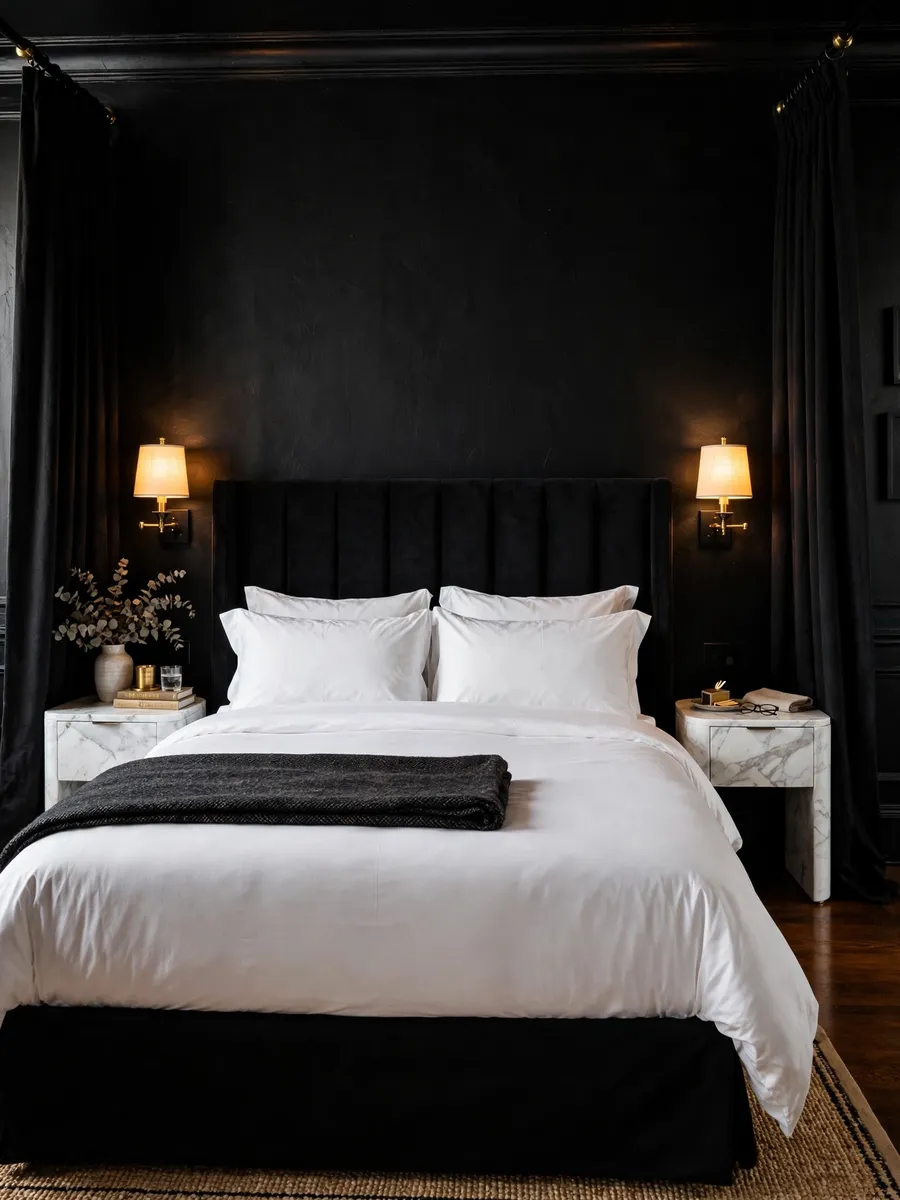
Hotels use this palette because it photographs well and hides wear, and it works at home for the same reasons. Keep surfaces clear: the hotel look depends on restraint. For example, one homeowner copied a hotel suite with black walls, marble nightstands, brass sconces, and white percale bedding, and guests kept asking which hotel it was.
Quick tips:
- Marble plus brass plus white bedding is the hotel formula.
- Keep surfaces clear; the look depends on restraint.
15. What About a Black Wardrobe Wall?
Paint a full wardrobe or built-in storage wall black and it disappears into the room instead of dominating it. Black cabinetry recedes visually, so a wall of wardrobes reads as architecture rather than a block of furniture.

Use a satin or eggshell finish on wardrobe doors, not matte, because doors get touched daily and satin wipes clean. For example, a bedroom with a whole wall of pale wardrobes felt cramped until the doors were painted satin black with brass pulls, and the storage wall seemed to step back.
Quick tips:
- Satin or eggshell on doors, never matte, because doors get touched.
- LED strips inside dark wardrobes make clothes easy to find.
16. Which Jewel Tones Pair Best With Black?
Emerald, sapphire, and teal pair best with black because they add rich color without lifting the mood. Deep jewel tones sit close to black in depth, so the room stays moody while gaining a color story.

Choose one jewel tone and let it own the textiles: sapphire velvet bedding with silver accents, or emerald cushions with brass lamps, or teal throws with pale wood. For example, a black bedroom with sapphire velvet bedding, silver-framed art, and a crystal lamp felt like a jewel box at night.
Quick tips:
- One jewel tone only; two compete and muddy the room.
- Gold warms emerald and teal; silver suits sapphire.
17. Can Renters Do a Black Bedroom Without Paint?
Yes, with peel-and-stick panels, removable wallpaper, black textiles, and black furniture. Renters can get the full look with nothing permanent, and everything comes down cleanly on moving day.
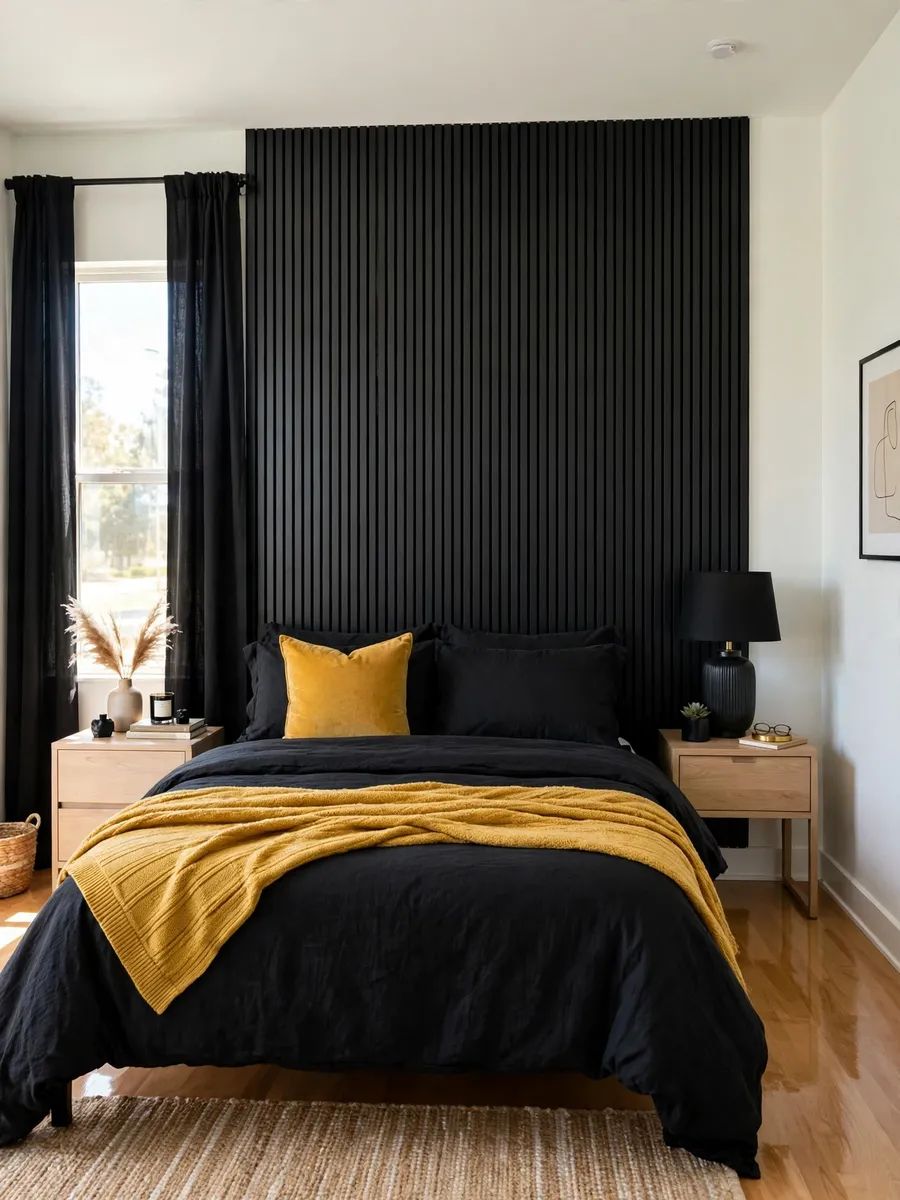
Peel-and-stick black wall panels behind the bed give the accent-wall effect for the price of a few packs, and removable black wallpaper works the same way on one wall. For example, a renter used peel-and-stick slatted panels behind the bed, black curtains, and a mustard throw, and every piece peeled off cleanly at the end of the lease.
Quick tips:
- Test one peel-and-stick panel behind furniture before committing.
- Black curtains plus black bedding deliver the look with zero wall contact.
18. How Do I Style a Black Boho Bedroom?
Layer natural textures over the black base: a rattan headboard, woven baskets, a jute rug, macramé, and trailing plants. Boho texture is black’s best friend because it breaks up flat darkness with shape, weave, and organic form.
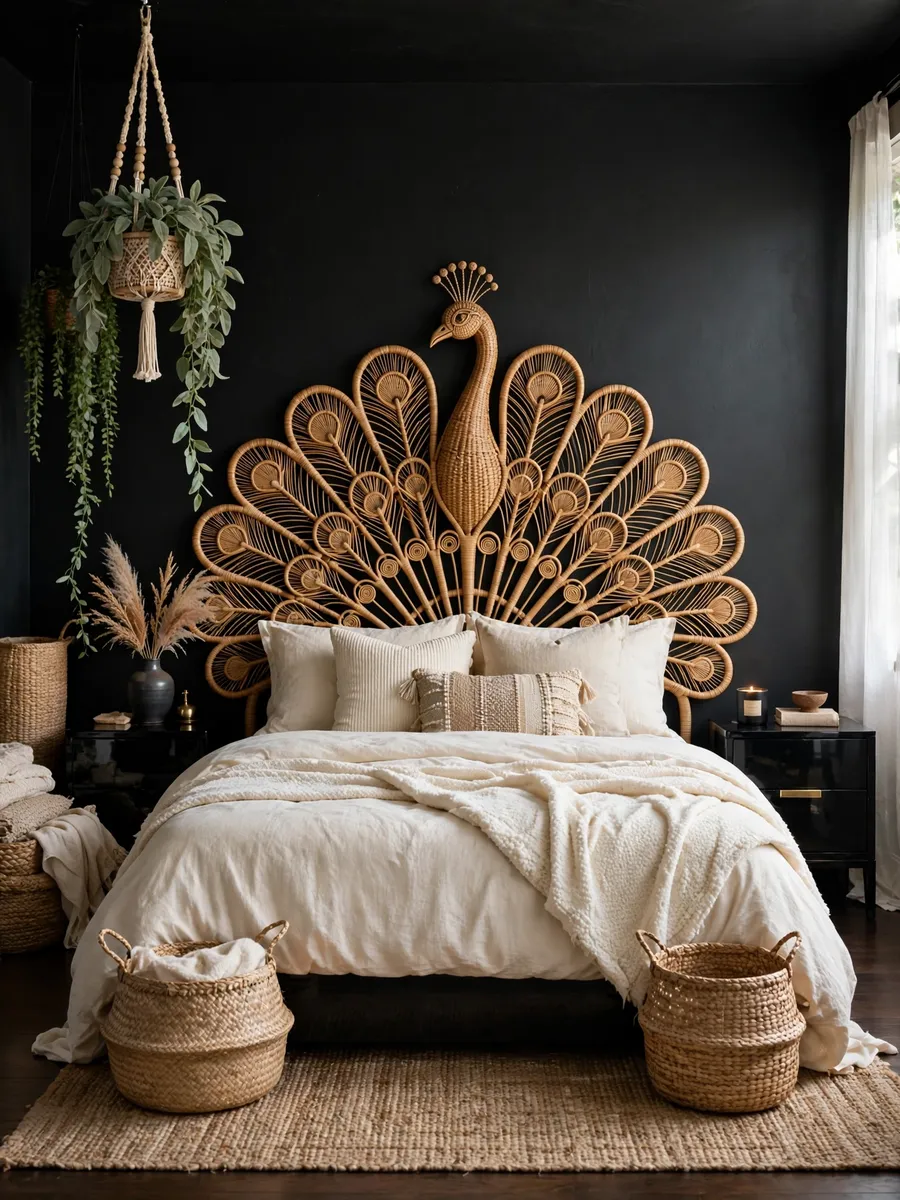
Start with black walls or a black bed, then add rattan in the headboard and a bench, a jute rug underfoot, and sage green plants on the nightstand and in a hanging planter. For example, a black bedroom with a rattan peacock headboard, a jute rug, and three trailing plants felt like a relaxed retreat rather than a dark box.
Quick tips:
- Rattan headboard plus jute rug is the boho foundation.
- Sage green plants add living color against black.
19. Does a Black Canopy Bed Work in a Dark Room?
Yes, when the canopy stays open and airy. A black four-poster frame adds architecture and drama, and sheer curtains or no curtains at all keep it from becoming a heavy black box in the middle of the room.
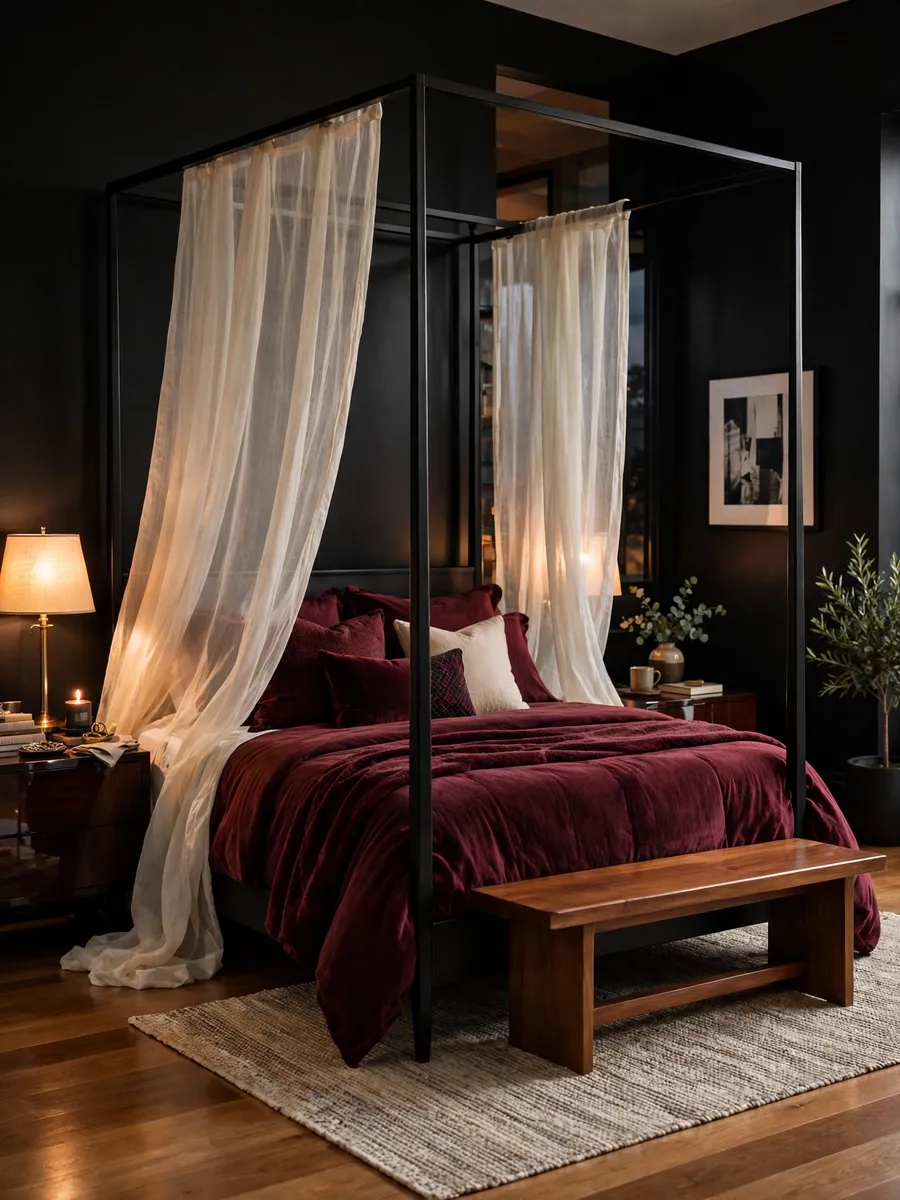
Choose slim posts rather than chunky ones so the frame reads as lines, not mass, and dress it with burgundy or wine bedding for a rich, romantic contrast. For example, a slim black four-poster with sheer cream curtains and burgundy bedding turned a plain black bedroom into a romantic suite.
Quick tips:
- Slim posts read as lines; chunky posts read as mass.
- Sheer curtains soften the frame; heavy drapes close it in.
20. How Do I Layer Black, Charcoal, and Grey?
Build the room in tones: black walls, charcoal bedding, mid-grey cushions, and a silver-grey rug. Tone-on-tone layering is the quietest version of this palette, and it works because each shade is distinct enough to read as a layer.
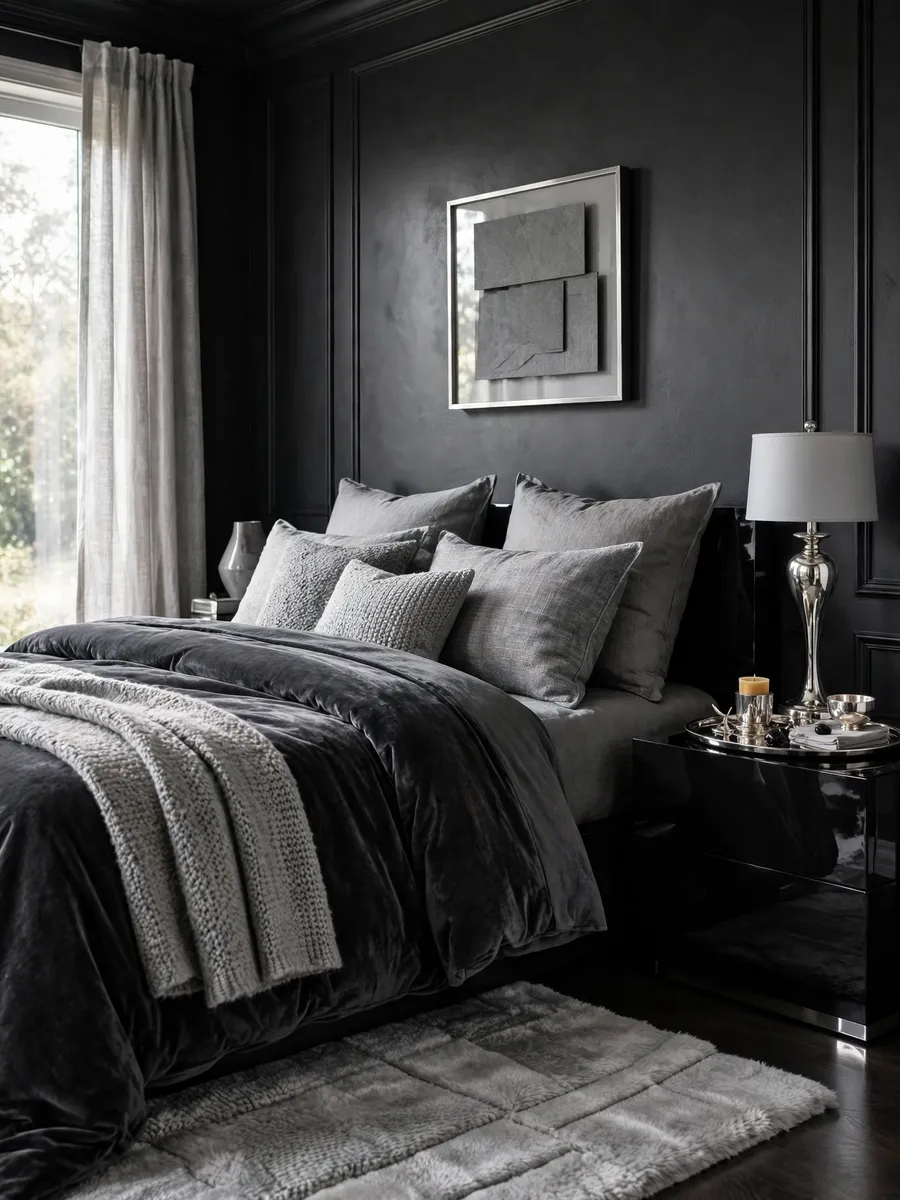
The risk with monochrome is monotony, so every layer needs its own texture: matte black walls, a charcoal velvet throw, grey linen pillows, and a silver-grey wool rug. For example, a tone-on-tone bedroom with black walls, charcoal velvet bedding, grey linen pillows, and a silver tray on the nightstand felt layered and intentional, while the same shades in flat fabrics had looked like one grey blur.
Quick tips:
- Every tone needs its own texture to read as a layer.
- One silver accent gives the eye a bright resting point.
21. How Do I Hang Art on a Black Wall?
Hang art with light frames, pale mats, and generous spacing, because black walls swallow small, dark-framed pictures. A gallery wall in white, gold, or natural wood frames turns the black wall into a gallery backdrop.

Colors placed against black look brighter and more vivid, so a coral or warm-toned print pops in a way it never would on a white wall. For example, a single large coral abstract print in a white frame with a brass picture light above it became the focal point of a black bedroom.
Quick tips:
- Light frames and pale mats stop art vanishing into black.
- Coral and warm tones pop hardest against black walls.
22. Can Plants Survive (and Shine) in a Black Bedroom?
Yes, and they do double duty: their green is the liveliest color against black, and their leaves add organic shape to flat surfaces. Choose low-light plants like snake plants, pothos, and ZZ plants.
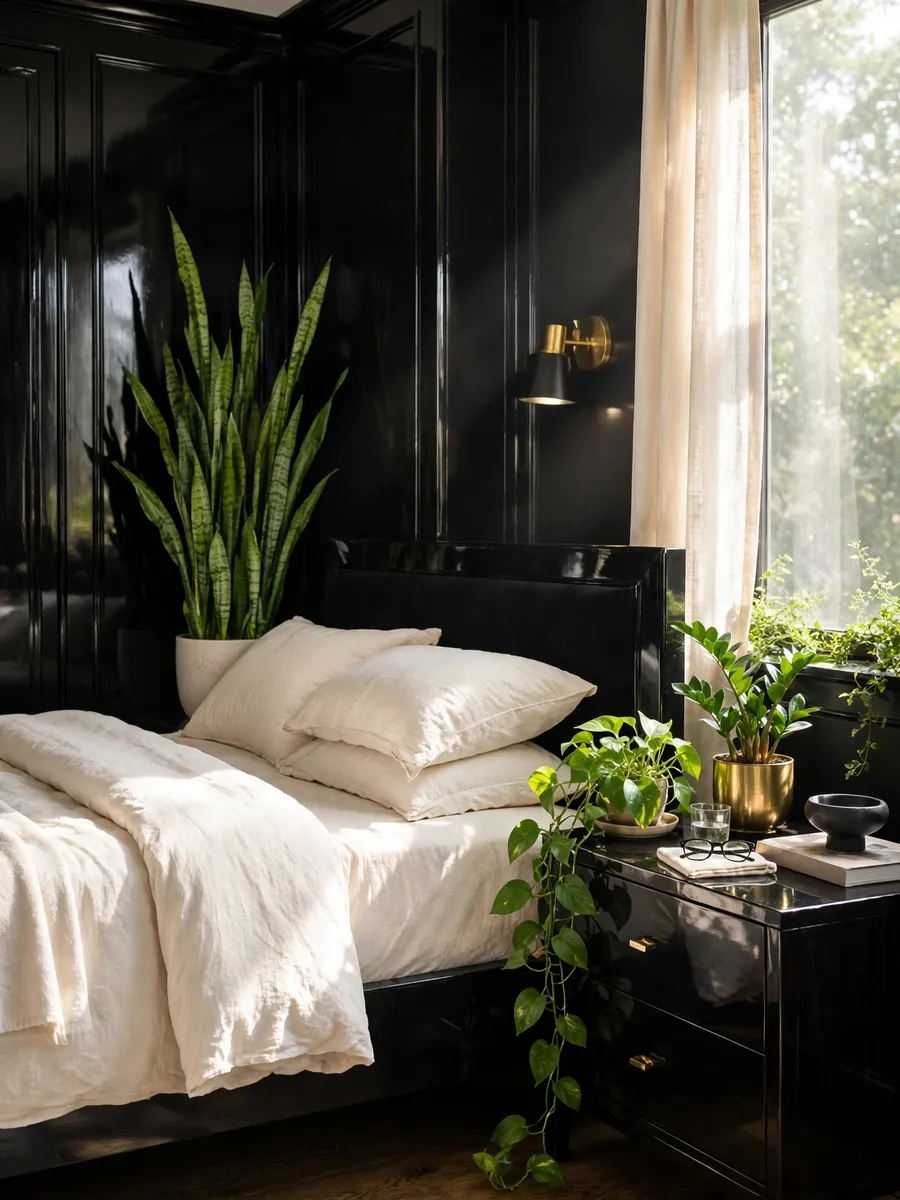
Place a tall snake plant in a corner to soften the wall angle, a trailing pothos on a shelf or nightstand, and a small ZZ plant where it catches morning light. For example, a black bedroom with a tall snake plant, a trailing pothos, and a brass-potted ZZ plant felt fresh and lived-in, while the same room without plants had felt like a showroom.
Quick tips:
- Snake plants, pothos, and ZZ plants tolerate low bedroom light.
- Pale ceramic or brass pots stay visible against black walls.
23. What Does a Full Black Cocoon Bedroom Feel Like?
It feels like the world switching off: walls, trim, ceiling, and closet doors all in the same soft black, with warm textiles and layered light doing all the talking. Test it with one wall first.
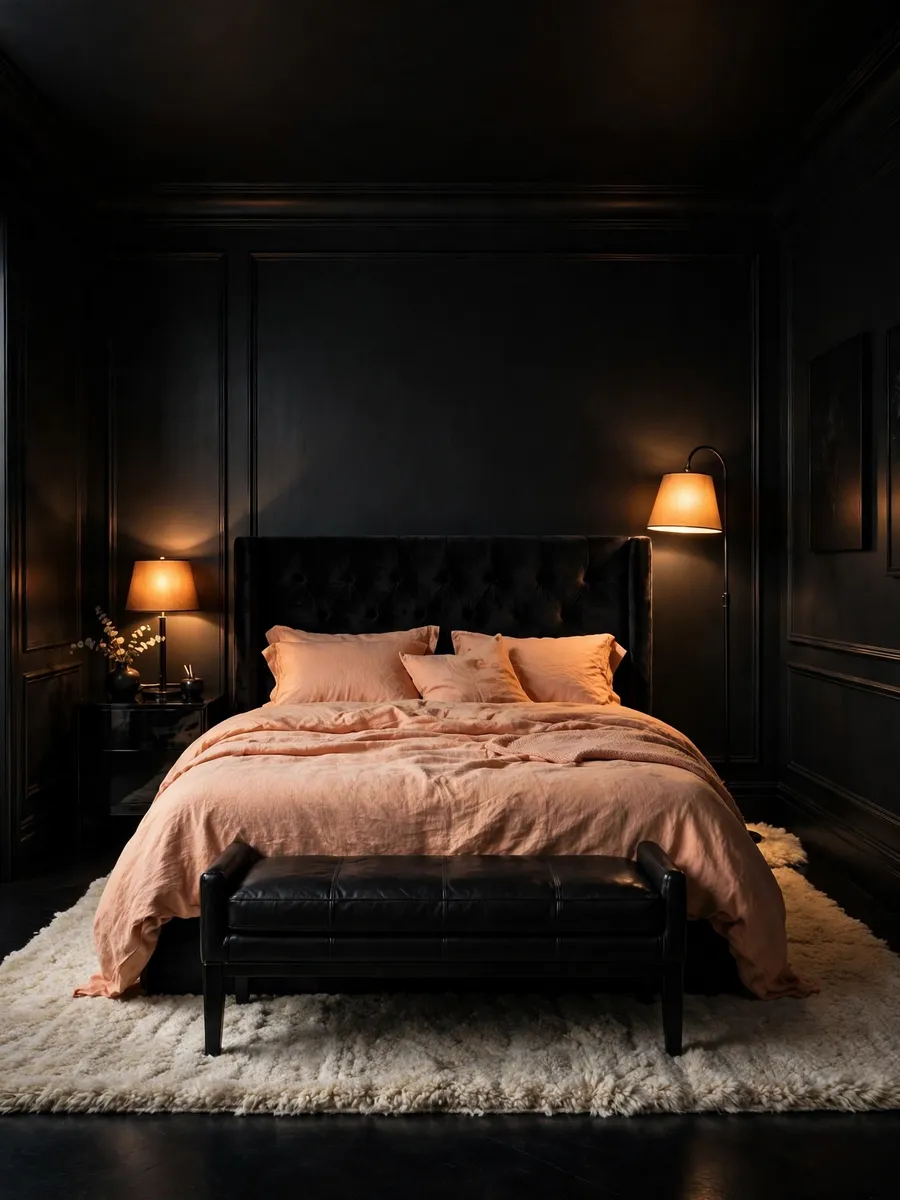
The trap of a fully black room is monotony, so every surface needs a different texture: matte walls, a velvet headboard, linen bedding, a wool rug, and a leather bench. For example, a homeowner who painted walls, trim, and ceiling in the same soft black, then layered peach linen bedding, a wool rug, and two warm lamps, said the room felt like a private retreat.
Quick tips:
- Every surface needs a different texture or the room turns monotonous.
- Warm peach or cream textiles keep the cocoon cozy, not cold.
Frequently Asked Questions About Black Bedrooms
Does a black bedroom make the room look smaller?
Not necessarily. Dark walls blur a room’s edges, which can make a space feel deeper rather than smaller, especially when the black is limited to one wall and the bedding stays pale. The deciding factor is light, not size.
What color goes best with a black bedroom?
Warm materials go best with black: brass and gold, walnut and oak, cream linen, and blush pink all soften it. For a color accent, one jewel tone such as emerald, sapphire, or teal works best.
Is black a good color for a bedroom?
Yes, black suits a bedroom because darkness supports sleep and privacy, and black walls make a room feel intimate and calm. The look works when the finish is matte, the lighting is layered and warm, and pale bedding balances the dark surfaces.
What is the best black paint color for a bedroom?
A warm soft black is the safest choice for most bedrooms. Sherwin-Williams Iron Ore and Benjamin Moore Black Beauty suit most bedrooms, while Sherwin-Williams Tricorn Black, a true black with no obvious undertone, suits large, bright rooms. Always test large swatches for two nights before buying a gallon.
How can I make a black bedroom feel cozy and not gloomy?
Layer three things: warm light, soft texture, and pale contrast. Use 2700K bulbs in at least three light sources, mix linen, velvet, knit, and wood, and keep the bedding cream or white.
Can I paint my bedroom black if I rent?
Yes, without touching the walls. Peel-and-stick black panels or removable wallpaper give you the accent wall, while black bedding, black curtains, and black furniture deliver the palette with zero permanent change.
Conclusion
Black bedroom ideas succeed on balance, not bravery: one or two dark surfaces, a warm material, layered light, and pale bedding turn a color people fear into the most restful room in the house. Start with a single matte accent wall behind the bed, live with it for a few weeks, and add depth from there. The rooms that work best are the ones where black has something warm to lean against.