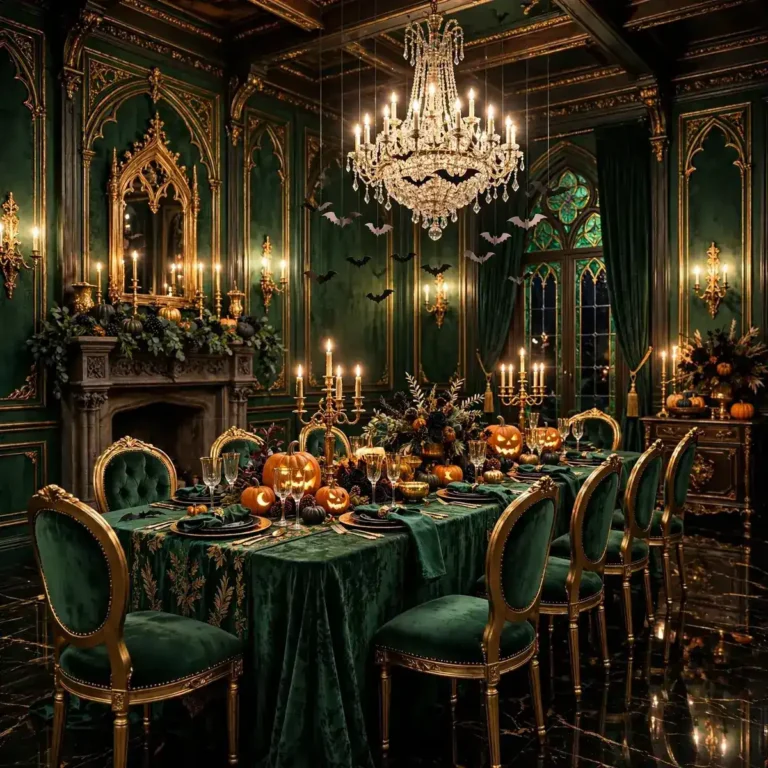
19 Stunning Dining Room Decor Ideas for a Warm, Inviting Table
Dining room decor ideas work best when you start at the table and work outward: choose the right table and light first, then add a rug, wall color, and one or two personal touches. A dining room does not need a full renovation to feel warm and inviting — a statement light, a well-sized rug, comfortable chairs, and a simple low centerpiece can change the whole room in a weekend. Pick the ideas below that fit your room, your budget, and the way you actually eat.
The order matters more than the budget. Measure the table, leave about 36 inches of clearance around it, hang the light low and centered, and only then choose color and decoration. If your walls still feel bare after the big pieces are in place, these dining room wall decor ideas show how art, mirrors, and paneling finish the room without crowding it.
Dining Room Decor Ideas: Key Takeaways
Where should you start decorating a dining room? Start at the table: the right size table, a light hung 30 to 36 inches above it, and a rug extending 24 inches past the table on every side.
What makes a dining room feel warm instead of formal? Layered lighting, soft textiles, warm wood, and a low centerpiece with candles or greenery make the room feel lived-in, not staged.
Can you decorate a dining room on a small budget? Yes — paint one wall, swap the light fixture, mix in secondhand chairs, and add a rug and a mirror; those five moves cost far less than new furniture.
What is the one mistake to avoid? Buying the rug or the chandelier before measuring the table — both are sized to it, and a wrong size is the most expensive mistake in the room.
How Do You Match a Dining Room Idea to Your Room?
Pick your first move from the table below based on the room you actually have — the right idea depends on size, light, and how the room is used.
| Your room | Best first move | Why it works |
|---|---|---|
| Small or tight dining area | Round table and banquette seating | Frees floor space and seats more people in less room |
| Dark dining room with little daylight | Large mirror and layered warm lighting | Bounces light around and makes the room glow at night |
| Open-plan dining corner | Large rug and a statement pendant | Defines the dining zone without building a wall |
| Plain, boxy dining room | Moody wall color or wainscoting | Adds architecture and warmth to a flat rectangle |
| Formal room that feels stiff | Mixed chairs and a low, casual centerpiece | Softens the formality so everyday meals feel relaxed |
1. How Does a Statement Chandelier Transform a Dining Room?
A statement chandelier transforms a dining room because one beautiful light centered over the table sets the mood, defines the dining zone, and becomes the room’s focal point in a single move.
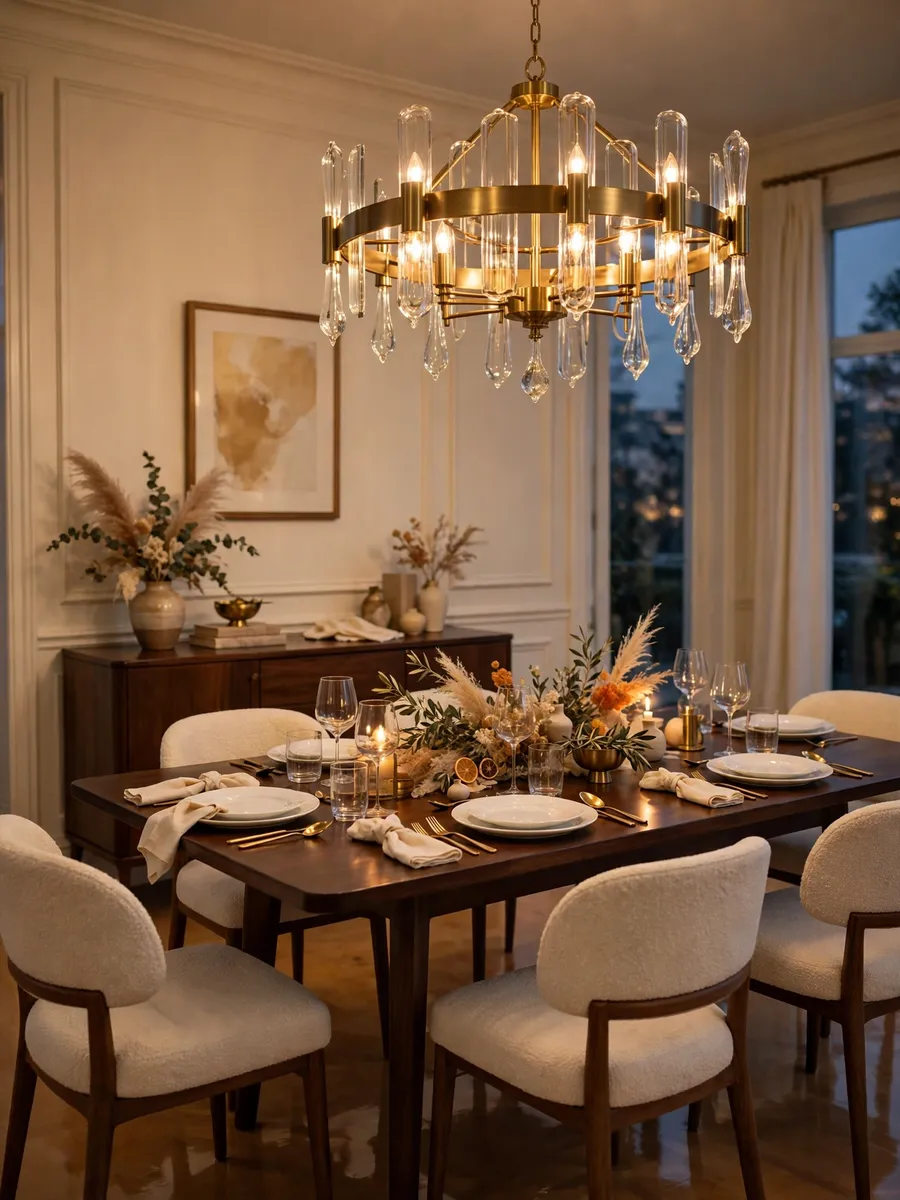
Hang the fixture 30 to 36 inches above the tabletop for an 8-foot ceiling, adding about 3 inches for each extra foot of ceiling height, and size it about one-half to two-thirds the width of the table. A concrete example: a brass and glass chandelier with warm 2700K bulbs on a dimmer over a walnut table makes Tuesday dinner feel like a small occasion.
Quick tips
- Put it on a dimmer so the same room works for homework and dinner parties.
- Choose warm bulbs; cool white light makes food and faces look harsh.
2. What Size Rug Works Best Under a Dining Table?
The best rug for a dining room extends 20 to 24 inches beyond the table on every side, so every chair stays fully on the rug even when it is pulled out for someone to sit down.
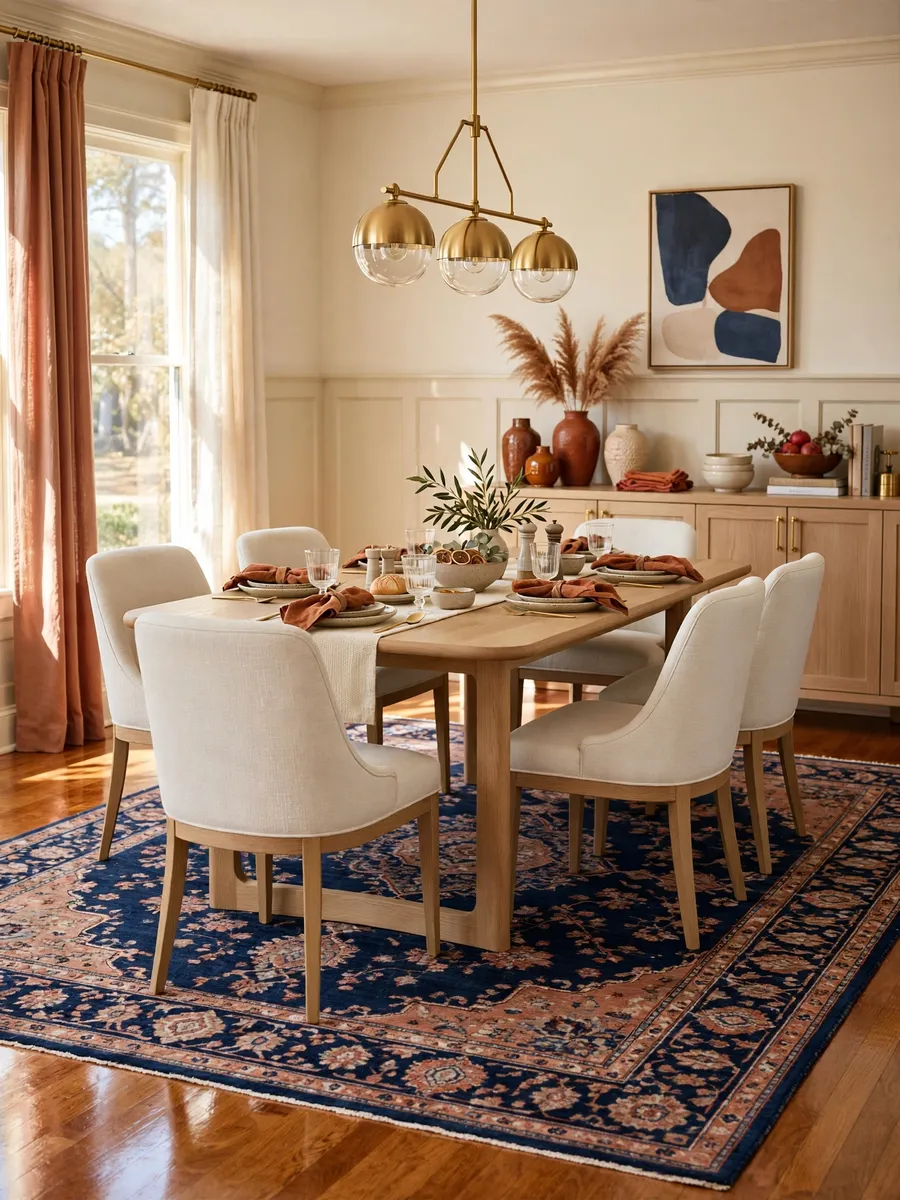
A rug that is too small makes chairs rock on its edge, while the right size anchors the table and softens echoes and chair noise. A concrete example: a 10×13 flat-weave rug in deep navy under a six-seat oak table lets all six chairs slide back without a leg dropping off the edge.
Quick tips
- Measure the table, add 48 inches to each dimension, and buy that size.
- Choose a low-pile or flat-weave rug that chairs slide across easily.
3. Why Should You Mix and Match Your Dining Chairs?
You should mix and match dining chairs because two chair styles around one table add character and comfort that a matched set cannot, and it lets you spend more on the two host chairs and less on the sides.
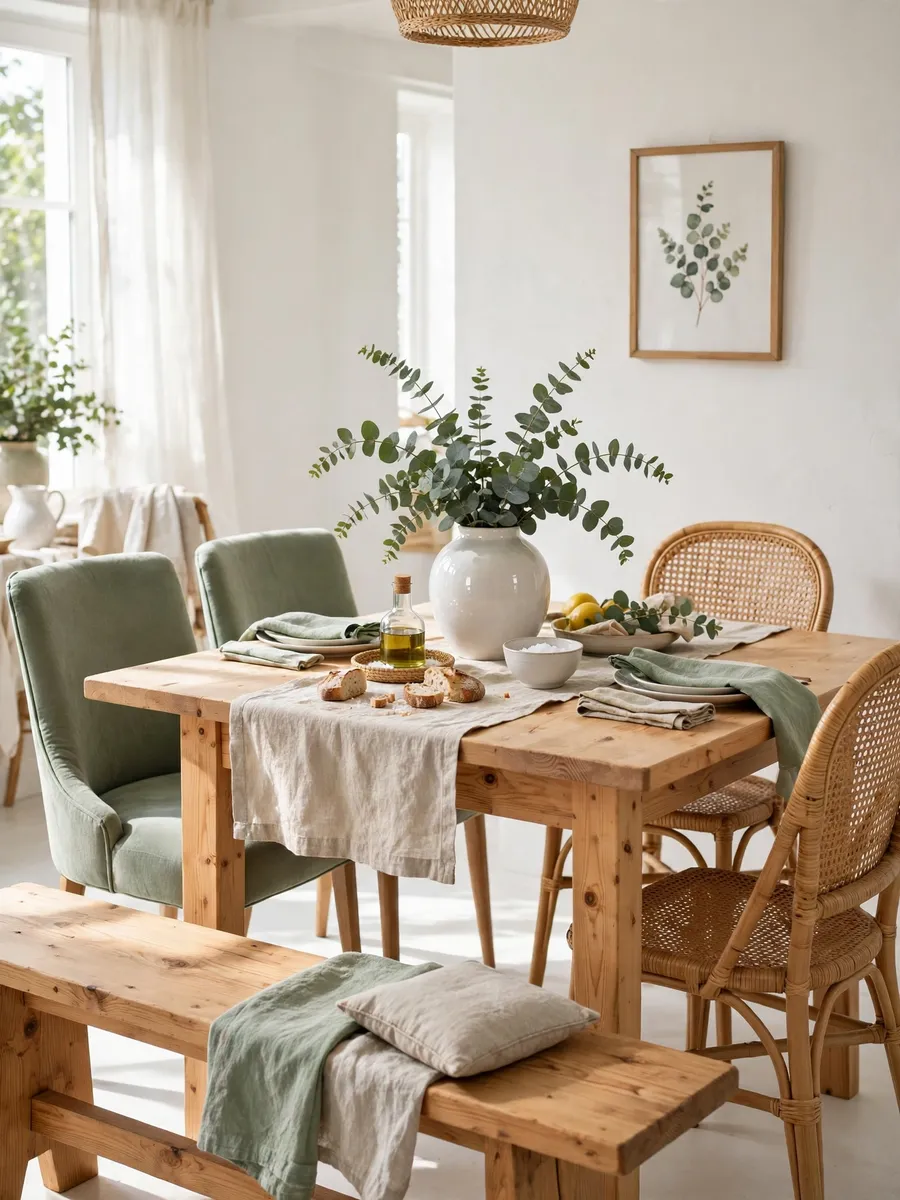
Keep one thing consistent — seat height, wood tone, or fabric color — so the mix looks deliberate, not accidental. A concrete example: sage green upholstered side chairs, a rattan chair at each end, and a wooden bench on one side give a plain pine table a collected look for the price of one matching set.
Quick tips
- Match seat heights within an inch so everyone sits at the same level.
- Repeat one color or material across all the chairs to tie them together.
4. How Do Moody Green Walls Make a Dining Room Feel Intimate?
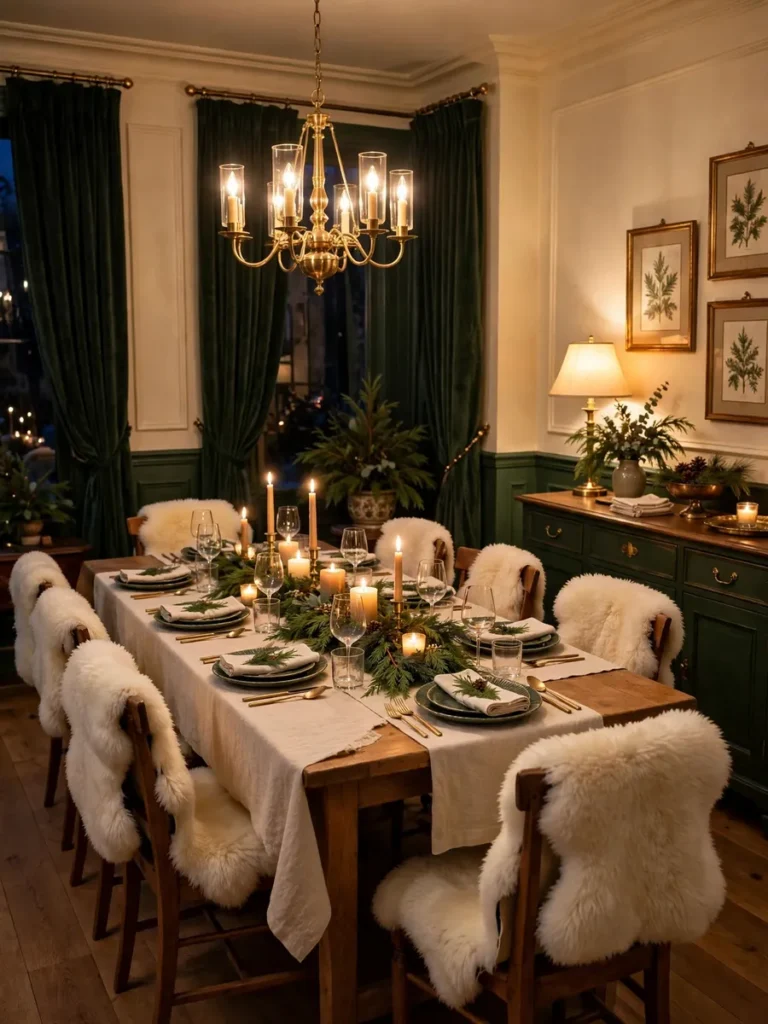
Moody green walls make a dining room feel intimate because deep color absorbs light and pulls the walls in, so the room glows by candlelight and feels like a private restaurant instead of a bright box.
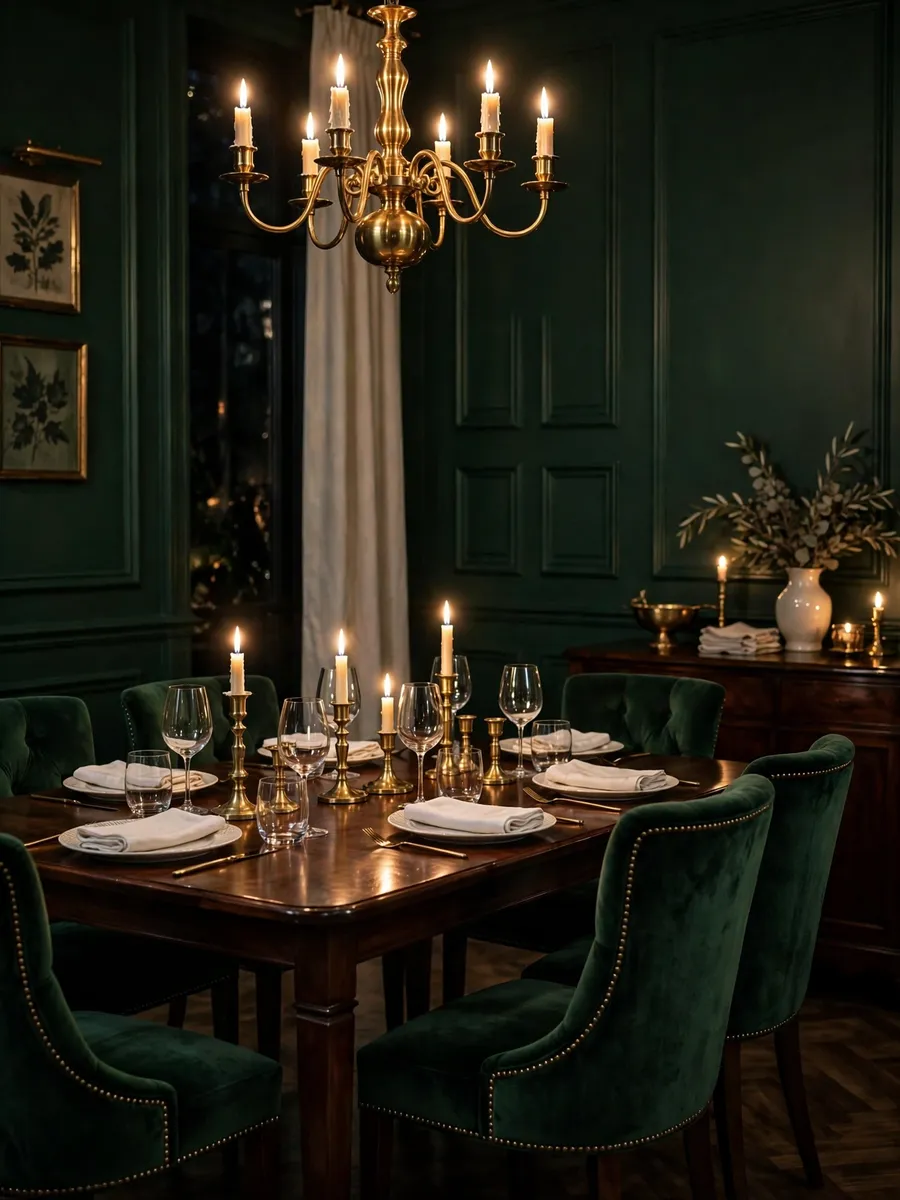
Dining rooms are used mostly in the evening, so deep colors work well there — a shade that looks heavy at midday turns rich and warm once the lights are low. A concrete example: forest green walls, brass candlesticks, ivory linen napkins, and emerald velvet chairs turn a plain rectangular dining room into the coziest room in the house.
Quick tips
- Paint the ceiling the same color for a wrapped, cocooned feeling.
- Add brass or gold accents so the dark walls reflect warm light.
- If full dark feels risky, paint only the lower half below a chair rail.
5. How Do You Build a Gallery Wall That Feels Collected, Not Cluttered?
You build a gallery wall that feels collected by choosing one unifying element — the same frame color, mat, or one repeated color — and hanging the art in a loose grid with two to three inches between frames.
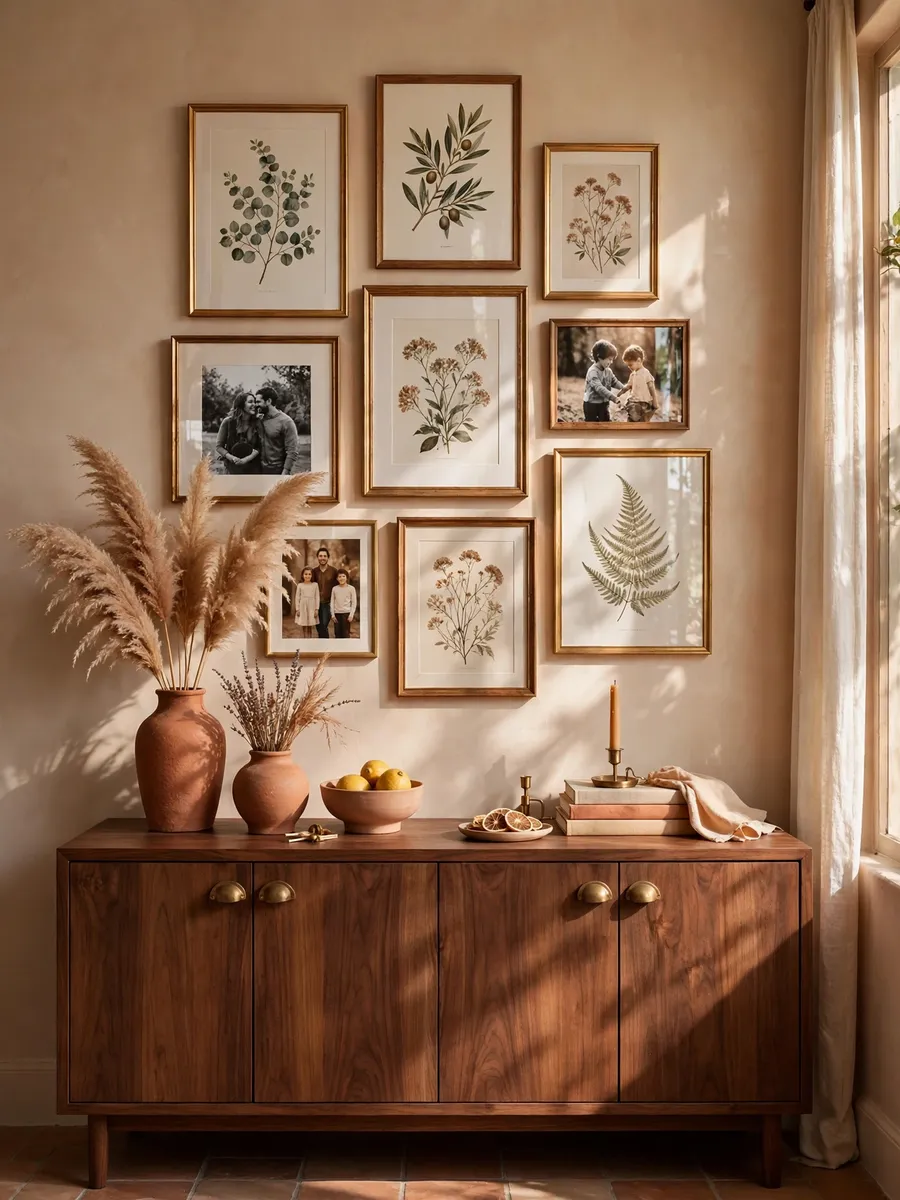
Start with the largest piece at eye level, about 57 to 60 inches from the floor, and build outward with smaller pieces. A concrete example: eight botanical prints in matching thin walnut frames above a sideboard, mixed with two small family photos, looks like a collection gathered over years rather than one shopping trip.
Quick tips
- Lay the arrangement on the floor first and photograph it before hanging.
- Keep the whole grouping about two-thirds the width of the furniture below it.
6. What Should a Dining Room Sideboard Hold — and Display?
A dining room sideboard should hold the things you use at the table — linens, serving dishes, and candles — and display only three or four beautiful objects on top, so it stays useful instead of becoming a dumping ground.
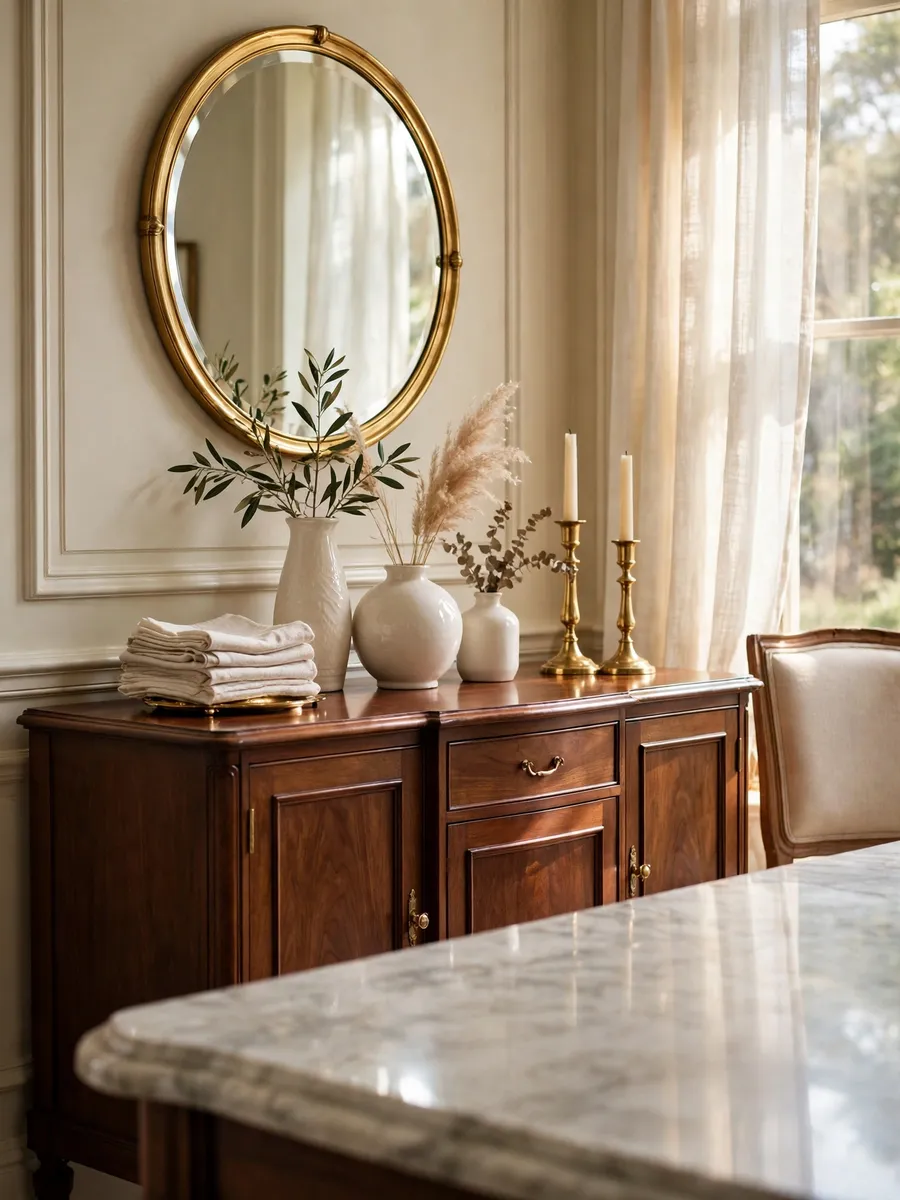
The top of the sideboard is the room’s styling shelf: a mirror or art above it, a vase, a stack of books, and one pair of candlesticks. A concrete example: a walnut sideboard with ivory ceramic vases, folded linen napkins, and brass candlesticks under a round mirror gives the room a finished focal point and hides the tablecloths inside.
Quick tips
- Keep the display to odd numbers — three or five objects look intentional.
- Store placemats and napkins in the top drawer for easy table setting.
- Clear the top completely once a month so clutter never creeps back.
7. How Do You Style a Low Centerpiece That Never Blocks Conversation?
You style a low centerpiece by keeping it under 12 inches tall and about one-third of the table’s length, so seated guests can see each other across the table and still have room for plates and serving dishes.
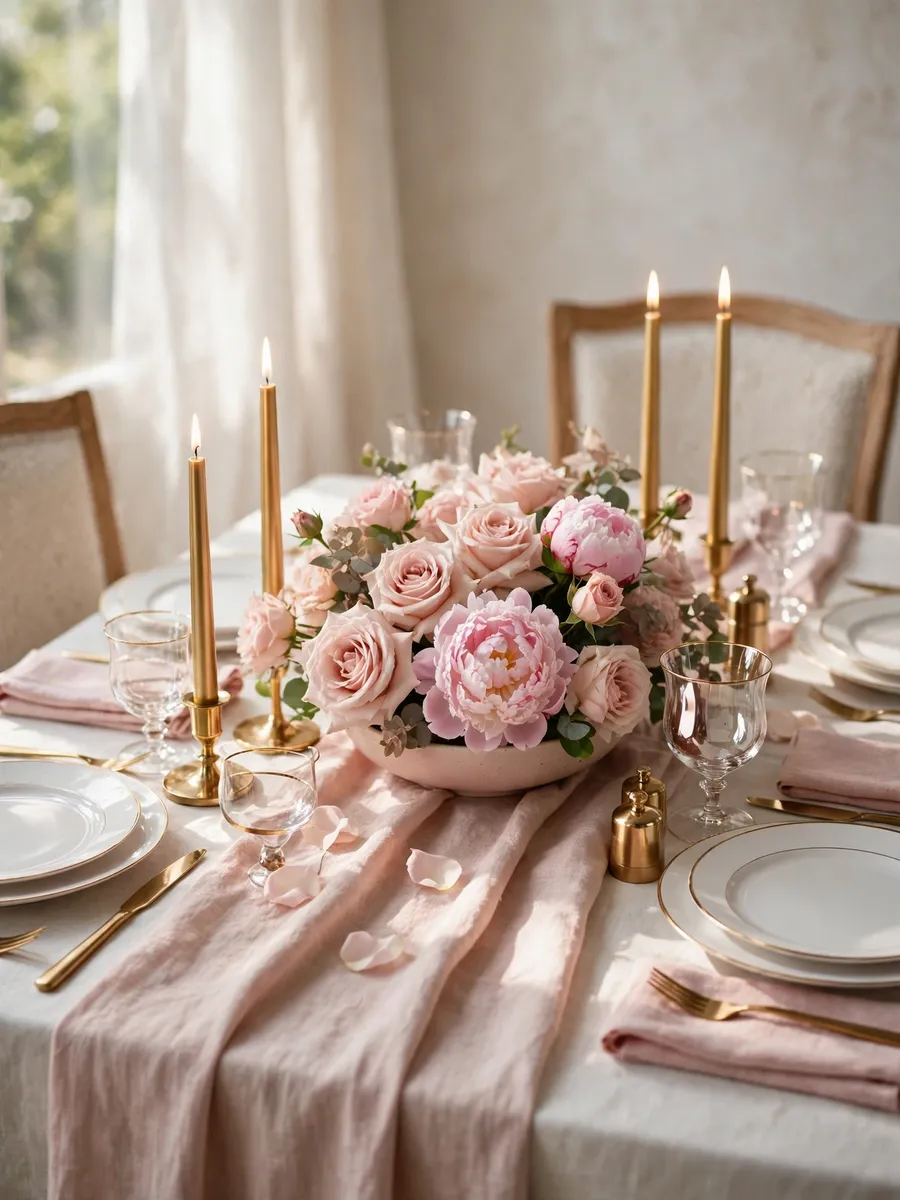
One focal point is enough: a shallow bowl, a low vase of flowers, or a cluster of three candles on a tray. A concrete example: a blush ceramic bowl of roses and peonies with two brass taper candles on a linen runner dresses a white table for a dinner party and lifts off in one move.
Quick tips
- Use unscented candles so fragrance never competes with the food.
- Build the centerpiece on a tray so it moves in one lift.
8. Can a Large Mirror Really Make a Small Dining Room Feel Bigger?
A large mirror can make a small dining room feel bigger because it reflects the window light and the table back into the room, doubling the sense of space and brightness without moving a single wall.
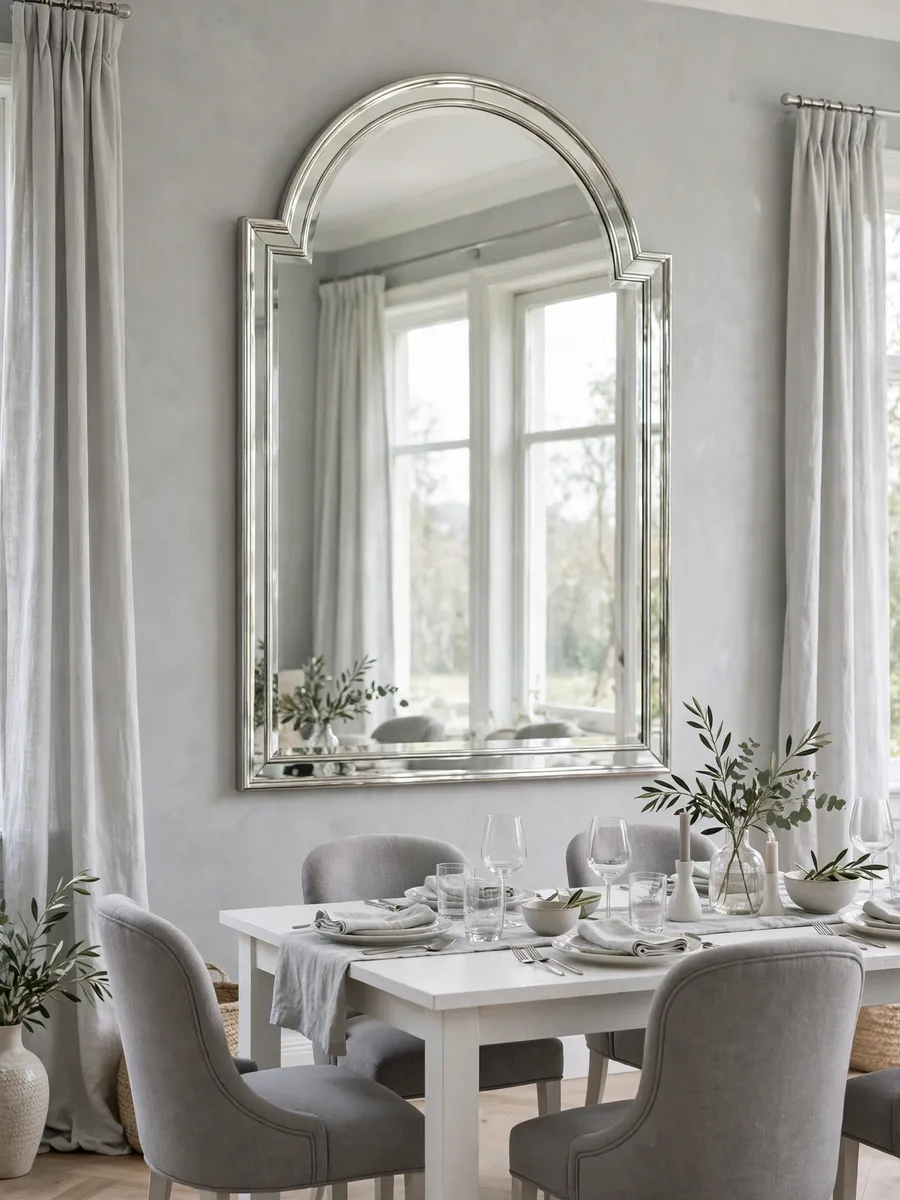
Hang the mirror opposite a window, with its center at eye level, and keep it about two-thirds the width of the furniture below it. A concrete example: a large arched mirror on a pale grey wall opposite the window reflects the garden and the table, so a 10-foot dining room feels like it has a second window.
Quick tips
- Check what the mirror reflects before hanging it — a window, not a blank wall.
- One large mirror works better than several small ones.
- Keep the frame simple so the reflection, not the frame, is the feature.
9. Why Is a Banquette the Smartest Seat in a Small Dining Room?
A banquette is the smartest seat in a small dining room because a bench tucked against the wall seats three people in the space of two chairs, needs no pull-out room behind it, and can hide storage underneath.
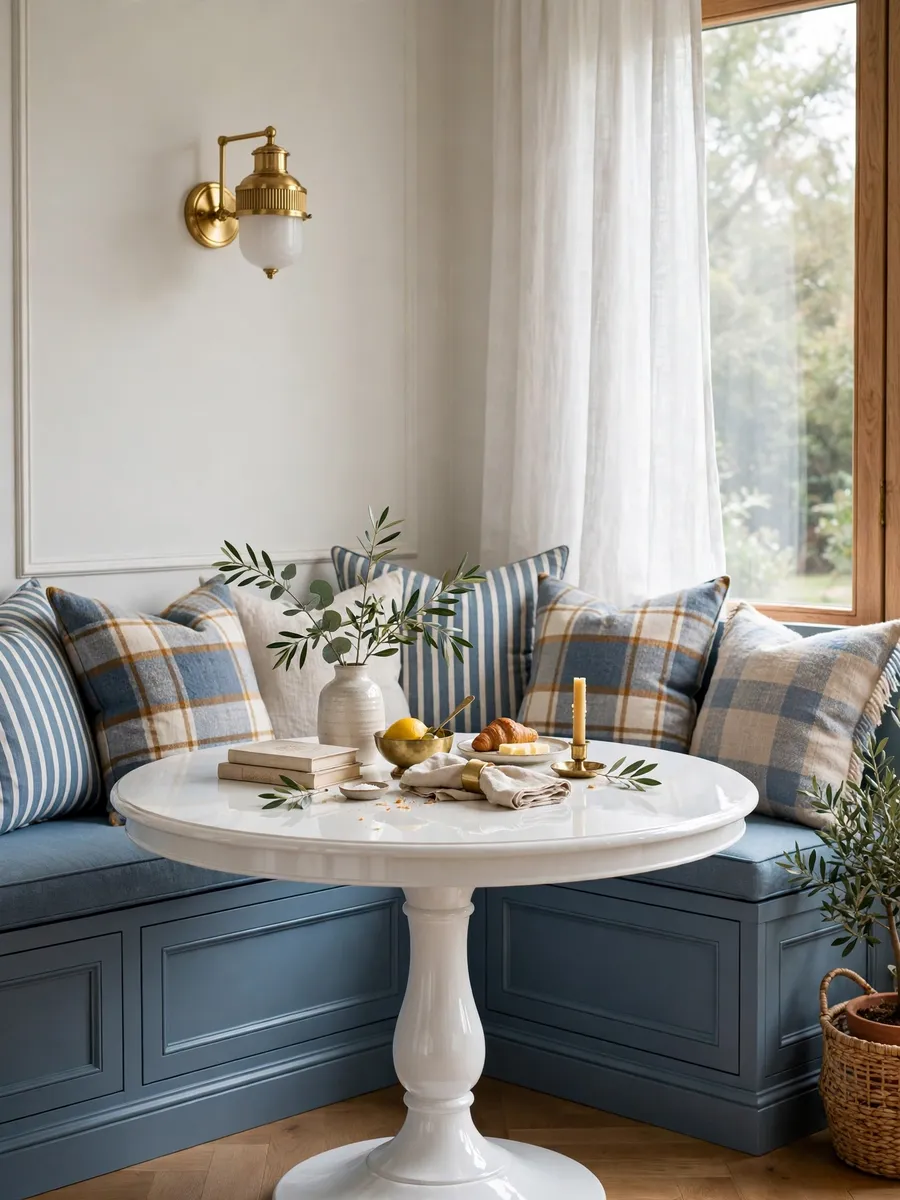
Pair the bench with a pedestal table so nobody straddles a table leg, and add washable cushions. A concrete example: a dusty blue banquette with striped cushions and a round white pedestal table turns an awkward corner by the kitchen window into a breakfast spot for six.
Quick tips
- Build the bench seat 18 inches high and 16 to 18 inches deep for comfort.
- Choose a wipeable fabric — spills happen where food is served.
- Add a hinged seat lid so board games and table linens live inside.
10. How Do You Layer Dining Room Lighting Beyond the Chandelier?
You layer dining room lighting by combining three sources — the overhead chandelier, wall sconces or buffet lamps, and candles — so the room stays warm and flattering even with the main light switched off.
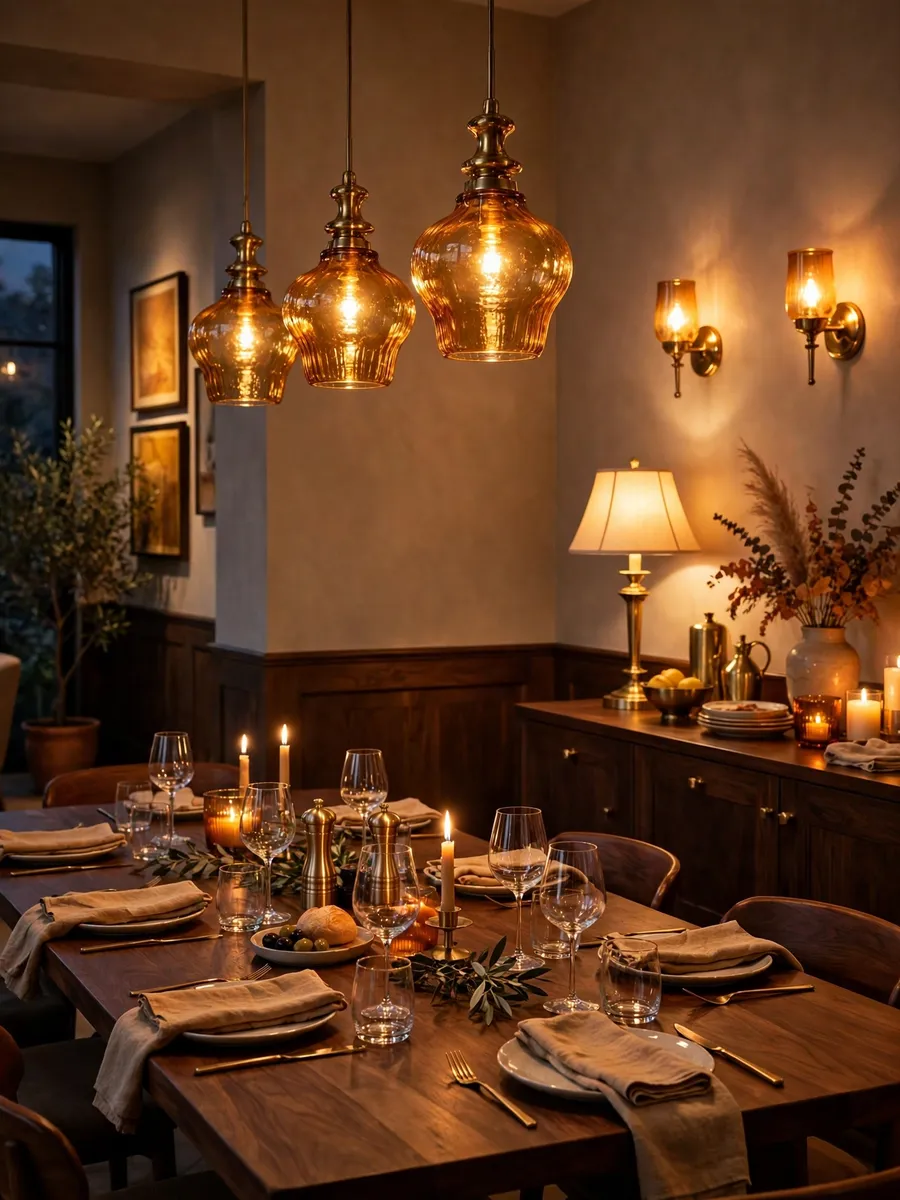
One ceiling light alone creates harsh shadows, but a second and third layer at different heights fill them in. A concrete example: a dimmable amber pendant over the table, two sconces flanking the sideboard, and a small lamp on the buffet give the same room three moods — bright for homework, low for dinner — and these dining room lighting ideas cover pendants, sconces, and dimmers in detail.
Quick tips
- Use 2700K warm bulbs on dimmers for every layer.
- Place sconces at about 60 inches from the floor, flanking art or a sideboard.
11. Why Does a Round Table Work Best in a Small Dining Room?
A round table works best in a small dining room because it has no corners to bump into, seats four comfortably in a tight footprint, and lets everyone see each other, which makes conversation easier.
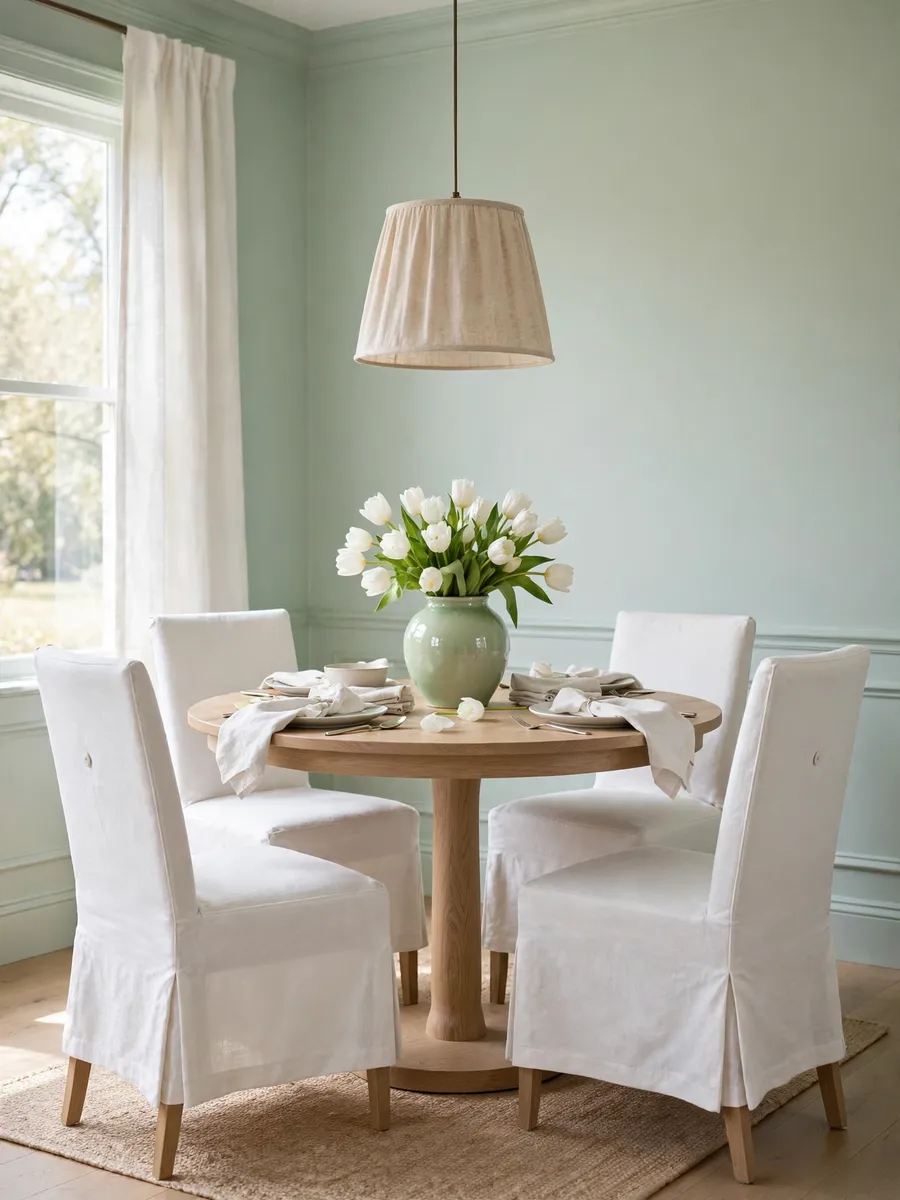
Choose a pedestal base rather than four legs so chairs slide in from any angle, and keep the diameter under 48 inches. A concrete example: a 42-inch light oak pedestal table with four white slipcovered chairs and a single linen pendant fits a 9-foot nook with room to walk around it, where a rectangular table would block the doorway.
Quick tips
- Add a leaf or choose an extendable round table for occasional guests.
- Keep the centerpiece to one small cluster so the middle stays clear.
- Round rugs echo the table shape and stop the room feeling boxy.
12. How Do Linen and Texture Change the Feel of a Dining Table?
Linen and texture change the feel of a dining table because soft cloth, woven placemats, and matte ceramics break up hard wood and glass, making the table look inviting and sound softer when plates and glasses are set down.
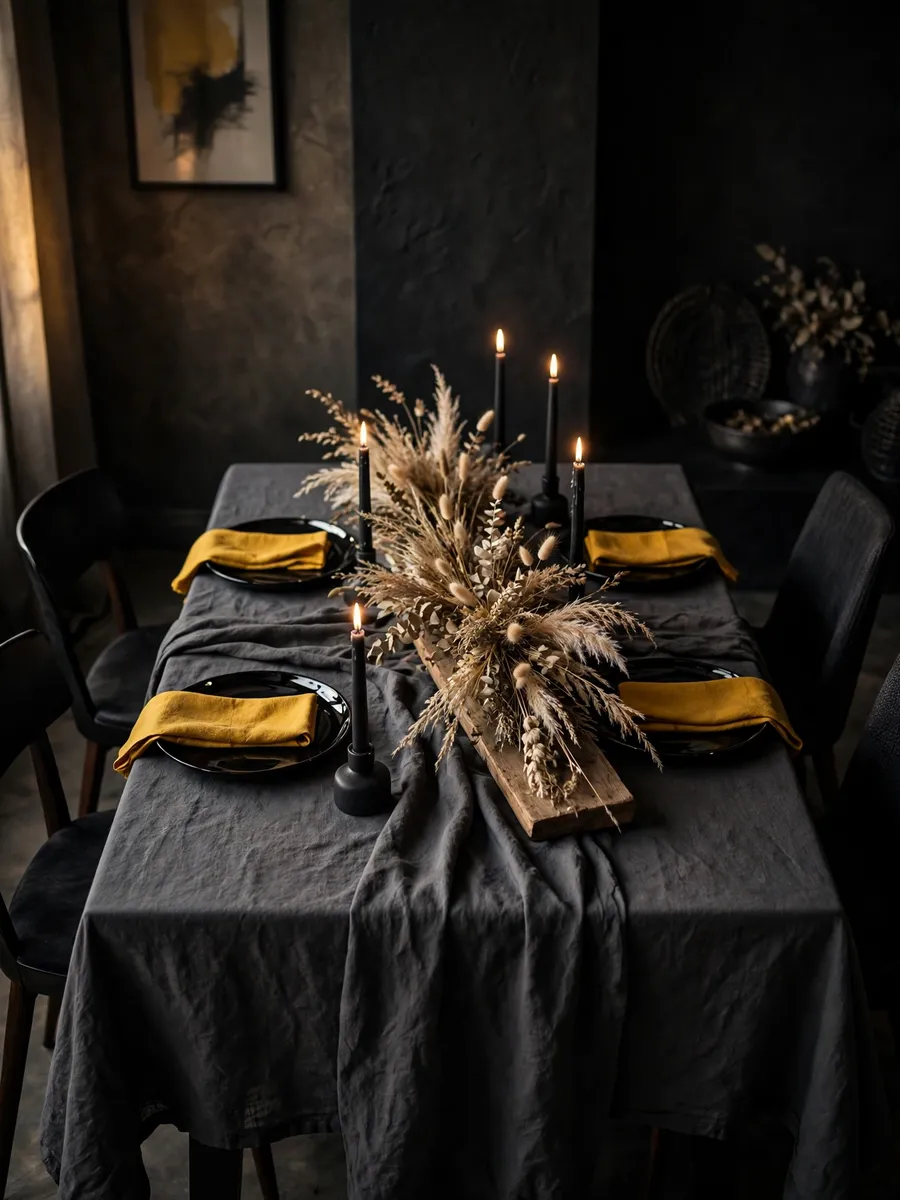
A runner alone can change the table: it adds color, protects the wood, and gives the centerpiece a base to sit on. A concrete example: a charcoal linen tablecloth with mustard napkins, matte black candlesticks, and a wooden tray of dried grasses turns a plain dark table into a styled setting for an autumn dinner.
Quick tips
- Start with a runner if a full tablecloth feels too formal.
- Mix two textures — linen with wood, or ceramic with brass — never just one.
- Wash linen napkins, don’t iron them; the soft wrinkles are the point.
13. What Happens When You Wallpaper Just One Dining Room Wall?
When you wallpaper just one dining room wall, the room gains an instant focal point and drama, while the other plain walls keep it calm — all the impact at a quarter of the cost and effort.
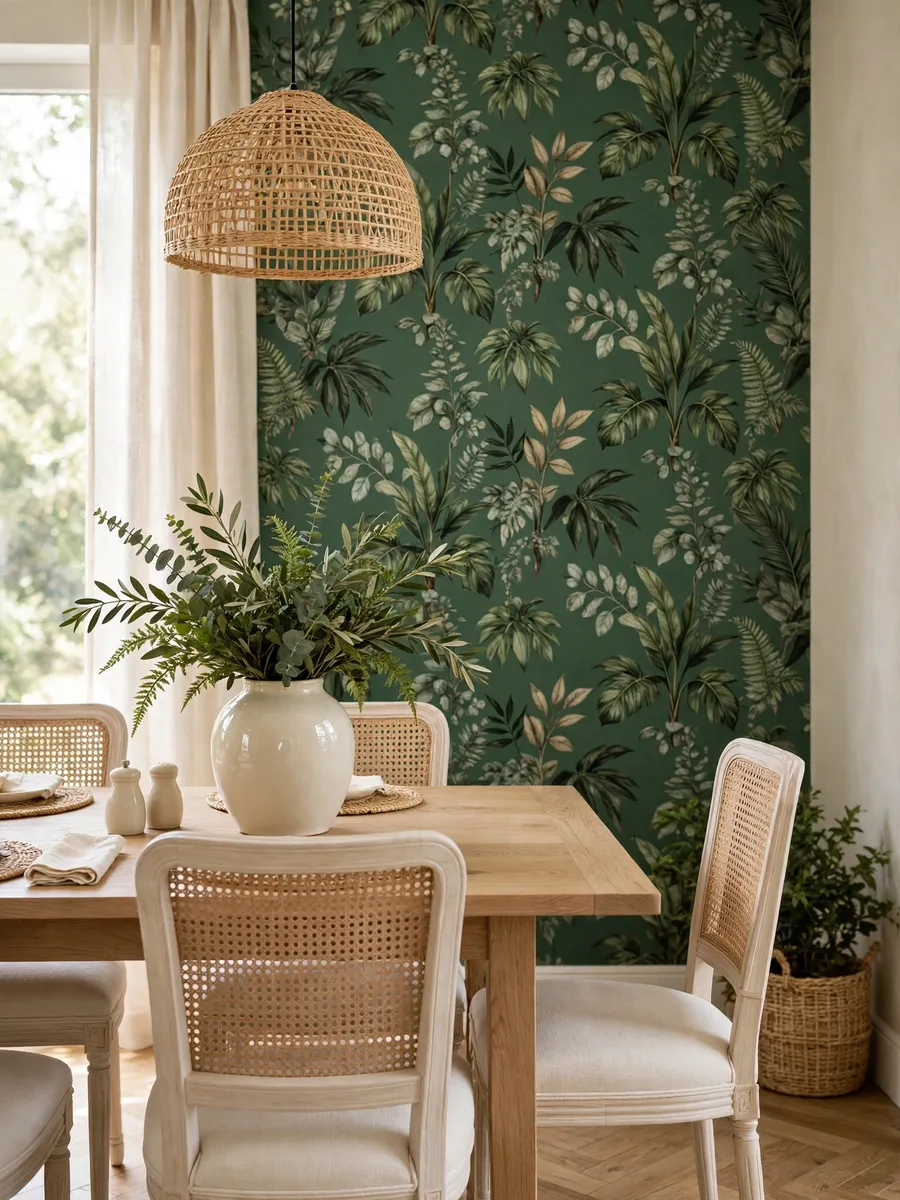
Choose the wall behind the sideboard or the one you face while eating, and pick a pattern with a color you can repeat in the curtains or cushions. A concrete example: botanical green leaf wallpaper behind a light wood table, with cream chairs and a woven pendant, makes the whole room feel designed even though only one wall changed.
Quick tips
- Pick a pattern with at least one color already in the room.
- Keep the other walls plain so the pattern stays the star.
14. How Do Plants Make a Dining Room Feel Alive?
Plants make a dining room feel alive because living green softens hard furniture lines, adds natural color that never clashes, and makes the room feel fresh even when nothing else changes.
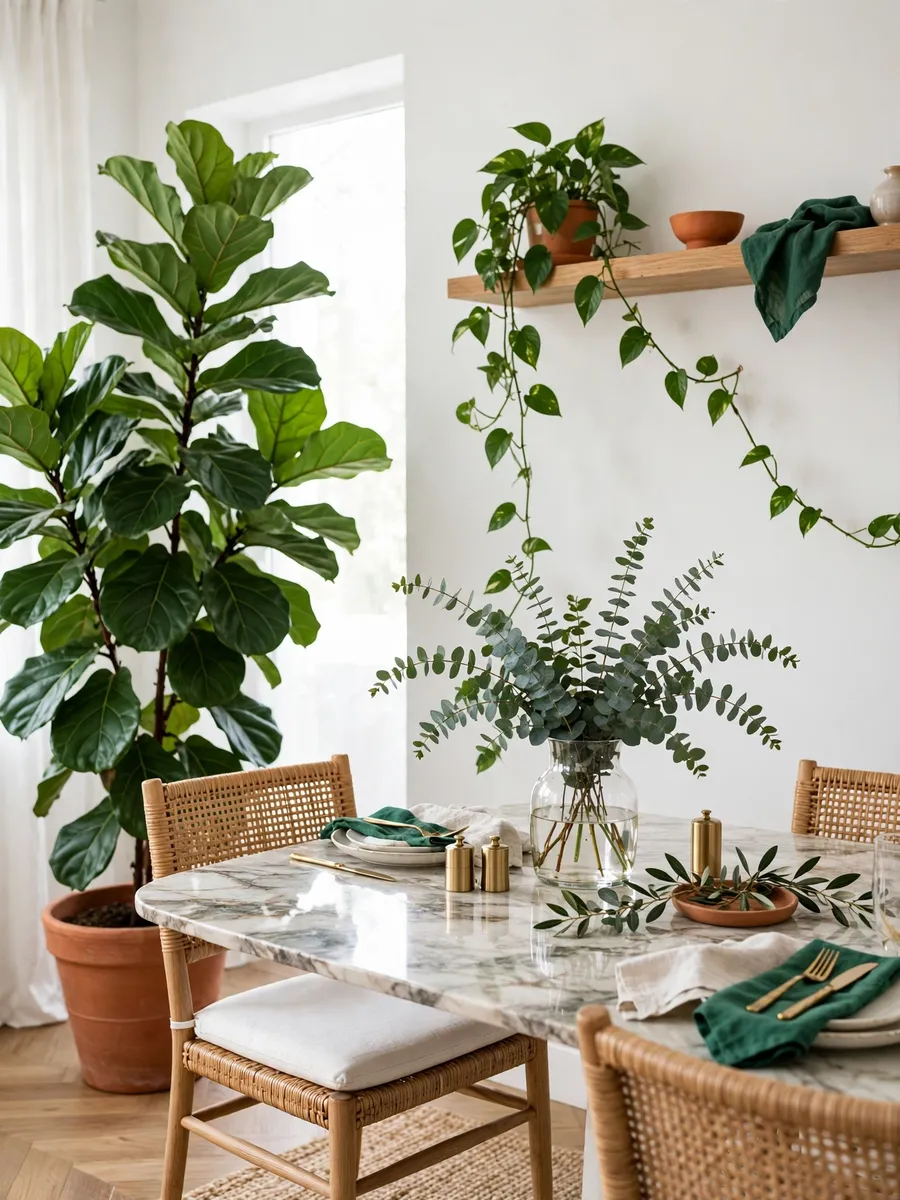
One large plant does more than five small ones scattered around, and a small vase of greenery on the table counts too. A concrete example: a tall fiddle leaf fig in a terracotta pot beside the sideboard, plus eucalyptus in a glass vase on the table, gives a white dining room its only color — and it works in every season.
Quick tips
- Choose one statement plant and one small table arrangement — that is enough.
- Use a tray under pots so watering never marks the wood.
- Faux greenery is fine on high shelves where nobody touches it.
15. Why Does Every Dining Room Need a Bar Cart?
Every dining room benefits from a bar cart because it adds a second serving surface, a stylish display, and a movable drinks station that rolls out of the way when the table needs the space.
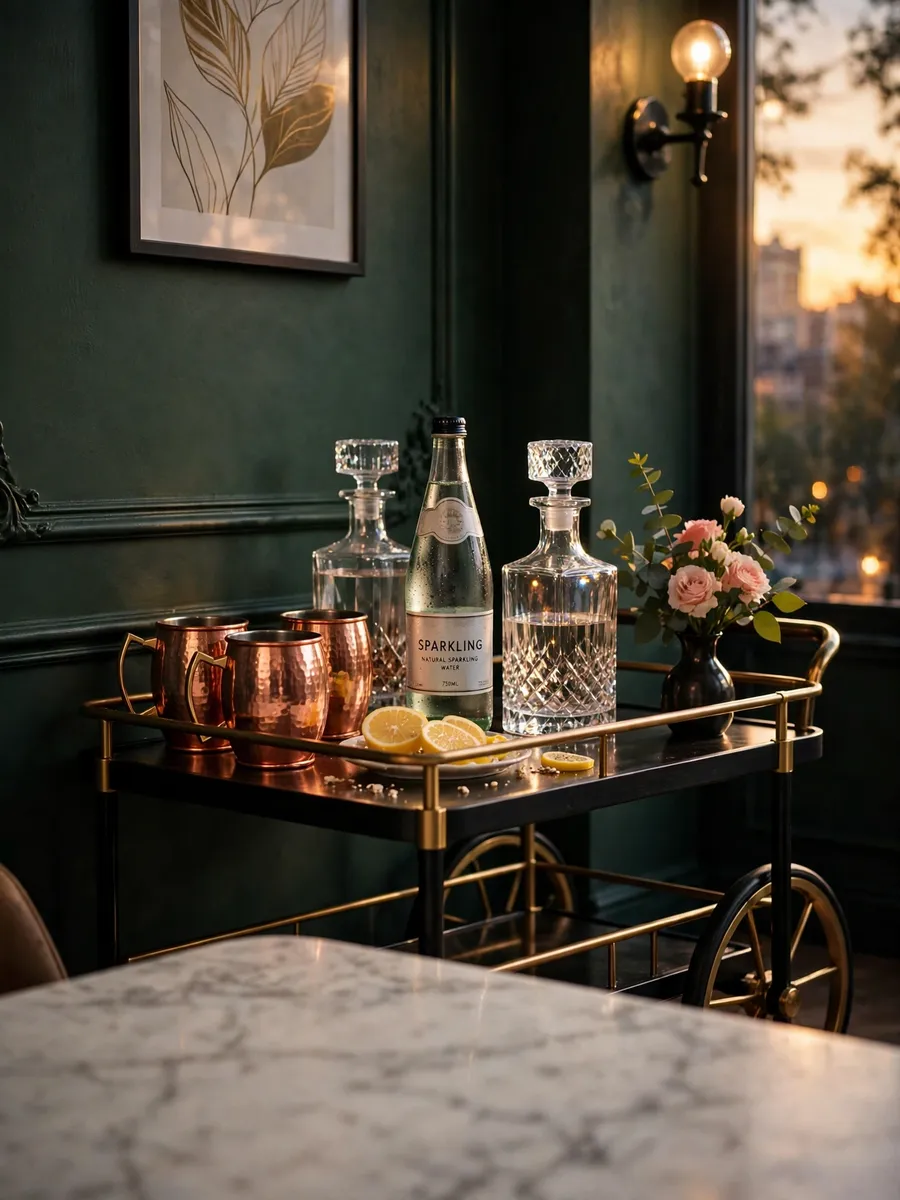
Stock it with what you actually serve — glasses, a decanter, sparkling water, and a few bottles — and style the top with one small vase. A concrete example: a brass and black bar cart with copper mugs, crystal decanters, and lemon slices against a deep green wall serves drinks before dinner and holds dessert plates after.
Quick tips
- Keep the cart near the table but out of the walking path.
- Stock only what you serve monthly — a full cart looks like a shop.
- Add a small tray on top so bottles and glasses stay tidy.
16. How Does Wainscoting Give a Plain Dining Room Instant Character?
Wainscoting gives a plain dining room instant character because panel molding adds architectural texture to flat walls, making a boxy new-build room feel like a classic dining room with almost no furniture changes.
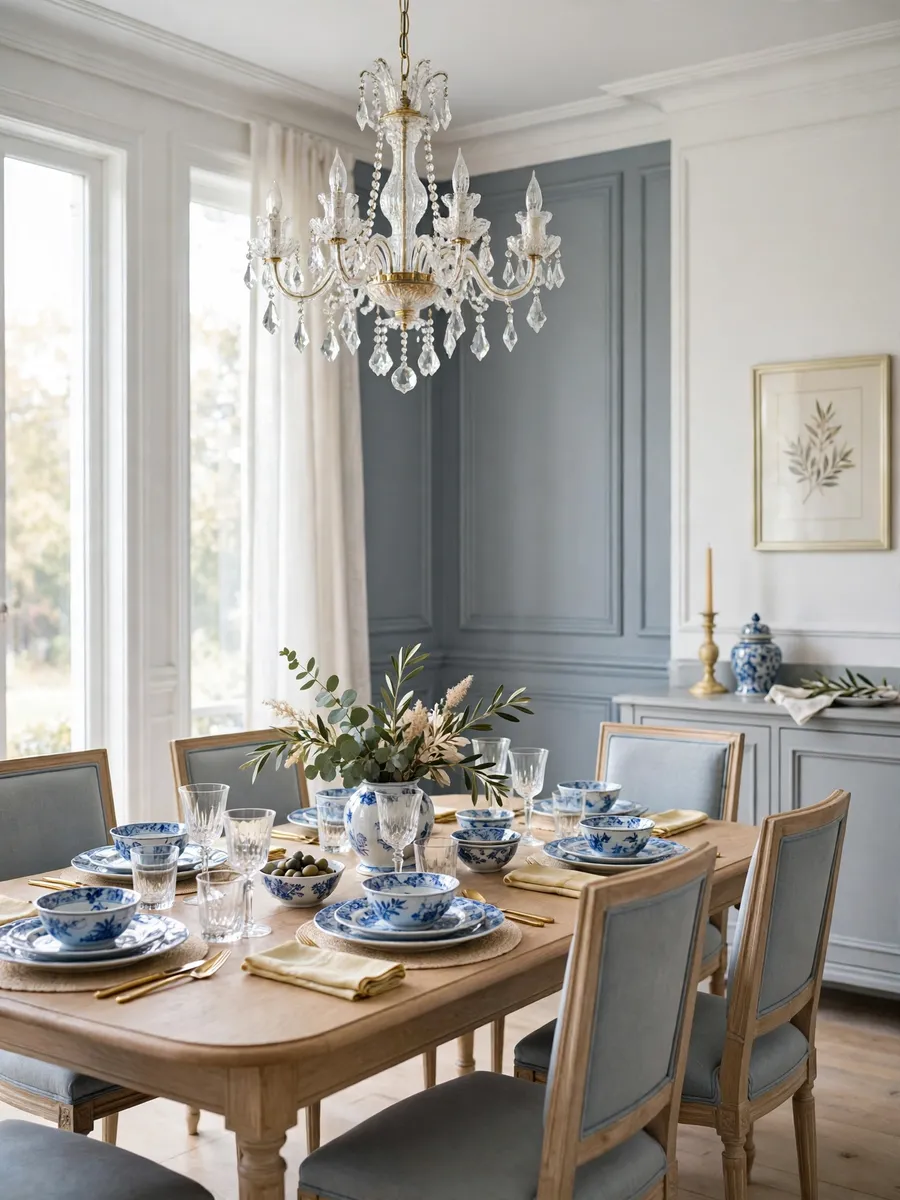
Paint the panels the same color as the wall for a subtle effect, or a soft contrasting shade for a stronger look. A concrete example: soft grey-blue wainscoting on the lower walls with white above, a crystal chandelier, and blue and white porcelain plates turns a plain rectangular room into one that looks a hundred years old.
Quick tips
- Run the paneling to chair-rail height, about 36 inches from the floor.
- Use paintable molding strips for a weekend DIY version.
17. How Do You Refresh a Dining Room for the Season Without Redecorating?
You refresh a dining room for the season by swapping only the top layer — the centerpiece, the napkins, and one or two accents — while the table, rug, and lighting stay exactly the same all year.

Keep a neutral base on the table — a linen runner, a wooden tray, or a dough bowl — and change only what sits on it. A concrete example: the same wooden tray holds mini pumpkins and dried wheat in autumn, pine clippings and clementines in winter, tulips in spring, and lemons in summer — each swap takes about ten minutes.
Quick tips
- Store each season’s swap in one labeled box so changes take minutes.
- Change the napkin color with the season — it is the cheapest update.
- Never buy a whole new centerpiece; swap one layer at a time.
18. Can You Mix Metals in a Dining Room Without It Looking Messy?
You can mix metals in a dining room without it looking messy by choosing one dominant metal and one accent metal, then repeating each at least three times so the mix looks deliberate rather than accidental.
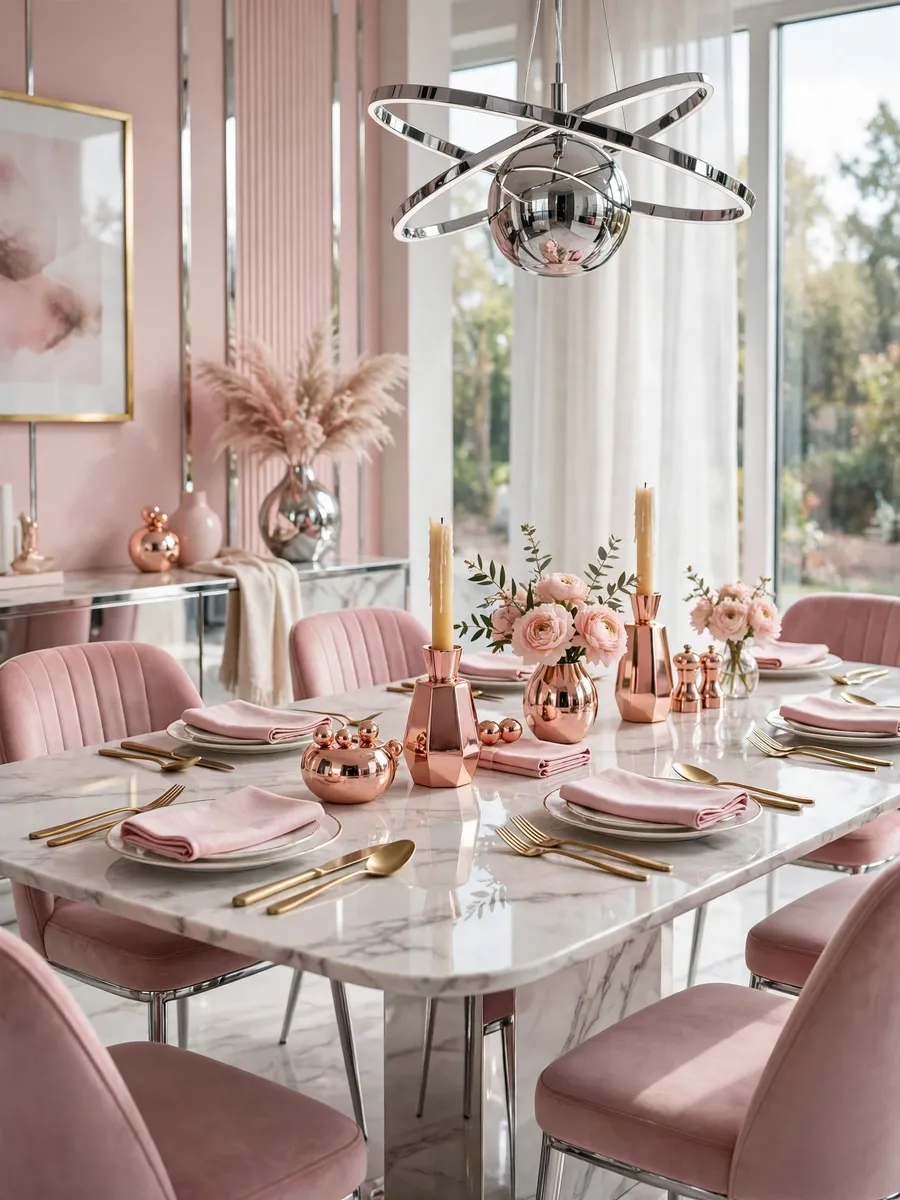
Warm and cool metals can share a room as long as each appears more than once — one brass object among chrome looks like a mistake, but brass repeated in the flatware, candle holders, and frames looks designed. A concrete example: a chrome pendant, brushed brass flatware, and rose gold candle holders around a marble table with blush velvet chairs mix three metals cleanly because each is repeated.
Quick tips
- Pick one dominant metal for the largest pieces and one accent for the rest.
- Repeat each metal at least three times around the room.
- Keep the table surface neutral so the metals can shine.
19. How Do You Turn a Window Corner Into a Cozy Breakfast Nook?
You turn a window corner into a breakfast nook with a round table, two chairs or a built-in window seat, a cushion, and a pendant light — four pieces that make an unused corner the most-used seat in the house.
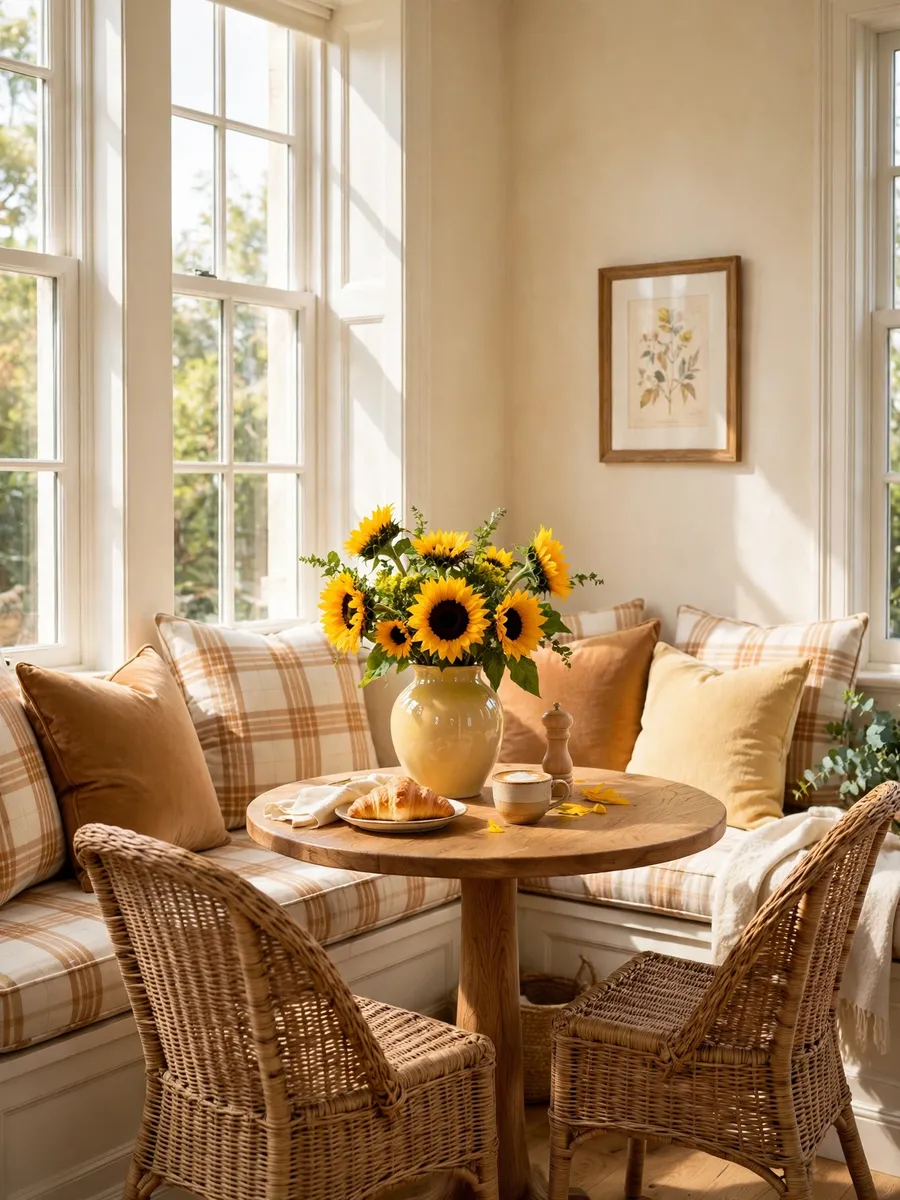
Morning light is the nook’s best feature, so keep the window dressing light — a sheer panel or a simple blind — and add texture with cushions. A concrete example: a cream and caramel plaid cushion on a window seat, a small round wooden table, two woven chairs, and a vase of sunflowers turn a bare bay window into the spot where coffee happens each morning.
Quick tips
- Keep the table under 36 inches across so two people sit comfortably.
- Add a washable cushion — breakfast crumbs are inevitable.
- Hang the pendant low, about 30 inches above the table, for a cozy pool of light.
Dining Room Decor Ideas: Frequently Asked Questions
How do I make my dining room look nice?
Center a statement light over the table, add a rug that fits, choose a wall color or wallpaper you love, hang art or a mirror, and keep a simple low centerpiece — those five moves make the biggest difference for the least effort.
What is the best color for a dining room?
Deep, warm colors such as forest green, burgundy, and navy create an intimate mood that suits evening meals, while soft blues, warm whites, and light greens feel fresh and elegant in a dining room used during the day.
What size dining room rug do I need?
Choose a rug that extends 20 to 24 inches beyond the table on every side, so every chair stays on it even when pulled out. When in doubt, size up — a rug that is too small looks worse than one slightly too large.
What should I put in the middle of my dining room table?
One clear focal point is usually enough: a low bowl of fruit, a vase with a few stems, a cluster of candles, or a sculptural vessel, kept under 12 inches tall so guests can see each other across the table.
How tall should a dining table centerpiece be?
Keep it under about 12 inches tall so seated diners can see each other, or go tall and slim — above 24 inches — so it sits clearly above eye level instead of blocking it.
Conclusion
A beautiful dining room is not built in one shopping trip — it is built one good decision at a time, starting at the table. Pick two or three of these 19 dining room decor ideas that fit your room, measure before you buy, and let the room grow around the way you actually eat. The best dining rooms are not the most expensive; they are the ones where people linger long after the plates are cleared.