22 Cozy Winter Dining Room Decor Ideas for Warm Candlelit Dinners
Winter dining room decor ideas work best when you focus on three things: warmer, lower light, heavier textiles, and natural greenery that lasts from December through February without a single holiday symbol. A washed linen tablecloth, a cedar runner, candles at three heights, and sheepskins on hard chairs turn an ordinary dining room into a room where people linger over dinner. None of it needs a renovation, and most of it takes less than an hour to put in place.
Start with the table, because that is where everyone sits, then work outward to the chairs, the rug, the curtains, and the light. If the table itself is your starting point, these winter table decor ideas show how runners, candles, and layered settings come together on one surface, and the rest of this guide takes the same thinking around the whole room.
Winter Dining Room Decor Ideas: Key Takeaways
What makes a dining room feel cozy in winter? Warm 2700K light, heavier textiles on the table and chairs, and one natural element like cedar or eucalyptus greenery.
How do you decorate a winter dining room without Christmas decor? Skip red, ornaments, and anything with holiday wording; use plain greenery, white candles, wood, and winter colors like forest green, plum, and oatmeal.
What colors work best for winter dining rooms? Warm, muted colors: rust, olive, oatmeal, chocolate, deep green, and warm cream.
What is the fastest winter dining room change? Swap in a heavier tablecloth and group candles at three heights; both take under fifteen minutes and change the whole room.
1. How Does a Heavier Tablecloth Change a Winter Dining Room?
A heavier tablecloth changes a winter dining room because weight reads as warmth: washed linen or a wool-blend cloth in oatmeal drapes softly, muffles sound, and hides the scratches a bare table collects all year.
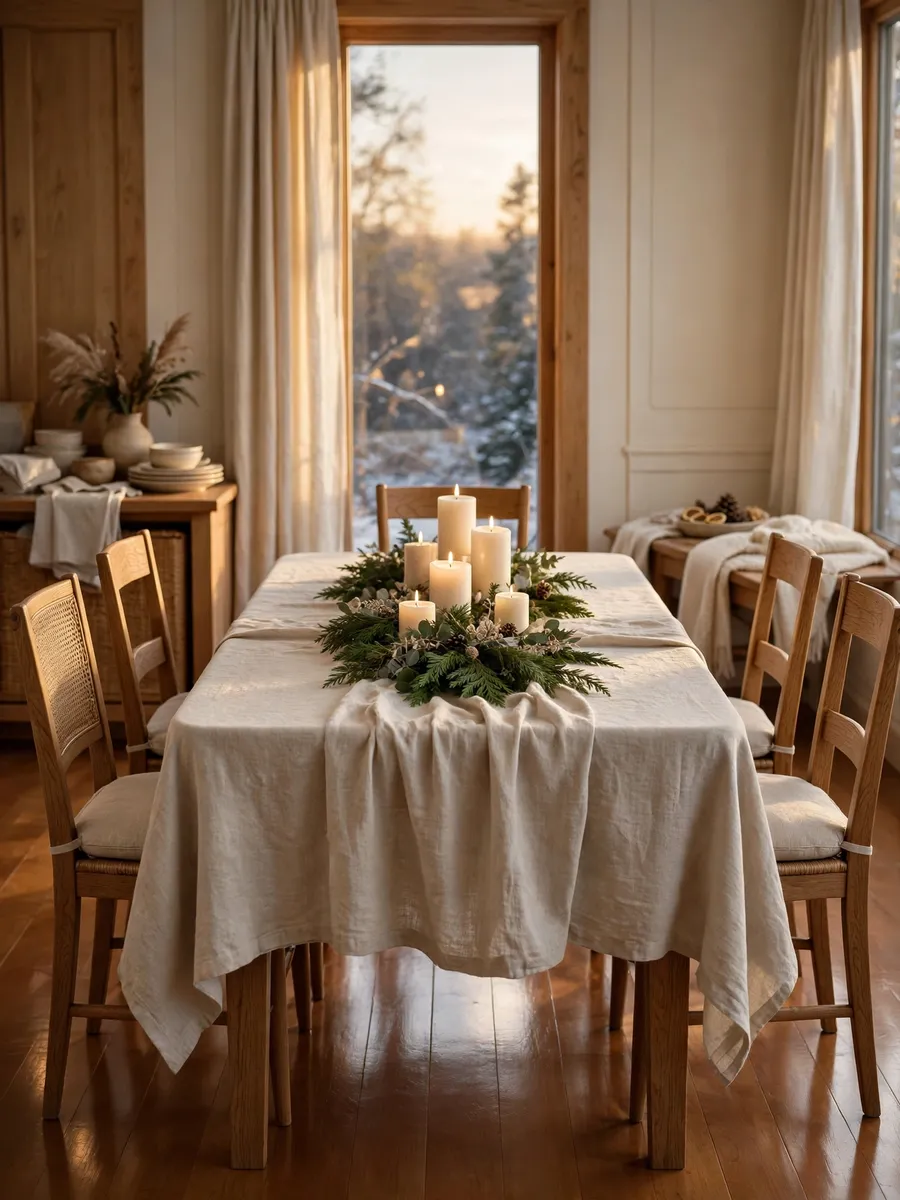
A concrete example: an oatmeal washed-linen cloth that drops two inches past the edge of a six-seat oak table, with a cedar runner down the middle, makes a bright summer dining room feel like a winter room in five minutes. By February the cloth has softened into the table’s shape, and the room feels settled rather than decorated for a single night.
Quick tips
- Choose a cloth that drops 8 to 10 inches over the edge so it looks generous, not skimpy.
- Wash it once before the first dinner so the linen softens and the creases fall naturally.
2. How Do You Lay a Greenery Runner Without Making It Look Like Christmas?
Lay a greenery runner by using plain cedar, pine, or seeded eucalyptus with no berries, bows, or ornaments, laid loose down the center so it reads as winter nature, not a holiday display.
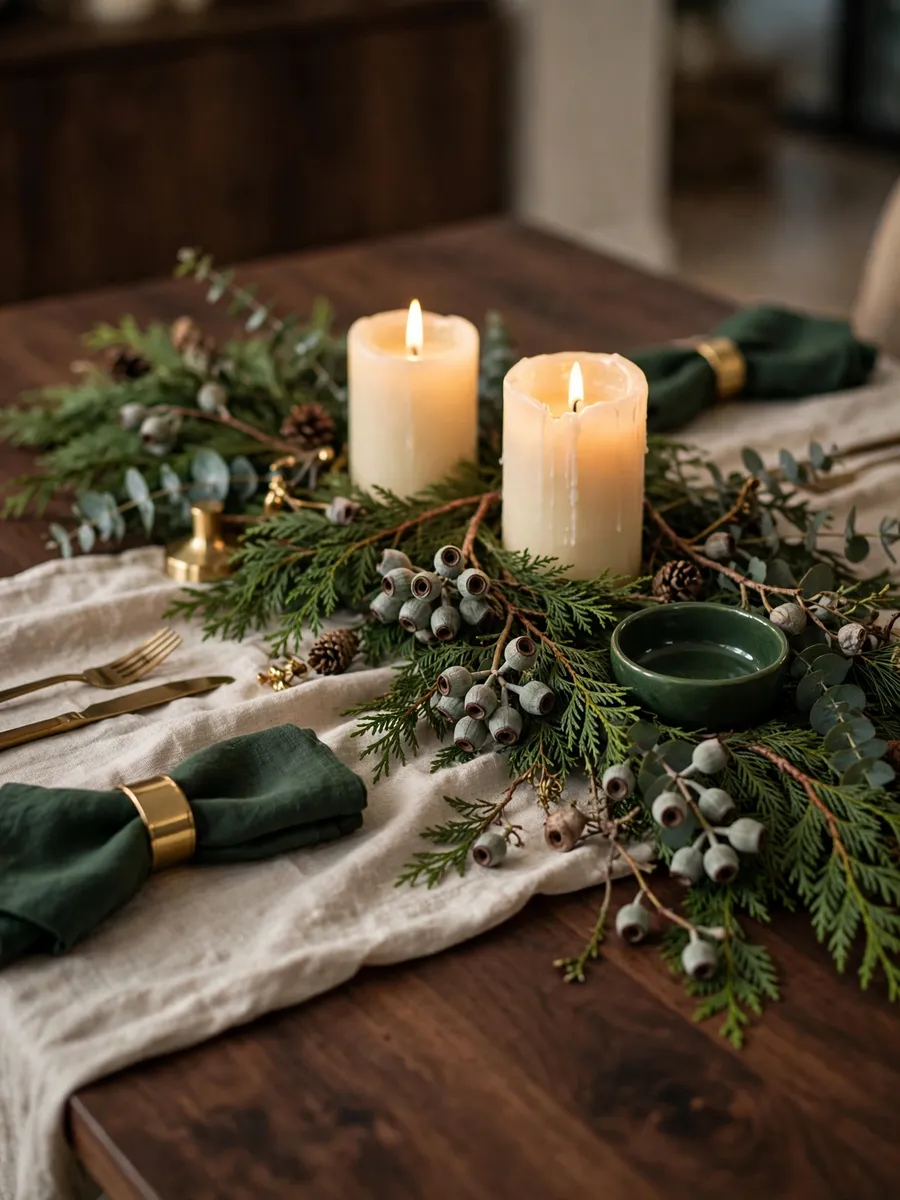
A concrete example: three cedar branches overlapped down a 72-inch table, tucked with sprigs of seeded eucalyptus and two cream pillar candles, stay fresh for two weeks and work from December through February. When the branches finally dry out, they go into the fireplace or the compost, and a fresh bunch costs less than a bouquet.
Quick tips
- Mist the branches lightly every few days so they stay green longer.
- Keep the runner inside the middle third of the table so plates and glasses still fit.
3. Why Should Candles Sit at Three Different Heights?
Candles at three heights throw warm light across the whole table instead of two bright points in the middle, and the staggered heights make the table look gathered rather than formally arranged.

A concrete example: tall brass tapers at the center, chunky cream pillars halfway along the runner, and small glass tea lights near each end give a six-seat table a glow that flatters everyone sitting at it. Dim the chandelier when the candles are lit, so the flames do the work and the room drops to a dinner-party glow.
Quick tips
- Mix brass or wooden candlesticks with plain glass holders for a collected look.
- Keep every flame at least a hand’s width from greenery and napkins.
4. How Do Sheepskins Make Hard Dining Chairs Comfortable in Winter?
A faux sheepskin draped over the seat and back of a hard wooden chair adds instant warmth under you and behind you, and it makes the whole room look ready for a long evening.
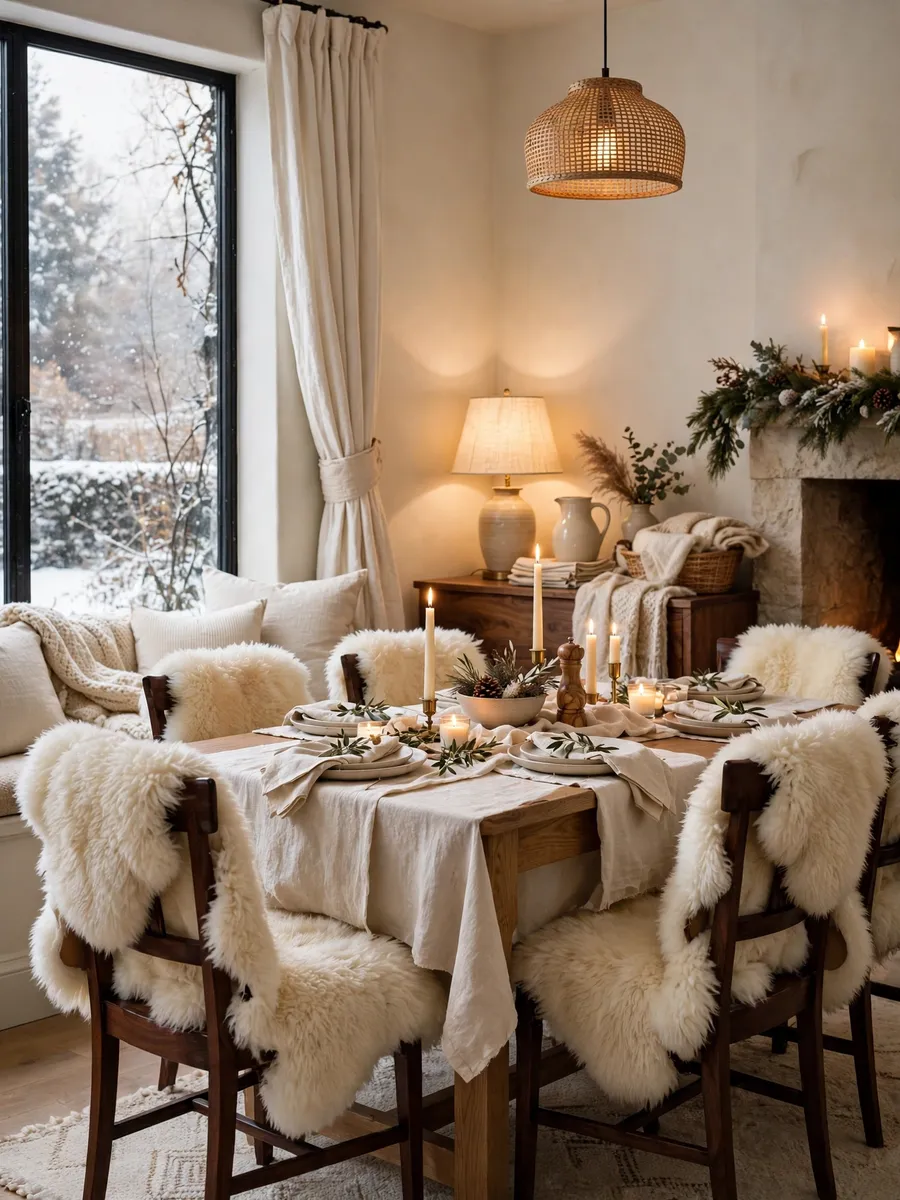
A concrete example: ivory faux sheepskins on just the two end chairs of a dark walnut table soften the room’s hardest seats and give the hosts’ chairs a quiet sense of occasion.
Quick tips
- Use sheepskins on the end chairs first if you only buy two.
- Shake them outside weekly so they stay fluffy and dust-free.
5. What Rug Works Best Under a Winter Dining Table?
A warm, low-pile rug works best under a winter dining table because chairs slide easily on it, crumbs vacuum out, and its pattern pulls the table, chairs, and light into one warm zone.
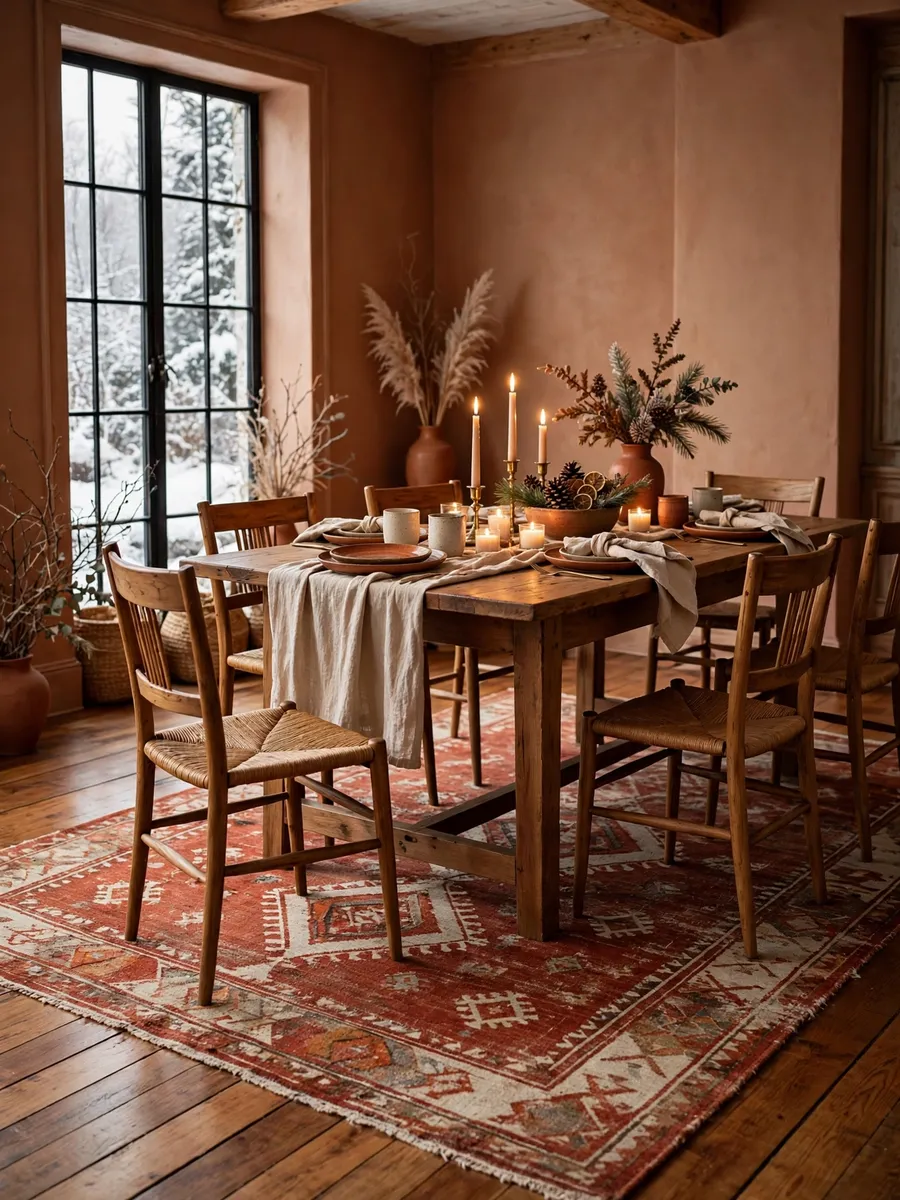
A concrete example: a faded vintage-style wool rug in rust and cream, sized so chairs stay on it when pulled out, warms bare floorboards and makes the whole table feel anchored. A rug pad underneath stops it sliding when chairs are dragged in and out, and adds one more layer of warmth underfoot.
Quick tips
- Size the rug at least 24 inches wider than the table on every side.
- Choose low pile so chairs move without catching.
6. How Do Warm Bulbs and a Dimmer Transform Winter Dinners?
Warm bulbs around 2700K with a dimmer transform winter dinners because the light drops to a candle-like glow at the table instead of the bright overhead glare that makes a dining room feel like an office.
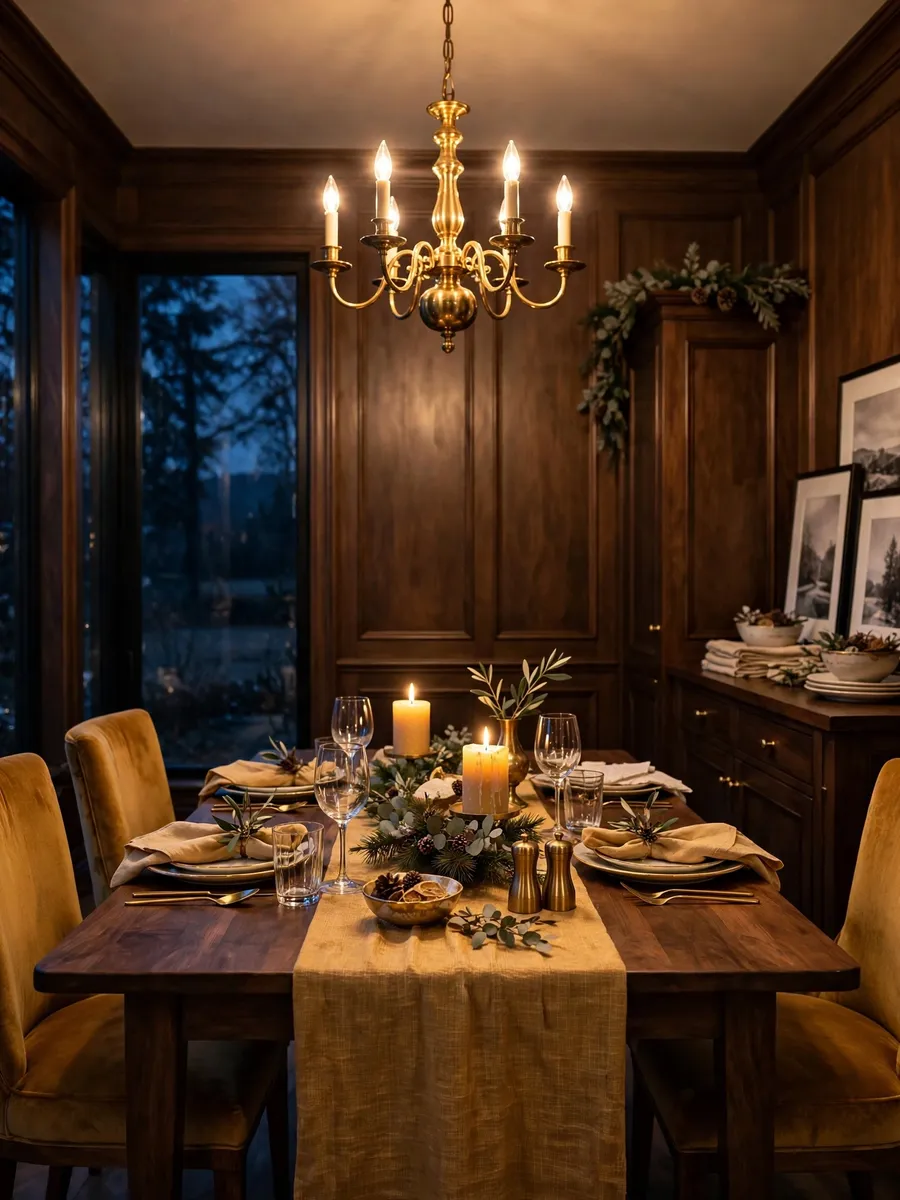
A concrete example: a brass chandelier fitted with warm 2700K bulbs and dimmed to half power, plus two lit pillar candles on the table, turns a plain weeknight supper into a candlelit dinner. If a dimmer is not possible in a rented home, a plug-in lamp with a warm bulb on the sideboard gives the same low glow.
Quick tips
- Fit a dimmer before you buy new lights — it changes the room more than the fixture.
- Test bulbs at night, not in daylight, to judge the real color.
7. Why Hang Heavier Curtains in the Dining Room for Winter?
Heavier curtains block winter drafts, soften the hard edges of a window wall, and add a layer of color and texture that a bare window can never give a dining room in January.
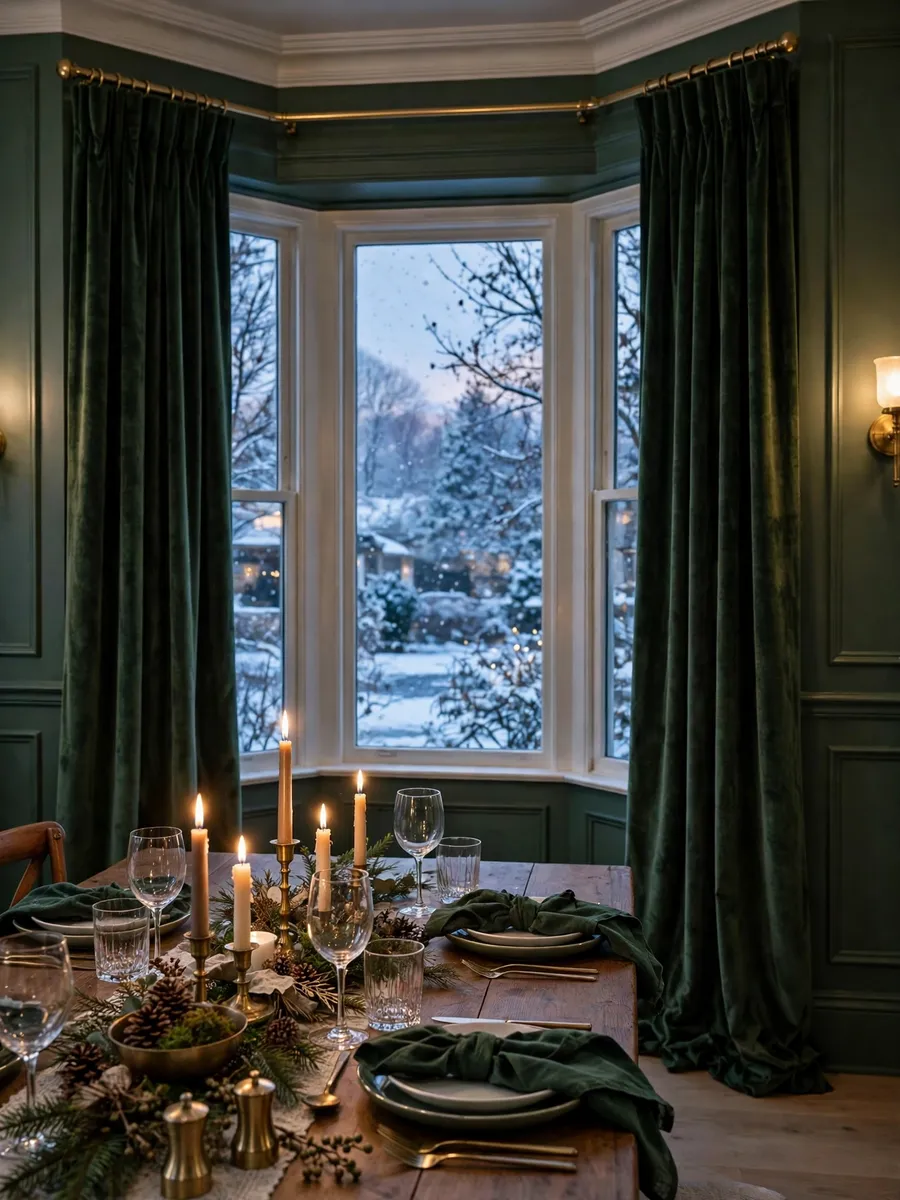
A concrete example: floor-length forest-green velvet curtains on a brass rod, drawn to frame a bay window behind the table, stop the evening chill and make the room feel enclosed and warm. In a small dining room, curtains in one solid color keep the window wall calm, while a busy pattern can shrink the room.
Quick tips
- Hang curtains high and wide so the window looks larger when they are open.
- Line them so they hang straight and block drafts properly.
8. How Do You Layer Place Settings for a Winter Table?
Layer place settings with a charger, a dinner plate, and a folded cloth napkin in a deep winter tone, because the layers make an ordinary dinner feel like an occasion without buying a single new dish.

A concrete example: cream stoneware plates on woven seagrass chargers, forest-green linen napkins folded under a sprig of cedar, give a plain white table a winter depth that washes and folds away in spring. The same layers work for a Tuesday soup supper, so the table feels special without saving the good plates for guests only.
Quick tips
- Repeat one accent color at every place so the table looks planned.
- Keep the napkin fold simple — a flat fold with a greenery sprig beats a fussy shape.
9. What Does Amber Glass Add to a Winter Table?
Amber glass adds warmth to a winter table because its honey color catches candlelight and glows, turning plain water glasses and a simple carafe into the table’s warmest detail.

A concrete example: four amber drinking glasses and a matching amber carafe set on a linen runner beside cream plates make a neutral table look golden by candlelight.
Quick tips
- Use amber glass for water and everyday drinks, not just special occasions.
- Pair it with brass cutlery so the warm tones match.
10. How Do Bare Branches Bring Winter Indoors Without Holiday Symbols?
Bare branches bring winter indoors because their sculptural shape is the season itself — no berries, no lights, no ornaments — just the quiet structure of a tree in January.
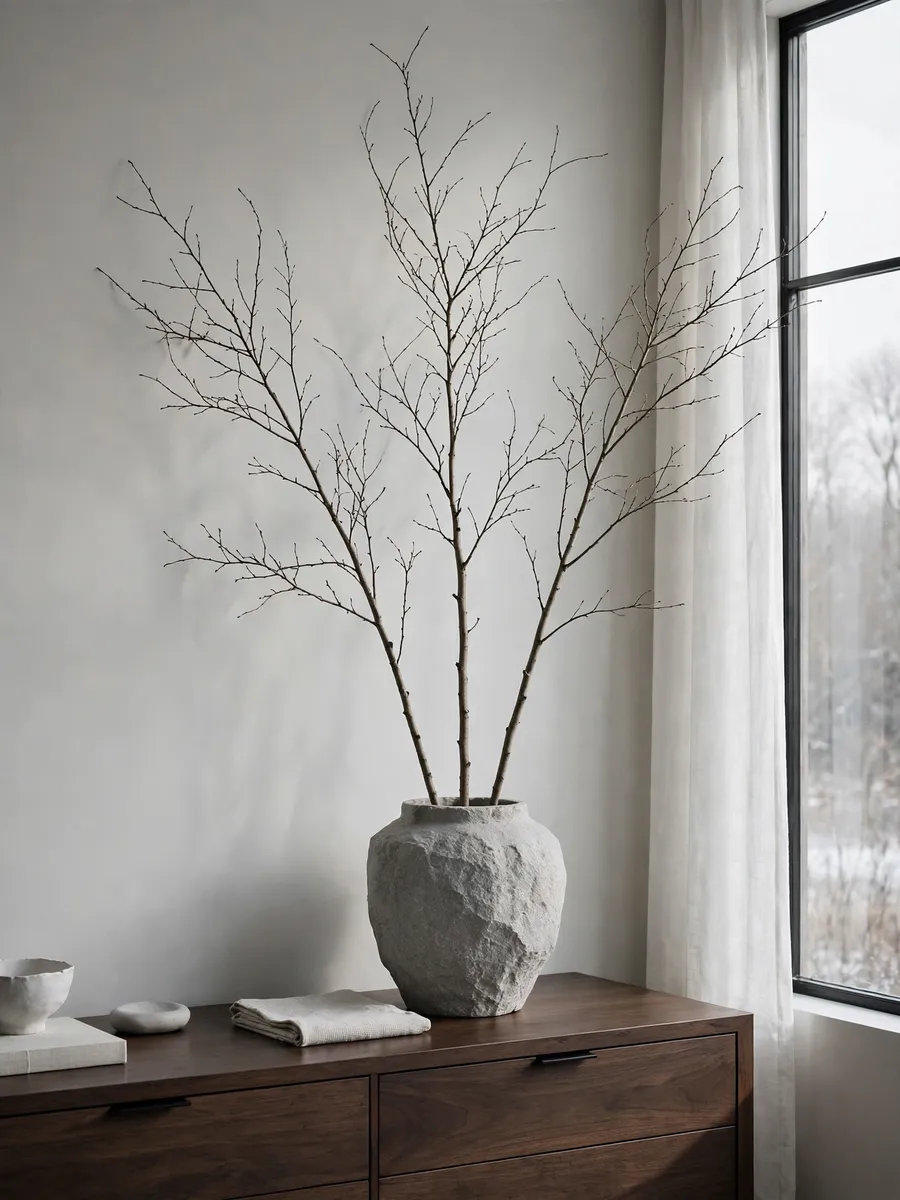
A concrete example: three tall bare branches in a heavy stone vase on the sideboard, silhouetted against a pale wall, give a dining room a winter focal point that lasts until spring. Change the vase water weekly and the branches stay supple for months, long after the greenery runner has been replaced.
Quick tips
- Choose a heavy vase so tall branches cannot tip over.
- Trim the branches to fit the room — they should clear the ceiling by a hand’s width.
11. Why Put a Bowl of Winter Citrus on the Table?
A bowl of winter citrus adds color and a job to the table: blood oranges, clementines, and lemons bring bright scent and shape, and guests can actually eat them after dinner.

A concrete example: a wide shallow wooden bowl of blood oranges and clementines, set on a linen runner with two cream candles, adds the only strong color a neutral winter table needs. A lemon or two among the oranges keeps the bowl from looking too sweet, and the scent fills the room when the fruit is peeled.
Quick tips
- Mix two citrus types for shape and color contrast.
- Replace fruit as it is eaten so the bowl always looks full.
12. How Does a Wool Runner Warm Up a Winter Table?
A wool runner warms a winter table because its matte, heavy weave adds texture under every dish, and its muted color connects the table to the room’s other winter textiles.
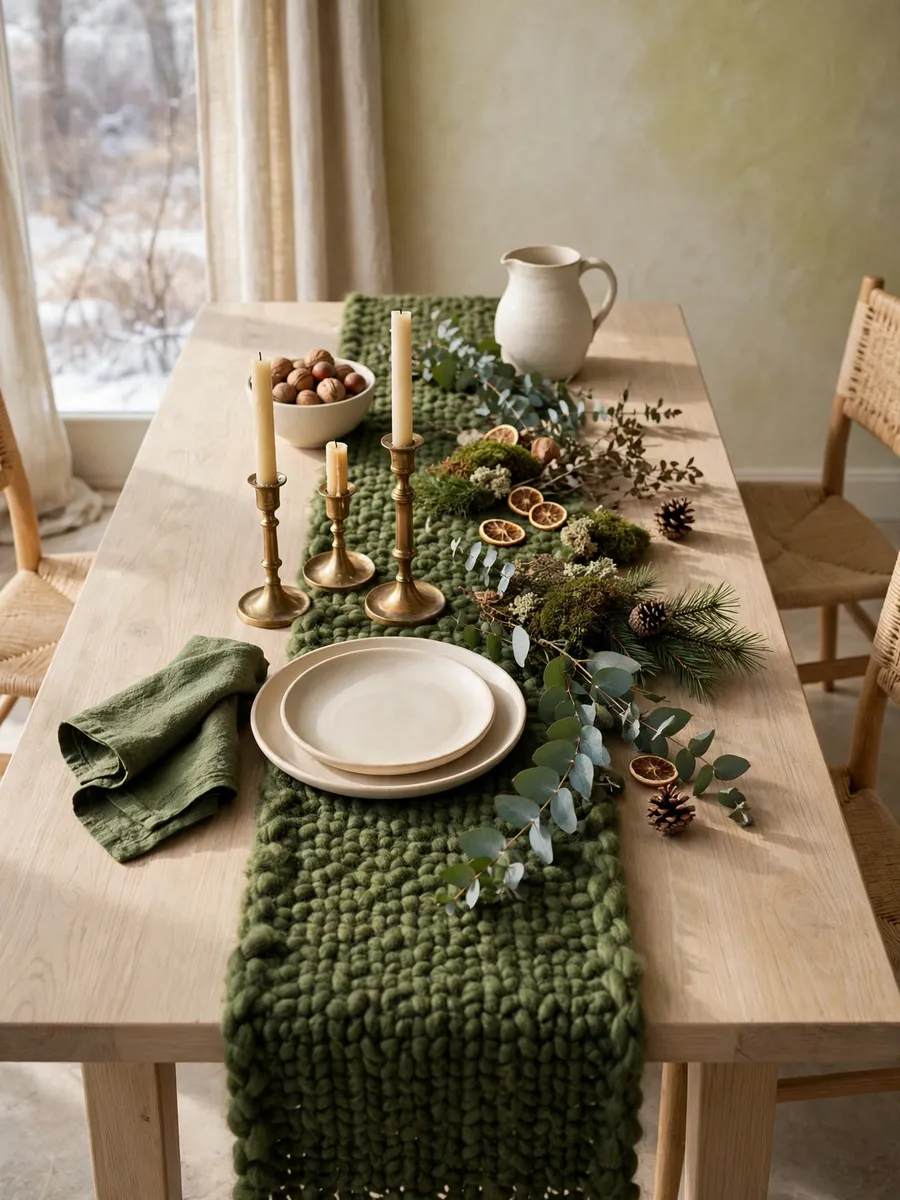
A concrete example: a moss-green woven wool runner down a pale oak table, with cream stoneware plates and brass candlesticks on top, makes the table feel dressed for the season without a full cloth. A runner in a darker tone also hides the odd spill, which is useful when red wine is on the table.
Quick tips
- Choose a runner that leaves wood visible on both sides so the table still shows.
- Shake it outside and air it monthly instead of washing it often.
13. Why Keep Stoneware Out on Display in Winter?
Stoneware kept out on display works in winter because the season’s cooking uses heavy plates, deep bowls, and thick mugs, and their speckled glazes become the room’s texture display.
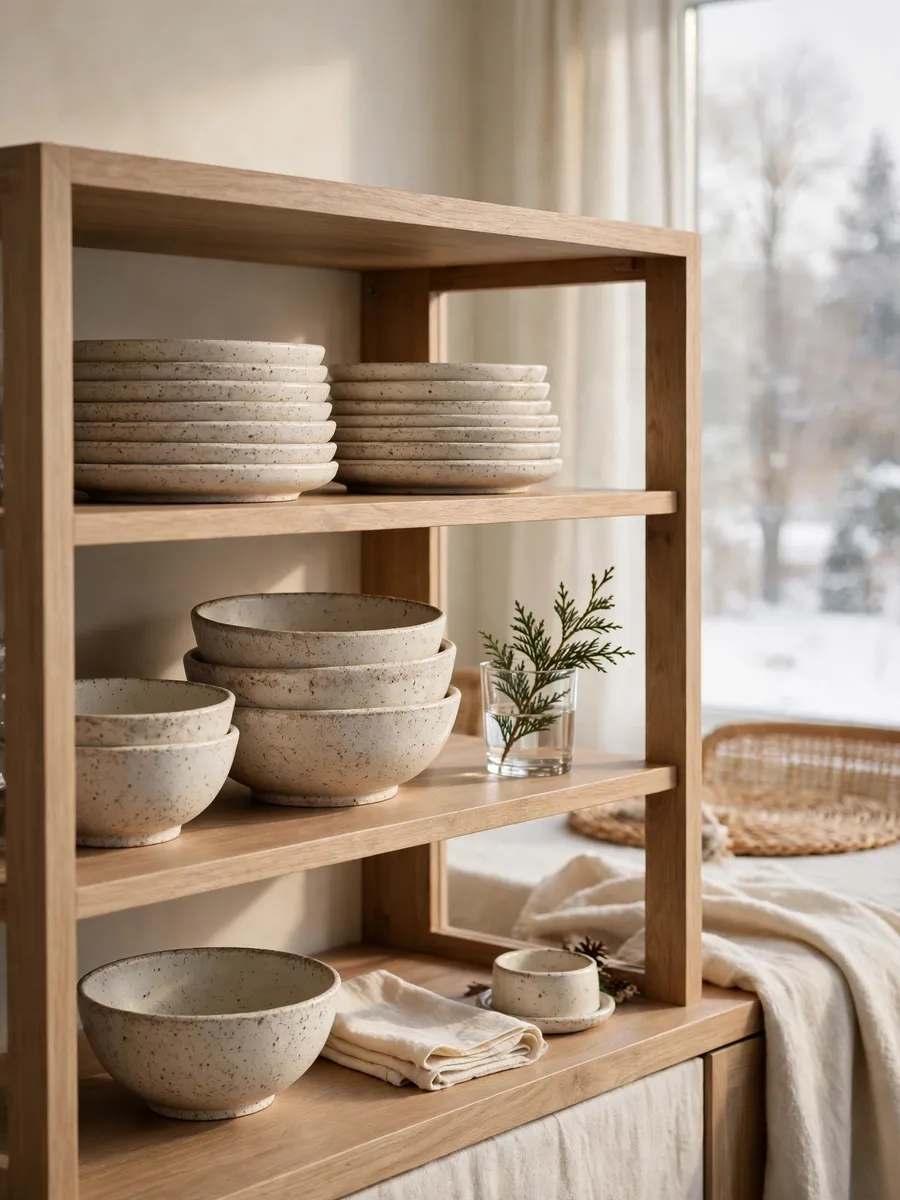
A concrete example: a stack of cream stoneware plates and three deep speckled bowls on an open sideboard shelf, beside a small cedar sprig in a glass, makes setting the table take half the time.
Quick tips
- Keep stacks to one glaze family so the display reads as a collection.
- Store the everyday set lowest so it is easy to reach.
14. How Do Throws and Cushions Make a Dining Bench Cozy?
Throws and cushions make a dining bench cozy because a bare wooden bench is cold and hard for a long dinner, while a folded wool throw and two cushions turn it into the room’s most inviting seat.
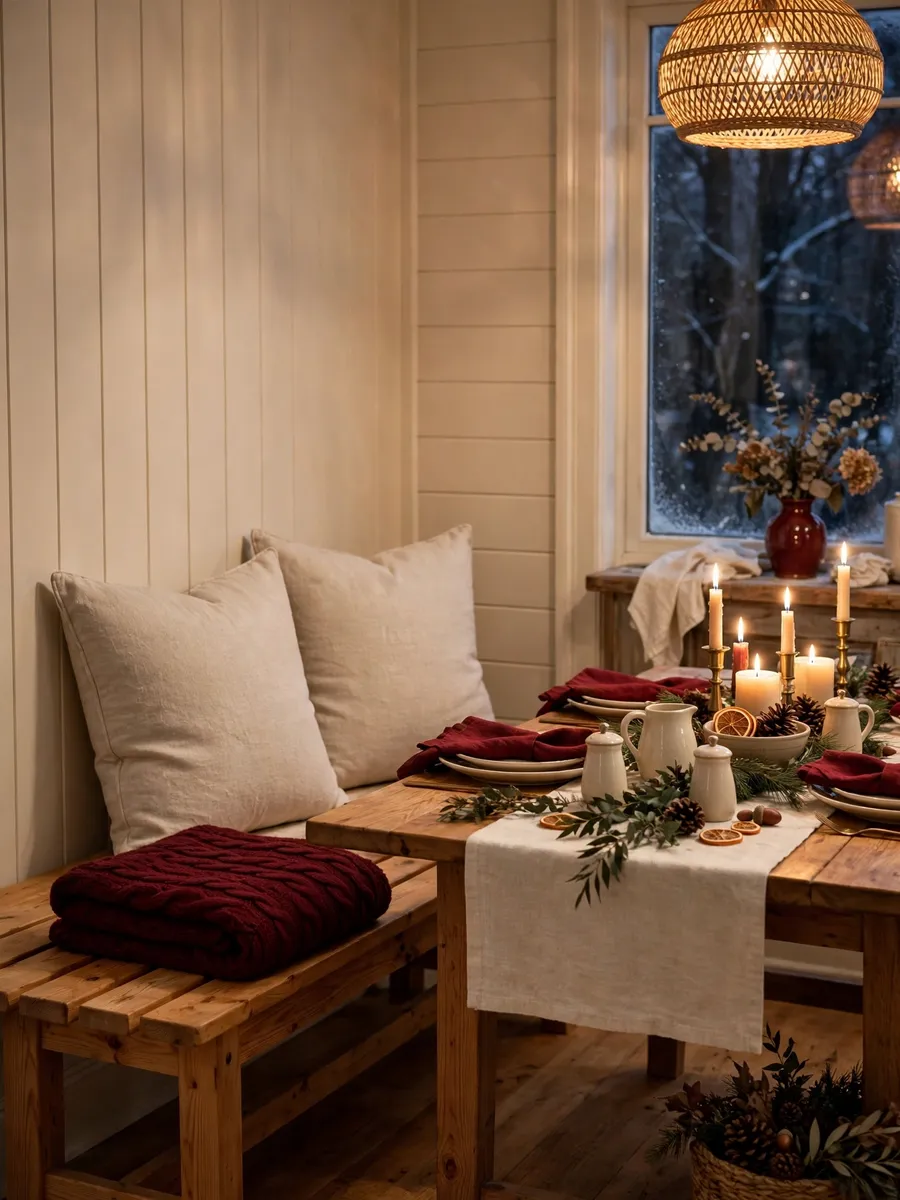
A concrete example: a burgundy chunky-knit throw folded along a pine bench, with two oatmeal linen cushions against the wall, seats four people comfortably through a two-hour dinner. A bench also seats an extra guest without another chair, which is why it earns its place at a winter table built for long dinners.
Quick tips
- Fold the throw, don’t drape it loosely, so it stays put when people sit.
- Choose washable cushion covers for a bench that gets daily use.
15. How Do You Turn the Sideboard Into a Winter Serving Station?
Turn the sideboard into a winter serving station by giving it a real job: stack the plates there, set out the water jug and glasses, and keep the serving dishes within reach of the table.
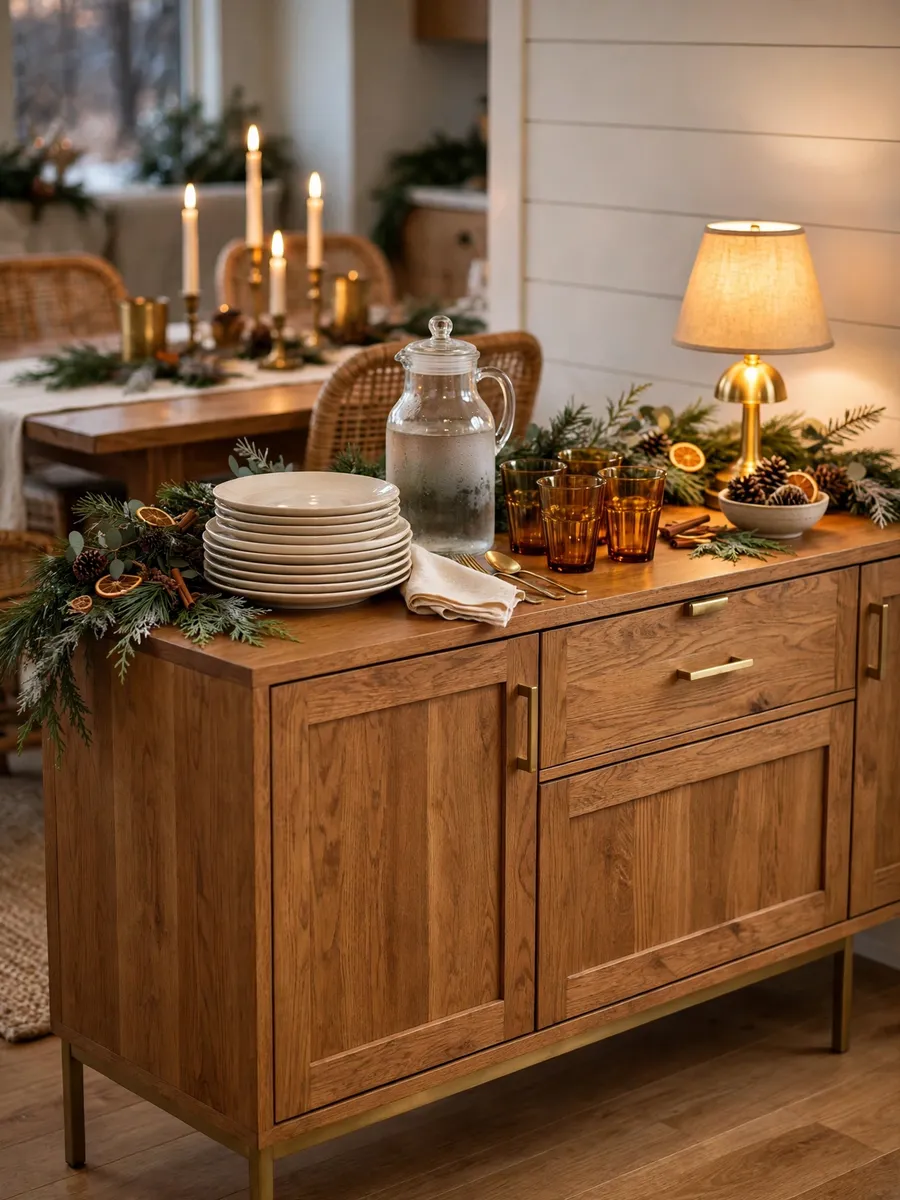
A concrete example: a honey-oak sideboard holding a stack of cream plates, a glass water jug, four amber glasses, and a small brass lamp gives a dinner party a serving spot so the table stays clear for food. A tray on the sideboard catches drips from the jug, and it gives the station a finished edge without any extra decorating.
Quick tips
- Keep the serving station to one side of the sideboard so the other half stays decorative.
- Add a small lamp so guests can see what they are serving in the evening.
16. What Makes One Large Matte Ceramic Vessel Enough?
One large matte ceramic vessel is enough because its size and shape finish a sideboard or table on their own, and a single strong object reads calmer than a crowd of small ones.
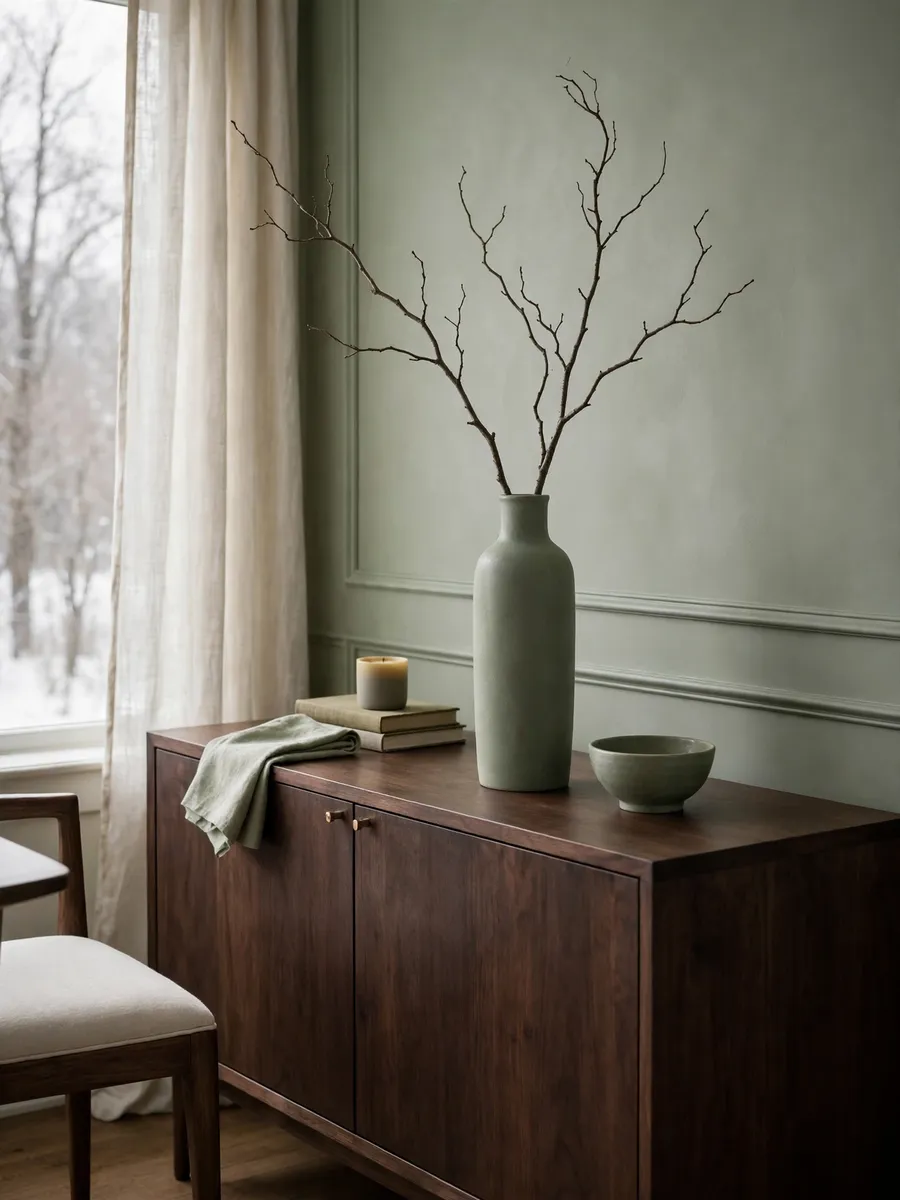
A concrete example: a tall sage-green matte ceramic vase holding three bare branches on a dark walnut sideboard anchors the whole wall without anything else beside it.
Quick tips
- Pick a vessel at least 12 inches tall so it holds its own on a sideboard.
- Leave it empty sometimes — the shape alone is the decoration.
17. How Do Moss Green and Brown Textiles Ground a Winter Dining Room?
Moss green and brown textiles ground a winter dining room because they are the colors of the season outside — damp leaves, bare earth, evergreen — and they make a pale room feel rooted.
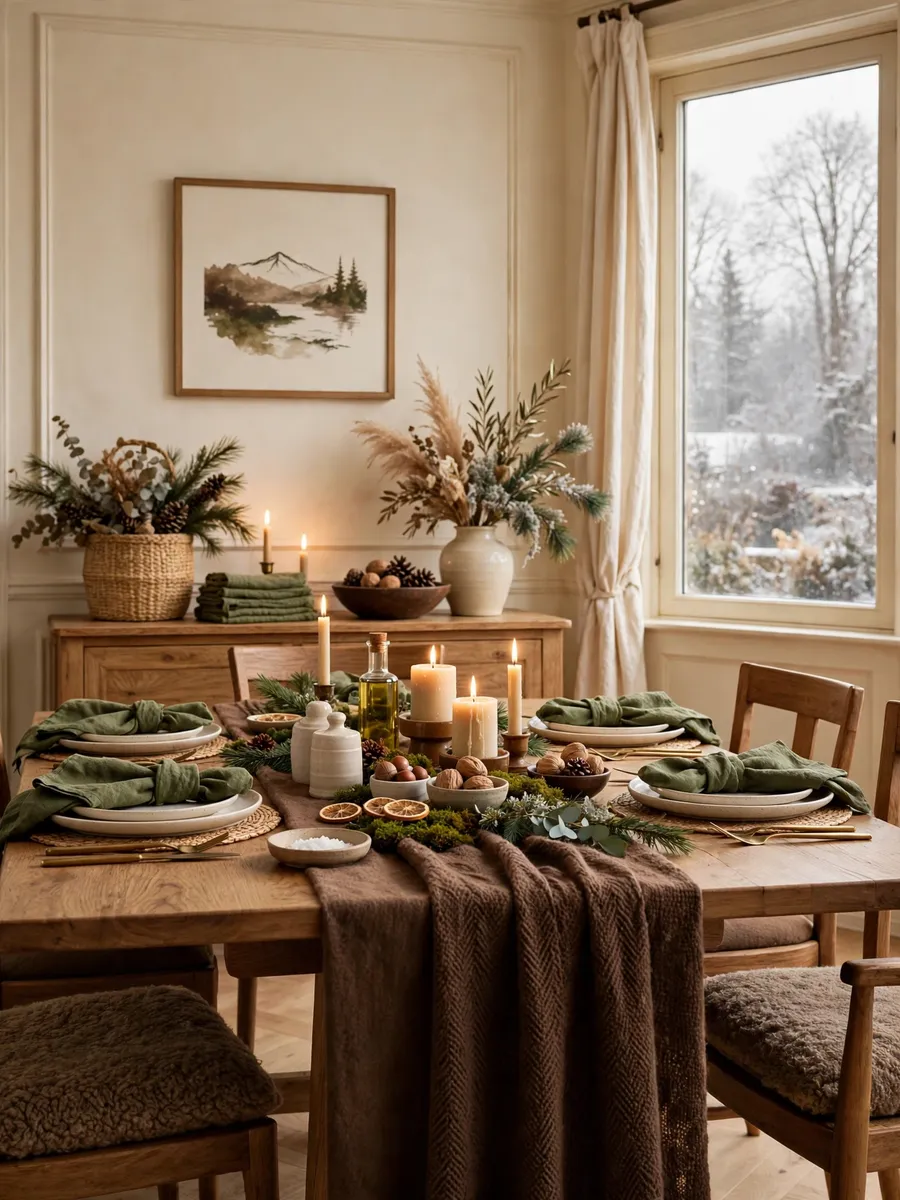
A concrete example: moss-green linen napkins, a brown wool runner, and chocolate-brown seat cushions in a cream-walled dining room give the room a quiet winter weight without painting a wall. These colors also flatter wood furniture, so the table and chairs look richer against them instead of competing with them.
Quick tips
- Use moss green in the small pieces first — napkins and cushions — before committing to larger ones.
- Balance the dark textiles with cream plates so the table stays bright.
18. Can Plum and Soft Gray Make a Winter Dining Room Feel Rich?
Plum and soft gray make a winter dining room feel rich because plum brings depth without the rusticity of red, and soft gray keeps it calm and modern instead of heavy.
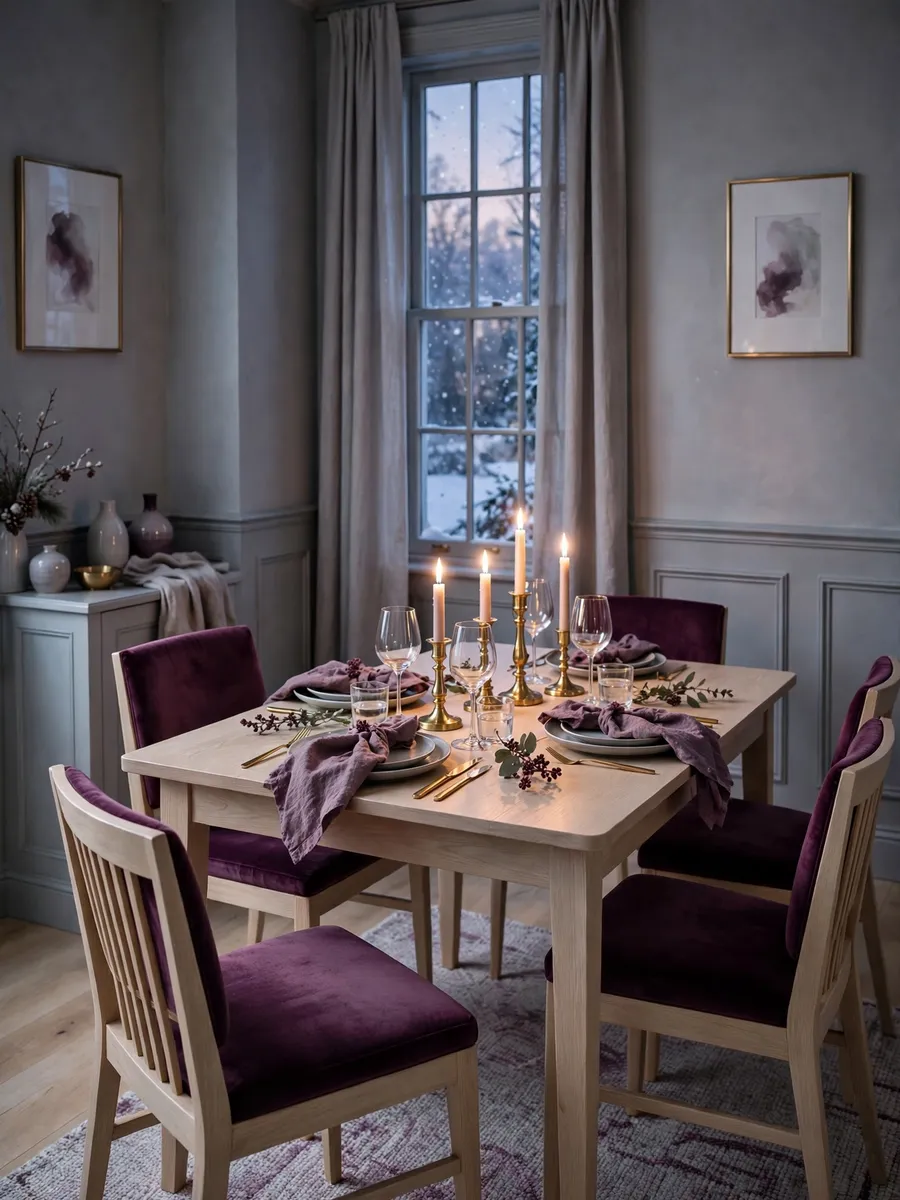
A concrete example: plum linen napkins and a plum velvet cushion on each chair, against soft gray walls and a pale oak table, give a small dining room a jewel-like winter mood. A single plum candle or a plum linen napkin ring is enough to repeat the color once more without overdoing it.
Quick tips
- Keep plum to the textiles so it is easy to swap in spring.
- Add one brass detail, like candlesticks, to warm the gray.
19. How Do Flameless Candles Give a Candlelit Look Safely?
Flameless candles give a candlelit look safely because their flickering LED flame glows like a real one, but they can sit inside greenery and near linen without any fire risk.
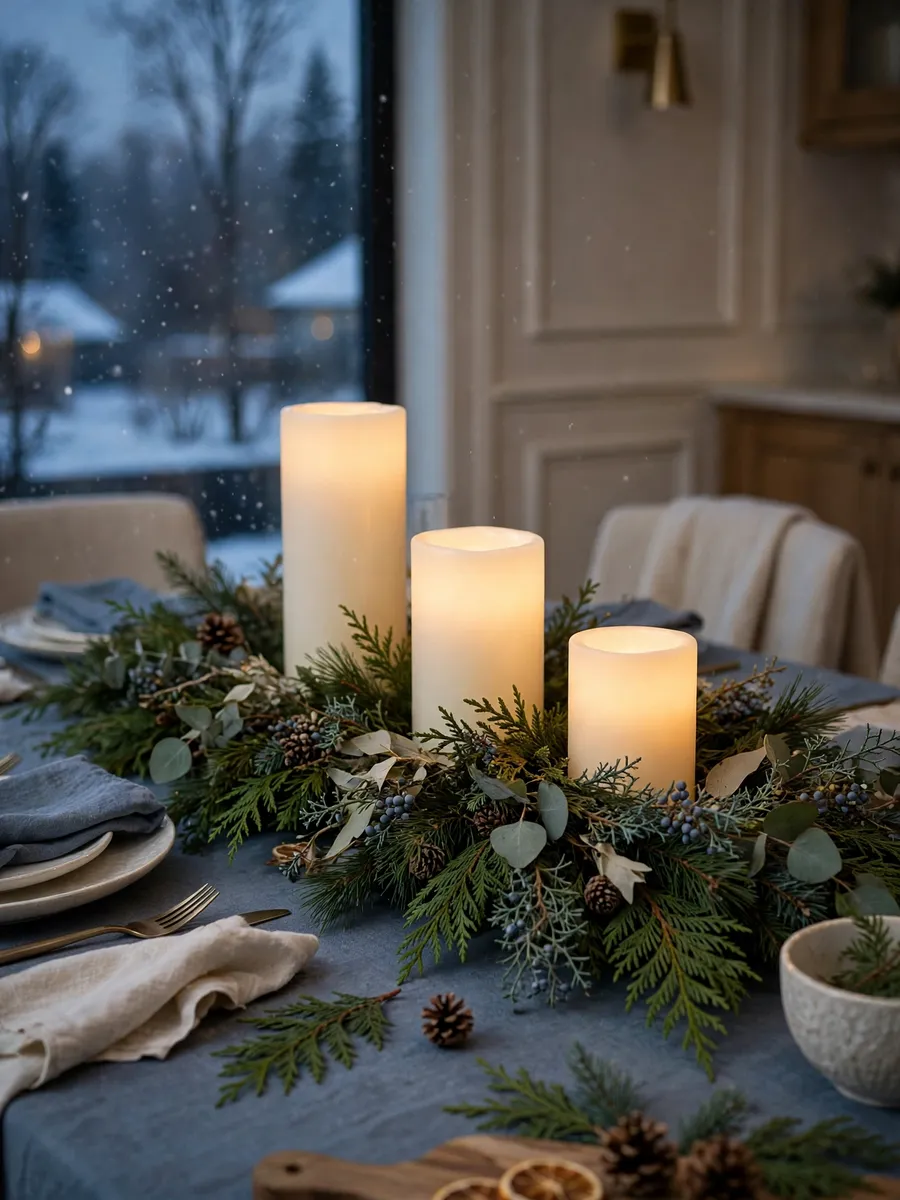
A concrete example: three ivory flameless pillars of different heights set inside a cedar runner on a slate-blue tablecloth glow all evening while children reach across the table for bread.
Quick tips
- Choose flameless candles with a warm 2700K glow, not a cool white one.
- Use the timer setting so they switch on at dinner time every evening.
20. Why Anchor the Centerpiece on a Long Wooden Board?
A long wooden board anchors the centerpiece because candles, a small vase, the water jug, and the bread all land on it, and the rest of the table stays clear for plates and serving dishes.
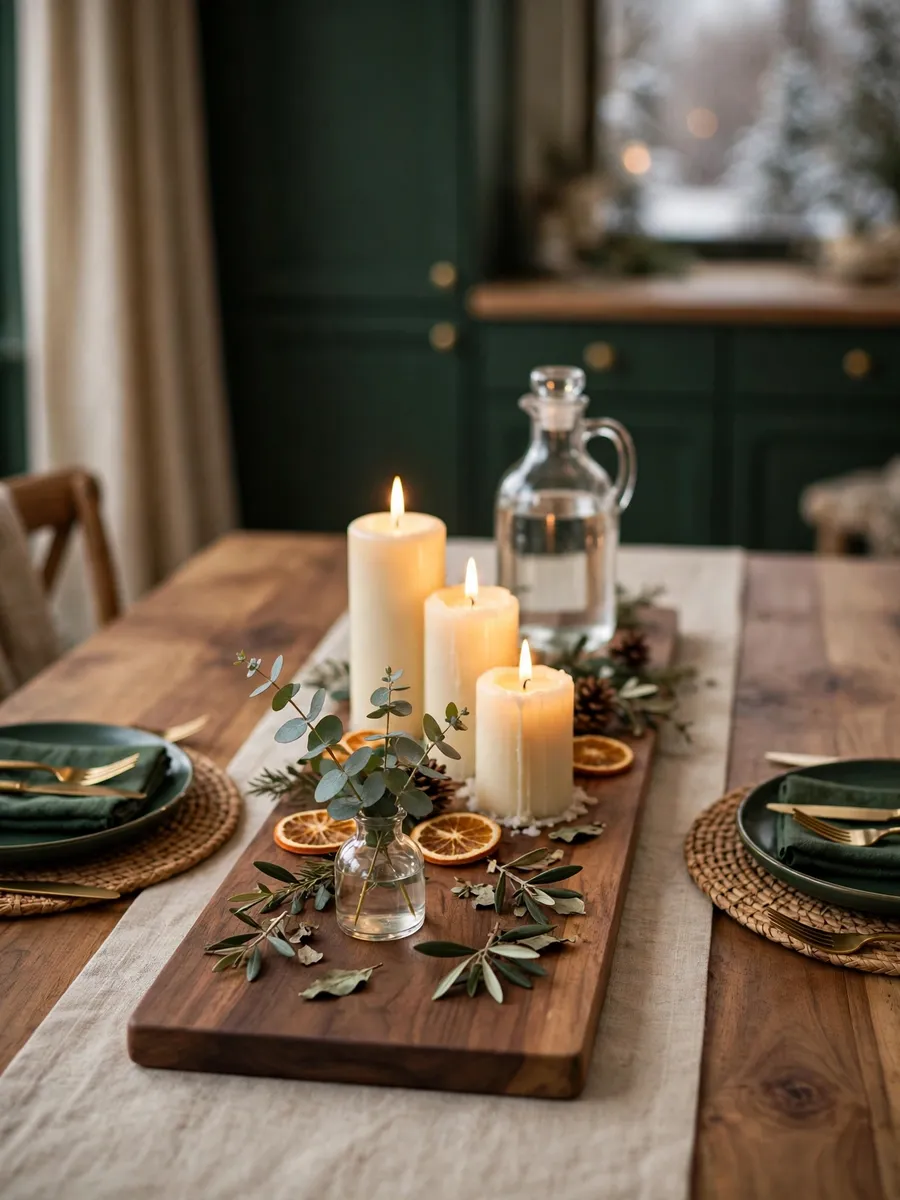
A concrete example: a 48-inch walnut serving board down the center of a six-seat table, holding three cream pillars, a small vase of eucalyptus, and a glass water jug, keeps the middle organized and the edges free. Oil the board once a month in winter, when dry indoor air dulls wood faster than in any other season. These dining room centerpiece ideas show how one low board can carry the whole table without blocking anyone’s view.
Quick tips
- Size the board to about two-thirds of the table length.
- Lift the whole board off in one move when a big pot needs the middle.
21. How Does Soft Light on Artwork Change a Winter Dining Room?
Soft light on artwork changes a winter dining room because a small picture light or a lamp aimed at one framed print creates a second warm pool of light beyond the table.
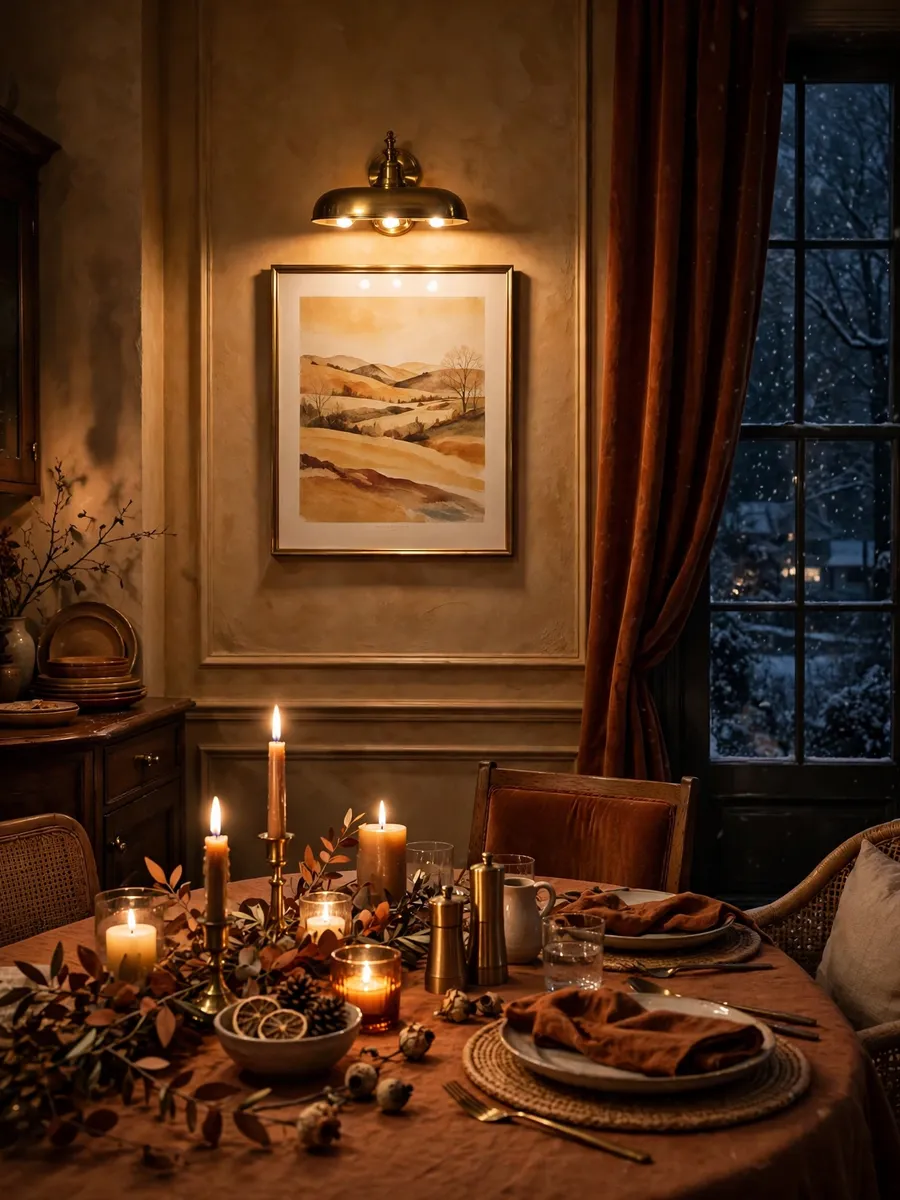
A concrete example: a brass picture light above a framed ochre landscape print on the wall opposite the window gives a dark January evening a warm focal point away from the chandelier.
Quick tips
- Aim the light at the art, not at the room, so the glow stays soft.
- Choose art in warm tones — ochre, rust, deep green — for winter walls.
22. How Do You Keep a Winter Table Ready for Everyday Meals?
Keep a winter table ready for everyday meals by choosing a centerpiece that stays put: a low board, a short greenery line, and candles that lift off in one move when a big pot needs the middle.
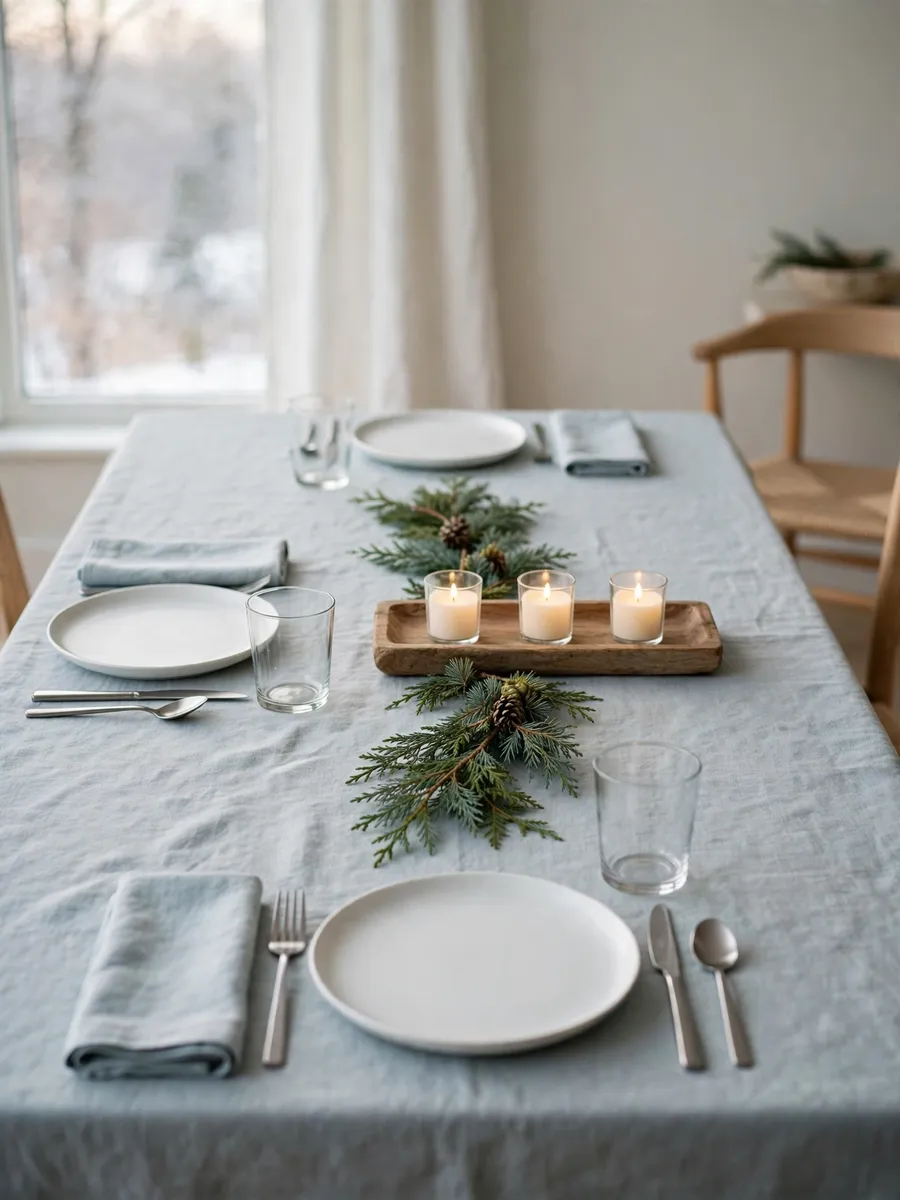
A concrete example: a pale blue-gray tablecloth left on all week, a short cedar line down the center, and three flameless pillars on a wooden tray mean weeknight pasta still feels like a winter dinner with zero setting up. The trick is keeping the centerpiece low and narrow enough that the serving dishes still fit, even on a crowded Sunday table.
Quick tips
- If you must move the centerpiece for every meal, it is too big — shrink it until it can stay.
- Keep the everyday plates on the sideboard so setting the table takes two minutes.
Winter Dining Room Decor Ideas: Frequently Asked Questions
How do I make my dining room feel cozy in winter?
Layer warm light, heavier textiles, and natural greenery. Swap in a heavier tablecloth, group candles at three heights, drape sheepskins on hard chairs, and put the chandelier on a dimmer with warm 2700K bulbs. The room should feel softer and lower-lit than it does in summer. Start with the light first, because a dimmer and warm bulbs change the mood faster than any single object you can buy.
What colors work best for winter dining room decor?
Warm, muted colors work best: rust, olive, oatmeal, chocolate, deep green, and warm cream. Use them in textiles first — napkins, runners, and cushions — so the palette is easy to change when spring arrives. If the room already has strong wall color, keep the textiles neutral and let one accent — a rust runner or deep green napkins — carry the season.
How do you turn a Christmas table into a winter tablescape?
Start by subtracting: pull off red napkins, ribbons, ornaments, and anything with holiday wording, then leave the greenery, white candles, and wood behind. Add natural textures like cedar, pinecones, or bare branches, and the same table works through February. The test is simple: if a piece mentions a holiday by name, color, or shape, it comes off the table until next December.
How tall should a winter dining table centerpiece be?
Keep it at or below 10 to 12 inches tall so guests can see each other across the table, or go tall and narrow so the decoration sits clearly above eye level. Anything that ends at seated eye level forces people to lean around it all evening. Measure from the tabletop to the top of the arrangement, and sit in a chair to check the sightline before guests arrive.
How do you style a dining room for holiday gatherings?
Clear the room first, then size the table at about 24 inches of edge per guest, layer linens in two or three colors, keep the centerpiece low and wide or tall and slender, and hang the chandelier 30 to 36 inches above the table with warm 2700K bulbs dimmed to about half power. Set the whole table the day before, so the evening itself is about the food and the people, not the decorating.
Conclusion
Winter dining room decor does not need a holiday theme or a renovation. Pick a heavier cloth, add greenery that lasts, light candles at three heights, and soften the chairs — then let the room do the rest. These 22 winter dining room decor ideas work from December through February, so start with the one that bothers you most and add the rest one dinner at a time. Keep the pieces you love out all season, and when February ends, swap the heavy cloth for a lighter one and let the greenery go — the room will be ready for spring without a single thing to pack away.