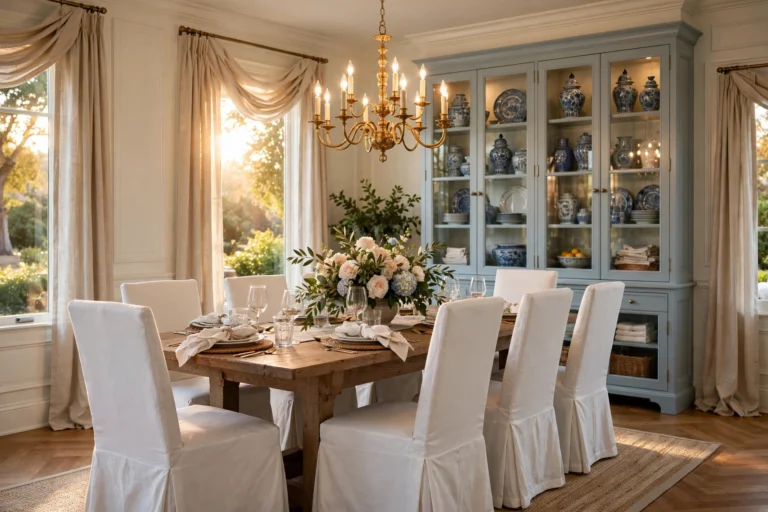
25 Serene Minimalist Dining Room Ideas That Feel Calm, Never Empty ♥ [Less Is More]
Why a Minimalist Dining Room Feels So Calm
A minimalist dining room proves that calm comes from intention, not emptiness. Every piece earns its place, and the space breathes around them.
The formula is restraint with warmth: natural materials, sculptural lighting, and generous negative space. Texture replaces decoration; proportion replaces clutter.
Minimalism isn’t about owning less for its own sake. It’s about letting the people around the table become the focal point.
Here are 25 ideas to create that serene balance. Craving the opposite, layered warmth? Our Nancy Meyers dining room ideas show the cozy side of dining design.
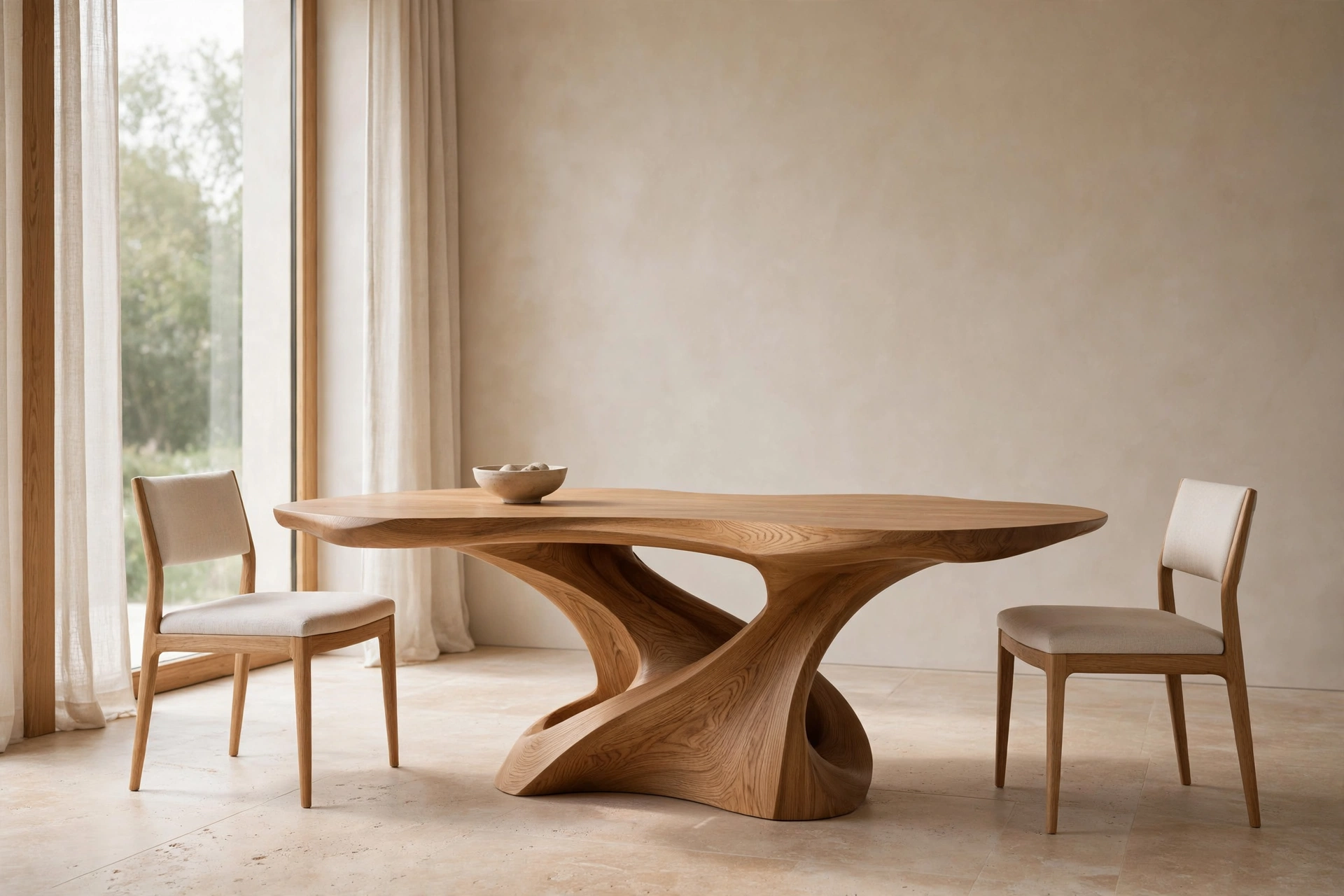
1. Let One Statement Table Carry the Room
Choose a single sculptural table and let it be the star. An oak slab with beautiful grain needs no competition.
Keep the chairs simple so the table shines. Two understated chairs are plenty when the table speaks.
Soft daylight does the rest. A minimalist dining room starts with one confident piece.
Oil the wood yearly to keep the grain glowing. A cared-for table ages beautifully.
2. An Intimate Table for Two
Not every dining room hosts crowds. A small round table for two by the window creates the calmest corner in the house.
- A linen curtain filters the light softly. One small vase completes the scene.
- Intimacy is a design choice. Small scale, done well, feels luxurious.
- Keep the table set simply even when unused. A ready table invites spontaneous meals.

3. Commit to an All-White Palette
White on white on white erases visual noise. The room feels larger, calmer, and endlessly fresh.
- Layer textures to prevent flatness: matte walls, glossy ceramics, woven seats. Subtle shadows become the decoration.
- Keep styling near zero. All-white rewards absolute restraint.
- Clean surfaces weekly to preserve the pristine feel. White shows everything, which keeps you honest.

4. Warm It Up with Natural Wood
Minimalism turns cold without warmth. Natural oak brings the human touch back.
- A wood table and bench keep the palette honest. One pendant light overhead is all the adornment needed.
- A single greenery sprig adds life. Wood keeps a minimalist dining room feeling human.
- Choose white oak or ash for the lightest effect. Pale woods keep the calm bright.
5. Hang One Oversized Pendant
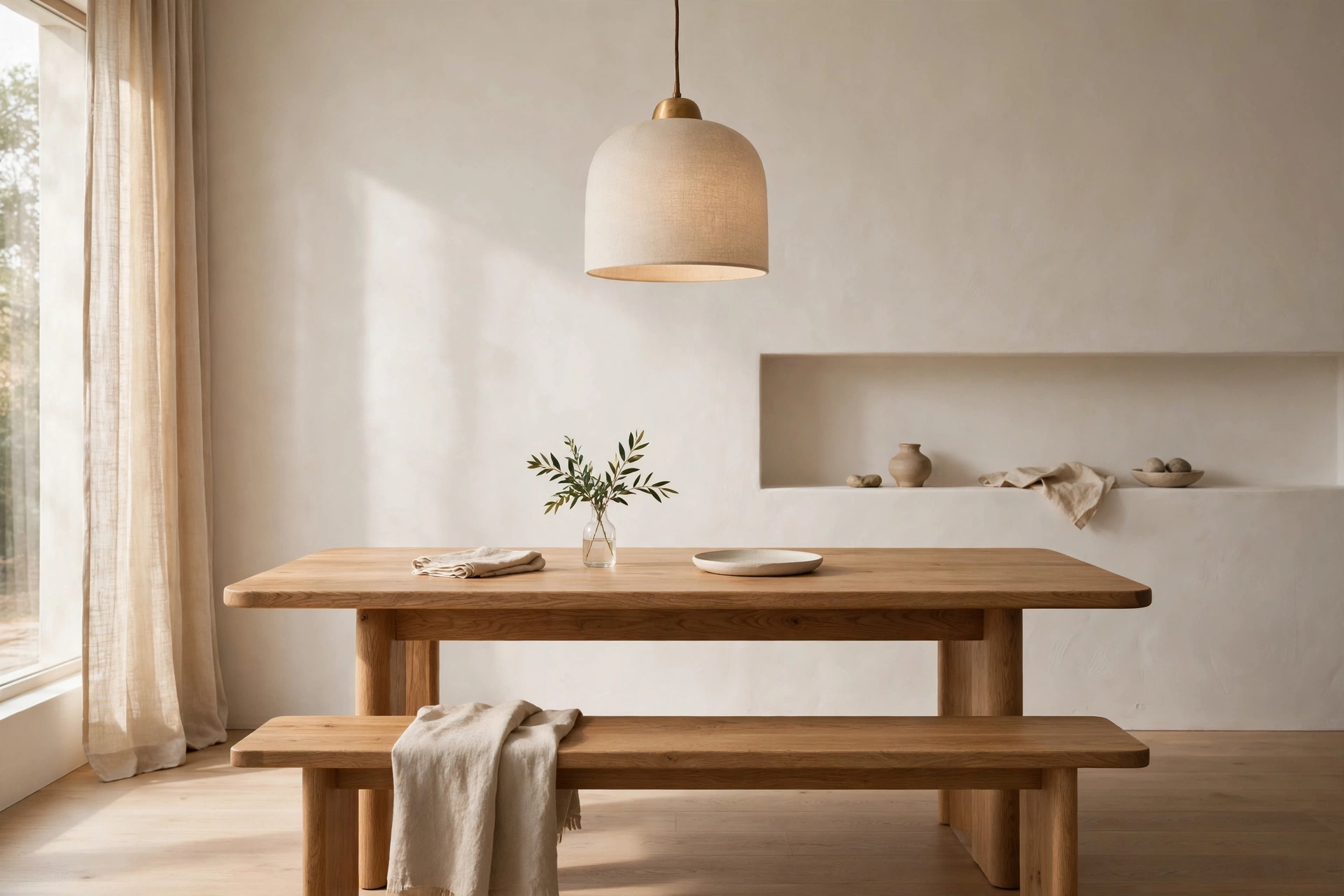
Scale is a minimalist’s secret weapon. One oversized paper pendant fills the vertical space beautifully.
The pendant becomes functional art above a simple table. Nothing else competes with it.
Keep the bulb warm and dimmable. A single gesture, done boldly, defines the room.
Hang it 30 inches above the table for intimacy. Height determines the mood.

6. Leave the Windows Bare
Bare windows flood the room with honest light. No curtains means no visual interruption.
Floor-to-ceiling glass turns the outdoors into the artwork. The view does the decorating.
A simple table setting is all that’s needed. Daylight is the most minimalist dining room accessory of all.
Add sheer linen only if privacy demands it. Otherwise, let the glass stand bare.

7. A Low Sideboard, Styled Sparingly
A low oak sideboard adds storage without visual weight. Style it with a single ceramic vase and nothing else.
A round mirror above reflects light and doubles the calm. Restraint on the surface keeps the room serene.
Hide the clutter inside; show only the beautiful. Edited surfaces are the minimalist creed.
Dust the single vase weekly so it always gleams. One object must always look perfect.

8. Treat Negative Space as Decor
Empty space is a design element, not a failure. A small table centered in a generous room feels deliberate.
Resist the urge to fill corners. Breathing room is the luxury.
One art frame on a vast wall makes a stronger statement than a gallery. Emptiness, curated, is powerful.
Walk the room and remove one thing. The edit is never truly finished.

9. Go Monochrome in Black and White
Black and white is minimalism with drama. A black table against white walls creates striking tension.
Keep the palette strictly two tones. The discipline is what makes it calm rather than chaotic.
Monochrome art echoes the furniture. Contrast, controlled, energizes the calm.
Soften with one natural texture, like a wool rug. A single warm note prevents sterility.

10. Choose a Round Table for Flow
Round tables soften a room’s geometry. No sharp corners means easier movement and gentler conversation.
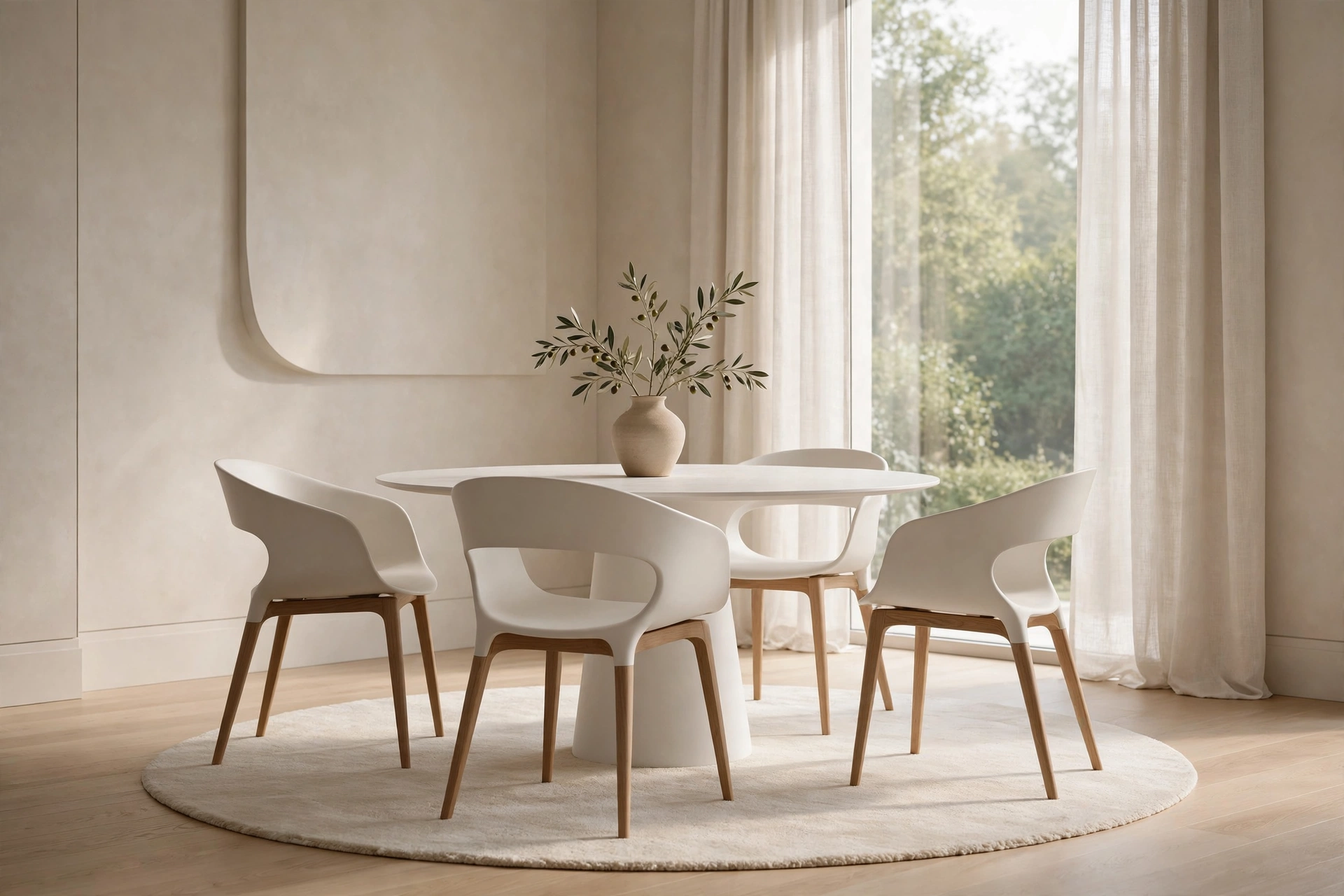
Four molded chairs tuck neatly underneath. A soft rug anchors the circle.
Curves feel welcoming where rectangles feel formal. Flow is a form of calm.
Center the pendant exactly over the table’s middle. Symmetry anchors the circle.
11. Dress It in Linen Textiles
Natural linen brings softness without pattern. A linen tablecloth and cushions warm the minimal bones.
Choose undyed or oatmeal tones. The fabric’s slubs and wrinkles are the texture.
Ceramic tableware in matching neutrals completes the table. Linen makes a minimalist dining room feel touchable.
Wash linens without fabric softener to preserve texture. Natural fibers age best untreated.

12. Hang a Single Art Piece
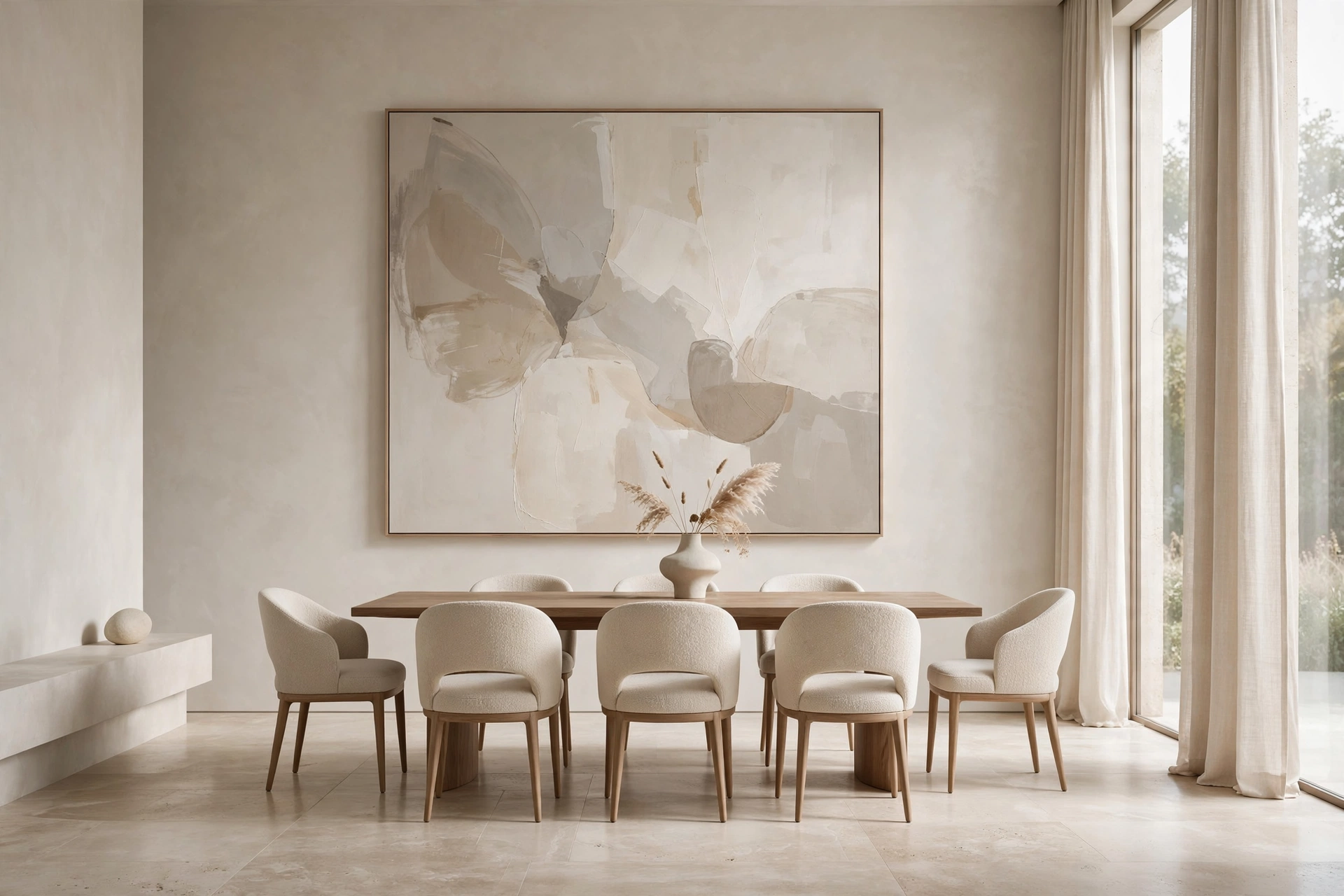
One large artwork beats ten small ones. A single abstract piece gives the eye a place to rest.
- Keep the palette of the art close to the room’s neutrals. Harmony over contrast here.
- Hang it at eye level above the table or sideboard. One statement, quietly made.
- Light it with a single picture light for evenings. Art deserves its moment after dark.
13. Hide Storage in the Walls
Clutter kills calm. Floor-to-ceiling handleless panels swallow everything unsightly.
The wall reads as architecture, not storage. Push-to-open mechanisms keep the surface seamless.
With everything hidden, the table and chairs float in calm. A minimalist dining room hides its workings.
Test the push mechanisms before finalizing. Hardware must feel effortless daily.

14. Embrace Concrete Calm
Polished concrete brings industrial serenity. The cool gray is the perfect neutral backdrop.
Warm it with a wood table and a black pendant. The material contrast keeps it from feeling cold.
Concrete’s subtle variations are decoration enough. Raw materials, refined mood.
Seal the surface to prevent staining. Protected concrete stays beautiful for decades.

15. Choose a Live-Edge Table
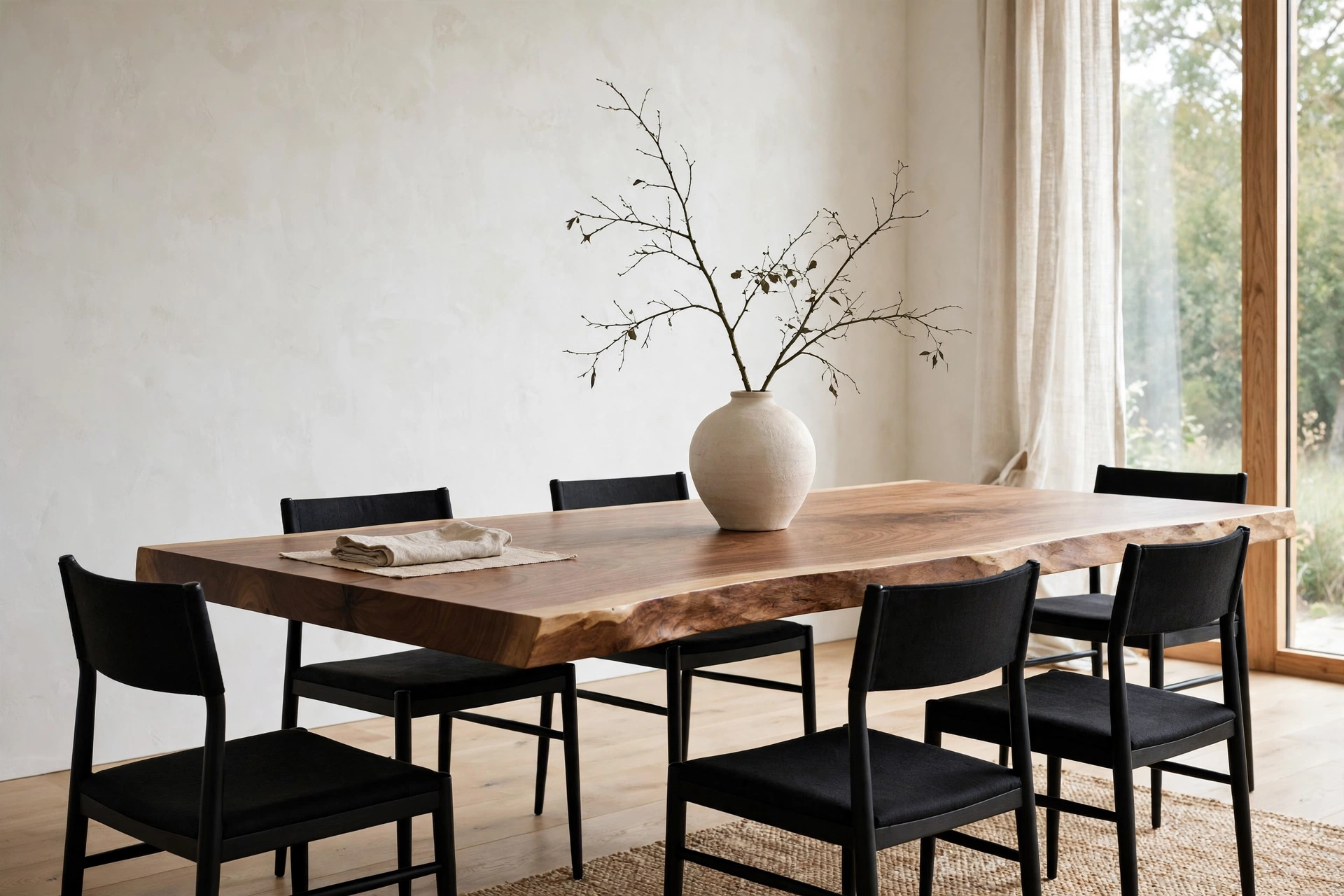
A live-edge walnut slab brings nature’s sculpture indoors. No two tables are alike.
Pair it with simple black chairs that don’t compete. White walls let the wood’s edge shine.
One branch in a vase echoes the table’s organic line. In a minimalist dining room, nature is the ornament.
Rotate the table occasionally for even patina. Sunlight shapes wood over time.
16. Cluster Paper Lantern Lights
Paper lanterns glow like captured moonlight. A cluster over a low table creates instant tranquility.
- Their soft diffusion flatters everyone at the table. Hang at varied heights for gentle rhythm.
- Keep everything else low and simple. Light becomes the room’s softest architecture.
- Replace paper shades yearly as they yellow. Fresh paper keeps the glow pure.

17. Try a Glass Table for Lightness
Glass tables visually disappear. The room feels larger because the eye travels through.
Transparent chairs continue the illusion. Bright, airy, almost floating.
Keep the base sculptural since it’s fully visible. A minimalist dining room in glass is calm at its lightest.
Clean the glass weekly for the floating effect. Smudges break the illusion instantly.

18. Invest in Sculptural Chairs
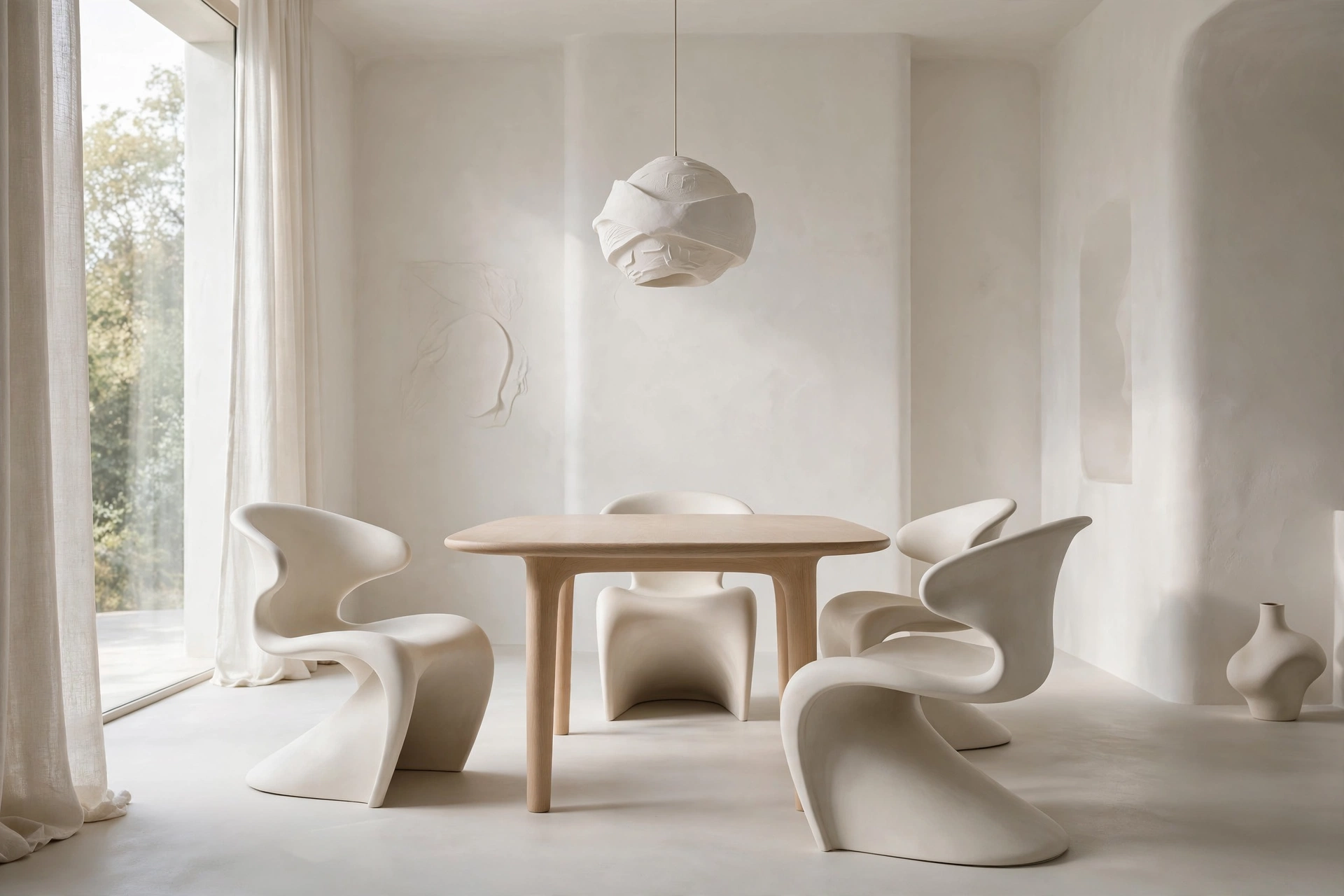
When the room is simple, chairs become sculpture. Molded forms in a row create rhythm.
Choose one iconic design and repeat it. Repetition turns furniture into installation.
White space around them lets each chair breathe. Seating as art, comfort included.
Test-sit before committing to sculptural forms. Beauty must never punish the sitter.
19. Go Warm with Beige and Boucle
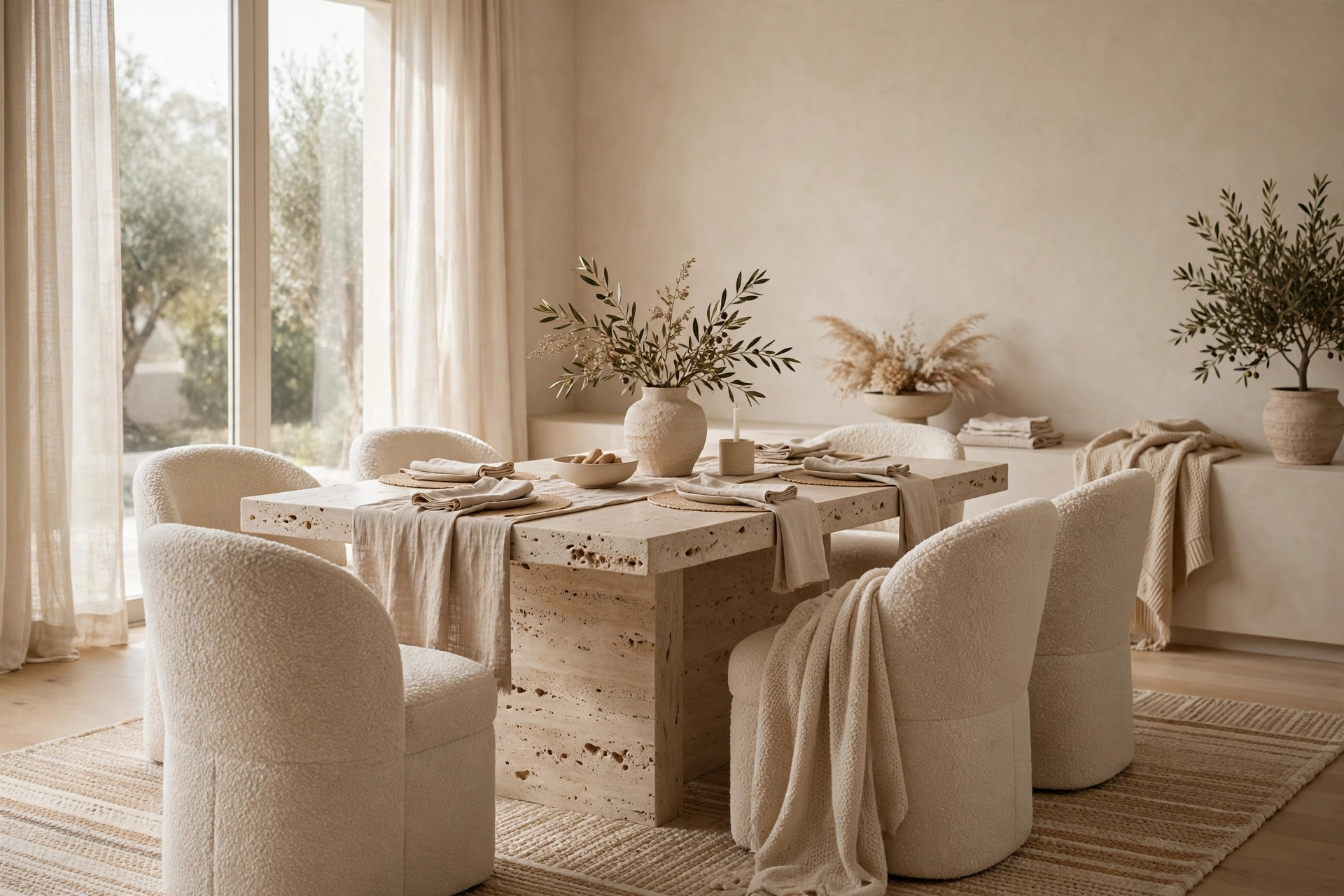
Beige is minimalism’s warm embrace. Layer cream, oat, and sand for depth without color.
Boucle chairs add irresistible texture. A travertine table grounds the softness.
Earthy calm beats stark white for livability. Warm minimalism welcomes; cold minimalism impresses, and the difference matters because a dining room should invite people to stay, not just admire, which is why the warm beige palette has quietly become the defining mood of modern calm interiors everywhere.
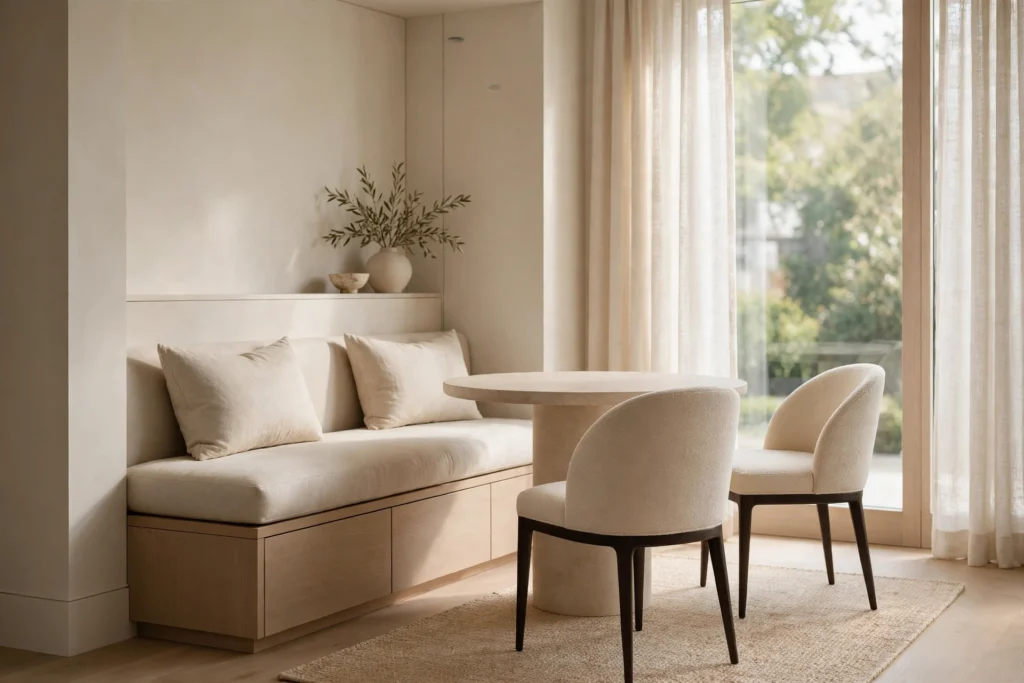
20. Build In a Bench Nook
A built-in bench saves space and sharpens the architecture. The nook feels intentional, not furnished.
A small round table and two chairs opposite complete it. Window light does the decorating.
Banquettes invite lingering like nothing else. Built-ins are minimalism’s secret weapon.
Upholster the bench in a wipeable fabric. Real life happens in nooks.
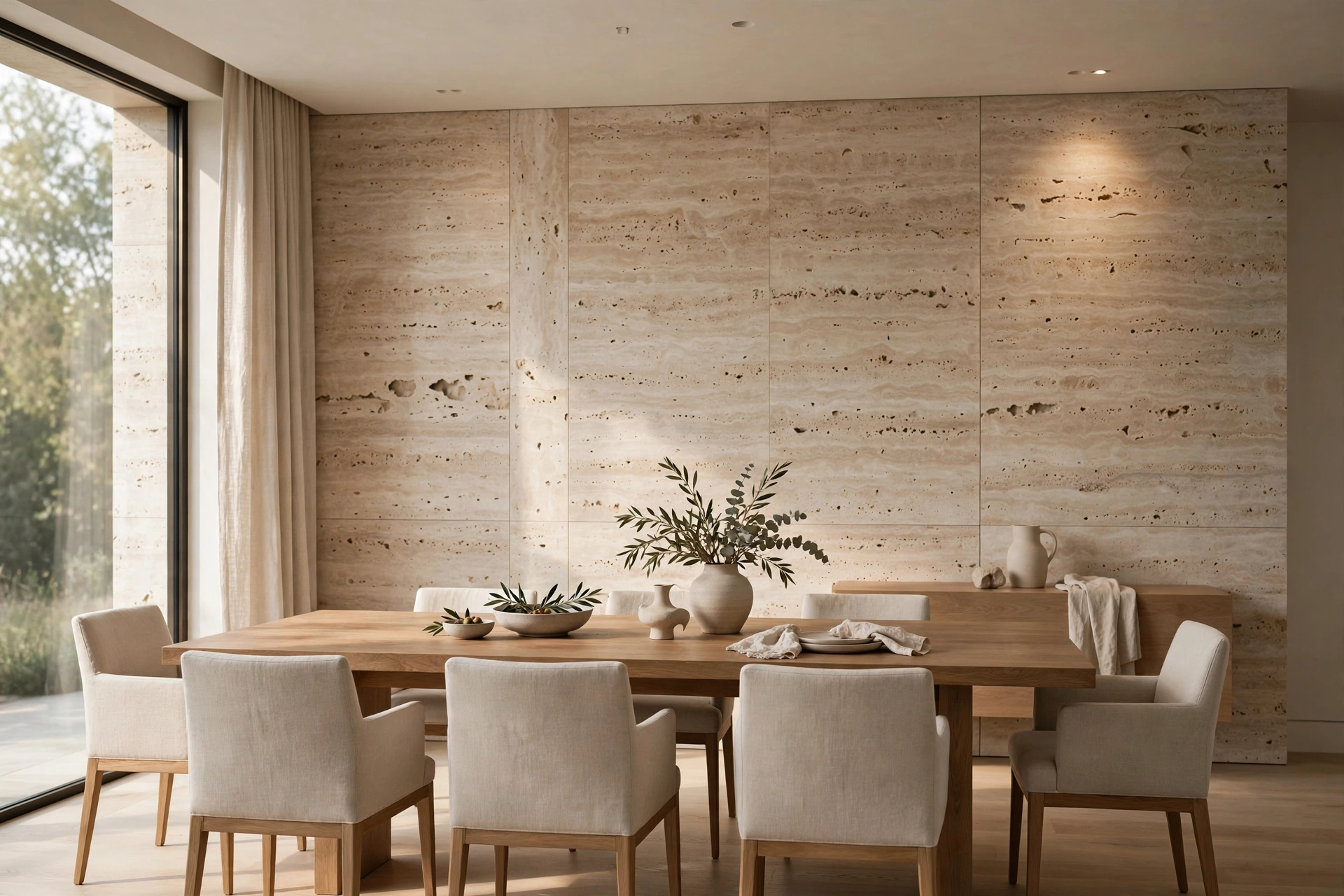
21. Add Stone Accents
Travertine and limestone bring ancient calm. A stone accent wall adds texture without pattern.
Soft spotlighting grazes the stone’s surface. Wood and linen keep it warm.
Stone’s permanence quiets a room. Timeless materials, timeless mood.
Dust the stone with a dry cloth to keep it luminous. Simple care preserves the calm.
22. Try the Japandi Fusion
Japanese restraint meets Scandinavian warmth. Low wood tables and floor cushions invite a slower pace.
Shoji-screen light filters softly through the room. Every element earns its place twice over.
The fusion proves minimalism is global. A minimalist dining room can whisper in two languages at once.
Remove shoes at the entrance to honor the ritual. The practice deepens the calm.

23. A Single Stem in a Vase
One perfect stem beats a full bouquet. Restraint in florals mirrors restraint in the room.
A handmade ceramic vase elevates the single stem. Morning light completes the composition.
Less truly is more here. One stem, thoughtfully placed, says everything.
Change the stem with the seasons for quiet variety. The ritual matters more than the flower.

24. Edit Open Shelving Ruthlessly
Open shelves can stay if edited hard. A few ceramics, lots of air, nothing extra.
Group pieces by tone for quiet rhythm. Negative space between objects matters most.
Think gallery, not storage. Ruthless editing keeps a minimalist dining room honest.
Reassess the shelves each season and remove one item. The edit compounds over time.

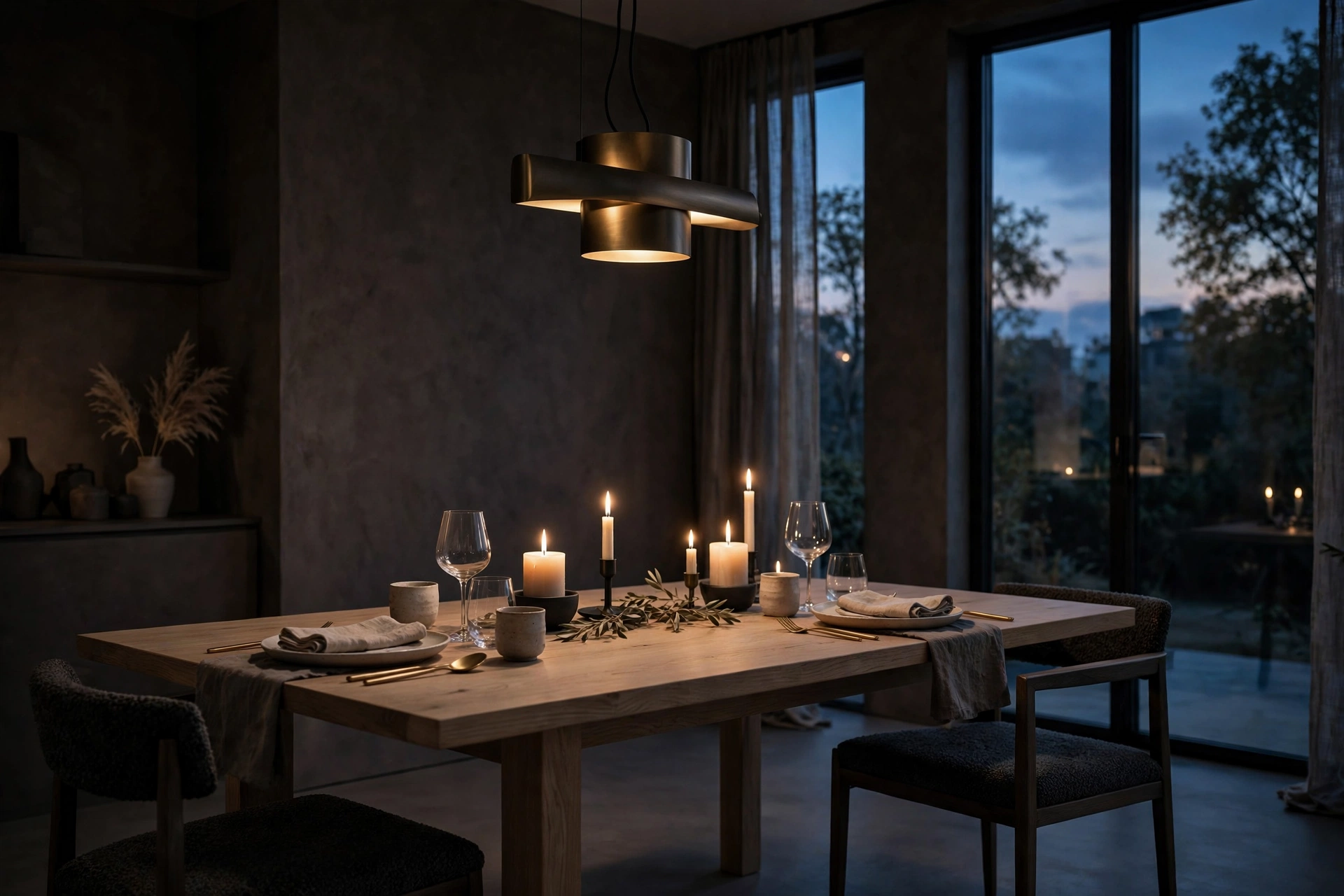
25. Make Every Light Dimmable
Light sets the mood more than furniture. Dimmable everything lets the room shift from bright to intimate.
Warm 2700K bulbs flatter food and faces. Candles add the final flicker.
A table set for two under low light is pure serenity. Control the light, control the calm.
Program scenes for dining, working, and evening. One tap should transform the room.
Minimalist Rules That Keep It Calm
Hold these principles:
- Choose quality over quantity in every piece.
- Repeat materials; don’t mix dozens of finishes.
- Treat negative space as equal to objects.
- Let one statement piece carry the room.
- Keep the palette tight and tonal.
Build in this order:
- Place the table first; it’s the anchor.
- Add lighting as functional sculpture.
- Layer one or two natural textures.
- Edit ruthlessly, then edit once more.
Frequently Asked Questions
How do I keep a minimalist dining room from feeling cold?
Layer natural materials like wood, linen, and stone, and use warm lighting. A minimalist dining room stays warm when textures do the talking.
What colors work best in minimalist dining rooms?
Whites, creams, beiges, soft grays, and natural wood tones. One restrained accent color, repeated sparingly, can add life.
Can a minimalist dining room work for families?
Yes, with durable materials and washable fabrics. A minimalist dining room suits families when every piece is chosen for real life, not just looks.
How much decor does a minimalist dining room need?
Very little: one statement light, one art piece or vase, and textiles. If an object doesn’t add texture, scale, or contrast, it doesn’t stay.
Conclusion
A minimalist dining room isn’t empty; it’s edited. Choose fewer, better pieces, let natural materials speak, and give the room space to breathe. Start with the table, add light as sculpture, and resist the urge to fill every corner.
The calm you create will welcome everyone who sits down. Less, done with intention, is so much more.