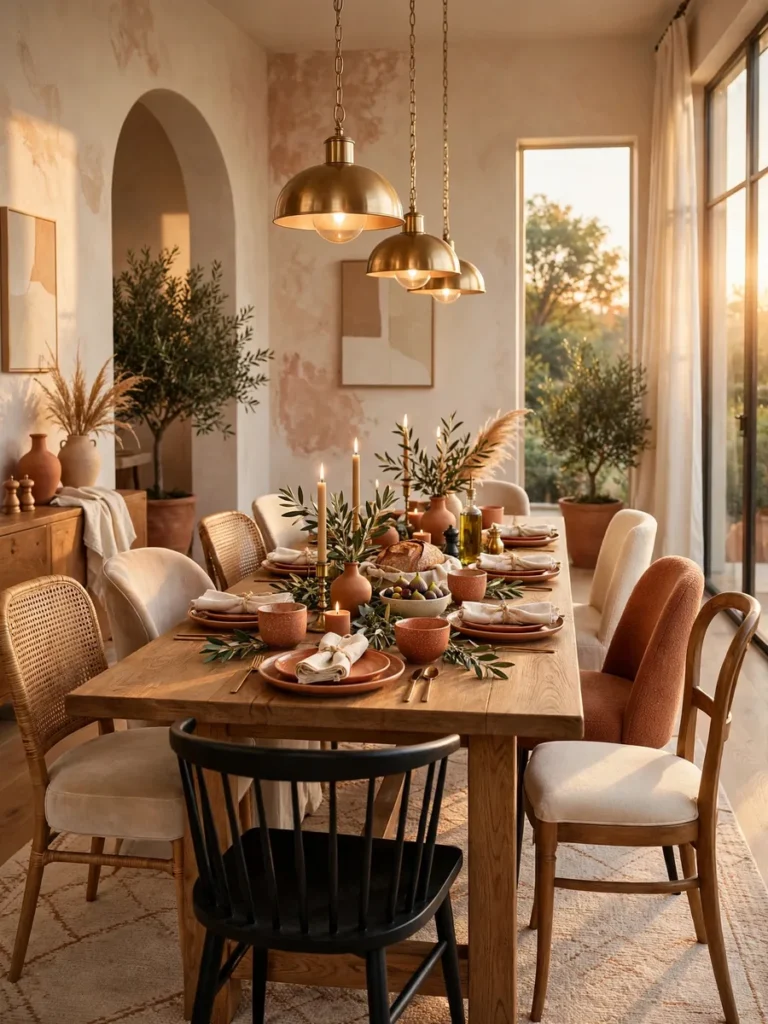
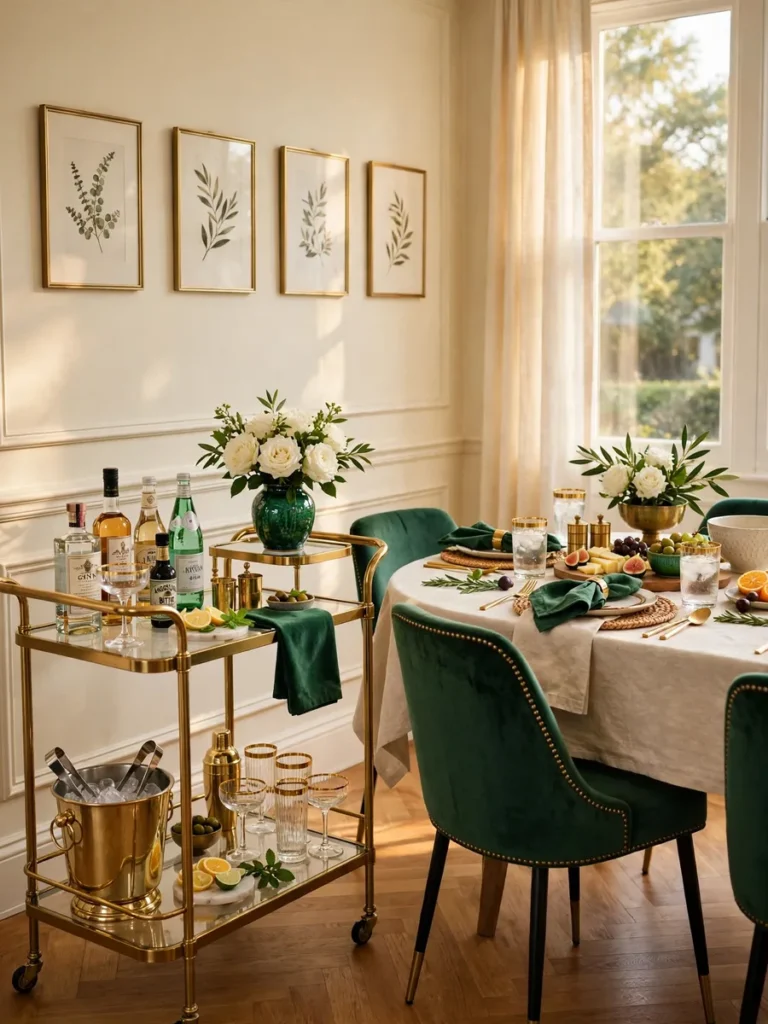
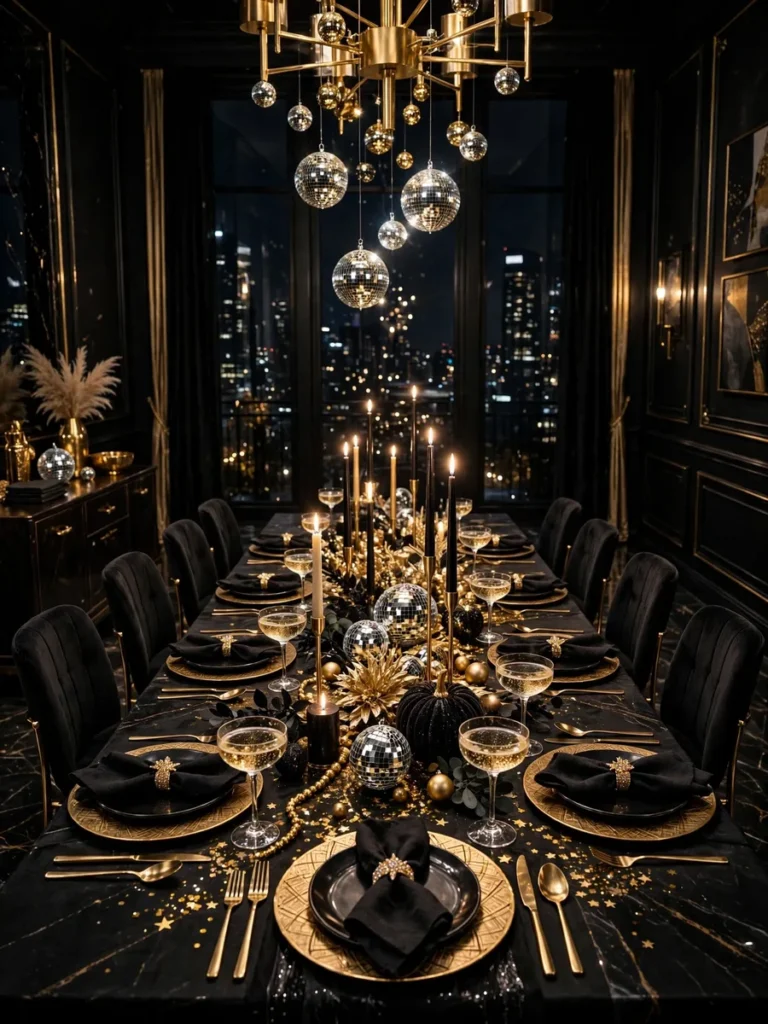
18 Timeless Elegant Dining Room Ideas That Feel Refined, Not Stuffy ♥ [Quiet Luxury]
What Elegance Actually Means
Elegance isn’t about price tags. It’s about proportion, light, and restraint working together in quiet confidence.
An elegant dining room has one strong anchor, a controlled palette, and room to breathe. Everything else supports the anchor instead of competing with it.
These ideas focus on the design logic behind timeless rooms. Understand why they work, and you can recreate the feeling at any budget.
Here are 18 ideas for lasting refinement. Love warm traditional style? Our Nancy Meyers dining room ideas pair beautifully with these principles.
1. Get the Proportions Right First
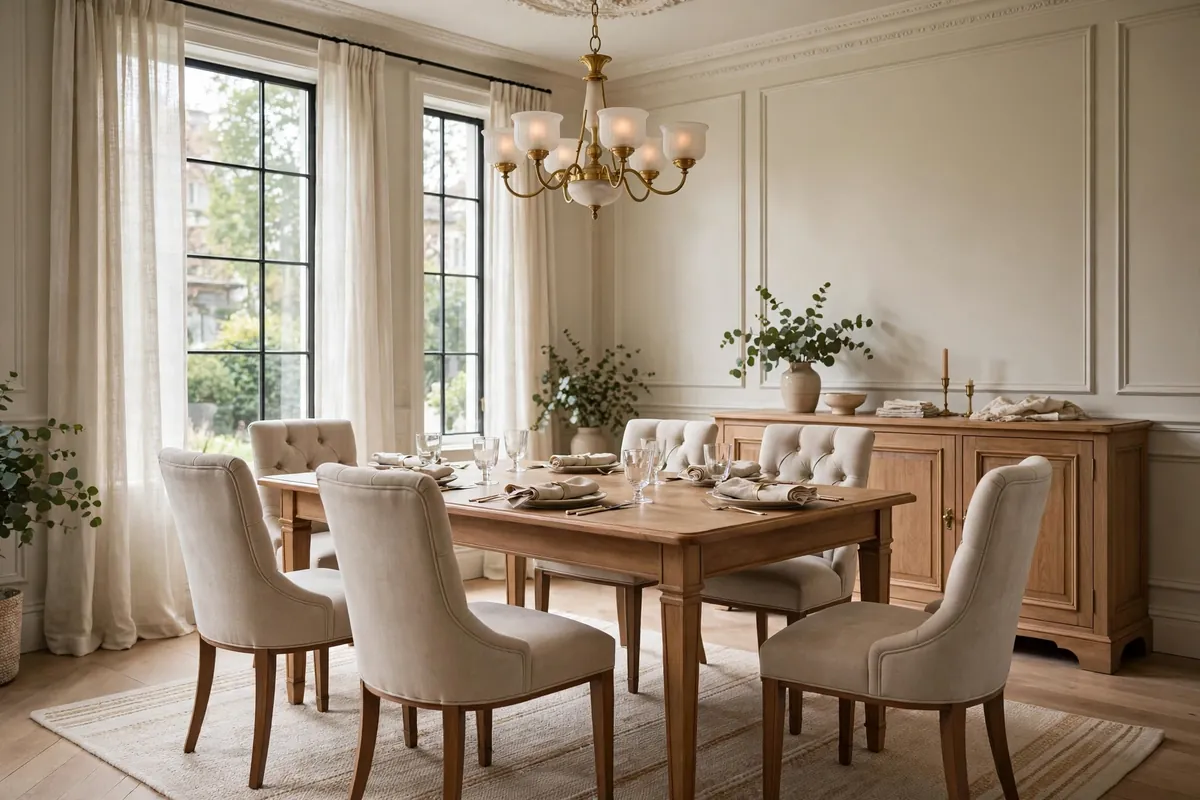
A well-proportioned table is the foundation. Size it to the room: generous, but never crowding the walls.
Six chairs around a classic table reads balanced. Symmetry in seating creates instant calm.
Measure twice, buy once. Proportion is the invisible difference between elegant and awkward.
Leave 36 inches of clearance behind chairs. Breathing room is a design tool.
Sketch the layout on paper before buying. Planning prevents costly mistakes.
Tape the footprint on the floor first. Full-scale outlines reveal the truth.
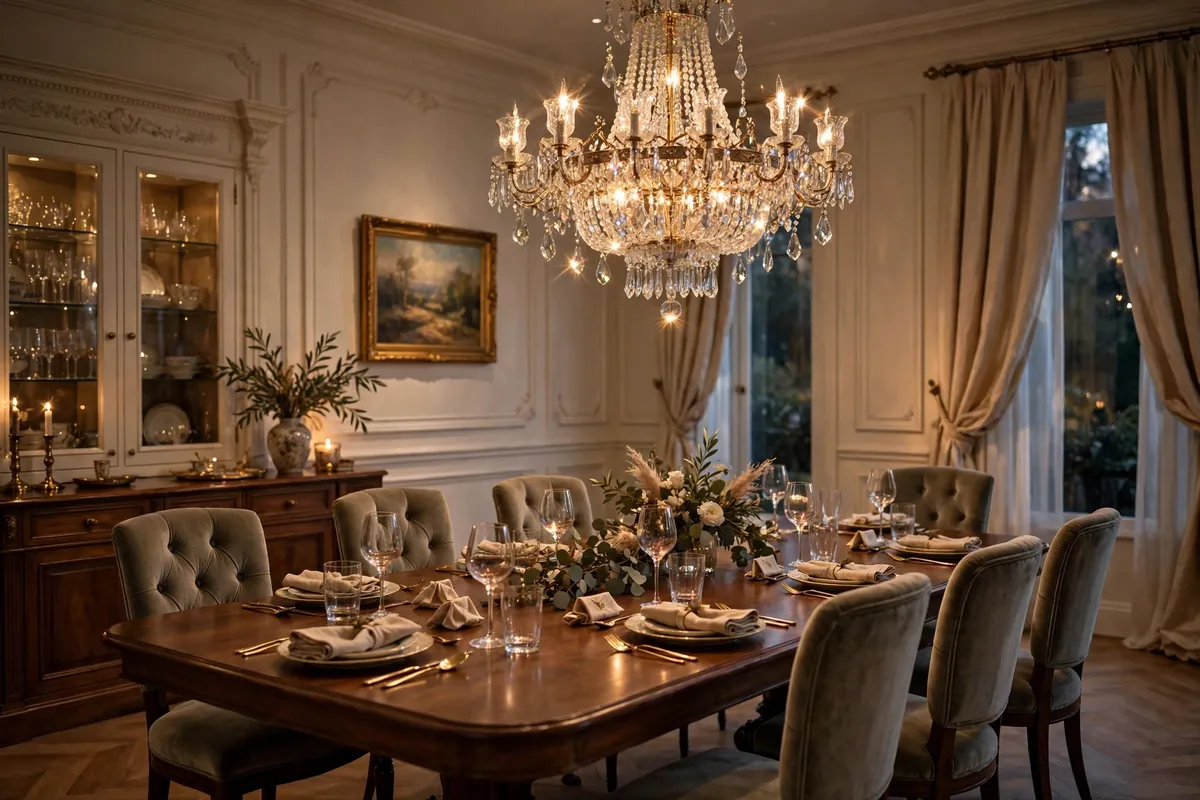
2. Crown It with a Chandelier
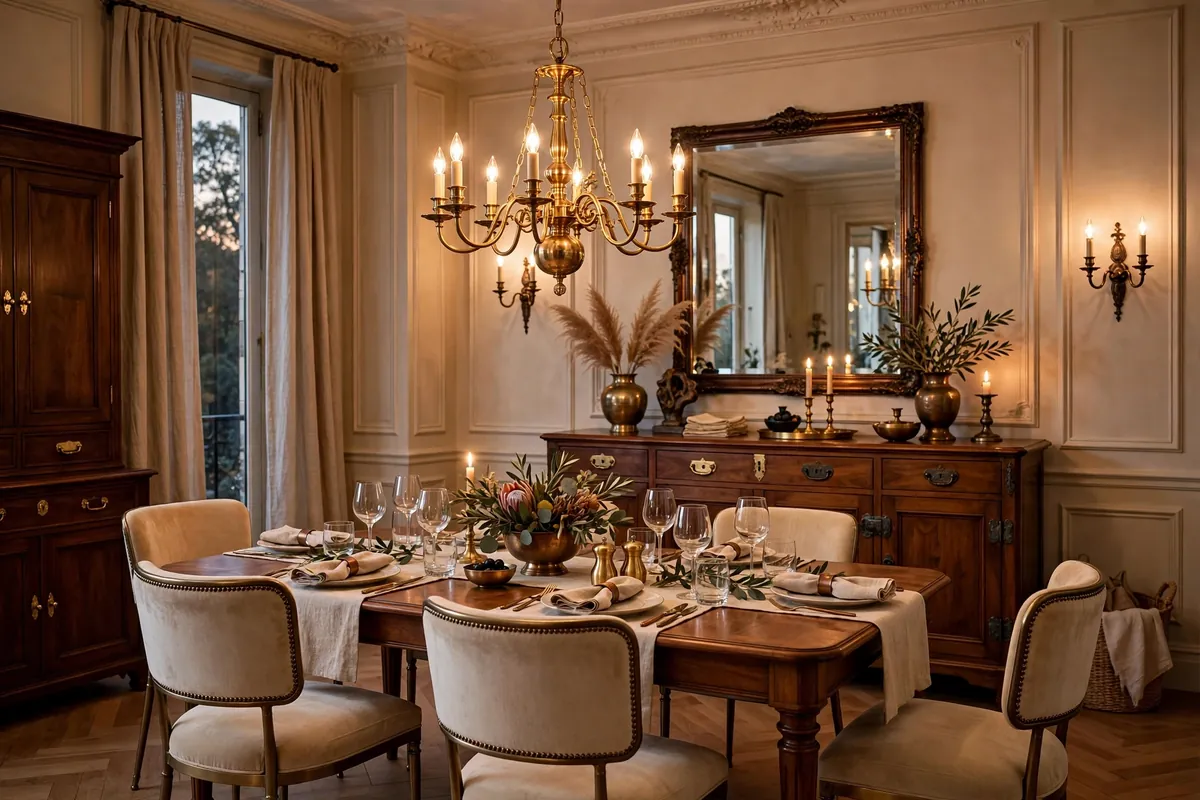
One classic chandelier acts as the room’s main character. It anchors the table and sets the tone.
Choose brass or crystal for timeless appeal. Trends fade; classic fixtures endure.
Hang it low enough to feel intimate, around 30 inches above the table. An elegant dining room glows from its center.
- Use warm bulbs to soften the metal. Light temperature shapes the mood as much as the fixture.
- Dust the crystals or metalwork quarterly. A gleaming fixture holds the room together.
- Check the dimmer compatibility with LED bulbs. Flicker ruins the finest fixture.
3. Add Architectural Molding
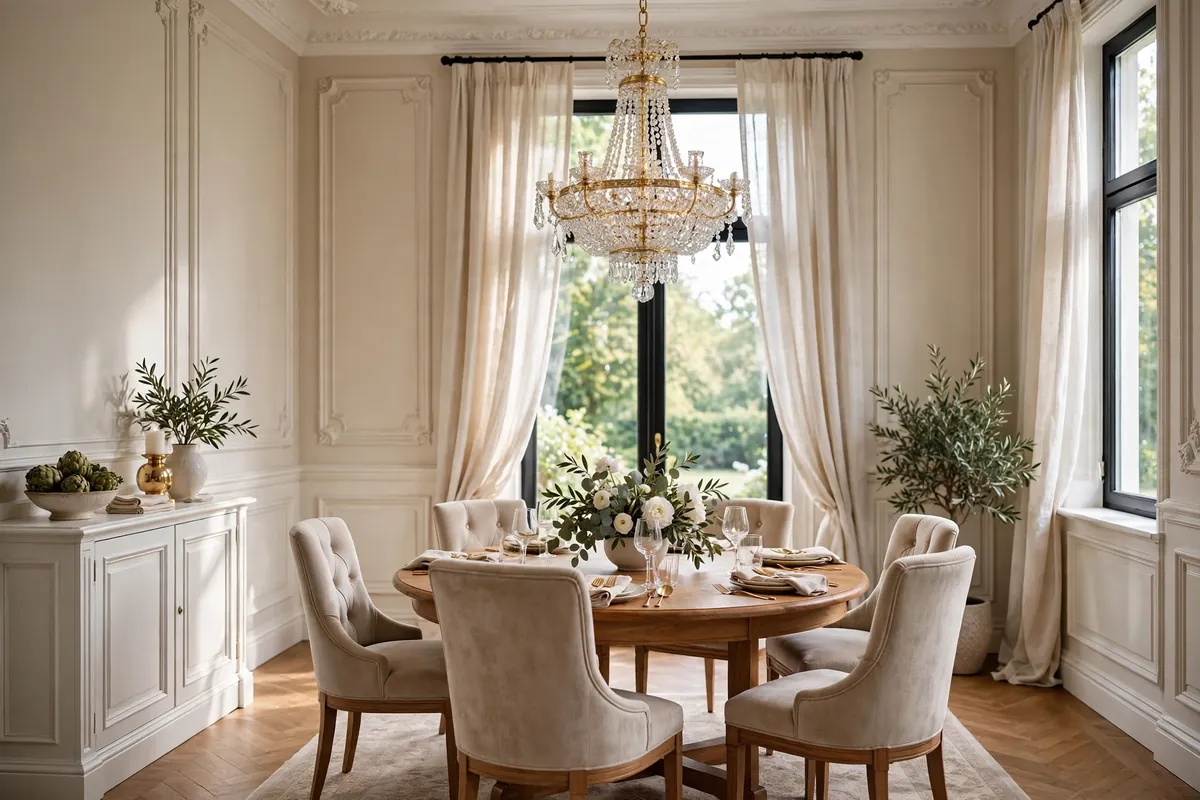
Wainscoting and wall molding give walls quiet structure. The room feels finished before a single accessory arrives.
Paint molding the same color as walls for subtlety. Texture over contrast keeps it modern.
- A round table softens the molding’s straight lines. Curves and structure balance beautifully.
- Keep art minimal so the architecture speaks. Walls can be the decoration.
- Chair rails should sit around 36 inches high. Classic proportions please the eye instinctively.
- Caulk the seams for a seamless finish. Craftsmanship shows in the details.
4. Invest in Upholstered Chairs
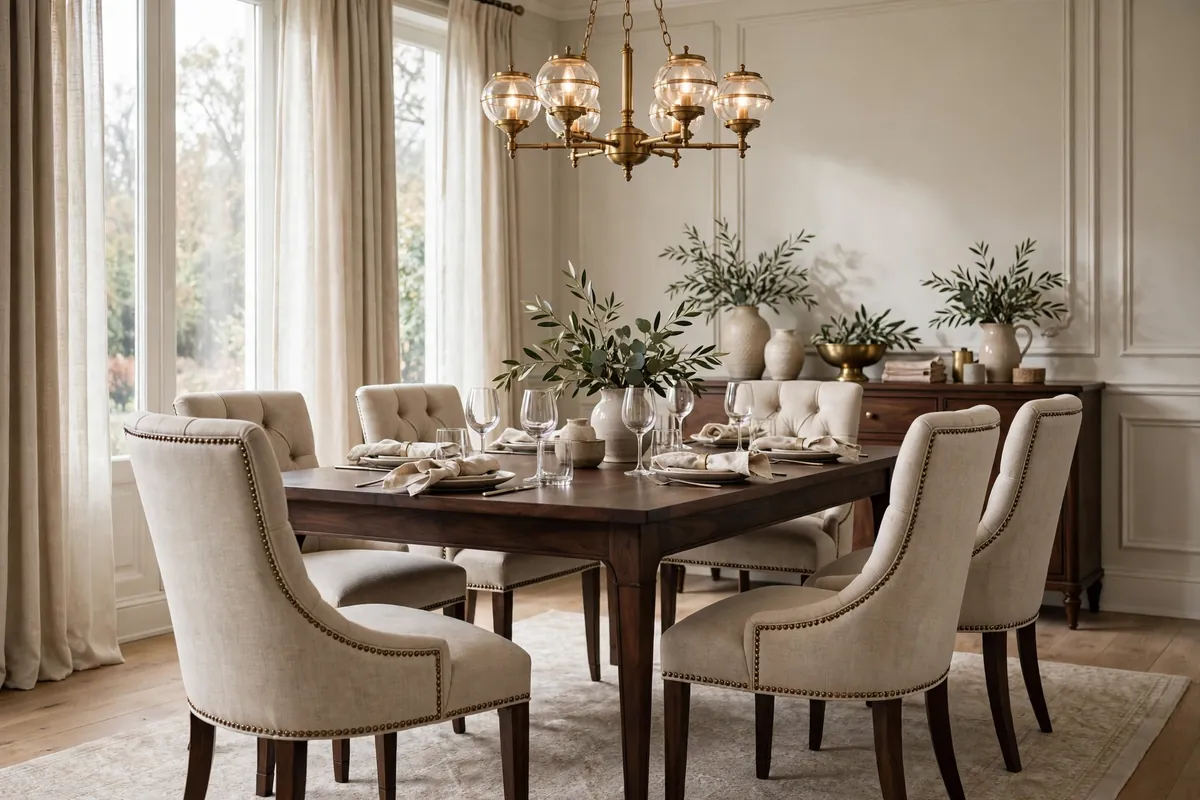
Upholstered chairs add comfort and softness. Neutral fabric with nailhead trim reads timeless.
They invite long dinners and lingering conversation. An elegant dining room should never rush its guests.
- Choose performance fabric for real life. Beauty must survive daily use.
- Mix armchairs at the heads with side chairs. Subtle hierarchy feels intentional.
- Rotate chair positions occasionally for even wear. Upholstery lasts longer with rotation.
- Keep fabric cleaner on hand for spills. Quick action saves fine upholstery.
5. Layer the Lighting
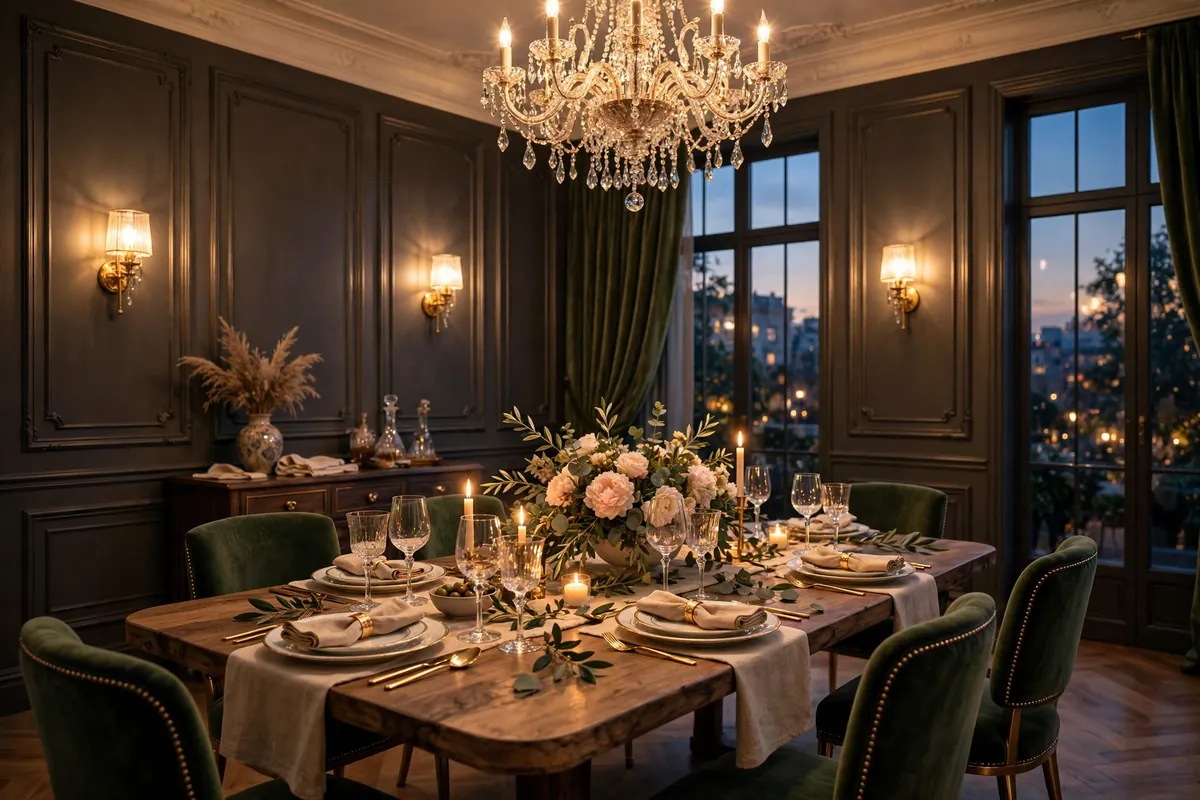
A chandelier plus wall sconces creates depth. Layered light flatters both the room and the people in it.
Put every layer on its own dimmer. Evening elegance needs precise control.
Sconces at eye level add a warm human-scale glow. An elegant dining room never relies on one source.
- Candles on the table complete the layers. Flicker is the oldest luxury.
- Test the lighting at night before finalizing. Evening is when elegance truly shows.
- Label each dimmer switch discreetly. Guests should control the mood intuitively.
6. Anchor with a Generous Rug
A large patterned rug grounds the furniture. It defines the dining zone and adds softness underfoot.
- Size it so chairs stay on the rug when pushed back. Undersized rugs cheapen even fine furniture.
- Choose a classic pattern in muted tones. The rug should whisper, not shout.
- Low pile keeps chairs moving smoothly. An elegant dining room balances beauty with function.
- Use a rug pad to prevent creeping on hard floors. Stability keeps the zone crisp.
- Rotate the rug yearly for even fading. Sunlight is patient but persistent.
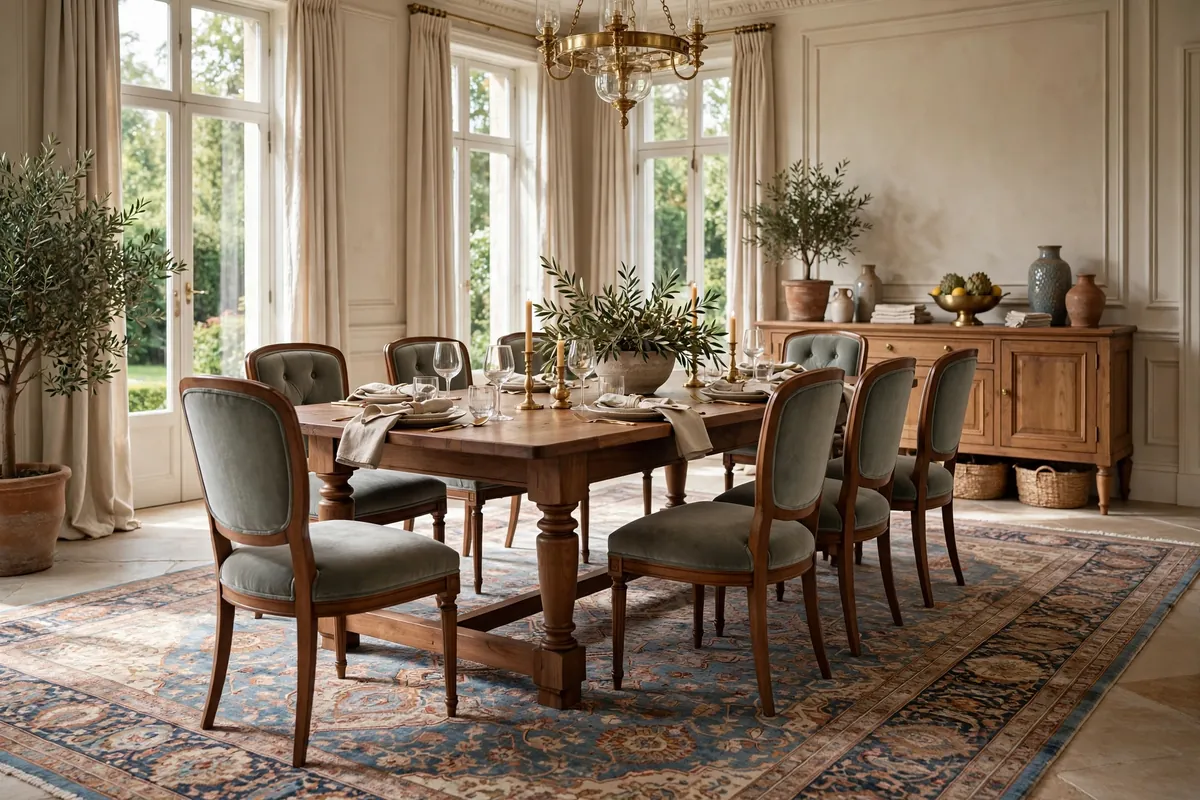
7. Design with Symmetry
Matching sideboards, centered lighting, balanced art. Symmetry is elegance’s quiet ordering force.
Start with the chandelier centered over the table. Everything else mirrors from there.
- Pairs of lamps, pairs of frames, pairs of chairs. Repetition calms the eye.
- Break symmetry once, deliberately, with a plant or vase. One exception proves the rule.
- Step back to the doorway to check the balance. Distance reveals what closeness hides.
- Photograph the room to verify symmetry. The lens catches tilts the eye forgives.
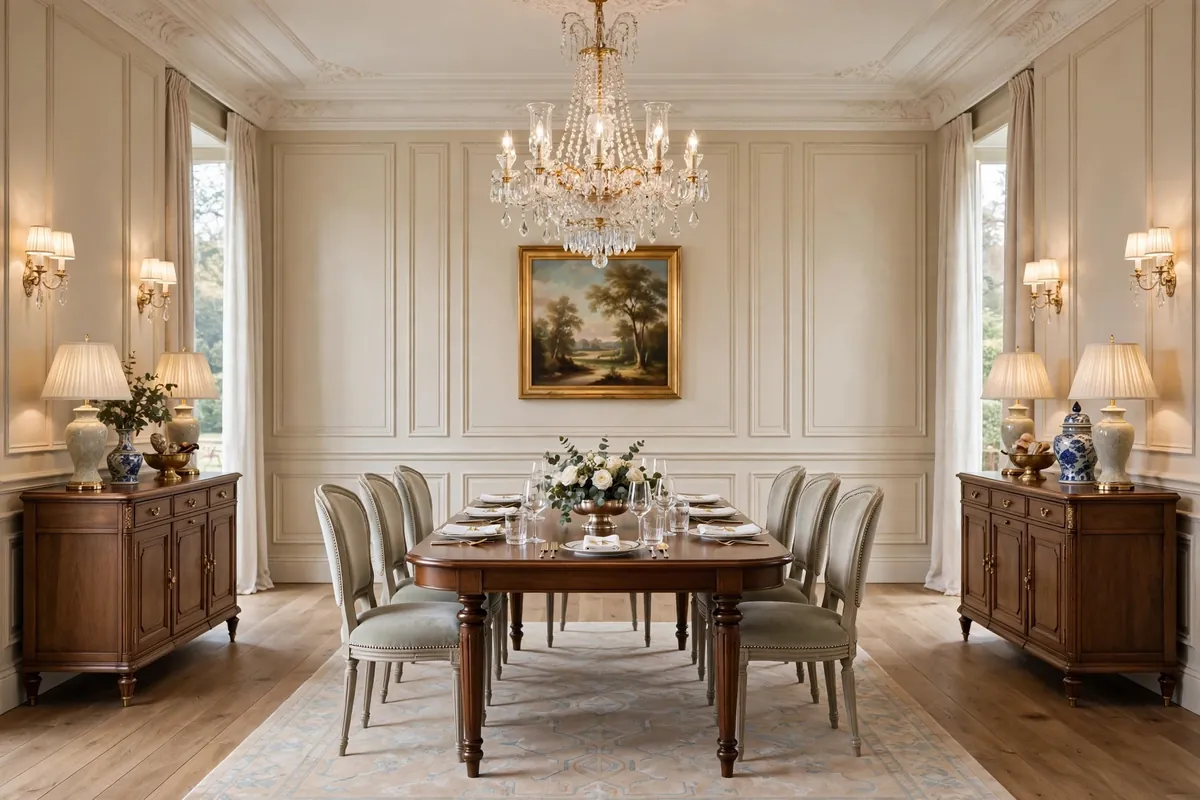
8. Dress the Windows in Drapery
Floor-to-ceiling drapery adds softness and height. Fabric frames the view like art.
Layer sheers under heavier panels. Daylight filters softly; evenings close in cozily.
Hang rods wide and high to exaggerate the windows. An elegant dining room borrows grandeur from its windows.
- Choose linen or velvet in a tone close to the walls. Quiet luxury lives in texture.
- Steam drapery yearly to keep folds crisp. Well-kept fabric elevates the whole room.
- Train new curtains with loose ties first. Folds memorize their shape over weeks.
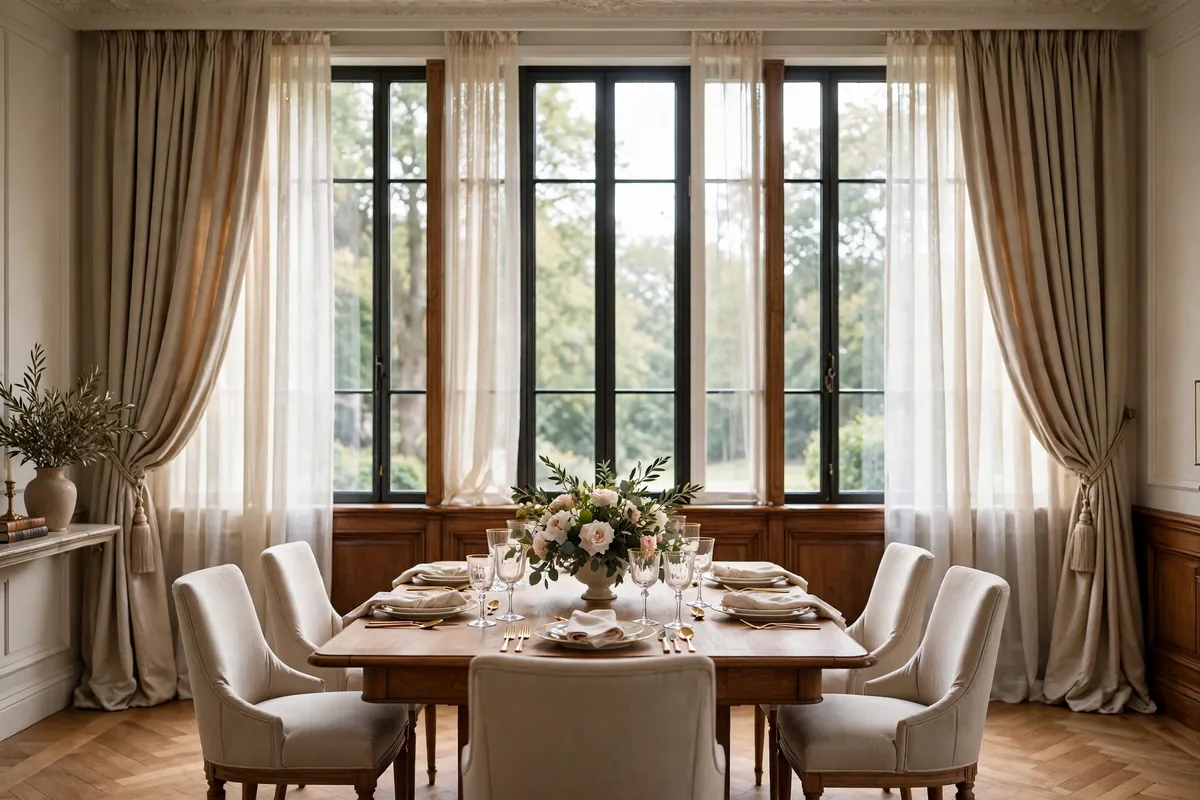
9. Try Deep, Moody Walls
Dark walls create intimacy and drama. Deep green or charcoal makes the dining room feel like an evening destination.
Balance darkness with a brass chandelier and warm wood. Contrast with control is the key.
- Keep the ceiling light to avoid heaviness. The envelope should embrace, not press.
- Art pops beautifully on dark walls. One strong wall color leads; everything else supports.
- Sample the color on a large board first. Dark paint shifts dramatically with light.
- Use matte finish to avoid glare. Flat paint deepens the mood.
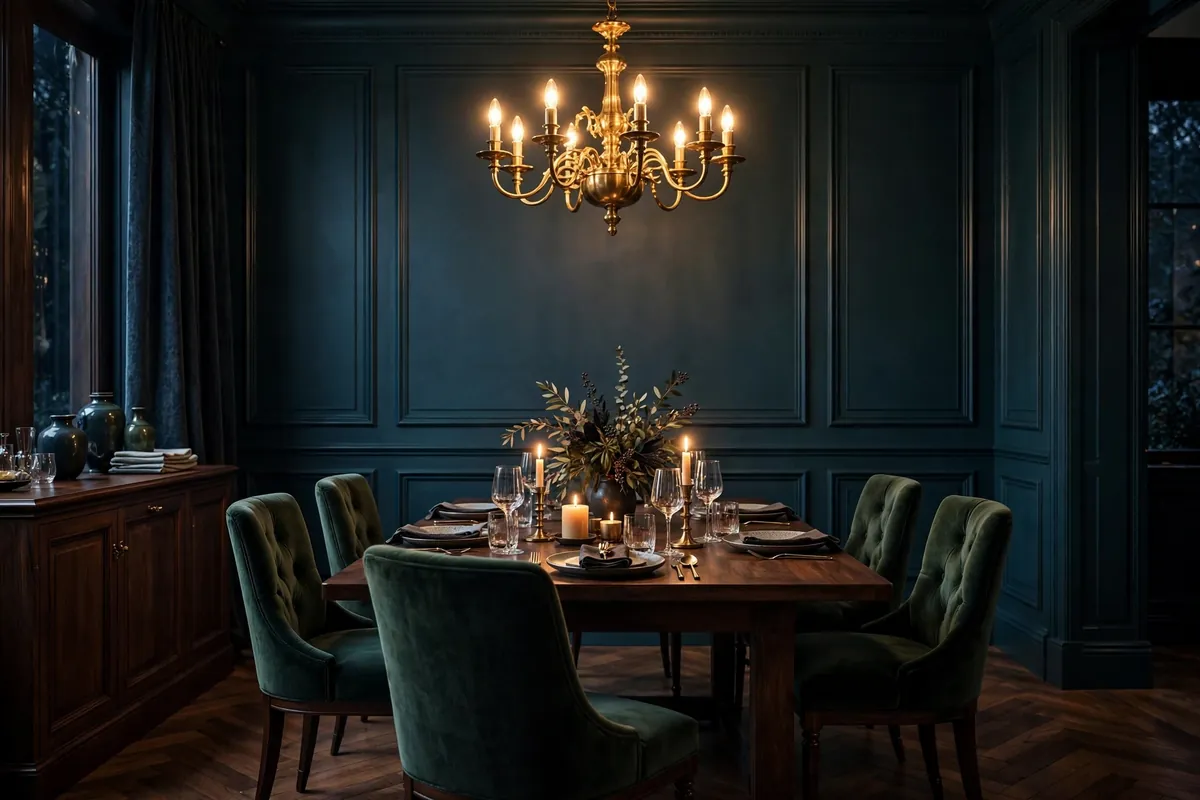
10. Finish with Fresh Flowers
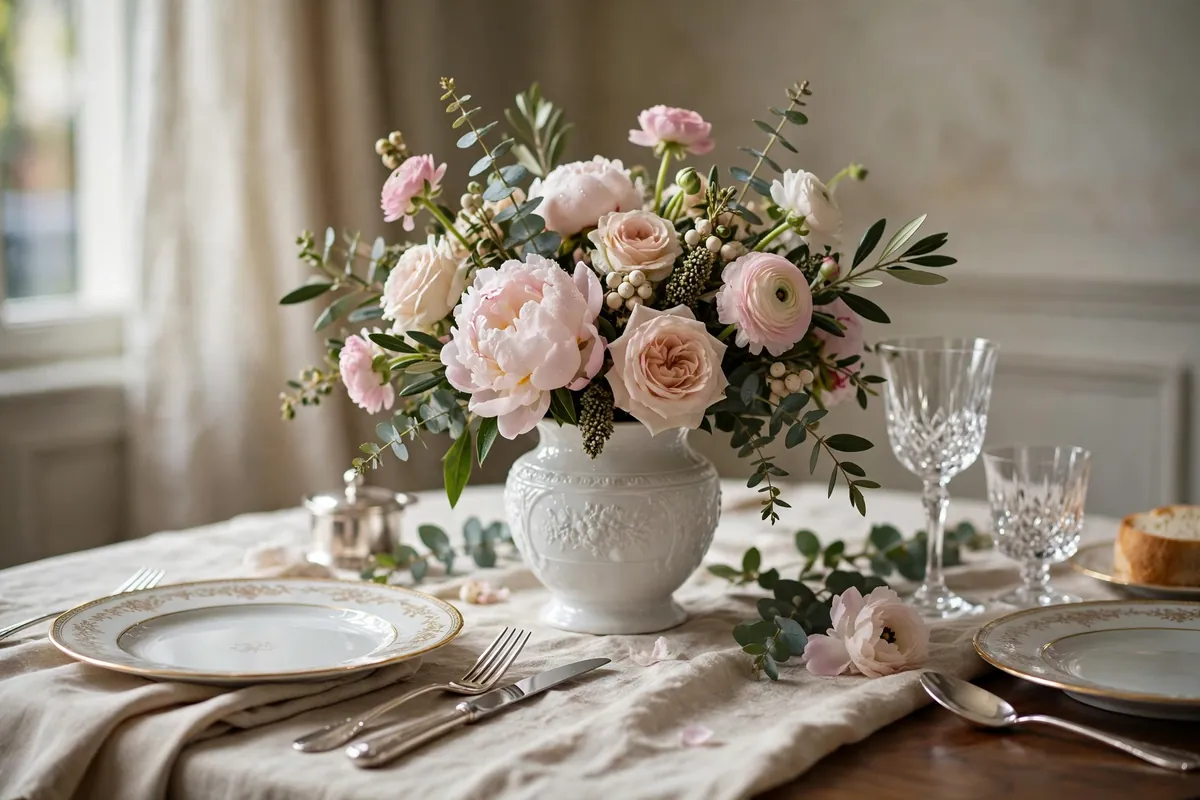
Fresh flowers are the final touch of refinement. A classic vase of blooms softens the formality.
Keep arrangements low so conversation flows over them. An elegant dining room never blocks its guests’ view.
Choose seasonal stems in the room’s palette. Harmony over spectacle.
Change the water every two days. Freshness is a discipline, not an accident.
Trim stems at an angle for longer life. Small care extends the beauty.
Remove leaves below the waterline. Clean water keeps blooms fresh longer.
11. Mix Metals with Intention
Brass, bronze, and warm nickel can coexist. Mixed metals add depth when the palette stays warm.
Repeat each metal at least twice. Repetition makes the mix look deliberate.
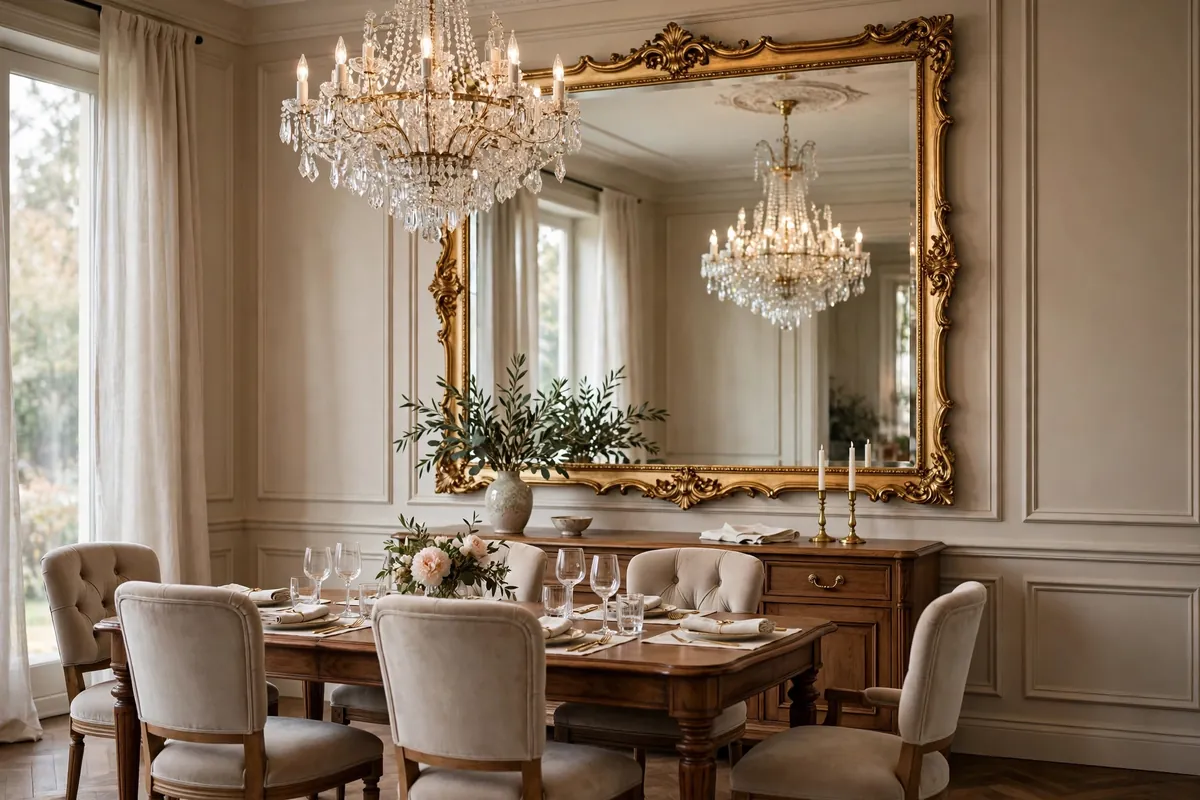
A mirror with a brass frame echoes the chandelier. Reflections multiply the elegance.
Keep hardware consistent within each piece. Controlled mixing beats matching everything.
Polish metals seasonally to maintain the glow. Patina is charming; neglect is not.
Use a soft cloth, never abrasives. Gentle care preserves fine finishes.
12. Style a Classic Sideboard
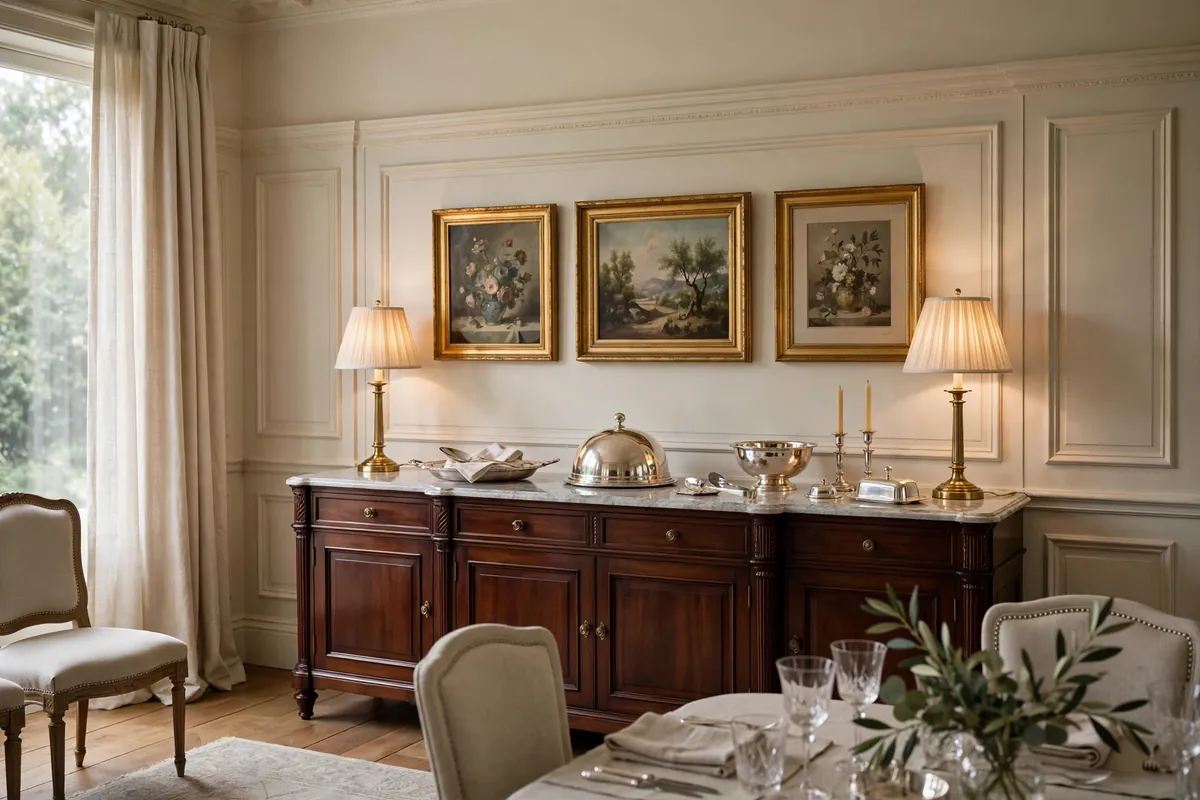
A sideboard adds storage and a styling moment. Lamps, art, and serving pieces create a composed vignette.
Flank it with matching lamps for symmetry. An elegant dining room loves pairs.
Hang one strong art piece above it. The sideboard wall becomes a secondary focal point.
Keep the surface edited: three to five objects maximum. Restraint is the whole game.
Dust the vignette weekly to keep it pristine. Styled surfaces demand maintenance.
Rotate the art above seasonally. Fresh views keep the room feeling alive.
13. Dine by Candlelight
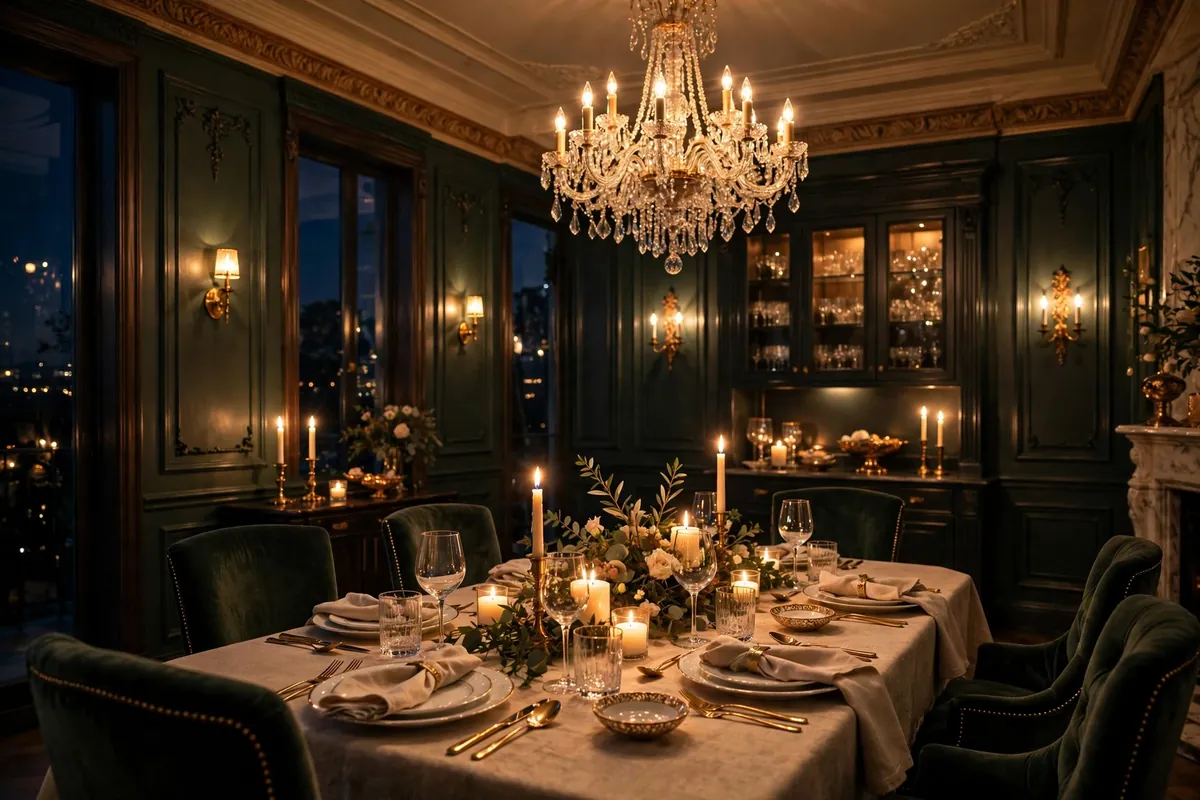
Candlelight is elegance’s oldest trick. It flatters faces, food, and finishes simultaneously.
Cluster candles of varying heights down the table. The flicker creates living texture.
Pair candlelight with a dimmed chandelier. Layers of warm light feel luxurious.
Use unscented candles at the table. Fragrance should never compete with food.
Trim wicks to a quarter inch before lighting. Clean flames burn brighter and longer.
Keep a snuffer nearby for graceful endings. Details complete the ritual.
14. Keep the Palette Neutral
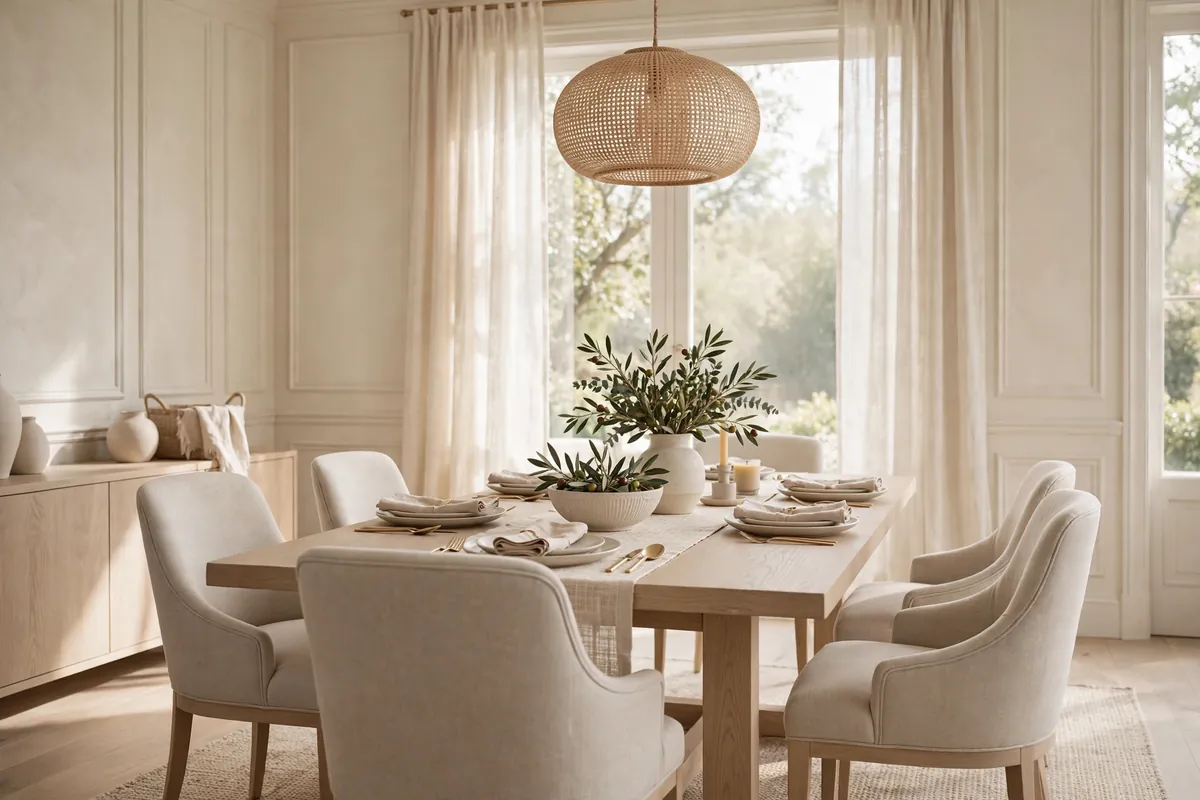
Soft neutrals create serene refinement. Cream, beige, and warm gray let textures shine.
Layer tones within one family for depth. An elegant dining room whispers in neutrals.
Add interest through fabric, wood grain, and stone. Texture replaces bold color.
One darker accent grounds the lightness. Every calm room needs a quiet anchor.
Photograph the room to check tonal balance. The camera spots gaps the eye misses.
Add one textural throw for softness. Neutrals welcome a single cozy note.
15. Hang a Statement Mirror
A large mirror doubles the chandelier’s sparkle. It expands the room and multiplies the light.
Place it to reflect the prettiest view. Mirrors should frame beauty, not clutter.
Choose a classic frame that echoes other finishes. The mirror becomes jewelry for the wall.
Keep the reflected side tidy always. A mirror doubles whatever it sees.
Secure heavy mirrors to wall studs. Safety underpins every beautiful installation.
Clean the glass monthly for perfect reflections. Smudges dull the sparkle.
16. Set the Table Beautifully
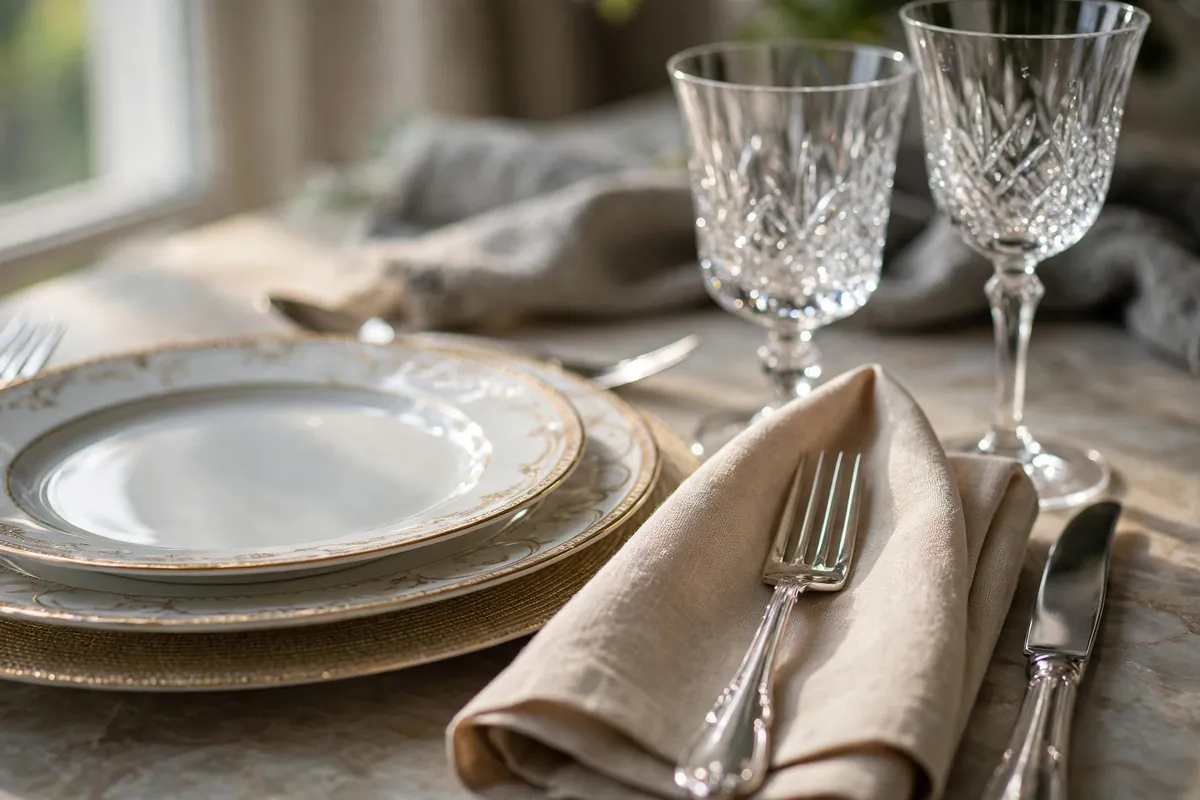
Fine china, crystal, and polished silver elevate every meal. The table setting is the room’s daily ritual.
Layer chargers, plates, and linen napkins. An elegant dining room dresses its table with care.
Keep the centerpiece low and simple. Place settings should shine, not fight.
Polish silver before guests arrive. The details are the elegance.
Iron linens the morning of the dinner. Crisp fabric completes the setting.
Fold napkins simply; let the fabric speak. Understated folds suit elegant tables.
17. Look Up at the Ceiling
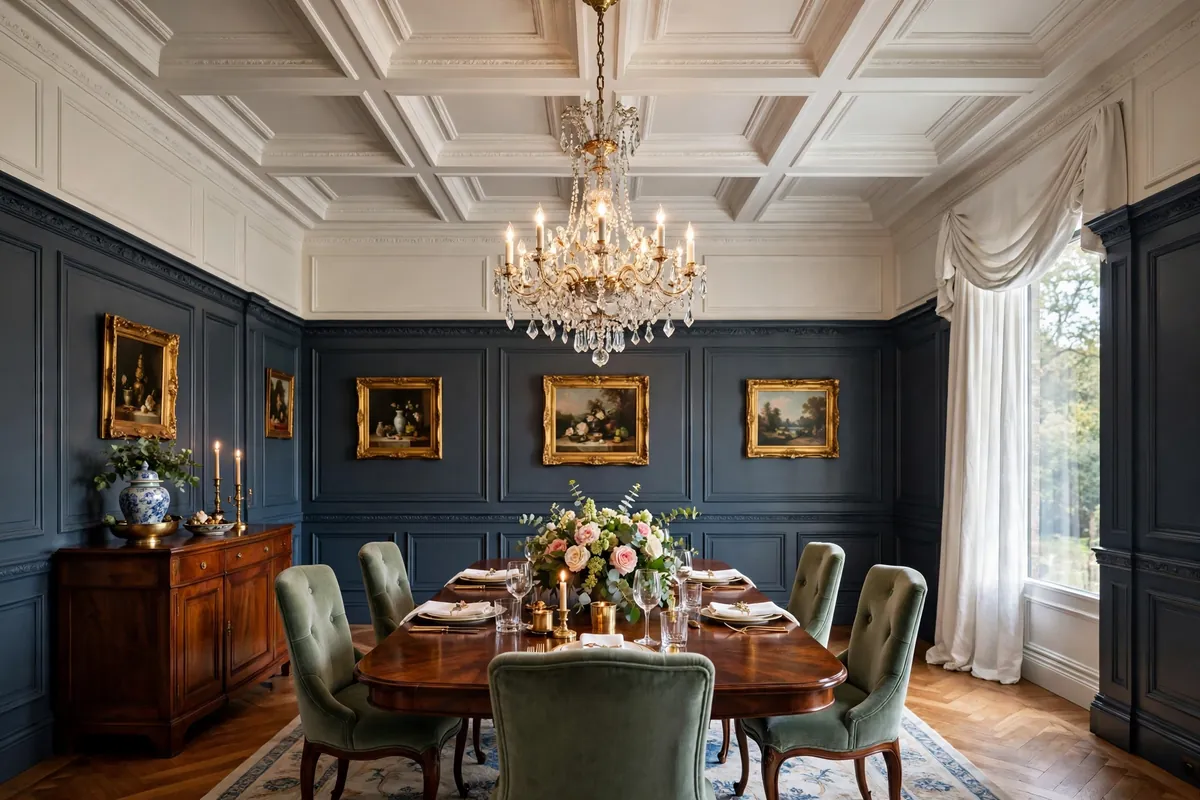
A coffered ceiling adds architectural richness. The fifth wall deserves design attention.
Paint coffers the same tone as the ceiling for subtlety. Structure without heaviness.
Center the chandelier in the coffer grid. Alignment makes architecture feel intentional.
In rooms without coffers, a ceiling medallion frames the chandelier. Every elegant room finishes overhead.
Check ceiling height before adding depth. Coffers suit rooms nine feet and taller.
Paint the chandelier canopy to match. Cohesion extends to the smallest details.
18. Open to the Garden
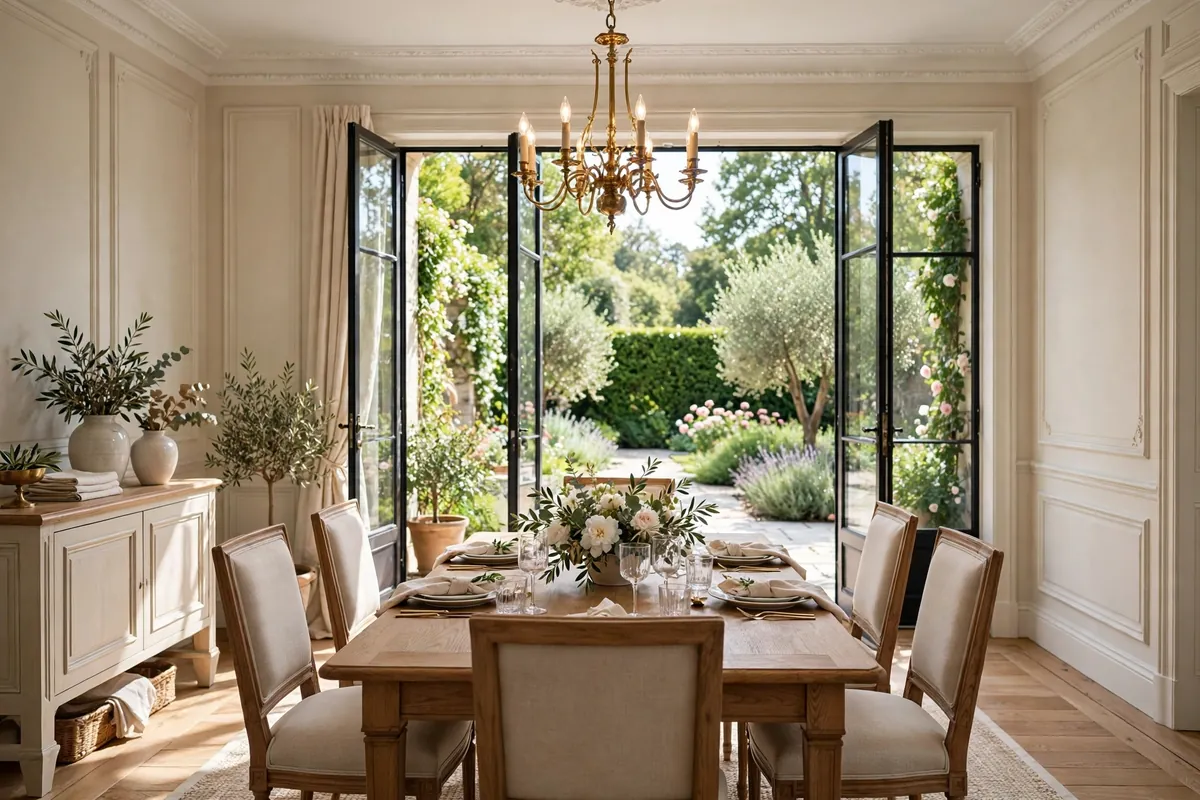
French doors bring nature into the formal room. Daylight and greenery soften traditional elegance.
Align the table with the doors for a view from every seat. An elegant dining room should celebrate its outlook.
Sheer curtains filter the light gently. Brightness keeps formality from feeling stiff.
Style the terrace to match the interior. Indoor-outdoor flow extends the elegance outward, and the garden becomes the room’s living artwork through the glass, which is why the most memorable dining rooms treat the view as their final design element rather than an afterthought.
Elegance Rules That Never Fail
Hold these:
- One strong anchor per room; everything supports it.
- Symmetry and repetition create quiet order.
- Layer lighting: chandelier, sconces, candles.
- Restraint in color; richness in texture.
- Know when to stop decorating.
Build in this order:
- Set proportions: table sized to the room.
- Add the anchor: lighting or architecture.
- Layer texture through fabric and finish.
- Edit until it breathes.
Frequently Asked Questions
What makes a dining room elegant without being expensive?
Proportion, symmetry, and lighting. An elegant dining room feels refined through design logic, not price tags.
How do I choose the right chandelier size?
Add the room’s length and width in feet; that number in inches is a good diameter guide. Hang it 30 to 34 inches above the table.
Can an elegant dining room feel comfortable daily?
Yes, with performance fabrics and livable layouts. An elegant dining room should feel good to live with, not just photograph.
What colors suit an elegant dining room?
Soft neutrals, deep greens, charcoal, and warm wood tones. Keep the palette controlled and let texture add interest.
Conclusion
An elegant dining room isn’t about luxury; it’s about intention. Choose one strong anchor, honor proportion and symmetry, layer warm light, and know when to stop.
Restraint is the true luxury. Leave breathing room, let textures shine, and choose pieces that feel good every single day.
Revisit the room each season with fresh eyes. Elegance is maintained, not installed once.
Note what you love and repeat it elsewhere. Good taste compounds over time.