12 Charming Floating Shelf Decor Ideas That Make Bare Walls Look Intentional
Floating shelf decor ideas turn a bare wall into a finished room without new furniture, heavy drilling, or a big budget. A single shelf styled with intention can hold books, plants, and art in a way that feels collected rather than cluttered, and a row of shelves can anchor a whole wall.
The secret is balance: mix heights, textures, and one or two colours, leave breathing space between objects, and repeat a small detail across the shelf so it reads as one composition. These 12 floating shelf decor ideas show you exactly how to do that in every room, from the kitchen to the kids’ bedroom, and they pair beautifully with gallery wall ideas when you want framed art and open shelving on the same wall.
Key Takeaways
What should you put on a floating shelf first?
Start with one anchor piece, such as a stack of books, a framed print, or a vase, then add two smaller items beside it. Anchors give the eye a place to land and stop a shelf from looking like random clutter.
How many items belong on one floating shelf?
Three to five items per shelf is the sweet spot for most walls. Odd numbers look more natural, and leaving at least a third of the shelf empty keeps the display calm and easy to dust.
How do you stop floating shelves from looking messy?
Repeat one colour or material across the shelf, vary the heights, and group small items together on a tray or a stack of books. If everything is a different size and colour with no link between pieces, the shelf will feel busy.
Can floating shelves work in small rooms?
Yes, they are one of the best choices for small rooms because they use wall space instead of floor space. One or two slim shelves above a desk, bed, or sofa add storage and style without crowding the room.
1. How Do You Style Floating Shelves With Books and Plants?
Pair books and plants together, using the books as a low base and the plant as a soft, trailing accent. Stack two or three books flat, stand a few upright beside them, and let a trailing plant spill over the edge.
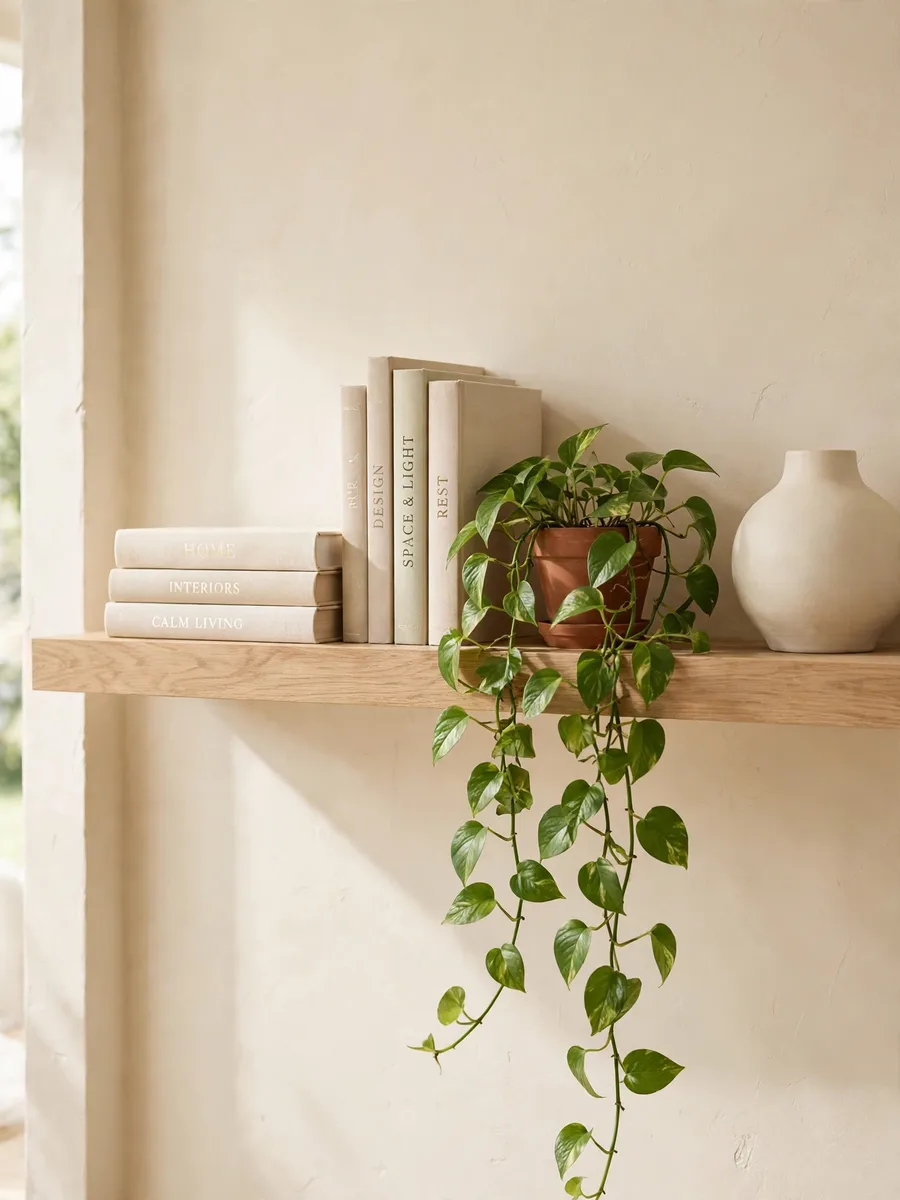
In a living room, try a light oak shelf with cream-spined books, a small terracotta pot holding a pothos, and a cream ceramic vase. The green leaves soften the straight lines of the shelf, while the books add weight and a lived-in feel. Keep the plant in a pot that matches one of your book colours so the shelf feels planned.
Quick tips:
- Mix upright and stacked books for height variation.
- Choose a trailing plant for the end of the shelf.
- Keep the palette to oak, cream, and one green.
2. How Can Floating Shelves Make a Kitchen Feel Warmer?
Use floating shelves in the kitchen to display everyday pieces you actually love, such as ceramic bowls, wooden boards, and glass jars. Keep the items you reach for daily within easy reach and the prettiest pieces at eye level.
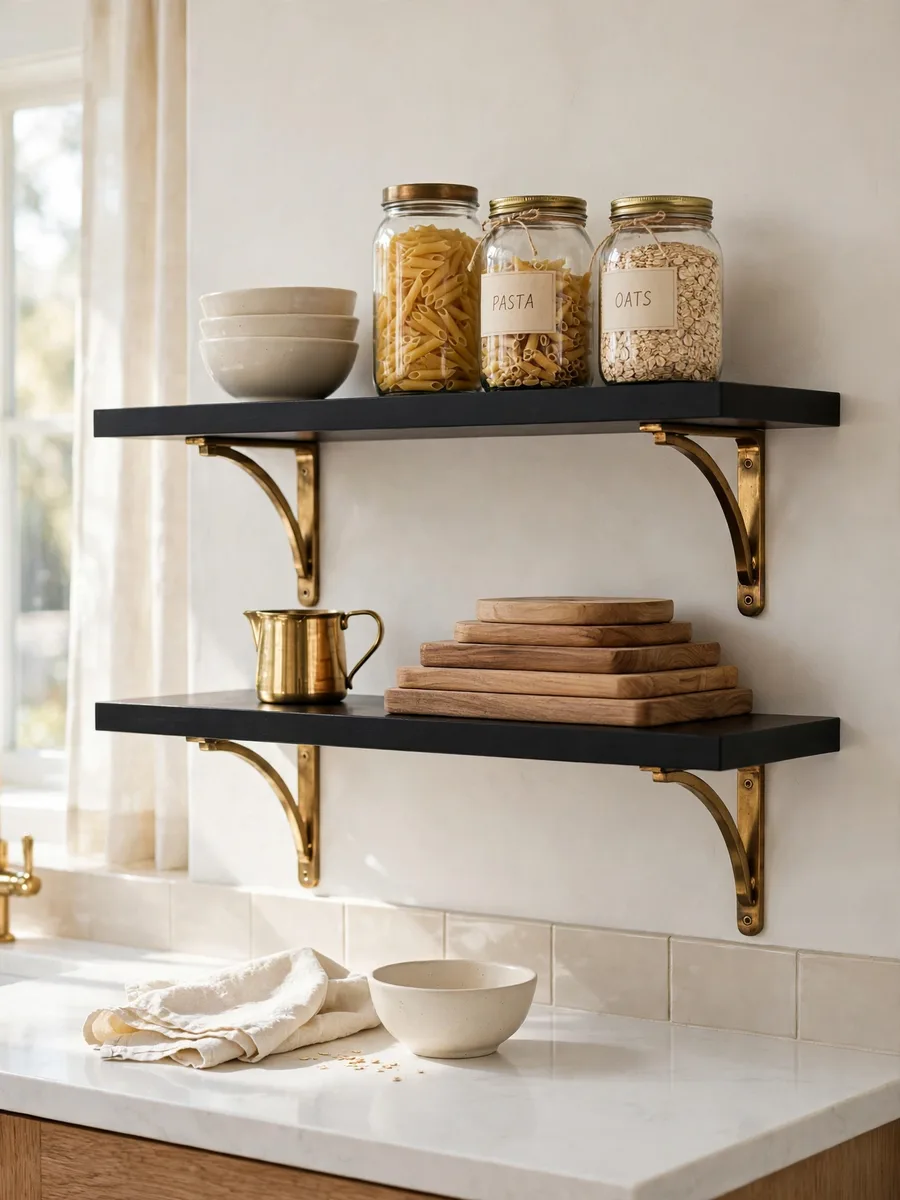
Picture black shelves with brass brackets above a white worktop, holding cream ceramic bowls, a stack of wooden chopping boards, and two glass jars of pasta and oats. A small brass measuring jug adds shine without looking fussy. For more inspiration on pairing shelves with wall displays, see these kitchen shelf decor ideas that work in the same warm, practical style.
Quick tips:
- Display matching bowls and plates, not mixed sets.
- Put heavy items on the lower shelf for safety.
- Leave space between groups so the shelf breathes.
3. What Works Best on Floating Shelves in a Bathroom?
Choose moisture-friendly pieces for bathroom shelves, such as rolled towels, glass jars, and a small eucalyptus stem in a vase. Keep the look spa-like with a calm palette and only a few items per shelf.
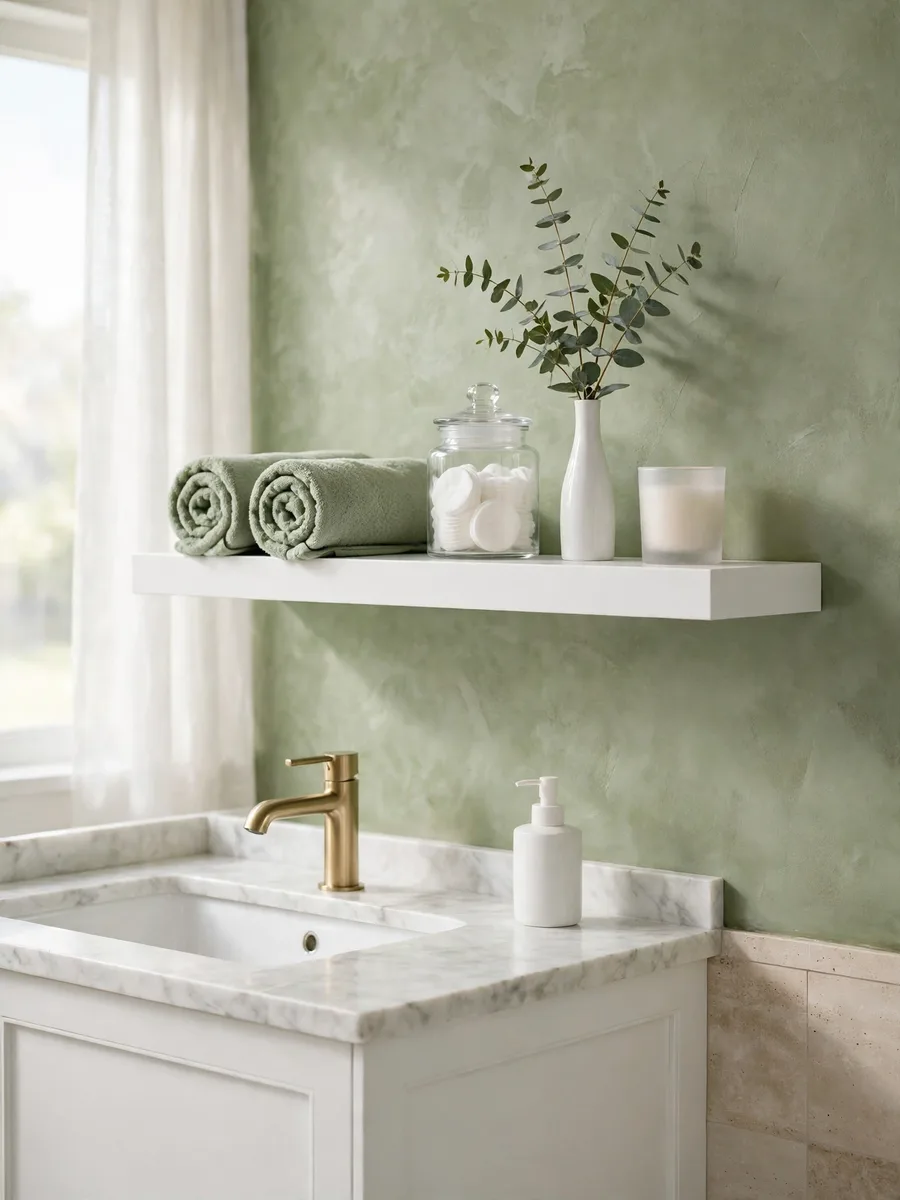
A white shelf above the sink works beautifully with two rolled sage-green towels, a clear glass jar of cotton pads, and a slim white vase holding a eucalyptus sprig. Add a small scented candle in a frosted glass holder for a soft glow in the evening. Avoid paper books and untreated wood here, since steam will damage them over time.
Quick tips:
- Roll towels instead of folding them to save space.
- Use glass and ceramic, which handle steam well.
- Keep one shelf clear for items you use daily.
4. How Do You Style Floating Shelves Above a Bed?
Style shelves above a bed with light, soft pieces you would be happy to look at from the pillow. Framed prints, a small vase, and one or two books are enough, and nothing heavy should sit directly overhead.
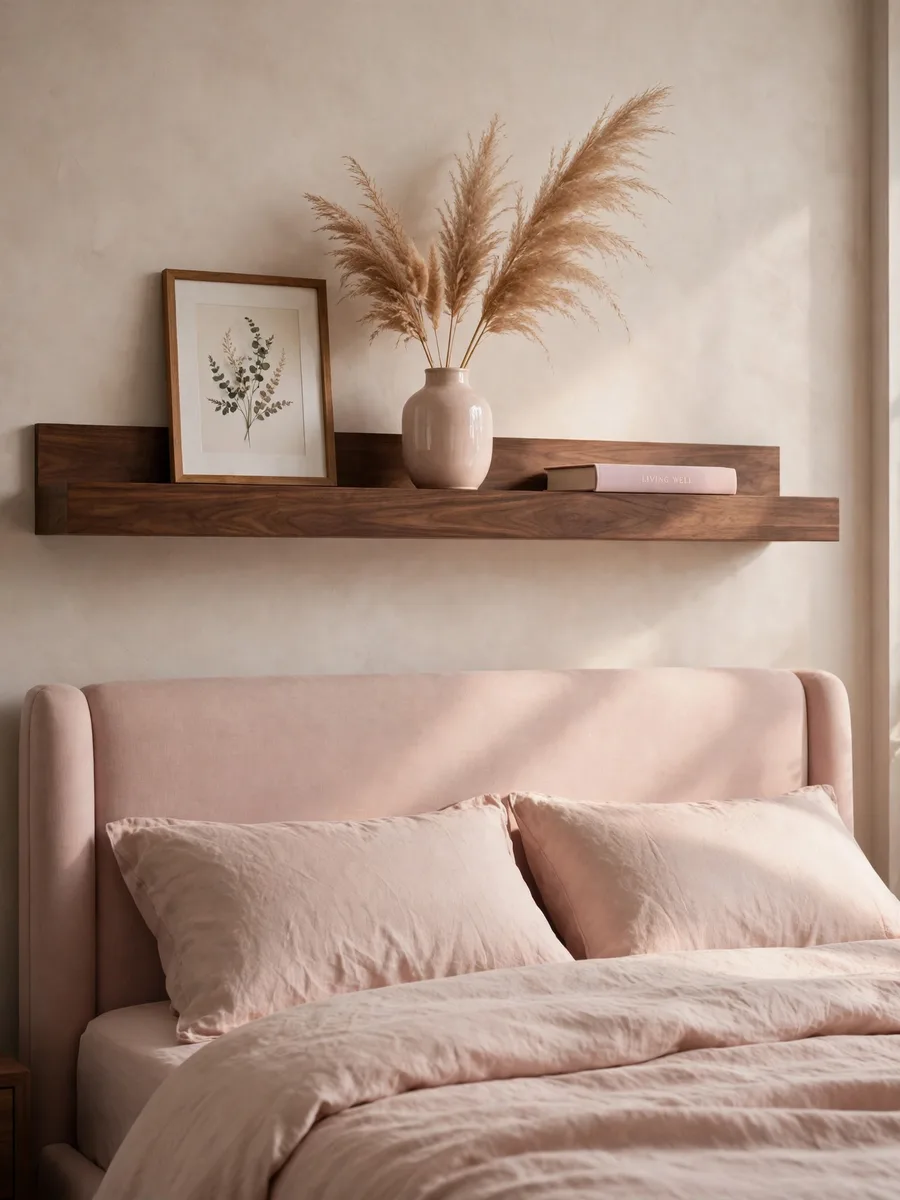
Try a walnut shelf above a blush linen headboard, holding a small framed botanical print, a blush ceramic vase with dried pampas grass, and a single book lying flat. The walnut adds warmth against pale bedding, while the blush tones tie the shelf to the cushions. Keep the shelf slim and mount it securely, at least a foot above the pillows.
Quick tips:
- Keep items light and secure above a bed.
- Match one shelf colour to your bedding.
- Use dried stems instead of water-filled vases.
5. How Do You Decorate Floating Shelves in a Kids Room?
Make kids room shelves fun and reachable, with picture books facing forward, a favourite toy, and a bright storage box. Low shelves let children choose their own books, while higher shelves hold the pieces you want to keep safe.
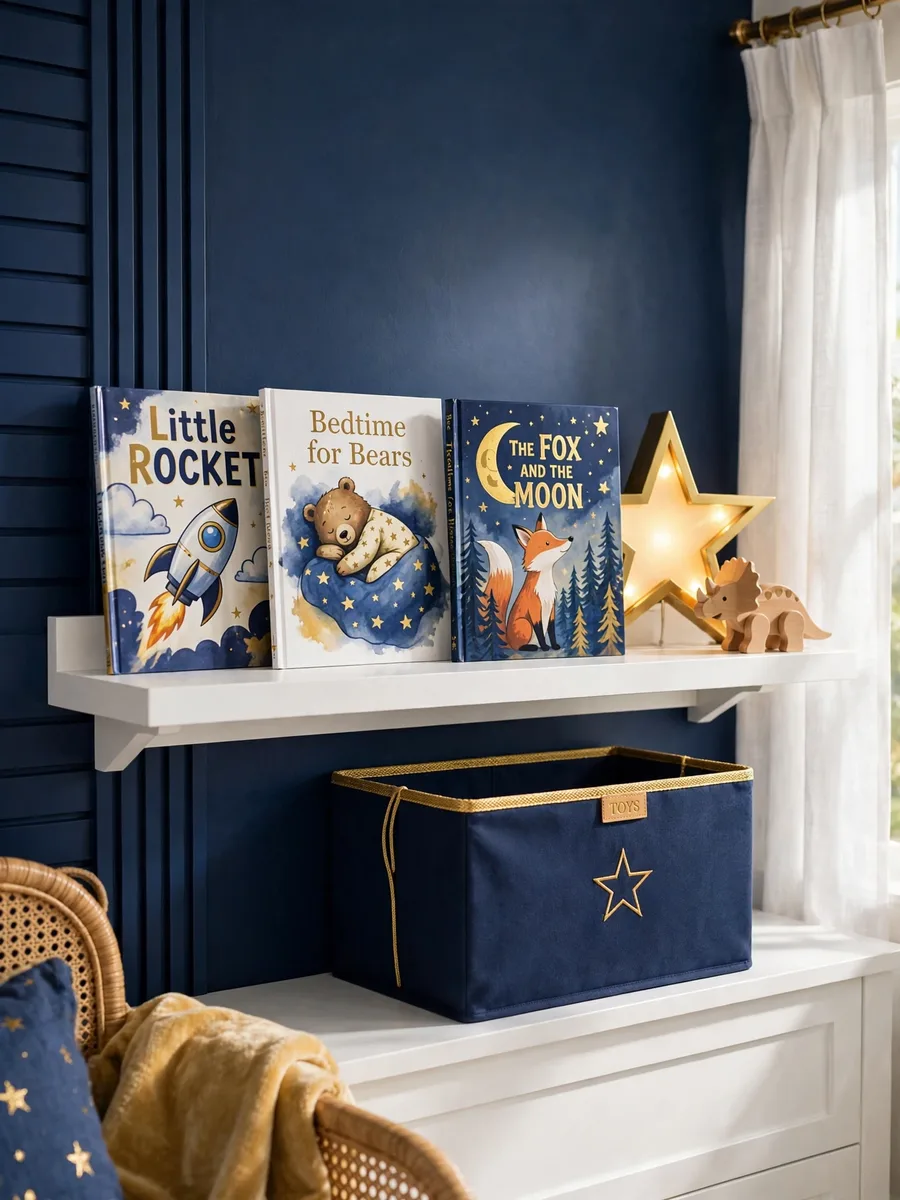
In a navy and gold kids room, a white shelf with navy bookends holds three picture books with their covers facing out, a gold star-shaped night light, and a small wooden dinosaur. A navy fabric box on the shelf below hides crayons and small toys. Rotate the books every few weeks so the shelf feels fresh without buying anything new.
Quick tips:
- Face picture books outward so children can see them.
- Mount one shelf low enough for little hands.
- Use a box or basket to hide small clutter.
6. What Should You Put on Entryway Floating Shelves?
Entryway shelves should hold the things you grab on your way out, such as keys, sunglasses, and a small bowl, plus one pretty piece that welcomes you home. Keep the display slim so it never blocks the hallway.
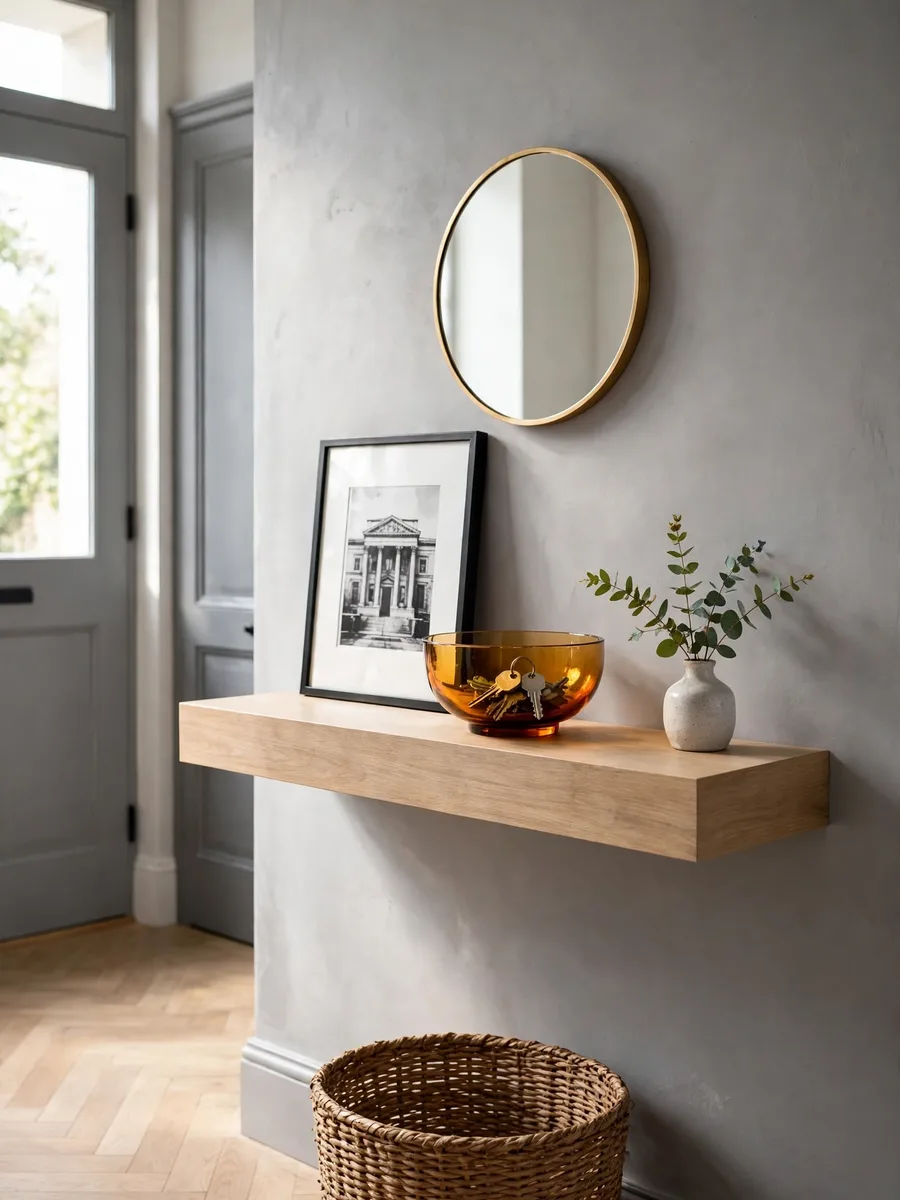
Imagine a grey-painted hallway with a light wood shelf holding an amber glass bowl for keys, a small round mirror above it, and a framed black-and-white print. A tiny vase with fresh stems adds life, and a woven basket underneath catches shoes and bags. The amber bowl becomes the spot where keys always land, so nothing gets lost.
Quick tips:
- Give keys a dedicated bowl or hook.
- Add a mirror above the shelf to open the space.
- Keep the shelf shallow so the hallway stays clear.
7. How Do You Layer Frames on a Floating Shelf?
Layer frames by placing the largest at the back, a medium frame in front of it, and a small object or vase at the front. Overlap the edges slightly so the group reads as one arrangement instead of separate pieces.
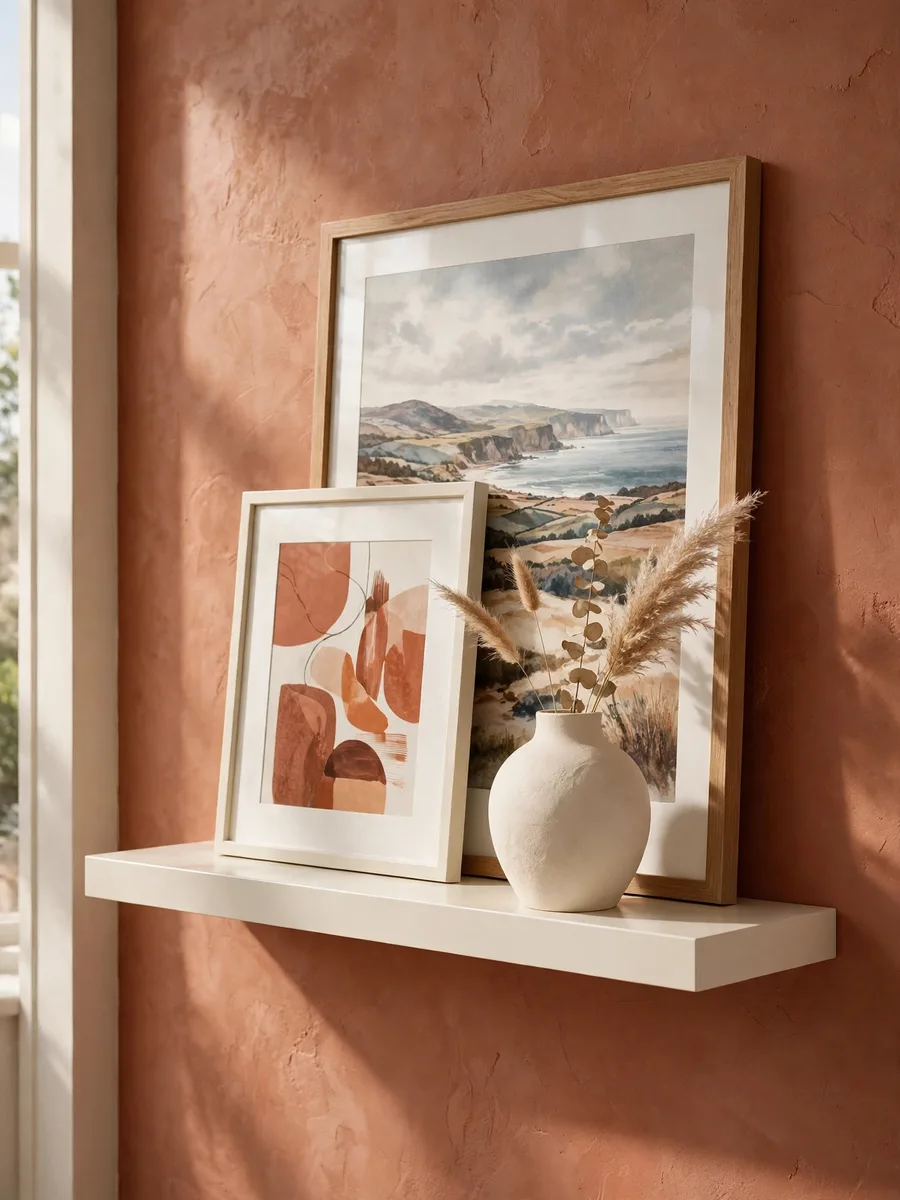
On a terracotta-painted wall, an ivory shelf holds a large framed landscape print leaning at the back, a smaller terracotta-toned abstract print in front, and a cream ceramic vase at the front edge. The layered frames add depth, and the vase stops the arrangement from feeling flat against the wall. Change one print with the seasons for an easy refresh.
Quick tips:
- Lean frames instead of hanging them for a relaxed look.
- Overlap frames slightly to create depth.
- Stick to two or three frame colours at most.
8. How Do You Keep Minimal Floating Shelves From Looking Bare?
Minimal shelves work when each object earns its place, so choose three pieces with different heights and textures and leave generous empty space. One sculptural vase can carry a whole shelf if the shape is strong enough.
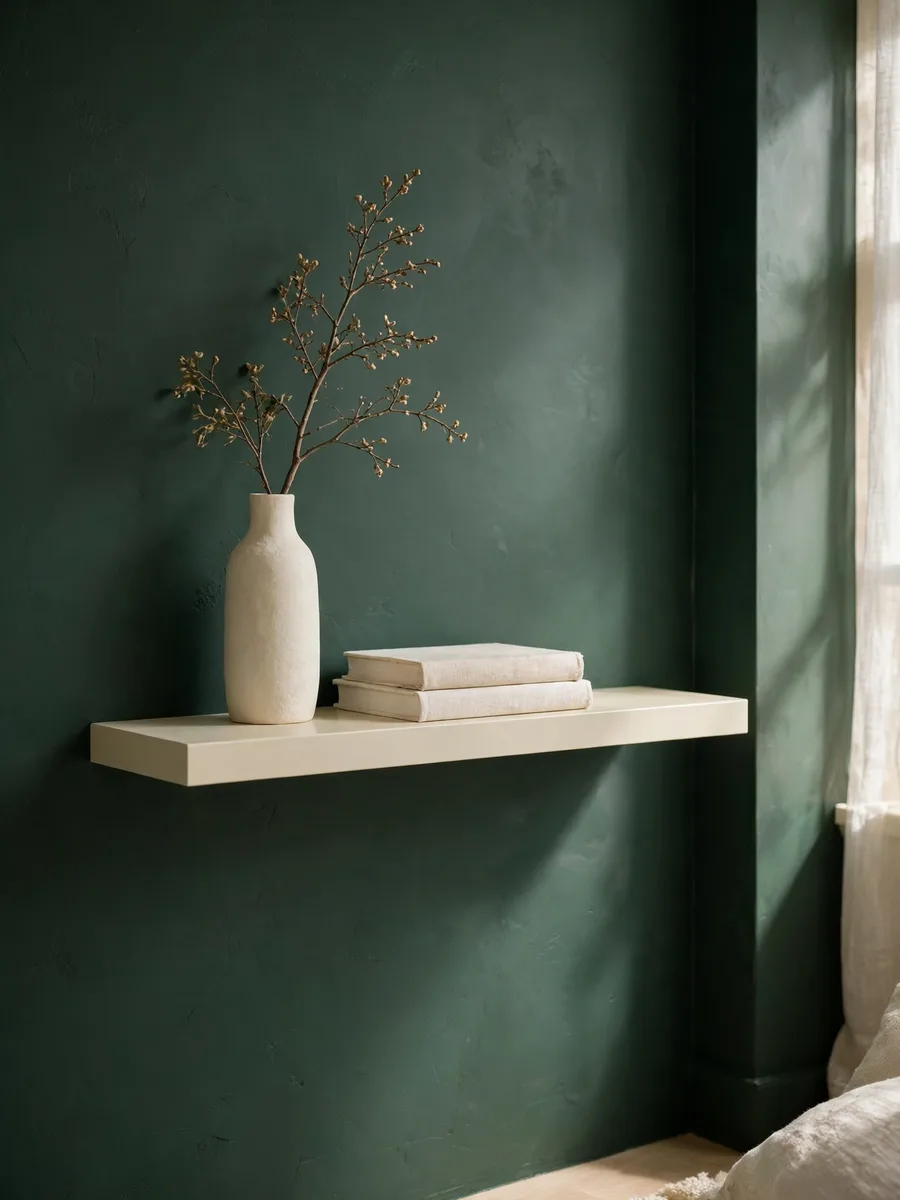
A forest green wall with a single cream shelf shows how little you need: a tall cream ceramic vase with one branch, a short stack of two linen-covered books, and nothing else. The deep green makes the cream pieces stand out, and the empty space is part of the design, not a gap to fill. This calm approach suits a reading corner or a quiet hallway.
Quick tips:
- Choose one statement piece per shelf.
- Leave at least half the shelf empty.
- Repeat the shelf colour somewhere else in the room.
9. How Do You Style Floating Corner Shelves?
Corner shelves turn a dead corner into a useful display, so use them for a small plant, a candle, and one framed photo. Keep the pieces small and light, since corners are hard to reach and easy to overload.
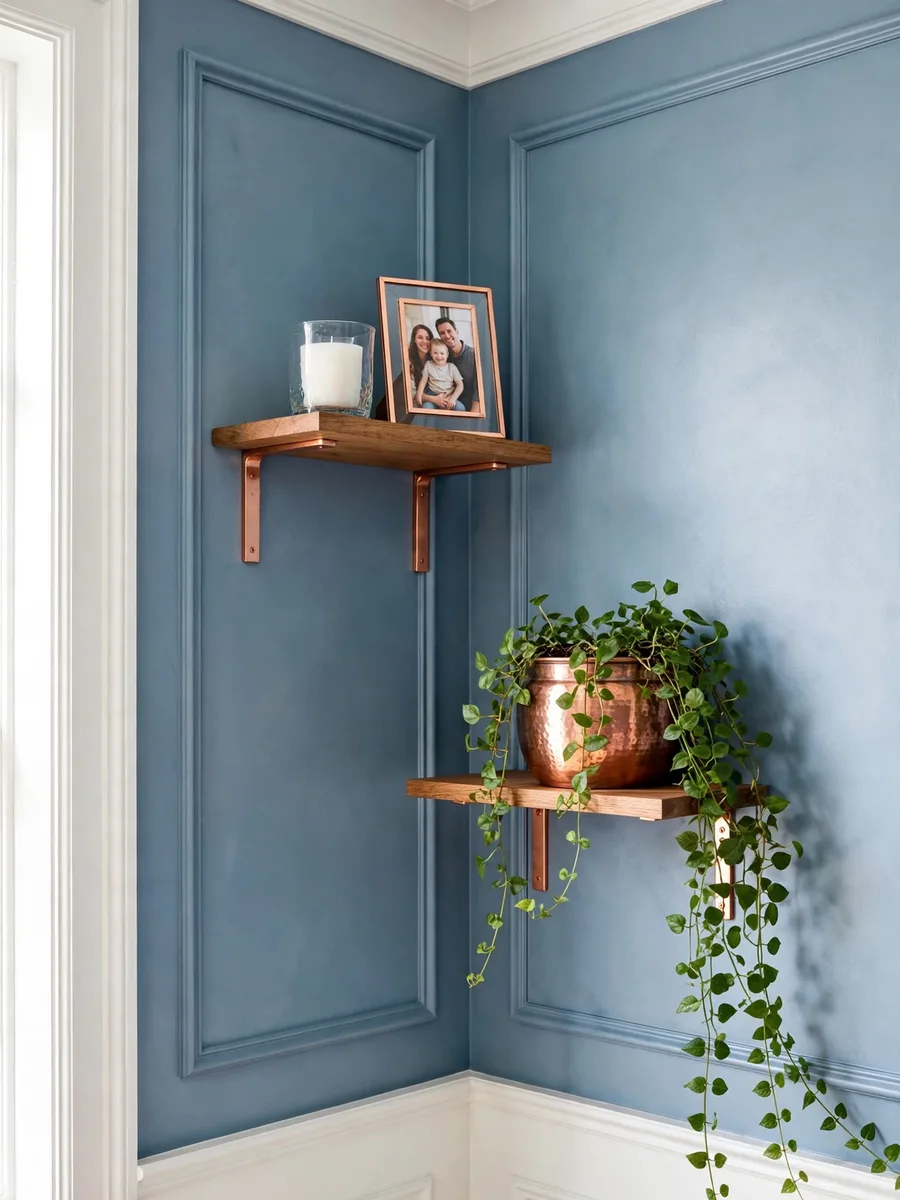
In a dusty blue corner, two small wooden shelves with copper brackets hold a trailing plant in a copper pot, a white pillar candle in a glass holder, and a small framed family photo. The copper warms the cool blue wall, and the plant softens the sharp corner. Corner shelves work well in a bathroom or a small bedroom where wall space is tight.
Quick tips:
- Keep corner items small and light.
- Use two short shelves instead of one long one.
- Add a trailing plant to soften the corner.
10. What Makes a Styled Vignette Work on a Floating Shelf?
A vignette works when three items share a colour or theme and sit close together like a tiny scene. Think of a vase, a book, and a small sculpture as one group, with space around the group rather than between each piece.
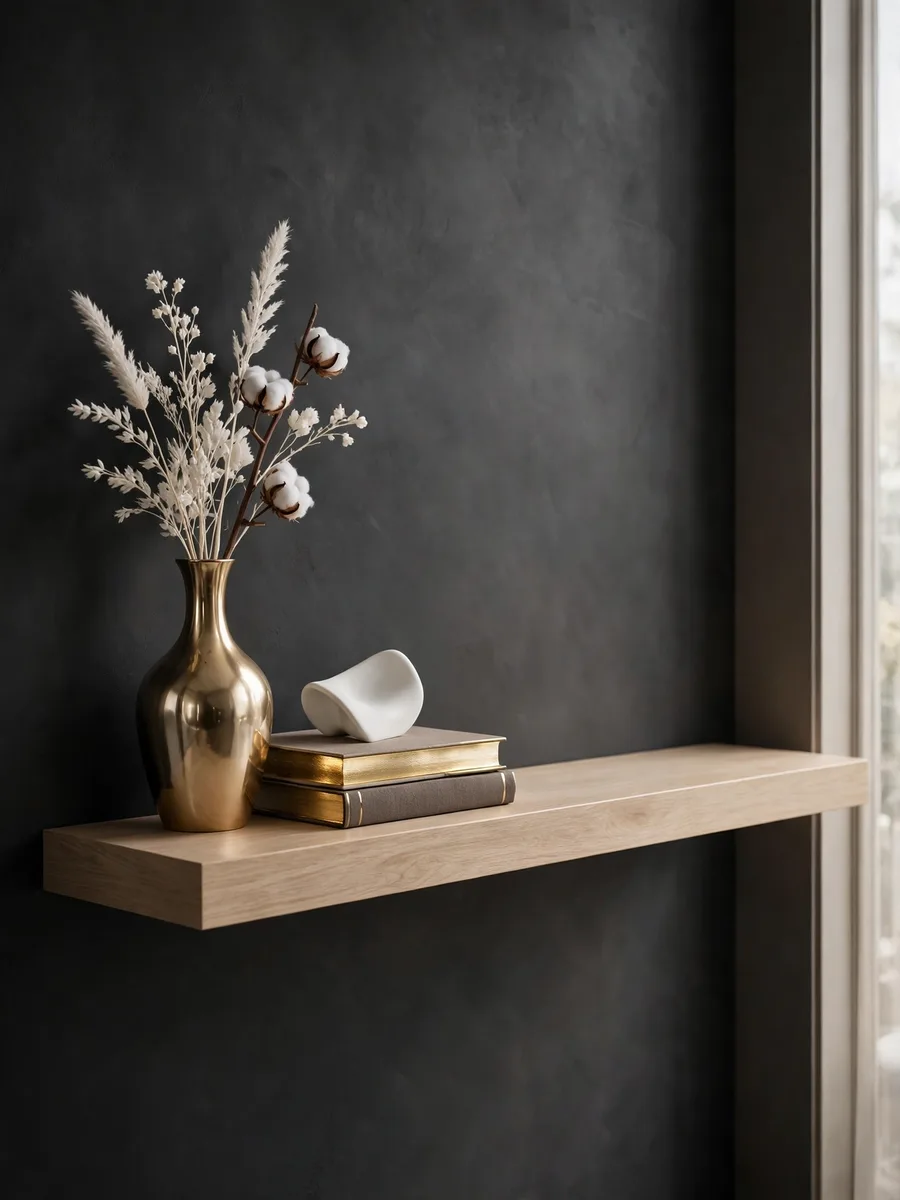
On a charcoal wall, a light wood shelf holds a champagne-gold vase with white stems, a stack of two books with gold edges, and a small white ceramic sculpture grouped tightly at one end. The rest of the shelf stays empty, which makes the vignette feel deliberate, like a display in a boutique. Try the same idea with a clock, a candle, and a framed print.
Quick tips:
- Group three items close together as one vignette.
- Leave empty space around the group.
- Repeat one metallic finish across the group.
11. How Do You Style Floating Shelves for the Seasons?
Seasonal shelves are easiest when you keep a neutral base and swap only two or three pieces. Change the stems, the candle colour, and one small decoration, and the whole shelf feels new without a full restyle.
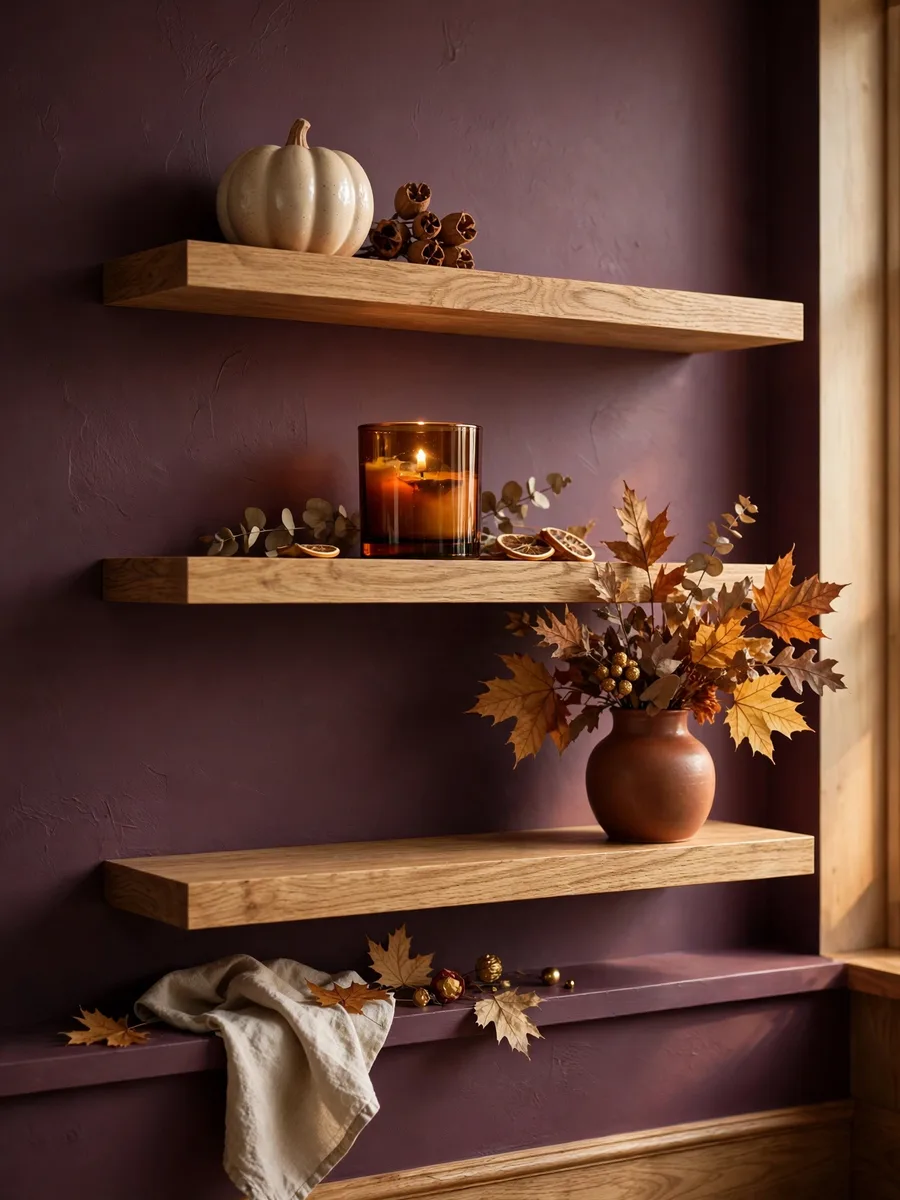
For autumn, a plum-painted wall with oak shelves holds a small ceramic pumpkin, an amber glass candle, and a vase of dried autumn leaves in rust and gold. In spring, swap the pumpkin for a white jug of tulips and the amber candle for a pale green one, and the same shelves feel completely different. Store the seasonal pieces in one box so the swap takes ten minutes.
Quick tips:
- Keep a neutral base and swap only a few pieces.
- Change stems and candle colours first.
- Store seasonal pieces together in one box.
12. How Do You Set Up Floating Shelves in a Home Office?
Home office shelves should mix useful storage with pieces that make work feel calmer, such as reference books, a small plant, and a framed quote. Keep supplies in matching boxes so the shelf looks tidy even when it holds a lot.
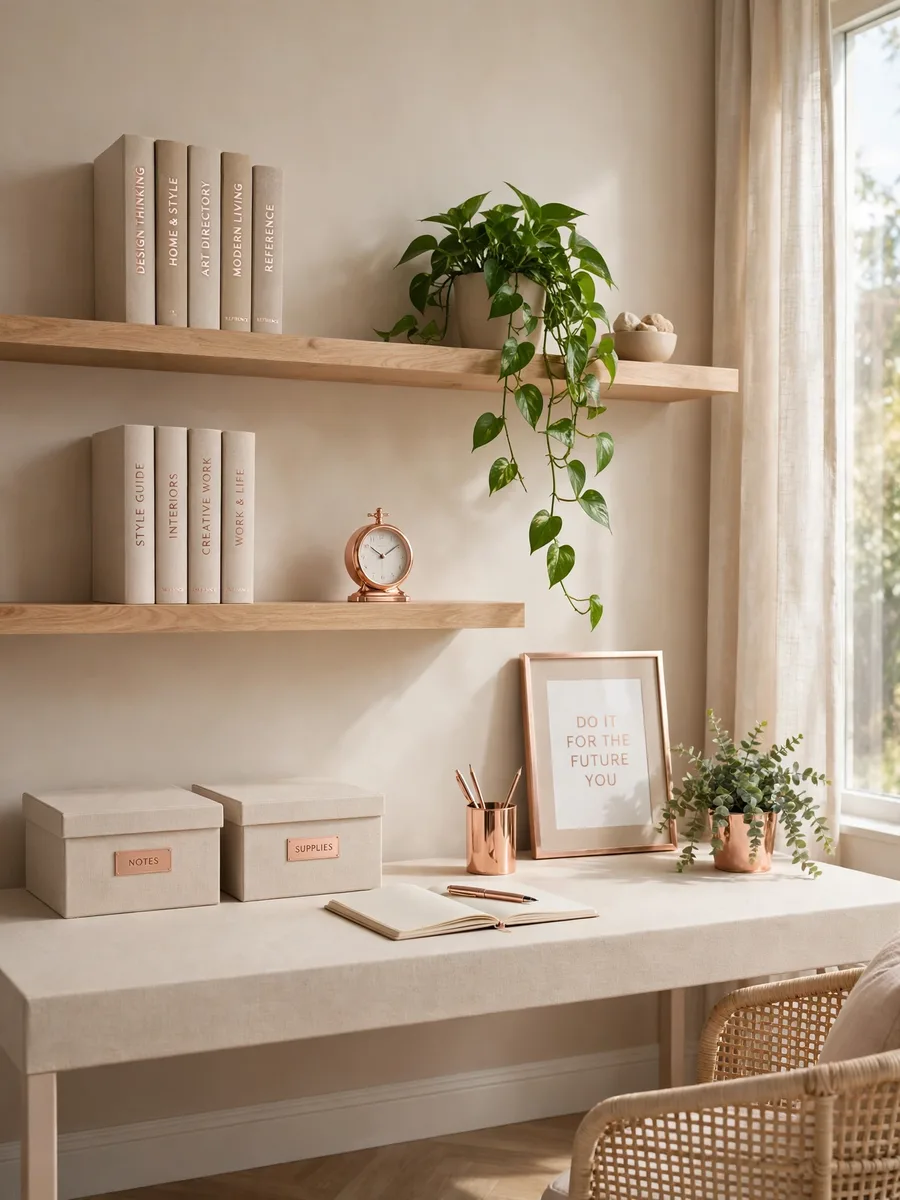
Above a beige desk, two light wood shelves hold upright reference books, a small rose gold desk clock, a trailing plant, and two matching beige storage boxes with rose gold labels. A framed print with a simple motivational quote sits at the end, facing the desk. The boxes hide cables, chargers, and notebooks, so the desk below stays clear for work. If you are styling a whole wall of shelves, keep the art on one side and the open shelving on the other so the wall stays balanced.
One longer note worth keeping in mind is that floating shelves look best when they are treated as part of the room, not as an afterthought, so step back after styling and check the shelf from the doorway, from the sofa, and from the place you sit most often, because a shelf that looks balanced from one angle can look crowded from another, and a quick move of one vase or book is often all it takes to fix the balance.
Quick tips:
- Use matching boxes for office supplies.
- Keep reference books upright and easy to grab.
- Place one plant where you can see it from your chair.
Frequently Asked Questions
How much weight can a floating shelf hold?
Most floating shelves hold between 10 and 30 kilograms when they are fixed into wall studs or solid masonry with the right fixings. Always check the shelf rating and use proper wall plugs, and keep heavy books and ceramics on the lower shelf.
How high should floating shelves be on a wall?
Hang shelves at eye level for display, usually 140 to 160 centimetres from the floor, and higher in a kitchen or bathroom where you need clear space below. Above a sofa or bed, leave at least 30 centimetres of clearance so the shelf never feels like it is crowding you.
What is the best depth for a floating shelf?
A depth of 15 to 20 centimetres suits most displays, since it holds books, vases, and frames without sticking too far into the room. Deeper shelves of 25 to 30 centimetres work in a kitchen for plates and bowls, but they can feel bulky in a hallway.
How do you stop items from falling off floating shelves?
Place heavier items toward the back, use a small lip or a shelf with a raised edge for narrow shelves, and keep the shelf level when you mount it. In a home with children or pets, use museum putty under vases and frames for extra grip.
Can you put floating shelves on a plasterboard wall?
Yes, but you need the right fixings, such as toggle bolts or heavy-duty plasterboard anchors, and ideally you should fix into a stud. Light shelves with a few small items can use plasterboard fixings, while a shelf full of books needs a stud or a solid wall.
How do I choose a colour for my floating shelves?
Match the shelf to your furniture, not your wall, so it feels connected to the room. Light oak suits warm, natural rooms, white shelves disappear on pale walls, and black shelves add contrast in a bright kitchen or living room.
Conclusion
Floating shelves work best when you start small, repeat one colour, and leave room to breathe. Pick one idea from this list, style a single shelf, live with it for a few days, and then build from there — a bare wall becomes intentional one shelf at a time.