Nursery Decor Ideas: 21 Calm, Beautiful Rooms Your Baby Will Love
The best nursery decor ideas start with safety, then add calm colour, soft light, and simple storage — a room that soothes your baby at 3 a.m. and still feels like a beautiful part of your home. You do not need a big budget or a big room: a firm, flat mattress with a fitted sheet, a comfortable chair, and a few well-chosen pieces will carry you through the first year and beyond.
This guide gathers 21 nursery decor ideas that work in real homes, from soft sage walls and woodland themes to clever layouts for the smallest rooms. Each idea includes a concrete example and quick tips, so you can copy the look or adapt it to the crib and budget you already have. If you are working with a tight corner rather than a full room, our small bedroom ideas will help you borrow the same space-saving tricks for the nursery.
Key Takeaways
What makes a nursery feel calm? Soft, muted colours, layered warm light, and uncluttered surfaces. Keep the palette to one main colour and two soft accents.
What furniture does a nursery really need? A crib, a dresser that doubles as a changing table, and a comfortable chair. Everything else is optional.
How do you keep a nursery safe? A firm, flat mattress with a fitted sheet, a bare crib, furniture anchored to the wall, and blind cords kept out of reach.
When should you start decorating? Begin in the second trimester, once you know the room and have time to let paint and new furniture air out.
How Should You Plan a Nursery Before You Start Decorating?
Plan the nursery around three zones — sleeping, feeding, and changing — and place the crib, chair, and dresser first, because these three pieces decide the layout and everything else must fit around them.
Measure the room before you buy anything, and map the big pieces on the floor with painter’s tape. Leave a clear path between the crib and the chair for night feeds, and keep the dresser close to the changing spot so nappies and clothes are always within reach.
| Zone | Main piece | What belongs there |
|---|---|---|
| Sleeping | Crib | Firm mattress, fitted sheet, a soft rug underfoot |
| Feeding | Glider or rocking chair | Small side table, soft lamp, a basket of muslin cloths |
| Changing | Dresser with changing pad | Nappies, wipes, clothes, a small bin |
Once the zones are set, choose one theme or feeling for the room — calm woodland, soft coastal, gentle boho — and let it guide every later choice, from the rug to the wall art.
What Colors Work Best in a Nursery?
Soft, muted colours work best in a nursery: warm white, sage green, pale blue, dusty pink, and gentle cream create a restful backdrop, while brighter colours work best as small accents through cushions, art, and storage baskets.
Pick one main colour for the walls, then add two soft accents. Warm white walls with sage bedding and natural wood furniture feel calm without looking plain. Test paint samples on more than one wall, because a shade can look different at 9 a.m. and at 5 p.m. If you rent, skip paint and use peel-and-stick wallpaper or removable decals instead.
| Palette | Feeling | Works well with |
|---|---|---|
| Warm white + sage | Calm, natural | Light wood, woodland themes |
| Cream + terracotta | Warm, earthy | Rattan, woven textures |
| Soft blue + white | Airy, restful | Sky, cloud, and coastal themes |
| Dusty pink + beige | Gentle, warm | Floral art, walnut accents |
How Can Soft Sage Green Make a Nursery Feel Calm?
Soft sage green walls, cream bedding, and light oak furniture create a calm, nature-inspired nursery that feels restful day and night and still suits a toddler’s room later.
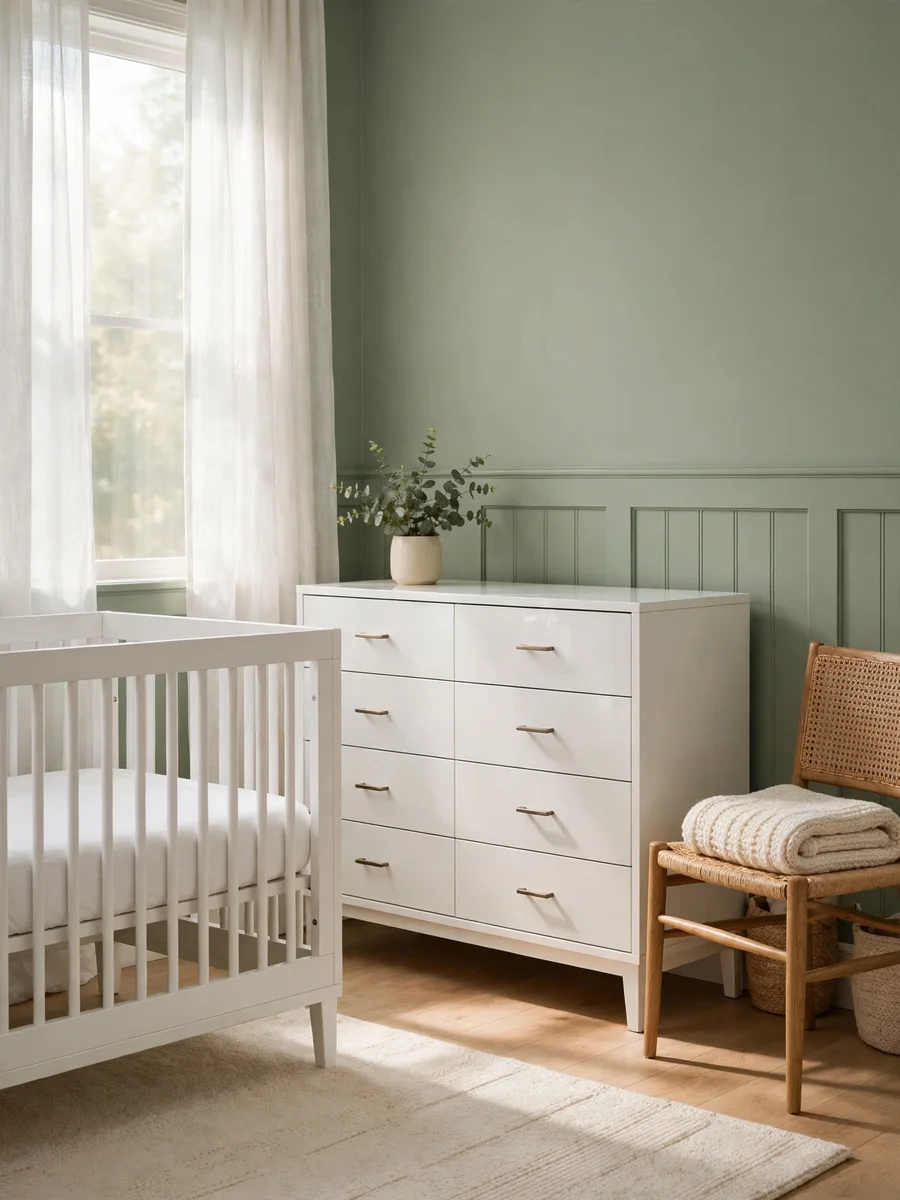
Sage sits between green and grey: it reads as colour without shouting, and it pairs happily with cream, white, and natural wood. For example, pair sage walls with a white crib, a cream knitted blanket folded over a nearby chair, and a small eucalyptus plant on the dresser.
Quick tips:
- Choose a sage with a warm, grey undertone so it stays soft in evening light.
- Repeat the green once in the rug or curtains to tie the room together.
How Do Warm Cream and Terracotta Create a Cozy Nursery?
Warm cream walls with terracotta cushions, a rattan crib, and woven textures create a sun-warmed nursery that feels cozy, earthy, and welcoming at any hour.
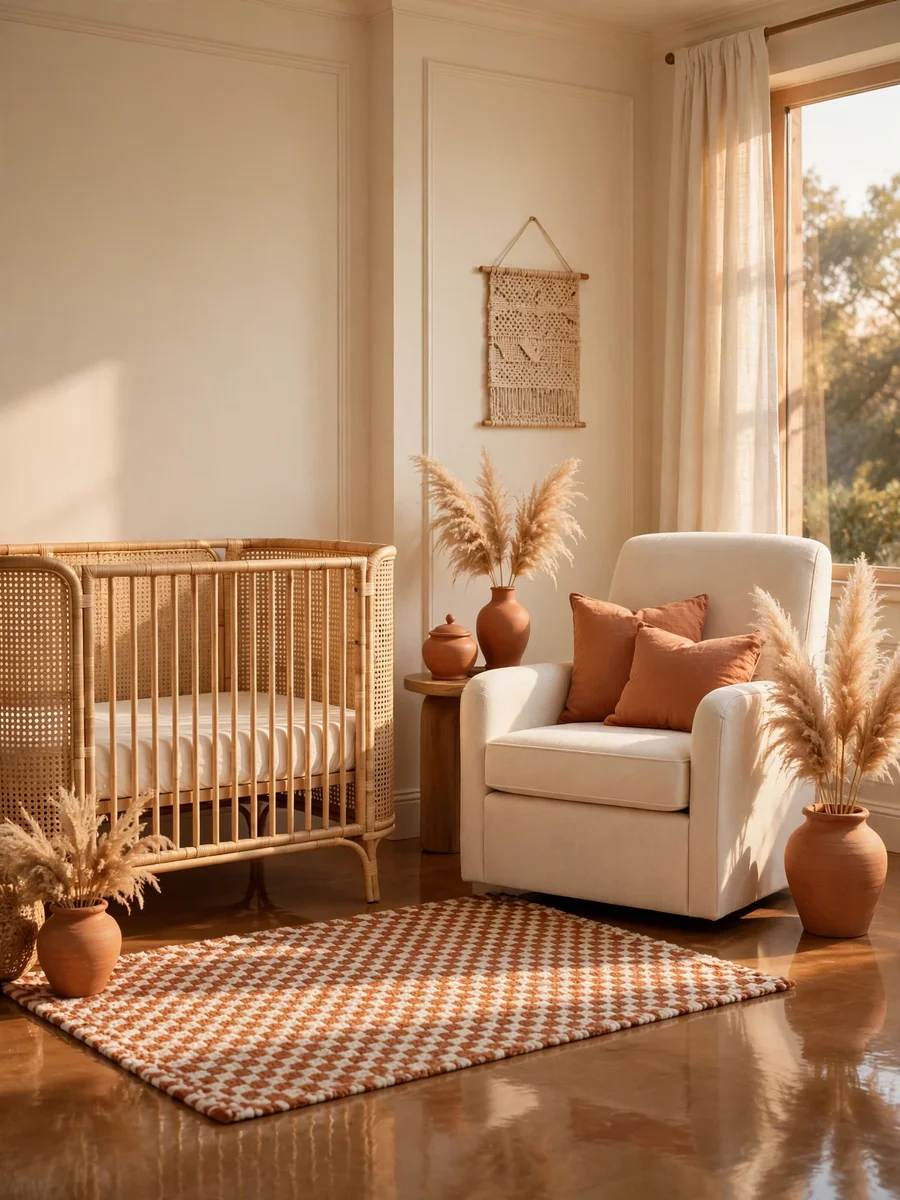
Terracotta brings warmth without the intensity of bright orange, and cream keeps it from feeling heavy. For example, dress a cream glider chair with two terracotta cushions, lay a terracotta and cream woven rug beside the crib, and set a clay pot of dried pampas grass on the dresser.
Quick tips:
- Use terracotta in textiles first — cushions, rug, throw — so it is easy to change later.
- Balance the warmth with one pale element, such as a cream rug or white curtains.
How Can Dusty Pink Stay Gentle Instead of Sugary?
Dusty pink walls with white furniture and blush textiles create a soft, elegant nursery that feels gentle and grown-up rather than sugary, because the pink carries a grey, muted undertone.
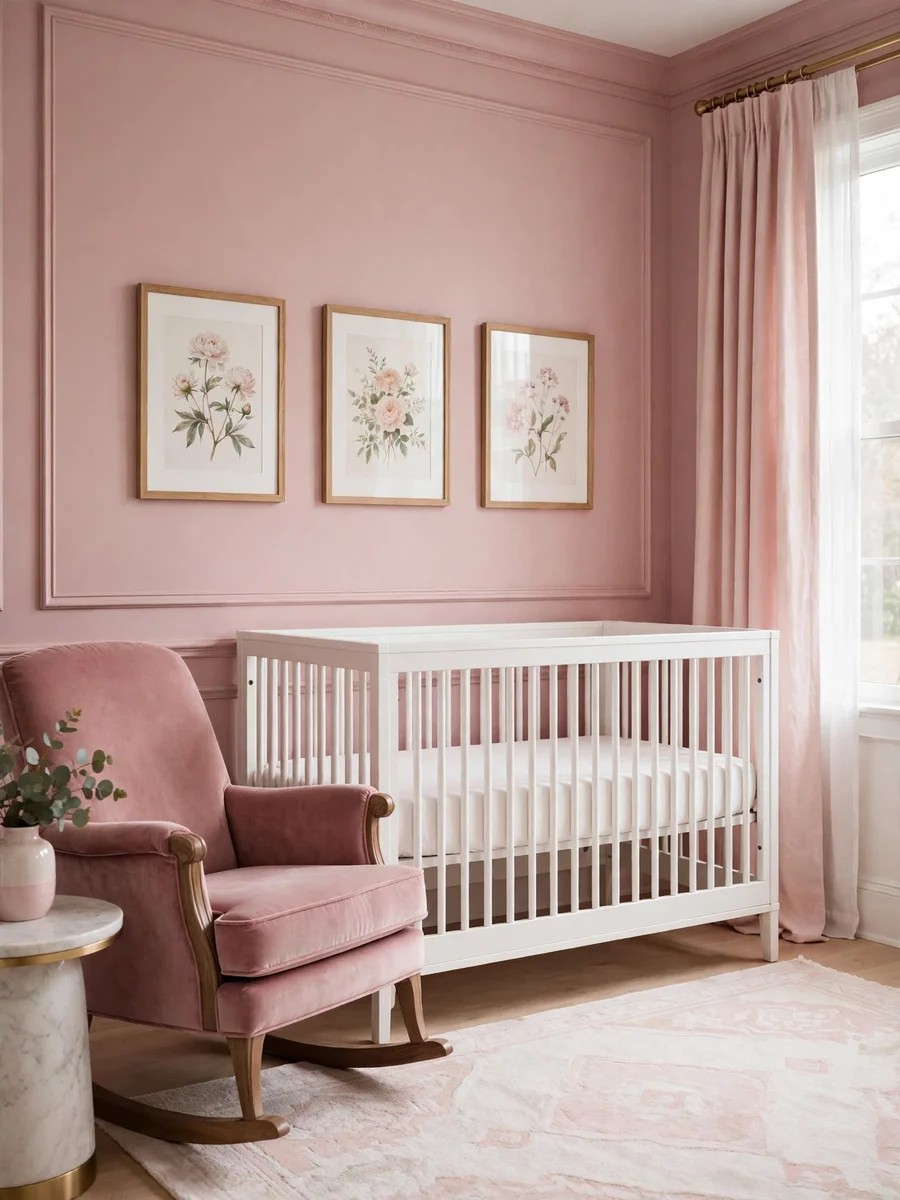
The trick with pink is to choose a dusty, muted shade and pair it with neutrals. For example, hang two small framed floral prints above the dresser, place a dusty rose velvet rocking chair in the corner, and fold a blush blanket over its arm.
Quick tips:
- Pick a pink with a grey undertone, not a bright bubblegum shade.
- Mix pink with ivory and white so the room stays light.
How Does Pale Sky Blue Make a Nursery Feel Airy?
Pale sky blue walls, white sheer curtains, and navy accents create an airy, restful nursery that feels open and bright, with the blue bringing a calm, sleepy mood.
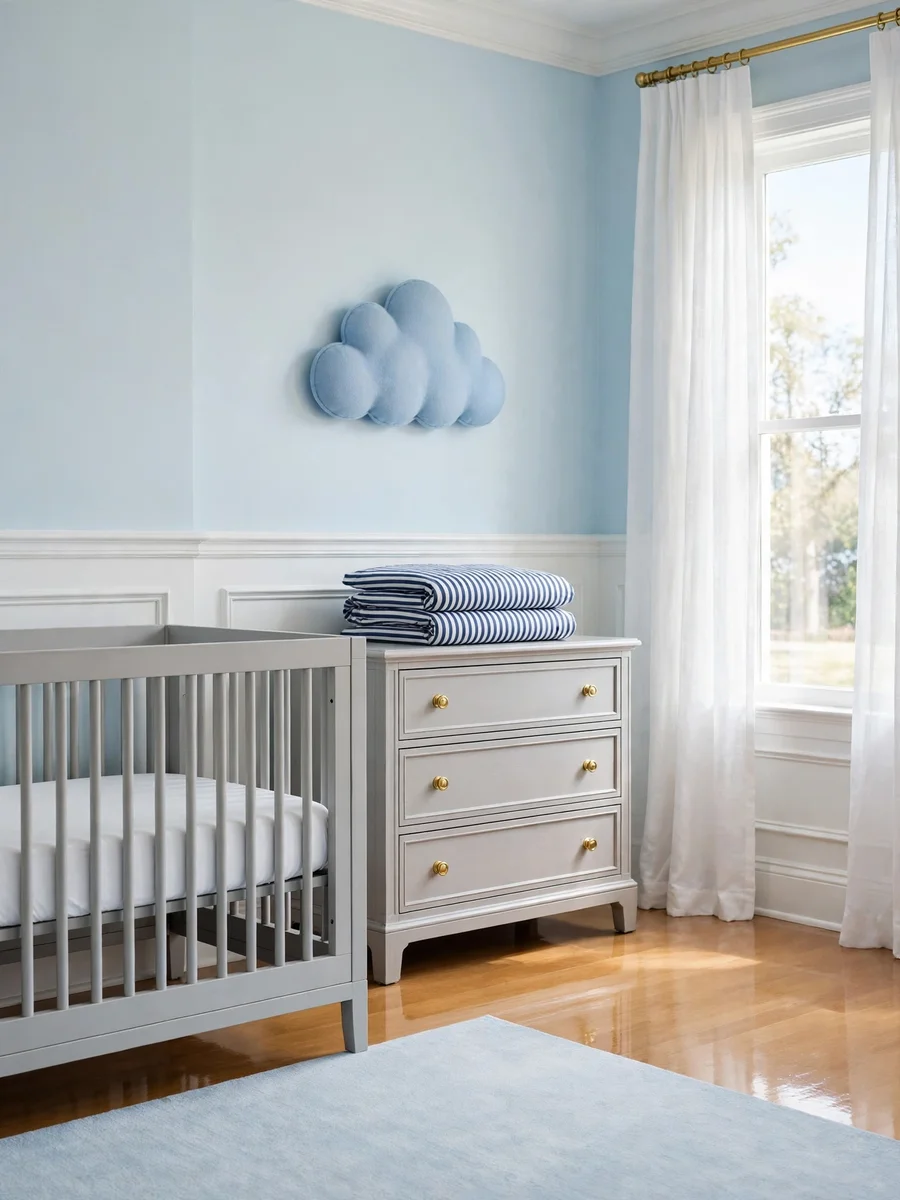
Pale blue is often called the most restful bedroom colour, and it works beautifully in a nursery when it is kept soft. For example, paint the walls pale sky blue, hang a soft blue cloud decoration above the dresser, and lay a pale blue rug beside a light grey crib.
Quick tips:
- Use navy only in small doses so the room stays light.
- Sheer white curtains soften bright sun without blocking daylight.
How Do You Create a Woodland Nursery Without Clutter?
A woodland nursery works best with a forest green accent, natural wood, and a few animal prints, because a small number of strong woodland pieces reads as a theme while a room full of them reads as clutter.
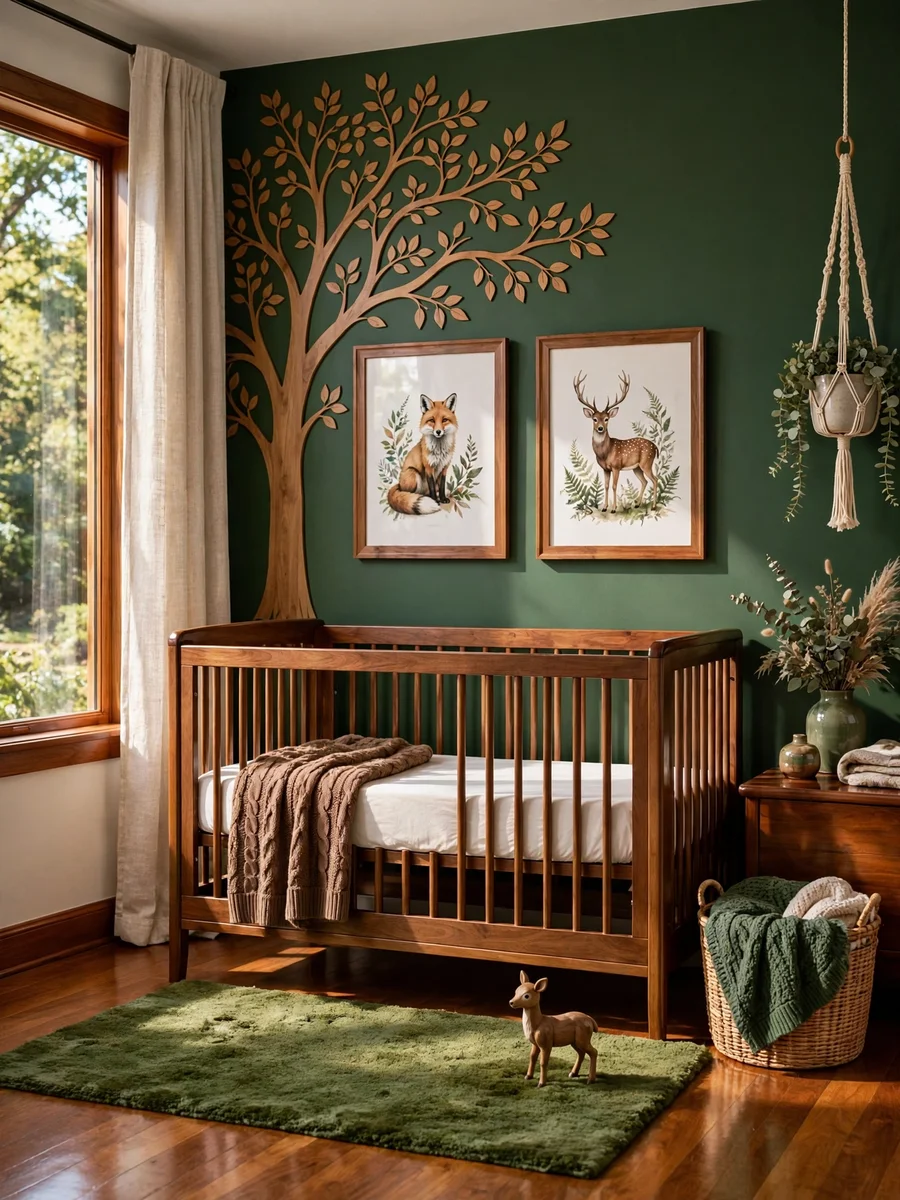
Start with the animals: two framed prints of a fox and a deer, a tree-shaped wall decal, or a wooden toy deer on a low shelf. For example, hang a fox print and a deer print side by side above the dresser, place a soft moss green rug under the crib, and set a wooden deer toy on the shelf.
Quick tips:
- Limit the theme to three or four woodland pieces.
- Use real materials — wood, wool, cotton — for a natural feel.
Can a Cloud and Star Ceiling Really Help at Bedtime?
A deep midnight blue ceiling with small gold stars and a crescent moon turns bedtime into a gentle ritual, giving your baby something soft and glowing to gaze at while the room stays dark and calm.
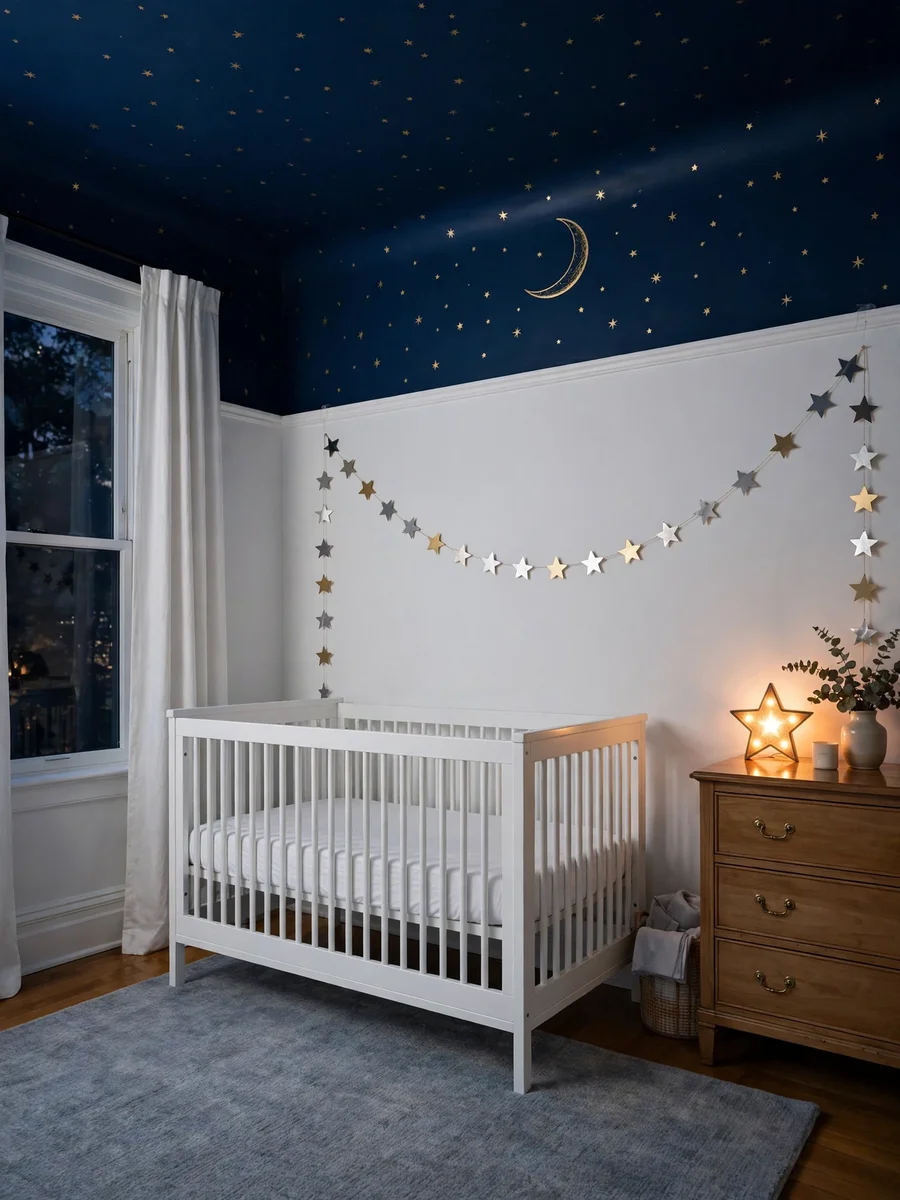
Paint the ceiling — not the walls — so the room still feels bright during the day. For example, paint the ceiling midnight blue, stick on a handful of gold star decals above the crib, and place a star night light on the dresser.
Quick tips:
- Paint only the ceiling dark; keep walls pale.
- Use removable star decals so the theme can grow away easily.
How Do You Use Bold Floral Wallpaper in a Nursery?
A bold floral wallpaper on one feature wall behind the crib gives the nursery instant personality, while plain walls elsewhere and simple white furniture keep the pattern from overwhelming the room.
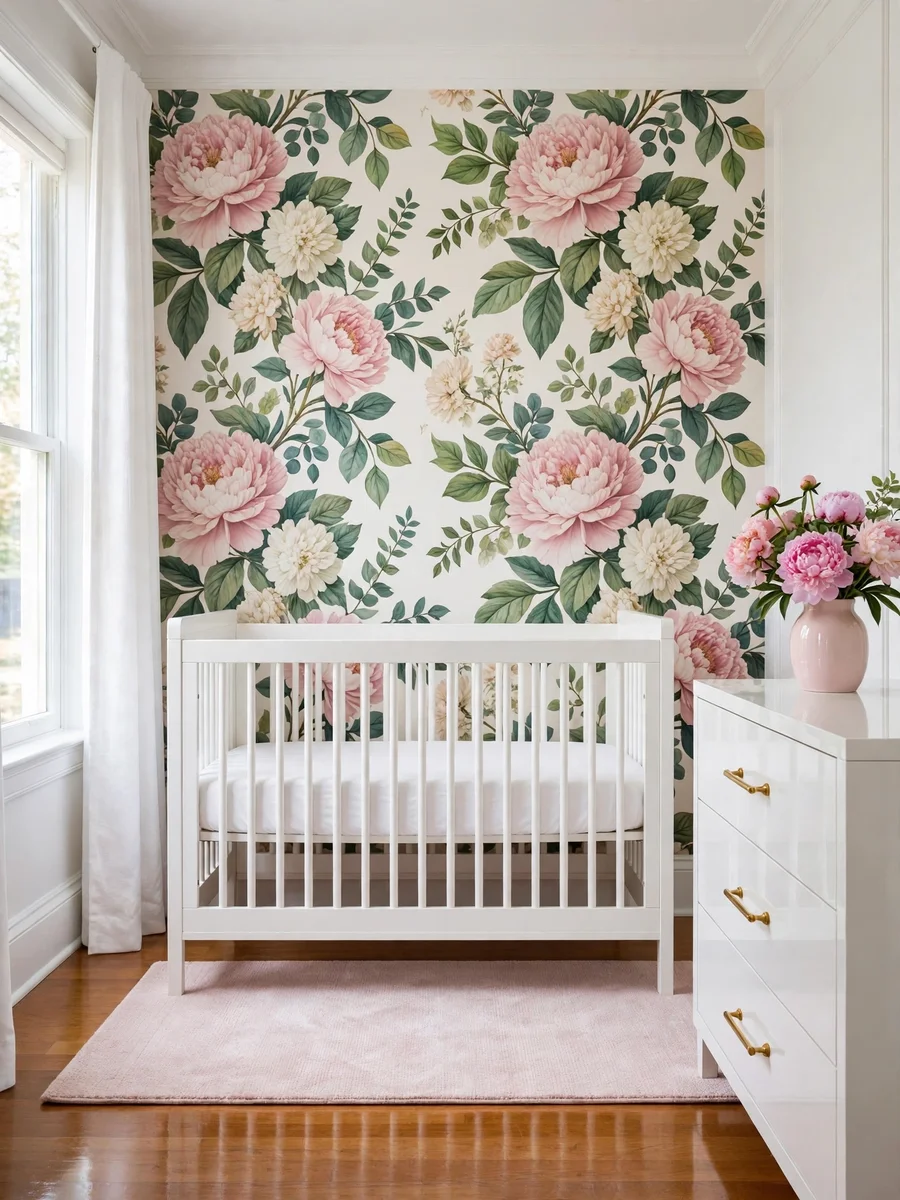
Wallpaper is the fastest way to give a nursery character, and one wall is enough. If you rent, peel-and-stick wallpaper gives the same effect without paste, and the same feature-wall thinking works in any room — our bedroom accent wall ideas show how one strong wall can carry a whole design. For example, paper the wall behind a white crib in a soft floral print and set a vase of fresh peonies on the dresser.
Quick tips:
- Paper one wall only, ideally the one behind the crib.
- Match one wallpaper colour in the rug or curtains.
What Does a Minimalist Nursery Look Like?
A minimalist nursery uses white walls, pale wood furniture, and one or two simple decorations, creating a serene, uncluttered room where every piece earns its place.
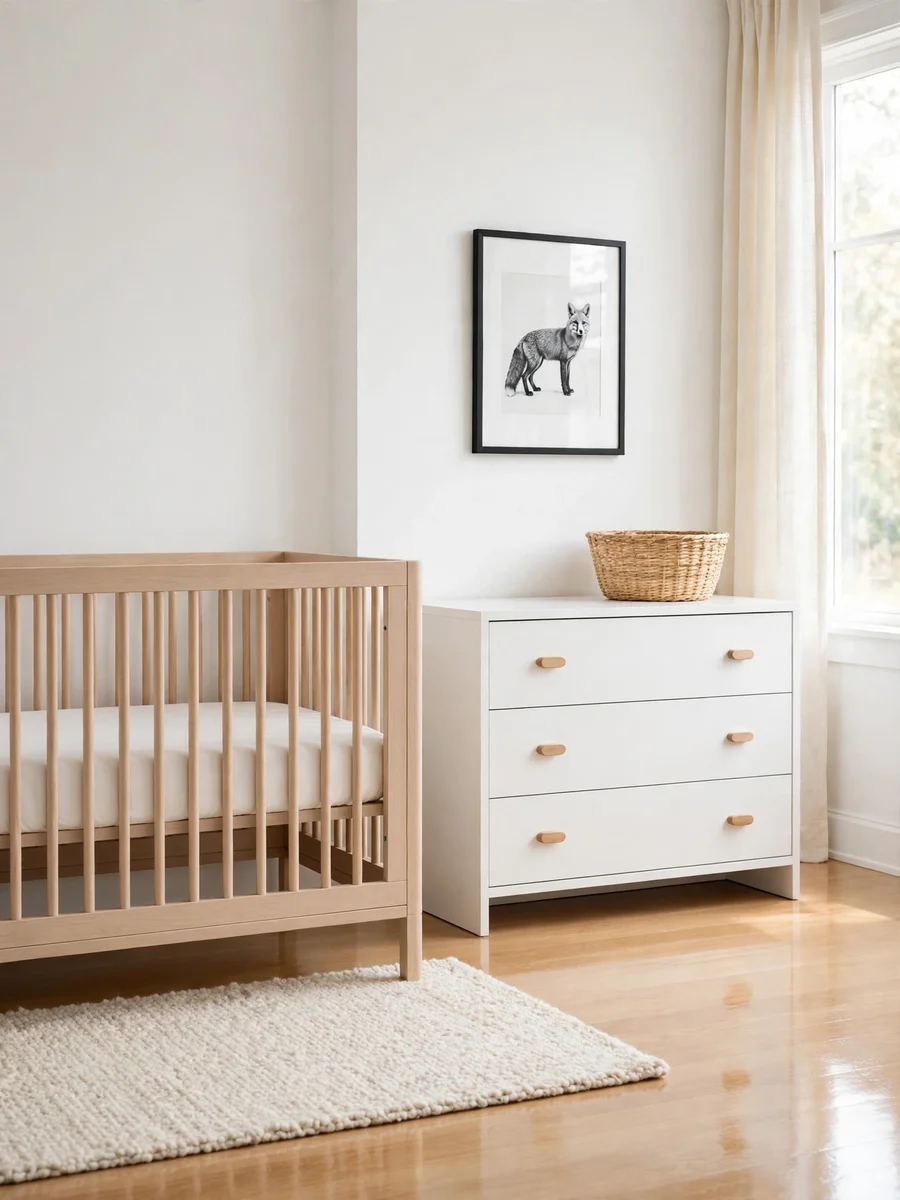
Minimalism suits a nursery because less clutter means easier cleaning and calmer nights. Choose a pale oak crib, a simple white dresser, and a cream wool rug. For example, place a pale oak crib against a white wall, a white dresser beside it, and a cream rug between them, with one woven basket holding the soft toys.
Quick tips:
- Choose furniture with clean lines and no fussy details.
- Hide clutter in closed storage, not open shelves.
How Do Rattan and Macramé Warm Up a Boho Nursery?
Rattan furniture, a macramé wall hanging, and layered woven textures in sand and honey tones create a warm boho nursery that feels handmade, relaxed, and full of texture.
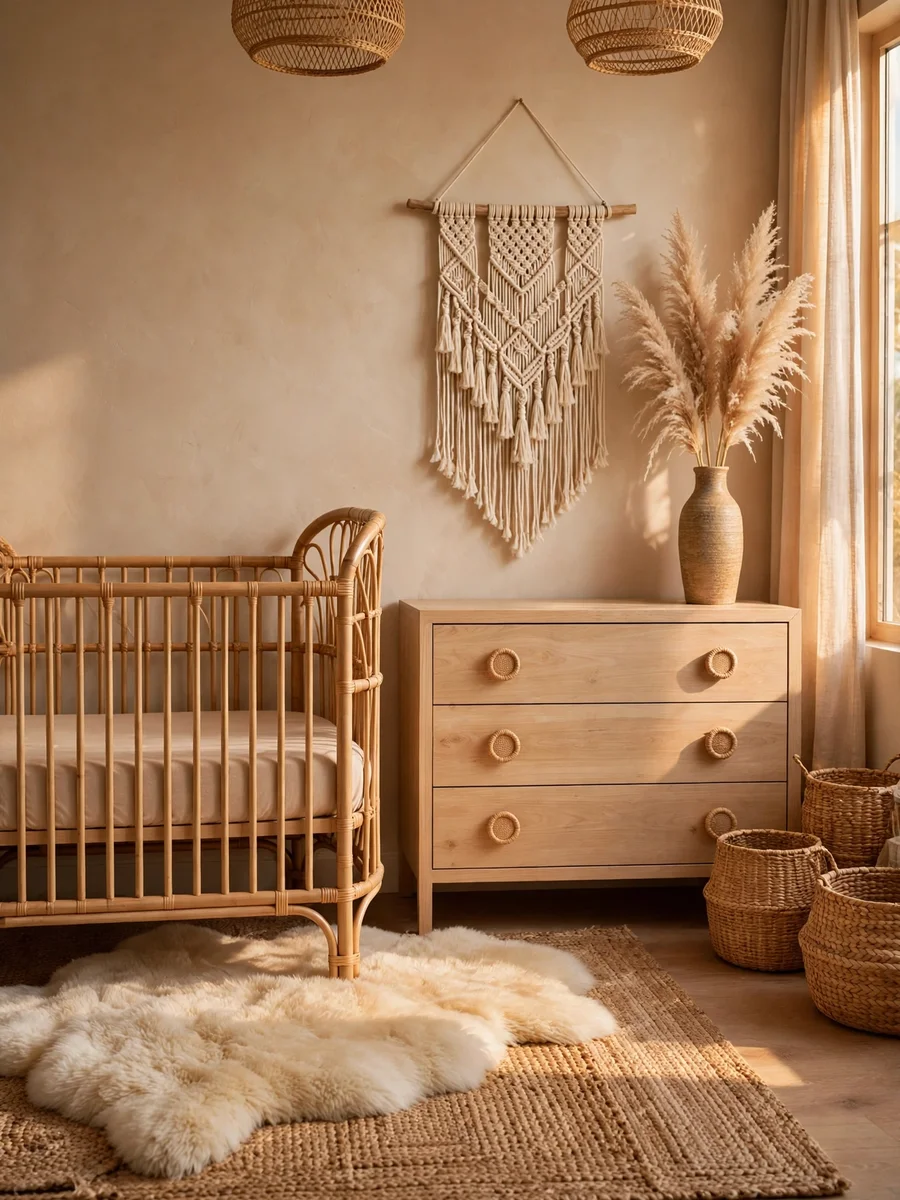
Boho style is all about texture: rattan, jute, cotton, and wool layered together. For example, hang a cream macramé piece above the dresser, lay a jute rug with a small sheepskin on top beside the crib, and set a woven basket of rolled blankets at the foot of the chair.
Quick tips:
- Layer two rugs — jute under, sheepskin over — for instant coziness.
- Keep the palette warm and sandy, with cream as the main neutral.
How Do You Design a Vintage Storybook Nursery?
A vintage storybook nursery uses butter yellow walls, a white spindle crib, and classic illustrations to create a timeless room that feels like a favourite childhood book.
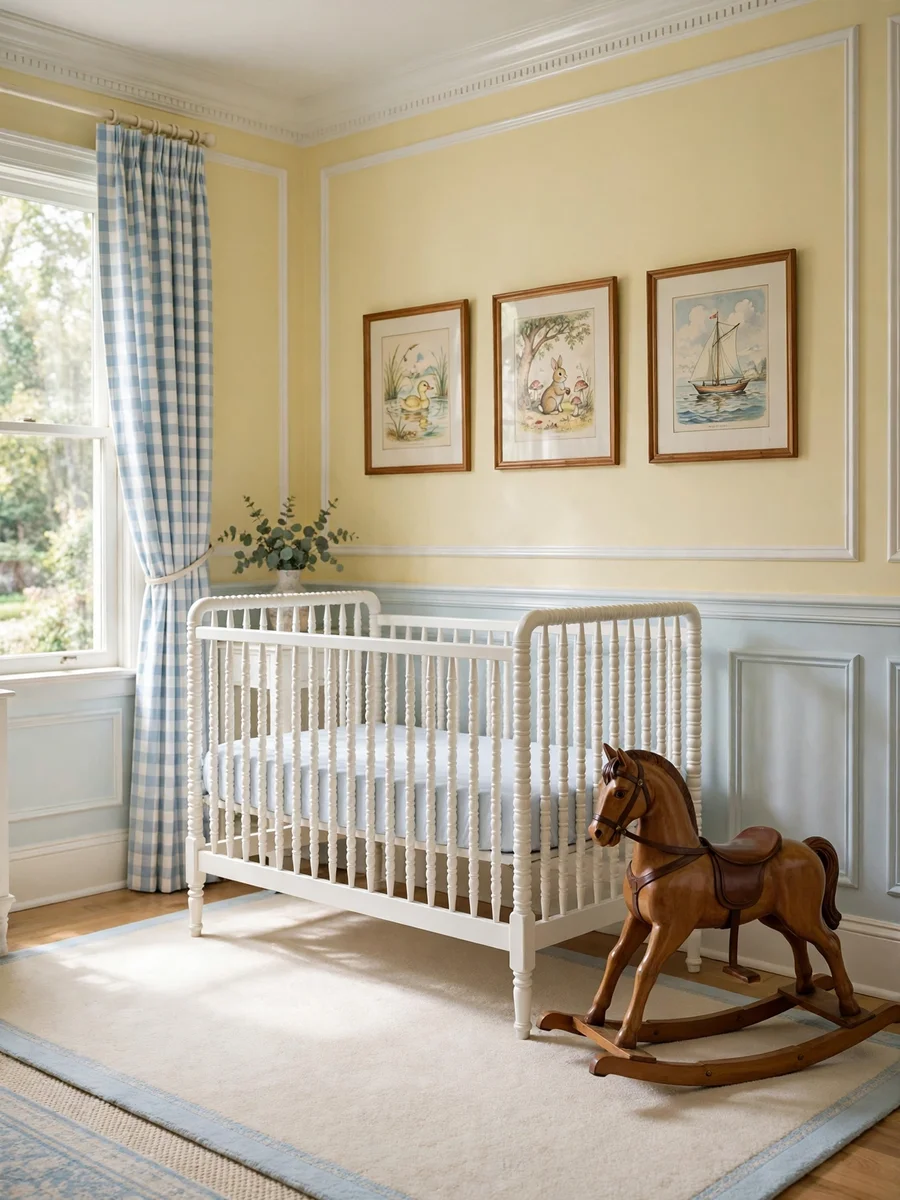
Classic stories never date, which is why this theme lasts. For example, hang three small framed storybook illustrations in a row above the dresser, place a wooden rocking horse in the corner, and dress the window with pale blue gingham curtains.
Quick tips:
- Use second-hand wooden toys for authentic vintage charm.
- Keep the palette to two soft colours plus cream.
How Do You Decorate a Safari Nursery Tastefully?
A safari nursery works with warm khaki, caramel, and cream, plus framed animal prints and one plush toy, because a restrained palette keeps the animals charming instead of loud.
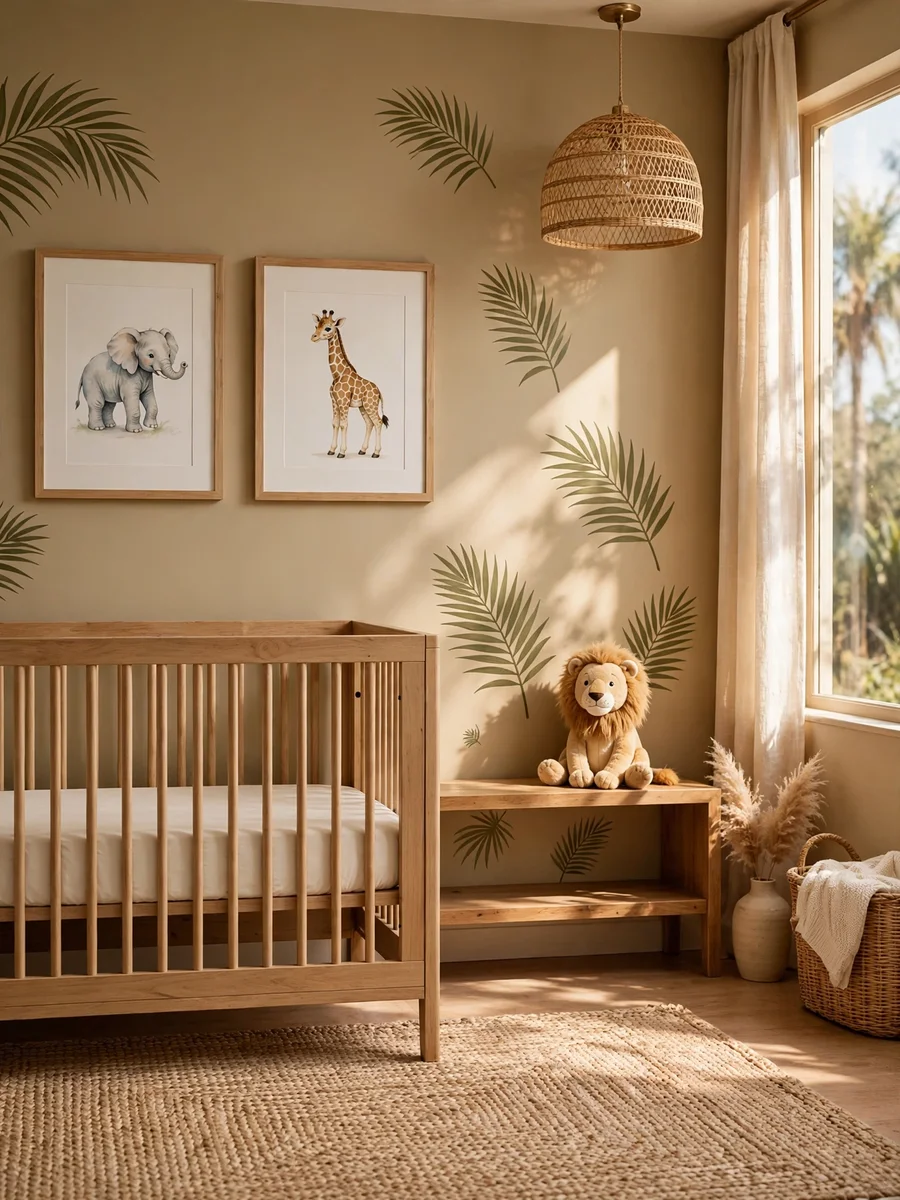
Repeat two or three animals: a baby elephant and a giraffe in framed prints, a plush lion on a low shelf. For example, hang an elephant print and a giraffe print above the dresser, lay a seagrass rug beside a natural wood crib, and place a plush lion on a low shelf.
Quick tips:
- Stick to two or three animals for a calm, collected look.
- Use khaki and caramel as the base, cream as the lightener.
How Can a Coastal Nursery Stay Soft and Not Kitsch?
A coastal nursery with white walls, navy stripes, and pale aqua accents feels fresh and seaside-calm, because the stripes and rope details suggest the coast without filling the room with anchors and shells.
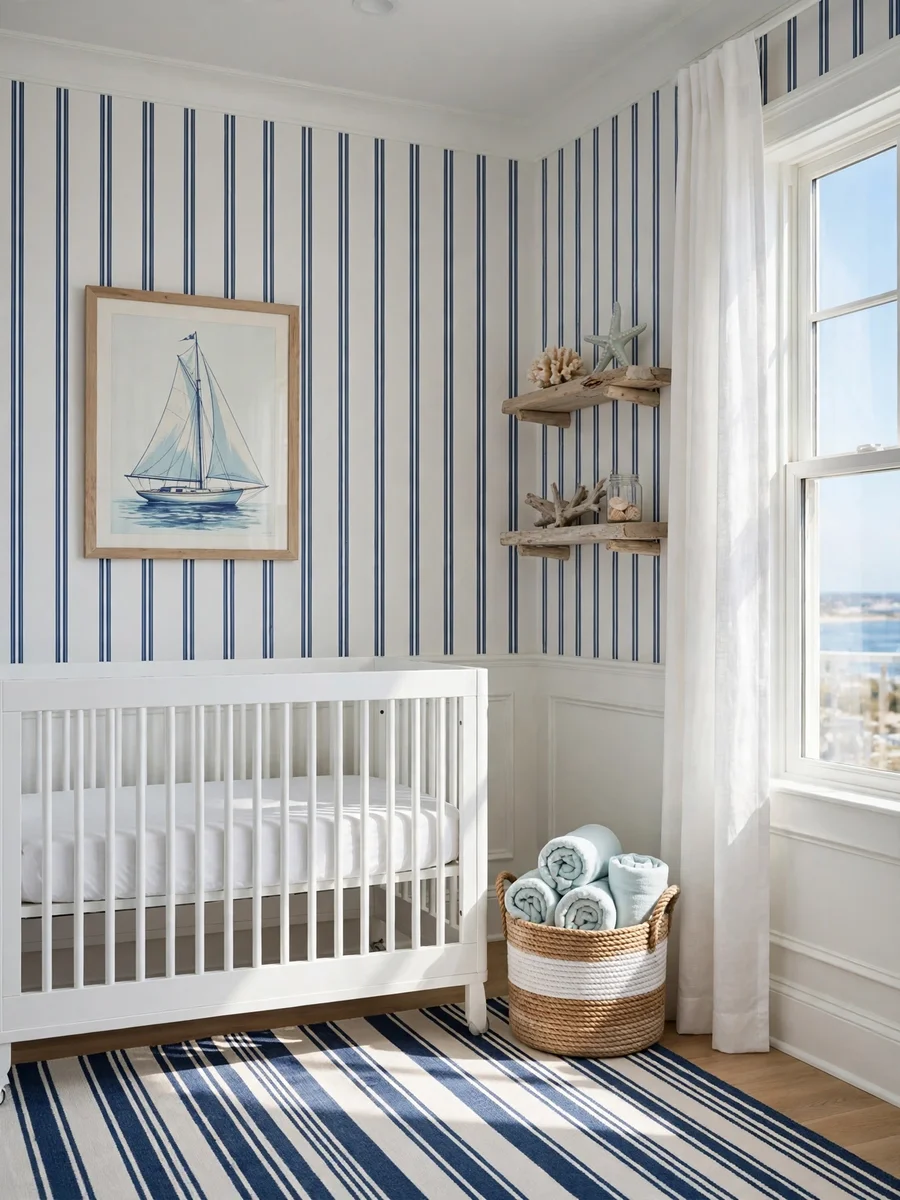
Start with a navy and white striped rug, a sailboat print, and a pale aqua cushion. For example, lay a navy and white striped rug beside a white crib, hang a simple sailboat print above the dresser, and set a rope basket of rolled blankets beside the chair.
Quick tips:
- Use stripes in one place only — rug or curtains, not both.
- Keep the blue pale except for one navy accent.
How Do You Add a Pastel Rainbow Without Overdoing It?
A pastel rainbow works in a nursery when it appears once, large and soft — a rainbow wall decal above the dresser — while the rest of the room stays white, peach, and mint.
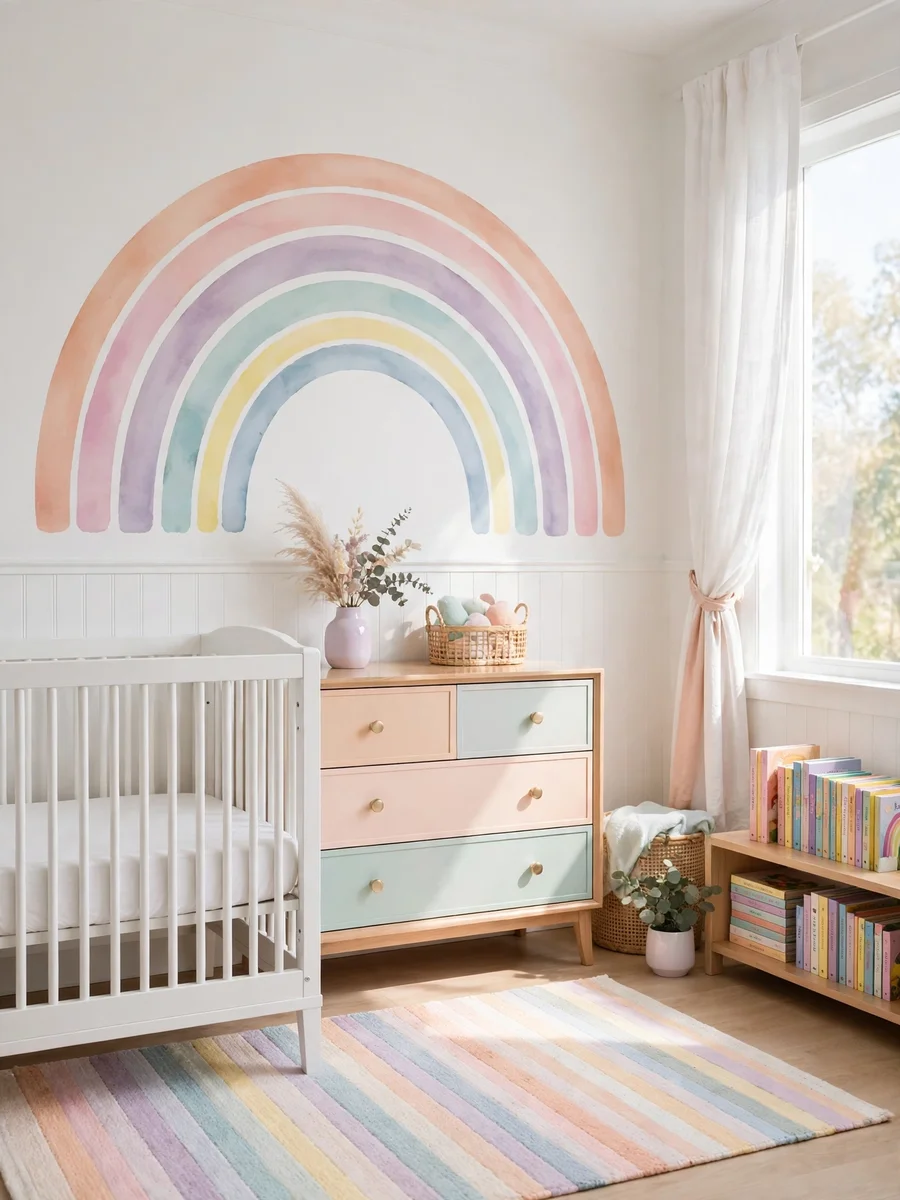
Rainbows are joyful, but rainbow bedding, rainbow curtains, and rainbow art together are too much. For example, place a large soft rainbow decal above a white dresser, lay a pale rainbow-striped rug on the floor, and line up five board books on a low shelf.
Quick tips:
- One rainbow only — decal or wall art, never both.
- Keep the crib bedding plain white or cream.
Why Does Black and White Work in a Nursery?
Black and white works in a nursery because newborns see high contrast best, so bold graphic patterns give your baby something clear to look at while the room stays modern and striking.
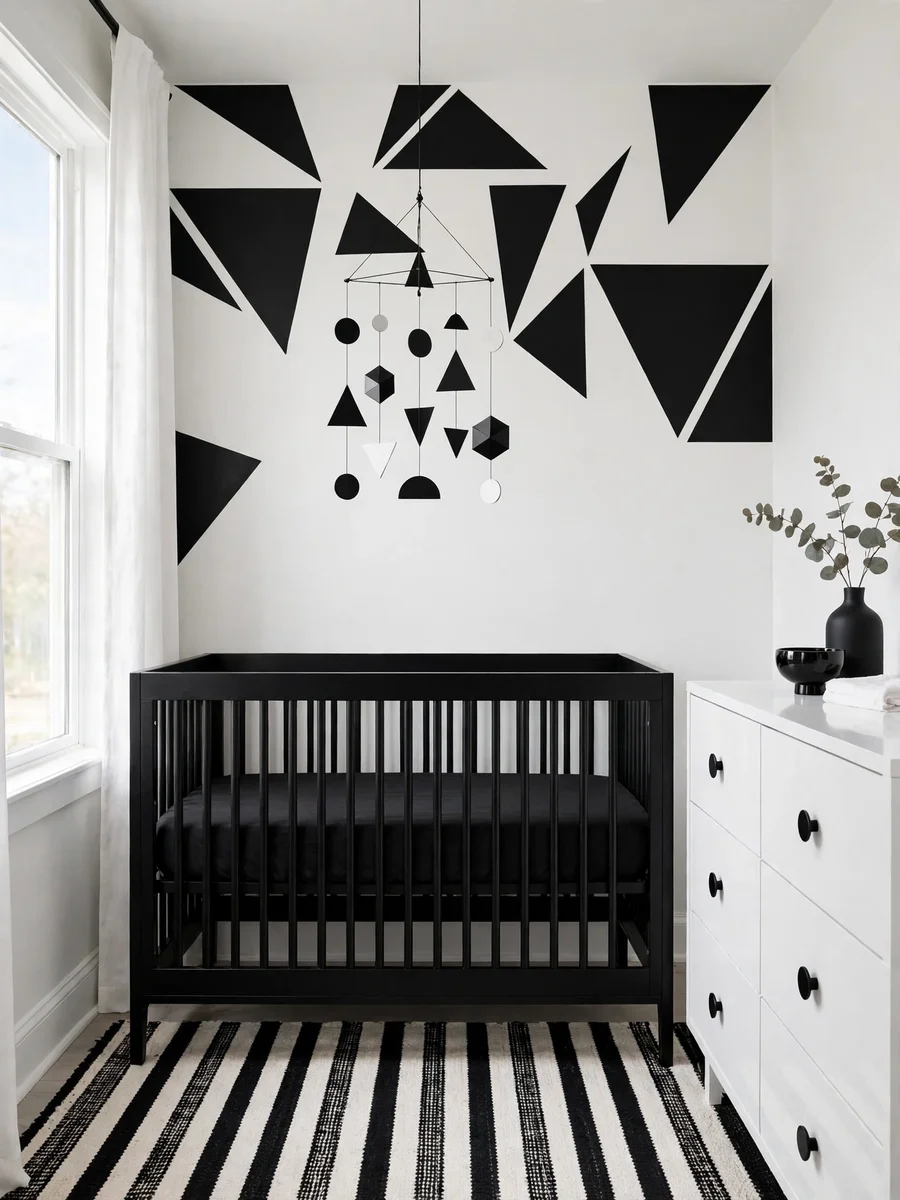
Keep the balance mostly white: white walls, a white dresser, and a black crib or black geometric decal as the contrast. For example, hang a black and white mobile of circles and stars above the crib, lay a striped rug beside it, and fit black knobs on a white dresser.
Quick tips:
- Keep roughly two-thirds of the room white.
- Use black in furniture and patterns, not on all four walls.
How Do You Build a Reading Nook in a Nursery?
A nursery reading nook needs only a low chair, a small bookcase with books facing forward, and a warm lamp, because a tiny, dedicated corner invites daily story time from the very first weeks.
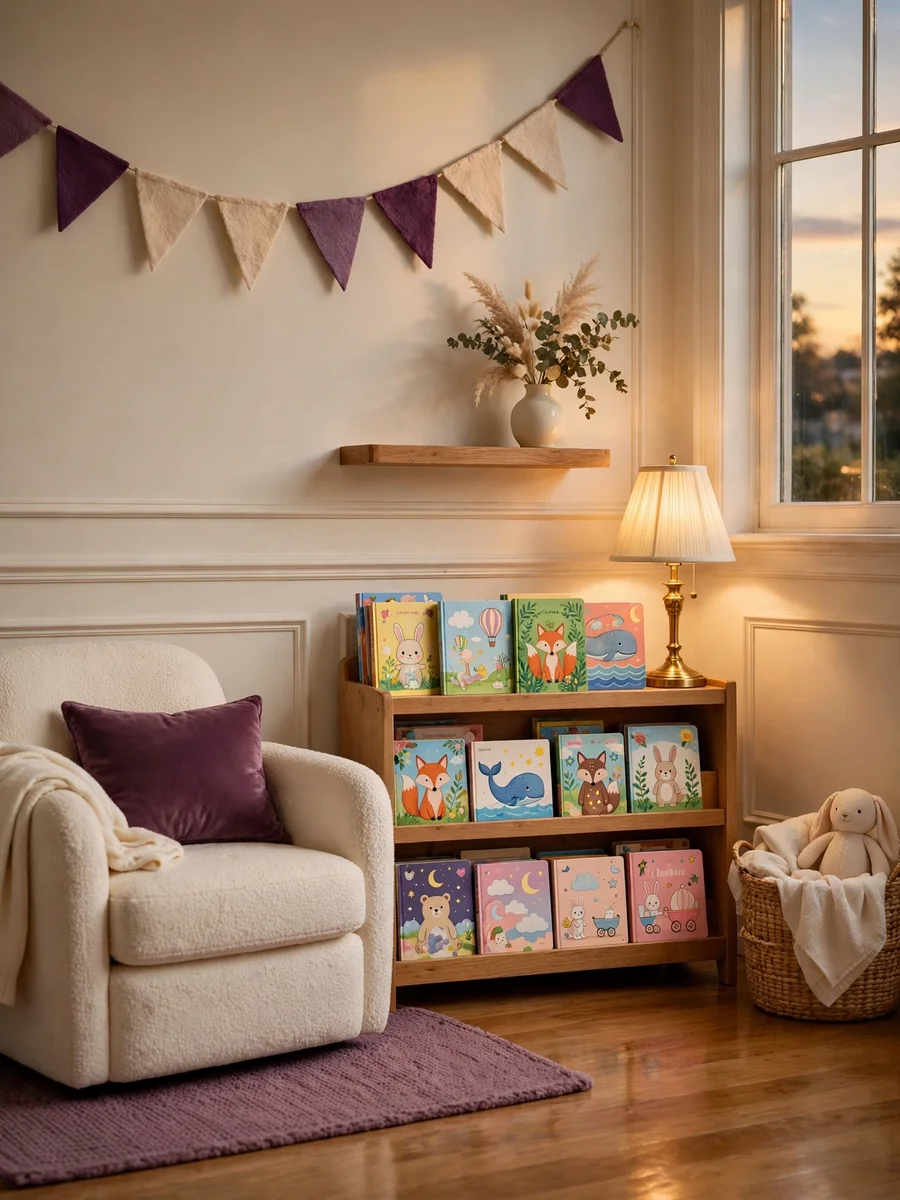
Keep it small: a low cream armchair with a plum cushion and a wooden bookcase with board books facing out. For example, set a cream armchair in the corner, place a small bookcase beside it with ten board books facing forward, and hang a felt bunting above.
Quick tips:
- Face books forward so little hands can choose by the picture.
- Keep the bookcase low and anchored to the wall.
How Do You Hang a Gallery Wall Above the Dresser?
A gallery wall above the dresser works when six framed prints in mixed sizes share one palette, because the dresser anchors the display and the shared colours keep it calm instead of busy.
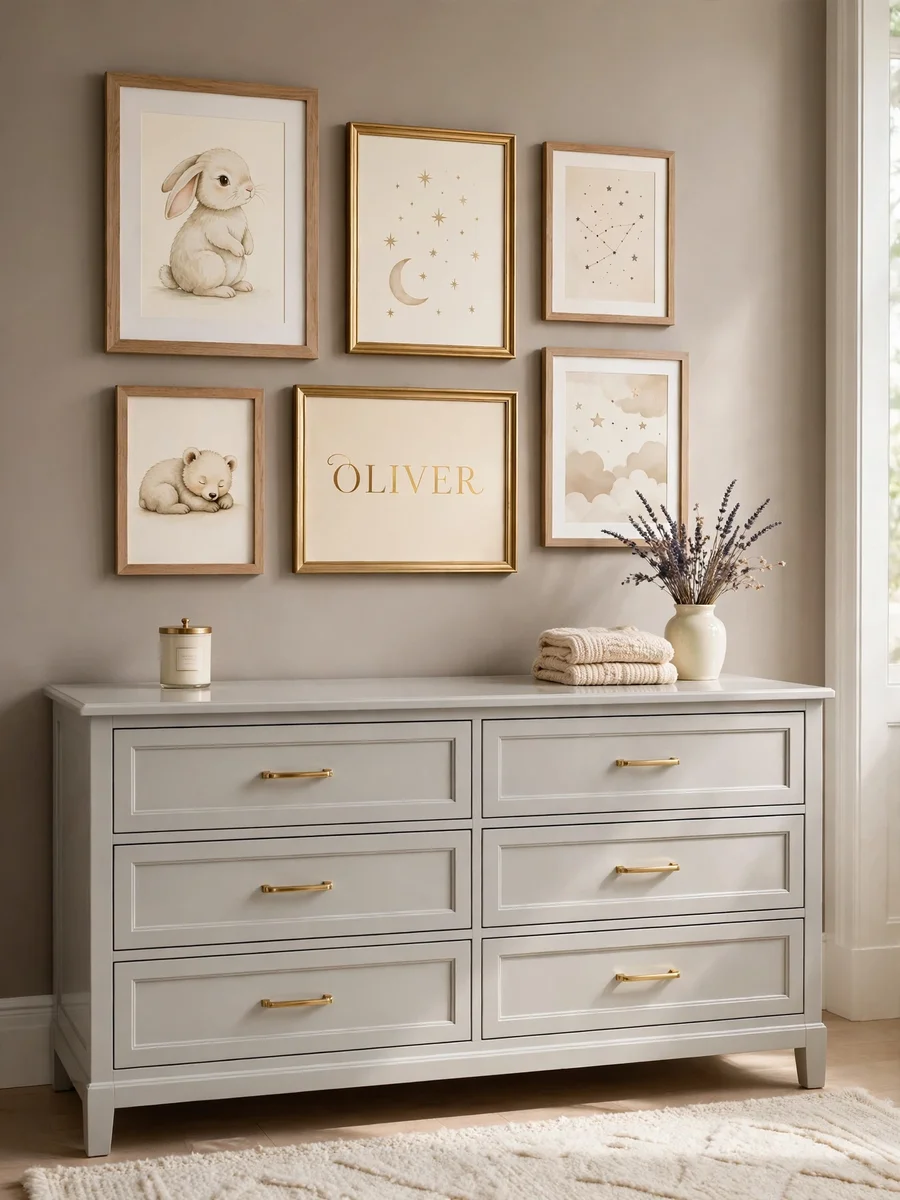
Mix sizes — two large prints, four small ones — and keep the frames the same colour. Hang the gallery above the dresser, never above the crib, so nothing heavy sits over your baby’s head. For example, arrange six frames in two rows above a pale grey dresser, with a wooden name sign in the centre.
Quick tips:
- Lay the frames on the floor first to plan the arrangement.
- Keep all frames the same colour for a calm look.
How Do You Set Up a Comfortable Nursing Corner?
A nursing corner needs a comfortable glider with an ottoman, a small side table, and a warm lamp within reach, because you will spend hours there at night and comfort matters more than decoration.
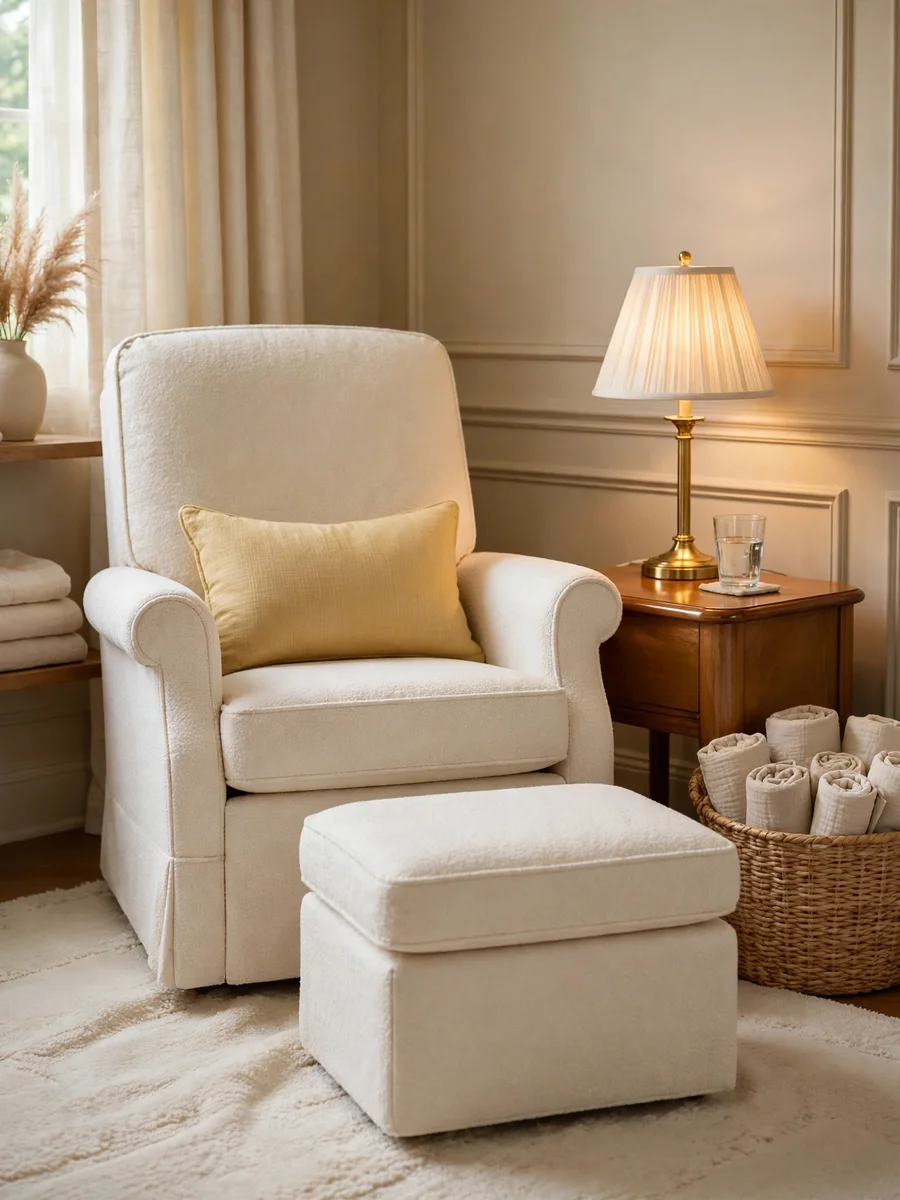
Choose a glider that supports your back and arms, and add a mustard cushion for warmth. For example, place a cream glider and ottoman in the corner by the window, set a small table beside it with a warm lamp, and tuck a basket of muslin cloths at your feet.
Quick tips:
- Test the glider in person — sit in it for ten minutes before buying.
- Keep the lamp warm and dimmable for night feeds.
How Do You Keep a Nursery Organized With Baskets and Shelves?
A nursery stays organized when every category has one home — labelled baskets for clothes, a shelf for books, drawers for nappies — because a baby’s things multiply fast and clutter builds in days, not months.
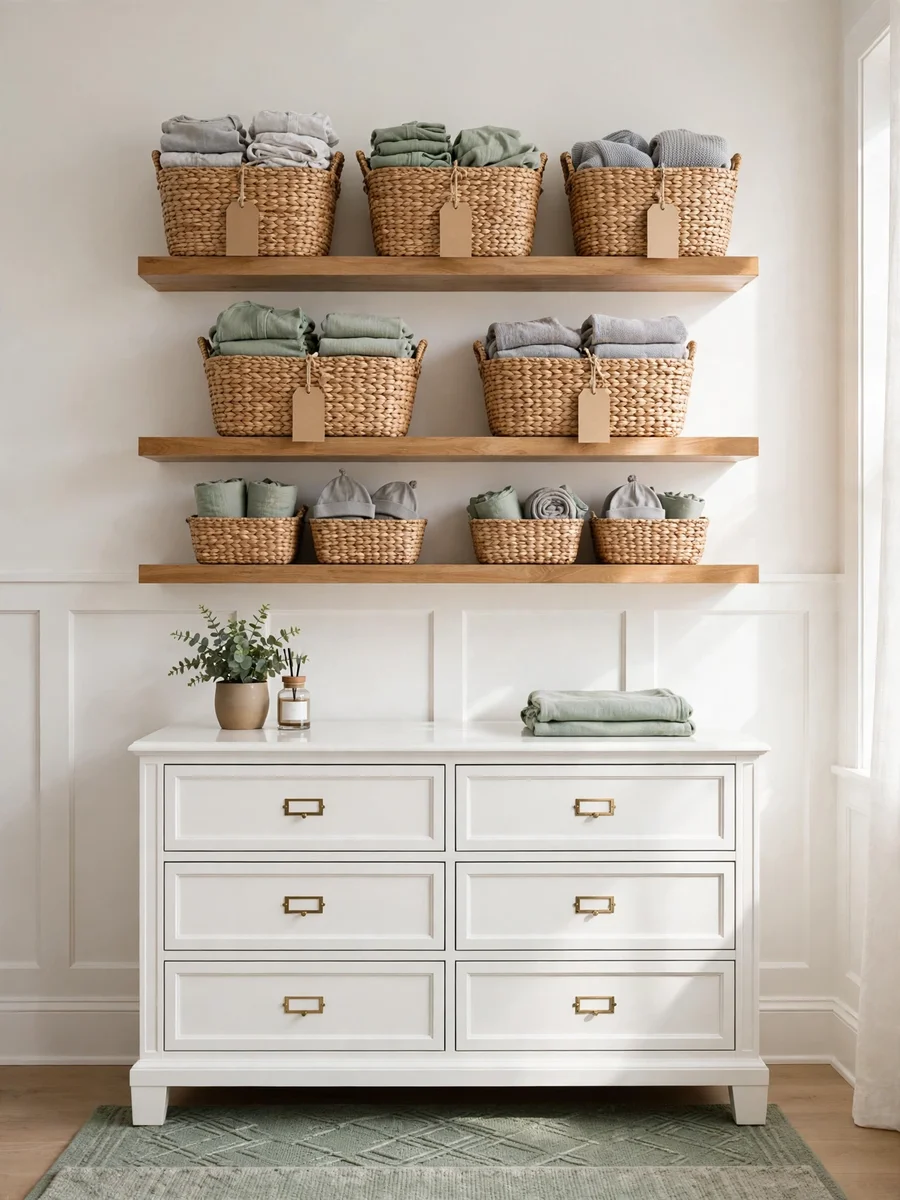
Use woven seagrass baskets, floating wood shelves, and a dresser with labelled drawers. For example, label three baskets — sleep, play, and out-and-about — and keep them on the bottom shelf where you can grab them one-handed, with nappies in the top dresser drawer.
Quick tips:
- Label every basket, even if you think you will remember.
- Keep daily items low and keepsakes high.
How Should You Layer Lighting in a Nursery?
Layered nursery lighting means a dimmable ceiling light for daytime, a warm lamp for evenings, and a soft night light for night feeds, because one bright overhead light is too harsh for a sleeping baby.
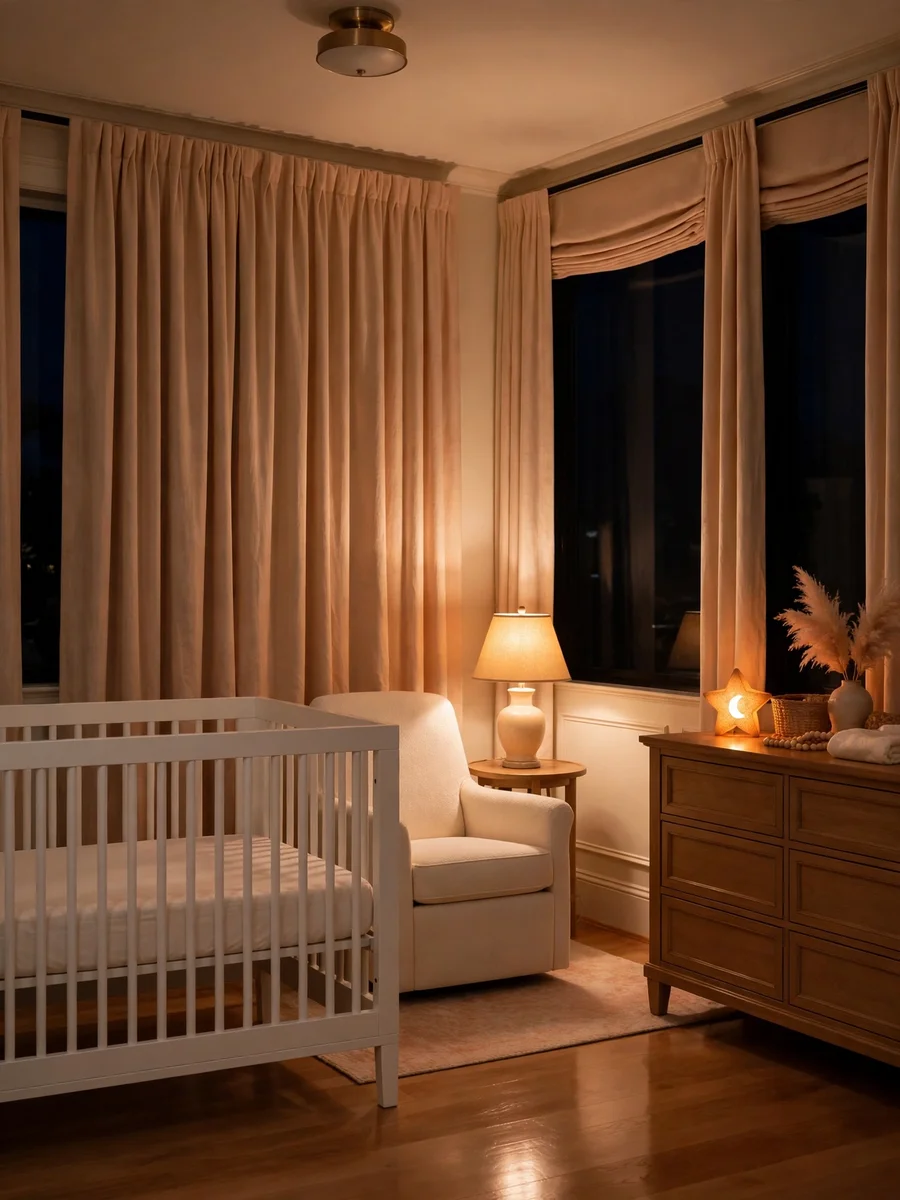
Fit a dimmer on the ceiling light so you can lower it at bedtime. For example, set the ceiling light low, switch on the amber night light, and leave the glider lamp glowing softly while you feed.
Quick tips:
- Choose warm bulbs, never bright white, for every nursery light.
- Put the night light on the dresser, not inside the crib.
What Are the Best Nursery Decor Ideas for a Small Room?
The best nursery decor ideas for a small room use a compact mini crib, a narrow dresser that doubles as a changing table, and wall-mounted storage, because every piece must do two jobs when floor space is tight.
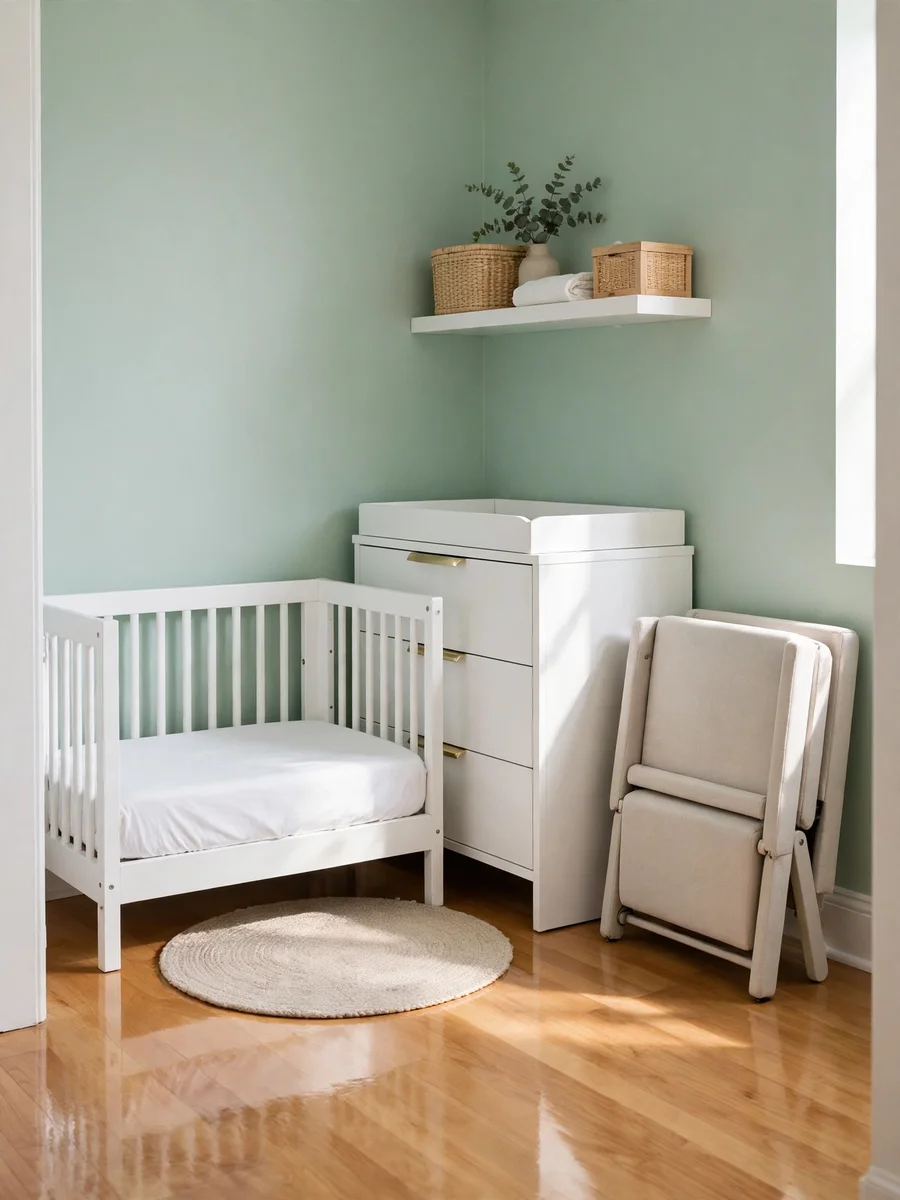
Choose a mini crib instead of a full-size one, and a dresser narrow enough to leave a clear walkway. For example, place a white mini crib in the corner, a narrow white dresser beside it with a changing pad on top, and a wall shelf above holding three baskets.
Quick tips:
- Measure twice — a mini crib saves more space than you expect.
- Use the wall, not the floor, for storage.
How Does Grow-With-Me Furniture Save Money in a Nursery?
Grow-with-me furniture saves money because a convertible crib becomes a toddler bed and later a daybed, and a dresser with a removable changing tray becomes ordinary bedroom storage, so you buy once instead of three times.
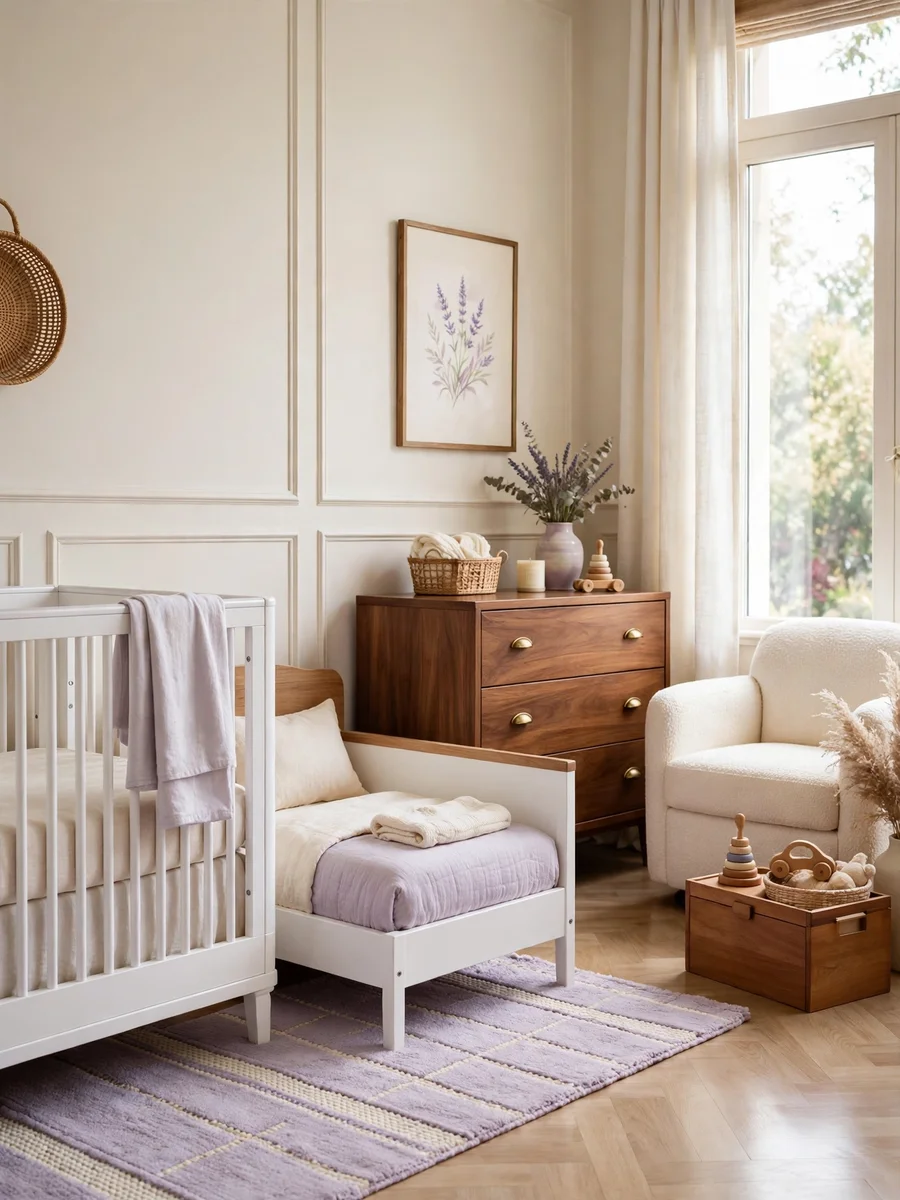
Look for a convertible crib with a conversion kit included, and a solid wood dresser that will survive years of use. For example, buy a white convertible crib and a walnut dresser, and skip the matching changing table — a removable tray on the dresser does the same job.
Quick tips:
- Check the conversion kit is included before you buy.
- Choose neutral furniture so it suits any later colour change.
Frequently Asked Questions
What is the best color for a nursery?
Soft, muted colours work best: warm white, sage green, pale blue, and dusty pink create a restful backdrop, with brighter colours added in small doses through cushions, art, and storage baskets. Pale blue and sage green are often recommended by sleep and colour experts because they feel calm and restful.
What furniture does a nursery need?
A nursery needs three essentials: a crib with a firm, flat mattress and a fitted sheet, a dresser that doubles as a changing table, and a comfortable chair for feeding and rocking. Add a small side table and storage baskets next.
When should you start decorating a nursery?
Start decorating in the second trimester, once you know the room and have time to plan calmly. Paint and add new furniture early so the room has weeks to air out before the baby arrives.
How do you decorate a small nursery?
Use a compact mini crib, a narrow dresser that doubles as a changing table, and wall-mounted shelves instead of floor-standing storage. Keep the palette pale, use one feature — such as a small gallery wall or a soft rug —
How can I decorate a nursery on a budget?
Start with the essentials — crib, dresser, chair — and add decor slowly. Use peel-and-stick wallpaper on one wall, frame pages from a damaged storybook, and buy second-hand wooden toys and furniture after checking them for safety. Soft textiles such as cushions, a rug, and curtains change the whole feeling of a room for far less than new furniture.
What should you avoid putting in a crib?
Keep the crib bare: a firm, flat mattress with a tightly fitted sheet only, and no pillows, blankets, bumpers, or soft toys inside the sleep space. Keep heavy frames, shelves, and mobiles out of reach above the crib, and keep blind cords and loose fabrics away from it.
Conclusion
The calmest nurseries are rarely the most expensive ones. They are the rooms where the crib, chair, and dresser sit in the right places, the colours stay soft, the light stays warm, and every basket has a home. Pick one idea that fits your room and budget — a sage wall, a reading nook, a mini crib layout — and start there, adding the rest slowly as the room grows with your baby. The best nursery is the one where you can feed, rock, and rest at 3 a.m. without switching on a harsh light or tripping over clutter.