12 Bedroom Accent Wall Ideas That Make the Room Feel Finished
A bedroom accent wall is the fastest way to make a room feel finished. It gives the eye somewhere to land, anchors the bed, and adds the kind of depth that makes a space feel designed rather than simply furnished.
The wall behind the headboard is almost always the best candidate — it is the first thing you see when you walk in, and it frames the bed like art. The twelve bedroom accent wall ideas below cover every style and budget, from weekend paint projects to textural showstoppers.
If deep, cocooning color is your thing, our guide to moody bedroom decor ideas pairs beautifully with several of these looks — especially the painted finishes. Otherwise, scroll on and find the wall your bedroom has been waiting for.
1. Vertical Walnut Wood Slats
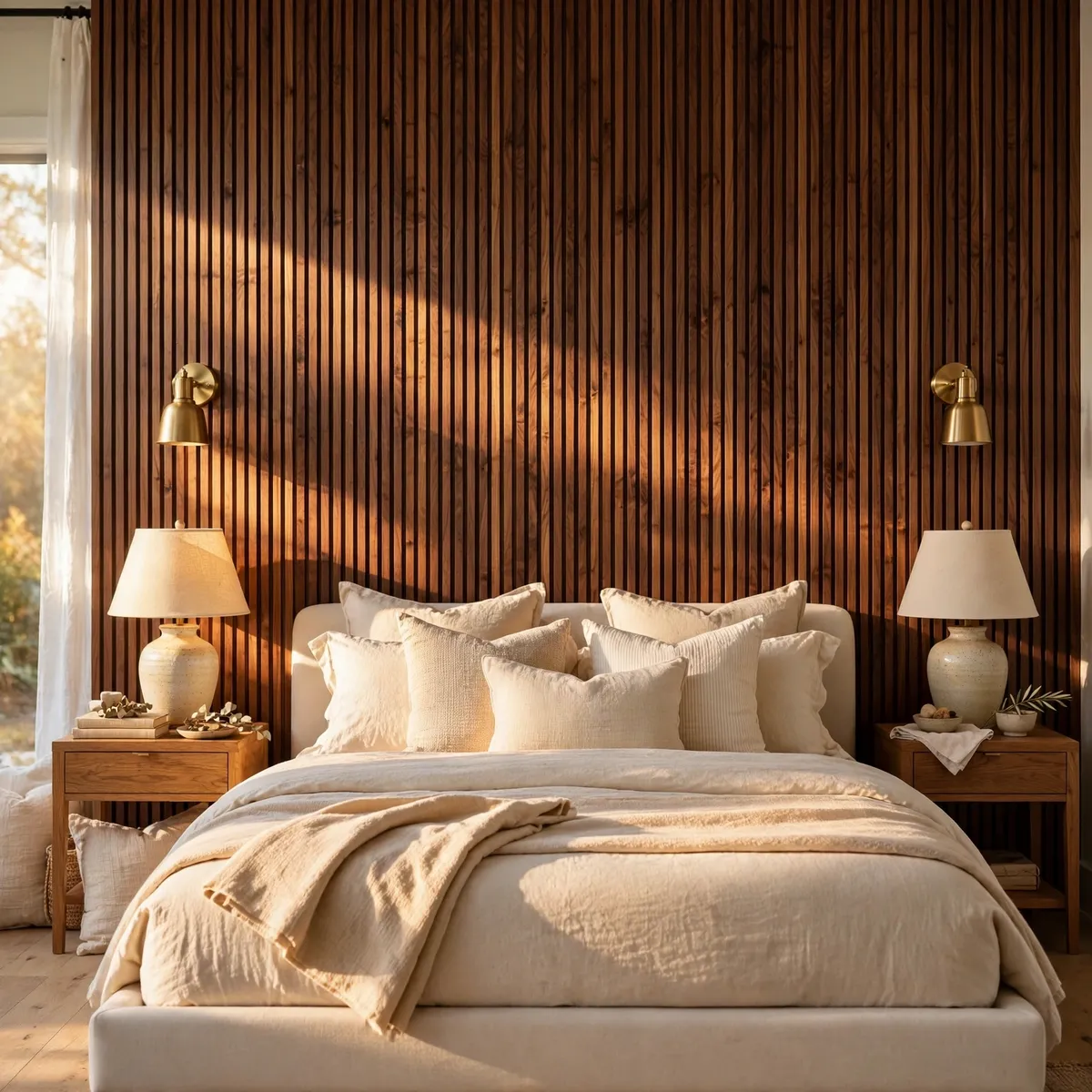
Few finishes say “finished bedroom” like vertical wood slats. The walnut tones bring instant warmth, while the vertical lines draw the eye upward and make standard eight-foot ceilings feel taller. Against a cream upholstered bed, the contrast is soft but deliberate — texture doing the talking instead of color.
This is also one of the most forgiving DIY accent walls. Slat panels arrive pre-spaced on a felt or wood backing, so you can cover the bed wall in a weekend with basic tools. Keep bedding simple — solid linen or a light quilt — so the wall stays the star.
Quick tips:
- Run slats floor to ceiling for the tallest look; stopping at picture-rail height shortens the wall.
- Back the slats with dark felt, or paint the wall behind them charcoal, so the gaps read as shadow lines.
- Match wood tones to your nightstands, not your floor, for a collected feel.
2. Sage Green Board and Batten
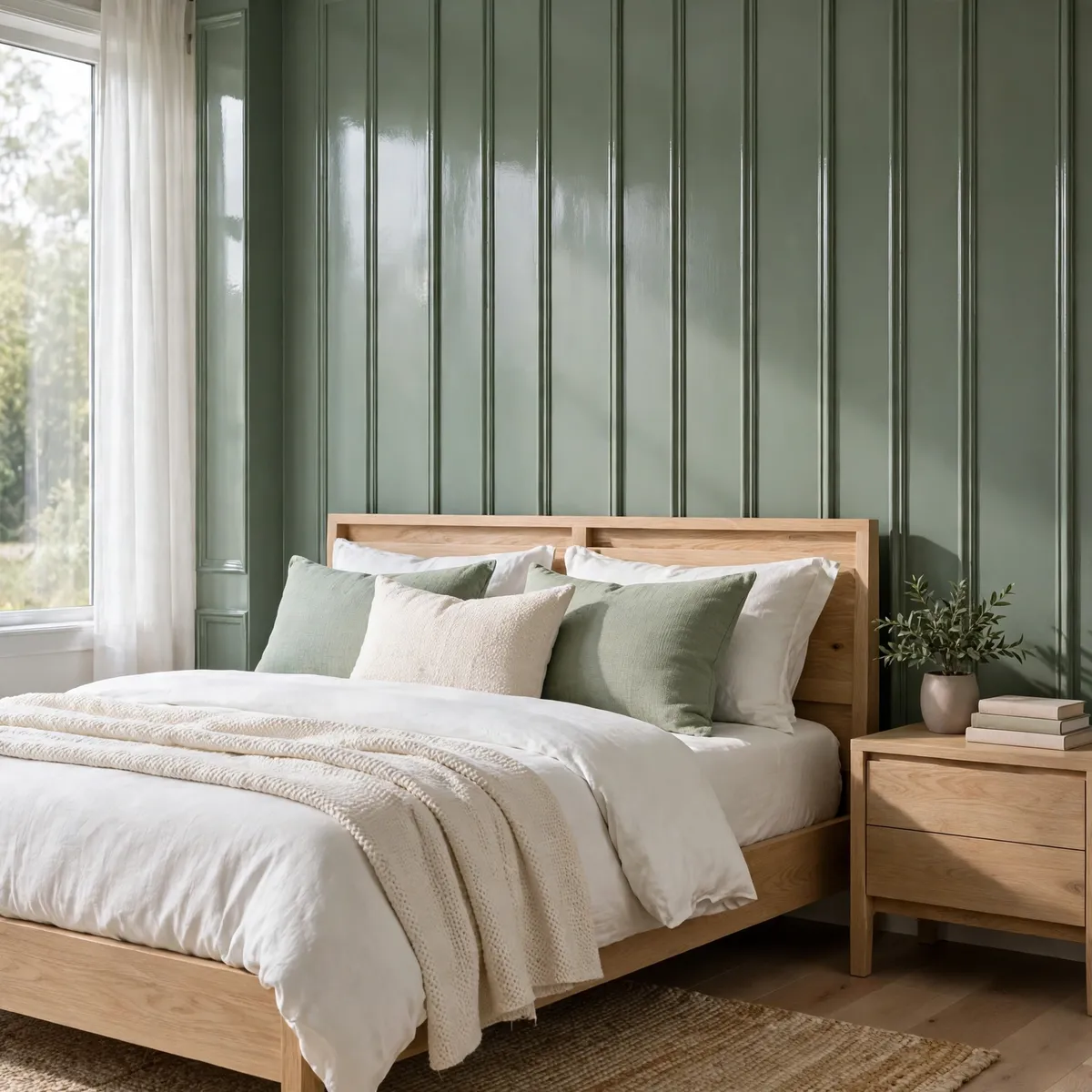
Board and batten is the trim carpentry of the design world: simple rectangles of molding that turn a flat wall into architecture. Painted sage green, it feels calm and current — a color that works with both warm oak and painted furniture.
Behind a light oak bed frame, the green reads fresh rather than heavy, which makes this a strong pick for rooms that get decent daylight. It is paint plus trim, so the cost stays low even if you hire out the molding.
Quick tips:
- Keep the boxes large — oversized rectangles feel modern, while small grids can read busy.
- Use the same sage on the baseboards for a built-in look.
- Pair with cream or oatmeal bedding to let the green breathe.
3. Charcoal Paint, Tone on Tone
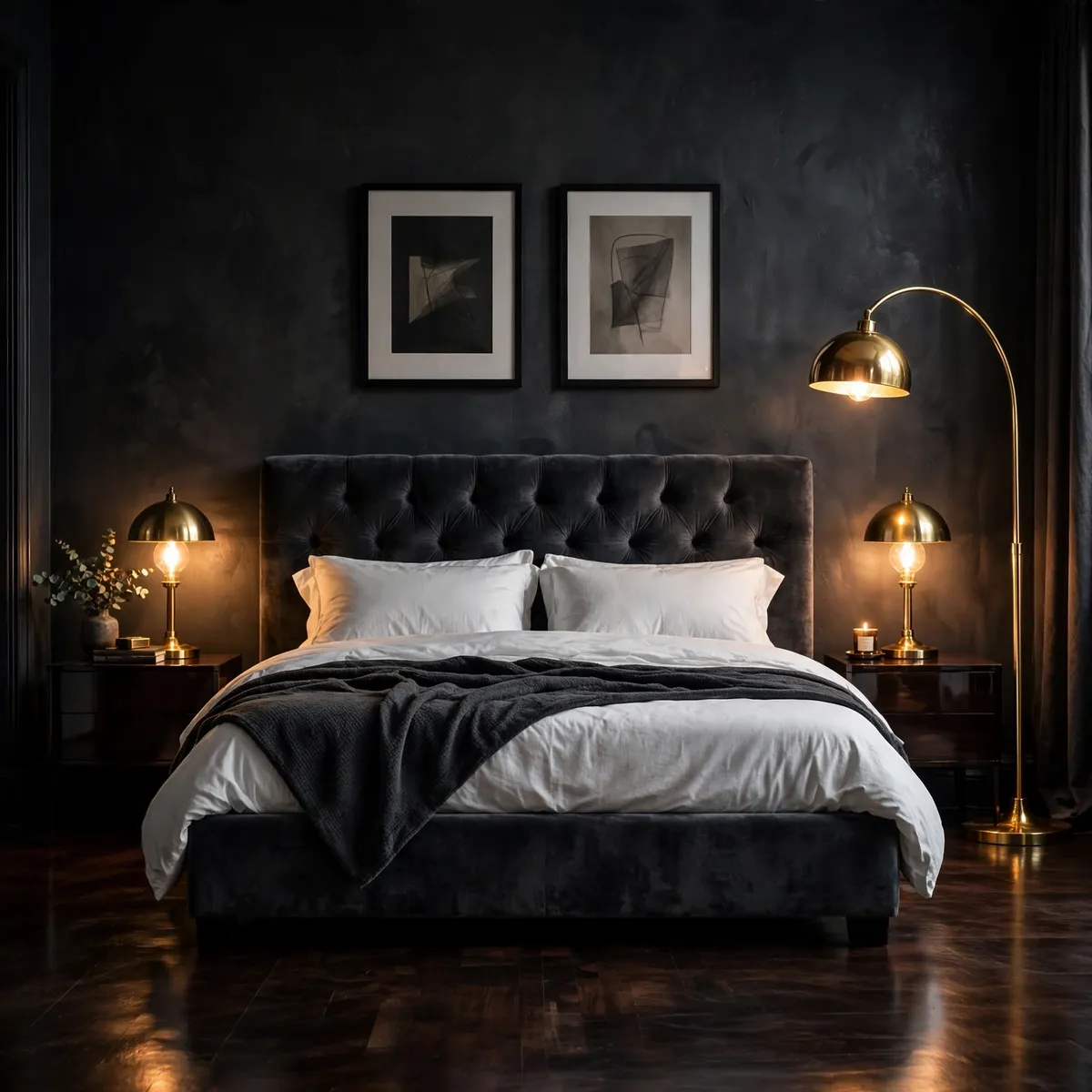
One tin of paint is all it takes. A charcoal accent wall behind a charcoal velvet bed is a study in tone-on-tone layering — the wall recedes, the velvet catches the light, and brass lamps add the jewelry. It is dramatic, but because everything sits in the same color family, it never feels chaotic.
Dark walls get a bad rap in small rooms, but on a single wall they actually add depth — the corners blur and the wall feels farther away. Just keep the other three walls light and bring in warm lighting.
Quick tips:
- Choose paint with an eggshell or satin finish so the dark color has dimension instead of going flat.
- Add at least two warm light sources, like bedside lamps or a picture light, to keep charcoal cozy.
- Brass, gold, or warm wood accents stop an all-gray scheme from feeling cold.
4. Ivory Botanical Wallpaper
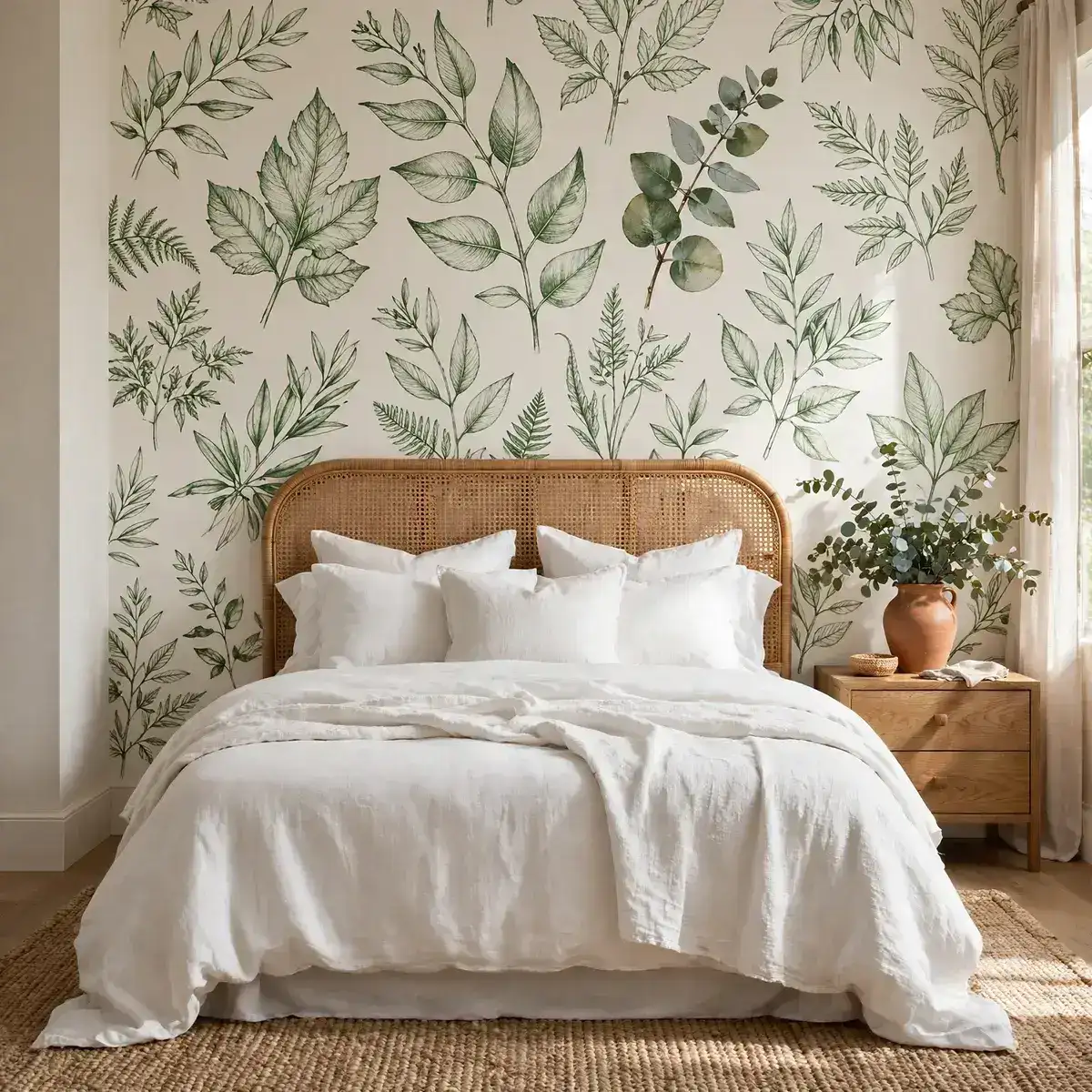
If paint feels too plain but a mural feels like too much, botanical wallpaper is the middle path. An ivory background with leafy green prints adds pattern and life while staying light enough for a restful bedroom. Behind a rattan bed, the whole look leans breezy and organic.
Wallpaper the bed wall only — you get the full impact for a fraction of the cost and commitment of a whole room. Peel-and-stick options make this renter-friendly, and the ivory base means it plays well with bedding you already own.
Quick tips:
- Order samples and live with them for a few days; large-scale prints can surprise you.
- Center the most interesting part of the repeat behind the headboard.
- Pull one green from the print for throw pillows to tie it together.
5. Terracotta Limewash Plaster
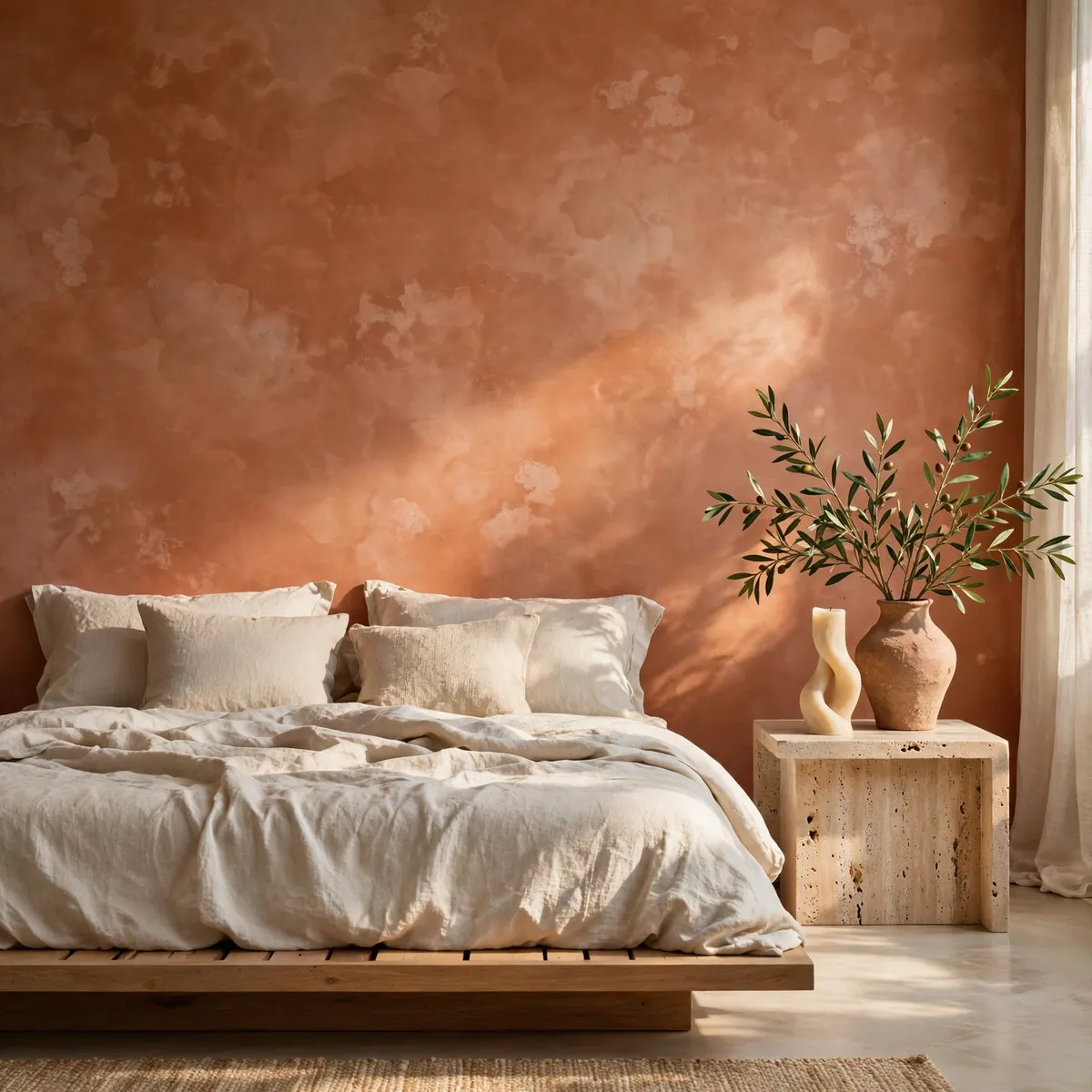
Limewash gives walls the soft, cloud-like movement that flat paint cannot. In terracotta, it wraps the bedroom in warmth — think sun-baked clay rather than bright orange. Behind a simple wooden bed, the texture becomes the whole design scheme.
It is also wonderfully forgiving to apply: the mottled finish hides roller marks and imperfect walls. Two coats with a block brush, applied in loose crisscross strokes, is all it takes.
Quick tips:
- Test a large swatch first — limewash dries lighter than it looks wet.
- Keep trim and ceiling warm white, not stark white, so the terracotta glows.
- Layer in natural textures like linen, jute, and clay to echo the plaster.
6. Warm Gray Stacked Stone Veneer
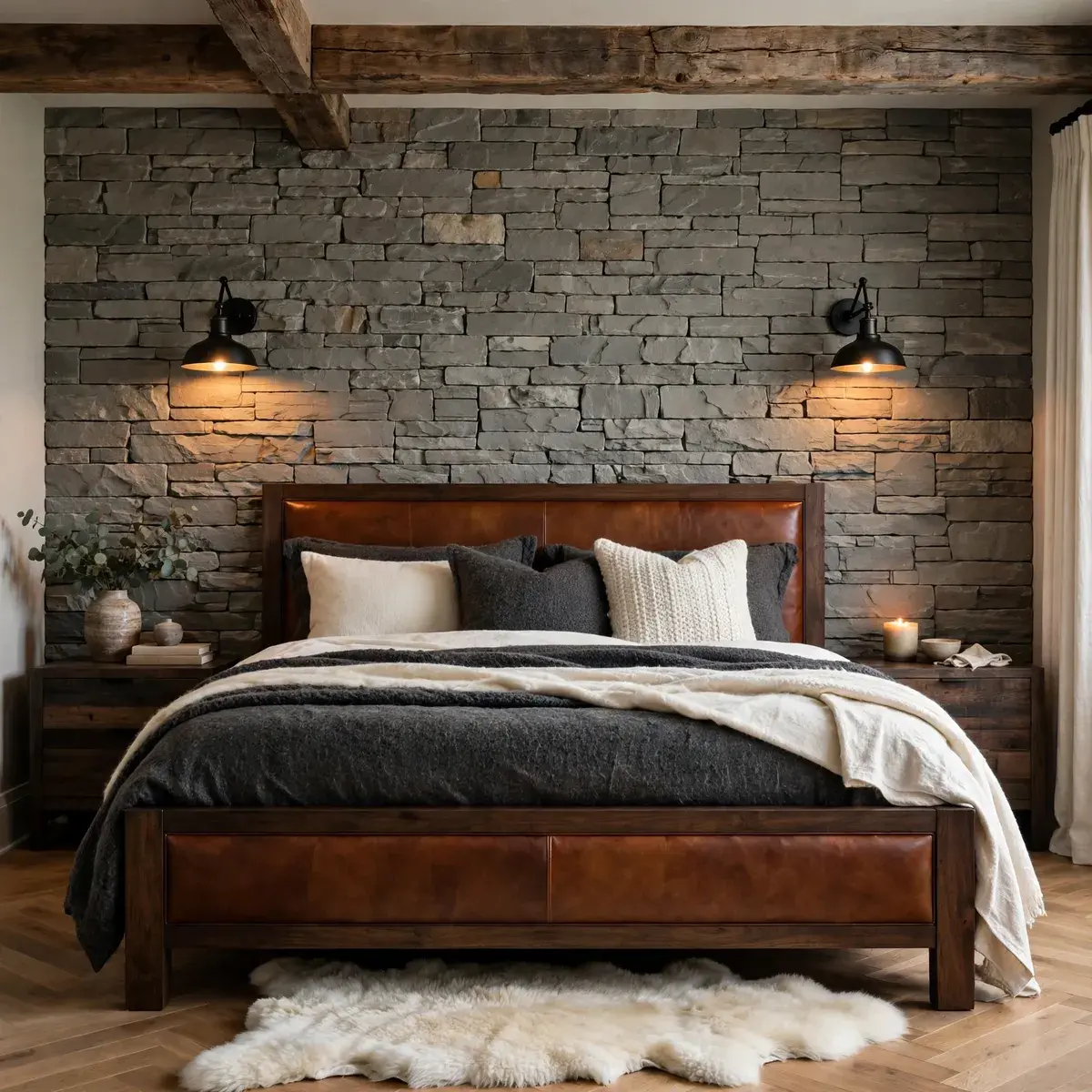
Stone brings a permanence that paint and paper cannot match. A warm gray stacked stone veneer turns the bed wall into something architectural — part fireplace surround, part gallery wall. Against a cognac leather bed, the mix of rough stone and smooth leather is pure texture contrast.
Modern stone veneer panels are lightweight and designed for interior accent walls, so installation is far simpler than real masonry. Because the stone is busy, keep art and bedding quiet.
Quick tips:
- Choose a groutless stacked profile for a cleaner, more modern line.
- Seal the stone if it sits near a window where condensation can occur.
- Balance the cool gray with warm metals and wood tones elsewhere in the room.
7. Deep Teal Velvet Upholstered Panels
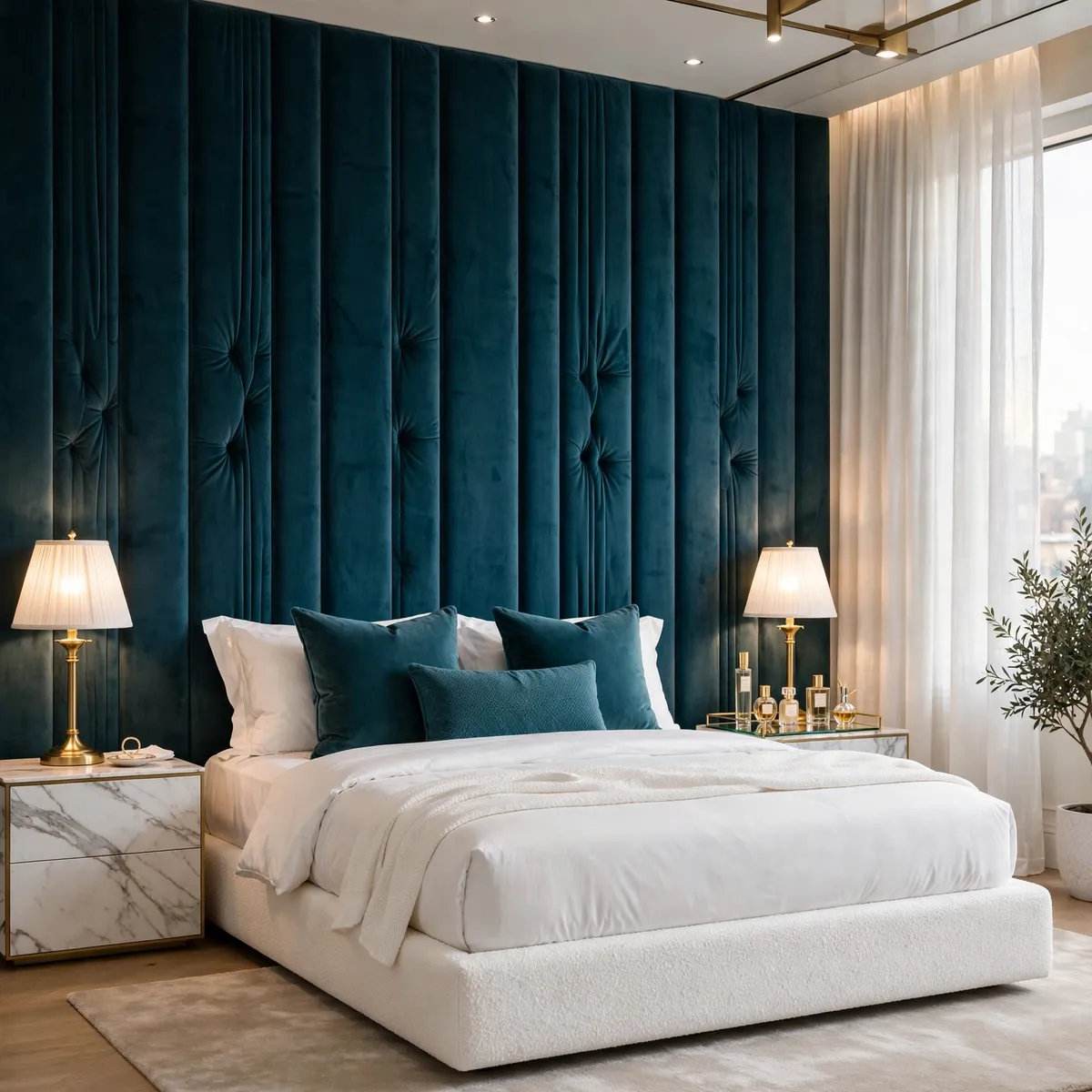
Upholstered wall panels are the luxury-hotel move: they soften the room acoustically and visually, and they make leaning back in bed genuinely comfortable. In deep teal velvet, the wall becomes plush and light-absorbing — the very definition of cozy. A white boucle bed keeps it from going too dark.
Panels typically mount on French cleats or Z-clips, so they are removable — a plus if you like to change things up. The teal reads blue in daylight and green at night, so it shifts with the room.
Quick tips:
- Order panels tall enough to clear your headboard plus 12 to 18 inches.
- Velvet shows every touch, so brush it with a lint roller before guests arrive.
- Echo the teal once more in the room — a throw or a cushion — so it feels intentional.
8. Black Picture-Frame Molding on White
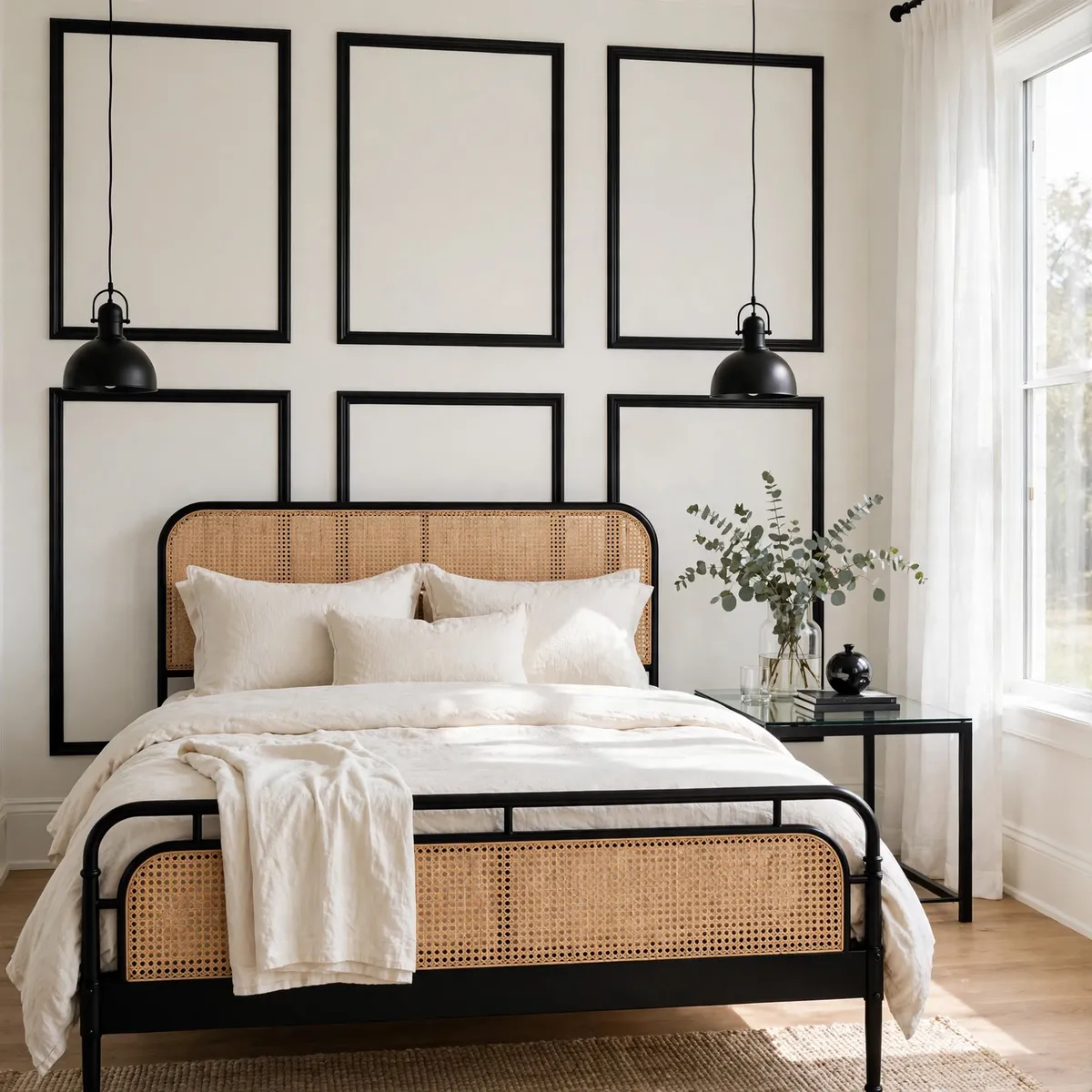
Here is proof that an accent wall does not require color at all. Black picture-frame molding laid over a white wall creates crisp graphic rectangles — architectural interest with a tailored, almost menswear feel. Behind a black and cane bed, the palette stays disciplined and striking.
The bold geometry nods to the shapes you see in art deco bedroom ideas, but the cane and warm wood keep it relaxed rather than formal. It is paint plus molding — budget-friendly with high-end results.
Quick tips:
- Map the rectangles on paper first; symmetrical boxes around the bed look best.
- Use a laser level — crooked molding ruins the effect.
- Keep bedding mostly white or cream so the black frames pop.
9. Misty Blue-Gray Mountain Mural
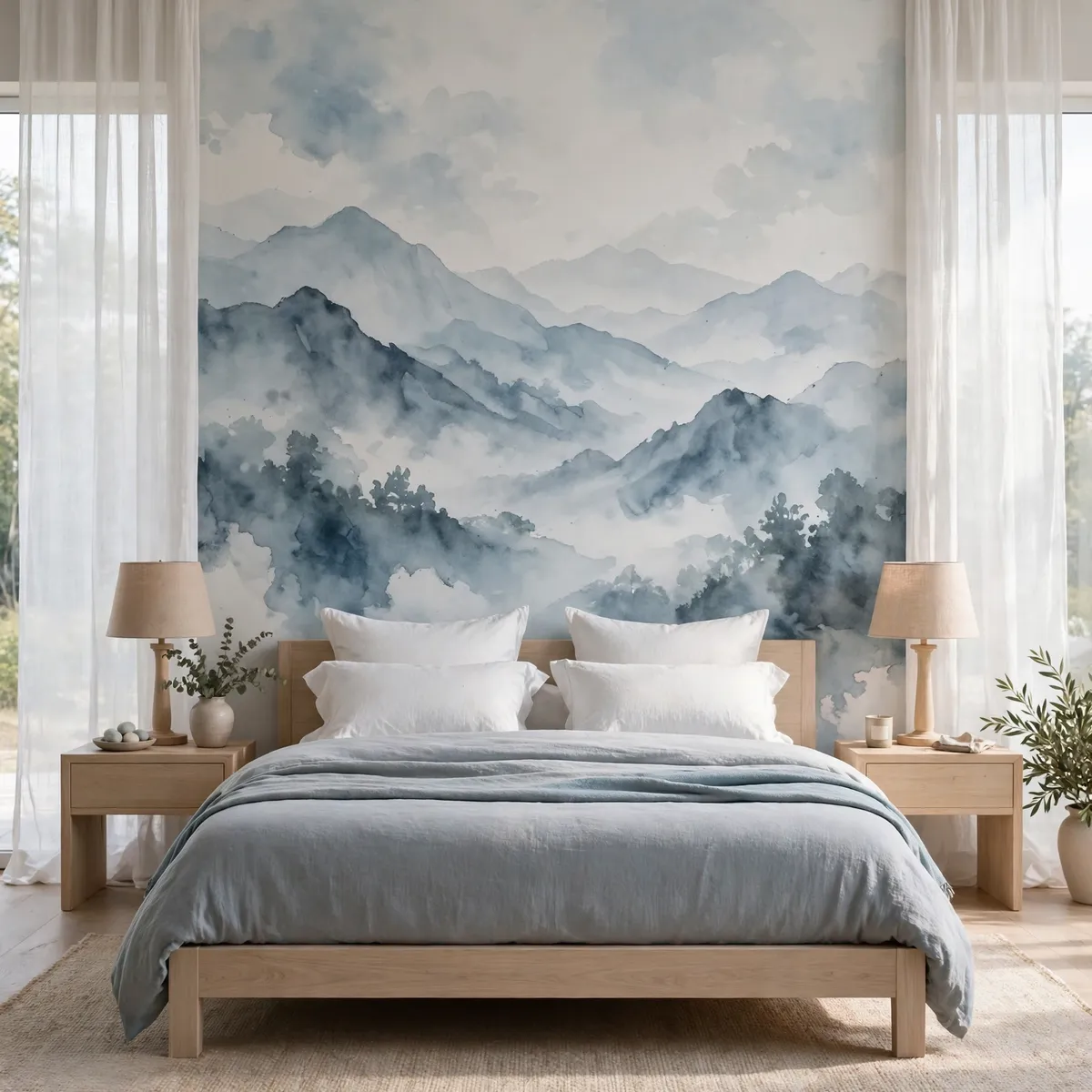
A landscape mural turns the bed wall into a window. This misty blue-gray mountain scene adds depth and a sense of calm distance — you fall asleep looking at the horizon. Behind a pale oak bed, the palette stays serene and Scandinavian.
Murals come as paste-the-wall panels sized to your wall, and a single-wall install is a manageable weekend project. Because the image does the work, skip the headboard art entirely.
Quick tips:
- Measure twice — murals are printed to your wall dimensions and cannot be returned.
- Choose a scene with a soft horizon line at roughly headboard height.
- Keep the rest of the room minimal so the mural breathes.
10. Vertical White Shiplap, Coastal Calm
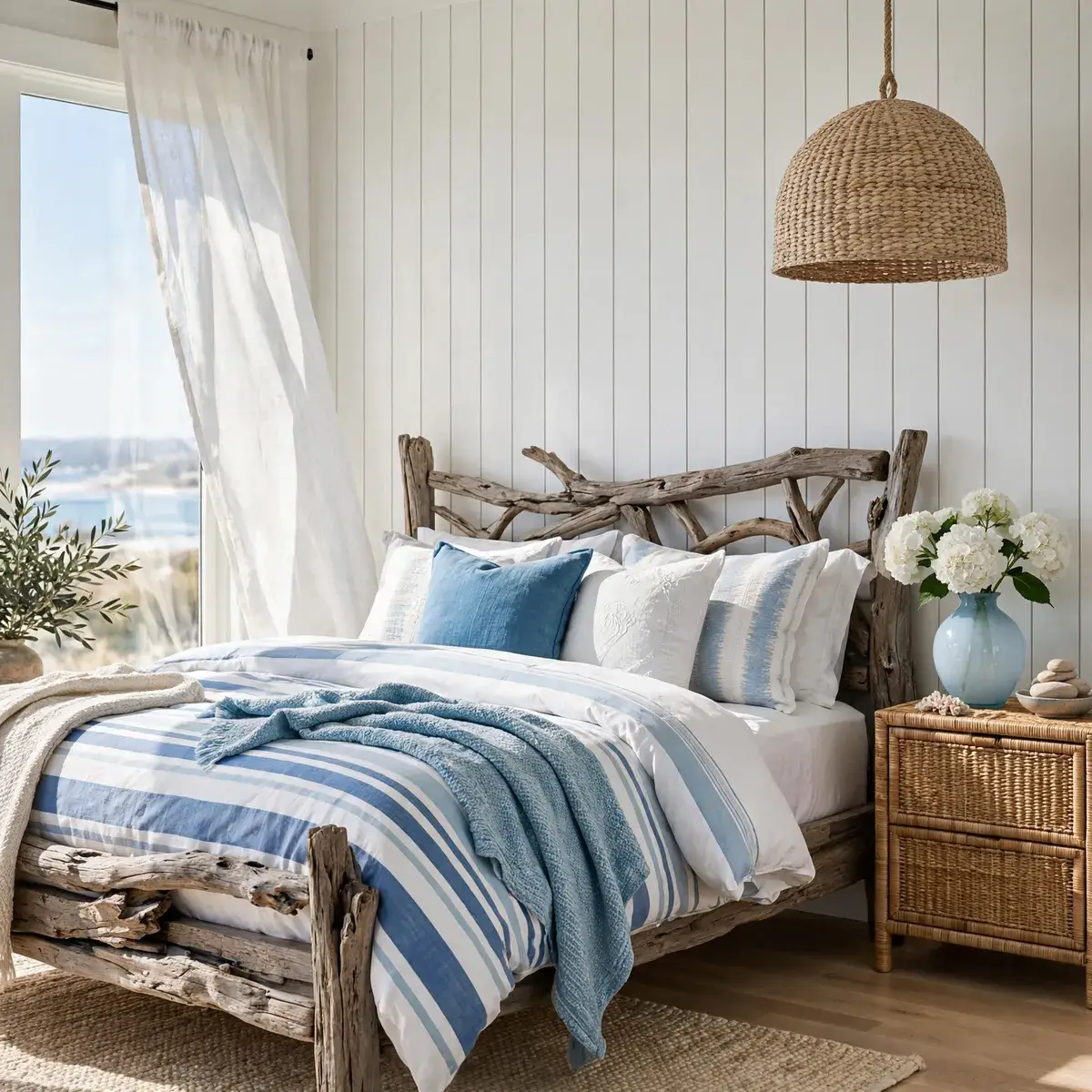
White shiplap is the coastal classic for a reason: the narrow vertical grooves add texture while bouncing light around the room. Behind a driftwood-look bed with sea-glass tones, it reads like a beach house — fresh, airy, and unfussy.
It is also one of the best accent walls for a dark bedroom, since the white finish reflects every bit of available light. Run the boards vertically to add perceived height.
Quick tips:
- Paint shiplap the same white as your trim for a seamless built-in look.
- Mind the gaps — real wood shiplap needs small expansion spacing.
- Add texture through bedding, like gauzy linen or knit throws, since the palette is quiet.
11. Mustard-Ochre Painted Arch
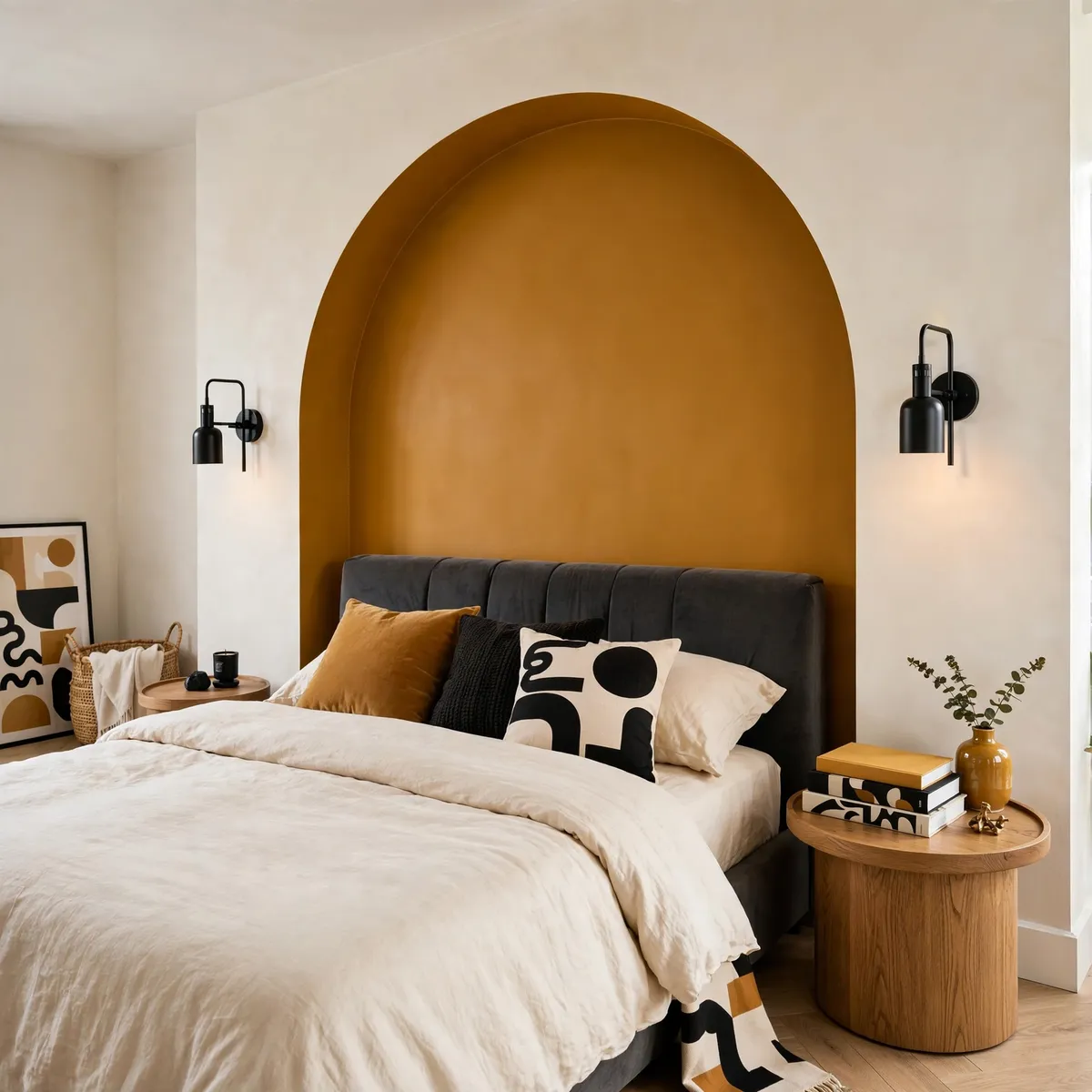
A painted arch is the renter’s accent wall: one tin of paint, a steady hand for the outline, and an afternoon. The mustard-ochre arch on a warm white wall frames the charcoal bed like a sunrise — graphic, warm, and a little bit joyful.
Arches work especially well when you do not want to commit to a full wall of color. They define the sleeping zone in open-plan spaces and add architecture where there is none.
Quick tips:
- Mark the arch with a pencil and string compass before painting for a clean curve.
- Size the arch to extend just past the nightstands for a framed vignette.
- Two coats of quality paint prevent the old wall color from ghosting through.
12. Deep Plum for a Small Bedroom
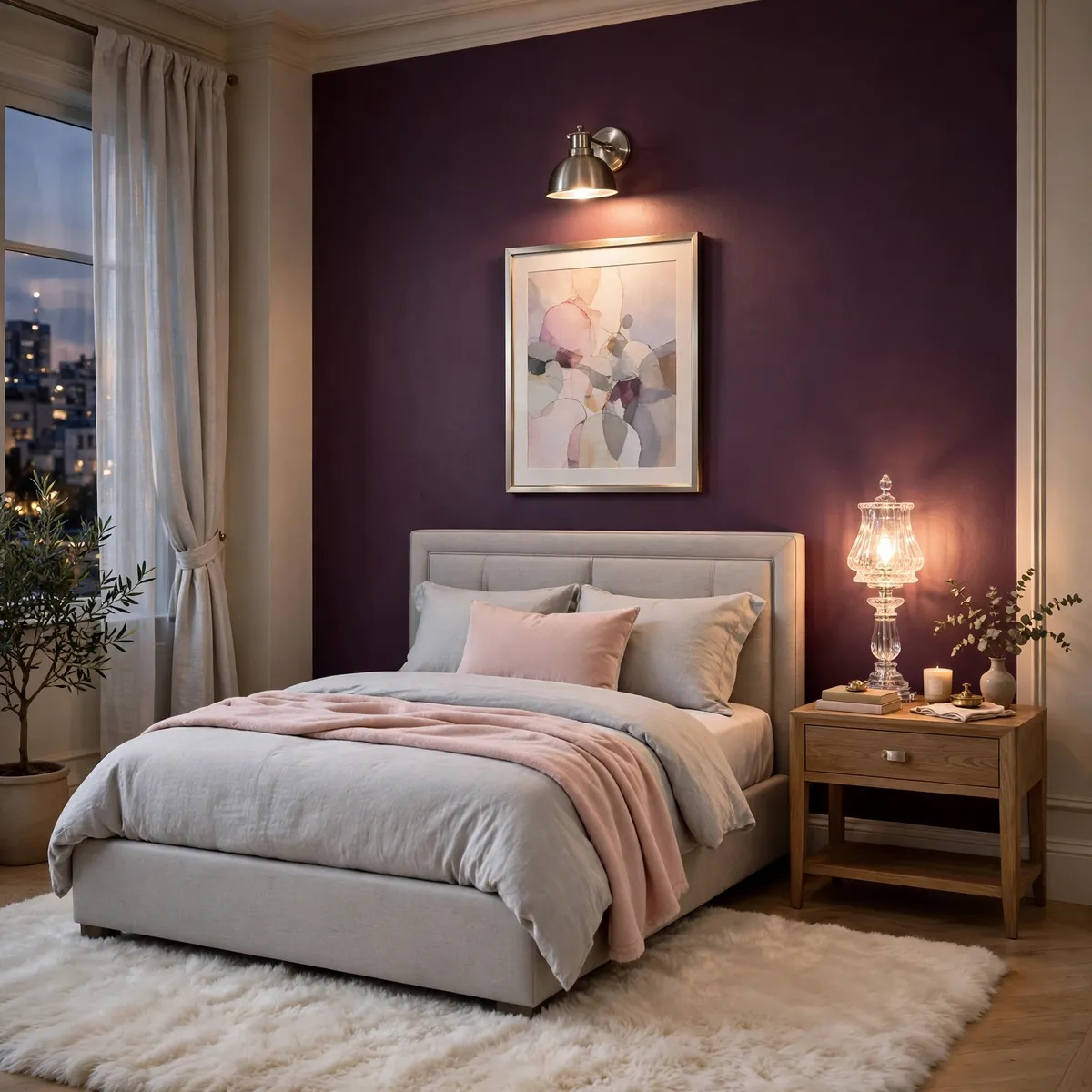
Small bedrooms can take big color — sometimes better than large ones. A deep plum accent wall on the bed wall makes the room feel intentional and cocooning rather than merely small. With light gray bedding, the contrast is soft and sophisticated.
In a compact room, keep the plum to the bed wall only and let the remaining walls stay light. A mirror or metallic lamp will bounce light around and keep the rich color from closing in.
Quick tips:
- In rooms under 120 square feet, one dark wall is the sweet spot.
- Light gray, blush, or cream bedding keeps plum elegant rather than heavy.
- Add a dimmer so you can take the drama down at bedtime.
Frequently Asked Questions
Which wall should be the accent wall in a bedroom?
In most bedrooms, the wall behind the headboard is the natural accent wall — it is the focal point you see when you enter, and it frames the bed. In small or dark rooms, this single-wall approach is ideal: you get depth and personality without making the space feel smaller. Avoid accenting a wall with the closet or a large window, which breaks up the effect.
What is the best color for a bedroom accent wall?
The best color depends on the mood you want. Soft greens and warm whites feel calm and versatile, while charcoal, deep teal, and plum add drama and coziness. Terracotta and ochre bring warmth. If your room is dark or north-facing, lean toward colors with warm undertones so the wall glows rather than recedes.
Are bedroom accent walls still in style?
Yes — the one-wall accent has evolved rather than disappeared. Today’s versions favor texture and tone, like limewash, wood slats, molding, and wallpaper, over a single flat bright color, which keeps them feeling current. Choosing a timeless material or a color you genuinely love matters more than chasing a trend.
What is the cheapest way to do a bedroom accent wall?
Paint is the cheapest route — a single wall takes one gallon and an afternoon. Painted arches and color blocking cost even less in materials. Peel-and-stick wallpaper and pre-made slat panels sit in the middle, while stone veneer and upholstered panels are the premium options.
Conclusion
A finished-feeling bedroom almost always comes down to one confident decision — and an accent wall is the simplest version of that. Whether you choose the warmth of wood slats, the softness of limewash, or the drama of deep plum, committing to the wall behind your bed gives the whole room a focal point to organize around.
Start with your light: bright rooms can handle saturated color and busy pattern, while dark or small rooms shine with reflective finishes and single-wall restraint. Pick the bedroom accent wall idea that fits, gather your materials, and give yourself a weekend — you will be surprised how finished the room feels on Monday.