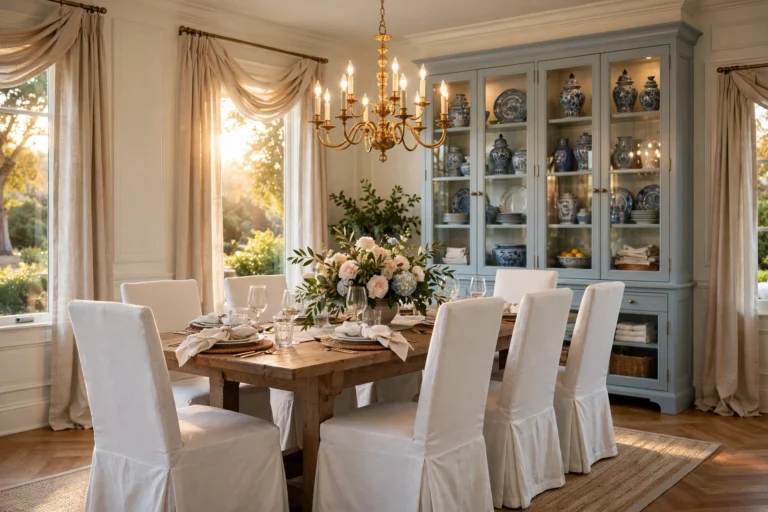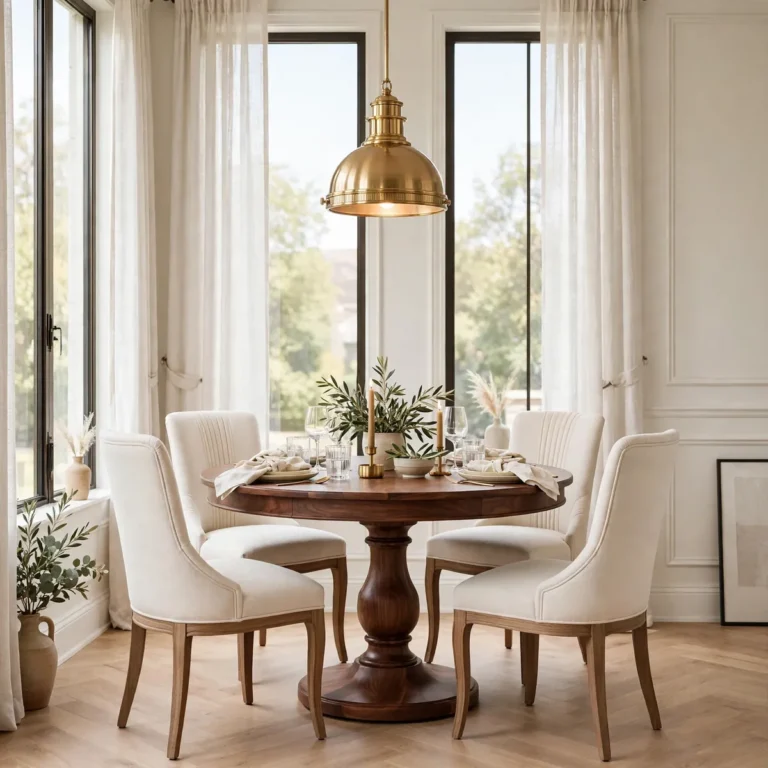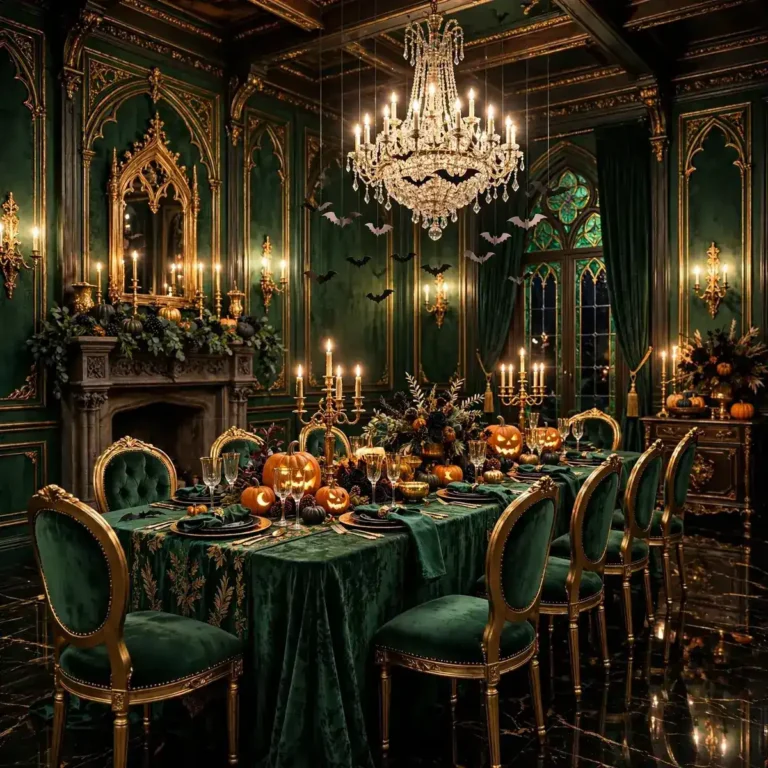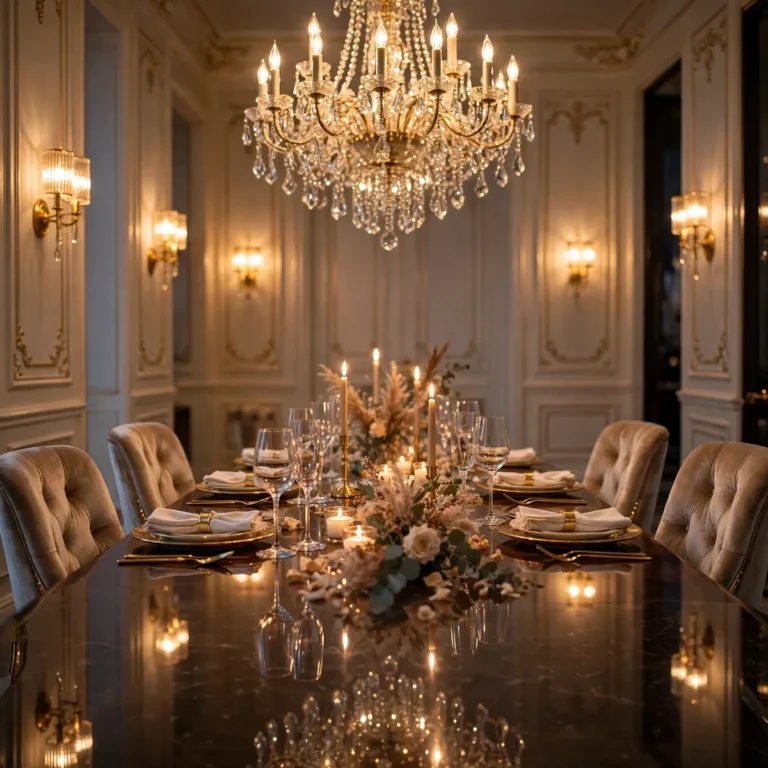
12 Beautiful Dining Room Wall Decor Ideas to Elevate Your Space
The dining room is where long dinners, birthday candles, and unhurried Sunday breakfasts happen — yet its walls are often the last thing to get attention. Bare or under-decorated walls can make even a beautiful dining set feel unfinished, while the right treatment adds warmth, depth, and personality to the whole room.
The good news is that you do not need a big budget or a designer to fix it. From a single oversized canvas to classic wainscoting and a well-placed mirror, these 12 dining room wall decor ideas cover every style and space. And if your room is on the compact side, pairing these wall ideas with smart small dining table ideas makes the whole space feel intentional rather than cramped.
A useful principle before you start: one strong focal point beats five small ones. Pick the wall behind the table or sideboard as your anchor, commit to one idea there, and let the other walls support it. Dining rooms are experienced mostly while seated, so hang pieces slightly lower than you would in a hallway — your guests will see them at table level.
1. An Oversized Canvas That Anchors the Room
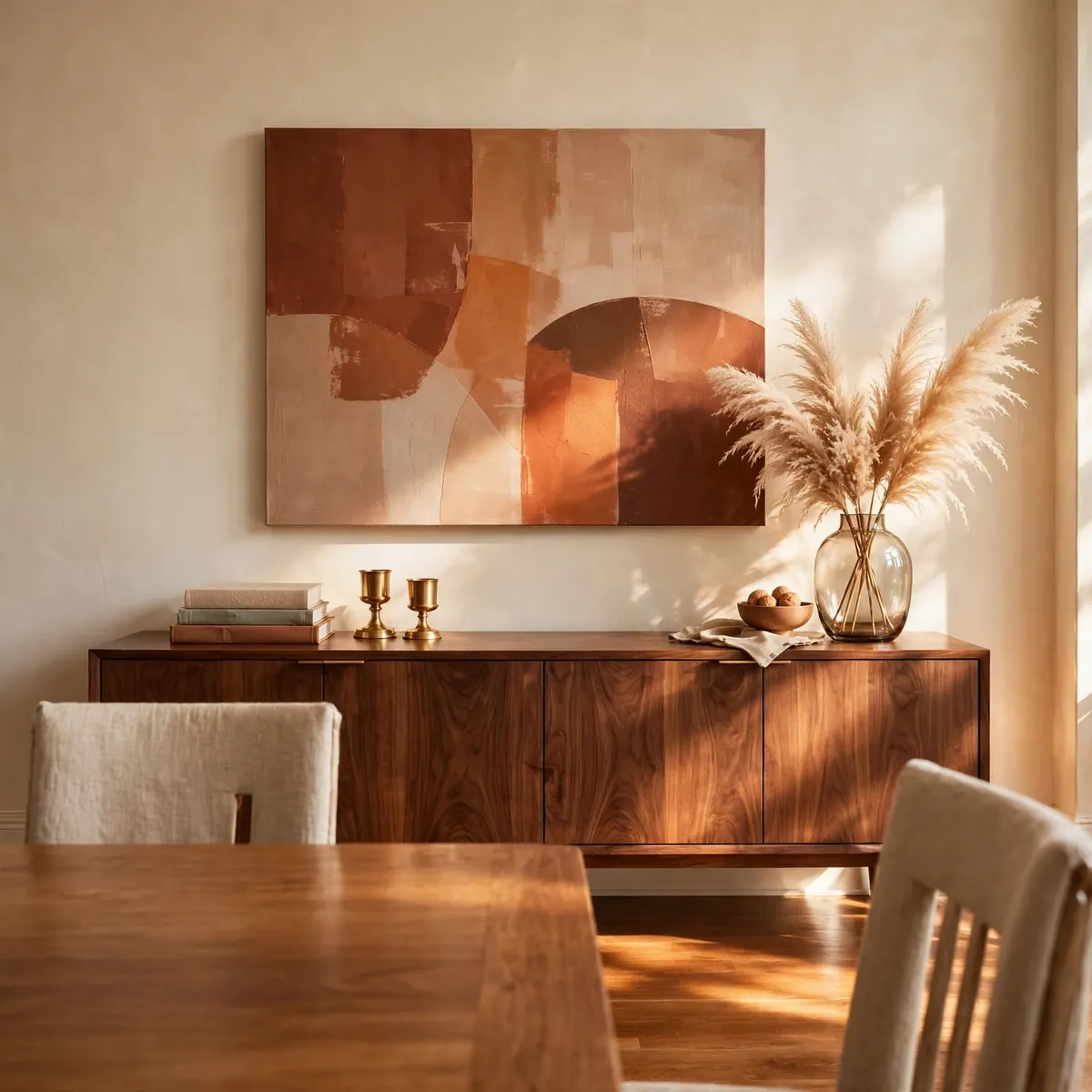
Nothing finishes a dining room faster than one large piece of art. An oversized canvas fills the visual gap between the top of your sideboard and the ceiling, giving the eye somewhere confident to land instead of drifting across empty plaster.
Scale is the whole game here. Choose art that spans roughly two-thirds the width of the furniture beneath it — a small frame floating above a long sideboard looks stranded, no matter how beautiful the piece. Abstracts in warm earthy tones are a safe, versatile choice: they add color without competing with the food or conversation, and they start conversations of their own.
Quick tips:
- Keep the artwork’s width at least two-thirds the width of the sideboard or table below it.
- Hang the center around 57 inches from the floor — slightly lower suits seated sightlines.
- Choose frames that echo a metal finish already in the room, like brass or black.
2. A Curated Gallery Wall in a Tidy Grid
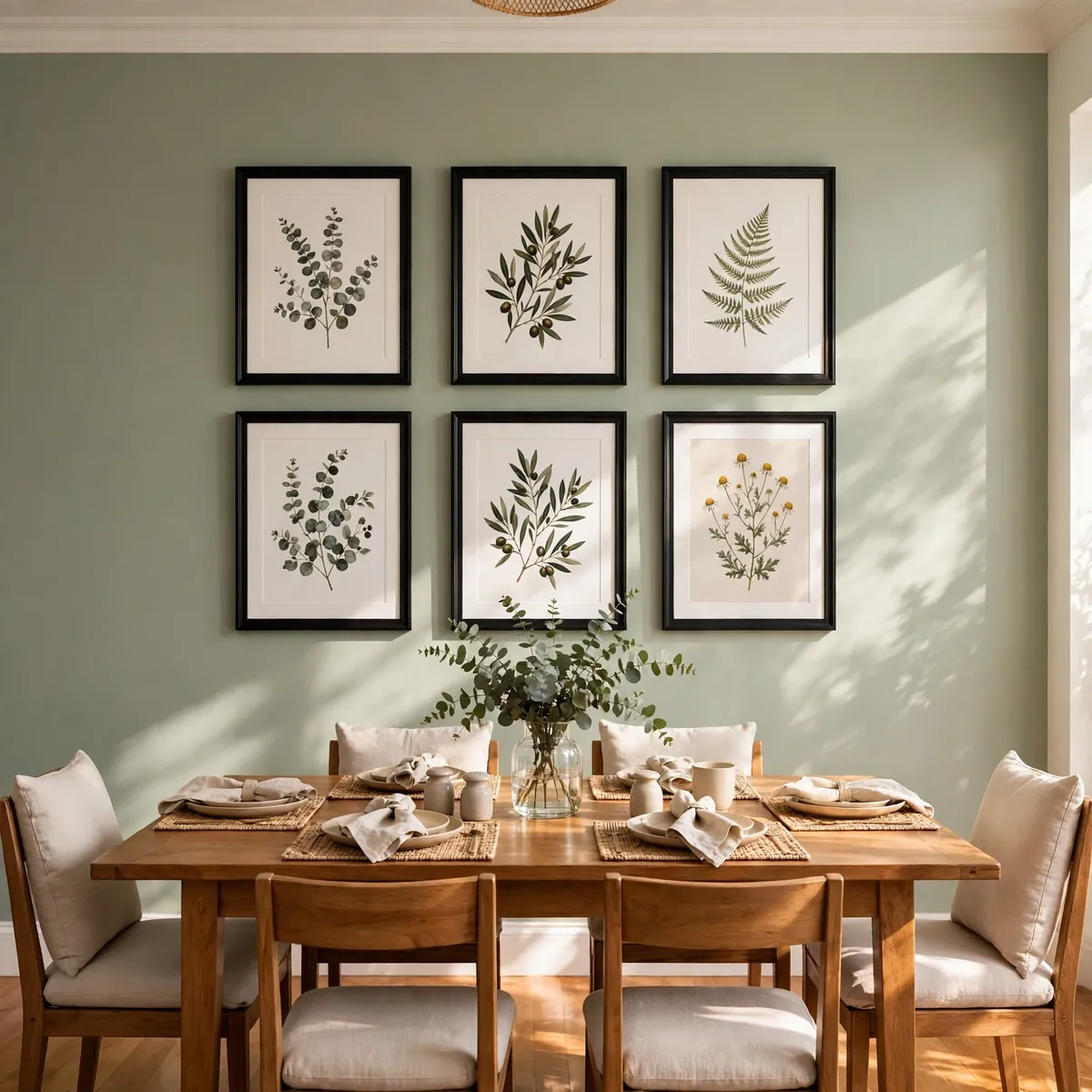
Gallery walls earn their popularity because they let you show the things you actually love — family photos, travel prints, botanical sketches — in one cohesive display. In a dining room, a tidy grid feels calmer and more intentional than a scattered salon-style arrangement.
Cohesion comes from one shared element: matching frame finishes, a consistent color palette, or a single subject like landscapes or black-and-white photography. Lay the whole arrangement on the floor first and live with it for a day before you pick up the hammer. Leave a margin of bare wall around the group so it reads as one piece rather than spreading like clutter.
Quick tips:
- Keep 2–3 inches of even spacing between every frame for a clean grid.
- Share one element across all pieces — frame color, mat color, or subject.
- Template with painter’s tape on the wall before drilling a single hole.
3. A Large Arched Mirror: Timeless Dining Room Wall Decor Ideas That Reflect Light
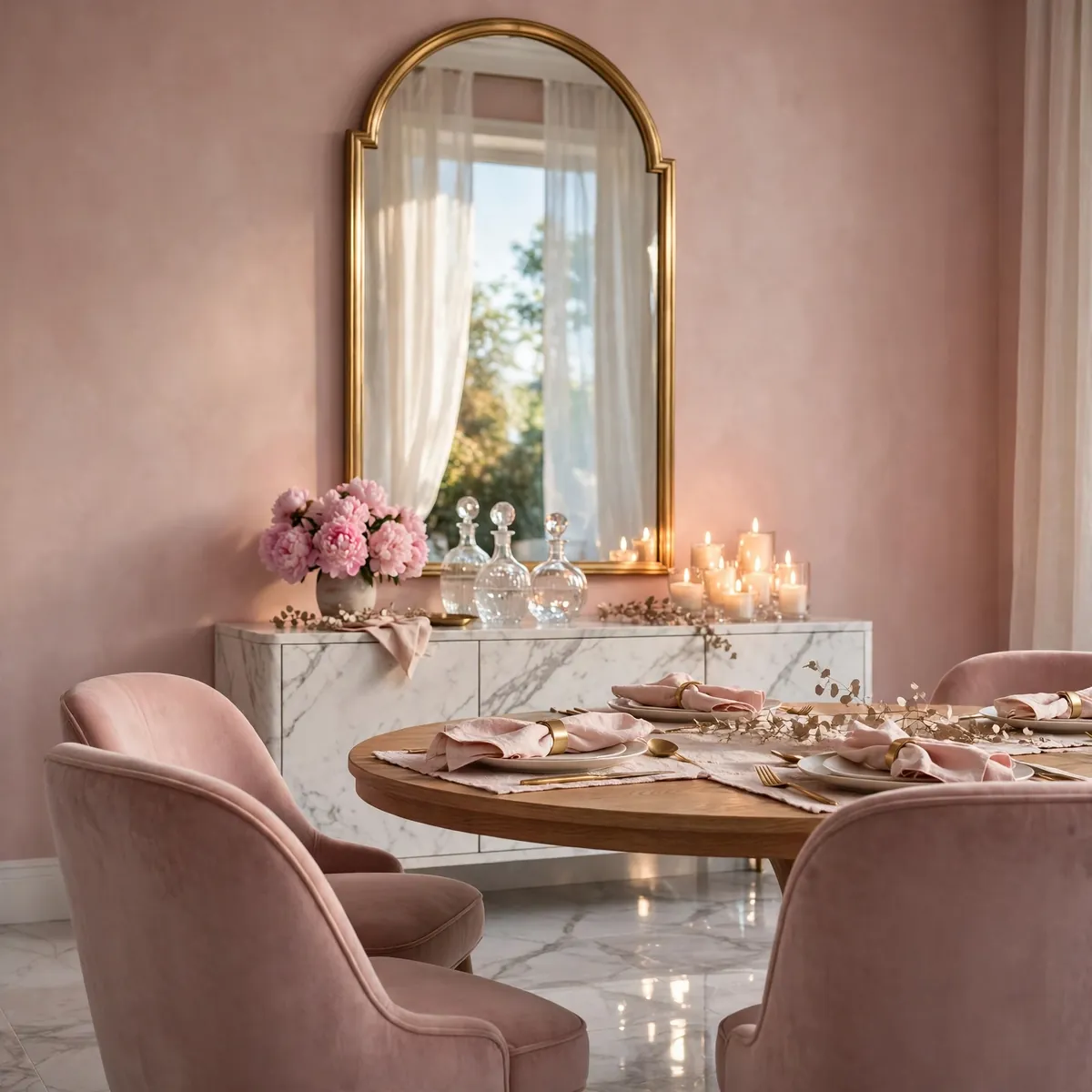
Mirrors are the hardest-working decor in a dining room. A large mirror reflects window light, visually doubles the space, and gives evening dinners a soft, candlelit glow when it catches the chandelier. Few pieces deliver this much atmosphere for one decision.
An arched mirror in a brass or black frame suits both traditional and modern dining rooms, and placing it on the wall opposite a window multiplies daylight. Keep the area around it simple — a mirror this large is already the focal point, and busy styling beside it creates visual noise. Hang it 6–8 inches above a sideboard so the reflection picks up the table styling below.
Quick tips:
- Place mirrors opposite or beside windows to double the natural light.
- Lean a floor-length mirror behind a sideboard for drama without drilling.
- Choose a frame finish that matches your pendant light or faucet for cohesion.
4. Warm Wood Slat Paneling
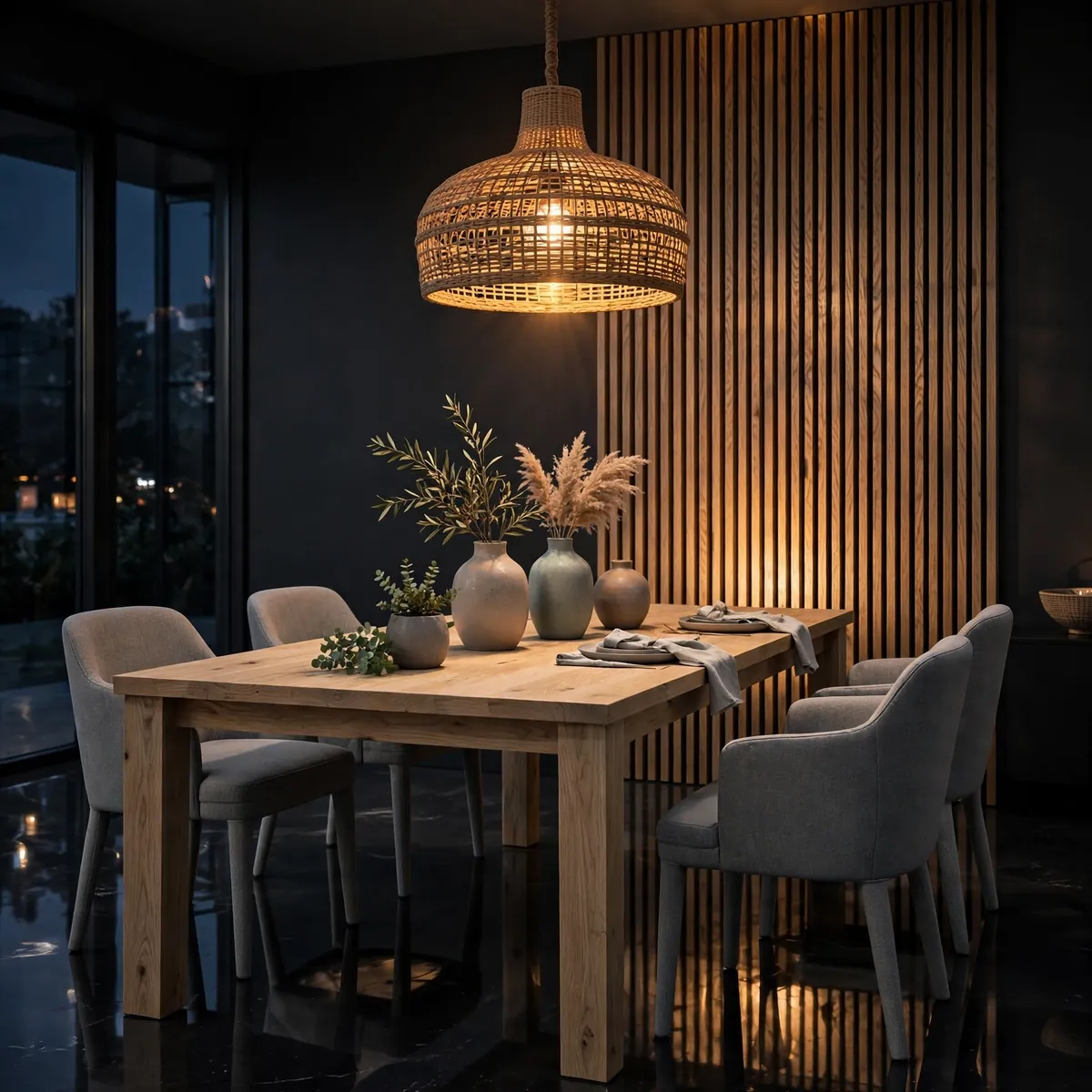
Vertical wood slats add rhythm and texture that flat paint simply cannot. Run them floor to ceiling on one wall — usually the wall behind the dining table — and the room gains instant architectural character, even in a plain new-build.
Slats in a natural oak or walnut finish bring warmth; painted slats in charcoal, deep green, or navy read more modern and dramatic. Because the texture is the decoration, you need almost nothing else on the wall — one simple artwork or a small mirror is plenty. This is also a forgiving project: individual slats are easier to hang straight than a full panel, and spacing hides small imperfections.
Quick tips:
- Run slats on one wall only — the feature wall behind the table works best.
- Keep the remaining decor on that wall minimal to let the texture speak.
- Seal wood slats near the kitchen side against cooking humidity.
5. Classic Wainscoting and Picture-Frame Molding
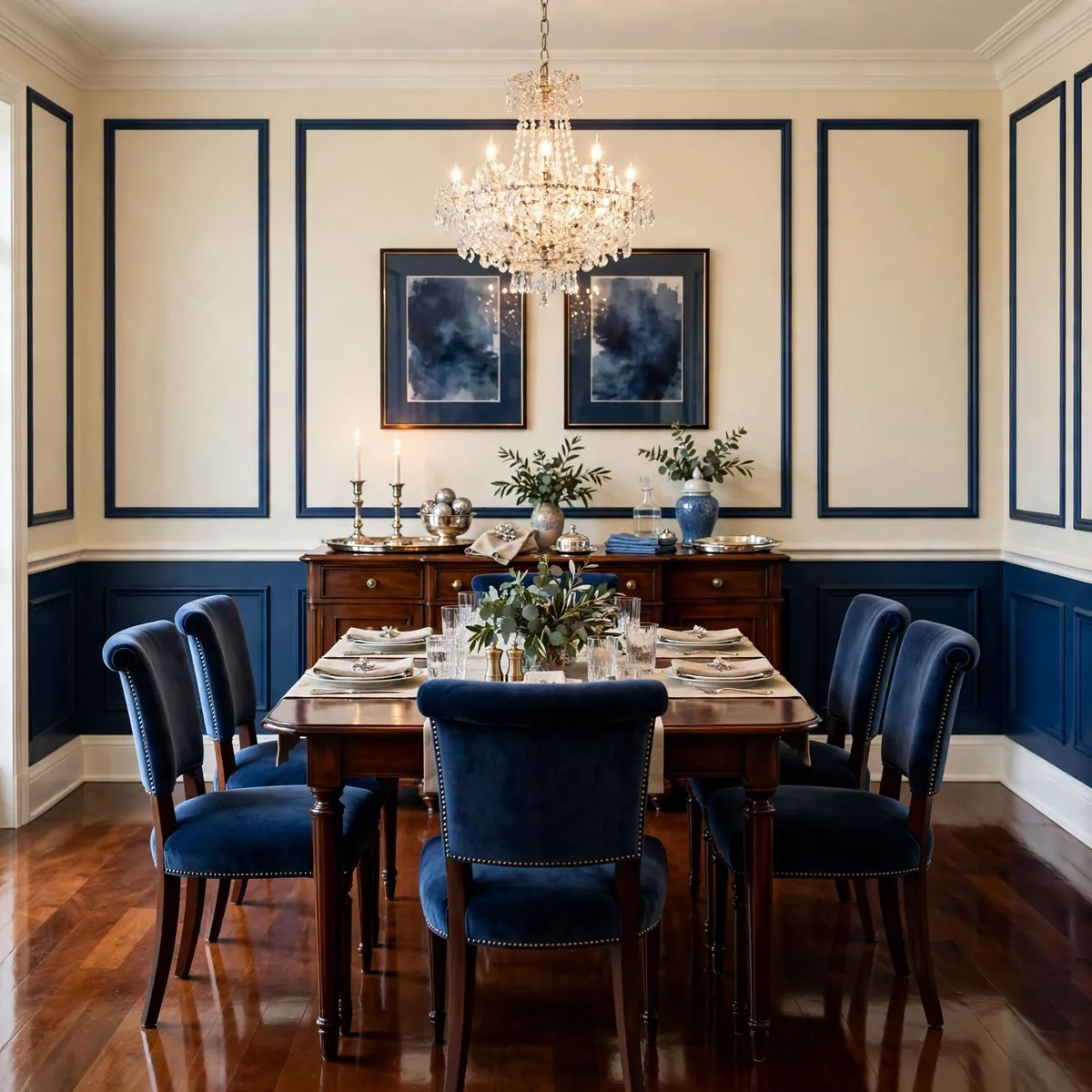
Wainscoting and applied molding give dining rooms the kind of tailored, finished feel that photographs beautifully and never dates. Picture-frame molding on the upper wall with a painted lower half is the most cost-effective way to get the look — it is essentially paint, trim, and patience.
The classic move is a chair rail with a darker or richer color below and a soft neutral above. Deep green, navy, or warm charcoal below the rail creates the formal, cocooning atmosphere that suits evening dining so well. Paint the trim the same color as the wall for a modern panelled look, or crisp white for a traditional contrast.
Quick tips:
- Place the chair rail about 32–36 inches from the floor for classic proportions.
- Paint trim and wall the same shade for a sleek, contemporary panelled wall.
- Miter corners carefully — caulk hides small gaps before the final coat.
6. A Hanging Collection of Decorative Plates
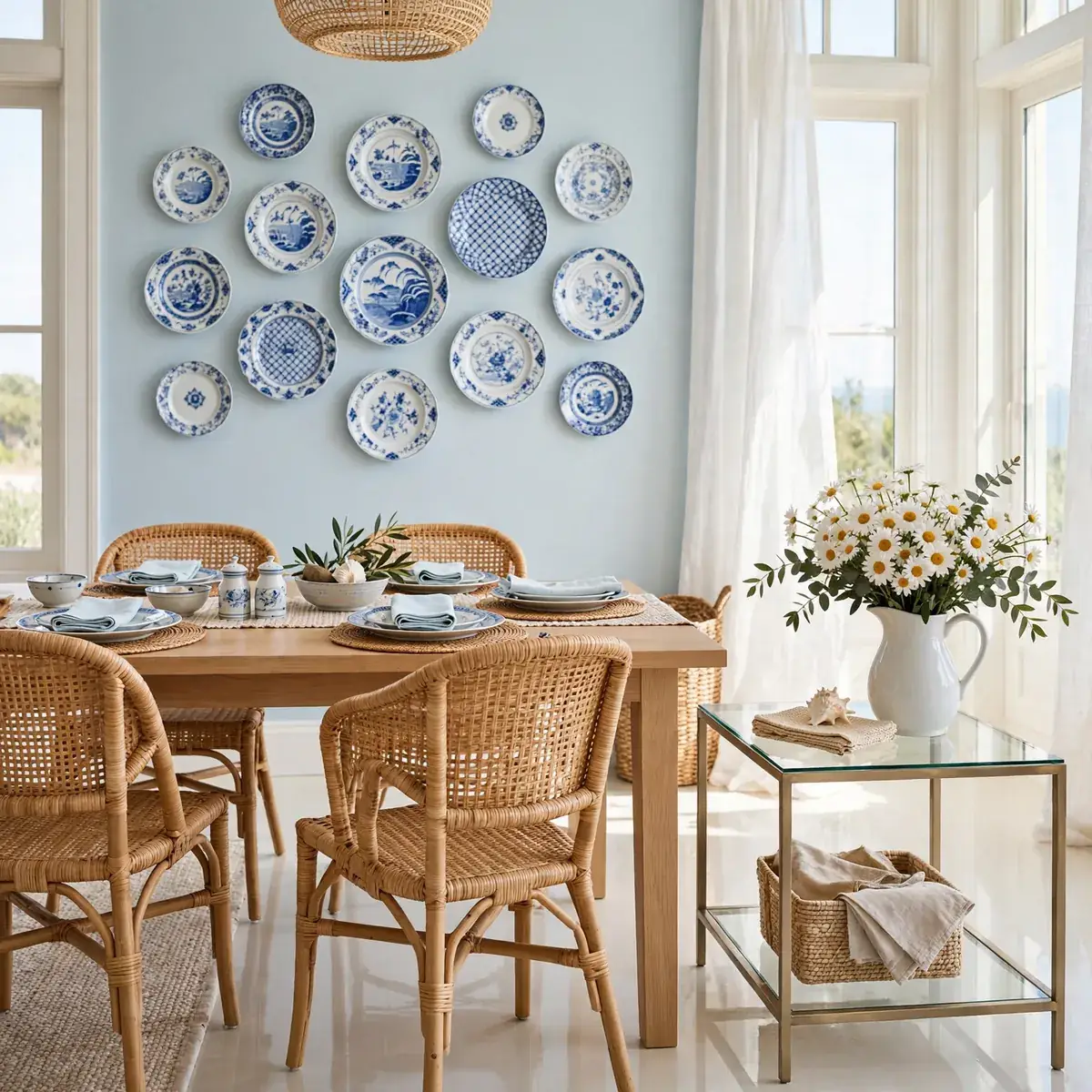
Decorative plates are one of the oldest dining room wall traditions, and they still work beautifully. A curated plate wall adds pattern, a handcrafted feel, and a natural connection to the room’s purpose — especially with vintage or artisan pieces.
The secret is restraint in palette. Choose plates in two or three coordinating colors — blue and white, earthy neutrals, or a single glaze tone — rather than a rainbow, and mix sizes and shapes for an organic feel. Spring-loaded plate hangers or adhesive discs keep them secure without visible hardware. Trace the arrangement on kraft paper first and tape it up to preview the composition.
Quick tips:
- Limit the palette to two or three coordinating colors for a curated look.
- Mix sizes from small saucers to large chargers for visual rhythm.
- Use invisible adhesive plate hangers to keep the focus on the plates.
7. Elegant Wall Sconces Flanking a Mirror
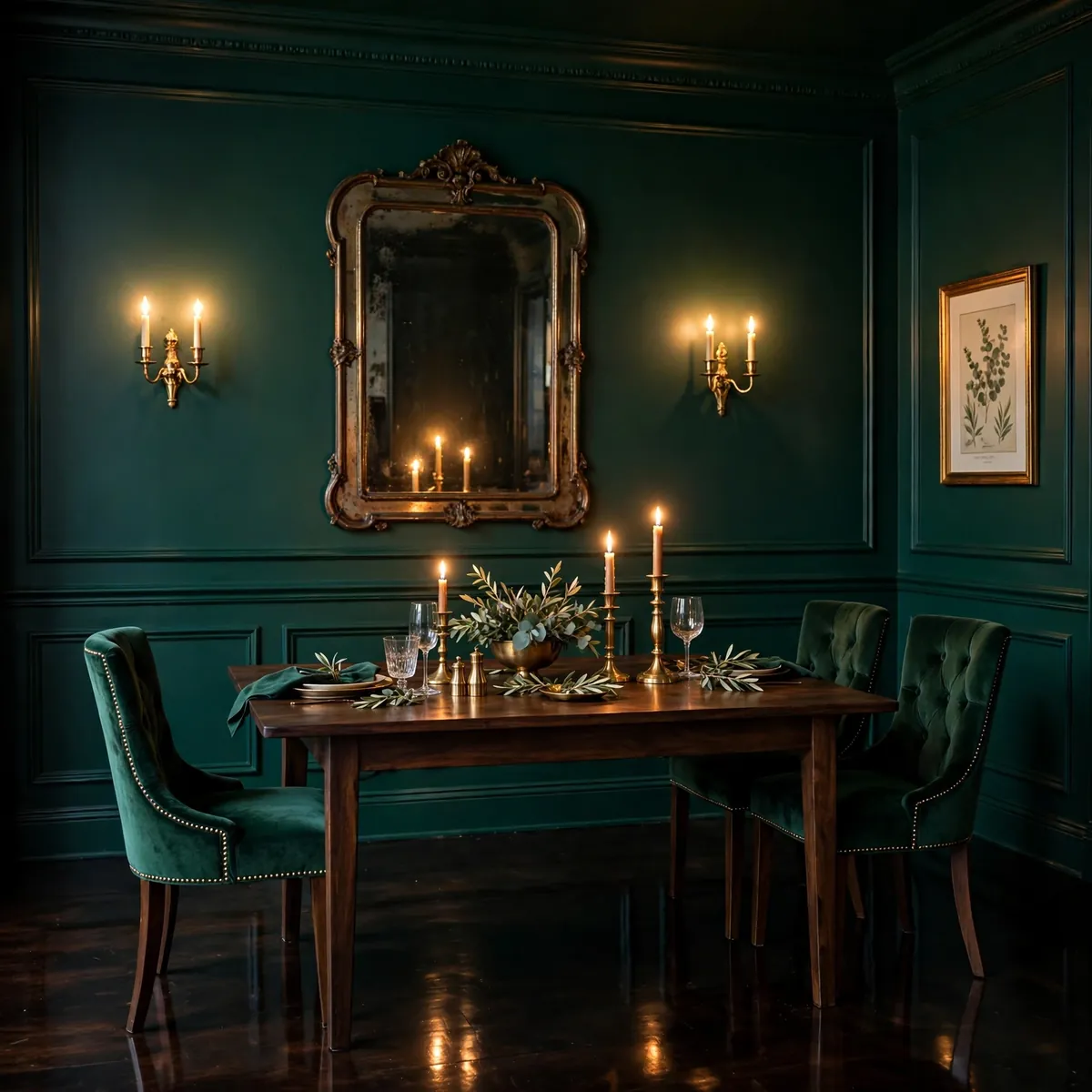
Wall sconces do double duty: they are decor during the day and atmosphere after dark. A symmetrical pair flanking a mirror or artwork frames the focal point and gives the wall a finished, hotel-like polish that a single fixture never quite achieves.
Candle-style sconces with warm bulbs cast the kind of flattering light that makes everyone look good at dinner — it is no accident that restaurants use it. If wiring feels like too much, plug-in sconces with cord covers deliver the same look and can be repositioned later. Layered light like this is exactly why thoughtful dining room lighting ideas matter as much as the furniture: the walls and the light plan are one design, not two.
Quick tips:
- Mount sconces 60–66 inches from the floor, flanking the mirror by 24–30 inches.
- Use warm 2700K bulbs for a candlelit, appetite-friendly glow.
- Try plug-in sconces first if you want to test placement before hardwiring.
8. A Moody Painted Accent Wall
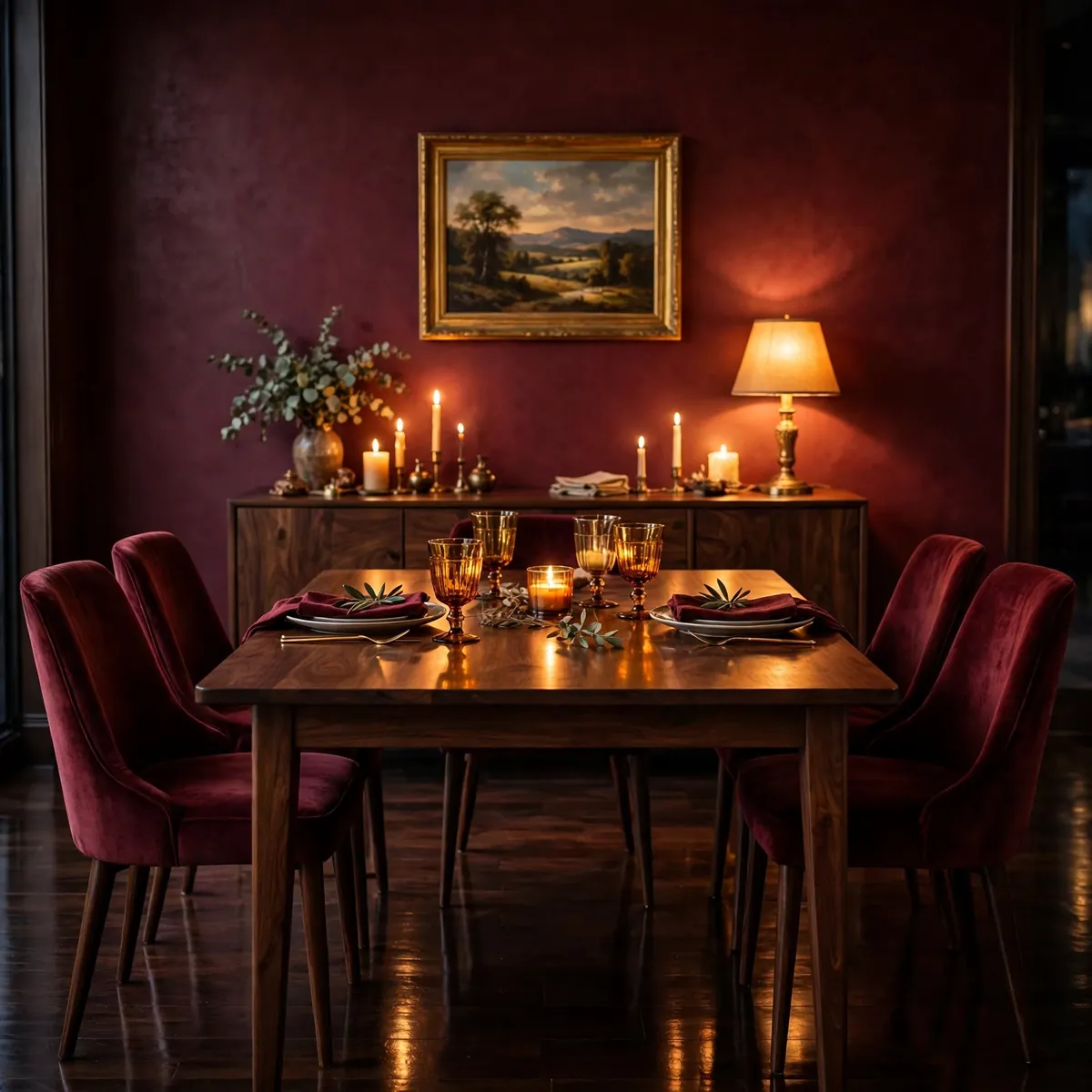
Deep paint is the fastest, cheapest transformation on this list. A wall in forest green, navy, or oxblood red turns an ordinary dining room into an intimate, evening-ready space that feels designed rather than decorated. Dark walls also make wood furniture and brass details glow by contrast.
One wall is enough in most rooms — paint the wall behind the table and keep the others light so the room stays balanced. Test a large sample swatch and look at it at dinner time, not just at noon, because artificial light changes how deep colors read. Warm undertones (rather than icy blue-grays) keep the room feeling inviting around food.
Quick tips:
- Paint just the table wall and keep the rest light to avoid a heavy room.
- Test swatches under evening light before committing to a full gallon.
- Pair dark walls with brass, wood, and warm textiles for contrast and glow.
9. A Botanical Print Series
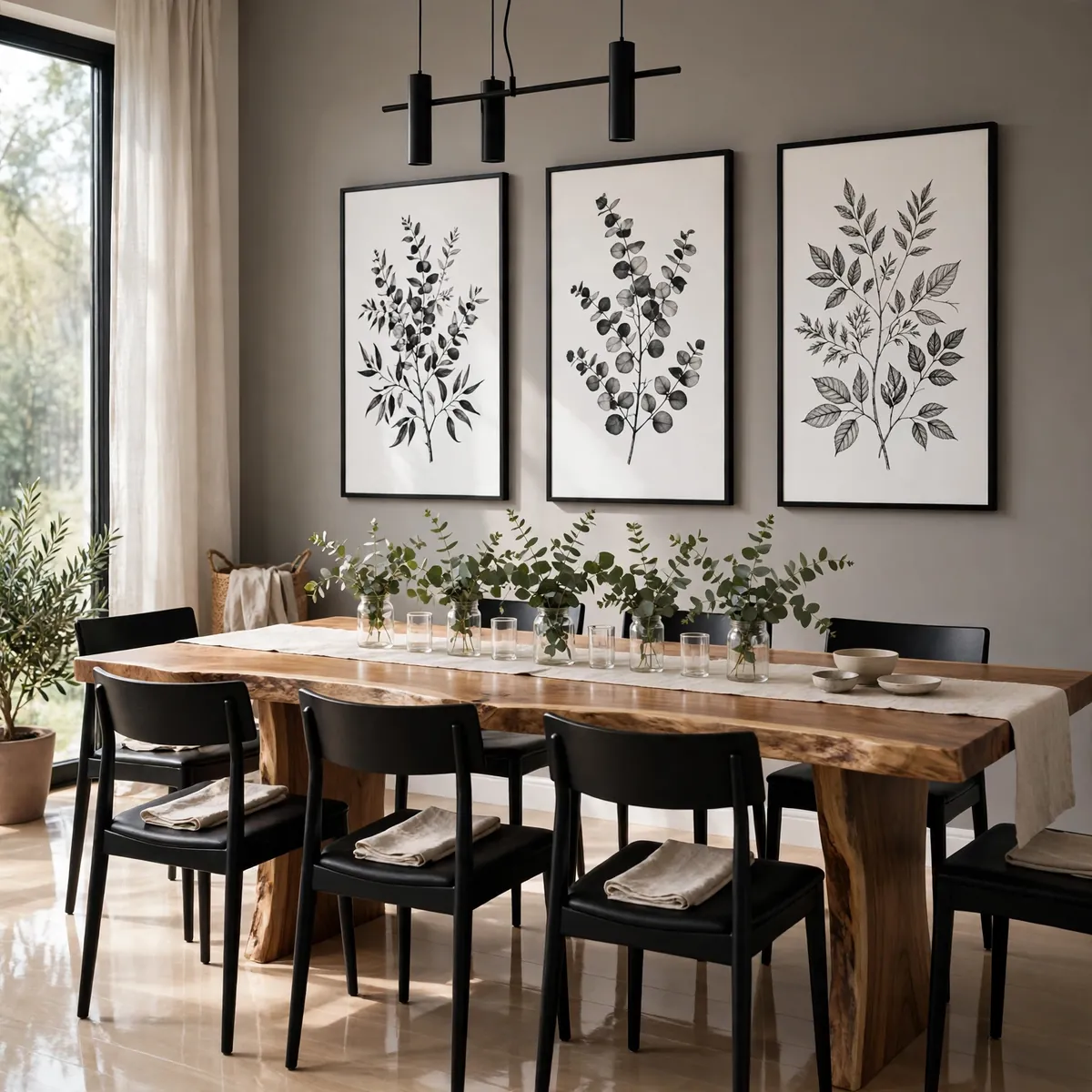
Botanical prints bring the calm of the outdoors inside without the maintenance of plants. A series of three tall prints in matching slim frames reads like one continuous artwork and adds height to a wall that would otherwise sit empty above a low sideboard.
Black-and-white prints suit modern rooms; hand-colored vintage illustrations lean traditional or cottage. Keep the frames identical and hang the trio with equal spacing so the set reads as a single installation. Because botanicals are visually quiet, they work well in dining rooms where you want the conversation — not the walls — to hold the energy.
Quick tips:
- Use three identical frames hung in a row for a gallery-like series.
- Hang the set’s centerline at seated eye level, around 55–57 inches.
- Echo the botanical theme with one real sprig in a vase on the table.
10. Floating Shelves with Ceramics and Glassware
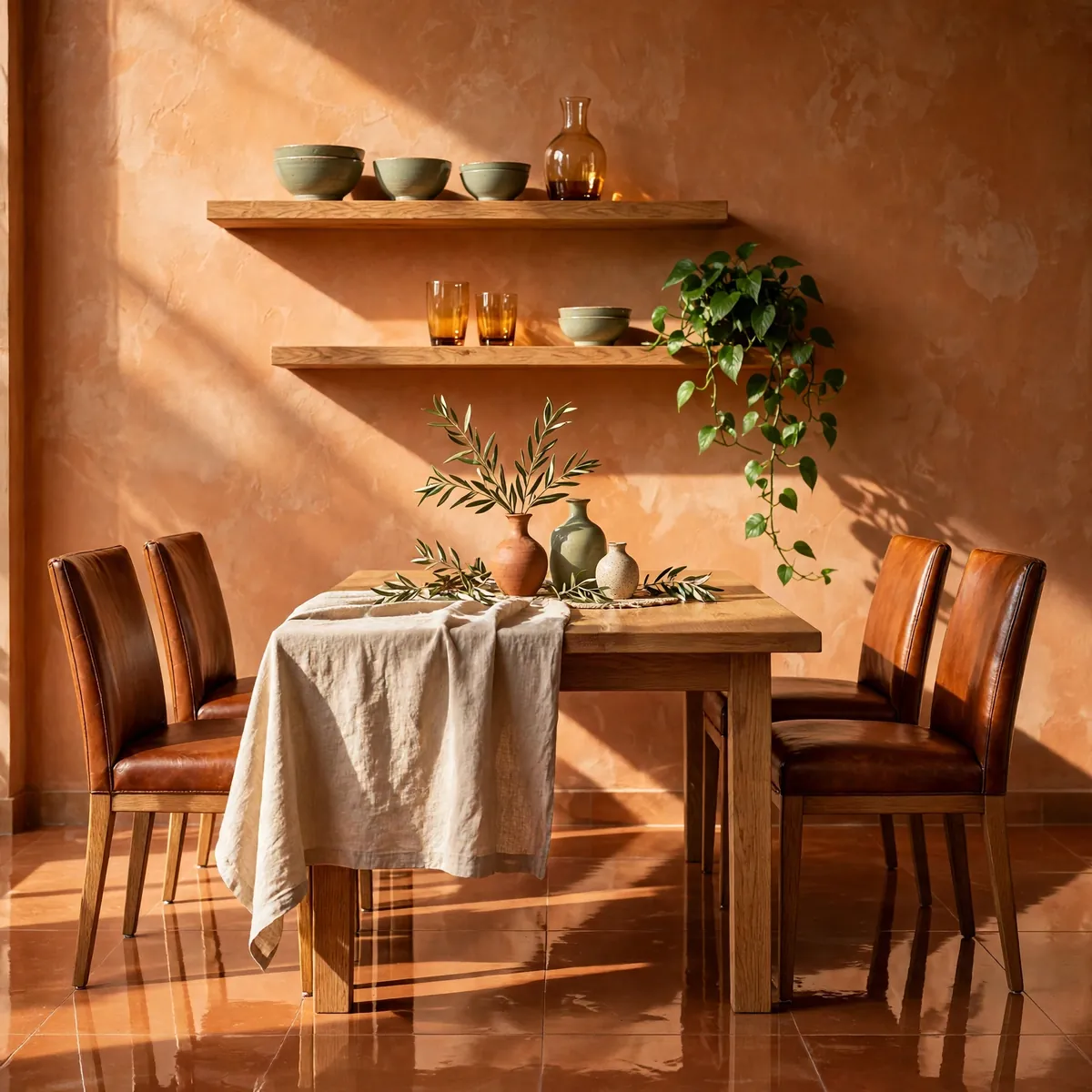
Floating shelves give dining room walls function as well as beauty — display space for ceramics, glassware, small plants, and the pretty serving pieces that deserve better than a dark cabinet. Two staggered shelves usually beat one long shelf, which can read like a storage unit.
Style in odd-numbered groupings and mix heights: a tall vase, a stack of bowls, a low candle. Leave some breathing room — a shelf crowded edge to edge looks like a shop display. Keep heavier items on the lower shelf and lighter, decorative pieces above, and check weight ratings before loading stoneware onto a plaster wall.
Quick tips:
- Style in groups of three with varied heights for a natural rhythm.
- Leave one-third of each shelf empty to avoid a cluttered look.
- Anchor shelves into studs before loading heavy ceramics or glassware.
11. A Chalkboard Menu Wall
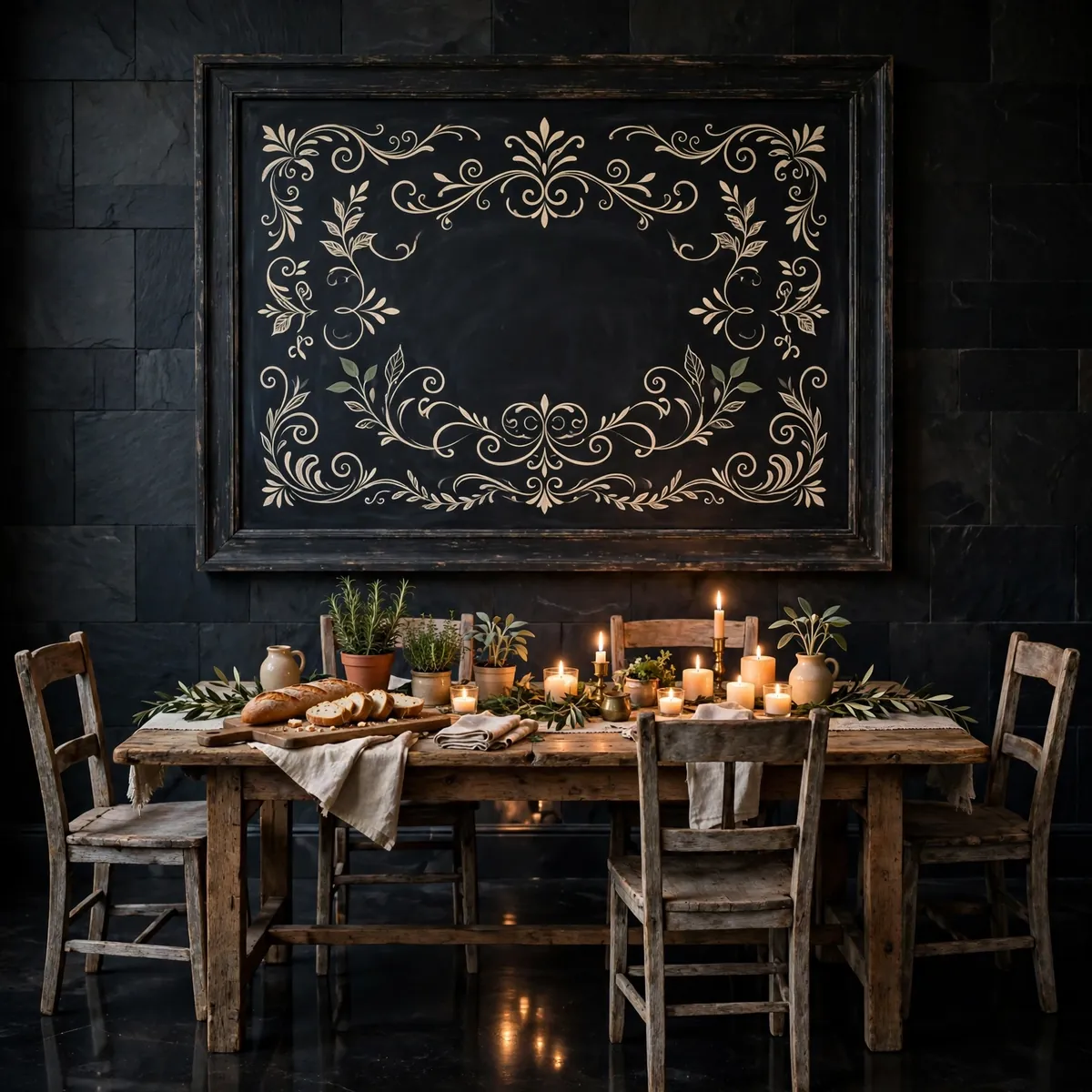
A chalkboard wall adds personality and a little theatre to the dining room. Write the evening’s menu in chalk before guests arrive, sketch a seasonal greeting, or let kids draw during Sunday lunch — the wall becomes part of the gathering instead of just a backdrop.
A large framed chalkboard reads more polished than a painted rectangle, and it can be swapped for art later without repainting the whole wall. Use chalk markers for crisp lettering that does not smudge at the first brush of a shoulder, and keep a small ledge below for chalk, an eraser, and a sprig of eucalyptus.
Quick tips:
- Choose a framed chalkboard over chalkboard paint for an easy, renter-friendly option.
- Use chalk markers for sharp lettering that survives bumps and humidity.
- Write the menu before parties — guests genuinely love the restaurant touch.
12. An Oversized Clock as the Focal Point
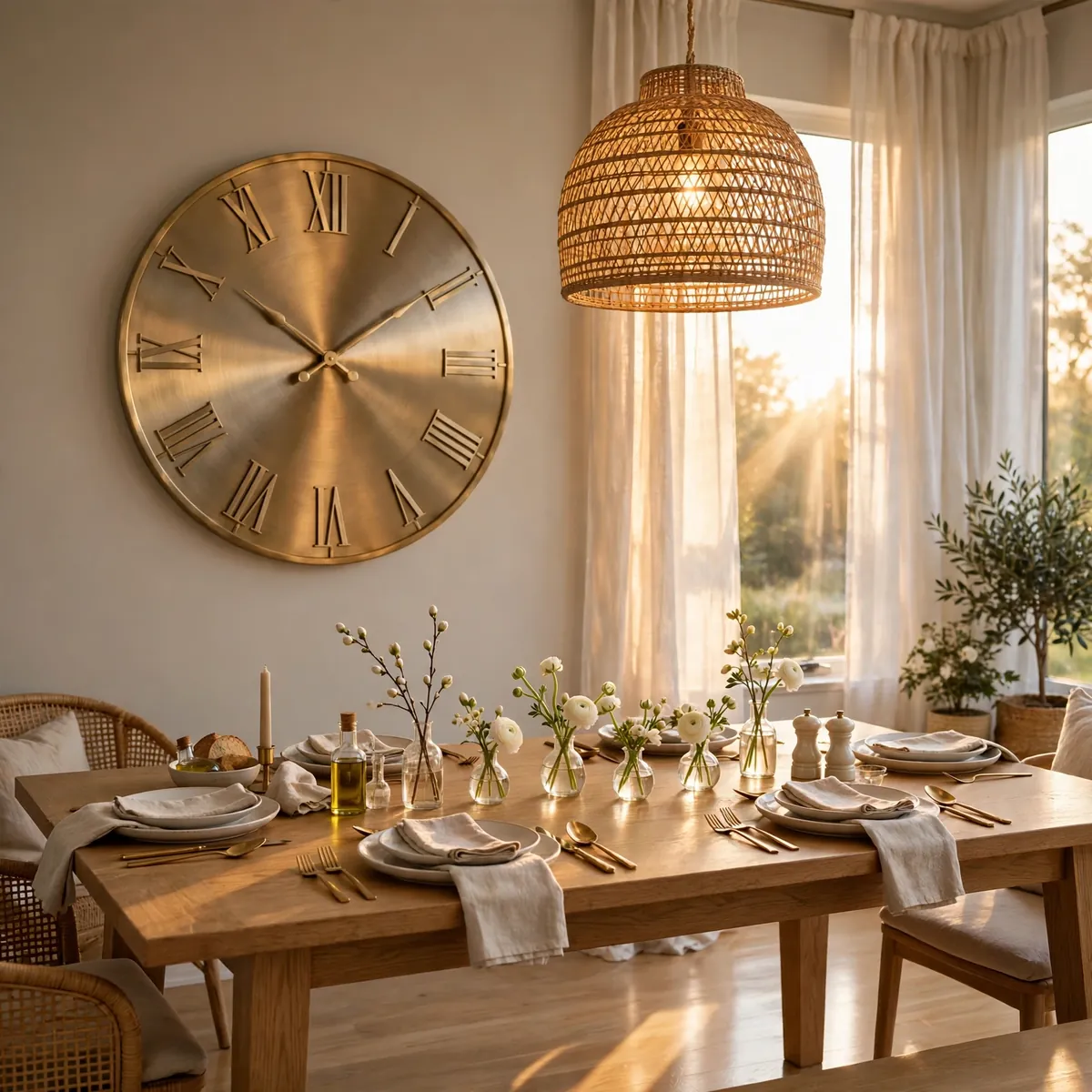
A large clock is practical wall decor with presence. An oversized design in brass, black metal, or weathered wood fills a big blank wall in one move and doubles as a sculptural object — no other styling required around it.
Scale matters more here than anywhere: a small clock on a large wall looks lost, while a 24-inch or larger face holds its own above a sideboard or on the table wall. Center it on the chandelier or table line so it looks balanced in photos and from the doorway. Metal finishes pick up the room’s other metals; a wooden clock warms up a cooler palette.
Quick tips:
- Go at least 24 inches in diameter on a large wall — bigger reads better.
- Center the clock on the table or chandelier line for symmetry.
- Match the clock’s finish to another metal in the room, like brass or iron.
Frequently Asked Questions
How high should I hang wall art in the dining room?
Hang art so its center sits about 57 to 60 inches from the floor, which is standard eye level. Because dining rooms are experienced mostly while seated, you can cheat it slightly lower — around 55 inches — so the piece looks right from the table. Above a sideboard, leave 6 to 8 inches between the furniture top and the bottom of the frame.
What should I put on a large blank dining room wall?
Start with one strong anchor rather than several small objects: a single oversized artwork, a large mirror, a gallery arrangement, a mural, or architectural paneling. Choose based on what the room needs most — color, texture, reflected light, or storage — and keep the scale generous, since undersized decor is the most common mistake on big walls.
What looks best above a dining room sideboard?
A large artwork, a round mirror, two framed pieces, a picture ledge, or a restrained gallery arrangement all work well. Relate the decor to the sideboard’s width — about two-thirds of it is a good rule — and keep the surface styling low and simple when the wall above is visually strong so the two do not compete.
Can you put wallpaper in a dining room?
Yes — dining rooms are one of the best rooms for wallpaper. Because the space is often separate or semi-separate, it can handle a bolder pattern than a living room. Use it on one feature wall behind the table, or go scenic with a mural-style paper. Peel-and-stick options make it renter-friendly and easy to change later.
How do I decorate a dining room wall without making it look cluttered?
Commit to one focal wall and one dominant idea on it, then keep the other walls quiet. Use fewer, larger pieces instead of many small ones, and stick to a tight color palette so everything feels related. Step back from the doorway after each addition — if the wall pulls your eye calmly, stop there.
What is the most renter-friendly dining room wall decor?
Peel-and-stick wallpaper, a picture ledge, textile hangings, and a leaning floor mirror all dress a wall without damaging it. Command-strip gallery walls and adhesive plate hangers work too. Focus on pieces that lean or hang from minimal hardware, and you can take the whole look with you when you move.
Conclusion
Dining room walls reward one confident decision more than a dozen tentative ones. Whether you choose an oversized canvas, a mirror that doubles your light, warm wood slats, or a moody painted wall, the goal is the same: a room that feels finished and welcoming the moment people sit down. Pick the idea that fits your space and your routine, hang it at the right height, and let the wall do its quiet work in the background of every meal.