Dining Room Centerpiece Ideas: 12 Stunning Looks That Make Every Meal Feel Special
A dining table without a centerpiece can feel unfinished, like a room missing its final touch — and fixing it does not require a big budget or a florist on speed dial. These dining room centerpiece ideas work for slow Sunday breakfasts, busy weeknight dinners, and gatherings where everyone lingers long after the plates are cleared.
The secret is not buying more things: it is choosing one clear focal point, getting the scale right, and letting the rest of the table breathe. Whether your table is a small round one in a flat or a long farmhouse table that seats twelve, the ideas below will help you style something intentional, welcoming, and easy to change in five minutes when the occasion changes.
If your table is on the smaller side, the same rules still apply — simply scale everything down and keep the footprint tight. A compact tray, a single low bowl, or a trio of small candles can do more than a large arrangement that crowds the plates, and you can find more space-smart inspiration in these small dining table ideas before you start shopping for pieces.
Key Takeaways
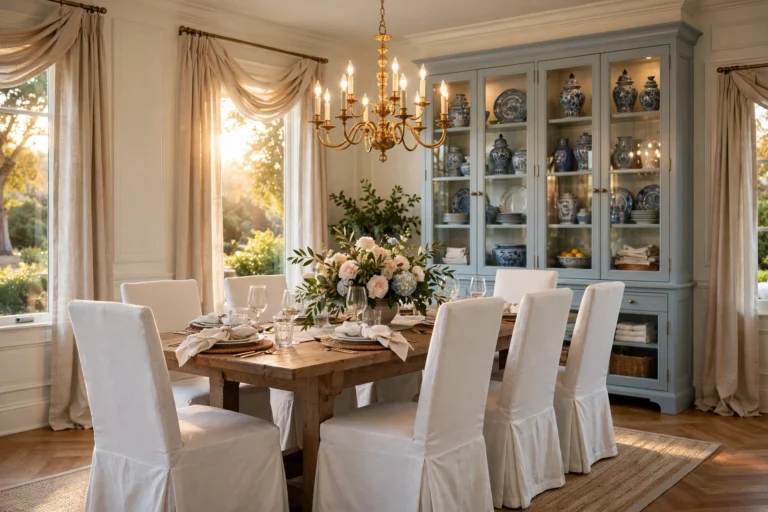
How big should a centerpiece be? About one-third of your table’s width, and low — under 12 inches tall — or deliberately tall and slim, over 24 inches, so guests can still see each other.
What is the easiest centerpiece for everyday use? A tray vignette. Group three or four small objects on a tray and lift the whole arrangement off in one move when dinner is served.
Do centerpieces have to be flowers? No. Fruit bowls, potted herbs, candle clusters, lanterns, books, and sculptural vases all work beautifully, and many last far longer than cut flowers.
How do I make a centerpiece look expensive on a budget? Repeat one material or colour three times, vary the heights, and leave empty space around the arrangement — restraint reads as luxury.
Can one centerpiece work for every occasion? Yes, if you build it in layers. Keep a neutral base such as a tray, then swap one seasonal element to change the mood.
1. How Do Candle Clusters Create a Warm, Welcoming Glow?
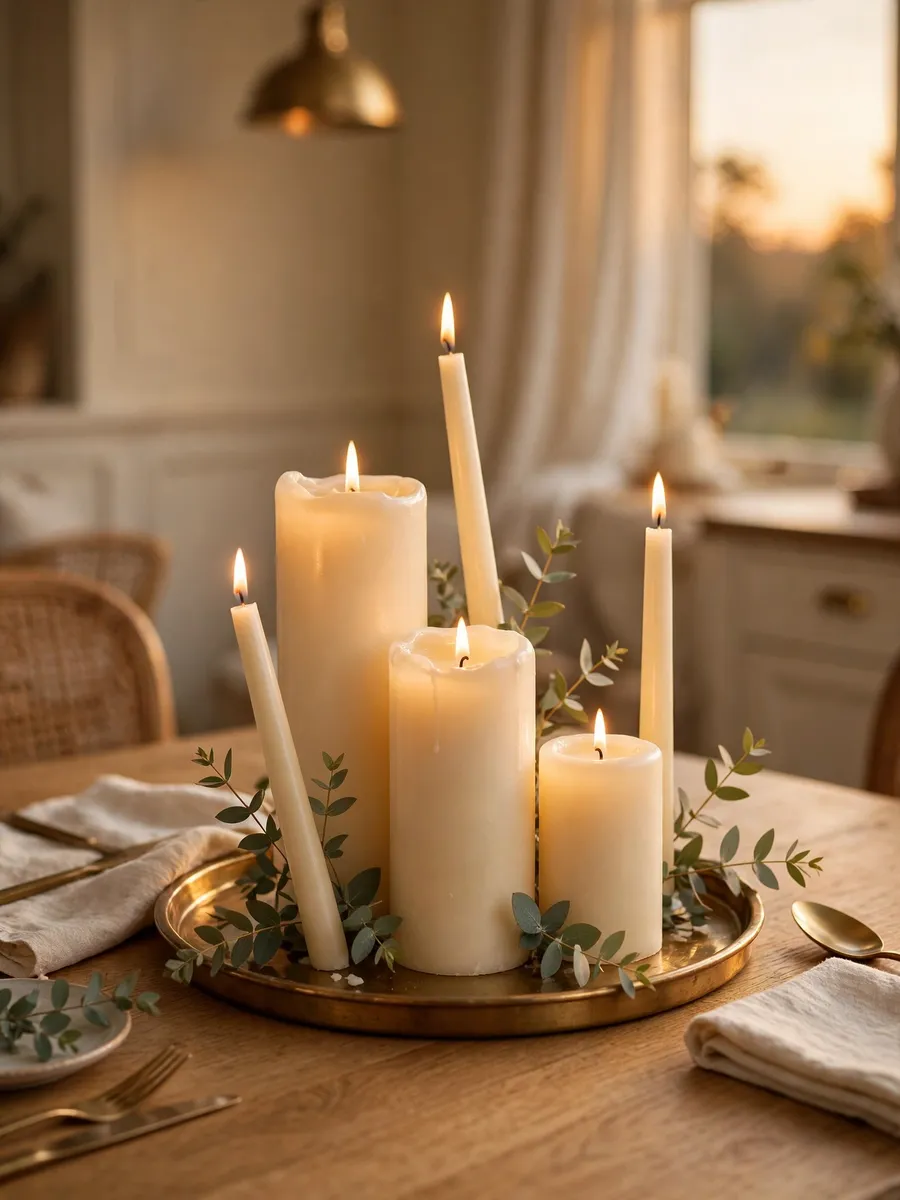
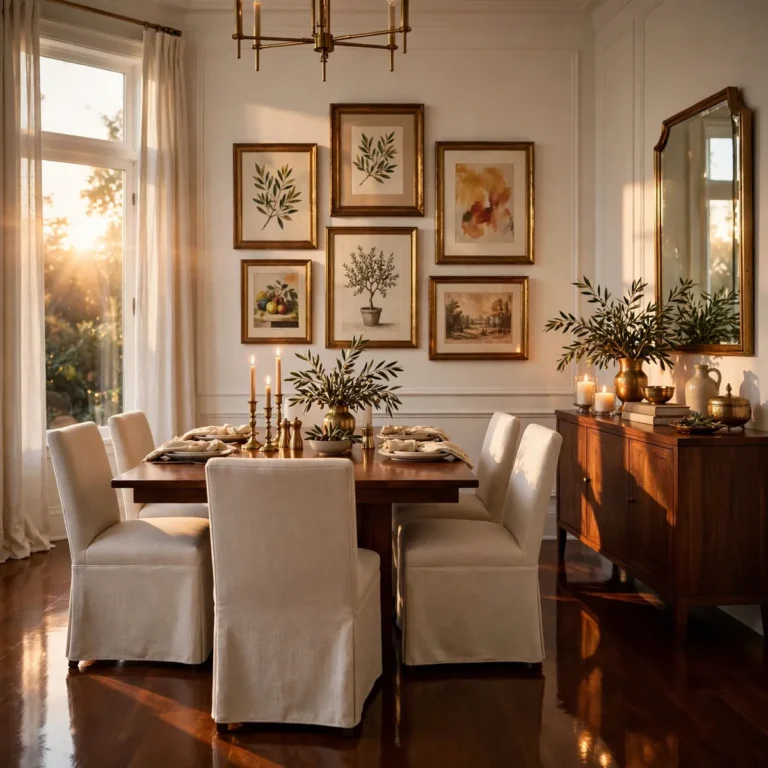
Candlelight is the fastest way to make an ordinary dinner feel special. Group three, five, or seven candles together — odd numbers always look more natural — and mix pillar candles with slim tapers so the eye travels up and down instead of landing on a flat row.
Try this on a rectangular oak table: three cream pillar candles of different heights on a round brass tray, with a small sprig of eucalyptus tucked beside each base.
Quick tips:
- Use unscented candles so fragrance never competes with the food.
- Place a heat-proof tray under every candle to protect the wood.
- Trim wicks to about a quarter of an inch before lighting for a steadier flame.
2. What Makes a Tray Vignette the Easiest Centerpiece of All?
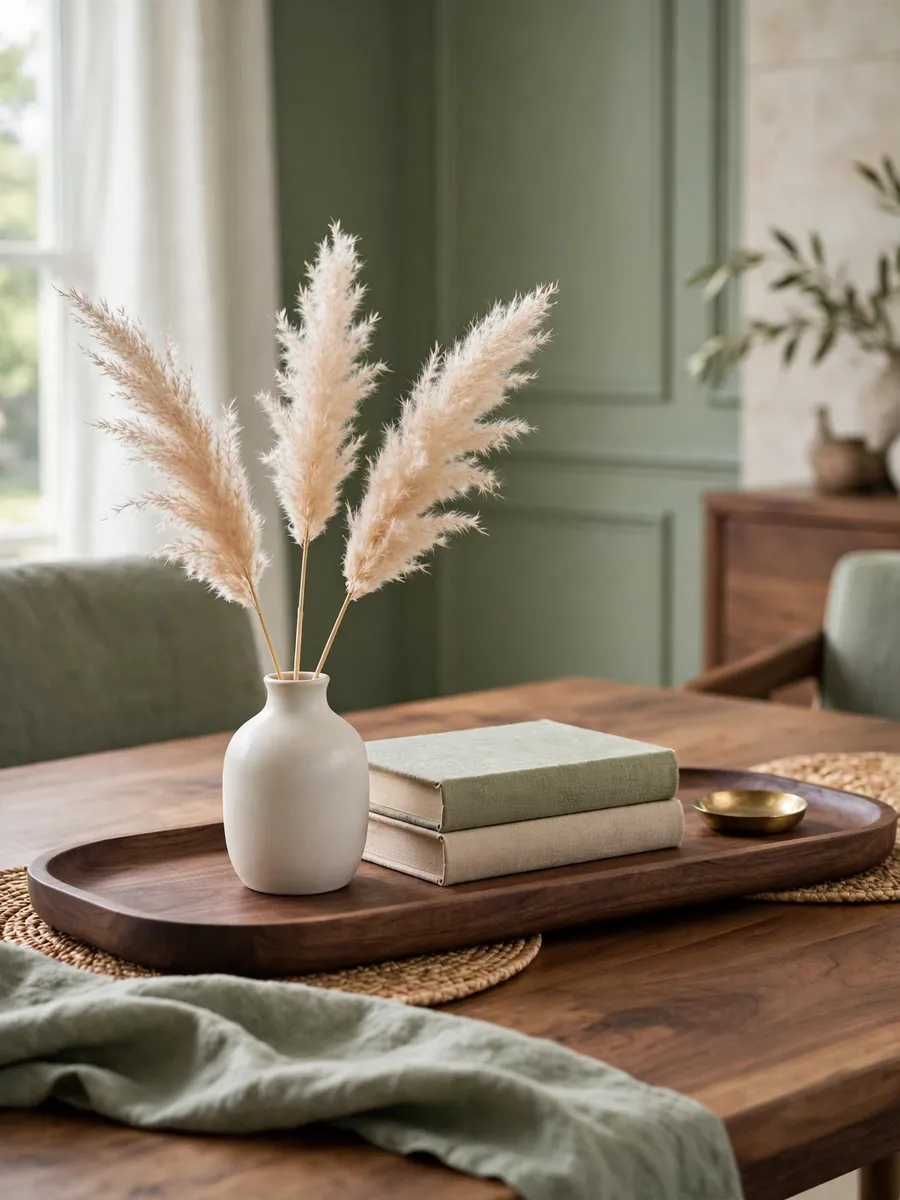
A tray turns a loose collection of objects into a finished centerpiece, and it solves the most practical problem of all: clearing the table. When everything sits on one tray, you can lift the entire arrangement away in seconds, set the table for dinner, and put it straight back afterwards.
Picture a long walnut tray holding a small ceramic vase with three stems of dried pampas grass, a short stack of two linen-bound books, and a tiny brass dish of matches.
Quick tips:
- Choose a tray that covers no more than two-thirds of the table’s length.
- Mix materials — wood, ceramic, metal, and glass — so the vignette feels collected, not matched.
- Pick a tray with handles if you move the arrangement often.
3. Why Is a Fresh Fruit Bowl the Most Practical Centerpiece?
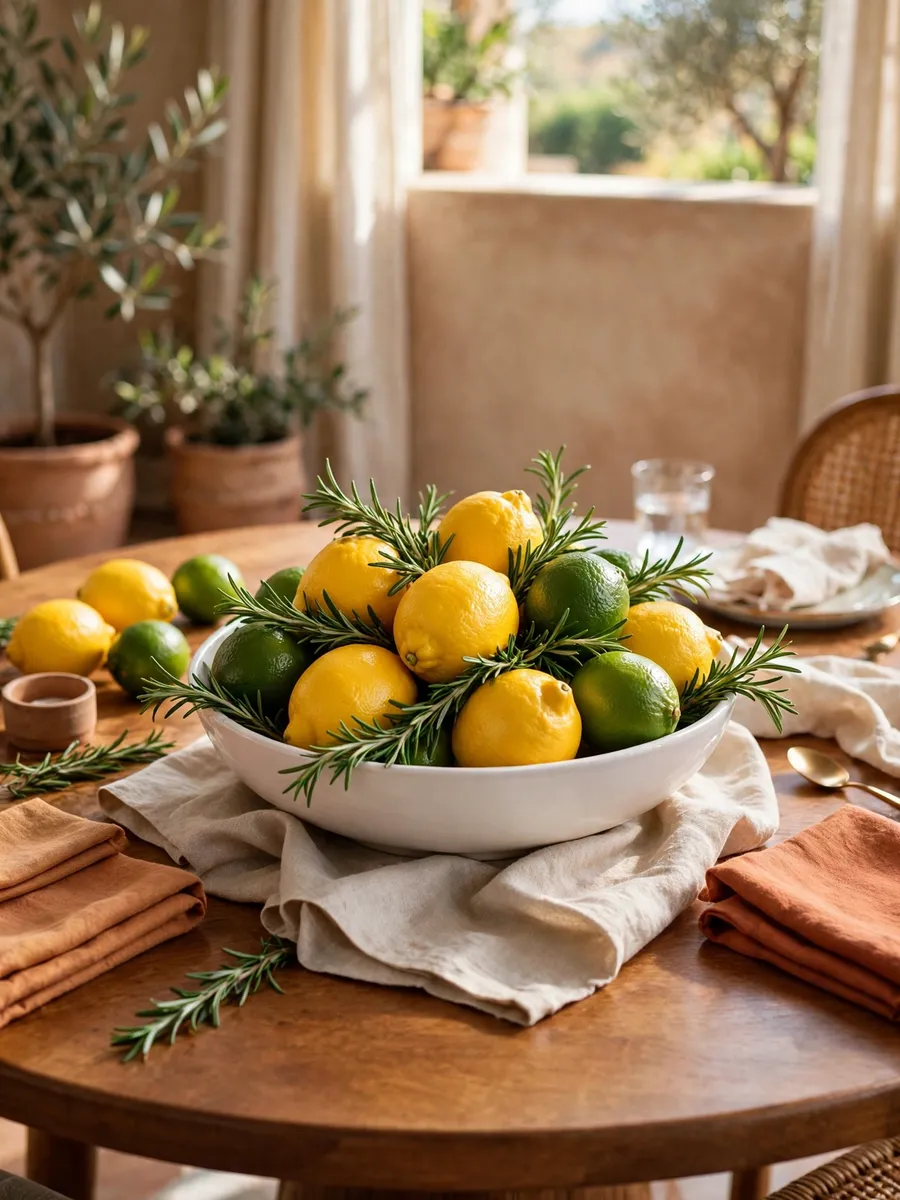
A bowl of fresh fruit is beautiful, useful, and honest — it looks good, smells faintly wonderful, and gets eaten instead of wilting in a vase. Citrus is the classic choice because the colours are vivid and the skins stay handsome for days, but apples, pears, figs, and pomegranates all bring their own shape and texture.
Try a wide, shallow white ceramic bowl filled with lemons, then nestle in four or five deep green limes and a few sprigs of fresh rosemary.
Quick tips:
- Choose fruit in two or three colours at most for a calm, styled look.
- Wash and dry fruit before displaying it so the bowl stays clean.
- Keep the bowl low and wide rather than tall and narrow.
4. How Can a Potted Herb Garden Double as a Centerpiece?
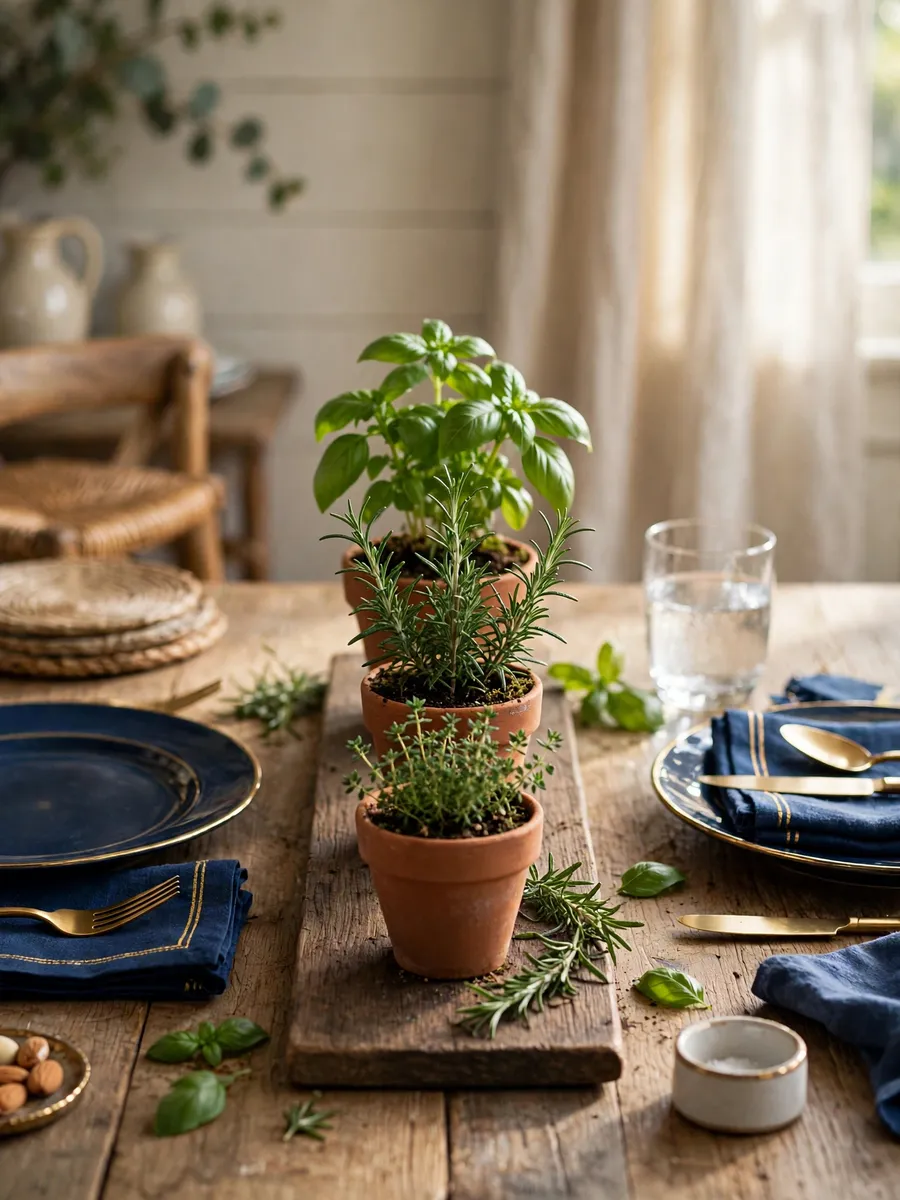
Fresh herbs bring life to a dining table in a way cut flowers cannot match — they are green, fragrant, and genuinely useful when dinner is served. A row of small potted herbs down the centre of the table feels like a tiny kitchen garden, and guests can snip a little basil or mint right at the table.
Line up three small terracotta pots — basil, rosemary, and thyme — on a narrow wooden board in the middle of a farmhouse table. The terracotta warms up pale walls, the green softens the wood, and the scent rises gently every time someone brushes past.
Quick tips:
- Pick herbs you actually cook with so nothing goes to waste.
- Keep pots small — four inches across is plenty for a dining table.
- Give herbs a sunny windowsill between meals so they stay lush.
5. What Makes a Seasonal Floral Arrangement Feel Effortless?
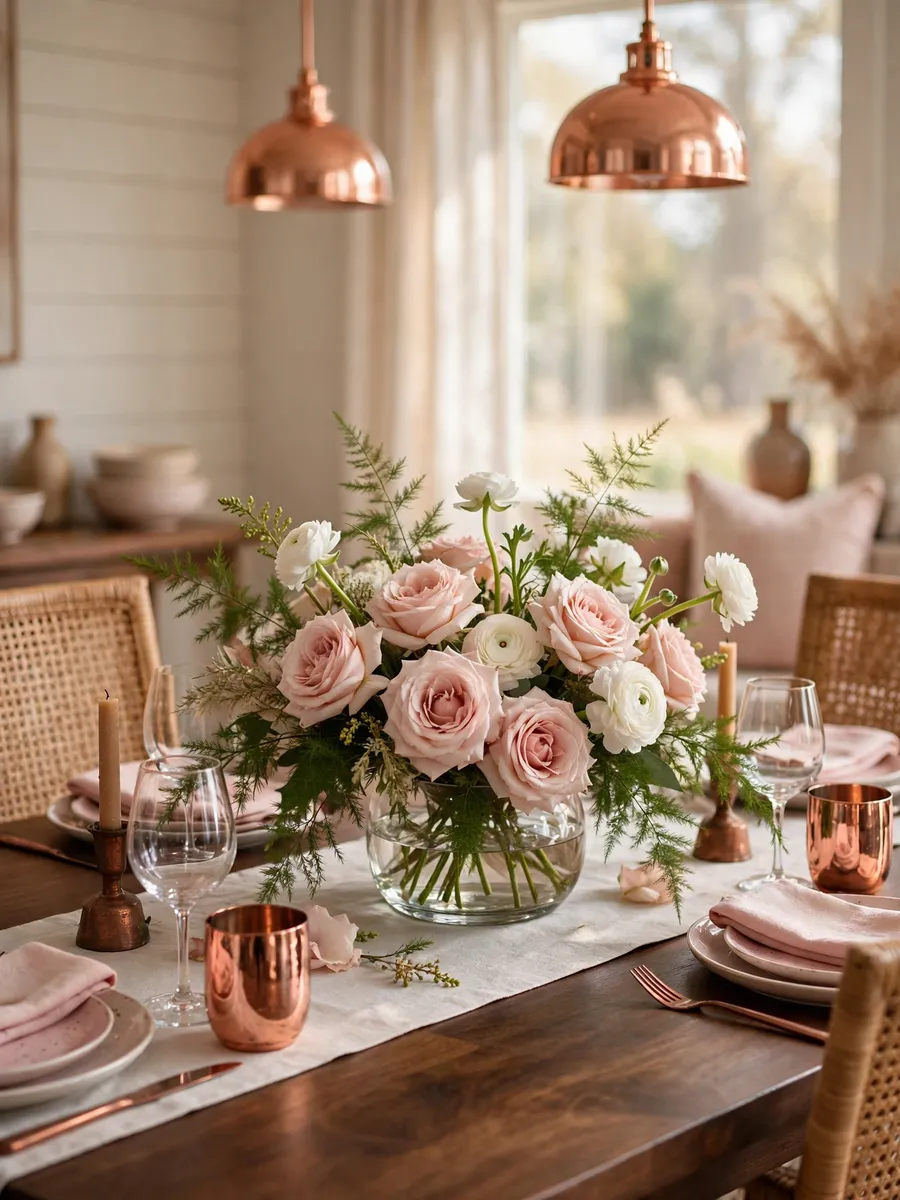
Fresh flowers are the classic centerpiece for a reason: nothing else brings colour and softness to a table quite so quickly. The mistake most people make is buying too many stems and arranging them too tightly. A loose, garden-gathered arrangement — a few stems leaning naturally in a low vase, with space between them — looks far more expensive than a dense, symmetrical bouquet.
Imagine a low glass vase holding five stems of blush garden roses, three stems of white ranunculus, and a few wisps of feathery greenery, set on a pale linen runner. Barely ten inches tall, it lets everyone see each other, and the pale colours glow against dark wood.
Quick tips:
- Cut stems at an angle and change the water every two days.
- Remove leaves that would sit below the waterline to keep the water clear.
- Buy flowers in season for better prices and longer-lasting blooms.
6. Why Do Lanterns Work So Well as a Table Centrepiece?
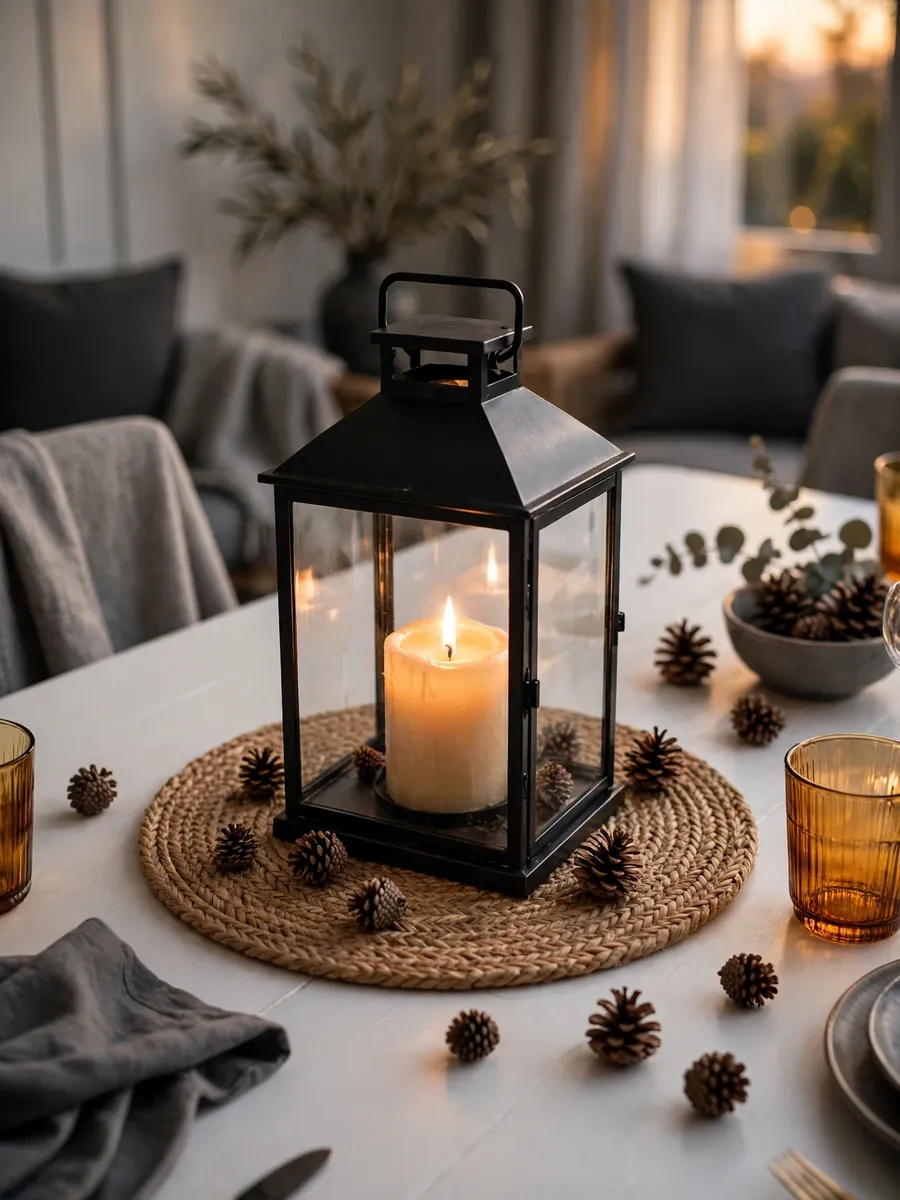
Lanterns bring structure to a table. Their frames give the arrangement a clear shape, their glass panels reflect candlelight beautifully, and they protect the flame from draughts — which matters in a room where people are constantly moving around. A single large lantern can anchor a small table, while a pair in different sizes stretches gracefully down a long one.
Take a black metal lantern with clear glass panels, about fourteen inches tall, with a chunky pillar candle inside. Set it on a round woven placemat in the middle of a white-painted table and scatter a few small pinecones around its base.
Quick tips:
- Choose battery-operated candles inside lanterns if small children are around.
- Match the lantern’s metal finish to your other tableware for a pulled-together look.
- Fill the base with seasonal filler — pebbles in summer, pinecones in winter.
7. How Does a Runner With a Greenery Garland Change the Whole Table?
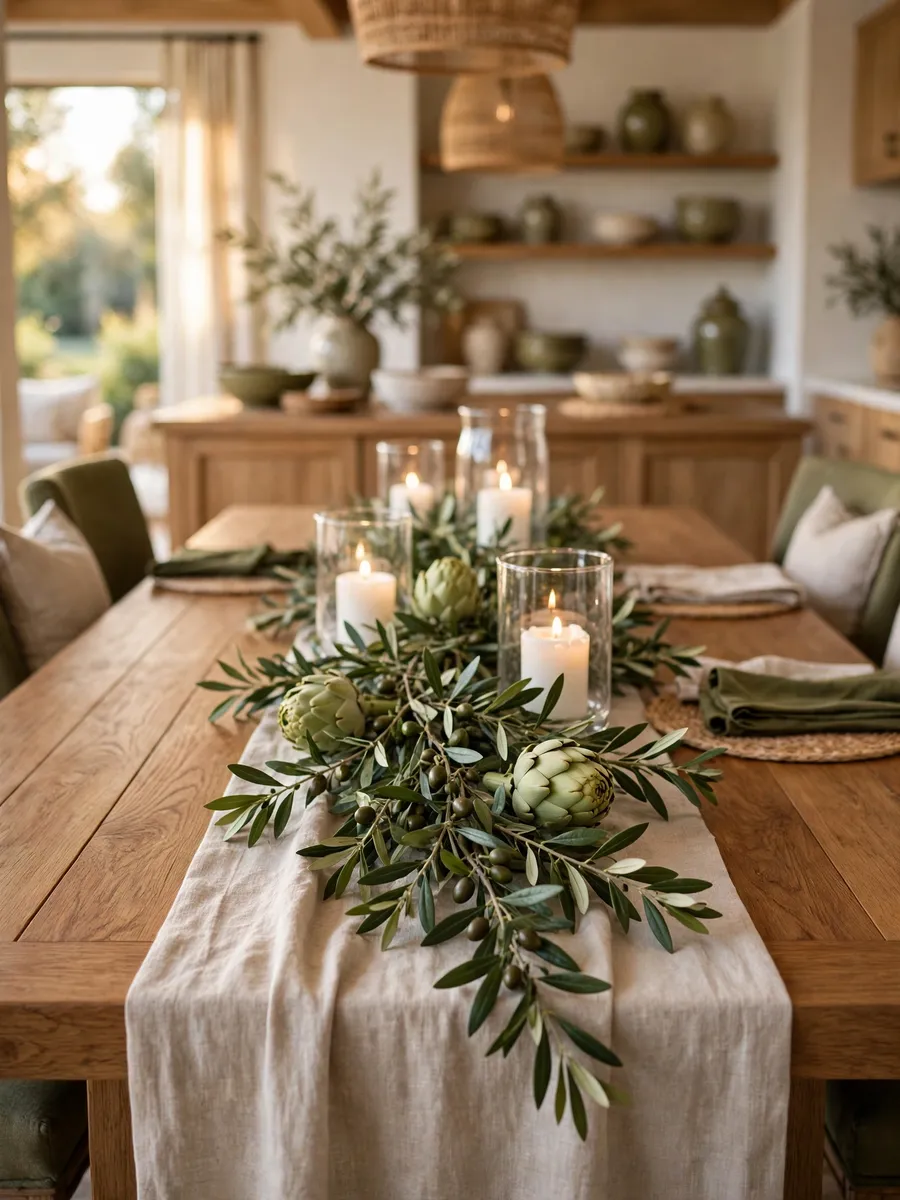
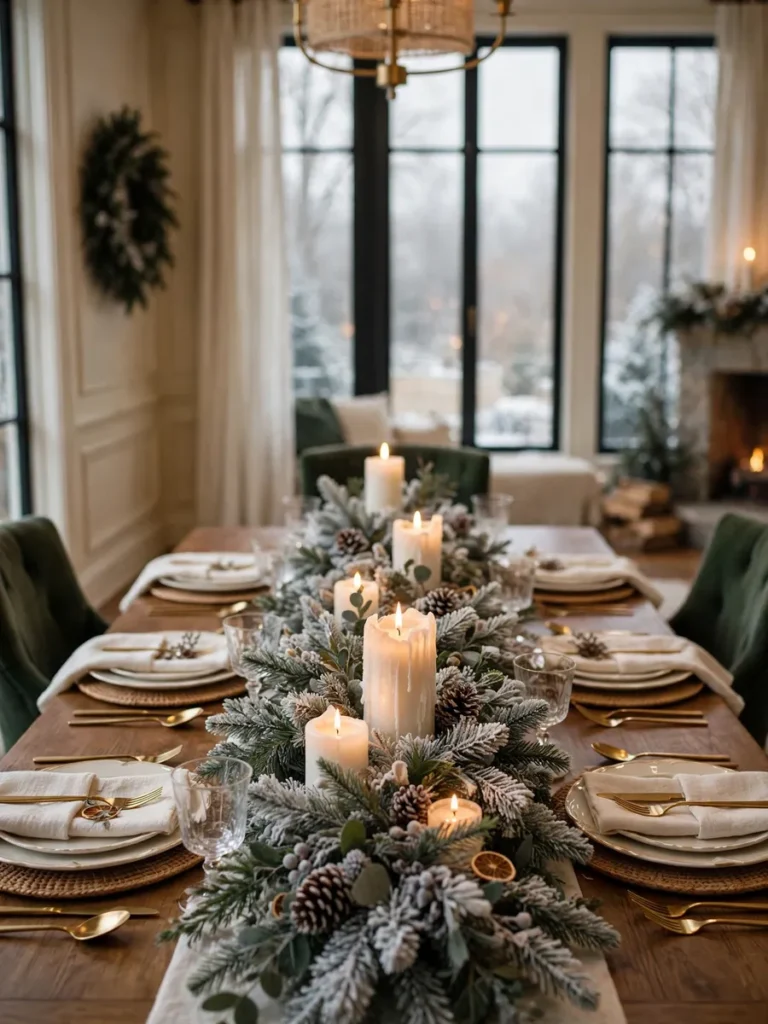
Sometimes the best centerpiece is not an object at all but a line down the middle of the table. A linen runner softens a hard wood surface, and a loose garland of greenery laid along it creates a long, low centrepiece that works beautifully on rectangular tables. It feels abundant without being tall, and it leaves plenty of room for plates and serving dishes.
Picture a natural linen runner in soft oatmeal down the centre of a long table, with a garland of olive branches running its full length. Tuck in three small white pillar candles in glass hurricanes at intervals, plus a handful of pale green artichokes or small white pumpkins depending on the season.
Quick tips:
- Let the runner hang eight to twelve inches over each end of the table.
- Use faux greenery if you want the garland to last for weeks.
- Keep the garland narrow — about six inches wide — so place settings stay comfortable.
8. What Makes a Single Sculptural Vase So Striking?
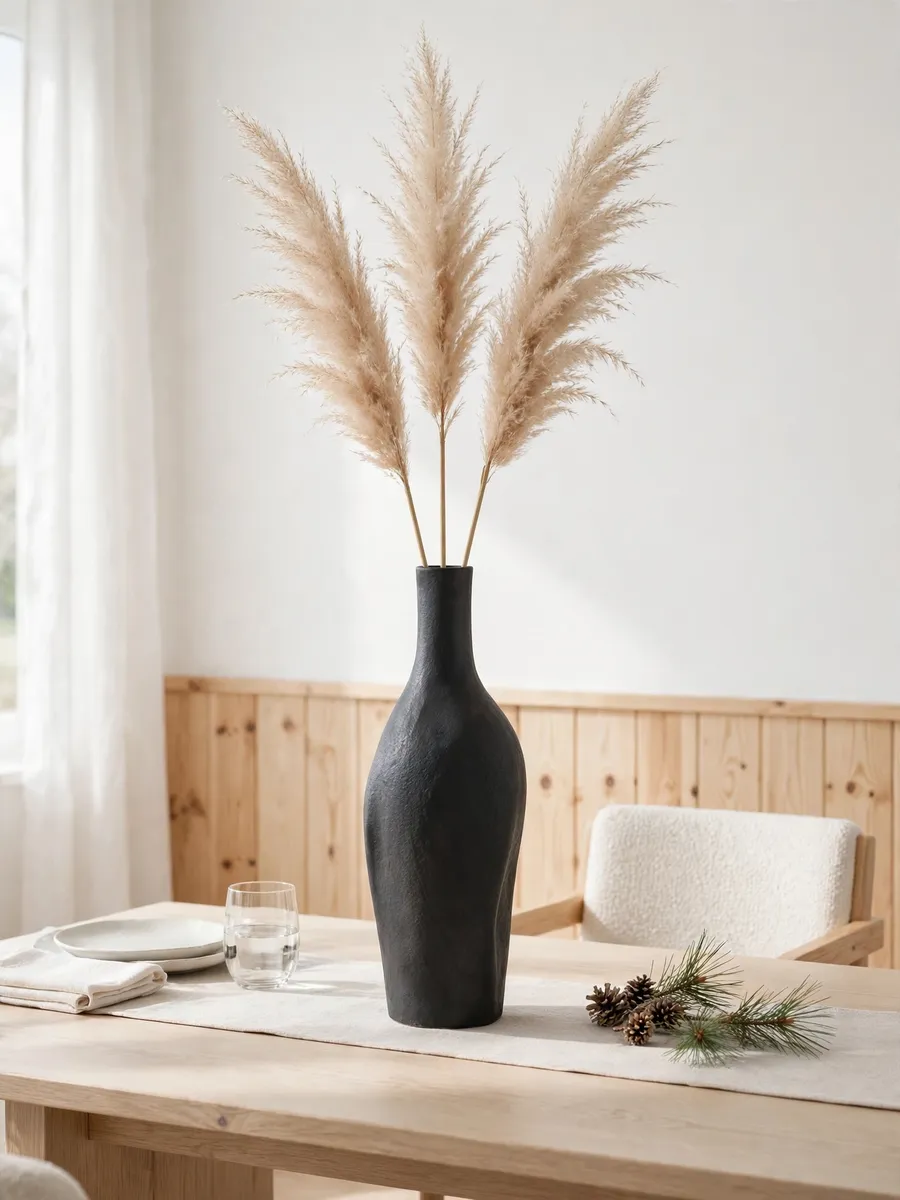
One bold object, placed with confidence, can be more powerful than a dozen small ones. A sculptural vase — tall, curved, textured, or in an unusual glaze — becomes a piece of art on the table, and a single stem or a few bare branches are all it needs. This is the minimalist’s centerpiece: less to dust, less to arrange, and a look that never feels fussy.
Consider a tall, matte charcoal ceramic vase with a narrow neck and a wide, rounded base, holding three tall stems of dried pampas grass. On a pale oak table against a white wall, the dark vase is the only dramatic note in the room — and that is exactly the point.
Quick tips:
- Choose a vase with an interesting shape, not just an interesting colour.
- Keep stems sparse — three to five is usually enough.
- Place the vase slightly off-centre on a long table for a modern, editorial feel.
9. How Do Books and Collected Objects Make a Personal Centerpiece?
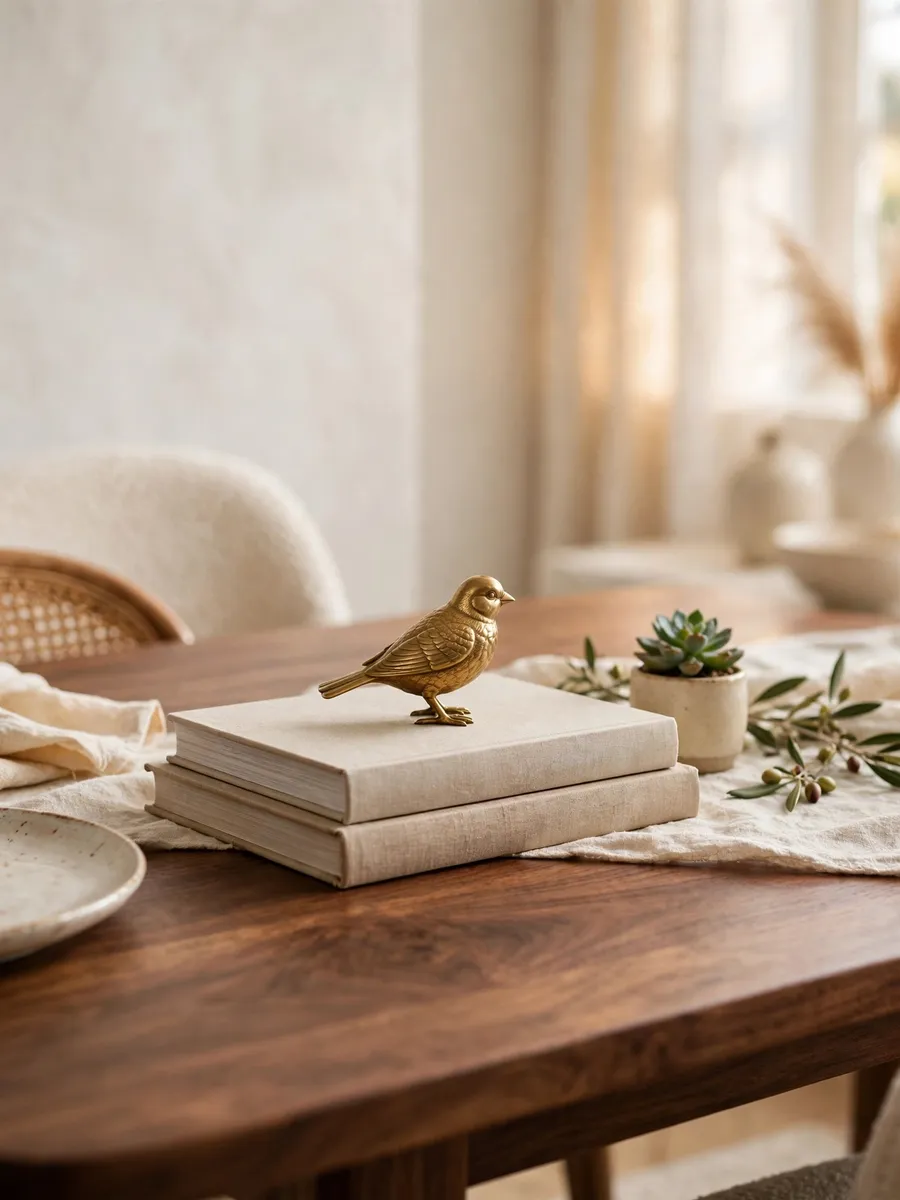
The most memorable centerpieces are the ones that could only belong to one household. A short stack of beautiful books topped with a small collected object — a shell from a holiday, a brass compass, a tiny sculpture — tells a story no shop-bought arrangement can. It is also wonderfully forgiving: if the stack looks wrong, simply swap one book or move the object an inch to the left.
Try stacking two coffee-table books with calm, neutral covers, then placing a small brass bird figurine on top and a tiny potted succulent beside the stack.
Quick tips:
- Use books you love and would actually open — the covers become part of the decor.
- Keep stacks to two or three books so they stay stable.
- Top the stack with one small object, not several, for a clean finish.
10. How Can You Build a Harvest-Style Centerpiece for Gatherings?
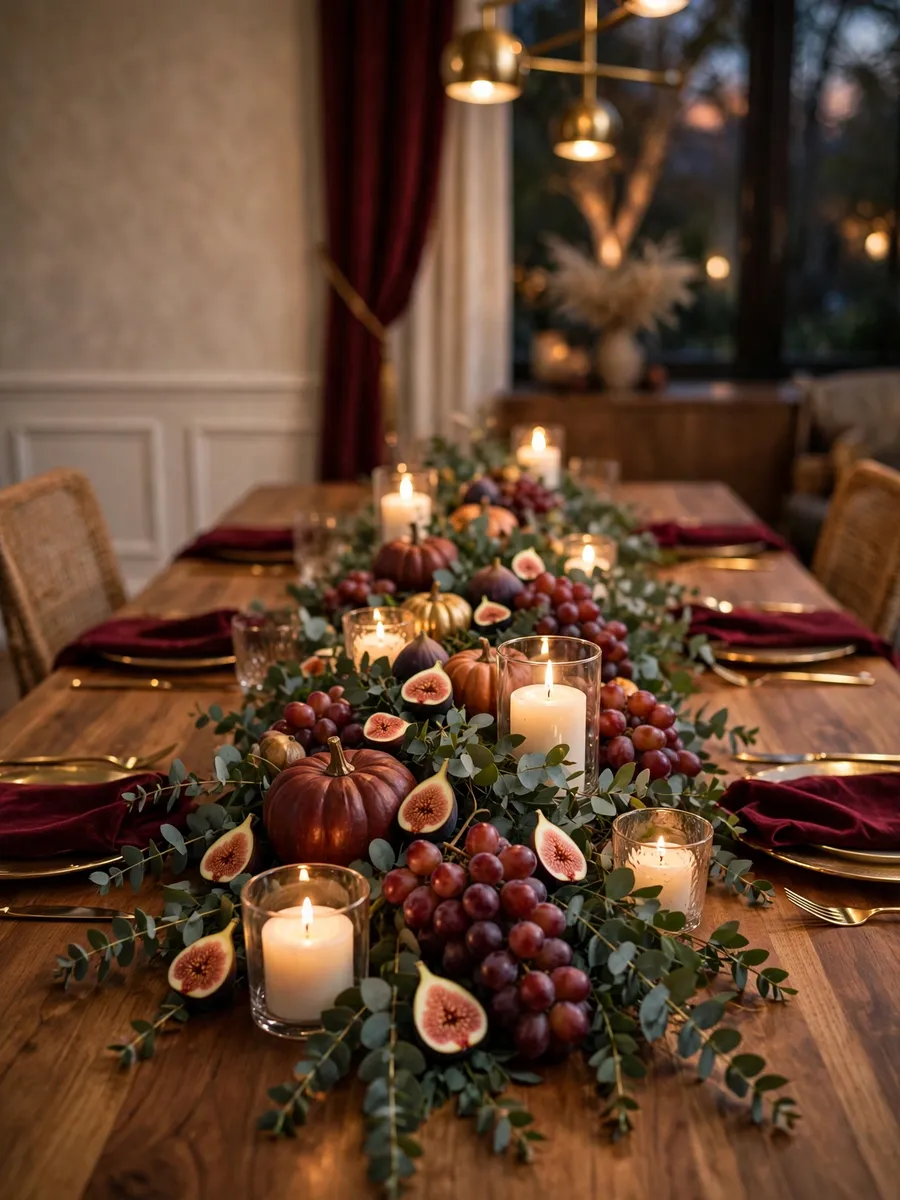
Big gatherings call for a centerpiece with presence — something generous and abundant that says this meal matters. A harvest-style arrangement layers fruit, candles, and greenery along the centre of the table, and it works because the abundance itself is the decoration. This is the look to reach for at Thanksgiving, Christmas, or any dinner where the table is the heart of the evening.
Start with a long wooden board or a linen runner, then arrange a low garland of eucalyptus down the middle. Nestle in small pumpkins or gourds, clusters of red grapes, a few figs cut in half, and short pillar candles in glass holders. If you want a dedicated guide for the festive version of this look, these Thanksgiving centerpiece ideas show how the same layered approach adapts beautifully to a holiday table.
Quick tips:
- Build the arrangement after the table is set so you can see the real spacing.
- Use odd numbers of pumpkins or gourds for a natural, unforced look.
- Keep candles in glass holders when food is nearby for safety.
11. Why Does a Minimalist Ceramic Bowl Work on Any Table?
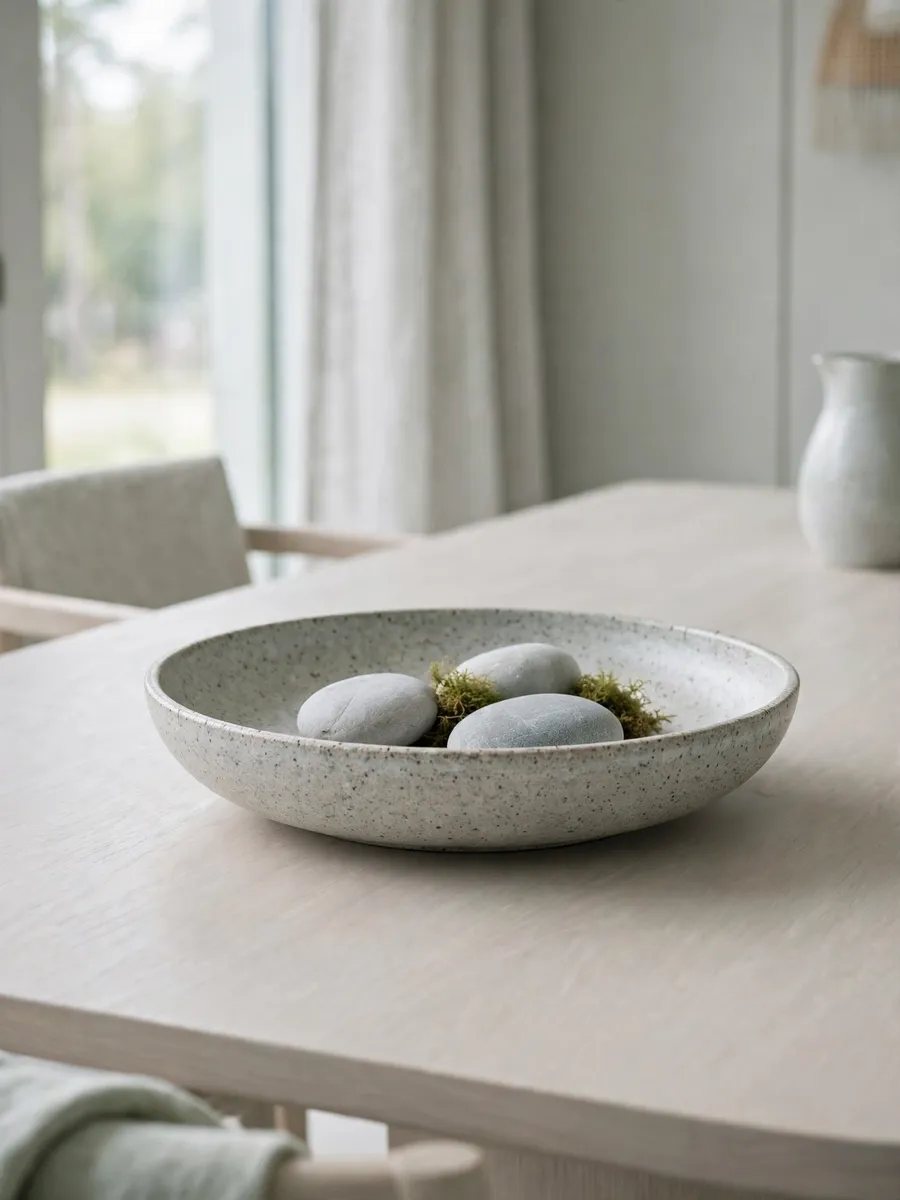
Some tables do not need a performance — they need one quiet, beautiful object. A single handmade ceramic bowl, empty or holding a few smooth stones, a handful of moss, or one perfect piece of fruit, brings calm to a busy room. It suits modern, Japandi, and Scandinavian dining spaces especially well, where the whole room is built around restraint.
Imagine a wide, shallow bowl in speckled stoneware sitting alone in the middle of a pale ash table, holding three smooth river stones and a small tuft of green moss. Nothing else competes with it.
Quick tips:
- Choose a bowl with a handmade feel — uneven glaze or a speckled finish adds character.
- Keep the contents minimal: one material, three to five pieces at most.
- Match the bowl’s tone to your tableware so the table feels cohesive.
12. How Do You Layer Heights for a Professional, Styled Look?
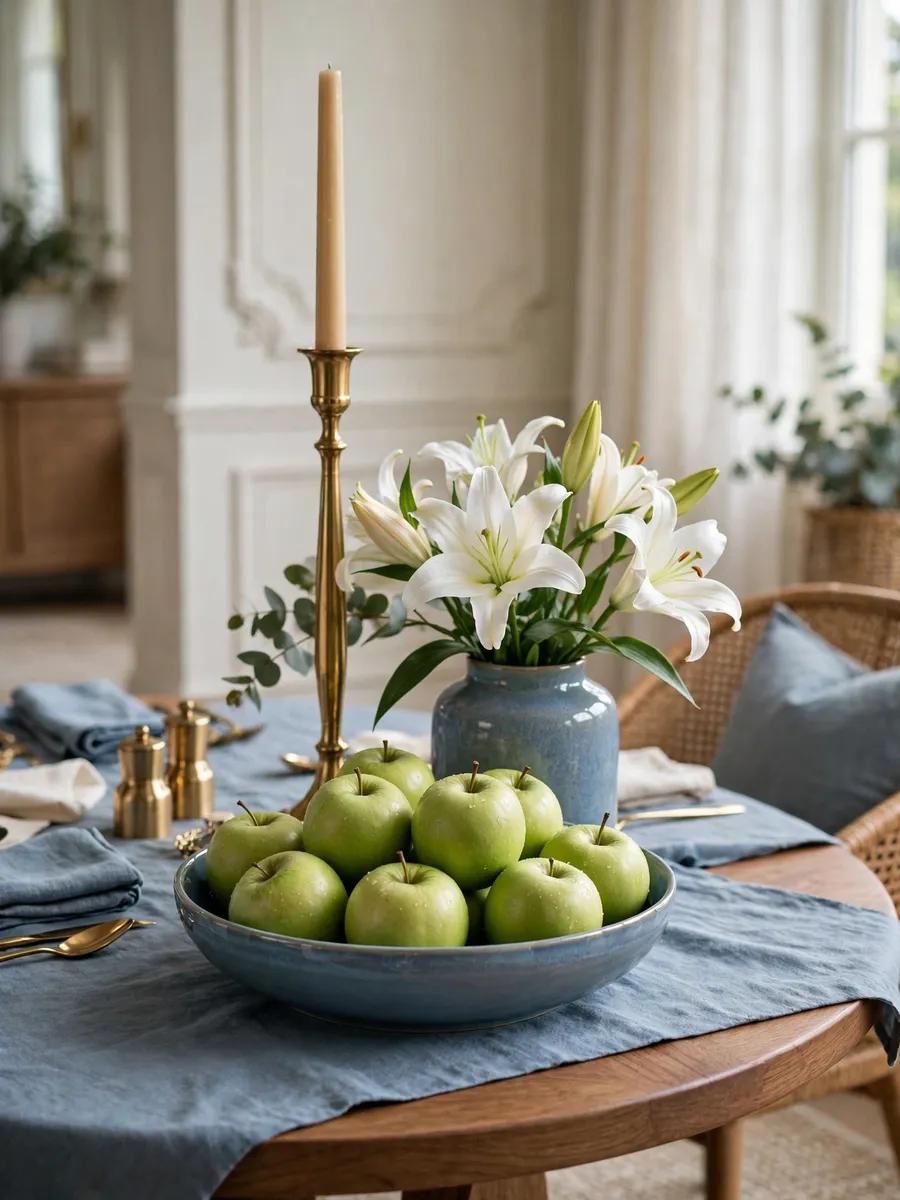
The difference between a centerpiece that looks styled and one that looks like a pile of objects is almost always height. Professional stylists build in three levels — low, medium, and tall — and let the eye move between them. A low bowl, a medium vase, and a tall candlestick, grouped tightly together, create a composition with rhythm and balance that a single flat row can never achieve.
Try this formula on a round table: a low, wide bowl of green apples at the front, a medium ceramic vase with three stems of white lilies behind it, and a tall, slim brass candlestick at the back.
Quick tips:
- Use books or small wooden blocks to raise shorter objects if needed.
- Keep the tallest element under 12 inches, or go deliberately tall and slim above 24 inches.
- Repeat one colour across all three heights to tie the group together.
Frequently Asked Questions
How tall should a dining table centerpiece be?
Keep everyday centerpieces under 12 inches tall so guests can see each other easily. If you love height, go deliberately tall and slim — over 24 inches — with a narrow vase or candlestick, because the eye can see around a slim shape. The awkward middle zone, roughly 12 to 24 inches, is where centerpieces block conversation.
What is the best centerpiece for a small dining table?
A single low object works best: a small tray vignette, a low fruit bowl, or one short vase with a few stems. Keep the arrangement to about one-third of the table’s width and choose pieces you can lift away in one move when you need the space for serving dishes.
How do I keep a centerpiece from looking cluttered?
Limit yourself to three elements, repeat one colour or material across them, and leave empty space around the group. If you can remove one object and the arrangement still looks complete, remove it — restraint is what makes a centerpiece look styled rather than crowded.
Can I use a centerpiece every day, or is it only for special occasions?
Everyday use is exactly what a good centerpiece is for. Choose something durable and low-maintenance, such as a tray vignette, a potted herb, or a ceramic bowl, and keep it on the table permanently. Save the elaborate layered arrangements for gatherings.
Conclusion
The best dining room centerpiece ideas are not the most expensive ones — they are the ones that fit your table, your habits, and the way you actually gather. Start with the scale rule, choose one focal point, and build in three heights if you want a styled finish. Then let the arrangement live on your table, change it with the seasons, and enjoy the small daily pleasure of sitting down to a table that feels finished.