Bathroom Tile Ideas: 12 Stunning Looks That Make Your Bathroom Feel Bigger, Brighter and More Expensive
What tile should you choose when every bathroom seems to look the same? The best bathroom tile ideas start with how you actually use the room: a floor that stays safe under wet feet, shower walls that wipe clean in seconds, and a layout that makes a small space feel bigger rather than busier. This guide walks through twelve looks that work in real homes, so you can pick a combination that feels calm, practical, and expensive — without a full gut renovation.
Before you fall in love with a sample, remember the three decisions that matter most: finish, size, and grout. A glossy wall tile bounces light around a windowless bathroom, a matte floor tile grips better when wet, and grout close to the tile hides everyday marks far better than bright white. If you are styling the walls too, our guide to bathroom wall decor ideas shows how art, shelving, and colour can finish the look without competing with it.
Key Takeaways
What is the most popular bathroom tile idea right now? Large-format marble-look porcelain on the floor with a simple vertical subway tile in the shower — timeless, easy to clean, and suited to almost any vanity.
Which tile is best for a shower floor? Small mosaic or penny tiles. Their many grout lines add grip underfoot, and their small size follows the slope toward the drain far better than a large tile.
How do I make a small bathroom look bigger with tile? Use large-format tiles in a light colour, run the same floor tile into the shower, and match the grout to the tile so surfaces read as one plane.
What grout colour should I choose? Match the grout to the tile for a calm, seamless look, or go one shade darker on floors. Bright white grout looks crisp on day one and tired fastest.
1. Large-Format Marble-Look Porcelain Floors — Can One Tile Make a Bathroom Feel Bigger?
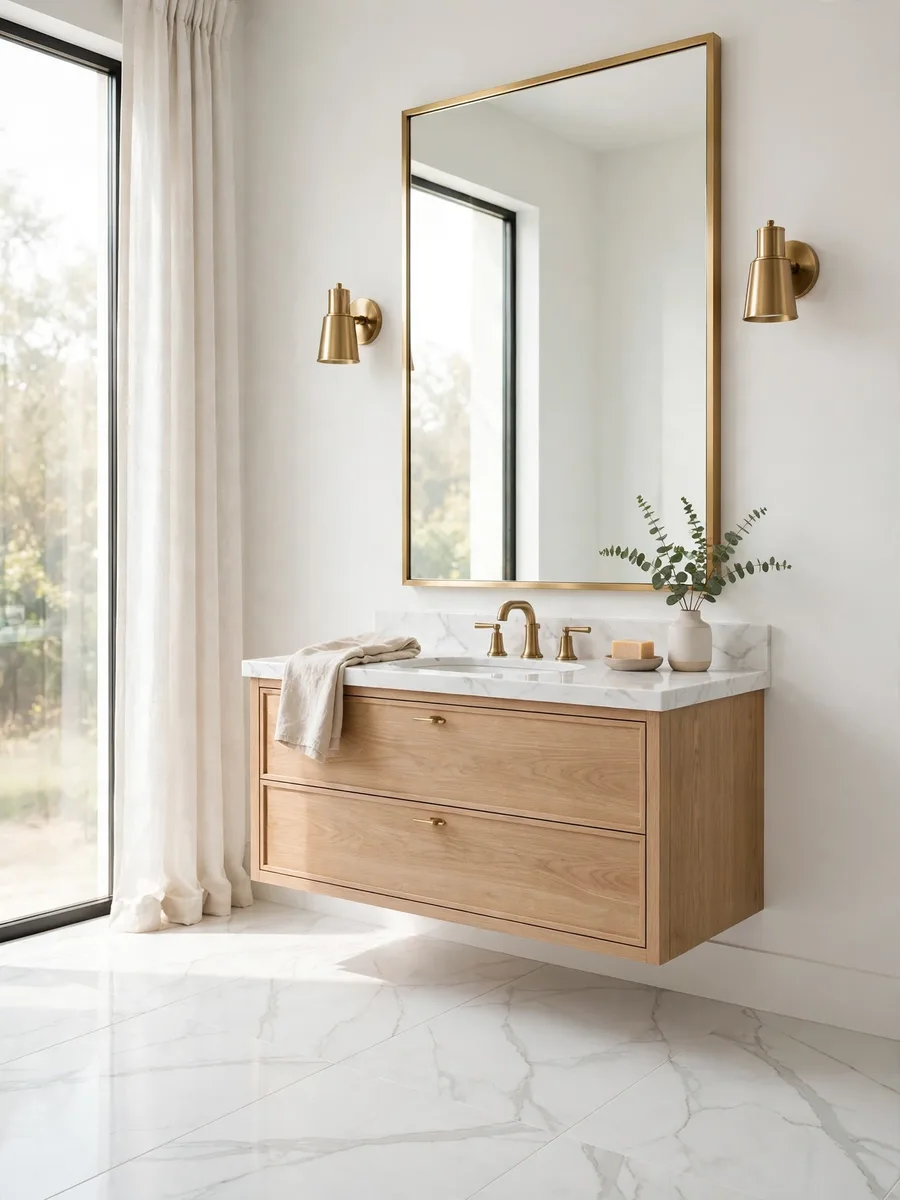
Yes. A 24-by-48-inch marble-look porcelain tile with minimal veining makes a floor read as one calm surface instead of a grid.
Large-format porcelain gives you the veined look of real marble with none of the sealing anxiety, and with so few grout lines the floor is quicker to mop. Keep the veining soft grey in a small room, and pair it with plain white walls.
Concrete example: In a 5-by-8-foot guest bathroom, lay 24-by-48-inch white marble-look porcelain with pale grey veining and a slim oak vanity. The floor looks almost seamless and the room feels a foot wider.
Quick tips:
- Choose a rectified edge so grout lines can stay tight, around 1/16 inch.
- Ask for a matte or honed finish on the floor, not polished, for grip.
- Order one extra box — large tiles chip more easily during cutting.
2. Vertical Subway Tiles in the Shower — Why Stack Them Upright Instead of Sideways?
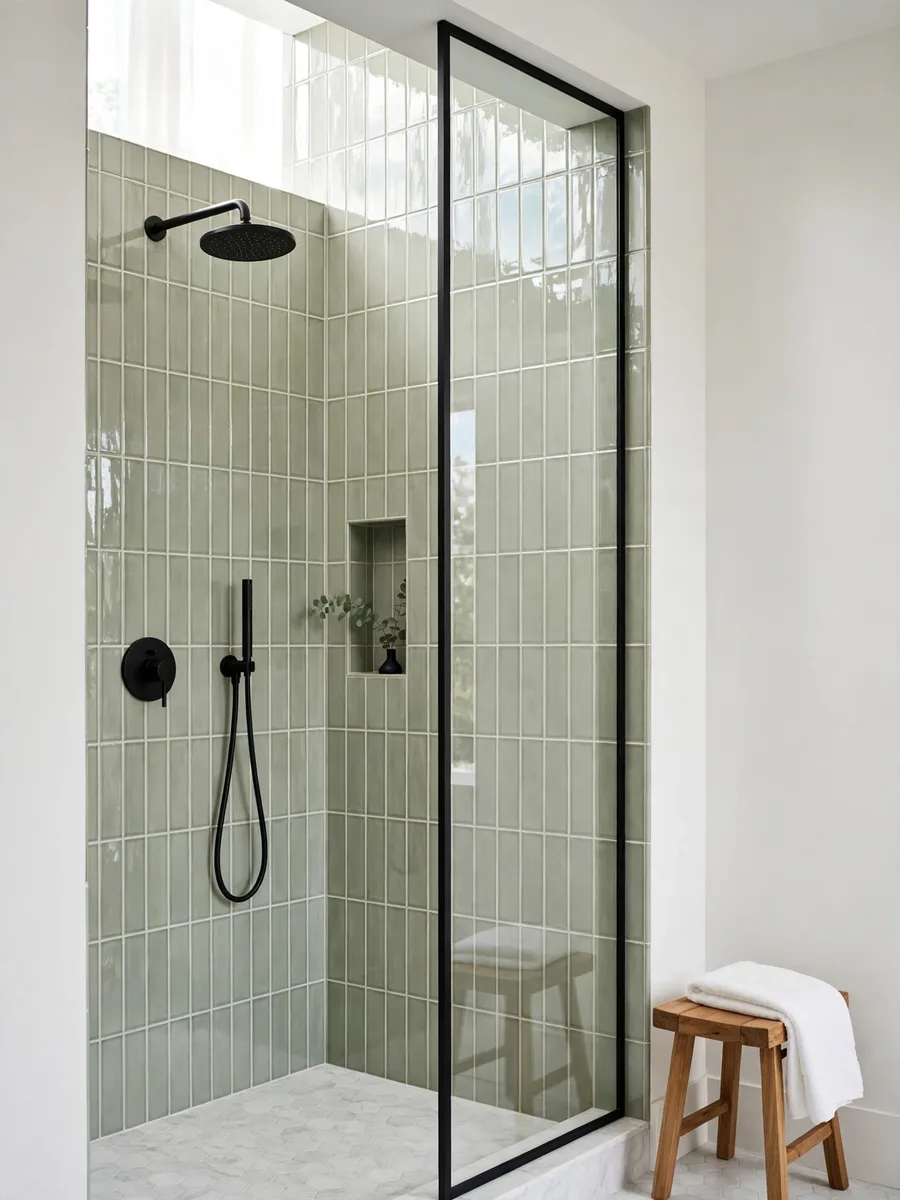
Stacking classic subway tiles vertically draws the eye upward, making a standard-height shower feel taller and more modern without changing a single wall.
The vertical stack is the easiest update in this guide because the tile itself is inexpensive and familiar — only the orientation changes. A glossy white or pale sage subway tile reflects shower light beautifully.
Concrete example: Run 3-by-12-inch glossy white subway tiles vertically from the shower tray to the ceiling, with a slim matte-black shower frame. The wall reads as one tall panel of light.
Quick tips:
- Take the tile to the ceiling — stopping at head height cuts the room in half.
- Use a grout colour one shade darker than the tile for gentle definition.
- Keep the niche tiled in the same tile so it blends in.
3. Handmade-Look Zellige Tiles — How Do You Add Character Without Pattern Overload?
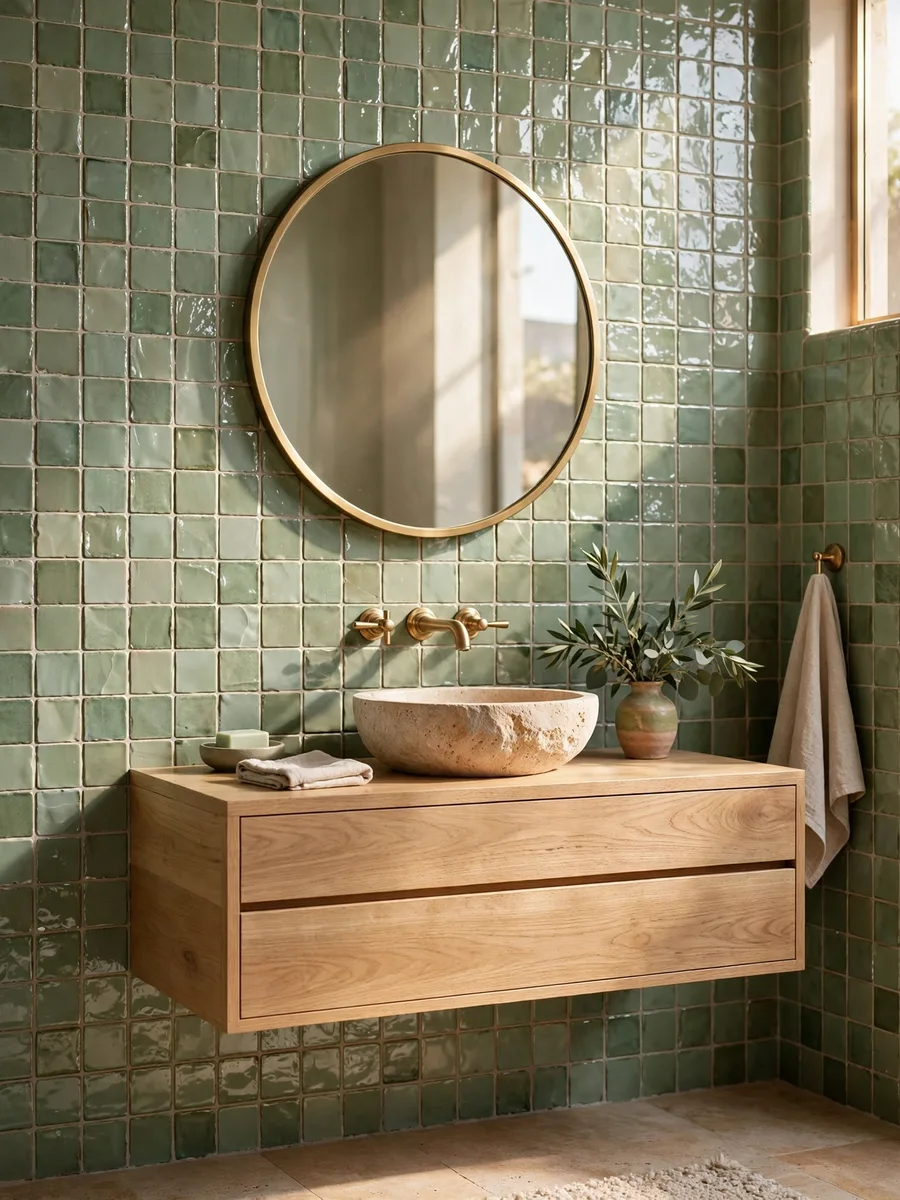
Zellige-style tiles add character through texture and tone rather than pattern, so a whole wall can feel rich and handmade while staying perfectly calm.
Each handmade-look tile catches the light slightly differently, giving a flat wall a soft, watery shimmer no flat ceramic can copy. Because the variation is subtle, you can tile a whole vanity wall in one colour without the room feeling busy.
Concrete example: Tile the wall behind a floating oak vanity in glossy sage-green zellige-style squares, with a round mirror, a stone basin, and brushed brass taps. The wall glows green in the morning light.
Quick tips:
- Mix tiles from several boxes so the tonal variation spreads evenly.
- Seal handmade-look tiles if the maker recommends it, especially near water.
- Keep the mirror simple — a plain round mirror, like the bathroom mirror ideas in our guide, lets the tile shine.
4. Mosaic and Penny Tiles on the Shower Floor — What Is the Safest Shower Floor?
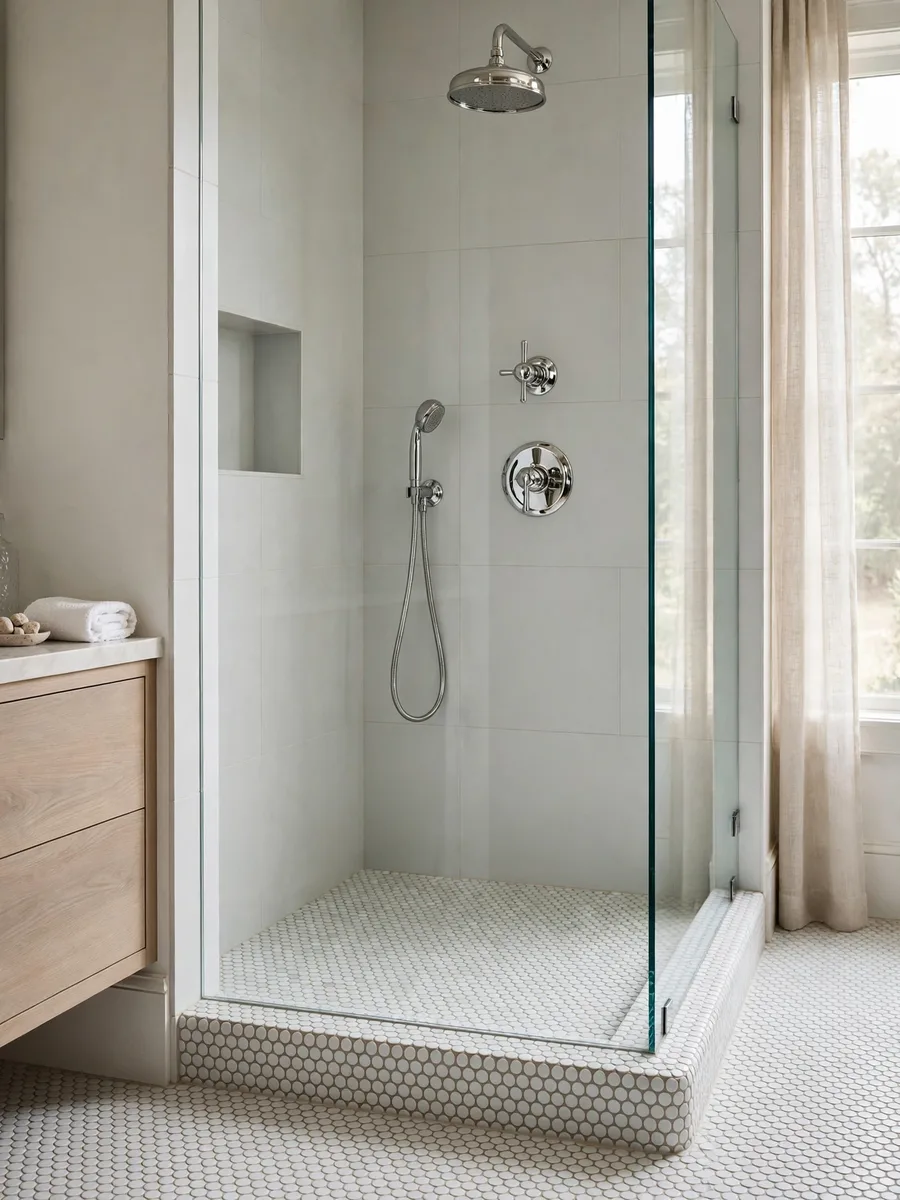
A mosaic or penny tile shower floor is the safest practical choice, because its many grout lines create grip under bare, wet feet and its small pieces follow the slope to the drain.
Penny rounds and small square mosaics are the workhorses of the shower floor: they bend around the fall of the tray, hide water marks, and look charming in almost any colour. The only trade-off is cleaning, so choose a mid-tone grout from the start.
Concrete example: Lay matte white penny tiles with warm grey grout on a walk-in shower floor, and run the same tile up the face of a low shower curb. The floor feels secure and the curb looks built-in.
Quick tips:
- Use a grout colour close to the tile so the grout grid does not shout.
- Seal the grout after curing and reseal once a year.
- Test a sample wet under bare feet before committing.
5. Warm Terracotta and Earthy Tiles — Can a Bathroom Feel Warm Without Looking Rustic?
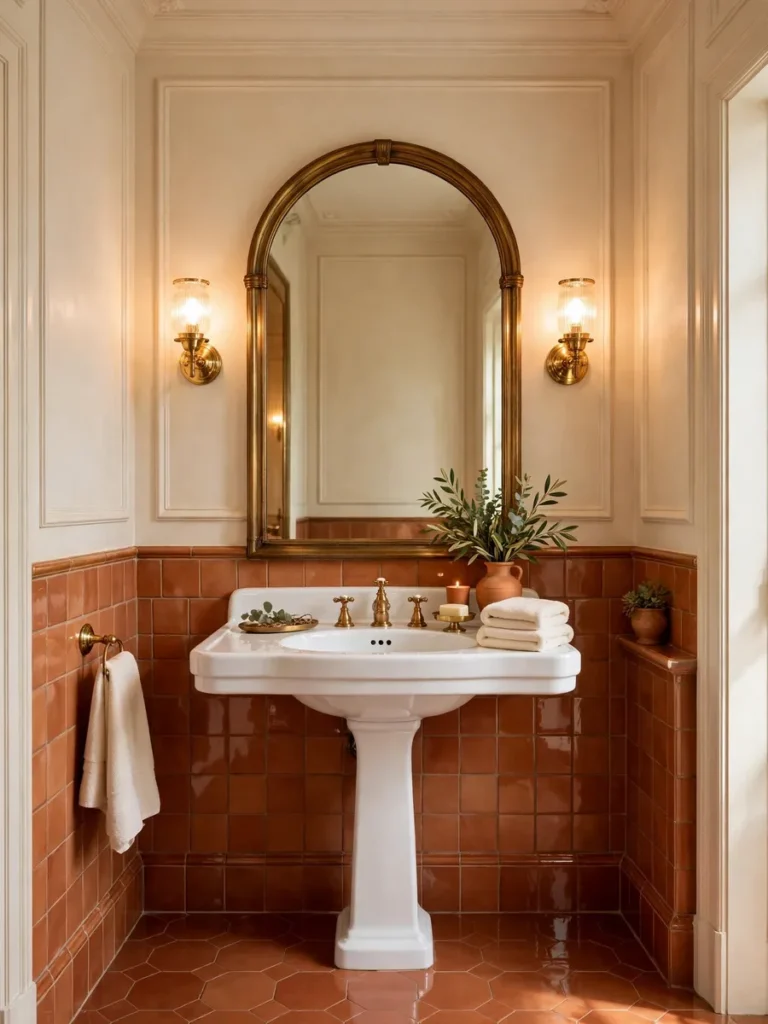
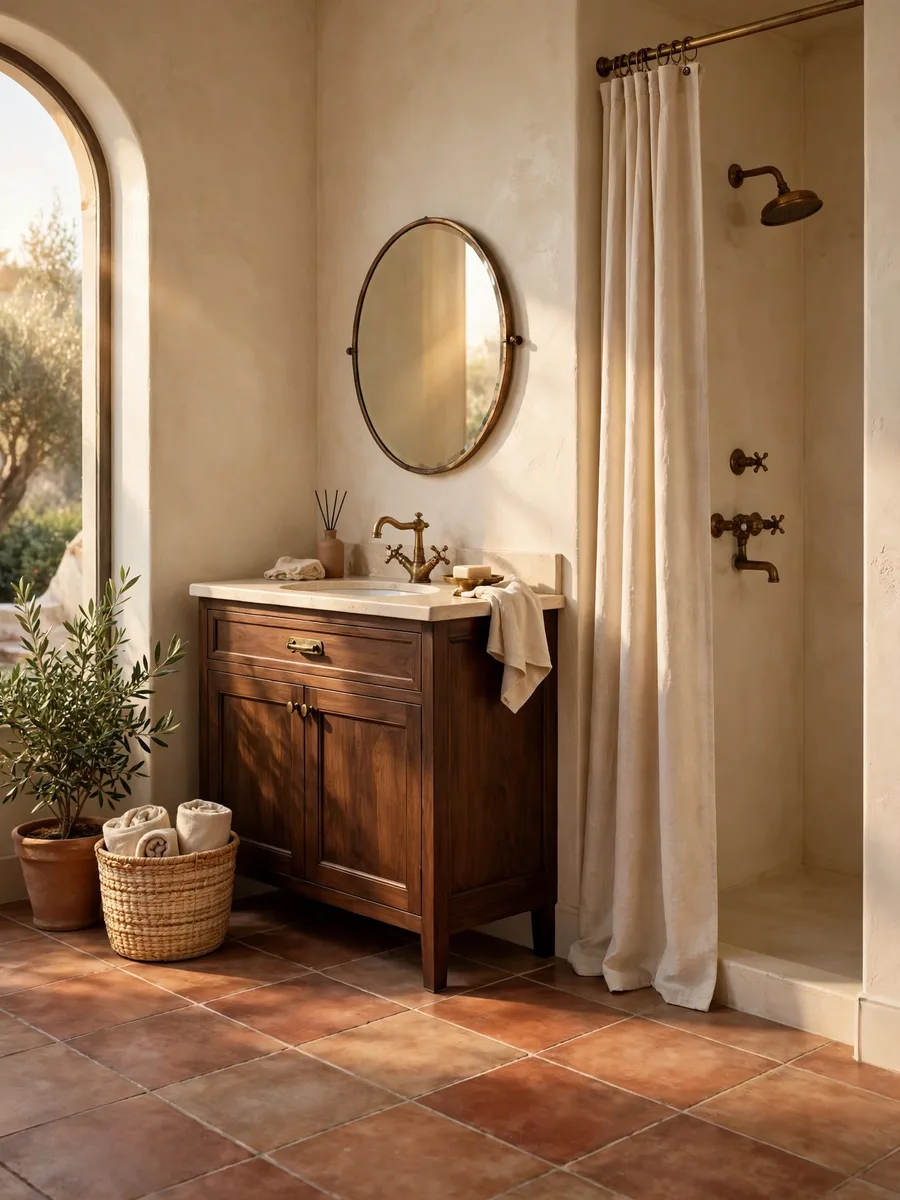
Yes. Terracotta and warm clay tiles feel sun-warmed and grounding, and paired with cream walls and modern fittings they read Mediterranean rather than rustic.
Earthy tiles are the antidote to the all-white bathroom. A terracotta floor with cream plaster walls brings warmth paint alone cannot. The trick is balance: let the terracotta be the warmest thing in the room and keep metals soft.
Concrete example: Lay large terracotta-look porcelain squares on the floor of a bathroom with cream walls and a walnut vanity. The floor feels like a sunlit courtyard.
Quick tips:
- Use porcelain lookalikes for floors — real terracotta needs regular sealing.
- Keep wall tiles pale so the warm floor stays the star.
- Add a woven basket and a green plant to complete the earthy mood.
6. Herringbone Tile Floors — Is Herringbone Too Busy for a Small Bathroom?
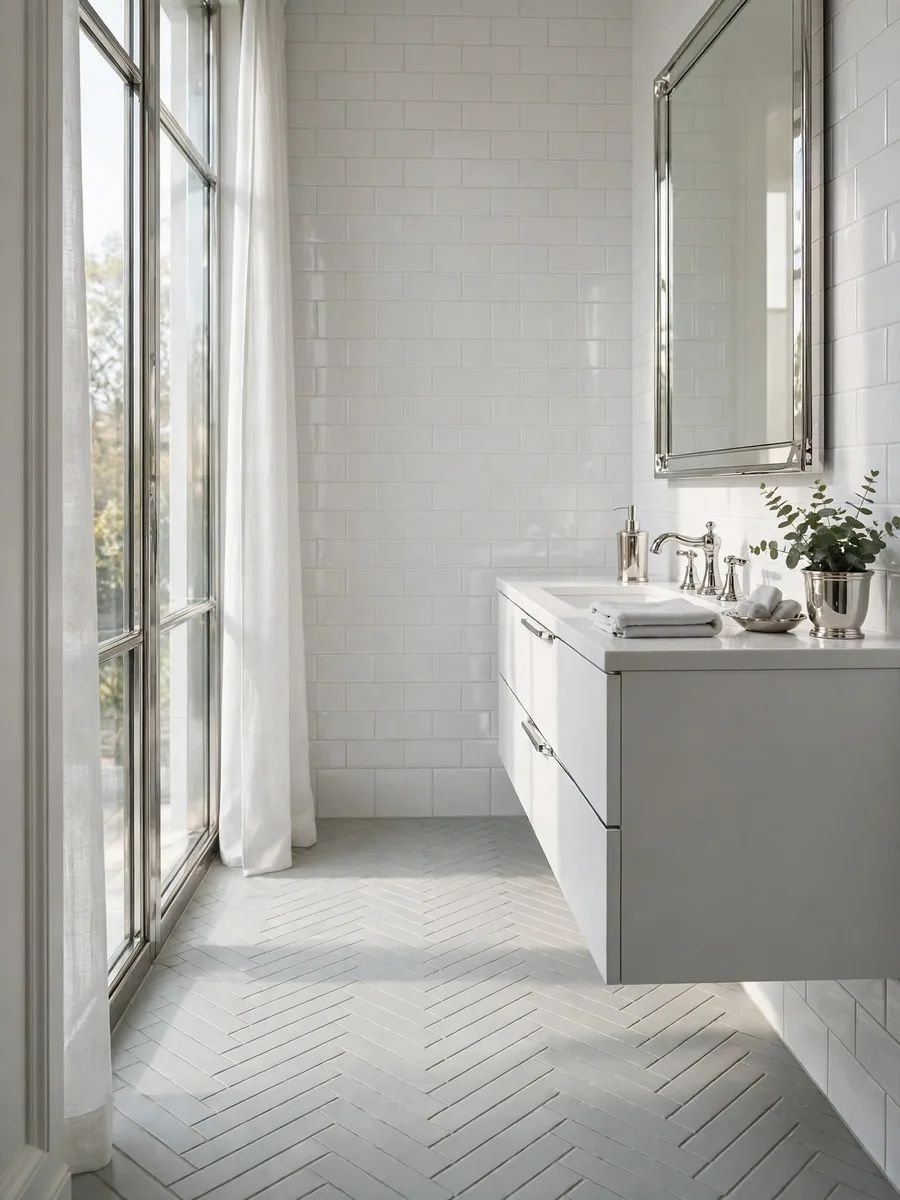
No — in a single colour and a matte finish, a herringbone floor adds movement and craft without visual noise, and it makes a plain room feel deliberately designed.
Herringbone turns even a humble rectangular tile into a pattern with energy. On the floor it draws the eye along the length of the room and hides the odd scuff far better than a straight grid. Keep the tile one colour and let the pattern provide all the interest.
Concrete example: Lay 3-by-12-inch matte pale-grey porcelain in herringbone across a narrow bathroom floor, with plain white wall tiles and a wall-hung vanity. The room reads longer than it is.
Quick tips:
- Budget 10–15% extra tile — herringbone creates more offcuts.
- Ask the tiler to dry-lay the pattern first so cuts land symmetrically.
- Pair with plain walls so the floor pattern stays the only pattern.
7. Dark and Moody Tiles — Can Dark Tile Work in a Bathroom With No Window?
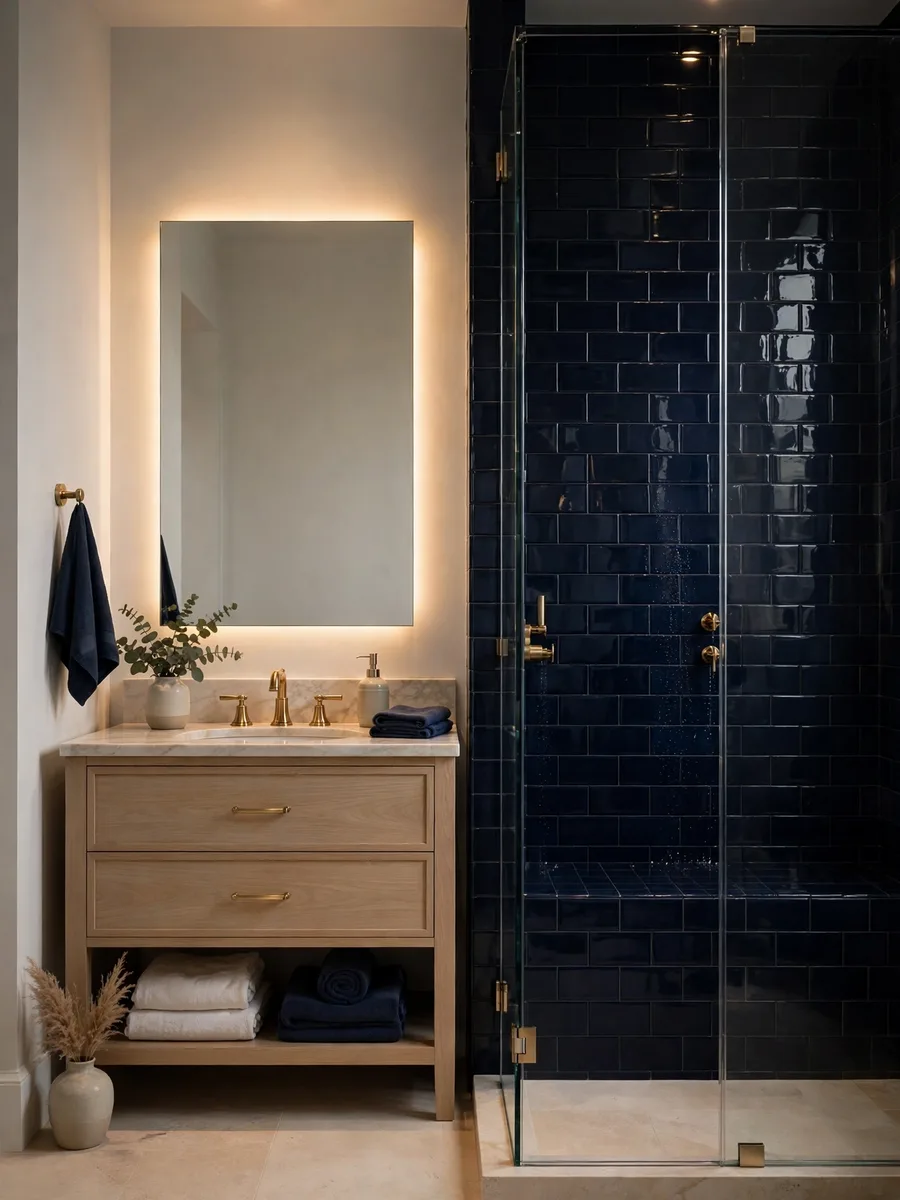
Yes, if you balance it. Charcoal or deep navy tiles with glossy finishes and warm lighting make a windowless bathroom feel like a cocoon rather than a cave.
Dark tile is the boldest move on this list and the most rewarding when it works. A charcoal wall tile with a gloss finish reflects the vanity lights, a navy shower wall makes brass fittings glow, and a dark floor hides dust. The rule is contrast: dark walls need a pale ceiling and warm lighting.
Concrete example: Tile one shower wall in glossy deep-navy rectangles, keep the other walls warm white, and add a pale oak vanity with brass taps. The navy wall becomes a jewel box behind the glass.
Quick tips:
- Use warm-white bulbs (2700–3000K) — cool light turns dark tile flat.
- Keep the ceiling and at least one wall pale.
- Choose gloss over matte on dark walls so light bounces back.
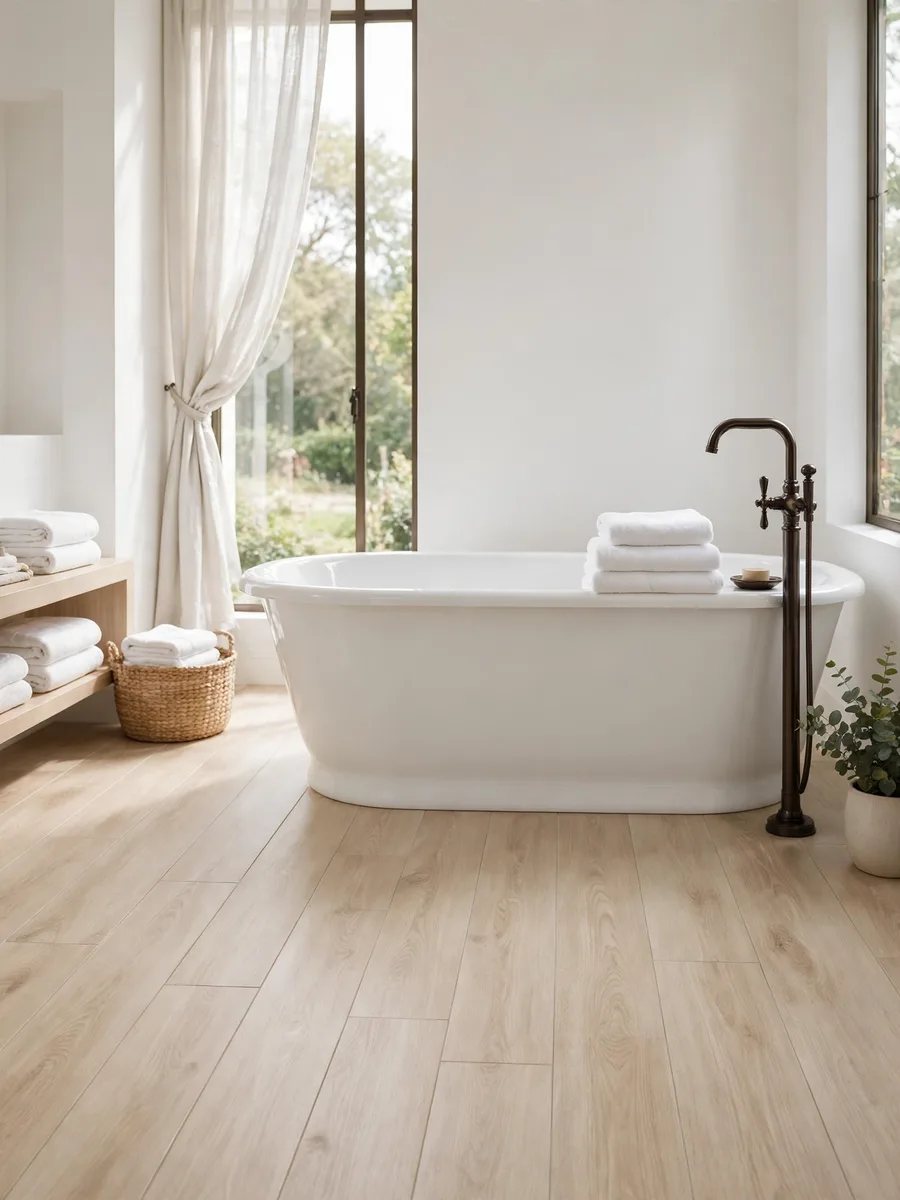
8. Wood-Look Plank Tiles — How Do You Get a Warm Wood Floor in a Wet Room?
Wood-look porcelain planks give you the warmth of timber with the waterproof confidence of tile, which is exactly what a bathroom floor needs.
Porcelain planks printed with a realistic oak or walnut grain look like real wood at a glance, but they will never swell, warp, or stain from a splashed bath. They warm up a cool room instantly and work beautifully with underfloor heating.
Concrete example: Run pale oak-look porcelain planks the length of a family bathroom floor, add a white freestanding bath and a dark bronze tap, and the room feels like a spa cabin.
Quick tips:
- Pick a plank with varied grain prints so repeats are not obvious.
- Use a grout colour matched to the wood tone for a seamless floor.
- Choose a textured or matte finish for wet-room grip.
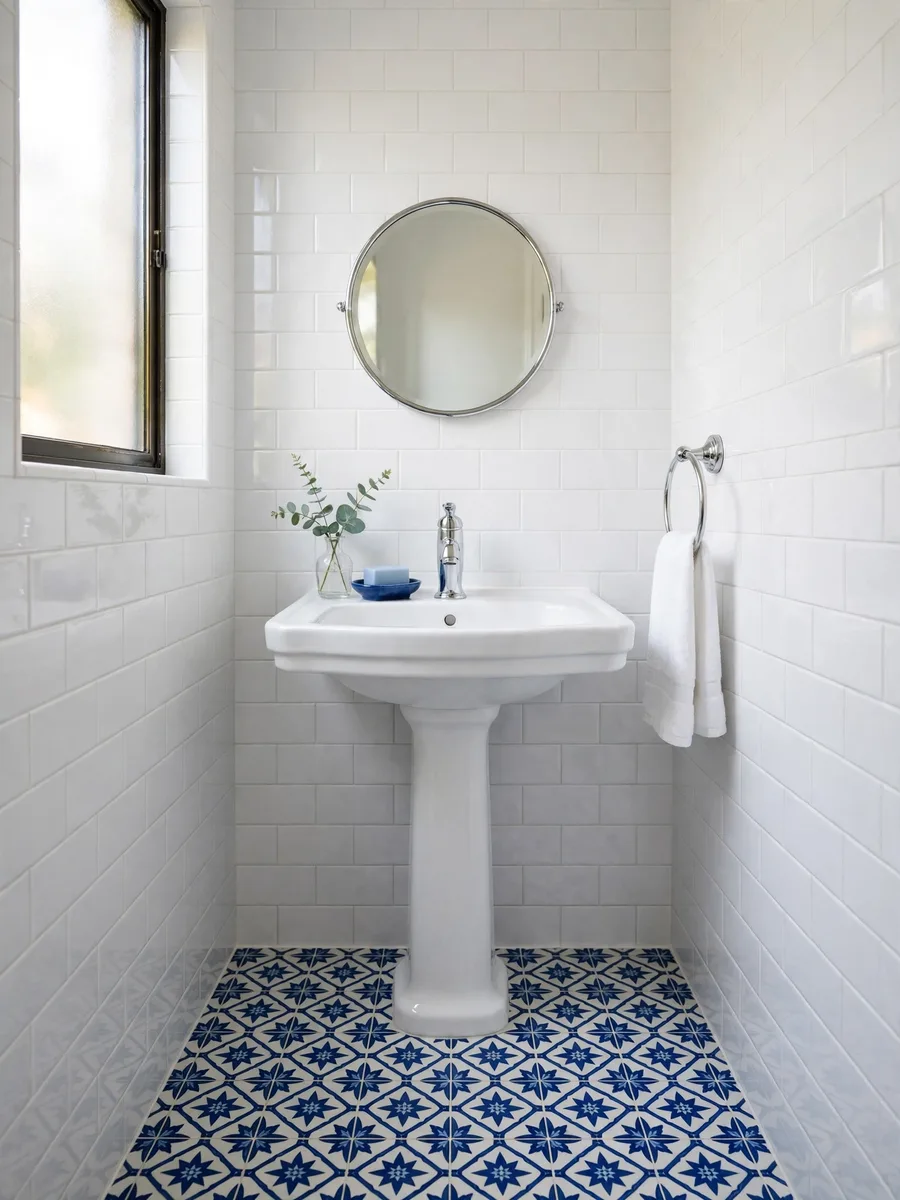
9. Patterned Encaustic-Look Tiles — Where Should Pattern Go in a Bathroom?
Put pattern on the floor and keep the walls plain. A patterned floor anchors the room, while plain walls stop the pattern from overwhelming a small space.
Encaustic-look tiles — intricate cement-style patterns in blues, greens, or monochrome — bring instant personality to a bathroom that would otherwise be a white box. Used as a full floor they feel confident and old-world.
Concrete example: Lay a blue-and-white patterned encaustic-look tile across the floor of a small powder room, with plain white wall tiles and a pedestal basin. Guests notice the floor the moment they open the door.
Quick tips:
- Limit pattern to one surface — floor or feature wall, never both.
- Pull one colour from the pattern for towels or a painted vanity.
- Seal cement-look tiles as the manufacturer directs.
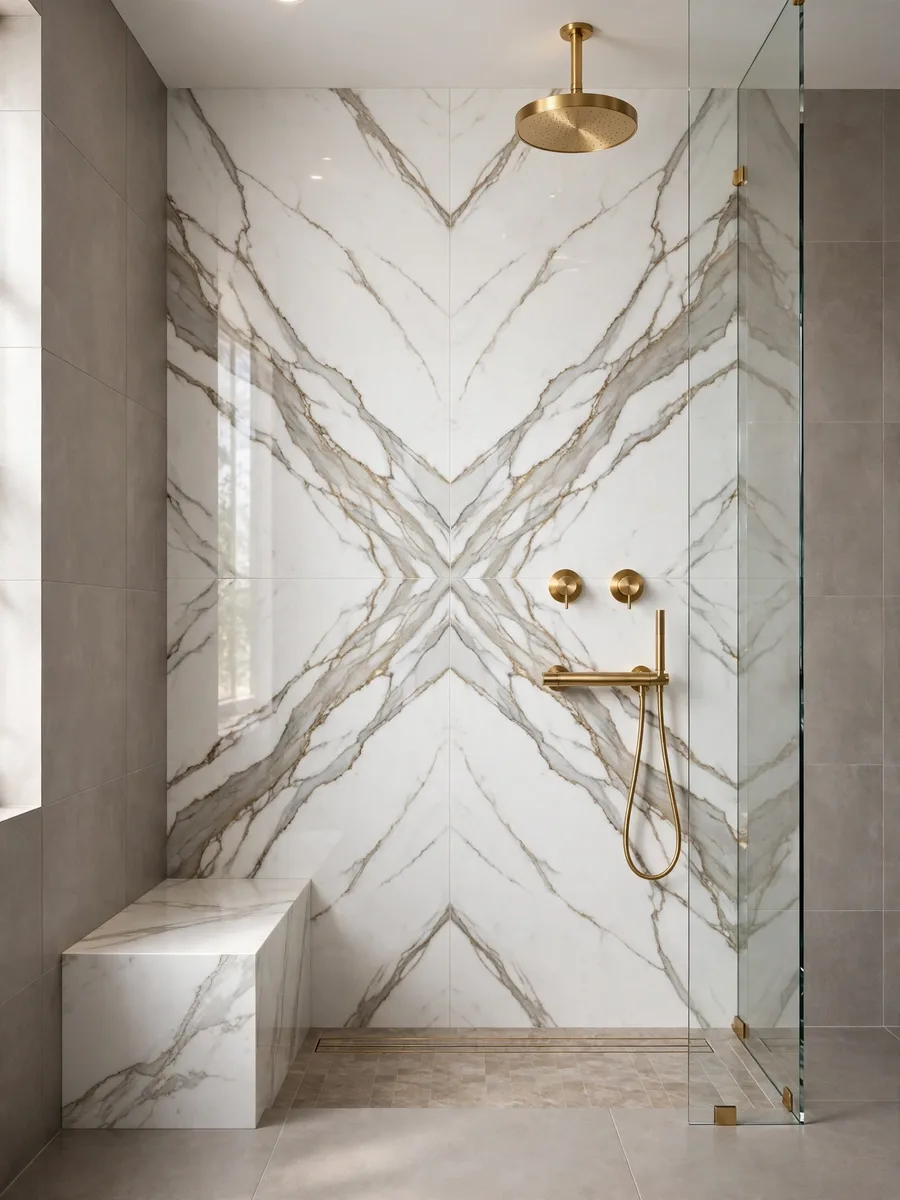
10. Book-Matched Marble-Look Shower Walls — What Makes a Shower Look Truly Luxurious?
Book-matched marble-look porcelain slabs make a shower look luxurious: the mirrored veining reads as one continuous piece of stone.
Large porcelain slabs — 48 inches wide or more — with mirrored veining are the closest most homes come to a stone-slab shower, at a fraction of the cost and weight. The effect is hotel-suite calm: long, unbroken veining and almost no grout lines.
Concrete example: Cover the main shower wall in book-matched white porcelain slabs with soft grey-gold veining, and finish with a brushed-gold shower set. The shower looks like a carved stone alcove.
Quick tips:
- Ask the supplier to show the slab pair together before cutting.
- Use a matching porcelain edge trim for a finished slab edge.
- Keep shower fittings minimal so the veining stays the focus.
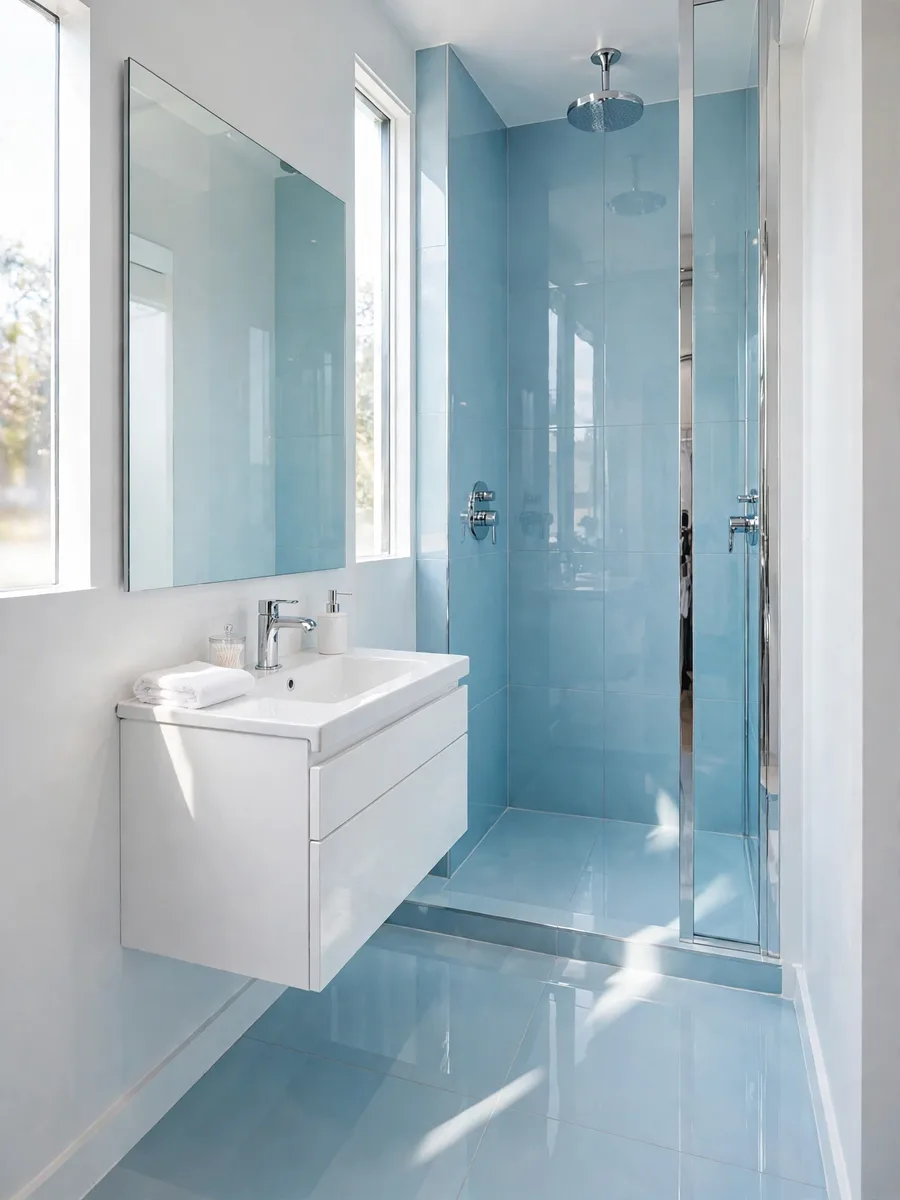
11. Small-Bathroom Space Tricks — Which Tile Layout Makes a Tiny Bathroom Feel Bigger?
Run the same large-format light tile from the floor up one wall and into the shower, with matched grout throughout, so the eye reads the whole room as one open space.
Small bathrooms suffer most from visual chopping: a different tile on every surface, contrasting grout, and a shower curb that breaks the floor line. The fix is continuity — one pale, glossy, large-format tile on the floor and the longest wall, carried into the shower with no threshold.
Concrete example: In a 40-square-foot bathroom, use 12-by-24-inch glossy pale-grey porcelain on the floor and the full back wall, run it into a curbless shower, and fit a wall-hung vanity. The floor line never breaks.
Quick tips:
- Choose glossy wall tiles — they reflect light better than matte.
- Go curbless in the shower if the floor can be tanked properly.
- Match the grout to the tile on every surface.
12. Grout Matching, Slip Resistance, and the Finishing Details — What Separates a Good Tile Job From a Great One?
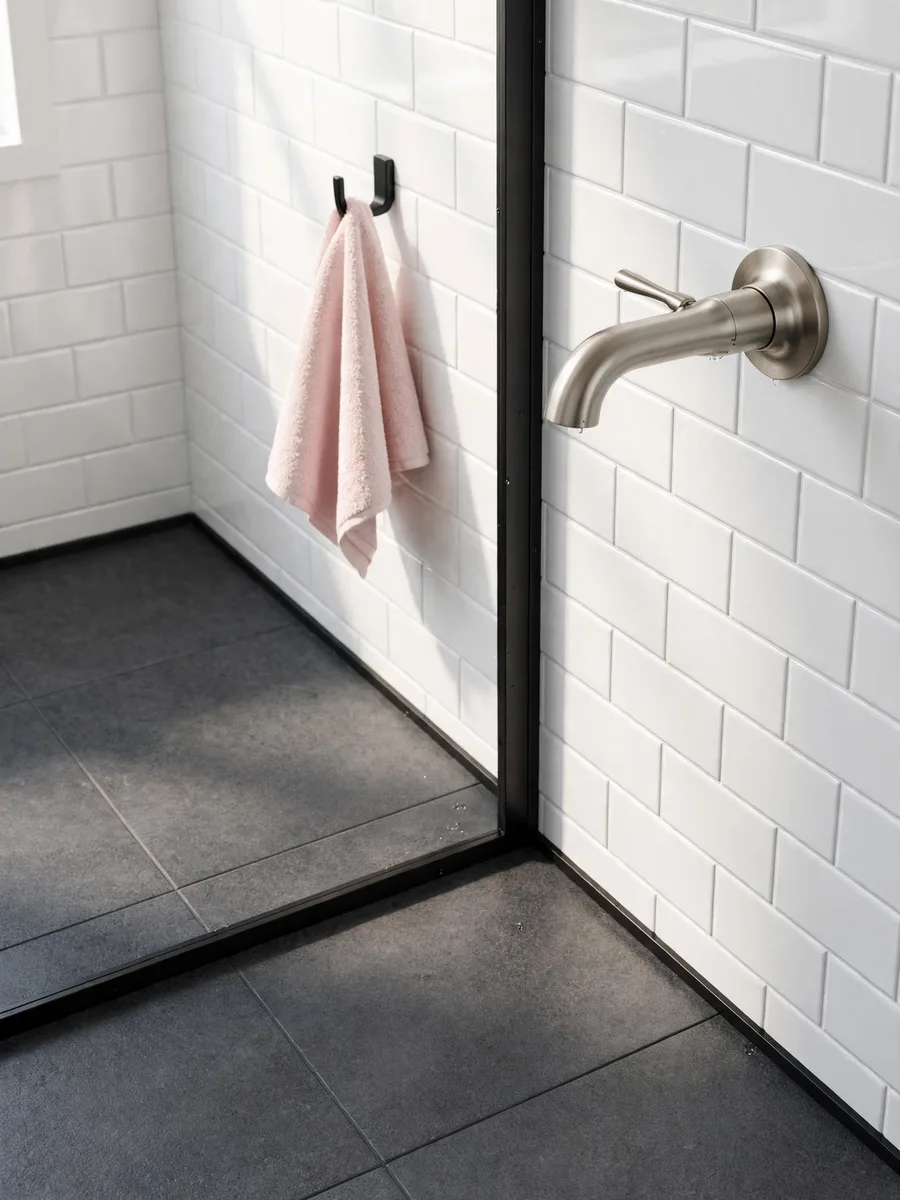
The finishing details: grout matched to the tile, a floor rated DCOF 0.42 or higher, sealed grout, and tidy edges.
Two bathrooms can use the same tile and look completely different after a year, and the difference is almost always the details. A floor tile with a DCOF rating of 0.42 or higher stays safe when wet — ask for it by name. Grout matched to the tile hides marks, while epoxy grout in the shower resists staining far longer than cement grout.
Concrete example: Before the tiler starts, agree on three things in writing: a floor tile rated DCOF 0.42 or higher, an epoxy grout matched to the tile for the shower, and a slim metal edge trim in the same finish as the taps.
Quick tips:
- Ask for the DCOF rating on the tile box or spec sheet — do not guess.
- Seal cement grout after it cures and top it up yearly.
- Photograph the grout colour and tile batch numbers for future repairs.
What is the best tile for a shower floor?
Small mosaic or penny tiles are the best choice for a shower floor. Their size follows the slope to the drain, and their many grout lines add grip under wet feet. Choose a matte finish and a mid-tone grout so the floor stays safe and easy to keep clean.
What grout colour is best for bathroom tiles?
A grout colour matched to the tile gives the calmest, most seamless look and hides marks best. On floors, go one shade darker so dirt does not show. Bright white grout looks sharp at first but stains fastest.
Can I mix different tile types in one bathroom?
Yes, and most well-designed bathrooms do. Let one tile lead — usually the floor or the shower wall — and keep the others plain and coordinating. Mix texture and scale instead of competing patterns.
How do I stop my bathroom floor from being slippery?
Choose a floor tile rated DCOF 0.42 or higher, prefer matte or textured finishes over polished ones, and consider smaller tiles or mosaics, whose grout lines add grip. The tile rating is the decision that matters most.
What tile makes a small bathroom look bigger?
Large-format tiles in a light colour with grout matched to the tile make a small bathroom feel bigger, especially when the same tile runs from the floor into the shower. Glossy wall tiles reflect light and draw the eye upward.
Conclusion
The best bathroom tile ideas are not the boldest ones — they are the ones that fit how you live. Pick a safe, grippy floor, a shower wall you can wipe clean in seconds, and a layout that makes the room feel bigger than it is, then let one beautiful surface do the talking. Start with a sample in your own light, check the DCOF rating, and agree the grout colour first.