24 Cozy Winter Kitchen Decor Ideas
Winter kitchen decor ideas work best when they warm up the room without turning it into a Christmas display. The goal is simple: layer soft textiles, add warm light, bring in evergreen and citrus, and set up one cozy hot-drink corner, so the kitchen feels inviting from the first frost in December right through February. Most of these ideas take under thirty minutes.
Unlike holiday decorating, winter kitchen decor is built to last the whole season. You can keep the wool towels, the simmer pot, the citrus bowl, and the counter lamp going long after the tree comes down, because none of them depends on a holiday symbol. If you do want a festive touch for December, you can layer a few red and green pieces over this winter base, then remove them in January while the rest stays. That is exactly how a Christmas kitchen decor scheme works best, as a short seasonal layer on top of a solid winter foundation rather than a full redecoration.
Key Takeaways
What is winter kitchen decor? It is seasonal styling that uses light, textiles, evergreen, citrus, and warm materials to make the kitchen feel cozy through December, January, and February, without relying on Christmas symbols.
How long does it last? Most winter kitchen decor stays up from early December until late February or the first week of March, since it is built around the season itself rather than one holiday.
Where should you start? Start with light, textiles, and scent: a counter lamp, wool towels, and a simmer pot change the feeling of the room in one evening and cost very little.
Does it work in a small kitchen? Yes. Small kitchens benefit most, because a single runner rug, a lamp, and a small evergreen arrangement fill the space without crowding the counters.
What Is Winter Kitchen Decor?
Winter kitchen decor is seasonal styling that makes the kitchen feel warmer, softer, and more inviting during the cold months. It relies on layered light, natural materials like wood and wool, evergreen branches, citrus fruit, candles, and textiles, rather than on ornaments or holiday characters.
How Do You Decorate a Kitchen for Winter Without It Looking Like Christmas?
Decorate with texture, natural materials, and warm light instead of holiday symbols. Wool textiles, stoneware, wooden boards, citrus, and evergreen branches all feel seasonal from December through March, and none of them has to come down after New Year’s Day.
Skip red-and-green pairings, Santa figures, snowmen, and anything that reads as a tree ornament. Use pine and cedar branches on their own, dried orange slices instead of baubles, and plain candles instead of advent pieces.
What Colors Work Best for Winter Kitchen Decor?
Warm, muted colors work best for winter kitchen decor: rust, clay, camel, forest green, olive, and creamy oatmeal. These shades sit comfortably against wood, stone, and brass, and they look rich under warm lamplight on dark winter afternoons.
Cool tones can work too, as long as they stay soft. Dusty blue, slate, and pale sage feel wintry when paired with warm wood and brass, but they can look cold in a north-facing kitchen unless you balance them with candlelight and knit textures.
1. Layered Linen and Wool Textiles
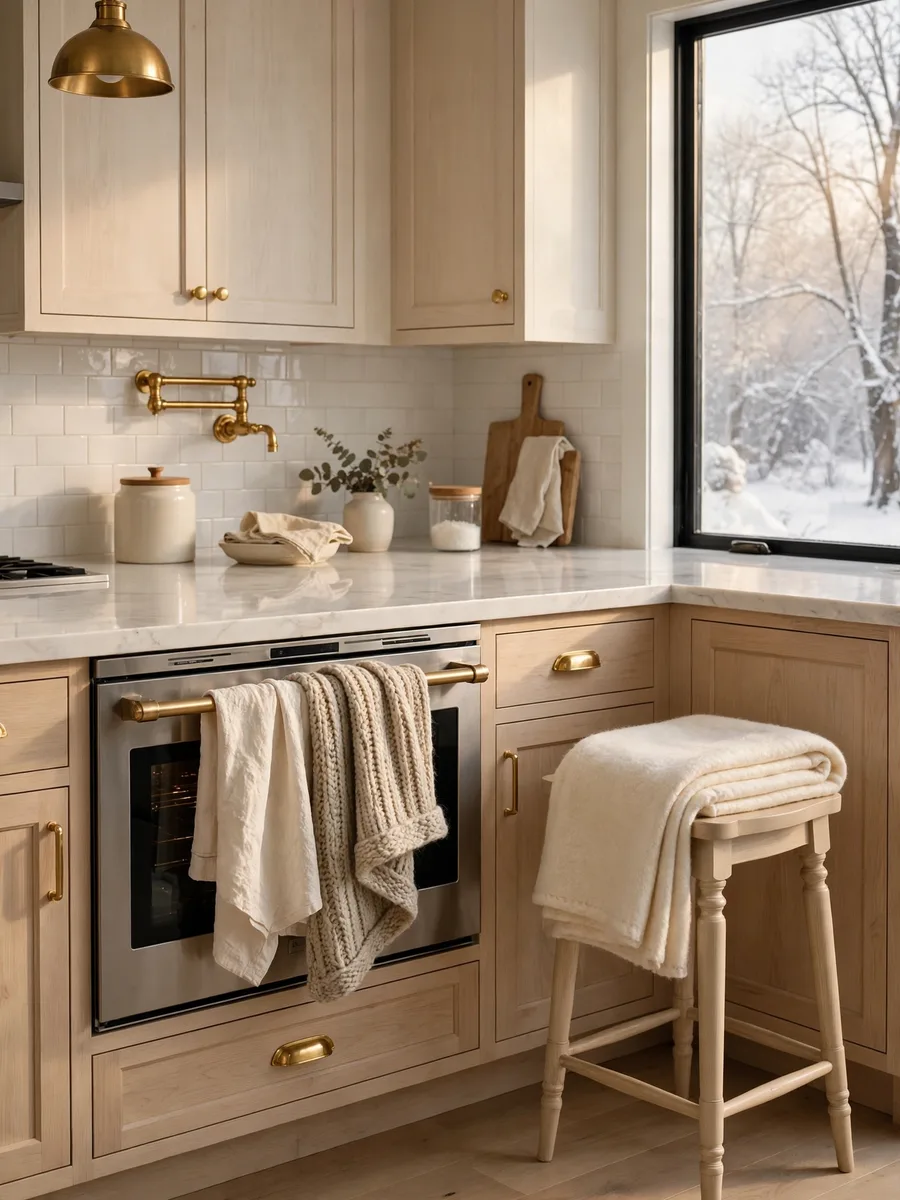
Textiles are the fastest way to make a kitchen feel like winter, because they soften every hard surface at once. Swap thin summer cotton towels for thick linen and wool ones, and drape a folded wool throw over the back of a barstool. A concrete example is a cream linen towel on the oven handle, a chunky oatmeal wool towel folded over the counter edge, and a small plaid tea towel hung from a brass hook by the sink.
Quick tips
- Choose two textures, such as linen and wool, rather than two patterns.
- Fold towels in thirds so they hang neatly and show their weave.
2. Warm Under-Cabinet Lighting
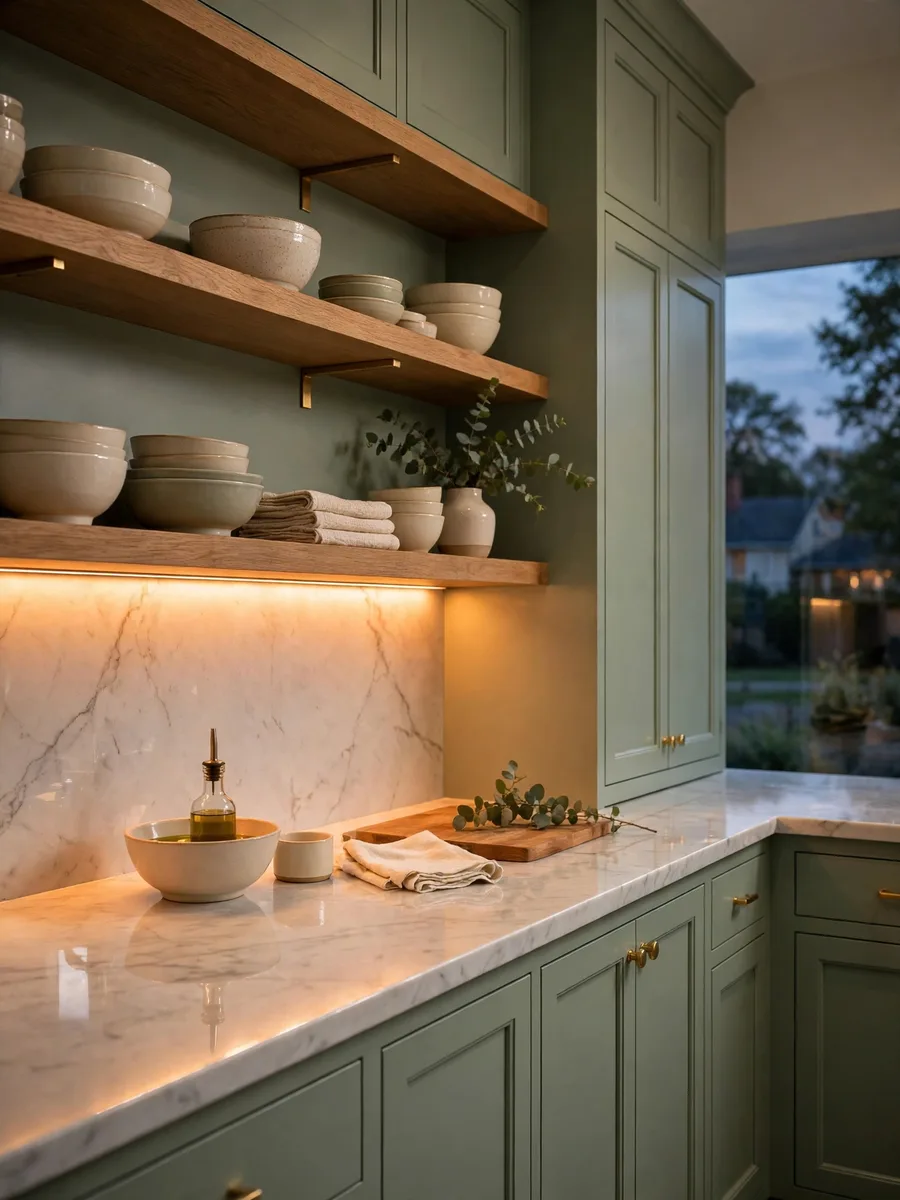
Winter daylight is weak and gone by late afternoon, so under-cabinet lighting does more for a kitchen in January than almost any decoration. A concrete example is a plug-in warm-white LED strip, around 2700K, mounted under the cabinets above the coffee station, switched on at five every evening.
Quick tips
- Pick warm white (2700K) for a candle-like glow.
- Hide the strip behind the cabinet lip so you see light, not the fitting.
3. A Hot Cocoa and Coffee Station
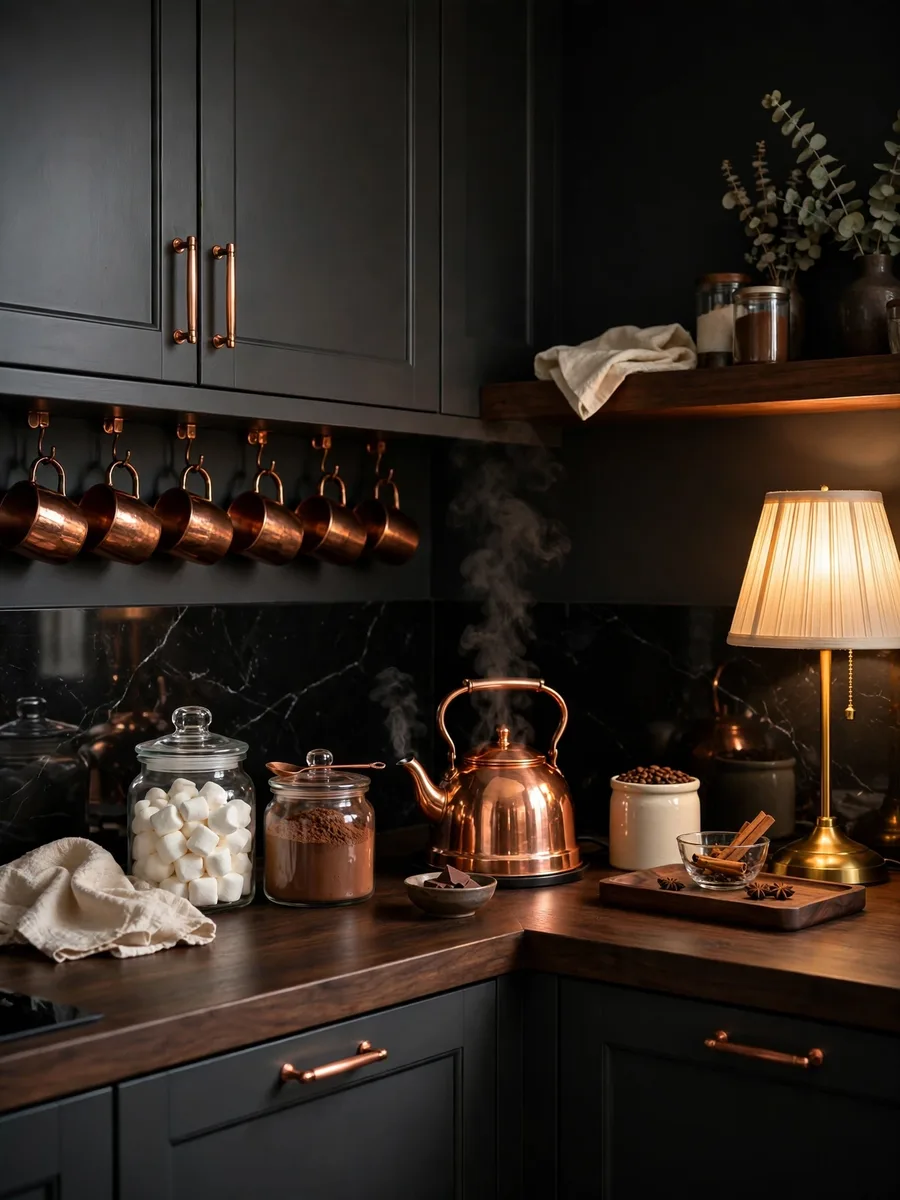
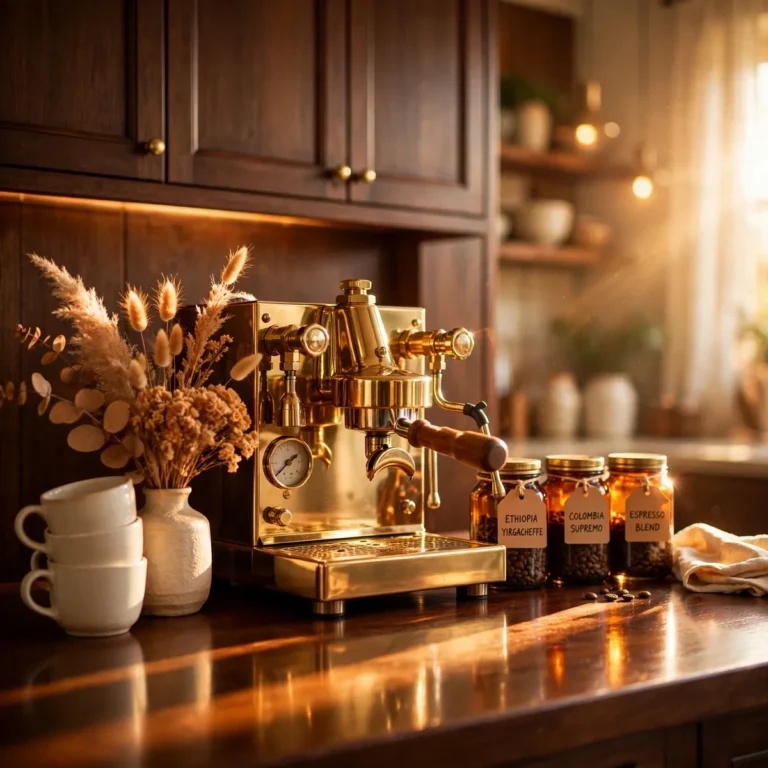
A hot-drink station is the one winter idea that gets used every single day. Gather everything on one tray or one stretch of counter: the kettle or coffee maker, mugs, cocoa, marshmallows, cinnamon, and a small jar of honey. A concrete example is a dark walnut tray on the counter holding two copper mugs, a glass jar of marshmallows, a jar of cocoa powder, and a small crock of cinnamon sticks, with the kettle sitting just behind it.
Quick tips
- Use one tray to contain the whole station.
- Store extra supplies in a nearby cabinet, not on the tray.
4. A Simmer Pot on the Stove
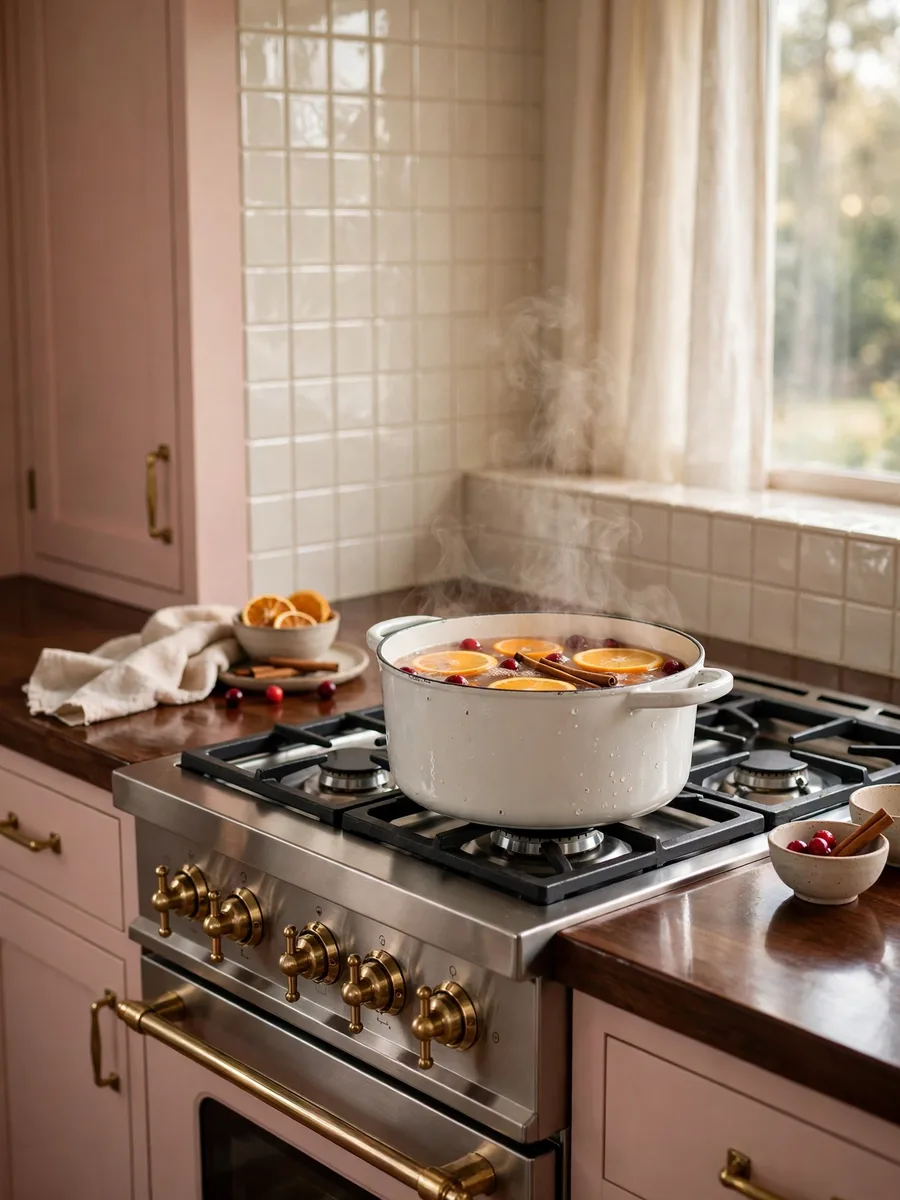
A simmer pot is the cheapest winter scent in the kitchen, and it works while you cook, clean, or sit with a book. Fill a small pot with water, orange slices, cinnamon sticks, a few cloves, and a handful of cranberries, then keep it on the lowest heat. A concrete example is a white enamel pot with two orange halves, three cinnamon sticks, and a sprig of rosemary simmering gently on the back burner while the kitchen windows steam up.
Quick tips
- Start with cold water and bring it to a bare simmer, never a boil.
- Refill the water every hour to keep it safe.
5. Fresh Evergreen Branches in a Pitcher
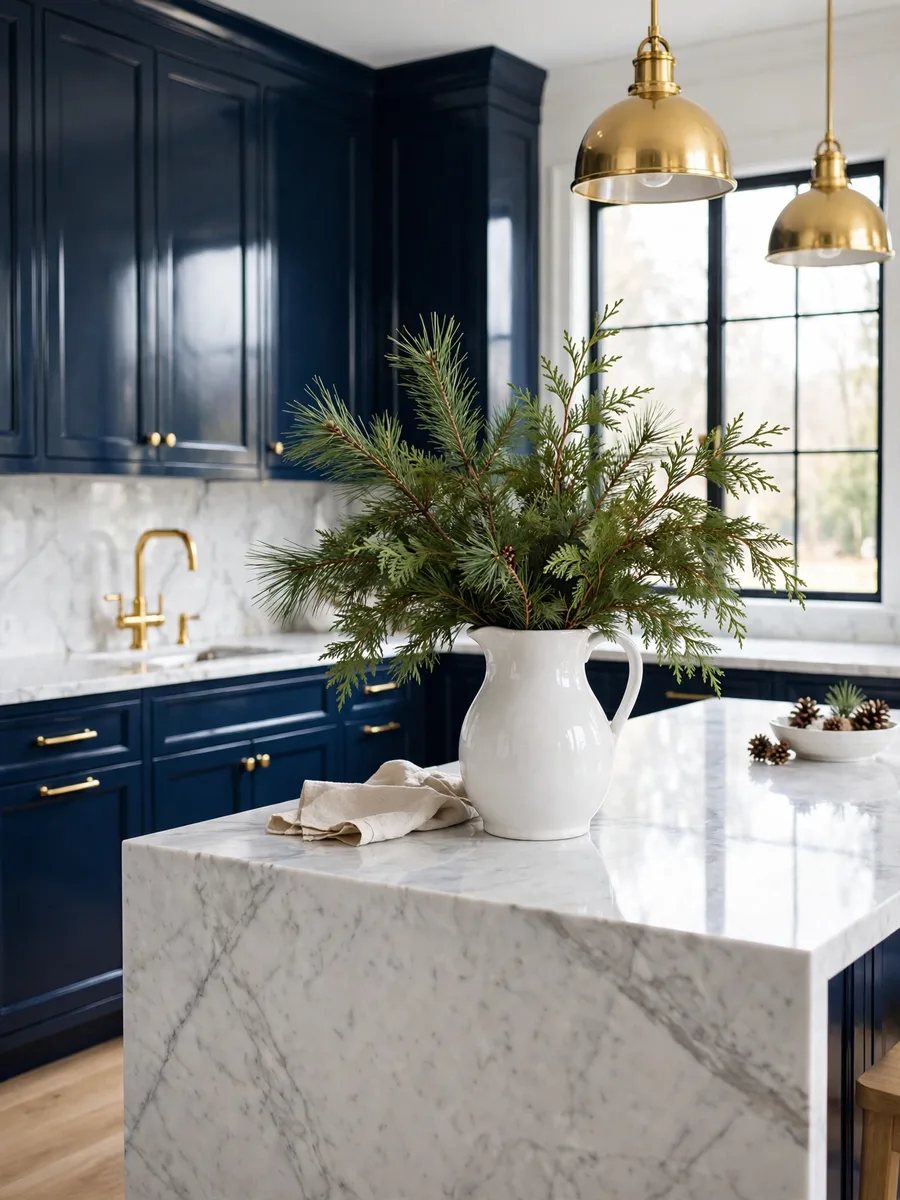
Few things say winter as clearly as a pitcher of fresh evergreen on the kitchen island. Pine, cedar, and fir branches last for weeks in water, cost almost nothing if you forage a few cuttings, and fill the room with a clean, resinous scent. A concrete example is a tall white stoneware pitcher on the island holding three cedar branches and one pine sprig, with a few eucalyptus stems tucked in for softness.
Quick tips
- Mix two types of greenery, such as cedar and pine, for texture.
- Keep the arrangement tall and loose, not packed tight.
6. A Chunky Knit Table Runner
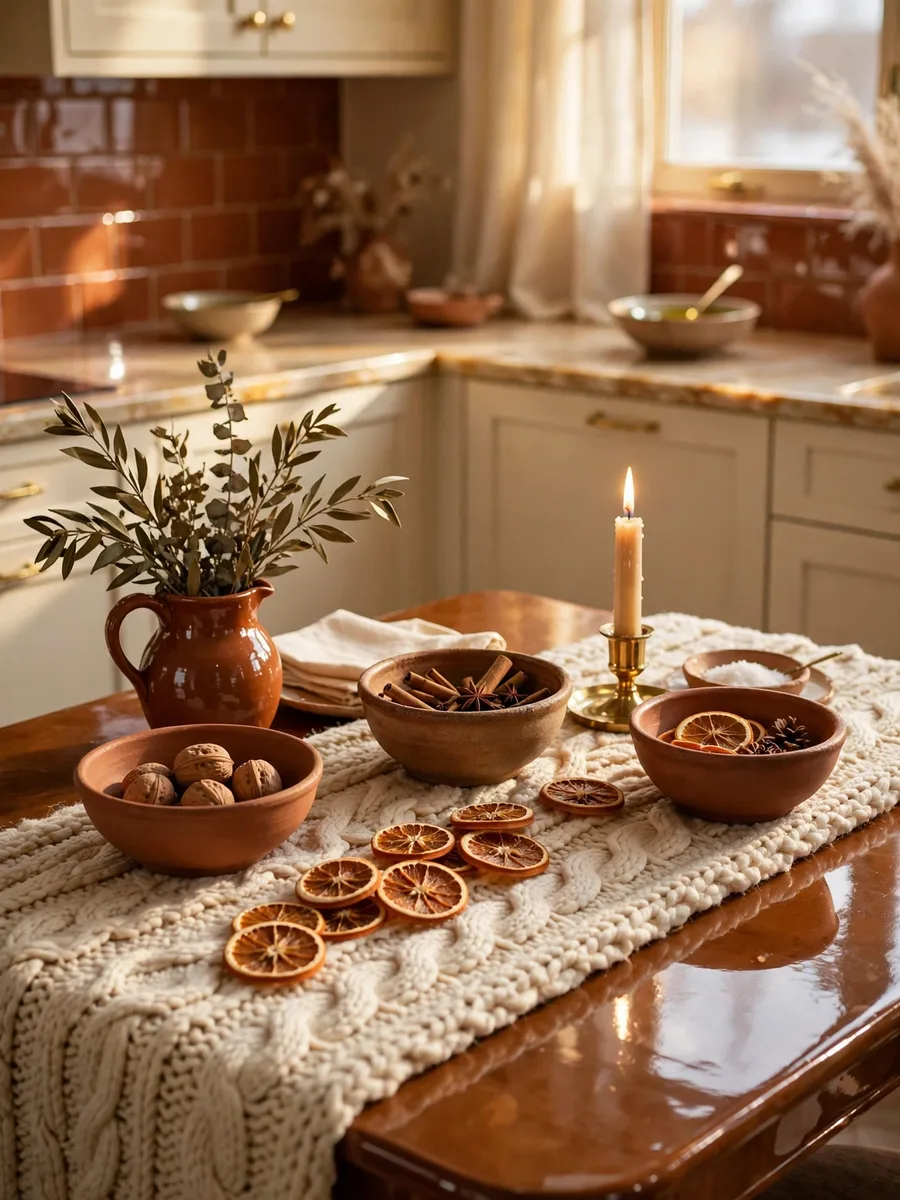
A chunky knit runner turns an ordinary kitchen table into the warmest seat in the house. The thick texture reads as winter immediately, and it softens the hard tabletop under plates and mugs. A concrete example is a cream cable-knit runner down the center of a wooden table, with a low clay bowl of dried oranges at its middle and two taper candles in brass holders at either end.
Quick tips
- Choose a runner that leaves at least 15 cm of table showing on each side.
- Layer a washable cotton runner under a knit one for easy cleaning.
7. A Bowl of Winter Citrus
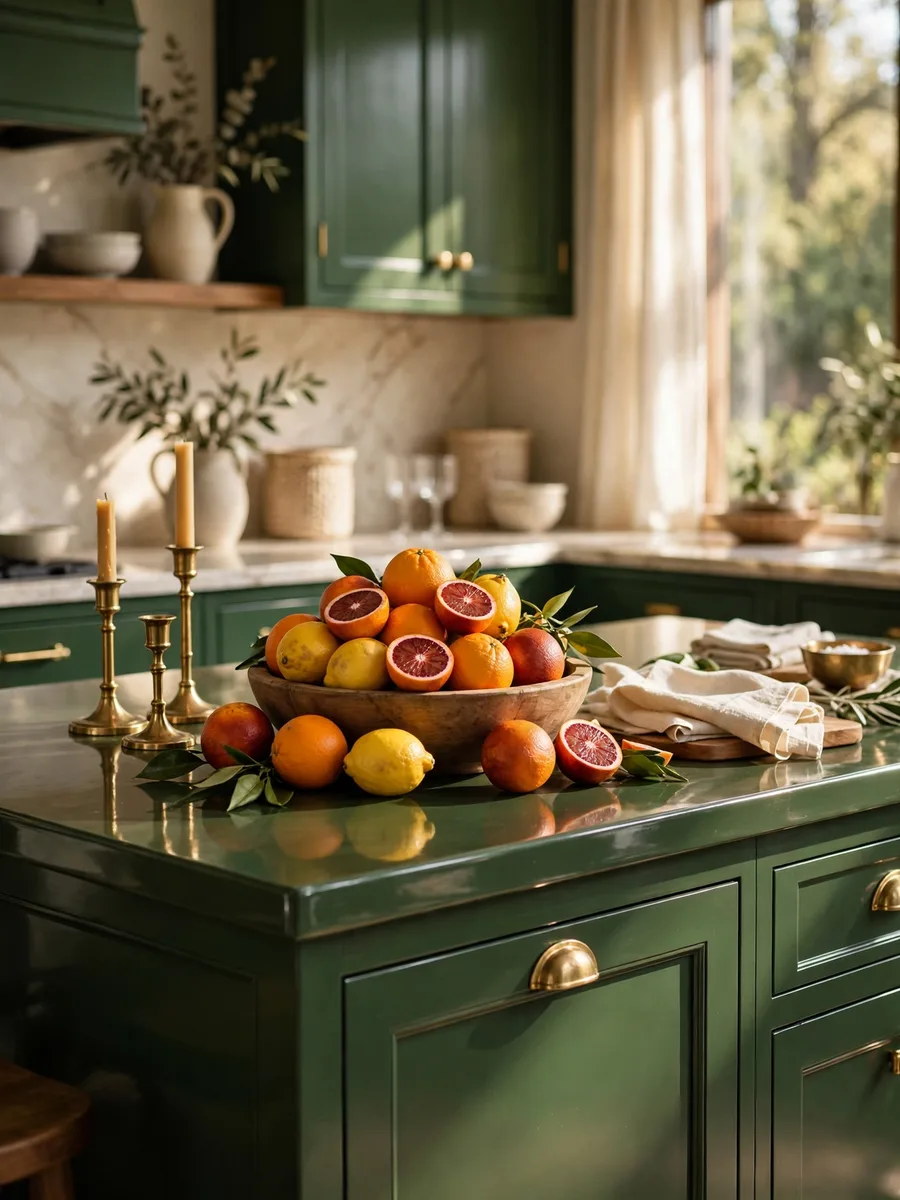
A bowl of winter citrus is the brightest thing you can put in a kitchen in January, and it is also the most useful decoration you will own. Oranges, blood oranges, lemons, and grapefruit bring color to a grey month, and they get eaten rather than dusted. A concrete example is a wide wooden bowl on the kitchen island decor setup, filled with six oranges, three blood oranges, and a few sprigs of pine tucked between them, sitting where everyone passes on the way to the kettle.
Quick tips
- Mix two or three citrus types for varied color and size.
- Use a wide, shallow bowl so the fruit sits in one layer.
8. A Small Lamp on the Counter
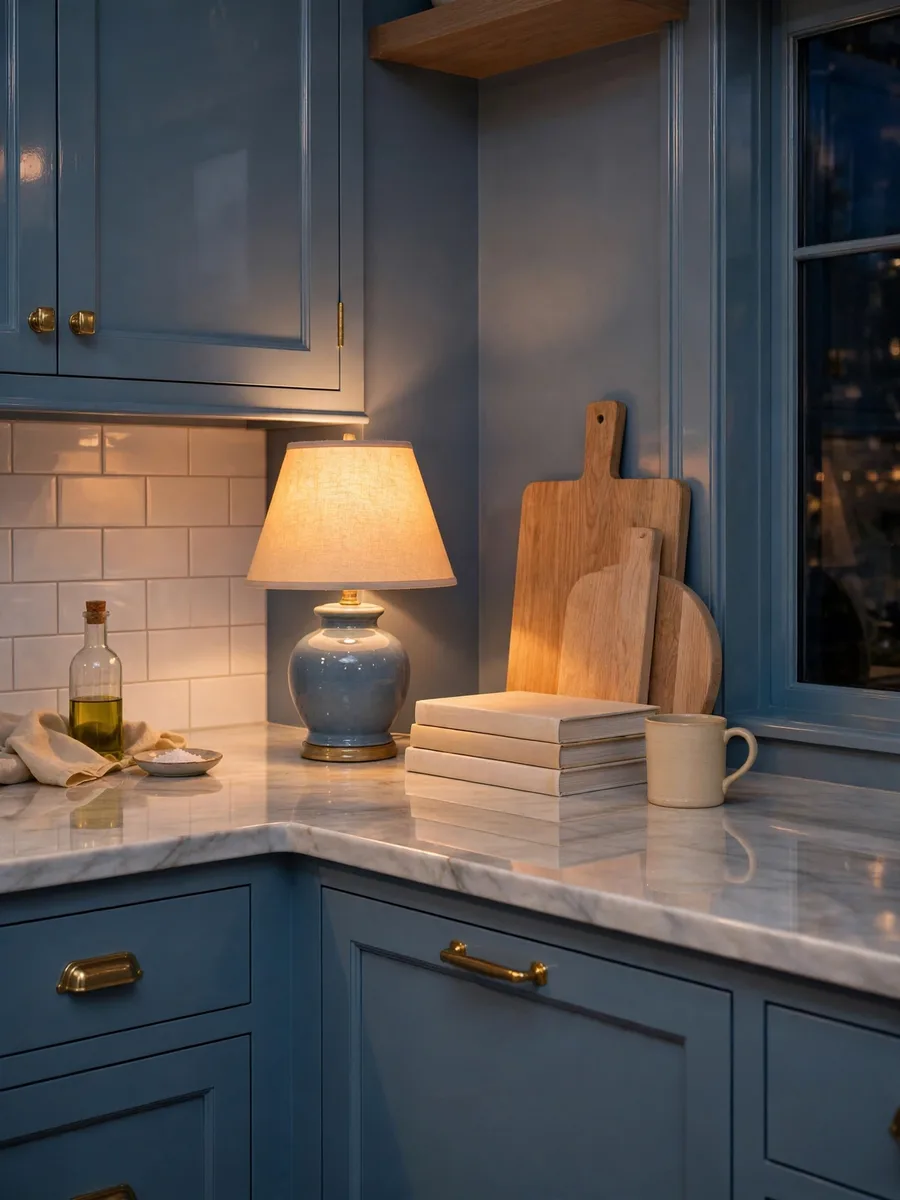
A small lamp on the counter is the designer trick that changes a kitchen after dark. A concrete example is a small ceramic lamp with a cream shade on the far end of the counter, switched on at dusk, beside a stack of two cookbooks and a single mug.
Quick tips
- Keep the lamp under 40 cm tall so it clears the cabinets.
- Use a warm bulb, never cool white.
9. Open Shelves Styled with Stoneware
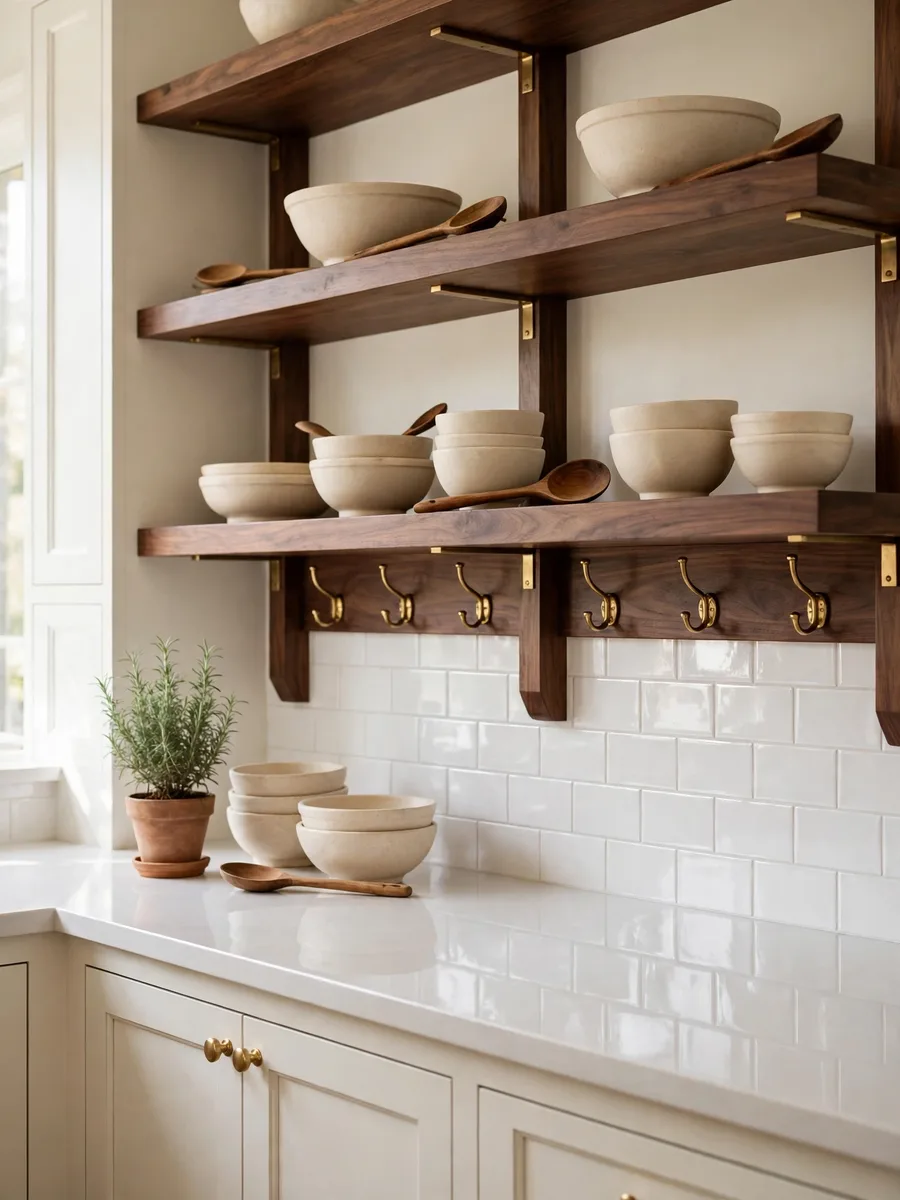
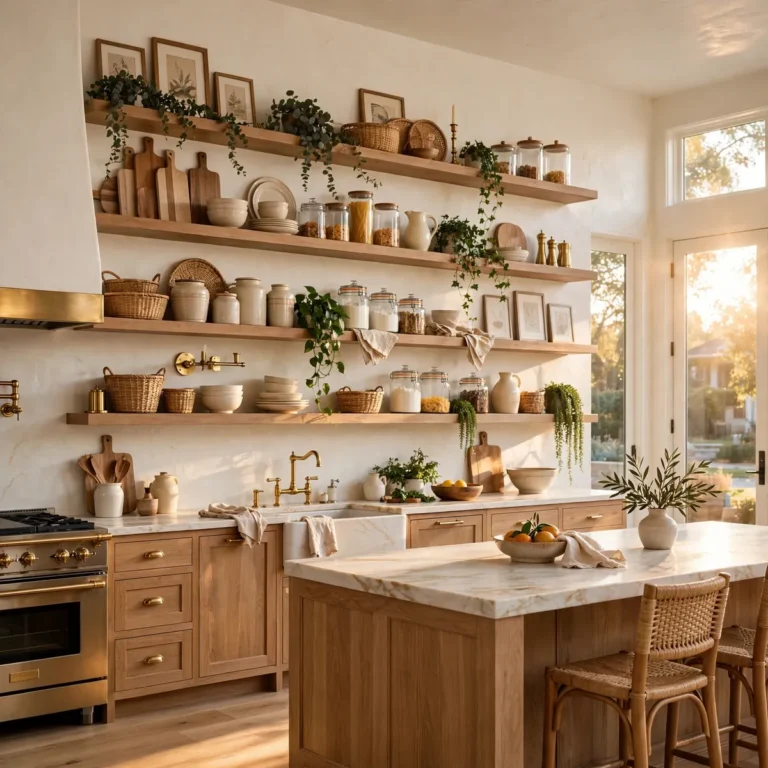
Winter is the right time to reset open shelves with heavier, warmer pieces. Put away the light summer glassware and bring forward cream stoneware bowls, wooden spoons, and a few brass accents. A concrete example is a walnut shelf holding a stack of four cream stoneware bowls, a small potted rosemary plant, and a brass hook with a linen apron, with a wooden board leaning at the end.
Quick tips
- Group items in threes for a natural, balanced look.
- Keep everyday dishes at arm height and display pieces higher up.
10. A Woven Runner Rug by the Sink
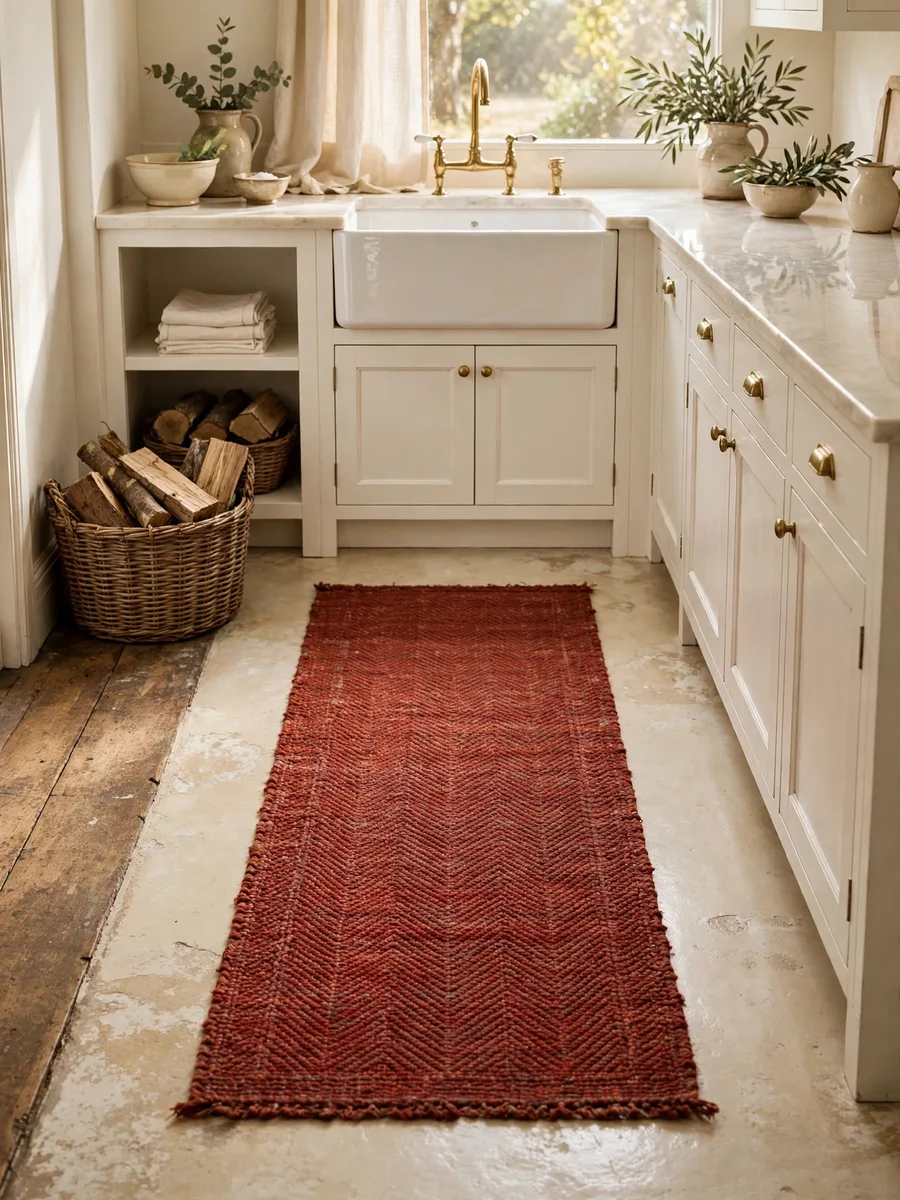
Cold tile floors are the least cozy part of a winter kitchen, and a runner rug fixes that in fifteen minutes. A concrete example is a flat-weave rust and cream runner in front of the farmhouse sink, with a non-slip pad underneath and a basket of rolled towels on the floor beside it.
Quick tips
- Measure the sink run and leave 10 cm of floor showing at each end.
- Use a washable rug and a non-slip pad underneath.
11. Wooden Cutting Boards on the Backsplash
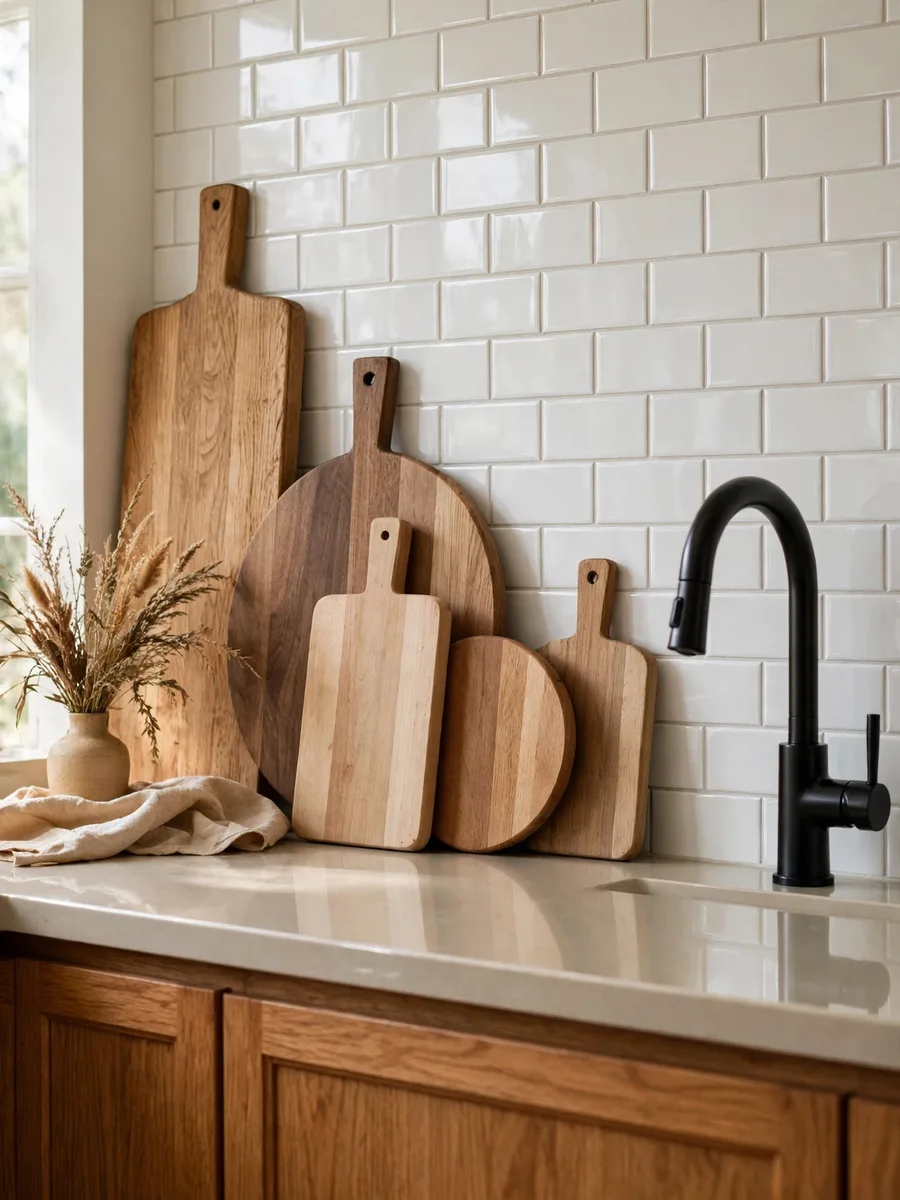
Wood is the fastest warmth you can lean against a cold kitchen wall. A few wooden cutting boards in different sizes and tones, leaned against the backsplash, add texture and color without using any counter space. A concrete example is three boards, a small round one, a medium rectangular one, and a tall paddle board, leaned in a row against white subway tile behind the stove, with a small vase of dried grasses at one end.
Quick tips
- Vary the sizes and wood tones for a collected look.
- Lean boards at a slight angle so they stay put.
12. A Candle Cluster on a Tray
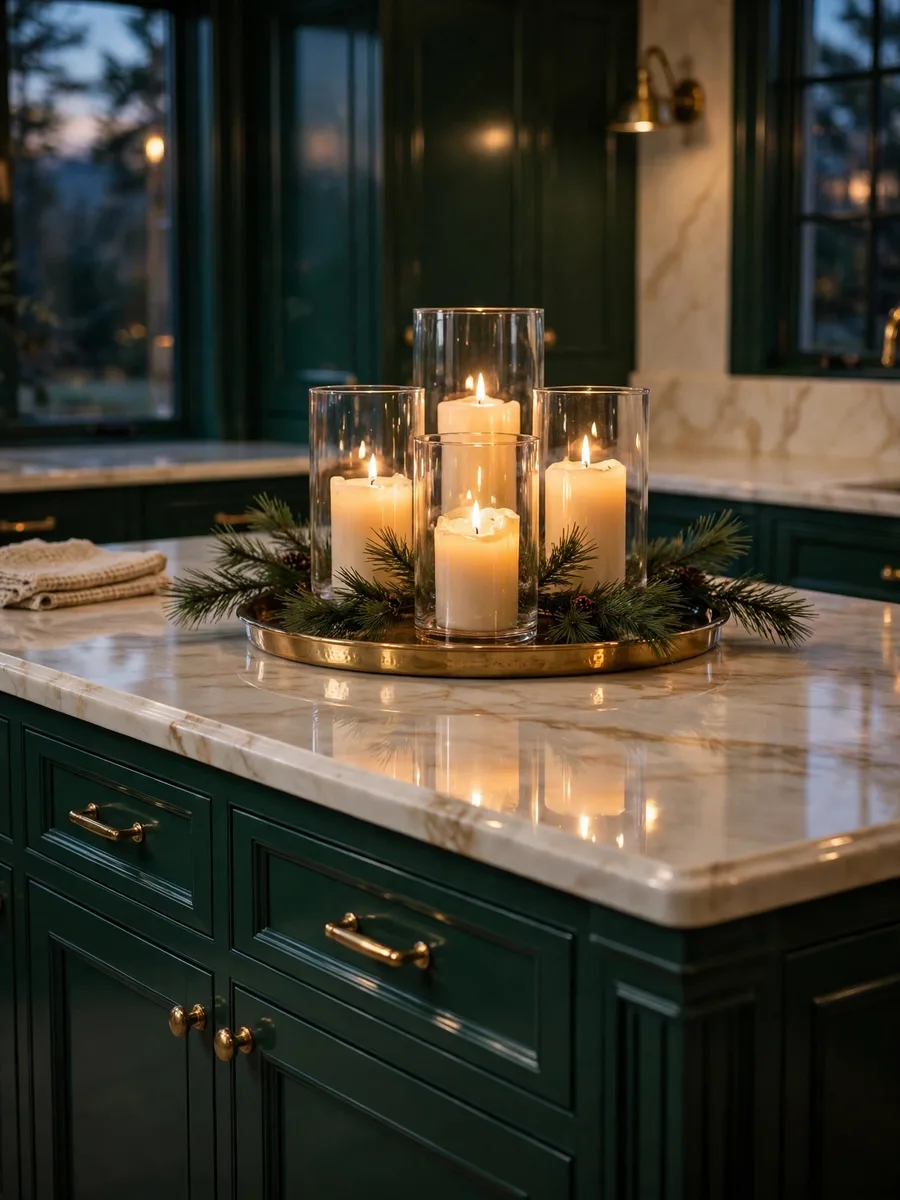
Candlelight is winter’s cheapest luxury, and a cluster on a tray keeps it safe and contained. Group three pillar candles of different heights on a brass or wooden tray with a few pine sprigs, and light them at dinner time. A concrete example is a round brass tray on the kitchen island holding a tall cream pillar, a medium amber pillar, and a short white pillar, with two small pine sprigs laid flat between them.
Quick tips
- Use three heights for a natural, layered look.
- Trim wicks to 5 mm before lighting to reduce smoke.
13. A Winter Herb Garden on the Sill
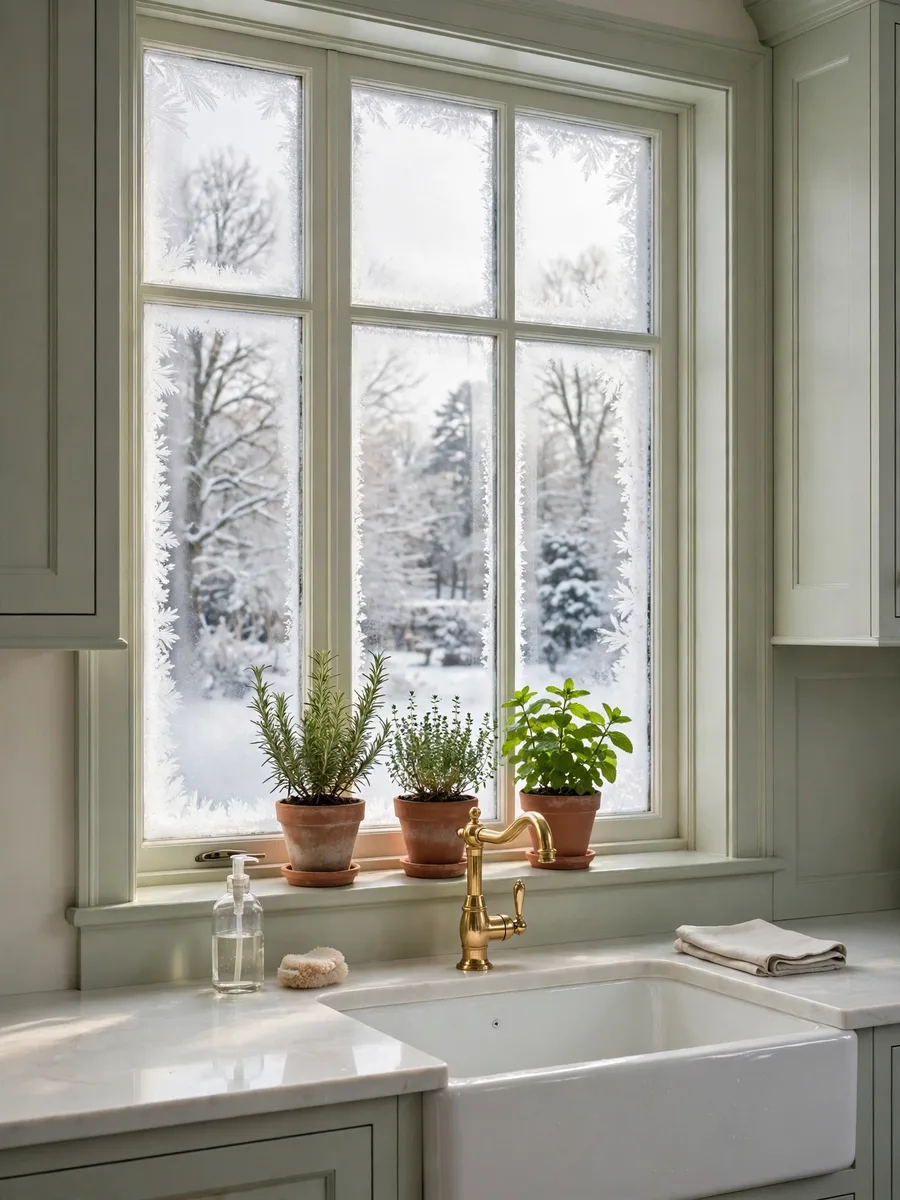
A small herb garden on the windowsill is both decoration and a cooking supply, and it stays green when the garden outside is bare. Rosemary, thyme, and mint all grow happily indoors with a few hours of light. A concrete example is three small terracotta pots on the sill above the sink, one rosemary, one thyme, one mint, in a row with a folded linen cloth underneath to catch drips.
Quick tips
- Use terracotta pots with drainage holes and a tray underneath.
- Water only when the top soil feels dry.
14. Buffalo Check and Plaid Accents
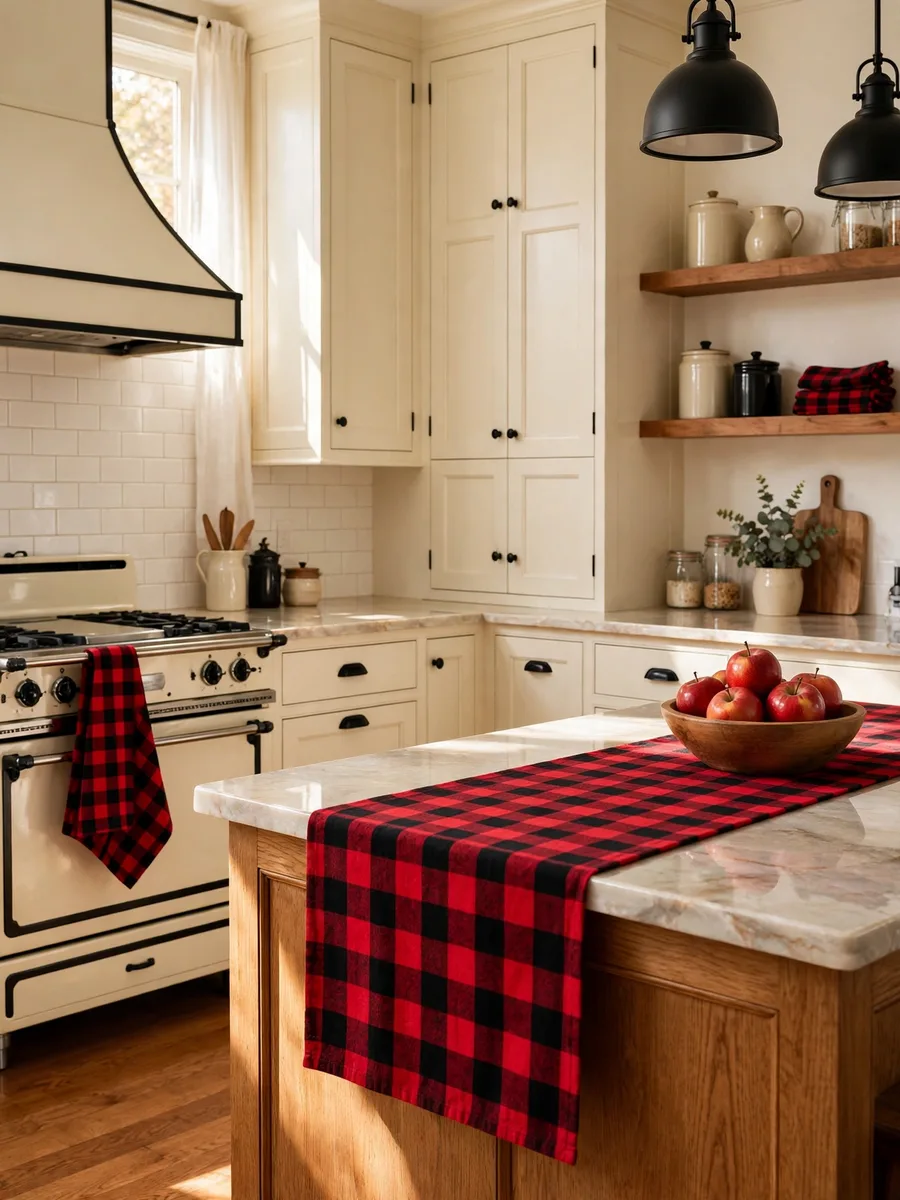
Nothing reads as winter in a kitchen quite like plaid. A buffalo check towel, a plaid runner, or a set of plaid napkins brings instant seasonal color without a single ornament. A concrete example is a red and black buffalo check runner on the kitchen table, with matching napkins folded at each place and a plain cream towel on the oven handle to keep the pattern from taking over.
Quick tips
- Use one plaid pattern per room, not two competing checks.
- Pair plaid with plain cream or solid red to calm it down.
15. Copper Pots and Mugs on Display

Copper catches winter light beautifully, and a few well-placed pieces warm up a dark kitchen wall. Hang copper mugs from a brass rail, or display a copper pot or two on an open shelf. A concrete example is a brass rail on a charcoal wall holding four polished copper mugs, with a copper saucepan hanging at one end and a small wooden shelf above holding copper measuring cups.
Quick tips
- Hang mugs by their handles so they catch the light.
- Limit the display to five or six pieces.
16. Fairy Lights Above the Cabinets
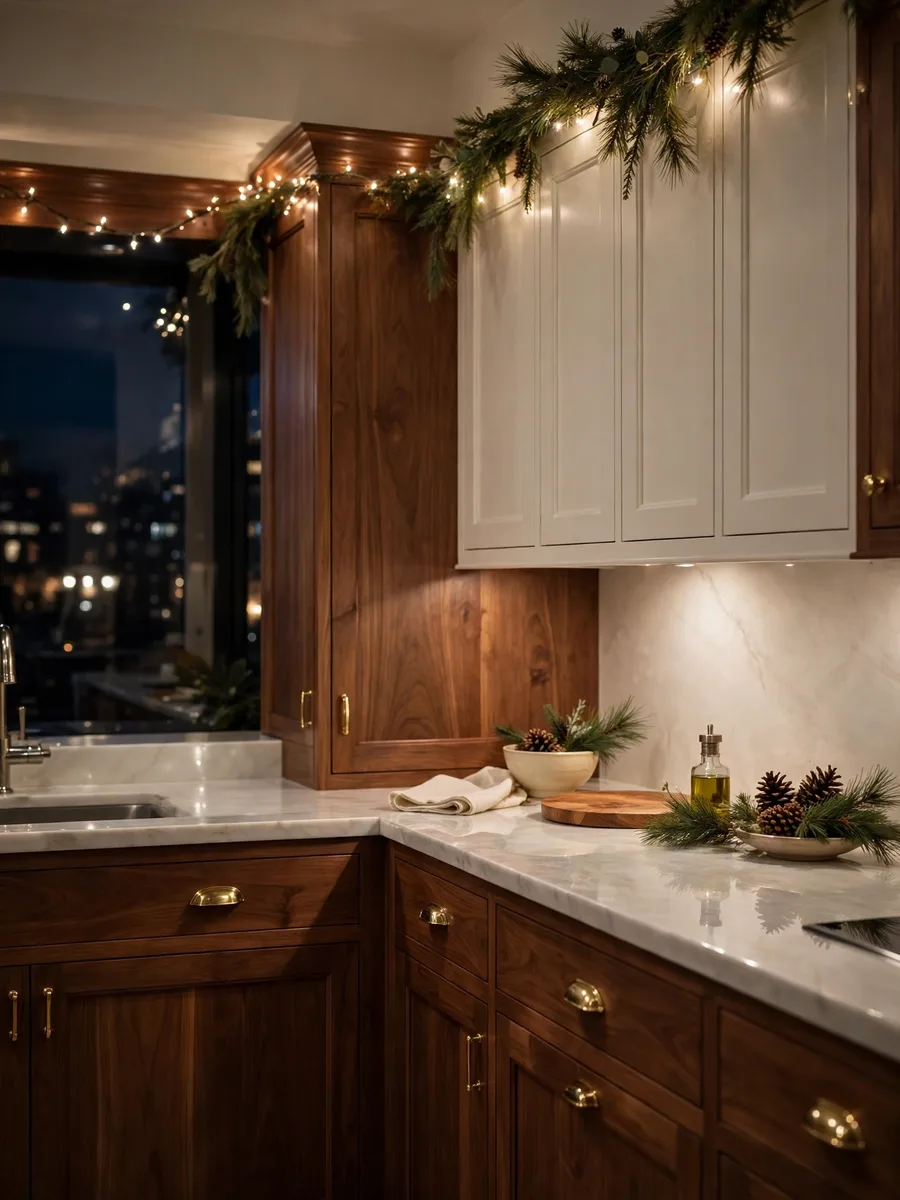
Fairy lights above the cabinets give a kitchen a soft evening glow that costs almost nothing to run. A single strand of warm-white LEDs along the top of the wall cabinets, hidden behind the cornice, washes the ceiling in gentle light. A concrete example is a warm-white LED strand woven along the top of white cabinets with a loose pine garland, plugged into a smart outlet that switches on at five every evening and off at ten.
Quick tips
- Use warm-white LEDs for a candle-like glow.
- Hide the wire behind the cabinet cornice.
17. Frosted Glass Jars with Greenery
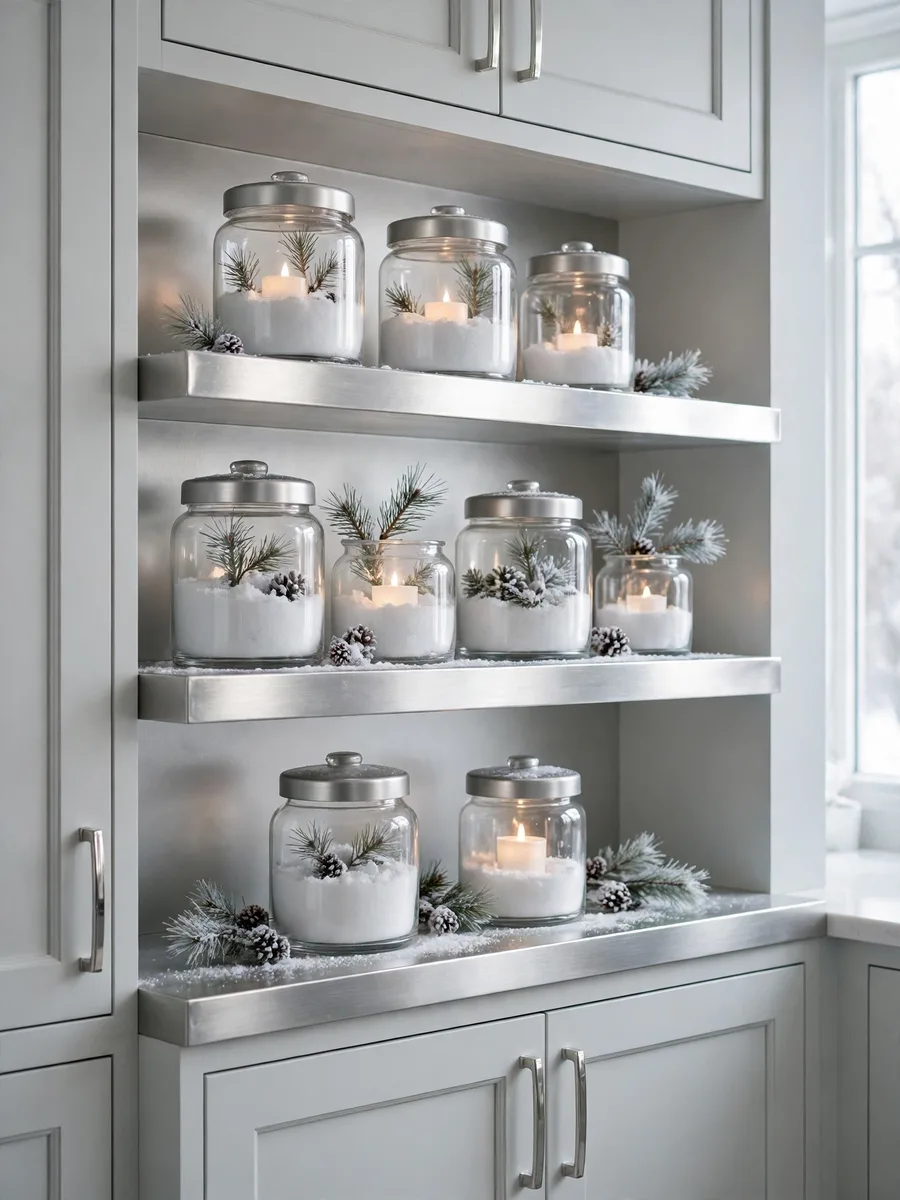
Frosted glass jars filled with pine sprigs and a battery candle look like a snowy windowsill, even in a kitchen that never sees snow. The frosted glass softens the candlelight and hides the battery pack. A concrete example is three frosted jars of different heights on a pale grey shelf, each holding a small pine sprig and a flickering battery candle, with a dusting of white faux snow around their bases.
Quick tips
- Use battery candles, never real flames, inside jars with greenery.
- Group three jars of different heights together.
18. A Tiered Tray of Winter Finds

A tiered tray is the easiest way to build a winter display on a crowded counter, because it stacks the decor upward instead of spreading it outward. Fill each level with small seasonal finds: pinecones, dried oranges, a tiny ceramic house, cinnamon sticks. A concrete example is a three-tiered wooden tray on the counter holding pinecones and a small white ceramic house on the top tier, dried orange slices and cinnamon sticks in the middle, and a tiny bottle brush tree with a sprig of pine on the bottom.
Quick tips
- Fill each tier with a different texture: wood, fruit, greenery.
- Keep the tallest item on the top tier for balance.
19. Cozy Barstool Cushions
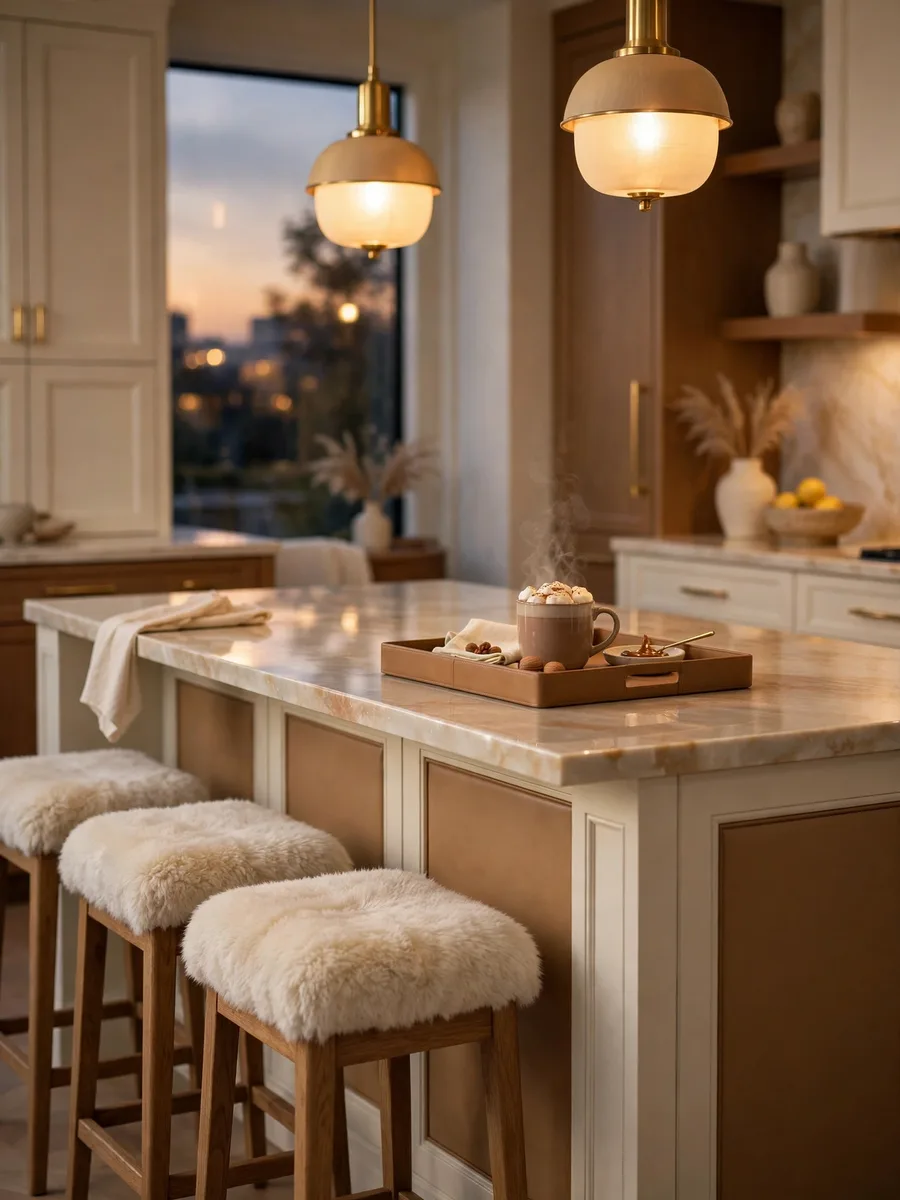
Barstools are where everyone perches with a mug in winter, so a soft cushion makes the kitchen feel welcoming in a very practical way. Faux-fur or thick woven cushions in cream or camel tie the stools with a leather strap or a simple tie. A concrete example is two wooden barstools at the island, each with a cream faux-fur cushion tied on, a camel leather tray between them holding a mug of hot chocolate, and a folded wool throw over the back of one stool.
Quick tips
- Pick tie-on cushions with washable covers.
- Match the cushion color to your towels for a pulled-together look.
20. A Dried Citrus Garland
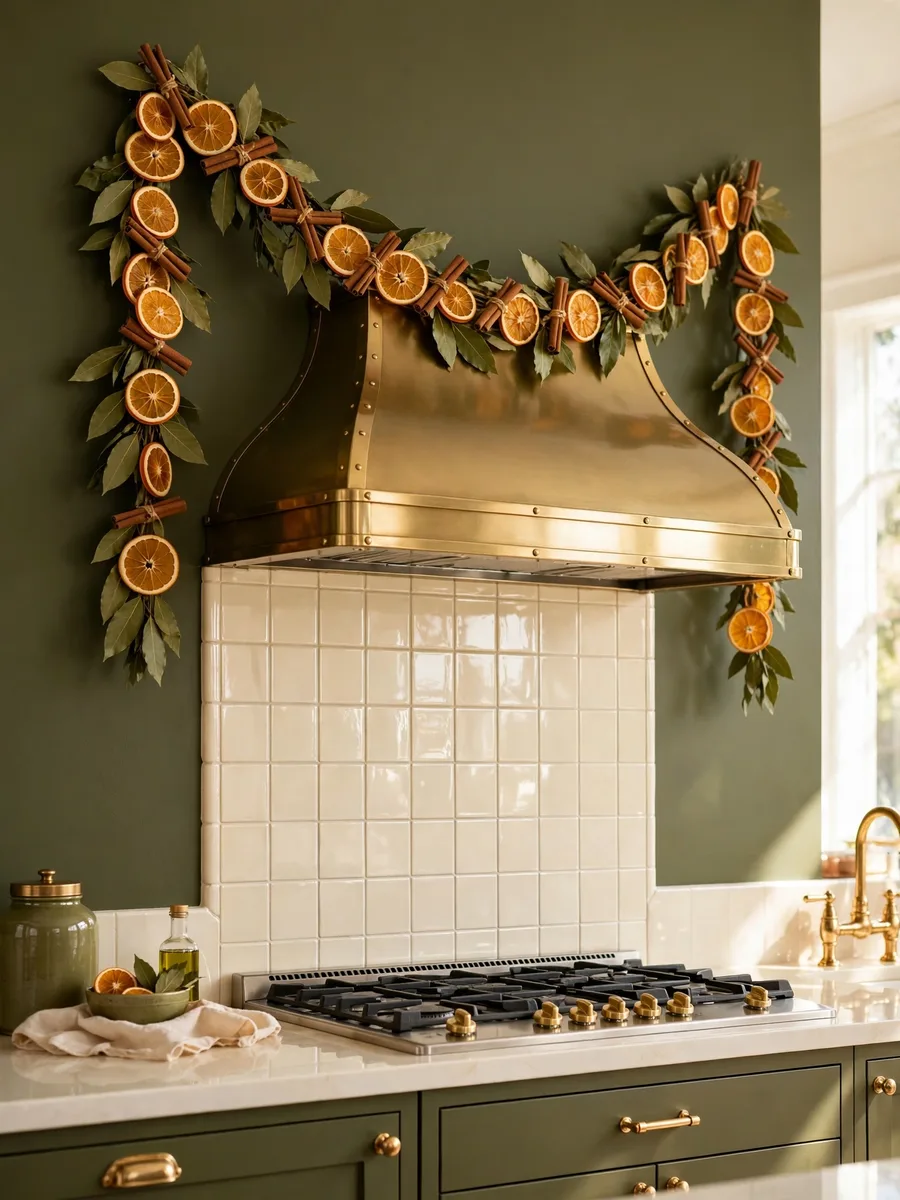
A dried citrus garland is a winter decoration that smells as good as it looks, and it costs almost nothing to make. Slice oranges thinly, dry them slowly in a low oven, and thread them with cinnamon sticks and bay leaves on twine. A concrete example is a garland of dried orange slices, cinnamon sticks, and bay leaves draped in a gentle swag above the range hood, with the ends tied to two small brass hooks.
Quick tips
- Dry orange slices at 90°C for two to three hours until crisp.
- Thread with twine and a large needle, spacing slices evenly.
21. A Stoneware Mug Wall
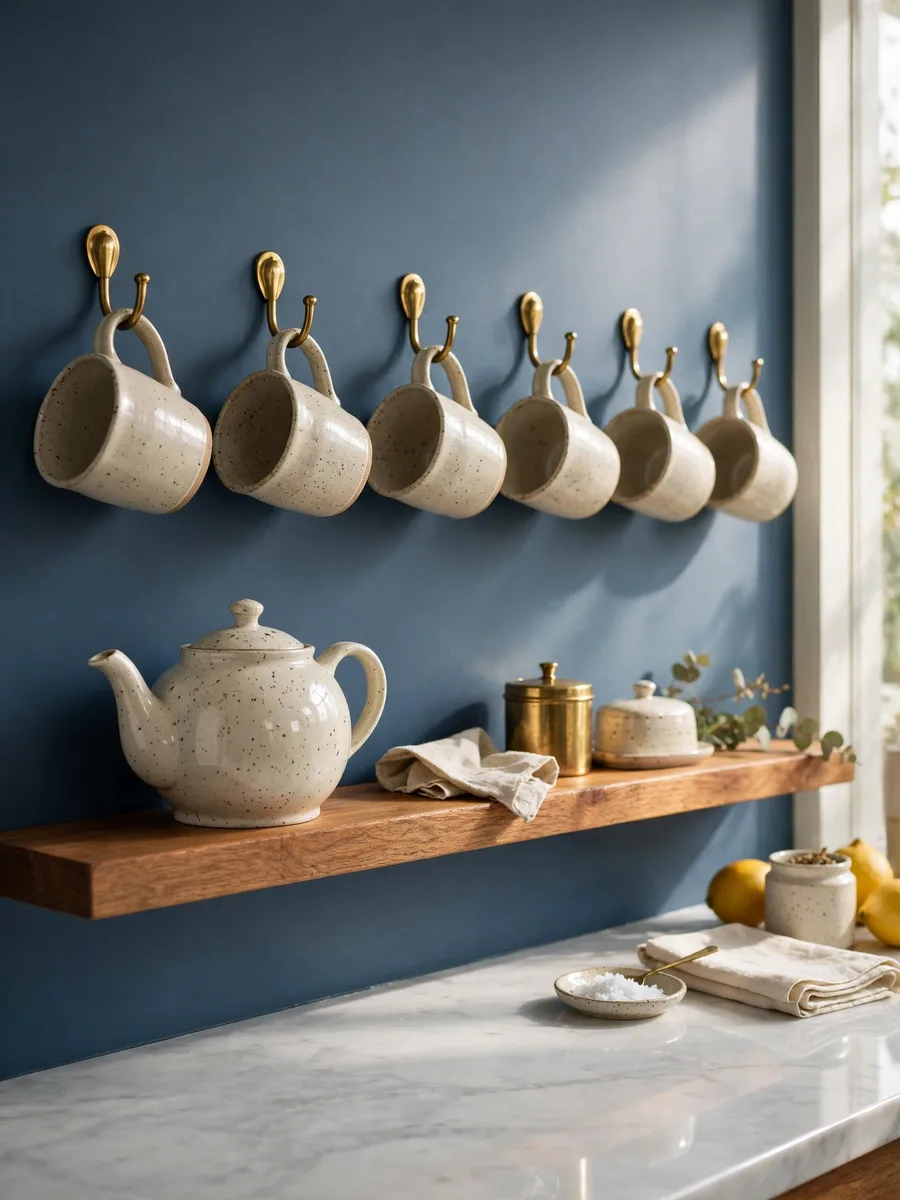
A mug wall turns everyday dishes into winter decor, and it frees up cabinet space at the same time. Hang a row of cream, speckled, and slate-blue stoneware mugs on brass hooks along one wall or under a shelf. A concrete example is a slate-blue wall with eight mugs on brass hooks in a neat row, a small wooden shelf above holding a ceramic teapot and a jar of tea, and a folded linen towel hanging from the end hook.
Quick tips
- Use sturdy brass hooks screwed into a stud or a mounted rail.
- Hang your most-used mugs at the front for easy reach.
22. A Simple Evergreen Window Wreath
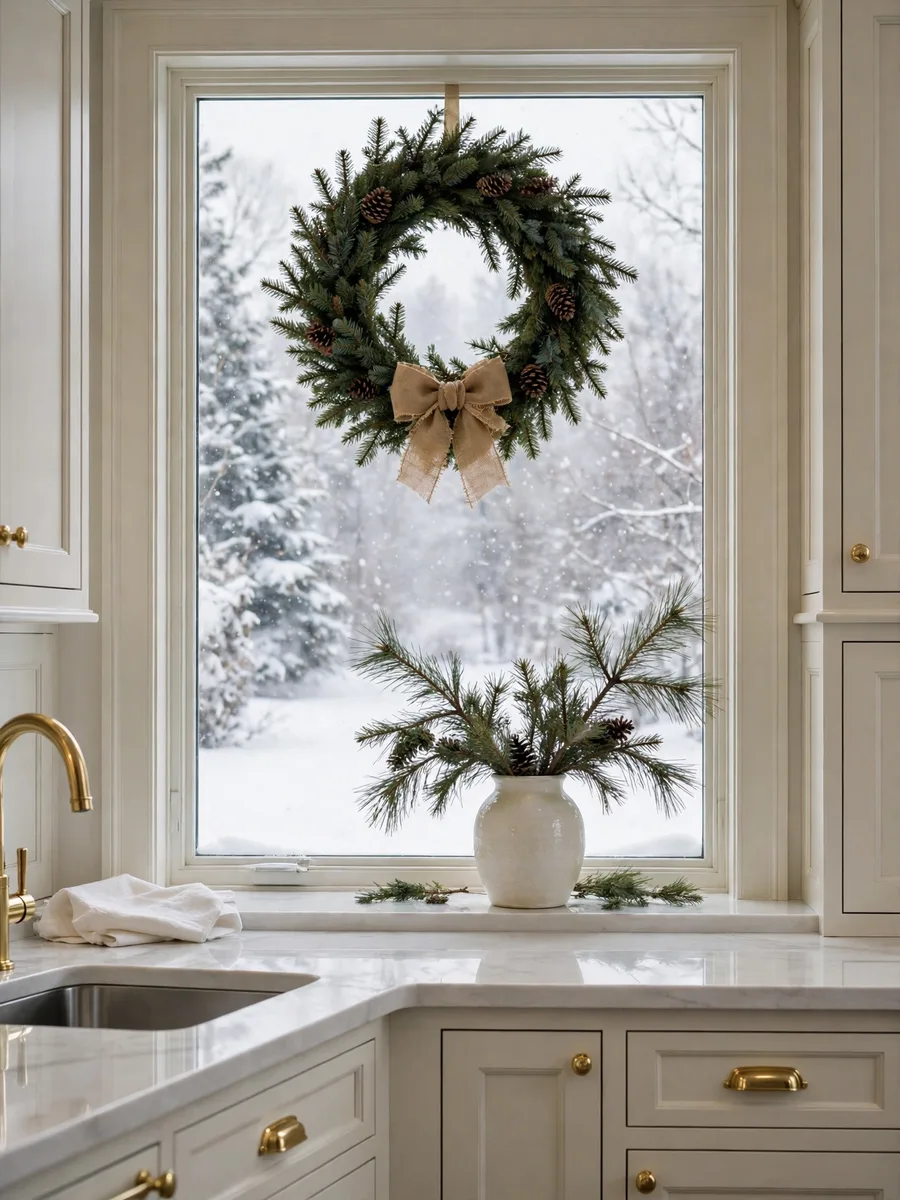
A small evergreen wreath on the kitchen window frames the view and brings the outdoors in, even on the greyest January day. Keep it simple: pine, cedar, a few pinecones, and a burlap bow, with no ornaments. A concrete example is a 30 cm cedar wreath with three pinecones wired in and a small burlap bow at the bottom, hung on the inside of the kitchen window with a clear suction hook, with a ceramic vase of pine branches on the sill below it.
Quick tips
- Keep the wreath small, around 30 cm, so it suits a kitchen window.
- Hang it inside with a suction hook to protect it from weather.
23. Warm Brass Pendant Lighting
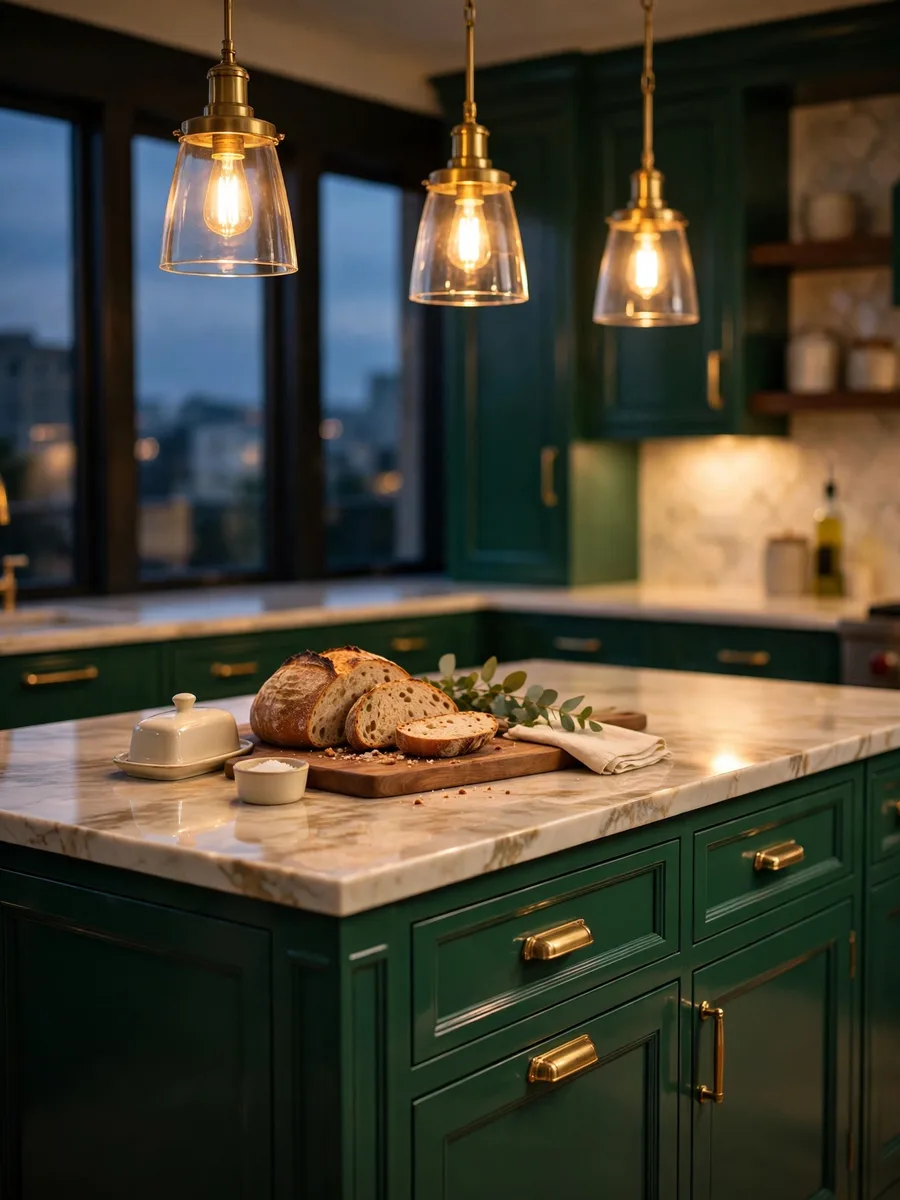
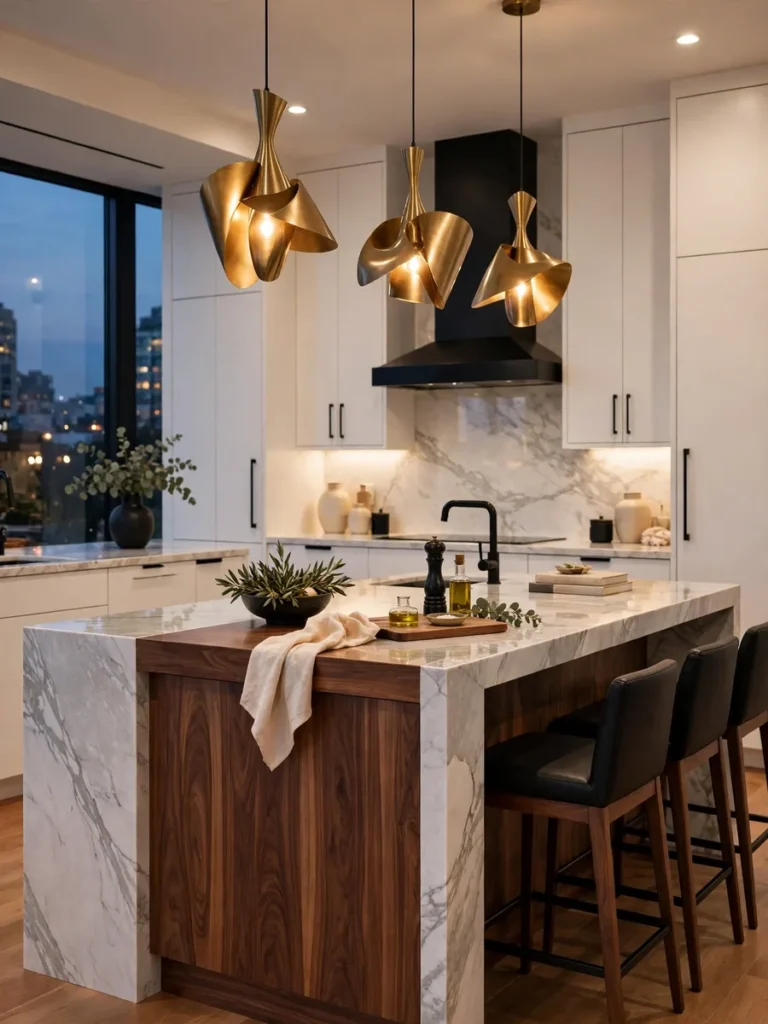
Pendant lights set the mood of a kitchen after dark, and warm brass pendants with Edison bulbs throw the kind of golden light that makes winter evenings feel generous. If your pendants are already in place, swapping the bulbs is often enough. A concrete example is two brass pendants with warm Edison bulbs hanging over a forest-green island, dimmed low in the evening, with a wooden board of bread and a ceramic butter dish on the marble counter below.
Quick tips
- Use warm Edison bulbs, 2200K to 2700K, for a golden glow.
- Add a dimmer so the light suits both cooking and dining.
24. A Layered Breakfast Nook
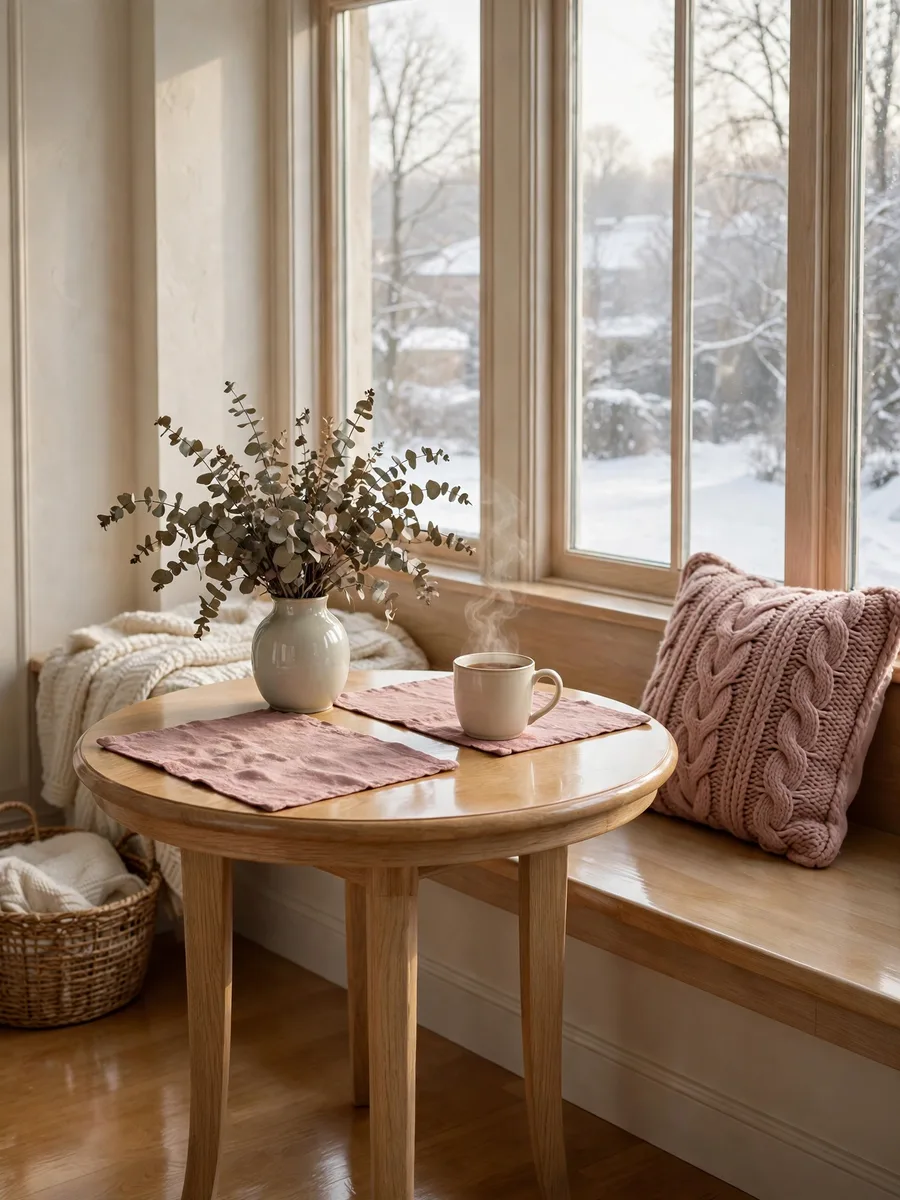
The breakfast nook is where winter mornings happen slowly, so it deserves the most layered styling in the kitchen: linen placemats, a chunky knit cushion on the bench, a vase of dried eucalyptus on the table, and a small lamp or candle nearby for the dark mornings. A concrete example is a round oak table with dusty rose linen placemats, a vase of dried eucalyptus in the center, a chunky knit cushion on the bench seat, and a mug of tea steaming beside a folded newspaper, all lit by soft window light on a grey morning.
Quick tips
- Layer one textile on the table and one on the seat, not more.
- Use a washable placemat under anything that might spill.
Frequently Asked Questions
How do I decorate my kitchen for winter without it looking like Christmas?
Lean on texture, natural materials, and warm light instead of holiday symbols. Wool textiles, stoneware, wooden boards, citrus, and evergreen branches all feel seasonal from December through March, and none of them has to come down after New Year’s Day. Skip snowmen, Santa figures, and red-and-green pairings, and let pine, cinnamon, and candlelight do the seasonal work.
What colors work best for winter kitchen decor?
Warm, muted colors work best: rust, clay, camel, forest green, olive, and creamy oatmeal. These shades sit comfortably against wood, stone, and brass, and they look rich under warm lamplight on dark winter afternoons. Cool tones like dusty blue and pale sage can work too, as long as they are balanced with warm wood, brass, and candlelight.
How can I make my kitchen feel cozy in winter on a budget?
Start with the three cheapest changes: swap in wool or flannel towels, set a simmer pot on the stove, and add a small lamp or a strand of fairy lights. A bowl of citrus and a few foraged evergreen branches cost almost nothing, and together these touches change the whole feeling of the room for very little money.
When should I put up winter kitchen decor, and when should I take it down?
Most people put winter kitchen decor up in early December and take it down in late February or the first week of March. Because it is built around the season rather than one holiday, there is no rush to remove it in January. Take down fresh greenery when it dries out, and keep the textiles, lighting, and stoneware until spring arrives.
How do I decorate a small kitchen for winter?
Pick three small changes that do not take counter space: a runner rug by the sink, a small lamp at the end of the counter, and a single evergreen arrangement on the windowsill. Lean cutting boards against the backsplash and swap the towels for wool ones. Small kitchens feel cozy fastest, because a little warmth goes a long way in a small room.
What is the easiest winter kitchen decor idea?
The easiest idea is a bowl of winter citrus on the counter. It takes five minutes, costs very little, adds color and scent, and gets eaten rather than dusted. A simmer pot is nearly as easy, and a small counter lamp is the next best step if you want more warmth after dark.
Conclusion
Winter kitchen decor works when it warms the room without turning it into a holiday display. Start with light, textiles, and scent, add evergreen and citrus for color, and finish with one cozy corner for hot drinks. These 24 winter kitchen decor ideas are built to last from December through February, so decorate once, enjoy the season, and let the kitchen stay warm and welcoming all winter long.