19 Serene Scandinavian Bedroom Ideas
Scandinavian bedroom ideas bring calm, light, and warmth into the room where you start and end every day. The style pairs pale wood, warm white walls, and soft linen with the Danish idea of hygge, which means creating small moments of comfort, and the Swedish idea of lagom, which means keeping just enough and nothing extra. The result is a bedroom that feels bright in the morning, restful at night, and easy to live in all year round. This guide covers 19 serene Scandinavian bedroom ideas you can use in a real home, from the bed frame and the bedding to the lighting, the storage, and the finishing touches. Each idea works on its own, so you can start with one change this weekend or build the whole look room by room. The same calm, pale-wood palette also works beautifully beyond the bedroom, and if you love this look you will find it carried through a Scandinavian living room with the same warm whites and natural textures.
What Is a Scandinavian Bedroom?
A Scandinavian bedroom is a light, uncluttered sleep space built on pale wood, warm white walls, natural textiles like linen and wool, and simple functional furniture inspired by Denmark, Norway, and Sweden.
The style grew out of long Nordic winters, when homes needed to feel bright and warm even when daylight was short.
What Colours Work Best in a Scandinavian Bedroom?
Warm white, greige, pale grey, and soft pastels such as sage, dusty blue, and blush work best, layered over pale wood floors and furniture with one darker accent for contrast.
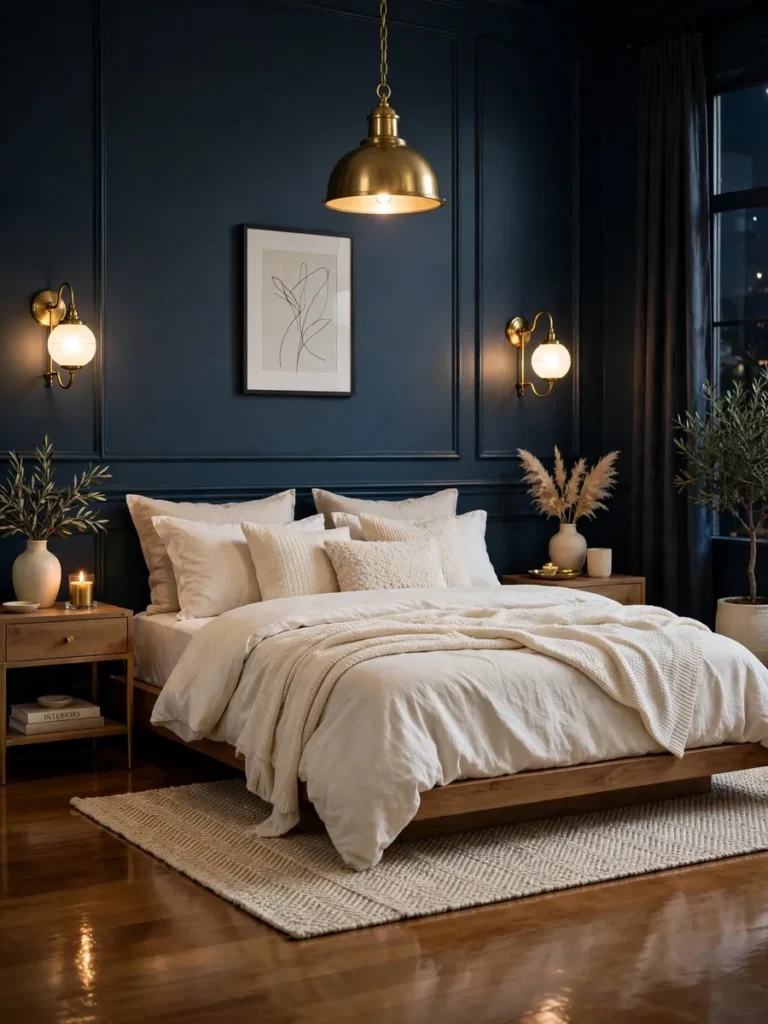
Start with warm white walls and a pale wood floor, then add colour in small, soft layers: a greige throw, sage cushions, or a dusty blue lamp.
How Do You Make a Scandinavian Bedroom Feel Cosy?
Layer soft textures, add warm light at a low level, and keep surfaces mostly clear so the few objects you keep feel chosen rather than crowded.
Cosiness here comes from touch and light, not from filling the room.
Key Takeaways
What defines a Scandinavian bedroom? Pale wood, warm white walls, natural textiles, simple furniture, and plenty of natural light, with hygge comfort layered over a clutter-free base.
What is the easiest place to start? The bed. Swap in washed linen bedding in white or oatmeal, add one knit throw, and the room changes in an afternoon.
Does it have to be all white? No. Soft sage, dusty blue, blush, greige, and one dark accent all belong in the style, as long as the overall feeling stays light and calm.
How do I keep it from feeling cold? Layer textures at every level: linen on the bed, wool on the chair, sheepskin on the floor, and warm light from lamps and candles in the evening.
1. Start With a Pale Wood Bed Frame
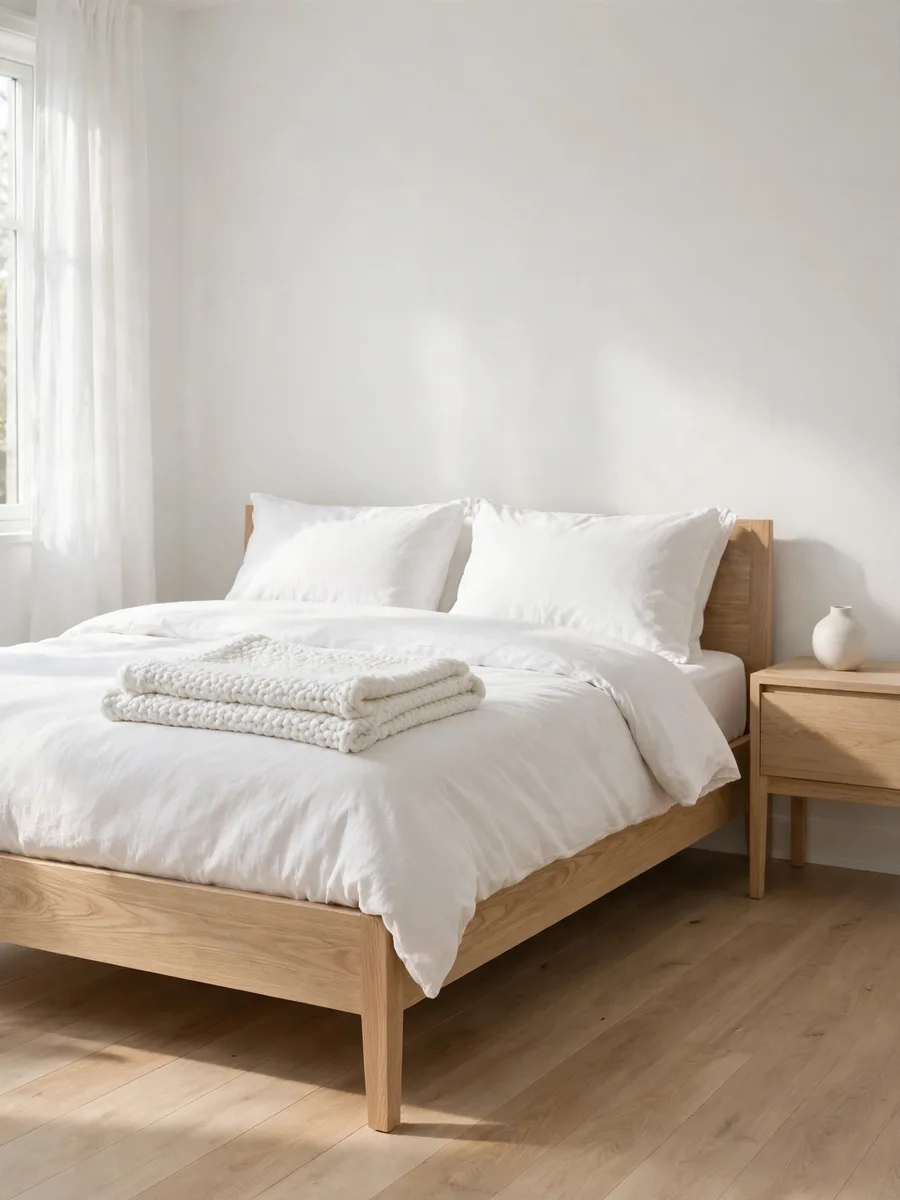
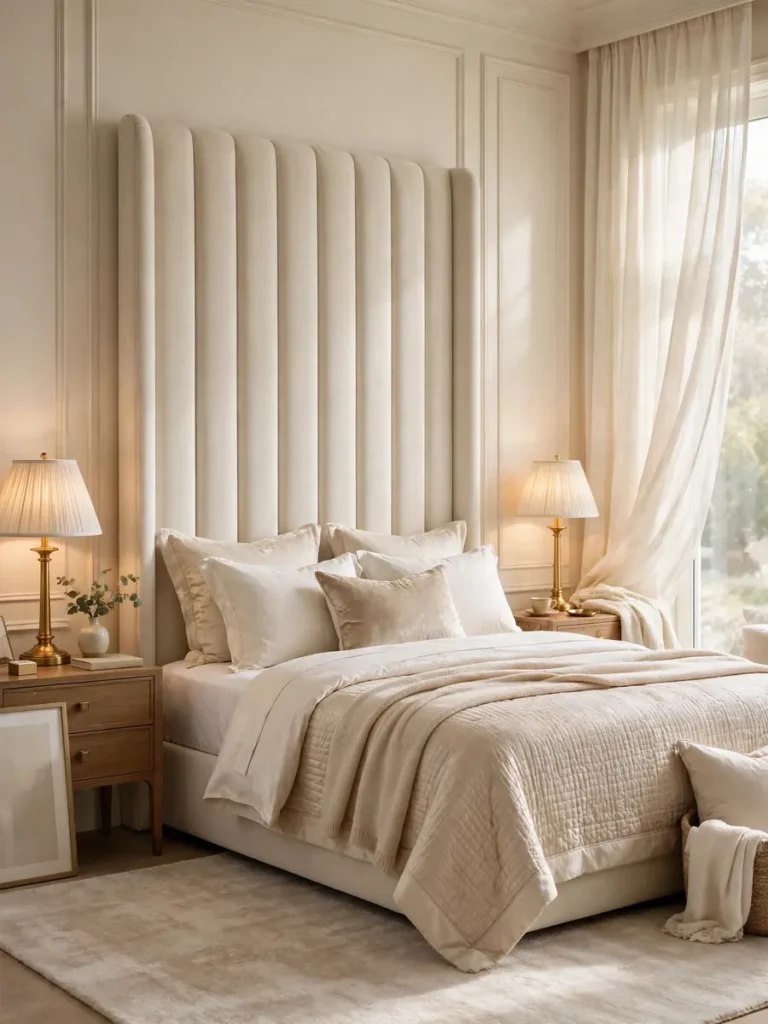
The bed is the largest piece of furniture in the room, so its material sets the tone for everything else. A pale wood frame in birch, ash, or light oak gives the room its Scandinavian character in one move, and it works with almost any bedding colour you choose later. Look for a simple frame with clean straight lines and visible wood grain, and a low headboard that keeps the wall above the bed open and bright.
Picture a pale oak frame dressed with crisp white linen bedding, a folded white knit throw at the foot, and a single small ceramic vase on the nightstand.
Quick tips
- Choose birch, ash, or light oak over dark walnut or mahogany.
- Keep the headboard low so the wall above the bed stays bright.
- Let the wood grain show instead of painting the frame white.
2. Keep the Walls Warm White
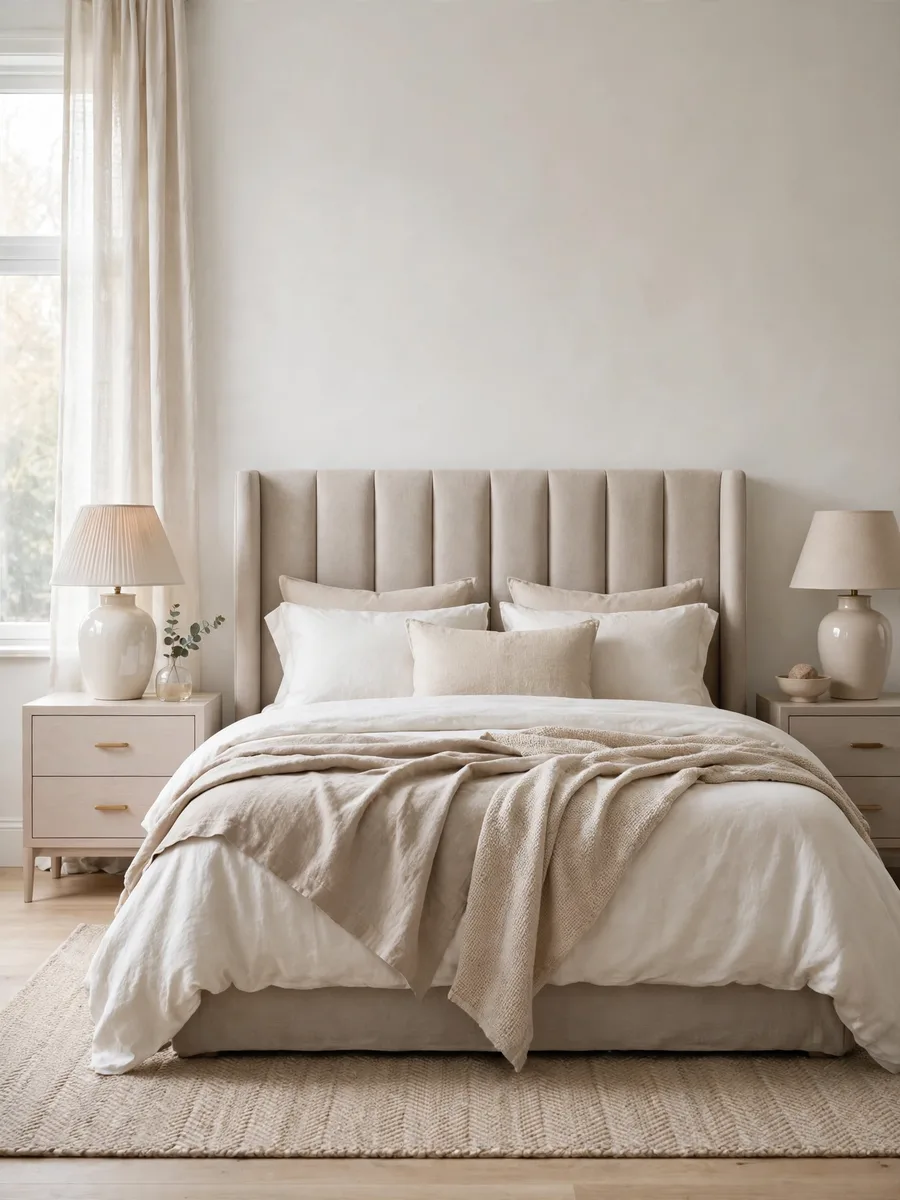
Warm white is the foundation colour of Scandinavian bedroom ideas, and the word warm matters. A pure brilliant white can look cold and clinical, while a warm white with a soft creamy or greige undertone makes the room feel calm and welcoming. Test two or three warm white samples on the wall and look at them in morning light, evening light, and lamplight before you commit.
Pair the walls with greige accents to stop the room from feeling flat.
Quick tips
- Pick a warm white with a creamy or greige undertone, not a stark blue-white.
- Test paint samples on the wall in both daylight and lamplight.
- Use greige textiles to add depth without a strong colour.
3. Layer Washed Linen Bedding

Linen is the signature textile of the Scandinavian bedroom. Washed linen has a soft, slightly rumpled texture that looks relaxed rather than messy, and it breathes well in summer while feeling cosy layered up in winter. Start with a linen duvet cover in white, oatmeal, or natural flax, add linen pillowcases in a matching tone, and finish with a folded linen throw across the foot of the bed.
Linen gets softer with every wash, so a good set improves over years rather than wearing out.
Quick tips
- Choose washed or stonewashed linen for instant softness.
- Mix two linen tones, such as white and oatmeal.
- Skip the iron and let the natural texture show.
4. Add Soft Sage Green Accents
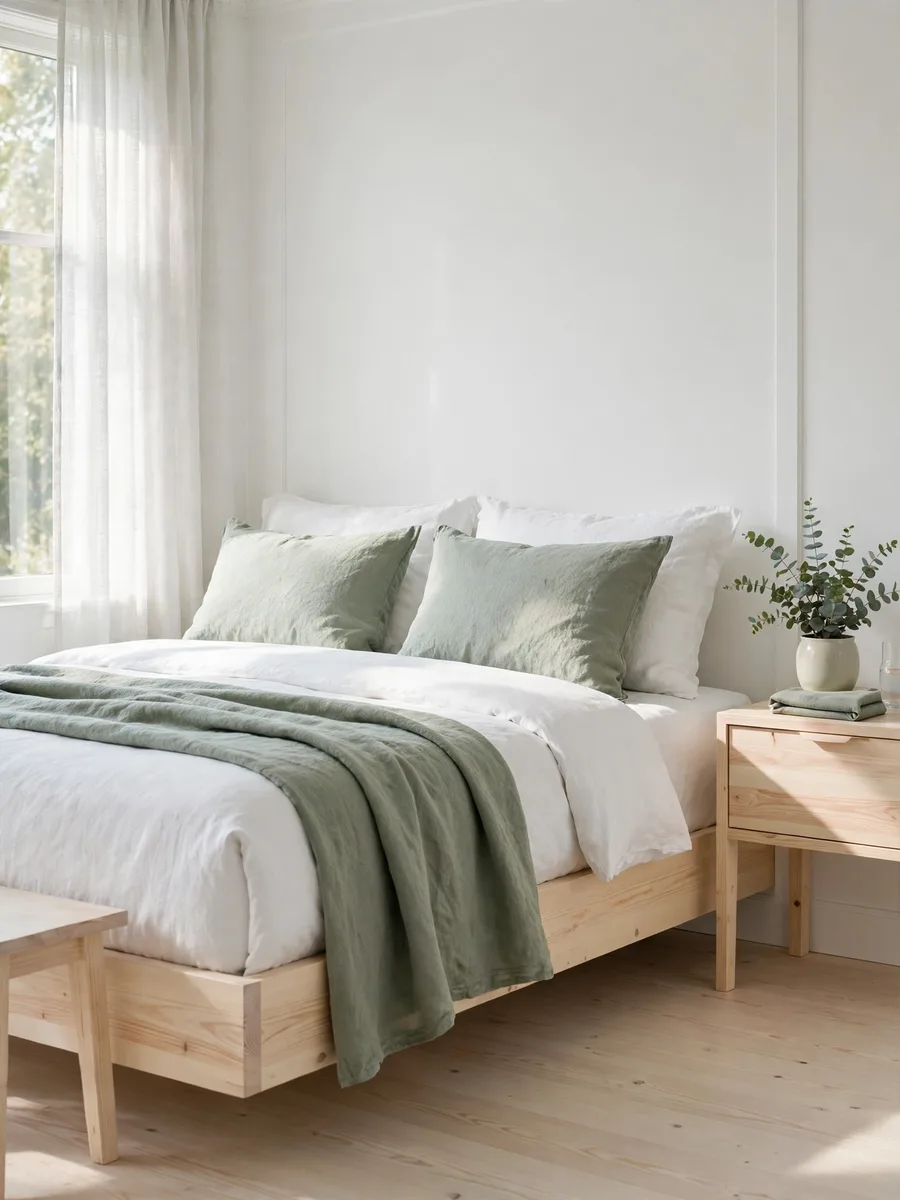
Sage green is one of the easiest colours to add to a Scandinavian bedroom because it behaves almost like a neutral. It brings a gentle hint of nature indoors, pairs beautifully with pale pine and white, and never fights the calm mood of the room. Use it in cushions, a throw, or a small potted plant rather than on the walls, so the colour stays soft and easy to change.
Two sage linen cushions and a folded sage throw on a white bed, with a small potted eucalyptus on the nightstand, give the whole room a fresh green note.
Quick tips
- Use sage in textiles and plants, not on large wall areas.
- Pair sage with pale pine for a soft, natural combination.
- Choose muted sage over bright or yellow greens.
5. Try Dusty Blue for a Calm Cool Note
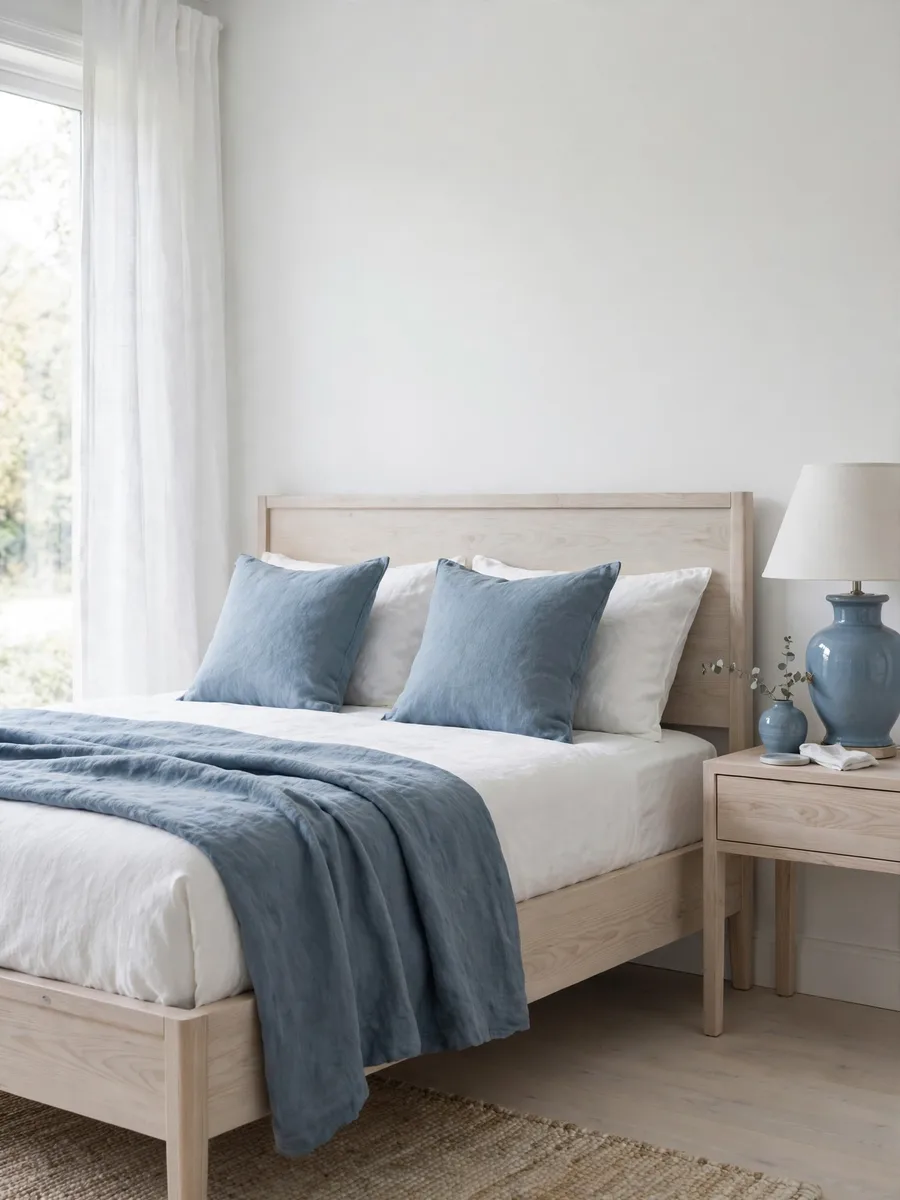
Dusty blue brings a cool, restful note into a Scandinavian bedroom without making the room feel cold, because its grey undertone keeps it soft and muted. It works especially well in bedrooms that get strong warm afternoon sun, where it balances the light. Use it on cushions, a throw, a ceramic lamp base, or a single piece of framed art.
A dusty blue linen cushion and a matching throw on white bedding, with a dusty blue ceramic lamp on the nightstand, is enough to give the room its colour story.
Quick tips
- Pick dusty blue with a grey undertone, not a bright blue.
- Limit blue to cushions, throws, and one or two small objects.
- Balance the cool blue with warm pale wood.
6. Soften the Room With Blush Pink
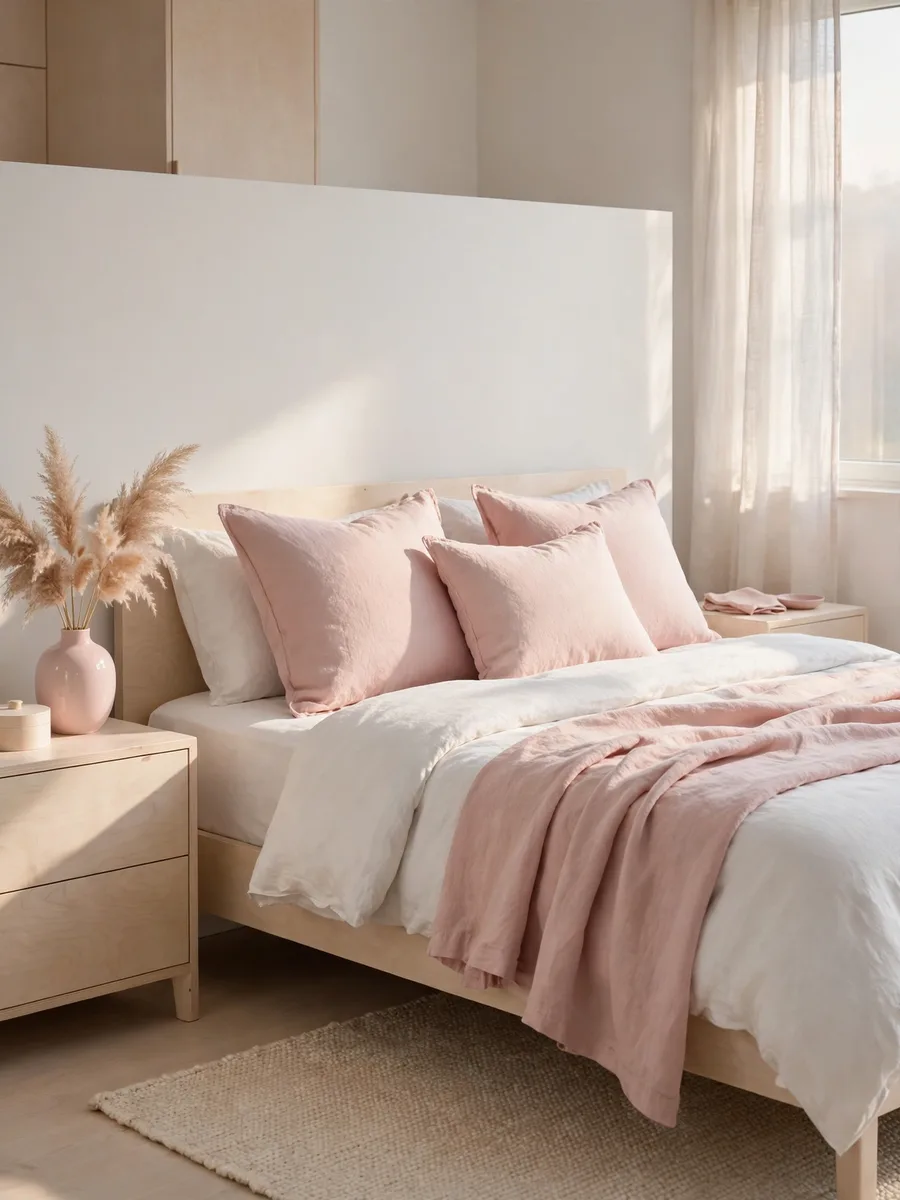
Blush pink adds warmth and softness to a Scandinavian bedroom in the gentlest possible way. It suits rooms that feel too stark in white and wood alone, and it works well with birch furniture and dried grasses such as pampas. Keep the blush pale and powdery, and use it in linen cushions, a throw, or a ceramic vase.
A white bed with two blush linen cushions, a folded blush throw, and a small blush ceramic vase holding dried pampas grass on the dresser gives the pink a presence in every corner without ever dominating.
Quick tips
- Choose pale powdery blush, not bright or bubblegum pink.
- Pair blush with dried pampas grass for a natural Nordic touch.
- Add one grey or charcoal object to keep the softness grounded.
7. Ground the Room With One Charcoal Accent Wall
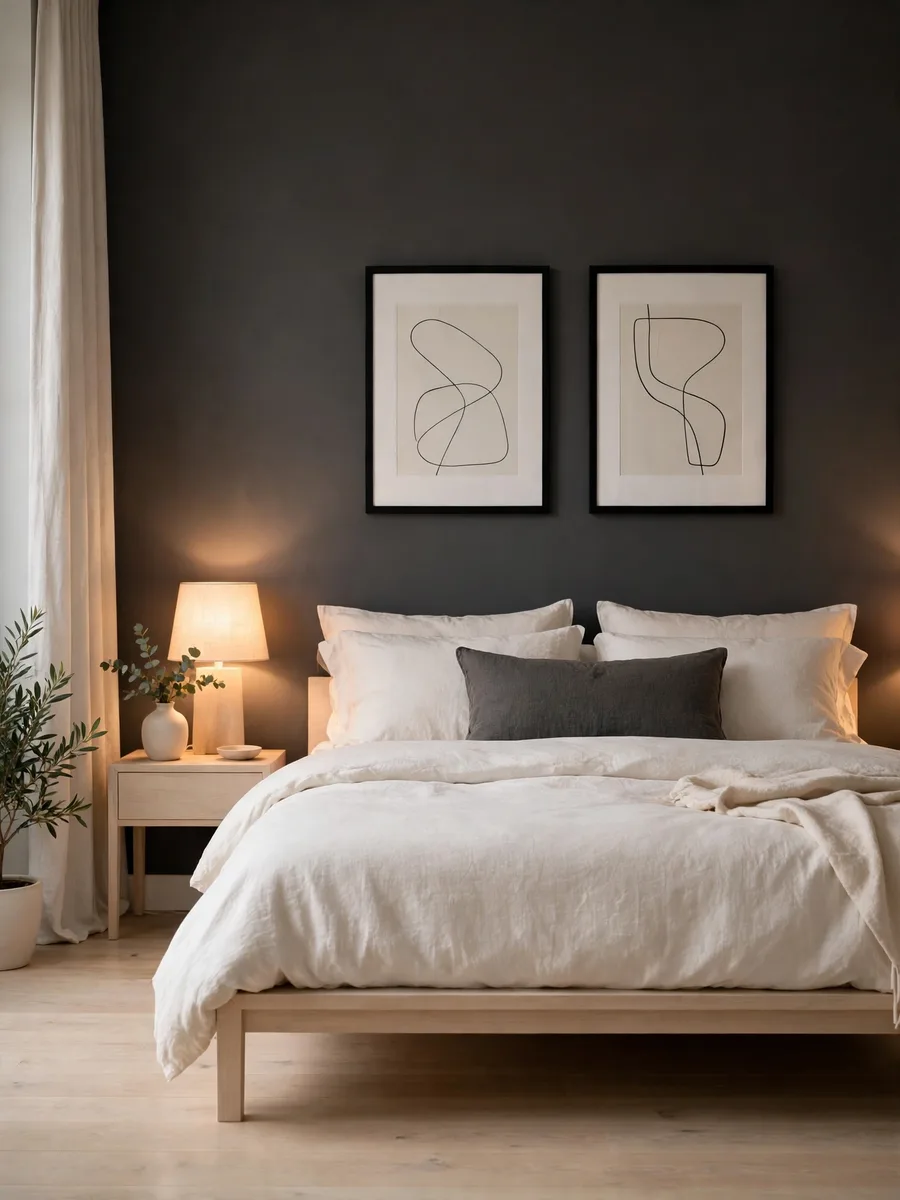
One dark wall can make a pale Scandinavian bedroom feel anchored instead of washed out, and charcoal is the safest dark colour to choose. Paint the wall behind the bed in a soft charcoal with a warm undertone, and keep the other three walls warm white. The dark wall makes the pale wood bed stand out and creates a natural backdrop for white bedding.
The trick is to stop at one wall and keep everything in front of it light.
Quick tips
- Paint only the wall behind the bed, never all four walls.
- Choose charcoal with a warm undertone to avoid a cold finish.
- Keep the bedding and furniture in front of it pale.
8. Layer a Sheepskin Rug Over Pale Wood Floors
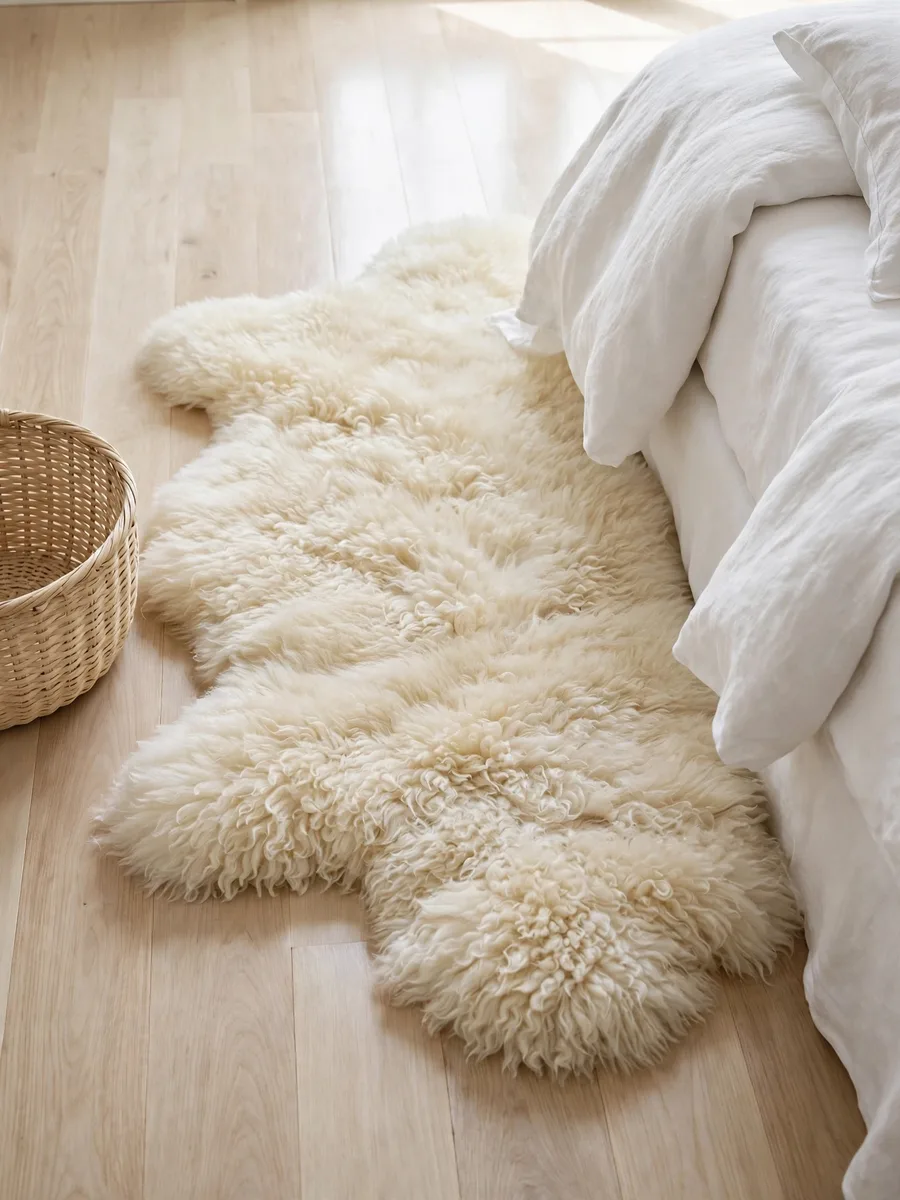
Pale wood floors are a hallmark of Scandinavian bedrooms, and a sheepskin rug is the classic way to soften them. Lay a cream sheepskin beside the bed so your first step in the morning lands on something warm and soft, or layer it over a larger flat-weave rug for extra texture. The sheepskin adds a natural, slightly shaggy texture that contrasts beautifully with smooth wood and crisp linen.
Keep it to one or two rugs rather than covering the floor.
Quick tips
- Place the sheepskin where your feet land when you get out of bed.
- Keep it cream or ivory so it blends with pale floors.
- Layer it over a flat-weave rug for extra warmth in winter.
9. Float Your Nightstands to Free the Floor
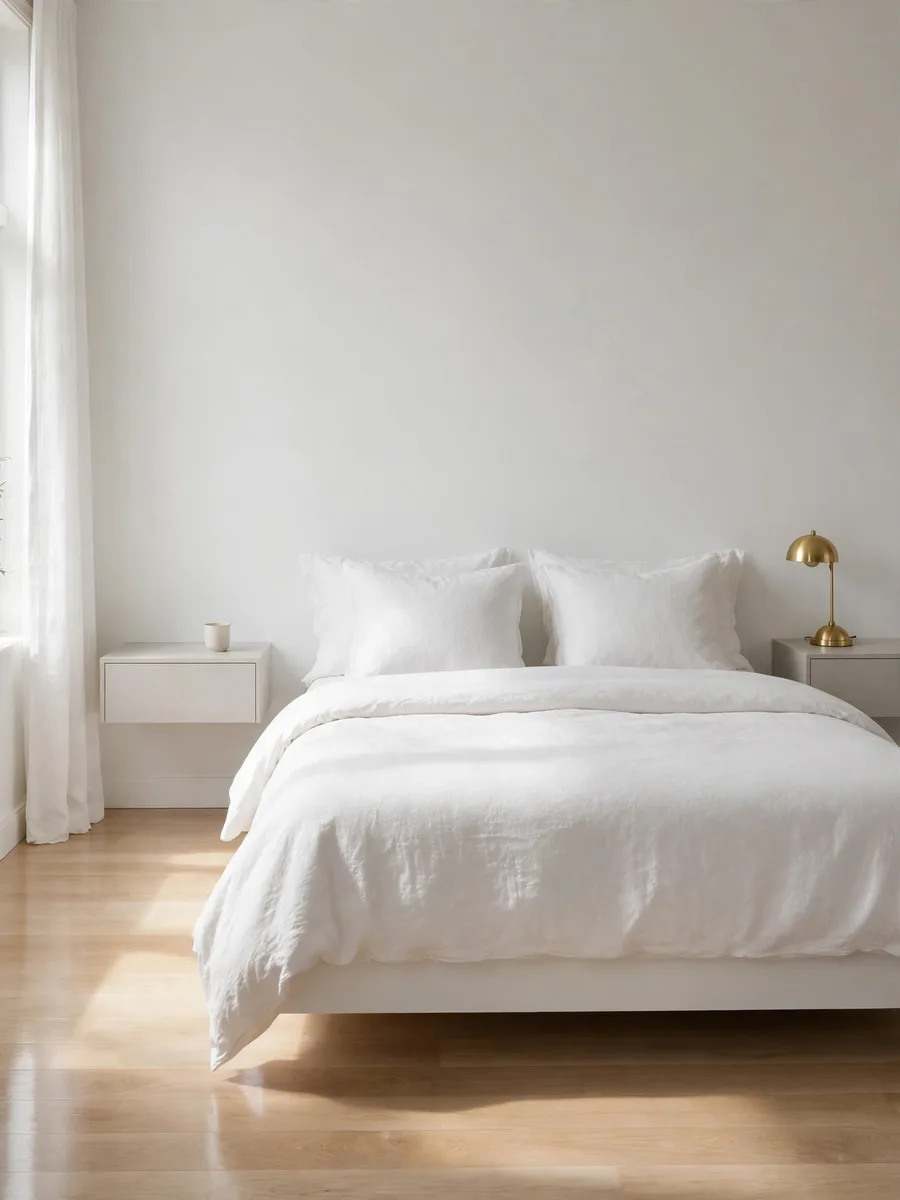
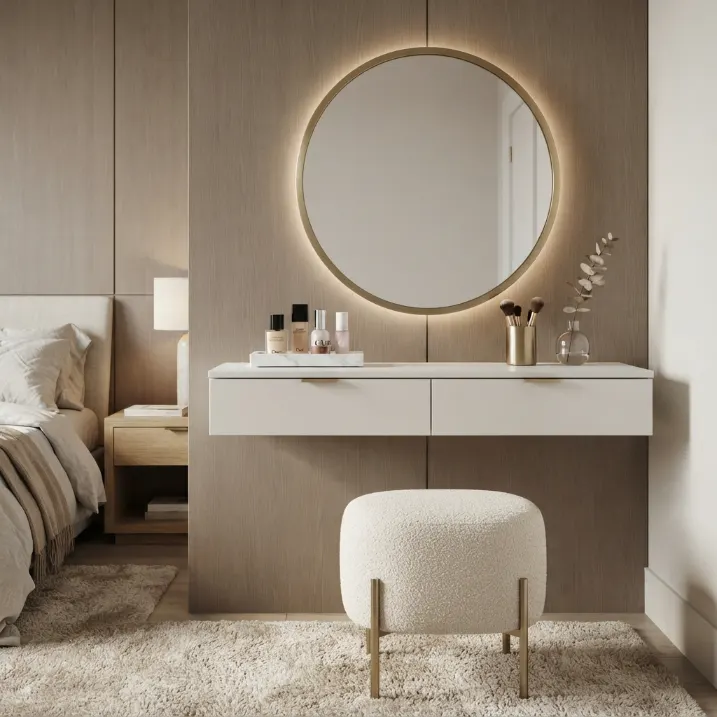
Floating nightstands, mounted on the wall beside the bed, are a small change with a big effect in a Scandinavian bedroom. They free up floor space, make a small room feel larger, and keep the clean lines of the style unbroken by furniture legs. A simple pale ash shelf or a shallow wall-mounted drawer is all you need, with room on top for a lamp, a book, and a glass of water.
Mount the nightstand at mattress height so reaching for your phone or book feels natural, and keep the surface nearly clear.
Quick tips
- Mount floating nightstands at mattress height for easy reach.
- Keep the top to three objects at most.
- Leave the space underneath clear to keep the floor open.
10. Hang One Sculptural Pendant Light
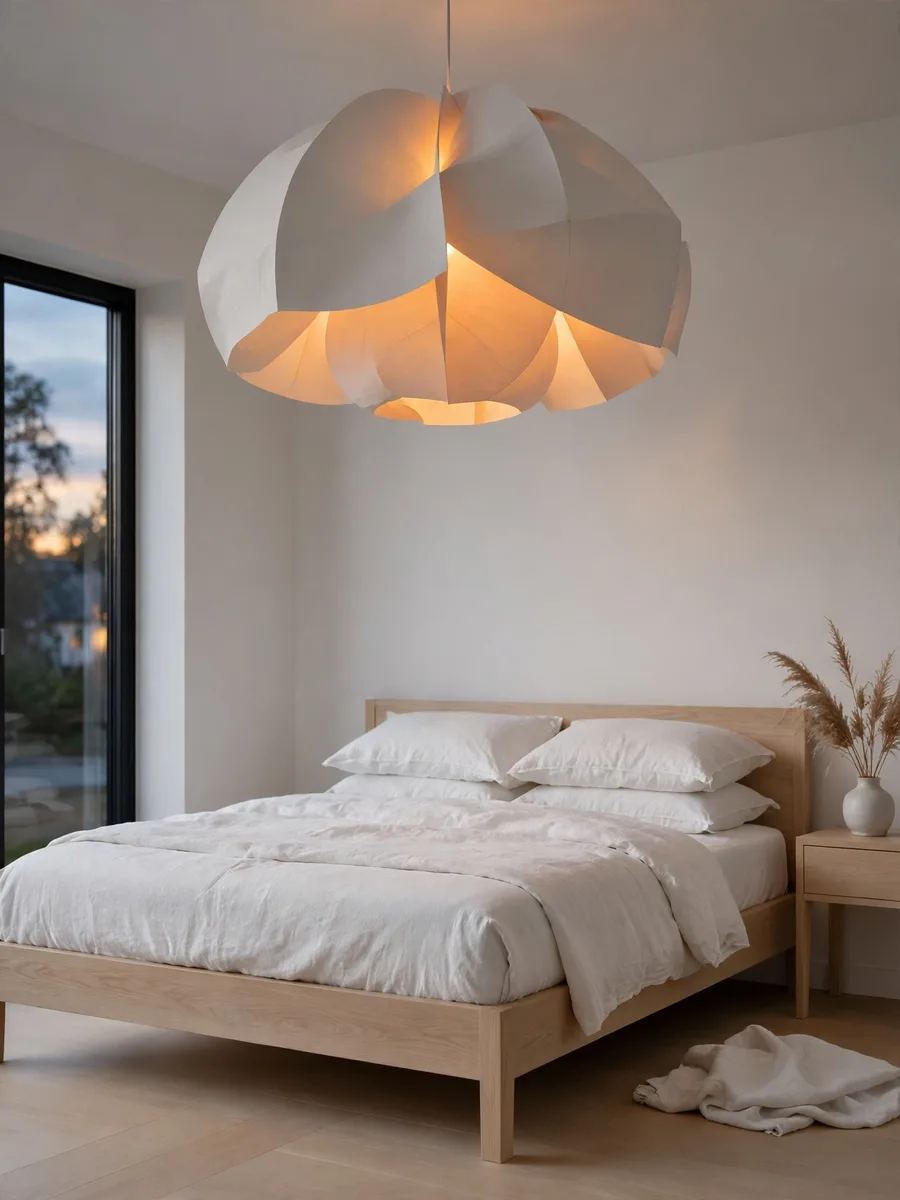
Lighting does more work in a Scandinavian bedroom than almost any other single choice, because the style is built around making the most of limited daylight. One sculptural pendant light over the bed or in the centre of the room becomes both the light source and the artwork. Look for a large matte white paper lantern, a pale wood pendant, or a simple opal glass globe, and hang it low enough to feel intimate but high enough to walk under.
Choose a warm bulb, around 2700K, so the light glows golden in the evening rather than shining cold and white.
Quick tips
- Pick one statement pendant instead of several small ceiling lights.
- Use a warm 2700K bulb and a dimmer switch.
- Hang the pendant low enough to feel cosy, high enough to walk under.
11. Carve Out a Small Reading Nook
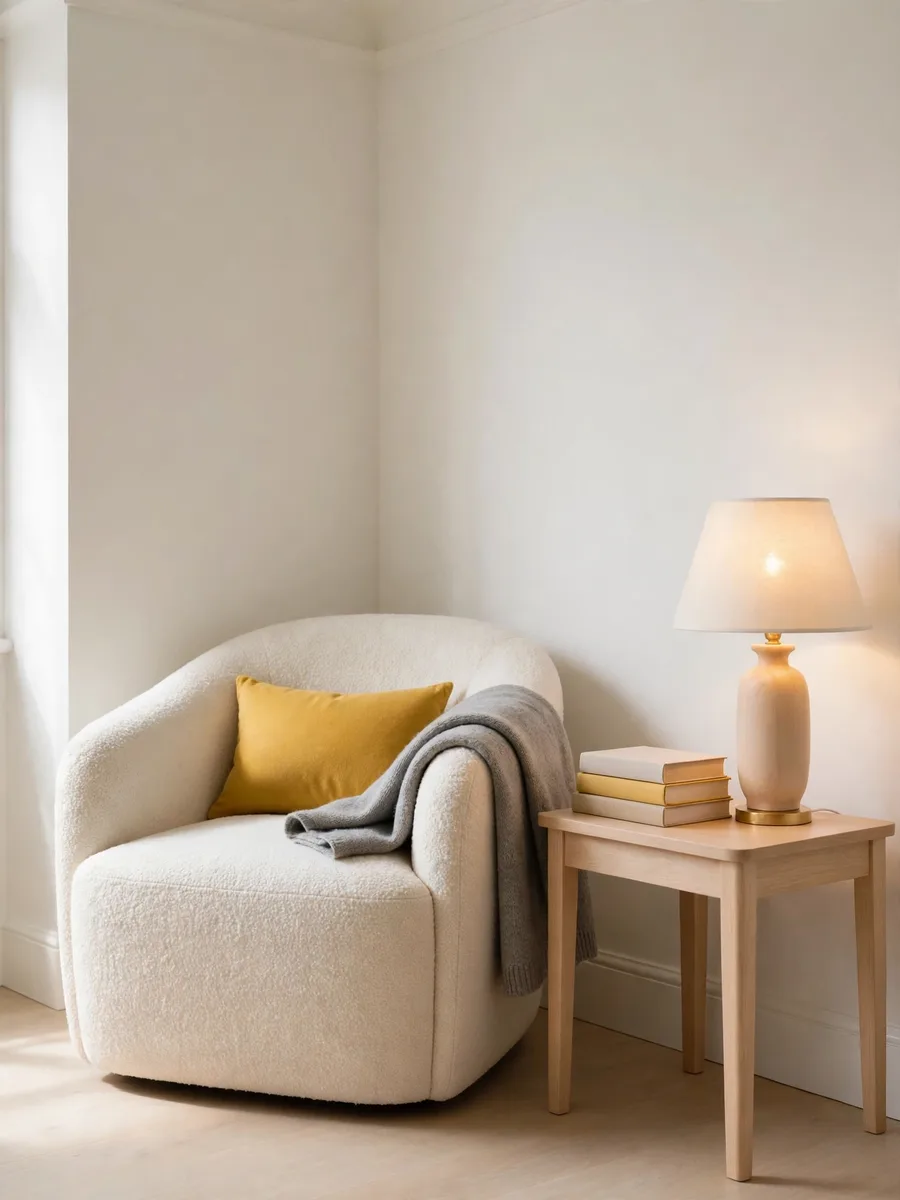
A reading nook gives a Scandinavian bedroom a second purpose beyond sleep, and it only needs a corner. Place a comfortable armchair near the window, add a small side table and a warm lamp, and drape a wool throw over the arm of the chair. The nook becomes the place for a slow morning coffee or a few pages before bed, which is hygge in its simplest form.
A pale boucle armchair with a mustard yellow cushion and a folded grey wool throw shows how a nook can add colour without disturbing the calm.
Quick tips
- Place the nook near a window for natural reading light.
- Add one warm accent colour, such as mustard, to make it inviting.
- Keep a small table within reach for a book and a cup.
12. Hide Clutter in Woven Baskets
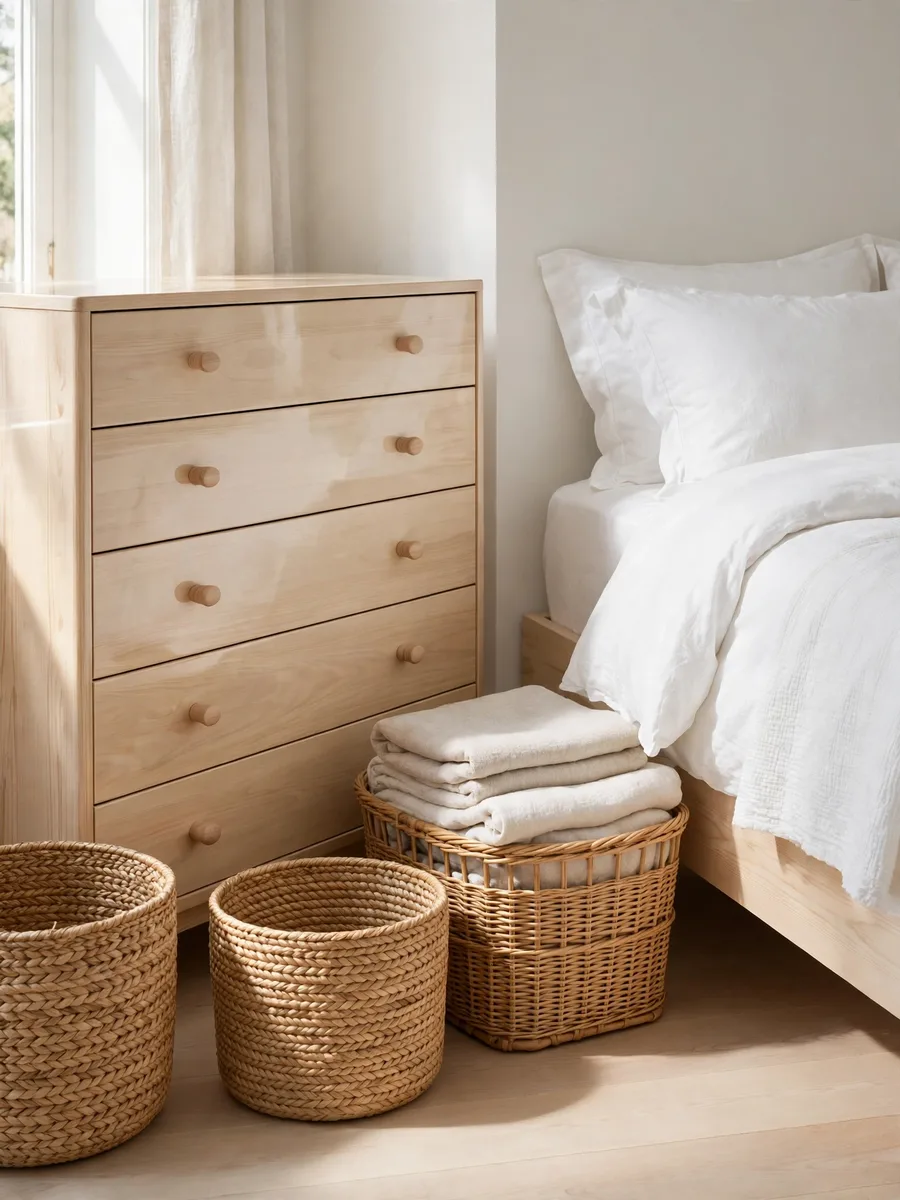
Scandinavian bedrooms look calm because clutter has somewhere to go, and woven baskets are the most natural-looking place to put it. Seagrass, rattan, and jute baskets hold extra blankets, laundry, and the everyday objects that otherwise pile up on the dresser, and they do it while adding texture to the room. Choose baskets in natural tones that match the pale wood, and keep their shapes simple.
Put the system to work with one basket per job.
Quick tips
- Give every basket one job so tidying takes seconds.
- Choose natural seagrass, rattan, or jute in pale tones.
- Keep baskets visible and easy to reach, not buried away.
13. Bring in One Large Plant
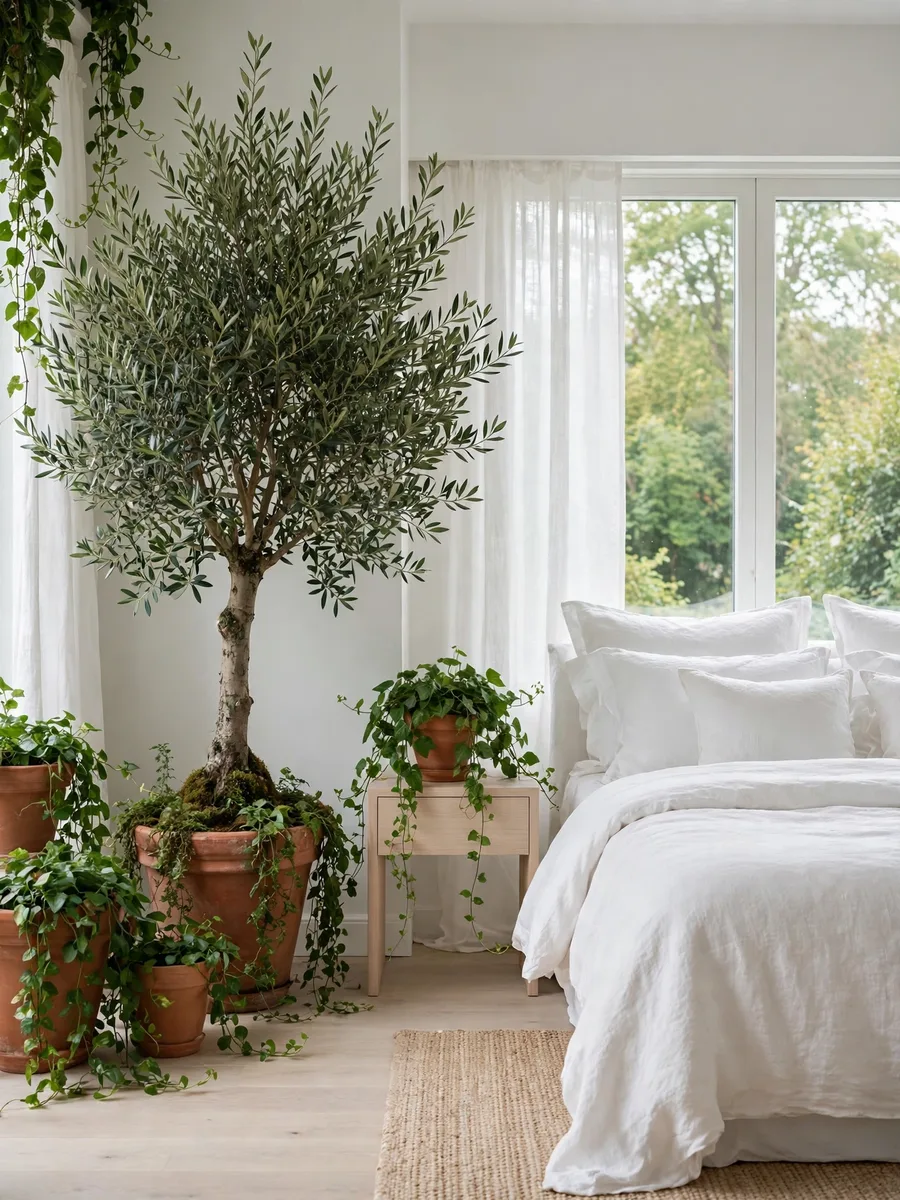
Plants are the living texture in Scandinavian bedroom ideas, and one large plant does more than several small ones. A potted olive tree, a fiddle leaf fig, or a tall snake plant in a terracotta pot adds height, colour, and a sense of nature to a room built on pale surfaces. Place it in an empty corner or beside the dresser, where it fills space that would otherwise feel bare.
Choose a plant that suits your light and your habits.
Quick tips
- Choose one large plant over many small ones for a calmer effect.
- Match the plant to your light: olive for bright rooms, snake plant for dim ones.
- Use a terracotta pot or woven basket cover for a natural finish.
14. Add Slim Black Metal Accents
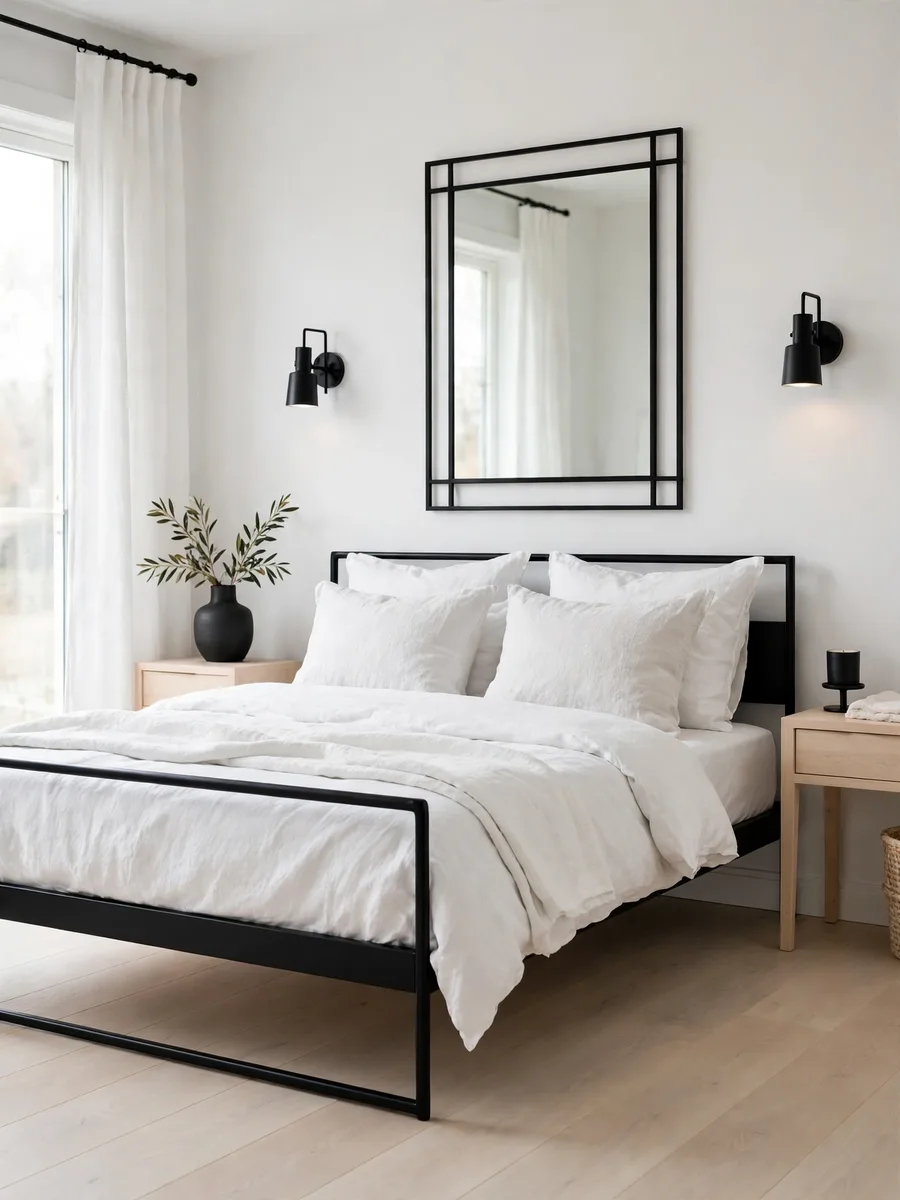
A little black goes a long way in a Scandinavian bedroom. Slim black metal accents, such as a thin bed frame, wall sconces, a mirror frame, or drawer handles, give the pale room definition and stop the white and wood from blending into one soft blur. The key word is slim: thin lines and small objects, never heavy black furniture.
A slim black metal bed frame with white linen bedding shows the balance perfectly.
Quick tips
- Keep black accents slim and few: three or four small touches.
- Repeat the black in two or three places so it looks intentional.
- Pair black metal with pale wood to keep the room warm.
15. Pile on Chunky Knit Throws

Chunky knit throws are the fastest way to make a Scandinavian bedroom feel warm and inviting. A thick cream cable-knit throw across the foot of the bed, or a soft grey wool blanket folded over the arm of a chair, adds a handmade texture that contrasts with smooth linen and pale wood. The knit pattern catches the light and gives the eye something soft to rest on.
Layer two knits in different textures rather than one.
Quick tips
- Layer two knits in different textures, such as cable knit and smooth wool.
- Keep knit colours pale: cream, soft grey, or oatmeal.
- Drape one throw casually and fold the other neatly for balance.
16. Choose a Low Platform Bed
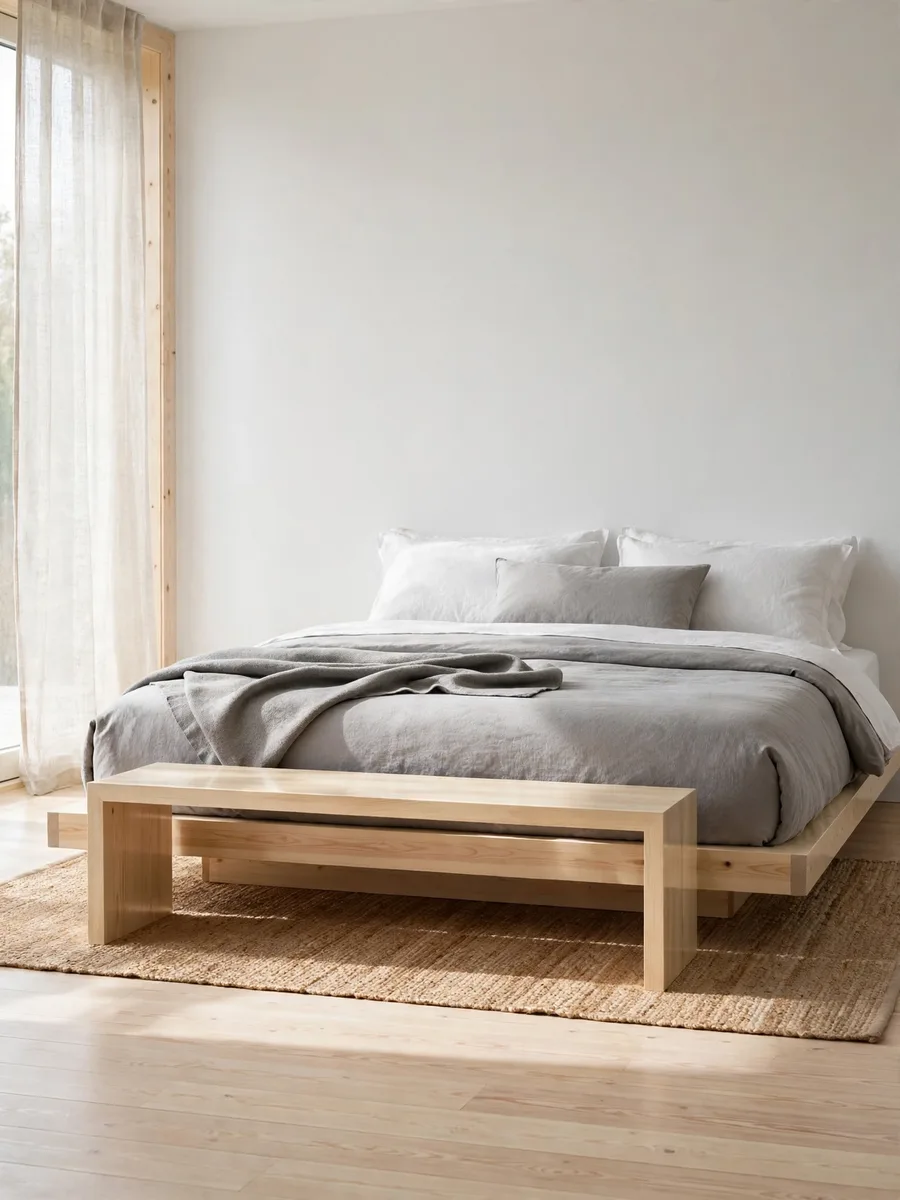
A low platform bed sits close to the floor and gives a Scandinavian bedroom its calm, grounded feeling. The low profile makes the room feel taller, keeps the lines simple, and suits the Nordic habit of furniture that is functional without fuss. Choose a pale pine or ash platform with a simple rectangular frame, and pair it with stone grey or white bedding so the bed reads as one quiet block of colour.
Style the platform with a low pale wood bench at the foot of the bed and a woven jute rug underneath, which adds texture without adding height.
Quick tips
- Keep the bed low and the headboard low to match.
- Add a low bench at the foot for clothes and sitting.
- Use a woven jute rug to add texture under the bed.
17. Let the Light in With Sheer Linen Curtains
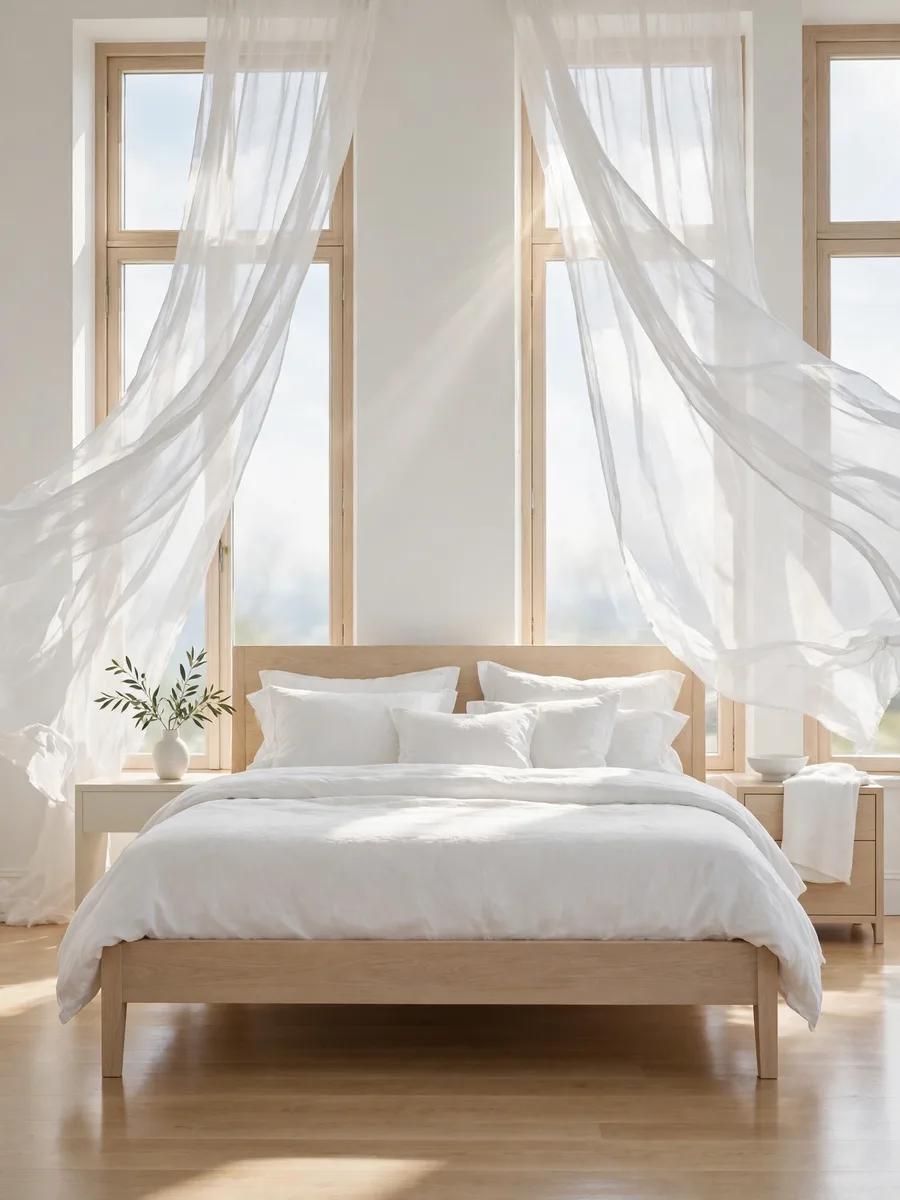
Scandinavian design was shaped by long dark winters, so natural light is treated as something precious. Sheer linen curtains let daylight pour into the bedroom while still giving you privacy, and they soften the hard edges of the window frame. Hang them from a simple pale wood or black rod, let them fall to the floor, and keep them unlined so the light passes through.
White or natural linen is the best choice, and the curtains should be wide enough to gather softly rather than hanging flat.
Quick tips
- Choose sheer white or natural linen, never heavy lined curtains.
- Hang curtains to the floor on a simple rod.
- Add a roller blind behind the sheers if you need darkness to sleep.
18. Build a Wooden Slat Headboard Wall
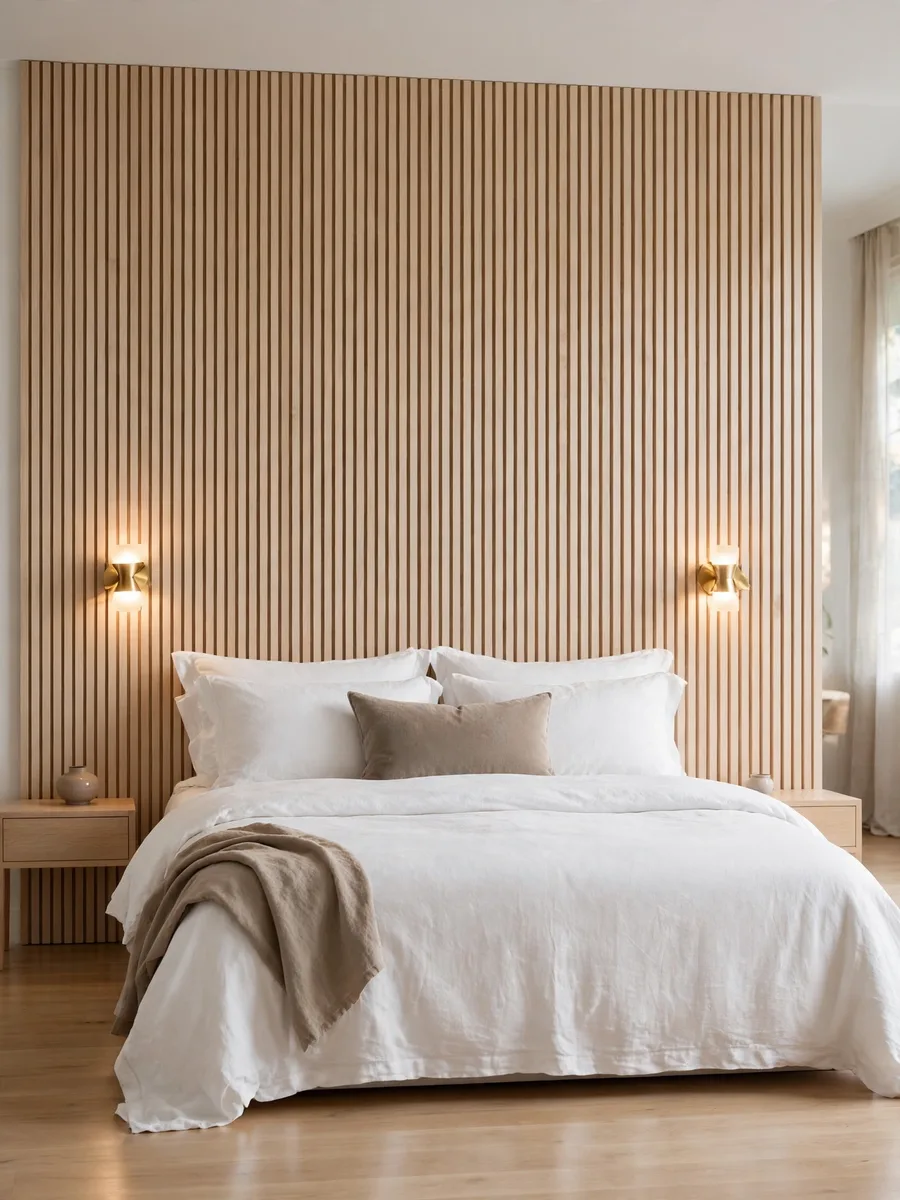
A wooden slat wall behind the bed is one of the most distinctive Scandinavian bedroom ideas, and it adds warmth and texture without paint or pattern. Vertical pale oak slats run from the floor to above the headboard, creating a rhythmic wooden panel that frames the bed and gives the wall a crafted, architectural feel. The slats catch the light differently through the day, so the wall looks subtly different in the morning and the evening.
You can build a slat panel as a weekend project with thin oak battens fixed to a plywood backing, or buy ready-made slat panels and cut them to size. A bedroom accent wall in wood, paint, or panelling can anchor the bed in exactly the same way.
Quick tips
- Use pale oak slats with even gaps for a clean rhythm.
- Keep the panel the width of the bed or the full wall, not in between.
- Mount warm sconces on the slats for evening glow.
19. Finish With a Candlelit Hygge Corner
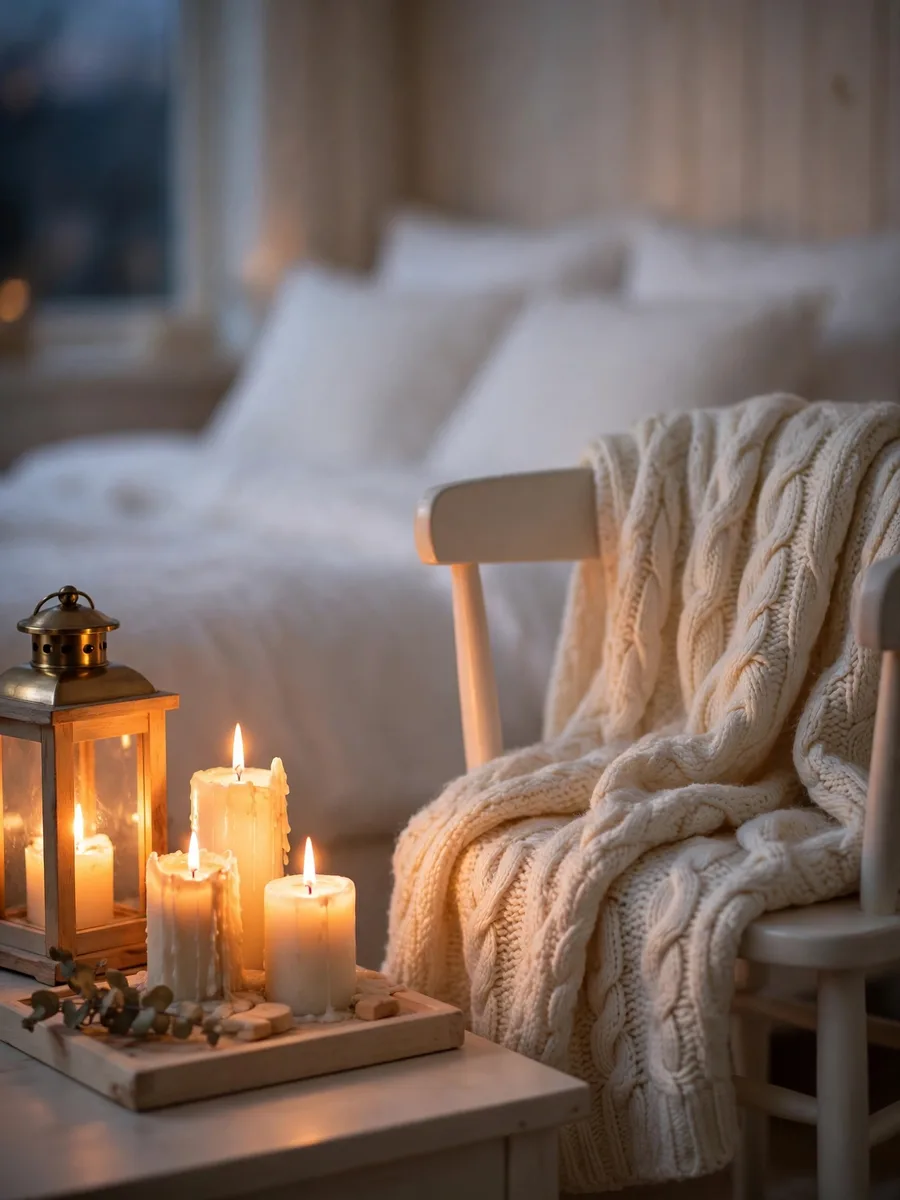
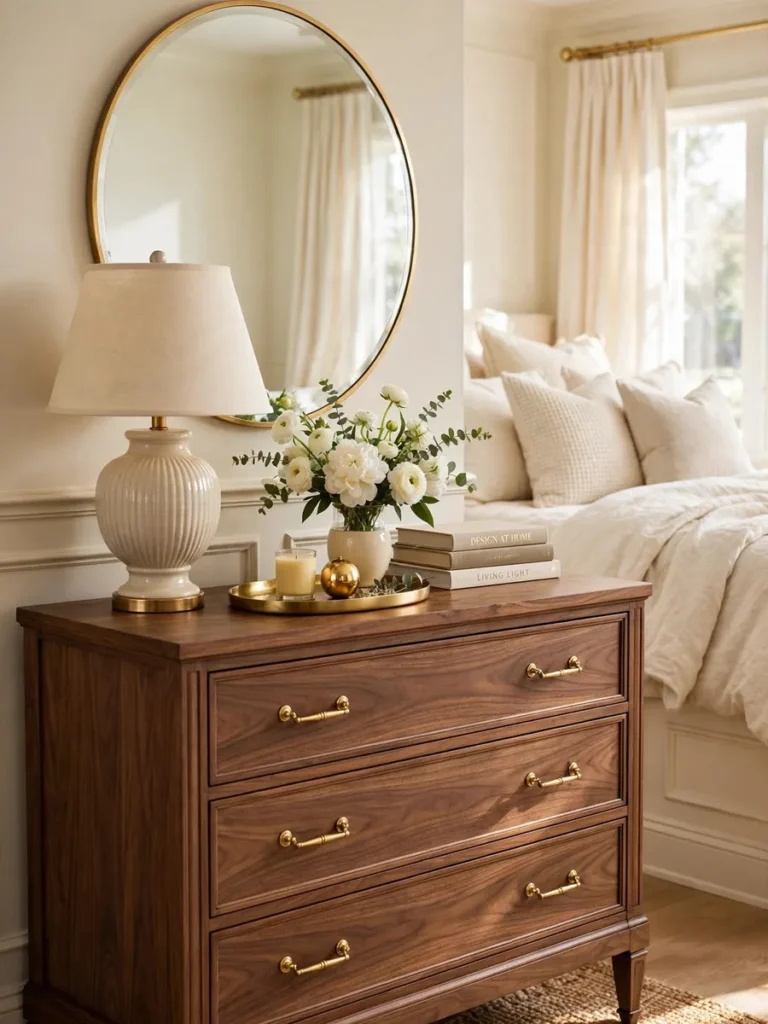
Hygge is the Danish art of feeling cosy and content, and a candlelit corner is where it lives in the bedroom. Set a pale wood tray on the dresser or the nightstand, place two or three candles on it with a small lantern, and drape a cream knit blanket over the nearest chair. When the candles are lit in the evening, the corner glows warm amber against the pale room, and the whole bedroom feels like a retreat.
Keep the corner simple and safe.
Quick tips
- Group two or three candles on a pale wood tray for a contained glow.
- Use glass holders or a lantern and never leave candles unattended.
- Keep a knit blanket nearby so the corner invites you to sit.
Frequently Asked Questions
How do I make my bedroom look Scandinavian on a budget?
Start with the bedding and the clutter. Swap in white or oatmeal linen-look bedding, add one knit throw, and clear every surface down to three or four objects. Paint the walls warm white if they are a strong colour, and add a woven basket and a potted plant.
What colours are used in Scandinavian bedrooms?
Warm white, greige, pale grey, and pale wood form the base, with soft accents of sage green, dusty blue, blush pink, and mustard. One darker note, such as charcoal or slim black metal, adds contrast.
What is hygge in a bedroom?
Hygge is the Danish idea of cosiness and contentment, and in a bedroom it means soft textures, warm low light, and small comforts such as candles, a knit throw, and a warm drink before bed.
Can a Scandinavian bedroom work in a small room?
Yes, and it often works better than busier styles, because the pale colours and simple furniture make a small room feel larger. Use a low platform bed, floating nightstands, and sheer curtains to keep the floor and the light open.
What bedding is best for a Scandinavian bedroom?
Washed linen bedding in white, oatmeal, or natural flax is the classic choice, because it is soft, breathable, and has a relaxed texture that suits the style. Layer it with a linen or wool throw and a chunky knit blanket in winter.
How do I add warmth to a white Scandinavian bedroom?
Add warmth through texture and light, not through strong colour. Layer linen, wool, and sheepskin, use pale wood furniture and floors, and light warm lamps and candles in the evening.
Conclusion
Scandinavian bedroom ideas work because they solve a real problem: how to make a bedroom feel bright, warm, and restful at the same time. Pale wood and warm white walls bring in the light, linen and wool bring in the softness, and simple furniture keeps the room calm and easy to live in. Start with the bed, add one soft colour and one warm light, and let the room grow from there. Your bedroom does not need to change all at once; it only needs to feel like a quiet place to begin and end the day.