Unique Floating Shelves That Give Your Living Room Wall Something to Say
A living room wall does not always need a large gallery, a bulky bookcase, or a television to feel finished. Sometimes, the right shelf can do the job with far less visual weight. Unique floating shelves turn an ordinary wall into a place for books, art, plants, ceramics, and personal pieces while keeping the floor open and the room visually light.
The best designs are not simply unusual for the sake of being unusual. They work because their shape, material, placement, and styling fit the room. A curved shelf can soften a boxy sofa, a long picture ledge can create a calm horizontal line, and a colorful shelf can become the small accent that ties an entire living room together.
If you are planning floating shelves for your living room, use the ideas below as starting points rather than strict formulas. You can borrow the shape from one idea, the material from another, and the styling approach from a third to create a wall that feels personal.
1. Create A Long Picture Ledge Instead Of A Stack Of Shelves
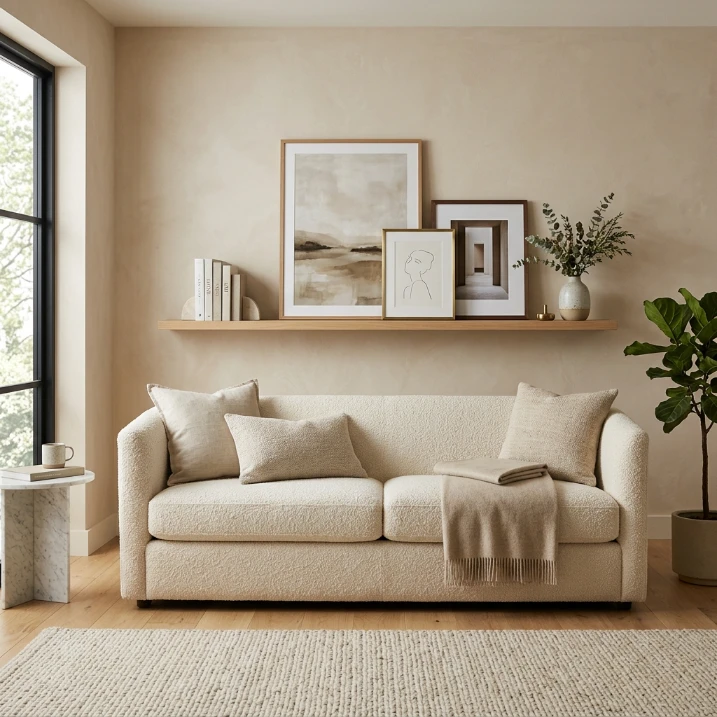
A slim picture ledge is one of the easiest ways to make floating shelving feel intentional. Instead of filling a wall with several separate boards, install one or two long shelves and lean framed artwork, books, and small objects against the wall. The layered arrangement can change whenever you want without drilling new holes.
Keep the artwork varied in height but connected by a simple color story. Black frames with cream artwork, warm wood frames with muted landscapes, or a mix of family photographs and small prints can all work beautifully.
2. Use Rounded Shelves To Soften A Modern Living Room

Sharp furniture lines can make a contemporary living room feel a little rigid. Rounded floating shelves introduce a softer shape without changing the main furniture. Look for shelves with curved corners, pill-shaped silhouettes, or gentle arches.
Style them with rounded ceramic vases, small books, and one trailing plant so the curves appear again in the accessories. This repetition makes the design feel connected rather than random.
3. Turn A Narrow Corner Into A Mini Display Wall

Living room corners are often left empty because standard furniture does not fit comfortably there. A set of narrow corner floating shelves can turn that forgotten area into a useful display.
Choose shallow shelves if the walkway is close by. Small plants, candles, framed prints, and a few favorite books are enough. For a stronger effect, use the same finish on every shelf and let the objects provide the variety.
4. Frame The Television With Asymmetrical Shelving

If your television already dominates one wall, symmetrical shelves on both sides can sometimes make the setup feel overly formal. Instead, try an asymmetrical arrangement where shelves of different lengths occupy one side and continue above or below the screen.
The key is balance rather than matching. If one side has a large plant, the other side might need a darker object or a wider frame to create similar visual weight. Leave some wall visible so the arrangement can breathe.
5. Choose A Live-Edge Shelf For Natural Character

A live-edge wood shelf brings natural variation to a room filled with straight lines. The irregular edge becomes part of the decoration, while the floating installation keeps the piece from looking like a traditional rustic shelf.
This style works especially well with neutral walls, linen upholstery, woven baskets, stone accessories, and indoor greenery. Let the wood remain the star instead of covering every inch with decor.
6. Install A Backlit Shelf For Evening Atmosphere
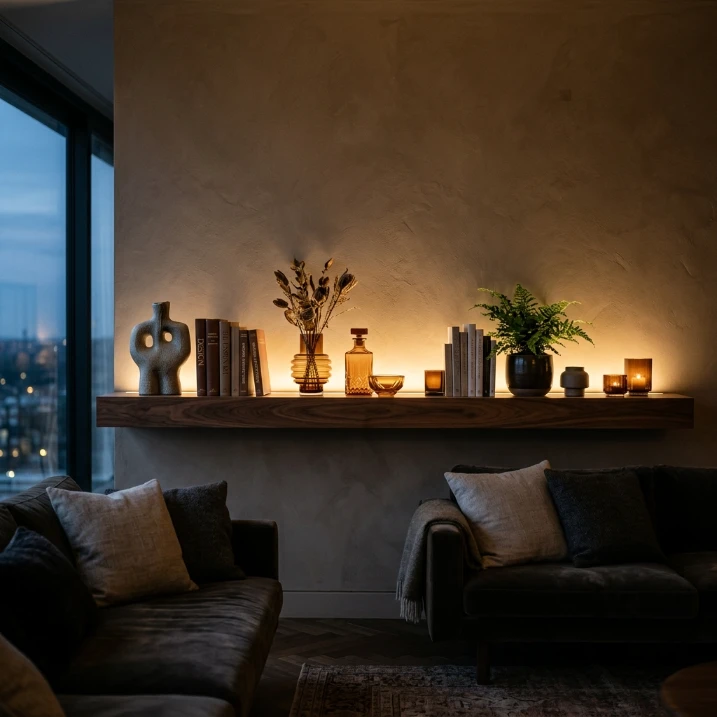
Lighting can completely change how a shelf reads after sunset. A concealed warm LED strip behind a floating shelf creates a soft halo against the wall and gives displayed objects more depth.
Use warm white light rather than a harsh blue tone. Amber glass, ceramic pieces, small artwork, and books look especially inviting when they are gently illuminated from behind.
7. Mix Wood And Metal For A Modern Industrial Accent

For a living room that already includes black window frames, metal lighting, or darker furniture, combine a warm wooden shelf with a slim metal structure. The contrast adds definition without requiring a large statement piece.
Keep the styling edited: a few books, one sculptural object, and a plant can be enough. Repeating the metal finish somewhere else in the room helps the shelves feel like part of the overall design.
8. Use A Sculptural Shelf As Wall Art

Some shelves are interesting enough to function as art even before anything is placed on them. Look for wave-shaped, arching, ladder-inspired, circular, or organically irregular designs.
When the shelf itself has a strong silhouette, avoid filling every section. One vase or small sculpture placed carefully can look much more sophisticated than a crowded collection.
9. Make A Reading Nook With One Deep Floating Shelf

A deeper shelf can do more than display decor. Positioned above a comfortable chair, it can hold reading material, a small lamp, framed art, and a cup or decorative tray. The result feels like a compact reading corner without the footprint of a bookcase.
Keep the shelf within easy reach of the chair and check the wall construction before installation. Heavy books require stronger mounting hardware than lightweight decorative objects.
10. Paint The Shelf The Same Color As The Wall

For a quieter look, match the shelf to the wall color. A white shelf on a white wall feels almost built in, while a sage, clay, navy, or warm beige shelf can blend into a painted feature wall.
This approach shifts attention toward the objects instead of the shelf itself. It is especially useful when you want a clean living room that still has plenty of personality.
11. Create A Two-Tone Shelf Composition
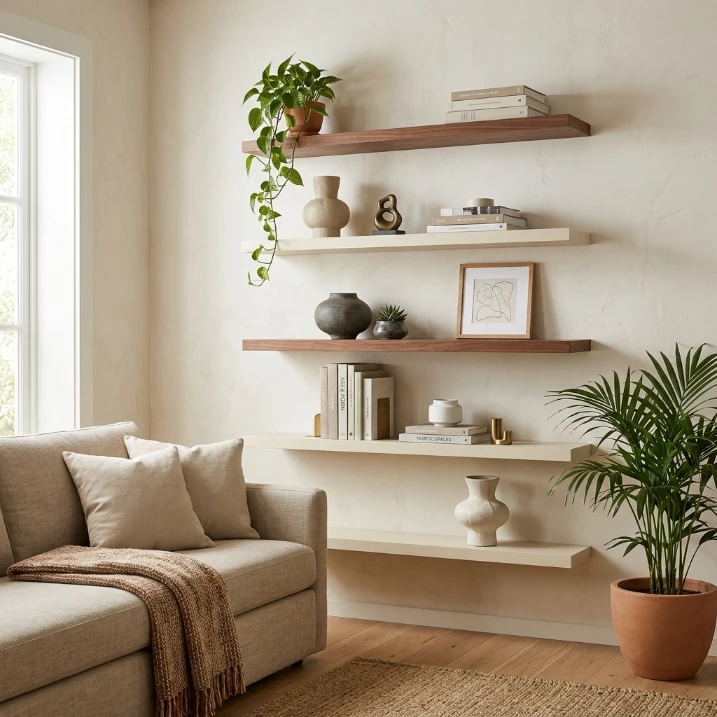
Instead of using identical boards throughout an arrangement, pair two finishes that already appear in the room. Warm oak with matte black, walnut with cream, or light wood with muted green can create a polished contrast.
Use one finish for the main shelf surfaces and the second for smaller elements or a single accent shelf. Limiting the palette keeps the combination sophisticated rather than busy.
12. Build A Vertical Shelf Moment Beside The Sofa
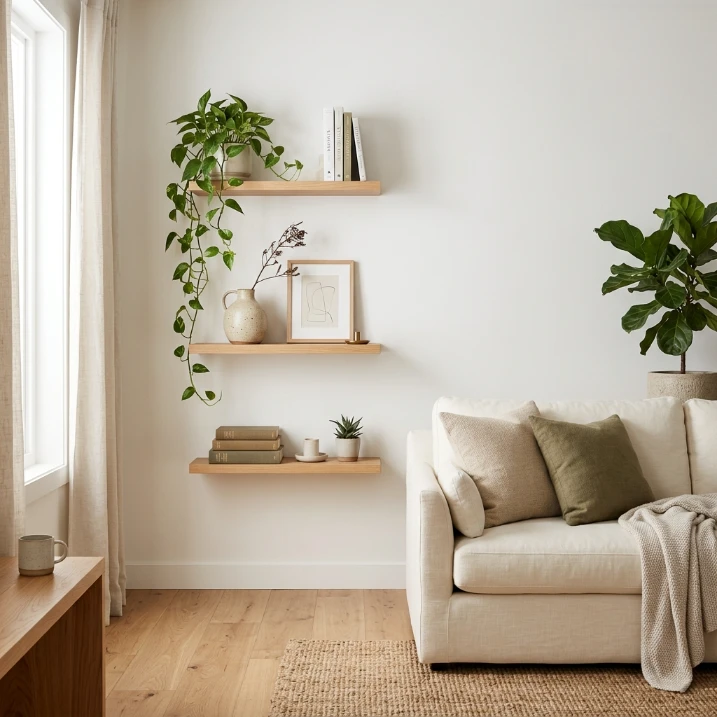
A tall, narrow arrangement beside the sofa can use vertical wall space without adding a large cabinet. Stagger three or four floating shelves upward, leaving enough room between them for the arrangement to feel airy.
Place heavier-looking pieces lower down and lighter pieces toward the top. A trailing plant can also connect the levels visually and soften the vertical shape.
13. Let Books Become The Main Decoration

You do not need a large collection of decorative objects to style floating shelves. Books can provide color, texture, and height all by themselves. Stack a few horizontally, stand several vertically, and leave small gaps between groups.
Add just one or two contrasting pieces, such as a ceramic bowl or small plant. This keeps the shelf useful while making the wall feel collected rather than staged.
14. Style A Shelf Around One Strong Color
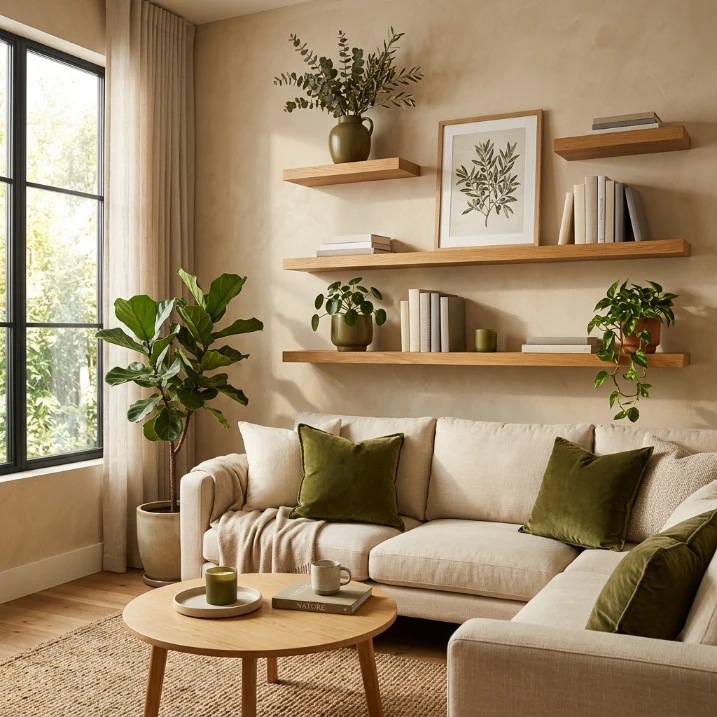
Choose one accent color already present in your living room and repeat it across the shelf display. For example, if your sofa has olive cushions, bring in an olive ceramic vase, artwork with a similar tone, and a small plant with rich green leaves.
The shelf becomes a visual bridge between different parts of the room. This is an easy way to make a simple floating shelf arrangement feel more professionally styled.
How To Style Unique Floating Shelves Without Making Them Look Cluttered
The shelf design is only half the result. Styling determines whether the wall feels intentional or overloaded. Start by choosing one larger anchor object, then add medium and small pieces around it. Vary height and texture, but keep the number of colors under control.
- Leave breathing room: Empty space makes decorative pieces easier to appreciate.
- Vary heights: Combine books, low bowls, taller vases, and artwork rather than using objects of the same size.
- Repeat materials: If the shelf is wood, echo that warmth with a frame, basket, or small wooden object elsewhere.
- Use plants selectively: One trailing plant can add movement without turning the shelf into a jungle.
- Balance visual weight: Avoid putting every dark or oversized item on one side.
- Edit after styling: Step back from the wall and remove anything that does not add function, texture, color, or personality.
Where Should Floating Shelves Go In A Living Room?
The right position depends on what is already happening on the wall. Above a sofa, shelves can create a horizontal focal point. Beside a television, they can balance a large screen. In a corner, they can use otherwise wasted space. Near a reading chair, they can provide accessible storage and display.
Before drilling, mark the proposed shelf positions with painter’s tape. Stand across the room and check the scale against the sofa, television, artwork, and other furniture. This simple step makes it much easier to spot shelves that are too short, too high, or too crowded.
How Do You Make Floating Shelves Look Expensive?
An expensive-looking shelf arrangement usually comes from restraint rather than the number of accessories. Choose quality-looking materials, keep the palette controlled, and mix textures such as wood, ceramic, glass, linen, and greenery. Concealed mounting hardware also gives the installation a cleaner finish.
Most importantly, match the shelf scale to the room. A tiny shelf can look accidental on a large blank wall, while an oversized installation can overwhelm a compact living room. Proportion is one of the easiest ways to make affordable decor look considered.
Final Thoughts On Unique Floating Shelves
Unique floating shelves can give a living room much more personality without taking away valuable floor space. The most successful designs combine an interesting shape or material with thoughtful placement and simple styling.
You do not need to copy one complete look. Choose the idea that fits your room, adapt the colors to your existing furniture, and leave enough empty space for the design to breathe. When the shelf, wall, furniture, and accessories feel connected, even a small display can become a memorable part of the room.