Why These Coastal Bedrooms Feel More Expensive Than Farmhouse Ones
A coastal bedroom is a calm, light-filled bedroom inspired by the shoreline — soft blues, sandy neutrals, natural textures like linen and rattan, and ocean accents used with restraint rather than beach-theme props. Coastal bedrooms can feel surprisingly luxurious without relying on expensive-looking furniture or a room full of decorative accessories. The difference usually comes from restraint: a calm palette, natural materials, layered fabrics, generous light, and a few memorable details that make the space feel collected rather than themed.
The coastal look also works because it can be interpreted in several directions. You can keep it bright with white and sea-glass blue, warm it up with sandy beige and honey-toned wood, add depth with navy or charcoal, or bring in muted coral and sage. The key is to make the room feel connected to the landscape without turning it into a literal beach display. Before buying anything, pick one coastal lane:
Coastal lane | Colors | Key pieces |
|---|---|---|
| Breezy minimal | White, sand, sea-glass blue | White linen bedding, jute rug, sheer curtains |
| Soft cottage | Cream, sage, muted coral | Gingham pillows, painted dresser, floral art |
Modern relaxed | Warm wood, navy, black accents | Walnut nightstands, sculptural lamp, tailored quilt |
Start With A Soft Sea And Sand Palette
One of the easiest ways to make a coastal bedroom feel polished is to limit the palette. Begin with warm white, ivory, sandy beige, or pale taupe, then add one or two ocean-inspired shades such as misty blue, sea-glass green, faded navy, or muted aqua — for more ways to work with the color, these blue room ideas show how to mix blue shades from powder to navy without clashing. This creates a relaxed foundation while keeping the room visually cohesive.
For a warmer interpretation, combine ivory bedding with light oak, woven tan accents, and a dusty blue throw. For a cooler room, use crisp white with blue-gray, soft aqua, and natural rattan. Repeating the same shades across bedding, artwork, curtains, and small accessories creates the kind of quiet coordination that often reads as expensive. For example, warm white walls with sandy beige bedding and two sea-glass blue pillows build a complete coastal base.

Let Natural Texture Do The Decorating
Coastal bedrooms become more sophisticated when texture carries more of the visual interest than accessories. Rattan, cane, linen, cotton, jute, woven seagrass, light wood, and softly aged finishes add dimension without making the room feel busy.
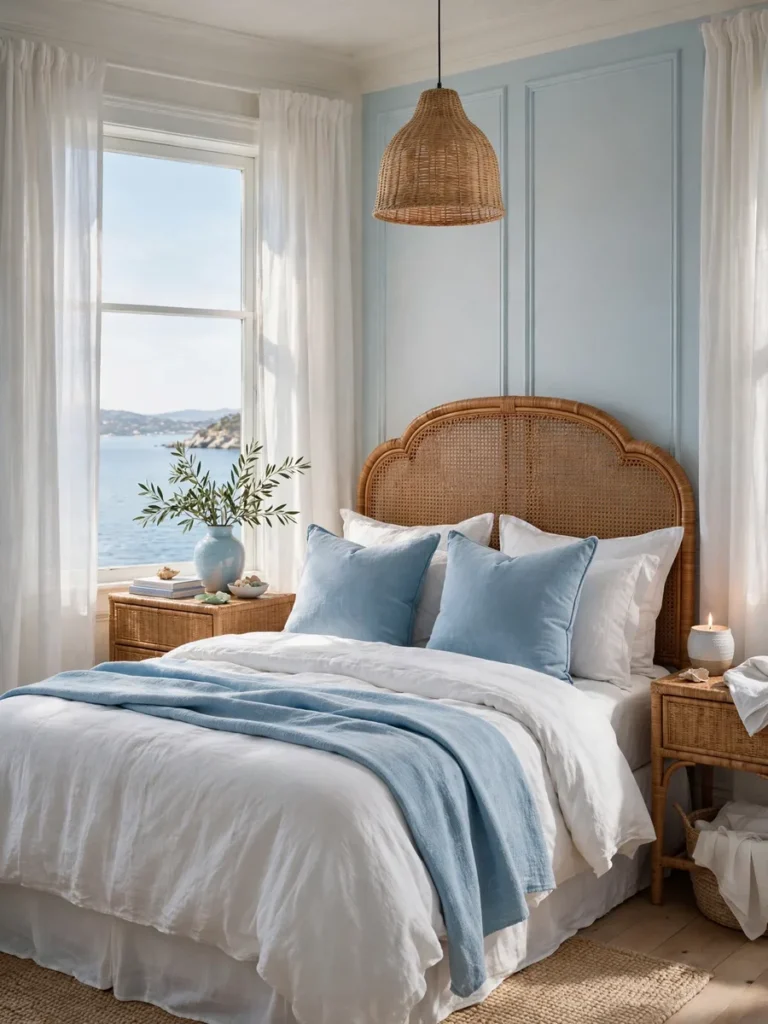
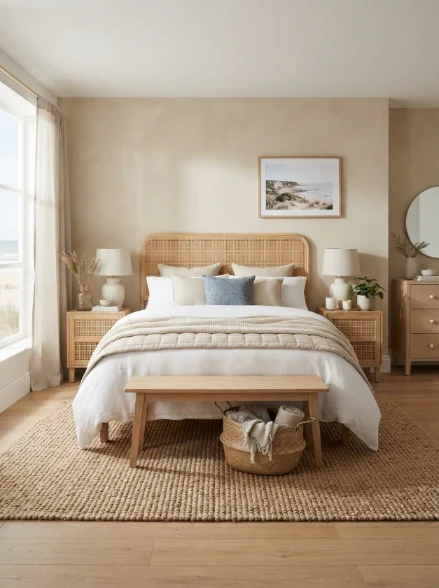
Try a woven headboard with relaxed linen bedding, a jute rug, a cane bench, and a rattan pendant. You do not need every item to match. Repeating a few organic materials is enough to create a connected look. For example, a woven rattan headboard with rumpled linen sheets and a jute rug gives you three coastal textures before adding a single accessory.
Make Linen Bedding The Main Luxury Layer
Beautiful bedding can make an ordinary bedroom feel instantly more elevated. Choose breathable linen or cotton in white, oatmeal, soft blue, or sea-glass tones, then layer a quilt, textured throw, and a few pillows with subtle variation.
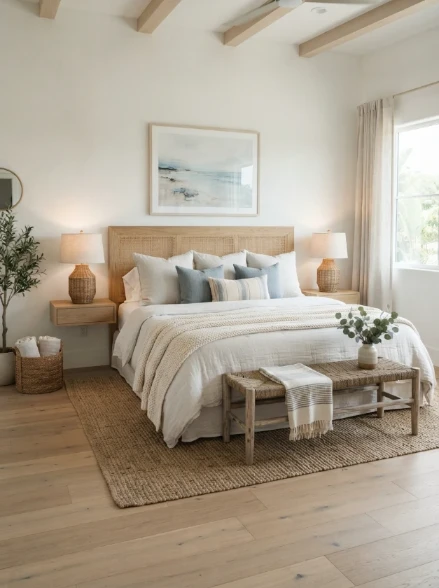
Rather than using many decorative pillows, focus on quality-looking texture and natural drape. Slightly relaxed bedding can actually strengthen the coastal feeling because it suggests comfort instead of a staged showroom. For example, white linen sheets with an oatmeal quilt and two sea-glass pillows look more expensive than a fussy matching set. Layered linen is one of the easiest ways to make a bedroom feel truly luxurious.
Add One Statement Coastal Pattern
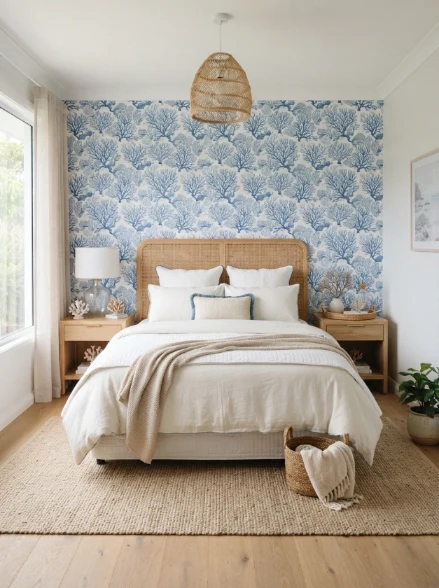
A statement pattern can give the room personality without turning it into a theme. Consider a delicate coral motif, blue botanical print, watercolor wave pattern, subtle stripe, or shell-inspired artwork. Use the pattern in one major location and keep surrounding pieces quieter.
For example, a blue botanical duvet can sit against warm white walls with a woven bench and simple wood nightstands. A coral-patterned rug can work with white bedding, rattan furniture, and small coral accents. The goal is repetition, not duplication. For example, a blue botanical duvet against warm white walls with a woven bench at the foot keeps one pattern in charge.
Use Rattan And Cane For A Designer Finish
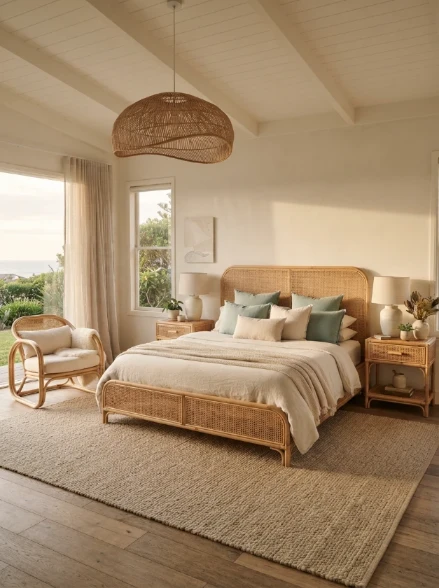
Rattan and cane are especially effective because they bring warmth, craftsmanship, and a relaxed seaside character to the room. A cane bed, woven nightstands, rattan chair, or pendant light can become the defining material without requiring lots of extra decoration.
Balance woven furniture with smooth linen, painted walls, and simple ceramics. Too much of one texture can make a room feel flat in a different way, while a thoughtful mix gives the space depth. For example, a whitewashed rattan headboard plus a natural linen drum pendant covers the two biggest coastal signals in two purchases.
Bring In Blue Without Making The Room Feel Cold
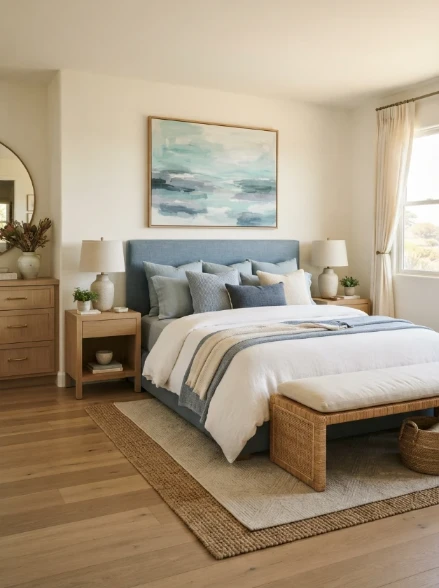
Blue is one of the most recognizable coastal colors, but the shade matters. Dusty blue, blue-gray, faded denim, sea-glass aqua, and muted navy usually feel more sophisticated than very bright primary blue.
Use blue in layers: a soft blue quilt, a darker pillow, a piece of abstract art, and a small ceramic accessory can create depth without taking over. Warm white walls and natural wood help keep the blue inviting. For example, dusty blue bedding with a honey-toned wood nightstand and a warm bedside lamp stays cozy, not chilly.
Try Coral Or Soft Yellow As A Warm Accent
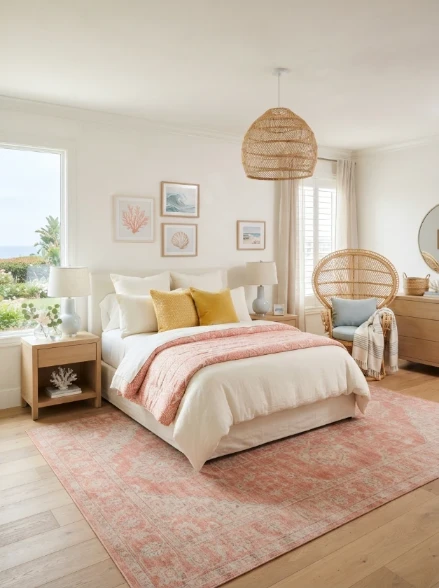
Coastal rooms do not have to be entirely blue and white. Muted coral, buttery yellow, terracotta, or warm peach can introduce the feeling of sunlight and bring energy into an otherwise calm palette.
Keep the warm accent selective. A coral rug, yellow throw, or a pair of patterned cushions is enough to give the room character. When the warm shade repeats in two or three places, it feels intentional rather than random. For example, a muted coral throw and two buttery-yellow cushions on white bedding add sunlight without noise.
Create A Moody Coastal Bedroom With Contrast
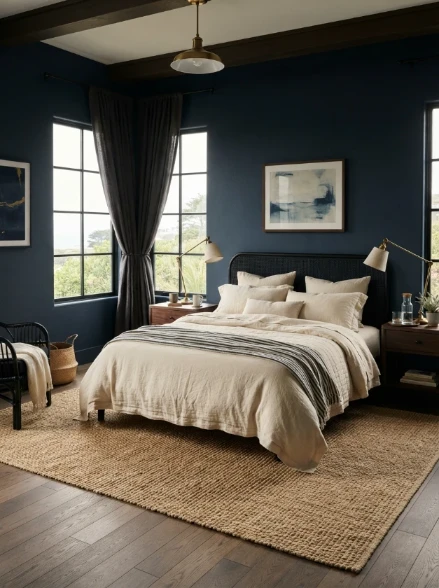
For a more mature look, move away from an all-white palette and introduce deeper tones. Charcoal, deep navy, dark olive, espresso wood, or black rattan can create boutique-hotel depth while lighter bedding and natural daylight keep the room connected to the coast.
The trick is balance. Dark furniture or curtains should be surrounded by enough cream, pale wood, and sunlight to prevent the bedroom from feeling heavy. Organic textures become even more important in a darker scheme. For example, charcoal curtains with cream linen bedding and a black rattan pendant give boutique-hotel depth while daylight keeps it coastal.
Use Sheer Curtains To Control The Light
Natural light is one of the biggest reasons coastal interiors feel airy. Sheer white, ivory, or pale linen curtains soften strong daylight while keeping the room bright. Hang curtains high and wide when possible so the windows feel larger and the fabric falls gracefully.
At night, combine the curtains with warm bedside lamps or woven pendants. That change from bright daylight to warm evening light gives the room more depth and keeps the coastal mood from feeling one-dimensional. For example, ivory linen sheers hung high above the window frame make a standard window feel twice as tall.
Choose A Rug That Grounds The Whole Room
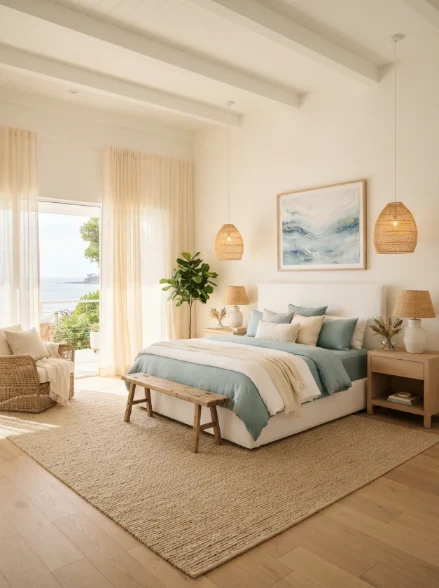
A large rug can make the bedroom feel more finished, especially when the rest of the decor is restrained. Jute, wool, faded vintage patterns, subtle stripes, and low-contrast geometric designs all work well.
Choose a rug that connects at least two colors already present in the room. A sandy rug can echo wood furniture and beige bedding, while a muted blue pattern can tie together the bed, curtains, and artwork. For example, a large natural jute rug under the bed that picks up both the wood floor and the beige bedding ties the room together.

Mix Vintage Pieces With Relaxed Beach Materials
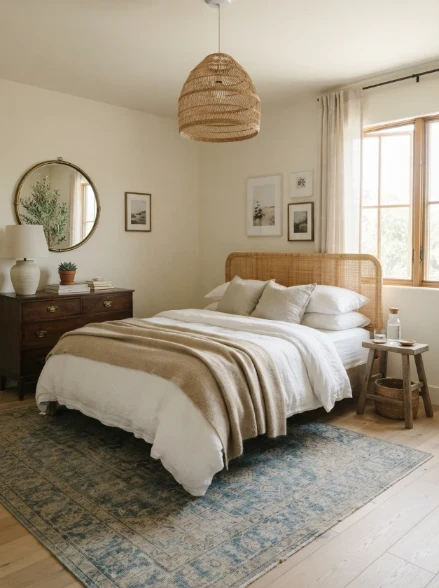
The most interesting coastal bedrooms are rarely made from a single furniture collection. Add a vintage-style dresser, aged wood stool, antique-inspired mirror, or classic rug alongside linen, rattan, and woven materials.
This contrast prevents the room from feeling too predictable. Traditional shapes give it character, while coastal materials keep the overall mood relaxed and fresh. For example, a vintage-style wood dresser with aged brass pulls beside a rattan chair mixes old character with beach ease.
Keep Ocean-Inspired Decor Subtle
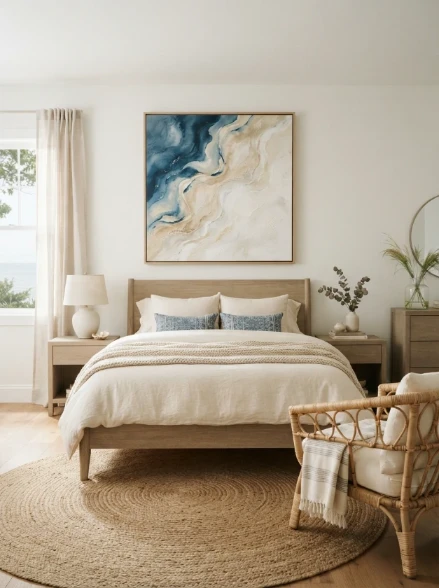
Skip the temptation to fill every surface with shells, anchors, ropes, and obvious beach signs. Instead, hint at the location through abstract ocean artwork, coral-inspired shapes, glass, natural driftwood tones, botanical prints, or a small collection of collected objects.
Subtle references tend to age better because they communicate the feeling of the coast rather than announcing a theme. One beautiful piece can do more than a dozen small nautical accessories. For example, one large abstract ocean painting above the bed says coastal louder than a shelf of shells ever could.
Finish With Greenery And Organic Shapes
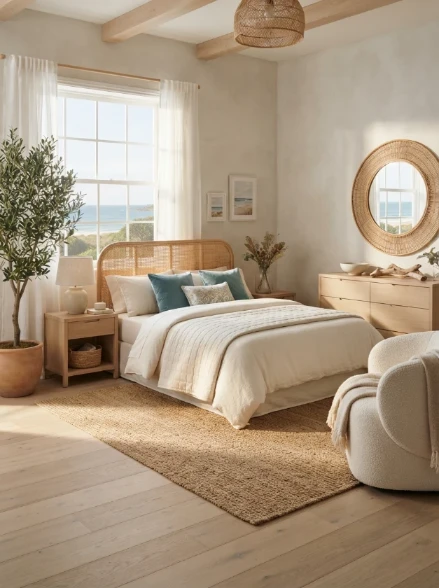
Plants bring movement and freshness into a coastal bedroom while balancing the straight lines of beds, dressers, and windows. A tall palm, olive tree, eucalyptus, or simple leafy plant can work especially well with woven furniture and natural wood.
Use rounded shapes where possible too. A circular mirror, curved chair, rounded rug, or soft ceramic lamp can make the room feel gentler and more relaxed. For example, a tall olive tree in a woven basket in the corner adds height, life, and a soft organic shape.
Coastal Bedroom FAQs
What is a coastal bedroom?
A coastal bedroom is a bedroom styled after the shoreline: light, airy colors like white, sand, and soft blue, natural textures such as linen, rattan, jute, and light wood, and ocean-inspired accents used with restraint. It should feel calm and collected, not like a beach gift shop.
How is coastal different from farmhouse style?
Both love natural materials, but coastal leans light and airy — whites, blues, rattan, linen — while farmhouse leans rustic and warm — distressed wood, plaid, darker metals. Coastal rooms usually have more light and less visual weight.
How can I get the coastal look on a budget?
Keep your existing bed frame and add a white or cream linen-look duvet, a jute or woven rug, and two or three ocean-toned throw pillows. Thrifted rattan baskets and a coat of warm white paint on a dresser do the rest.
Can a small bedroom work as a coastal bedroom?
Yes — coastal is ideal for small rooms because the light palette and sheer curtains make spaces feel bigger. Keep patterns small-scale, use one woven texture at a time, and let the bedding carry the look.
Final Thoughts On Coastal Bedrooms
The most elevated coastal bedrooms do not look expensive because they contain more decoration. They feel expensive because every layer has a purpose. A restrained color palette, natural materials, relaxed bedding, controlled pattern, thoughtful lighting, and a few organic details create a room that feels calm and considered.
Whether you prefer bright white and sea-glass blue, warm sand and honey wood, playful coral and aqua, or deep navy with natural textures, keep the overall composition simple. When the room has space to breathe, the materials can become the stars.