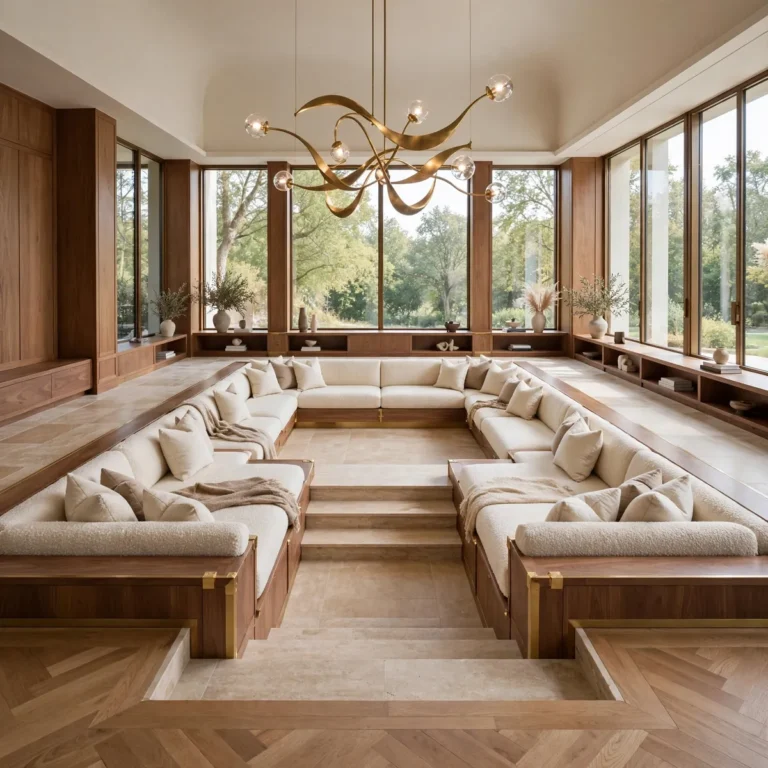
12 Luxury Living Room Ideas That Feel Expensive ♥
What Designers Know About Luxury Living Rooms
True luxury isn’t about spending more. It’s about the details most people overlook: layered light, honest materials, and restraint.
These Luxury Living Rooms ideas reveal the designer secrets behind rooms that feel expensive. Every idea works at any budget.
For warm, relaxed style instead, see our farmhouse living room ideas.
1. Layer the Lighting Like a Designer
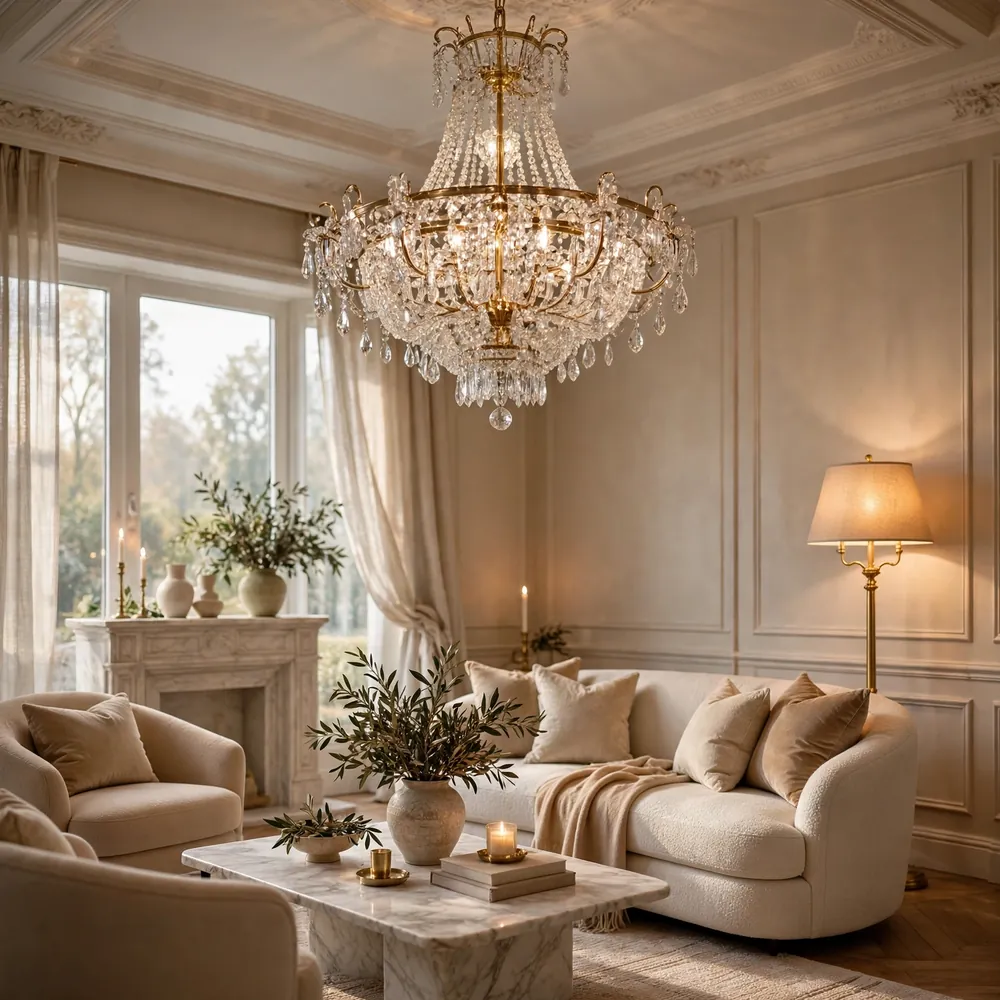
Designers never rely on one ceiling light. They layer ambient, task, and accent lighting so the room glows from multiple sources. A chandelier sets the tone, table lamps add warmth at eye level, and picture lights make art shine. Each layer sits on its own dimmer, letting the mood shift from bright mornings to intimate evenings.
Designers also hide LED strips behind shelving and under consoles for a floating effect. These hidden glows make Luxury Living Rooms feel magical after dark, and the strips cost very little to add.
Smart bulbs let you program evening scenes with one tap. Automation makes layered lighting effortless daily.
Replace bulbs together so color stays consistent across layers.
Quick tips:
- Use warm 2700K bulbs everywhere for a flattering glow.
- Place lamps at different heights to create depth.
- Put every layer on a dimmer switch.
2. Anchor the Room with a Marble Fireplace
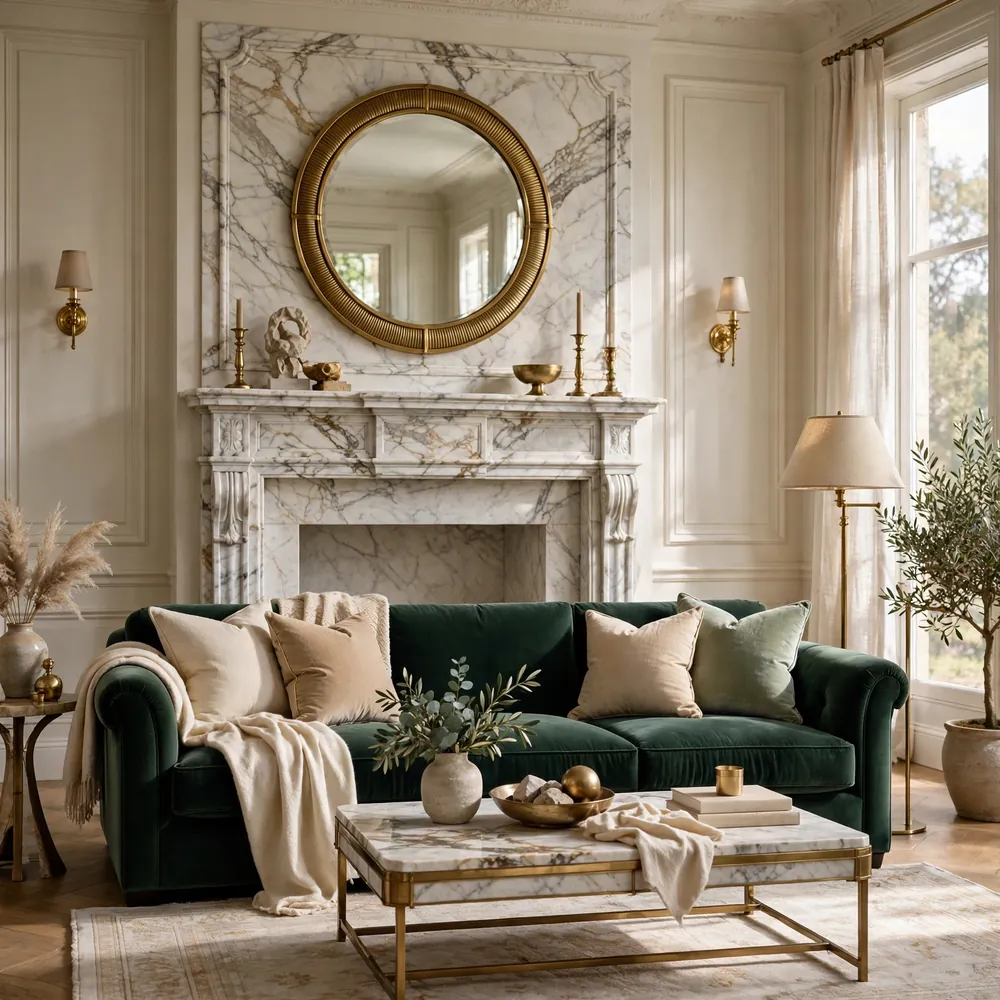
A marble fireplace gives the room a natural focal point. The stone’s veining adds movement and character that no flat wall can match. Designers keep the mantel styling minimal — a mirror or one large artwork above, a pair of objects at the ends — so the marble itself stays the star. Brass accents nearby pick up the stone’s warmth.
If a real marble surround is out of reach, marble-look porcelain slabs deliver the same veining at a fraction of the cost. The visual impact comes from scale and simplicity, not the quarry.
Seal natural stone yearly to prevent staining. Protected marble stays beautiful for decades.
Style the hearth with a basket of birch logs for texture.
Quick tips:
- Choose honed marble for a soft, modern finish.
- Keep mantel styling to three objects maximum.
- Echo the stone’s tones in nearby textiles.
3. Invest in One Velvet Showpiece

One spectacular velvet sofa does more than a roomful of average furniture. Designers spend the budget on a single hero piece in a rich jewel tone — emerald, sapphire, or oxblood — then keep everything around it quiet. Velvet catches light beautifully, shifting color as you move through the room, which reads as pure luxury.
Test velvet swatches in your own light before ordering, since the pile shifts color dramatically. Luxury Living Rooms get this right by choosing the shade in the room, not the showroom.
Brush the pile weekly with a soft clothes brush. Simple care keeps velvet luminous.
Keep throws nearby in a complementary tone for cozy layering.
Quick tips:
- Pick performance velvet for durability and easy cleaning.
- Keep surrounding furniture neutral so the sofa stars.
- Rotate cushions monthly to wear evenly.
4. Hang Oversized Art
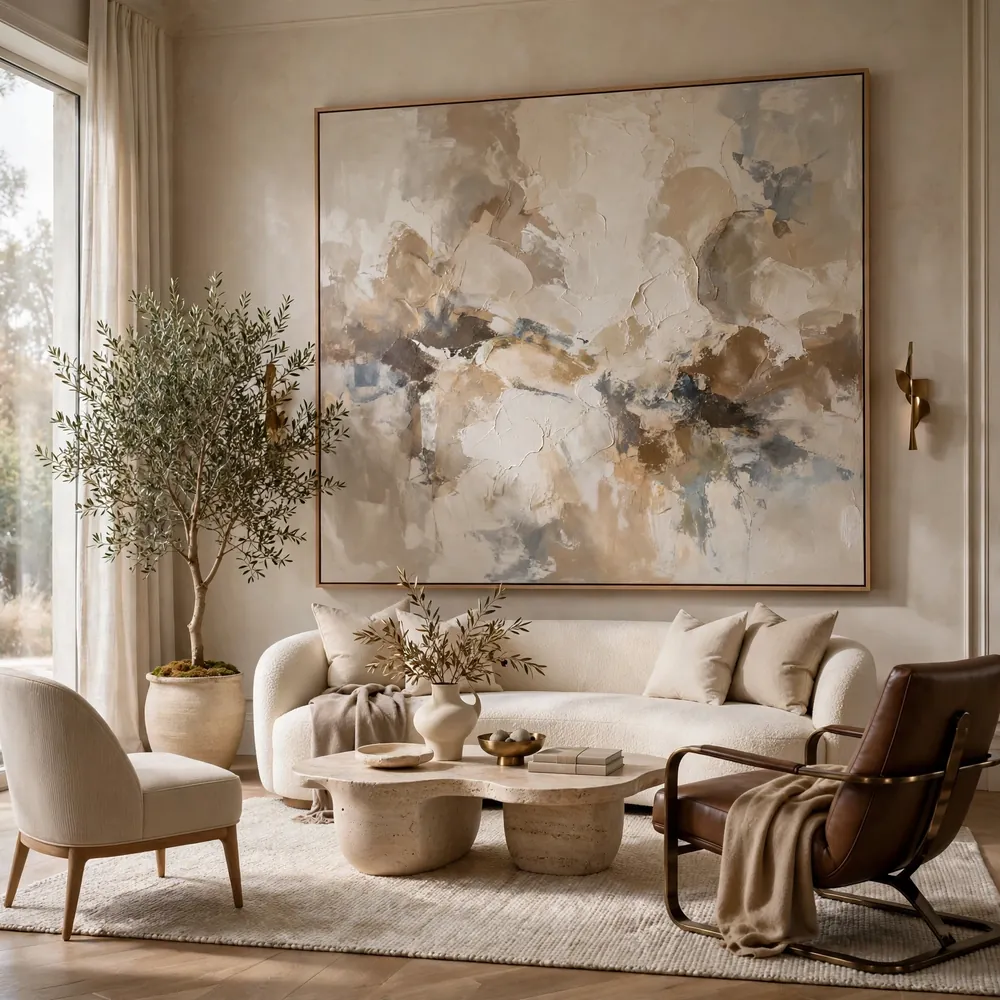
Small art gets lost in a luxury room. Designers hang one oversized piece that commands the wall — ideally two-thirds the width of the sofa beneath it. Large-scale art creates the gallery feeling that makes a room feel curated and expensive. A single bold abstract in the room’s palette ties everything together.
Large-format prints from independent artists offer gallery scale without gallery prices. One commanding piece beats a scattered gallery wall for pure luxury impact.
Commission a local artist for a truly one-of-a-kind piece. Original art elevates any room instantly.
Float-mount canvases for a modern gallery edge.
Quick tips:
- Hang the center at 57 inches from the floor.
- Light it with a picture light for evening drama.
- Choose art in tones already present in the room.
5. Mix Brass and Warm Metals
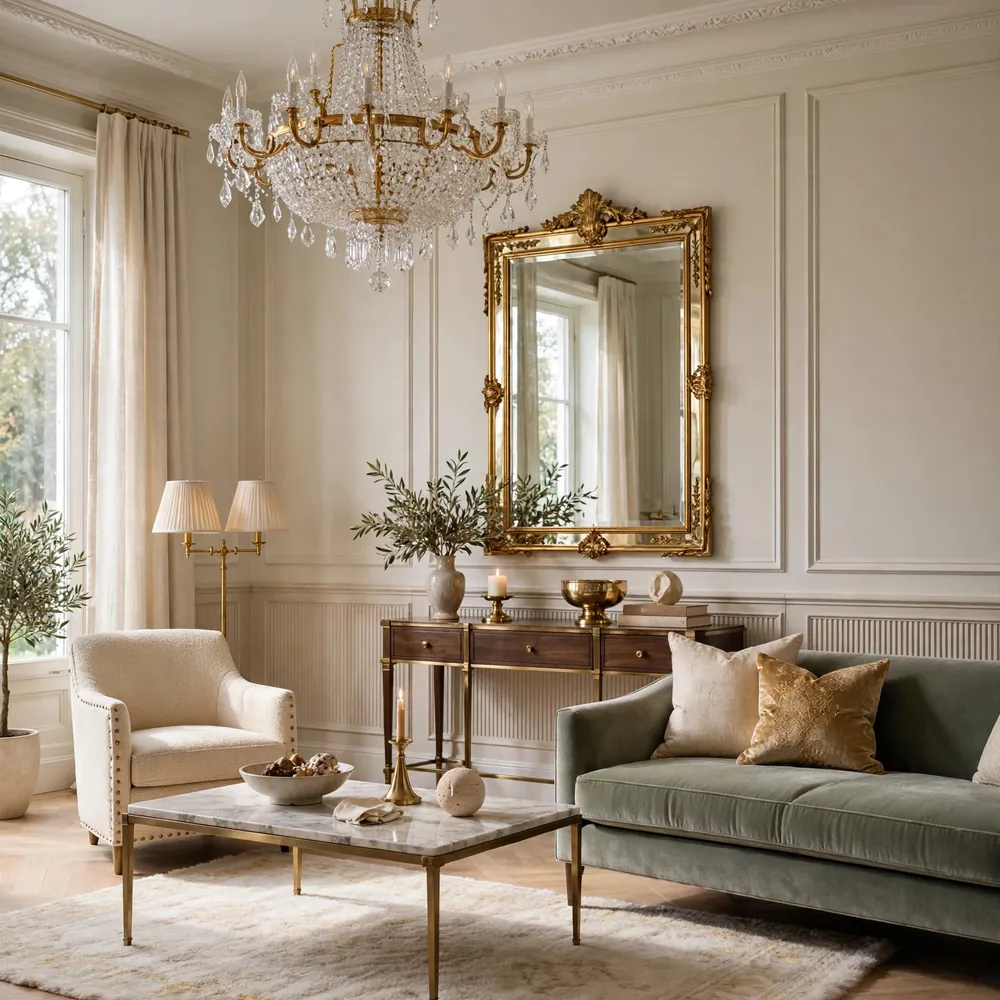
Chrome feels cold; brass feels rich. Designers mix warm metals — brass, bronze, aged gold — repeating each at least twice so the mix looks intentional. A brass floor lamp echoes a gold mirror frame; bronze hardware nods to a brass chandelier. Warm metals catch candlelight and lamplight, adding glow no paint color can replicate.
Unlacquered brass develops a rich patina over time that designers prize. Luxury Living Rooms often mix polished and aged brass for depth that feels collected, not decorated.
Wipe brass with a dry microfiber cloth regularly. Gentle care preserves the warm finish.
Echo brass in curtain hardware for quiet cohesion.
Quick tips:
- Repeat each metal finish at least twice.
- Keep all metals in the warm family for harmony.
- Polish lacquered brass yearly to keep the glow.
6. Add Texture to the Walls

Flat walls read as builder-grade. Designers add texture — fluted wood panels, grasscloth, limewash, or upholstered walls — so light plays across the surface. Luxury Living Rooms feel expensive because every surface has something to say. Texture adds the depth that makes neutrals interesting without a single bold color.
Peel-and-stick grasscloth and textured wallpapers now mimic the high-end look convincingly. Even renters can add wall texture without permanent changes.
Sample textures on large boards in your light first. Scale changes how texture reads.
Paint trim the same color for a seamless envelope.
Quick tips:
- Try limewash paint for affordable wall texture.
- Limit textured walls to one or two per room.
- Pair texture with soft, directional lighting.
7. Layer Rugs for Depth

One rug is expected; two layered rugs signal designer confidence. Start with a large natural-fiber base like jute or sisal, then layer a smaller patterned or plush rug on top at an angle. The layering adds the collected, curated feeling of high-end interiors. Luxury Living Rooms use this trick to make even simple furniture feel styled.
Keep both rugs in the same color family so the layering reads intentional. Luxury Living Rooms avoid clashing patterns by letting texture, not print, do the talking.
Vacuum layered rugs with suction only, no beater bar. Gentle cleaning preserves the fibers.
Rotate rugs seasonally for even wear and fresh feel.
Quick tips:
- Keep at least 12 inches of the base rug visible.
- Use a rug pad to prevent slipping between layers.
- Angle the top rug slightly for a relaxed look.
8. Dress Windows in Silk Drapery
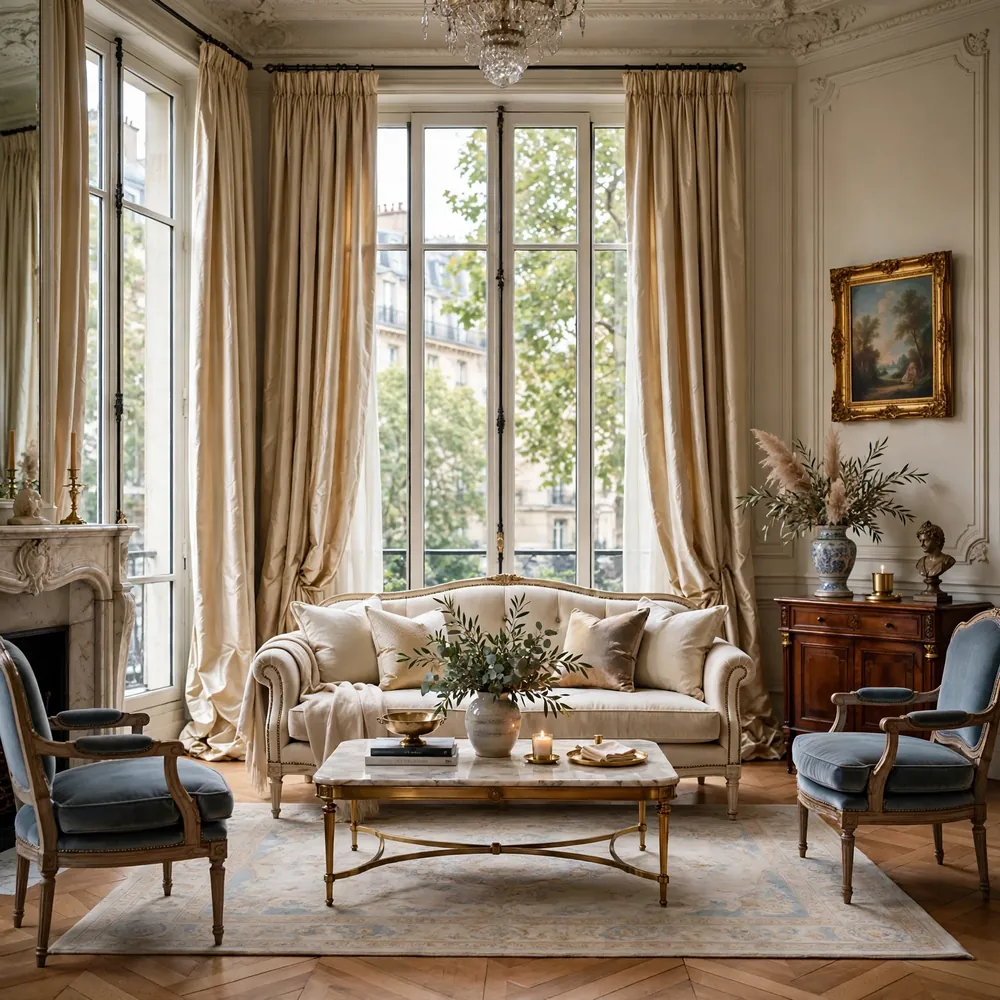
Nothing says luxury like floor-to-ceiling drapery in a lustrous fabric. Designers hang rods wide and high — often at ceiling height — so windows look grander and ceilings taller. Silk or silk-look linen puddling slightly on the floor adds the softness that tailors a room. Sheers underneath filter daylight beautifully.
Budget tip: buy extra-wide panels and have them hemmed locally for a custom look. Fullness matters more than fabric price for that luxurious drape.
Steam drapes yearly to keep folds crisp. Well-kept fabric elevates the whole room.
Choose blackout lining for bedrooms; sheer lining for living rooms.
Quick tips:
- Hang rods 4-6 inches wider than the window frame.
- Let panels kiss or puddle slightly on the floor.
- Line drapery for richer folds and light control.
9. Style the Coffee Table in Threes
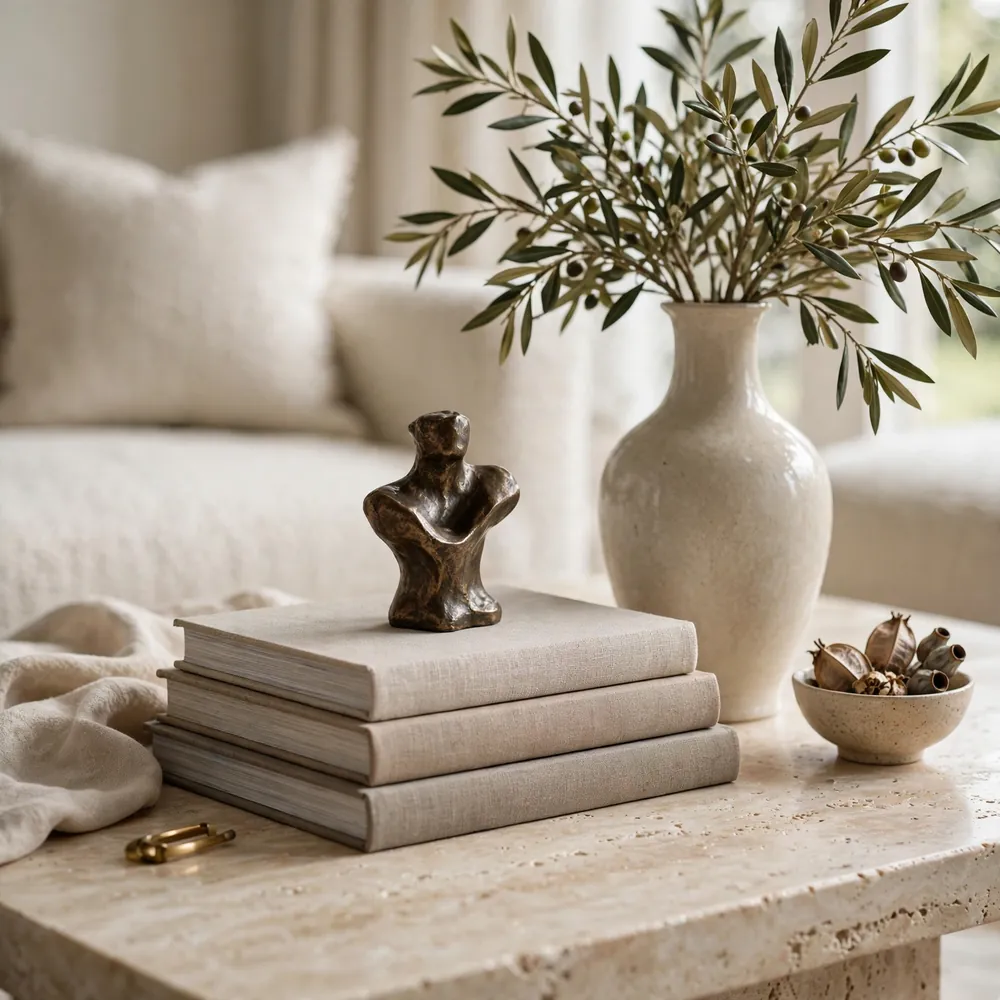
Designers style coffee tables in odd-numbered groupings — usually three. A stack of art books, a sculptural vase, and a small bowl or candle create a composed vignette with height variation. Trays corral smaller objects so the arrangement reads intentional, not cluttered. Luxury Living Rooms treat the coffee table as a gallery plinth.
Rotate the vignette seasonally to keep the room feeling fresh. Luxury Living Rooms stay interesting because their details evolve through the year.
Dust the vignette weekly to keep it pristine. Styled surfaces demand light maintenance.
Add a scented candle for a multi-sensory vignette.
Quick tips:
- Vary heights: tall, medium, and low objects.
- Use a tray to group small items together.
- Leave 30% of the surface empty for breathing room.
10. Design with Symmetry

Symmetry is the fastest route to a pulled-together room. Matching sofas flanking a fireplace, paired lamps, balanced art — the mirror-image order reads as calm and expensive. Designers use symmetry as the foundation, then break it once with something organic like a plant or sculptural chair. Luxury Living Rooms feel serene because the eye finds instant order.
In open-plan spaces, use a rug to define the symmetrical zone. The rug becomes the invisible frame that holds the mirror-image arrangement together.
Photograph the room to verify the balance. The camera catches asymmetry the eye misses.
Anchor the arrangement with a centered ceiling fixture.
Quick tips:
- Start with the fireplace or sofa as the center axis.
- Mirror lamps, art, and side tables in pairs.
- Break symmetry once with an organic element.
11. Go Moody and Dramatic

Dark walls are a designer power move. Deep charcoal, ink navy, or forest green make a living room feel intimate and cocooning, and they make art and brass light fixtures pop dramatically. The key is balancing darkness with warm lighting and reflective surfaces — mirrors, metallics, glossy ceramics — so the room glows rather than caves.
Balance dark walls with pale upholstery and light wood to keep the room breathable. Luxury Living Rooms go moody without going heavy through careful contrast.
Add dimmers to every switch in a dark room. Control is essential when walls absorb light.
Introduce one light artwork to lift the darkest corner.
Quick tips:
- Test dark paint in evening light before committing.
- Use matte finish to avoid harsh reflections.
- Add mirrors to bounce light around the room.
12. Finish with Fresh Orchids

The final designer secret is living beauty. A single orchid arrangement — real, not faux — signals care and attention that no object can fake. Luxury Living Rooms always have something alive: orchids, a sculptural branch, fresh greenery. Place one striking arrangement where the eye lands first, and keep it fresh.
A tall branch in a sculptural vase lasts for weeks and costs almost nothing. Sculptural stems give the same designer finish as fresh flowers.
Water orchids sparingly with ice cubes weekly. Less water means longer blooms.
Group three small orchids for a lush, abundant look.
Quick tips:
- Choose white phalaenopsis for timeless elegance.
- Repot in a beautiful ceramic cachepot, not plastic.
- Replace or refresh arrangements every two weeks.
Frequently Asked Questions
What makes a living room look luxurious on a budget?
Layered lighting, one hero furniture piece, and edited styling. Luxury Living Rooms feel expensive through design decisions, not price tags.
How do designers make small living rooms feel luxurious?
They use scale tricks: oversized art, tall drapery, and mirrors. Luxury Living Rooms rely on proportion more than square footage.
What colors make a living room feel luxurious?
Rich neutrals, deep jewel tones, and warm metallics. Keep the palette tight and let texture add interest.
How important is lighting in a luxury living room?
It’s the single biggest factor. Luxury Living Rooms layer multiple warm light sources on dimmers — no overhead-only lighting.
Conclusion
Luxury Living Rooms aren’t about spending more — they’re about knowing what matters. Layer the light, invest in one hero piece, add texture everywhere, and finish with something alive.
Start with lighting and editing. The rest follows naturally when every choice is intentional.