








Small Entryway Decor Ideas That Make a Tiny Space Feel Grand
A small entryway can still feel welcoming, calm, and put-together. The trick is not buying more decor — it is choosing pieces that work harder. These small entryway decor ideas focus on slim furniture, vertical storage, good light, and one clear place for everything you carry in and out of the door. Start with what your entryway has to do every day, then style around that.
Short answer: Measure your space, keep furniture narrow and wall-mounted where possible, add a mirror and warm light, give keys, mail, coats, and shoes a dedicated spot, and stop at one or two decorative pieces. A small entryway feels bigger when the floor stays clear and the walls do the work.
1. Measure and Plan Before You Buy Anything
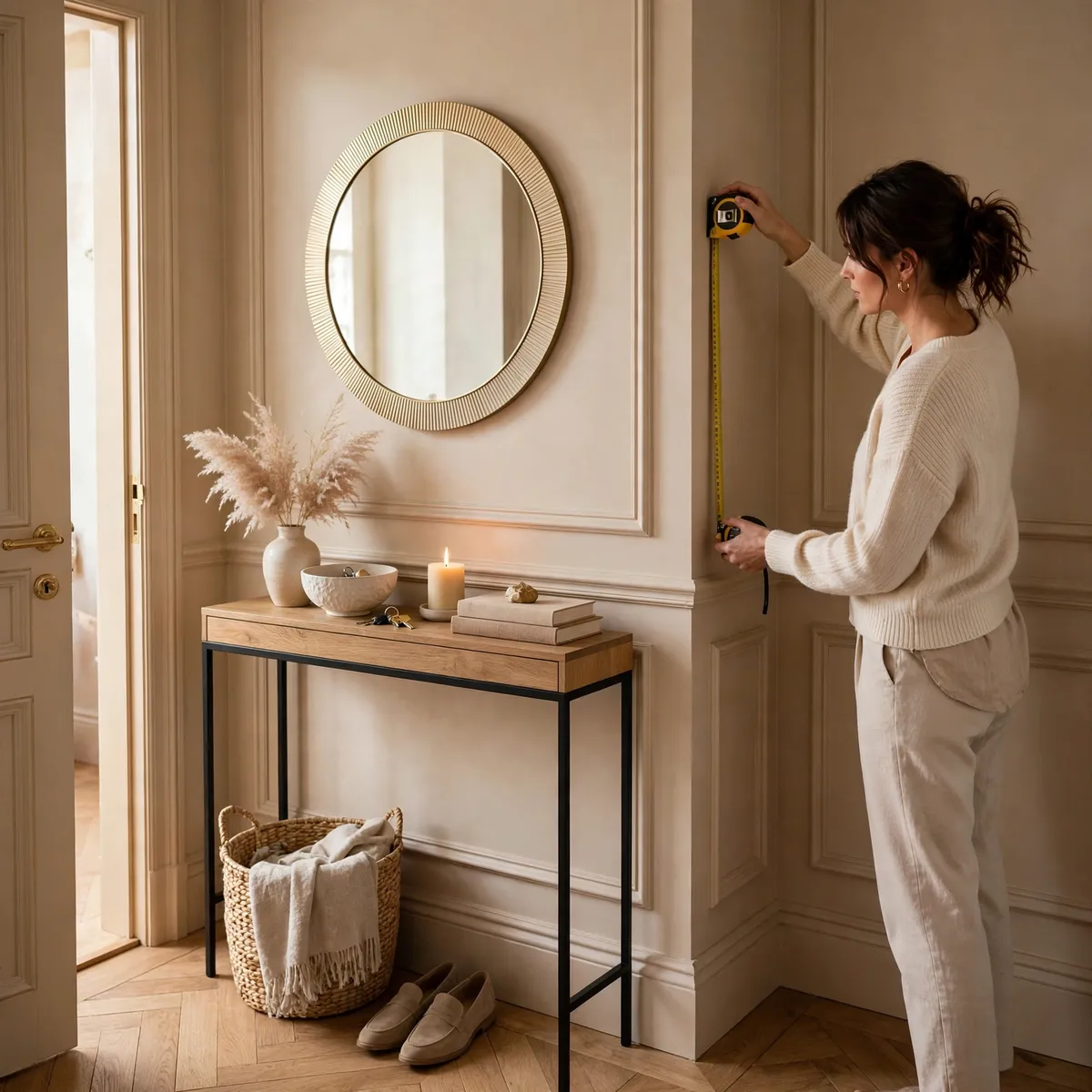
Small spaces punish guessing. A console that is two inches too deep can block a door swing, and a bench that is too wide turns a hallway into an obstacle course. Before you shop, measure the width of the wall, the clearance needed for the door to open fully, and the walking path you need to keep clear. Aim to leave at least 36 inches of walk-through space wherever people pass, and note where outlets, light switches, and vents sit so you do not cover them.
- Measure the wall length, ceiling height, and door-swing clearance.
- Mark the walking path with painter’s tape and live with it for a day.
- List what must live here: keys, coats, shoes, bags, mail.
- Choose furniture only after steps 1–3 are done.
Quick tips:
- Photograph the space with measurements written on paper and take it shopping.
- Keep the door swing fully clear — nothing should sit in its arc.
- When in doubt, go narrower rather than shorter.
2. Go Vertical With Wall-Mounted Storage
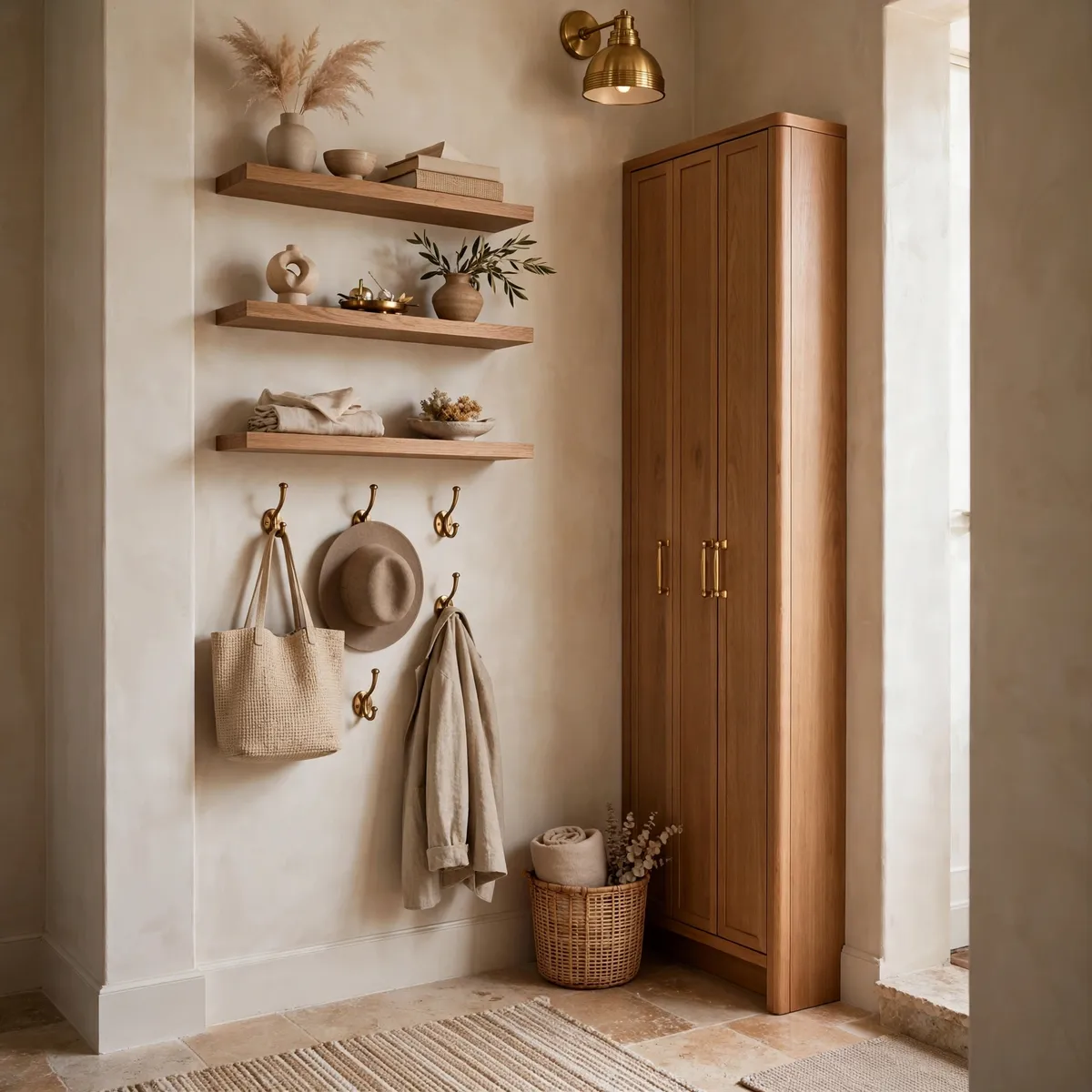
When floor space is scarce, the walls are your extra square footage. A tall, narrow cabinet, a row of floating shelves, and hooks mounted at two heights can hold as much as a bulky hall tree while leaving the floor open. Keep everyday items between hip and eye level, and reserve the top shelf for things you rarely need, like spare hats or a decorative basket. Vertical storage also draws the eye upward, which makes a low or narrow entryway feel taller.
Quick tips:
- Mount a slim picture ledge above hooks for mail and sunglasses.
- Use one tall cabinet instead of several small pieces.
- Anchor anything tall to the wall, especially in homes with kids.
3. Choose a Slim Bench With Hidden Storage
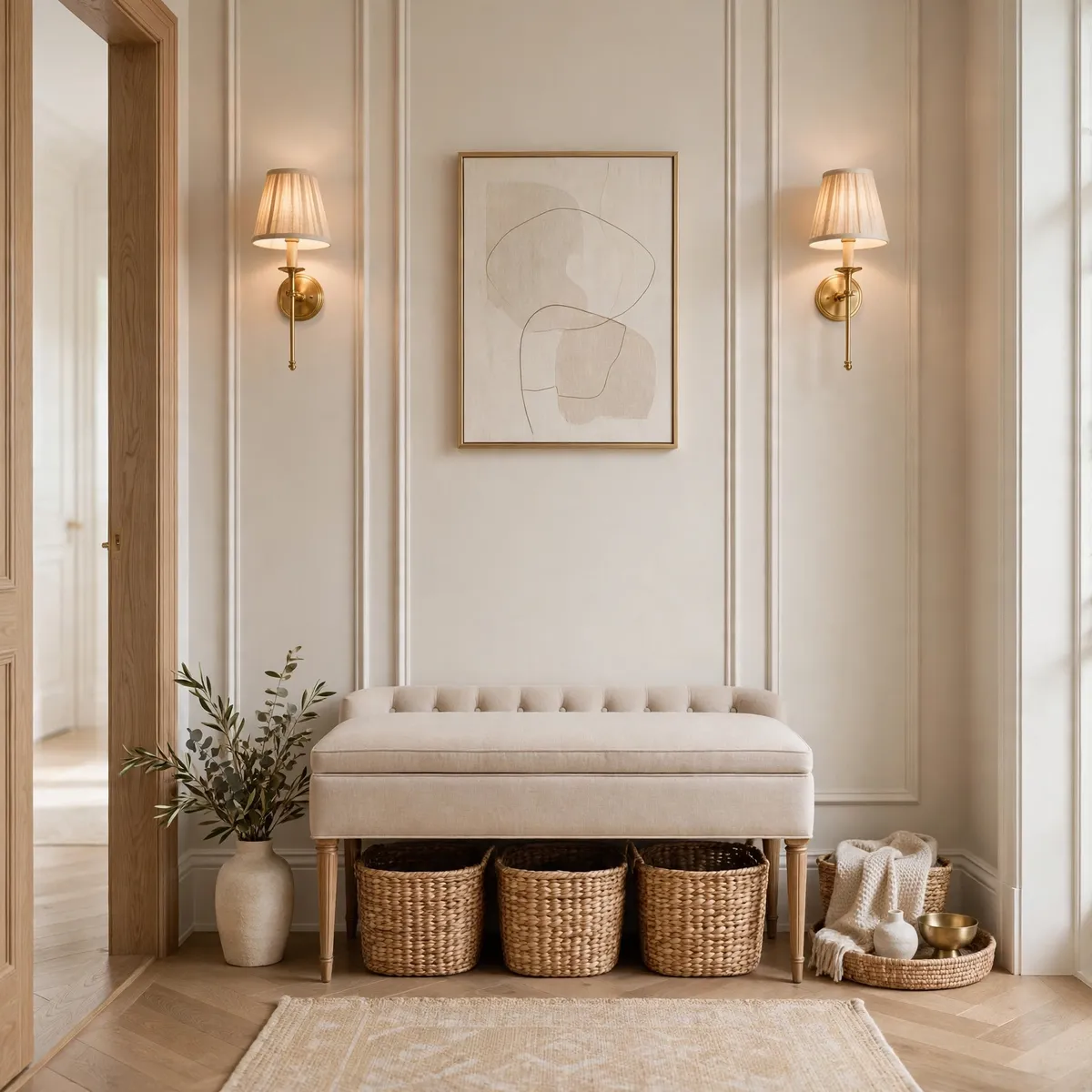
A bench is the hardest-working piece in a small entryway: a place to sit while you put on shoes, a surface to set a bag down, and — if it opens or has baskets — hidden storage for shoes, scarves, and dog leads. Look for a bench no deeper than 14 to 16 inches with a lift-up seat or woven baskets underneath. An upholstered top in a wipeable fabric keeps it comfortable and practical, and a single cushion in a color you love keeps it from looking like a storage unit.
Quick tips:
- Leave one basket empty so there is always room for a guest’s bag.
- Pick a bench with legs so you can see floor beneath it — it reads lighter.
- Add a small tray on one end for keys if you skip a console.
4. Float a Console or Shelf to Keep the Floor Clear
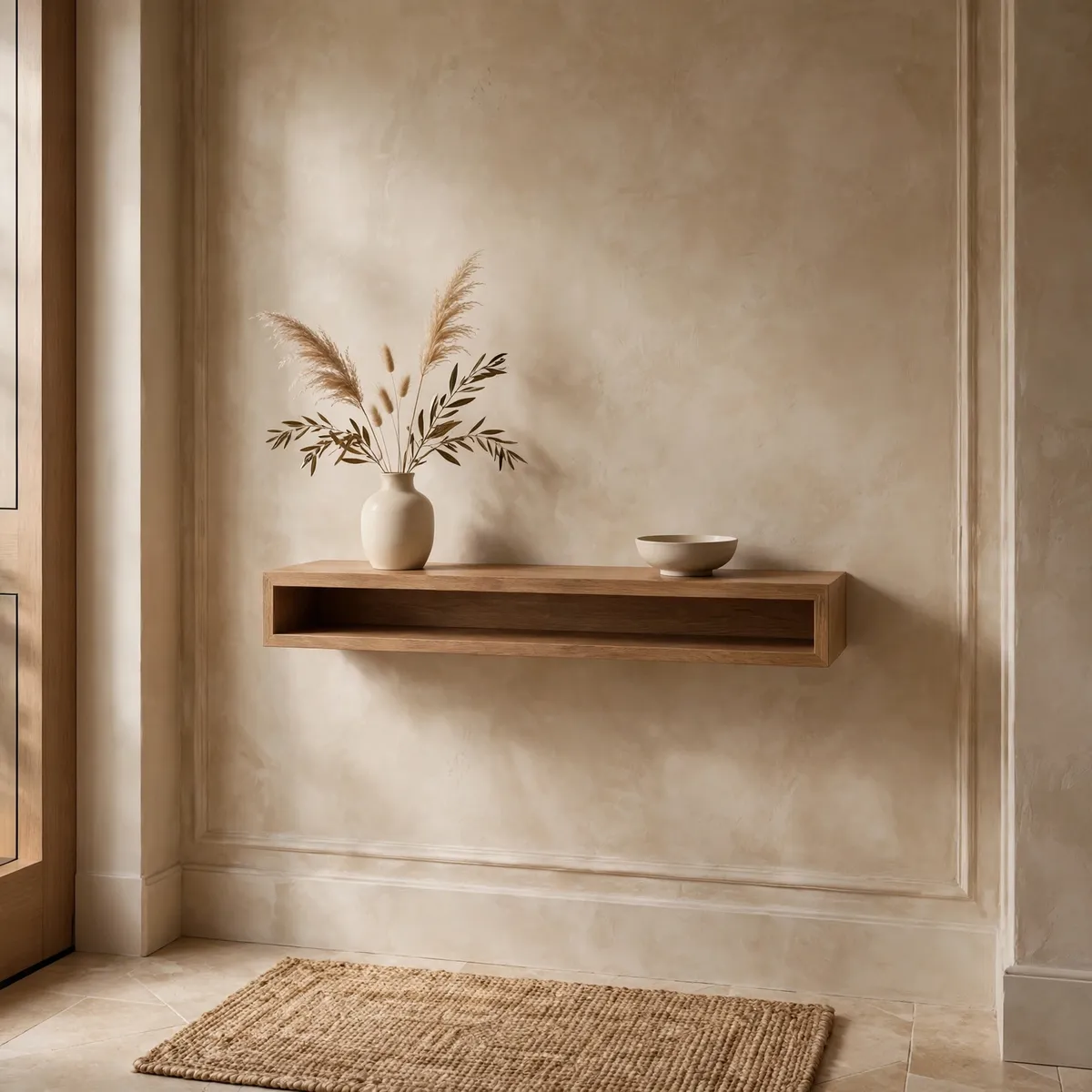
A floating console or a single deep shelf gives you a landing surface without the bulk of a table. Mounted at standard console height, it holds a bowl for keys, a small vase, and a framed photo, while the open floor below keeps the space feeling airy and makes sweeping easy. In a very narrow entryway, a shelf just 8 to 10 inches deep is enough — anything deeper starts to crowd the walkway. Pair it with a basket underneath for shoes and the whole wall becomes one compact station.
Quick tips:
- Mount the shelf into studs so it can hold real weight.
- Keep the top styled with three items at most.
- Leave the wall below bare or use one low basket — not both.
5. Give Coats and Bags a Home With Hooks
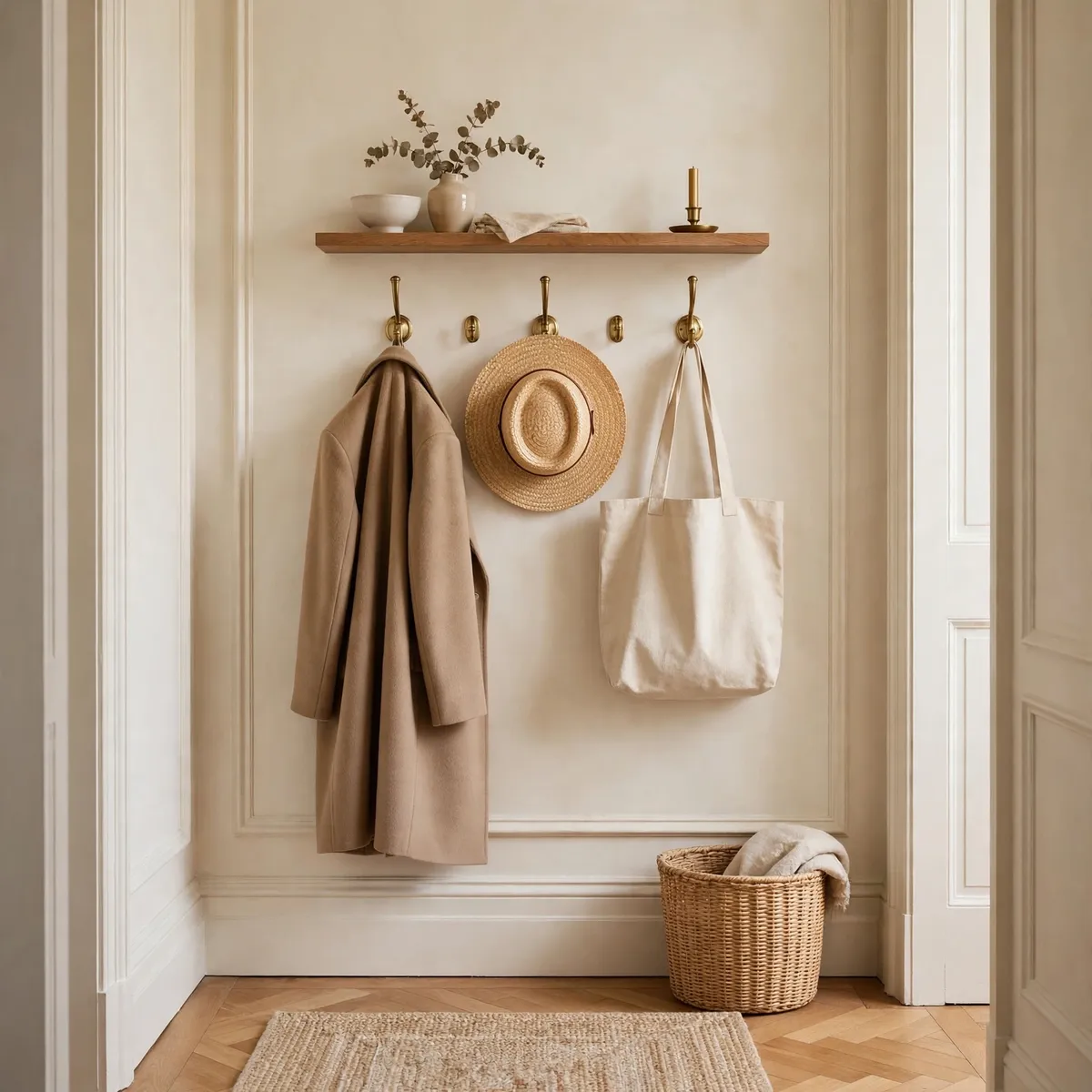
Without a closet, coats and bags need a deliberate home or they end up on every chair in the house. A row of sturdy hooks is the simplest fix: mount them at two heights so kids can reach the lower row and adults use the upper one, and cap the number of hooks so the wall cannot become a coat mountain. One hook per person, plus one for a guest, is a good rule. Choose hooks that match your hardware — brass, matte black, or wood — so they look like part of the design rather than an afterthought.
Quick tips:
- Hang a small mirror or shelf above the hooks to complete the station.
- Rotate out-of-season coats to a bedroom closet.
- Use one hook for a tote that corrals scarves and gloves.
6. Small Entryway Decor Ideas With a Mirror That Opens Up the Space
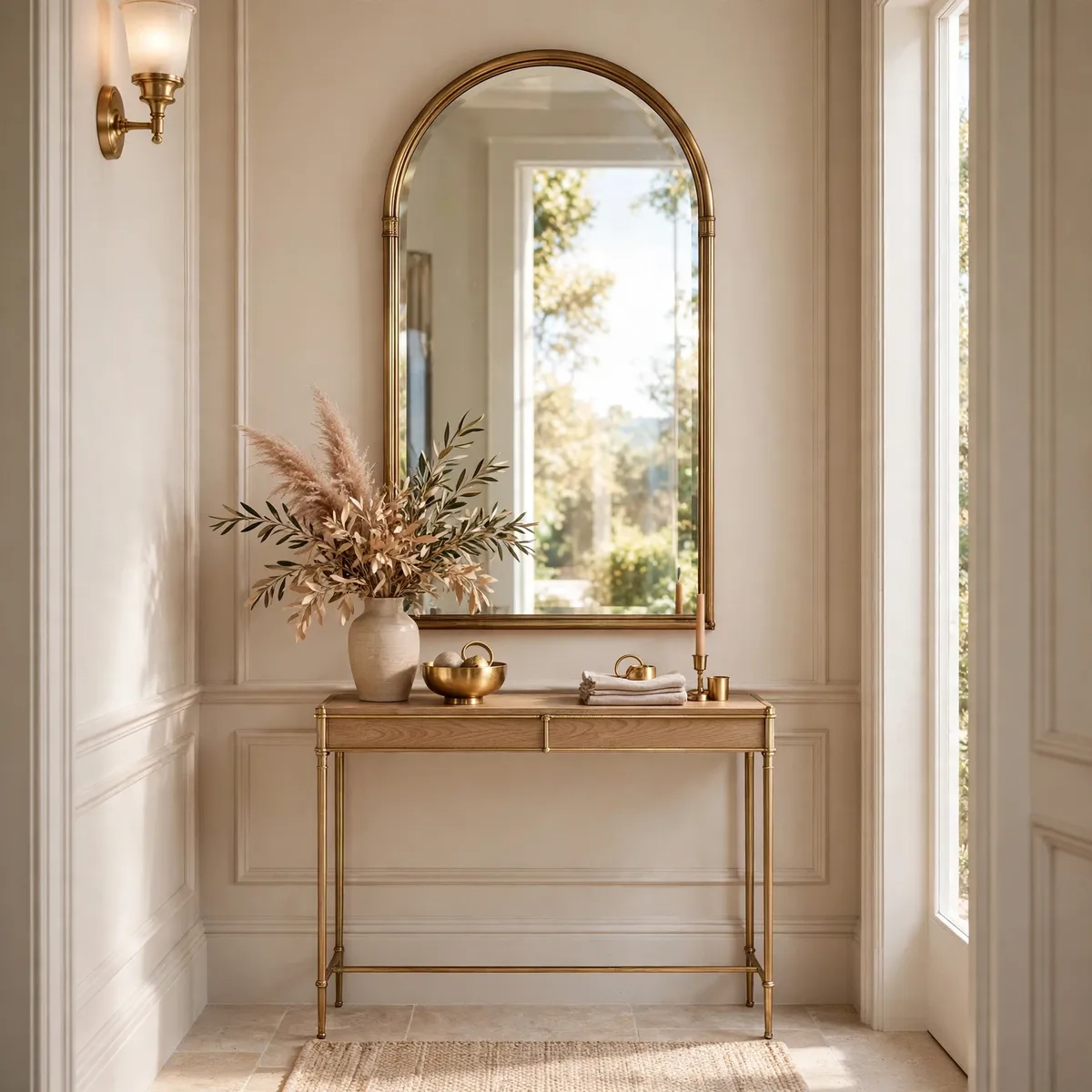
A mirror is the single fastest way to make a small entryway feel larger, and it earns its place twice over: it bounces light around a dim corner and gives you a last look before you leave. A tall, narrow mirror — arched or rectangular — suits a slim wall and echoes the vertical lines that make the space feel taller, while a round mirror softens a wall of straight furniture. Hang it where it reflects a window or a light source rather than a blank wall or clutter, and keep its frame in the same finish as your hooks and lighting so the whole entryway reads as one intentional scheme.
If your entryway is dark, this one change will do more than any paint color: a well-placed mirror doubles the sense of light and depth without taking a single inch of floor space, and because it hangs flat on the wall it works in rentals, hallways, and the narrowest of nooks alike.
Quick tips:
- Hang the mirror at eye level, centered over the console or bench.
- Lean a tall mirror against the wall only if the floor space allows it.
- Clean it often — smudges show up fast in a small space.
7. Layer the Lighting With a Sconce or Small Pendant
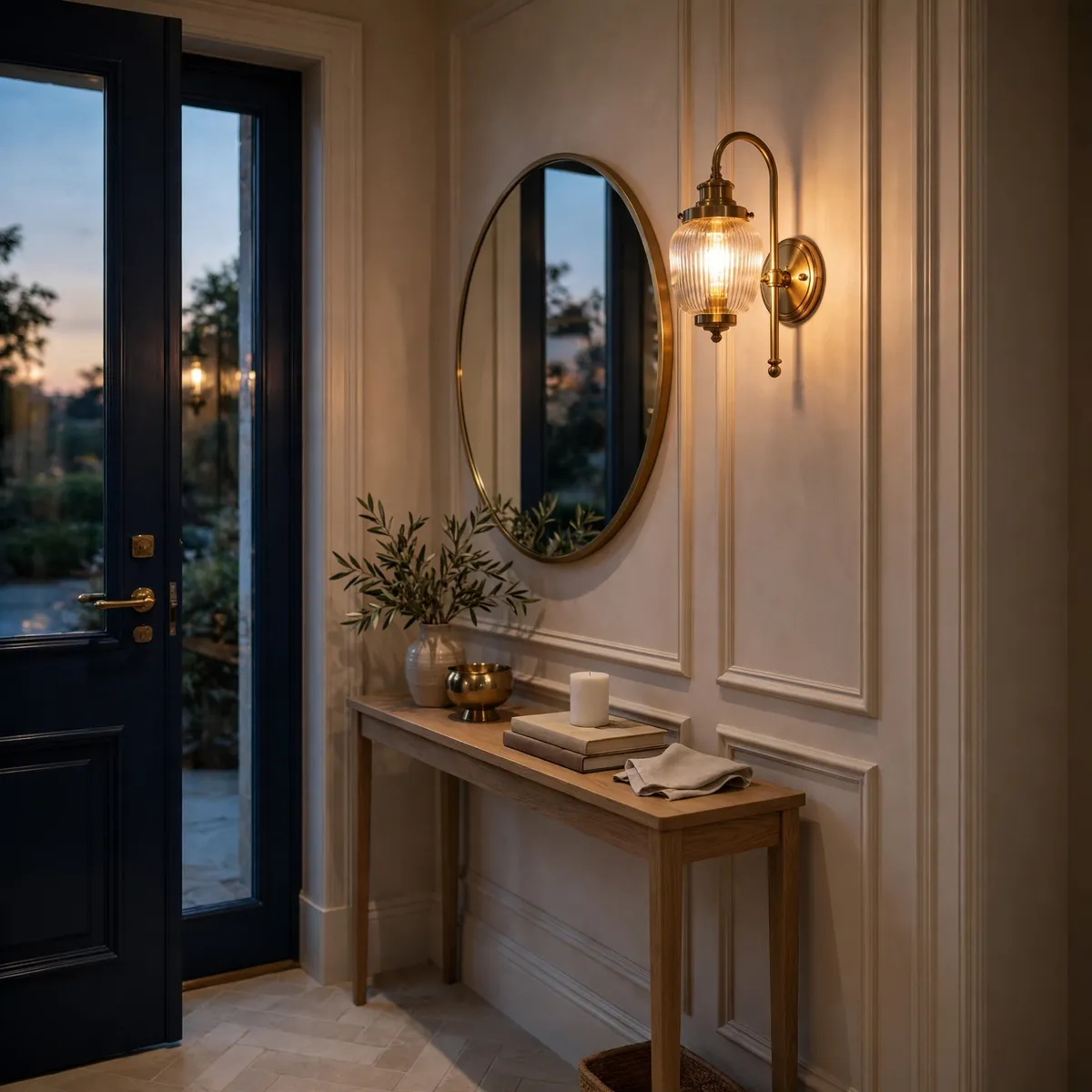
Entryways are often the darkest spot in the home, and a single harsh ceiling light does not help. Layer the light: keep the overhead fixture on a warm bulb, then add a small sconce beside the mirror or a slim pendant if ceiling height allows. Warm light (around 2700K) makes the space feel welcoming rather than clinical, and a dimmer lets you lower it in the evening. If you have no wiring options, a battery-operated sconce or a small plug-in lamp on the console works just as well.
Quick tips:
- Choose warm-white bulbs for every fixture in the entryway.
- Put the sconce on the side you face when you look in the mirror.
- Keep shades small so they do not crowd the wall.
8. Ground the Space With a Runner Rug
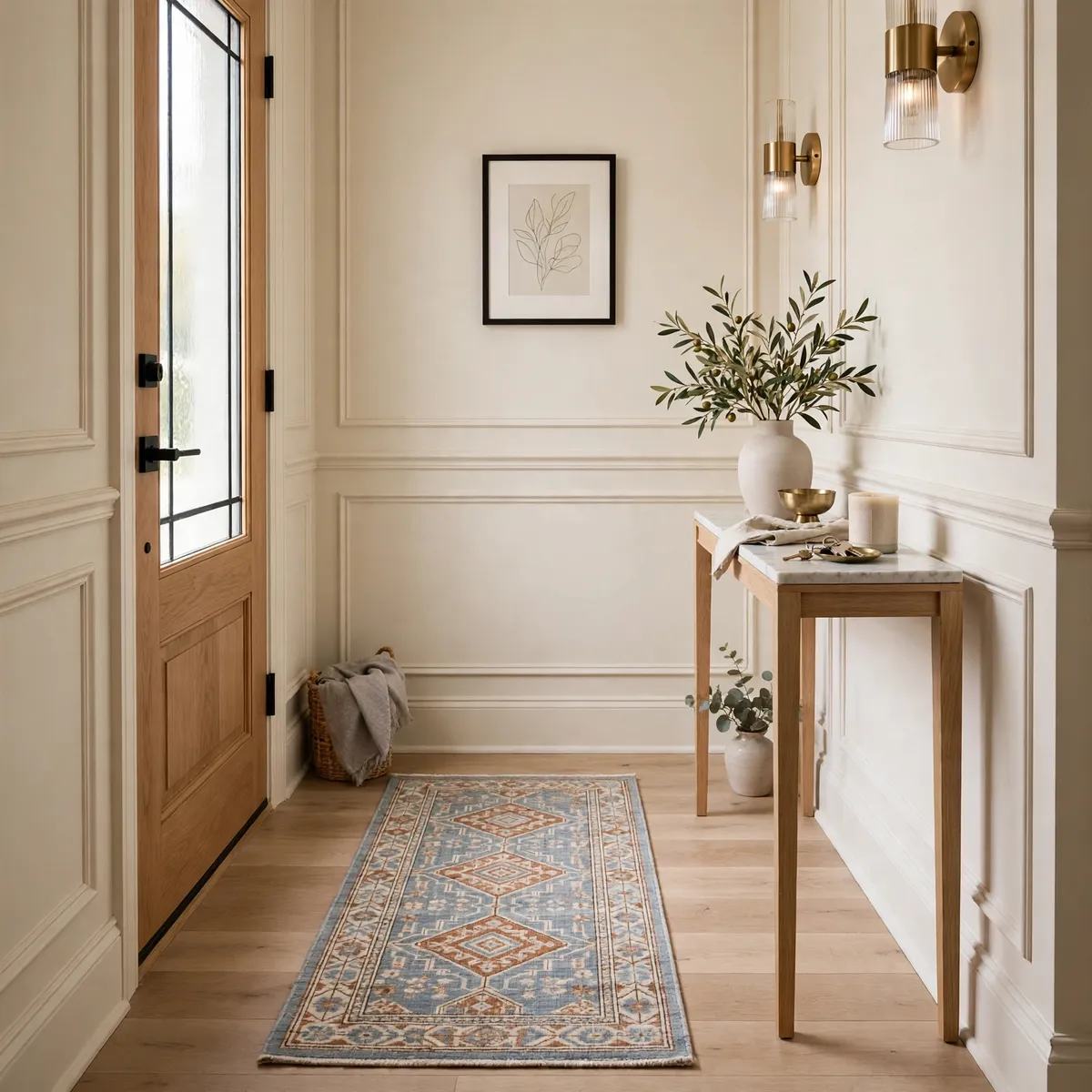
A runner does three jobs at once: it protects the floor, catches dirt before it travels through the house, and pulls the whole entryway together visually. In a small space, choose a washable, slip-resistant runner with a low pile so the door clears it easily, and let it run in the direction of travel to stretch the space visually. A pattern in two or three colors from your palette hides wear far better than a solid pale rug, and a rug pad underneath stops slipping and adds a little cushion underfoot.
Quick tips:
- Measure the door clearance before ordering — the rug must sit flat under it.
- Washable rugs are worth it in entryways; dirt is constant.
- Leave a few inches of floor showing on each side so the rug looks placed, not stuffed in.
9. Create a Landing Zone for Keys, Mail, and Everyday Carry
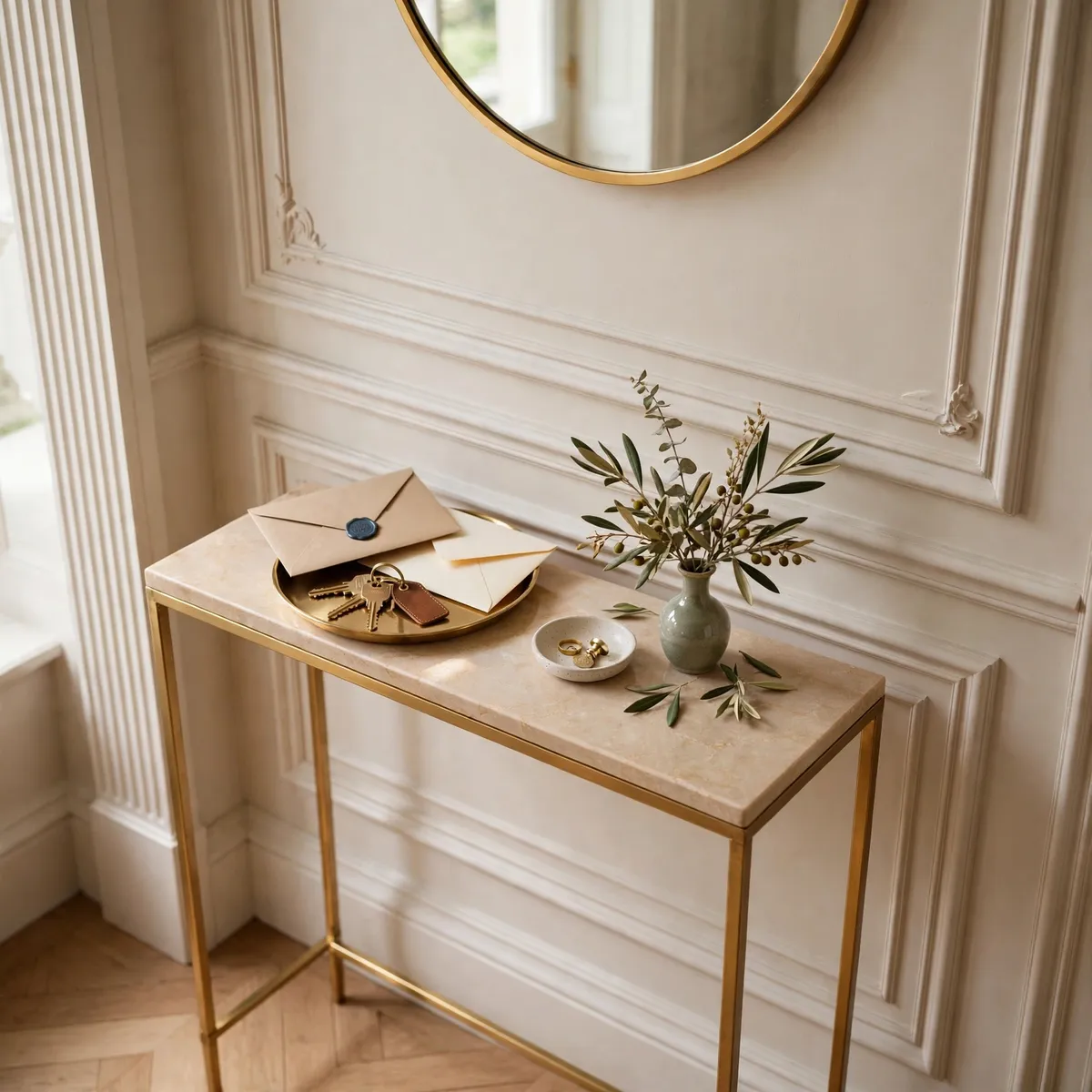
Every small entryway needs one obvious spot where keys, wallet, mail, and sunglasses land the moment you walk in. A shallow tray, a small bowl, or a lidded box on the console keeps those daily items contained and easy to grab on the way out. Add a small hook or a magnetic strip nearby for keys if you tend to misplace them, and sort mail the same day: a tiny upright sorter stops the pile from growing. The rule is simple — if it does not have a home in the landing zone, it does not live in the entryway.
Quick tips:
- One tray, one bowl, one sorter — no more.
- Empty the tray once a week and return strays to their real homes.
- Keep the landing zone at the side nearest the door.
10. Hide Shoes in Closed Storage
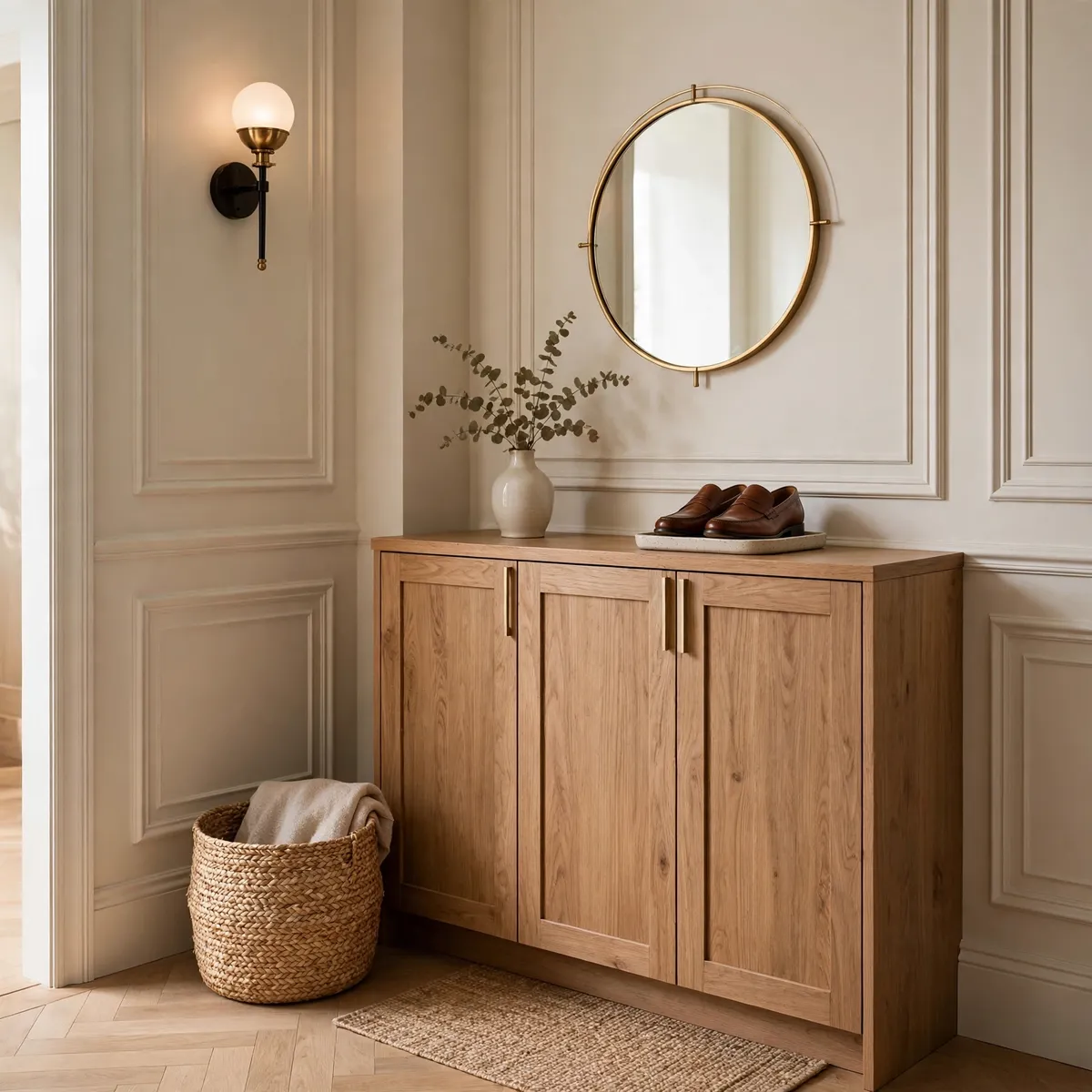
Shoes are the fastest way to make a small entryway look messy, so give them closed storage. A slim shoe cabinet, a bench with interior compartments, or a single lidded basket keeps pairs out of sight and off the walking path. Limit the entryway to the pairs you actually wear this week — two or three per person — and store the rest in a bedroom closet. A small tray inside the cabinet or beside it catches wet shoes in rainy weather and protects the floor.
Quick tips:
- One pair in, one pair out: keep the count fixed.
- Air out shoes before closing them away to avoid odors.
- Use a tray under wet shoes in bad weather.
11. Add Color, Wallpaper, and Texture for Personality
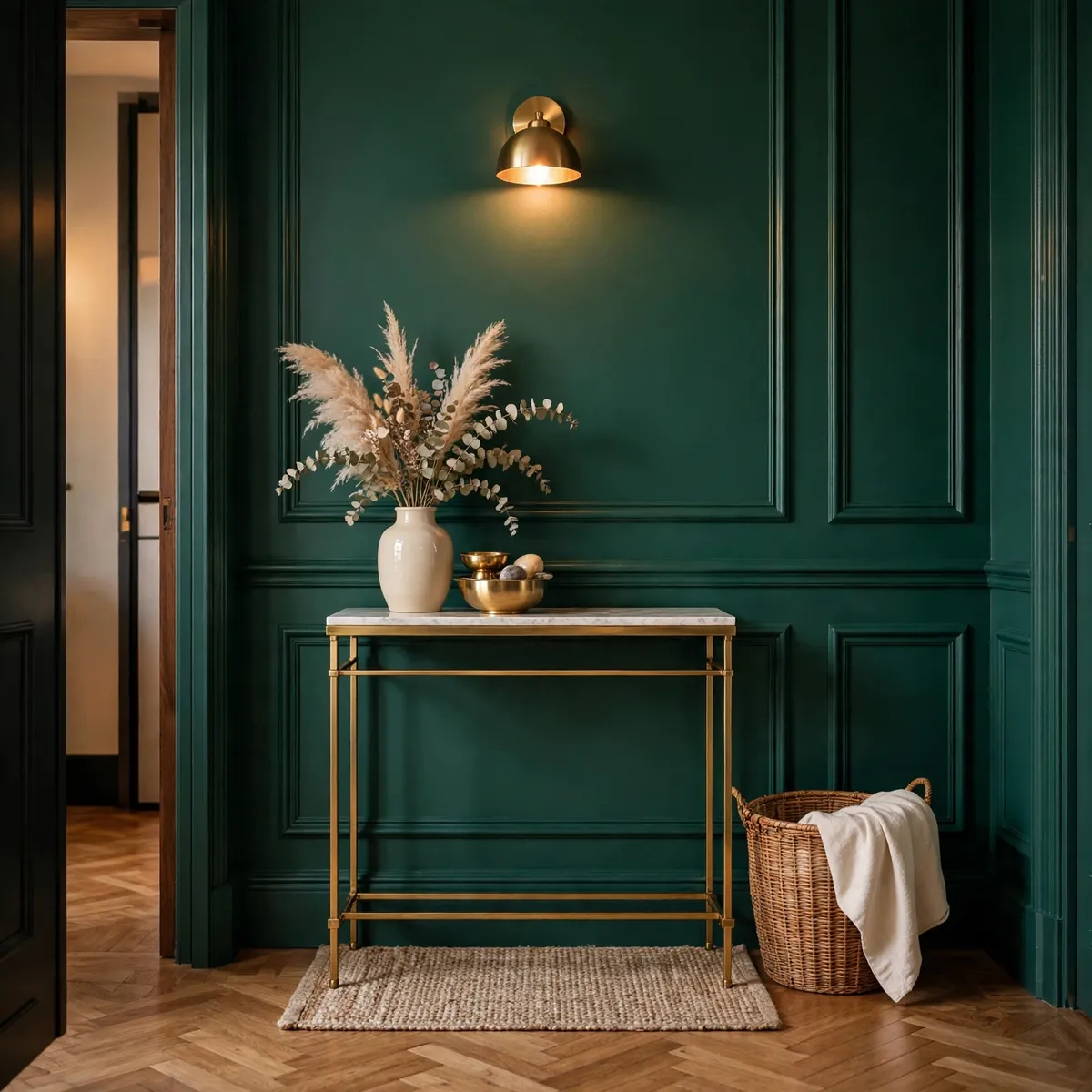
Because an entryway is small, it is the safest place in the house to try a bold move: one dramatic wall in deep emerald or warm ochre, a strip of peel-and-stick wallpaper, or a woven rattan basket and a bamboo tray for natural texture. A single accent wall gives the space a clear identity without overwhelming it, and because you pass through rather than sit in the entryway, a strong color feels energizing rather than tiring. Keep the rest of the palette quiet — light walls, warm wood, one metal finish — so the bold moment stands out.
If you love a warmer, rustic feel, these farmhouse entryway ideas show how wood tones and vintage touches bring that same warmth to a small space.
Quick tips:
- Paint the wall you see first when you walk in — it sets the tone.
- Repeat the accent color once more, in a vase or cushion, so it feels planned.
- Mix one natural texture (rattan, bamboo, jute) with one smooth finish (brass, glass).
12. Make It Renter-Friendly, Family-Ready, and Clutter-Free
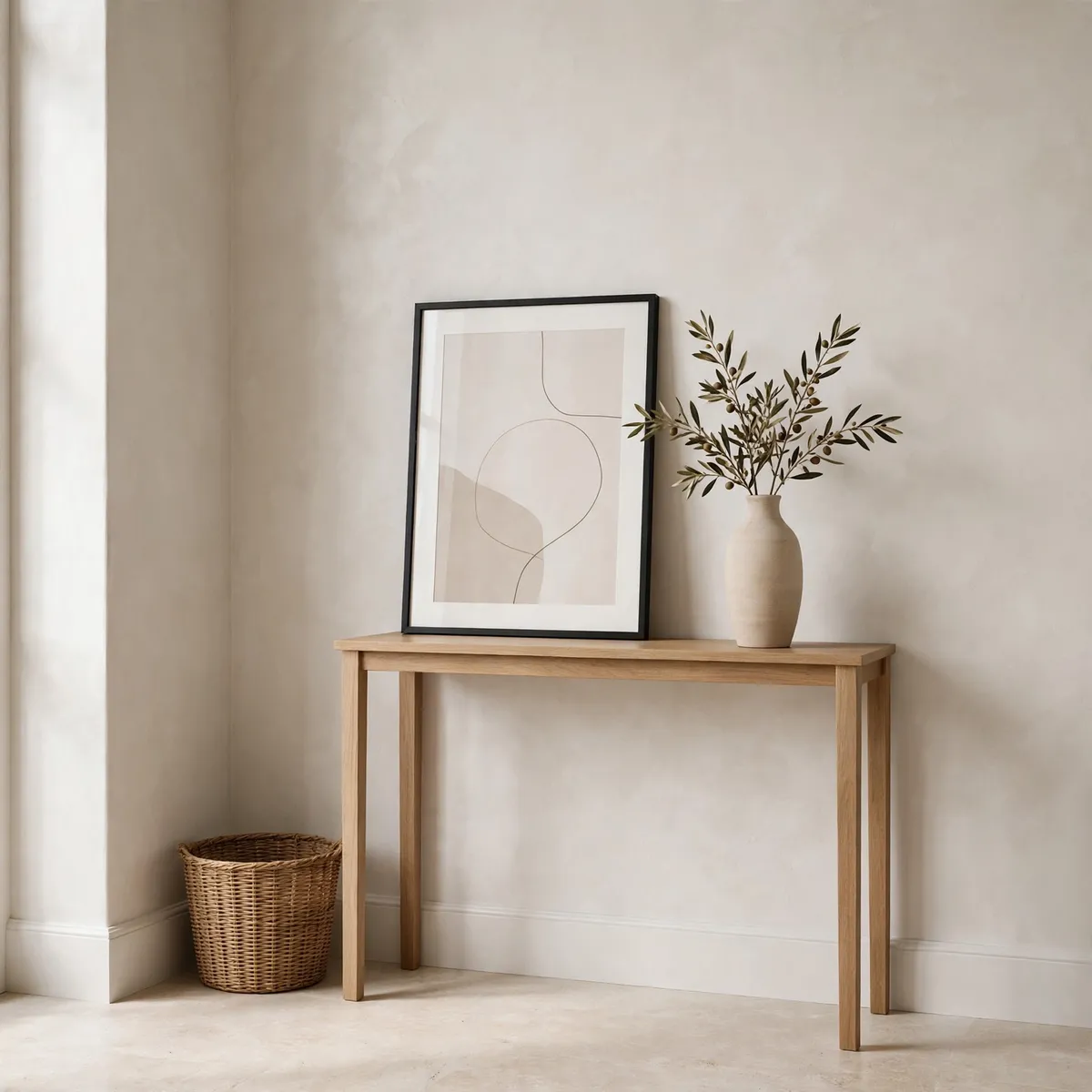
The best small entryway is the one you can actually keep tidy, and that means planning for real life. Renters can get the same look without permanent changes: adhesive hooks, a propped mirror and framed art leaned against the wall, peel-and-stick wallpaper, and freestanding furniture do the job with no drilling. For families, give each person one cubby or basket and one hook, and keep kids’ items at their height so they can put things away themselves. Then edit: style the console with one plant or vase, one piece of art, and one practical item, and remove everything else. A small entryway styled with restraint always looks more expensive — and stays easier to keep clean — than one crowded with decor.
Quick tips:
- Label baskets for kids so tidying becomes a game, not a chore.
- Use damage-free adhesive hooks and test one spot first.
- Do a monthly five-minute edit: remove anything that drifted in.
Frequently Asked Questions
How do I decorate a super small entryway?
Start with the essentials only: a mirror, a hook or two, a small tray for keys, and a runner. Use wall-mounted pieces to keep the floor clear, choose one slim piece of furniture if there is room, and add a single decorative item. If the space is only a doorway with no wall to spare, a tall mirror and a runner alone can make it feel like a real entryway.
How do I decorate an entryway without a closet?
Replace the closet’s jobs with wall storage: hooks for coats, a slim cabinet or bench for shoes, and a shelf or tray for keys and mail. Keep only the current season’s coats and this week’s shoes in the entryway, and store the rest elsewhere. One hook and one basket per person keeps the system from overflowing.
What lighting is best for entryways?
Warm, layered light works best: a ceiling fixture for general light plus a sconce or small lamp for warmth and a mirror to bounce it around. Choose warm-white bulbs (around 2700K) and add a dimmer if you can. In rentals, battery-operated sconces or a plug-in lamp give you the same layered effect without wiring.
How can renters personalize an entryway without permanent changes?
Use adhesive hooks, peel-and-stick wallpaper, propped art and mirrors, freestanding furniture, and rugs — all removable. A bold runner, a tall leaning mirror, and one statement plant can transform the space without a single hole in the wall. Keep original fixtures and hardware so you can restore everything when you move out.
Conclusion
A small entryway does not need more space — it needs better decisions. Measure first, let the walls carry the storage, keep furniture slim and multifunctional, add a mirror and warm light, and give every daily item a home. Style with restraint, edit often, and your entryway will feel calm, welcoming, and larger than it is — every time you walk through the door.