Burgundy Home Decor Ideas That Feel Rich, Not Heavy
Burgundy is the color of aged wine and old libraries — deep, warm, and quietly dramatic.
It flatters almost every room in the house, but it asks for balance in return: enough cream, brass, or light to keep the richness from closing in. Below are twelve burgundy home decor ideas, from a single velvet sofa to full color-drenched walls.
The short version: give burgundy one starring role per room — a sofa, a wall, a set of curtains — and let cream, ivory, or warm wood play the supporting cast.
Burgundy and cream is the safest pairing; add brass or gold and the room glows; add navy or forest green and it turns dramatic. Warm lighting is non-negotiable — cool bulbs flatten the color and make it read muddy.
What exactly is burgundy? It is a deep wine red, a blend of red and brown that often leans toward plum or oxblood. Designers keep returning to it because it does two things at once: it reads as a neutral you can live with daily, yet it carries the drama of a true color.
The current wave of burgundy interiors is part of a broader move away from cool, airy grays toward warm, cocooning palettes — colors that make a room feel sheltering rather than stark. That is why burgundy shows up most often in rooms meant for lingering: bedrooms, dining rooms, libraries, and powder rooms.
In small doses it works anywhere, but it earns its keep in spaces where you want to slow down. One of the boldest ways to use it is a technique called color drenching, where the walls, ceiling, and trim are all painted in the same deep shade so the room wraps around you like a velvet box.
Here is how to use it room by room, starting with the living room.
Paint One Living Room Wall Burgundy
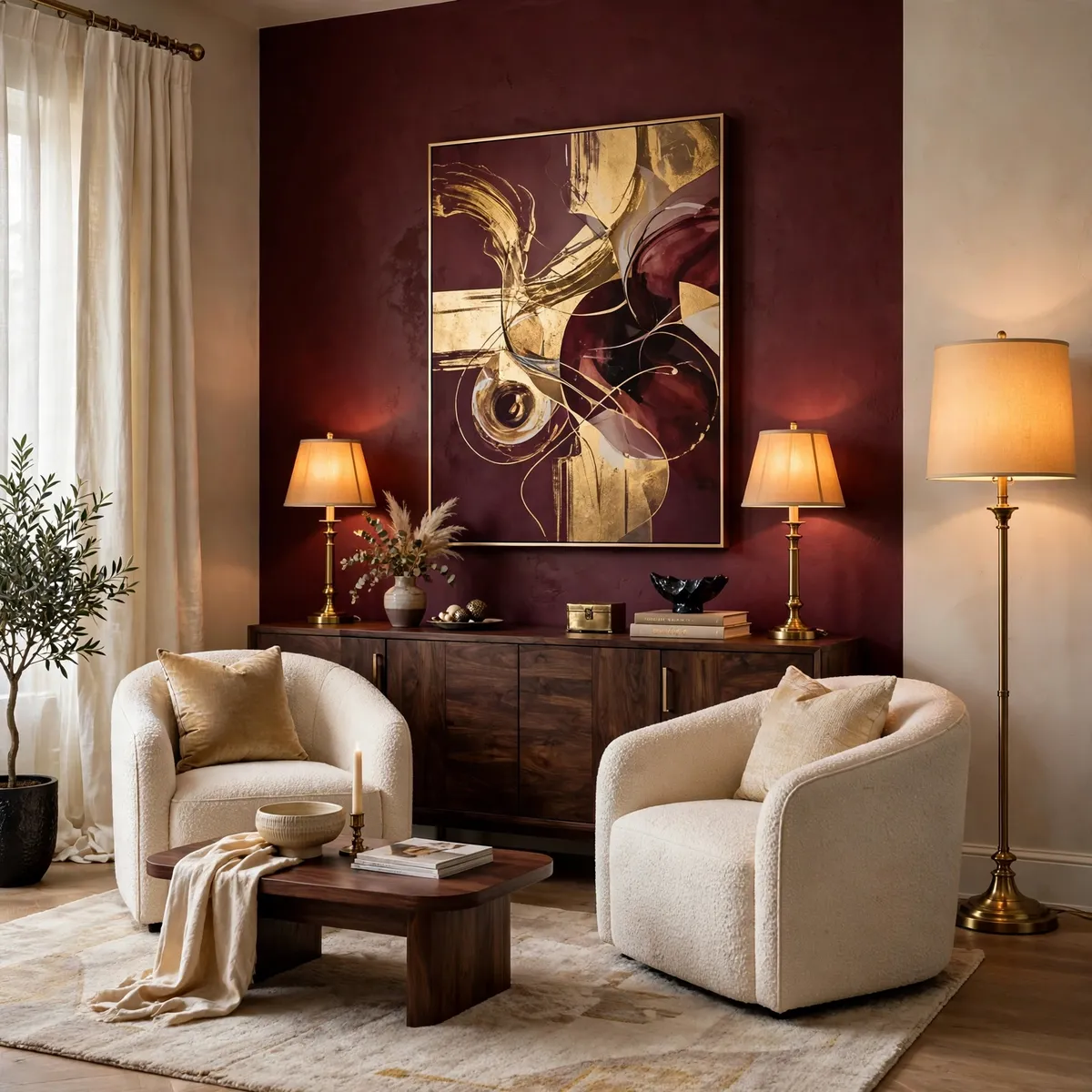
A single burgundy wall gives you the drama without the cave effect. The wall behind the sofa is the natural choice — the sofa sits against the color and the rest of the room stays light.
Hang art with wide ivory matting and brass or black frames; the contrast keeps the wall from feeling like a void. Keep the ceiling and trim bright white or warm ivory — deep color needs crisp edges to look intentional. If the room is north-facing or short on daylight, add a picture light or two warm sconces; burgundy absorbs light, so plan for it.
Quick tips
- Sample the paint on the actual wall and check it at night under your own bulbs before committing.
- One feature wall beats four in any room under about 200 square feet.
- Let the rug repeat the wall color in small doses so the wall does not float alone.
Layer Burgundy Velvet Bedding for a Five-Star Bedroom
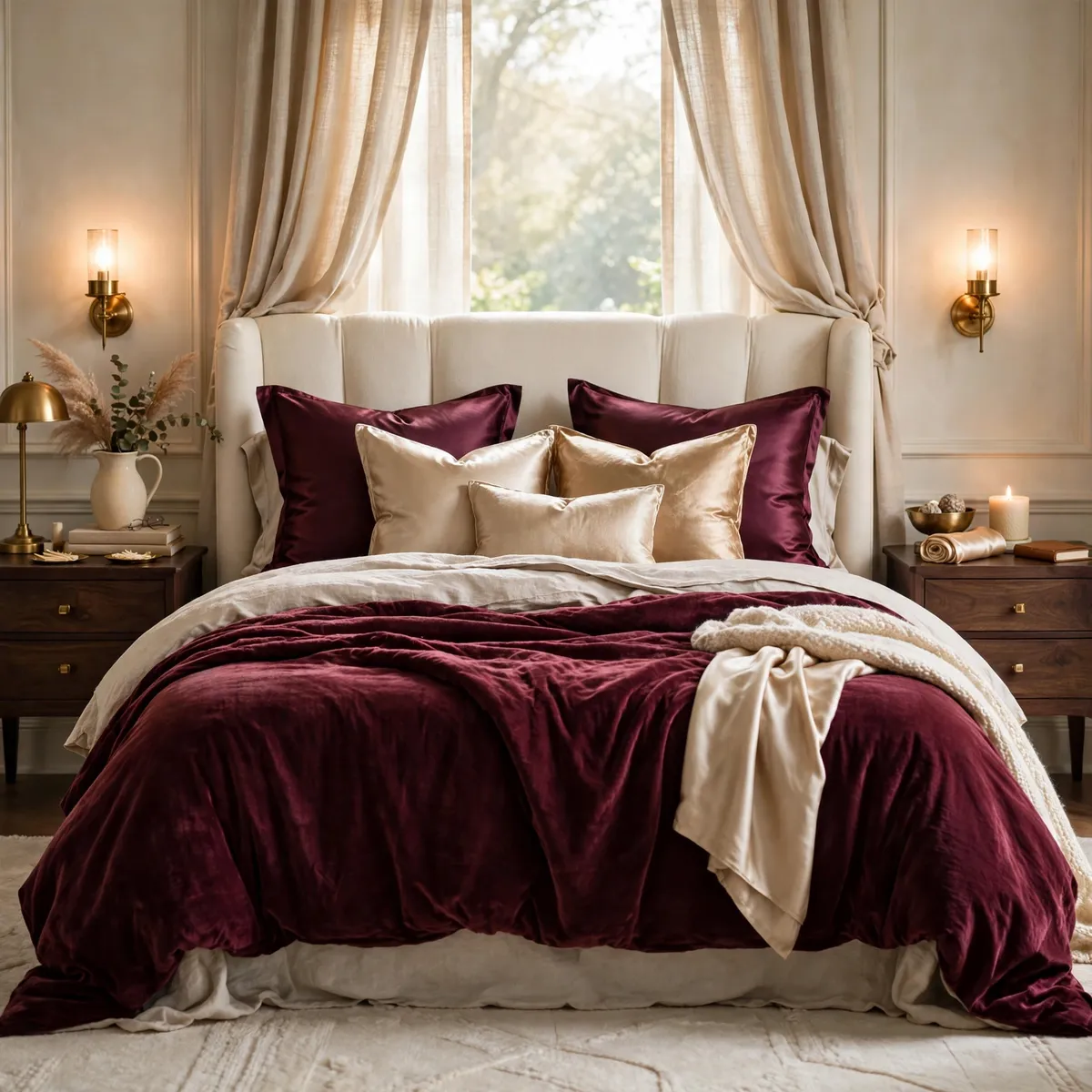
- Start with a cream or ivory duvet as the base — burgundy on top, not underneath, keeps the bed from looking heavy.
- Add a burgundy velvet coverlet or quilt folded across the foot; velvet is what makes the color look expensive.
- Mix pillow textures: silk shams, a chunky knit throw, and one small lumbar in a wine-toned pattern.
- Keep nightstands in dark walnut or black and lamps in brass — the metal warms the whole palette.
Quick tips
- Two shades of burgundy (one deep, one brighter wine) look richer than one flat shade.
- Wash velvet bedding inside out on gentle to keep the pile soft.
- Warm 2700K bulbs flatter burgundy; daylight bulbs make it look flat.
Color-Drench a Bedroom in Oxblood
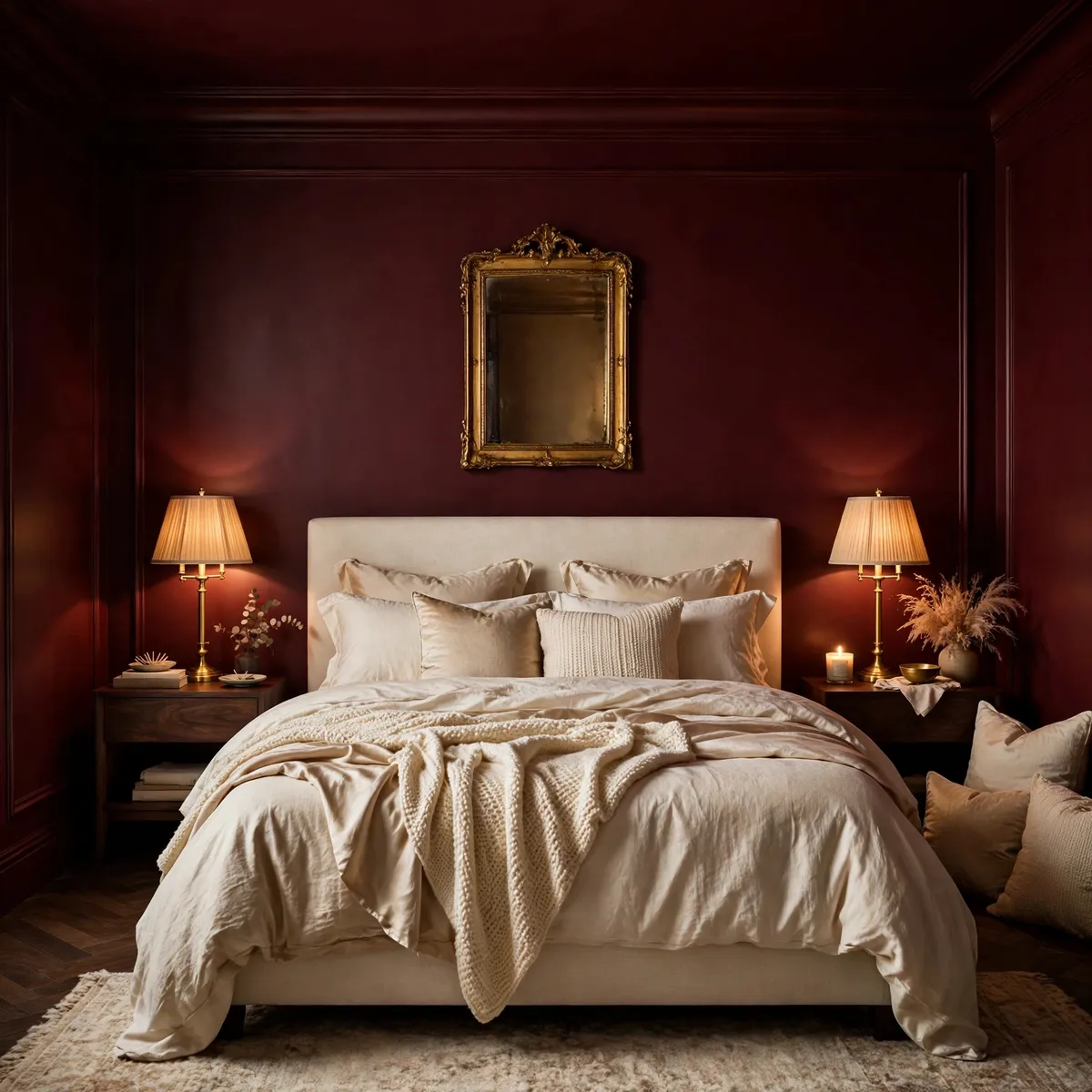
This is the full-commitment move: walls, ceiling, and trim in one deep burgundy so the bedroom wraps around you. It sounds daring, but in a bedroom the effect is closer to a cocoon than a cave — dark, enveloping color helps many people switch off at night.
Keep the bedding light (ivory linen, champagne silk) so the bed reads as a bright island in the color. Choose a paint with a soft matte or eggshell finish; high gloss on every surface is too much shine. Because a drenched room has no white trim to bounce light, layer three light sources: overhead, bedside, and one low accent like a small lamp on the dresser.
Quick tips
- Paint a large sample board and move it around the room for two days before deciding.
- Oxblood (the brown-leaning burgundy) feels calmer than plum-leaning shades in a bedroom.
- A vintage gold mirror on a burgundy wall doubles both light and style.
Give the Dining Room Candlelit Burgundy Walls
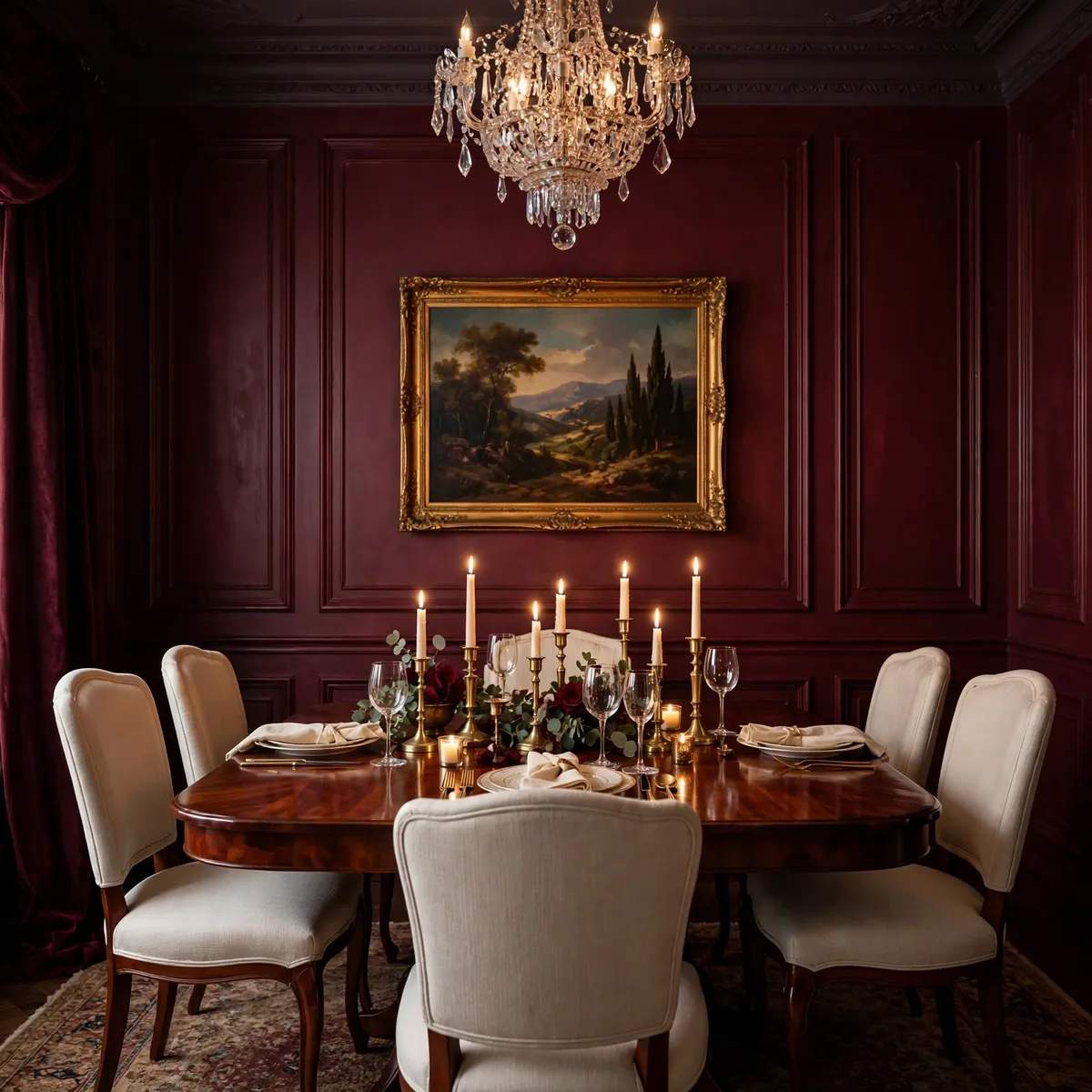
- Paint the dining room burgundy, or wrap it in a wine-toned grasscloth if you want texture without paint.
- Pair it with a dark wood table — mahogany and walnut were made for this color.
- Light it like a restaurant: a dimmable chandelier plus real candles or flameless pillars in brass holders.
- Keep chair upholstery light or patterned so the table setting does not disappear into the dark.
Quick tips
- Burgundy looks its best in flickering light — candlelight is the cheapest upgrade here.
- A large mirror on one wall bounces the candle glow and visually doubles the room.
- If full walls feel like too much, paint just the lower wainscoting burgundy and keep the upper wall cream.
Upholster Dining Chairs in Burgundy Velvet
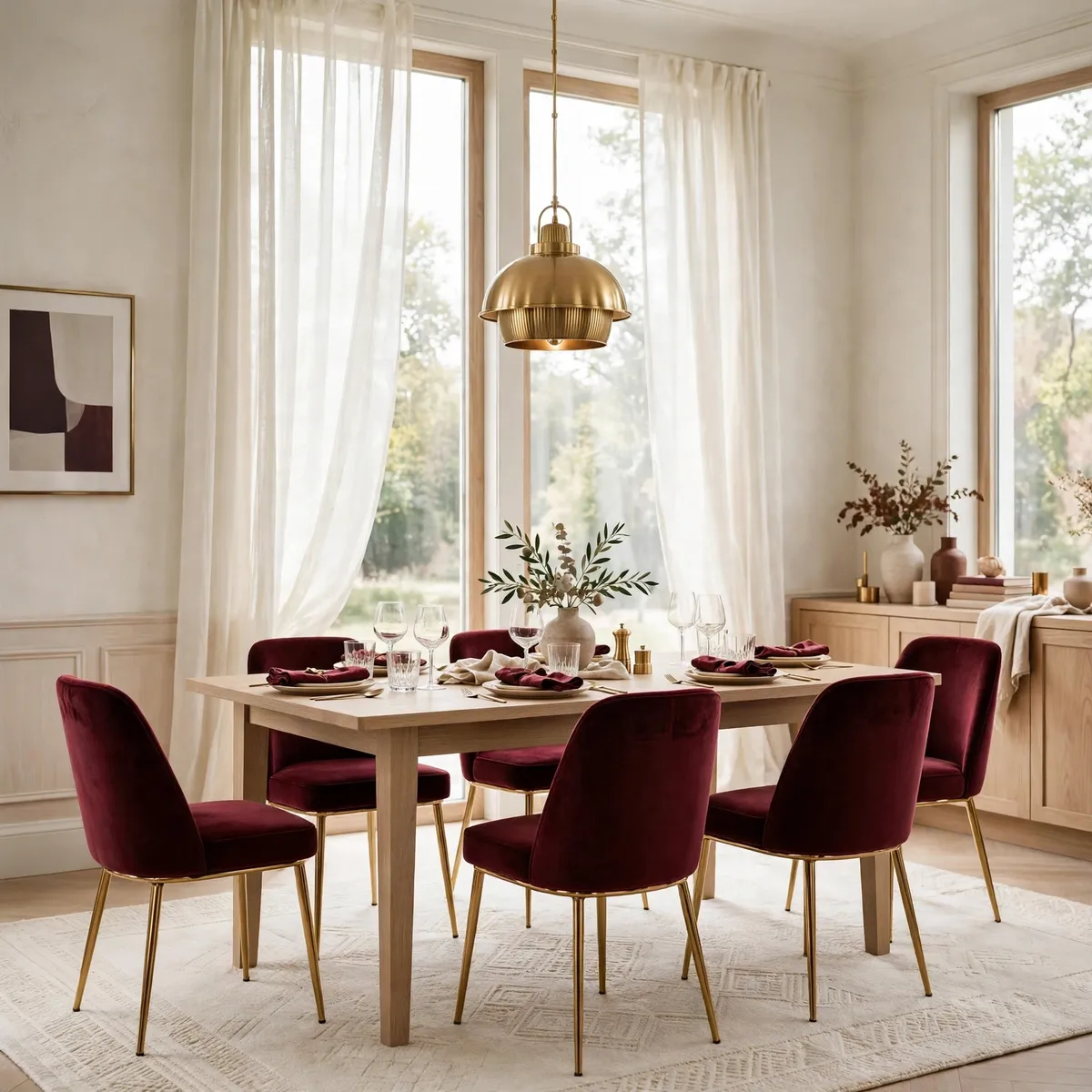
Dining chairs are the low-commitment way into burgundy: six chairs carry the color, but the walls stay light and the room stays airy. Velvet upholstery in a deep wine shade turns even a simple oak table into a dinner-party setting.
For real life, choose a performance velvet — it resists stains far better than cotton velvet and wipes clean after spills. If new chairs are not in the budget, tailored slipcovers in a burgundy linen-cotton blend give you the same effect for a fraction of the price, and you can remove them when the seasons change.
Quick tips
- Performance velvet handles red wine spills better than you would expect — blot, never rub.
- Brass-capped chair legs or a brass chandelier tie the chairs into the rest of the room.
- Two burgundy host chairs at the table ends plus neutral side chairs is a classic designer split.
Let a Burgundy Kitchen Island Do the Talking
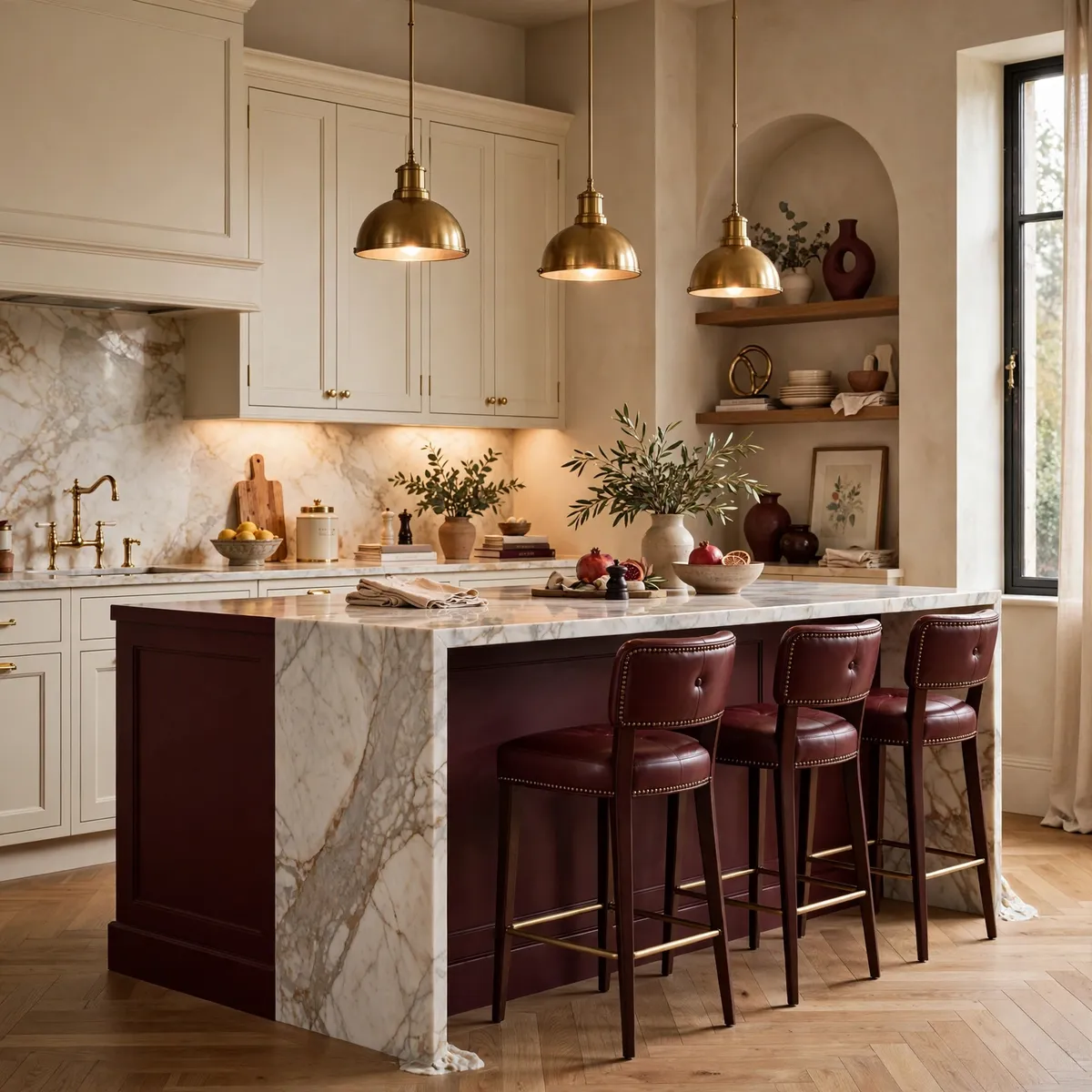
Not ready to paint the whole kitchen? Paint only the island. A burgundy island against cream or white perimeter cabinets gives the kitchen a furniture-like centerpiece without darkening the workspace where you actually chop and cook.
Brass cup pulls and a matching faucet pull the color into the hardware story, and a white marble or quartz top keeps the island feeling bright on top. Because the island is one contained block of color, it works even in kitchens with modest natural light.
Quick tips
- Use a cabinet-grade enamel in satin — it wipes clean and the slight sheen deepens the color.
- Repeat the burgundy once more nearby (bar stools, a runner, or pendant cords) so the island does not look accidental.
- Keep perimeter cabinets warm white rather than stark white for a softer contrast.
Turn the Home Office or Library Into a Moody Retreat
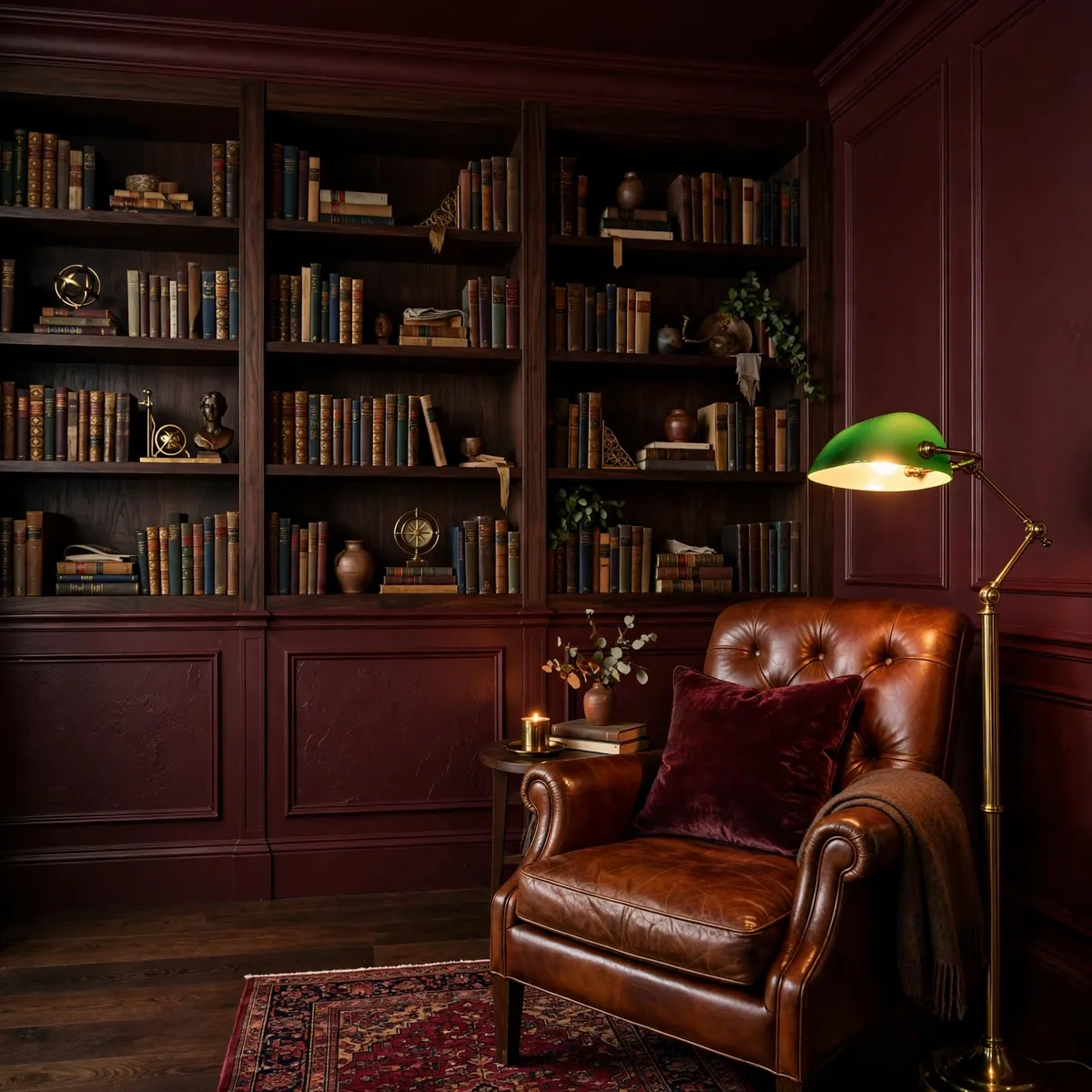
Few rooms benefit from burgundy as much as a study. Deep wine walls behind bookshelves make book spines and framed prints pop, and the enveloping color helps a small office feel like a private club rather than a spare room.
Pair it with dark wood shelving, a cognac leather chair, and a brass task lamp — the classic combination that never looks dated. If you take video calls from the room, keep the wall behind you burgundy and the lighting in front of you warm; the color reads rich and flattering on camera.
Quick tips
- A burgundy wall behind open shelving makes styling easier — everything stands out against it.
- Add one living plant; green is burgundy’s natural complement and keeps a dark room feeling alive.
- Keep the desk surface light wood so paperwork stays easy to read.
Hang Floor-to-Ceiling Burgundy Velvet Curtains
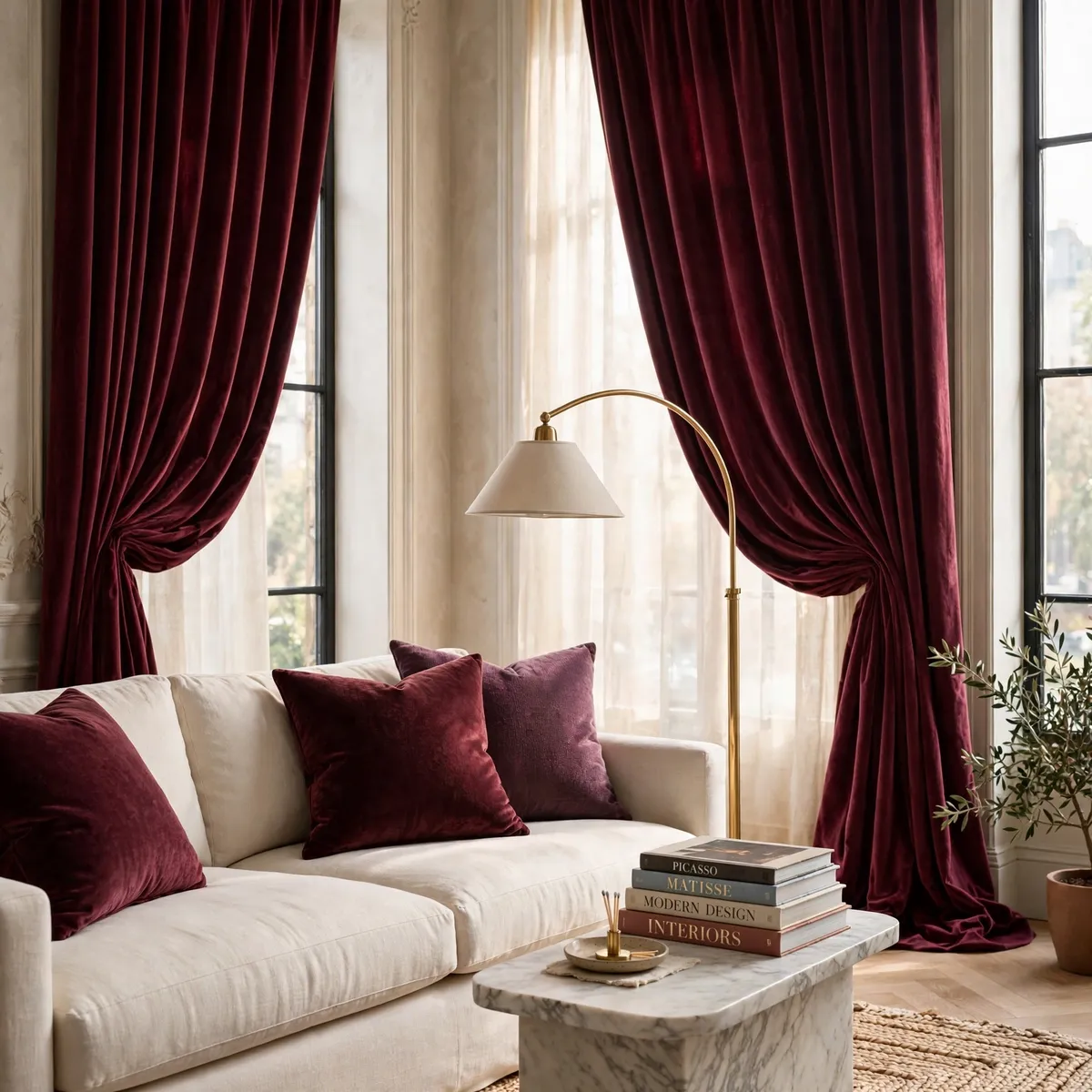
- Mount the rod close to the ceiling and let the panels just kiss the floor — height is what makes curtains look custom.
- Choose lined velvet; the lining gives the panels body and blocks enough light for a bedroom.
- Brass or black curtain rods disappear against the color; shiny chrome fights it.
- Pair burgundy panels with sheer ivory inners so you can have privacy without losing daylight.
Quick tips
- In a rental, check the weight rating on no-drill adhesive hooks before hanging heavy velvet panels.
- Steam velvet panels after hanging to release packing creases; never iron them flat.
- One pair of panels frames a window; two pairs (four panels) reads truly luxurious.
Test the Waters With Rugs, Throws, and Cushions
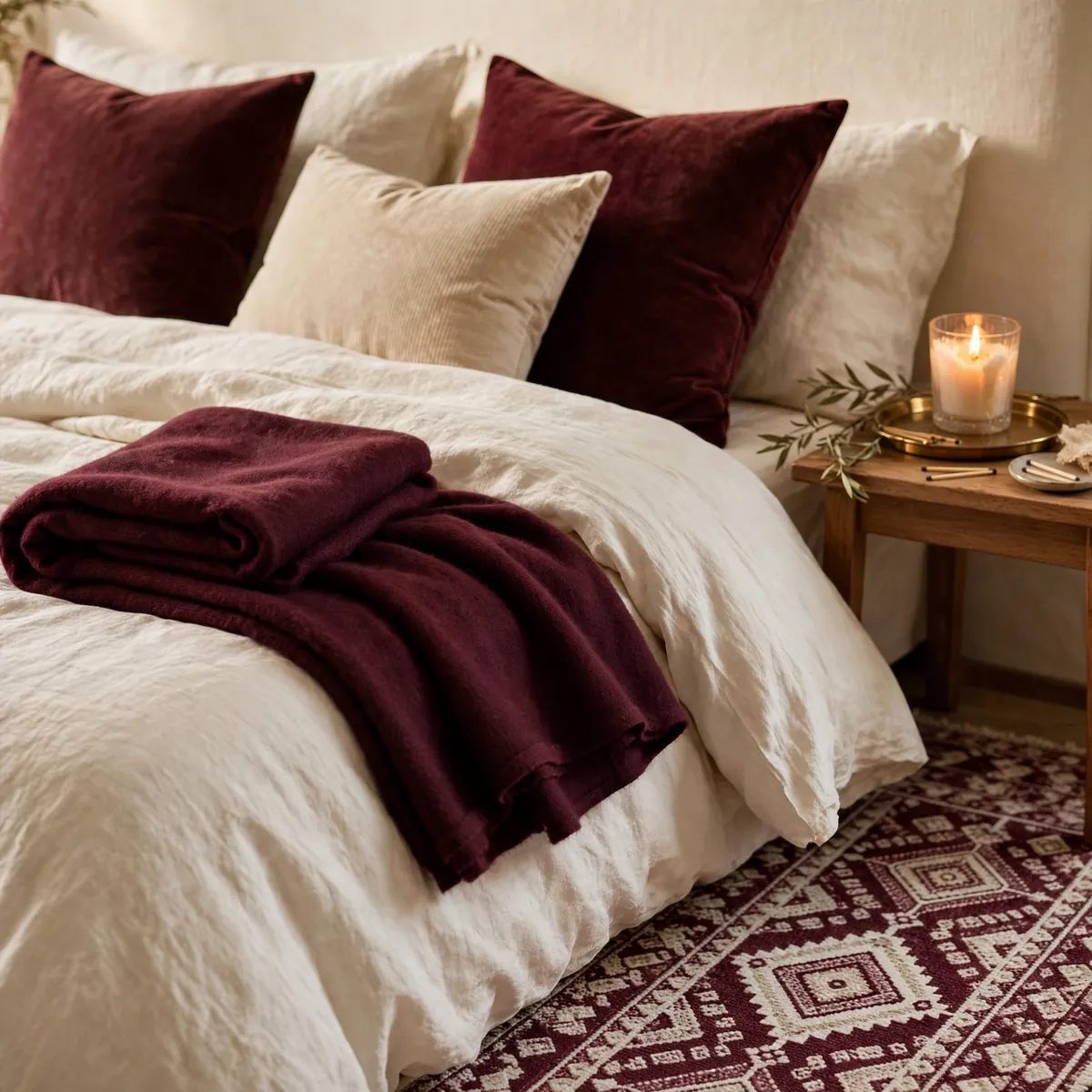
- Start underfoot: a burgundy-patterned rug anchors the color without touching the walls.
- Add one throw — cashmere, wool, or velvet — folded over the sofa arm or bed foot.
- Swap in two or three cushions in burgundy, mixing one solid with one pattern.
- Repeat the color in at least two spots so it looks deliberate, not random.
Quick tips
- Textiles are the cheapest way to try burgundy — and the easiest to change with the seasons.
- In summer, swap the heavy velvet throw for burgundy linen to keep the color but lose the weight.
- A burgundy rug hides everyday wear far better than a cream one.
Paper a Hallway in Burgundy Botanical Wallpaper
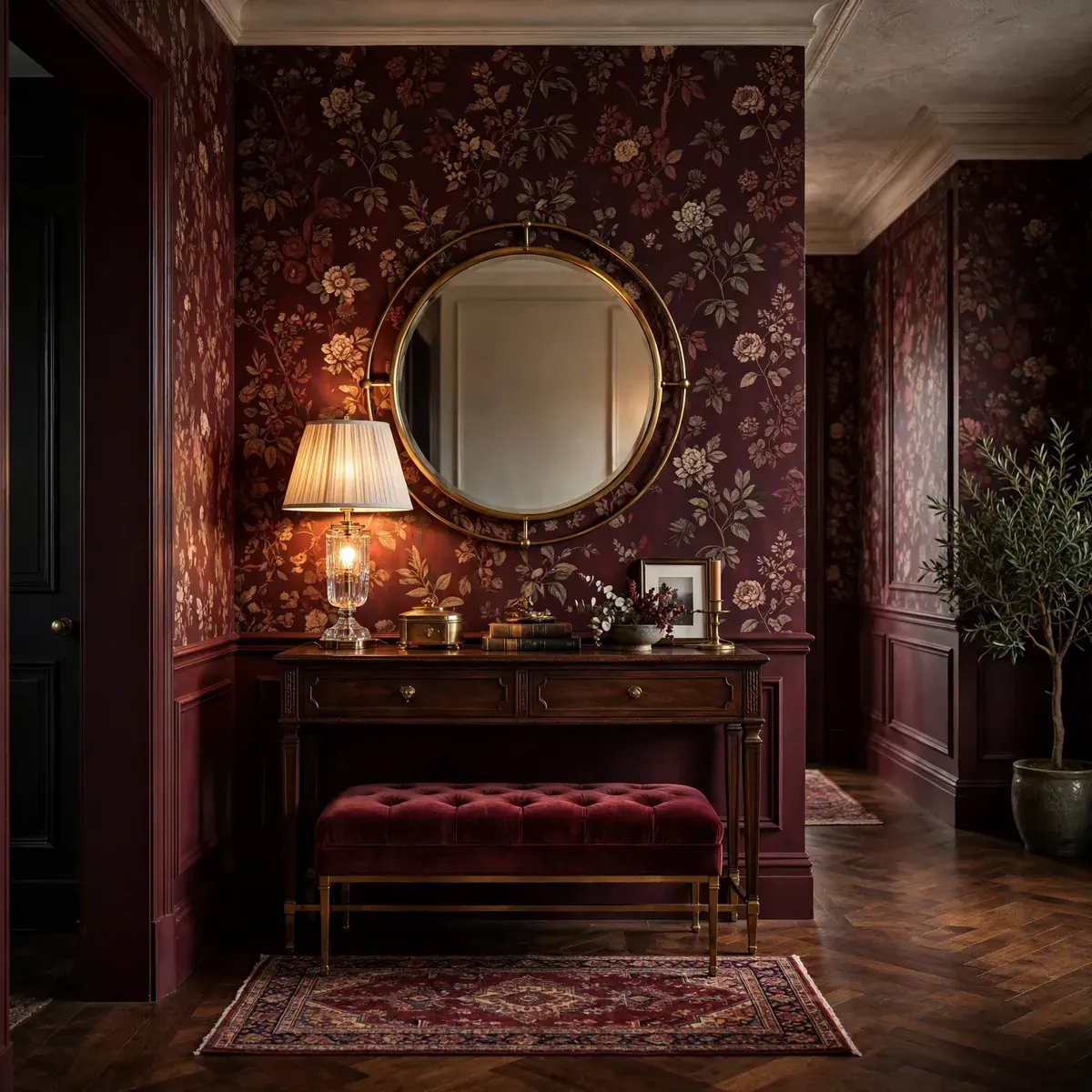
Hallways are the perfect place for bold wallpaper because you never sit in them — you just pass through and enjoy the view. A burgundy botanical print (deep wine background, cream or gold florals) turns a forgettable corridor into the prettiest part of the house.
Keep the pattern scale medium: oversized blooms can overwhelm a narrow hall, while tiny prints read as texture from a distance. Hang a round brass mirror to bounce light down the corridor, and keep the ceiling bright so the hallway does not feel like a tunnel.
Quick tips
- Peel-and-stick wallpaper makes this a weekend project with no paste and no commitment.
- One wallpapered hallway plus plain adjoining rooms is the right ratio — do not paper every corridor.
- Picture-frame molding painted the same burgundy under the paper adds old-house character.
Make the Powder Room a Burgundy Jewel Box
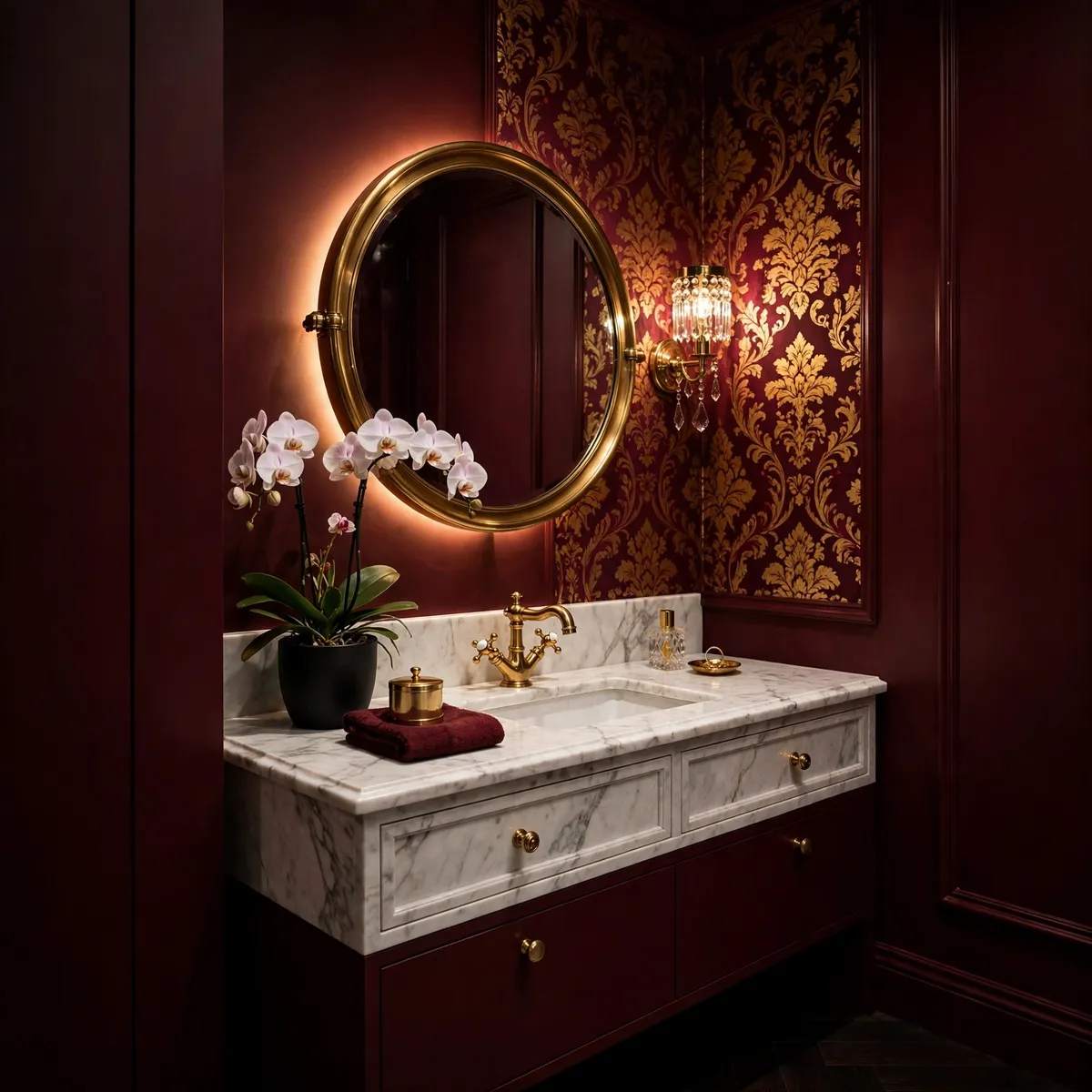
Small powder rooms are where dark colors shine brightest — there is no expectation of daylight, and guests only stay a minute, so the drama lands without the risk.
Paint the walls (or hang a burgundy and gold wallpaper), then add a marble vanity top, a brass faucet, and a backlit round mirror. The whole room becomes a jewel box. Because the space is tiny, you can afford the luxurious finishes here that would break the budget in a big bathroom: real marble, unlacquered brass, a crystal sconce.
Quick tips
- In a windowless powder room, layer at least two warm light sources so the burgundy glows instead of going flat.
- A dark ceiling in the same burgundy makes a low ceiling disappear — in a good way.
- Keep towels ivory or champagne; white towels look harsh against wine walls.
Burgundy Home Decor Ideas: Color Pairings That Actually Work
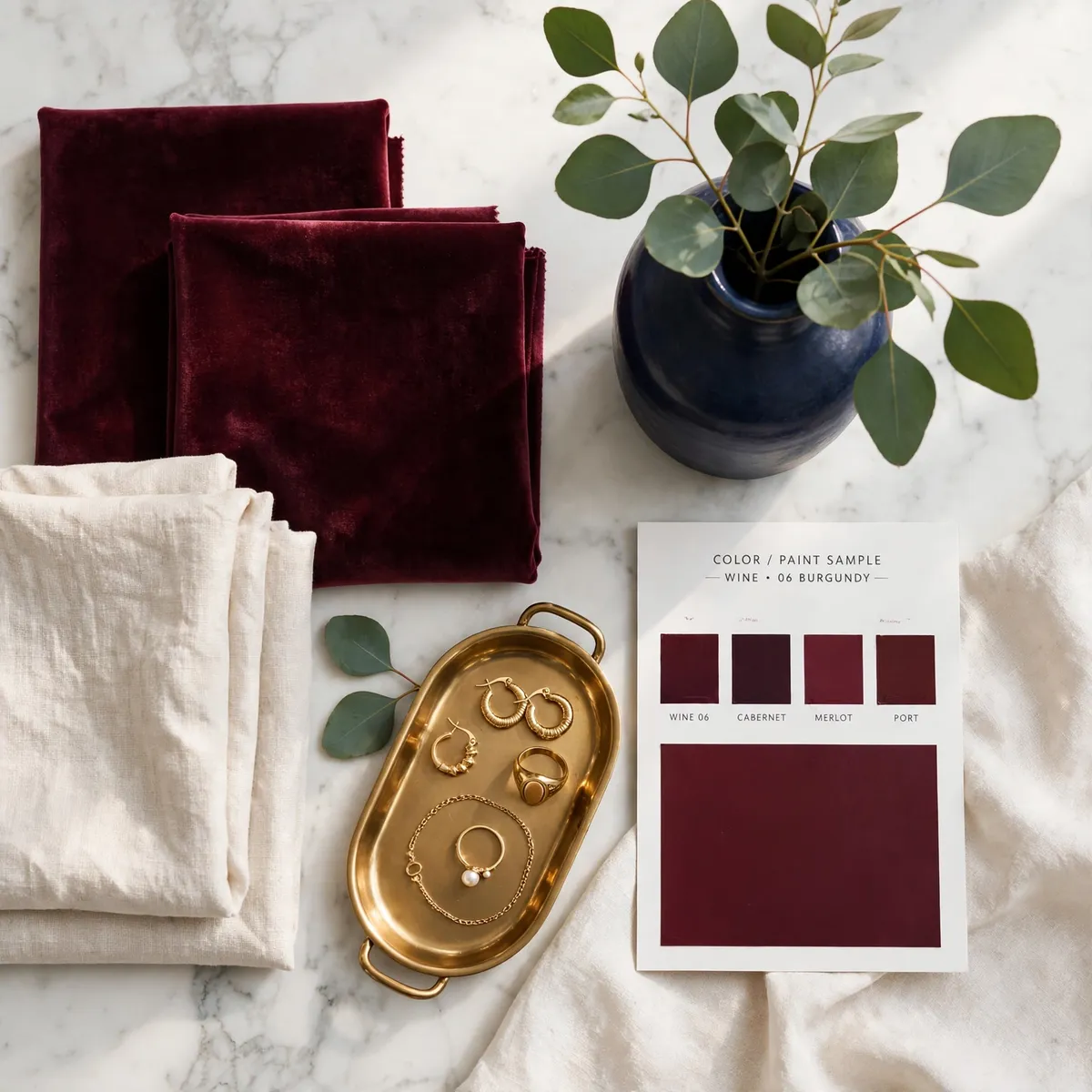
Burgundy rarely works alone — the pairing is the design. The safest route is cream, ivory, or warm beige: light neutrals soften burgundy’s intensity without competing with it. For glamour, add gold or brass; metallics and wine tones were made for each other.
For drama, try navy blue or forest green — both carry the same visual weight, so the room feels balanced rather than lopsided. Warm grays (greige, stone) give burgundy a modern, gallery-like backdrop; avoid cool blue-grays unless your burgundy leans purple. Feeling current? Designers are pairing burgundy with chartreuse in small doses — a cushion, a vase — for a high-contrast look. Keep the chartreuse to accents; it is a spark, not a foundation.
Quick tips
- Pick one metal and stick with it — mixed brass and chrome cheapens a burgundy room.
- When in doubt, add green: a plant is the easiest burgundy companion there is.
- Test pairings with fabric swatches in your actual light before buying anything big.
Frequently Asked Questions
What colors go best with burgundy in a living room?
Cream, gold, navy, and forest green are the most reliable partners. Cream and ivory keep the room light and let burgundy be the star; gold or brass adds glamour; navy or forest green adds drama. For a more modern look, warm gray or a touch of blush also work well.
Does gray go with burgundy decor?
Yes. Light warm grays make burgundy furniture pop, and charcoal gray adds sophistication. Match the gray’s undertone to the burgundy: warm grays flatter red-leaning burgundy, while cooler grays suit plum-leaning shades.
How do I use burgundy in a small room without making it feel smaller?
Use it in small doses — one feature wall, a rug, or a few cushions — and keep the rest of the room light. Warm lighting, a mirror to bounce light, and lighter floors all stop burgundy from closing the room in.
Is burgundy only a fall and winter color?
It reads warmest in fall and winter, but it works year-round. Keep burgundy in permanent pieces like furniture and rugs, and lighten the accessories in summer — swap a velvet throw for linen, or trade heavy curtains for sheers. The burgundy base stays; the seasonal layers change.
Conclusion
These burgundy home decor ideas reward commitment but do not demand it. Start with the smallest version — a throw, a pair of curtains, a painted island — and see how the color behaves in your light before going bigger.
Get the pairing and the lighting right, and burgundy stops being a bold choice and starts being the reason the room works.