Art Deco Bedroom Ideas With Old-Hollywood Glamour
Art deco bedroom ideas promise something most styles can’t: a bedroom that feels like a first-class cabin from the golden age of travel — geometry, gleam, and plush comfort. Born in 1920s Paris and perfected in 1930s New York, the style’s signature moves are bold geometric patterns, mirror-bright surfaces, jewel-toned velvet, and gold or chrome accents. You don’t need a vintage penthouse to pull it off; you need a plan for pattern, a disciplined palette, and a few reflective surfaces doing the glamorous work.
Start with one strong move rather than a little of everything, and build from there. If your taste runs darker than gold-and-glass, our moody bedroom decor ideas take the same deep jewel palette in a more brooding direction. Below are twelve ideas for every starting point, from one dramatic wall to a full head-to-toe transformation.
Art Deco Bedroom Ideas That Begin With Geometry
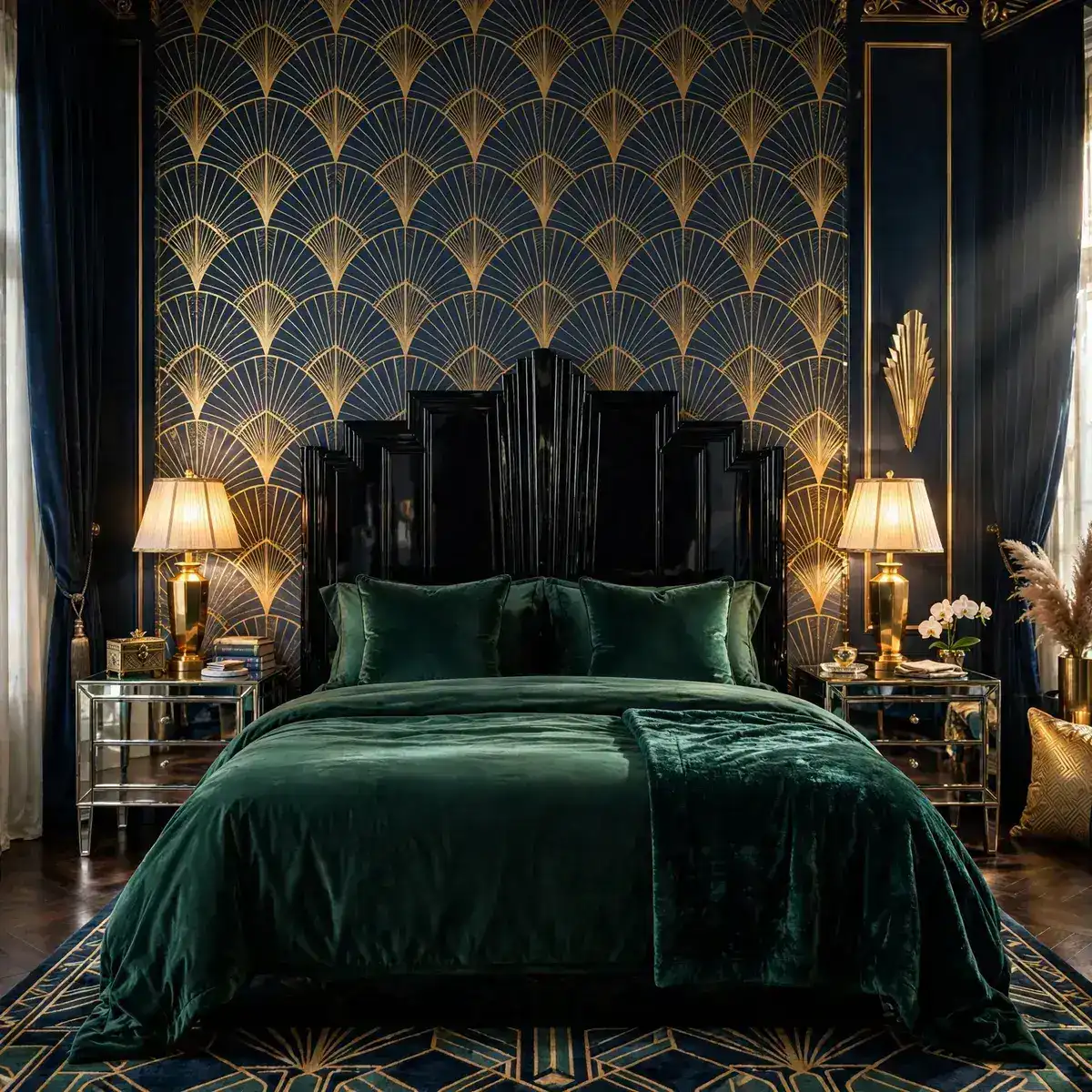
Every art deco bedroom starts with geometry, because pattern is the style’s native language. The classic motifs are easy to recognize once you look for them: fans, chevrons, zigzags, scallops, sunbursts, and stepped skyscraper lines borrowed from 1930s Manhattan. The fastest way to get the look is a geometric wallpaper on the wall behind the bed — a fan or scallop pattern in gold on navy reads unmistakably deco without another purchase. A large-scale geometric rug or zigzag curtains do the same job at a smaller scale.
The rule that keeps geometry from overwhelming the room is scale control. Choose one hero pattern at large scale — wallpaper, rug, or bedding — and keep everything else solid or tiny. Two large competing geometrics fight each other; one hero pattern with quiet companions looks curated. Repeat the same motif family rather than mixing; deco rewards repetition, not variety.
Quick tips
- Peel-and-stick geometric wallpapers make the hero wall renter-reversible.
- Stencil a fan or scallop border above the headboard if you can’t commit to a full wall.
- Echo one motif on two surfaces — wallpaper and a throw pillow — so it reads intentional.
Build the Palette: Jewel Tones, Black, and Gold
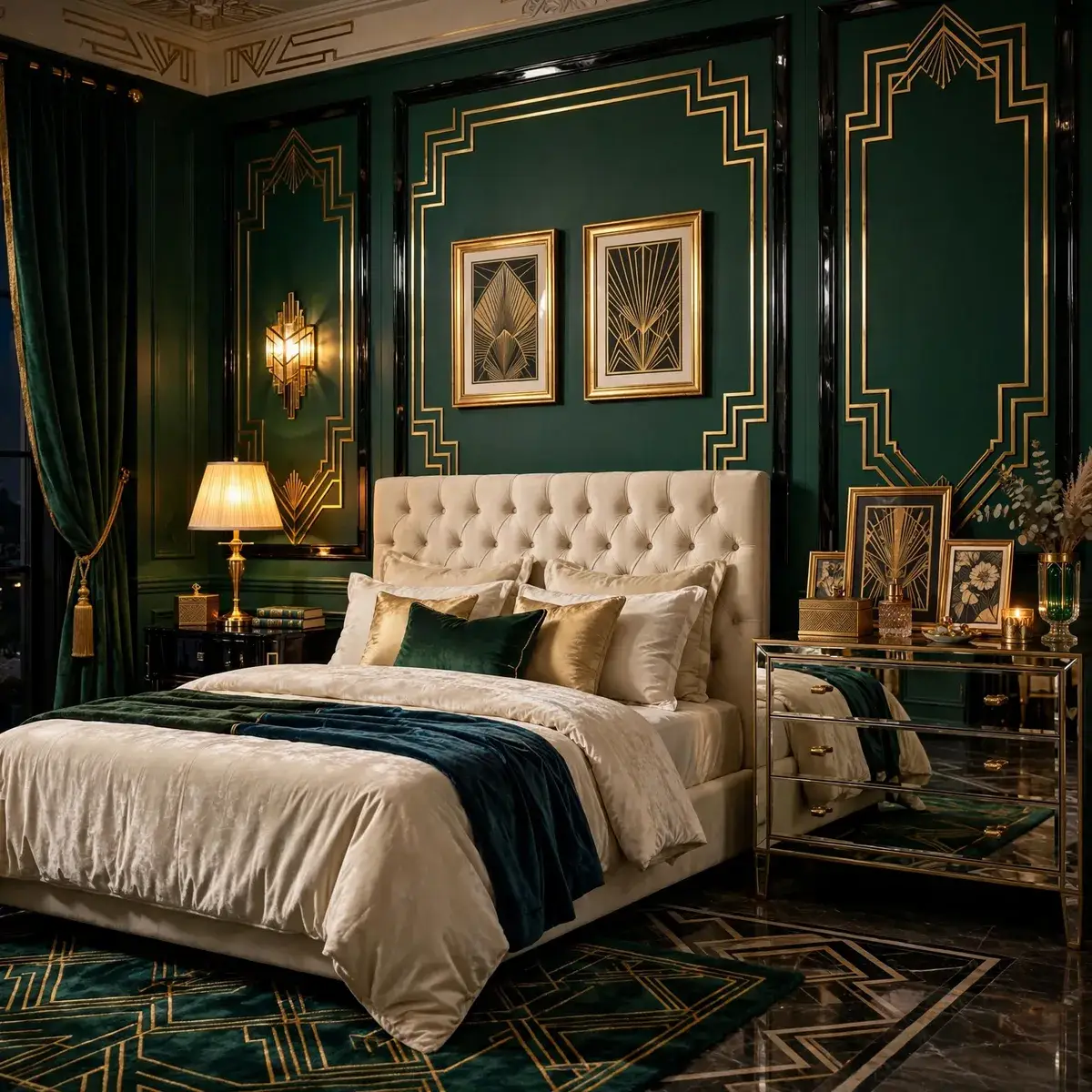
Art deco color is rich, saturated, and high-contrast. The classic formula pairs a deep jewel tone with black and a metallic, then grounds the drama with cream or ivory. Pick your combination before buying anything:
- Emerald green + black + gold — the most iconic deco trio, lush and instantly recognizable.
- Sapphire blue + chrome or silver — cooler and sleeker, the ocean-liner side of deco.
- Ruby or oxblood + black + brass — warmer and more romantic, great for north-facing rooms.
- Deep plum + gold + cream — dramatic but softer, easier to live with every morning.
- Black + ivory + gold — the graphic, high-contrast deco that needs no jewel tone at all.
Whatever trio you choose, let one color dominate, one support it, and let the metallic appear at least three times so it reads as a plan, not an accident.
Anchor the Room With a Statement Headboard
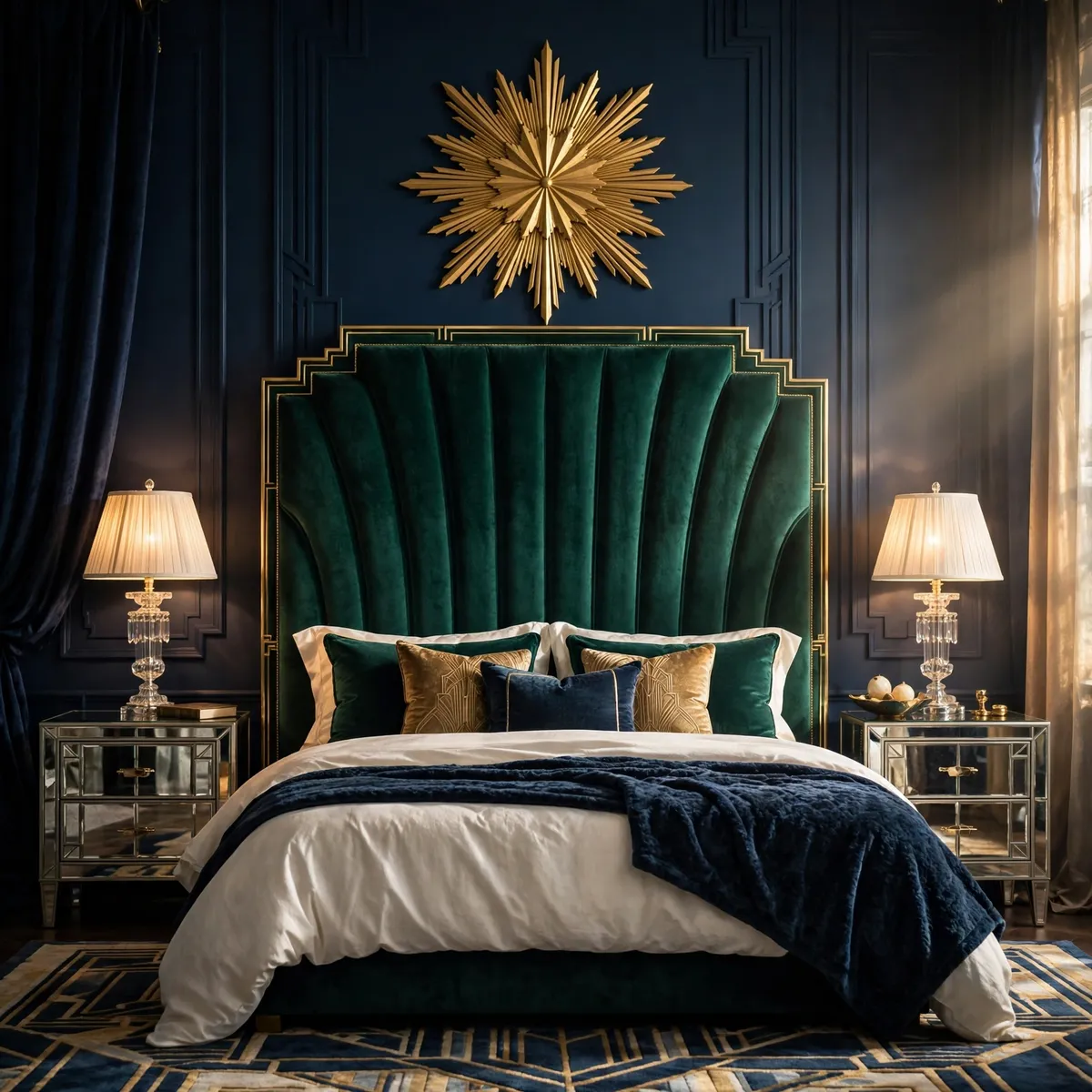
The headboard is the natural centerpiece of an art deco bedroom — tall, upholstered, and slightly theatrical. Channel tufting, a curved or arched silhouette, or a high lacquered panel with brass inlay all qualify. Keep the bedding calmer than the headboard so the two aren’t competing.
Build it in this order:
- Go tall. A headboard that reaches well above the pillows creates the grand-hotel proportions deco is known for.
- Choose curves or channels. Channel tufting, wingback curves, or an arched top soften the room’s hard geometry.
- Add a metallic line. Brass nailhead trim, a gold inlay stripe, or chrome edging is what makes it read deco instead of just plush.
- Flank with light. Wall sconces on either side wash light across the upholstery and free up the nightstands.
Let Mirrors Do the Heavy Lifting
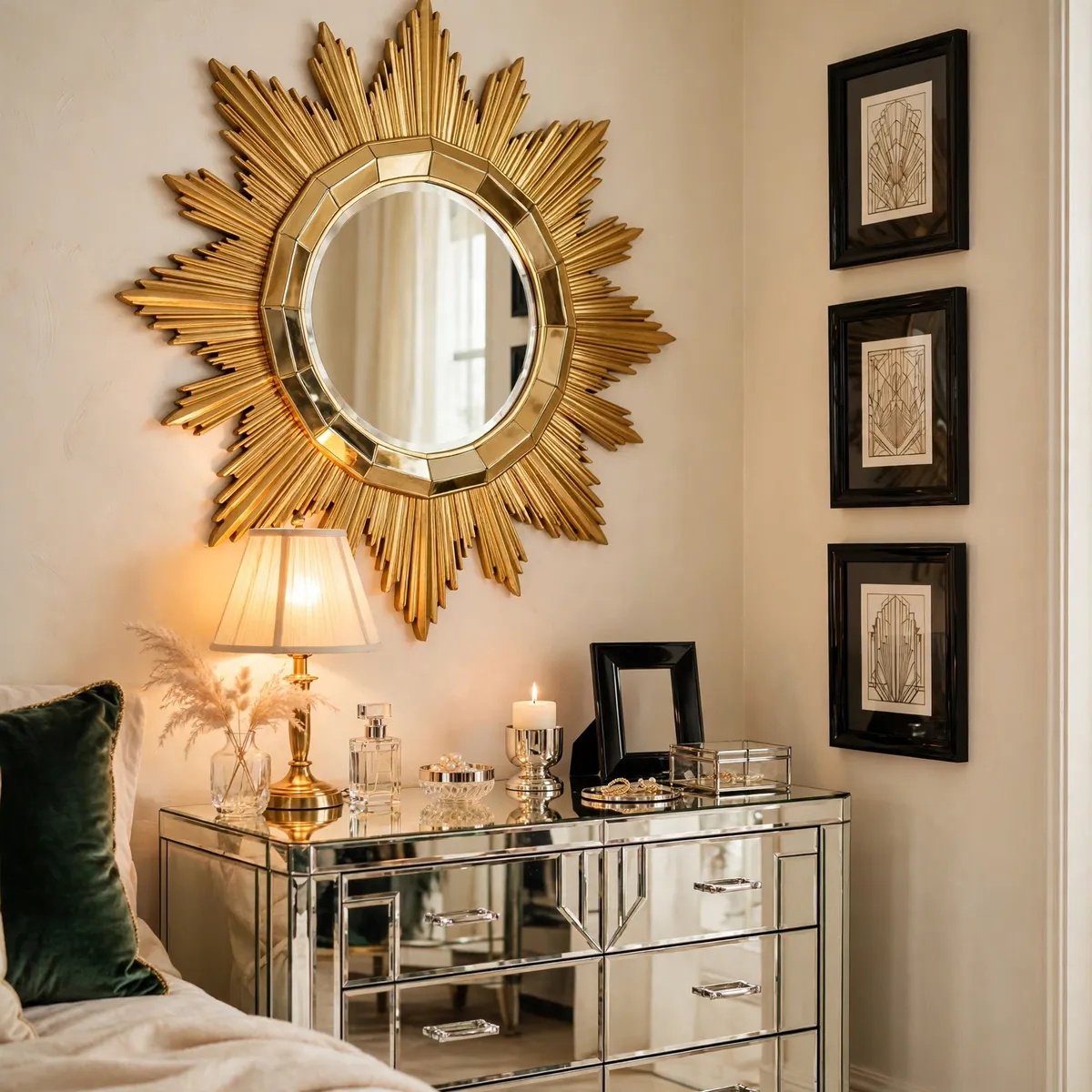
Mirrored surfaces are the original art deco lighting trick — they double every lamp and bounce daylight into corners paint never could. A mirrored dresser or a pair of mirrored nightstands adds glamour and function at once, and in a small bedroom the reflection genuinely makes the space feel larger. The classic shapes are round with beveled edges, sunburst frames, and tall arched panels.
- One mirrored furniture piece — dresser, nightstands, or console — is usually enough; a whole room of mirror reads like a funhouse.
- Hang a sunburst or round beveled mirror above the dresser or opposite a window to double the light.
Choose Lacquered, Mirrored, or Curved Furniture
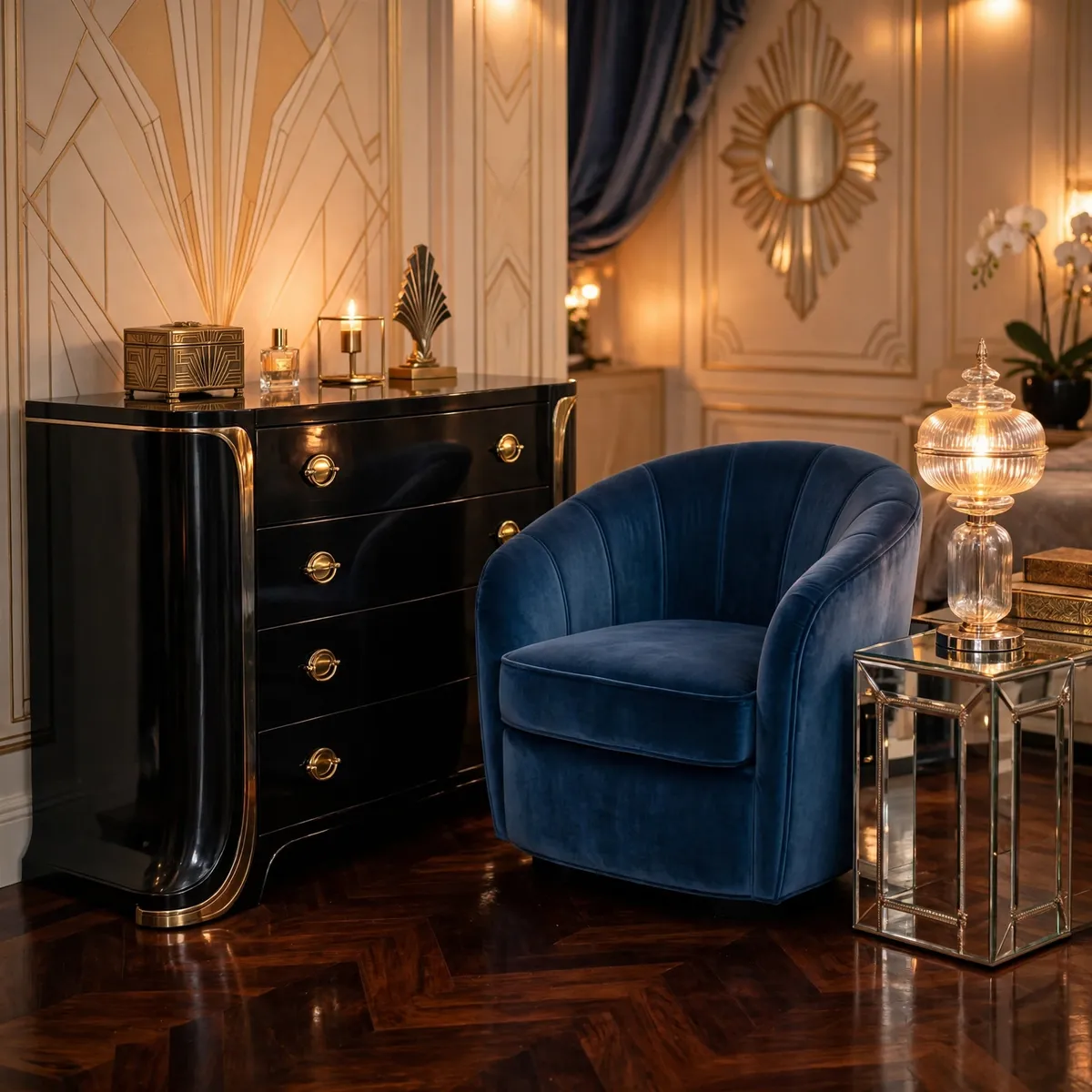
Art deco furniture is streamlined: smooth lines, curved waterfall edges, minimal ornamentation, and finishes that shine. Black lacquer is the signature — a high-gloss black dresser instantly anchors the style — but mirrored fronts and polished dark woods like walnut work too. Favor curves over boxes: rounded drawer fronts, barrel-back chairs, and oval tables all carry the era’s love of the curve.
You don’t need a matching suite — a room of identical lacquered pieces looks like a showroom. Mix one glossy black piece with one mirrored piece and one upholstered curve, and the room will look collected rather than staged. Thrift stores are good hunting grounds here: a plain dresser with the right bones becomes a convincing deco piece with black high-gloss paint and new brass hardware.
Quick tips
- High-gloss black spray paint plus brass bar pulls can “deco-ify” almost any simple dresser.
- Keep hardware consistent — all brass or all chrome — across the room’s furniture.
Hang a Sculptural Chandelier
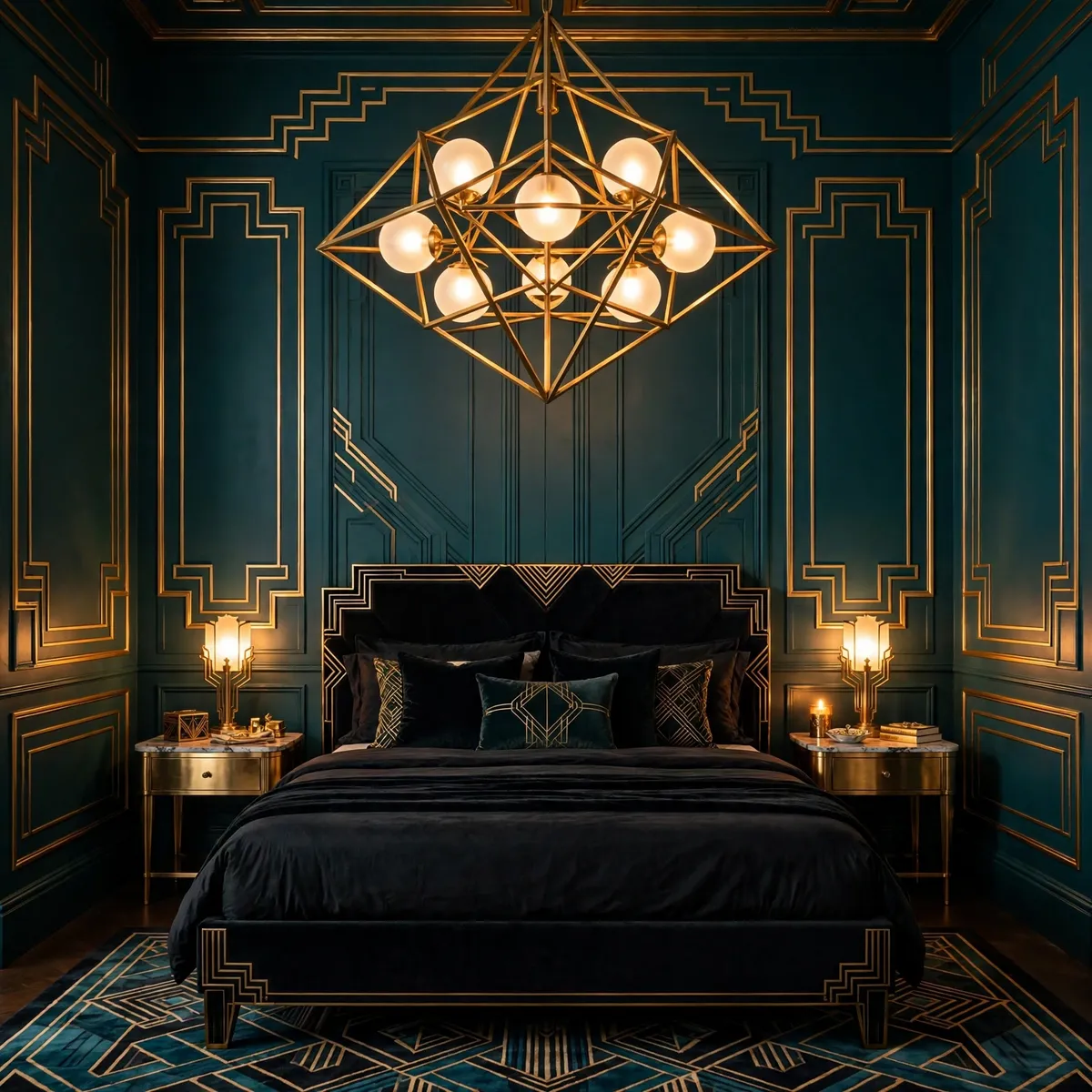
In an art deco bedroom, the ceiling light is the jewelry of the room. Geometric chandeliers with frosted glass globes, stepped tiers, or fan-shaped arms are the period-correct choice, in a brass or chrome finish that ties to the room’s other metalwork. Size it to roughly a third of the bed’s width — over a queen bed, 24 to 30 inches wide usually lands right.
- Pick the metal first. Match the chandelier’s finish to your room’s dominant metal — brass with brass, chrome with chrome.
- Size to the bed. The fixture should span roughly a third of the bed’s width; bigger reads grand, smaller reads dainty.
- Dim it. Put the chandelier on a dimmer so it can glow softly at night instead of only blasting at full power.
- Layer below it. A statement overhead still needs bedside lamps — deco lighting is layered, never a single source.
Layer Velvet, Silk, and Faux Fur
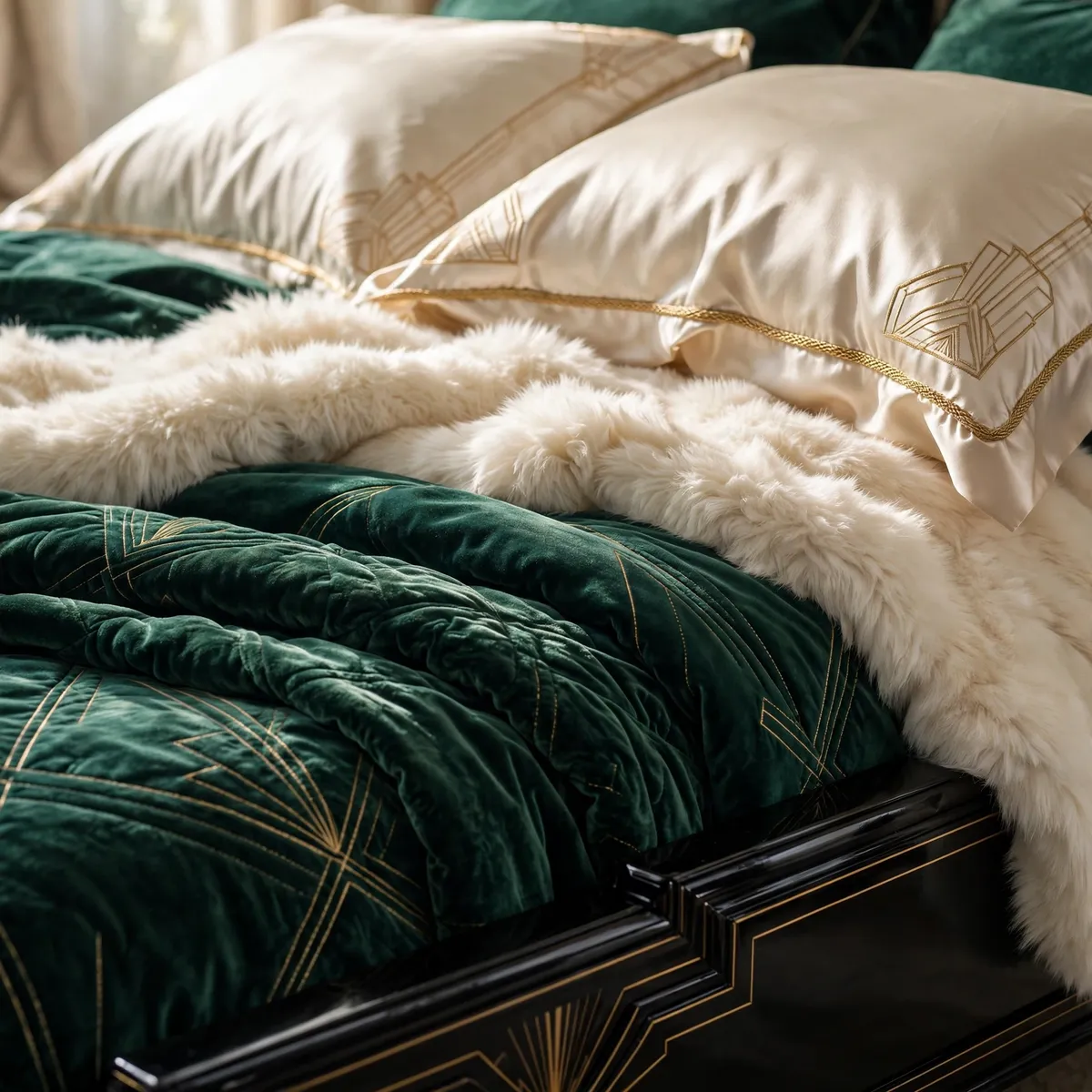
Deco without plush textiles is just geometry, so the bedding has to carry the luxury. Velvet is the headline fabric — a velvet duvet cover in your jewel tone catches lamplight differently from every angle, which is exactly the richness the style demands. Silk or satin pillowcases with contrasting piping add the sheen, and a faux fur throw across the foot of the bed brings the old-Hollywood texture.
Keep the palette tight here: the bedding should sit inside your room’s three-color scheme, not introduce new ones. An emerald velvet duvet with champagne silk shams and an ivory faux fur throw stays entirely within one color family while giving you three distinct textures. That restraint is what separates a glamorous bed from a busy one.
Quick tips
- Velvet duvet cover plus satin sheets gets the full deco bed without buying a whole set.
- Rotate velvet bedding occasionally — the pile wears in one direction over time.
Add a Sunburst Motif
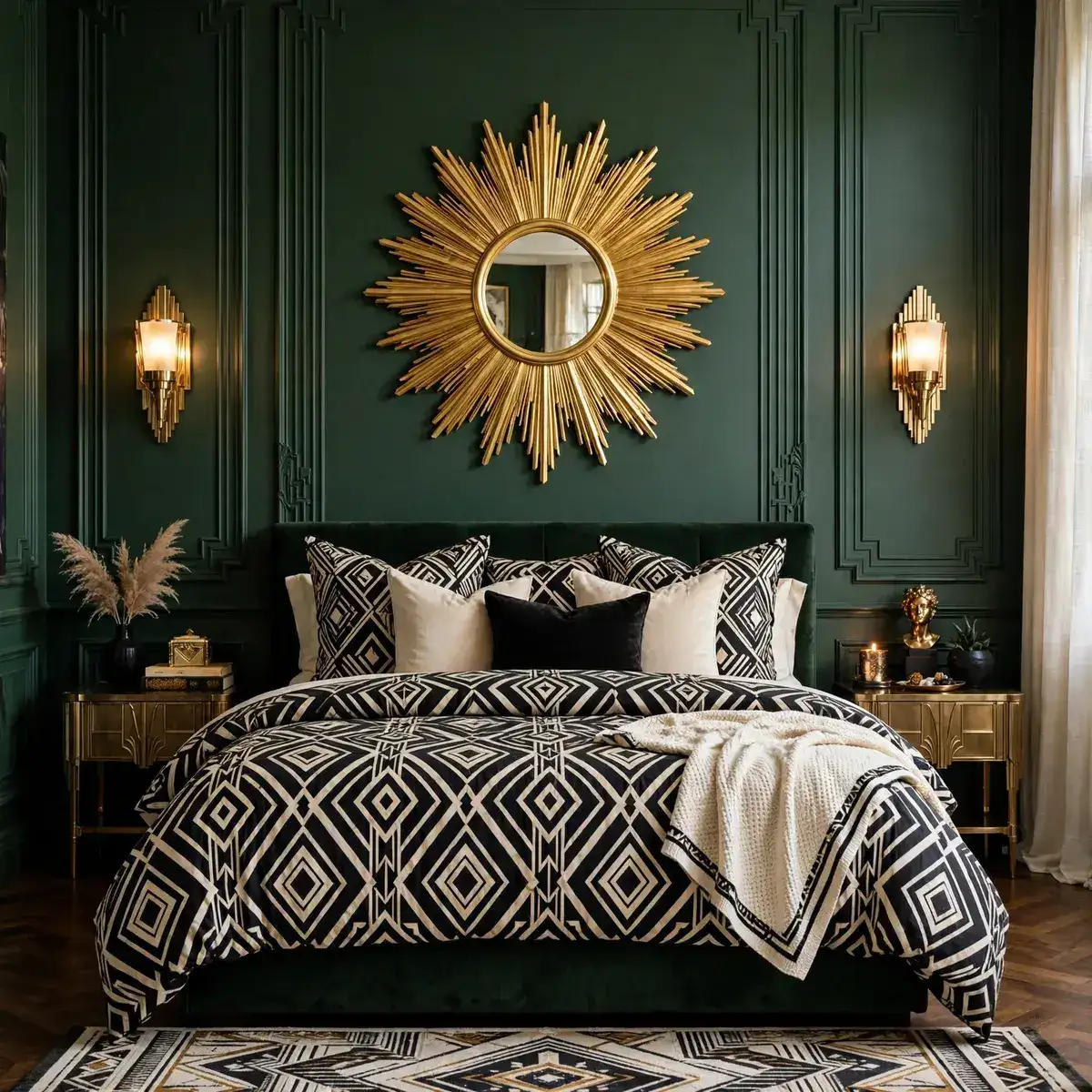
If art deco had a logo, it would be the sunburst — the radiating-lines motif shows up on mirrors, headboards, ceiling medallions, and wall art from the period. A large sunburst mirror centered above the bed or the dresser does double duty as pattern and reflective surface, and it’s the quickest shorthand for the style.
- Sunburst mirror above the bed or dresser — the single fastest deco signal in the room.
- Sunburst wall art in gold leaf or metallic print if you already have enough mirror.
- One is enough. A second sunburst in the same sightline starts to look like a theme park.
Dress the Windows Like a Hotel Suite

Deco windows go tall and theatrical. Floor-to-ceiling curtains in silk, satin, or heavy velvet, hung as high and wide as the wall allows, frame the window like a stage and lift the ceiling. Ivory, champagne, or your jewel tone all work — the deco move is the fullness and the sheen, not any particular color. A simple gold or black geometric valance on top adds the period detail.
Hang the rod four to six inches above the window frame and extend it six to eight inches past each side, so the curtains stack off the glass and the window reads as large as possible. Sheers underneath give daytime privacy without losing the glow. Skip fussy tiebacks — deco curtains hang straight and full, pooling slightly on the floor for the grand-hotel effect.
Style a Mirrored Vanity Corner
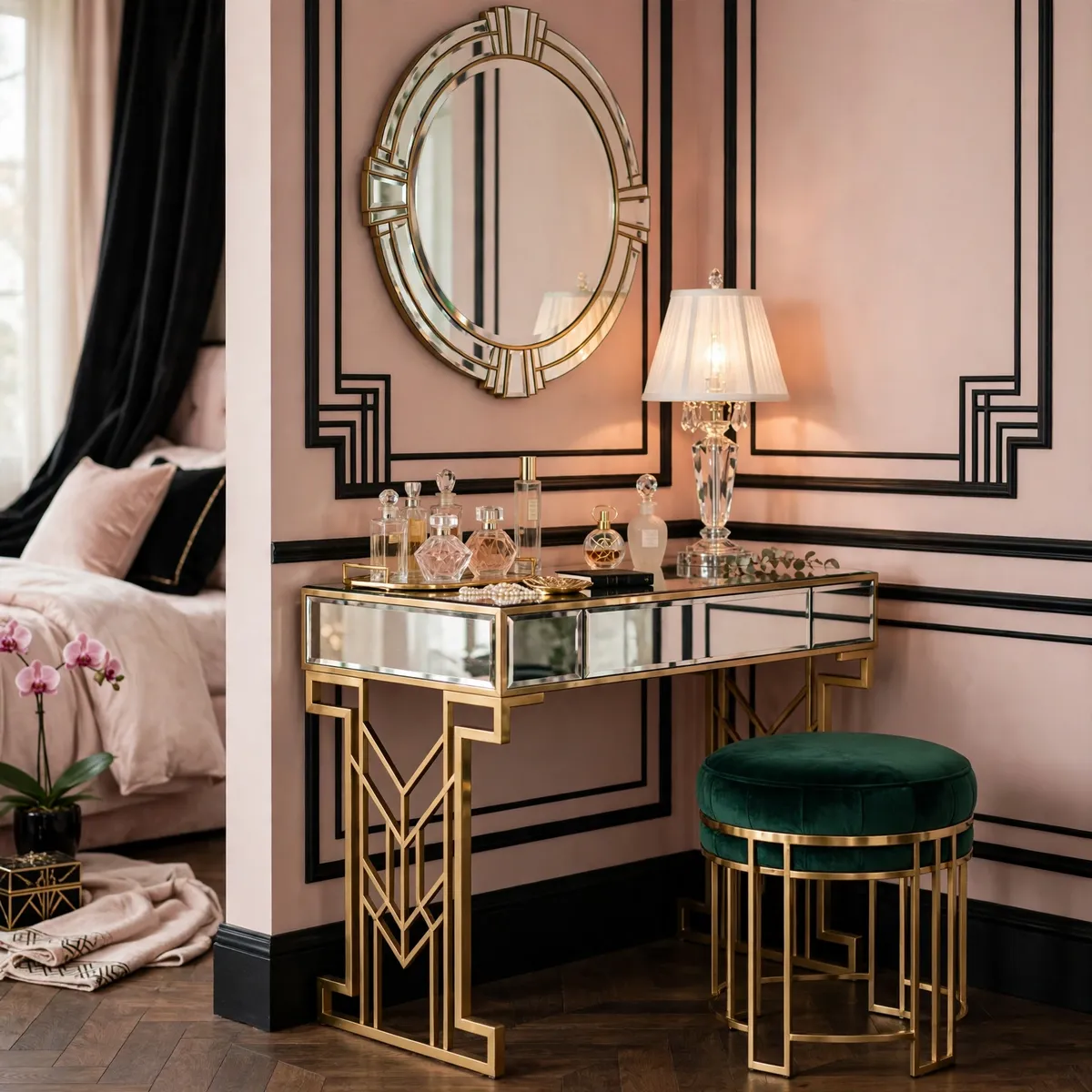
A vanity corner is the most authentic piece of deco bedroom furniture there is — the 1930s dressing table, reborn. A mirrored or lacquered vanity with a beveled round mirror, a velvet stool, and a crystal lamp turns an unused corner into the room’s most glamorous vignette. A 36-inch table is plenty for a mirror, a lamp, and a tray of perfume bottles.
Keep the styling edited: a small stack of books, one sculptural object, and a bud vase is a complete arrangement. The mirror does the visual work, so the surface itself should stay calm. No spare corner? A mirrored console or a small mirrored desk against the wall delivers the same reflective hit in less space.
Quick tips
- A round beveled mirror in a thin brass frame is the most versatile deco vanity mirror.
Ground It With a Graphic Rug and Rich Floors

The floor is where deco’s geometry can go bold without overwhelming anyone. A large area rug in a black-and-gold or black-and-cream geometric pattern — Greek key, chevron, or stepped borders — anchors the bed and ties the palette together. Size it generously: at least 18 inches past each side of the bed, so your feet land on pattern, not bare floor.
- Greek key or stepped borders are the most period-authentic rug patterns for deco.
- Herringbone or parquet wood floors underneath are the ideal deco base — dark stain reads richest.
- Layer a faux fur or sheepskin over the rug at the bedside for the soft landing the style’s glamour deserves.
Keep It Calm: The Bedroom-First Rule
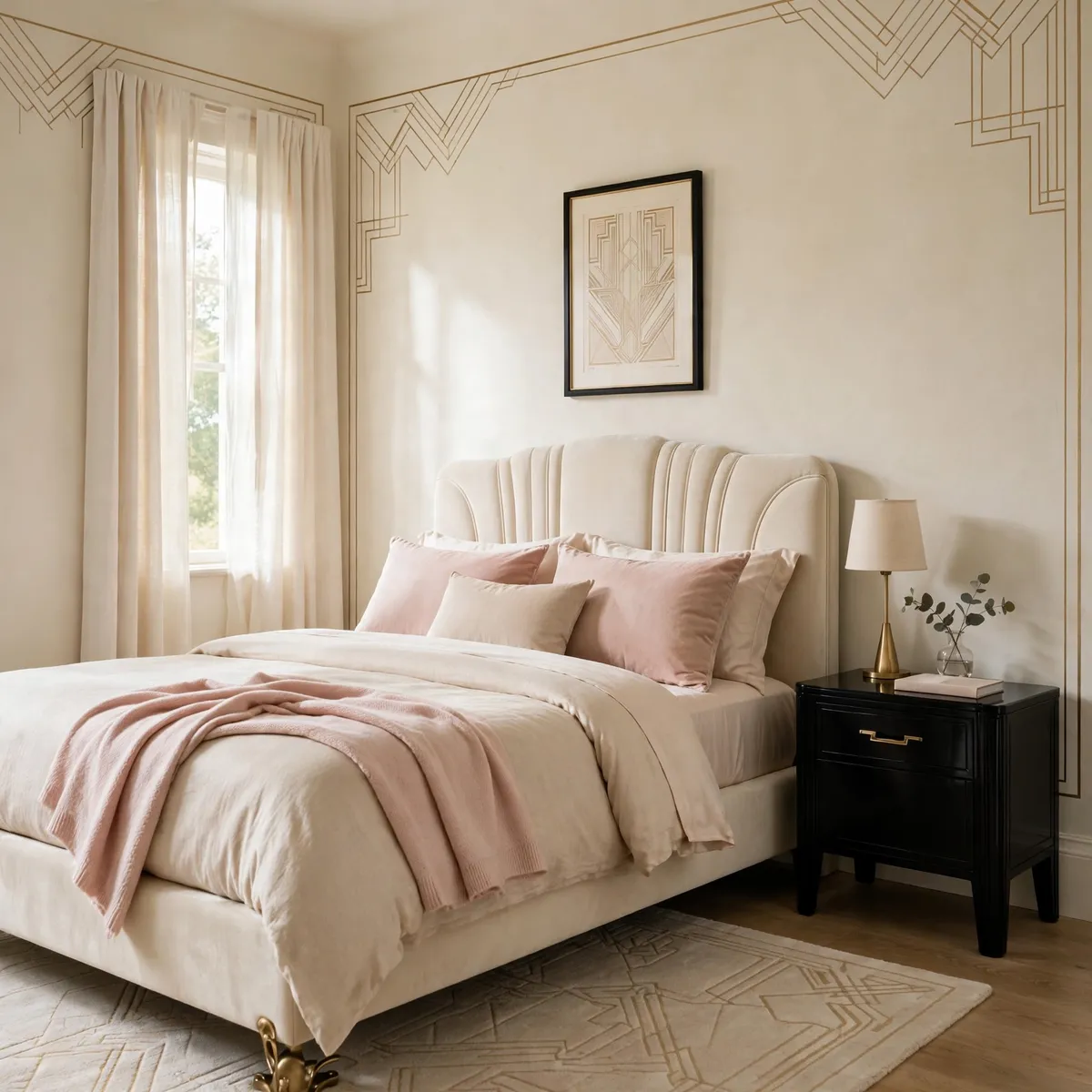
Here’s the part most deco guides skip: a bedroom still has to help you sleep. All that geometry and gleam needs a counterweight, or the room feels like a lobby. The fix is built-in calm — soft cream or blush walls, one quiet corner with no pattern, and warm dimmable light for the last hour of the day. A pale deco bedroom with champagne bedding, subtle gold molding, and one black lacquered nightstand is just as authentically deco as the emerald version — and far easier to fall asleep in.
Think of it as a ratio: roughly two-thirds glamour to one-third calm. Let the bed wall carry the drama, then give the rest of the room permission to be quiet — plain bedding in a soft neutral, solid silk curtains, walls that step back. Deco was always about controlled opulence, never clutter, and a bedroom that balances shine with serenity is the truest version of the style.
Quick tips
- Keep the wall behind the bed as the single drama wall; let the other three breathe.
- Warm bulbs (2700K) and dimmers on every lamp keep evening light restful, not theatrical.
Frequently Asked Questions
What are the key elements of an art deco bedroom?
Bold geometric patterns, rich materials like velvet and lacquer, metallic accents in gold, brass, or chrome, mirrored surfaces, jewel-tone colors, and streamlined furniture with curved silhouettes — together, the style’s signature mix of glamour and order.
What colors are typical for art deco bedrooms?
Deep jewel tones — emerald green, sapphire blue, ruby red, and deep plum — paired with black, cream, or ivory and metallics like gold, brass, silver, or chrome. For a softer take, pale blush or cream walls with black and metallic accents keep the deco feel while staying restful.
Can art deco work in a small bedroom?
Yes. Focus on one strong feature — a geometric wallpaper wall or a statement headboard — choose compact curved furniture, and use mirrored pieces to reflect light and make the space feel larger. Keep large-scale patterns to one surface and layer the lighting so the room feels rich, not crowded.
What is a cost-effective way to get the art deco look?
Start with paint, textiles, and a couple of statement accessories like a sunburst mirror or a geometric lamp. Thrifted furniture with simple lines transforms with high-gloss black paint and new brass hardware, and peel-and-stick geometric wallpaper gives you the hero wall without the cost or commitment.
Conclusion
Art deco bedroom ideas work because the style is a system, not a shopping list: geometry for energy, jewel tones for richness, mirrors and metal for light, plush textiles for comfort. You don’t need all twelve at once — pick the one move your room is missing, whether that’s a fan-patterned wall, a sunburst mirror, or simply better curtains, and let it set the tone. Build the rest one layer at a time, and keep the bedroom-first rule in mind: glamour you can sleep in is the whole point.