Bookshelf Decor Ideas
What makes a bookshelf look styled rather than stuffed? The best bookshelf decor ideas balance books with breathing room, personal objects, and a clear color story, so the shelf feels curated instead of cluttered. Start with your books, then add one or two decorative pieces per shelf, leave a little empty space, and repeat a few colors throughout. In this guide, you will find twelve practical ideas you can try this weekend, using things you probably already own.
A well-styled shelf does more than hold books. It anchors a living room wall, shows off your taste, and makes a room feel finished. Whether you have a tall built-in, a small ladder shelf, or a single floating shelf, the same principles apply: vary heights, mix textures, and step back often to check the overall balance. For a wider wall display, gallery wall ideas pair beautifully with a styled bookshelf.
Q: How many books should go on each shelf? A: Fill about two-thirds of each shelf with books and leave the rest for decor and empty space, so the shelf can breathe.
Q: Should books be arranged by color or by size? A: Either works. Color grouping looks bold and modern, while size grouping looks calm and classic. Choose the look that suits your room.
Q: How do I stop my bookshelf from looking cluttered? A: Remove one item from every shelf, group small objects in odd numbers, and repeat just two or three colors across the whole unit.
Q: Do I need to buy new decor for my bookshelf? A: No. Start with books, plants, candles, framed photos, and objects you already own, then buy only one or two gaps fillers if needed.
1. Layer Books Horizontally with a Plant on Top
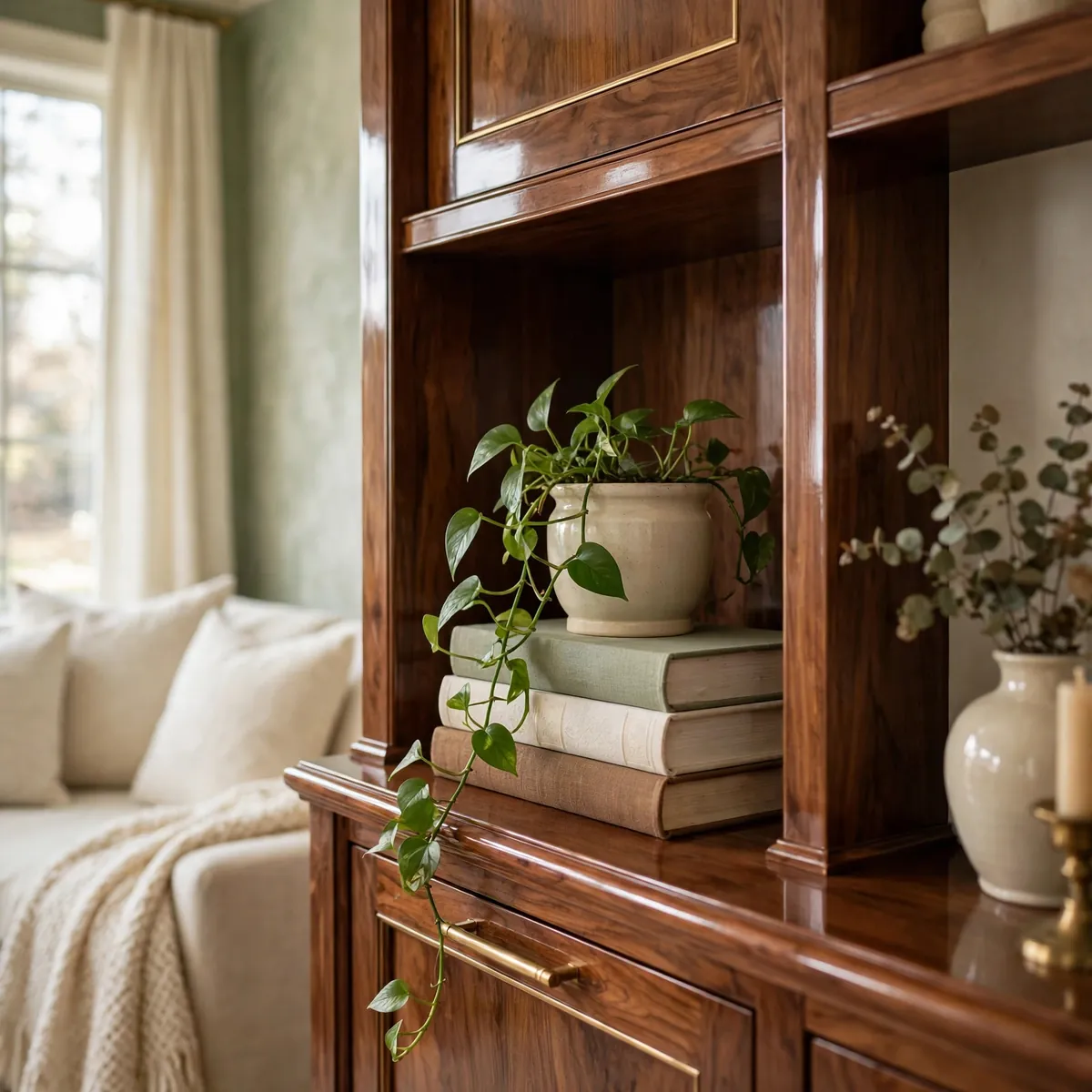
Most shelves look flat when every book stands upright in a row. Break the line by stacking four or five books horizontally, then topping the stack with a small trailing plant, a candle, or a tiny framed print. For example, stack a sage-green clothbound novel, a cream poetry collection, and a walnut-brown travel guide on the middle shelf, then set a small potted pothos on top so its leaves spill gently over the edge.
This trick also solves the awkward short-shelf problem, filling vertical space without adding tall objects. Keep the stack to one per shelf so it reads as a deliberate pause rather than a pile.
Quick tips
- Stack three to five books, largest at the bottom.
- Top with one small object only.
- Match the plant pot to your shelf color story.
2. Arrange Books by Color for a Rainbow Shelf
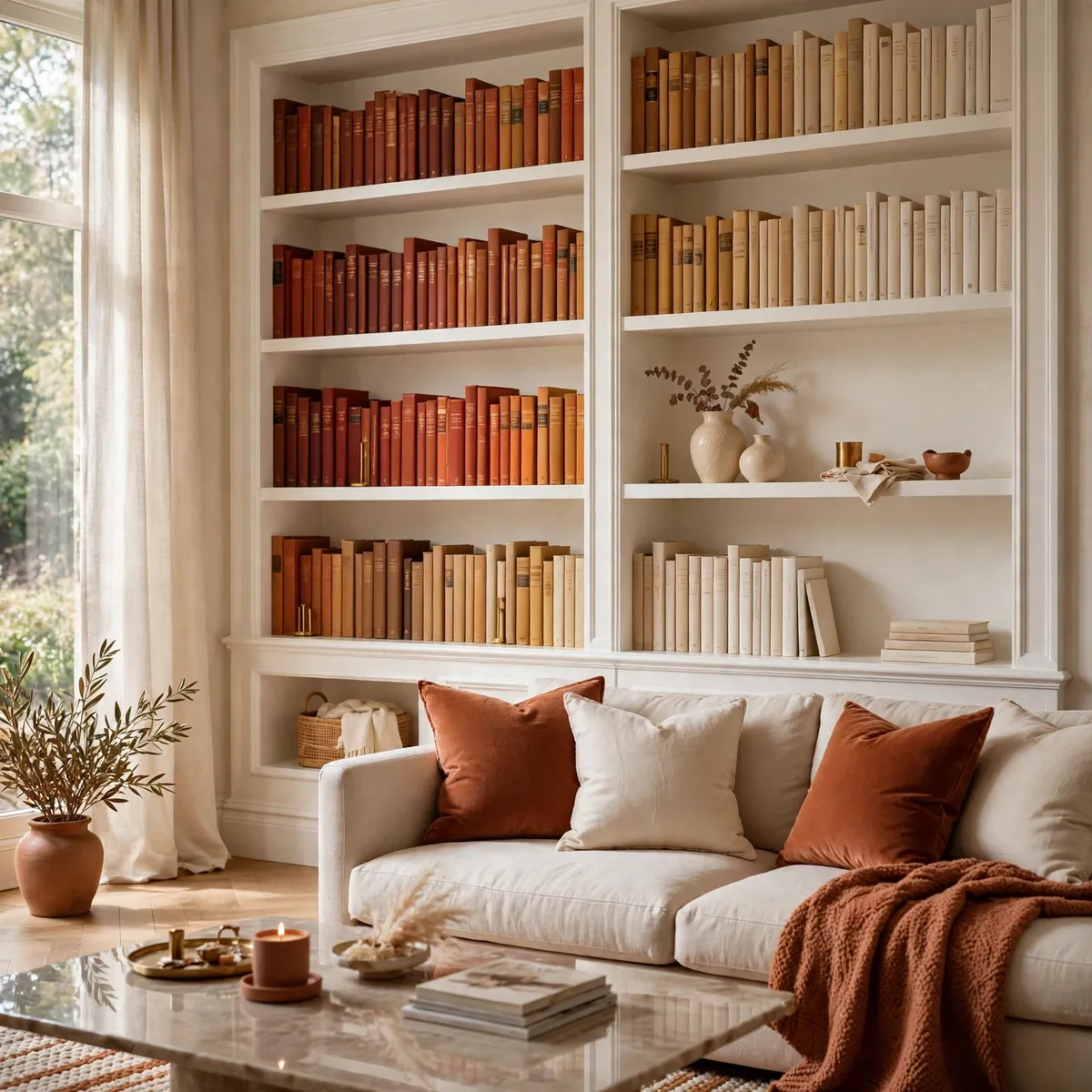
Color blocking turns an ordinary book collection into a bold feature wall. Pull your books off the shelf, sort them into color piles, and rebuild the shelf from warm tones on one side to cool tones on the other. A concrete example: group terracotta, rust, and cream spines together on the top shelf, then let ochre and soft gold spines take the shelf below for a warm, sunset-like gradient.
This works best when you have enough books to make each color group feel full. If a color is thin, use a matching vase or box to bulk it out.
Quick tips
- Sort by spine color, not by author or subject.
- Keep neutral spines together as a calm anchor.
- Step back after each shelf to check the gradient.
3. Mix Vintage Treasures Among Modern Books
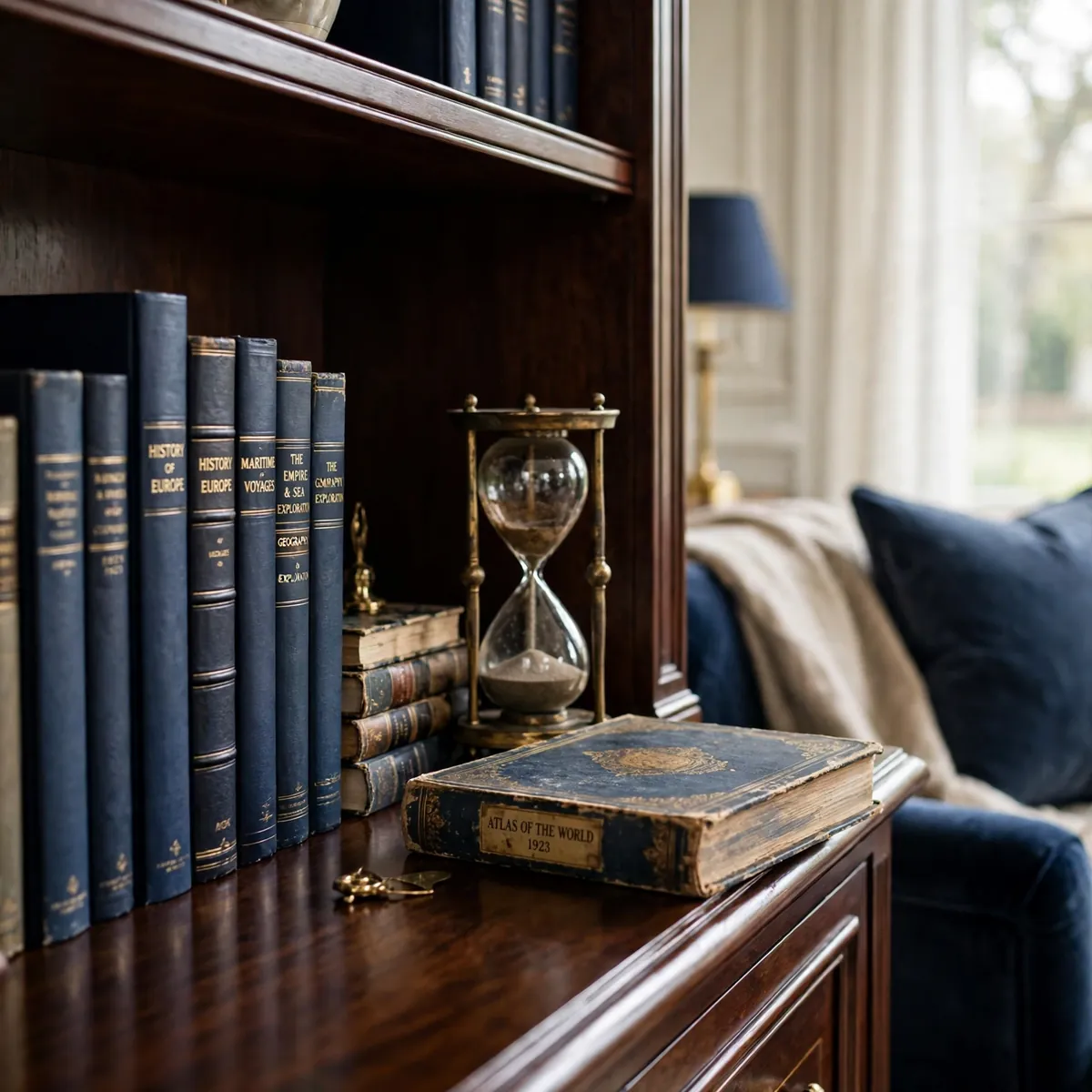
A shelf full of brand-new books can feel like a shop display, but one or two vintage pieces instantly add character. Tuck a brass candlestick, a small antique clock, or a stack of old leather-bound volumes between modern paperbacks. For instance, place a navy hardback novel beside a tarnished brass hourglass and a faded navy-and-gold atlas, and the whole shelf gains a collected-over-time feeling.
The key is restraint. One vintage item per shelf is plenty, and it should share a color or material with something else nearby so it looks intentional.
Quick tips
- Choose one vintage hero piece per shelf.
- Pair brass with navy, wood, or cream tones.
- Clean dusty finds before styling.
4. Style with Sculptural Bookends and Art
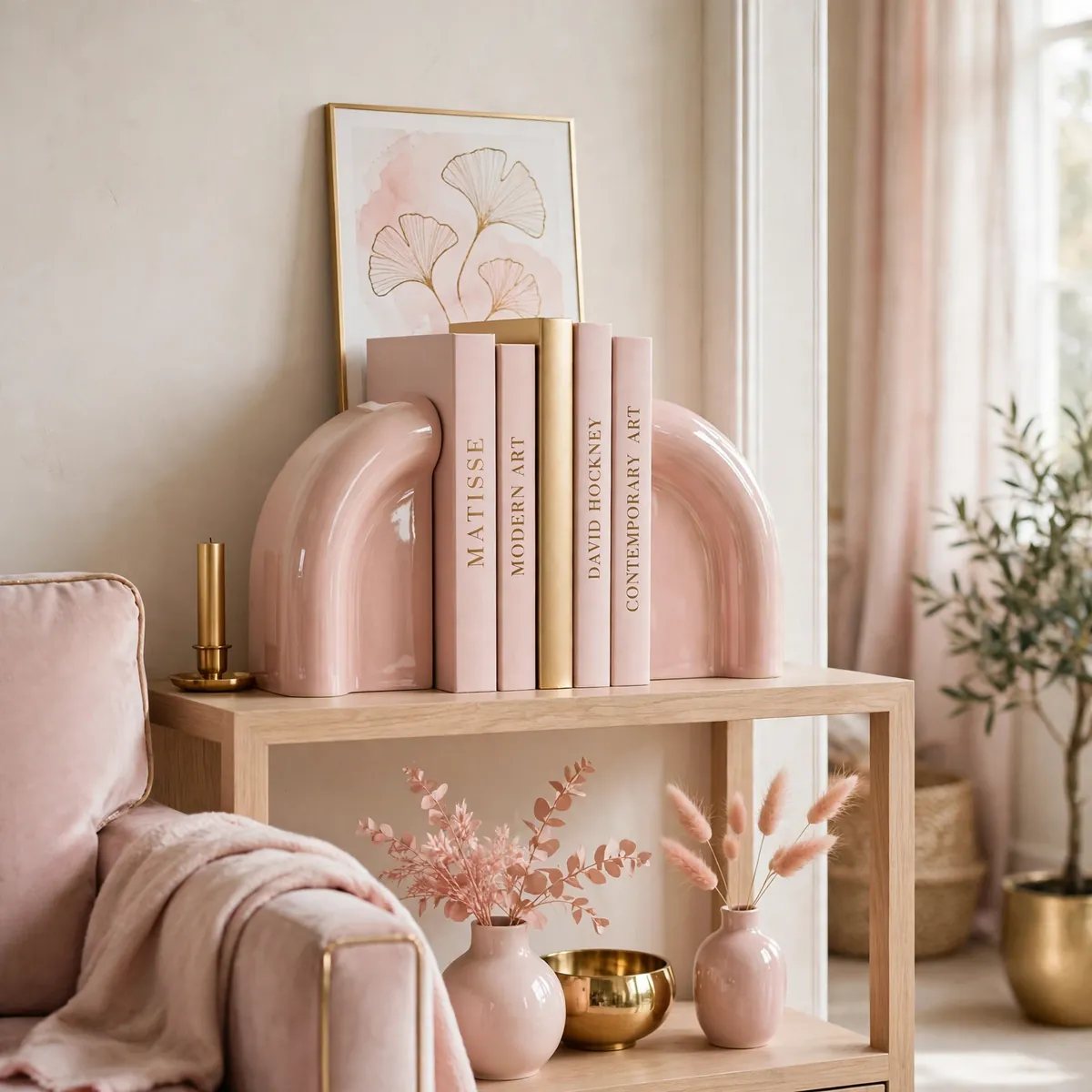
Bookends do more than hold books upright. A sculptural pair in stone, brass, or ceramic acts as decor in its own right. Try blush-pink ceramic arches as bookends on either side of a row of art books, then lean a small unframed art print behind them so its top edge rises just above the books.
Leaning art behind books adds depth, because the eye travels from the print to the spines to the bookend. Keep the art smaller than the shelf height so it never looks cramped.
Quick tips
- Pick bookends heavy enough for tall books.
- Lean one small print, not a whole gallery.
- Repeat the bookend material elsewhere on the shelf.
5. Create a Reading Nook Display with Cozy Lighting
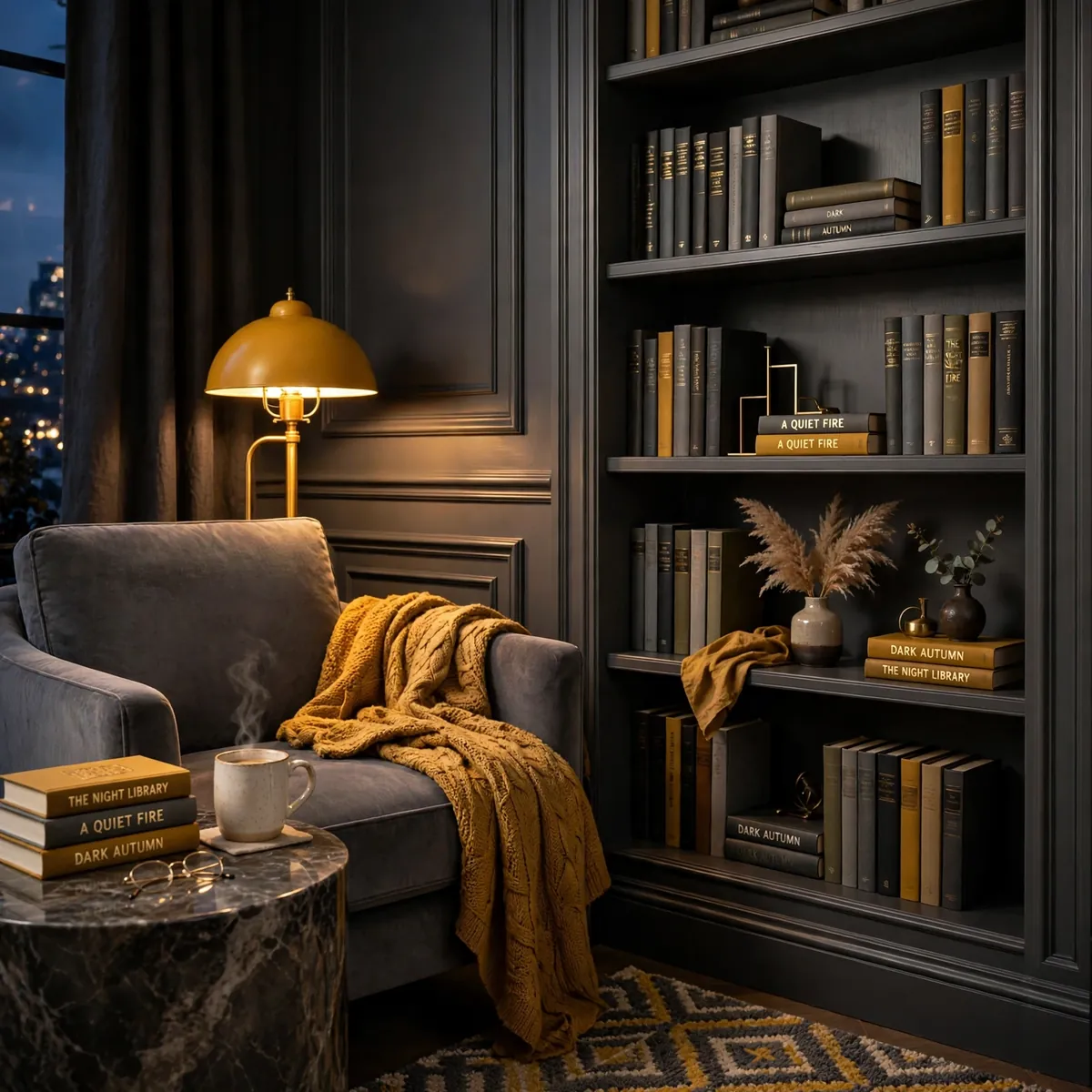
If your bookshelf sits beside a chair, style it as a reading nook rather than storage. Place your current read face-out on the shelf nearest your seat, add a small battery candle or a clip-on shelf light, and keep a soft throw draped over the chair arm. For example, a charcoal-grey shelf with a mustard-yellow reading lamp, a ceramic mug, and a stack of three well-loved novels instantly invites you to sit down.
Warm light matters more than bright light here. A soft glow makes book spines readable in the evening and makes the corner feel welcoming after dark.
Quick tips
- Keep your current book within arm’s reach.
- Use warm-toned, low light for evenings.
- Add one cozy texture, like wool or linen.
6. Use Baskets and Boxes to Hide Clutter
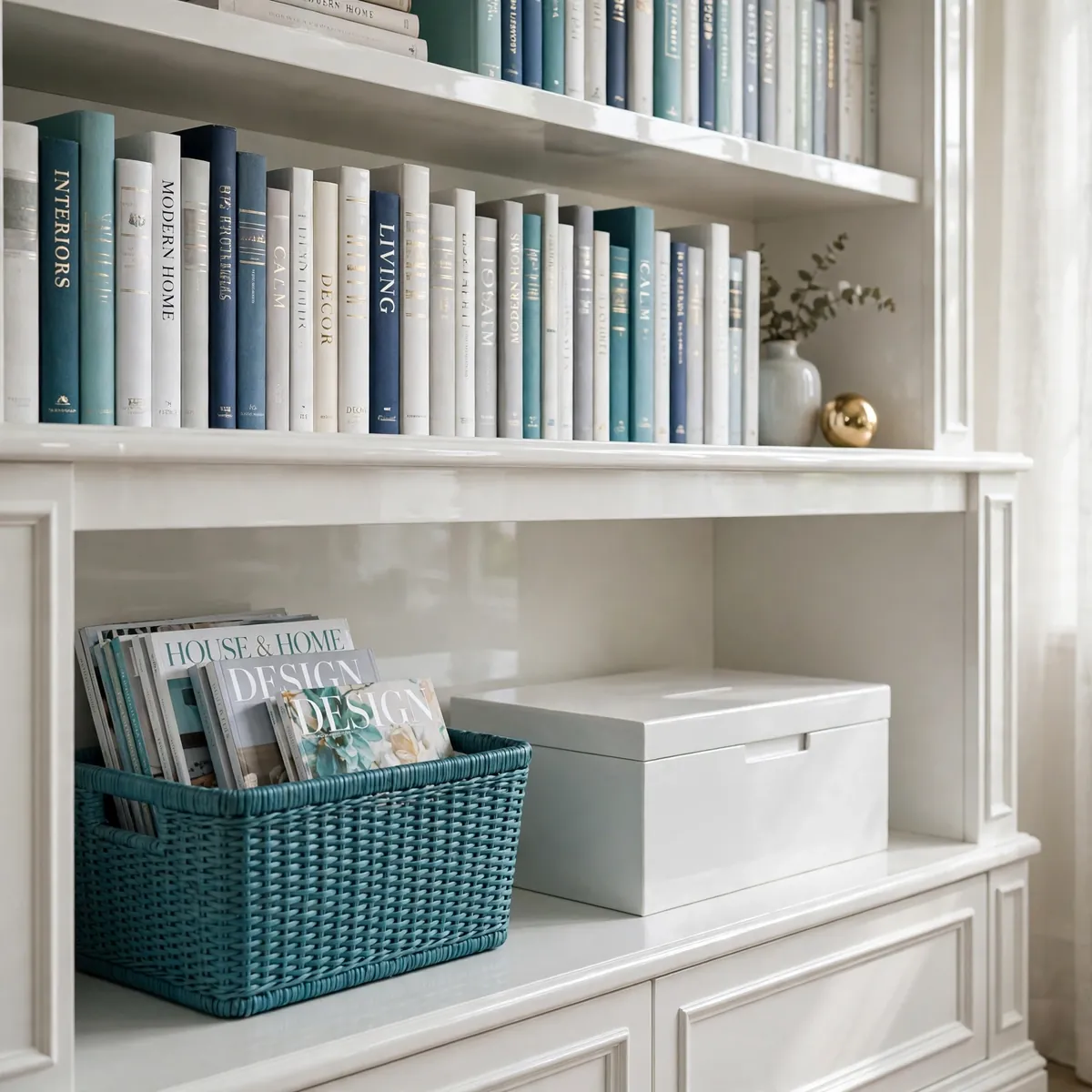
Not everything on a bookshelf needs to be on show. Chargers, remote controls, craft supplies, and board games look messy on open shelves, but they disappear neatly inside baskets and boxes. Try a teal woven basket on the bottom shelf for magazines, and a white lidded box on the middle shelf for cables and small gadgets.
Choose containers that match your room, not random storage tubs. When the baskets themselves look good, the whole shelf looks styled even though half of it is hidden.
Quick tips
- Use one basket style across the whole unit.
- Label boxes only if they hold daily essentials.
- Keep heavy baskets on the lowest shelf.
7. Showcase Travel Souvenirs and Collected Objects
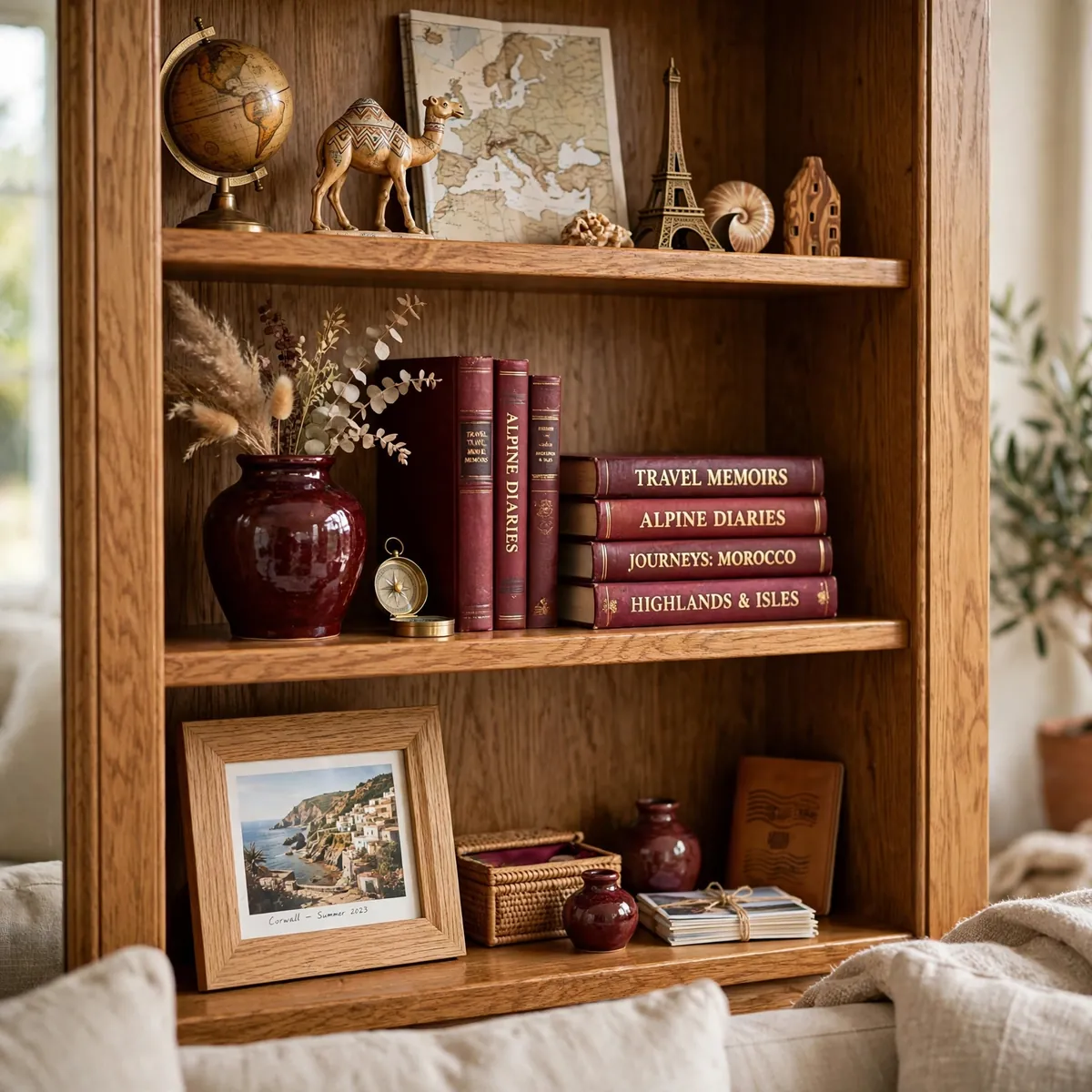
The most interesting bookshelves tell a story, and travel souvenirs do that better than anything bought for styling alone. Give a small ceramic bowl from Morocco, a wooden elephant from a market trip, or a jar of shells from a beach holiday a place of pride between book groups. For a cohesive look, set a burgundy ceramic vase beside an oak-framed holiday photo and two burgundy-spined travel memoirs.
Limit souvenirs to the ones with a real memory attached. A shelf of random ornaments feels cluttered, but five meaningful objects feel like a personal museum.
Quick tips
- Show only souvenirs with a story.
- Group small items in threes.
- Leave space around each special piece.
8. Go Monochrome with White and Natural Wood
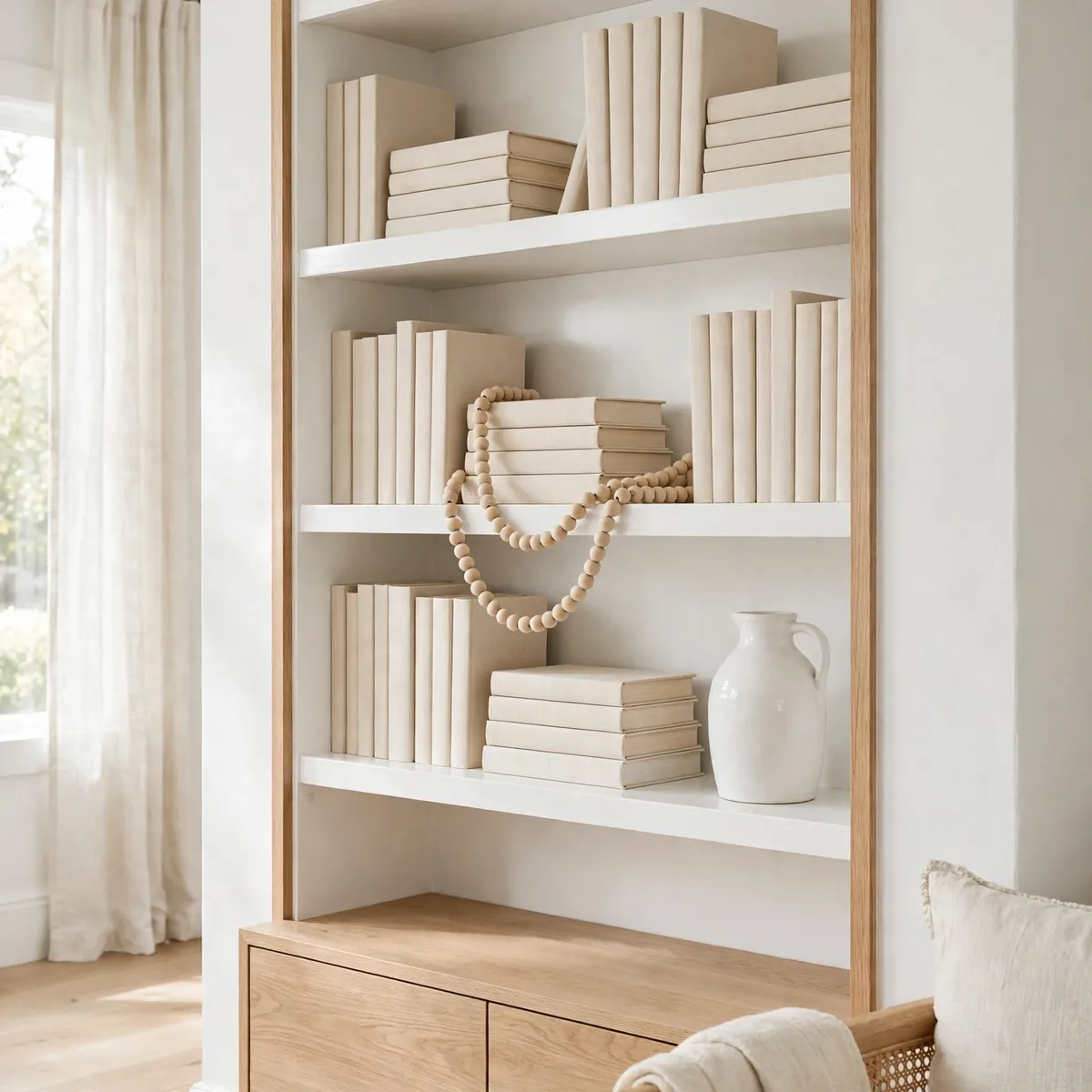
If color blocking feels too bold, try the opposite: a calm monochrome shelf in white, cream, and natural wood. Turn books with loud covers spine-in, or cover them in plain kraft paper, then add pale ceramic vases and a light oak tray. For example, a white shelf holding cream linen-bound books, a pale wooden bead garland, and a single white ceramic jug looks serene in a bright living room and lets the furniture, rather than the shelf, take attention. For balance across the room, tv wall decor ideas can echo the same pale palette on the opposite wall.
Monochrome styling needs texture to avoid looking flat, so mix matte ceramics, rough linen, smooth wood, and glossy book covers.
Quick tips
- Stick to white, cream, and one wood tone.
- Mix matte and glossy textures.
- Add one green plant for a soft contrast.
9. Add Seasonal Swaps for a Fresh Look Year-Round
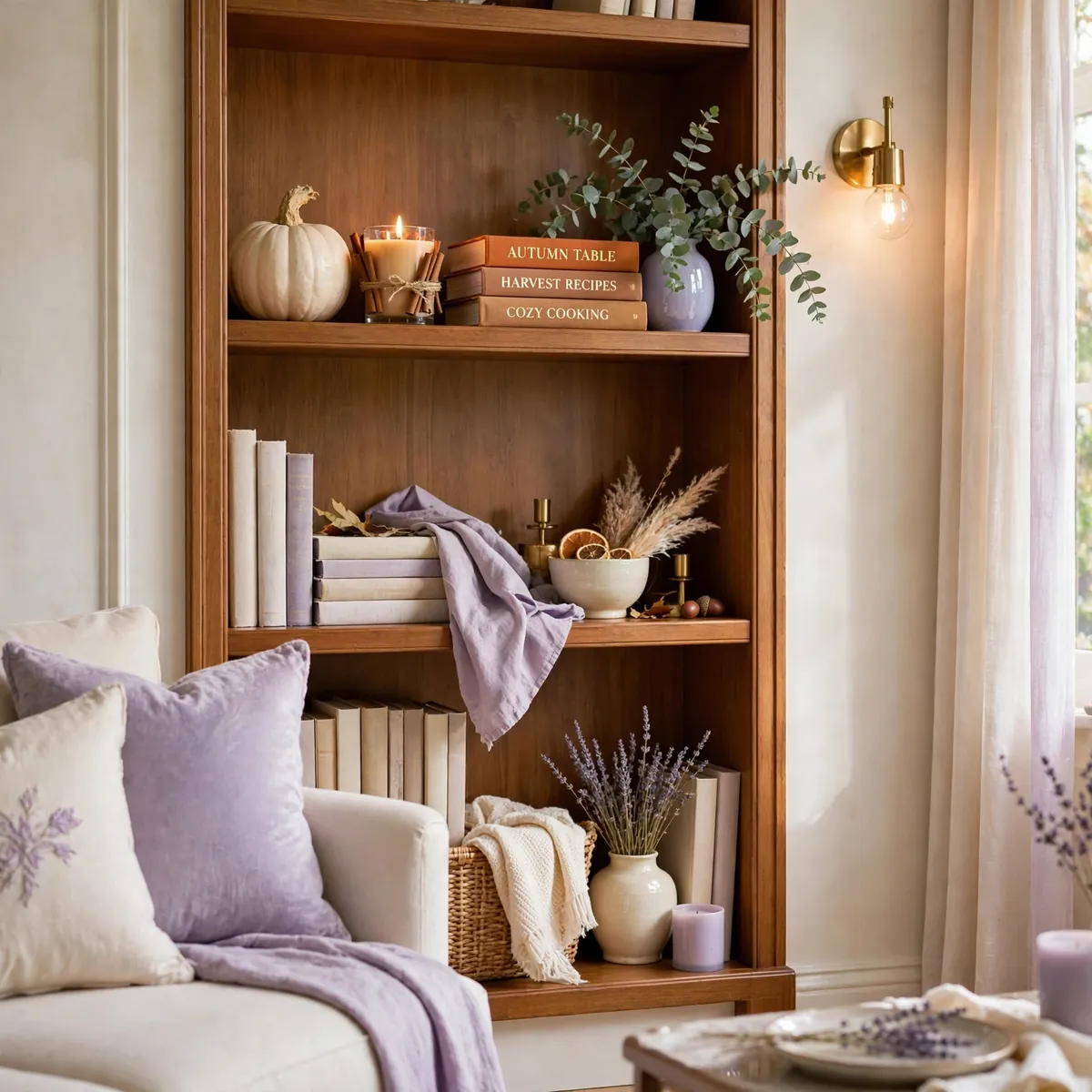
You do not need to restyle the whole shelf to make it feel new. Keep the books in place and swap just two or three decorative pieces each season. In autumn, add a small pumpkin and a dried-leaf garland; in spring, swap them for a lavender-scented candle and a tiny vase of fresh eucalyptus.
Store seasonal pieces in one labeled box so the swap takes ten minutes. A concrete autumn example: a lavender ceramic pumpkin is out of season, so replace it with a cream pumpkin, a cinnamon candle, and a stack of two autumn-toned cookbooks on the top shelf.
Quick tips
- Swap only two or three items per season.
- Keep books and large pieces fixed.
- Store off-season decor in one box.
10. Style a Kids’ Bookshelf That Grows with Them
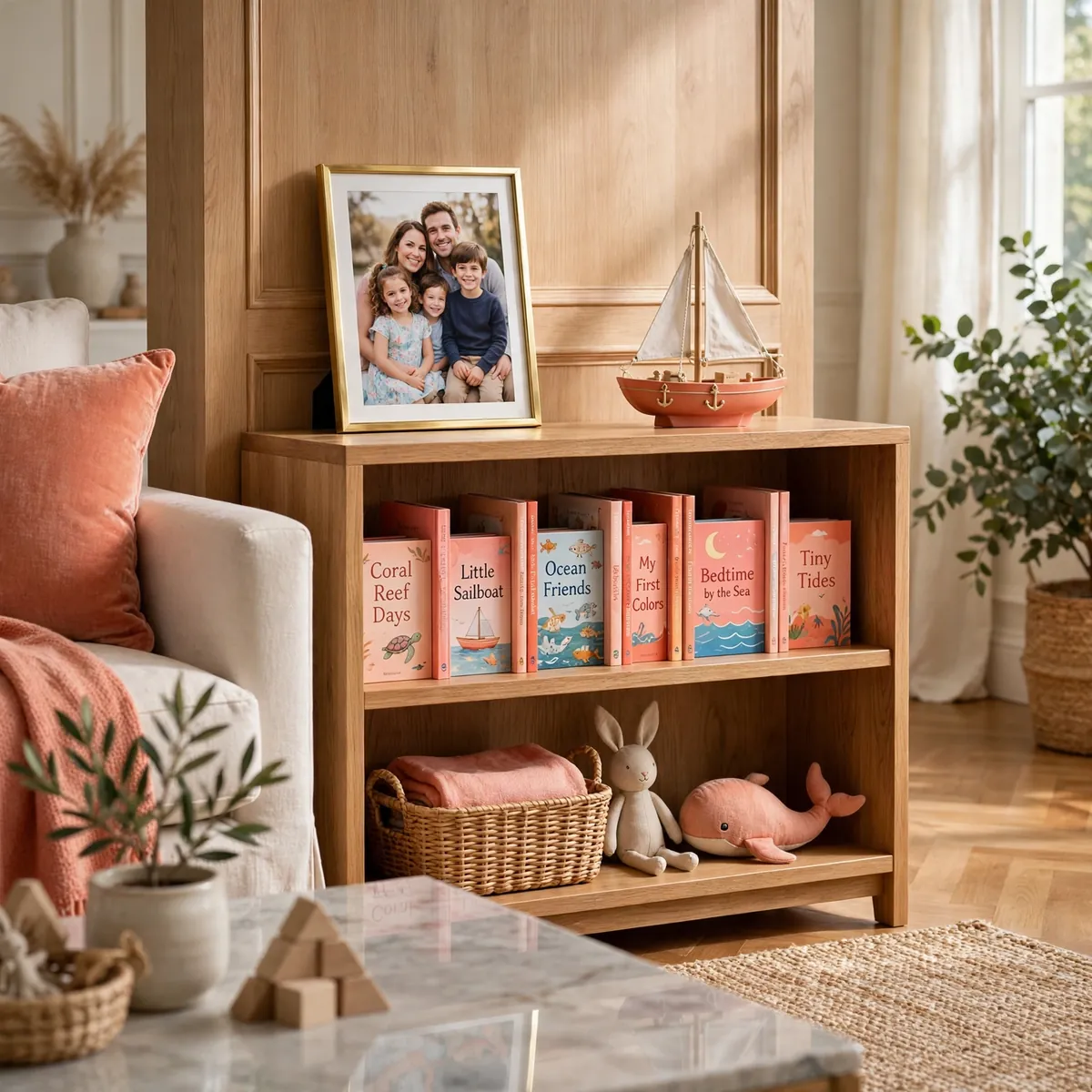
A kids’ shelf needs to be sturdy, reachable, and fun, but it can still look good in a shared living space. Put picture books face-out on the lowest shelves so little hands can choose them, and keep treasured or fragile items up high. For example, the bottom shelf holds coral-spined picture books beside a small coral toy boat, while the top shelf holds a framed family photo and a keepsake box out of reach.
Use low, open baskets for soft toys and rotate books monthly so the shelf feels fresh without buying new ones. As children grow, the same unit shifts from picture books to chapter books with only small decor changes.
Quick tips
- Face picture books outward on low shelves.
- Keep fragile items on the top shelf.
- Rotate books monthly to keep interest fresh.
11. Mix Open Shelving with Closed Cabinets Below
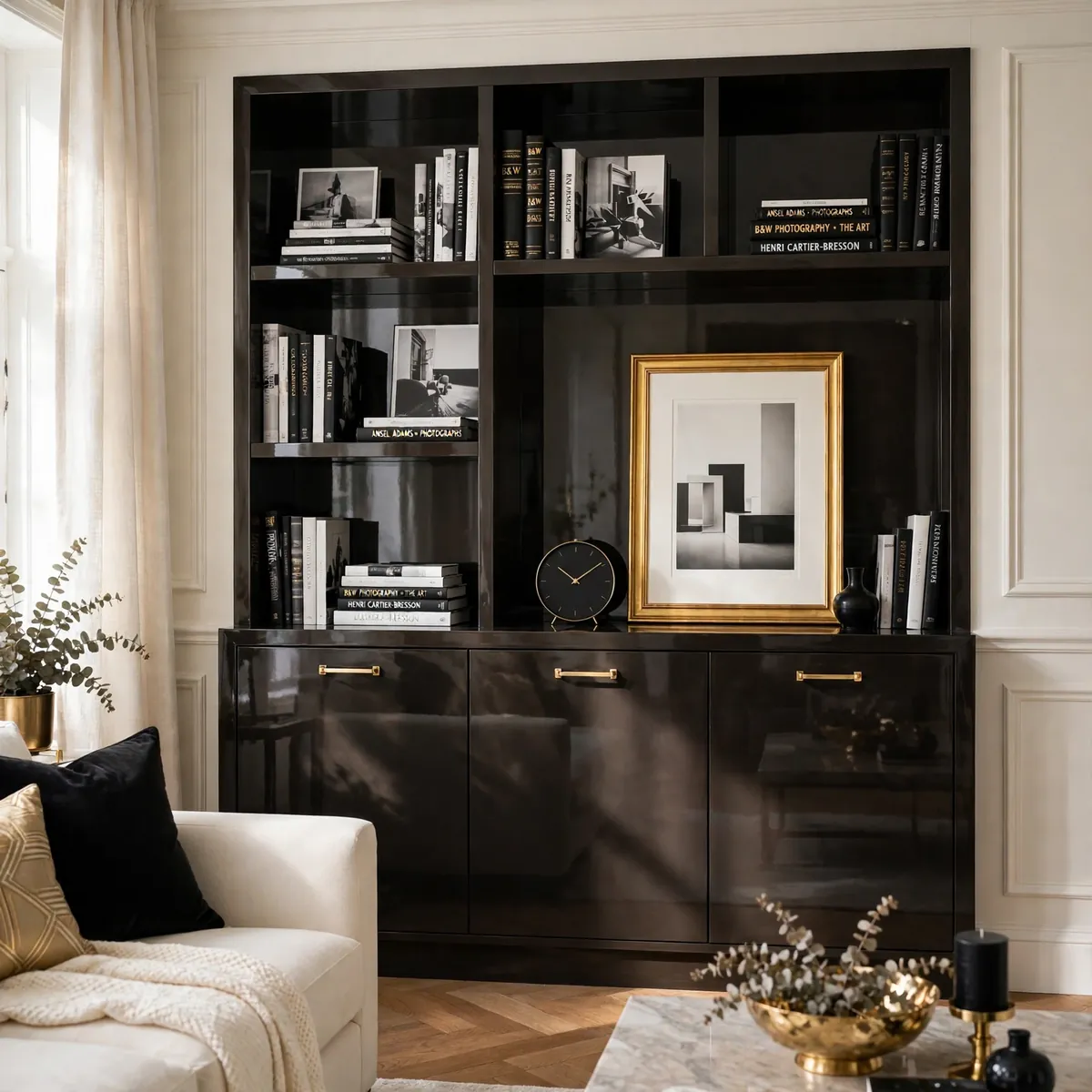
When a bookshelf feels overwhelming, the problem is often too much open storage. A unit with open shelves on top and closed cabinets below gives you the best of both: display space for books and beautiful objects, and hidden space for everything else. Style the open shelves lightly, with black-and-white photography books, a small black clock, and a gold-framed print, while board games and files live behind the cabinet doors.
This layout also grounds a tall unit visually. The solid base anchors the wall, so the open shelves above feel airy rather than top-heavy.
Quick tips
- Style open shelves lightly and leave gaps.
- Hide bulky items behind closed doors.
- Match cabinet hardware to your room metals.
12. Frame the Shelf with a Gallery Wall Above
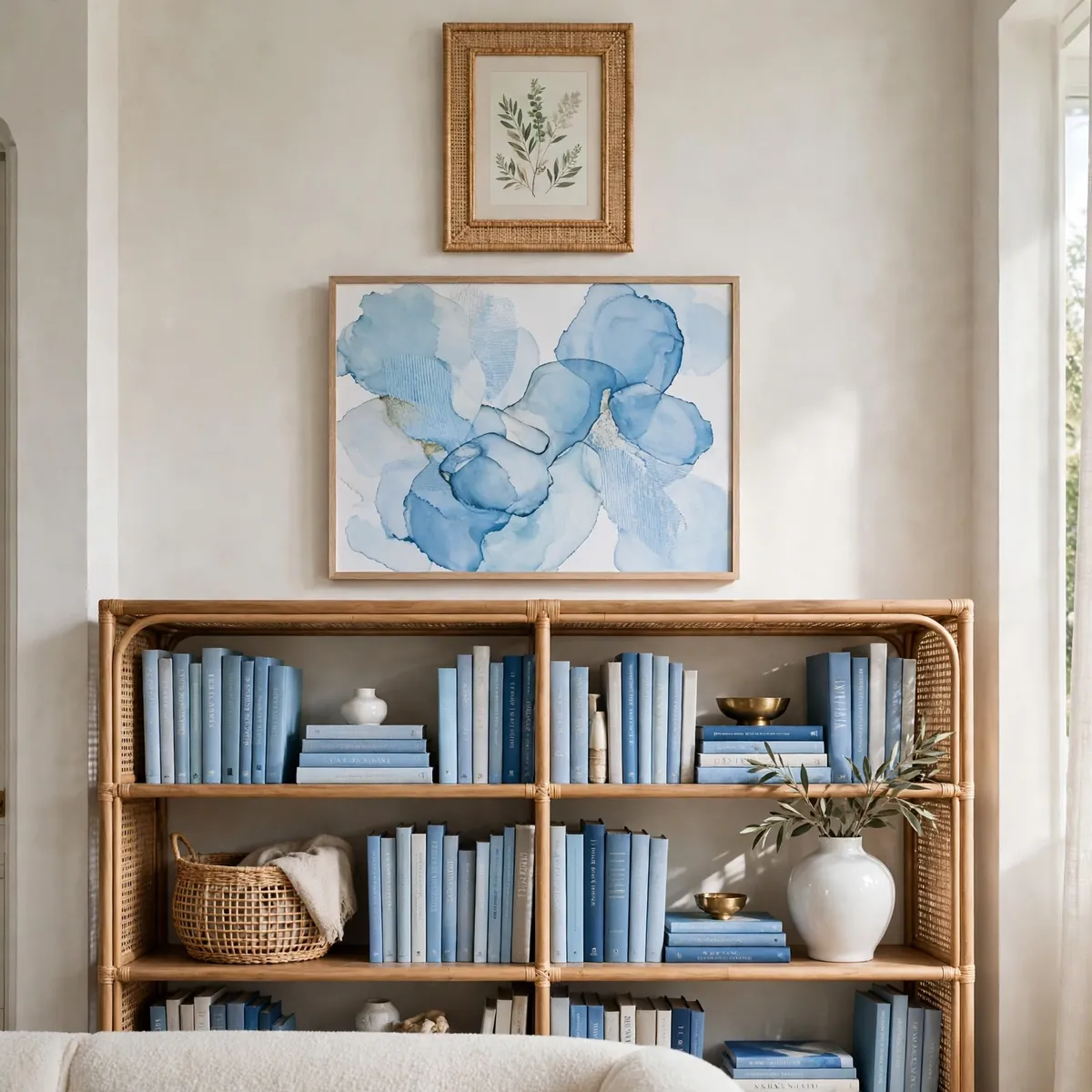
A bookshelf does not have to stand alone. Hanging two or three framed prints above it turns the shelf into part of a larger wall composition. Choose frames in one finish, such as light oak or matte black, and keep the art at the same width as the shelf or slightly narrower so the grouping feels connected.
For a calm example, hang a sky-blue abstract print and a smaller rattan-framed botanical print above a shelf styled with sky-blue book spines, a rattan basket, and a white ceramic vase. The repeated colors tie the wall and shelf together without matching exactly.
Quick tips
- Use one frame finish for all prints.
- Keep art width equal to or less than the shelf.
- Repeat one art color on the shelf below.
How do I style a bookshelf without buying anything new?
Shop your own home first. Pull books from other rooms, borrow a vase from the kitchen, add a plant cutting in a glass jar, and use framed photos you already own. Rearranging what you have often changes the shelf more than new purchases.
Should all my books face the same way?
Mostly yes, but a few horizontal stacks and one face-out book per shelf add rhythm. Keep the exceptions deliberate and spaced out, so they read as styling choices rather than mess.
How do I style a very tall bookshelf?
Work in horizontal bands rather than shelf by shelf. Repeat a color or material across each band, place heavier items low, and use one tall object, like a vase or leaning art, to bridge two shelves visually.
What color should I paint the back of my bookshelf?
A soft contrast works best: deep green behind light books, warm cream behind dark books, or the same wall color for a seamless look. Paint a test patch first and check it in daylight and lamplight.
Can I mix real and fake plants on a bookshelf?
Yes, if the fake plants look realistic and sit where real ones would struggle, such as a high, dark shelf. Keep real plants where they get light, and dust fake ones regularly so they stay convincing.
Conclusion
Great bookshelf decor ideas are less about buying perfect objects and more about editing with intention. Start with your books, add meaningful pieces in small groups, leave breathing room, and repeat a few colors so the whole unit feels connected. Try one idea from this guide today, step back, and adjust until the shelf feels like yours. A shelf that reflects your books, travels, and taste will always look better than a shelf copied from a catalogue.