Dark Moody Bathroom Ideas: The Bold Design Trend You Didn’t Know You Needed
Dark bathrooms have moved far beyond plain black walls. The most successful dark moody bathroom ideas combine rich color, warm lighting, natural materials, reflective finishes, and carefully chosen details to create a room that feels intimate rather than gloomy. Whether you prefer modern minimalism, vintage character, botanical styling, or gothic romance, a darker palette can make an everyday bathroom feel remarkably polished.
The key is balance. Charcoal tile can feel sophisticated beside warm oak. Deep green becomes brighter next to aged brass. Burgundy walls gain breathing room from pale stone. Instead of treating darkness as the entire design, use it as the backdrop for texture, light, and contrast.
Start With a Dark Palette That Has Real Depth

Black is only one option. Charcoal, espresso brown, forest green, midnight blue, deep teal, aubergine, and wine red can all create a moody foundation while giving the room more personality. Before painting every wall, look at the bathroom’s natural light and permanent finishes. A windowless room often benefits from a dark color with a warm undertone, while a bright bathroom can comfortably handle cooler charcoal or blue-black shades.
If you like nature-inspired palettes, our green bathroom ideas offer more ways to use sage, olive, and deeper greens without overwhelming the room.
Create a Luxe Nature-Inspired Shower Escape
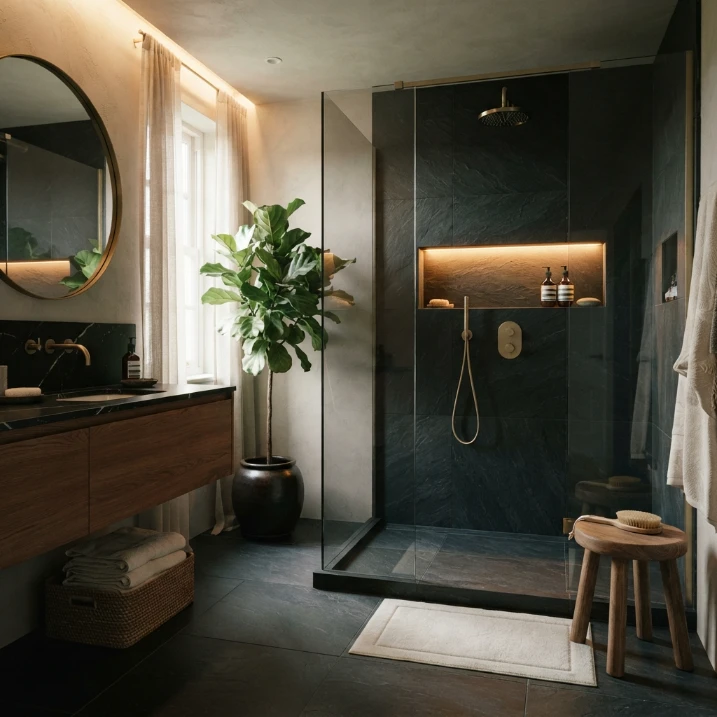
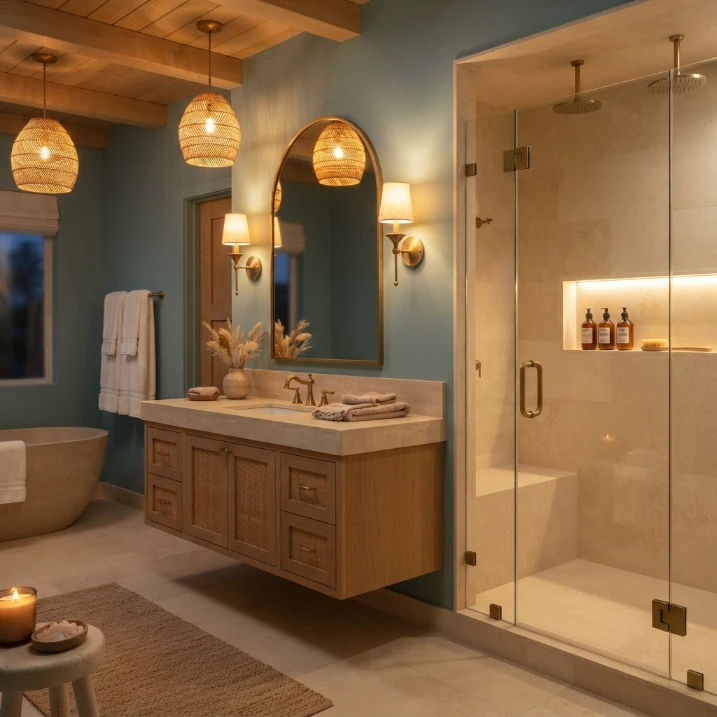
A walk-in shower is an ideal place to introduce dramatic stone. Large-format charcoal slate, dark porcelain, or stone-look tile creates a seamless backdrop, while a timber vanity or wood-look cabinetry keeps the room from becoming visually cold.
Use matte black fixtures for a quiet contemporary finish, or choose brushed brass when you want stronger contrast. A recessed shower niche with soft integrated lighting can add depth without unnecessary decor. Folded neutral towels, one sculptural stool, natural stone accessories, and a healthy plant are often enough.
Mix Industrial Character With Spa Minimalism

Industrial style works particularly well with dark moody bathroom ideas because concrete, charcoal tile, black metal, and exposed textures already carry visual weight. The challenge is preventing the bathroom from feeling harsh.
Warm wood is one of the easiest solutions. Pair a concrete-look wall with an oak vanity, bamboo shower mat, woven storage, or timber shelving. Then introduce soft towels and warm ambient lighting to balance the harder materials. Keep countertops uncluttered and storage built into the room.
Pair a Vintage Tub With Modern Dark Walls
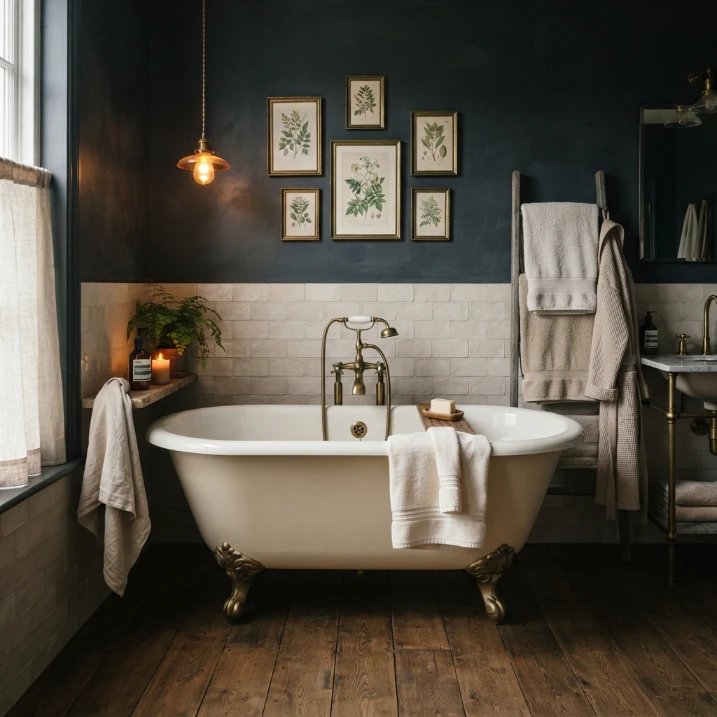
A freestanding or clawfoot tub can become a striking focal point against charcoal, deep navy, or smoky green walls. This contrast works because the traditional silhouette brings softness to an otherwise dramatic palette.
In a smaller bathroom, use a lighter tile on the lower half of the wall and dark paint above it. Cream, ivory, or softly veined stone reflects more light while preserving the mood. Finish with a simple pendant, framed artwork, and a narrow shelf for practical items.
Bring Victorian Glamour Into Deep Green Bathrooms
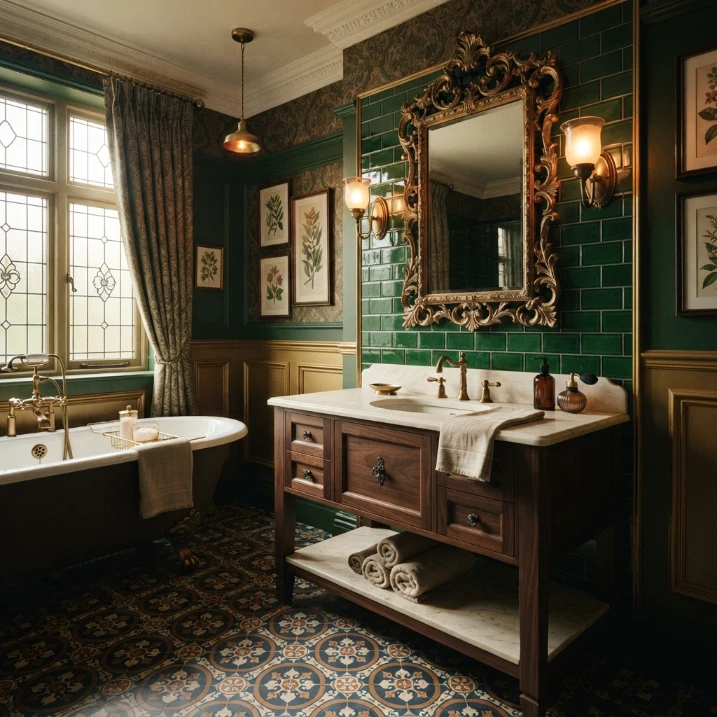
Emerald and forest green are excellent alternatives to black. They feel dramatic but still connect naturally with timber, plants, marble, and warm metallic finishes. Try glossy green subway tile behind a vanity, dark painted walls elsewhere, and antique-inspired brass fixtures.
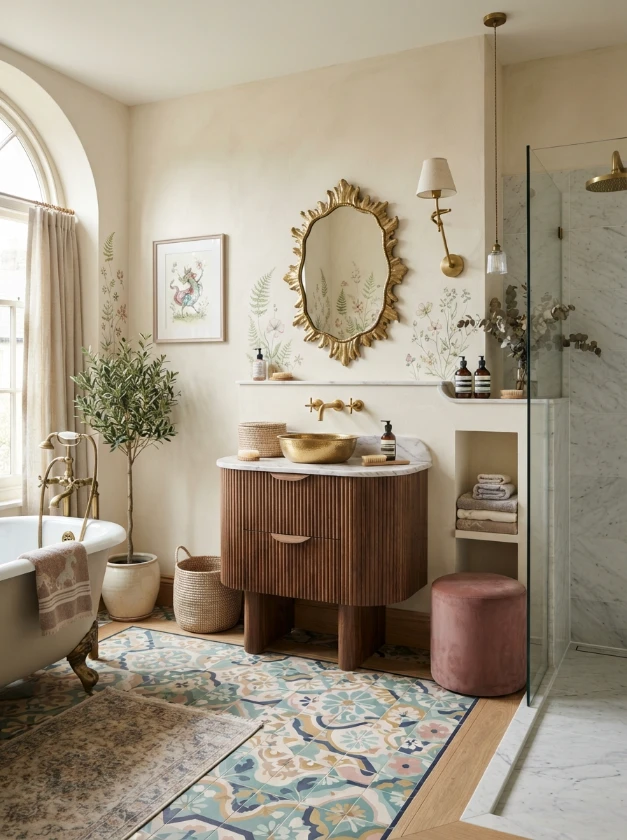
An ornate mirror or patterned floor can add vintage character, but every element does not need to be decorative. One or two traditional details against simpler cabinetry usually feels more refined.
Use Black Tile Without Making the Room Feel Flat
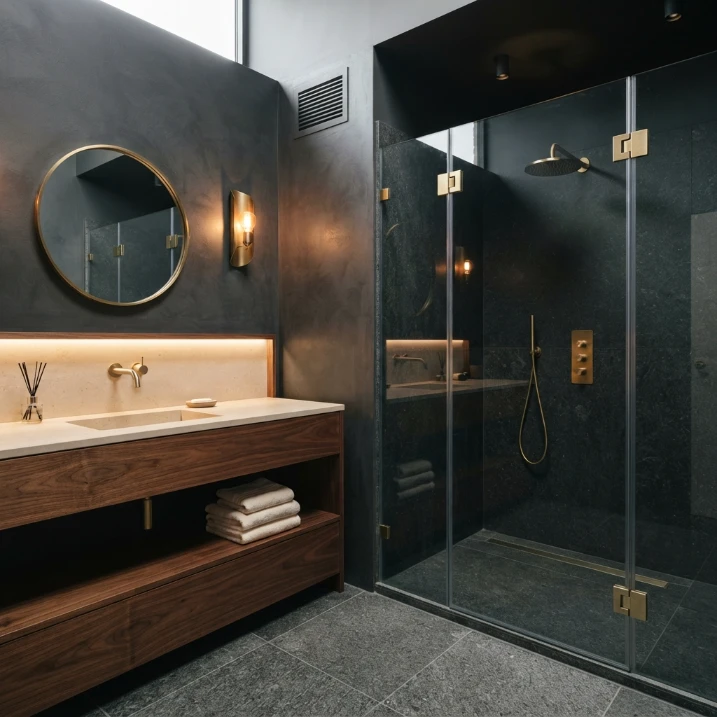
A completely black bathroom needs variation in real life. Mix finishes so the eye can distinguish individual surfaces. Matte floor tile, subtly glossy wall tile, honed stone, timber, and brushed metal each react to light differently.
For a classic high-contrast approach, see our black-and-white bathroom ideas. Even a small amount of warm white or cream can give a dark room valuable visual relief. Tonal grout produces a quieter surface, while contrasting grout emphasizes the tile pattern.
Turn the Vanity Wall Into a Small Art Gallery
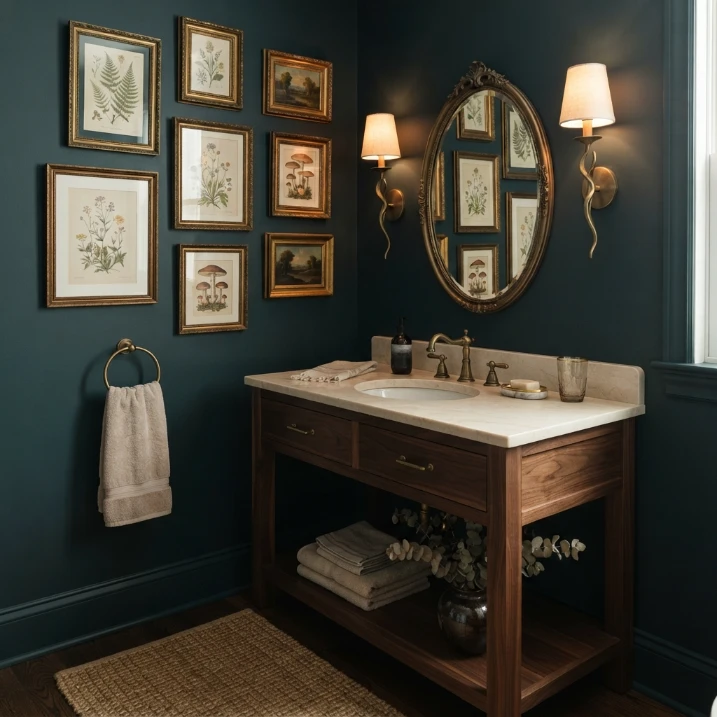
Dark paint makes artwork stand out beautifully. Deep teal, navy, or charcoal walls can provide an elegant background for vintage landscapes, botanical prints, sketches, or small abstract pieces.
Keep frames related through finish, color, or style so the wall looks curated. Brass and antique-gold frames bring warmth, while black frames create a cleaner contemporary effect. Protect moisture-sensitive pieces and avoid placing delicate art where it receives direct splashes or persistent steam.
Combine Sleek Charcoal Surfaces With Warm Wood
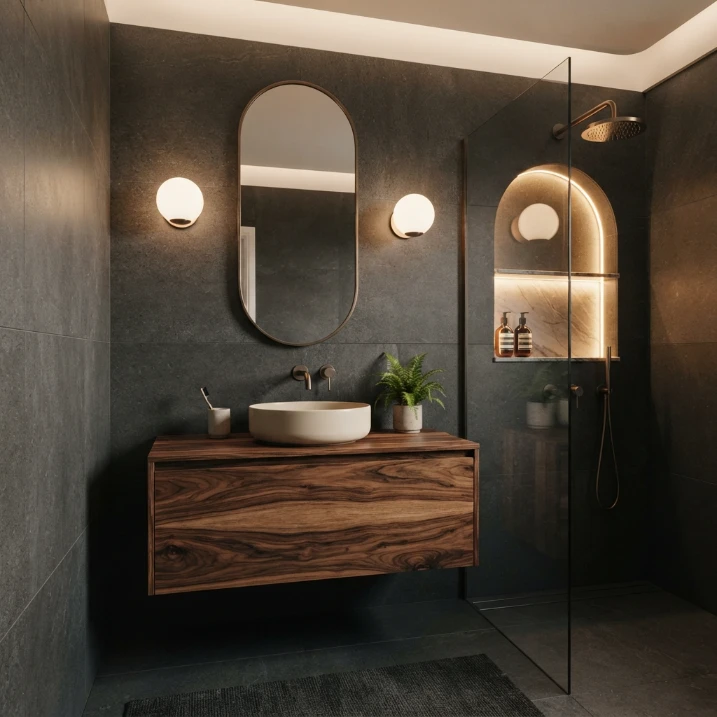
For a modern moody bathroom, few combinations are as reliable as charcoal and natural wood. Dark large-format tiles create a quiet architectural envelope, while walnut or oak cabinetry introduces warmth and visible grain.
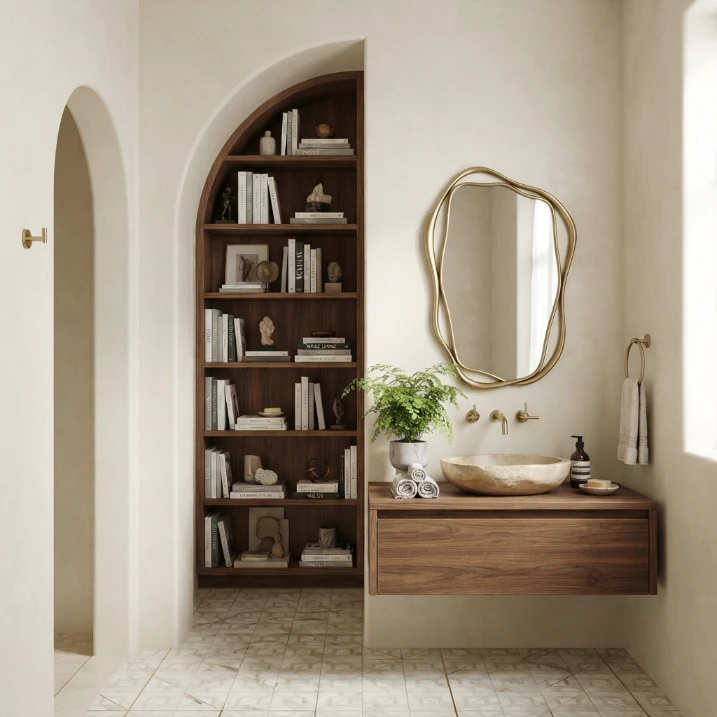
Curves can soften the look further. A rounded basin, pill-shaped mirror, arched niche, or globe light breaks up straight tile lines without making the room busy. Built-in shelving with warm indirect lighting provides storage and atmosphere at the same time.
Try Wine, Burgundy, or Aubergine Instead of Black

Moody does not have to mean neutral. Wine red, burgundy, plum, and aubergine create an enveloping look with warmer undertones than charcoal. These colors pair naturally with walnut cabinetry, aged brass, cream marble, and traditional artwork.
Wall paneling or simple millwork can make the color feel even richer because shadows emphasize the architectural detail. Keep towels and countertop accessories in warm white, stone, tan, or muted brown for controlled contrast.
Add Gothic Romance Through Shape and Lighting

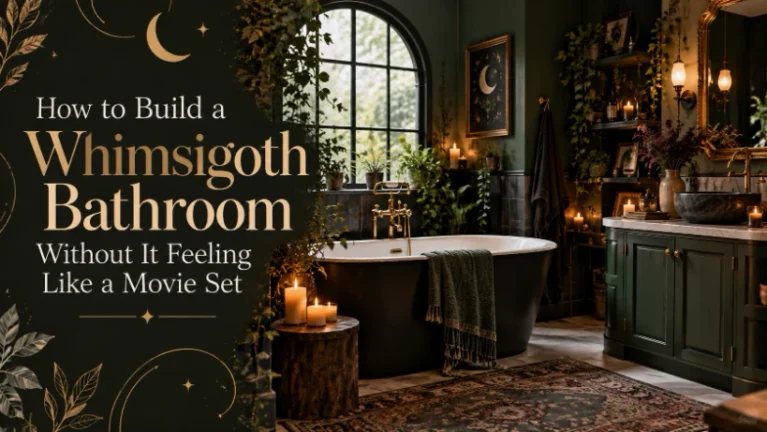
You can create a gothic influence without turning the bathroom into a themed room. Focus on architectural shapes: an arched mirror, dark cabinetry, lantern-inspired sconces, aged metal, and perhaps one dramatic piece of artwork.
Warm light is essential. Very cool bulbs can make black and charcoal finishes look stark. Combine practical vanity lighting with softer ambient illumination so the room remains functional as well as atmospheric. Use fixtures suitable for bathroom locations and follow local wet-area electrical requirements.
Let Greenery Break Up a Dark Botanical Bathroom
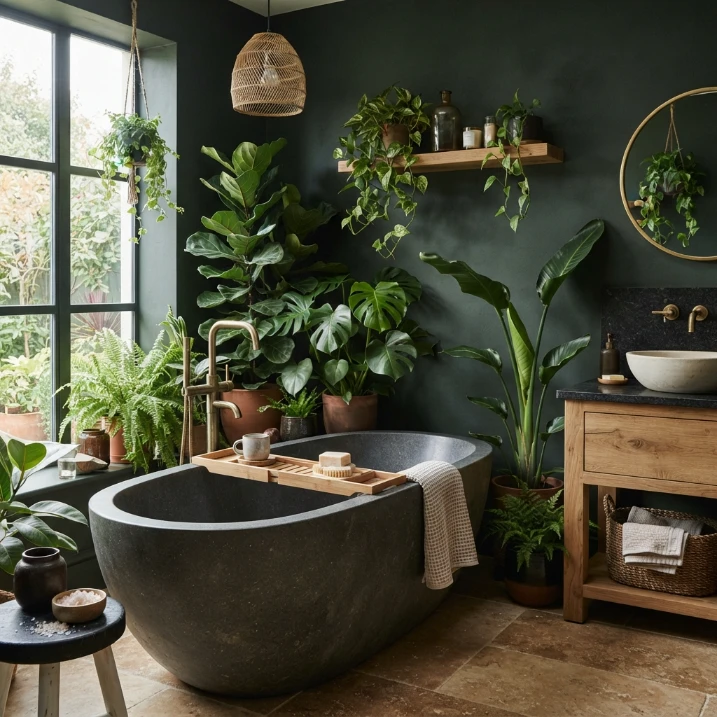
Dark walls create a strong backdrop for foliage. Instead of scattering many tiny pots around the room, use a few plants with distinct shapes: a taller floor plant where space allows, a trailing plant on a secure shelf, or one substantial plant near the vanity.
Natural materials reinforce the effect. Stone, terracotta, timber, linen, and woven storage keep a plant-filled dark bathroom grounded. Choose plants according to the actual daylight available rather than humidity alone.
Layer Lighting Instead of Depending on One Ceiling Fixture
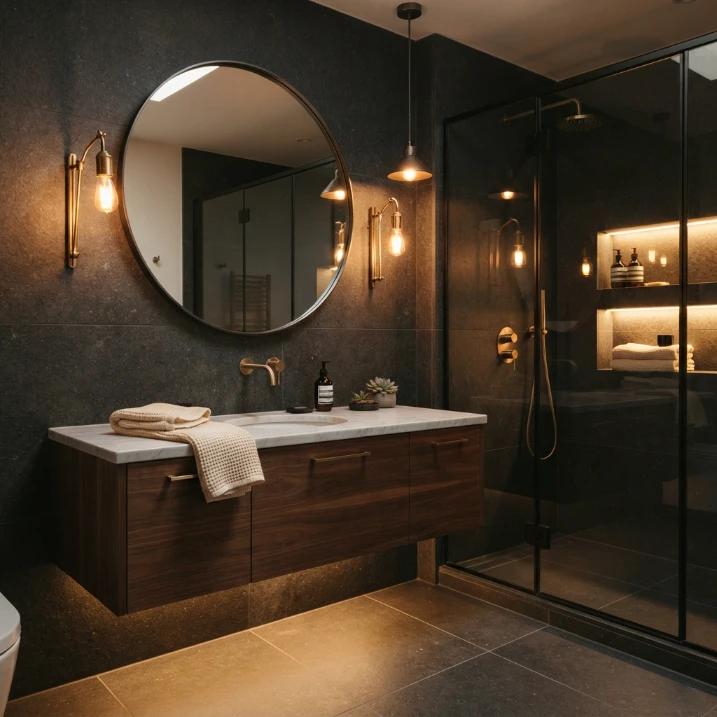
Lighting can determine whether a moody bathroom feels luxurious or simply dim. Start with useful illumination around the mirror, then add ambient light through wall sconces, pendants, concealed strips, or illuminated niches where appropriate.
Aim for a warm glow while still providing accurate light for shaving, makeup, cleaning, and daily tasks. Mirrors, polished stone, glass, and metallic finishes can help distribute light. Compatible dimmers can provide brighter functional light in the morning and softer illumination in the evening.
Make a Small Dark Bathroom Feel Intentional
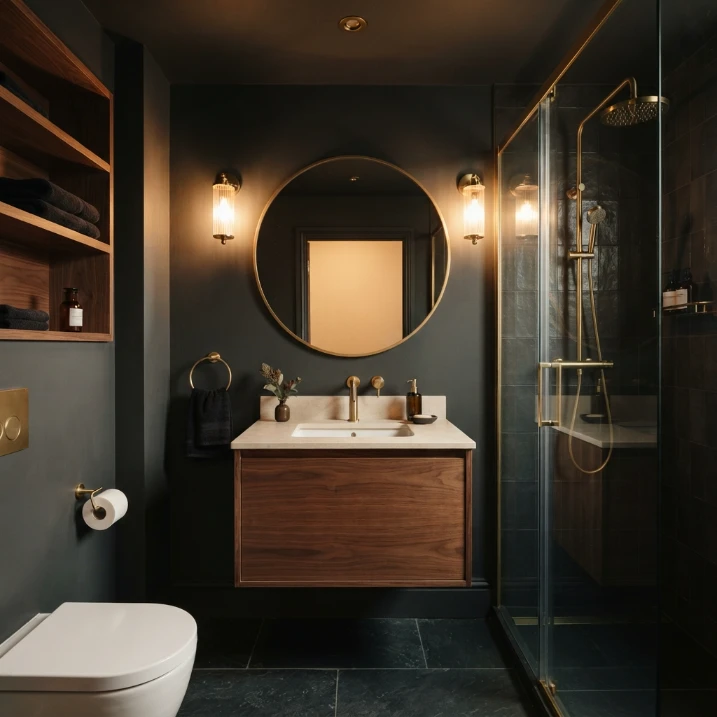
Small rooms do not automatically need pale colors. Embracing a dark palette can make a compact powder room or bathroom feel deliberately cocooning. Reduce visual interruptions by repeating one main wall color, using a floating vanity where practical, and choosing a generously sized mirror.
Keep countertop decor minimal and provide closed storage for everyday products. If the room feels too enclosed, introduce contrast through the countertop, towels, ceiling, or floor rather than abandoning the dark palette completely.
Choose Materials That Can Handle Bathroom Conditions
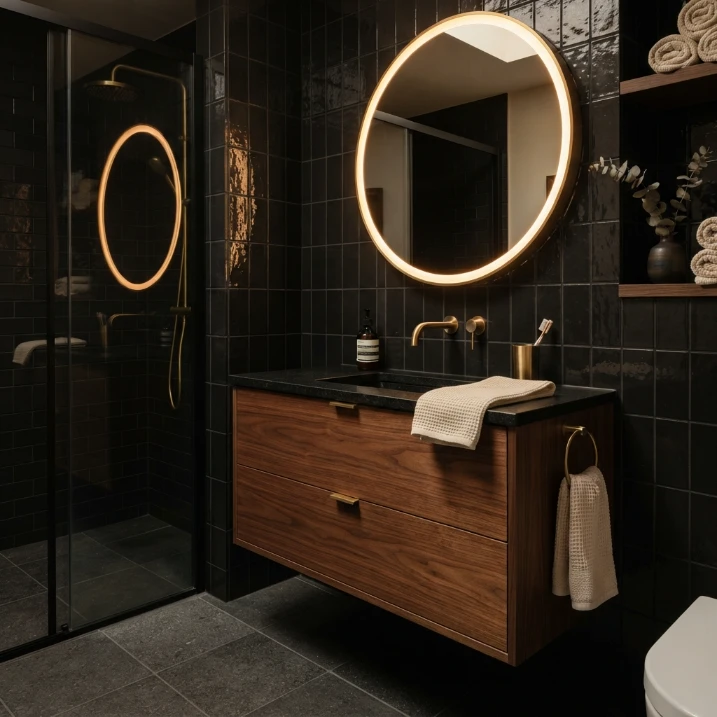
A beautiful palette still needs to work in a wet environment. Use paints intended for bathroom conditions, confirm that tile is suitable for the intended wall or floor location, and select slip-resistant flooring where required.
Natural stone may need sealing and specific cleaning products. Timber should be appropriately finished and positioned. Ventilation is equally important because persistent moisture can damage finishes regardless of color. Plan practical details first, then layer the decorative mood around them.
Final Thoughts
The strongest dark moody bathroom ideas are built around contrast rather than darkness alone. Rich walls and tile provide atmosphere, but wood, stone, brass, mirrors, greenery, textiles, and layered lighting make the room comfortable and visually balanced.
Choose one clear direction—modern, botanical, vintage, industrial, or gothic—and repeat a small set of materials throughout the room. When every finish supports the same story, a dark bathroom can feel sophisticated, relaxing, and surprisingly timeless.