How to Build Cohesive Green Bathroom Ideas Without Overwhelming the Space
Green can make a bathroom feel calm, polished, and connected to nature, but using too much of the same shade can quickly make the room feel heavy. The best green bathroom ideas create balance through thoughtful color placement, warm materials, useful lighting, and enough neutral space to let the green breathe.
You do not need to cover every wall in emerald tile to make green the defining feature. A sage vanity, a tiled shower, painted paneling, botanical accents, or a carefully chosen combination of these can create a strong look while keeping the bathroom comfortable and practical.
Start With One Green Shade That Sets the Mood

Before choosing tile, paint, or accessories, decide how you want the bathroom to feel. Sage and eucalyptus greens create a softer, airy atmosphere, while olive and moss feel earthy and organic. Forest and emerald green bring more drama and work especially well when paired with warm lighting and lighter surfaces.
Choose one green as the main color, then use neighboring tones only as accents. This prevents the room from becoming visually scattered. In a small bathroom, a muted green on one major surface can be more effective than several competing shades.
Create a Moody Botanical Shower With Texture

A shower is an ideal place to use deeper green because it already forms a natural visual zone. Rich forest-green tile, subtly textured ceramic, or botanical-inspired surfaces can turn the shower into the main feature without requiring the entire bathroom to be dark.
Balance a dramatic shower with simpler flooring and cabinetry. Brushed brass, aged bronze, or warm copper fixtures soften cool green tones, while pebble-look or pale stone flooring adds an organic spa quality. Directional lighting can also highlight textured walls and make the color appear more dimensional.
Pair Glossy Emerald Tile With Warm Gold Details
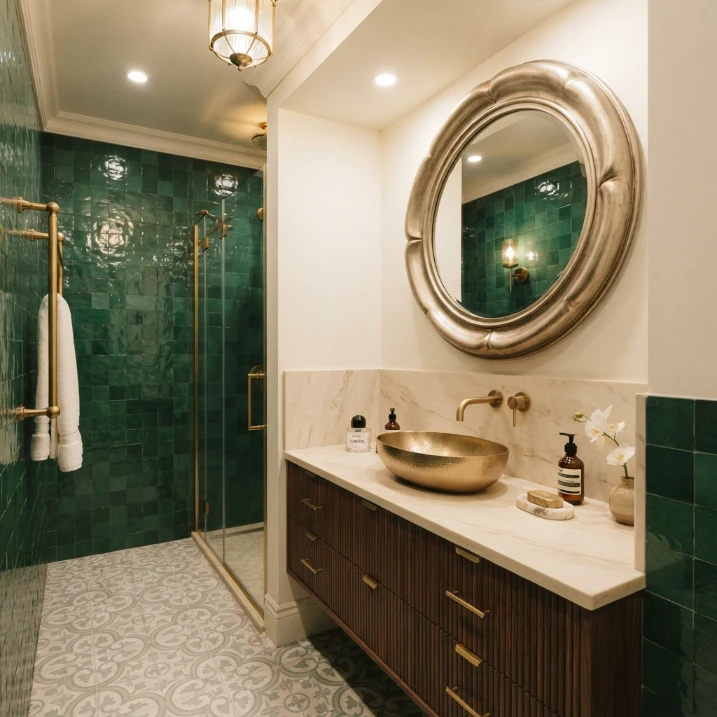
Emerald tile is one of the strongest green bathroom ideas for creating a jewel-box effect. Glossy tile reflects light, which makes saturated color feel livelier and can help a compact bathroom avoid looking flat.
Keep the metal finish consistent. A brass faucet, shower frame, mirror detail, and cabinet hardware create repetition that makes the room feel intentional. If emerald covers a large wall area, introduce white, cream, or softly patterned flooring to give the eye somewhere to rest.
Keep a Green Walk-In Shower Light and Minimal

For a cleaner modern look, limit green to the walk-in shower and keep surrounding walls pale. Vertically stacked green tiles can visually emphasize height, while clear glass allows the color to remain visible without dividing the bathroom into smaller-looking sections.
A light oak or walnut vanity brings warmth beside green tile. If the bathroom receives natural light, make the most of it with an uncluttered window or skylight. In darker rooms, warm-white sconces near the mirror and soft ceiling lighting help green retain its richness.
Use Green Paneling for Classic Character
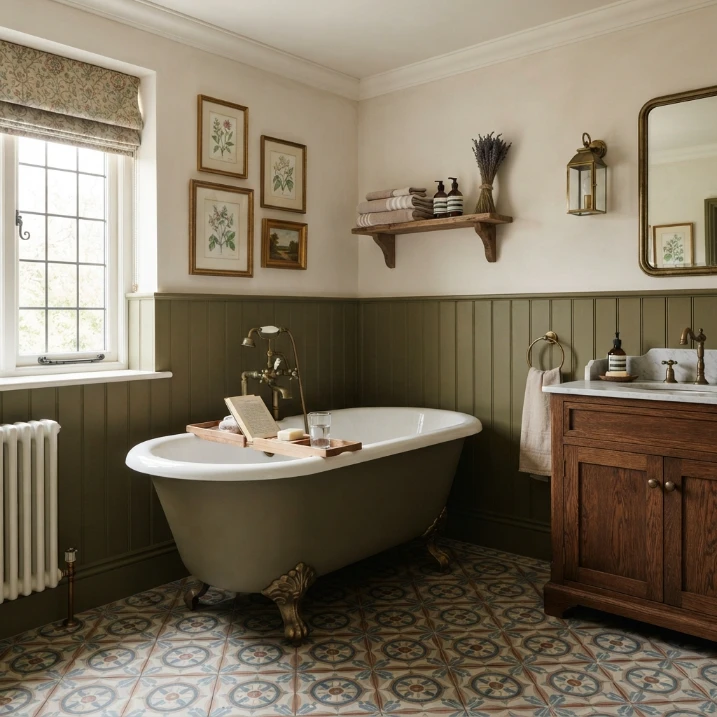
Painted paneling gives green architectural purpose rather than making it feel like color added as an afterthought. Forest, olive, or muted heritage green can work beautifully on lower wall paneling, especially with white tile or warm off-white paint above.
This approach suits traditional, cottage, and transitional bathrooms. Add a vintage-inspired vanity, framed mirror, simple artwork, or a freestanding tub, but avoid introducing too many ornate elements at once. Let the paneling provide most of the character.
Make Emerald Subway Tile Feel Modern
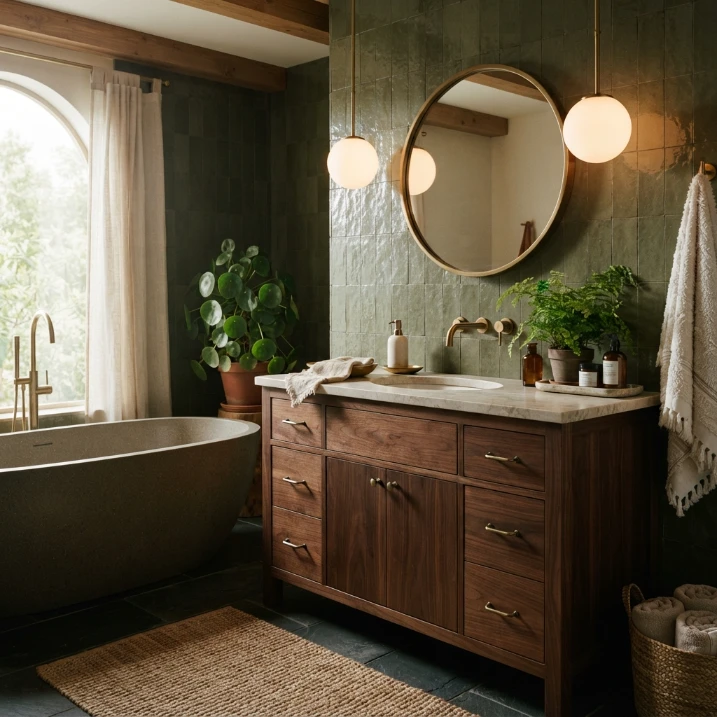
Classic subway tile becomes much more expressive in a deep green finish. A simple brick layout keeps the pattern familiar while the color provides the personality. This is particularly useful when you want a bold bathroom without relying on complicated tile patterns.
Use the same metal finish around the shower, faucet, lighting, and mirror to create continuity. A large round mirror can soften the straight grout lines, while a patterned or pale floor can prevent dark green walls from visually closing in.
Warm a Green Bathroom With Natural Wood
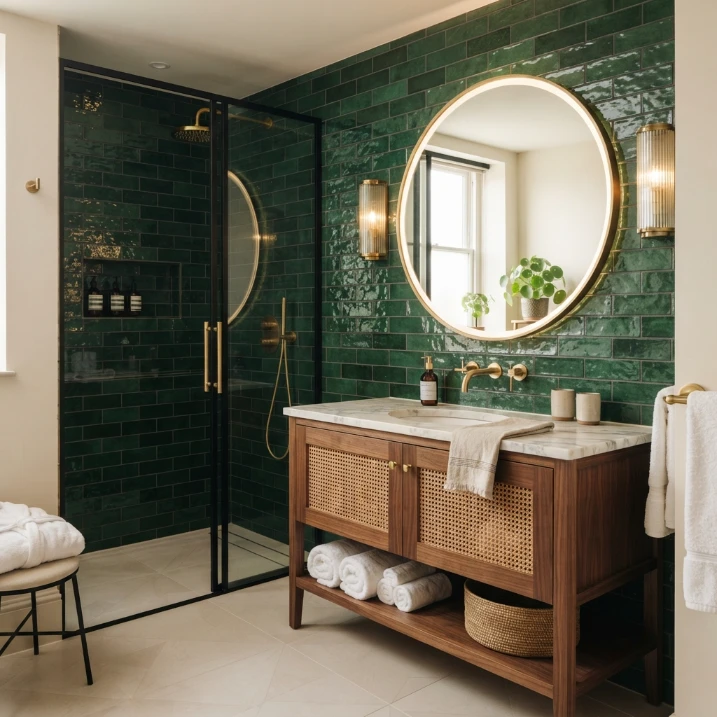
Wood is one of the easiest materials to pair with green because both colors naturally complement an earthy palette. A timber vanity can soften glossy tile and prevent a green bathroom from feeling overly formal.
For a richer look, combine dark green tile with medium or warm-toned wood, a stone countertop, and aged brass or copper details. For a lighter scheme, pair sage walls with pale oak and creamy stone. Use moisture-appropriate finishes on any real wood exposed to bathroom humidity and splashes.
Try Soft Sage for a Fresh Spa-Like Shower
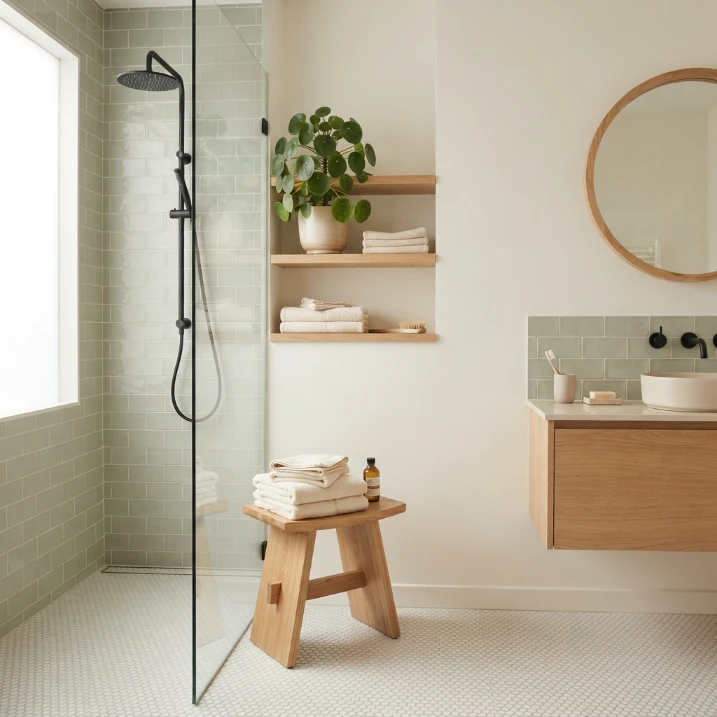
If dark green feels too intense, sage offers a calmer alternative. Sage subway tile or painted walls can introduce color while still behaving almost like a neutral. It works especially well with white flooring, light timber, and restrained black accents.
Keep accessories functional rather than filling the shower with decoration. A timber stool, neatly arranged towels, and one moisture-suitable plant can provide enough texture. The simplicity is what gives this version of a green bathroom its relaxed spa feeling.
Mix Two Greens in a Cottage-Style Bathroom

Using more than one green can work when the shades clearly belong to the same family. For example, darker green tile around a tub can sit comfortably beneath softer sage walls. The contrast adds depth without introducing an unrelated color.
Warm wood, framed artwork, a patterned shower curtain, or vintage-inspired lighting can bring cottage character. Keep patterns limited to one or two areas so the combination of color, tile, fabric, and decor does not become too busy.
Balance Soft Green Walls With Crisp White Tile
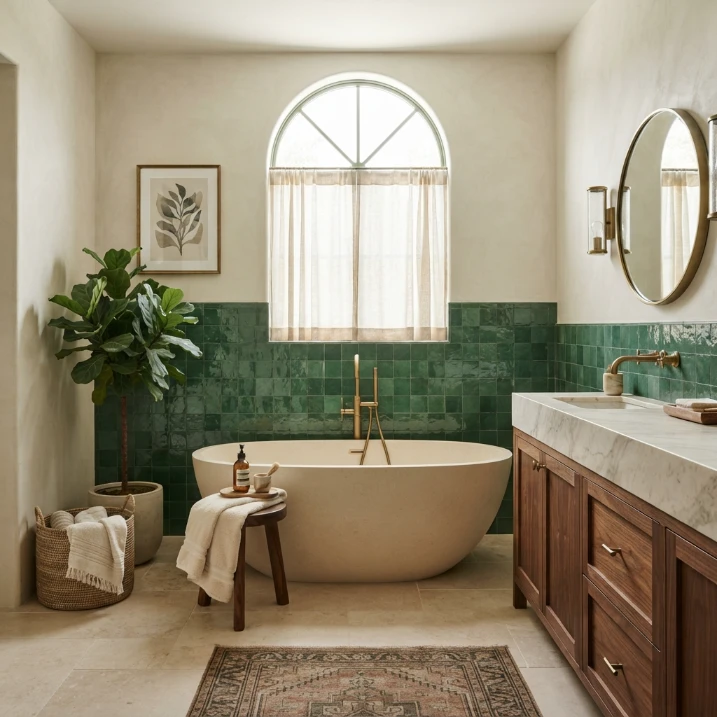
One of the safest green bathroom ideas is also one of the most versatile: muted green paint with classic white tile. White keeps the bathroom bright and gives green a clean boundary, making this combination suitable for both small and large spaces.
Warm brass can make sage or muted olive feel more inviting, while marble or marble-look flooring can connect white and green through subtle veining. Curved mirrors and rounded lighting fixtures also help soften bathrooms dominated by rectangular tile.
Build a Sunlit Green Tub Nook
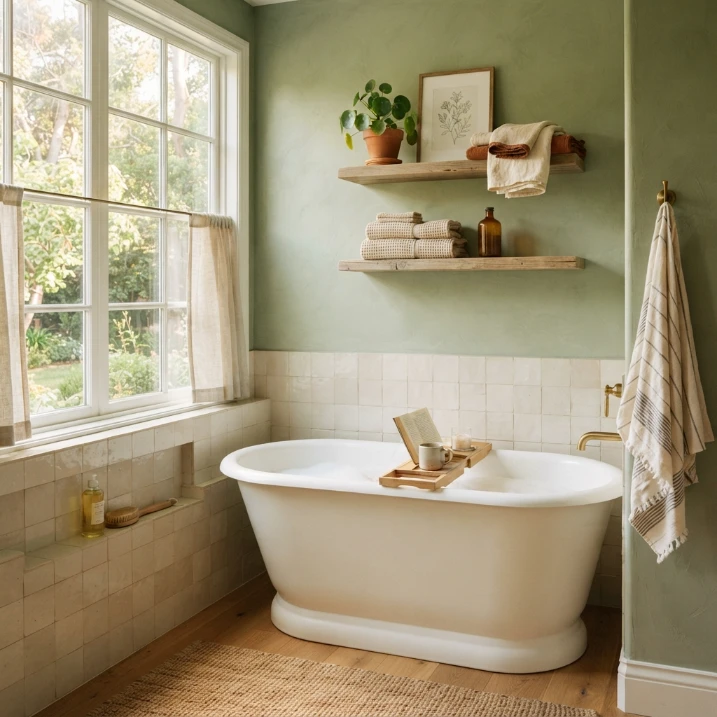
A bathtub nook can carry a stronger green treatment without requiring a full-room commitment. Soft green walls around the tub, cream tile, timber shelving, and botanical artwork create a comfortable retreat that feels layered rather than saturated.
Use open shelves carefully. A few folded towels, a small plant, bath essentials, and one framed piece are usually enough. Leaving some shelf space empty keeps the nook calm and makes everyday cleaning easier.
Add Plants Without Turning the Bathroom Into a Jungle
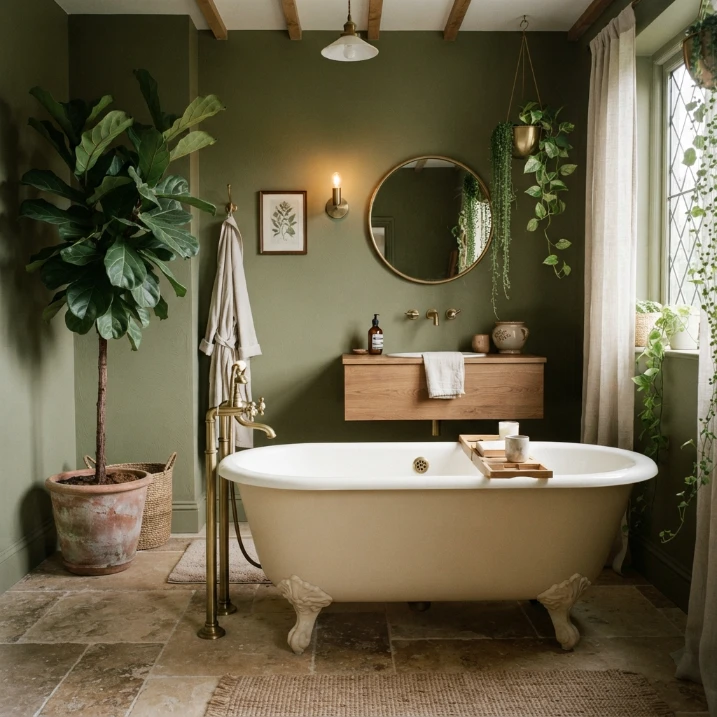
Plants reinforce a green palette, but they should support the design rather than dominate it. One larger plant or a couple of well-positioned trailing plants often look more polished than many small pots scattered around the room.
Choose plants according to the bathroom’s actual light and temperature conditions. Humidity alone does not make every plant suitable for a bathroom. If natural light is limited, botanical artwork or patterned textiles can provide a similar visual connection to nature without maintenance concerns.
Use Lighting to Control How Green Feels

Green changes noticeably under different lighting. Cool, harsh light can make some greens appear flat or clinical, while warmer light often brings out their earthy undertones. Natural daylight is particularly flattering to sage, olive, and emerald surfaces.
Layer general ceiling lighting with useful mirror lighting and, where appropriate, softer accent lighting. In a dark green bathroom, illuminate important surfaces instead of relying on a single ceiling fixture. Good lighting keeps a moody palette sophisticated rather than gloomy.
Repeat Materials Instead of Adding More Colors
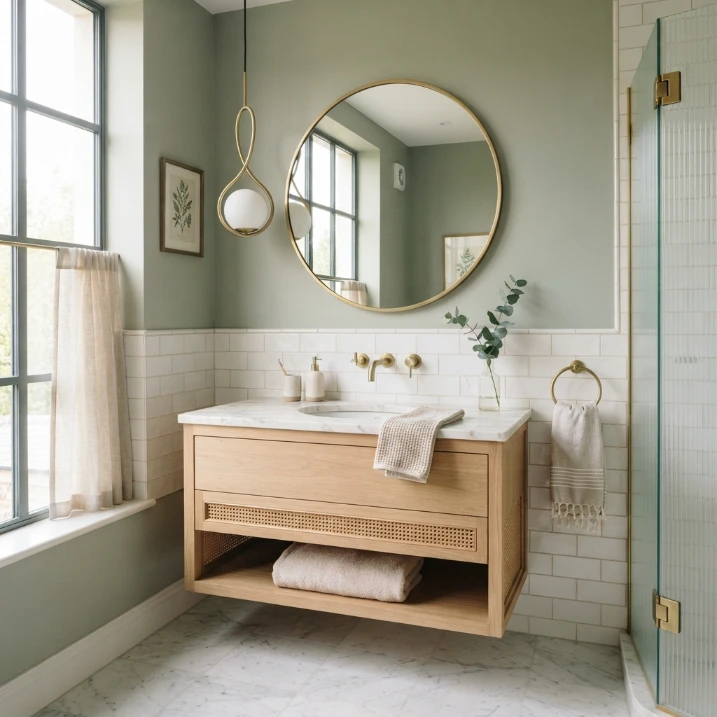
When a bathroom already contains a strong green, cohesion usually comes from repetition rather than additional color. Repeat the same timber tone, metal finish, stone, or tile shape in several places. These small connections make separate elements feel like part of one design.
A simple formula is green + warm neutral + natural material + one metal finish. For example, emerald tile, creamy walls, walnut cabinetry, and aged brass create enough variation without making the room feel overloaded.
Final Thoughts
The most successful green bathroom ideas are not necessarily the ones that use the most green. They are the ones that give the color a clear role and balance it with materials that add warmth, contrast, and breathing room.
Choose your main shade first, decide where it will have the greatest impact, and repeat a small selection of finishes throughout the bathroom. Whether you prefer soft sage, earthy olive, or dramatic emerald, a controlled palette will make the finished space feel cohesive, comfortable, and thoughtfully designed.