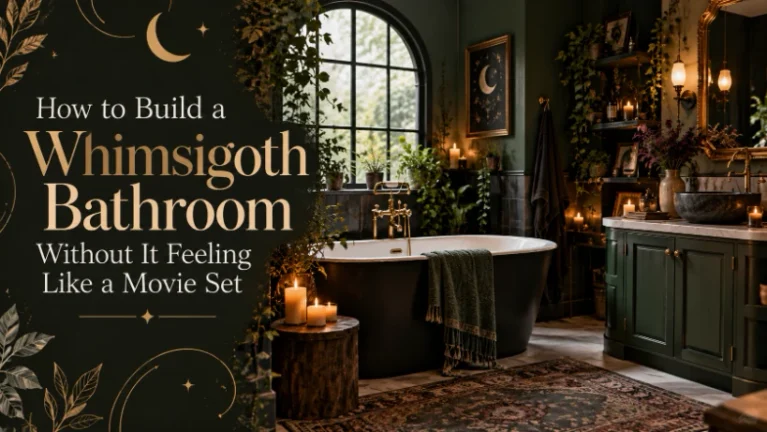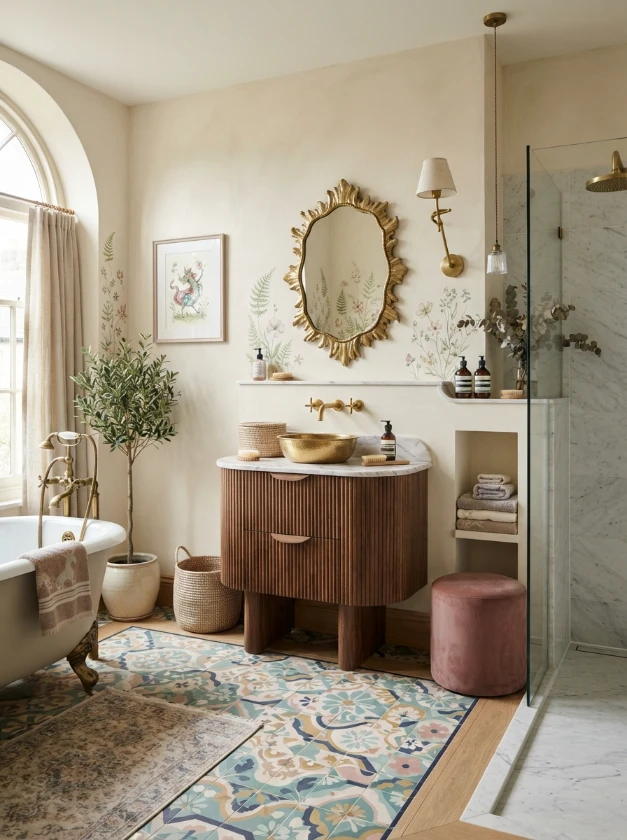
The Exact Modern Farmhouse Bathroom Details That Make Homes Look Pinterest-Perfect
The best farmhouse bathroom ideas are not built around one predictable feature. A beautiful modern farmhouse bathroom feels collected, comfortable, and practical because several small details work together. Warm wood softens crisp tile, simple black or aged-metal fixtures add definition, and vintage-inspired pieces bring character without making the room feel dated. Whether you are doing a full farmhouse bathroom remodel or a weekend refresh, the same details decide whether it feels current or dated.
You also do not need a large bathroom or a complete renovation to get the look. A thoughtful vanity, better lighting, a restrained material palette, or a few useful storage pieces can shift an ordinary bathroom toward farmhouse style. The goal is warmth and personality with enough clean structure to keep everything feeling current.
What Makes Modern Farmhouse Bathroom Ideas Feel Current
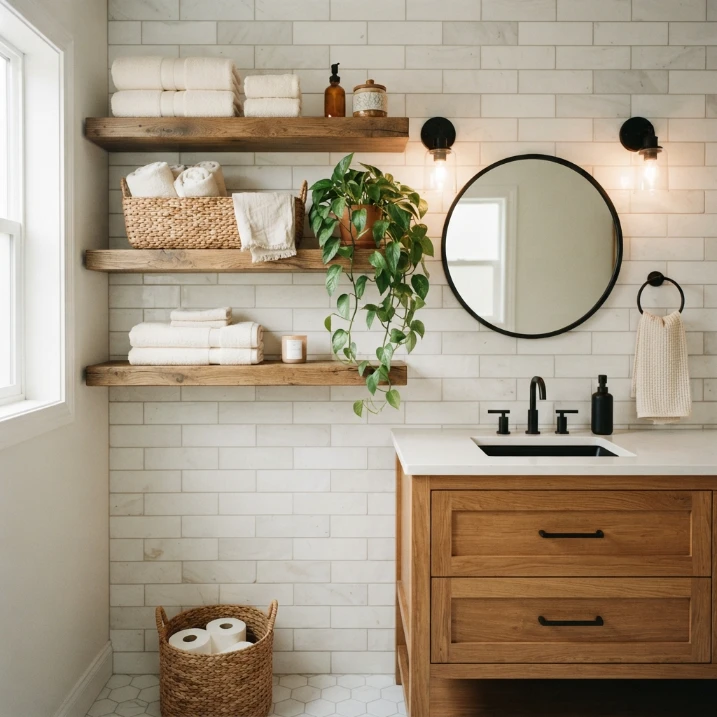
Modern farmhouse style works best when rustic details are balanced by cleaner surfaces. Instead of filling the room with signs, distressed accessories, and decorative objects, start with materials that already have character: oak, stone, ceramic tile, linen, woven fibers, and metal.
Choose two or three finishes and repeat them. For example, a warm oak vanity can relate to floating shelves, while matte black appears again in the faucet, mirror frame, and sconces. Repetition makes the bathroom feel designed rather than assembled from unrelated trends.
- Warm wood: oak or walnut for the vanity and one more touch, such as shelves
- One light neutral: warm white, greige, or pale mushroom for walls and tile
- One metal: matte black or aged brass, repeated across fixtures
- One natural texture: linen, cotton, or woven fibers for towels and baskets
Pair Warm Wood With Crisp Modern Surfaces

Wood is one of the easiest ways to give a farmhouse bathroom warmth. A natural oak, walnut, or reclaimed-look vanity can soften white walls and hard bathroom surfaces immediately. Keep the grain visible rather than choosing a heavily painted or artificially distressed finish.
Balance the wood with smoother materials such as white quartz, porcelain, clear shower glass, or simple ceramic tile. This contrast is what keeps farmhouse style from becoming too rustic. If you prefer an earthier palette, our beige and brown bathroom ideas show how warm neutrals can create depth without relying on bright color.
Use Shiplap as Texture, Not a Theme
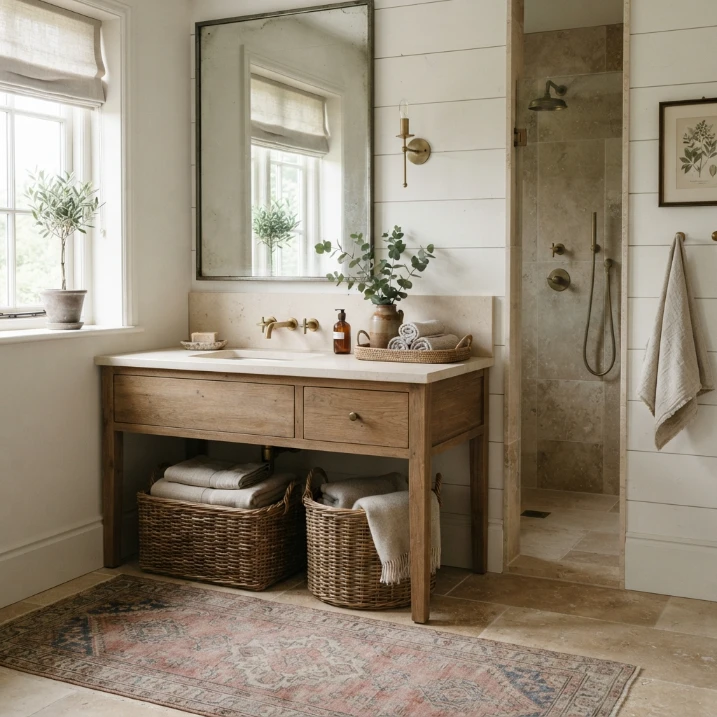
Shiplap can still look fresh when it is used with restraint. Consider it on one dry-zone wall, behind a vanity, or above tile wainscoting rather than covering every surface. Warm white, soft greige, muted sage, and pale mushroom tones can feel softer than stark white.
Bathrooms are humid spaces, so material choice matters. In damp areas, choose moisture-rated options — such as PVC shiplap or sealed panels rated for humid rooms — and keep real wood shiplap to dry zones. In direct wet zones, properly installed tile or another approved water-resistant surface is usually the more practical choice. Keep shiplap to one accent wall and never inside the shower splash zone — moisture-resistant PVC or shiplap-look tile plus good ventilation keeps it safe.
Let Classic Tile Provide a Clean Foundation
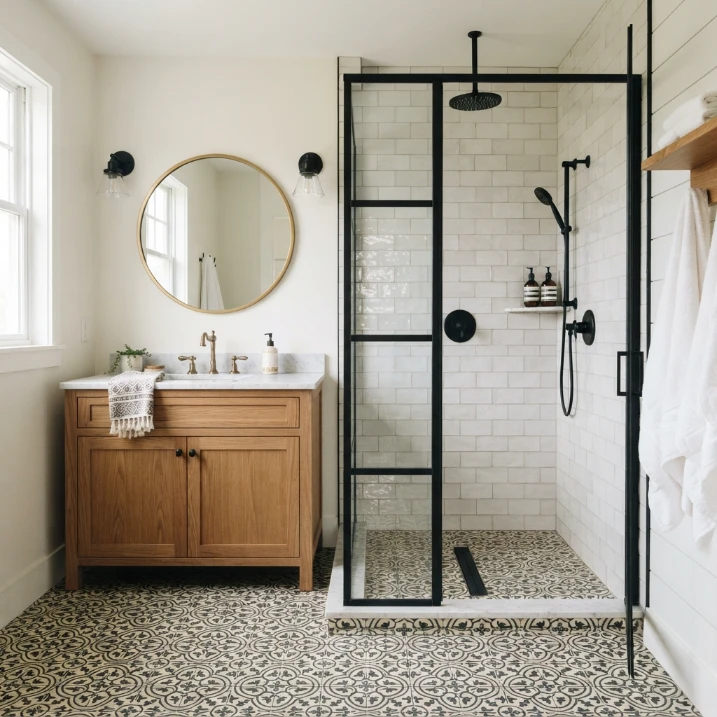
Subway tile, small hexagons, checkerboard patterns, and understated stone-look tile all fit naturally into farmhouse bathrooms. The trick is choosing one pattern to lead. If the floor is highly patterned, keep shower walls quieter. If the shower tile has strong variation, use a simpler floor.
Grout changes the result more than many homeowners expect. A close tonal match produces a calmer surface, while darker contrasting grout emphasizes every line. For a graphic farmhouse scheme, see how black-and-white bathrooms use contrast without needing excessive decoration. On the walls, try elongated subway tile, a vertical stack layout, or zellige-look tile for a soft handmade texture. For the shower floor, hex or penny tile adds grip and a classic farmhouse pattern.
Choose a Vanity That Looks Like Furniture
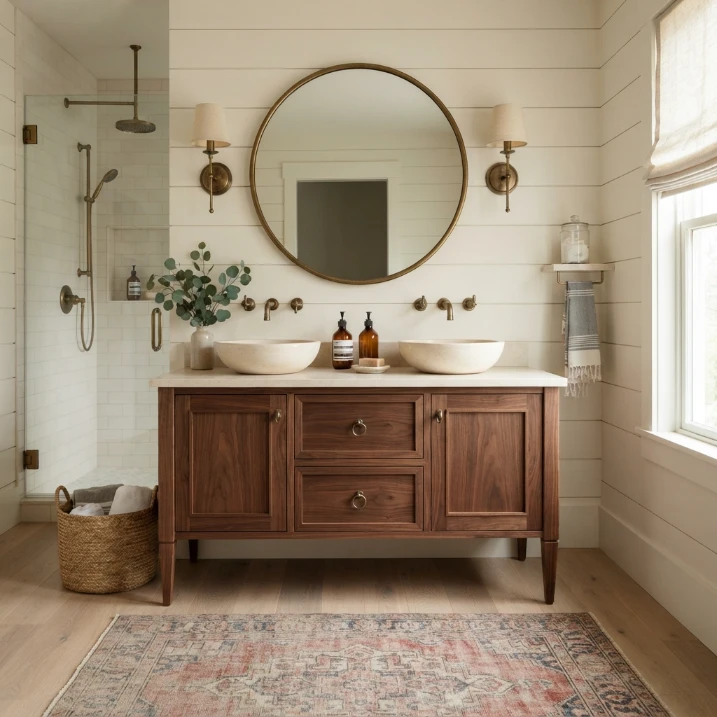
A furniture-style vanity can become the visual anchor of the room. Look for visible wood grain, inset doors, simple shaker fronts, turned legs, or a softly aged finish. Pairing traditional cabinetry with a streamlined countertop and modern plumbing fixtures creates the old-meets-new balance that defines contemporary farmhouse style.
In a small bathroom, avoid an oversized vanity just for visual impact. A narrower piece with drawers can be more useful than open cabinetry because everyday toiletries stay hidden. Good farmhouse design should feel relaxed, but it should still make daily routines easier. Vanity styles worth considering include cabinet-style and furniture-style pieces, floating vanities that open up the floor, and double-sink designs for shared bathrooms. Pair them with an undermount sink for easy cleaning, a rectangular vessel for a little visual interest, or a trough sink when the bath is shared.
Repeat Matte Black or Aged Metal Finishes

Matte black gives pale farmhouse bathrooms a crisp outline, while aged brass, bronze, and brushed nickel can create a softer vintage effect. Whichever direction you choose, repeat the finish enough to make it intentional. Faucets, shower trim, towel hooks, mirrors, and light fixtures are natural places to create continuity.
You do not have to match every metal perfectly. Two finishes can work together when each appears more than once and one clearly dominates. This feels more collected than using a different finish on every fixture. Follow the two-finish rule: pick two complementary finishes such as matte black and aged brass, repeat each at least twice, and keep everything else neutral.
Add Vintage Character Through One Statement Piece
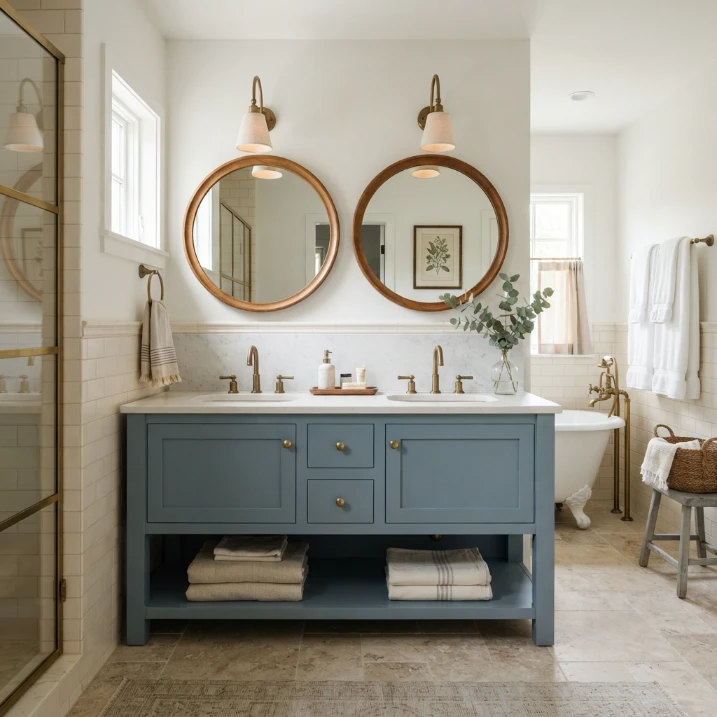
Farmhouse bathrooms benefit from something that looks as though it has a history. An antique-style mirror, vintage-inspired sconce, small wooden stool, framed landscape, or traditional rug can add that layer without turning the bathroom into a themed room.
One strong vintage element is usually more effective than many small nostalgic accessories. Let it stand against a simpler background so its shape, patina, or craftsmanship becomes noticeable.
Make Open Shelves Useful as Well as Beautiful

Chunky wood shelves are a farmhouse favorite, but they look best when they have a job to do. Use them for folded hand towels, attractive containers, a small plant, spare toiletries, or a basket. Leave some empty space between groups instead of filling the entire shelf.
Place frequently used items within easy reach and decorative objects higher up. In a compact room, shallow shelving above the toilet can provide storage without taking valuable floor area. Style them with baskets for linens, jars for dry goods only, and one small plant — and run the exhaust fan, since open shelves and steam are uneasy friends.
Try a Moody Farmhouse Color Palette
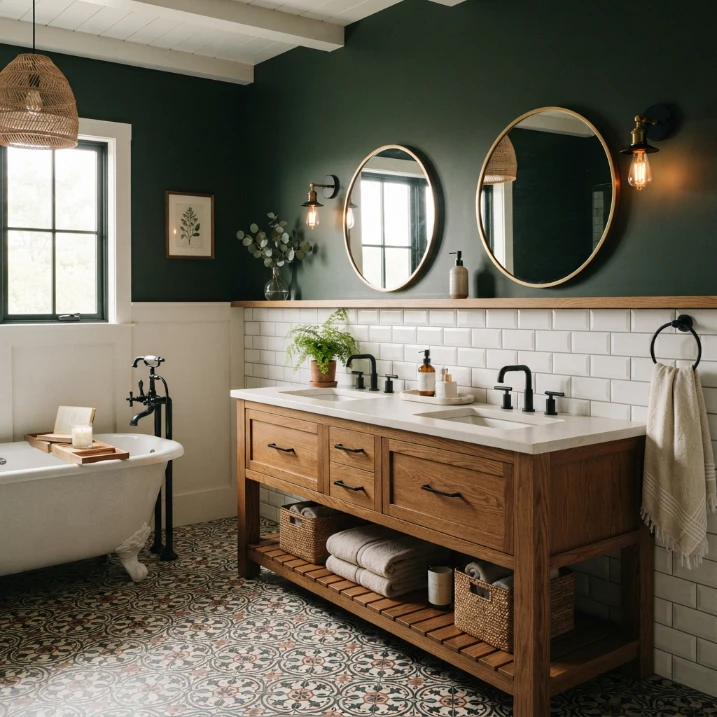
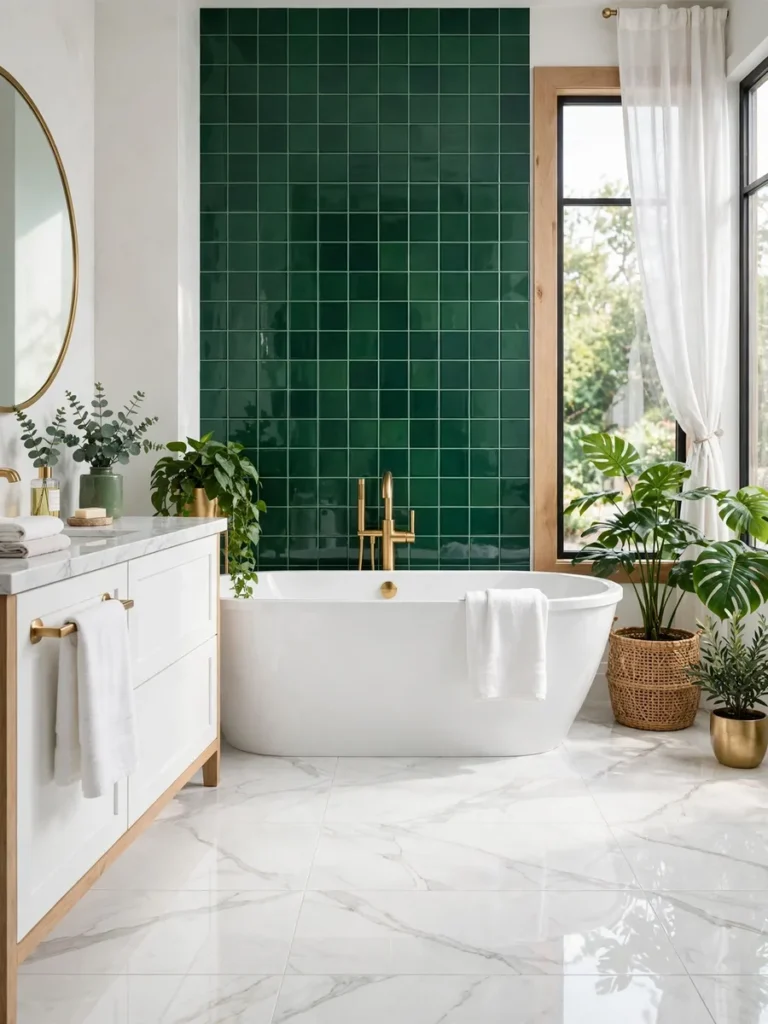
Farmhouse does not have to mean an all-white bathroom. Forest green, charcoal, smoky blue, deep taupe, and muted brown can create a richer interpretation. Dark color works especially well above white tile or behind a warm wood vanity because the lighter surfaces prevent the room from feeling visually heavy.
If you want color without the drama of a dark room, start with one dark wall or a deep-toned wainscot and keep the rest of the room light. You can find more palette inspiration in these green bathroom ideas, where natural tones and bathroom-friendly finishes work together. A reliable paint shortlist for the farmhouse look is warm white, greige, taupe, sage, dusty blue, or muted clay.
Bring in Soft Color With a Painted Vanity
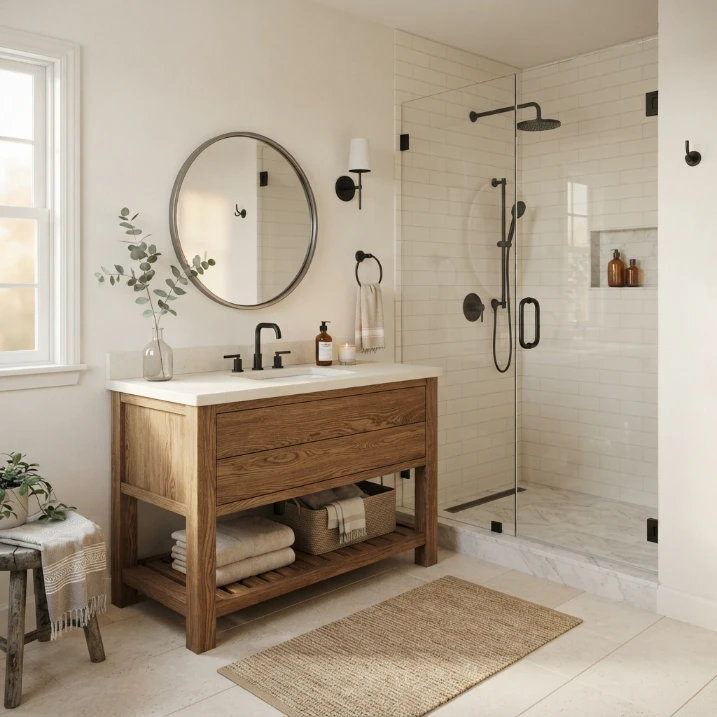
Dusty blue, sage, putty, and muted olive cabinetry can give a farmhouse bathroom personality while staying easy to coordinate. Keep surrounding walls and tile fairly neutral so the vanity becomes the deliberate color moment.
Wood-framed mirrors, simple ceramic accessories, and restrained black or brass hardware can tie the colored cabinetry back to the farmhouse palette. This is also a practical update when replacing every bathroom finish is not realistic.
Use Smart Storage in a Small Farmhouse Bathroom
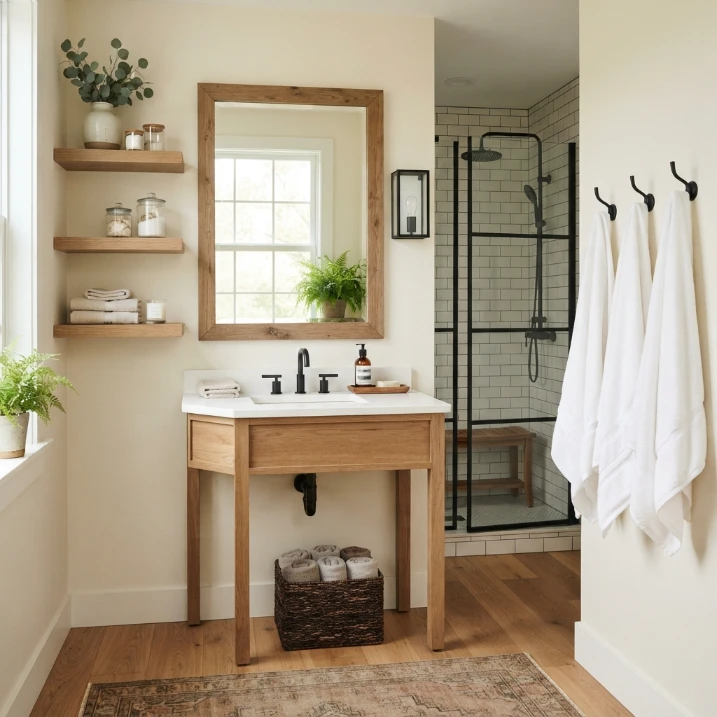
Small farmhouse bathroom ideas should prioritize visual breathing room. A wall-mounted medicine cabinet, narrow vanity, recessed niche, hooks, and one or two shelves can often provide more useful storage than several decorative baskets scattered around the room.
Keep walls relatively light if natural light is limited, and use a generously sized mirror to reflect what light you have. A clear glass shower enclosure can also maintain longer sight lines. The farmhouse character can then come from wood, hardware, textiles, and tile rather than bulky furniture. In tight footprints, choose a wall-mounted or shallow-depth vanity, add vertical over-toilet storage, and hang the largest mirror the wall allows. Swap the shower curtain for a glass panel to keep sightlines open.
Make the Bathtub a Calm Focal Point
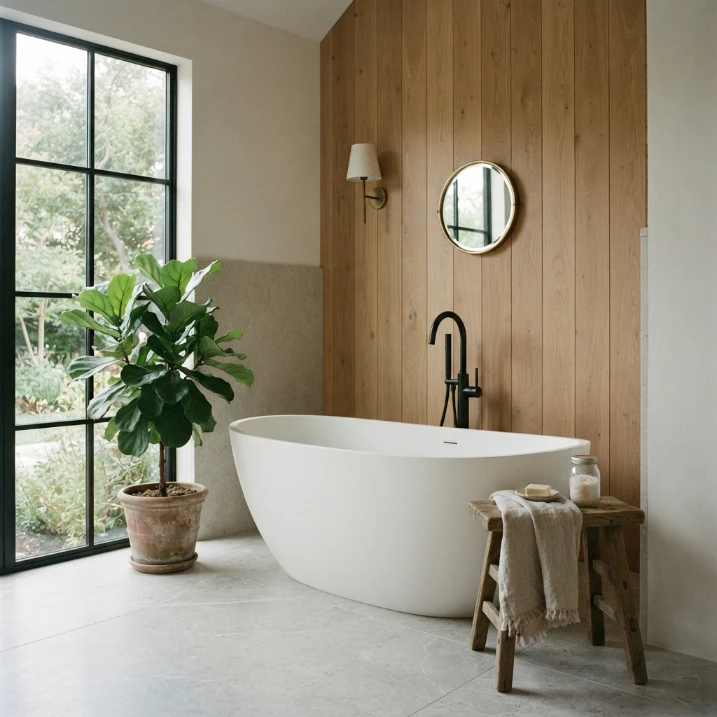
A freestanding tub naturally suits farmhouse style because its sculptural shape breaks up straight cabinetry and tile lines. Traditional clawfoot tubs lean vintage, while a simple oval tub creates a cleaner modern farmhouse look.
Give the tub enough visual space rather than surrounding it with too many accessories. A wooden stool, wall sconce, small artwork, or single plant may be all it needs. Always plan clearances and plumbing around function first.
Use Lighting to Make Rustic Materials Feel Polished
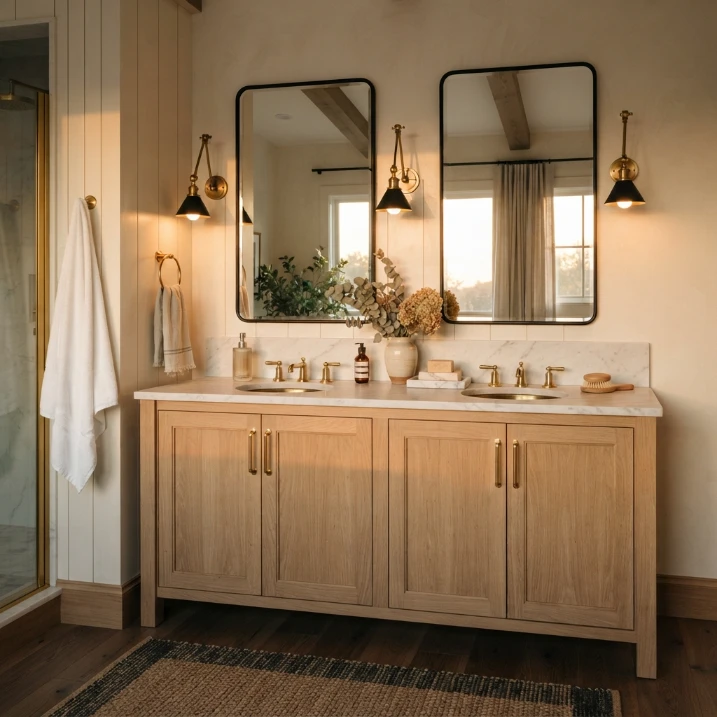
Lighting is one of the details that separates a polished farmhouse bathroom from a merely rustic one. Wall sconces beside or above the mirror provide useful illumination while contributing shape and finish. In a larger bathroom, a simple pendant or chandelier can create a second focal point where local electrical and bathroom safety requirements allow it.
Warm, comfortable light generally complements timber, stone, and warm whites better than extremely cool light. For most bathrooms, warm-white bulbs around 2700–3000K flatter wood and warm whites; very cool daylight bulbs can make the same materials look stark. Layer practical vanity lighting with softer ambient illumination instead of relying on one harsh ceiling fixture. Layer farmhouse bathroom lighting with sconces beside the mirror for tasks, a pendant for ambient warmth, and matching metal finishes to tie it all together.
Finish With Natural Texture Instead of Farmhouse Signs
The final layer should make the bathroom feel lived in rather than themed. Woven baskets, linen or cotton towels, a small vintage-style rug, handmade-looking ceramics, and restrained greenery add softness around tile, glass, and metal.
Avoid adding decorative objects simply because they are labeled farmhouse. Useful pieces in natural materials usually age better visually and keep countertops easier to clean.
Common Farmhouse Bathroom Mistakes to Avoid
Most farmhouse bathrooms go wrong in the same few ways, and all of them are easy to prevent:
- Shiplapping every wall. One feature wall reads as texture; a fully shiplapped room reads as a theme. Stop at one or two walls.
- Buying too many farmhouse accessories. A room full of small signs, distressed trays, and word art looks staged. One statement vintage piece beats ten small ones.
- Mixing three or more metal finishes. Two finishes with one clearly dominant looks collected; a different finish on every fixture looks accidental.
- Choosing an oversized vanity for a small room. A narrower vanity with drawers stores more and keeps walkways clear. Visual impact is not worth a cramped daily routine.
- Pairing a busy patterned floor with high-contrast grout. Pick one graphic element to lead. When both compete, the room feels noisy instead of designed.
- Relying on a single ceiling light. Without layered vanity and ambient lighting, even good materials look flat and the mirror becomes hard to use.
If a choice does not add warmth, storage, or light, it is usually safe to skip it.
Choose Moisture-Proof Flooring and Style the Shower
For the floor, porcelain wood-look tile, hex tile, or a subtle patterned tile all survive moisture while still reading farmhouse. Keep real wood out of wet zones, and peel-and-stick tile works as a renter-friendly option.
For the shower, a glass panel keeps small baths feeling open, zellige-look tile adds handmade texture on the walls, and penny or hex tile underfoot adds grip and pattern.
Farmhouse Bathroom FAQs
How do I style a walk-in shower in a farmhouse bathroom?
A glass panel for open sightlines, zellige-look or subway tile on the walls, penny or hex tile on the floor, and matte black fixtures to tie it to the room.
What paint colors work best in a small farmhouse bathroom?
A light base of warm white or soft gray with one grounded accent (sage, dusty blue, muted clay) — keep the palette tight so the small room reads calm, not busy.
What is the best flooring for a farmhouse bathroom?
Porcelain wood-look tile or hex tile — both survive moisture and read farmhouse; real wood stays out of wet zones.
How do I add farmhouse style to a half bath?
A statement mirror, one vintage piece, and one bold-but-small move like patterned floor tile or moody paint — half baths carry less daily wear, so you can go braver.
How much does a farmhouse bathroom refresh cost?
Simple swaps (hardware, mirror, textiles, paint) land under $200; a midrange refresh with new vanity, tile, and lighting typically runs $2,000–$6,000.
Can renters get the farmhouse bathroom look?
Yes — peel-and-stick tile or wallpaper, swapped hardware and textiles, and freestanding wood pieces give the look with nothing permanent.
Final Thoughts on Farmhouse Bathroom Ideas
A Pinterest-worthy farmhouse bathroom is less about copying a specific room and more about creating a consistent material story. Start with warm wood, simple tile, one repeated metal finish, practical storage, and lighting that flatters the space. Then add one or two character pieces that feel personal.
The strongest farmhouse bathroom ideas combine rustic warmth with modern restraint. When every detail has a purpose, the bathroom can feel welcoming and distinctive without becoming cluttered, overly themed, or difficult to maintain.