What Makes A Whimsical Bathroom Feel Considered Instead Of Chaotic Overall
A whimsical bathroom works best when imagination feels intentional rather than accidental. Playful color, unusual objects, expressive tile, plants, murals, and unexpected lighting can all belong in the same room, but they need a visual thread that keeps the space comfortable and usable.
The goal is not to fill every surface with something quirky. It is to choose a few ideas with enough personality to shape the room, then give them space to stand out. Whether your style leans cottage-inspired, celestial, colorful, nostalgic, or botanical, these ideas show how to create a bathroom that feels imaginative without becoming visually exhausting.
How Whimsical Bathrooms Balance Pure Fantasy With Genuinely Livable Design Choices
The most successful whimsical spaces usually have one strong story. You might begin with a garden theme, a night-sky ceiling, stained glass, a pastel palette, or an eccentric vintage object. Once that focal idea is established, the rest of the room can support it rather than compete with it.
Practicality matters just as much. Keep frequently used surfaces easy to clean, maintain comfortable lighting around the mirror, and make sure decorative pieces do not interfere with storage or movement. Repeating two or three colors across towels, tile, hardware, and accessories can also make very playful choices feel connected.
A useful rule is to combine one memorable statement with quieter supporting details. A mural can sit beside simple cabinetry. Elaborate mosaic tile can work with plain walls. A dramatic ceiling can be balanced by restrained fixtures. This contrast gives the eye somewhere to rest.
A Cottage Garden In Miniature

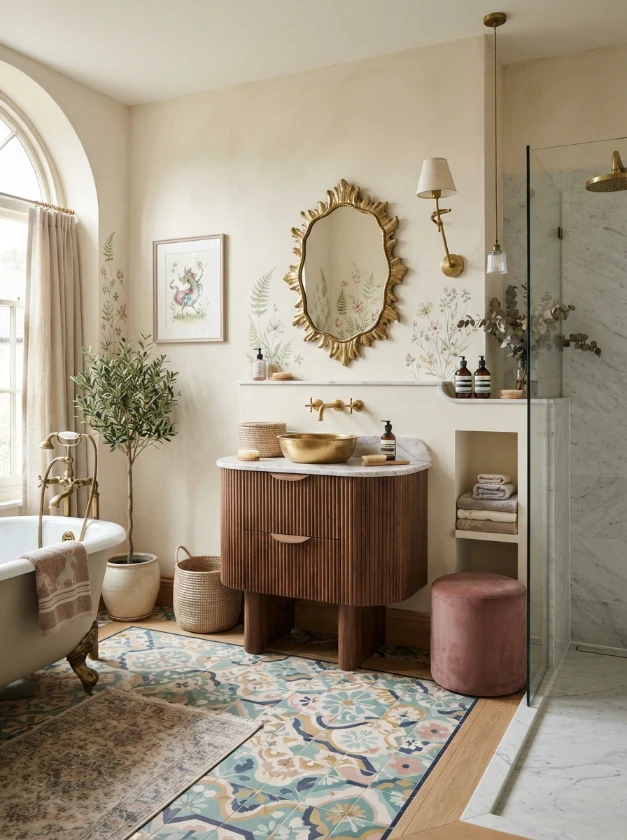
A tiny bathroom can feel like a cottage garden without being covered from floor to ceiling in floral motifs. Start with botanical wallpaper, hand-painted flowers, or a small collection of framed botanical illustrations. Then introduce natural textures through wood, woven baskets, linen towels, and ceramic accessories.
Soft green, faded rose, buttercream, and warm white make a gentle base for this look. A vintage-style mirror or wall-mounted sink can add character, while a few real plants make the garden reference feel more authentic.
Keep moisture in mind when choosing wallpaper, art, and natural materials. In splash-prone areas, tile or another water-resistant finish is usually more practical. The cottage effect should come from thoughtful layers, not delicate finishes placed where they cannot perform well.
Bring The Night Sky Inside
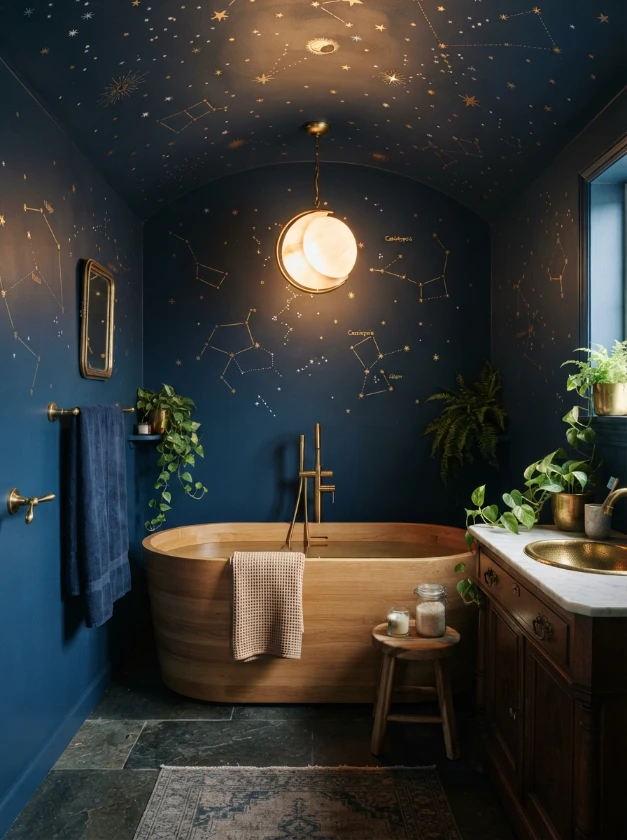
Celestial details can turn an ordinary bathroom into something quietly theatrical. A midnight-blue ceiling dotted with small stars creates atmosphere without taking over valuable wall or floor space. For a softer interpretation, use moon-and-star motifs on wallpaper, tile, artwork, or a shower curtain.
Warm brass fixtures pair beautifully with navy, charcoal, and inky blue because they resemble small points of light against a dark background. Frosted globe sconces can reinforce the celestial feeling while still providing practical illumination around the vanity.
Dark colors need careful lighting, especially in a bathroom used for grooming. Combine decorative ambient light with bright, flattering task lighting so the room remains functional in the morning as well as atmospheric at night.
Let Stained Glass Do The Talking

Stained glass introduces color, pattern, privacy, and changing light all at once. If your bathroom already has a suitable window, a stained-glass panel can become the main decorative feature and reduce the need for additional wall art.
The surrounding finishes can stay deliberately simple. Cream walls, warm wood, unlacquered brass, or pale stone allow jewel-toned glass to remain the focus. If permanent architectural stained glass is not realistic, a professionally fitted decorative panel can create a similar visual effect.
Repeat one or two colors from the glass elsewhere in the room rather than matching every shade. A burgundy hand towel or green ceramic tray may be enough to make the window feel connected to the rest of the design.
Pastel Terrazzo Meets Kawaii Charm

Pastel terrazzo is a natural fit for a playful bathroom because its scattered chips already bring movement and color. Choose a restrained mix such as blush, lavender, mint, peach, and cream, then pull one or two of those shades into the vanity or accessories.
Kawaii-inspired details can appear through rounded mirrors, cloud-like shapes, cheerful soap dispensers, scalloped shelving, or small characterful objects. The key is editing. A few charming pieces feel intentional; too many tiny themed accessories can quickly make a functional bathroom feel cluttered.
Simple cabinetry and clean countertop styling give terrazzo enough room to shine. Rounded forms also help unify the scheme, particularly when repeated in the mirror, lighting, hooks, and hardware.
Mosaic Tile As Storytelling Tool
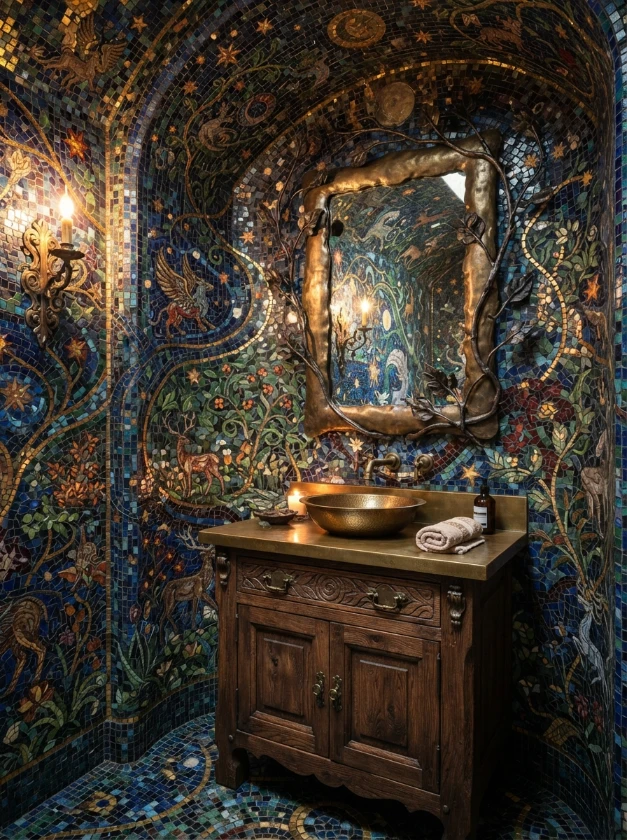
Mosaic tile can do more than create a pattern. It can form flowers, waves, stars, vines, fish, abstract landscapes, or other imagery that gives the room its own visual story. This is especially effective on a shower wall, backsplash, or small section of flooring.
Because mosaics contain many individual elements, surrounding surfaces should usually be calmer. Pair an illustrative tile scene with a simple vanity, solid-colored walls, and uncomplicated hardware. That keeps the design expressive without asking every surface to compete for attention.
For a custom installation, plan the composition before tile is set and consider how grout color changes the finished image. Bathrooms also require appropriate waterproofing and slip-resistant materials where relevant, so decorative ambition should work alongside proper installation.
Light Refractions As Free Decor
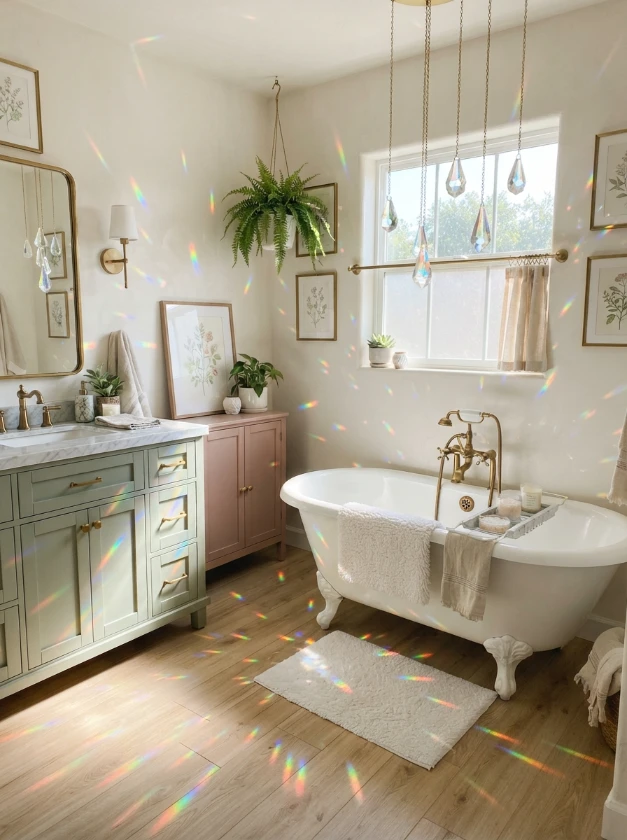
Some of the most magical effects in a whimsical bathroom do not require another decorative object. Prismatic glass, faceted pendants, textured windows, or carefully positioned reflective pieces can scatter light across walls and ceilings throughout the day.
This approach works particularly well in a room that already receives direct sunlight. Instead of adding more pattern, allow shifting reflections to become the pattern. Pale walls give colored light a clean surface to land on, while mirrors can amplify the effect.
Place hanging or projecting objects safely away from wet areas and circulation paths. The effect should feel effortless rather than creating another obstacle in a compact room.
Let The Plants Take Charge
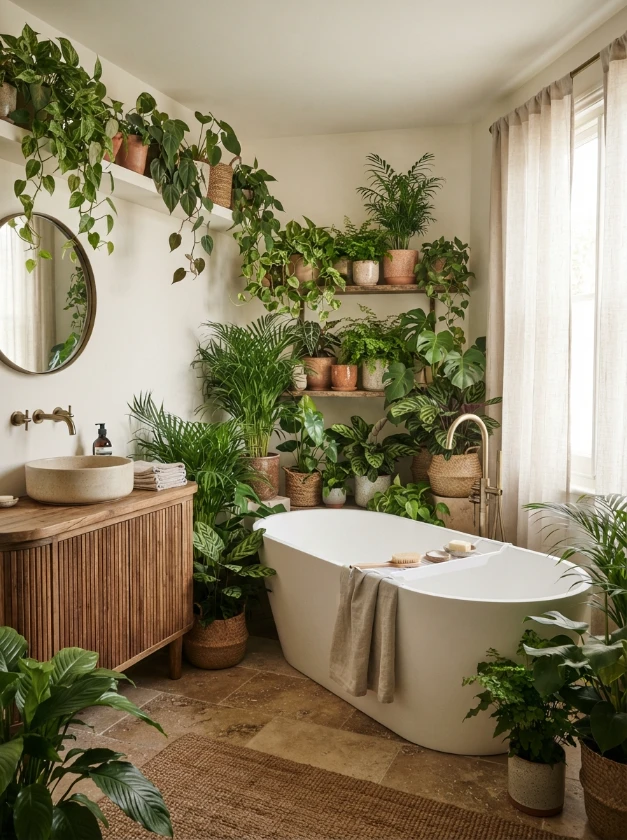
A plant-filled bathroom can feel almost storybook-like, particularly when greenery trails from shelves, frames a window, or softens the edge of a bathtub. Instead of scattering tiny pots everywhere, use a few larger plants and one or two trailing varieties to create stronger visual impact with less clutter.
Plant selection should depend on the bathroom’s actual conditions. Humidity alone does not compensate for inadequate light, so choose species suited to the available natural light and temperature. If the room has no suitable window, convincing botanical artwork or other nonliving greenery-inspired details may be a more practical design choice.
Terracotta, aged brass, warm timber, stone, and handmade ceramics complement greenery particularly well. Together they create a layered, collected feeling without requiring a complicated color palette.
An Old TV Becomes Wall Art

An unexpected vintage object can give a whimsical room its personality. An old television shell, for example, can become sculptural wall decor when safely repurposed as a nonfunctional display piece. Its recognizable shape adds nostalgia and humor without relying on conventional bathroom artwork.
Keep the surrounding wall relatively quiet so the object reads as a deliberate focal point. A retro palette such as avocado, dusty orange, cream, or soft blue can connect it to the rest of the room without turning the bathroom into a themed set.
Safety matters here: do not place an old powered electrical appliance in a wet bathroom as decoration. Any repurposed piece should be fully decommissioned, structurally secure, free of hazardous components, and positioned safely away from water and plumbing fixtures.
Commit Fully To One Bold Color

Whimsy does not always require dozens of colors. A bathroom built around one unapologetically bold shade can feel even more distinctive. Cobalt blue, tomato red, lilac, emerald, coral, or butter yellow can cover walls or cabinetry and establish a strong identity immediately.
The trick is to vary texture and tone rather than introducing endless competing hues. Glossy tile, matte paint, patterned towels, and painted wood can all belong to the same color family while still giving the room depth and movement.
Use neutrals strategically around sanitaryware, flooring, or countertops if the saturated color starts to feel overwhelming. A consistent metal finish on taps, handles, and lighting can further organize the room visually.
A Mural Climbing Up The Wall
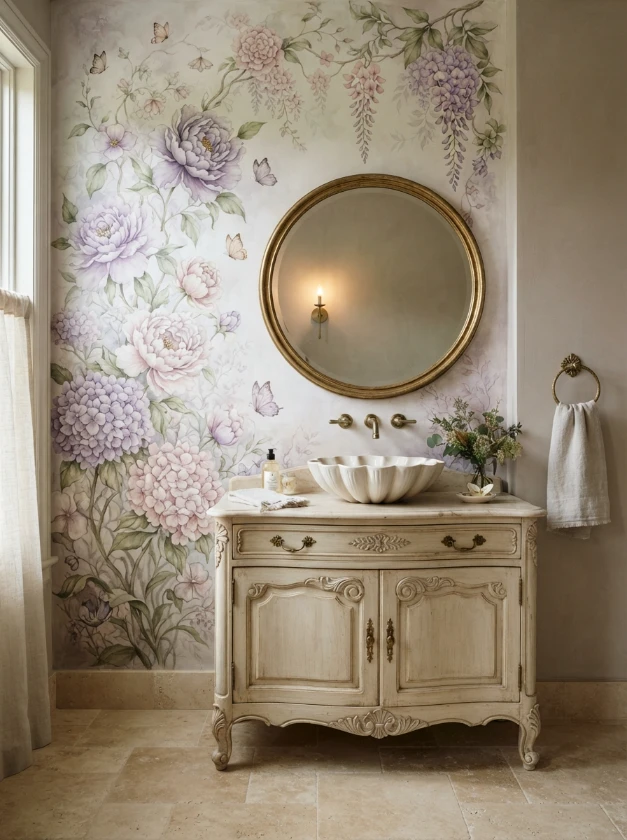
A mural can make a bathroom feel like a small illustrated world. Vines can climb from behind the vanity toward the ceiling, oversized flowers can wrap around a corner, or birds and clouds can move upward through an otherwise simple room.
Vertical compositions are particularly useful in compact bathrooms because they draw the eye upward. Rather than covering every wall, concentrate the artwork on one area and let neighboring surfaces remain restrained. This creates a focal point while preserving visual breathing room.
Choose a finish appropriate for a humid environment and avoid placing ordinary decorative paint where it will be exposed to constant direct water. A mural behind a vanity, beside a freestanding bath, or on a well-ventilated dry wall can be easier to maintain.
Final Thoughts
A considered whimsical bathroom is not defined by how many unusual things fit inside it. What matters is whether the room has a clear point of view. A miniature garden, celestial ceiling, stained-glass window, illustrated mosaic, bold color, or climbing mural can provide that central idea.
From there, repeat colors and shapes thoughtfully, protect the practical needs of the room, and leave quieter areas between statement features. The result can feel personal, playful, and imaginative while still functioning as a bathroom you would genuinely enjoy using every day.