Beige and Brown Bathrooms Are Far More Interesting Than They Sound
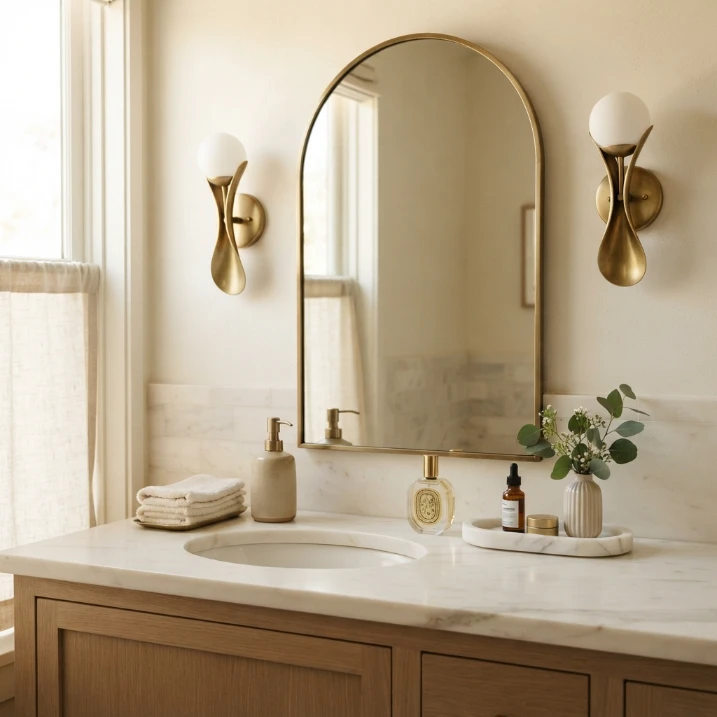
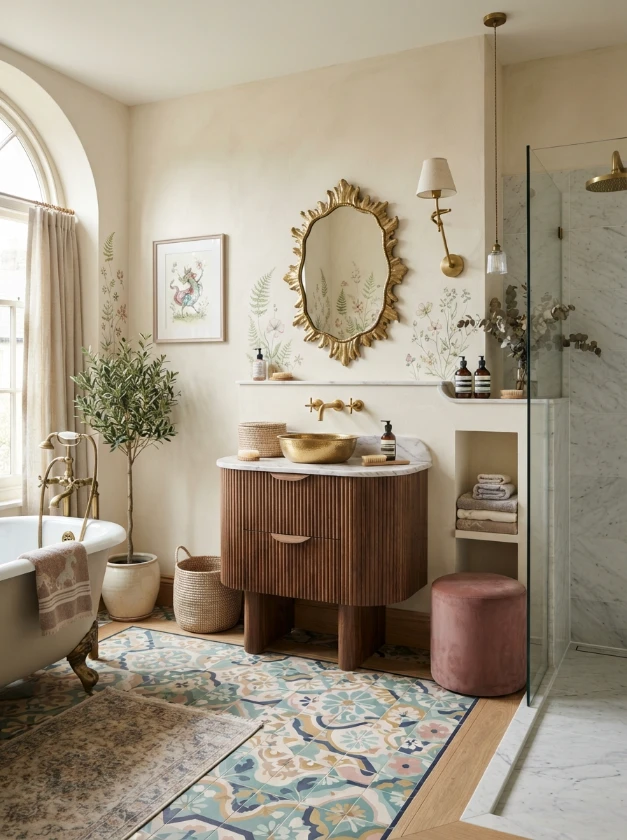
A beige and brown bathroom can be anything but boring. These warm neutrals create a calm foundation, but the real character comes from the way wood, stone, tile, textiles, lighting, and different shades are layered together. Done well, the palette can feel earthy and relaxed, polished and modern, or quietly luxurious.
The advantage of working with brown and beige is flexibility. You can bring in walnut for richness, creamy limestone for softness, terracotta for warmth, or woven materials for a more organic mood. Instead of relying on strong color contrast, the room gains depth through texture, tone, shape, and light.
Why Beige And Brown Bathrooms Feel Warmer Than Plain Neutrals
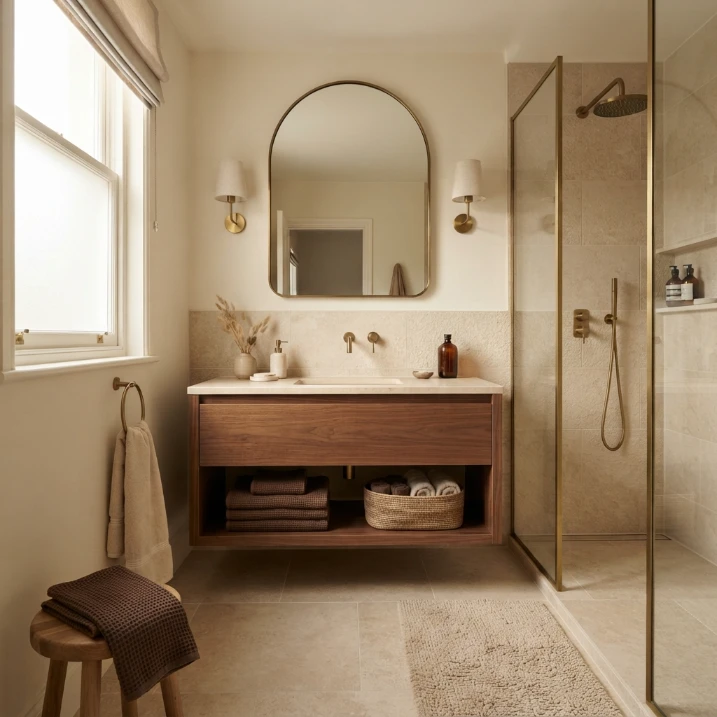
Beige keeps a bathroom light and easy on the eye, while brown gives it visual weight. The combination feels especially inviting when the undertones relate to one another. Warm beige works naturally with walnut, oak, chocolate, camel, bronze, and terracotta because all of them share an earthy quality.
Try choosing three levels of tone rather than one beige and one brown. A pale creamy background, medium wood cabinetry, and a smaller amount of deep espresso can create much more dimension. Repeating those tones across the room makes the scheme feel planned rather than simply neutral.
Walnut Details Bring A Spa-Like Calm
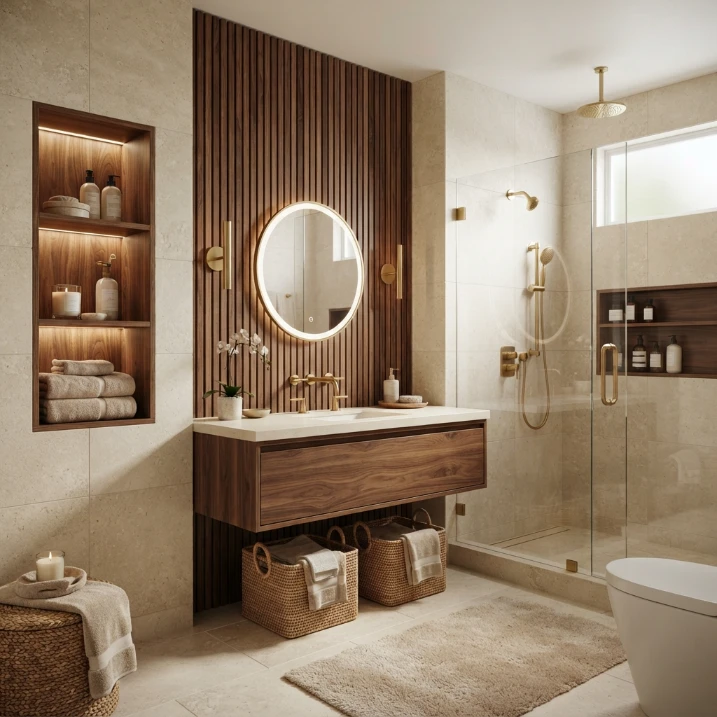
Walnut is one of the easiest ways to make a beige bathroom feel substantial. A floating walnut vanity against creamy stone or porcelain tile creates a strong focal point without introducing a loud color. Vertical wood slats can add even more texture and gently draw the eye upward.
Keep the surrounding materials restrained so the grain remains noticeable. Beige stone, ivory towels, a frameless shower, and a few woven baskets are enough. Warm integrated shelf lighting can make the wood appear richer in the evening while also giving recessed storage more depth.
Terracotta Adds A Sun-Warmed Resort Mood
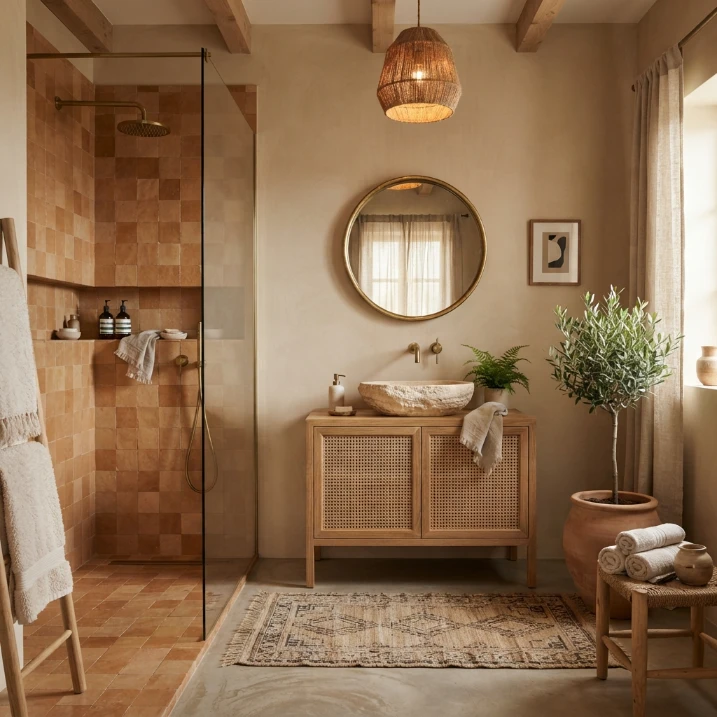
Terracotta sits beautifully between brown and orange, making it a natural accent for a beige bathroom. Use it on a shower wall, floor, or backsplash and let softer sand-colored surfaces balance its stronger warmth.
Handmade-look tiles are particularly effective because slight differences in tone create movement. Pair them with a wood vanity, stone basin, cane detail, and simple linen textiles for a relaxed resort feeling. If the room receives limited daylight, warm artificial lighting can help the terracotta retain its depth rather than appearing muddy.
Dark Brown Cabinetry Gives Beige More Definition
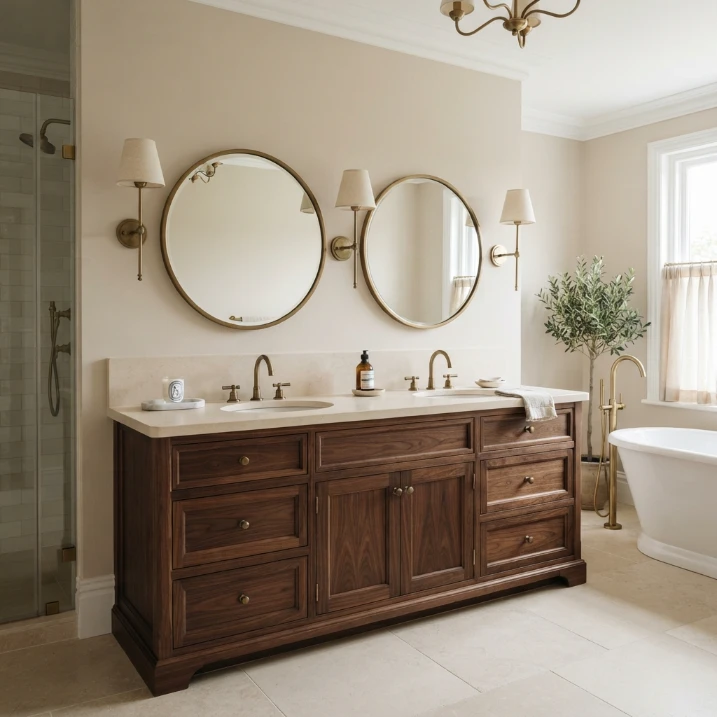
A room filled entirely with pale beige can sometimes lose definition. Dark brown cabinetry solves that by creating a visual anchor. Espresso, deep walnut, or chocolate cabinetry works especially well below a pale stone countertop because the contrast makes both materials easier to appreciate.
Round mirrors can soften the strong horizontal and vertical lines of a long vanity. For hardware, aged brass, bronze, or matte black can all work, but choose one primary metal and repeat it consistently. Keeping countertop styling simple also prevents a darker vanity from feeling heavy.
Marble And Fabric Make Warm Neutrals Feel Elegant
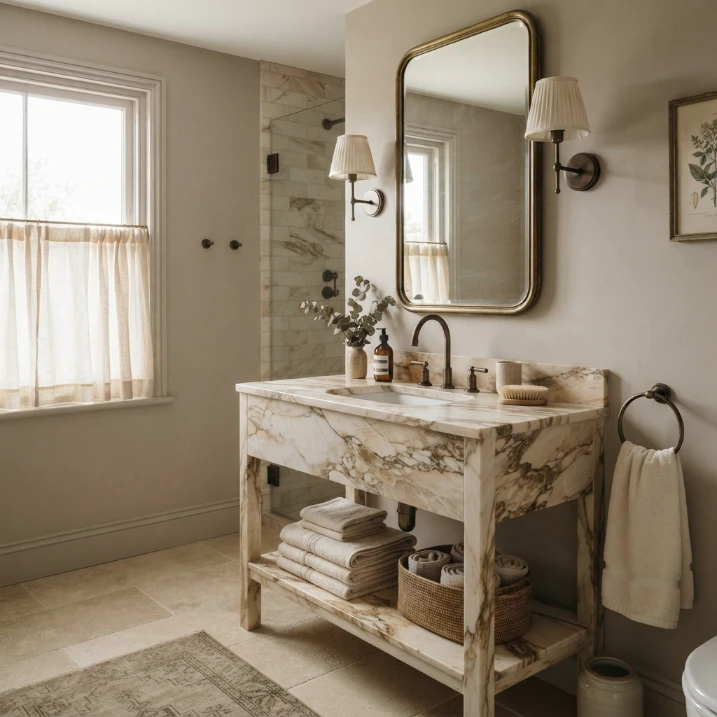
Brown and beige do not have to lean rustic. Introduce a marble or marble-look vanity with warm veining, and the same palette immediately becomes more refined. Beige walls allow the stone pattern to stand out without creating a busy room.
Textiles are equally useful. A soft café curtain, linen Roman shade, upholstered stool, or neatly folded towels can counter the hardness of tile, glass, and stone. These softer elements make the bathroom feel furnished rather than purely functional.
Mocha Tones Create A Rich Organic Retreat

For a moodier version of a beige and brown bathroom, move toward mocha, cocoa, bronze, and caramel. Darker tones can look remarkably sophisticated when they are balanced with enough light and a few paler surfaces.
A bronze-toned tub, mocha plaster wall, woven pendant, and cream stone floor can create a layered organic scheme. If privacy is needed, a cane or timber screen can divide zones without visually closing the entire room. Large windows or generous artificial lighting are particularly valuable when several deep brown finishes appear together.
Layered Textures Give A Cottage Bathroom Character

A cottage-style bathroom benefits from the softness of warm neutrals. Combine beige shower tile with a walnut vanity, woven runner, wicker storage, linen curtain, and simple pottery. Each material contributes a slightly different surface without breaking the color story.
In a narrow room, a long runner can visually lead the eye toward the far end. Wood accents on one wall can also stop large areas of beige tile from blending into a single flat surface. Choose fewer substantial accessories rather than filling shelves and countertops with many small decorative pieces.
Arches And Stone Create Quiet Resort Luxury

Architectural shapes can make a neutral bathroom memorable without adding another color. An arched window, rounded shower opening, curved mirror, or sculptural stone tub introduces softness against rectangular tile and cabinetry.
For a resort-inspired look, keep the material palette limited to pale stone, warm wood, natural fibers, and one metal finish. Subtle patterned flooring, such as a tonal herringbone arrangement, can add movement while preserving the calm atmosphere. Generous natural light makes the variations within beige stone particularly noticeable.
A Skylight Makes Earthy Materials Come Alive

Natural light changes warm neutrals throughout the day. Under a skylight, creamy plaster, beige stone, timber, and woven materials reveal small tonal variations that can disappear under flat overhead lighting.
If you are renovating and a skylight is practical for the building, it can become part of the design rather than simply a source of illumination. Recessed shelving below it keeps storage streamlined, while discreet shelf lighting provides a warmer layer after sunset. Where a skylight is not possible, combine well-positioned ambient and task lighting instead of depending on a single ceiling fixture.
Ambient Lighting Gives Minimalism More Depth
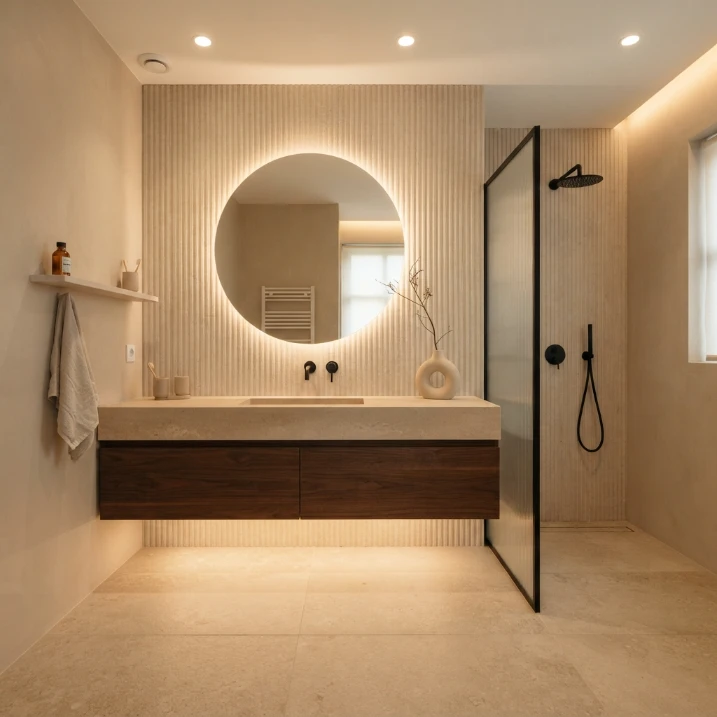
A minimalist beige bathroom can still feel warm when the surfaces have texture and the lighting comes from several levels. Fluted wall panels, softly textured tile, a floating vanity, and an illuminated mirror create shadow and depth without decorative clutter.
Combine practical vanity lighting with subtle ceiling, niche, or under-vanity illumination where appropriate. A floating vanity also leaves more flooring visible, which can help a compact bathroom appear less crowded. The result feels simple, but not unfinished.
Rough Stone Prevents Beige From Feeling Too Polished
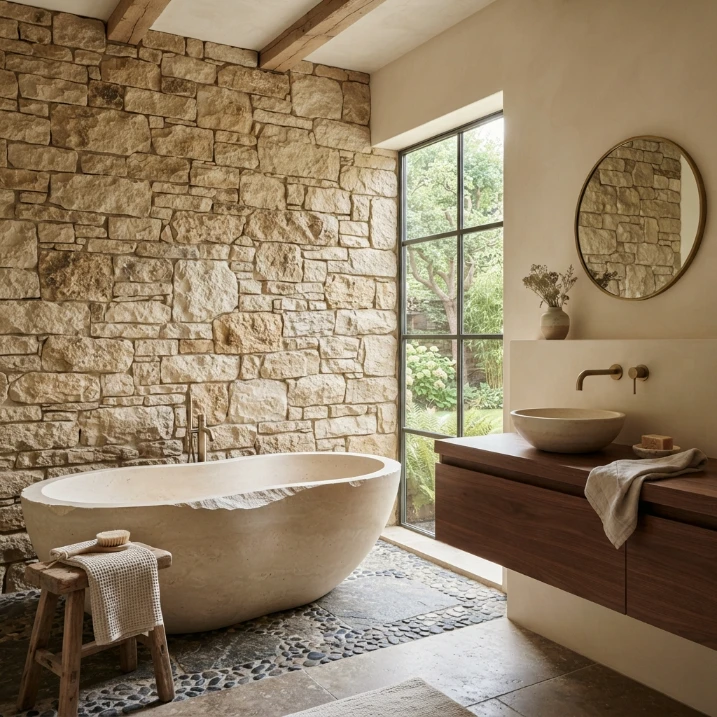
Texture becomes especially important when the color palette is restrained. A rough stone feature wall can provide enough visual interest to carry an entire bathroom, particularly when it is paired with smoother plaster, clean cabinetry, and modern fixtures.
The contrast between irregular stone and sleek surfaces makes both feel more deliberate. Keep accessories in related earth tones and allow the material itself to be the focal point. In wet zones, always use stone and installation methods suitable for bathroom conditions and follow the supplier’s sealing and maintenance guidance.
How To Keep A Beige And Brown Bathroom From Looking Flat
The easiest mistake with a neutral bathroom is matching everything too closely. Instead, vary the depth and finish of your materials. Combine matte plaster with glossy tile, smooth stone with visible wood grain, and crisp ceramics with woven or linen textures.
You can also create contrast through shape. Pair a rectangular vanity with a round mirror, straight tile lines with an arched niche, or a structured cabinet with a softly shaped vessel sink. These small changes create visual rhythm without requiring bright accent colors.
Simple palette idea: warm ivory walls + medium walnut vanity + beige limestone-look tile + aged brass hardware + chocolate brown towels. The colors remain quiet, but the difference in tone and material keeps the room interesting.
Final Thoughts
A beautiful beige and brown bathroom is less about finding the perfect neutral paint and more about building layers. Wood brings warmth, stone gives weight, textiles soften hard surfaces, and thoughtful lighting reveals all the subtle differences between them.
Whether you prefer spa-like minimalism, cottage comfort, organic modern style, or resort-inspired luxury, brown and beige provide a flexible foundation. Keep the undertones related, vary your textures, include enough contrast, and give the strongest materials room to stand out. The finished space can feel calm and timeless without ever feeling plain.