Pink Bathroom Design Ideas That Prove Color Is a Superpower
Pink has moved far beyond the idea of being a color reserved for sweet or overly feminine rooms. In a bathroom, the right shade can feel sophisticated, architectural, playful, vintage, or quietly luxurious. These pink bathroom ideas show how much the mood changes when blush, dusty rose, coral, or muted clay pink is paired with thoughtful materials and a controlled palette.
The easiest way to make pink feel intentional is to decide what role it will play before decorating. It can become the main wall color, a statement tile, a vanity finish, or simply an accent repeated through textiles and accessories. From there, lighting, hardware, stone, wood, and contrasting colors can give the room its character.
Soft Pink Marble Creates a Quiet Luxury Look

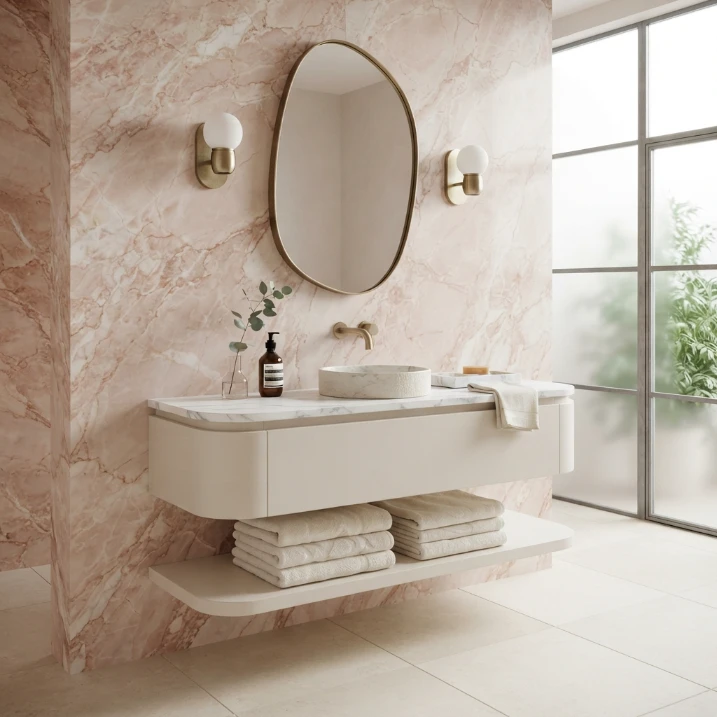
Pink marble can make a bathroom feel luxurious without relying on lots of decoration. Look for stone with blush, cream, beige, or subtle rose veining, then let the natural movement of the material become the main feature.
Keep surrounding elements calmer with warm white walls, a simple vanity, soft towels, and understated brass or brushed-nickel fixtures. A large rounded mirror can soften the strong lines of marble slabs and make the composition feel more relaxed.
If real pink marble is outside the budget, porcelain with convincing stone-look veining can create a similar visual effect while often being easier to maintain.
Pair Blush Pink With Deep Green
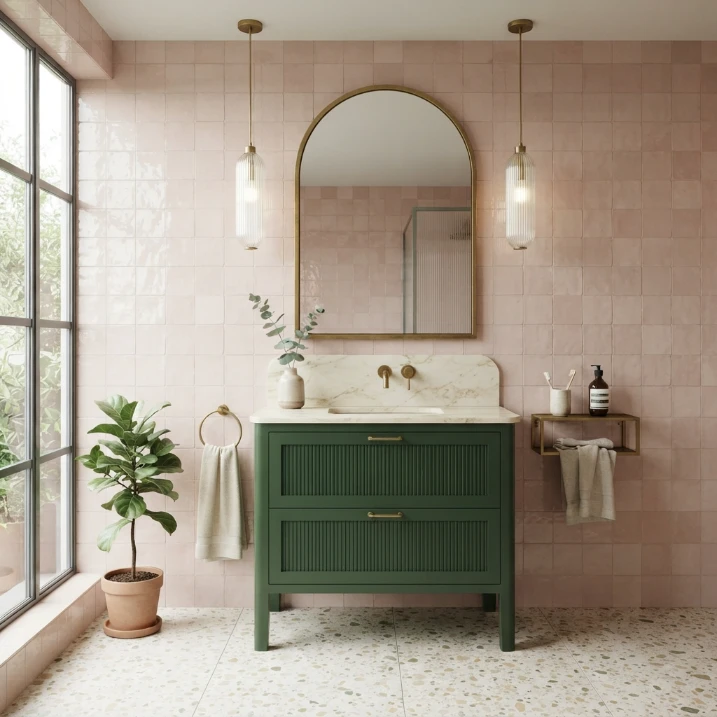
Pink and green naturally balance each other. Warm blush tile feels fresher beside forest, emerald, or muted olive green, while the darker shade prevents the bathroom from becoming overly sugary.
Try pink wall tile with a green vanity, or reverse the arrangement with green shower tile and pale pink painted walls. Brass hardware adds warmth between the two colors, while cream or pale stone flooring gives the eye somewhere to rest.
For another example of using a strong nature-inspired color successfully, see our green bathroom ideas.
Give Pink a Romantic Parisian Direction

For a more elegant interpretation, use dusty rose or muted blush with traditional details. Wall molding, a shapely vanity, an arched mirror, delicate sconces, and aged brass can turn pink into something polished rather than playful.
The key is restraint. Choose closely related pink tones instead of filling the room with many competing shades. Cream stone, warm white ceilings, and natural flooring can ground the palette. If you add decorative wallpaper or a mural, let it become the focal point and keep nearby surfaces quieter.
Use Layered Lighting for Modern Pink Glamour

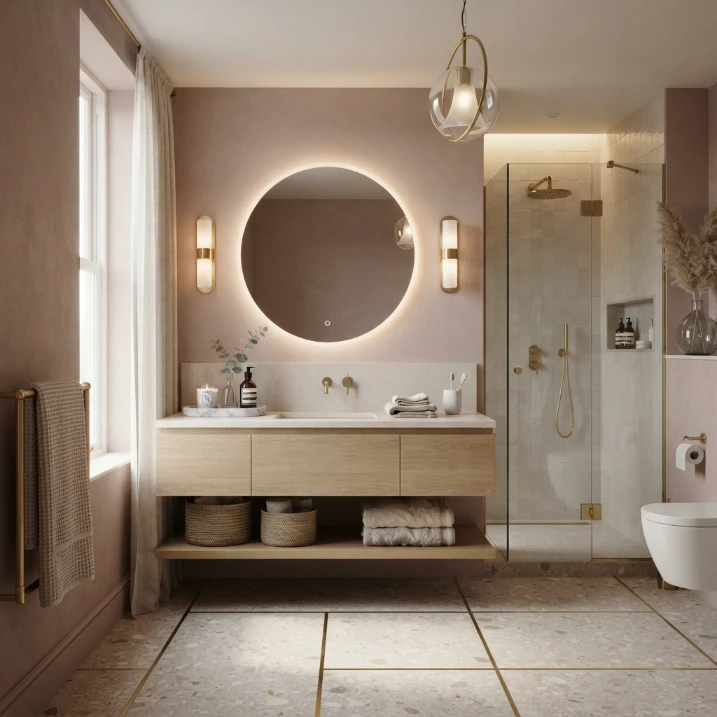
Pink changes noticeably under different lighting, so a glamorous bathroom needs more than a single ceiling fixture. Combine general illumination with mirror lighting and a softer decorative source such as sconces or a pendant where appropriate.
Dusty pink walls or tile work particularly well with a clean white or light-wood vanity. Add brass hardware, a large mirror, and only a few coordinated countertop accessories. This keeps the room looking refined while still allowing the color to make an impression.
Always test paint and tile samples in the actual bathroom during daytime and after dark. A pink that looks beautifully muted in a showroom can appear much warmer or cooler under your home’s lighting.
Bring Back Retro Pink Tile Without Making It Feel Dated
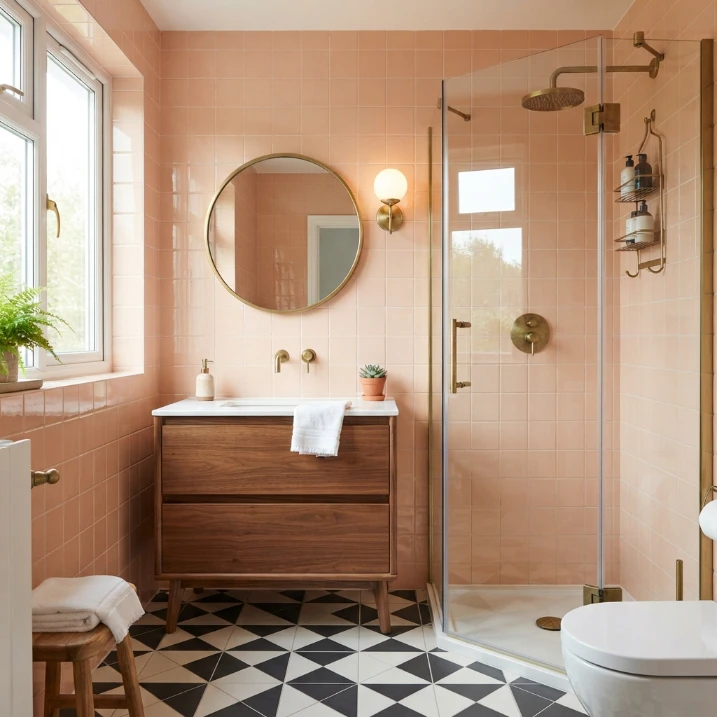
Vintage-inspired pink tile can be charming when the rest of the room has enough structure. Small square tiles, glossy subway tiles, or peachy pink ceramics immediately create a nostalgic mood.
Instead of recreating an entire period bathroom, mix the tile with a few current elements. A clean glass shower screen, streamlined vanity, simple brass fixtures, and crisp grout can give vintage color a more contemporary finish.
Black-and-white flooring is another effective partner because it provides graphic contrast. If you like that stronger neutral combination, our guide to black-and-white bathrooms offers more ideas for balancing high-contrast surfaces.
Make One Whimsical Pink Feature the Star

A pink bathroom does not have to take itself seriously. A sculptural mirror, scalloped shelf, unusual wall light, playful artwork, or imaginative vanity detail can introduce personality without turning every surface into a statement.
Give the unusual feature a simple background. Blush subway tile, a pale stone counter, and straightforward cabinetry create enough visual calm for one imaginative object to stand out.
This approach works especially well in powder rooms and children’s bathrooms, where a little more personality can feel natural. For a broader playful style, you can also see our whimsical bathroom guide.
Create a Botanical Pink Bathroom With Real Greenery
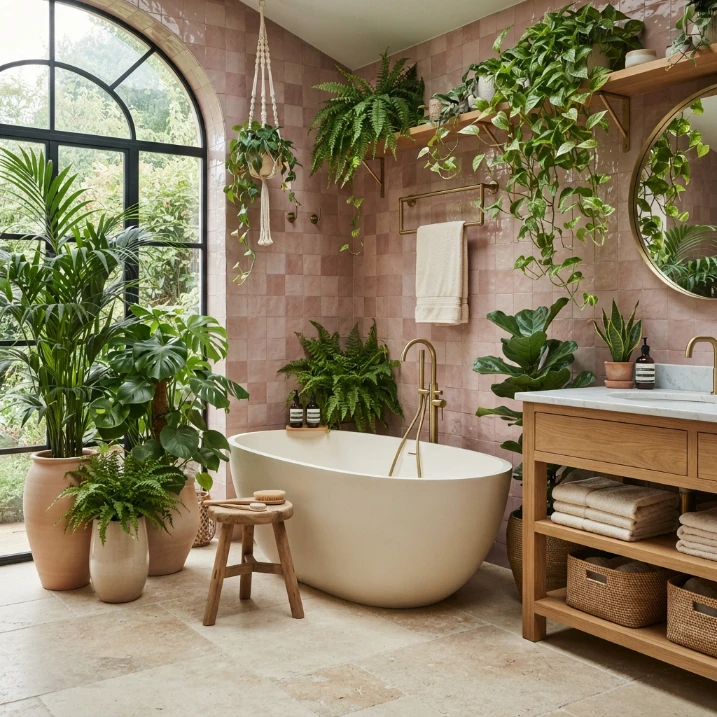
Plants bring natural shape and depth to pink surfaces. Muted rose tile with leafy greens can create a fresh, almost conservatory-like bathroom, particularly when warm wood and brass are added to the mix.
Use plant varieties that actually suit the room’s available light rather than choosing them only because bathrooms can be humid. One floor plant and one trailing plant can have more impact than many small pots scattered across shelves and counters.
For a luxurious finish, combine handmade-look pink tile, a pale stone floor, natural timber, and simple planters. The mixture feels layered while the restricted material palette prevents visual clutter.
Use Vintage Florals With Muted Rose

Floral patterns can give pink a softer cottage or vintage character. A floral shower curtain, wallpaper panel, framed botanical prints, or fabric blind can introduce pattern without requiring permanent tile changes.
Choose one dominant floral pattern and pull two or three colors from it for the rest of the room. For example, dusty rose flowers might inspire blush towels, cream cabinetry, and small sage accents. Repeating those colors makes the pattern feel connected to the whole space.
Aged brass, warm wood, and softly shaped mirrors suit this look particularly well. Avoid adding several unrelated floral prints at once, since the room can quickly lose its focal point.
Lay Pink Tile in a Herringbone Pattern

If you want pink to feel modern, pattern can be just as important as shade. Herringbone tile introduces movement while allowing you to use a relatively simple material.
Use it behind the vanity, inside the shower, or on one feature wall rather than automatically covering every surface. A floating cream, oak, or white vanity keeps the lower part of the room visually lighter, while a round mirror provides contrast against the angular tile arrangement.
Choose grout carefully. A close tonal match creates a softer continuous surface, while contrasting grout emphasizes every tile and makes the pattern much stronger.
Ground Soft Pink With Black and White
For homeowners who find an all-pink bathroom too sweet, black and white can provide exactly the structure it needs. Pale blush walls paired with black mirror frames, monochrome floor tile, or dark fixtures feel sharper and more architectural.
You do not need equal amounts of all three colors. Let pink remain dominant, use white for breathing room, and repeat black in a few strategic places such as the mirror, shower frame, lighting, or cabinet hardware.
This combination is especially effective in small bathrooms because the contrast creates clear visual boundaries while the pink keeps the overall atmosphere warm.
Try Pink and Warm Wood for an Earthier Bathroom

One of the easiest ways to make pink bathroom ideas feel grown-up is to pair the color with natural wood. Dusty rose walls beside oak cabinetry feel warm and calm, while terracotta pink works beautifully with walnut or other richer timber tones.
Add off-white stone, woven storage, linen towels, and understated metal fixtures. The natural textures reduce the need for extra decorative objects and make the room feel comfortable rather than themed.
Use Pink in a Small Bathroom Without Overwhelming It
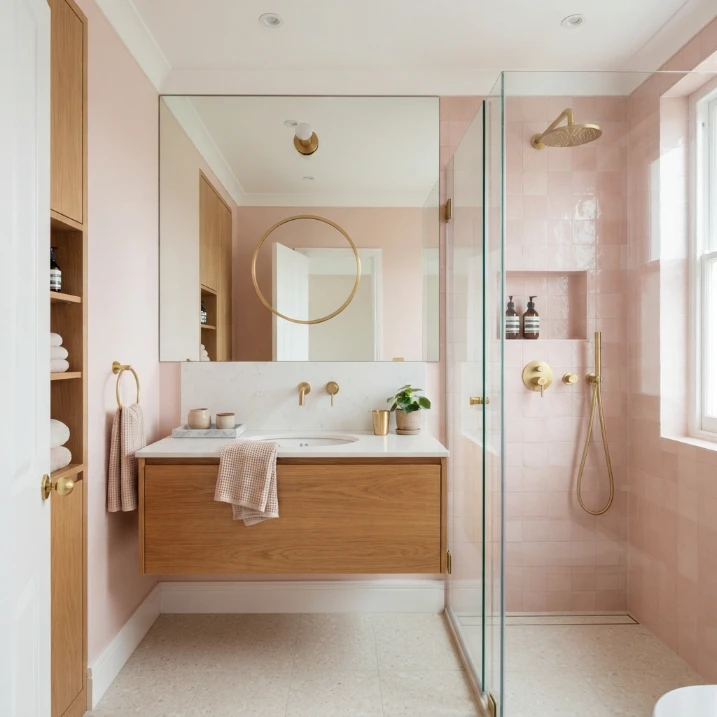
A compact bathroom can handle strong color when it is placed deliberately. Instead of assuming every small room needs to be white, consider pink on the upper walls, inside a shower niche, across the vanity wall, or on the vanity itself.
Keep storage efficient and countertops relatively clear. A large mirror can reflect light, while wall-mounted fixtures and a floating vanity may preserve more visible floor area. Using the same pink in two or three small details elsewhere also makes the choice feel purposeful.
How to Choose the Right Pink for Your Bathroom
Start with the permanent finishes you already have. Warm beige stone usually works comfortably with peach, coral, and earthy rose, while cooler white or gray surfaces may suit dusty blush and slightly cooler pinks.
- Blush: soft and versatile for calm modern bathrooms.
- Dusty rose: sophisticated with brass, wood, and traditional details.
- Peachy pink: warm and cheerful with cream and terracotta.
- Coral: energetic and best used with controlled supporting colors.
- Muted clay pink: earthy and particularly effective with natural materials.
Bring samples into the bathroom and view them beside the floor, countertop, vanity, and existing metal finishes. Checking them at different times of day is one of the simplest ways to avoid choosing a pink with an undertone that clashes with the room.
Final Thoughts
The strongest pink bathrooms are not successful simply because they use a beautiful shade. They work because color, material, lighting, pattern, and proportion support one another. Pink can become romantic beside brass, fresh beside green, sophisticated beside marble, nostalgic with retro tile, or modern against black accents.
Use these pink bathroom ideas as starting points rather than rules. Choose the atmosphere you want first, then build a limited palette around it. A considered combination of pink and a few complementary materials can give even a modest bathroom far more personality without making it feel busy.