The Design Science Behind Black-and-White Bathrooms That Always Impress
Black and white bathrooms have a rare design advantage: the palette is simple, but the contrast can make architecture, tile, lighting, and fixtures feel much more intentional. Instead of relying on many colors to create interest, these rooms use proportion, geometry, texture, and light to shape the mood.
The strongest black and white bathrooms are not simply white rooms filled with black accessories. They balance visual weight carefully, choose patterns at the right scale, and introduce enough warmth to keep the space from feeling clinical. The following ideas show how to make that contrast work in real bathrooms, from compact powder rooms to larger primary baths.
Why Black and White Bathrooms Look So Visually Strong
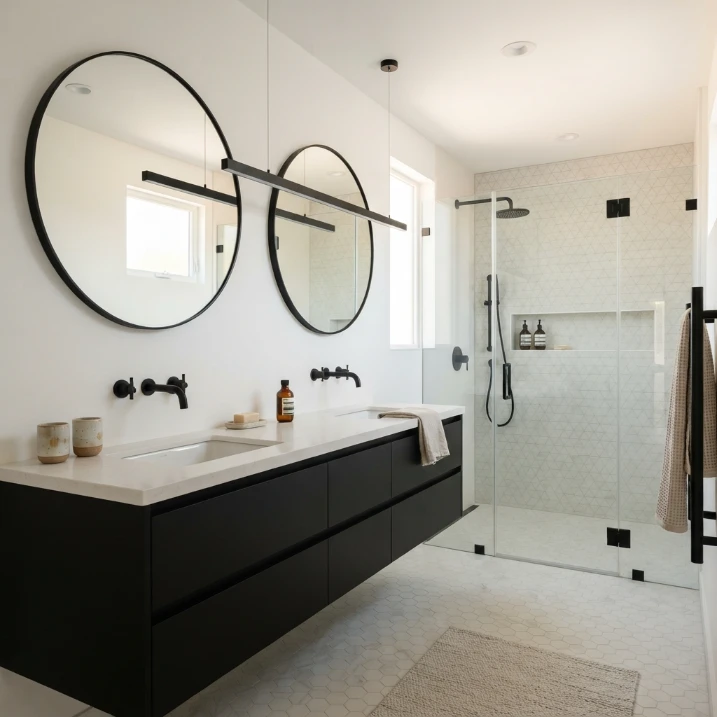
Our eyes naturally notice strong differences between light and dark surfaces. In a bathroom, that contrast can emphasize the outline of a vanity, the grid of a shower screen, the shape of a bathtub, or the rhythm of tile. This is one reason monochrome bathrooms often look especially crisp in photographs.
The palette also makes texture more noticeable. Glossy tile reflects light differently from matte cabinetry, while veined stone, ribbed glass, woven textiles, and warm wood prevent two-color schemes from looking flat. Before adding more decoration, work with surface finish and material first.
Mix Herringbone Walls With A Smaller Patterned Floor
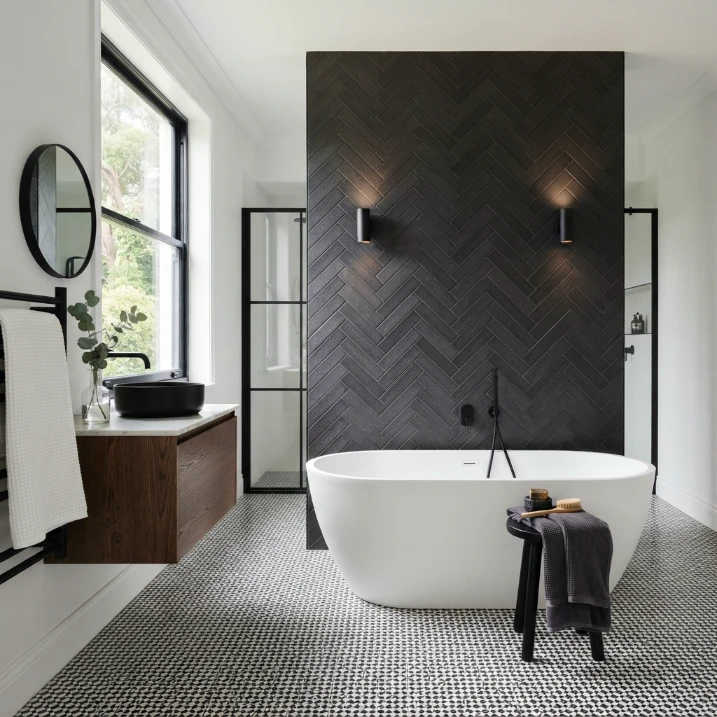
A herringbone wall can create movement without introducing another color. Pairing it with a smaller-scale hexagon, penny, or geometric floor works because the two patterns have different visual rhythms rather than competing at the same scale.
For a dramatic wet-room look, consider charcoal or black herringbone tile behind a white freestanding tub. Keep the remaining fixtures restrained and use a large mirror or generous natural light to stop the darker surfaces from visually closing in.
Use Traditional Details To Soften The Graphic Palette
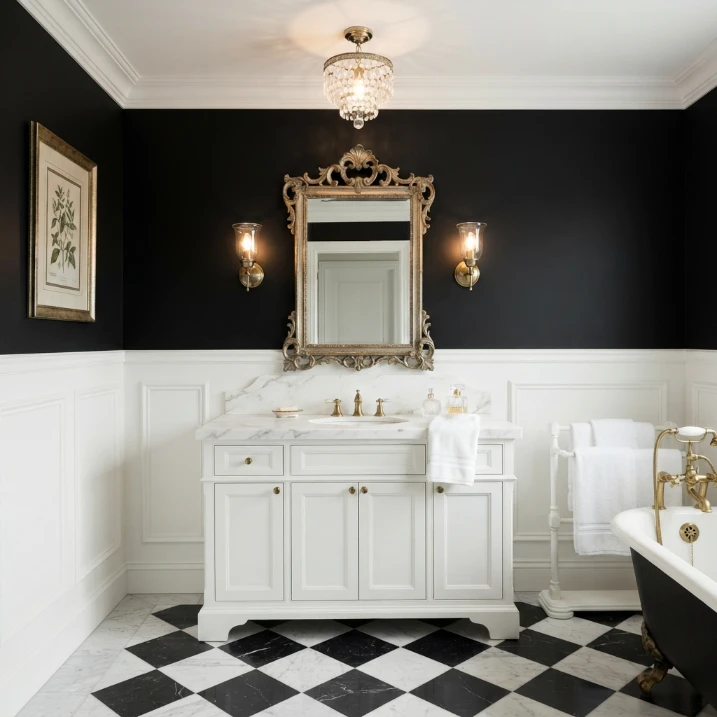
Black and white does not have to mean ultra-modern. White wall paneling beneath a dark painted wall can create a tailored foundation for an ornate mirror, traditional vanity, chandelier, or classic sconces.
Warm brass or aged gold is particularly effective here because it breaks the strict monochrome palette without weakening it. Repeat the metal finish in two or three places so it feels deliberate rather than added at the end.
Float The Vanity To Make A Small Bathroom Feel Lighter
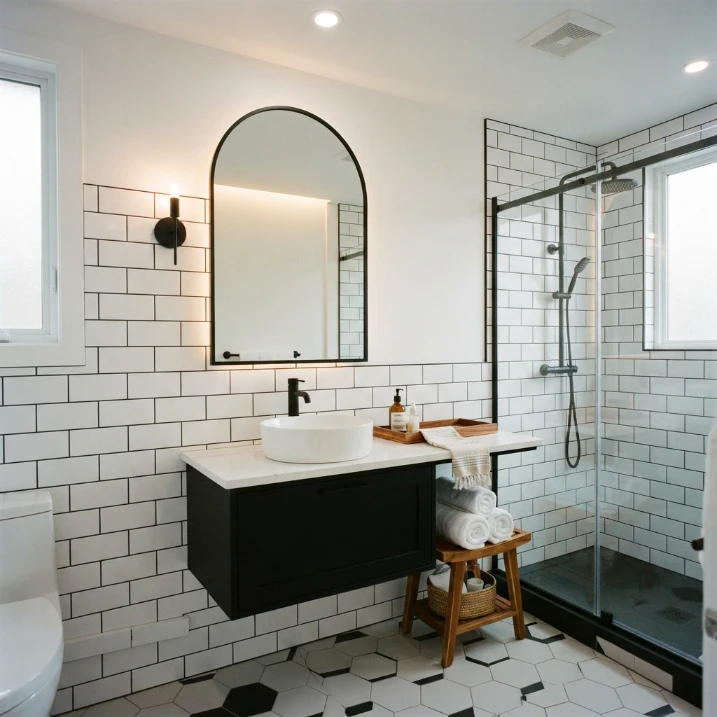
A wall-mounted black vanity gives a bright bathroom a strong anchor while leaving more floor visible. That uninterrupted floor area can help a compact room feel less crowded, especially when the cabinetry has a simple handle-free profile.
Balance straight cabinet and shower lines with a round or softly arched mirror. Curves introduce contrast of another kind, keeping a highly geometric room from becoming too rigid.
Let A Checkerboard Floor Control The Rhythm
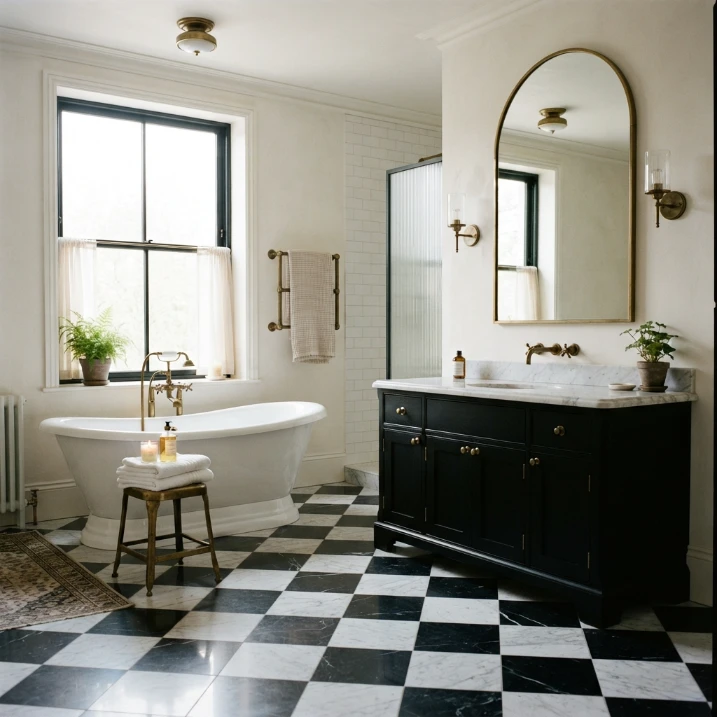
Checkerboard flooring immediately gives black and white bathrooms a recognizable visual beat. Large squares feel bold and architectural, while smaller tiles lean more vintage. In narrow bathrooms, the direction and scale of the grid can also influence how the proportions of the room are perceived.
When the floor is already dominant, simplify the walls. Warm white paint, understated tile, and a solid black vanity give the pattern enough room to lead the design.
Frame White Subway Tile With Black Architectural Lines
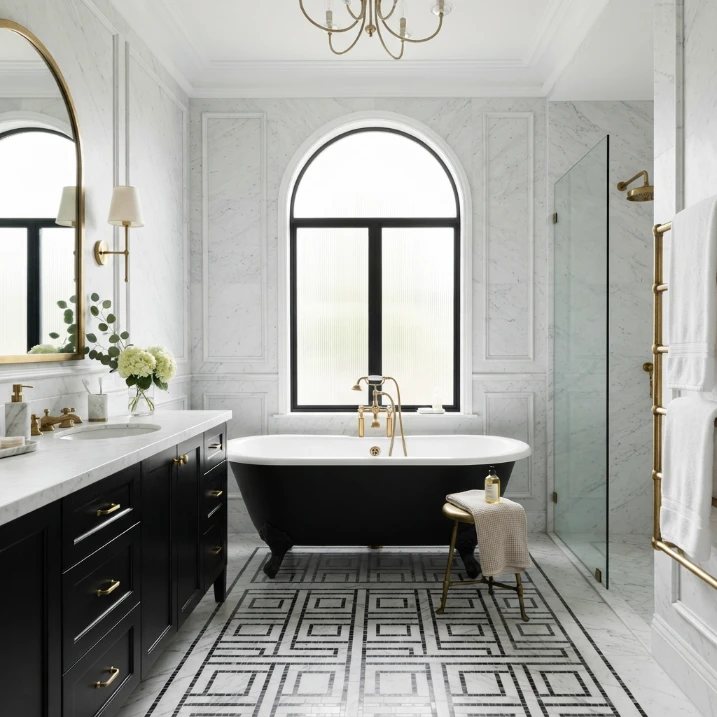
A black-framed glass shower enclosure acts almost like linework in a drawing. Against white subway tile, it gives the shower a clear architectural outline and makes an otherwise familiar material combination feel sharper.
If you enjoy this kind of crisp contrast but want a completely different color direction elsewhere in your home, our green bathroom ideas show how strong color can be balanced without overwhelming a bathroom.
For the monochrome version, use warm lighting and consider a timber vanity, woven basket, or small natural accent. These warmer materials stop the black framework from feeling overly industrial.
Choose One Sculptural Black Feature
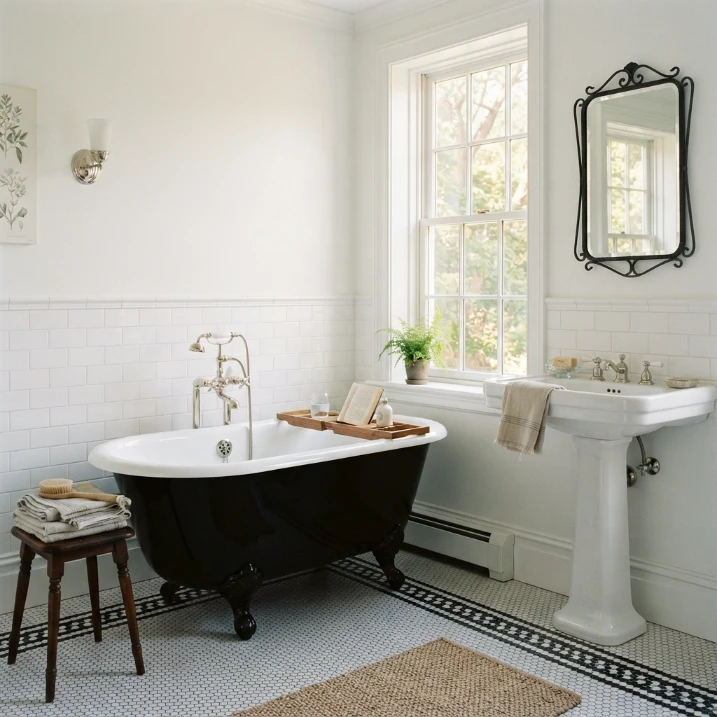
Not every surface needs equal amounts of black and white. In a mostly white bathroom, one large black element can provide enough visual weight. A black clawfoot tub, substantial vanity, decorative mirror, or stone basin can become the focal point.
This approach works particularly well in vintage-inspired spaces. Classic silhouettes add character, while the restricted palette keeps decorative shapes from making the room feel busy.
Create Monochrome Style Without A Full Renovation
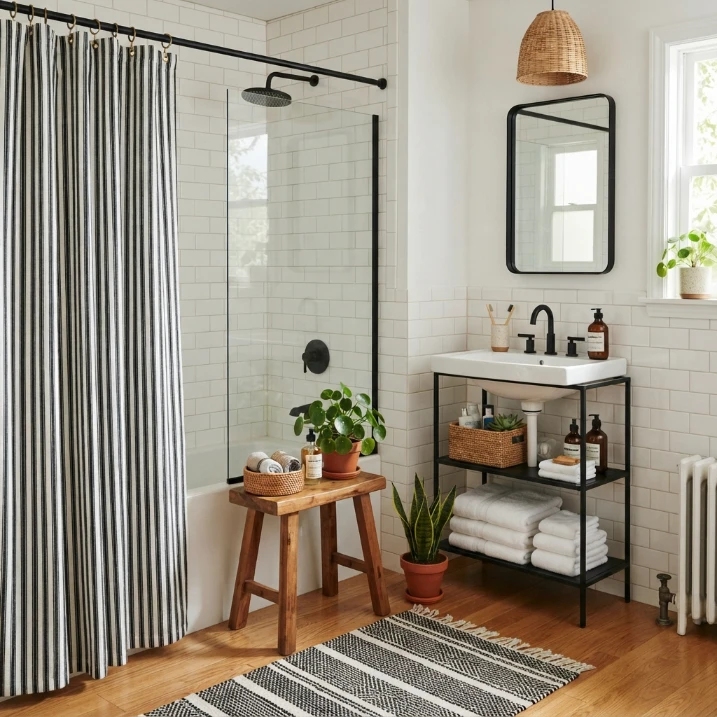
You can introduce the look without replacing tile or plumbing. A striped shower curtain, graphic bath mat, black-framed mirror, dark shelving, monochrome artwork, and coordinated hardware can establish the palette with far less disruption.
Textiles are especially useful because they soften hard bathroom surfaces. If your existing floor is beige, tan, or timber-toned, do not assume it must be replaced. A little warmth can actually make a black-and-white scheme more comfortable and layered.
Use Black Grout As Part Of The Composition
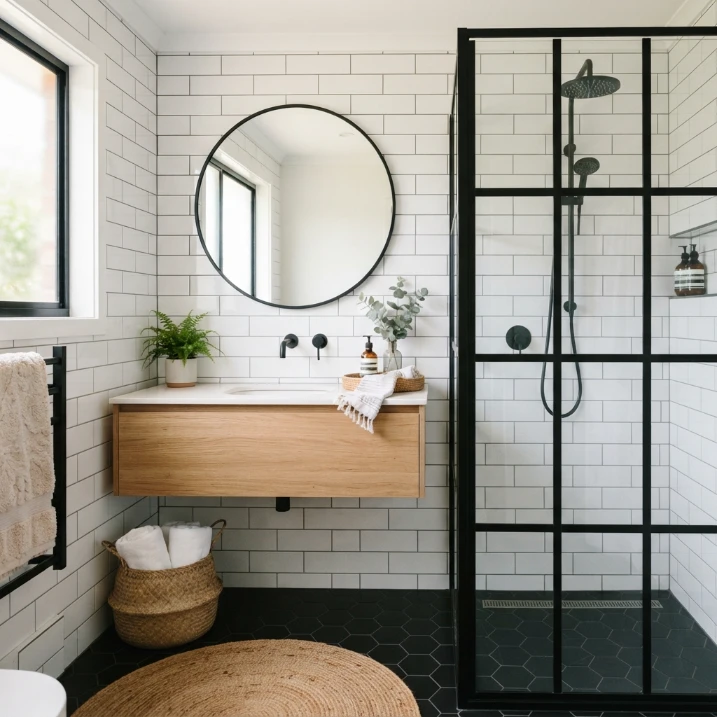
Dark grout around white tile turns every joint into a visible line, so the tile layout becomes part of the room’s decoration. This can look excellent with subway tile when you want a graphic, structured finish.
However, grout contrast should be intentional. If the bathroom already contains a patterned floor, strong shower frame, and dark vanity, softer gray or tonal grout may create better balance. Test a sample before committing because grout color can noticeably change the appearance of the entire wall.
Turn A Shower Niche Into A Dark Focal Point
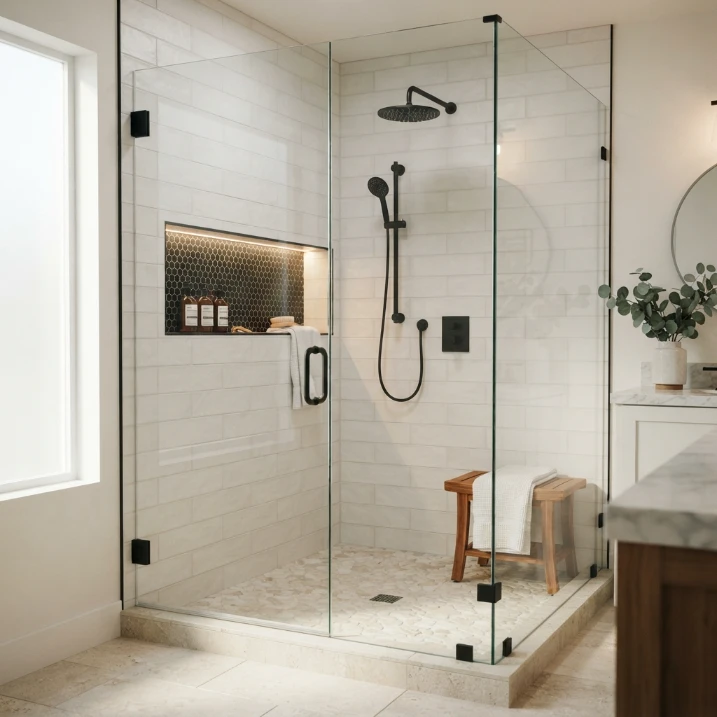
A recessed niche is practical, but contrasting tile can make it look architectural. Set black hexagon or small mosaic tile inside a niche surrounded by white wall tile to create a contained moment of drama rather than darkening the whole shower.
Integrated lighting can emphasize the texture, but bathroom lighting and electrical work should be planned for wet-area safety and local code requirements. Warm or neutral light generally complements monochrome materials more comfortably than very cool illumination.
Warm Up Black And White With Natural Materials
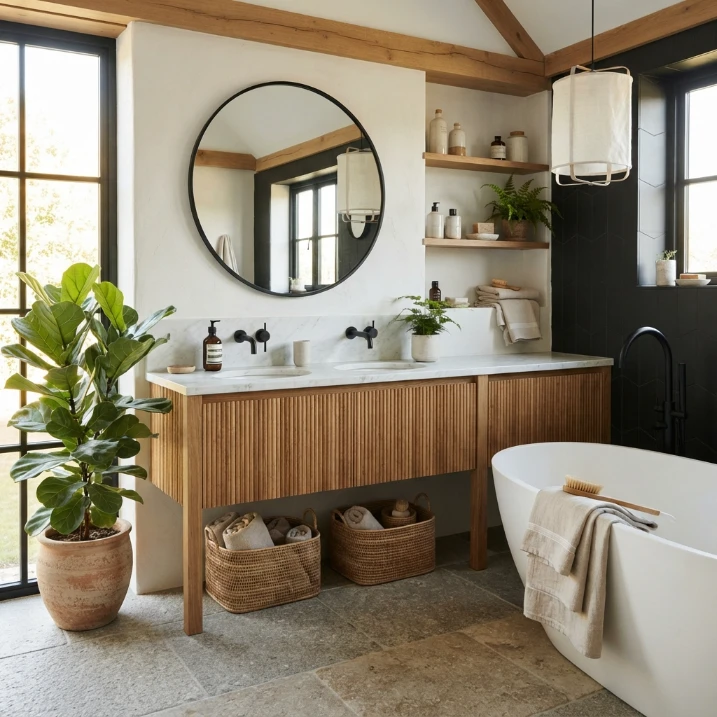
The quickest way to make monochrome feel inviting is to introduce a material that is not visually perfect. Wood grain, woven fibers, linen, stone, handmade ceramics, and greenery bring irregular texture into a palette built around strong contrast.
If you prefer a warmer neutral bathroom overall, you may also like our beige and brown bathroom ideas, which use a softer tonal approach while relying on many of the same principles of texture and balance.
Pay Attention To The Ratio Of Black To White
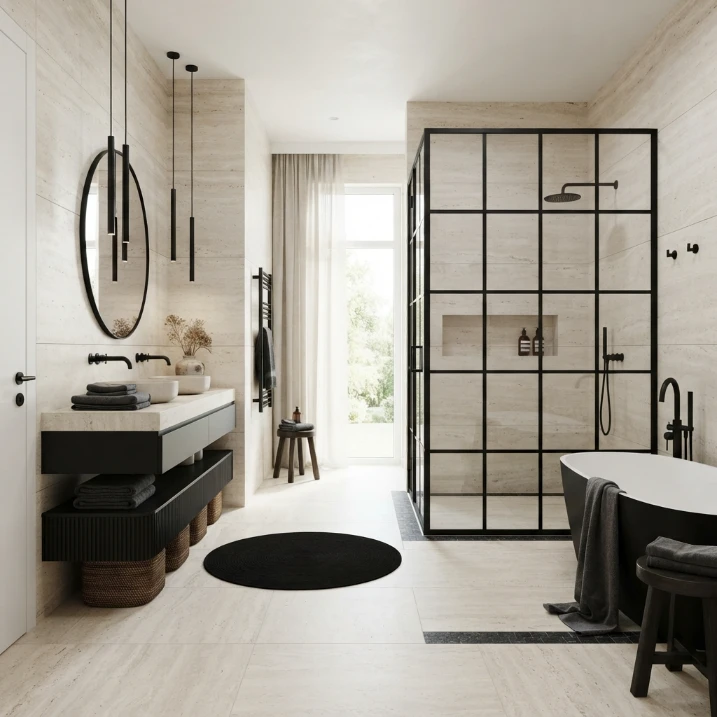
A successful scheme rarely needs a perfect fifty-fifty split. Small or poorly lit bathrooms often benefit from white as the dominant surface with black used for framing and emphasis. Larger rooms with strong daylight can comfortably carry darker walls, cabinetry, or flooring.
Think of black as visual weight. Place it where you want the eye to stop: beneath a sink, around a mirror, across the floor, or at the far end of a shower. Repeating smaller black details elsewhere connects the focal point to the rest of the room.
Make Lighting Part Of The Black-And-White Plan
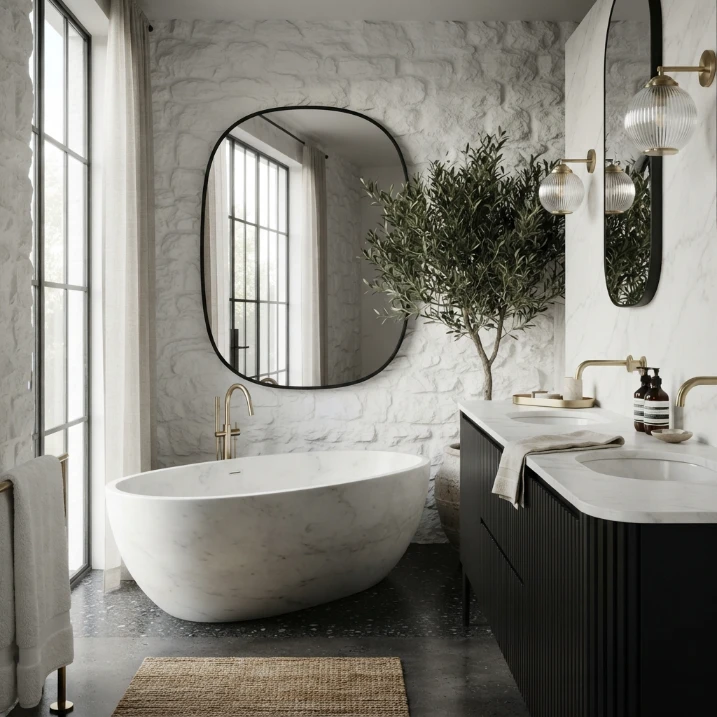
Lighting determines whether black looks rich or flat and whether white looks warm or stark. Combine useful mirror lighting with softer ambient illumination rather than relying on one bright ceiling fixture.
Mirrors, polished stone, glossy tile, and glass can help move light around the room. Matte black finishes absorb more light, so darker bathrooms usually need thoughtful illumination around the vanity and shower.
Why The Palette Stays Relevant Across Different Styles
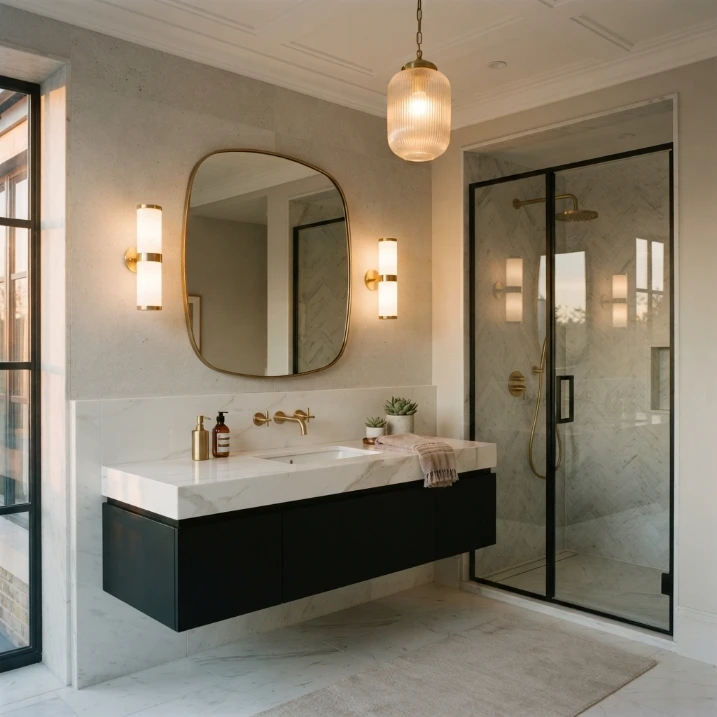
The lasting appeal of black and white bathrooms comes from flexibility rather than one specific trend. Change the shapes and finishes and the same palette can feel traditional, Art Deco inspired, industrial, minimal, vintage, or contemporary.
For a more playful interpretation of bathroom design, see our whimsical bathroom ideas. It demonstrates how personality can be layered into a room while still keeping the overall design considered.
Final Thoughts
The design science behind black and white bathrooms is less about following a strict decorating formula and more about controlling contrast. Pattern scale, visual weight, geometry, texture, lighting, and warm materials all influence whether the room feels sophisticated or overly harsh.
Start with one dominant feature, decide where the darkest visual weight belongs, and let the remaining elements support it. When every black detail has a reason and the white areas provide breathing room, a monochrome bathroom can feel polished, practical, and distinctive for years.