12 Grunge Apartment Rules Nobody Tells You (But Every Cool Space Follows)
A grunge apartment is not a messy apartment. That distinction is the entire design philosophy. Where minimalism chases perfection, grunge interiors trade polish for emotional honesty — worn textures, imperfect finishes, and rooms that feel lived in instead of staged. Exposed brick, distressed walls, vintage furniture, and layered warm lighting tell a story that feels personal, not decorated.
The single rule behind every successful grunge apartment is balance. Rough materials need softness to stay livable. Dark tones need warmth to avoid feeling heavy. That is the job of rugs, plants, textiles, and amber lighting — they keep rebellion comfortable. Grunge works when it is intentional, never accidental. If your space feels a little imperfect but deeply yours, you are already doing it right.
Quiet Rules for a Grunge Apartment That Feels Like Yours
1. Make Lighting Glow, Never Shine
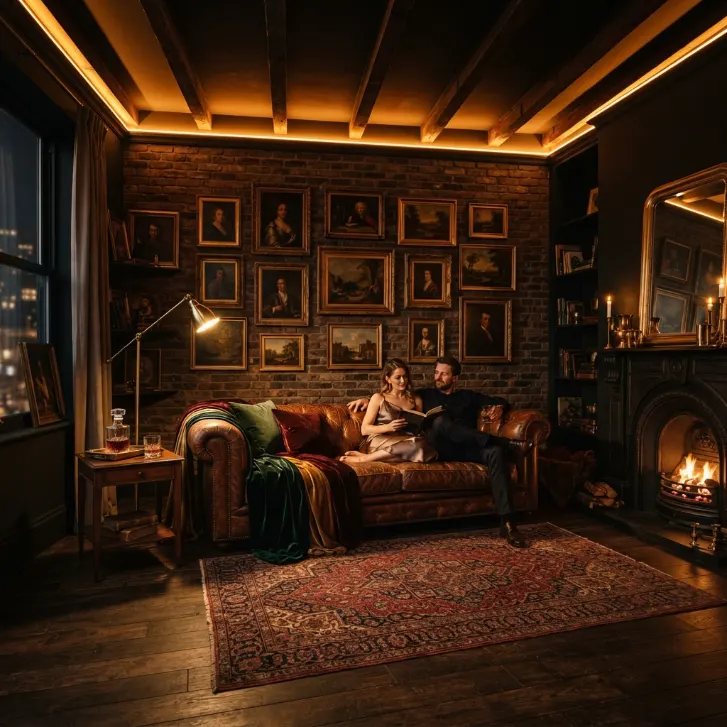
The first rule of any grunge apartment is that lighting should glow, not shine. Harsh overhead bulbs are the fastest way to turn moody into miserable — the difference between cozy grunge and creepy basement is almost always bulb temperature. Use warm LEDs around 2700K, string lights along ceilings and windows, table lamps placed low, and LED strips tucked along shelf edges. Keep every source warm and slightly dim. Layer them at different heights so the room has depth after dark. If you remember one rule from this list, make it this one: warm lighting is non-negotiable.
2. Let the Walls Talk
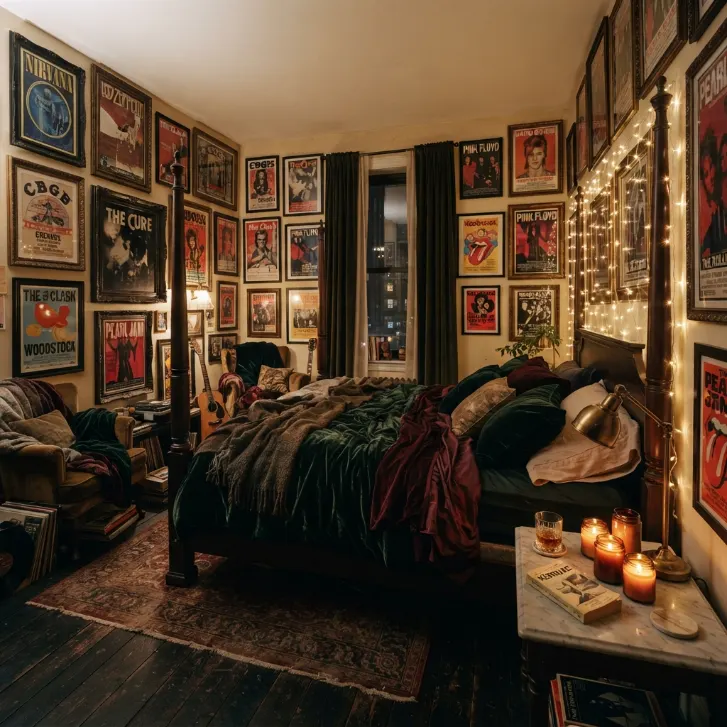
In a grunge apartment, walls are identity markers, not blank canvases. Posters, vinyl records, vintage maps, and mismatched framed art turn plain drywall into a personal archive. The trick is to look collected, not coordinated — mix frame sizes and eras while keeping the overall palette tight. Hang pieces slightly uneven on purpose; the eye reads intentional asymmetry as design and accidental asymmetry as clutter. Curate walls the way you’d build a playlist: emotional, varied, and unmistakably yours.
3. Balance Every Rough Surface With Softness
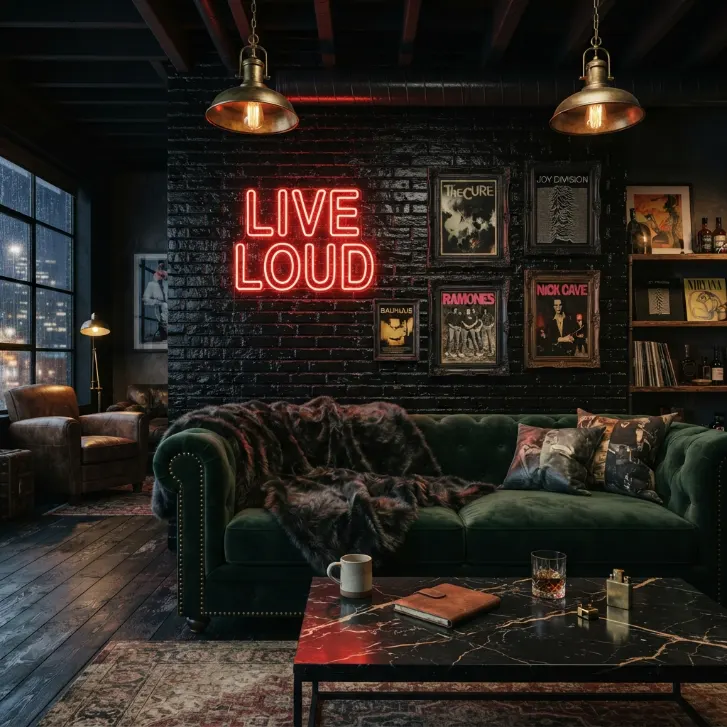
A grunge apartment stays livable when every rough surface has a soft answer. Exposed brick gets a woven throw. A metal pendant gets a linen shade nearby. Dark walls get a deep, low sofa piled with cushions. Concrete floors get layered rugs that also absorb sound. This contrast is the emotional engine of the style: grit without comfort feels like a warehouse, comfort without grit feels like a showroom. Texture does the heavy lifting here, so invest in throws, rugs, and textiles before you buy one more poster.
4. Celebrate Raw Materials Instead of Hiding Them

Raw material honesty is the currency of a grunge apartment. Exposed brick, peeling paint, visible beams, and worn wood are features to frame, not flaws to cover. Let imperfections stay visible — uneven brick, scuffed floors, and aged finishes make a space feel touched by time rather than neglected. The rule is curated, not chaotic: peeling paint on one accent wall is character; peeling paint everywhere with no lighting plan is just disrepair. Choose which flaws to spotlight and edit the rest.
5. Keep Furniture Low and Grounded
Low seating gives a grunge apartment its laid-back, underground posture. Deep slouchy sofas, leather beanbags, floor cushions, and solid low coffee tables pull the room’s center of gravity down and make everything feel relaxed. Heavy furniture also stabilizes busy decor — a weighty leather sofa grounds an expressive gallery wall so the room doesn’t vibrate. Avoid tall, leggy, delicate pieces; they read as formal, and formality is the opposite of grunge. Everything should invite you to sink in, not sit up straight.
6. Build the Bedroom Like a Late-Night Conversation
A grunge apartment bedroom should feel like a late-night conversation, not a showroom. Lean into nostalgia and intimacy: plaid bedding adds pattern without polish, vinyls and posters act as identity markers, and wooden furniture keeps darker visuals restful. Place lamps low so shadows add depth, and skip bright overhead lighting entirely. Texture matters more than symmetry — rough paper prints, worn fabrics, and aged frames beat perfect alignment. Add scent and sound to the design too: candles, a record player, a quiet corner. Comfort is non-negotiable, even in rebellion.
7. Let the Kitchen Show Its History

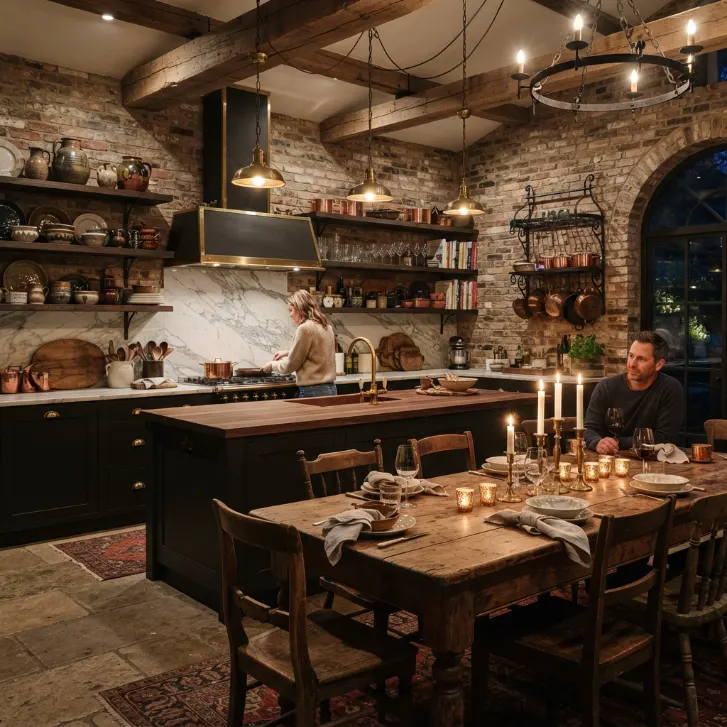
In a grunge apartment kitchen, visibility equals authenticity. Open shelving that shows mismatched dishes, worn cutting boards, and everyday jars feels more honest than cabinets hiding everything. Nothing should look brand new — brick walls add rawness while wood surfaces soften it, and a large wooden table anchors the room as both a workspace and a gathering spot. Warm pendant lights and string lighting keep the space from feeling industrially cold. Stick to neutral, earthy tones and let wear patterns tell the story. The goal is memories in progress, not catalog perfection.
8. Stick to Muted, Earthy Palettes
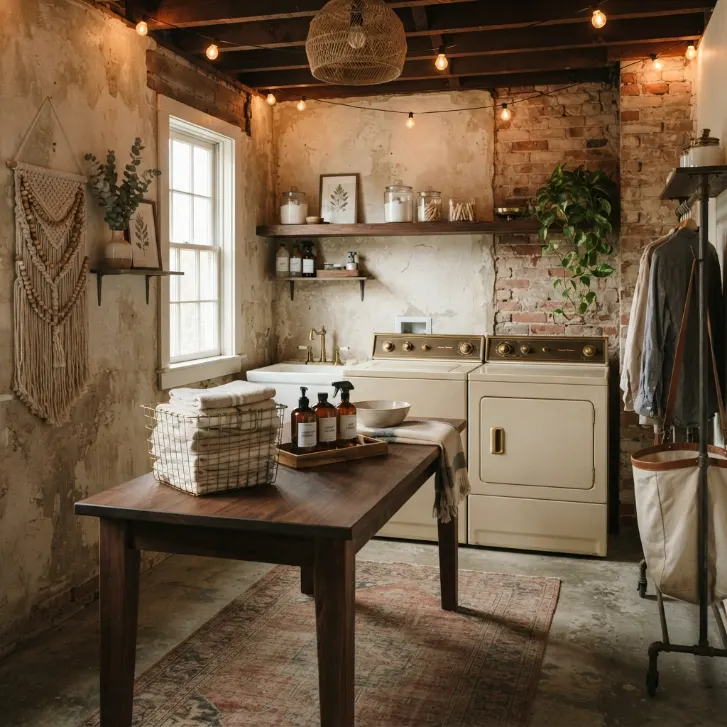
The safest palette for a grunge apartment is earthy and slightly faded: rust, olive, brown, cream, charcoal, and washed sage. Muted color lets texture do the visual work, which is exactly what grunge wants — distressed surfaces, brushed finishes, and aged materials carry more interest than any bright accent. Nothing should look glossy or brand new. When decor styles clash, which they will, a tight earthy palette is what holds the room together and keeps the chaos feeling intentional.
9. Add Plants to Keep It Alive
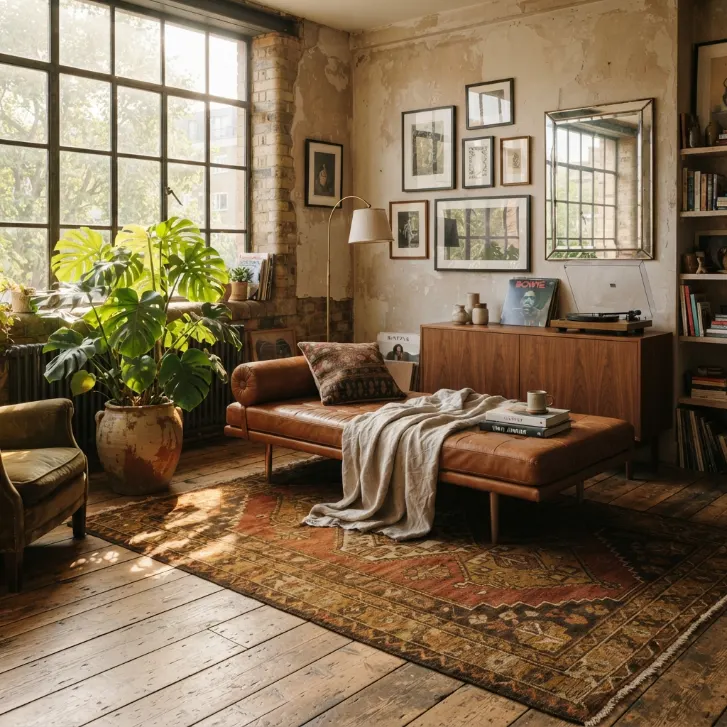
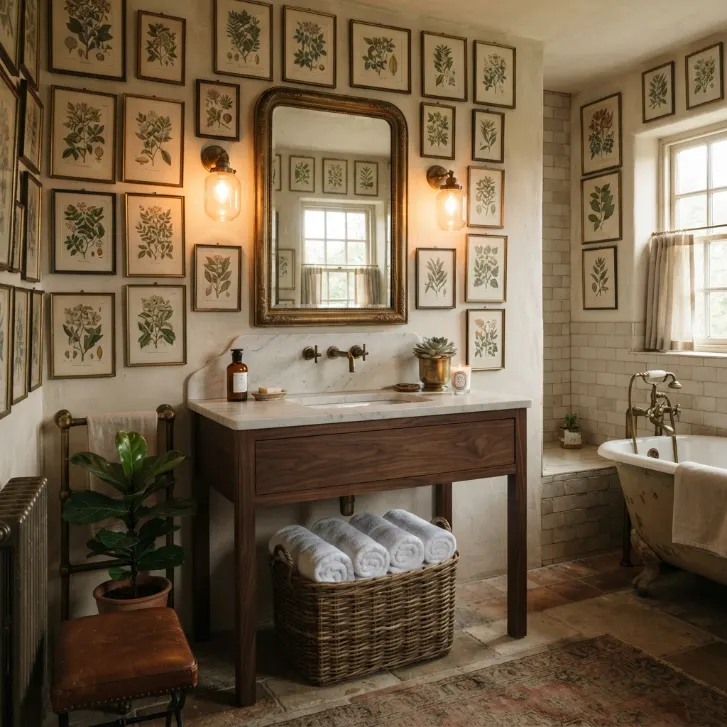
Every grunge apartment needs something living to balance the concrete and brick. Plants introduce organic shapes and movement that soften hard lines, and they stop dark palettes from feeling abandoned. A trailing pothos on a shelf, a tall plant anchoring a corner, a fern softening a bathroom — greenery is the fastest way to make roughness feel warm. Choose planters that match the room’s materials: terracotta, worn ceramic, or simple woven baskets. Organic life is what separates curated rebellion from an empty warehouse.
10. Collect Over Time, Never Decorate All at Once

The best grunge apartment looks collected over time, not bought in one weekend. Stickers on a laundry machine, a thrifted lamp with the perfect patina, a record found at a flea market — these objects carry stories that new decor can’t fake. Build the feeling gradually through pieces you love rather than trends you chase. Shop secondhand, inherit furniture, let the apartment evolve. Grunge is about rebellion, not neglect, and the difference is whether every imperfect object feels chosen. When your home tells your story instead of following rules, you didn’t just decorate — you curated rebellion.
Conclusion
Grunge is not chaos. It is curated rebellion — a design language for people who value atmosphere over trends and comfort over perfection. Every great grunge apartment follows the same quiet rules even when it looks effortlessly undone: warm lighting that glows instead of shines, rough materials balanced with softness, walls that tell your story, earthy palettes that hold it all together, and objects collected over time rather than bought in a weekend.
The strongest takeaway is also the simplest. Focus less on buying specific items and more on building a feeling. Keep materials honest, finishes imperfect, and layouts relaxed. Start with warm light, add one honest material, let the walls talk, and give the room time to become yours.
A grunge apartment that feels a little imperfect but deeply personal is not a failed interior. It is the entire point — late nights, good music, and quiet moments, all rolled into one space that could only belong to you.