12 Stunning Kitchen Lighting Ideas That Instantly Make Your Kitchen Look Brighter and More Expensive
12 Stunning Kitchen Lighting Ideas That Instantly Make Your Kitchen Look Brighter and More Expensive
The best kitchen lighting ideas layer three kinds of light — bright task light where you chop and cook, soft general light for the whole room, and a low evening glow for atmosphere — each on its own switch so you can change the mood in seconds. A kitchen lit this way feels brighter, bigger, and far more expensive than one lit by a single ceiling fitting, because every worktop is shadow-free and every corner has a purpose. The twelve ideas below show you exactly where each light goes.
Before you buy a single fitting, look at how you actually use the room. Do you eat at the island or cook late at night? The answers decide where the bright light goes and where the soft light belongs. If your island doubles as a breakfast bar and a homework desk, start with Kitchen island decor ideas to settle the layout first, then match each zone with its own light. A plan made on paper always costs less than fittings moved after the electrician has left.
Key Takeaways: Kitchen Lighting at a Glance
Q: Where should I start with kitchen lighting? A: Start with the worktops — under-cabinet strips and pendants over the island — because task light is the layer you use daily.
Q: How many layers of light does a kitchen need? A: Three: general light from the ceiling, task light over work areas, and a soft accent layer for the evening, each on its own switch.
Q: What color temperature feels best in a kitchen? A: Warm white around 3000K suits most kitchens — welcoming in the evening yet clear enough to chop by.
Q: Do I need dimmers in the kitchen? A: Yes — dimmers turn the same fittings from bright cooking light into a soft dinner glow, and they cost very little to add.
What makes kitchen lighting ideas work so well?
Layered light works so well because no single fitting can do every job in a kitchen. A ceiling light fills the room but throws your shadow onto the worktop the moment you start chopping, while a pendant over the island leaves the corners dark. When each layer has one clear job — general light for moving around, task light for working, accent light for mood — the room feels brighter at every hour without any single light working too hard.
Think of it as a simple formula: a base layer from the ceiling, a working layer over every surface you use, and a glow layer for the evening. When all three sit on their own switches, the kitchen changes character with one tap — bright and practical at six, soft and calm by nine.
| Light layer | Best fixtures | Where it goes |
|---|---|---|
| Ambient | Recessed downlights, flush mounts | Across the whole ceiling |
| Task | Under-cabinet strips, pendants | Worktops, island, sink |
| Accent | Plinth strips, cabinet lights, sconces | Shelves, plinths, glass cabinets |
| Mood | Dimmers, a small counter lamp | Evening zones and corners |
Before you choose a shade or bulb, stand in the kitchen at the times you use it most and note where the shadows fall. Keep the same color temperature on every fitting — mixed whites make a new scheme look wrong — and put a dimmer on anything you use after dinner.
1. A Trio of Brass Pendants Over the Island
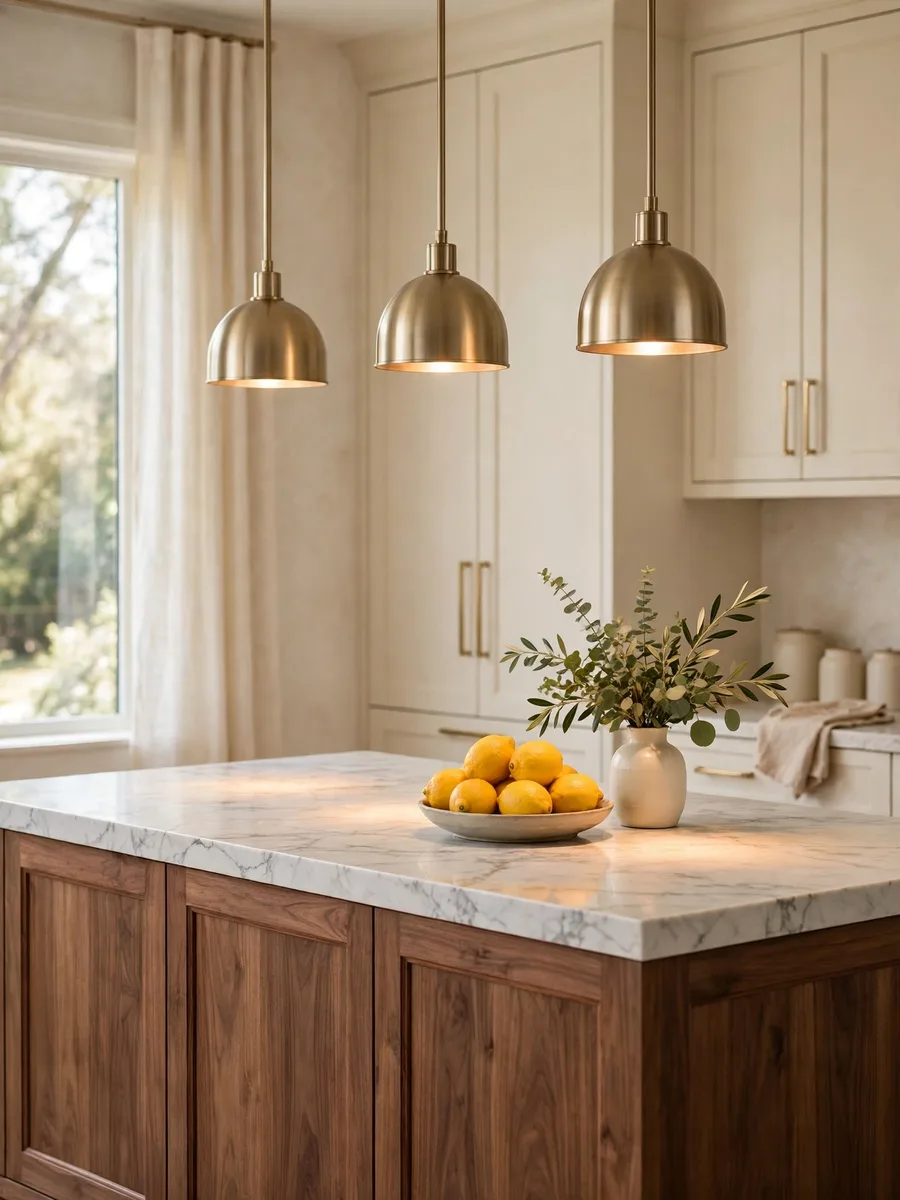
Three slim brass pendants hung in a neat row over the island are the classic way to give a kitchen a focal point and proper task light in one move. For example, in a kitchen with cream cabinets, a walnut island, and white marble worktops, three brushed-brass dome pendants hung about 30 inches above the counter throw a warm pool of light where you chop and plate — and the brass picks up the warmth of the wood. Space them evenly and keep them on their own dimmer, and the island becomes the brightest spot in the room.
Quick tips:
- Hang pendants 30 to 36 inches above the worktop.
- Use an odd number — three suits most islands.
- Match the pendant metal to your tap or handles.
2. Shadow-Free LED Strips Under the Cabinets
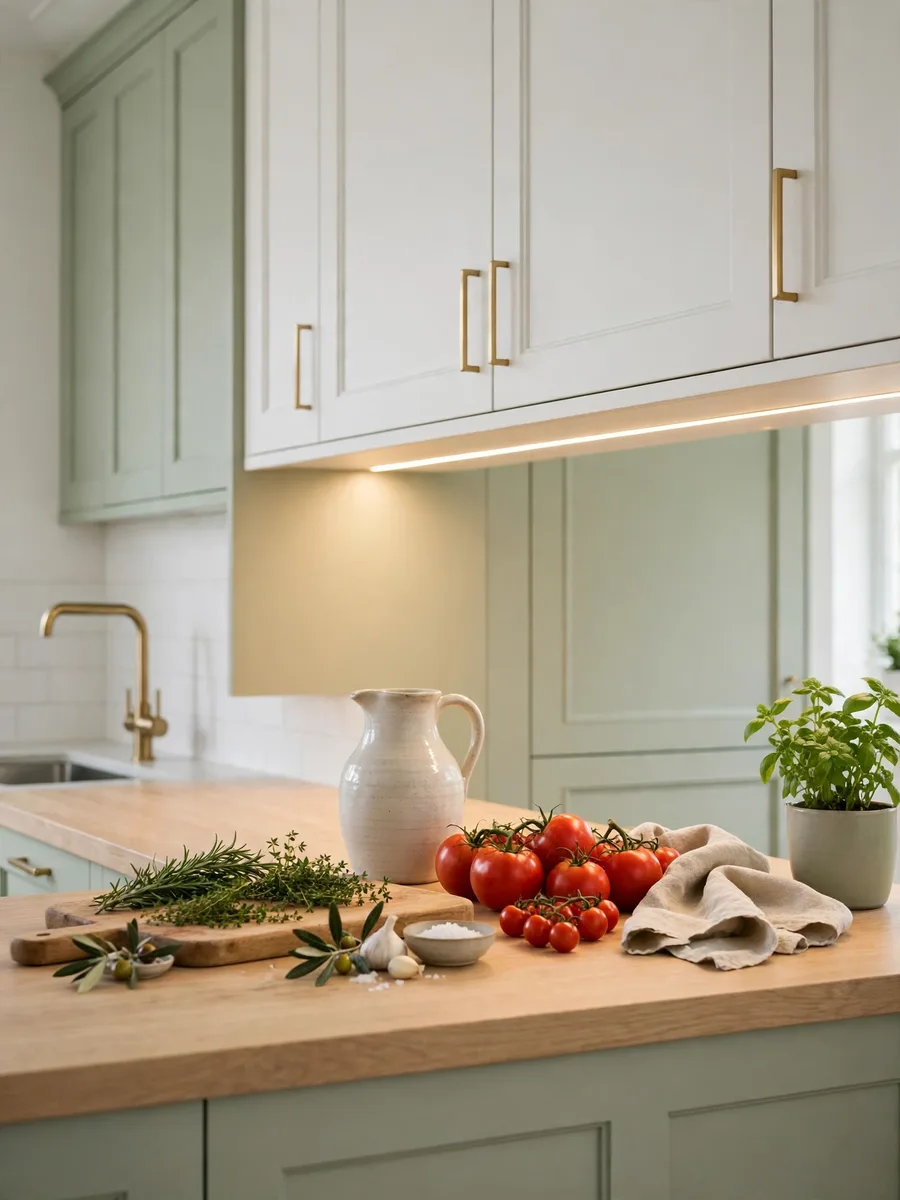
Under-cabinet LED strips are the single most useful upgrade in most kitchens, because they sit between your head and the worktop, so nothing casts a shadow where you are working. For example, in a pale sage green kitchen with white wall cabinets and pale oak worktops, a slim warm-white strip mounted toward the front edge of each cabinet lights the whole run evenly, makes the oak glow, and doubles as a gentle night light when dimmed low. Choose a strip with a diffuser so you see a smooth line of light, not bright dots.
Quick tips:
- Mount strips near the front edge of the cabinet.
- Pick a diffuser to hide individual LED dots.
- Put strips on a separate switch from the ceiling.
3. An Oversized Linen Drum Over the Dining Table
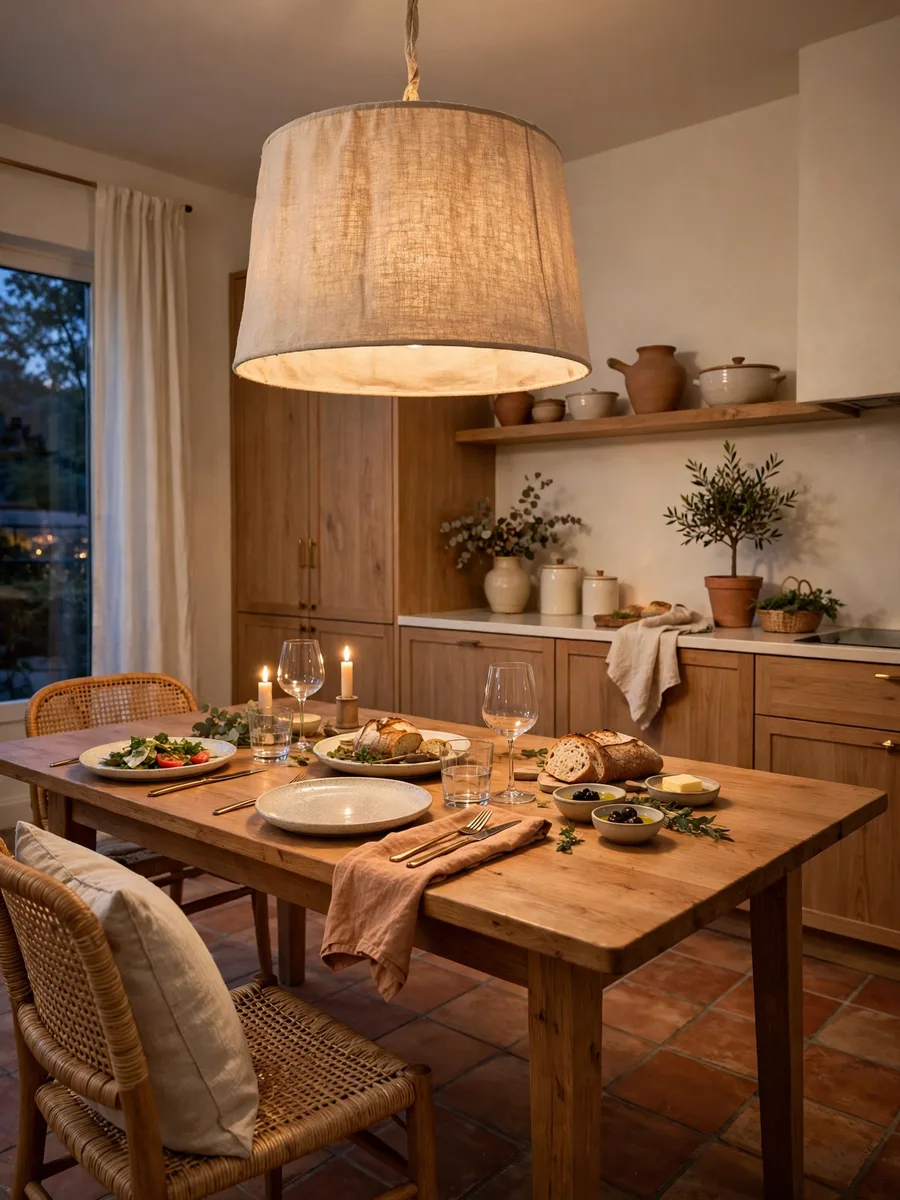
A big linen drum shade over the dining table softens the whole kitchen and marks the eating zone clearly, even in an open-plan room. For example, in a kitchen-diner with terracotta floor tiles, cream walls, and a warm oak table, a wide natural-linen drum hung low over the center of the table casts a soft glow over every plate and makes long dinners feel calm. If the table sits in the kitchen rather than a separate room, browse Dining room lighting ideas for more table-zone options, then keep the shade in the same warm tones as the rest of the room.
Quick tips:
- Choose a shade about half the width of the table.
- Hang it low enough to feel intimate, high enough to see across.
- Linen shades suit warm white bulbs best.
4. A Small Ceramic Pendant Over the Sink
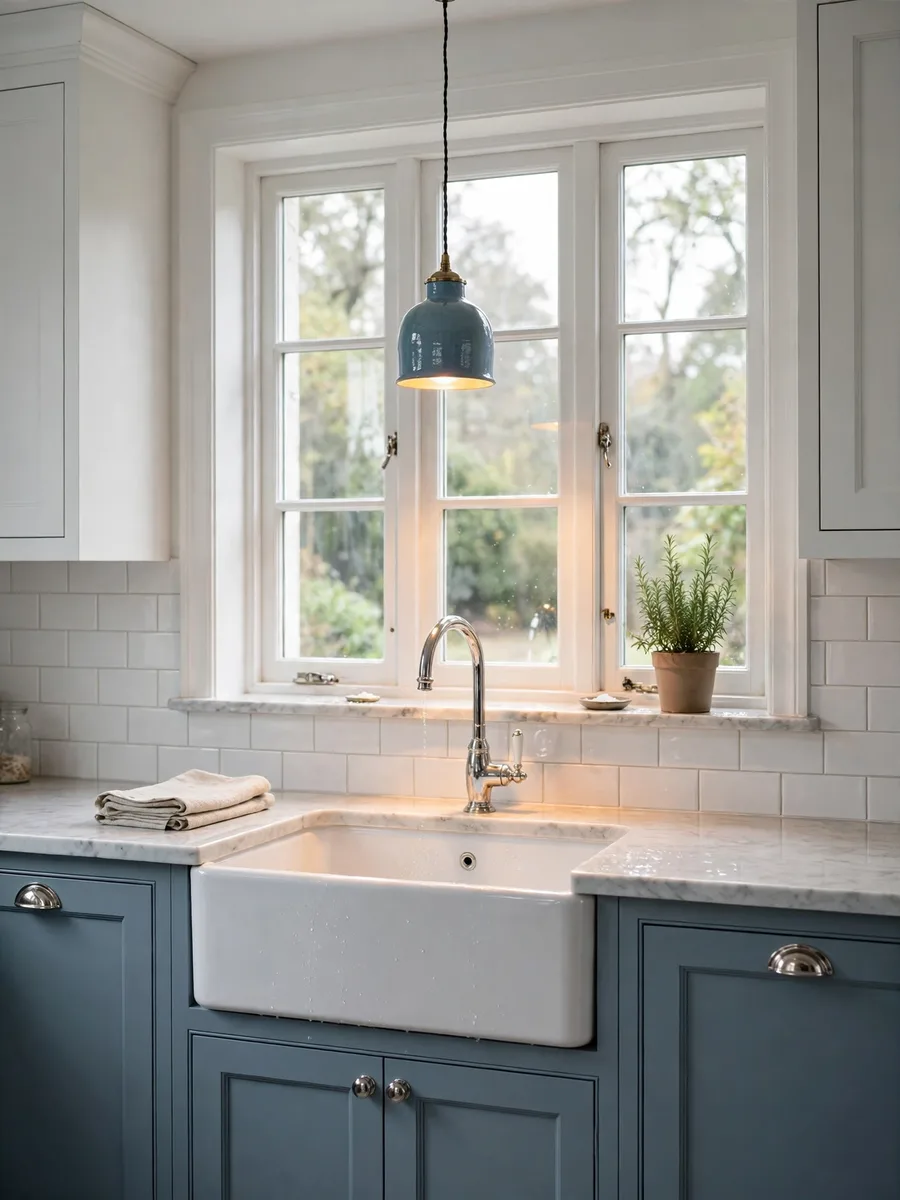
The sink is one of the hardest-working spots in the kitchen, yet it is often the darkest — tucked under a window or shadowed by wall cabinets. A single small ceramic pendant hung over the sink fixes that in an afternoon. For example, in a white kitchen with dusty blue lower cabinets and a Belfast sink under a wide window, a small glazed ceramic pendant in soft blue throws focused light onto the basin for washing up and rinsing vegetables, and its color echoes the cabinets so the run feels designed.
Quick tips:
- Center the pendant over the middle of the sink.
- Pick a glazed ceramic that wipes clean easily.
- Keep the drop short so it never blocks the window.
5. Recessed Downlights in a Clean Grid
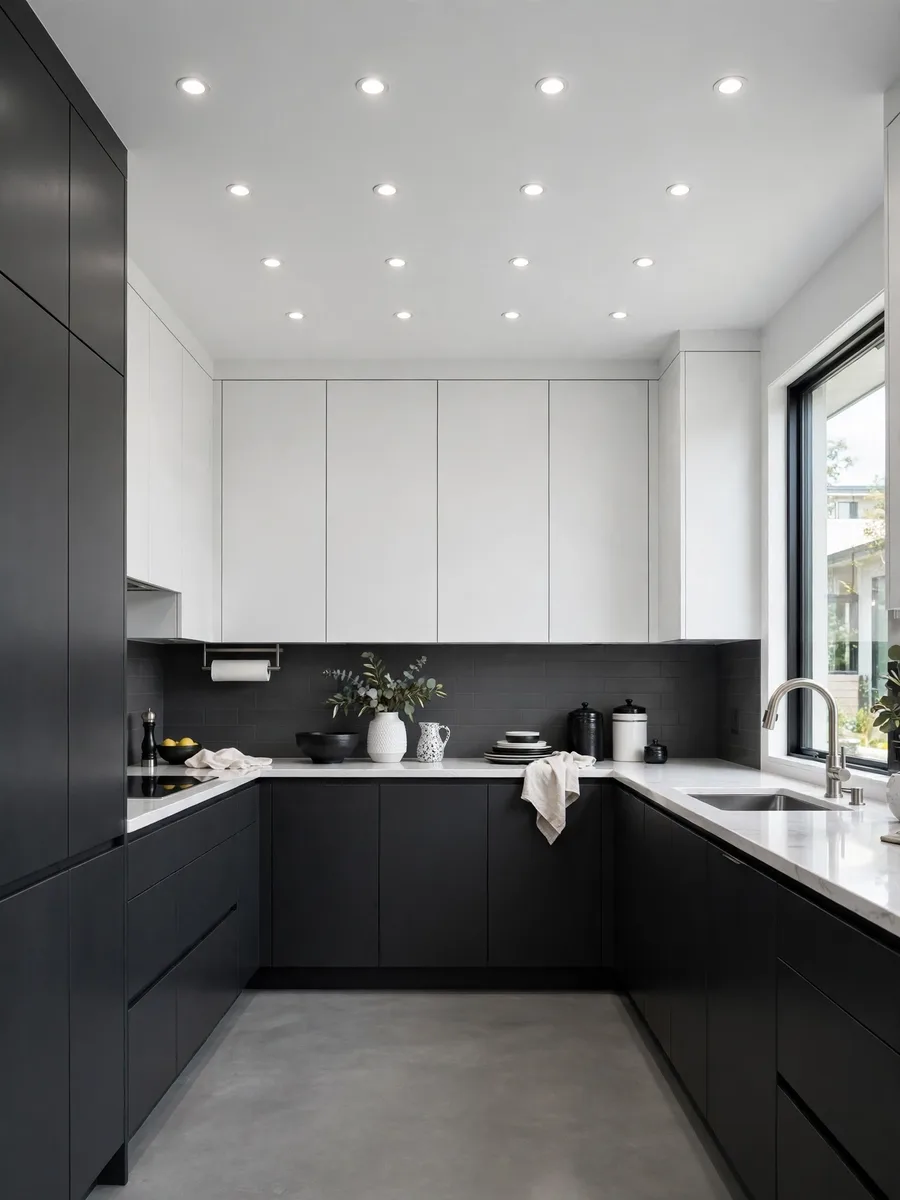
Recessed downlights are the quiet workhorse of kitchen lighting: they spread even light across the whole room without taking up any visual space, which makes them ideal for low ceilings and clean modern schemes. For example, in a charcoal and white kitchen with handleless cabinets and a polished concrete floor, six slim downlights set in a neat grid over the front edge of the worktops — not the center of the floor — light every surface evenly and keep the ceiling looking calm. Aim for warm white bulbs and a dimmer, so the same grid goes from bright cleaning light to a soft evening glow.
Quick tips:
- Place downlights over the front edge of worktops.
- Keep the grid even — measure, do not guess.
- Use the same bulb temperature in every fitting.
6. Warm Light Inside Glass-Front Cabinets
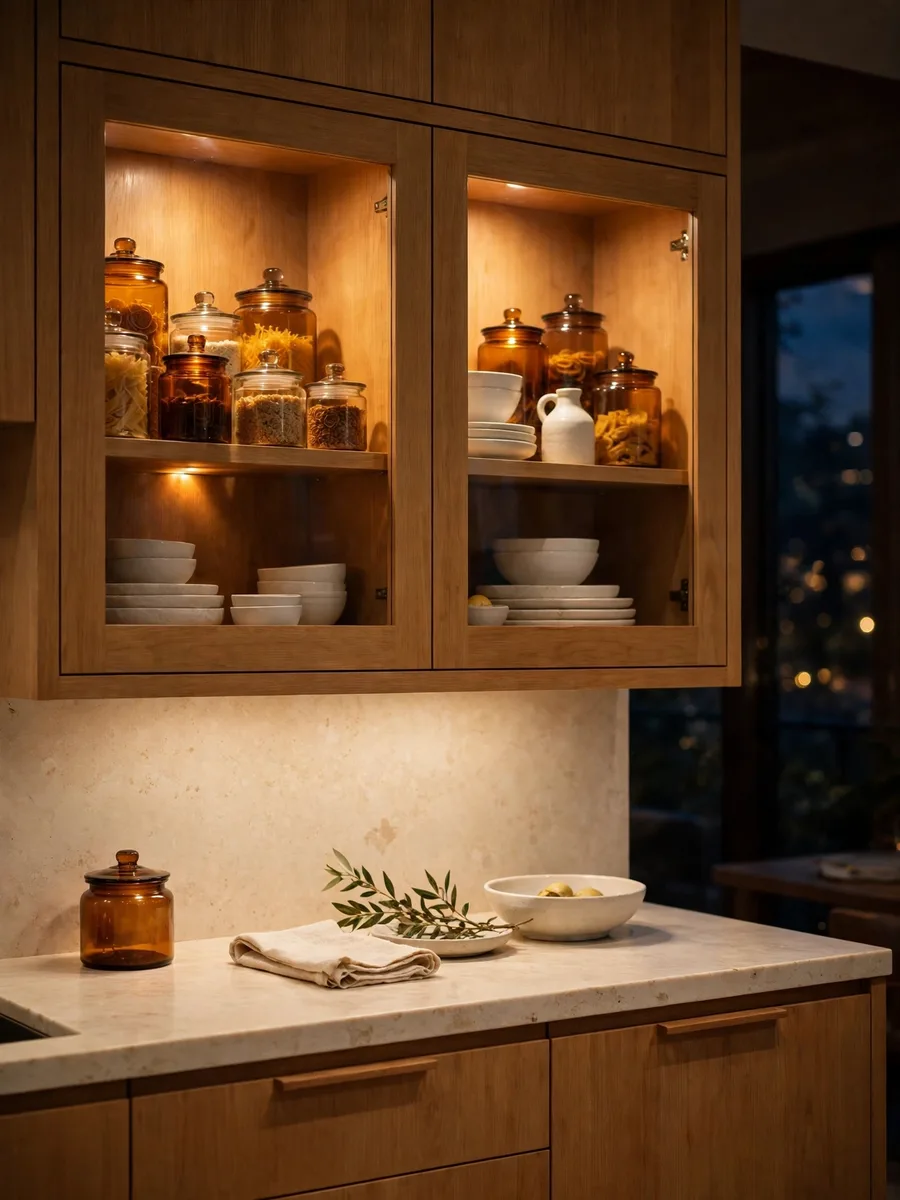
Small lights inside glass-front cabinets turn everyday dishes into a display and add a soft glow that makes the whole kitchen feel warm after dark. For example, in a honey-toned wood kitchen with cream stone worktops, slim LED pucks tucked into the top of two glass-fronted wall cabinets light a row of amber glass jars and white stoneware from above, so the cabinets glow like lanterns in the evening. It is also practical — you can finally see what hides at the back of the shelf.
Quick tips:
- Light only one or two cabinets, not every one.
- Warm white suits wood cabinets best.
- Keep shelves tidy — lit cabinets show everything.
7. Brass Sconces Flanking Open Shelves
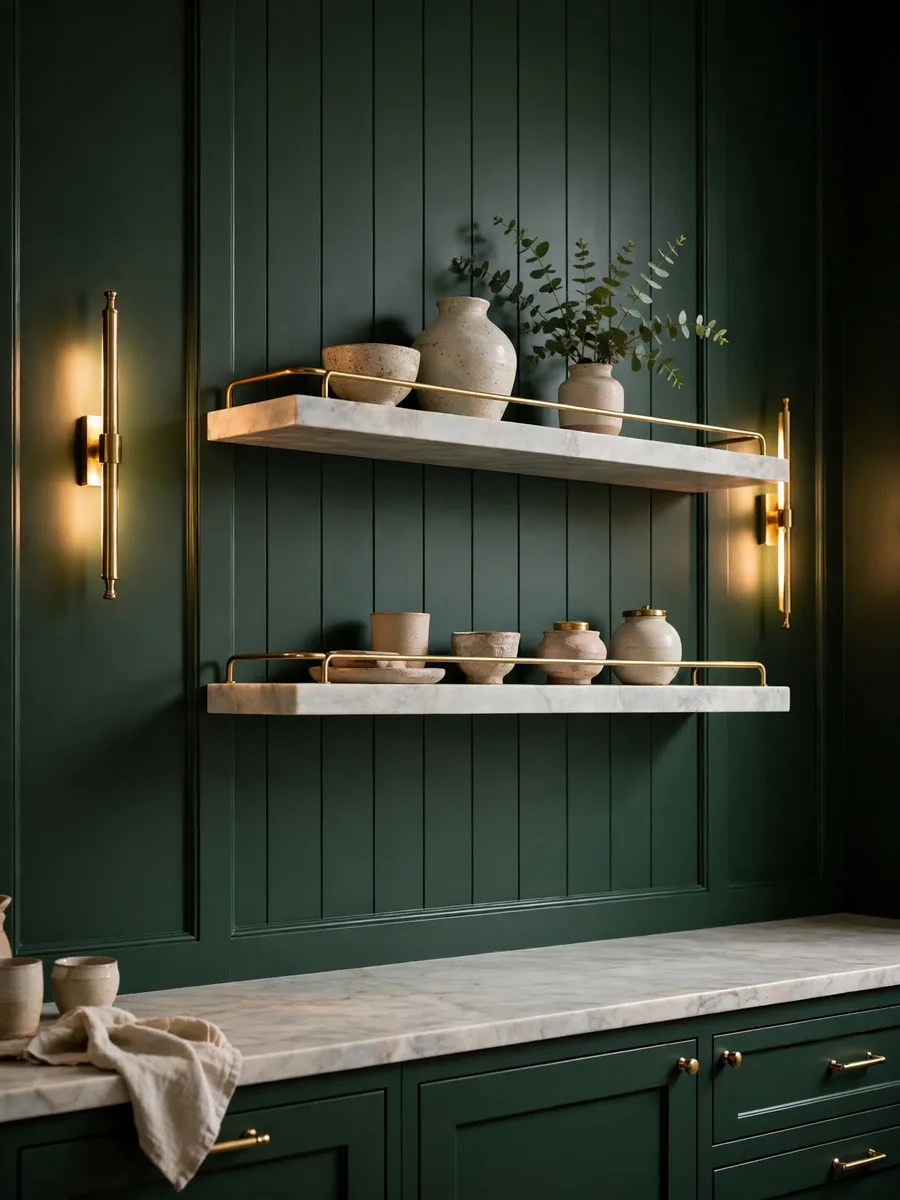
Wall sconces bring a softer, more decorative light into a kitchen, and they are perfect for the wall space around open shelves where a ceiling fitting cannot reach. For example, in a deep forest green kitchen with pale marble shelves and brass rail details, a pair of slim brass sconces mounted either side of the shelving washes the green paint with warm light, highlights the ceramics on display, and makes the whole wall feel like a styled living-room feature instead of a storage run. Sconces also add light at eye level, which flatters the whole room.
Quick tips:
- Mount sconces at eye level, about 60 inches up.
- Use a matching pair for a balanced look.
- Choose shades that throw light up and down.
8. A Statement Chandelier Over the Island
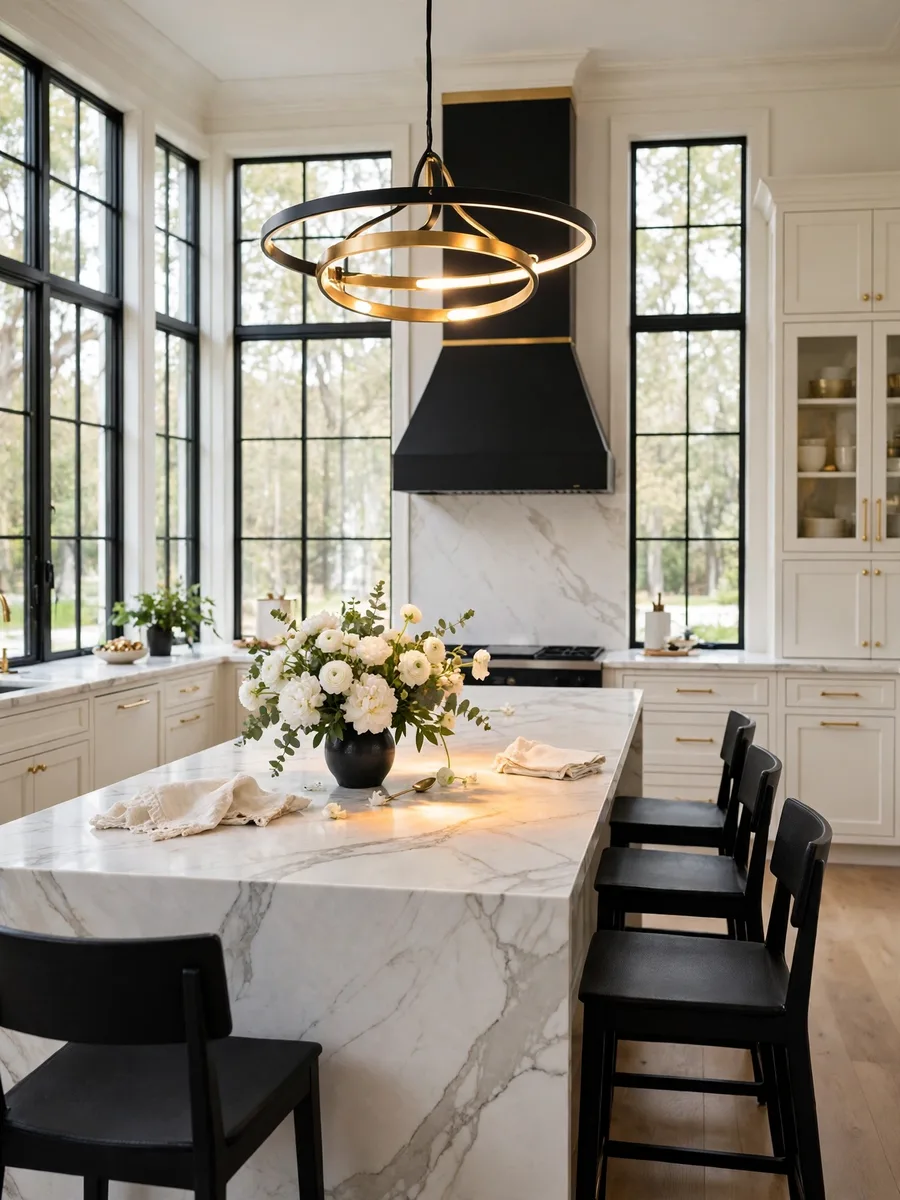
A chandelier in the kitchen sounds grand, but over a large island it works beautifully — it fills the vertical space, adds instant elegance, and gives the room a centerpiece that guests notice first. For example, in a spacious ivory kitchen with a long marble island and matte black bar stools, a modern black and gold ring chandelier hung centrally over the island draws the eye down to the worktop, balances the pale cabinets, and throws a warm, even light over the whole seating area. Keep the design open so it never blocks the view across the room.
Quick tips:
- Size the chandelier to about two-thirds of the island length.
- Hang it on a dimmer for evening dining.
- Keep the frame open so sightlines stay clear.
9. A Soft Glow Along the Toe Kick
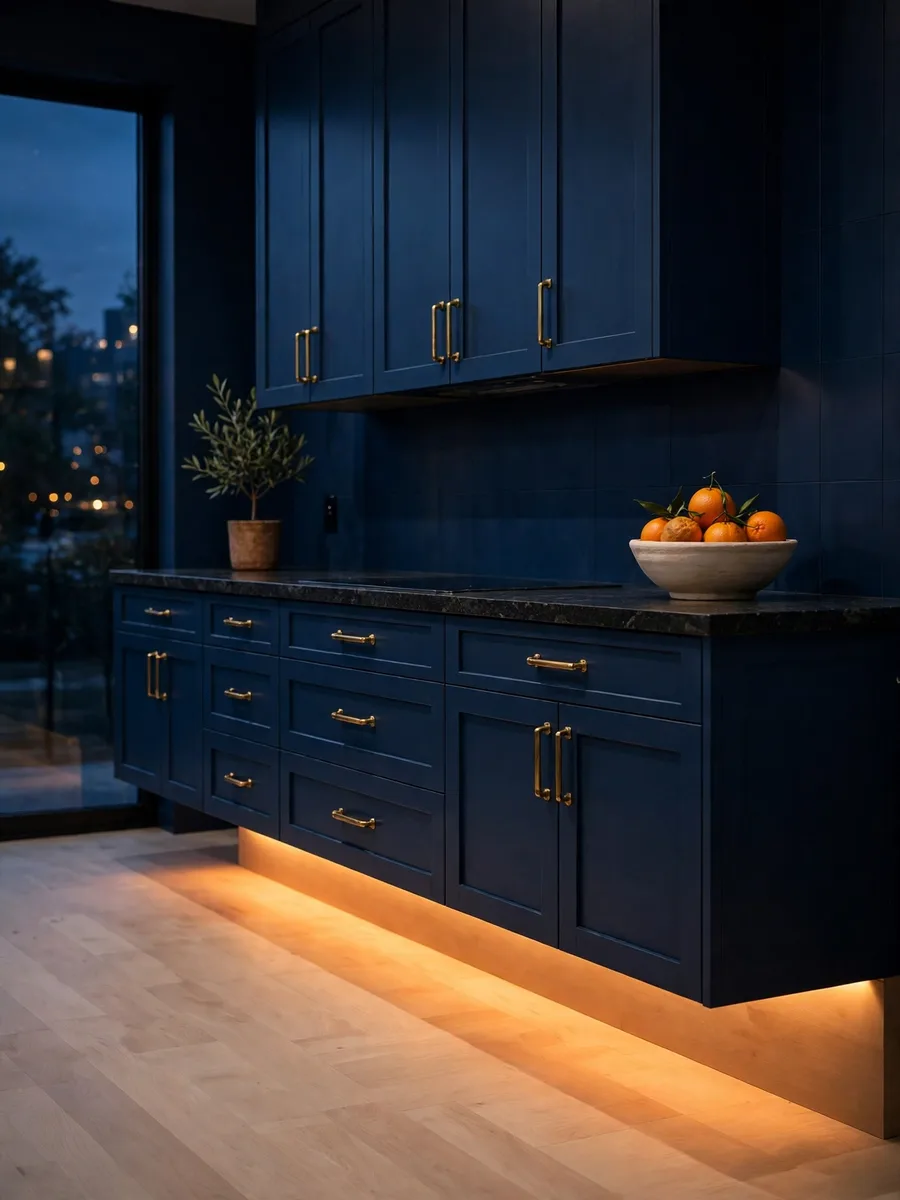
Toe-kick lighting — a slim LED strip tucked under the base cabinets — makes the cabinets look as if they float, and it is the most useful night light a kitchen can have. For example, in a deep navy kitchen with pale wood floors, a warm amber strip along the plinth casts a gentle pool of light across the floorboards, so a midnight glass of water needs no overhead light at all, and in the evening it makes the heavy navy units feel lighter. It costs very little and changes how the room feels after dark more than any ceiling fitting.
Quick tips:
- Use warm white so the glow feels cozy, not clinical.
- Wire it to a sensor or a low evening switch.
- Keep the strip hidden — only the glow should show.
10. Flexible Track Lighting for a Galley Kitchen
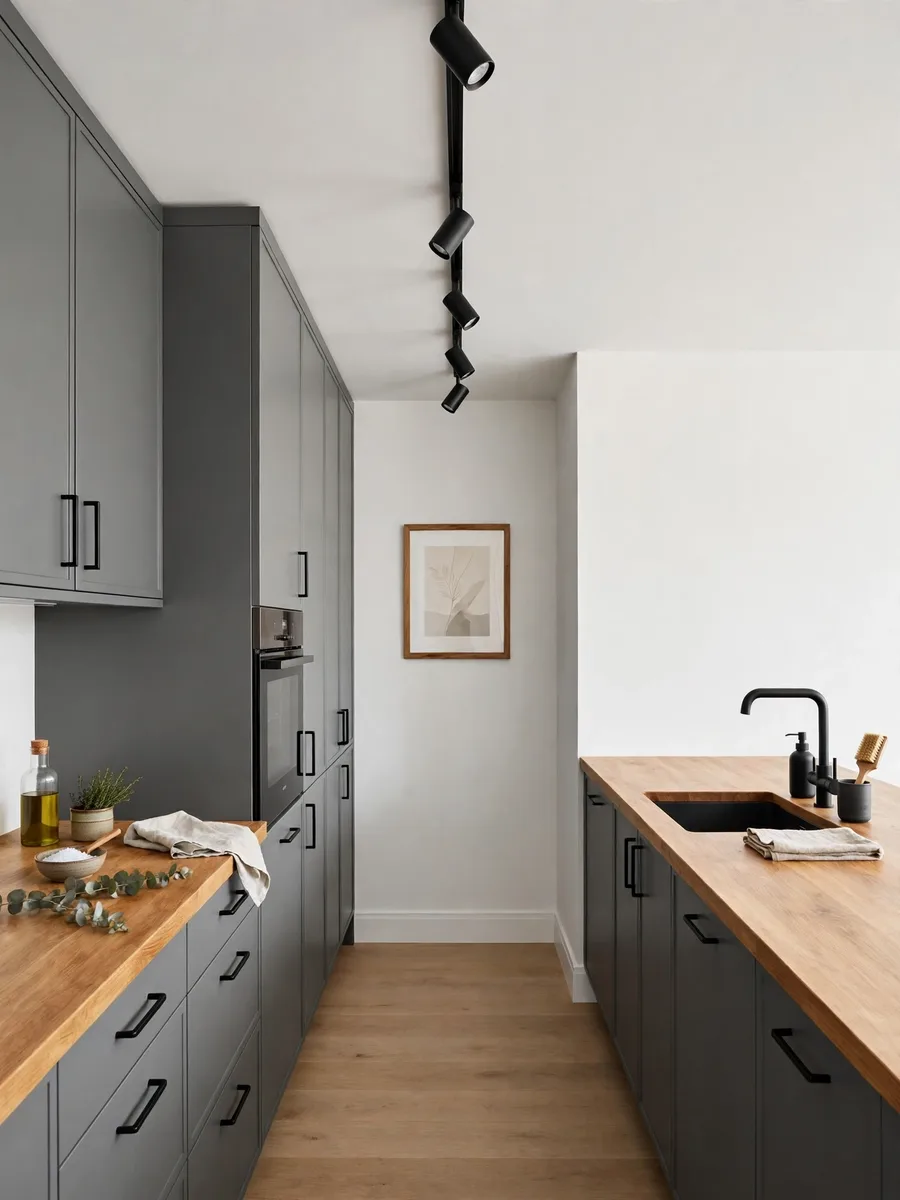
Long, narrow galley kitchens are hard to light with a single ceiling fitting, because the light pools in the middle and leaves both worktops in shadow. Track lighting solves it: the heads slide and swivel, so each one can be aimed exactly where it is needed. For example, in a graphite grey galley kitchen with warm timber worktops and white walls, a single matte black track down the center of the ceiling carries five adjustable heads — two aimed at each worktop run and one at the art on the far wall — so every surface is lit and the room feels wider, not longer.
Quick tips:
- Aim heads at worktops, not at the floor.
- Keep the track centered along the ceiling.
- Add one head for a feature wall or art.
11. Rustic Lantern Pendants in a Farmhouse Kitchen
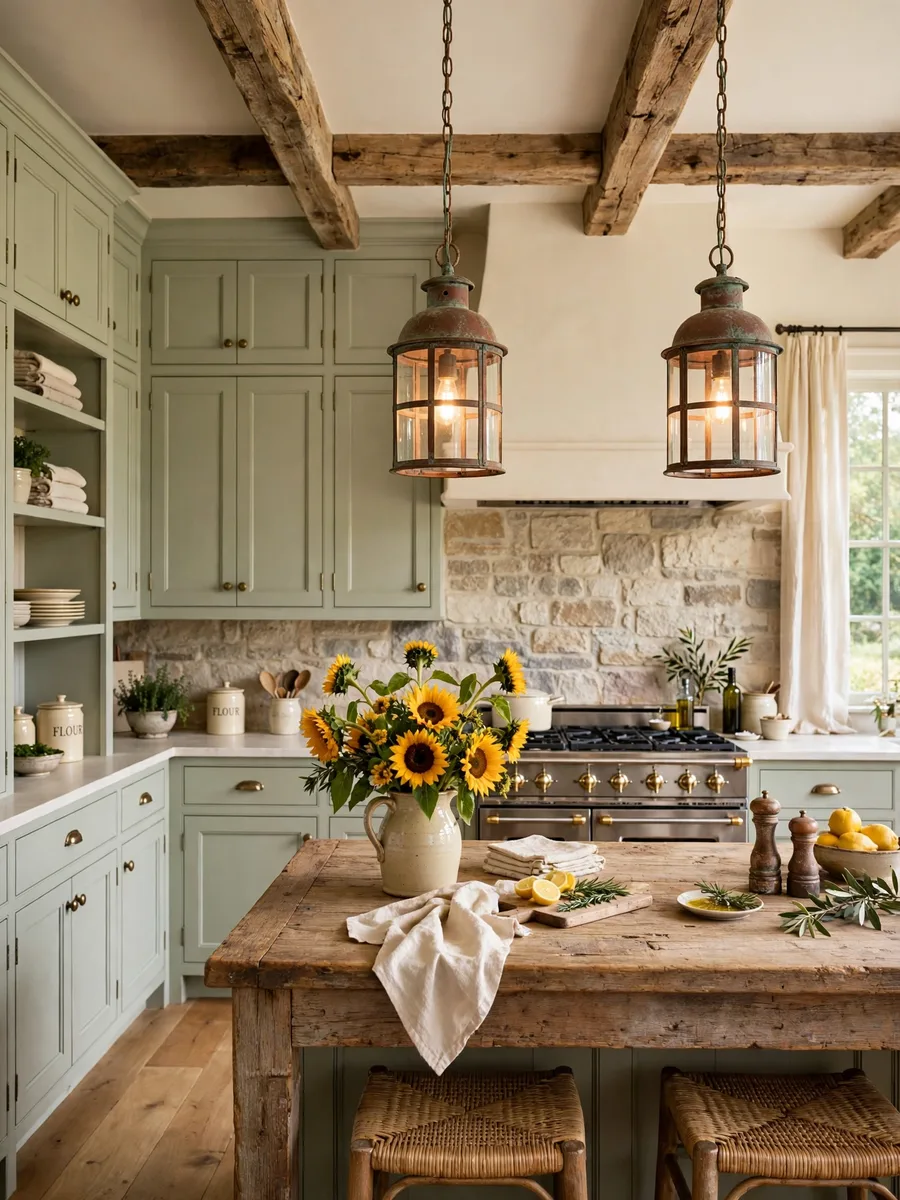
Lantern pendants bring instant farmhouse charm to a kitchen, and their open frames throw light in every direction, which suits rooms with beams, open shelving, and natural textures. For example, in a cream farmhouse kitchen with a weathered oak table, soft sage painted cabinets, and a stone backsplash, two weathered copper lanterns over the island cast a warm glow through their glass panels, while the copper picks up the tones in the oak and stone. Use clear glass and warm bulbs so the light stays bright enough to work by.
Quick tips:
- Choose clear glass, not frosted, for task light.
- Two lanterns suit a standard island; three suit a long one.
- Match the lantern metal to other hardware in the room.
12. Dimmers and a Counter Lamp for Slow Evenings
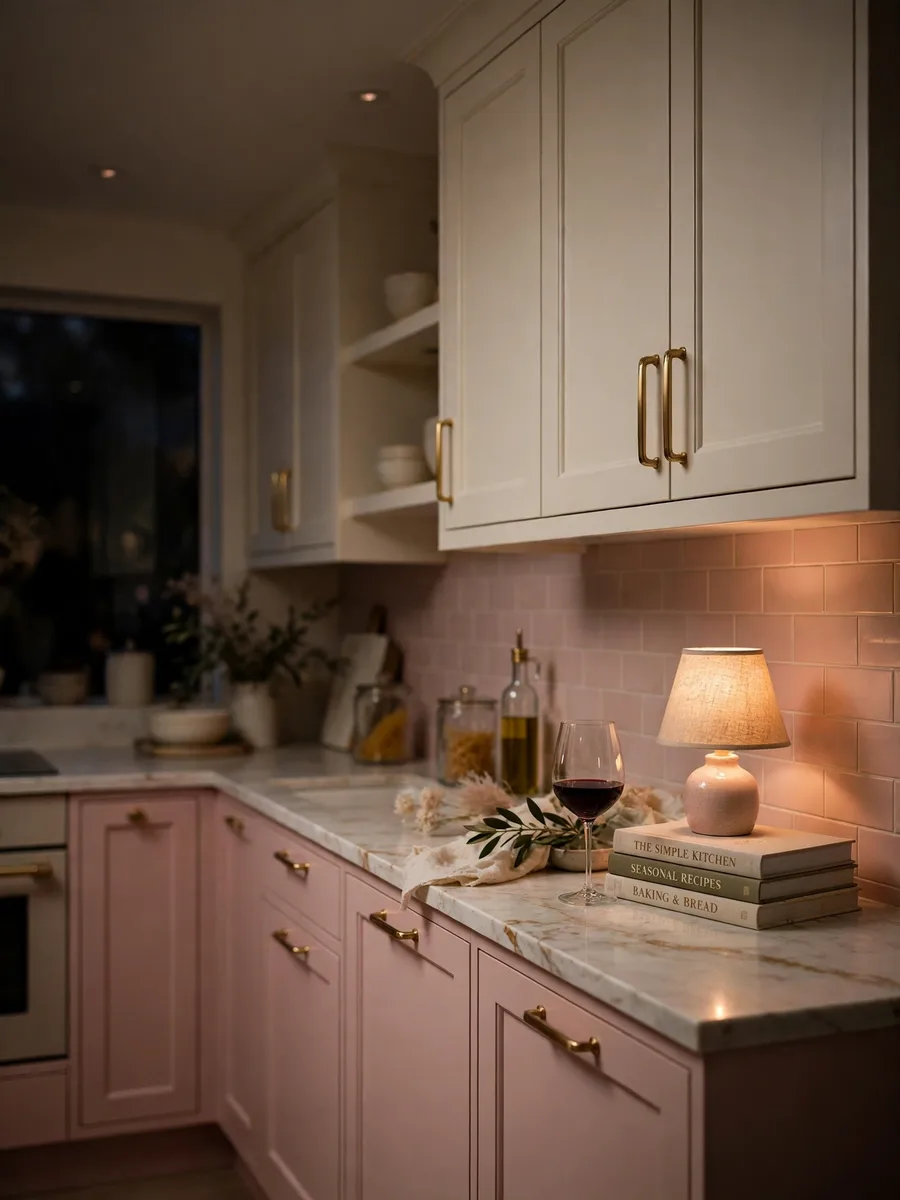
The final layer costs the least and changes the most: dimmers on every circuit, plus one small lamp on the counter for the evenings when the kitchen becomes a living room. For example, in a soft blush pink kitchen with cream cabinets and brushed gold handles, a tiny ceramic lamp with a linen shade sits at the end of the worktop beside a stack of cookbooks; with the ceiling lights dimmed low and the lamp on, the whole room glows like a cozy sitting room, perfect for a glass of wine while dinner simmers. It is the layer most people skip, and the one they notice most once it is there.
Quick tips:
- Put a dimmer on every light circuit.
- Keep the lamp away from the hob and sink.
- Use a warm bulb so the lamp glow feels soft.
Kitchen Lighting Ideas: Your Questions Answered
What is the best lighting for a kitchen?
Layered lighting: ceiling lights for general light, under-cabinet strips or pendants for task light on the worktops, and a soft accent layer for the evening, each on its own switch. No single fitting can do all three jobs well.
What color temperature is best for a kitchen?
Warm white around 3000K is the most popular choice — warm enough to feel welcoming in the evening, yet clear enough to see what you are cooking. Use the same temperature on every fitting so the whites match.
How high should pendant lights hang over a kitchen island?
About 30 to 36 inches above the countertop is the common guideline. That height lights the surface well while keeping the view across the island clear, and it works for most ceiling heights.
How many lumens do I need for a kitchen?
As a rough guide, aim for 250 to 350 lumens per square metre from the ceiling lights, with task lighting on top of that. A 12-square-metre kitchen needs roughly 3,600 lumens from the ceiling, plus under-cabinet strips for the worktops.
Should kitchen lights be on separate switches?
Yes. Put the ceiling lights, under-cabinet lights, accent lights, and island pendants on separate switches or dimmers, so you can set the kitchen for cooking, eating, or relaxing without turning everything on at once.
Conclusion
The best kitchen lighting ideas are not the most expensive fittings — they are the ones that put the right light in the right place, on its own switch, at a warmth that suits your home. Pick one idea, start with the worktops, and add a layer at a time. By the time the evening glow comes on, your kitchen will feel brighter, calmer, and far more expensive than it did this morning.