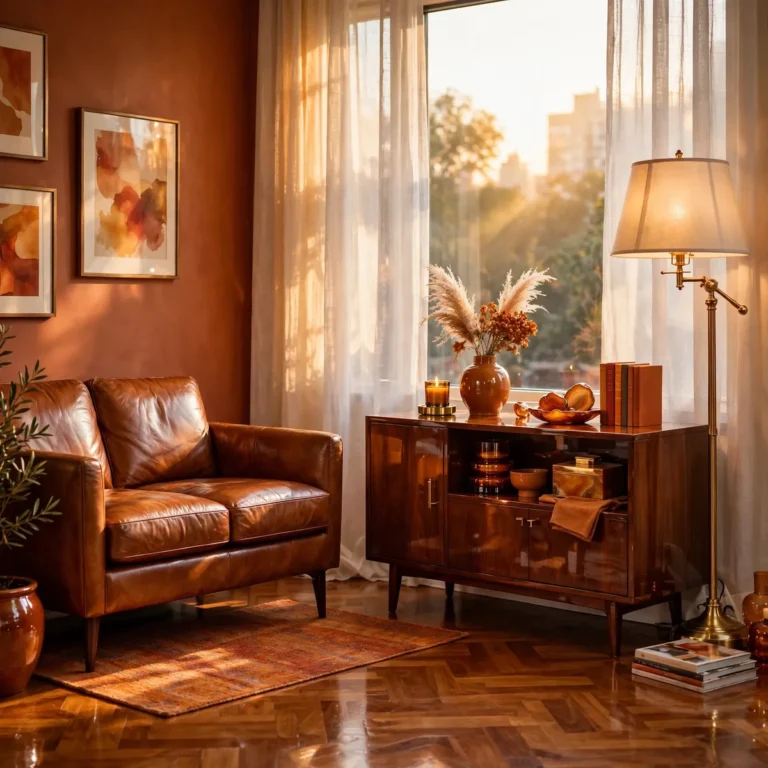
12 Stunning Living Room Shelf Decor Ideas That Make Your Shelves Look Designer-Styled
Key Takeaways
Q: What makes living room shelf decor ideas look designer-styled?
A: Layering: mix tall and short objects, books and plants, and leave breathing room so every shelf feels intentional.
Q: How many items should go on one shelf?
A: Three to five objects per shelf. Odd numbers look more natural, and a little empty space keeps the display from feeling cluttered.
Q: What should you put on living room shelves?
A: A mix of books, plants, ceramics, framed art, candles and one personal piece gives shelves warmth and texture without looking like a shop display.
Q: How do you stop shelves from looking messy?
A: Repeat one or two colours, vary object heights, and hide clutter in baskets on the lowest shelves.
Great living room shelf decor ideas turn plain shelves into the most admired spot in the room. The secret is not buying more things — it is styling what you already own: layering heights, repeating colours, and leaving a little empty space so each object can breathe. Here are twelve ideas for floating shelves, built-ins and bookcases, most using pieces you already own. For more inspiration, explore these floating shelf decor ideas to match the right shelf style to your room.
1. How Do Floating Shelves With Books Anchor a Living Room?
Books anchor a shelf because their strong lines give the eye a place to rest, and a stack instantly makes a shelf feel lived-in rather than staged.
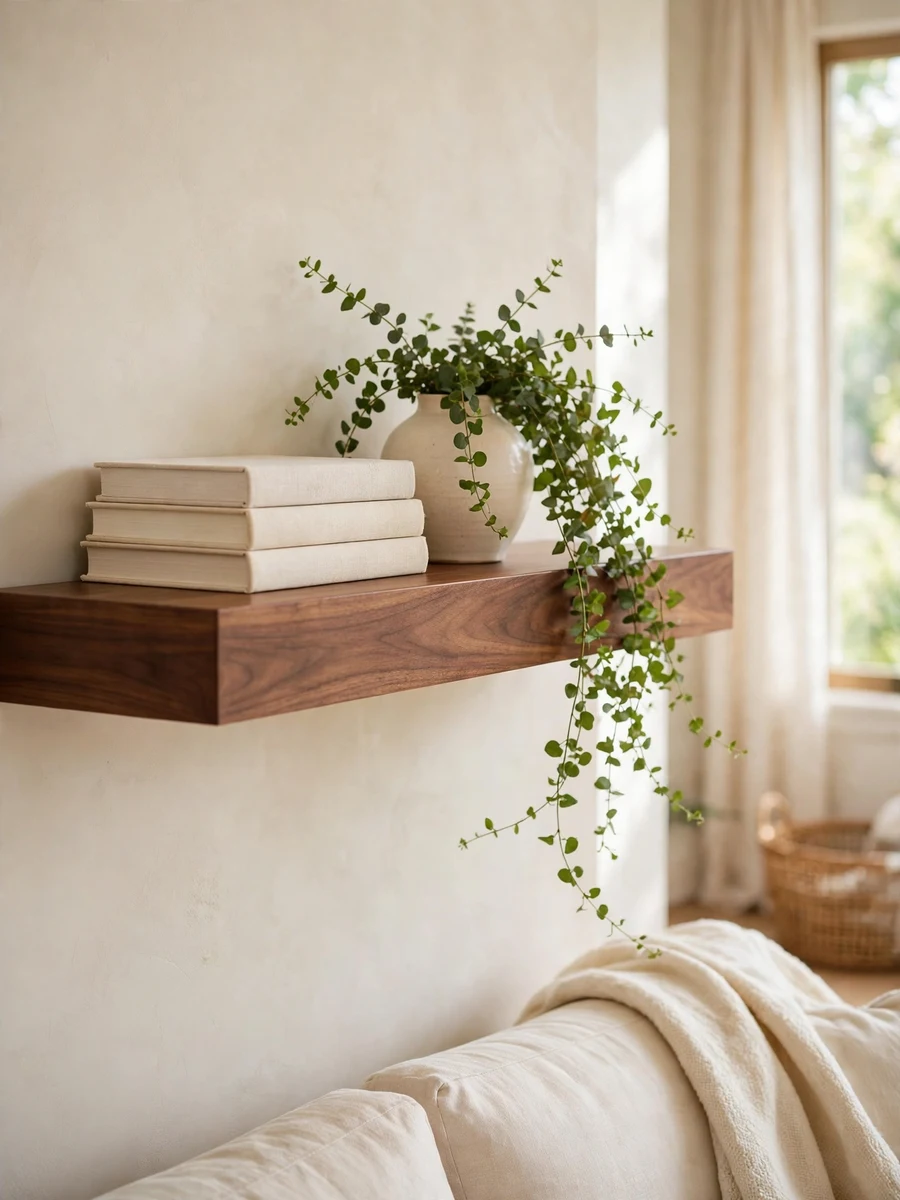
Put upright books on one end and a horizontal stack on the other, then set a small candle or vase on top. That mix of vertical and horizontal shapes breaks up the shelf’s straight line, and warm walnut and cream tones keep colours quiet against your furniture.
For a concrete example, picture a walnut shelf above a reading chair: five cream novels stand upright on the left, three larger books lie flat on the right, and a small bud vase with one eucalyptus stem sits on top.
Quick tips
- Mix upright rows with one flat stack.
- Keep spines in one colour family.
- Leave a hand’s-width gap between groups.
2. Where Do Plants Look Best on Living Room Shelves?
Plants look best on the top shelf and at the ends of lower shelves, where trailing leaves spill over the edge and draw the eye upward.
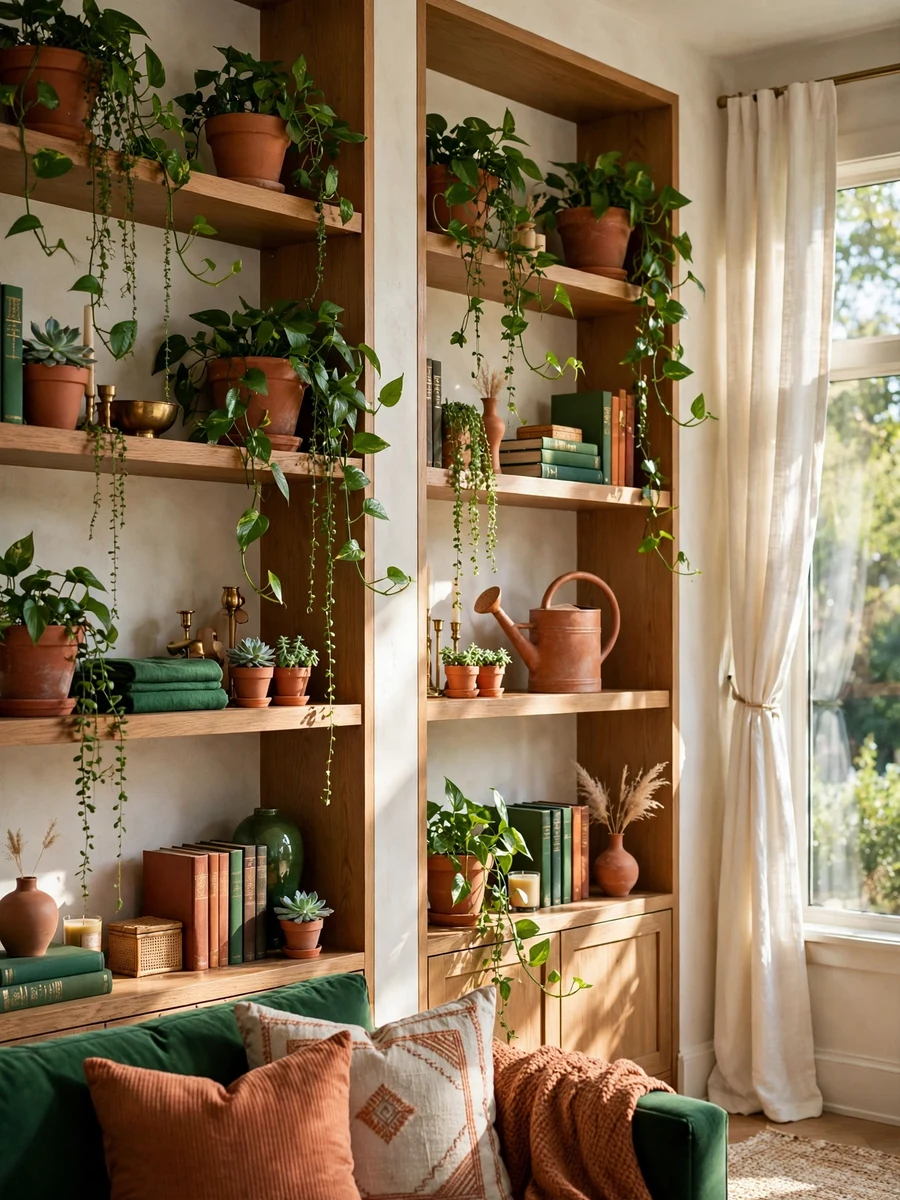
Greenery softens the hard lines of wood and books, and a trailing plant fills vertical space while adding movement. Small succulents suit middle shelves; a larger leafy plant in terracotta belongs on top, where emerald green against terracotta brings fresh warmth. For more greenery, these living room plant ideas pair beautifully with shelf styling.
For a concrete example, try a pothos in a terracotta pot on the top shelf, vines trailing past the middle shelf, with a succulent in a cream pot beside the books below.
Quick tips
- Put trailing plants up top so vines can cascade.
- Use real plants by windows, good faux ones in dark corners.
- Repeat one pot colour twice for a pulled-together look.
3. How Can a Gallery Shelf Display Framed Art?
A gallery shelf displays framed art best when frames lean in a loose row of varied heights, like a small gallery wall you can rearrange anytime.
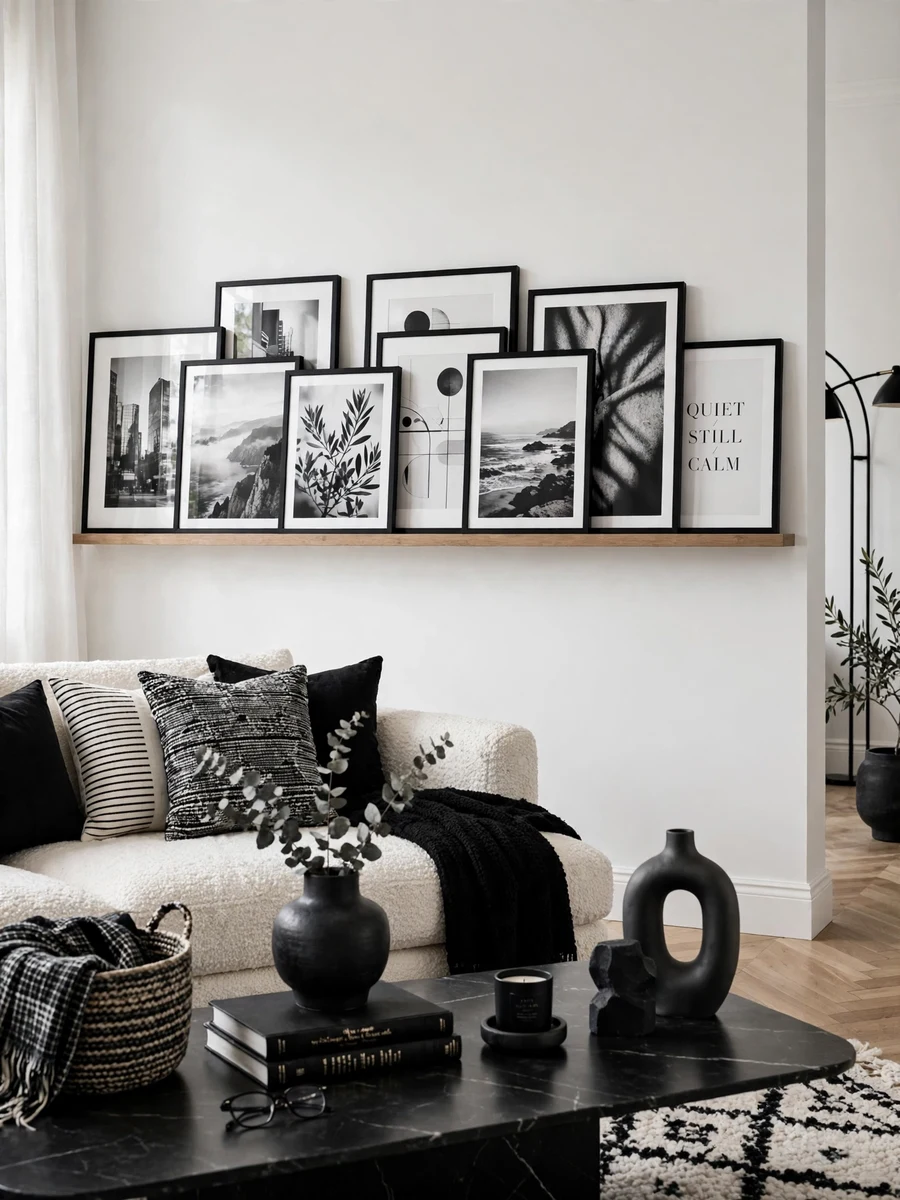
Picture ledges are made for this. Lean three or four frames against the wall, overlapping slightly, tallest at the back and smallest in front. Black frames on a white wall give a crisp, classic look for photography, line drawings or bold prints, and since nothing is nailed down, you can swap a print in seconds.
For a concrete example, imagine a slim black ledge above a console: a large black-and-white landscape print leans at the back, a smaller botanical sketch overlaps its corner, and a small framed snapshot stands in front.
Quick tips
- Overlap frames slightly; never space them evenly.
- Keep all frames one colour for a gallery feel.
- Anchor the ledge with one large piece.
4. What Makes Vases and Ceramics Perfect Shelf Decor?
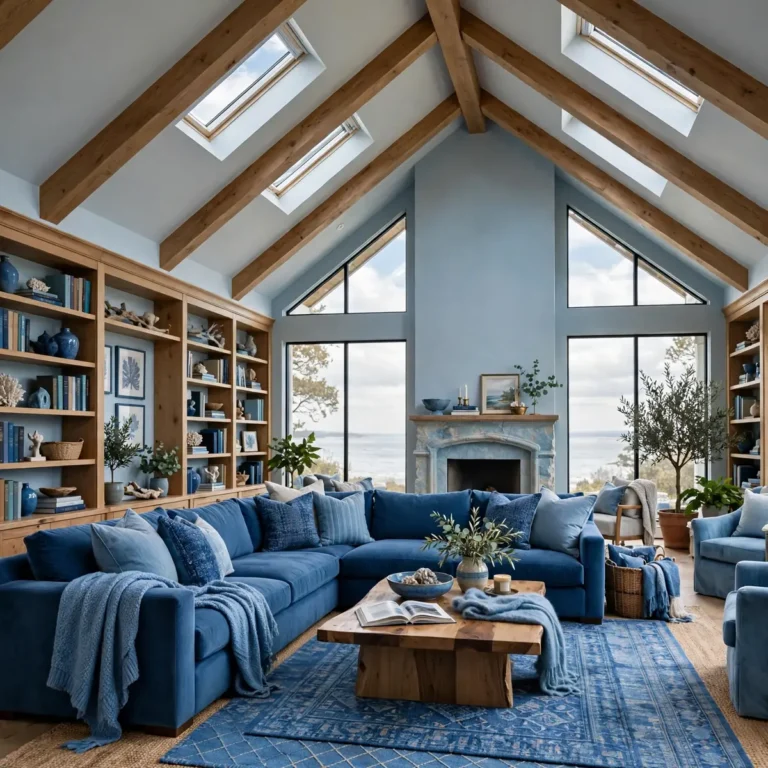
Vases and ceramics are perfect shelf decor because their curved shapes soften straight shelf lines, their glazes add quiet colour, and they look beautiful empty or filled.
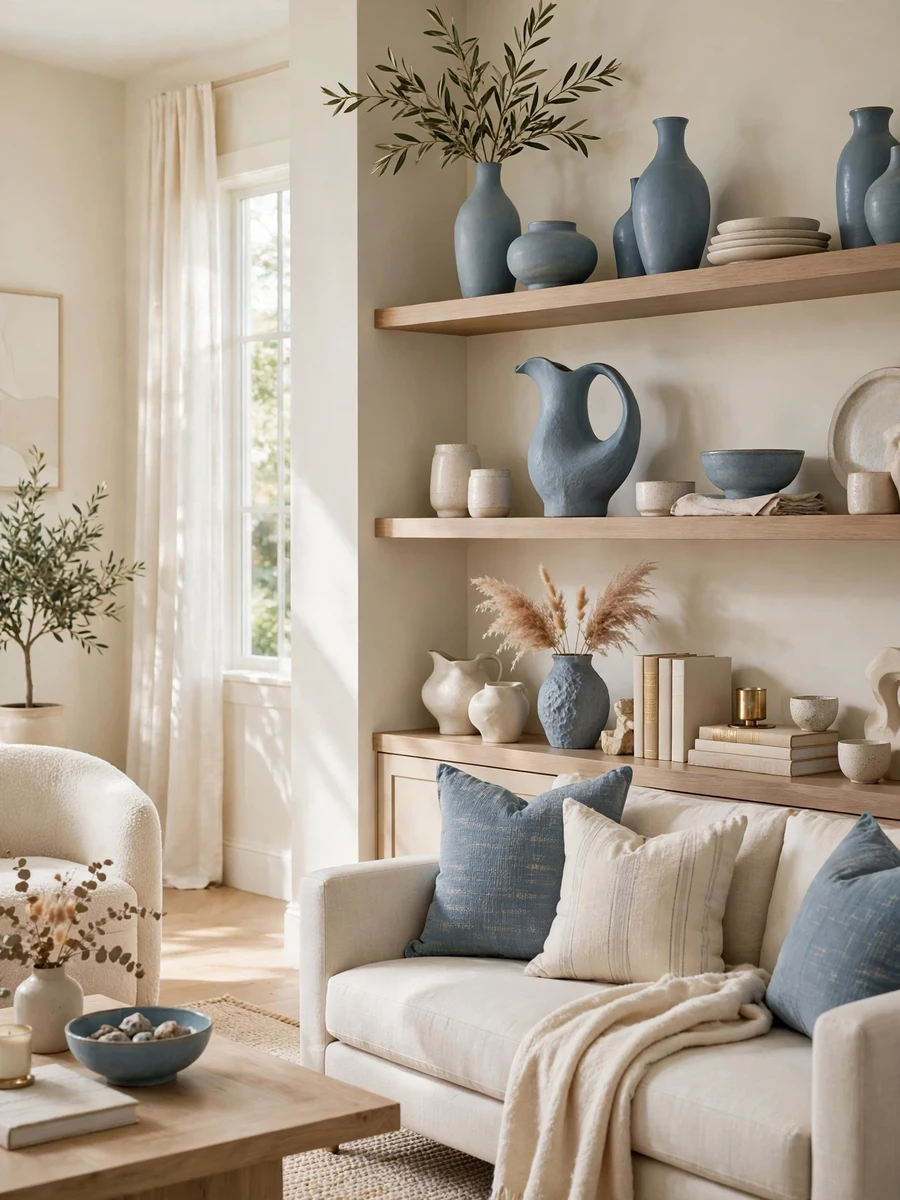
Three vases in different heights make one of the easiest shelf arrangements. Dusty blue ceramics against cream walls feel calm and coastal, and mixing matte and glossy finishes keeps the group interesting even when shapes are simple. One stem, dried grasses or nothing at all — ceramics earn their place either way.
For a concrete example, place a tall dusty blue vase, a medium stoneware jug and a small cream bowl on one shelf, tallest at the back, with a dried pampas stem in the tall vase. The shelf looks like a styled photograph.
Quick tips
- Group ceramics in threes with varied heights.
- Mix matte and glossy finishes for texture.
- Let one vase stand alone if the shelf is small.
5. How Do You Layer Objects on a Shelf Like a Designer?
Designers layer objects with tall pieces at the back, medium pieces in the middle and small pieces in front, so a shelf reads as a scene, not a flat row.
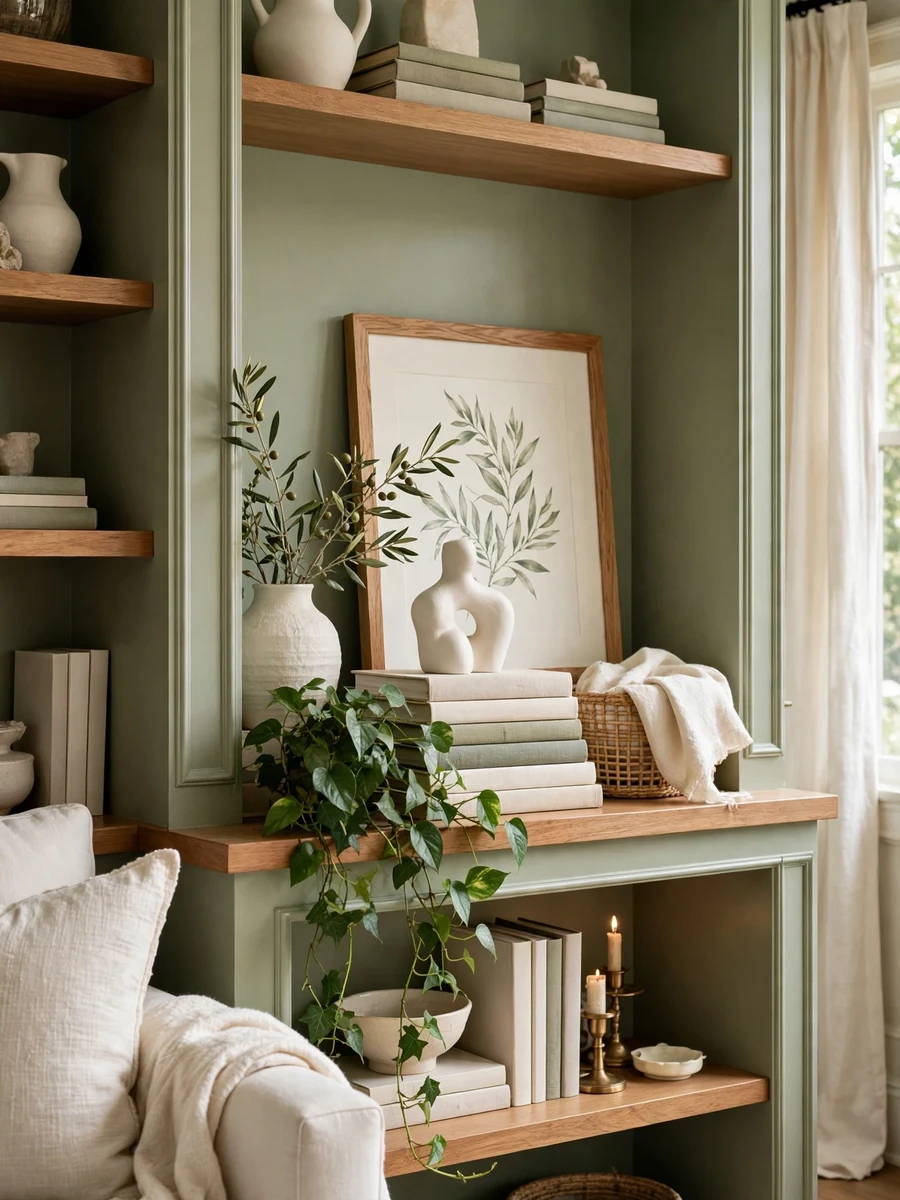
Layering is what separates a styled shelf from a lined-up one. Start with a tall anchor — a framed print or a large vase — add a medium object in front, like a stack of books, and finish with a small accent. Sage green and ivory keep the layers soft, so the eye moves across the shelf instead of stopping on one bright object.
For a concrete example, lean a sage green print at the back, set two ivory books in front of it, and place a ceramic bird on top. Three layers, three objects — professionally styled.
Quick tips
- Always work back to front: tall, medium, then small.
- Overlap objects slightly so layers feel connected.
- Check the shelf from across the room.
6. How Do Candles and Lanterns Add Warmth to Shelves?
Candles and lanterns add warmth because their soft glow and amber tones make a shelf inviting at night, turning a daytime display into a cosy evening focal point.
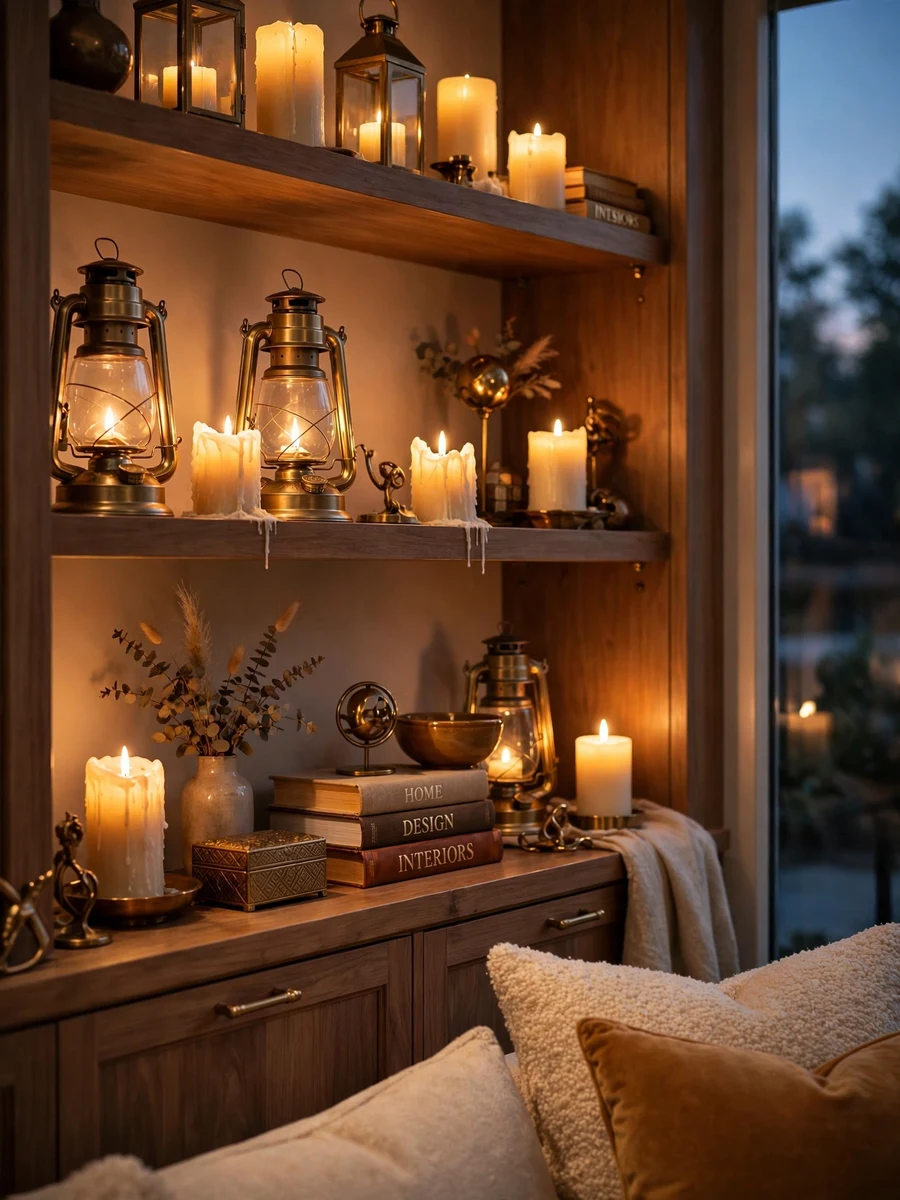
Group candles in odd numbers and mix heights: a tall pillar beside a short votive and a brass lantern creates a cluster of light. Amber glass and brass catch the flame and scatter a golden glow, which is why this combination works so well in the evenings. Battery candles give the same look and are safer up high.
For a concrete example, set a brass lantern, two amber pillar candles and a stack of books on a middle shelf near the sofa. Lit in the evening, the shelf becomes the warmest corner of the room.
Quick tips
- Group candles in odd numbers for a natural look.
- Keep flames away from books, plants and curtains.
- Use battery candles on high or hard-to-reach shelves.
7. Why Do Baskets Belong on Lower Living Room Shelves?
Baskets belong on lower shelves because they hide everyday clutter within easy reach, while their woven texture warms the bottom of a shelving unit.
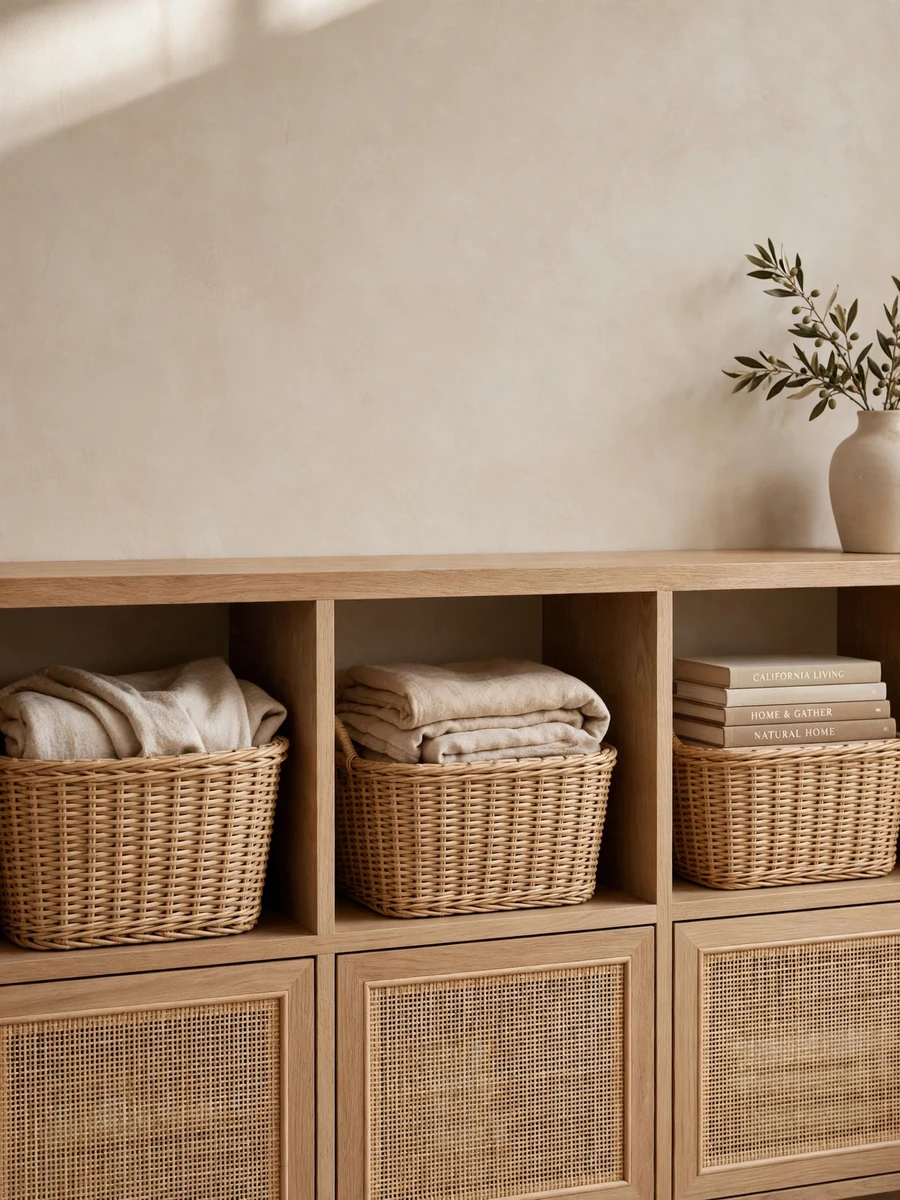
The lowest shelf is where clutter collects — remotes, chargers, toys — and a basket turns that mess into a design feature. Natural rattan and beige baskets suit almost any colour scheme and are sturdy for daily use, so one basket per section keeps the bottom row tidy, not busy.
For a concrete example, slide a rattan basket onto the bottom shelf and fill it with throws, with a smaller basket beside it for remotes and chargers. The shelf looks styled, and the clutter has a home.
Quick tips
- Use baskets on the lowest shelf, where clutter lands.
- Match basket sizes to the shelf so nothing sticks out.
- Label the inside, not the outside.
Living Room Shelf Decor Ideas: What Works on High vs Low Shelves?
Not every object suits every shelf. Tall and light pieces belong up high, where they draw the eye upward, while heavy pieces belong down low, where they are easy to reach.
| Shelf position | Best for | Avoid |
|---|---|---|
| High shelves | Trailing plants, tall vases, framed art | Heavy books, lit candles, fragile heirlooms |
| Middle shelves | Books, sculptures, candle clusters, framed photos | Very tall objects |
| Low shelves | Baskets, heavy books, board games, storage boxes | Delicate ceramics, plants pets can reach |
When in doubt, put the prettiest pieces at eye level and the practical pieces at the bottom — eye level is where your guests look first.
8. How Can Sculptural Objects Give Shelves Personality?
Sculptural objects give shelves personality because their unusual shapes become conversation pieces, and one bold object says more than a shelf of small trinkets.
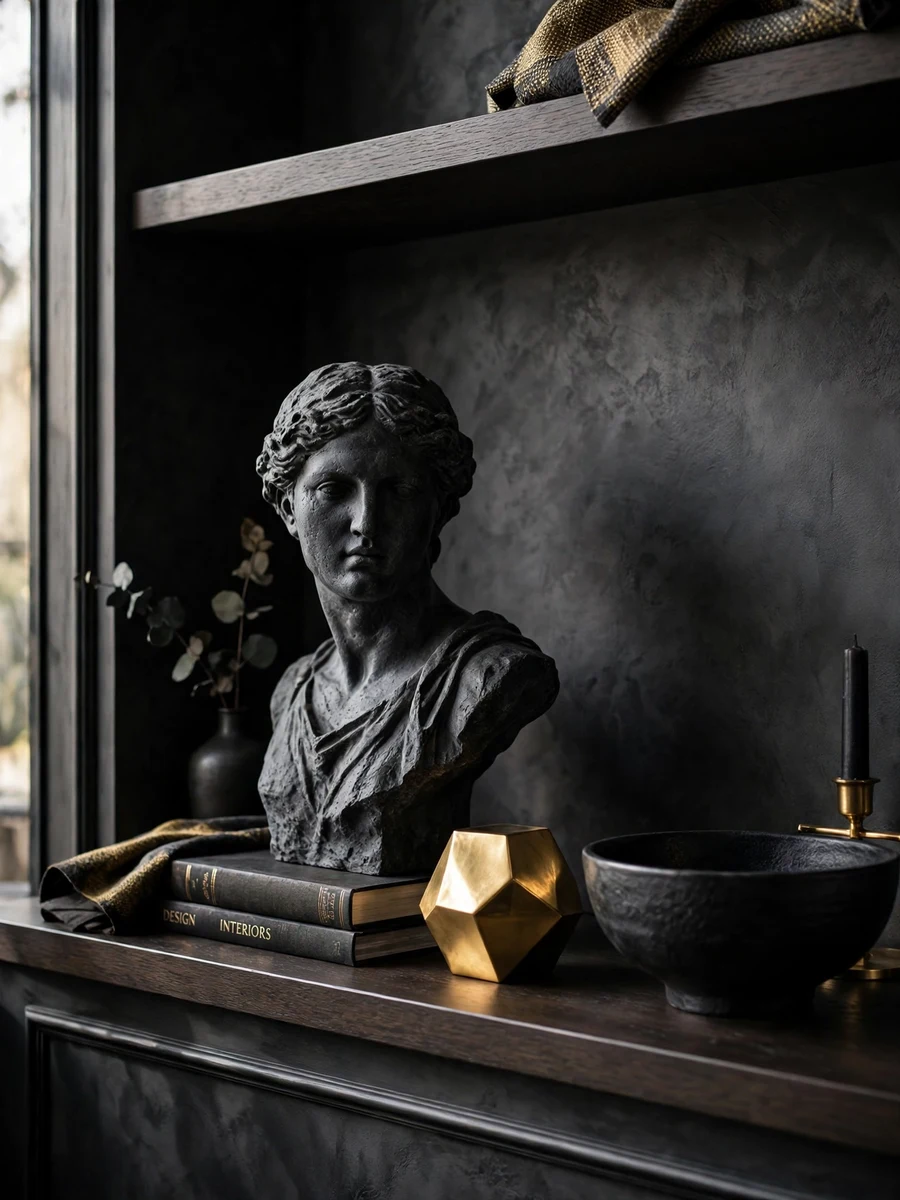
A single sculptural piece — a stone bust, a carved figure, a geometric metal object — acts as the star of the shelf, and everything else plays a supporting role. Charcoal and gold is a striking pairing: dark stone feels grounded, a touch of gold keeps it from feeling heavy. Keep the rest of the shelf quiet so the sculpture stands out.
For a concrete example, place a charcoal stone bust on a middle shelf with a gold sphere beside it and nothing else. Visitors will ask about the bust — exactly what a statement piece should do.
Quick tips
- Choose one statement object per shelf, not three.
- Give sculptures empty space on both sides.
- Pick pieces that mean something to you.
9. Where Should Family Photos Go on a Shelf?
Family photos belong on middle shelves at eye level, grouped in matching frames, where they are easy to enjoy every day without taking over the display.
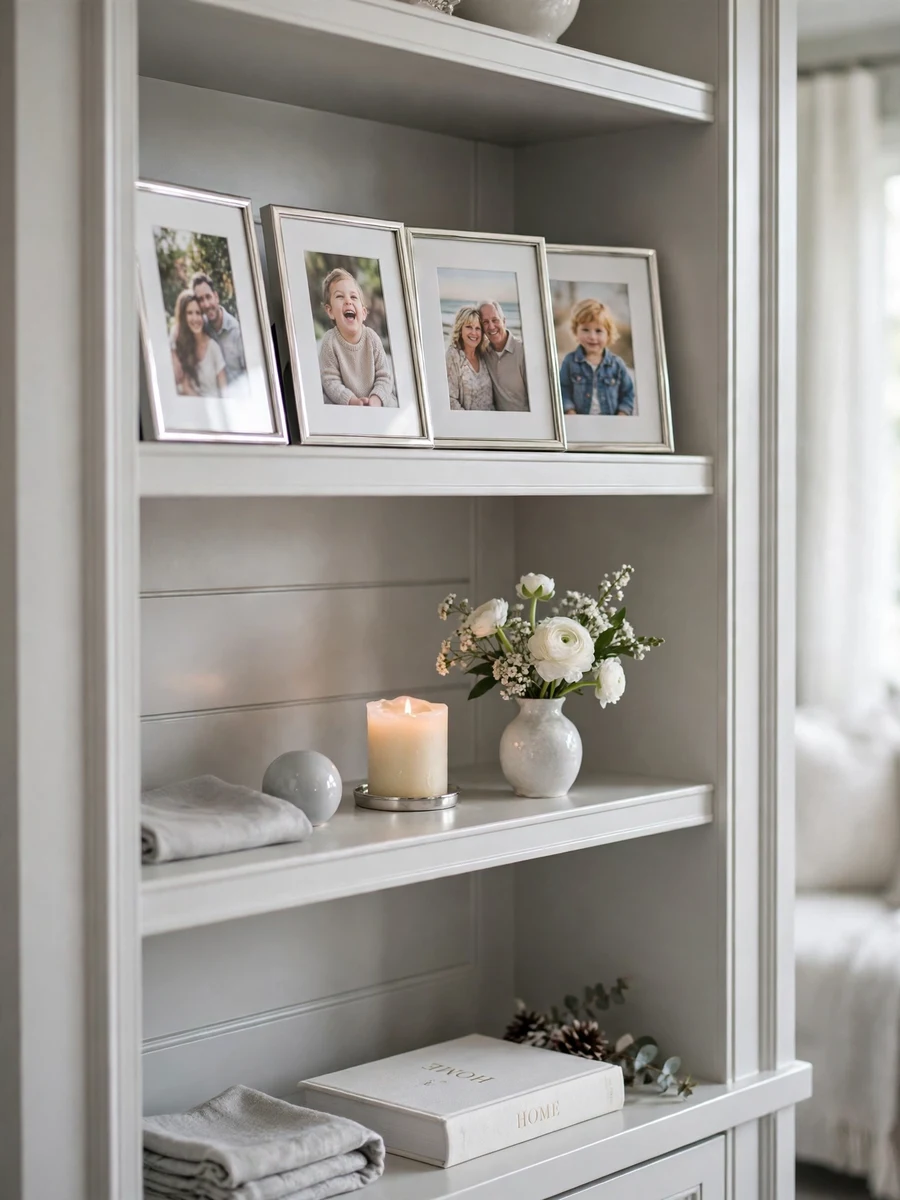
Photos are the most personal thing on a shelf, so they deserve a place of honour — but not every shelf. Two or three framed photos on one middle shelf feel warm and intentional, while photos on every shelf can make the room look like a hallway of frames. Soft grey and white frames keep the group calm and let faces do the talking.
For a concrete example, print your three favourite family photos in the same size and place them in matching soft grey frames on the middle shelf beside a white vase. Personal, tidy and quietly proud.
Quick tips
- Limit photos to one shelf so they feel special.
- Use matching frames in one colour for a calm group.
- Mix one candid photo with posed portraits.
10. How Do You Rotate Seasonal Decor on Living Room Shelves?
You rotate seasonal decor by swapping a few small accents — a vase, a candle, a sprig of foliage — while the books, frames and ceramics underneath stay put.
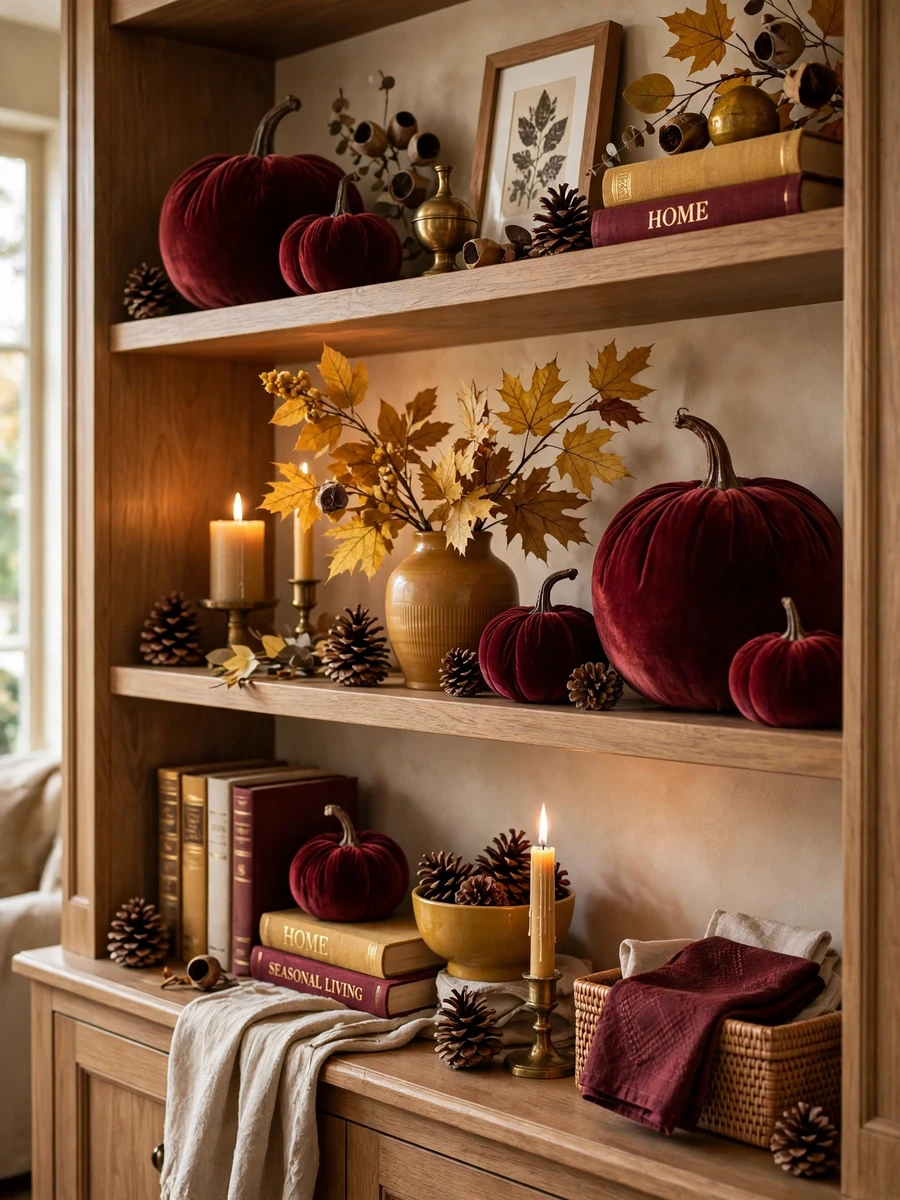
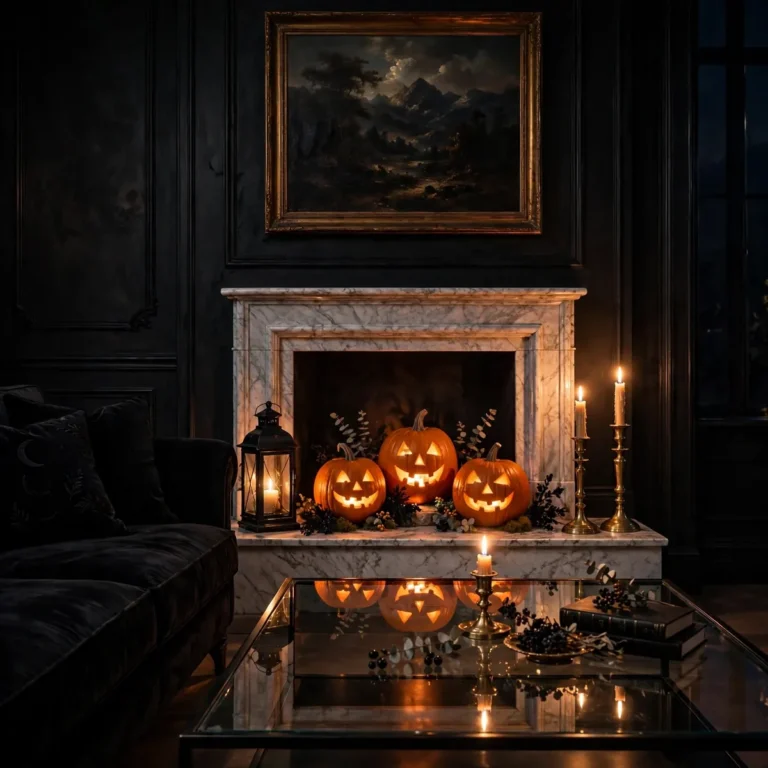
A full seasonal overhaul is exhausting, but a small swap takes ten minutes. In autumn, add burgundy velvet pumpkins, mustard leaves and warm candles; in winter, swap them for pinecones and cream candles. Keep seasonal accents in one box, and never change more than a third of any shelf at once.
For a concrete example, in October, place two burgundy velvet pumpkins beside the books on your middle shelf and a mustard leaf stem in the vase you own. Autumnal — and nothing else had to move.
Quick tips
- Swap only small accents, never the whole shelf.
- Keep seasonal pieces in one box for easy swaps.
- Change no more than a third of a shelf at a time.
11. How Do You Style the Shelf Above the Sofa?
The shelf above the sofa works best as one long, balanced arrangement, with a large anchor piece in the centre and smaller objects stepping down each end.
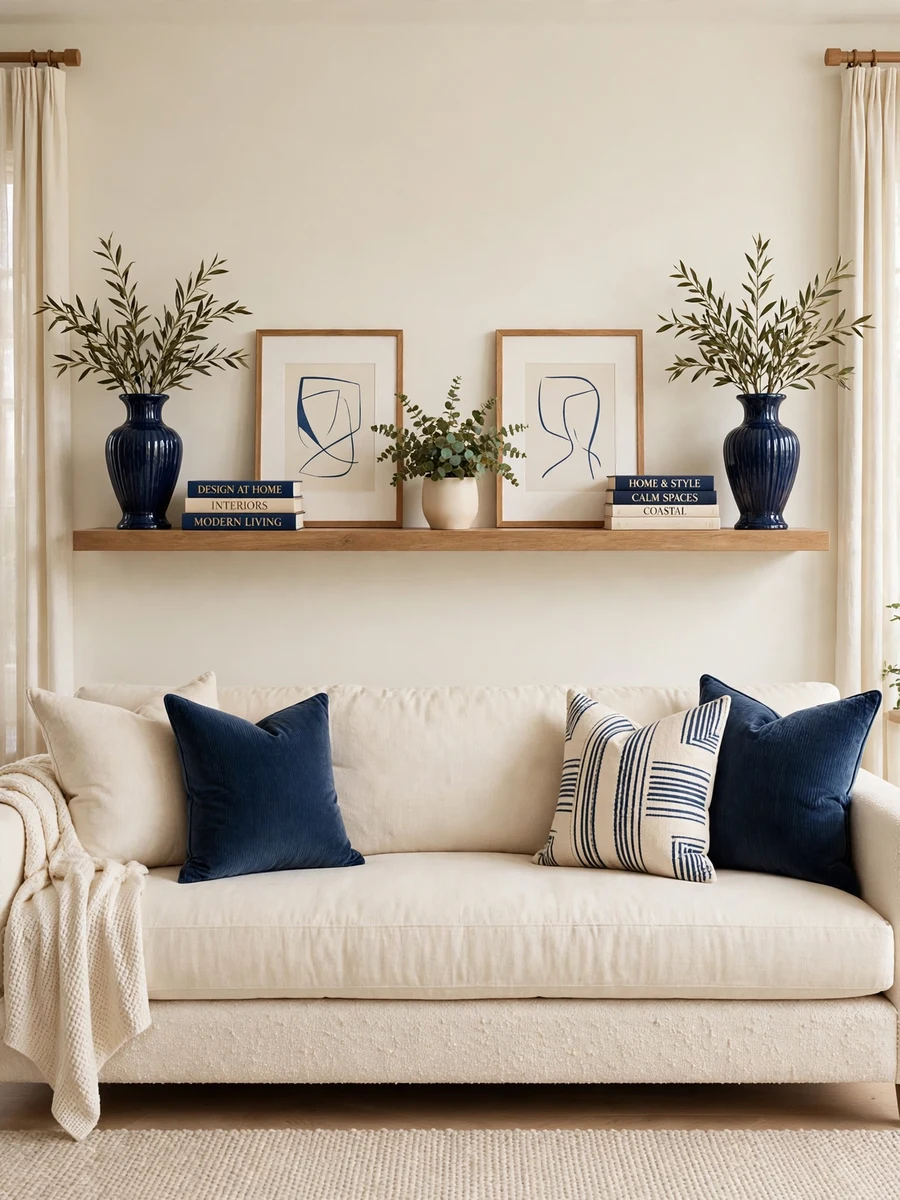
This shelf is the first thing people see on entering the room, so it needs to feel finished. Mount it about 15 to 20 centimetres above the sofa back so it clears cushions and heads. Navy and cream is a classic pairing: navy vases and frames add depth against a light wall, while cream books and ceramics keep the shelf bright. Keep it narrower than the sofa.
For a concrete example, centre a navy-framed print above the middle of the sofa, flank it with a navy vase on one side and cream books on the other, and finish with a trailing plant at one end. The shelf frames the sofa like a picture.
Quick tips
- Mount the shelf 15 to 20 centimetres above the sofa back.
- Centre one large piece, then step smaller objects down each side.
- Keep the display narrower than the sofa for balance.
12. What Makes Minimal Shelf Styling Work?
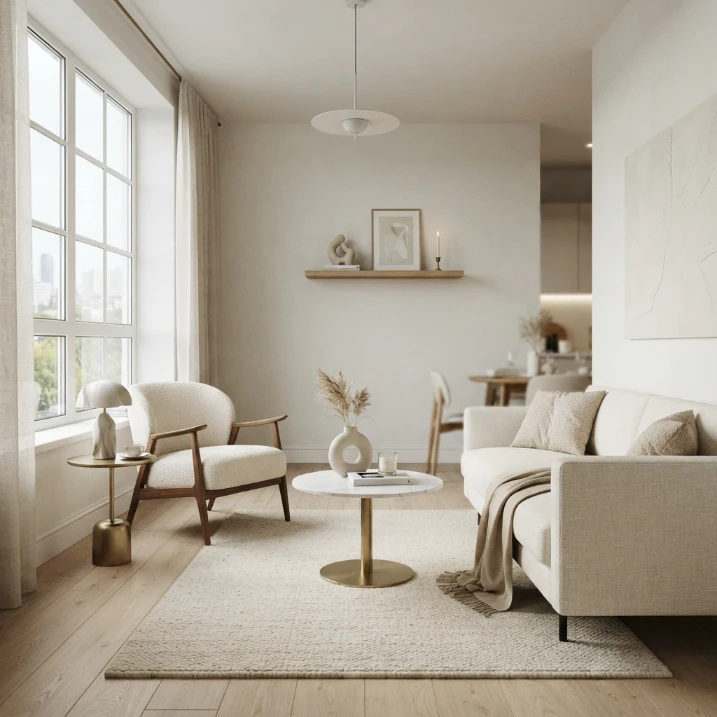
Minimal shelf styling works when each object has generous empty space around it, so the few pieces you choose look deliberate and expensive, not sparse.
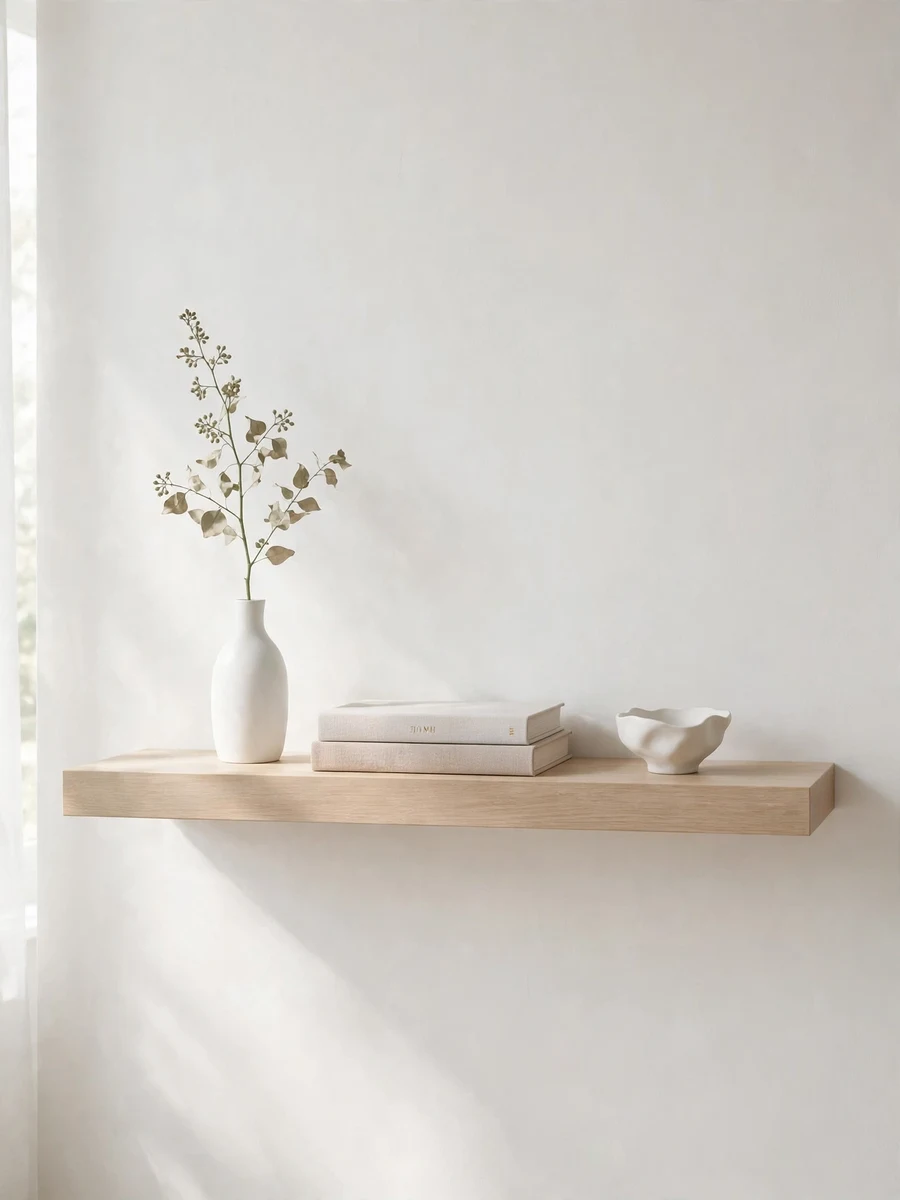
Minimal does not mean empty — it means edited. Two or three objects per shelf is plenty: a white vase with a single stem, a small stack of books and one sculptural bowl, each given room to breathe. Pale oak and white keep the palette light and airy, the empty space becomes part of the design, and uncluttered shelves make a small room feel larger.
For a concrete example, on a pale oak shelf, place a white vase with a eucalyptus stem on the left, two stacked books in the middle, and nothing on the right. Resist the urge to fill the gap — that gap is what makes the shelf look calm.
Quick tips
- Limit each shelf to two or three objects.
- Leave at least a third of the shelf empty.
- Choose one colour palette and stick to it.
Frequently Asked Questions
How do you decorate shelves without clutter?
Remove everything, then put back only pieces you love, in groups of three to five. Leave empty space between groups, repeat one or two colours, and hide everyday items in baskets on the lowest shelf.
How many items should you put on each shelf?
Three to five items per shelf is a good guide. Odd numbers look more natural, and small shelves need fewer pieces than long ones. If it looks crowded, remove one object at a time until it feels calm.
How do you style floating shelves in a living room?
Anchor each shelf with one taller piece, add a medium object in front, and finish with a small accent. Mix books, plants and ceramics, keep the colours in one family, and leave breathing room at each end.
What should you put on living room shelves?
A mix works best: books for structure, plants for life, ceramics for colour, framed art or photos for personality, and candles for warmth. Choose pieces that suit your room and mean something.
Conclusion
Beautiful living room shelf decor ideas are less about shopping and more about styling: layer heights back to front, repeat a calm colour palette, mix books, plants and ceramics, and leave empty space for each piece to shine. Start with one shelf today — clear it, choose three to five pieces you love, and arrange them with a tall anchor at the back and a small accent in front.