21 Warm Rustic Kitchen Ideas That Bring Cozy Countryside Charm Home
Rustic kitchen ideas bring the warmth of the countryside into the heart of your home, mixing natural wood, stone, and timeworn textures with the comforts of a modern kitchen. Whether you love the classic farmhouse look or a cleaner modern-rustic style, the goal is the same: a kitchen that feels lived-in, welcoming, and honest. The best rustic kitchens layer rough and smooth, old and new — a reclaimed beam above a sleek range, a stone wall beside painted cabinets — so the room feels collected over time rather than bought in one trip.
If you love this lived-in look, it pairs beautifully with classic farmhouse styling — our farmhouse kitchen decor ideas show how apron sinks, open shelves, and vintage finds work together in real homes. Below, you will find 21 distinct ways to bring rustic charm into your own kitchen, from big structural moves like exposed beams and stone walls to small, affordable swaps like hardware, lighting, and textiles. Pick one idea or layer several; each one stands on its own.
Key Takeaways
What makes a kitchen look rustic? Natural, imperfect materials do the heavy lifting: solid wood with visible grain, stone, brick, handmade tile, and aged metal. When at least two of these appear together, the room reads as rustic even before any decor is added.
What colors work best in a rustic kitchen? Warm neutrals lead the way — cream, warm white, honey, sage, olive, and soft clay — with one deeper accent such as charcoal or navy to ground the room.
Can a rustic kitchen look modern? Yes, and that blend is called modern-rustic. Keep the natural materials but use clean lines, flat-front cabinets, matte black fixtures, and uncluttered counters so the room feels current while the wood and stone keep it warm.
How can I make a small kitchen rustic on a budget? Start with paint, hardware, and one open shelf. A warm cream wall, aged-brass pulls, and a pine shelf with stacked bowls change the whole mood for very little money, and you can add bigger pieces later.
1. How Do Reclaimed Wood Beams Warm Up a Rustic Kitchen?
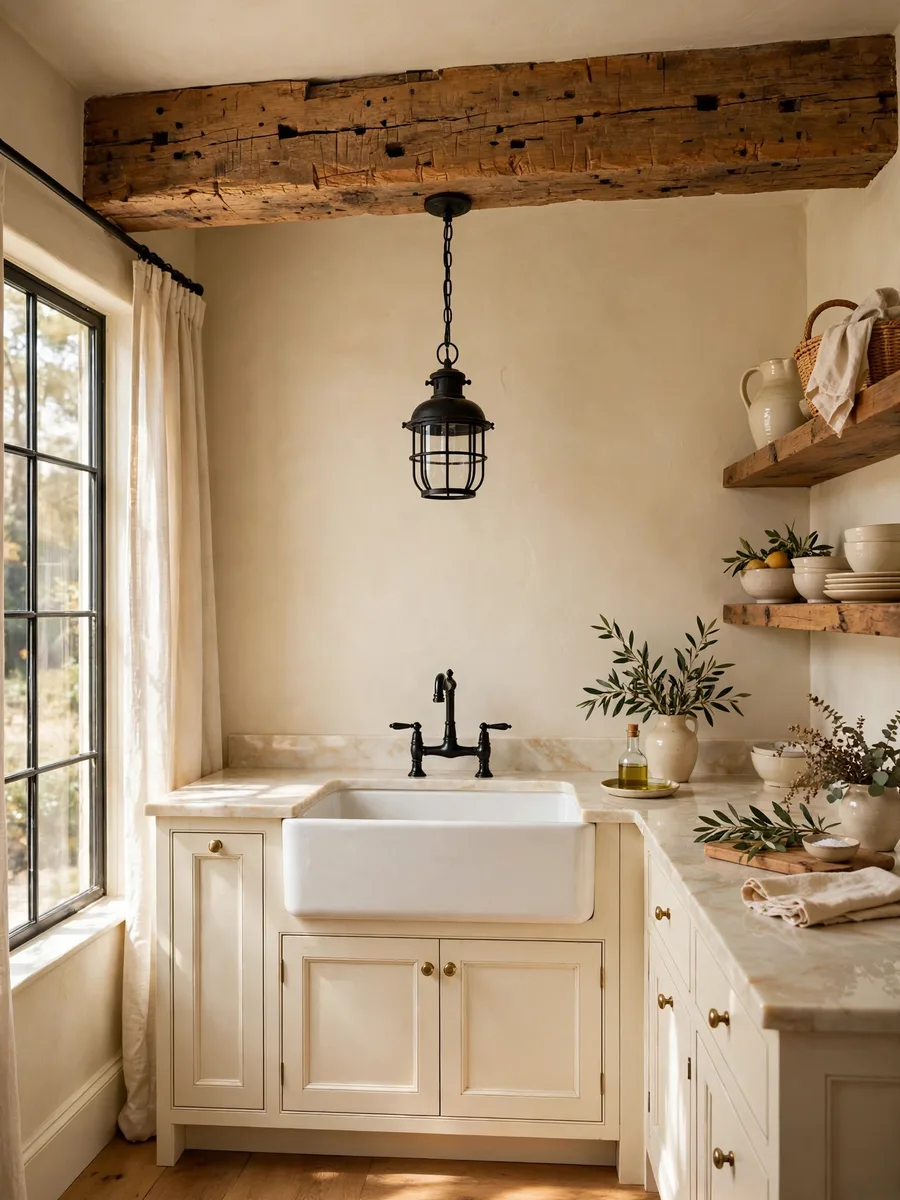
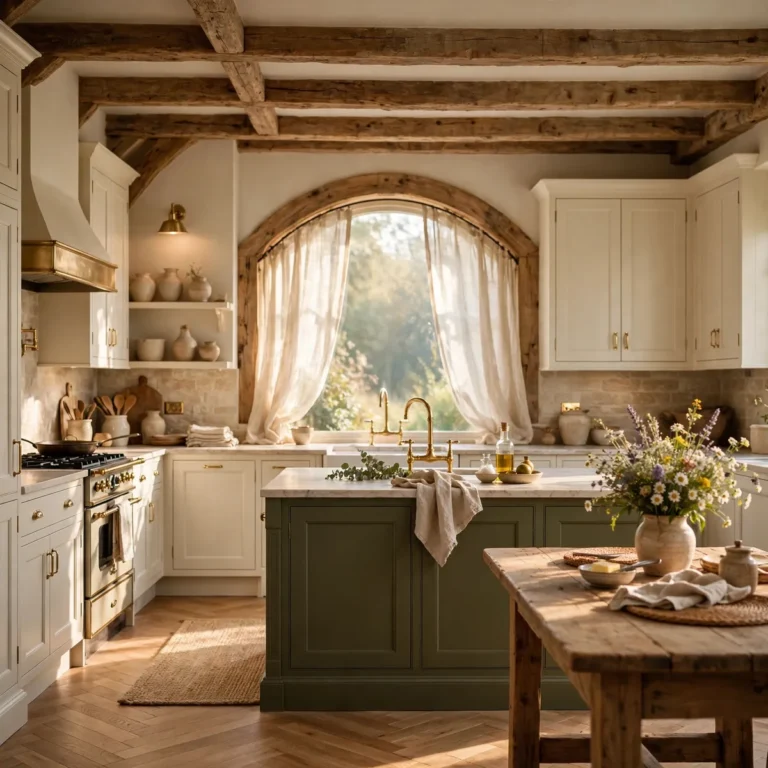
Nothing says rustic faster than a heavy timber beam overhead. Reclaimed wood carries saw marks, nail holes, and a honeyed patina that new lumber simply cannot fake, and a single beam across the ceiling instantly makes a plain kitchen feel old, storied, and grounded.
For a concrete example, run one wide oak beam — roughly eight inches deep — across the ceiling above the sink, then echo it with a matching floating shelf and a chunky oak chopping board on the counter. Creamy plaster walls and a black iron pendant make the beam the room’s anchor.
Quick tip: If real reclaimed beams are out of budget, hollow box beams wrapped in reclaimed-look boards give the same silhouette at a fraction of the weight and cost.
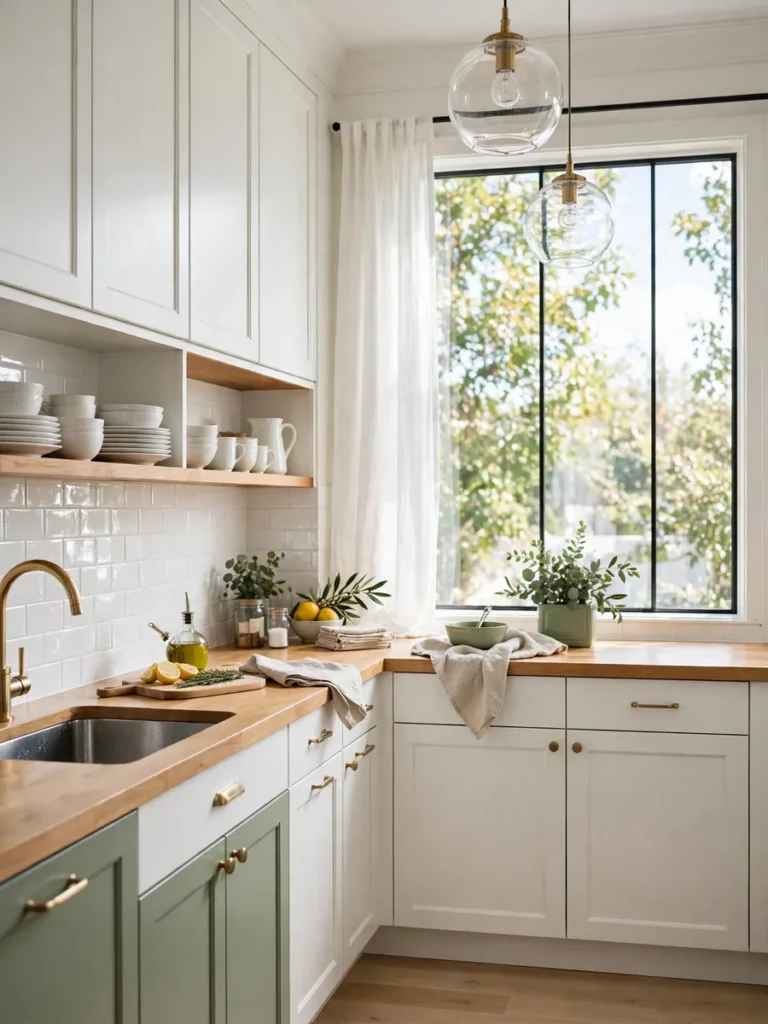
2. Can a Stone Accent Wall Become the Heart of the Kitchen?
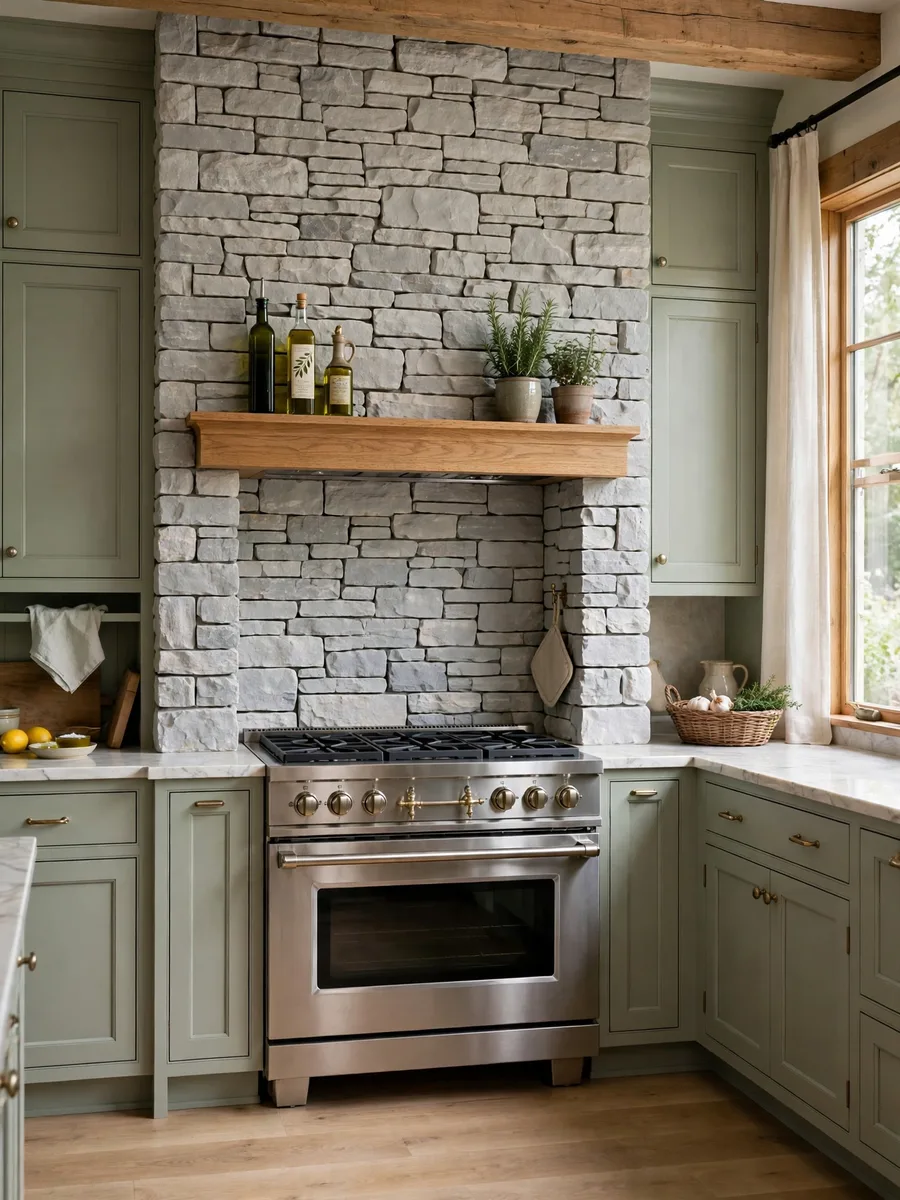
A stone wall adds texture and age in a way paint never can. Rough-cut limestone or stacked slate catches light and shadow all day, giving the kitchen a hand-built feel that instantly softens sleek appliances and flat cabinet fronts around it.
Try a floor-to-ceiling stone wall behind the range, using pale grey limestone with a wide mortar joint, then keep the cabinets around it a quiet sage green so the stone stays the star. A simple oak mantel shelf across the stone holds olive oil bottles and a small potted herb, tying the wall into everyday cooking.
Quick tip: Stone veneer panels are lighter and cheaper than full stone and work well on a single feature wall, even in a rental-friendly, non-structural application.
3. Why Does a Farmhouse Apron Sink Anchor a Rustic Kitchen?
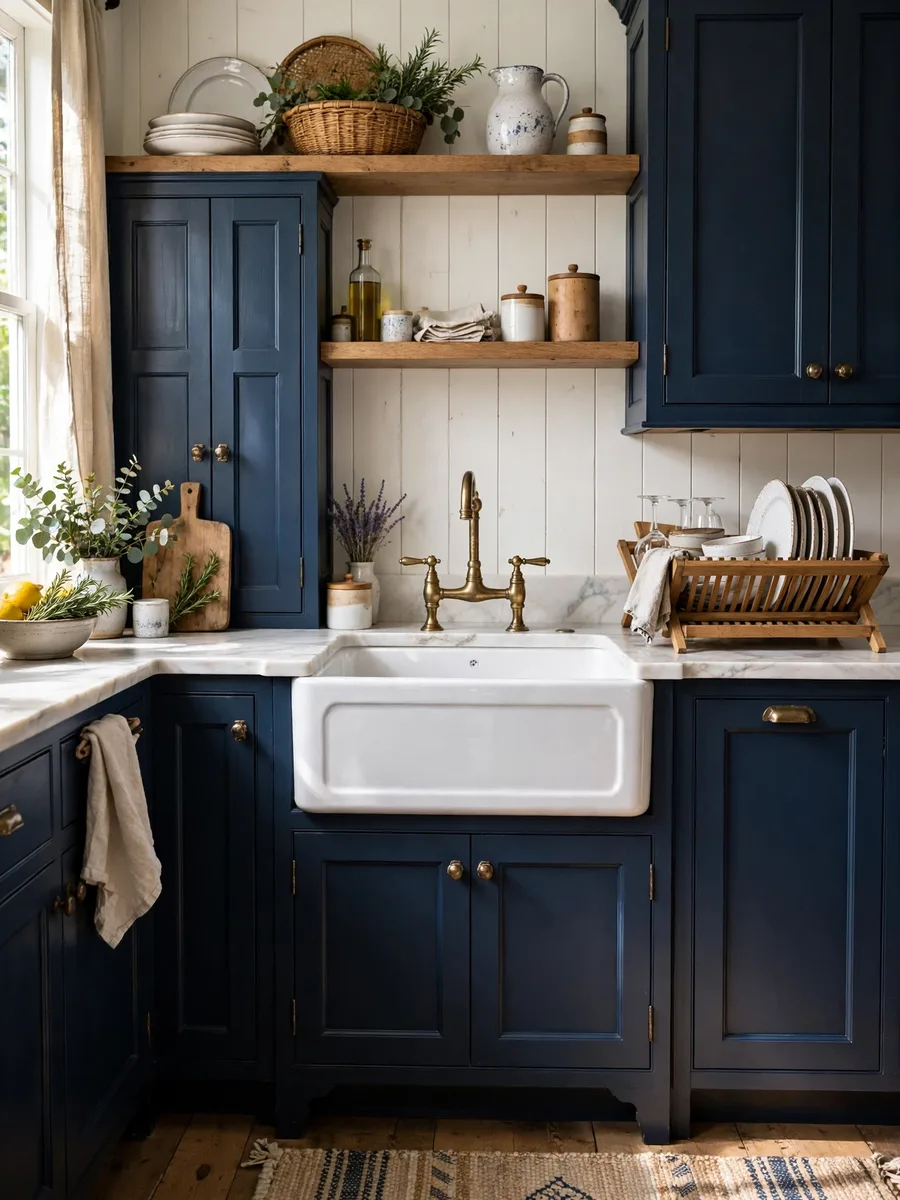
The deep, front-facing apron sink is the classic rustic workhorse: generous enough for stockpots and roasting pans, and its exposed ceramic front adds a quiet, old-fashioned charm that an undermount sink never delivers. It turns the most-used spot in the kitchen into a design feature.
Picture a white fireclay apron sink set into deep navy cabinets, with a bridge-style faucet in aged brass and a small wooden dish rack beside it. The contrast between crisp white ceramic, dark cabinetry, and warm brass is exactly what makes the sink feel intentional rather than merely practical.
Quick tip: Choose a fireclay or cast-iron apron sink over thin steel — the heavier materials resist chips and hold the vintage look far longer.
4. How Does Open Shelving Make a Rustic Kitchen Feel Lived-In?
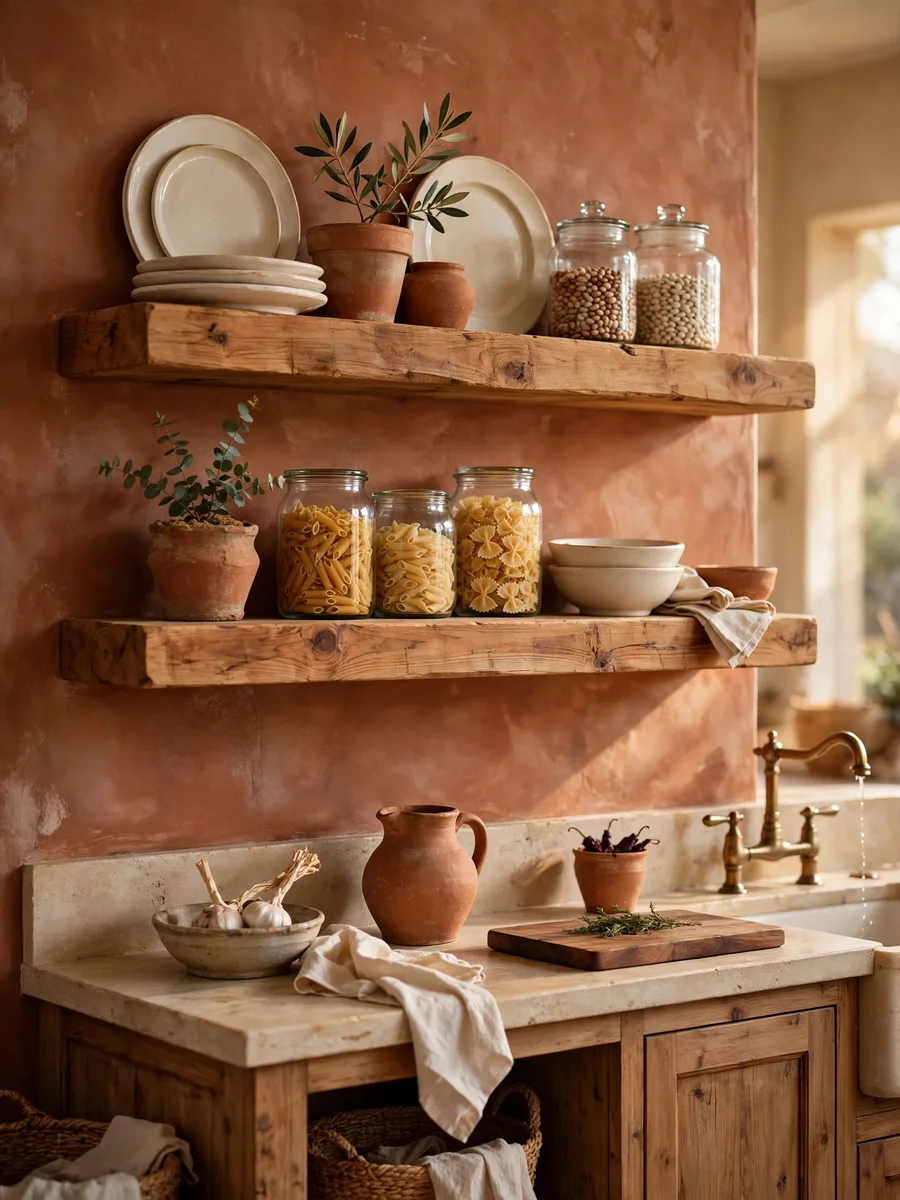
Open shelves replace closed upper cabinets with a display of everyday things, and that visibility is the whole point of rustic style. Stacked plates, wooden bowls, and glass jars show the kitchen is used and loved, not staged behind doors.
Mount two thick pine shelves on terracotta-washed plaster, then style them with restraint: cream stoneware plates on the lower shelf, handmade terracotta pots and a row of glass jars filled with dried beans and pasta above. Leave breathing room between groups so the shelves feel curated, not crowded.
Quick tip: Keep only the pieces you actually use on open shelves — daily dishes and glasses — so the display stays honest and dust stays manageable.
5. What Makes Butcher-Block Counters So Perfect for Rustic Kitchens?
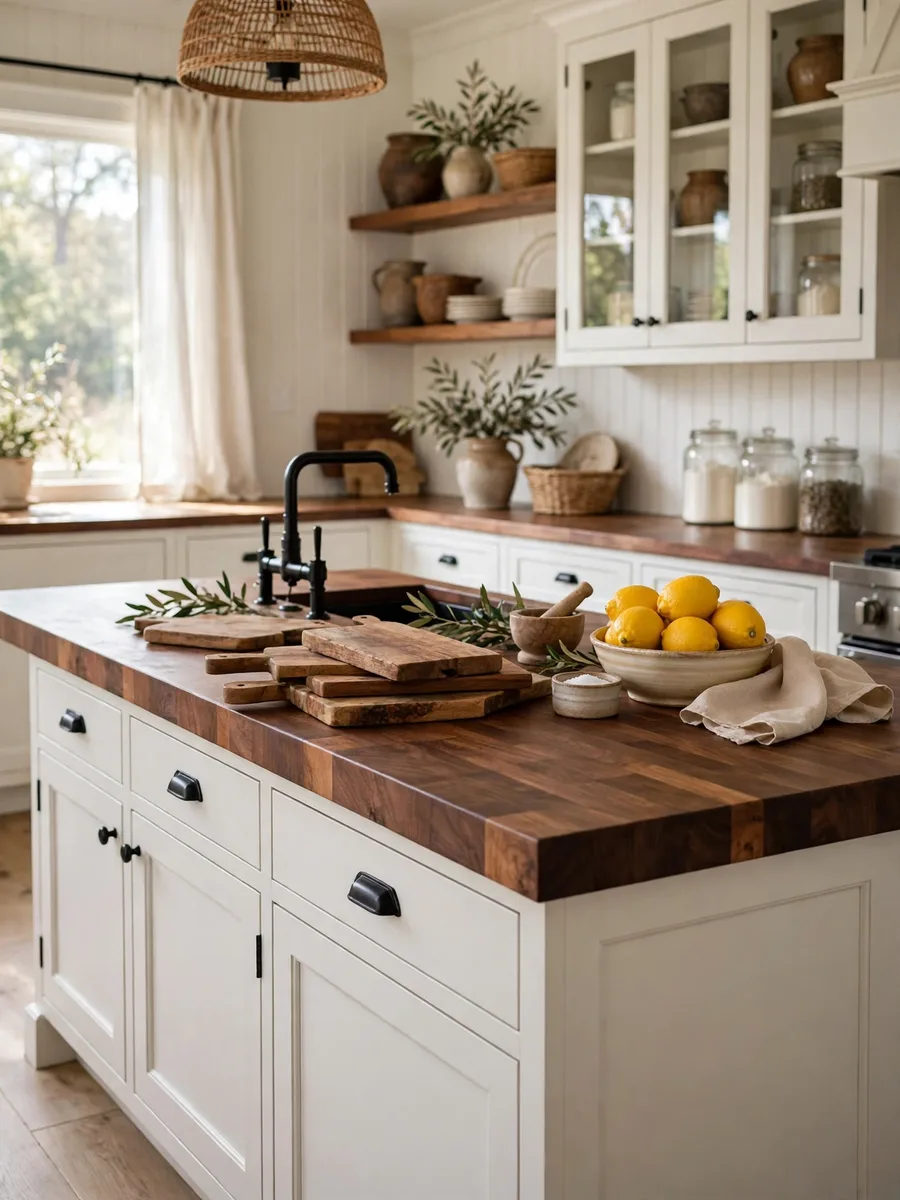
Butcher block brings warmth under your hands in a way stone never does. The solid wood surface ages gracefully, picking up knife marks and a golden tone over time, and it softens the look of painted cabinets while staying practical for chopping and serving.
A walnut butcher-block counter on the island, paired with soft white shaker cabinets and a blackened-steel faucet, gives a rich, grounded contrast. Monthly oiling with food-safe mineral oil deepens it to a warm caramel.
Quick tip: Use butcher block on the island or a single run of counter, and stone elsewhere — you get the warmth where you touch it most, with a durable surface beside the sink.
6. How Can Vintage Hardware Change the Whole Feel of Your Cabinets?
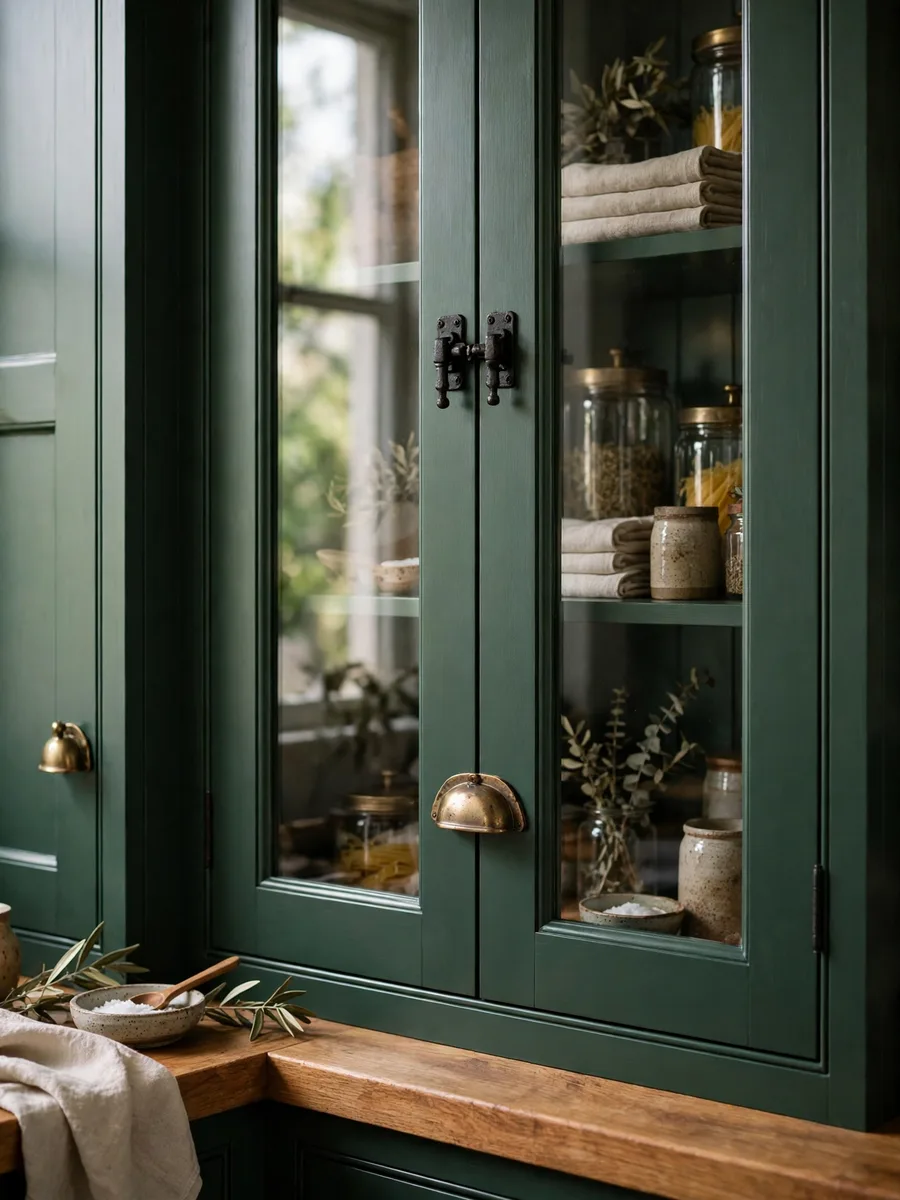
Hardware is the jewelry of the kitchen, and in a rustic room it should look like it has a history. Aged brass cup pulls, black iron latches, and hand-forged knobs add a tactile, timeworn detail that instantly makes flat cabinet doors feel crafted rather than mass-produced.
Swap plain knobs for aged-brass cup pulls on deep green shaker drawers, then add small black iron latches to a glass-front pantry cabinet. The mix of warm brass and dark iron against the green paint is a small change with an outsized effect — visitors notice the hardware before they notice the cabinets.
Quick tip: Buy one pull first and test it against your cabinet color in daylight; aged brass can read gold or brown depending on the light in your room.
7. How Does Layered Lighting Create a Warm Rustic Glow?
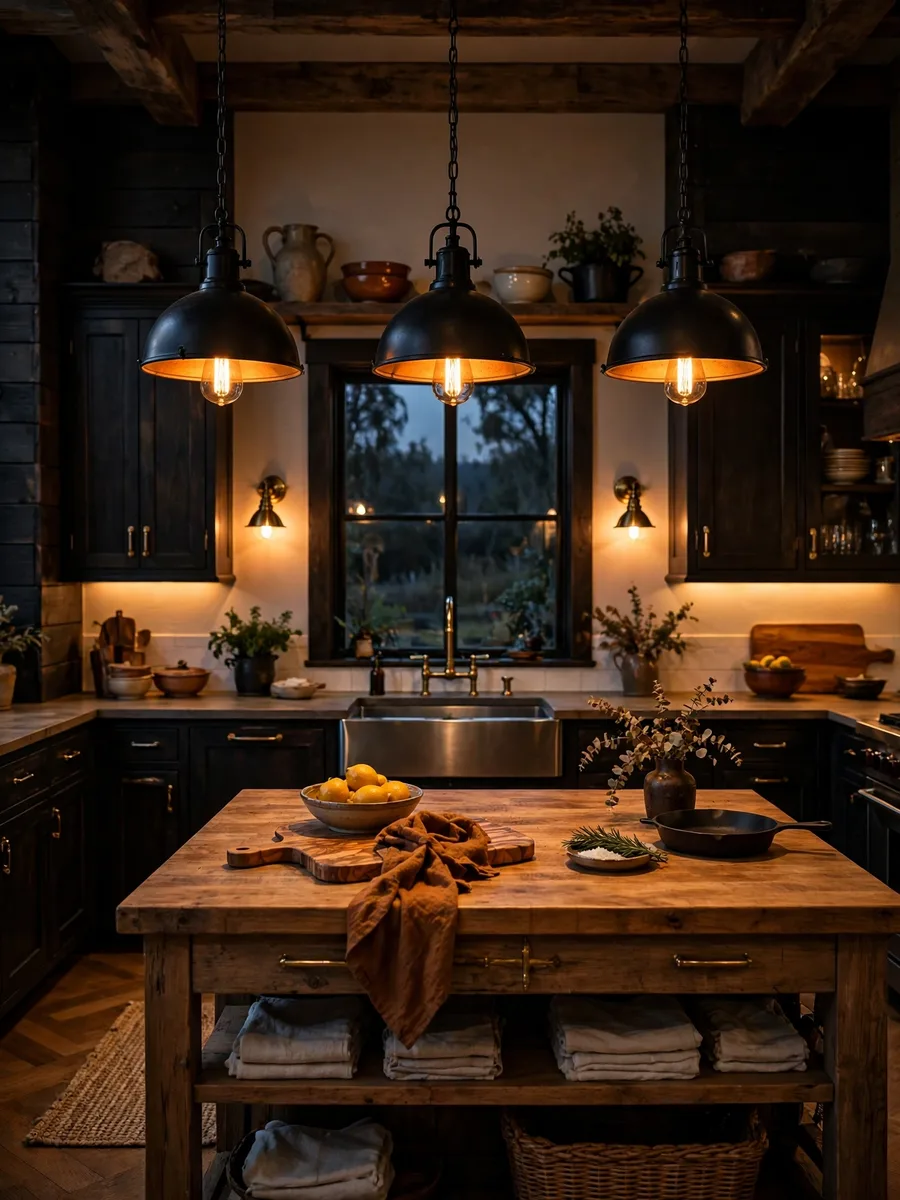
Rustic kitchens glow rather than glare. Layered lighting — pendants over the island, sconces by the sink, and a soft wash of under-cabinet light — creates pools of warmth that make wood grain and stone texture look their best after dark.
Hang three black iron dome pendants with warm 2700K bulbs over the island, add two small brass sconces flanking the window above the sink, and run a hidden LED strip under the upper cabinets. Each layer can be dimmed separately, so the kitchen shifts from bright prep mode to a low, amber evening glow.
Quick tip: Always choose warm-white bulbs (2700K) in a rustic kitchen — cool daylight bulbs flatten wood tones and make stone look grey and cold.
8. Does Shiplap Still Belong in a Rustic Kitchen?
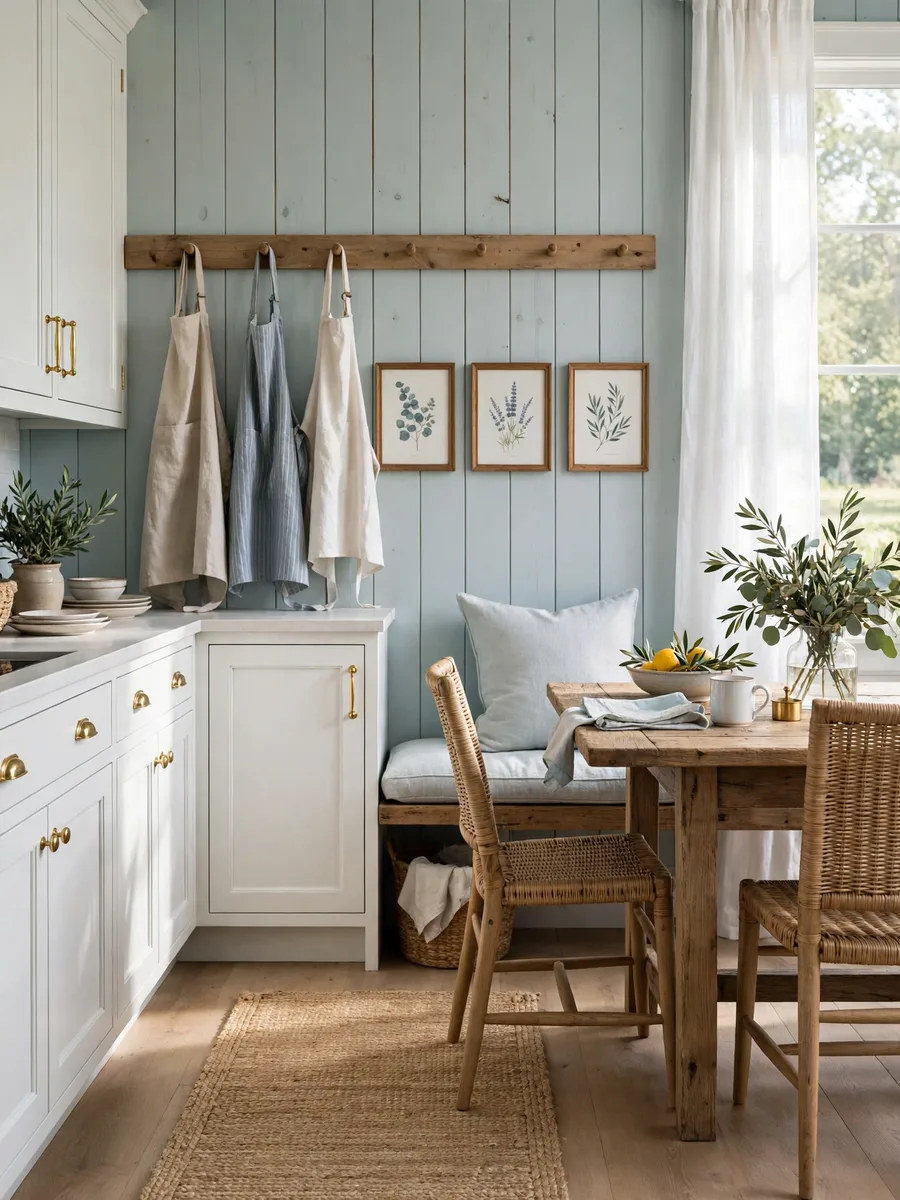
Shiplap gives walls a quiet rhythm that plain drywall lacks. The thin shadow lines between boards add texture and a hand-built feel, and painted in a soft tone it brightens the room while keeping the country character intact.
Run pale blue-grey shiplap on the wall behind the dining table, stopping at a simple picture rail, and pair it with white cabinets and a natural jute runner on the floor. A row of small framed botanical prints on the shiplap and a wooden peg rail for aprons complete the look without cluttering it.
Quick tip: Use shiplap on one wall only — a full-room wrap can feel busy, while a single feature wall reads as deliberate and calm.
9. How Do Copper and Brass Accents Add Rustic Warmth?
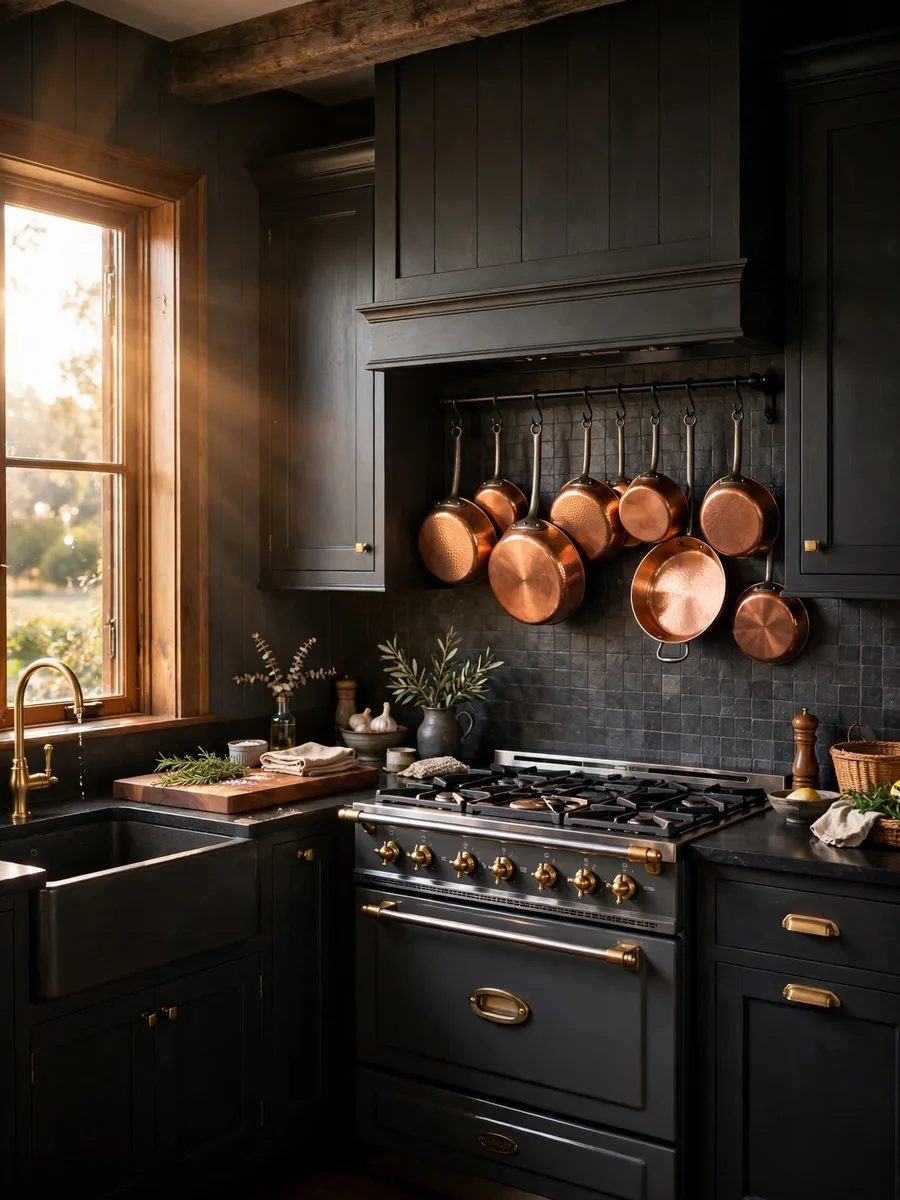
Warm metals are the rustic kitchen’s secret glow. Copper pots, brass faucets, and aged bronze handles catch the light and add a soft shine that balances all the matte wood and stone, keeping the room from feeling flat or heavy.
Hang a rail of hammered copper pots above a charcoal-grey range, then repeat the metal in a slim brass faucet and a pair of small brass cabinet knobs on the island. The copper reads as the warm note and the brass as the quiet echo — together they make the dark cabinets feel rich rather than stark.
Quick tip: Let copper develop its natural patina instead of polishing it weekly; the soft darkening is part of the rustic charm.
10. How Can a Styled Pantry Bring Rustic Charm to Everyday Storage?
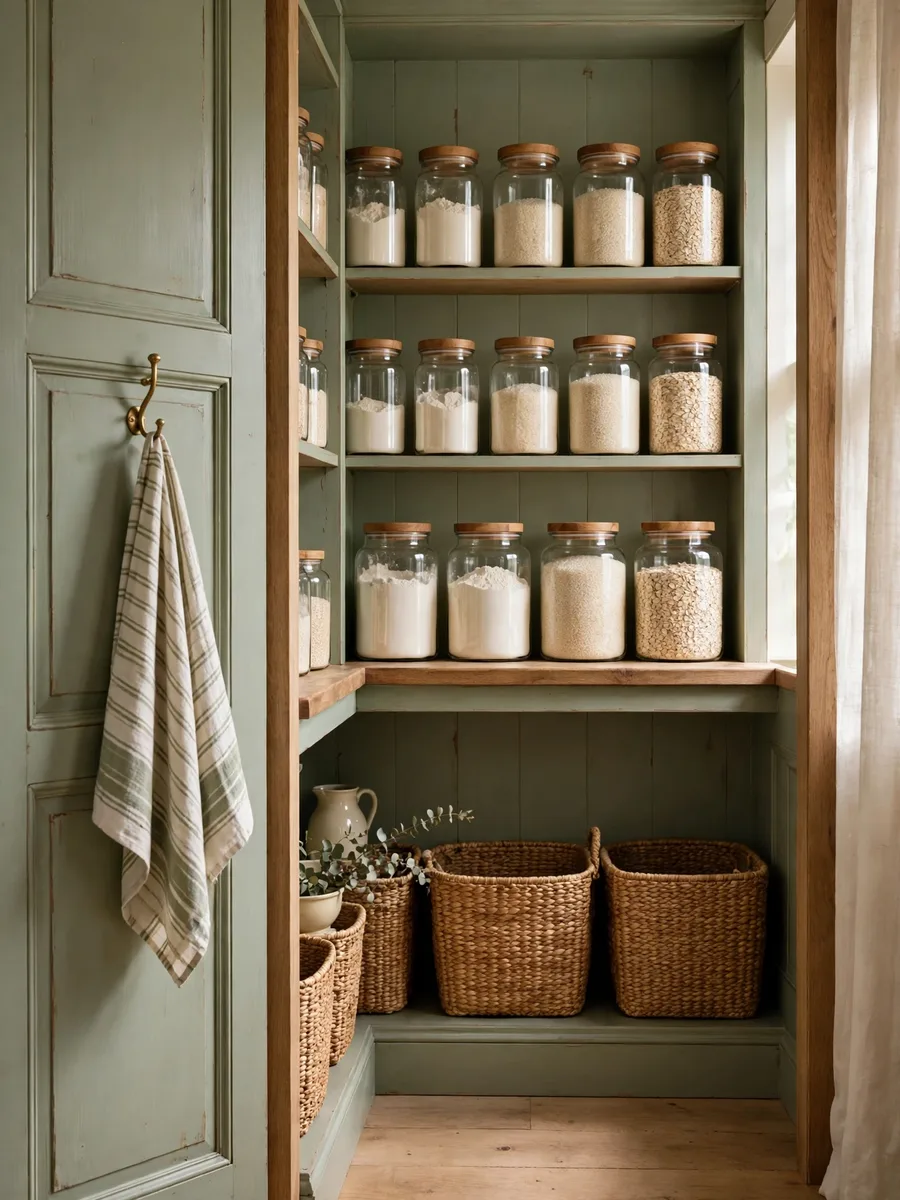
A pantry is where rustic style meets real life. Glass jars, woven baskets, and labeled crocks turn plain storage into a display of texture and color, so even the practical corners of the kitchen feel considered and beautiful.
Paint the pantry interior a soft sage green, then line the shelves with clear glass jars of flour, rice, and oats, each with a small wooden lid. Woven seagrass baskets on the lower shelves hold onions, potatoes, and bread, while a striped linen tea towel hangs from a brass hook on the door.
Quick tip: Decant just five or six staples into matching jars — you get the styled look without the cost or effort of refilling everything at once.
11. Why Is a Statement Range Hood Worth the Splurge?
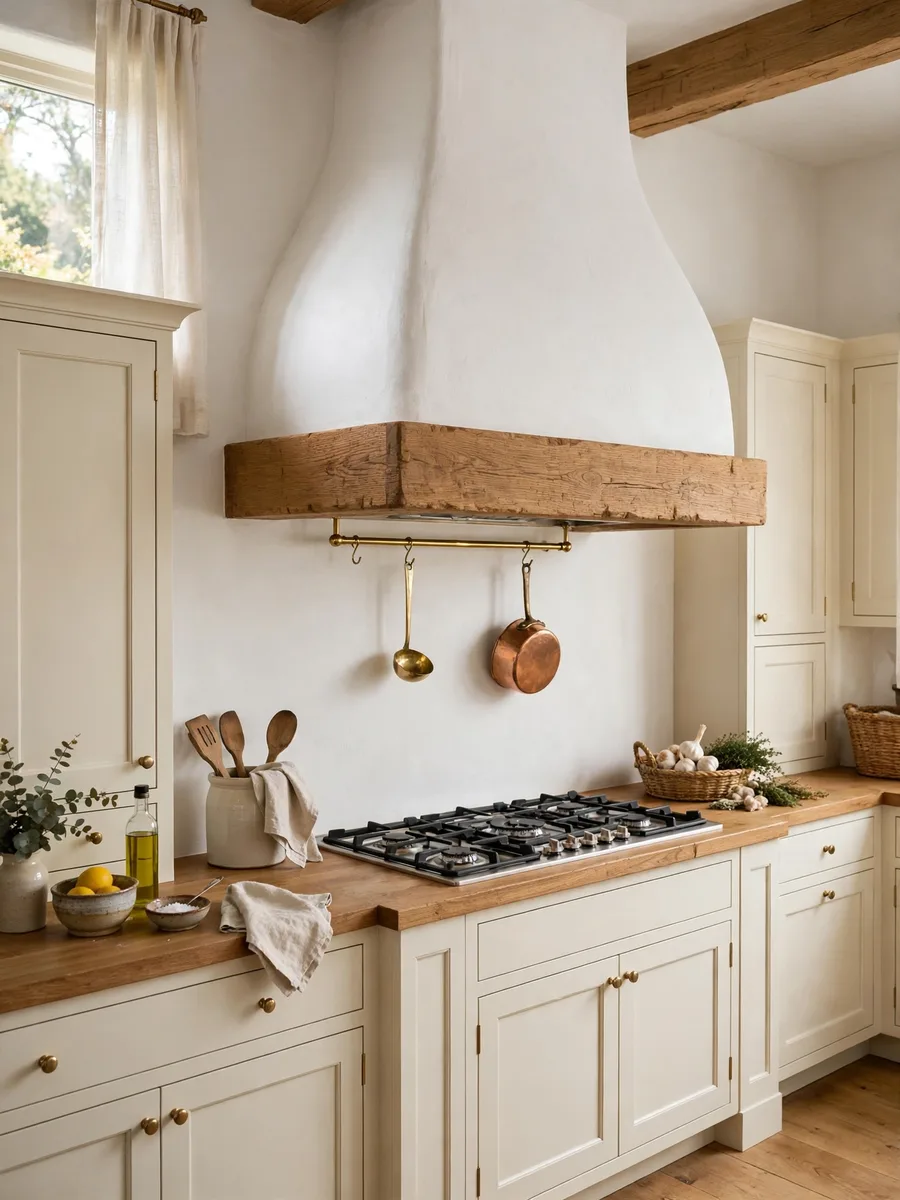
The range hood is the tallest, most visible object in most kitchens, so it sets the tone for the whole room. A plaster or shiplap-wrapped hood with a timber mantel reads like an old farmhouse chimney breast — a piece of architecture, not an appliance.
Build a smooth white plaster hood over the range with a chunky oak mantel shelf across its base, then hang a small brass pot rail beneath the shelf for a ladle and a copper saucepan. The plaster softens the hard lines of the cooker, and the oak shelf gives the whole wall a focal point.
Quick tip: Keep the hood finish matte — glossy plaster or tile reflects the cooker lights and breaks the soft, aged effect you want.
12. What Earthy Cabinet Colors Define a Rustic Kitchen?
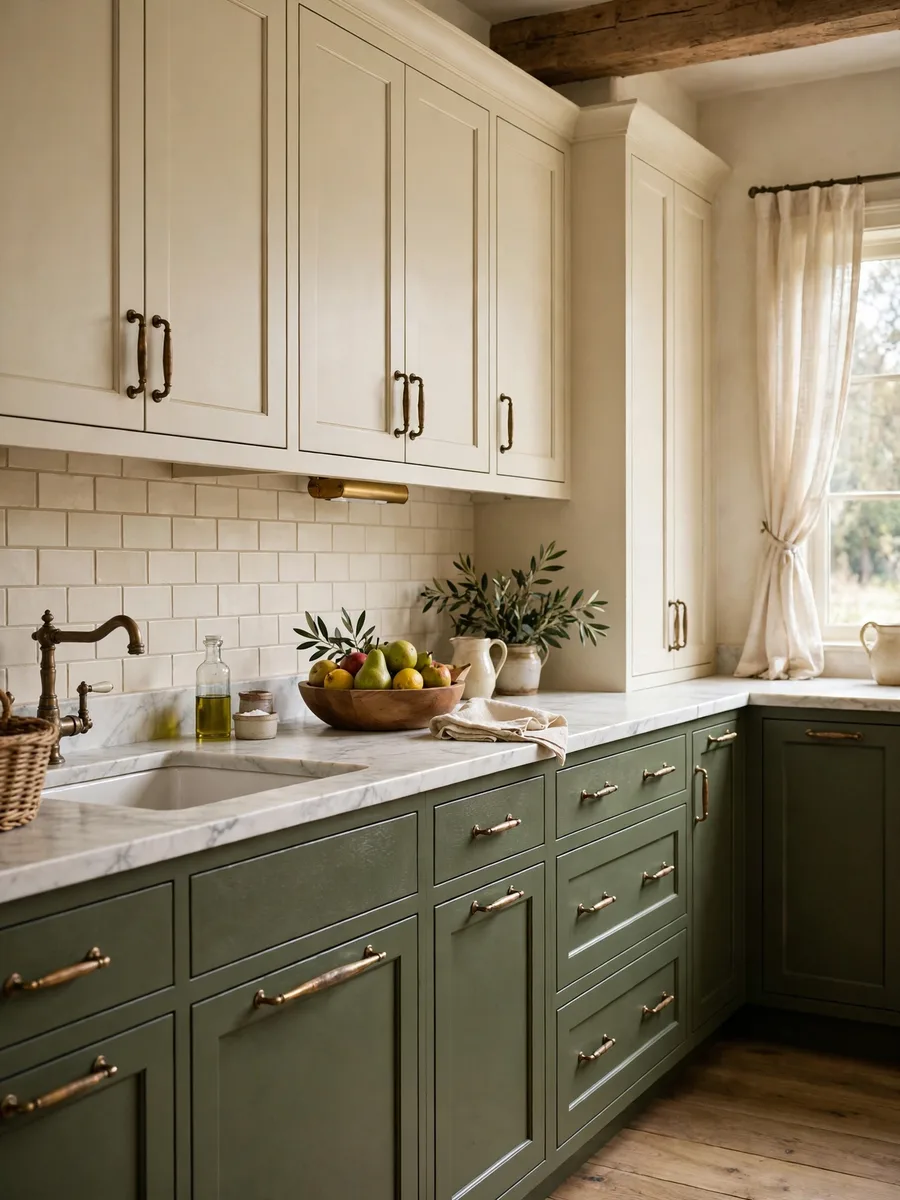
Earthy cabinet colors do what white cannot: they make a kitchen feel rooted in the landscape. Olive, sage, warm clay, and mushroom brown all sit beautifully against wood and stone, and they hide everyday marks far better than pale paint.
Paint the lower cabinets a deep olive green with a matte finish, keep the uppers a warm cream, and fit aged-brass bar handles throughout. A honed marble-look worktop and a simple cream tile backsplash keep the green from feeling dark, and a wooden fruit bowl on the counter ties the palette together.
Quick tip: Test earthy paint colors on a large board and move it around the room for a day — olive and clay shift a lot between morning and evening light.
13. How Do You Style a Rustic Kitchen Island as the Room’s Centerpiece?
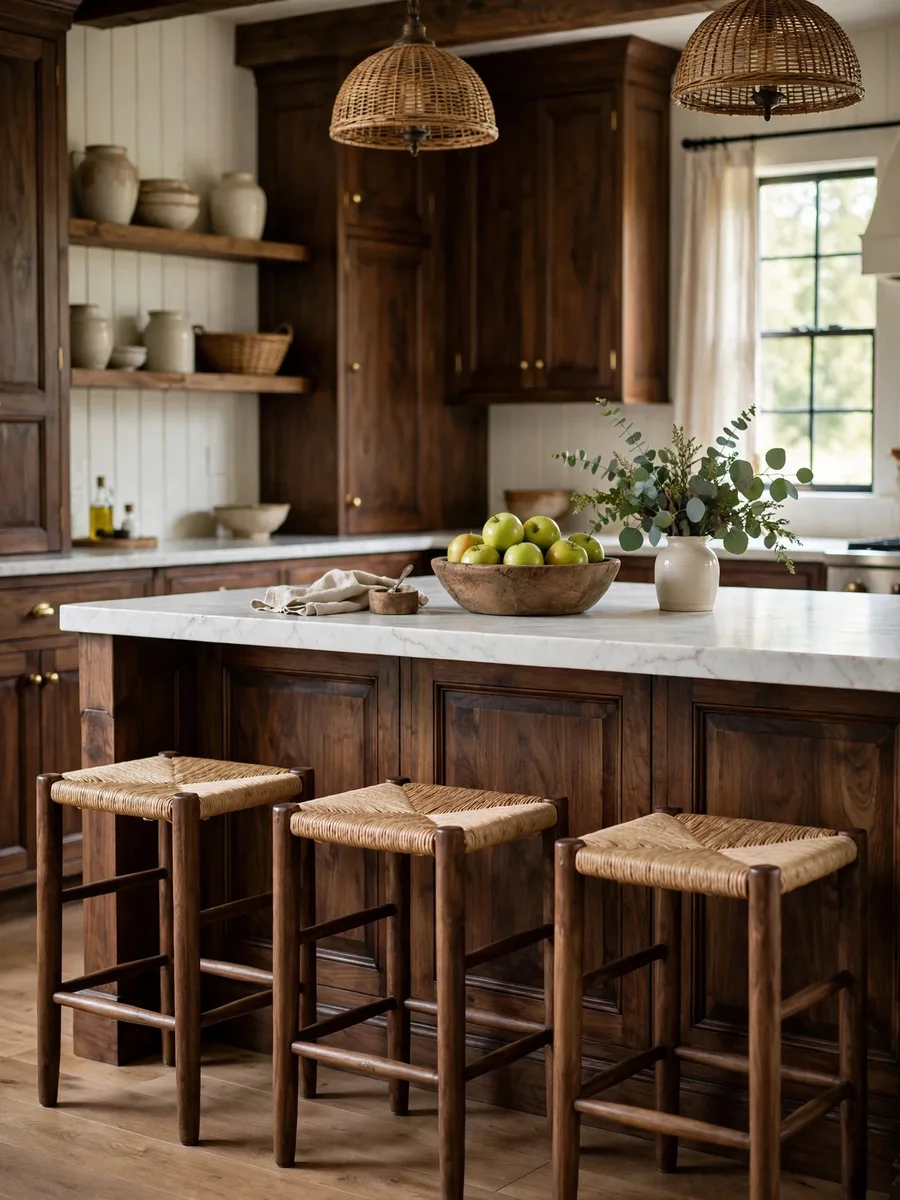
The island is where a rustic kitchen earns its keep — a work surface, a breakfast table, and a gathering spot in one. A chunky timber island with a stone or butcher-block top anchors the room and gives the rustic materials a place to shine at full scale.
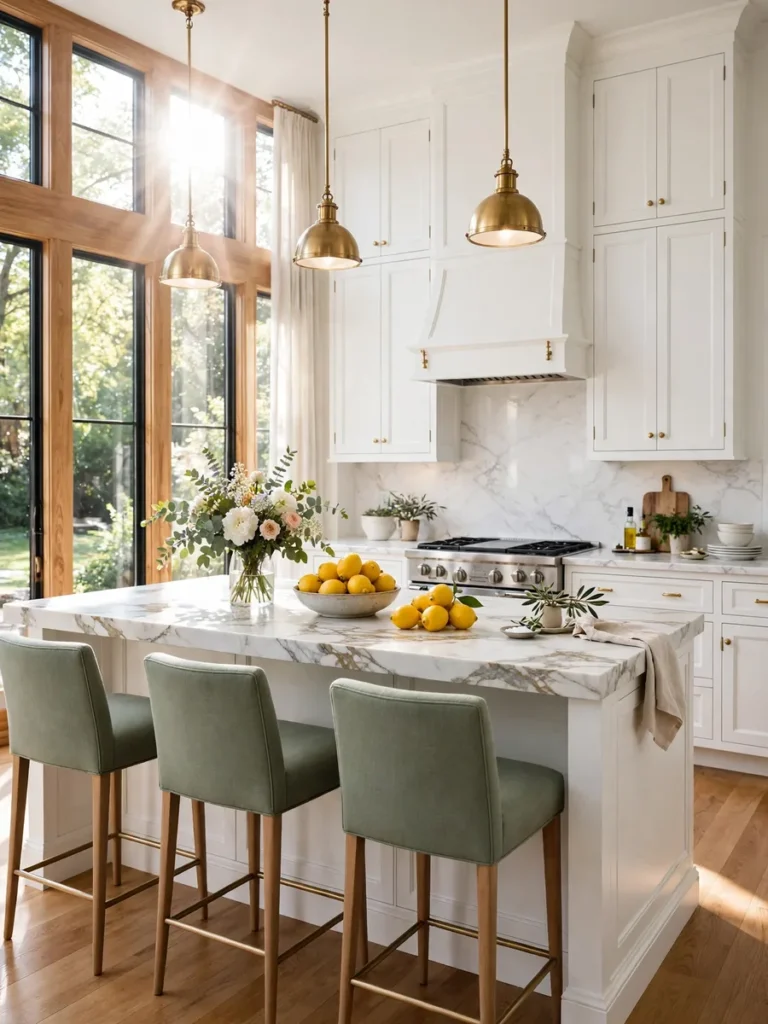
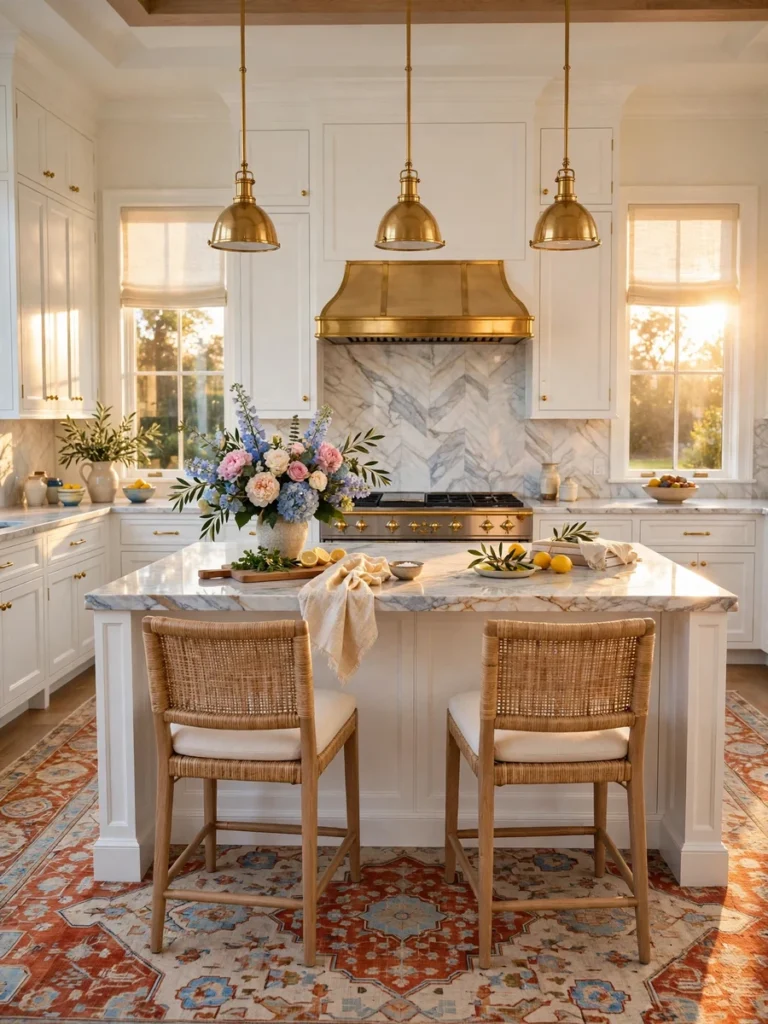
Build the island from dark walnut with a thick honed marble top, add a row of three woven rush-seat stools, and style the center with a wooden dough bowl of green apples and a small vase of eucalyptus. For more ways to dress the island through the seasons, our kitchen island decor ideas show simple centerpieces that work with this same warm, natural palette.
Quick tip: Leave at least 42 inches of walkway around the island — a beautiful island that blocks traffic will frustrate you every single day.
14. How Can a Breakfast Nook Make a Rustic Kitchen Feel Like Home?
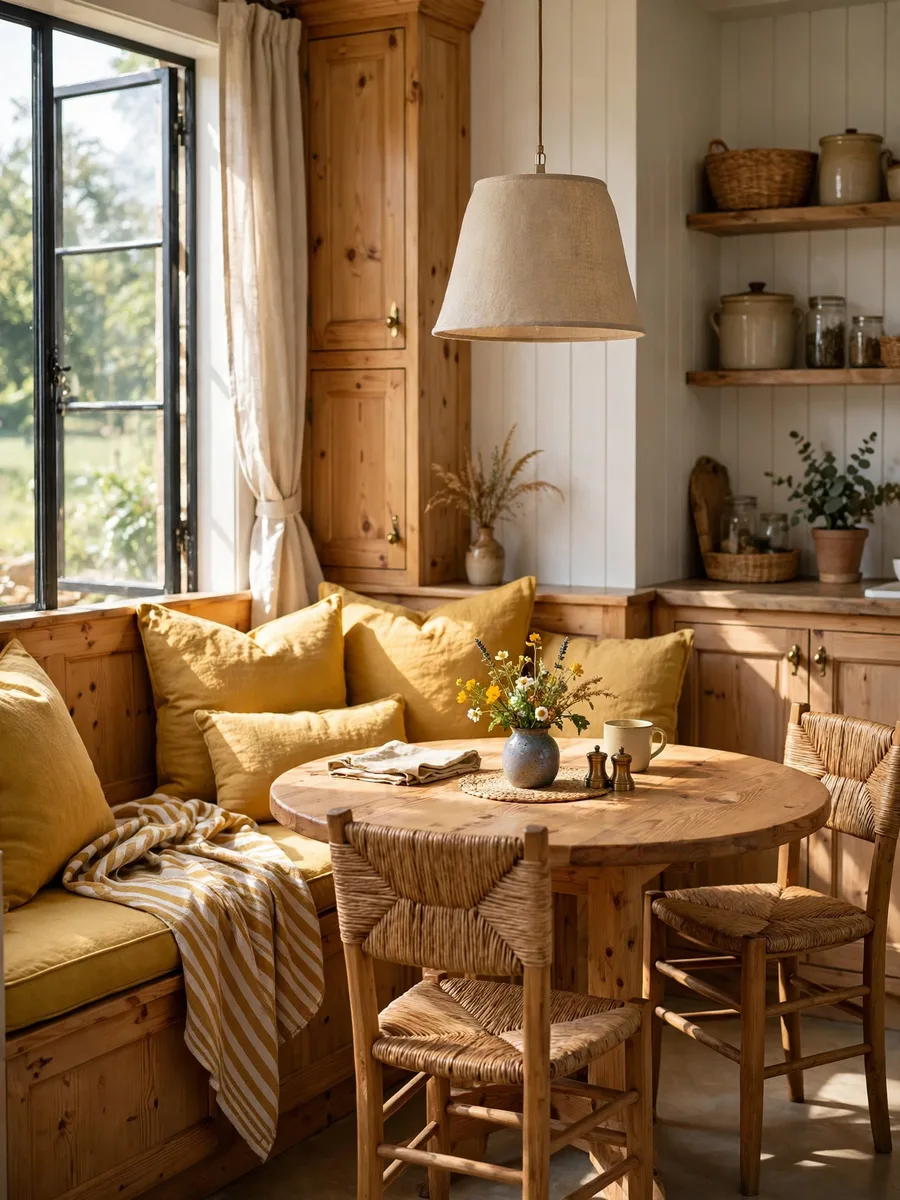
A breakfast nook is the coziest corner a kitchen can have. A built-in bench, a scrubbed pine table, and soft cushions turn an empty corner into the spot where everyone actually sits — morning coffee, homework, and long Sunday breakfasts included.
Tuck a pine banquette into a sunny corner with mustard-yellow linen cushions and a small striped throw, then set a round pine table with two rush chairs opposite. A simple pendant with a linen shade above the table and a tiny vase of wildflowers make the nook feel finished without any fuss.
Quick tip: Use outdoor-grade fabric on nook cushions — it wipes clean after spills and still looks like soft, natural linen.
15. How Do You Make a Small Kitchen Feel Rustic Without Clutter?
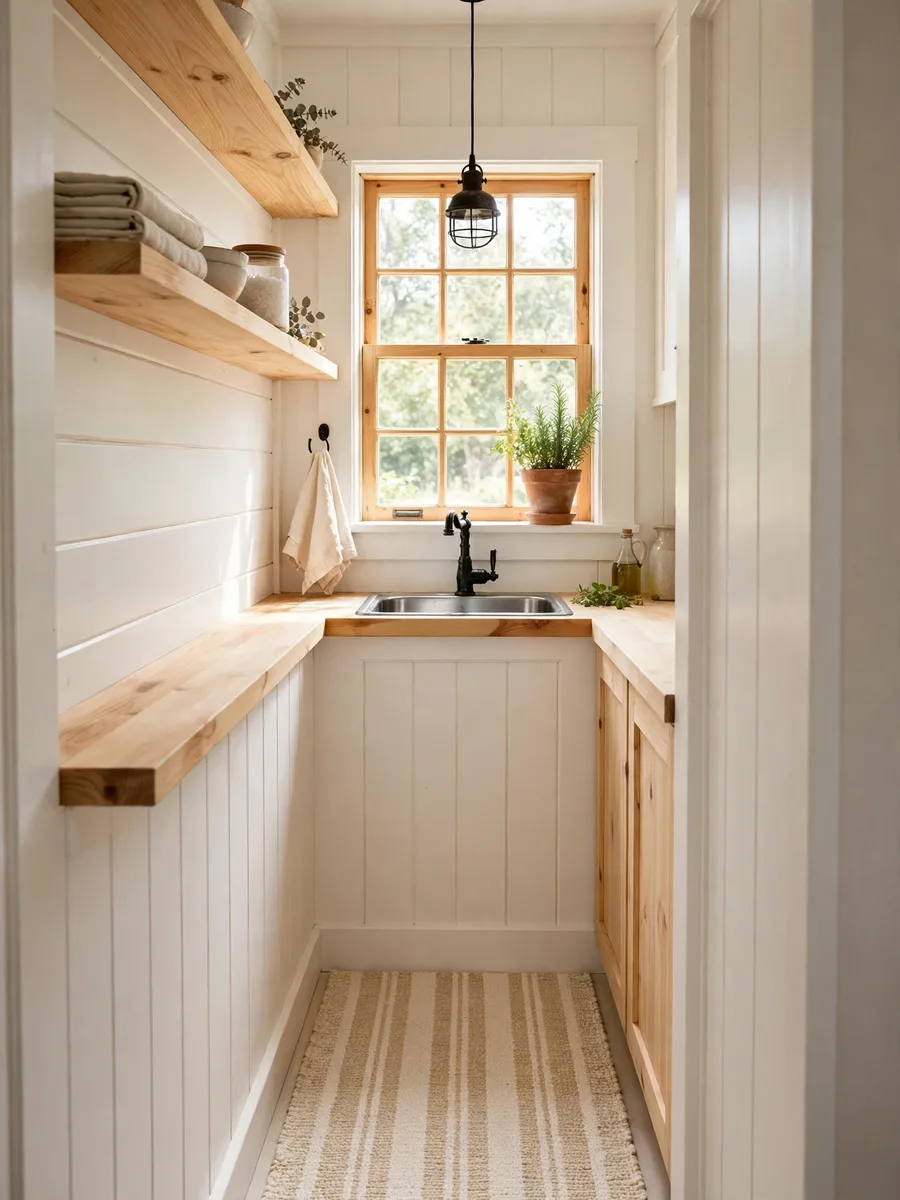
Small kitchens suit rustic style surprisingly well, because rustic design is about a few honest materials rather than lots of stuff. Light wood, pale walls, and one textured accent can make a compact kitchen feel warm and open instead of cramped.
In a galley kitchen, use light pine for a single open shelf and a slim butcher-block ledge, paint the walls warm white, and hang one small black iron pendant over the sink. A striped runner in cream and oatmeal and a single terracotta pot of herbs on the windowsill add the rustic note without taking up a single inch of counter.
Quick tip: In a small rustic kitchen, choose one hero texture — wood or stone, not both — so the room feels calm rather than crowded.
16. Can a Brick Backsplash Give Your Kitchen Instant Character?
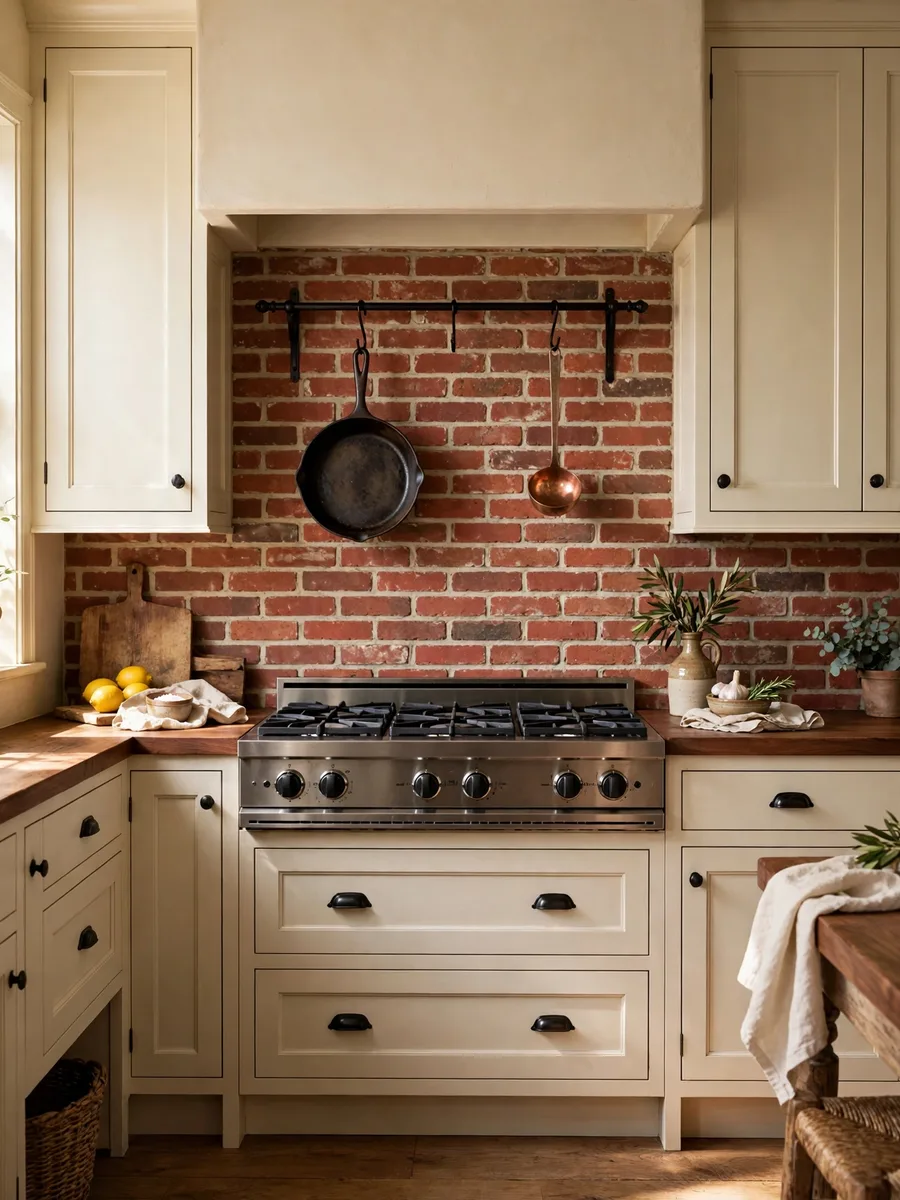
Brick is the fastest way to add age to a new kitchen. Its uneven surface, warm red tones, and old-mortar texture bring instant history to the wall behind the cooker, and it pairs naturally with both painted cabinets and raw wood.
Lay thin brick tiles in a running bond pattern behind the range, seal them with a matte food-safe sealer, and set them against cream shaker cabinets with a walnut worktop. A black iron pot rail mounted on the brick holds a cast-iron skillet and a copper ladle, turning the backsplash into working storage too.
Quick tip: Seal brick backsplashes before you cook on them — unsealed brick absorbs grease and splashes, and matte sealer keeps the rustic look intact.
17. What Does Modern-Rustic Look Like Compared to Traditional Rustic?
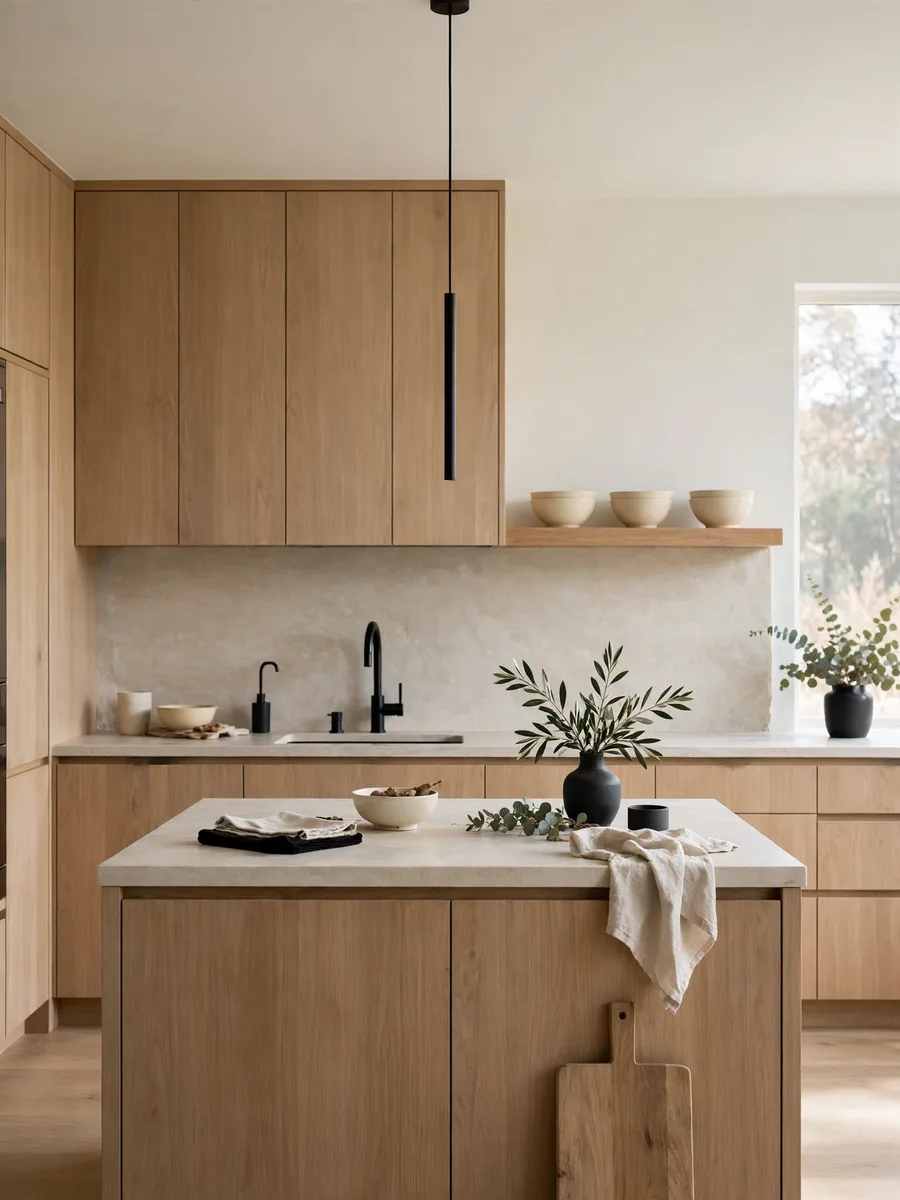
Modern-rustic keeps the soul of the traditional look — real wood, stone, and honest materials — but strips away the clutter and fuss. Where a traditional rustic kitchen layers quilts, collections, and ornate details, the modern version uses clean lines and empty space to let each natural material speak.
Picture flat-front light oak cabinets with no visible hardware, a matte black faucet, and a single slab of honed limestone as the backsplash. One open oak shelf holds three cream bowls and nothing else, and a slim black pendant hangs over the island. It feels calm and current, yet warm.
Quick tip: If you love both styles, go modern on the cabinets and traditional on the textures — clean fronts, but rough wood, stone, and linen everywhere you touch.
18. Which Rustic Flooring Holds Up to Real Family Life?
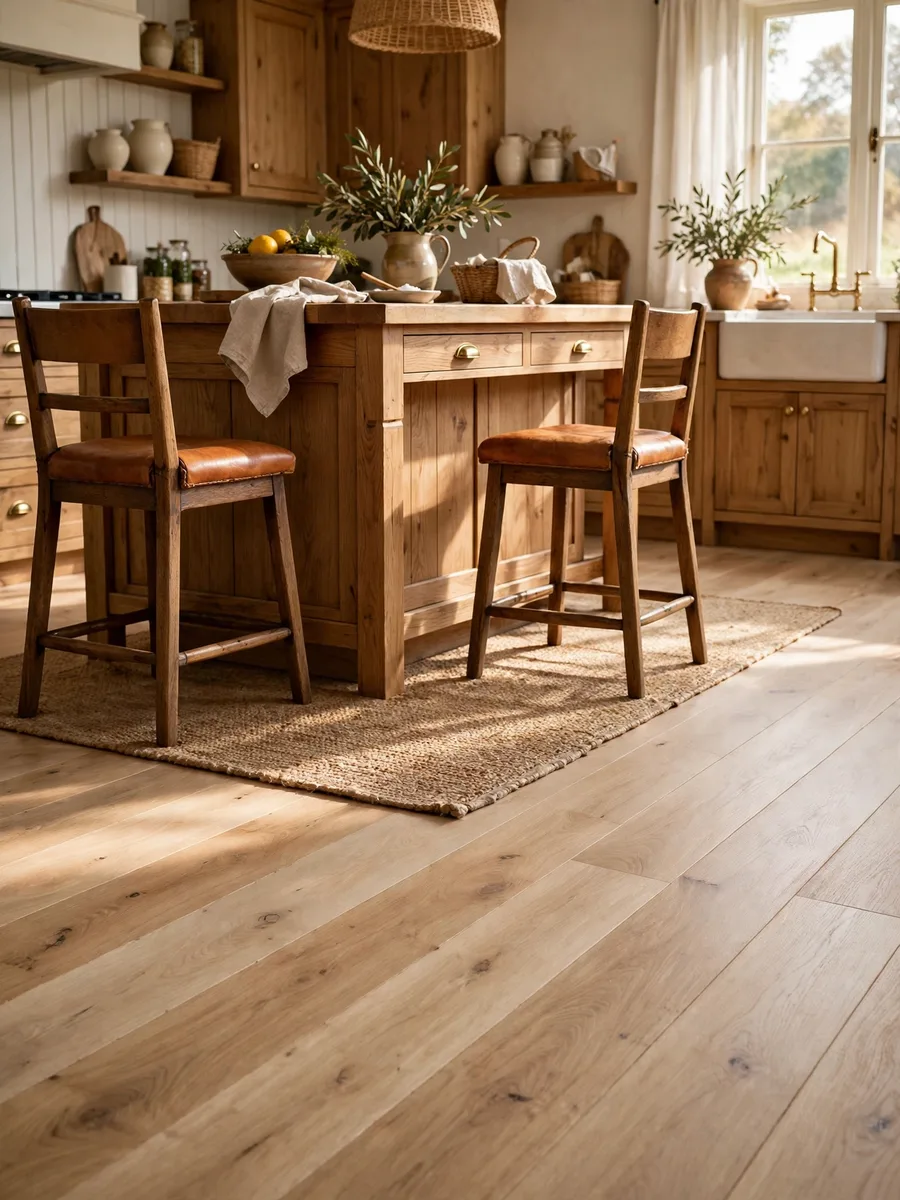
Wide-plank wood flooring is the foundation of a rustic kitchen — literally. Broad boards with visible knots and a matte oil finish feel old and forgiving underfoot, and they hide dust and crumbs far better than glossy or dark floors.
Choose wide-plank white oak in a natural matte finish, laid in long runs through the kitchen and into the dining area so the rooms flow together. A flat-weave jute rug under the island softens the wood, and a pair of leather-and-wood stools echo the floor’s warm tone without matching it exactly.
Quick tip: In a busy kitchen, pick a matte hardwax-oil finish over polyurethane — small scratches can be spot-repaired instead of refinishing the whole floor.
19. How Does a Vintage Hutch Add Rustic Storage and Style?
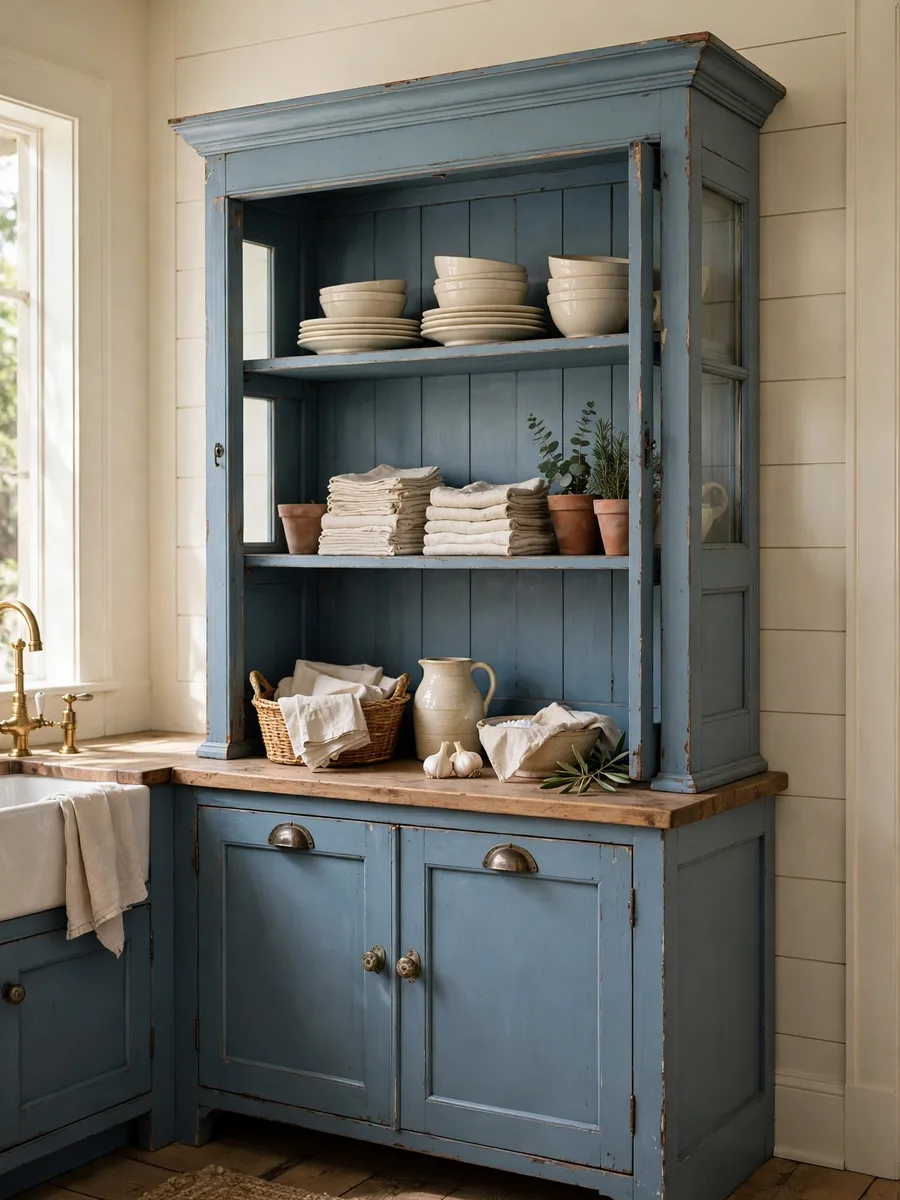
A freestanding hutch is the most charming storage a rustic kitchen can have. Unlike fitted cabinets, it looks like a piece of furniture with a past — and its open top shelves give you a ready-made display for the prettiest things you own.
Find a secondhand pine hutch, paint it a dusty blue with a lightly distressed edge, and set it against a cream wall. Fill the top shelves with cream stoneware, a stack of linen napkins, and two small terracotta pots, and use the closed cupboard below for baking trays and table linens.
Quick tip: Measure doorways and the wall before buying a vintage hutch — old pieces are often deeper and taller than modern furniture, and they do not come apart easily.
20. How Do Textiles and Seating Soften a Rustic Kitchen?
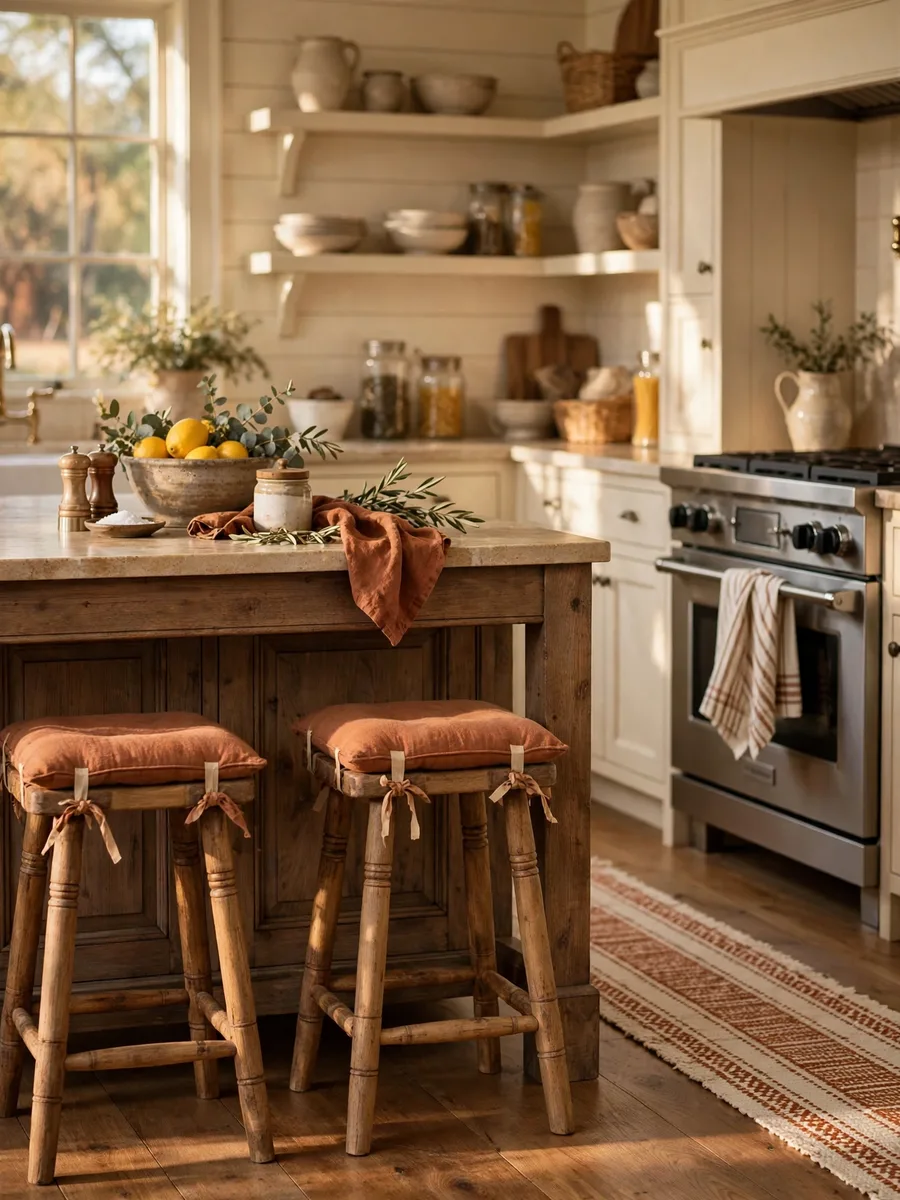
Wood and stone can feel hard if nothing softens them, and that is exactly what textiles do. Linen cushions, woven seat pads, and a simple cotton runner add warmth and color at eye level, making the kitchen feel comfortable rather than just handsome.
Dress the island stools with rust-colored linen seat cushions tied with cotton tape, hang a striped cotton tea towel from the oven handle, and lay a narrow woven runner in cream and rust along the main walkway. The rust tone repeats just enough to tie the room together without matching everything.
Quick tip: Choose washable natural fabrics — linen and cotton — for kitchen textiles, and keep a spare set so you can swap them out on laundry day.
21. How Can Greenery and Natural Decor Finish a Rustic Kitchen?
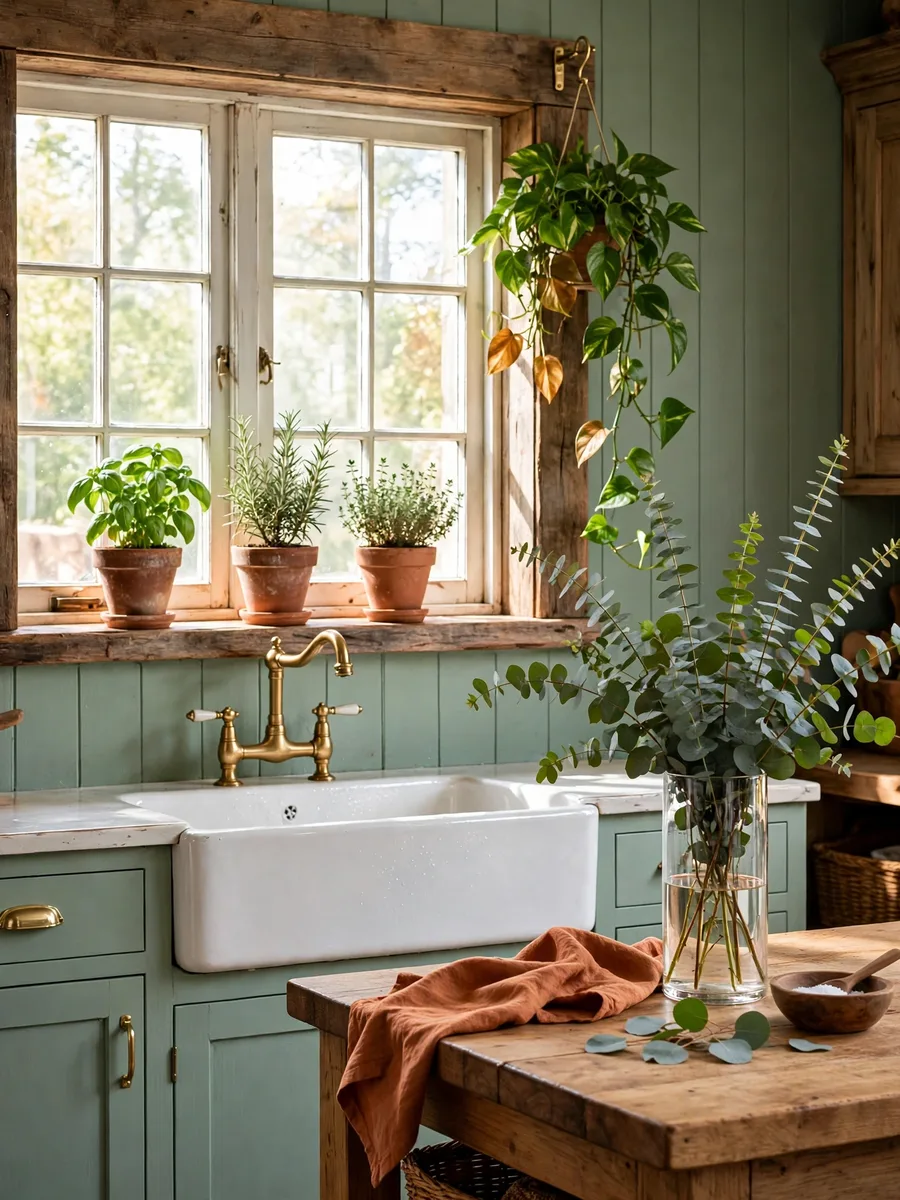
Plants are the finishing touch that makes a rustic kitchen feel alive. Herbs on the windowsill, a trailing plant on a high shelf, and a vase of branches on the table add green, scent, and movement — the final layer that turns a designed room into a lived-in one.
Set three small terracotta pots of basil, rosemary, and thyme on the windowsill above the sink, hang a trailing pothos from a brass hook near the pantry, and place a tall glass vase of eucalyptus branches on the island. The green softens the wood and stone, and the herbs are genuinely useful every time you cook.
Quick tip: Pick herbs and plants that like kitchen conditions — basil, rosemary, and pothos all thrive in bright light and the humidity from cooking.
Frequently Asked Questions
What colors go best with rustic kitchen ideas?
Warm neutrals are the safest base: cream, warm white, honey, sage, and soft clay, with one deeper tone such as olive, navy, or charcoal for contrast. Natural wood tones count as a color too, so let the grain of oak, walnut, or pine carry much of the palette and keep painted surfaces calm.
What cabinets work best in a rustic kitchen?
Shaker-style cabinets in solid wood or painted MDF are the classic choice, with visible frames and simple hardware. Painted finishes in sage, olive, cream, or dusty blue look most at home, while natural oak or pine cabinets suit a more traditional farmhouse feel.
Can a rustic look work in a small kitchen?
Yes. Focus on light wood, pale walls, and one strong texture such as a brick backsplash or a single open shelf, and keep counters clear. Rustic style relies on honest materials rather than lots of decor, so a small kitchen can feel warm and characterful without feeling crowded.
What is the difference between modern-rustic and traditional rustic?
Traditional rustic layers ornate details, collections, and patterned textiles over natural materials, while modern-rustic keeps the same wood and stone but uses clean lines, flat-front cabinets, and uncluttered surfaces. Both feel warm; modern-rustic simply shows less.
How can I make my kitchen look rustic on a budget?
Start with paint, hardware, and textiles: repaint cabinets in a warm earthy tone, swap knobs for aged-brass or black iron pulls, and add linen cushions and a woven runner. One open wooden shelf with everyday dishes adds the rustic feel for very little money.
Conclusion
These rustic kitchen ideas all share one simple truth: a kitchen feels rustic when its materials are honest and its details are personal. Start with one idea — a beam, a sink, a shelf, or a pot of herbs — and let the room grow from there, because the warmest rustic kitchens are the ones that were collected slowly, not finished in a weekend.