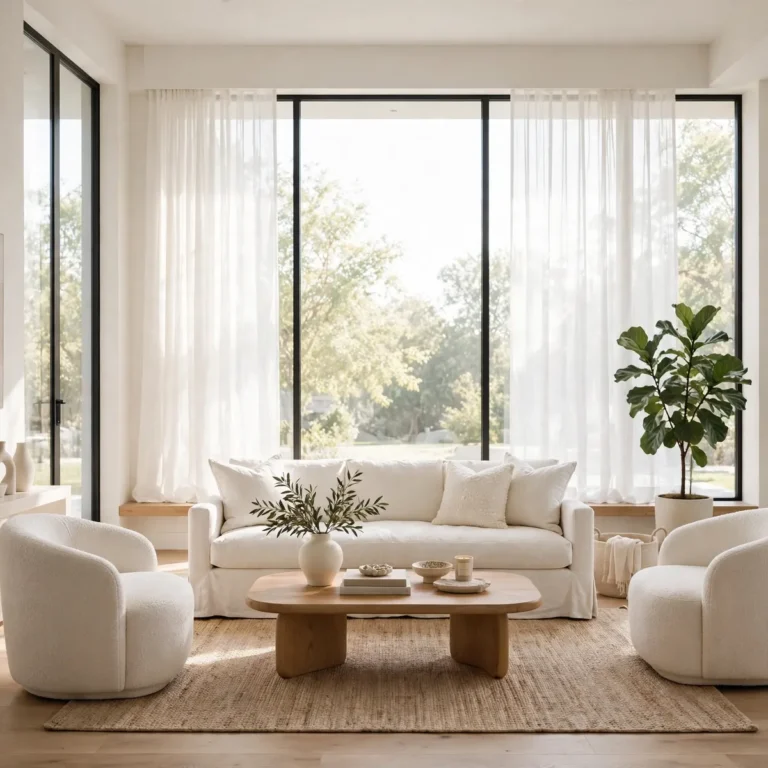
Winter Living Room Decor Ideas: 25 Stunning Ways to Make Your Living Room Warm and Inviting All Winter
Winter living room decor ideas work best when they warm the room you actually live in, not just the room you photograph. The fastest way to a cozy winter living room is to layer soft textures, add warm light at several heights, and bring in deep, calm colors that hold up from December through February. You do not need a full redecoration or a single Christmas decoration to get there.
Most of these ideas cost little, because many are about moving what you already own or swapping one set of covers for another. Pick three or four that suit your room, start with the ones that change how the room feels, and build from there. If you want the same seasonal warmth in the room next door, these winter kitchen decor ideas use the same layered, cozy approach for kitchens.
Key Takeaways: Winter Living Room Decor Ideas at a Glance
What makes a living room feel warm in winter? Layered textiles, warm light at three heights, and deep colors make a living room feel warm in winter, even before the heating is turned up.
Do winter ideas need Christmas decor? No. Winter runs December to February, and throws, rugs, lamps, and greenery work all season without a single Christmas decoration.
How Do You Layer Throws for a Cozy Winter Living Room?
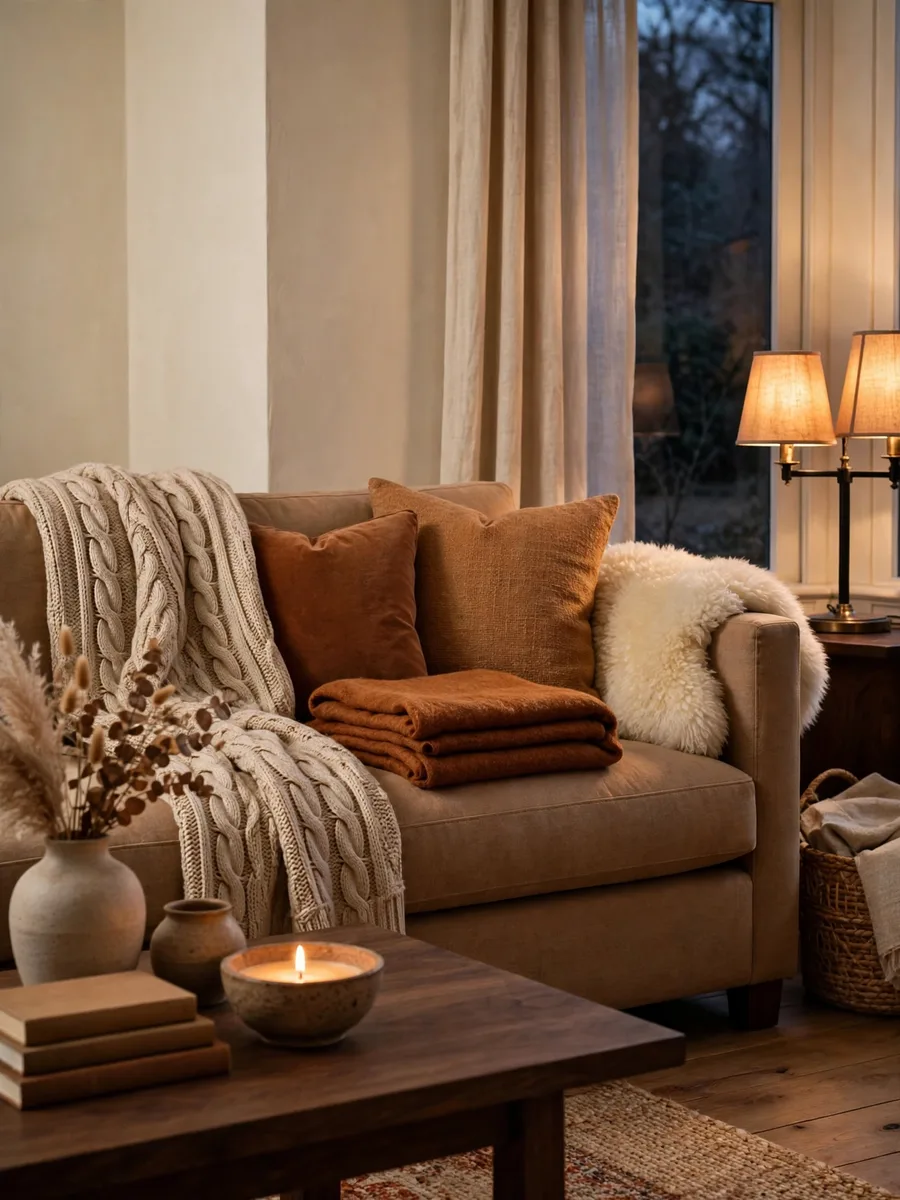
One blanket on the sofa is decoration. Three blankets in different weights is an invitation to sit down and stay, because each layer adds a different texture and a different job: a chunky knit throw over the arm adds visual weight, a smooth wool blanket folded on the seat is the one people reach for, and a faux sheepskin over one corner adds softness and shine. For example, drape an oat cable-knit throw over the left arm, fold a rust wool blanket across the seat cushions, and tuck a cream sheepskin into the right corner.
Quick tips:
- Mix weights, not just colors — knit, wool, and sheepskin together.
- Keep all three throws in one warm color family.
What Pillow Covers Make a Living Room Feel Like Winter?
Pillow covers are the cheapest way to change the season in a living room. Trade crisp cotton and linen covers for textures you want to touch: velvet, bouclé, corduroy, wool plaid, and chunky knit. Choose two textures and one pattern rather than five competing fabrics. For example, place a rust velvet square at each end of a cream sofa, add an oatmeal bouclé cushion beside one of them, and finish with a camel-and-cream plaid lumbar cushion in the center.
Quick tips:
- Swap covers, not whole cushions — it costs less and stores easily.
- Use two textures plus one pattern, never five competing fabrics.

How Do You Light a Living Room for Dark Winter Evenings?
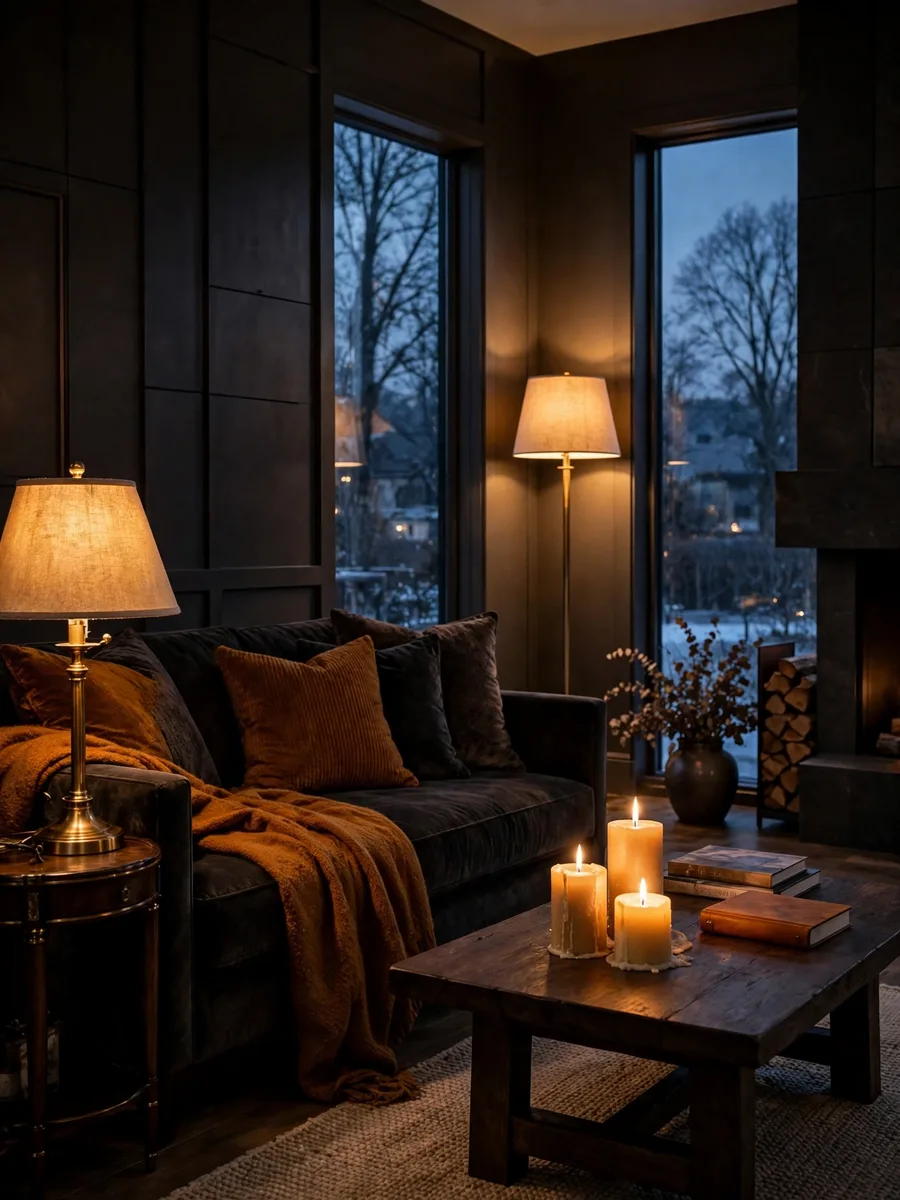
The overhead ceiling light is the least cozy thing in any winter living room. Warmth comes from pools of light at different levels: low light from candles or a table lamp at seat height, middle light from a lamp on a console, and high light from a floor lamp aimed toward the ceiling. Use warm 2700K bulbs everywhere, and put the main lamps on timers set for about 4:30 p.m. For example, a brass table lamp beside the sofa, a tall floor lamp in the far corner, and three pillar candles on the coffee table make the room feel lit from inside rather than from above.
Quick tips:
- Use warm 2700K bulbs in every lamp.
- Place light at three heights: low, middle, and high.
Why Layer a Wool Rug Over a Flat Weave in Winter?
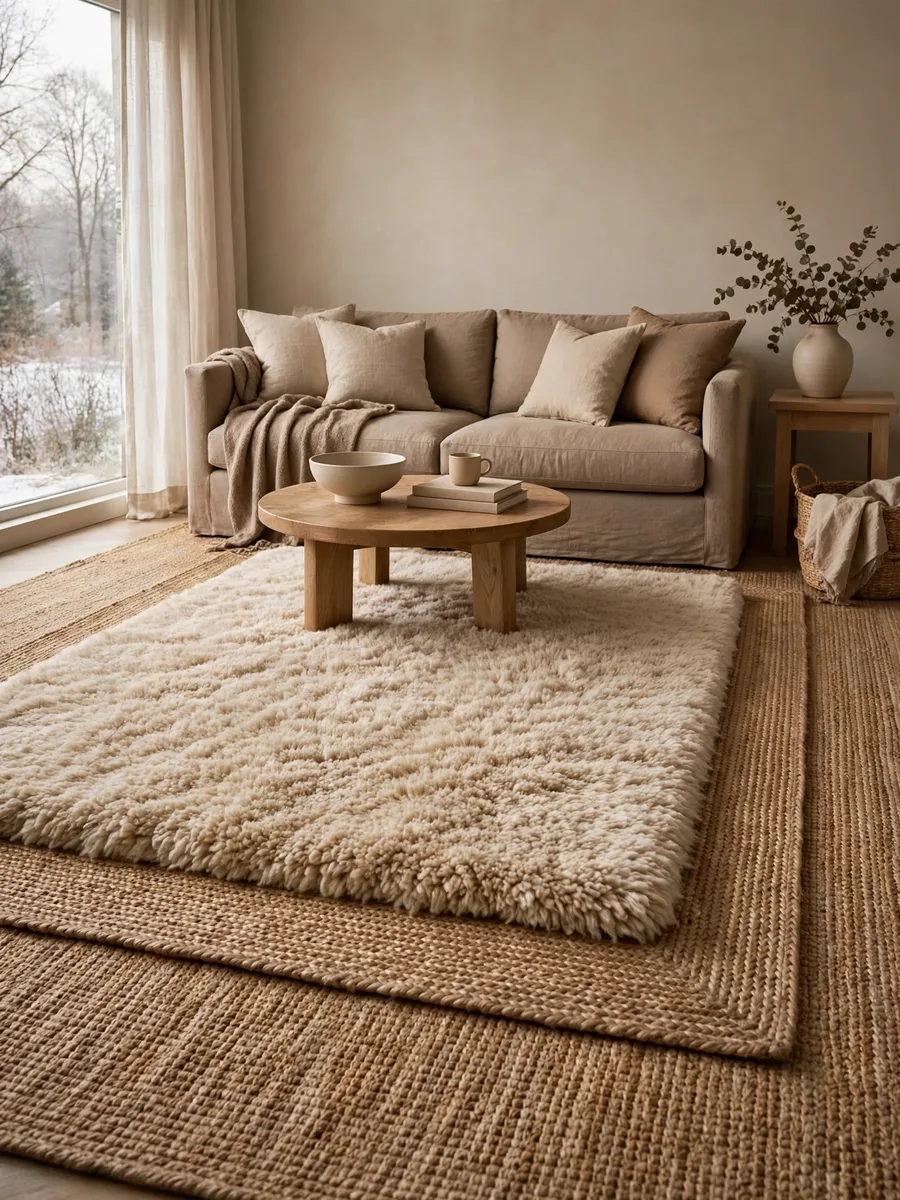
Rug layering is the easiest way to add warmth underfoot without replacing what you already own. Leave a large jute, sisal, or flat-woven rug in place as the base, and lay a smaller, thicker wool rug on top in front of the sofa, leaving a visible border of the base rug showing around it. For example, a 5-by-8 high-pile wool rug in warm oat over a larger natural jute rug anchors the seating area and makes it feel like a room within the room.
Quick tips:
- Leave a visible border of the base rug around the top rug.
- Pick a solid warm tone for the top rug.
Do Heavier Curtains Really Make a Living Room Warmer?
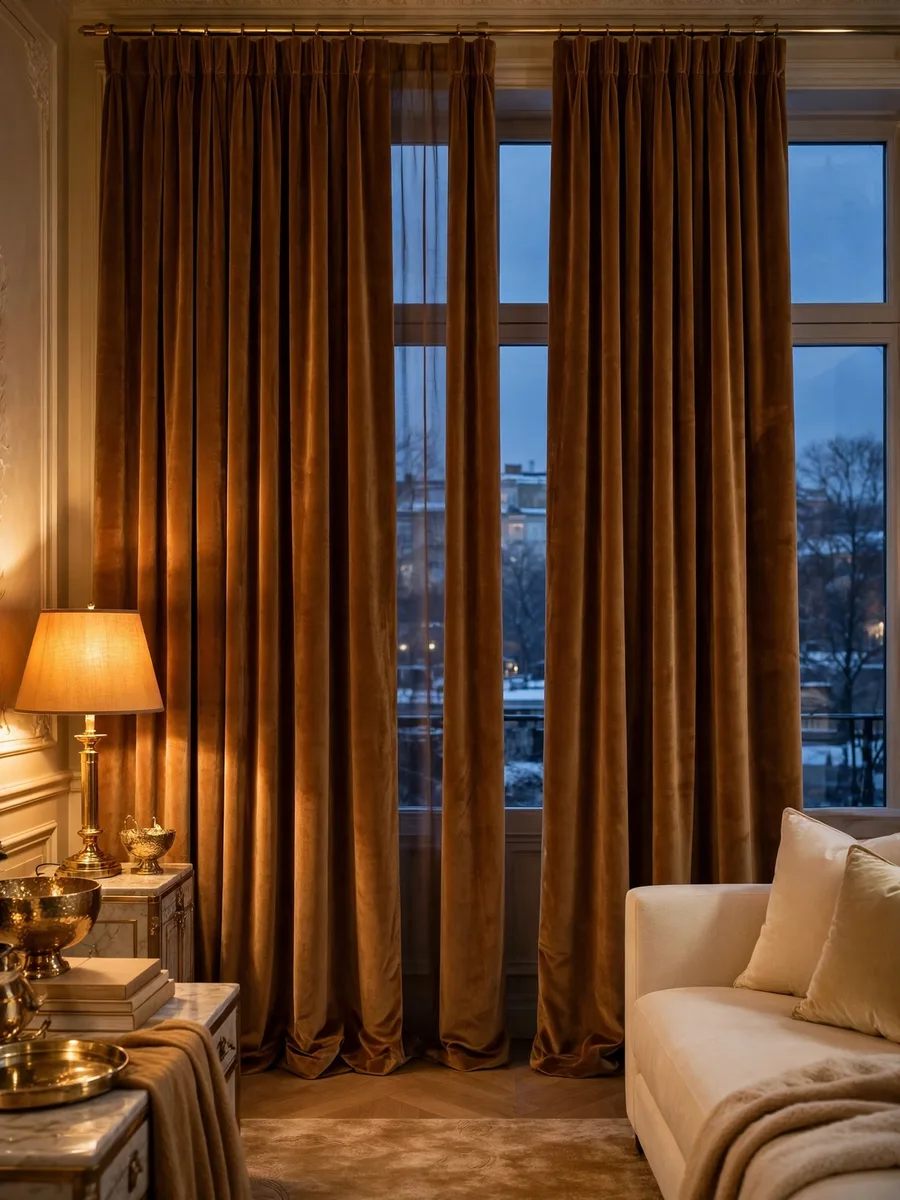
Swapping to lined, floor-length curtains is one of the most effective winter changes you can make. A thick, lined panel drawn at dusk stops the window from becoming a cold black mirror, softens the hard edges of the glass, and makes the wall feel finished. For example, floor-length velvet panels in deep caramel on a brass rod transform a plain window wall, and when they are drawn at dusk the whole room feels quieter and warmer.
Quick tips:
- Choose lined, heavy fabric — velvet or lined cotton.
- Hang the rod high and wide to frame the window.
How Do You Style a Fireplace Mantel for Winter Without Christmas Decor?
Winter is the season everyone turns toward the fireplace. A winter mantel does not need Christmas ornaments: layer non-Christmas greenery such as eucalyptus, cedar, or pine with candles and warm metallic objects. For example, a cedar garland with pinecones, three brass candlesticks, and a small framed print of bare winter trees makes a mantel that looks right in December, January, and February.
Quick tips:
- Use plain winter greenery — eucalyptus, cedar, or pine — not holiday decor.
- Layer greenery, candles, and one framed print or mirror.

How Do You Create a Hearth When You Have No Fireplace?
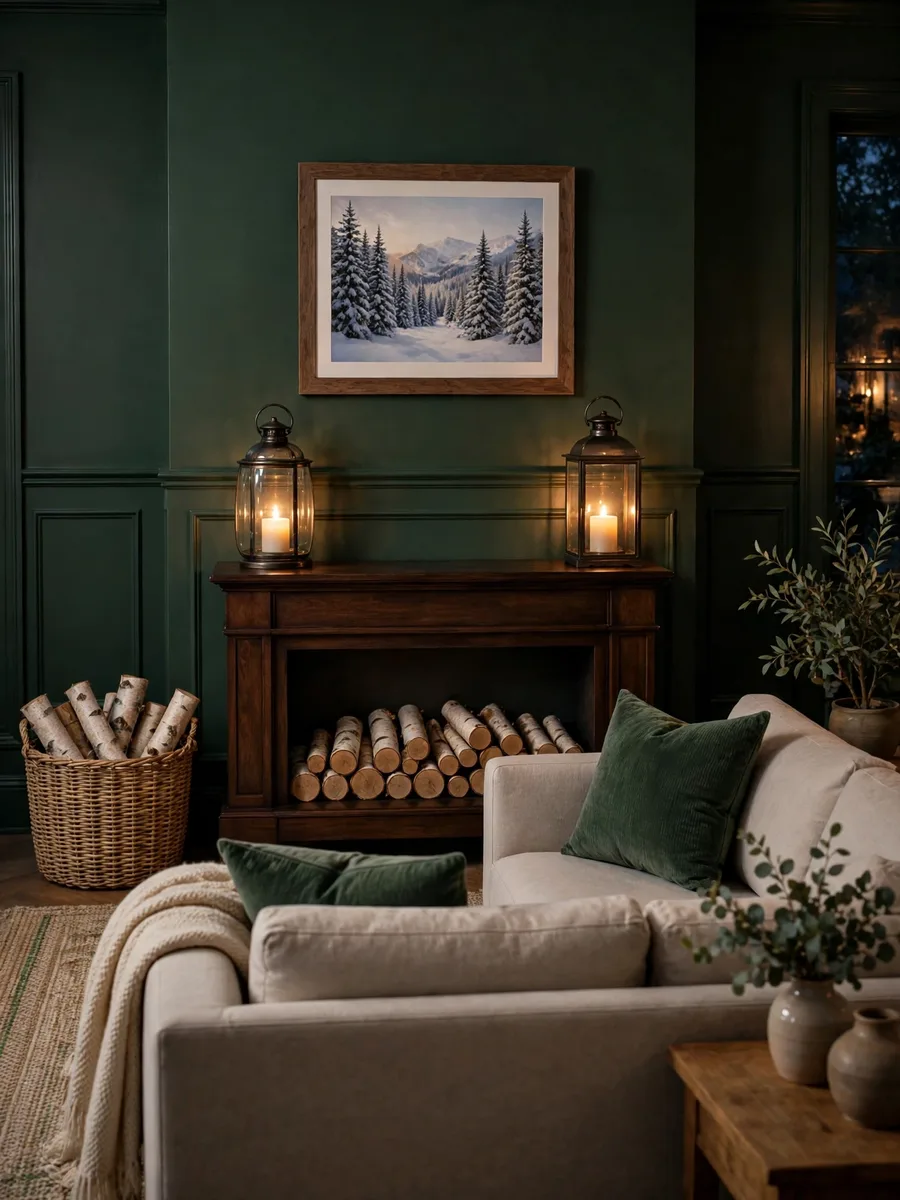
A room without a fireplace can still have a hearth, giving the room a warm center to gather around. Build one on the wall the sofa faces: a low console or bench, a large lantern or a cluster of pillar candles, a basket of firewood, and a framed print above. For example, a dark wood console with two large glass lanterns, a woven basket of birch logs beside it, and a framed snowy landscape above creates a glowing corner that anchors the whole room.
Quick tips:
- Face the seating toward the faux hearth wall.
- Use lanterns or a stone tray under candles for safety.
What Is the Best Winter Color Palette for a Living Room?
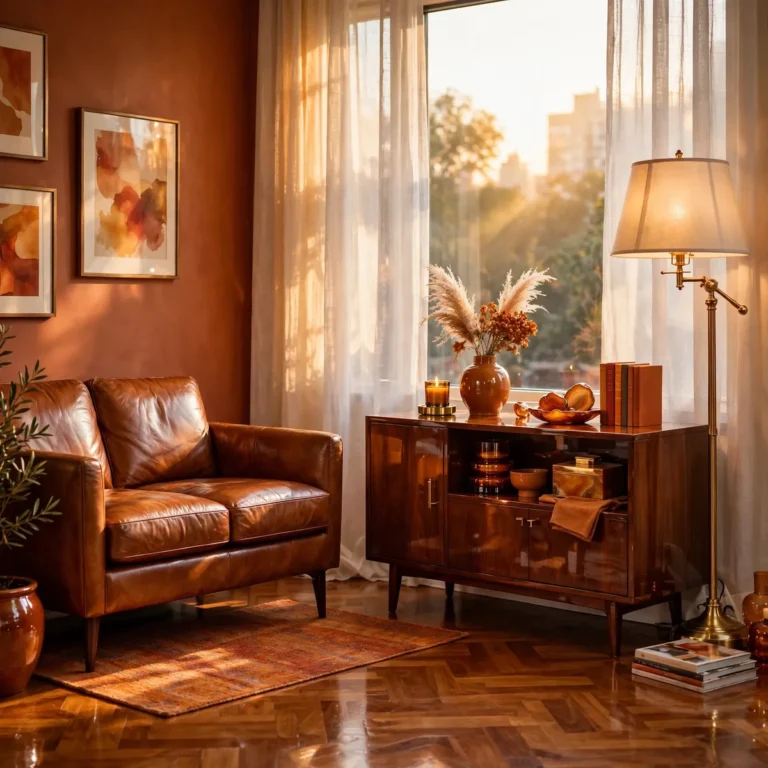
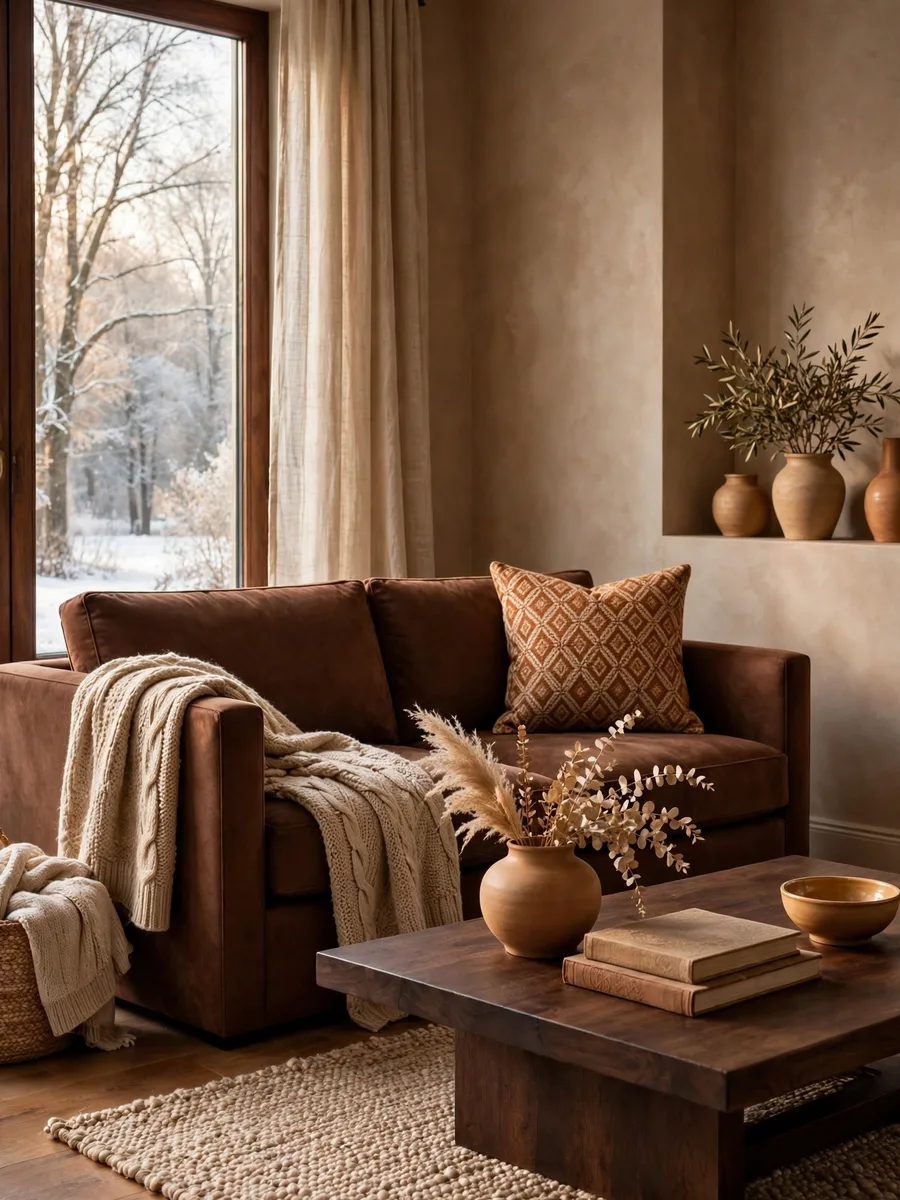
Winter light is low and often grey, making cool colors look cooler. That is why a warm palette works: cocoa, caramel, oat, and rust catch whatever light there is and give it back. Layer several shades of one warm color — one dark anchor, one middle shade, and one cream. For example, a chocolate brown sofa, a caramel patterned cushion, and an oat throw look planned and calm, and a dark wood coffee table grounds the whole scheme.
Quick tips:
- Pick one dark anchor, one middle shade, and one cream.
- Layer several shades of one warm color.
Where Should You Keep Throw Blankets in a Winter Living Room?
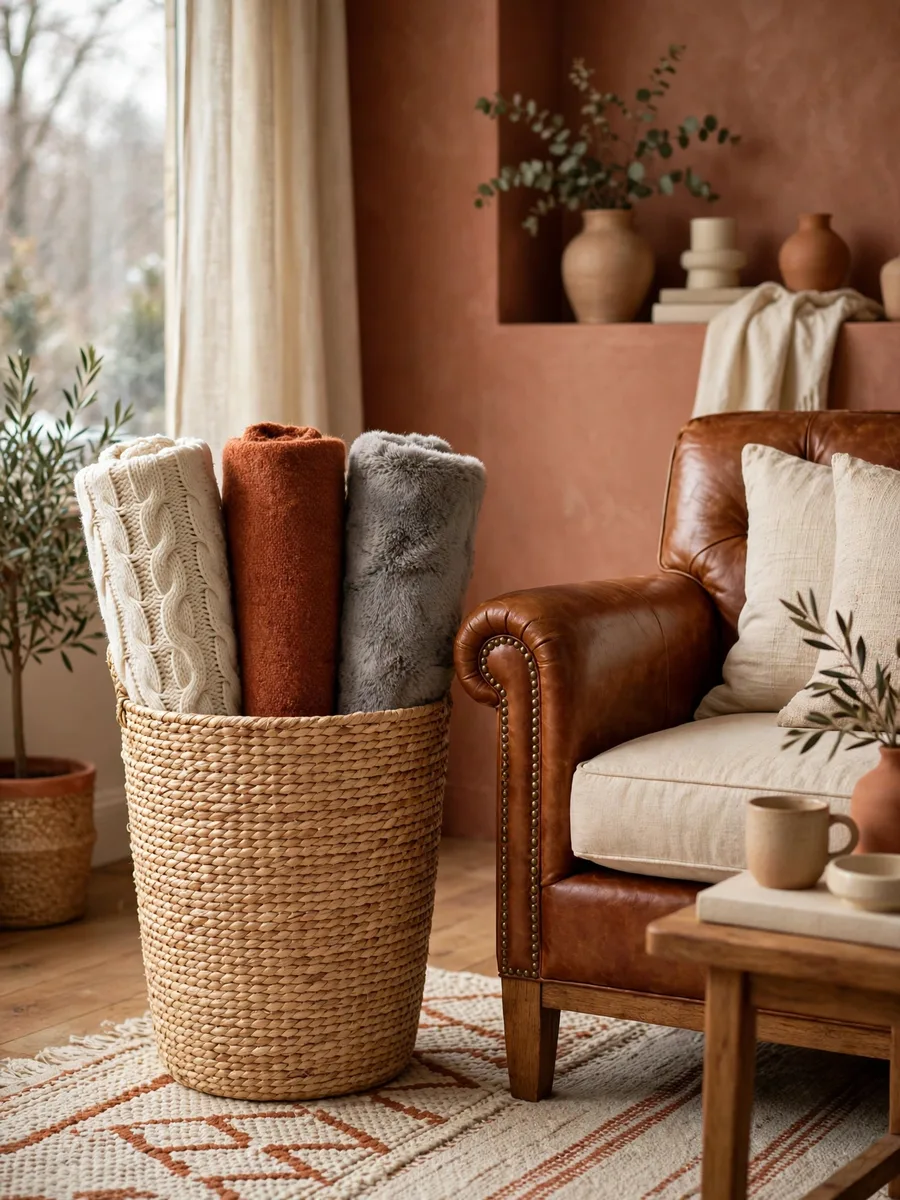
A basket of rolled throw blankets beside the sofa is both storage and decoration, solving the real winter problem: everyone wants a blanket, and nobody wants to fetch one from another room. Roll throws into logs and stand them upright in a tall woven basket so the textures and colors show. For example, a tall seagrass basket holding a chunky cream knit, a rust wool throw, and a grey faux-fur blanket beside a leather armchair looks styled, and the nearest throw is already in hand on a cold evening.
Quick tips:
- Roll throws into logs and stand them upright so textures show.
- Keep the basket within arm’s reach of the sofa.
How Do You Build a Winter Window Reading Nook?
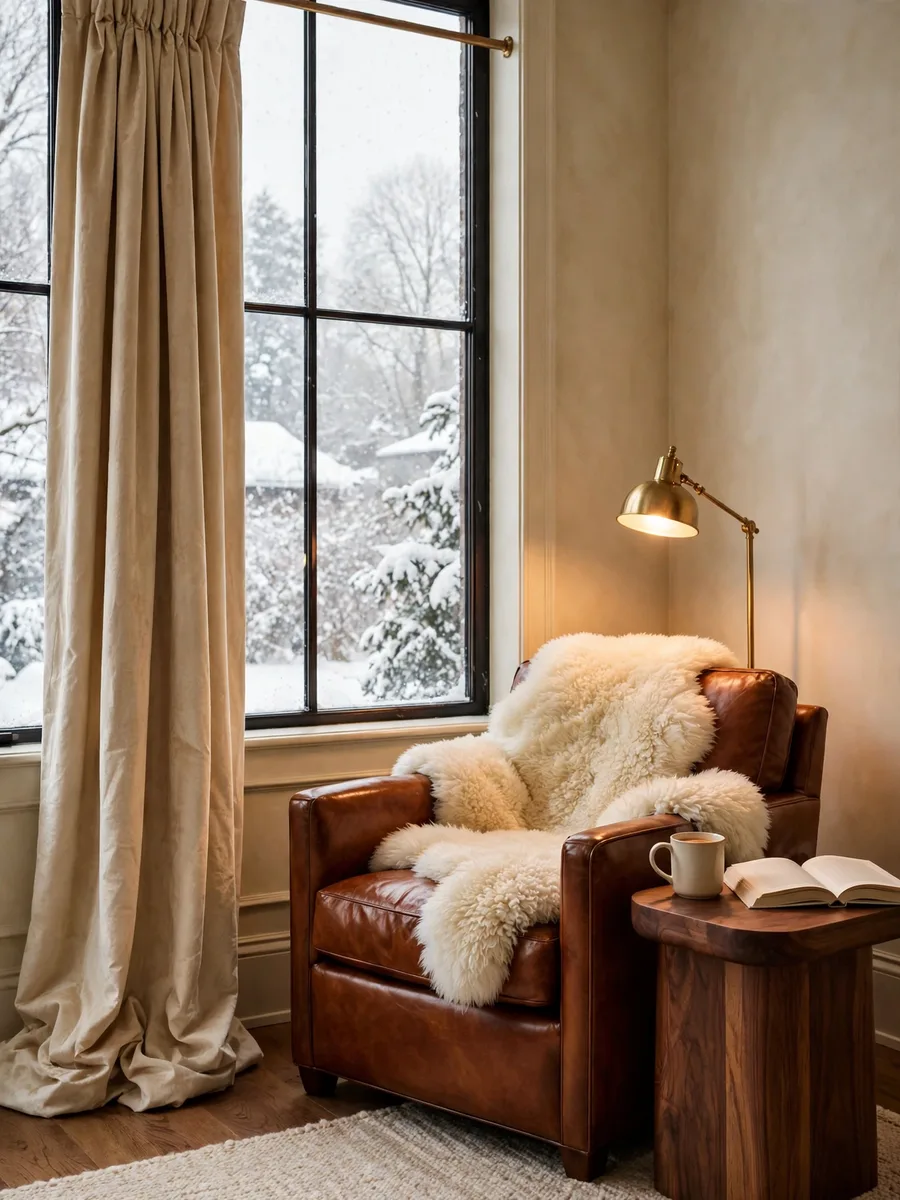
Short winter days make a chair by the window the best spot in the house. Pull an armchair close to the window, drape a sheepskin over its seat and back, add a small side table for a mug, and place a floor lamp behind the chair so the light falls over the reader’s shoulder. For example, a cognac leather chair with a cream sheepskin, a walnut side table holding a mug and a book, and a brass reading lamp creates a corner that gets used every evening from December to February.
Quick tips:
- Place the lamp behind the chair so light falls over the shoulder.
- Add a sheepskin to soften a hard seat.
How Do Brass and Gold Accents Warm Up a Winter Living Room?
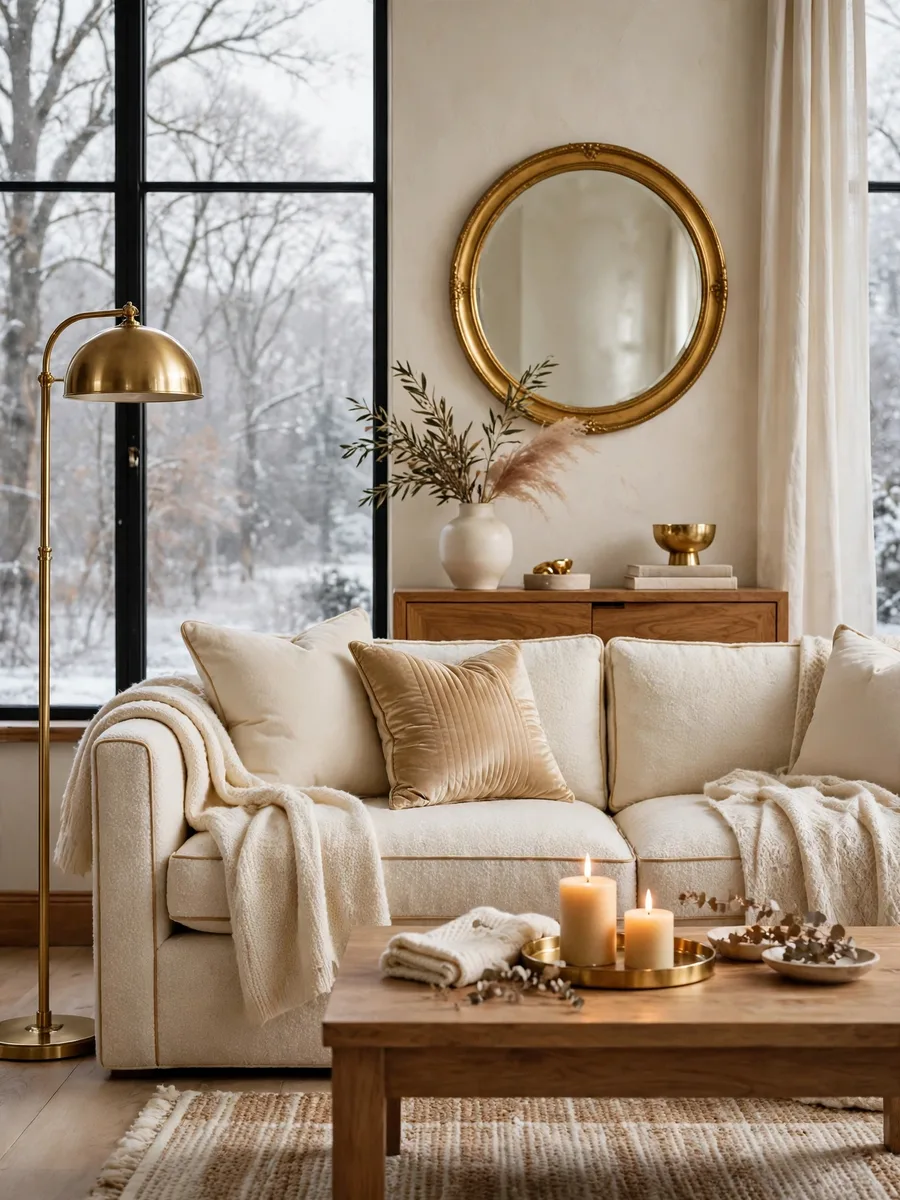
Brass and gold accents add warmth in small, glowing points around the room. A brass lamp base, a gold-framed mirror, brass candlesticks, or a tray with a warm metallic edge catches lamplight and throws it back into the room, which matters when daylight is scarce. For example, a brass floor lamp beside the sofa, a gold-framed round mirror above the console, and a small brass tray holding candles on the coffee table give the room a quiet glow without a single new piece of furniture.
Quick tips:
- Place warm metals in three or four spots, not everywhere.
- Mix brass with wood, wool, and stone.
How Do You Style a Winter Coffee Table?
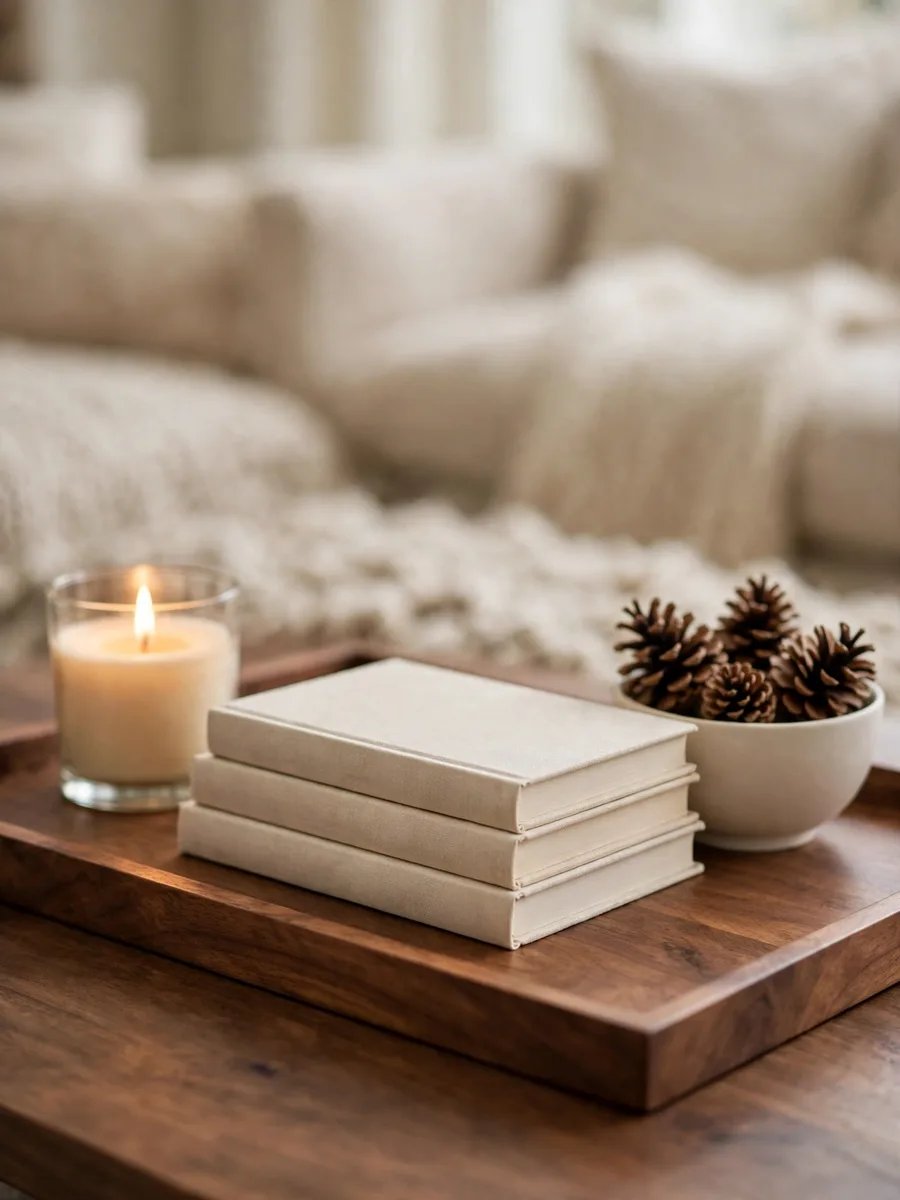
A winter coffee table needs a simple formula: tray, books, something natural, and something scented. The tray keeps the arrangement contained, the books add height and color, a natural element like pinecones or dried branches adds the season, and a candle adds light and scent. For example, a walnut tray holding three cream-spined books, a small bowl of pinecones, and a cedar-scented candle turns a plain coffee table into a winter scene in under five minutes.
Quick tips:
- Follow the formula: tray, books, natural element, candle.
- Leave clear space for mugs.
What Natural Winter Elements Work Indoors Without Looking Like Christmas?
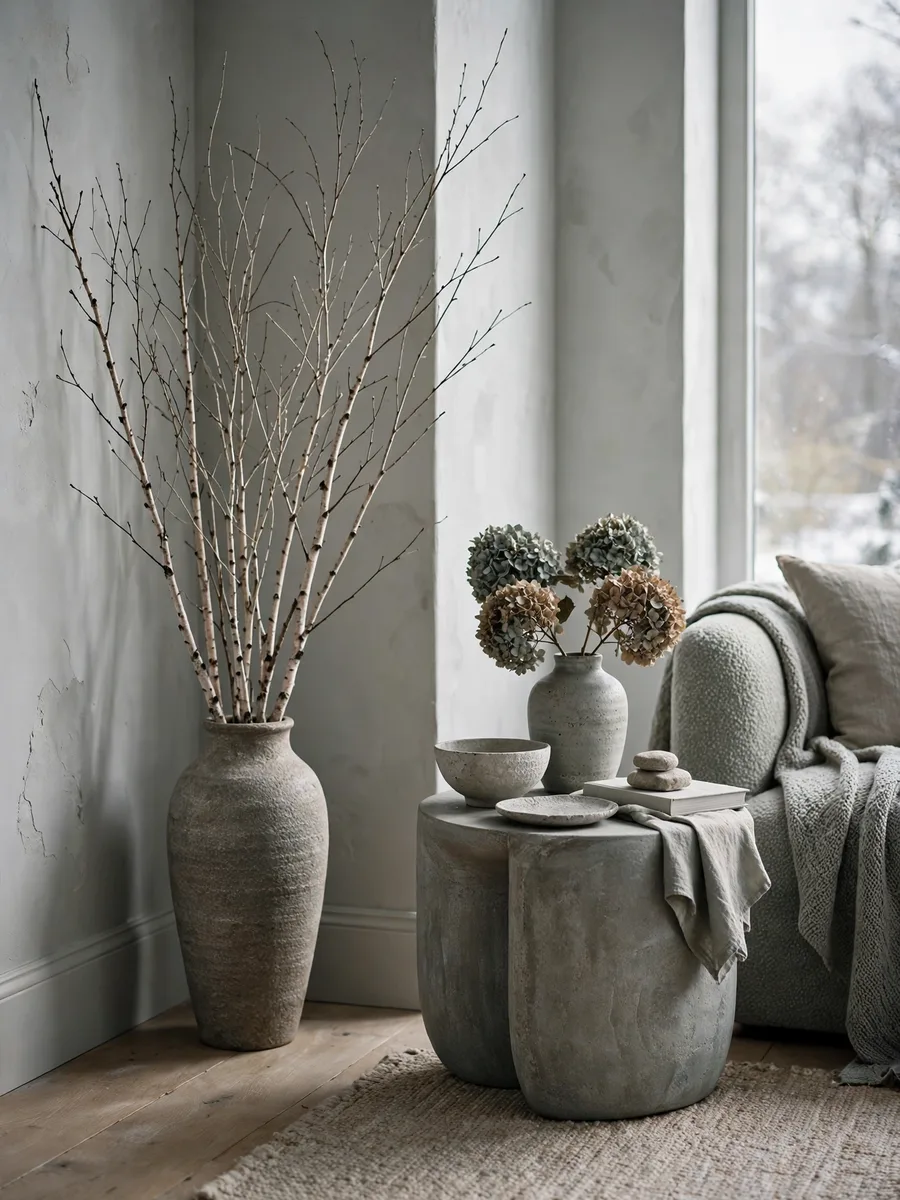
Dried botanicals and bare branches last past the holidays. Eucalyptus, olive branches, pampas grass, dried hydrangeas, and bare birch twigs in a stoneware or ceramic vase bring the season indoors without a single bauble, and they dry well, so the arrangement lasts for months. For example, a tall vase of birch twigs and a small vase of dried hydrangea connect the room to the winter landscape outside.
Quick tips:
- Use dried botanicals and bare branches, not holiday greenery.
- Pair one tall floor arrangement with one small table vase.
How Do You Arrange Candles for Warm Winter Light?
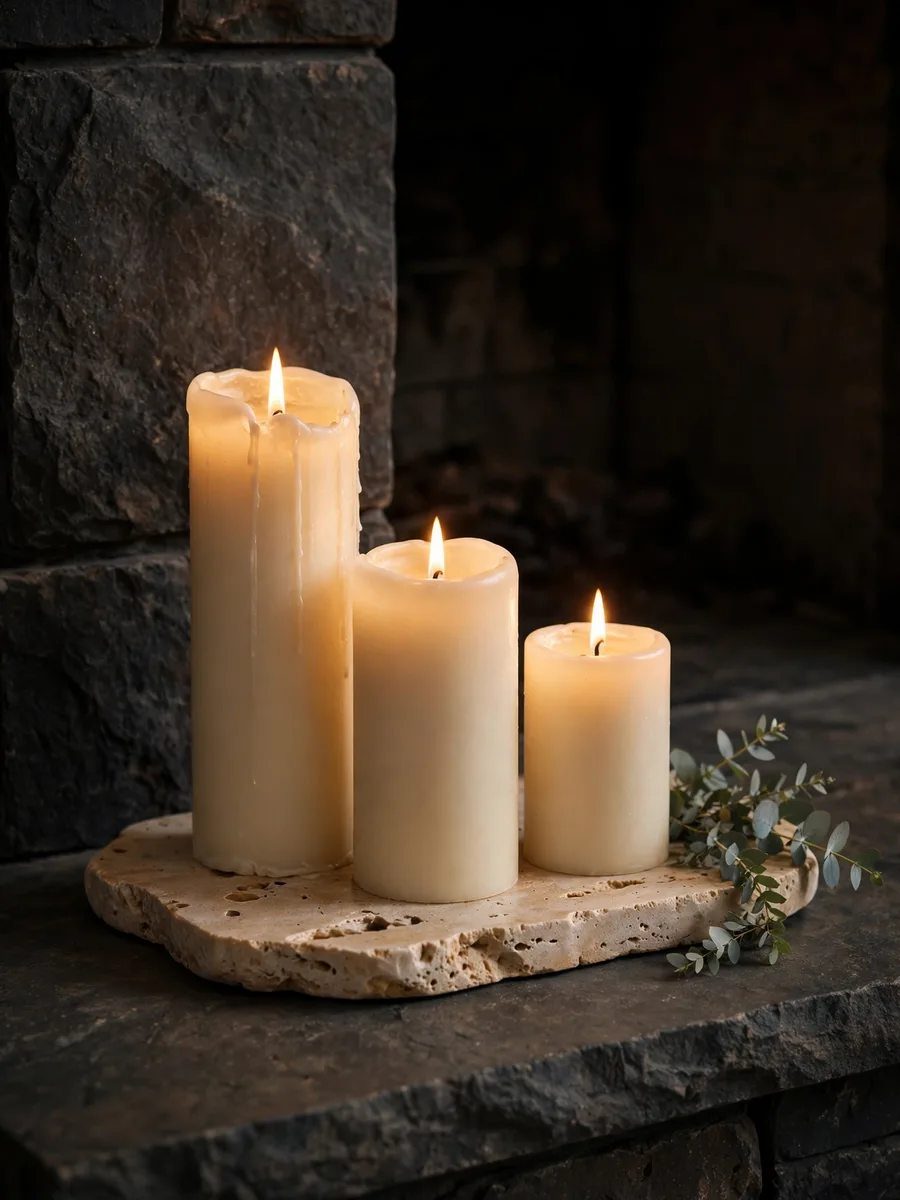
Candles are the fastest way to make a winter living room feel warm, adding flickering light at eye level and a scent that fills the room. A cluster works better than a single candle: group three or five pillar candles of different heights on a stone tray or a fireplace hearth, and the group becomes a glowing focal point. For example, three cream pillar candles on a travertine tray on the hearth, with a small sprig of eucalyptus beside them, give the room a soft glow that a lamp alone cannot match.
Quick tips:
- Group candles in threes or fives at different heights.
- Keep all candles in one color family.
Should You Paint One Wall a Deeper Color for Winter?
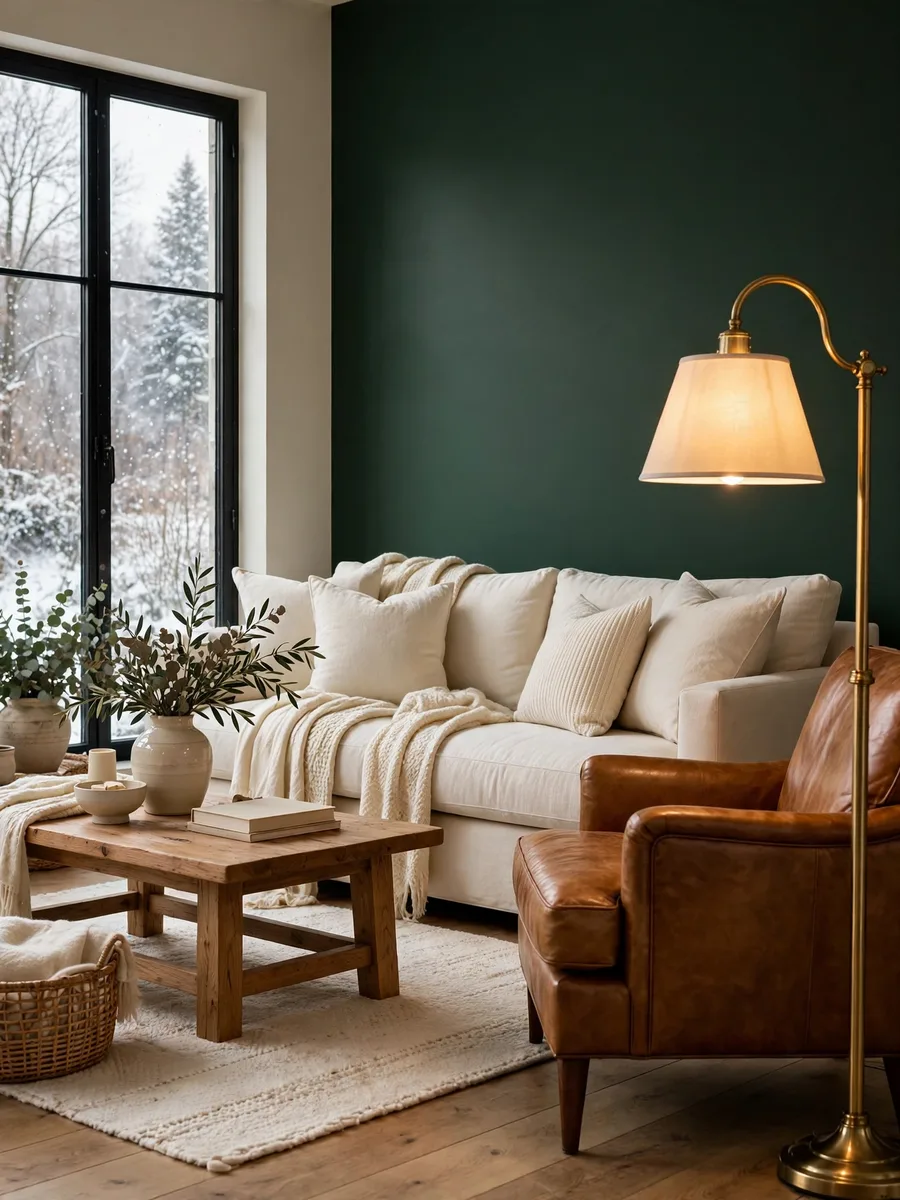
Painting one wall a deeper color is the boldest move on this list. A deep cocoa, forest green, rust, or charcoal wall behind the sofa makes the seating area feel enclosed and warm, and it makes cream throws and brass lamps stand out against it. For example, a deep forest-green wall behind a cream sofa, with a caramel leather chair and brass floor lamp in front of it, creates a winter living room that feels like a lodge without changing a single piece of furniture.
Quick tips:
- Paint only one wall — the sofa wall or the fireplace wall.
- Keep other walls pale and the ceiling white.
How Does a Sheepskin Change an Armchair for Winter?
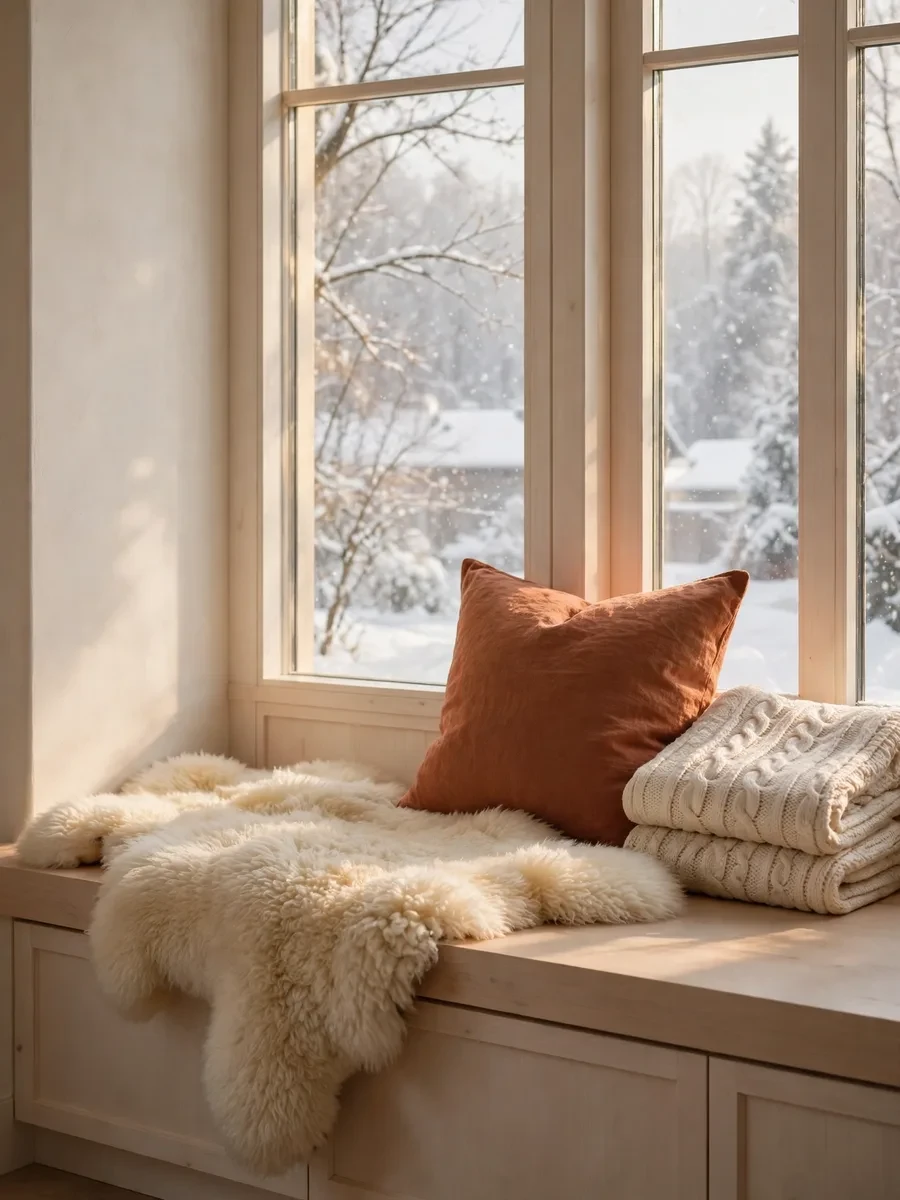
A sheepskin draped over an armchair is the fastest winter upgrade for a seat. The soft cream fleece softens a hard wooden chair, warms a leather chair, and makes a plain fabric chair look luxurious, while catching the light so the chair becomes a bright spot in a dark room. For example, a wooden window-seat bench with a cream sheepskin, a rust cushion, and a folded knit throw becomes the seat everyone argues over on a snowy afternoon.
Quick tips:
- Drape the sheepskin loosely — do not tuck it in neatly.
- Use cream sheepskin on dark or leather chairs for contrast.
What Is a Sofa-Side Hot-Drink Station?
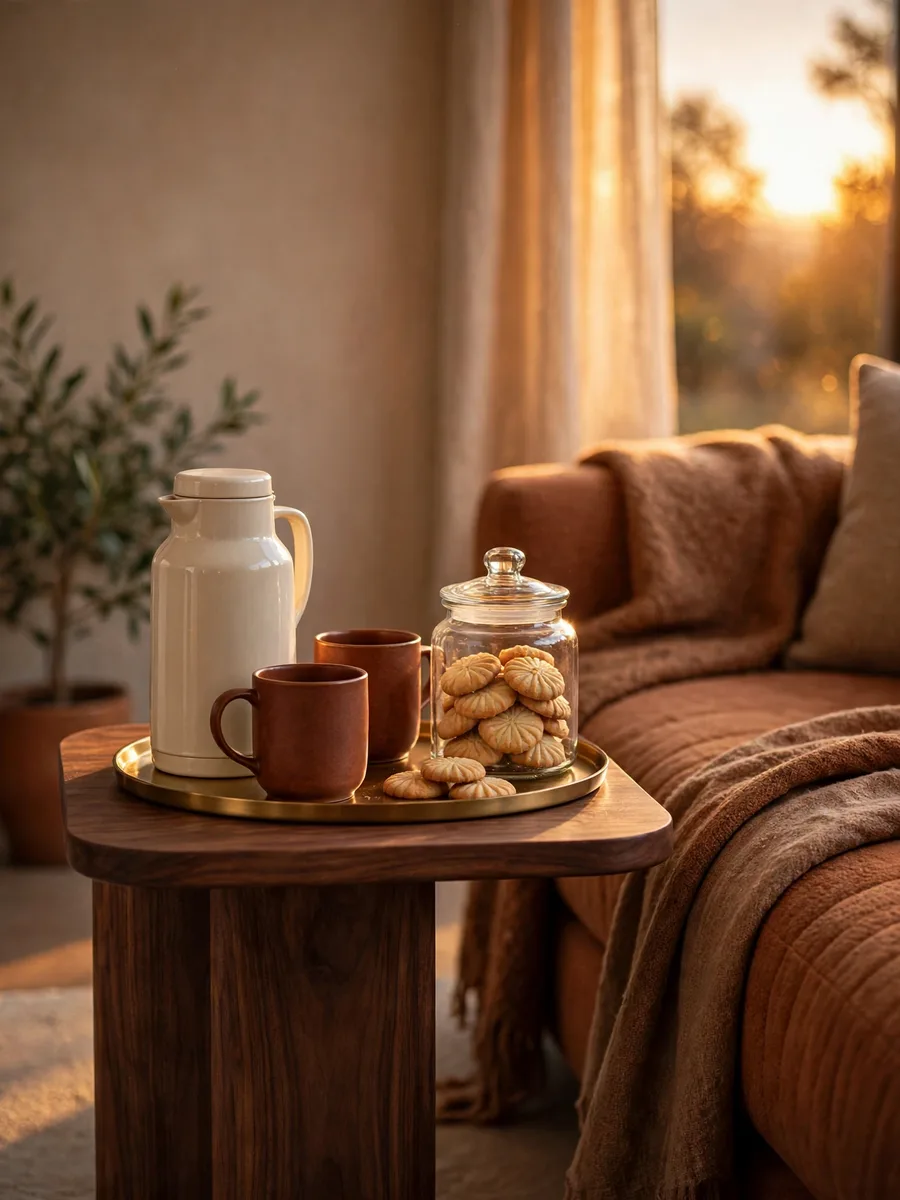
A hot-drink station beside the sofa turns a winter evening into a ritual. A small stool, side table, or tray holds a thermos, two mugs, and a small jar of biscuits or marshmallows, so nobody has to leave the warm room for a refill. For example, a walnut side table with a brass tray, a cream ceramic thermos, two rust mugs, and a glass jar of shortbread makes the sofa corner feel like a small café, and it costs nothing beyond what is already in the kitchen.
Quick tips:
- Keep it to one tray: thermos, two mugs, one jar.
- Place it on the side table nearest the main seat.
How Do You Swap Artwork for the Winter Season?
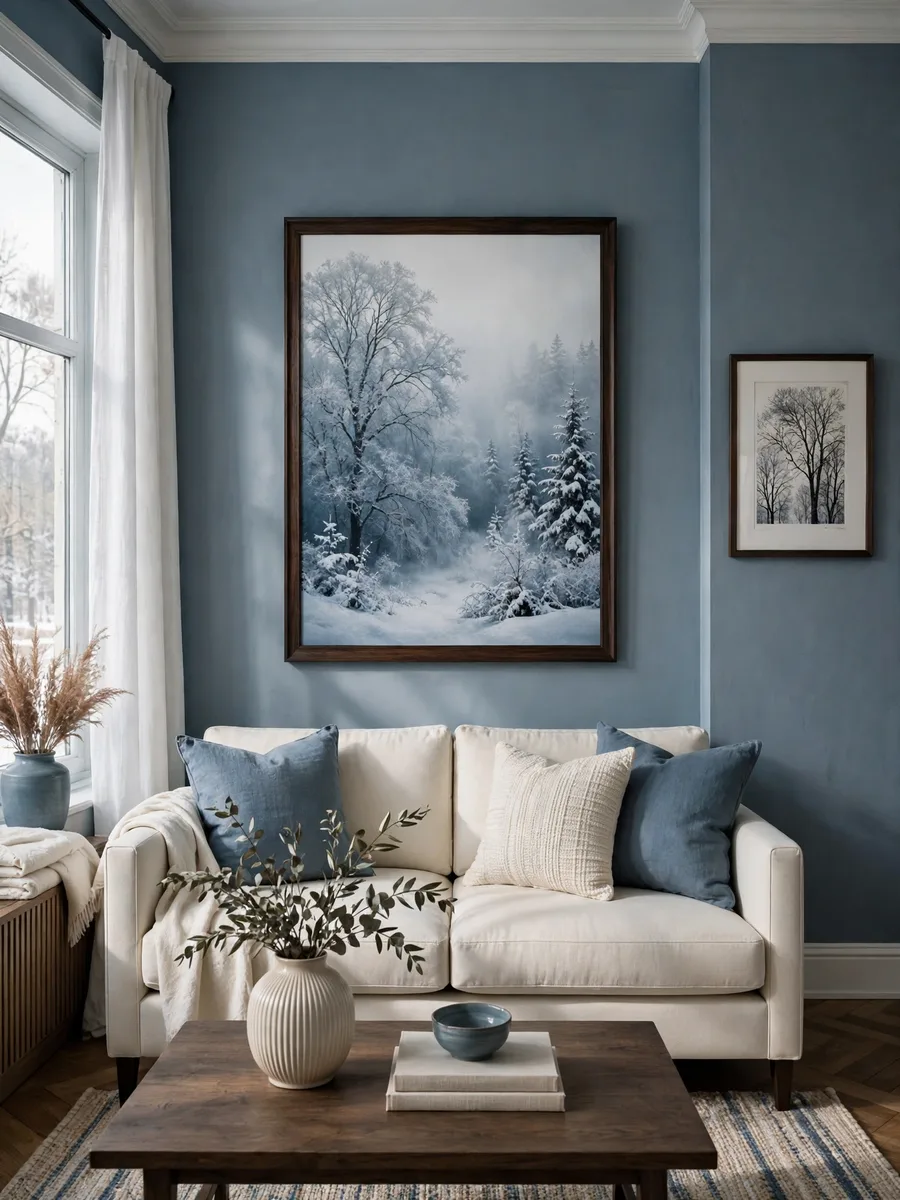
Rotating artwork works because art sets the mood of a wall. Swap bright summer prints for winter landscapes — snowy fields, bare trees, misty forests, or moody coastal scenes — in the same frames, and the whole wall shifts toward winter. For example, a framed print of a snow-covered forest in muted blues and greys above a cream sofa, paired with a smaller bare-tree print on the opposite wall, makes the room feel seasonal for three months.
Quick tips:
- Swap prints inside the same frames — no new frames needed.
- Choose one large winter landscape as the anchor.
Do Floor Cushions Work as Extra Winter Seating?
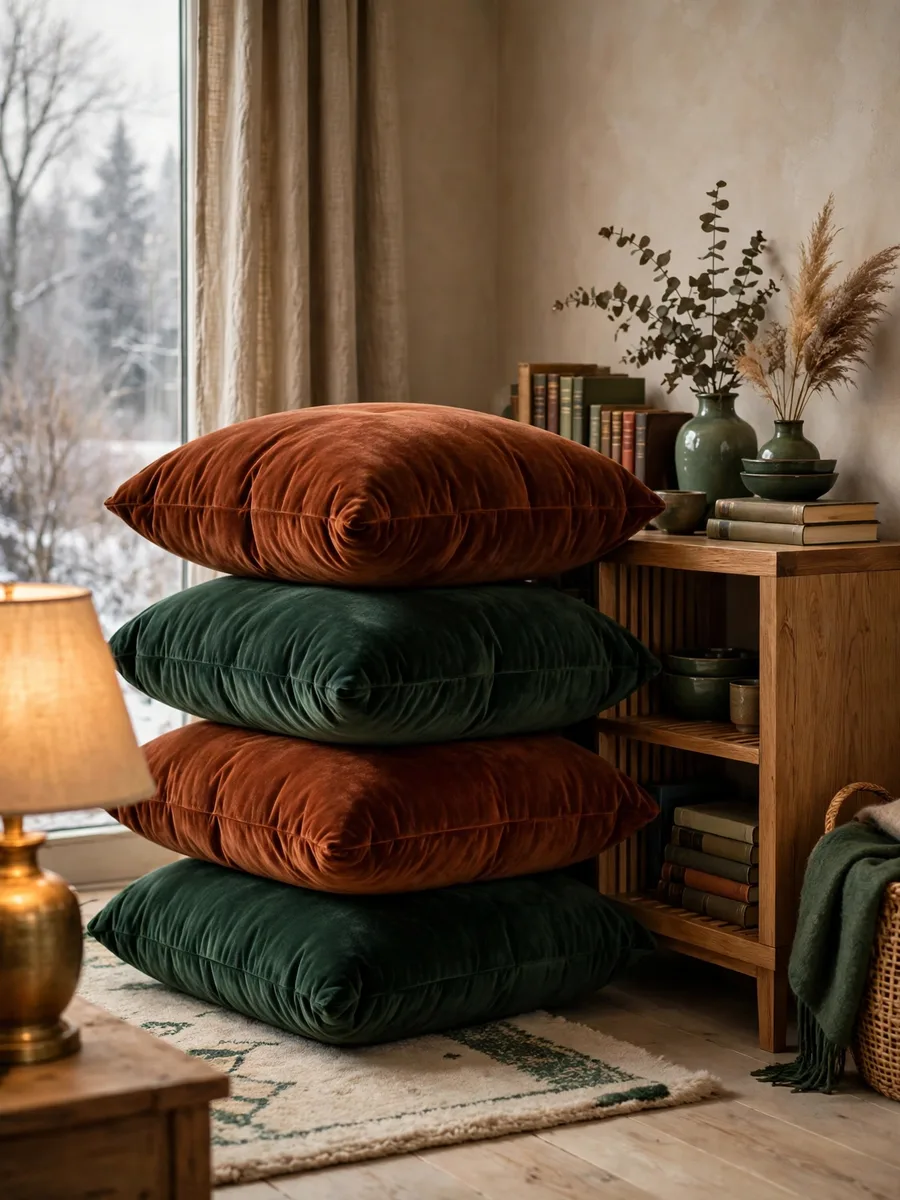
Floor cushions are the relaxed extra seating winter living rooms need. Four to six oversized floor cushions in velvet or wool, stacked in a corner or leaning against the wall, add color and texture when stored, and they become seats the moment guests arrive. For example, a stack of four velvet floor cushions in rust and forest green beside a low bookcase gives a small living room flexible seating for a film night without moving a single chair.
Quick tips:
- Choose deep winter tones so cushions look like decor.
- Stack them neatly in a corner when not in use.
How Do Warm Wood Tones Make a Living Room Cozier?
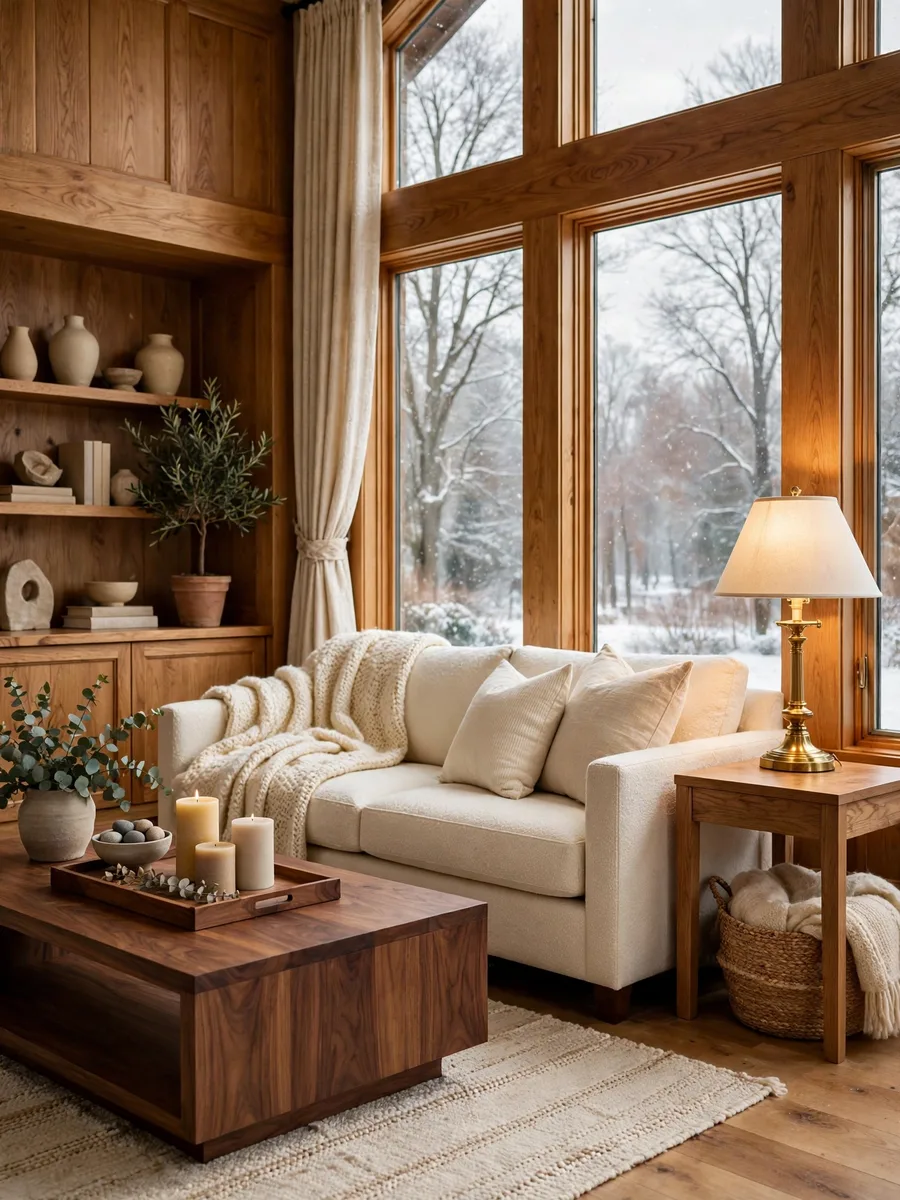
Warm wood tones add a natural, lived-in warmth that no fabric can match. Walnut, oak, and dark teak bring a honeyed glow to a room, especially against cream walls and soft textiles. For example, a walnut coffee table, an oak side table holding a brass lamp, and a wooden tray with candles create a warm spine down the center of the room.
Quick tips:
- Add wood in two or three places, in one warm tone family.
- Let a walnut or oak coffee table anchor the seating area.
Can Sage Green Fix a Cold Winter Living Room?
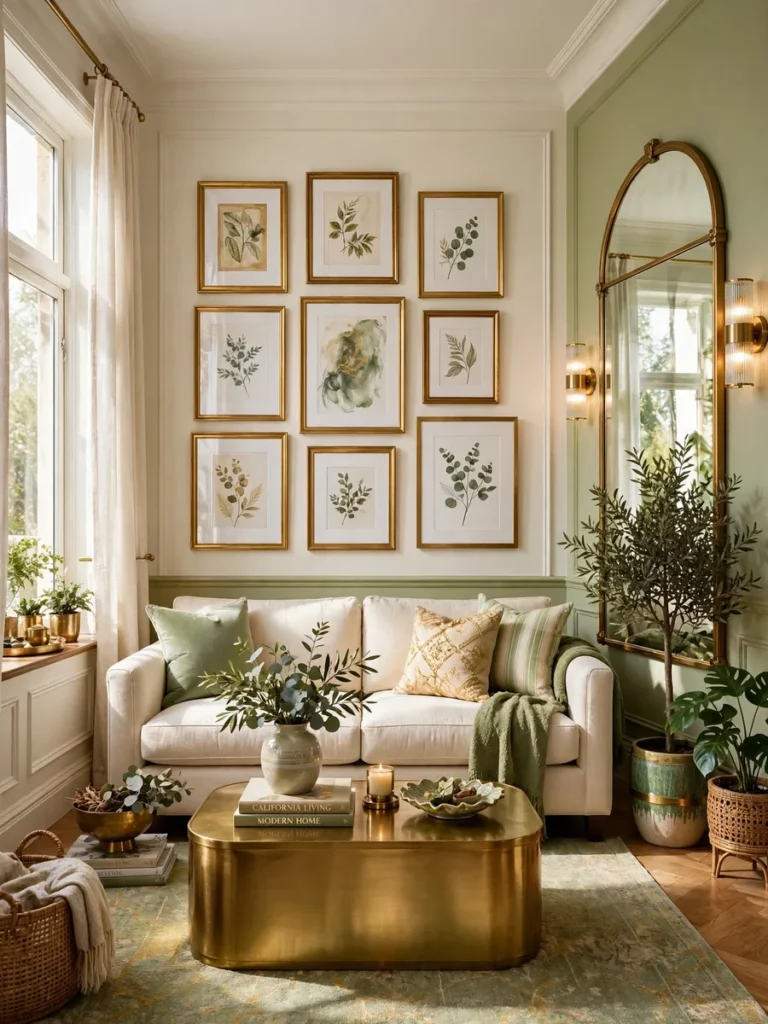
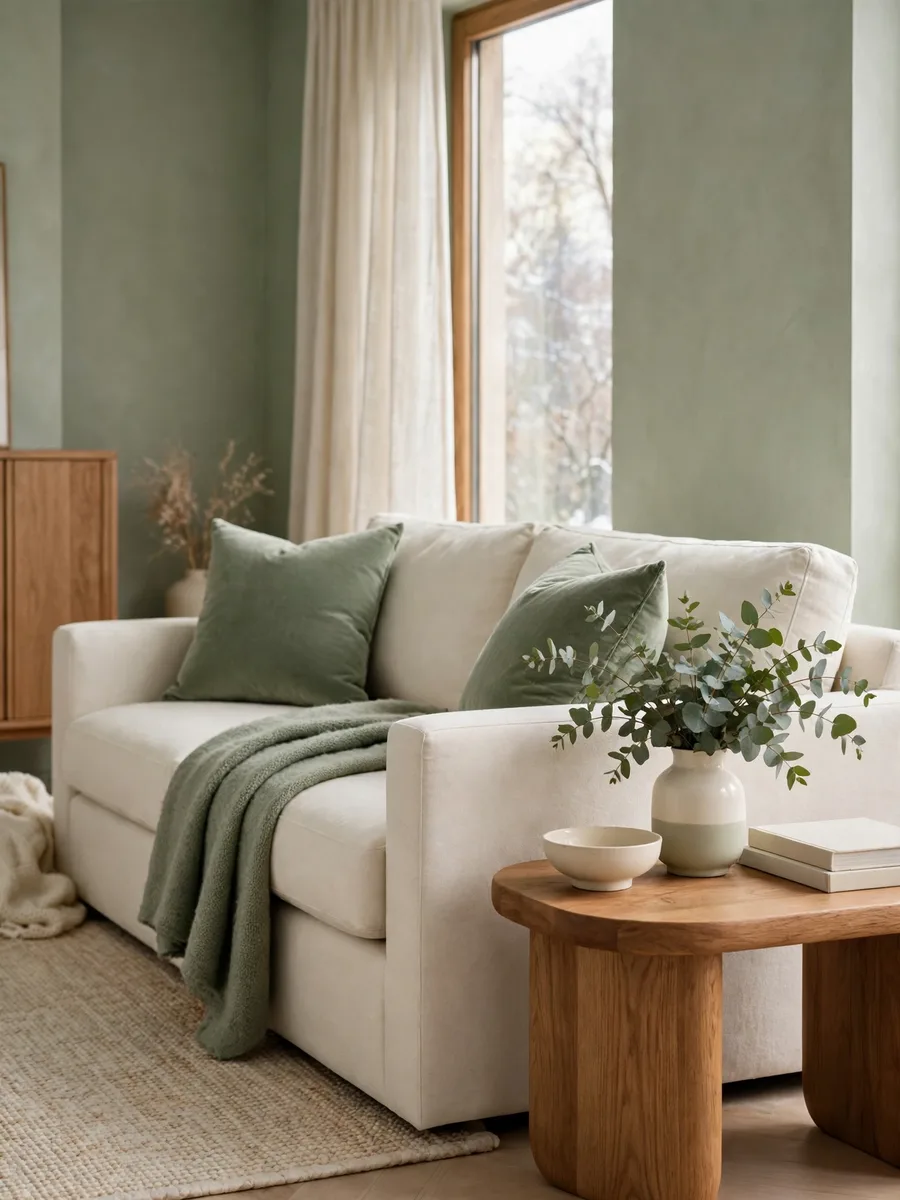
Sage green fixes a cold-looking winter living room, because it is soft and natural without being cold. Unlike icy blue or stark white, sage reads as a living color — the color of eucalyptus and winter herbs — and it pairs beautifully with cream, wood, and brass. For example, a cream sofa with two sage velvet cushions, a sage wool throw, and a small vase of eucalyptus on the side table makes a pale living room feel grounded and seasonal without repainting anything.
Quick tips:
- Use sage as an accent — cushions, throw, or curtains.
- Pair sage with cream, warm wood, and brass.
How Do Navy and Charcoal Add Depth to Winter Decor?
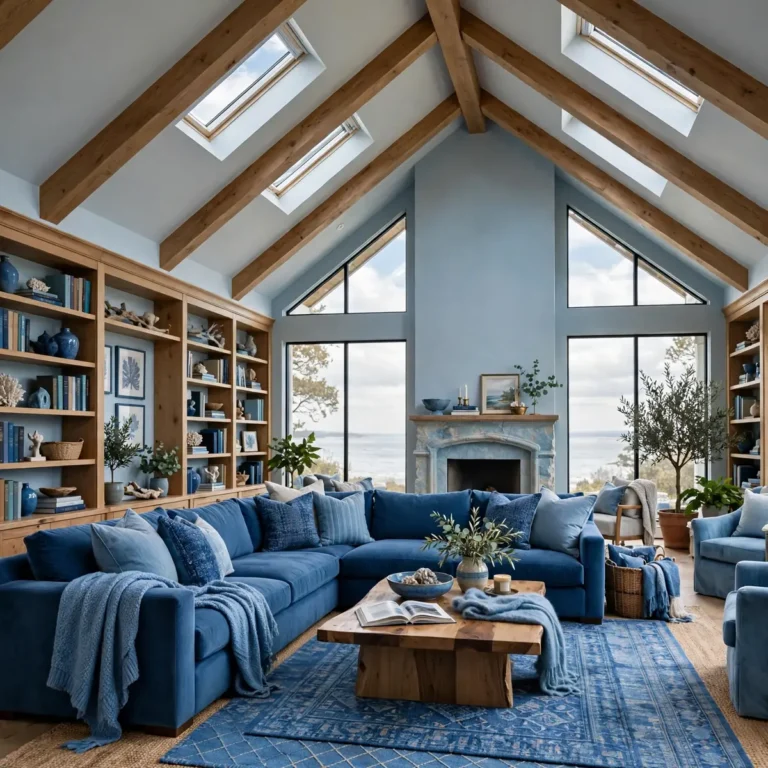
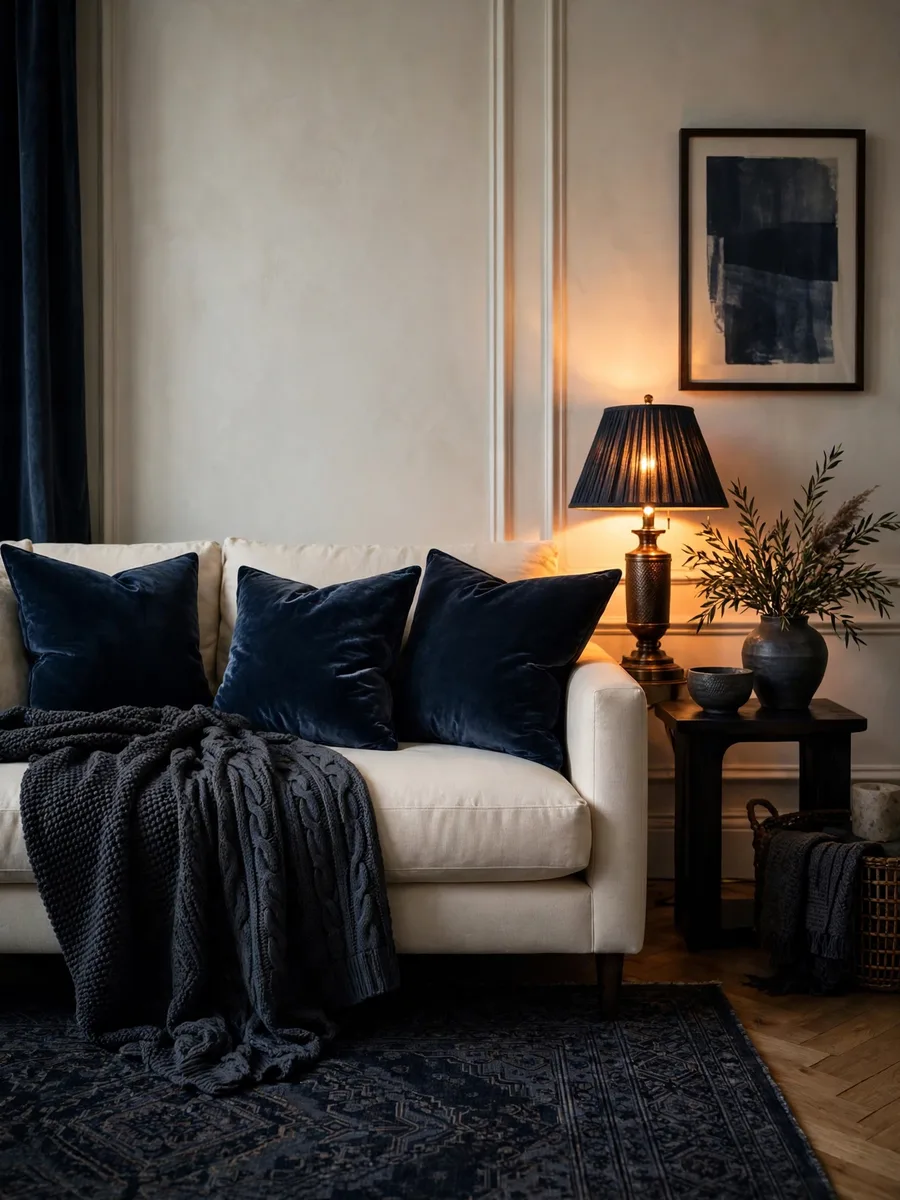
Navy and charcoal add depth that winter light takes away. On short grey days, a pale room can look washed out, and a deep navy cushion, a charcoal throw, or a dark rug gives the eye somewhere to rest. Deep colors also make the warm elements — lamplight, brass, cream wool — glow brighter by contrast. For example, a cream sofa dressed with navy velvet cushions, a charcoal knit throw, and a dark patterned rug feels rich and layered. If you love calm grey rooms, these grey living room ideas show how to keep a grey palette warm instead of cold.
Quick tips:
- Use navy and charcoal in soft furnishings, not on walls.
- Balance deep tones with cream and warm lamplight.
How Do Woven Baskets and Natural Storage Warm a Room?
Woven baskets are winter storage that looks like decoration. In cold months, living rooms collect blankets, books, firewood, and magazines, and a basket hides the clutter while adding the warm texture of seagrass, rattan, or wicker. For example, a large seagrass basket of rolled throws beside the sofa, a medium rattan basket of birch logs by the fireplace, and a small woven tray on the coffee table make the whole room feel calm and finished.
Quick tips:
- Use three baskets in different sizes for different clutter.
- Place baskets where clutter actually gathers.
Can a Mirror Make a Dark Winter Living Room Brighter?
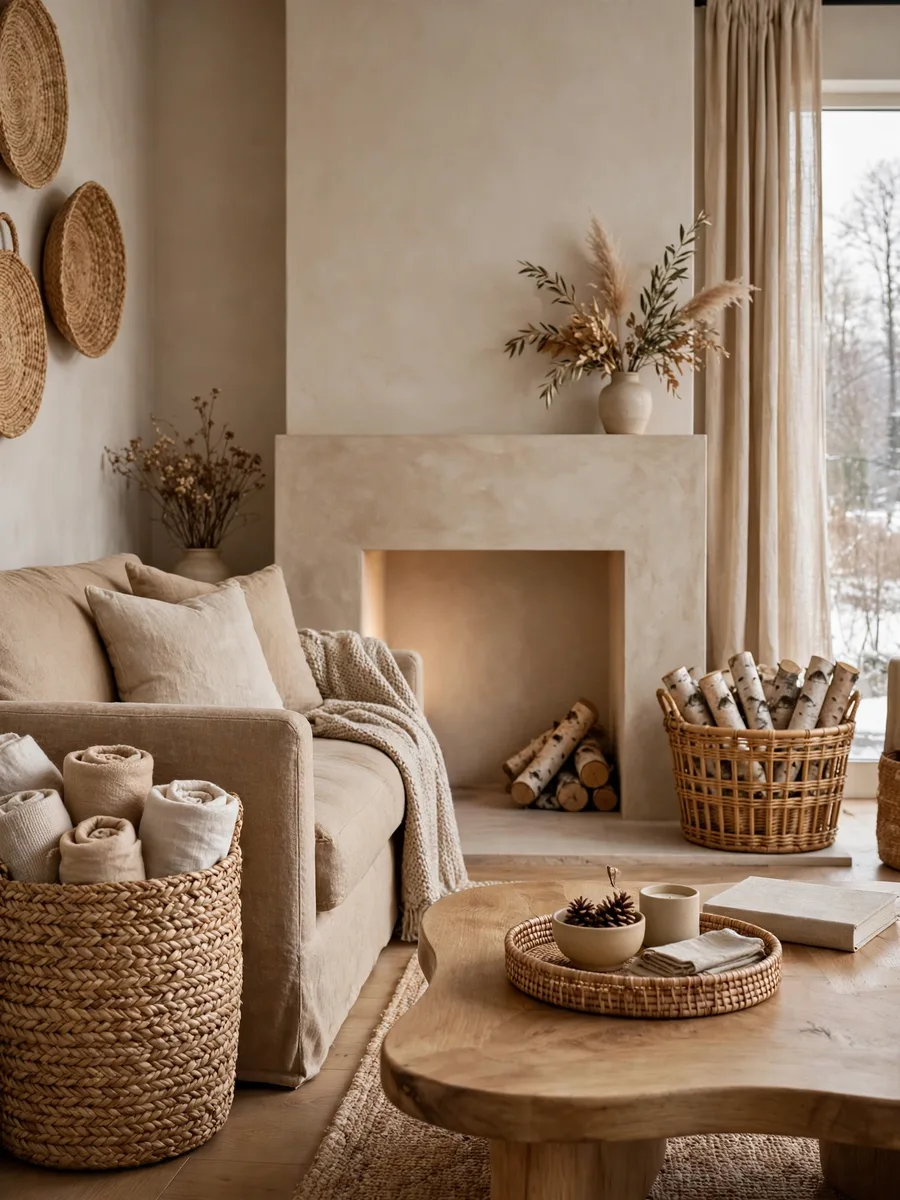
A mirror is the cheapest way to borrow light in a dark winter room. Placed opposite or beside a window, a large mirror catches the low winter sun and the glow of lamps and throws it back across the room, and it makes a small room feel larger. For example, a large round brass-framed mirror above a console, reflecting a table lamp and a vase of eucalyptus, doubles the glow in the room and makes the whole wall feel alive.
Quick tips:
- Hang the mirror where it reflects a lamp or window.
- Choose a warm frame — brass, gold, or dark wood.
How Do You Layer Winter Scents Without Overdoing It?
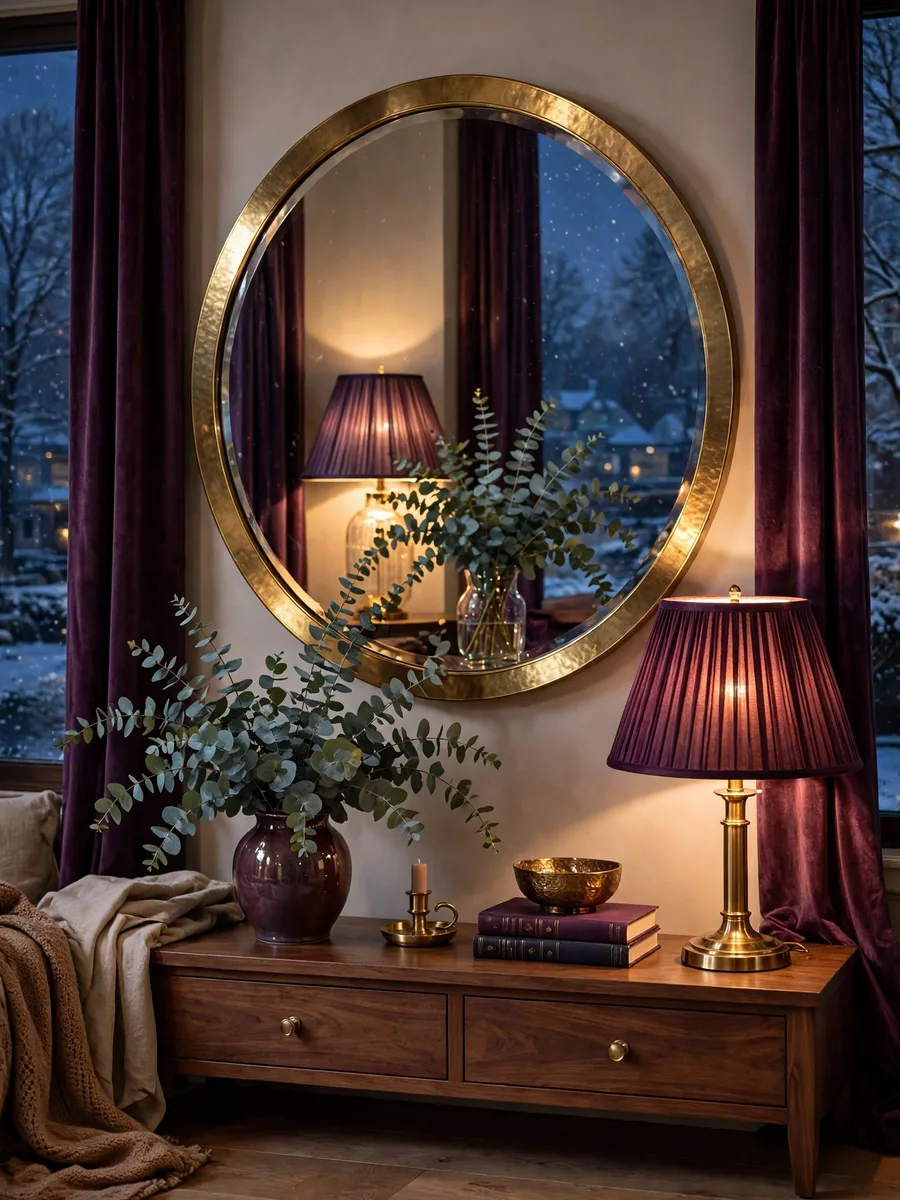
Scent is the invisible layer of winter decor: a room that smells warm feels warm. Layer two complementary scents rather than five competing ones: a cedar or pine candle on the coffee table and a vanilla or amber candle on the console. For example, a cedar candle on the coffee table tray and a vanilla candle on the bookshelf give the room a layered, woody warmth that greets everyone at the door without ever smelling like a shop.
Quick tips:
- Layer two complementary scents, never five.
- Place scented candles in different parts of the room.
Winter Living Room Decor Ideas: A Quick Comparison
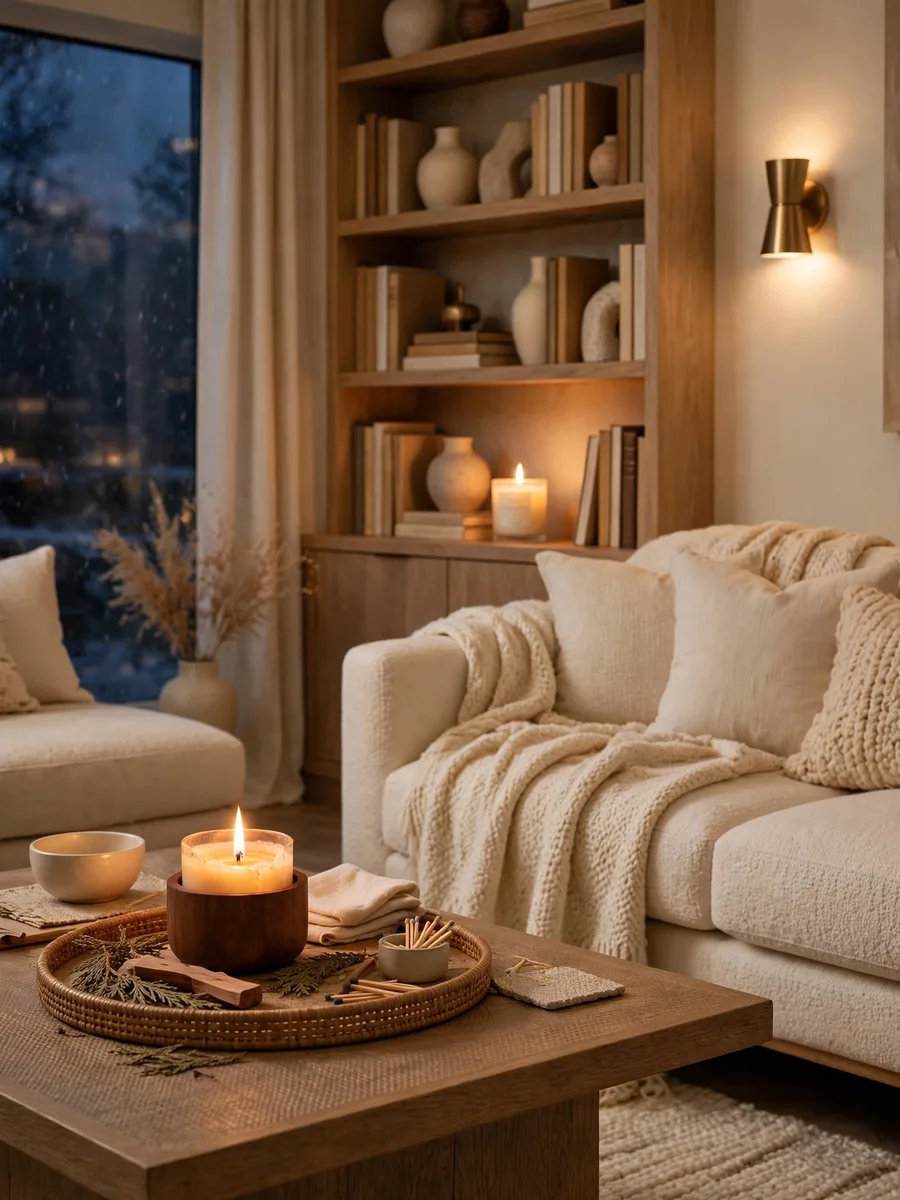
Not every idea costs the same. This table sorts the 25 ideas by cost and effort.
| Change | Cost | Effort | Best for |
|---|---|---|---|
| Layered throws and pillow covers | Low | Minutes | Instant warmth on the sofa |
| Candle clusters and scent layering | Low | Minutes | Evening glow and atmosphere |
| Rug layering and floor cushions | Medium | Under an hour | Warm floors and extra seating |
| Lined curtains and sheepskin | Medium | Under an hour | Cutting draughts and cold surfaces |
| Accent wall and artwork swap | Medium | A weekend | Deep color and a new focal point |
| Faux hearth and reading nook | Medium | A weekend | A warm center for the room |
The quick wins — throws, pillows, and candles — change how the room feels in a single evening. The weekend projects — an accent wall, a faux hearth, a reading nook — change how the room works all winter.
Frequently Asked Questions
How do I make my living room feel warmer in winter without turning up the heat?
Cover the floors and windows first. A thick wool rug and lined, floor-length curtains reduce the feeling of cold surfaces, and warm-toned lamps at several heights make the room feel warmer even at the same temperature.
How can I decorate my living room for winter without Christmas decorations?
Decorate for the season, not the holiday: plain winter greenery, deep warm colors, heavy textiles, and warm lamplight. These work from December through February, long after Christmas decorations come down.
What colors are best for winter living room decor?
Warm, deep colors work best: cocoa, caramel, oat, rust, sage green, navy, and charcoal, balanced with cream so the room stays bright. Pick one dark anchor, one middle shade, and one cream.
How do I make my living room cozy in winter on a budget?
Start with what you already own. Swap pillow covers instead of buying cushions, move a lamp to a dark corner, roll throws into a basket by the sofa, and group candles you already have into clusters. The cheapest changes usually make the biggest difference.
When should I put up winter living room decor?
Start in late November or early December; the non-Christmas layers can stay up until late February or early March. Swap heavier textiles for lighter ones as the days lengthen.
Conclusion
Winter living room decor ideas work when they make the room warmer to sit in, not just prettier to look at. Start with the sofa and the floor — layered throws, winter pillow covers, and a thick rug — then add warm light at three heights, heavier curtains, and a few natural winter touches like eucalyptus and bare branches. Pick three or four ideas tonight, and your living room will feel like the warmest room in the house all winter long.