12 Coffee Bar Ideas for a Cafe-Worthy Corner at Home
12 Coffee Bar Ideas for a Cafe-Worthy Corner at Home
A home coffee bar is a small, dedicated spot where everything for your morning brew lives together — the machine, mugs, beans, and sweeteners — arranged so making coffee feels like a ritual instead of a rummage. You do not need a big kitchen or an expensive machine: a corner of counter, a rolling cart, or even a tray on a side table is enough. Below are 12 coffee bar ideas covering full stations, small-space workarounds, hidden setups, and styling finishes, plus the practical setup details most guides skip. Like coffee table decor ideas, a well-styled coffee corner is one of the fastest ways to make a home feel finished — and this one earns its keep every morning.
The 5 practical details to sort before you style
Pretty coffee stations fail for boring reasons, so handle these first and your bar will still look good on day three hundred, not just day one.
- Footprint vs. depth. Measure your machine’s full footprint with the lid or water tank open — many machines need 12 to 15 inches of depth, more than a narrow shelf allows. A workable minimum for a single-serve brewer plus a mug tray is about 24 inches wide by 12 inches deep; an espresso machine plus a grinder wants 36 to 48 inches of horizontal space.
- Power and water. Put the station within easy reach of an outlet; running a cord across a walkway is how stations die. If your machine’s tank fills from the top, leave 6 to 8 inches of vertical clearance above it so steam does not warp the cabinet above and you can refill without pulling the machine out.
- Bean and pod storage. Keep daily beans in one small airtight container at the station and bulk backup elsewhere — a cool, dark cabinet or lower cart tier, away from heat and light, keeps beans fresher for weeks. Pods do best in a drawer or divided caddy; loose on the counter they scatter.
- Drip-tray cleanup. Set everything on a tray with a lip or a washable mat. Spills then wipe off one surface instead of the whole counter, and a dark or patterned tray hides coffee rings between cleanings.
- Noise placement. Grinders are loud. If your station shares a wall with a bedroom or a home office on calls, give it some distance — a cart that rolls to the kitchen in the morning earns its wheels.
1. The Counter Corner
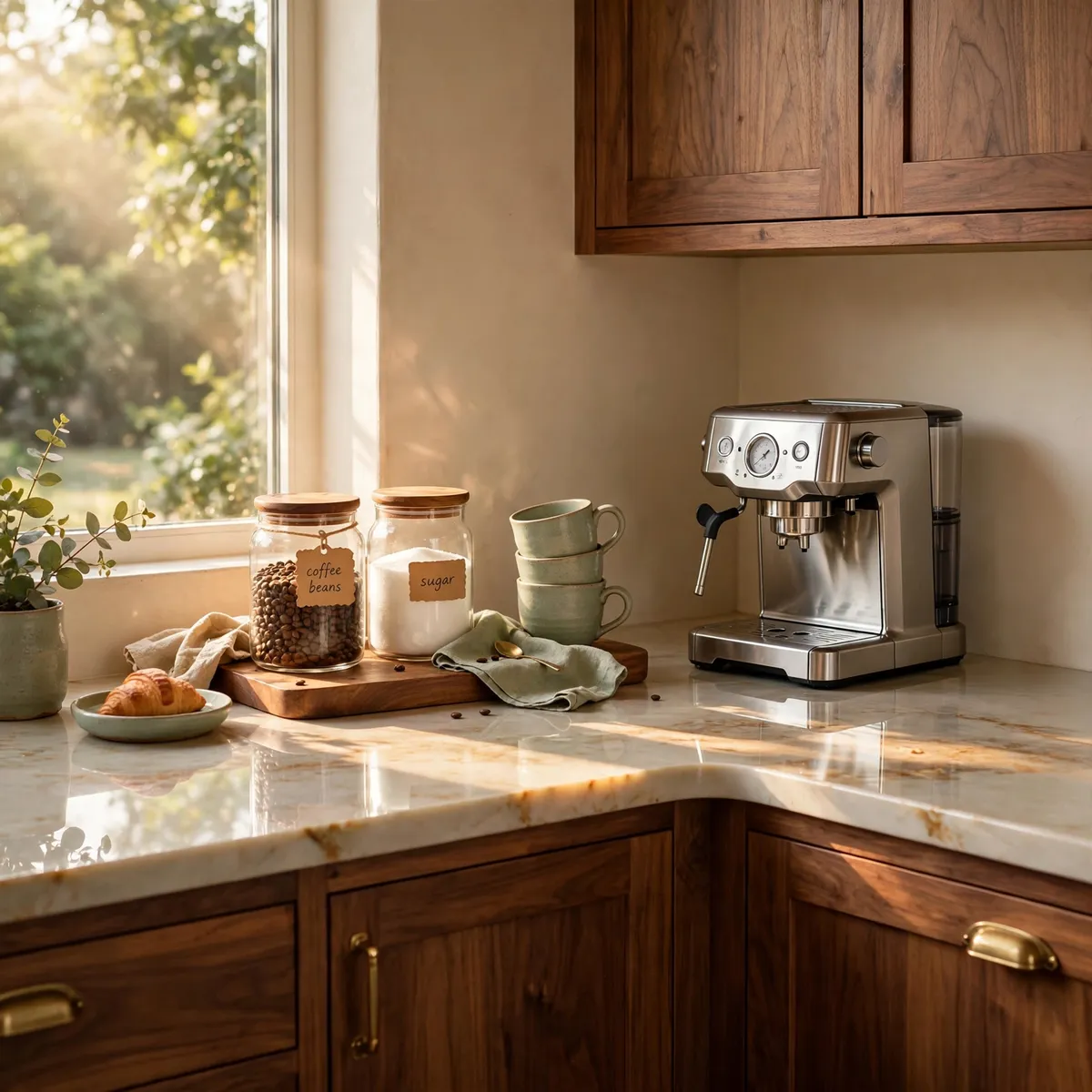
The simplest coffee bar idea is also the most popular: claim 2 to 3 feet of kitchen counter, usually a corner, and treat it as a permanent zone. Everything lives on one large tray or mat so the “bar” reads as intentional rather than as clutter that drifted there.
- Quick tips
- Corral the whole setup on a single tray — it instantly looks styled and keeps wipe-downs to one surface.
- Hang everyday mugs on hooks under the shelf above; display mugs become the decor.
- Leave a landing spot for the cup you are filling — cramped pours cause most of the daily mess.
2. The Rolling Cart That Goes Where You Need It
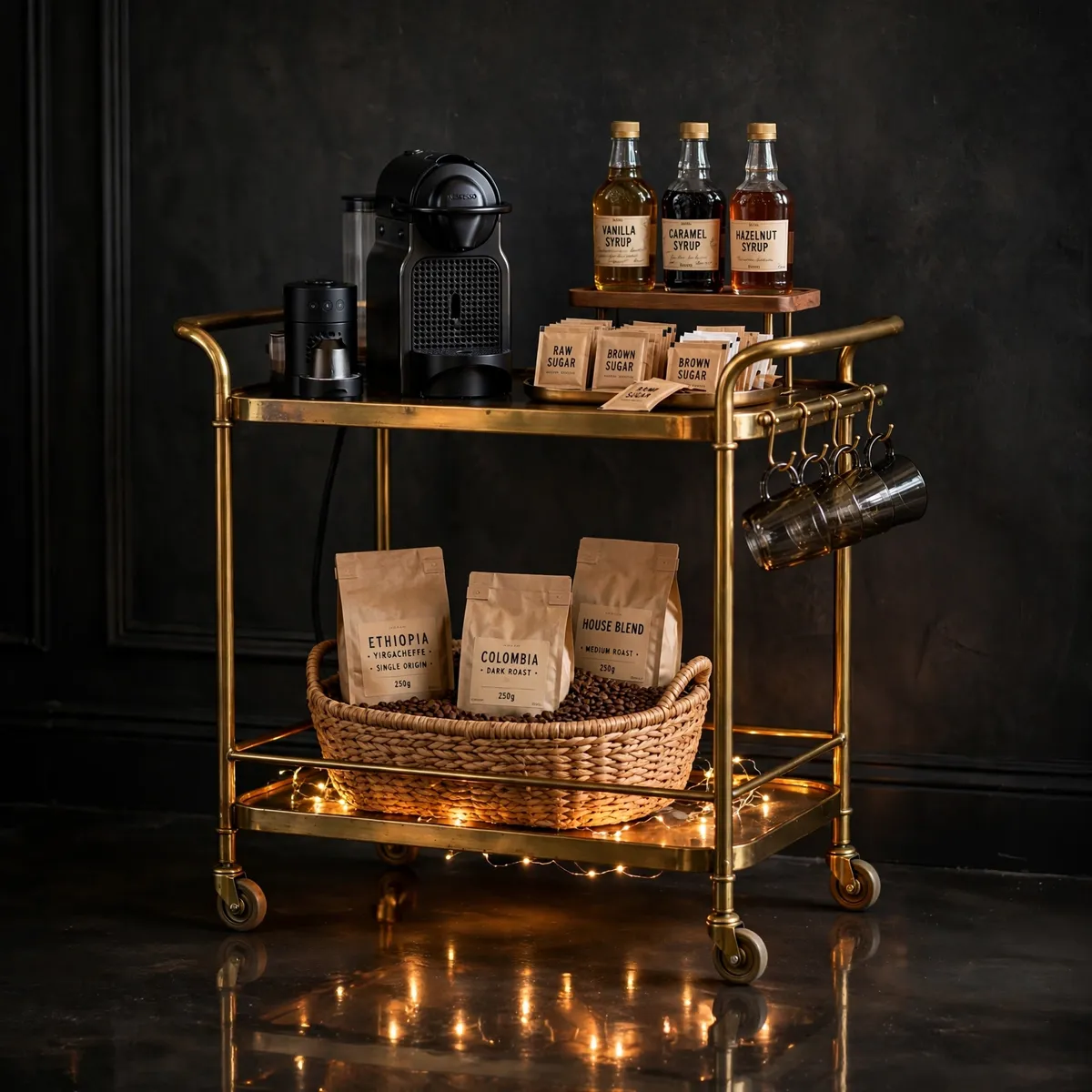
A bar cart is the most forgiving coffee bar furniture there is. The machine rides on top, syrups and sugar live on the middle tier, and backup beans and extra mugs tuck into the lower shelf. When guests come, roll it to the dining room as a serve-yourself drink station; when you need the kitchen back, roll it into a corner. Choose a cart with a top shelf at least 12 inches deep and a rail so bottles do not slide off in transit.
- Quick tips
- Lock the casters once parked — a wobbling cart and a full mug are a bad combination.
- Keep a small lidded bin on the cart for used pods or grounds so they do not sit on the tray.
- Add a battery puck light under the top shelf for that lit-cafe glow without wiring.
3. The Floating Shelf Wall Nook
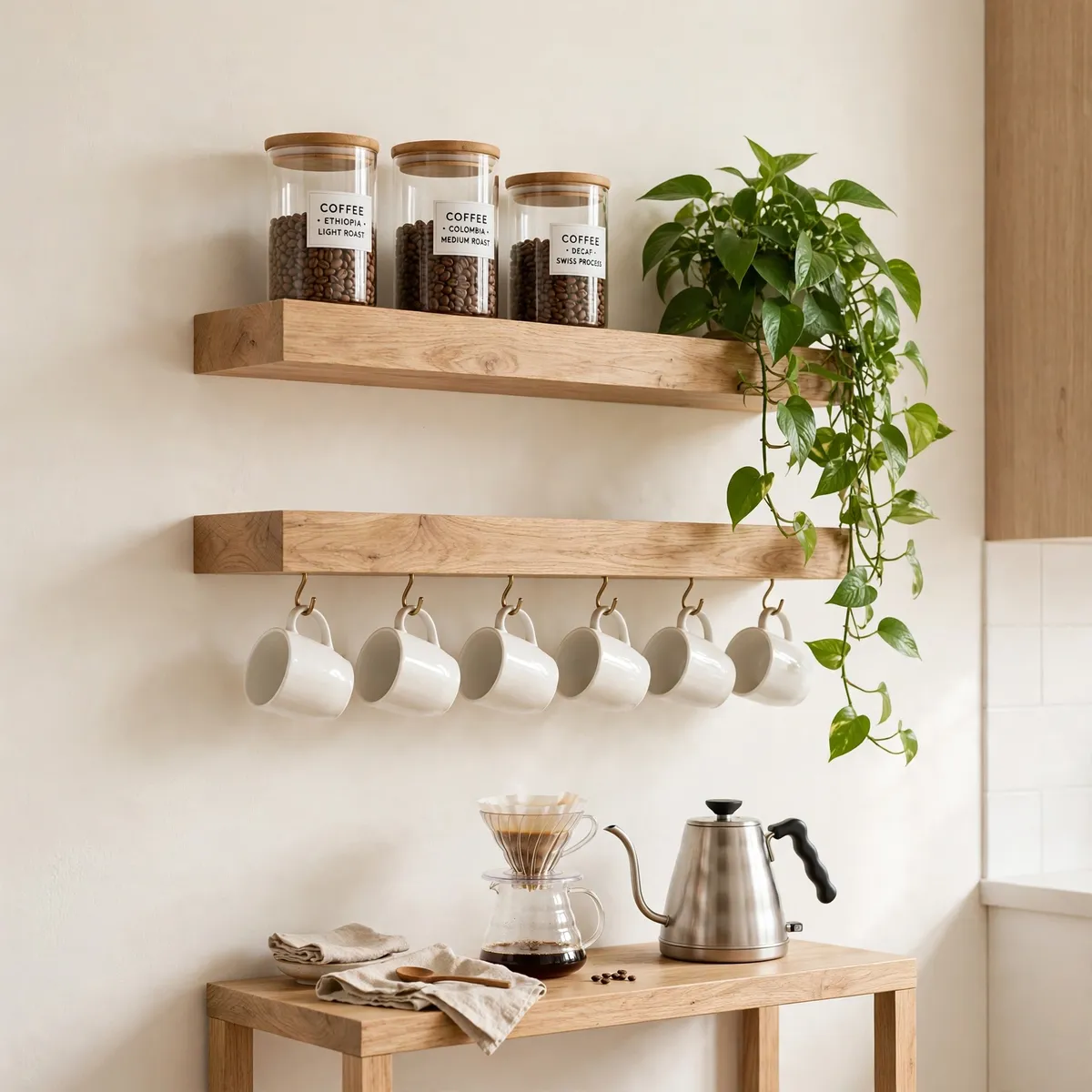
When the counter is already spoken for, go vertical. Two floating shelves on an empty stretch of wall above a narrow console or small desk turn dead wall space into a full station. Mount the lowest shelf 18 to 22 inches above the surface so a tall travel mug slides under easily, and hang mugs from hooks beneath the shelf so they double as display.
- Quick tips
- Check shelf depth before buying canisters — 10-inch shelves fit jars and mugs; 8-inch shelves mostly fit mugs.
- One trailing plant softens the whole wall; a pothos asks for almost nothing.
- Keep the heaviest items (beans, sugar) low and light decor up high.
4. The Hidden Appliance Garage
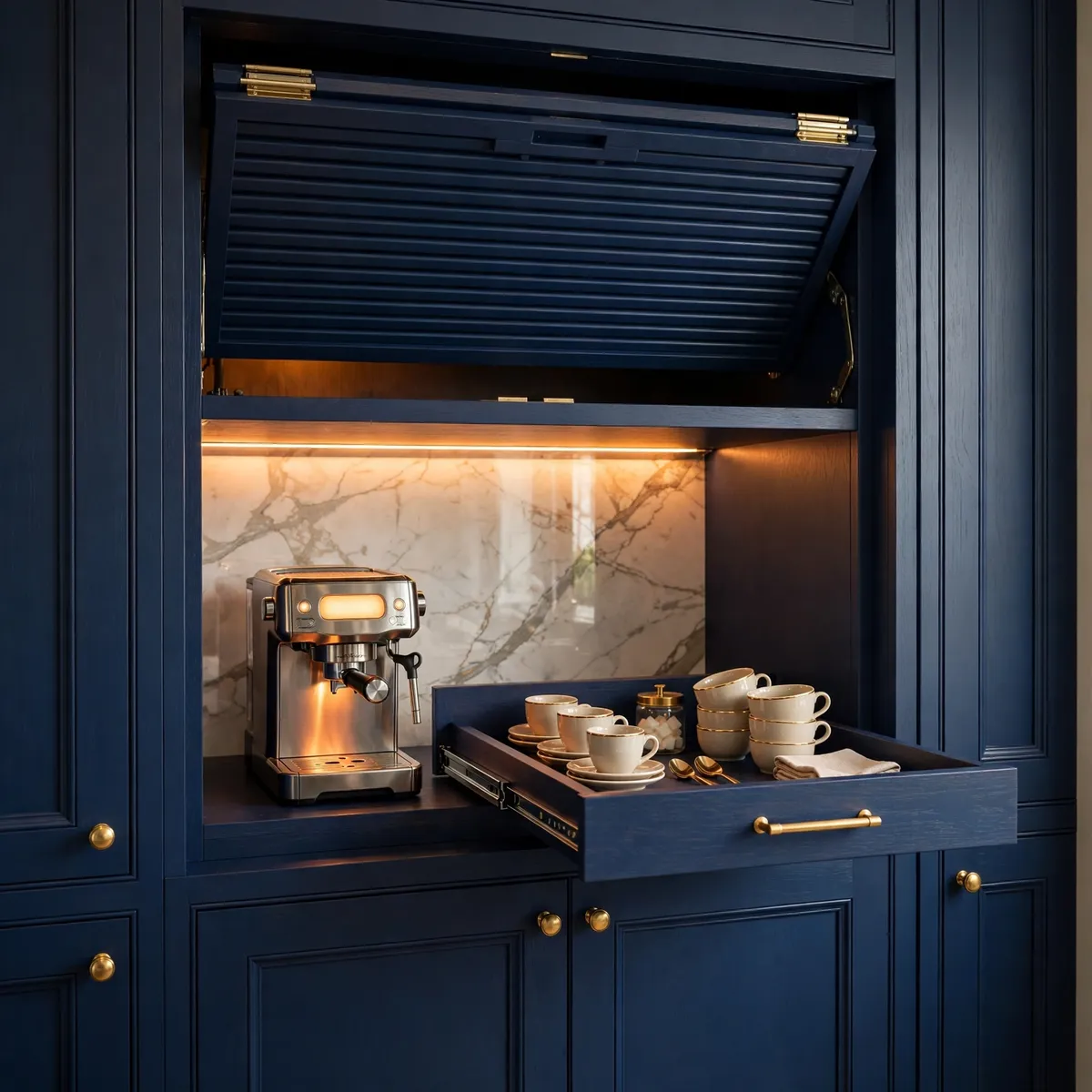
For kitchens that photograph clean, an appliance garage — a cabinet with doors that lift, fold, or roll away — hides the entire coffee bar in seconds. Inside, a pull-out shelf brings the machine forward for brewing and slides it back when you are done, and a motion-sensor LED strip lights the cubby on early mornings.
- Quick tips
- Have an electrician add an outlet inside the cabinet to avoid cord gymnastics.
- Ventilated or tambour-style doors handle steam better than solid doors that stay shut on a hot machine.
- Line the interior with a wipeable surface — splashes happen where you cannot see them.
5. The Repurposed Console or Sideboard
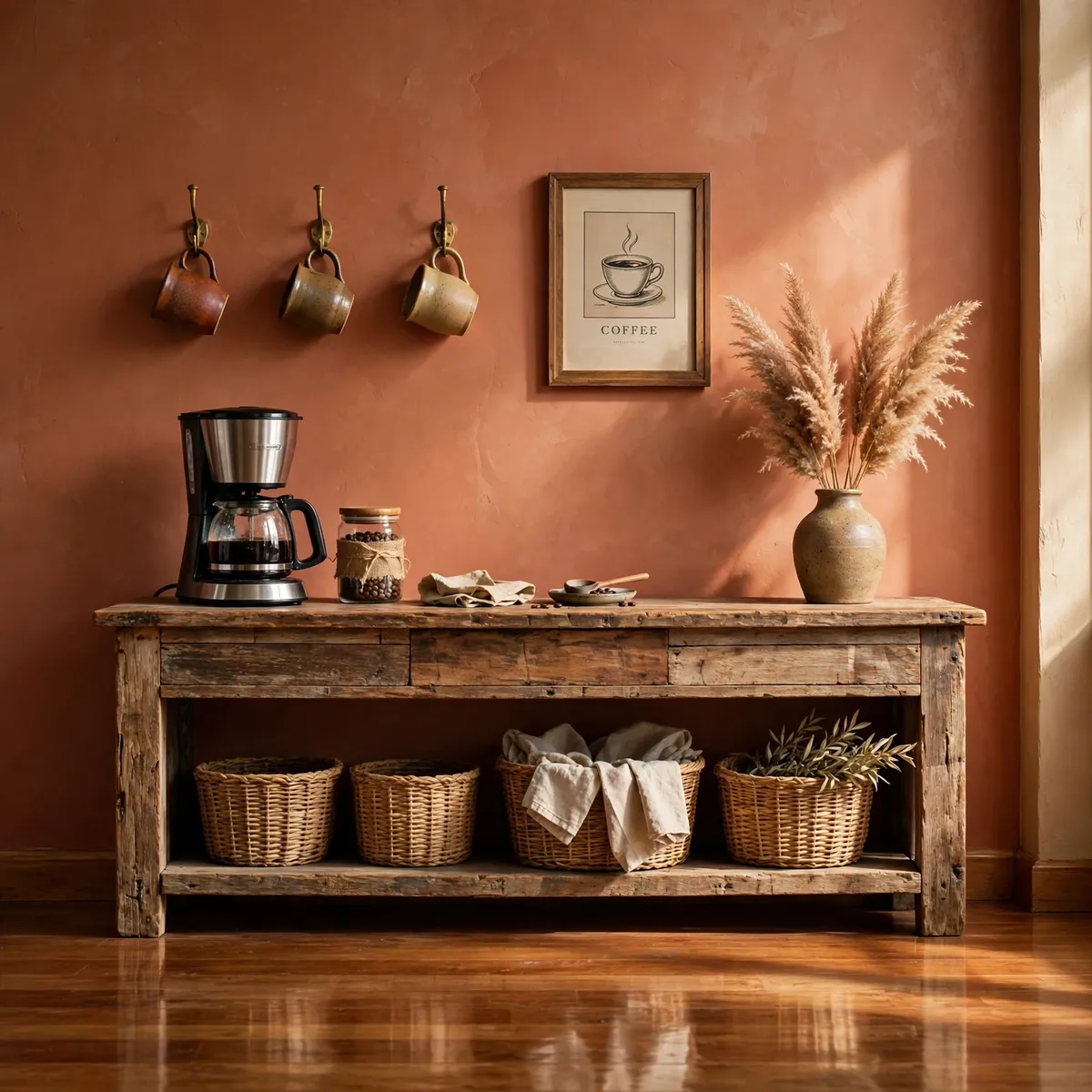
Some of the most characterful coffee bars start life as something else: a hallway console, a thrifted sideboard, an old dresser with its drawers put to new use. A vintage piece brings warmth that flat-pack furniture rarely manages, and deep drawers swallow pods, filters, and backup supplies out of sight. Match the piece’s wood tone to your kitchen or paint it a bold accent color.
- Quick tips
- Seal a vintage wood top with polyurethane or use a tray — coffee rings stain raw wood fast.
- Fill the wall above with a small gallery or one large framed print for instant intention.
- Use the drawers for the ugly stuff: descaling kits, spare filters, extra cords.
6. The Pull-Out Drawer Station
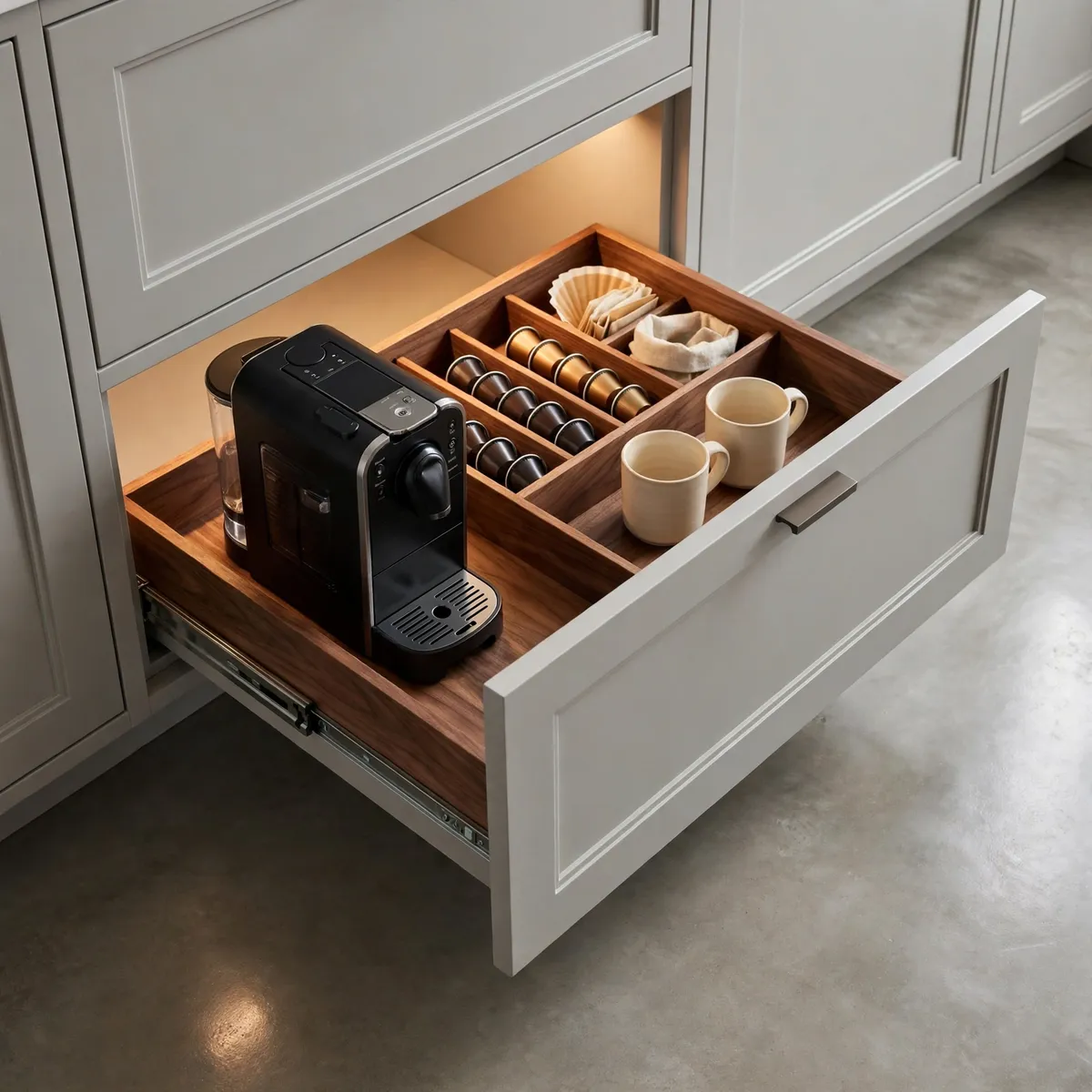
A deep drawer fitted with a heavy-duty pull-out tray turns a base cabinet into a coffee station that vanishes after breakfast. The machine sits on the tray; fitted dividers organize pods, filters, and sweeteners; and the drawer front keeps dust off everything between uses.
- Quick tips
- Rate the tray slides for the machine’s weight plus a full water tank — cheap slides sag.
- Brew with the drawer fully extended so steam clears the cabinet.
- A small silicone mat under the machine catches the daily drips.
7. The Kitchen Island Coffee End
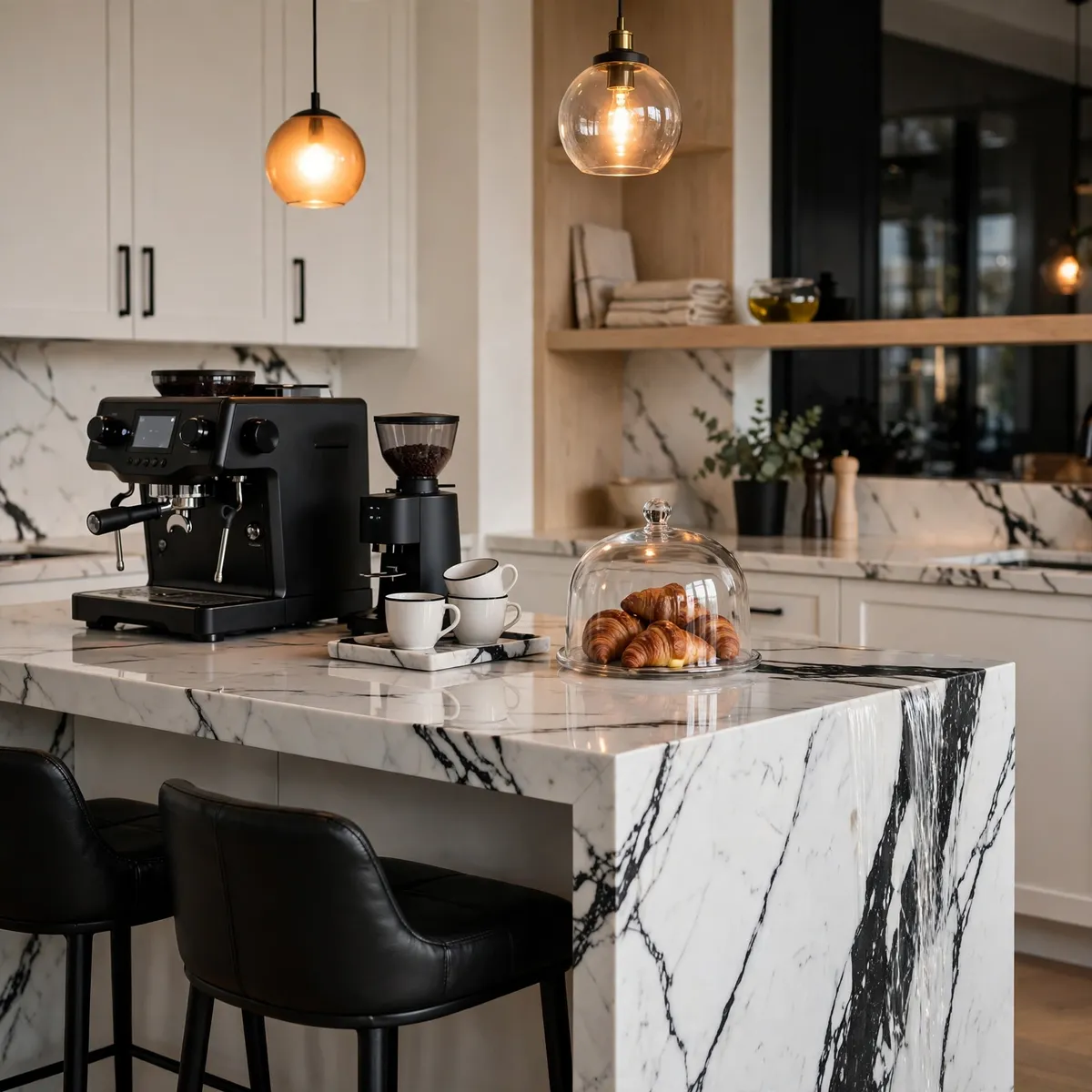
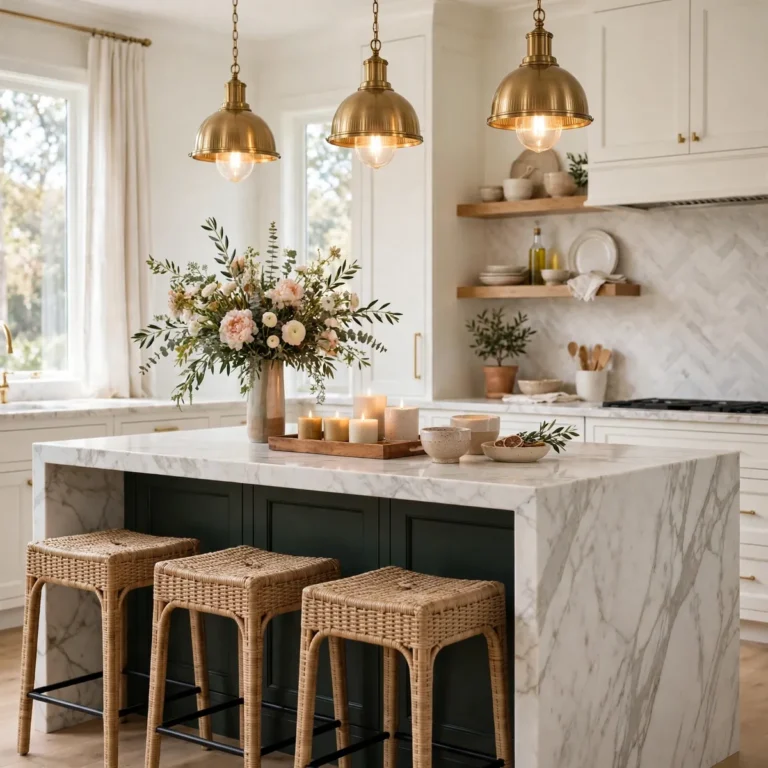
If your island is where everyone lands in the morning anyway, give one end of it a permanent coffee job. A slim tray defines the zone, an espresso machine and small grinder sit at the back, and mugs live on the tray or on hooks on the island’s side panel. It pairs naturally with broader kitchen island decor ideas like a low centerpiece bowl kept clear of the brewing zone.
- Quick tips
- Keep the brewing end near an outlet; route the cord along the island’s back edge.
- A glass cloche over pastries turns the station into a weekend cafe moment.
- Leave at least 18 inches of clear island for setting down cups and plates.
8. Small-Space Coffee Bar Ideas: The Tiered-Tray Micro Bar
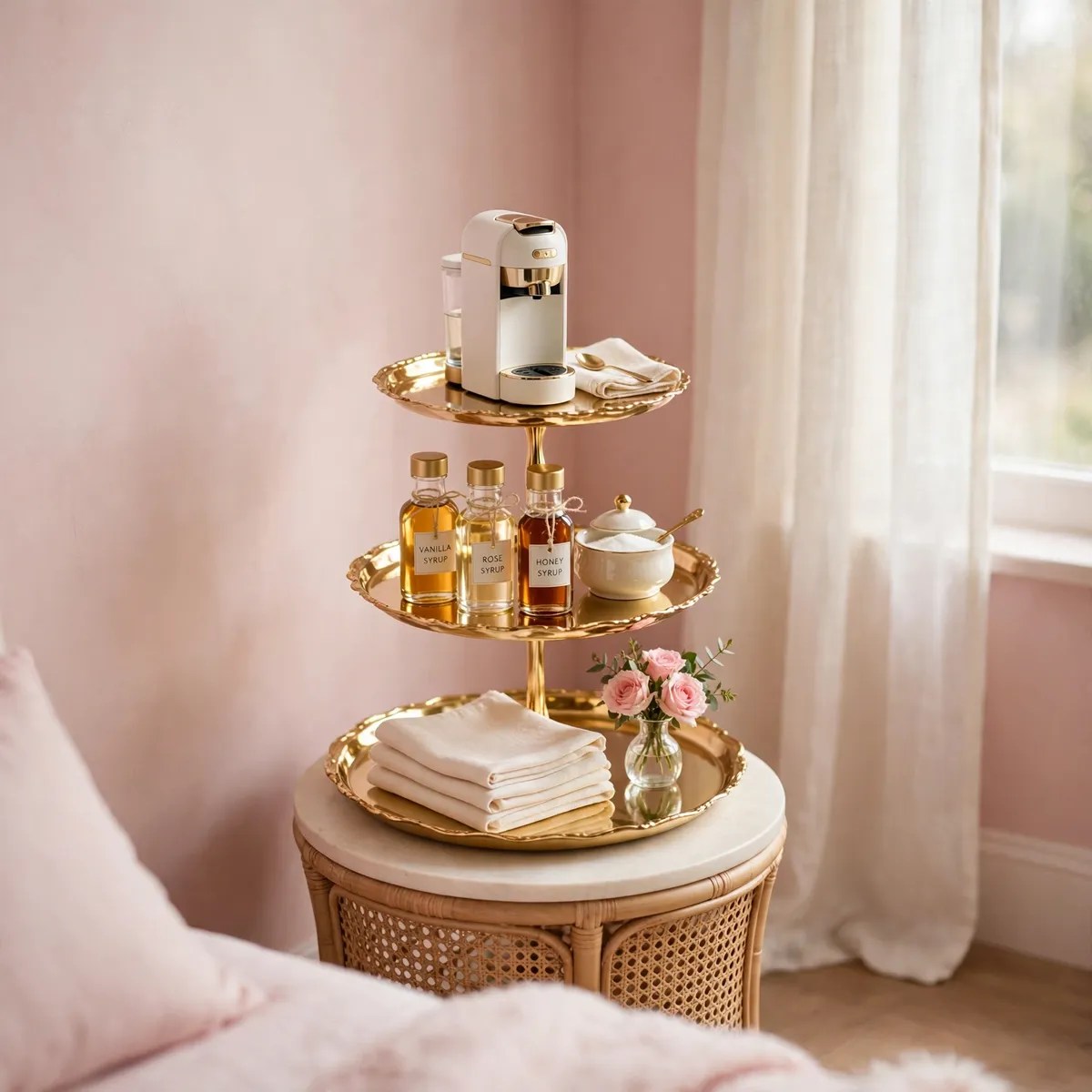
The smallest workable coffee bar is a three-tier tray on whatever surface you already own — a side table, a nightstand, a desk corner. The machine anchors the top next to the tray; the tiers hold syrups, sugar, and spoons upward instead of outward. This is the answer for dorms, studios, and bedrooms, where a full station is out of the question but a morning cup by the bed is non-negotiable.
- Place a washable tray or mat first — it defines the zone and protects the furniture.
- Set the brewer on the surface beside the tray, not on it, so refills and drip trays stay easy.
- Stock only daily items: one sugar type, one or two syrups, four mugs max.
- Stash backup supplies in a fabric caddy underneath the table.
- Quick tips
- Pod machines as narrow as 4 to 5 inches wide exist for exactly this job.
- A collapsible pour-over cone stores flat when the tray needs the space.
- Refresh the tray’s top tier seasonally — a tiny vase of flowers keeps it feeling styled.
9. The Chalkboard Cafe Corner
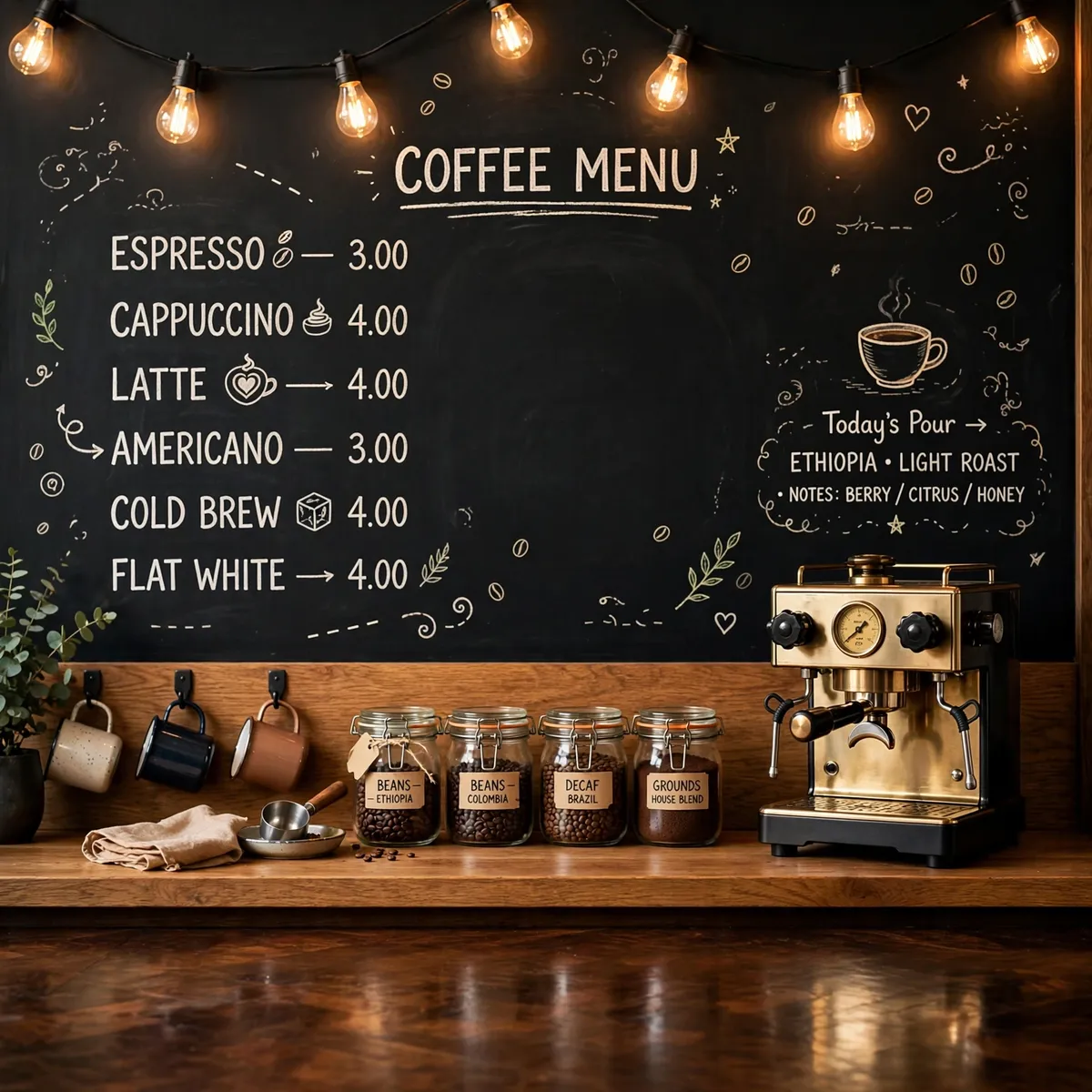
A chalkboard wall — paint, a framed board, or peel-and-stick panels — gives a coffee corner its cafe identity in an afternoon. Letter your household’s usual orders or a rotating quote, and the station instantly feels like a place rather than an appliance lineup. Pair the dark board with warm wood and amber Edison-bulb string lights to keep the look cozy instead of stark.
- Quick tips
- Peel-and-stick chalkboard panels are the renter-safe version of chalk paint.
- Write the menu in chalk markers, not real chalk, for crisp lines that survive humidity.
- Balance the black wall with light wood or cream accessories so the corner does not go cave-dark.
10. The Green-and-Light Reading Nook
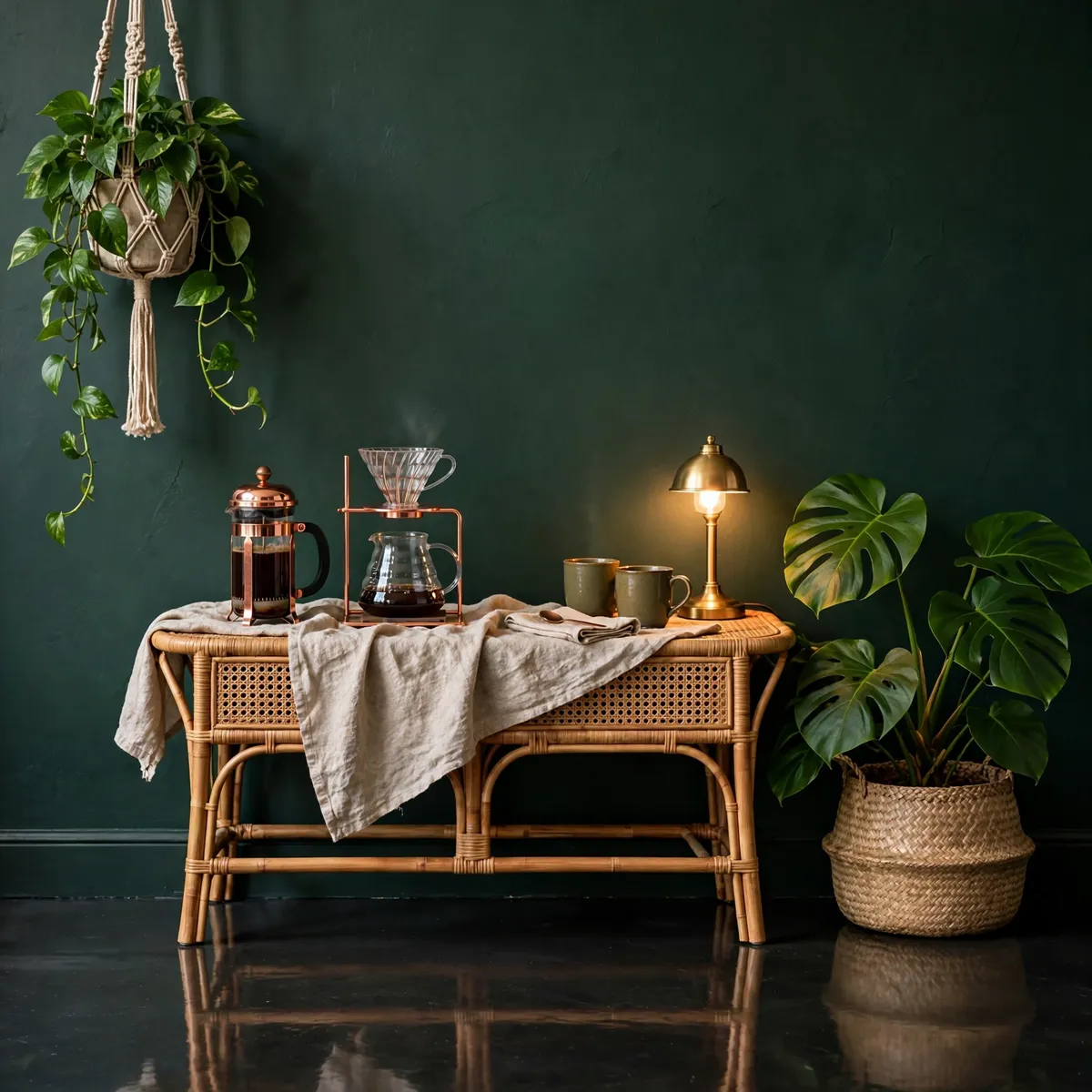
Pair the coffee bar with where you actually drink the coffee. A small rattan or wood table in a reading corner, styled with a French press or pour-over set, a warm lamp, and a plant or two, turns the morning cup into a destination. Manual brewers suit this setup — they are quiet, compact, and sculptural enough to leave out. Deep green walls with warm lamplight make the whole corner glow at 6 a.m.
- Quick tips
- A gooseneck kettle is the one upgrade that visibly improves pour-over coffee.
- Keep a small lidded jar for used grounds beside the brewer — no drips across the room.
- Choose low-maintenance plants; a thirsty fern next to a coffee station gets forgotten.
11. The Farmhouse Wood-and-White Station
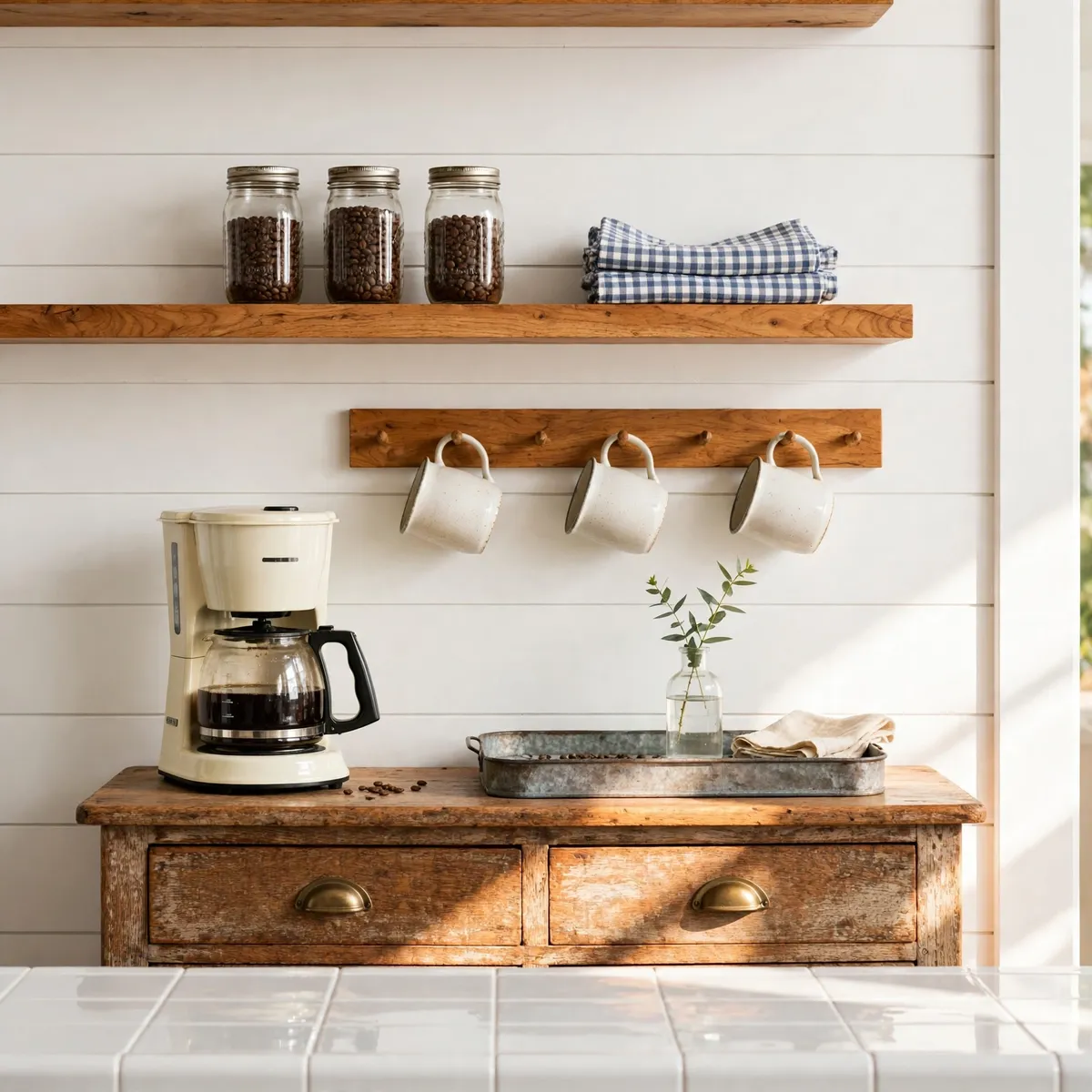
The farmhouse coffee bar is a style, not a size: white shiplap or beadboard behind the station, honey-toned open wood shelving, mason jars for beans and sugar, and ironstone or enamel mugs on a peg rail. A galvanized tray corrals the daily items, and a small vintage scale adds the nostalgic finish.
- Quick tips
- Decant beans and sugar into matching mason jars — the single cheapest farmhouse upgrade.
- A eucalyptus sprig in a glass bottle adds greenery without watering duties.
- Wipe wood shelves monthly; coffee dust settles into grain and dulls the finish.
12. The Renter-Friendly No-Drill Setup
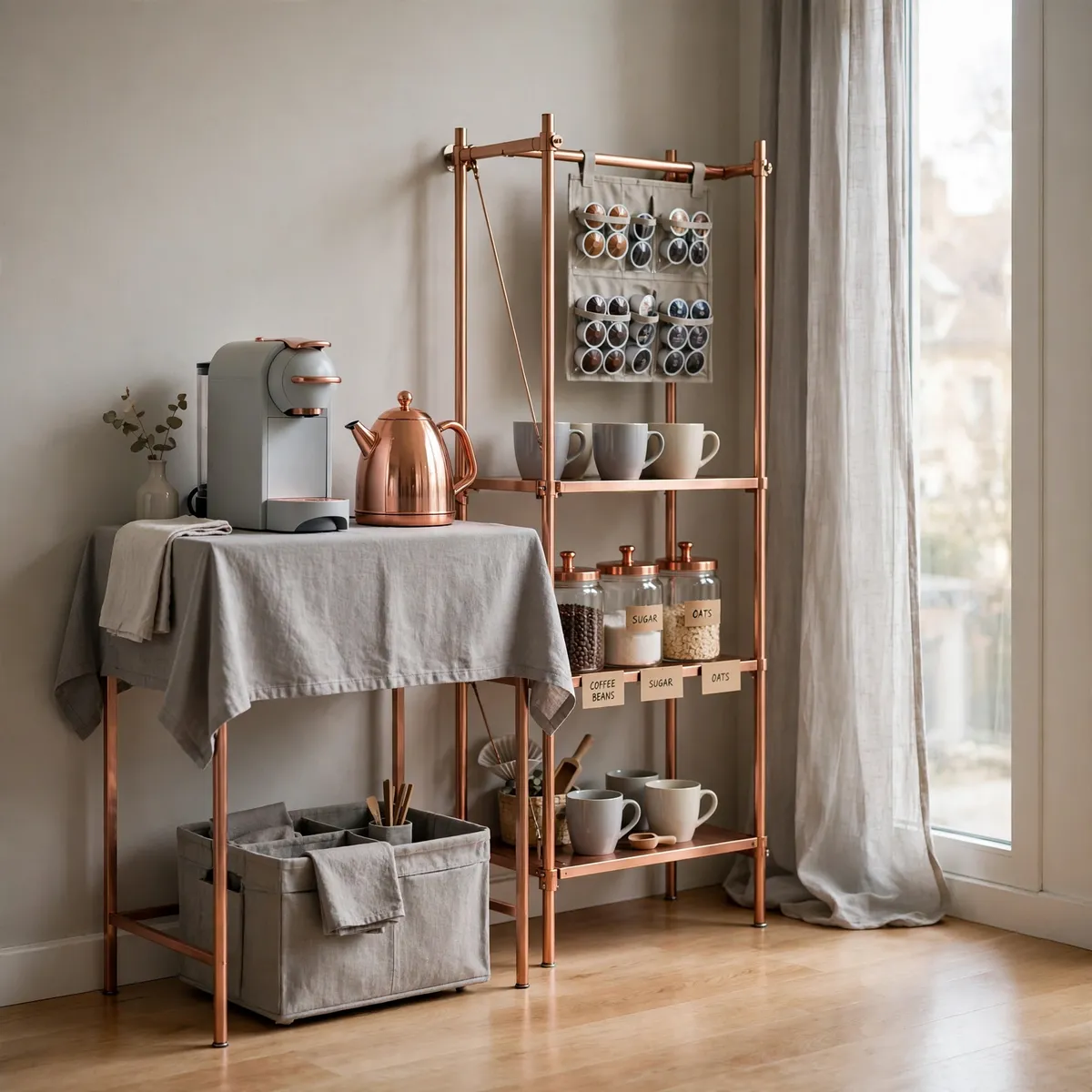
Renters get the full coffee bar experience with zero holes in the wall: a slim freestanding console or rolling cart as the base, a tension-pole or leaning shelf for vertical storage, and adhesive hooks for mug rails and pod organizers. The trick is weight discipline — freestanding furniture cannot take a heavy espresso machine, so this setup favors compact single-serve brewers, pour-overs, and French presses.
- Quick tips
- Tension shelves between floor and ceiling add a whole wall of storage with no drilling.
- Adhesive hooks hold mugs fine; skip them for anything heavier than a full large mug.
- Photograph the setup before move-out day — it is the easiest piece of furniture to recreate in the next place.
Frequently Asked Questions
How much space do I need for a coffee bar?
A workable minimum is about 24 inches wide by 12 inches deep for a compact brewer and a small tray, plus one shelf or wall rail above for mugs and canisters. A pod machine can shrink the footprint further, while a true espresso setup with a separate grinder needs 36 to 48 inches of counter. Leave 6 to 8 inches of clearance above the machine for steam and top-fill water tanks.
What should a coffee bar have?
At minimum: a brewer, mugs, coffee (beans, grounds, or pods), and storage for sweeteners and spoons. The upgrades that earn their place are airtight canisters for freshness, a tray with a lip to contain spills, and one personal extra — a milk frother, a gooseneck kettle, or your favorite syrups. For small spaces, stock only what you use daily and keep backup supplies elsewhere.
Where should I put a coffee station in a small kitchen?
The best spots are the ones that do not fight your cooking workflow: an underused corner of counter, the dead space beneath upper cabinets (with clearance for steam), an L-shaped corner, or a rolling cart parked beside the cabinets. Keep it near an outlet and away from the main prep zone so morning brewing and dinner prep never compete for the same square foot.
How do I make a coffee bar renter-friendly?
Keep everything freestanding or removable: a rolling cart or slim console as the base, a tension-pole or leaning shelf for vertical storage, and adhesive hooks or removable strips for mugs and pod organizers. Choose a compact brewer rather than a heavy espresso machine, and use trays to protect the landlord’s surfaces from rings and spills.
Which coffee maker is best for a small coffee bar?
Match the machine to the surface. Ultra-slim pod machines win on footprint and speed; a collapsible pour-over cone or French press wins on storability and needs no outlet; a compact espresso machine only makes sense with at least a foot of stable counter depth. For most small stations, a slim pod brewer plus a handheld milk frother covers nearly every drink.
Conclusion
A coffee bar works when it fits your space, your machine, and your actual morning routine — in that order. Pick the setup that matches the room you have, sort the practical details like clearance and cleanup before you style it, and keep only daily items on display. Do that, and the corner pays you back every single morning.