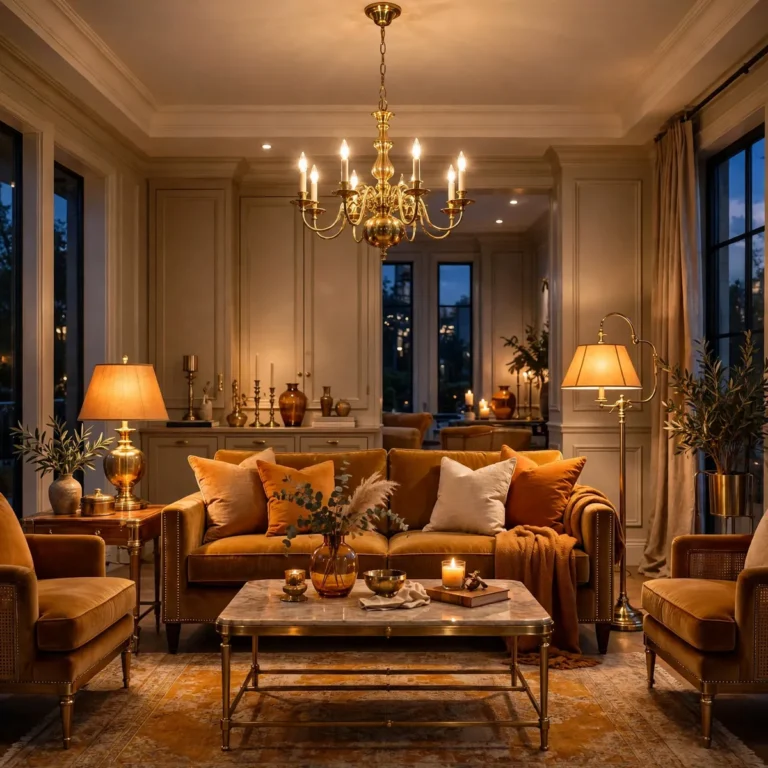
Sectional Sofa Decor Ideas: 12 Stunning Ways to Make Your Living Room Look Cozy, Expensive and Put Together
Sectional sofa decor ideas work best when you treat the sectional as the anchor of the room, not just a big seat. The right placement, rug, pillows, and lighting can turn a bulky corner sofa into the cosiest, most pulled-together spot in your home. Whether your sectional sits against a wall or floats in the middle of an open-plan living room, small styling choices make a huge difference. If you are working with a compact space, these small living room ideas pair beautifully with the tips below, because a sectional can actually save space when it is styled with intention instead of pushed into a corner and forgotten.
Key Takeaways
Where should a sectional sofa go? Against a wall in a small room to save space, or floated a few feet out in a larger room to create a walkway and a conversational layout.
What size rug goes under a sectional? A rug large enough for the front legs of every section to sit on it, usually 8×10 feet or larger for a standard sectional, so the seating area reads as one connected zone.
How many pillows should a sectional have? Five to seven pillows in mixed sizes, textures, and one or two accent colours is enough to look layered without swallowing the seats.
How do I make a plain sectional look expensive? Layer a textured throw, add one bold cushion colour, hang large-scale art above it, and finish with warm lighting and a solid coffee table or ottoman.
Can a sectional work in a small living room? Yes. Choose a low-profile, armless or slim-arm design, keep the palette light, and leave one side open so the room still feels airy.
1. Float Your Sectional Away From the Wall — When the Room Allows It
Pulling a sectional a few feet away from the wall instantly makes a living room feel designed rather than assembled. It creates a walkway behind the sofa, opens up the seating area, and lets the sectional define its own zone in an open-plan space.
Floating works best when you have at least 90 centimetres of clear space behind the sofa. That gap is enough for someone to pass comfortably without squeezing past the cushions.
For example, in a long open-plan room, place the sectional with its back to the dining area and a slim console table behind it. Add a lamp and books on the console, and the back of the sofa looks intentional.
Quick tips:
- Leave at least 90 cm behind a floated sectional for a comfortable walkway.
- Place a slim console table behind it to hide the back and add storage.
- Use the rug to mark the floated zone so the layout feels grounded.
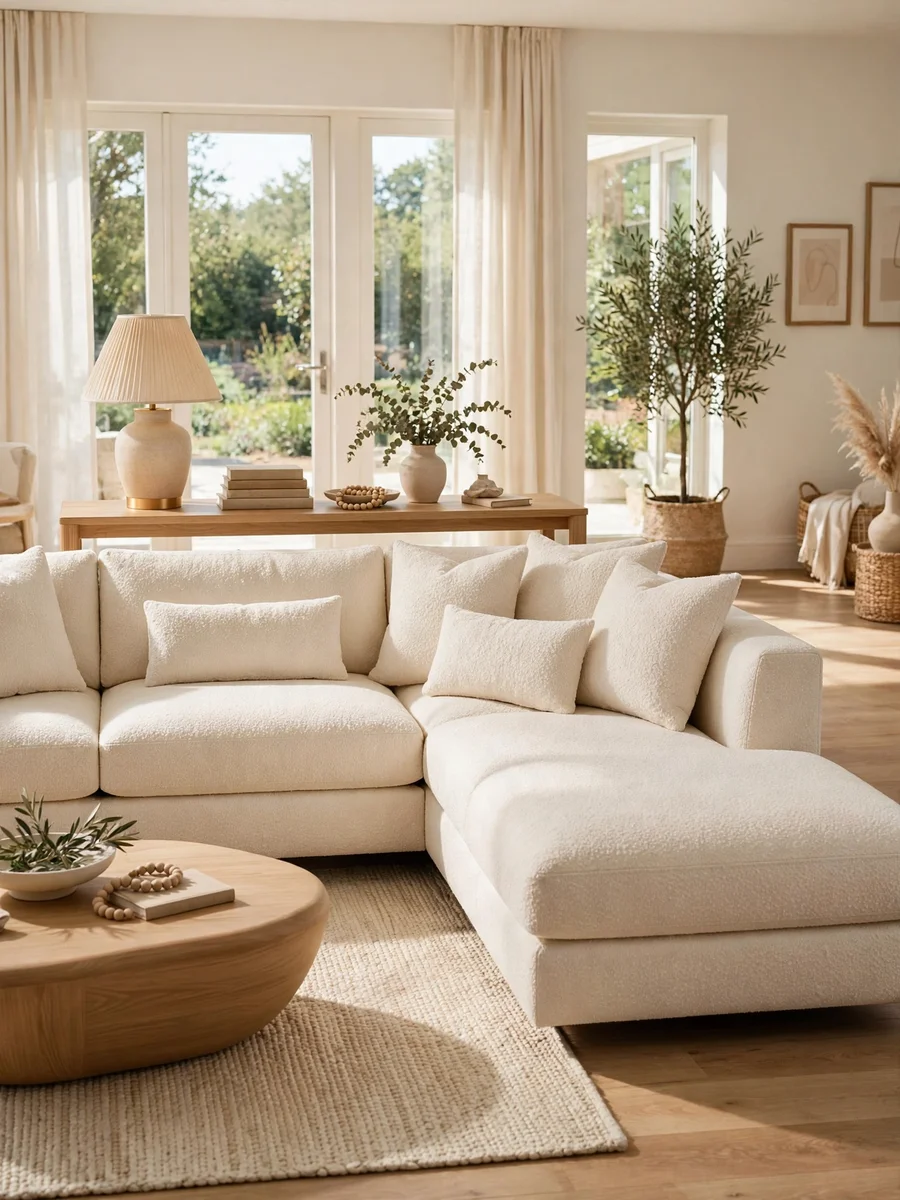
2. Anchor the Sectional With a Rug That Is Big Enough
A rug that is too small is the most common sectional styling mistake. The rug should be large enough for the front legs of every part of the sectional to rest on it, which usually means an 8×10-foot rug or bigger.
When the rug extends under the sectional, the sofa, coffee table, and chairs read as one connected seating group instead of separate pieces floating on bare floor. It also softens hard flooring and makes the whole arrangement feel warmer underfoot. For more guidance on sizes, patterns, and placement, these living room rug ideas show how the right rug can tie a whole seating area together.
For example, a light grey sectional on a warm cream rug looks calm and expensive, while the same sofa on a tiny rug looks lost.
Quick tips:
- Choose a rug at least 15 cm wider than the sectional on each side.
- Keep the rug’s longest edge parallel to the longest side of the sectional.
- Pick a low-pile rug if you have pets or children, so cleaning stays easy.
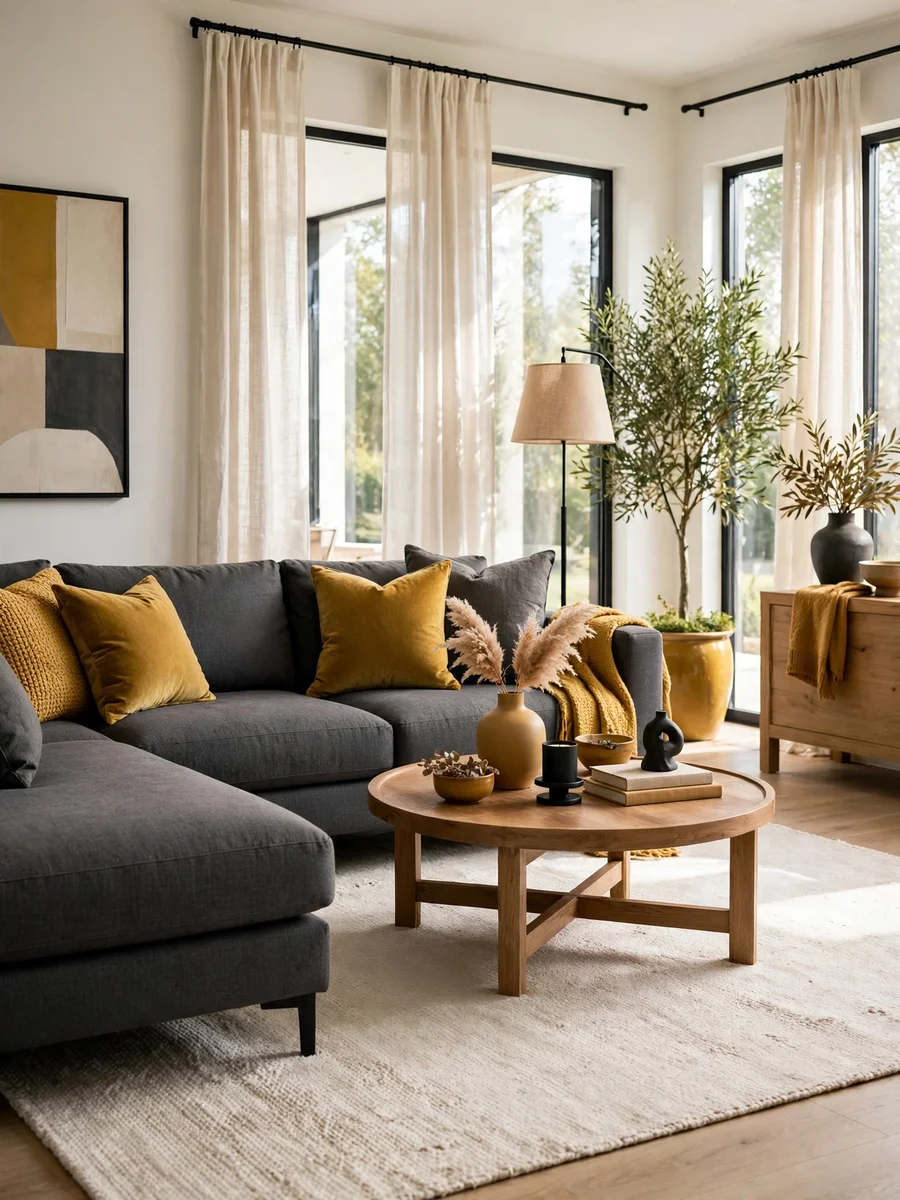
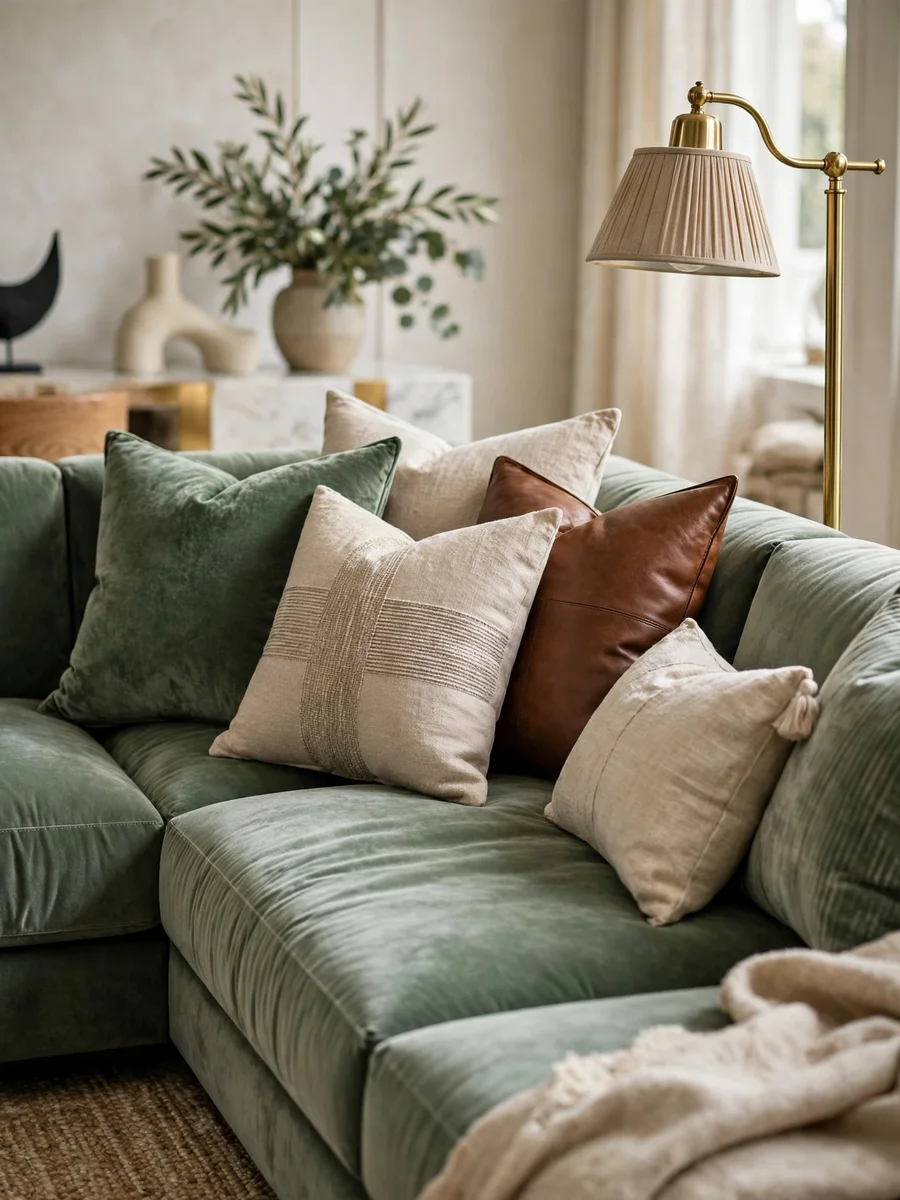
3. Layer Pillows in Mixed Sizes, Textures, and Colours
Pillows are the fastest way to change the look of a sectional without buying new furniture. Mix sizes, textures, and colours, but keep one colour repeated so the arrangement feels connected rather than random.
Start with two large square pillows in the corners, add two medium pillows in a contrasting texture, and finish with one small lumbar pillow in the middle.
For example, on a cream boucle sectional, try sage velvet pillows at the corners, striped linen pillows in the middle, and a small tan leather lumbar pillow.
Quick tips:
- Use odd numbers of pillows, five or seven, for a relaxed, styled look.
- Repeat one accent colour in at least two pillows to tie the mix together.
- Fluff and chop pillows daily so they keep their shape and look inviting.
4. Drape a Throw for Softness and a Lived-In Feel
A throw softens the straight lines of a sectional and makes it look instantly inviting. Drape it casually over one arm or fold it neatly over the back of the chaise, and the sofa stops looking like a showroom piece.
The best throws for a sectional are generous in size, because a small throw looks lost on such a large sofa. Chunky knits suit autumn and winter, while lightweight linen or cotton throws work through spring and summer.
For example, a mustard knitted throw over the arm of a charcoal sectional adds warmth, and it is right there for curling up with a book.
Quick tips:
- Choose a throw at least 130 x 180 cm so it drapes properly over a sectional.
- Fold it in thirds lengthways for a tidy look, or toss it loosely for a relaxed feel.
- Keep a second throw in a basket nearby so guests can help themselves.
5. Hang One Large Piece of Statement Art Above the Sectional
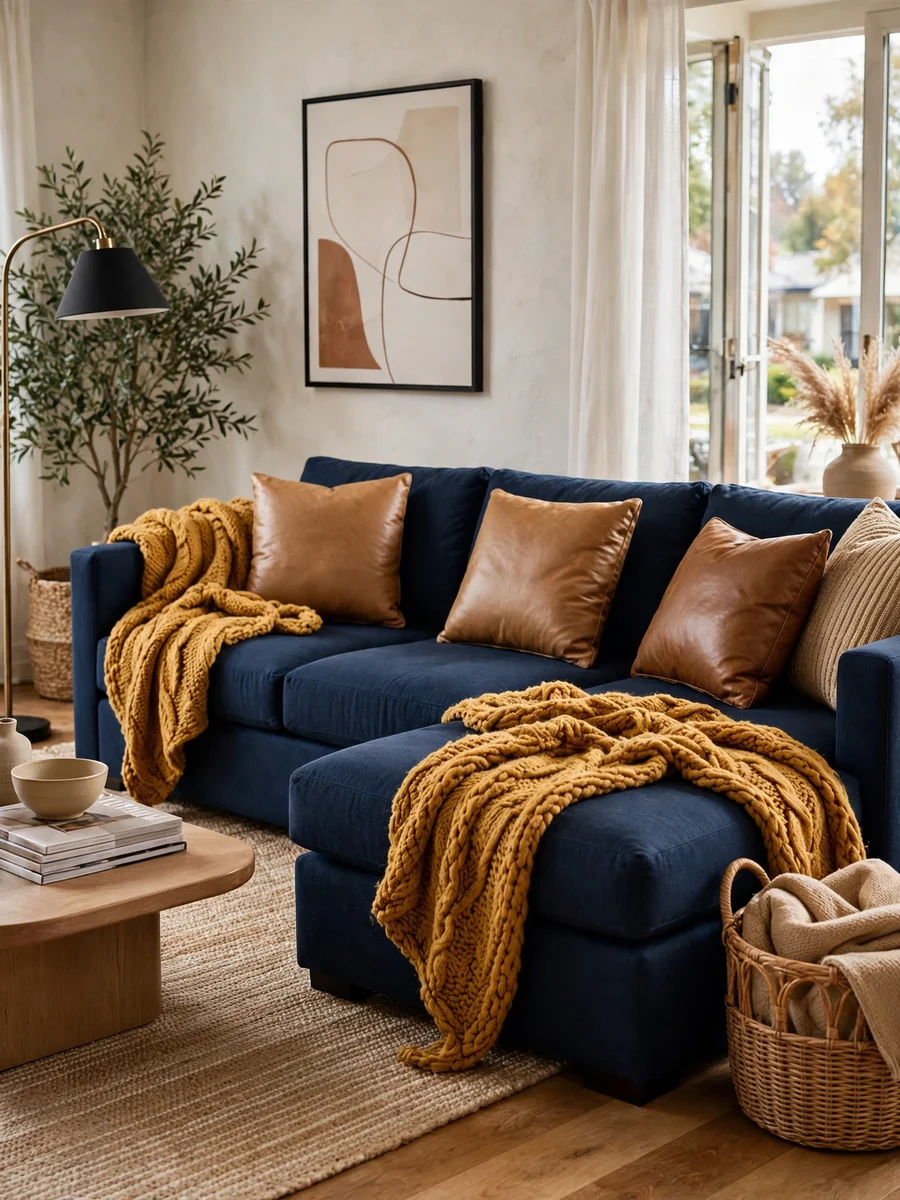
One large piece of art above a sectional does more than a gallery of small frames, because it matches the scale of the sofa. It gives the eye a focal point and stops the wall above the seating from feeling empty.
Hang the art so its centre sits roughly at eye level when you are seated, usually 15 to 20 centimetres above the back of the sofa. The artwork should span about two-thirds of the sectional’s width.
For example, above a navy sectional, a wide abstract canvas in warm tan, cream, and soft rust pulls the palette together.
Quick tips:
- Pick art about two-thirds as wide as the sectional for balanced proportions.
- Hang it 15 to 20 cm above the sofa back, not halfway up the wall.
- Echo one colour from the artwork in a pillow or throw below it.
6. Pair the Sectional With an Ottoman or a Solid Coffee Table
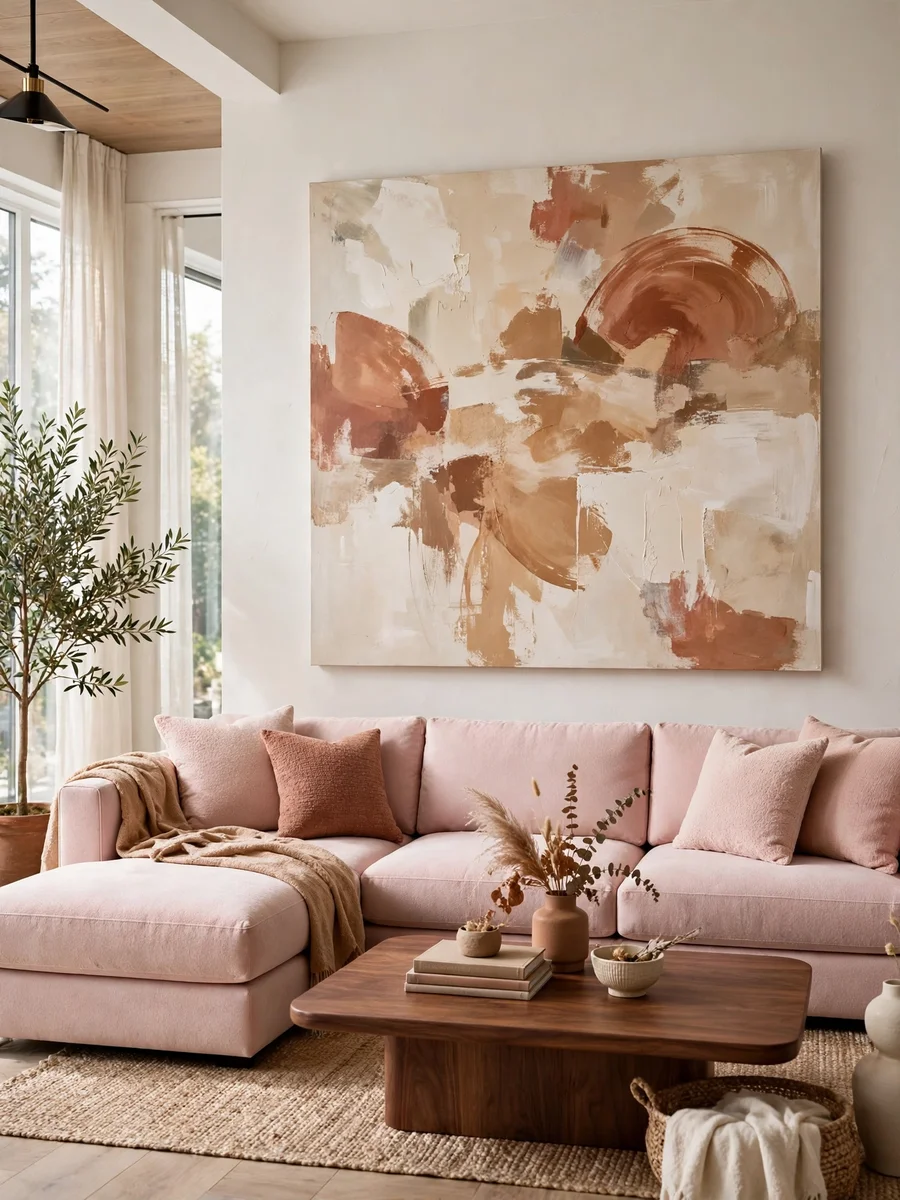
A sectional needs something in front of it, or the seating area feels unfinished. A coffee table gives you a surface for drinks and books, while an ottoman doubles as extra seating and a footrest.
A round or oval coffee table softens the straight edges of an L-shaped sectional and is easier to walk around in a tight room. A large upholstered ottoman, on the other hand, can be topped with a tray to hold drinks, then cleared when someone wants to put their feet up.
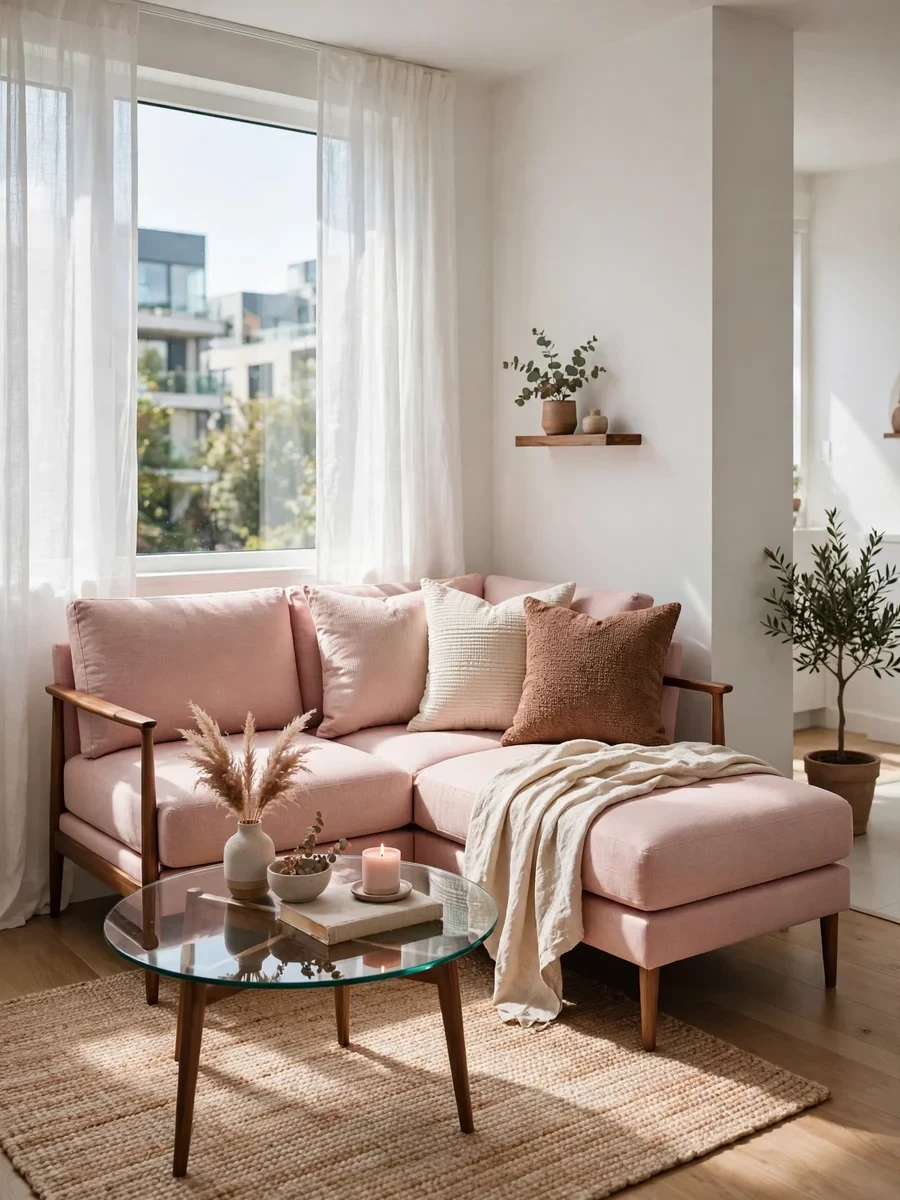
For example, a walnut oval coffee table in front of a blush sectional, styled with a vase, two books, and a candle, looks polished without feeling staged.
Quick tips:
- Leave 40 to 45 cm between the sectional and the table for comfortable legroom.
- Use a tray on an ottoman to create a stable surface for cups and glasses.
- Match the table’s finish to another wood tone already in the room.
7. Use the Modular Shape to Rearrange for Every Occasion
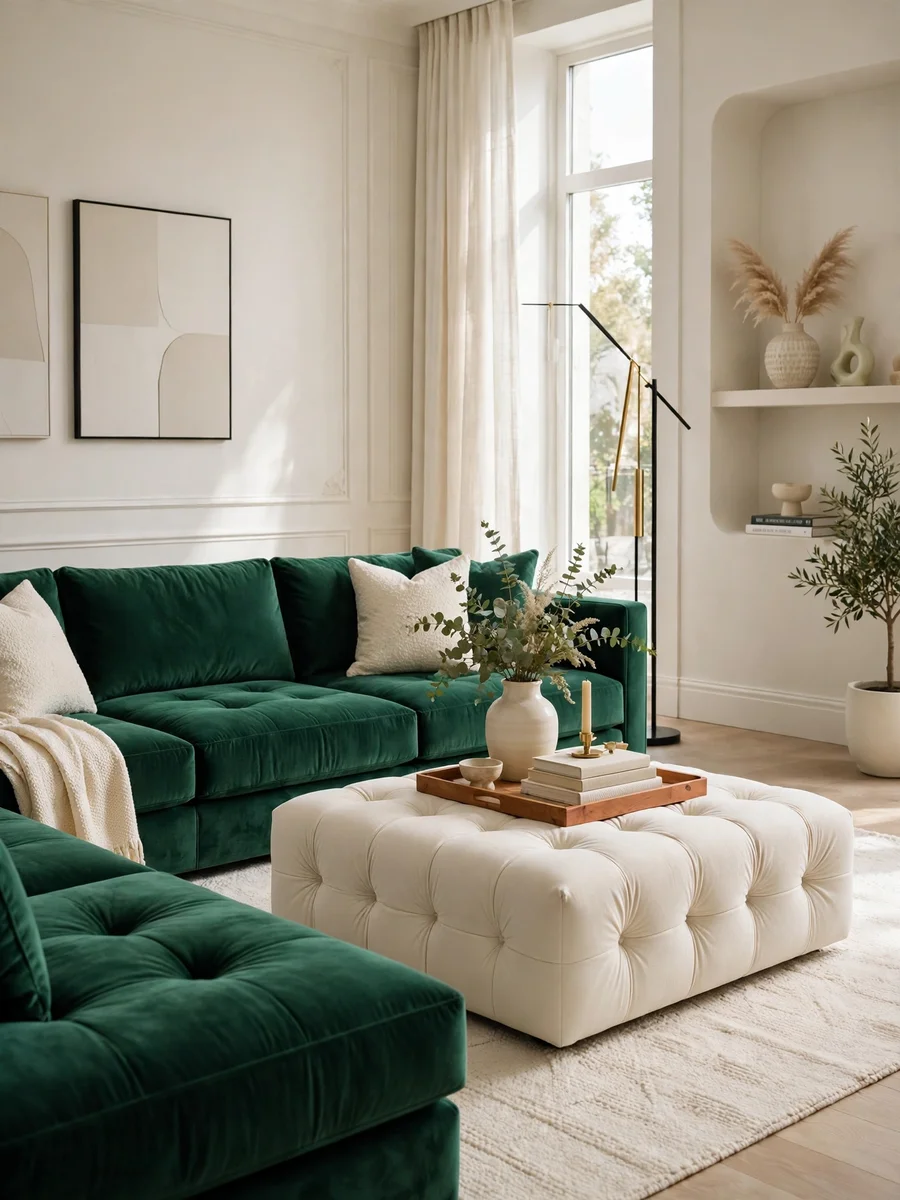
Many sectionals are modular, which means you can move the chaise, swap the corner piece, or split the sofa into two smaller sofas. That flexibility is one of the best reasons to own one, so use it instead of leaving the layout frozen for years.
For a film night, push the pieces together into a deep lounging corner. For a party, separate the chaise to create an extra seat near the drinks table.
For example, a family with a modular emerald sectional moves the chaise to the window in summer and back beside the fireplace in winter, and the room feels fresh each time.
Quick tips:
- Mark the floor lightly with tape when you find a layout you love, so you can return to it.
- Keep the heaviest piece against the wall and move the lighter pieces around it.
- Try a new arrangement at the change of seasons for an easy refresh.
8. Build a Colour Story Around a Neutral Sectional
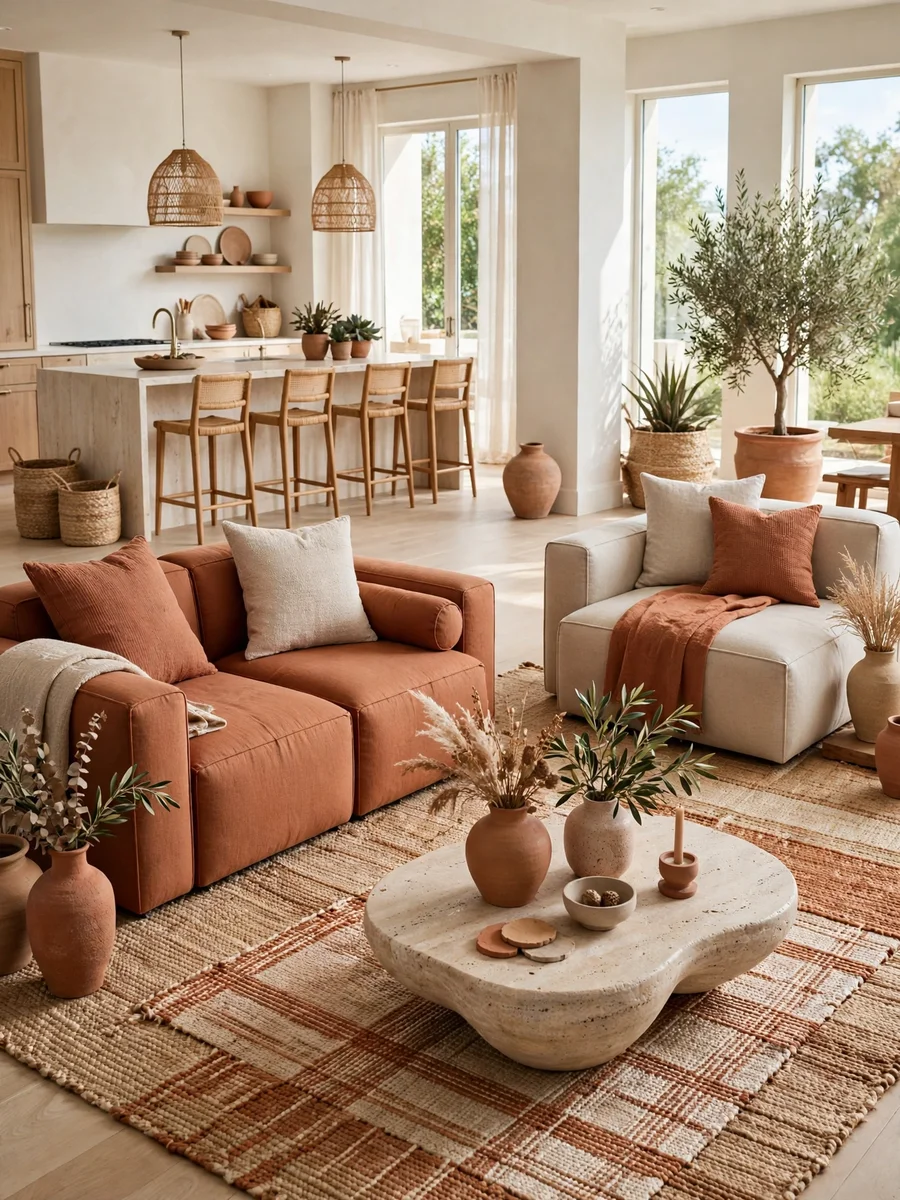
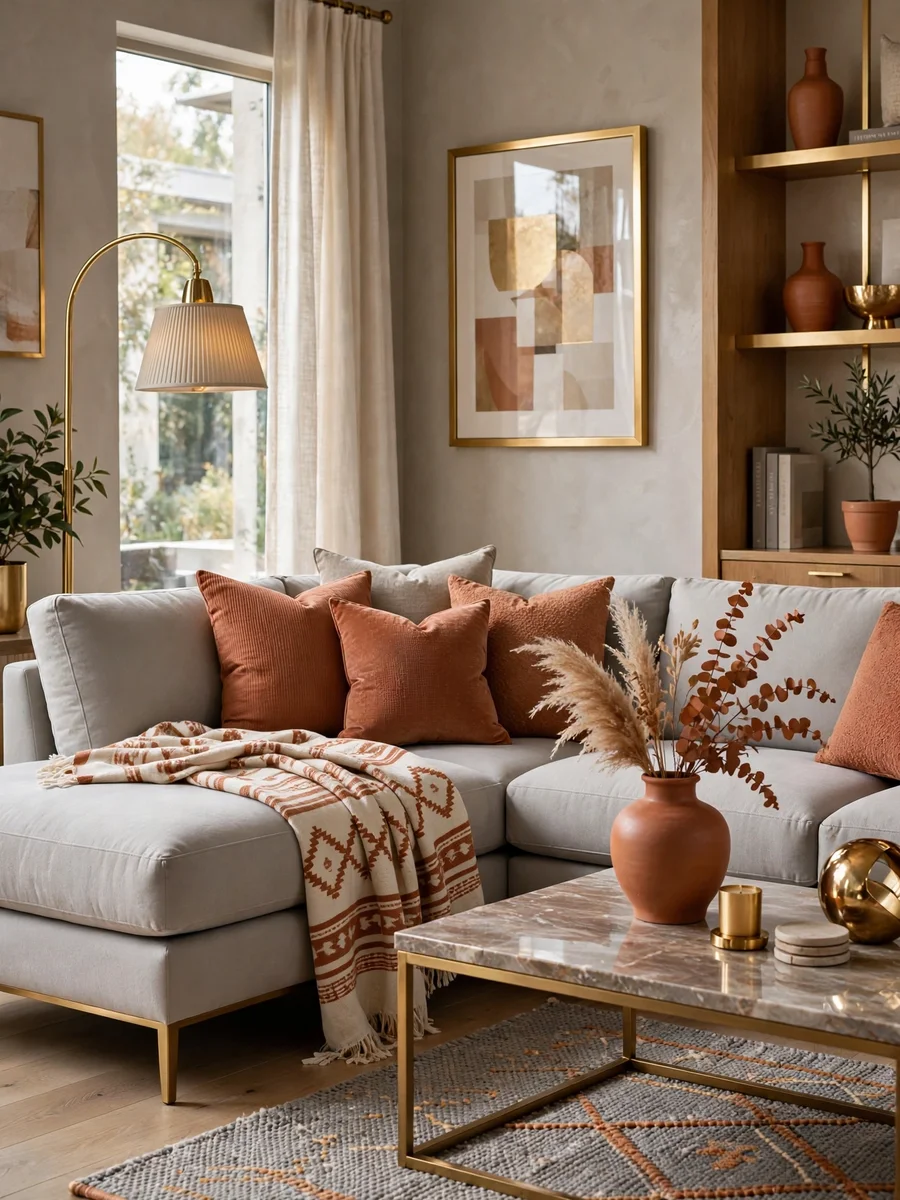
A neutral sectional in cream, grey, or beige is a blank canvas, and the colour story you build around it decides the whole mood of the room. Pick one main accent colour and one supporting colour, then repeat them in pillows, art, and accessories.
Warm accents like terracotta, mustard, and rust make a room feel cosy, while cool accents like sage, navy, and emerald feel calm and refined.
For example, a light grey sectional with terracotta pillows, a terracotta vase, and a cream-and-terracotta throw feels warm and cohesive.
Quick tips:
- Limit yourself to one main accent colour plus one supporting colour.
- Repeat each accent at least three times across the room.
- Let the sectional stay neutral so you can change the colour story cheaply later.
9. Layer Lighting Around the Sectional for Evening Comfort
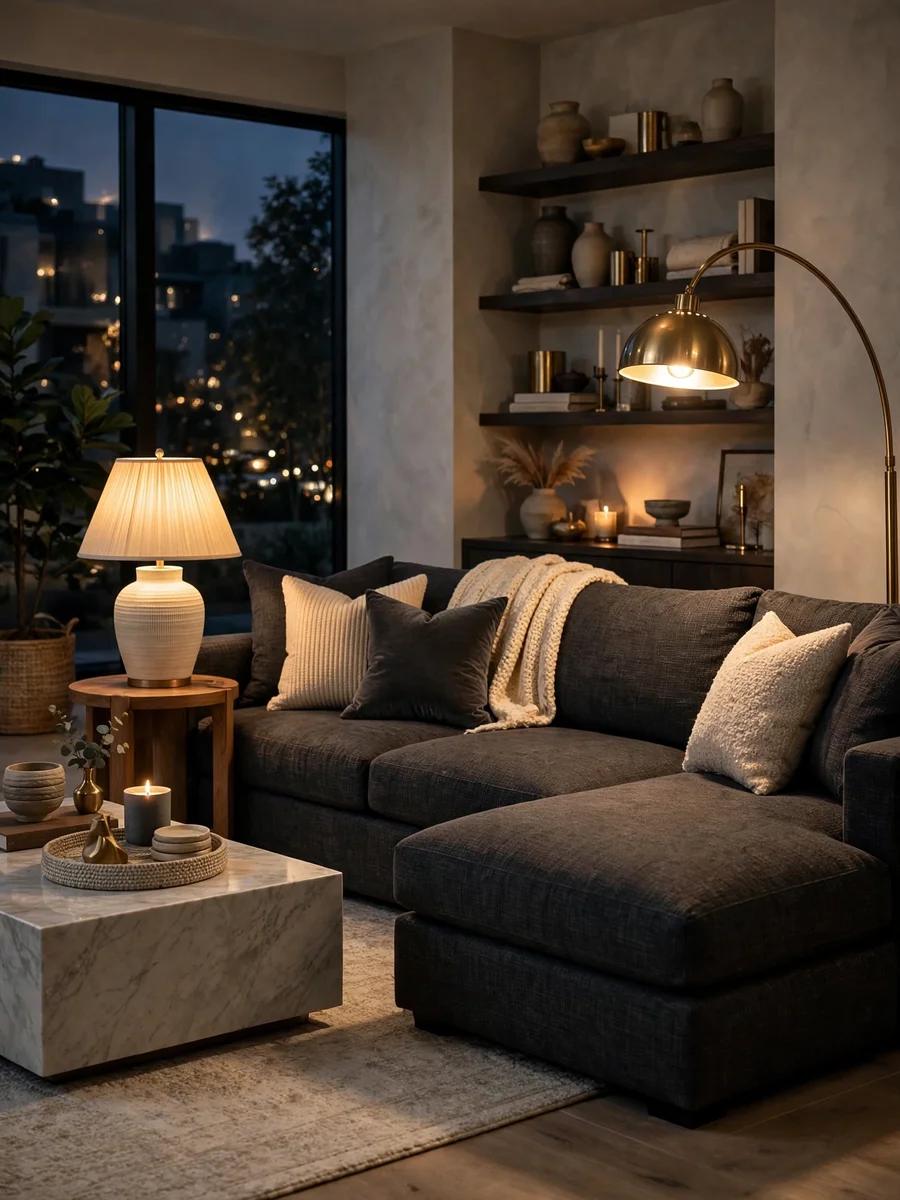
Overhead lighting alone makes a sectional look flat and a room feel cold. Layered lighting, a floor lamp behind one end, a table lamp on a side table, and a warm overhead light on a dimmer, turns the seating area into the cosiest corner of the house.
Place a tall arched or tripod floor lamp behind the corner of the sectional so the light falls over the seats without glaring in anyone’s eyes.
For example, a charcoal sectional with a brass floor lamp over the chaise and a ceramic table lamp glowing beside it feels like a hotel lounge after dark.
Quick tips:
- Use warm white bulbs, around 2700K, for a cosy evening atmosphere.
- Put the overhead light on a dimmer so you can soften it after dark.
- Place lamps at both ends of the sectional for balanced, even light.
10. Add Side Tables and Smart Storage at Each End
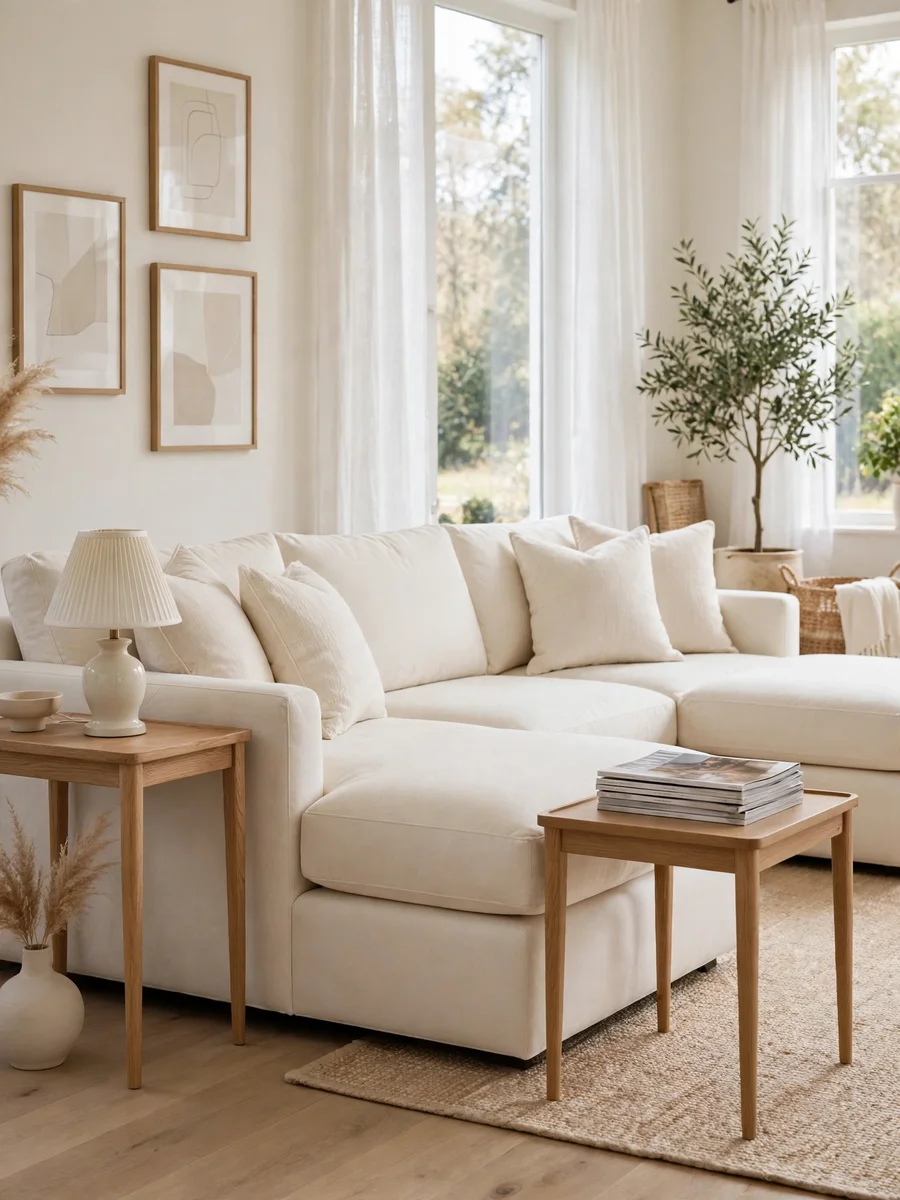
A sectional without a side table leaves everyone balancing a cup on the armrest. A slim side table at each end gives every seat a landing spot for a drink, a book, or a phone, and it frames the sofa beautifully.
Choose side tables that are roughly the same height as the armrests, so they look like part of the sofa rather than an afterthought.
For example, slim oak side tables, one holding a small lamp and the other magazines, make a long cream sectional feel complete.
Quick tips:
- Match side table height to the armrest height for a built-in look.
- Pick tables with a shelf or drawer to hide remotes and chargers.
- Keep one side table clear as a dedicated spot for drinks.
11. Bring in Greenery and Natural Texture for Balance
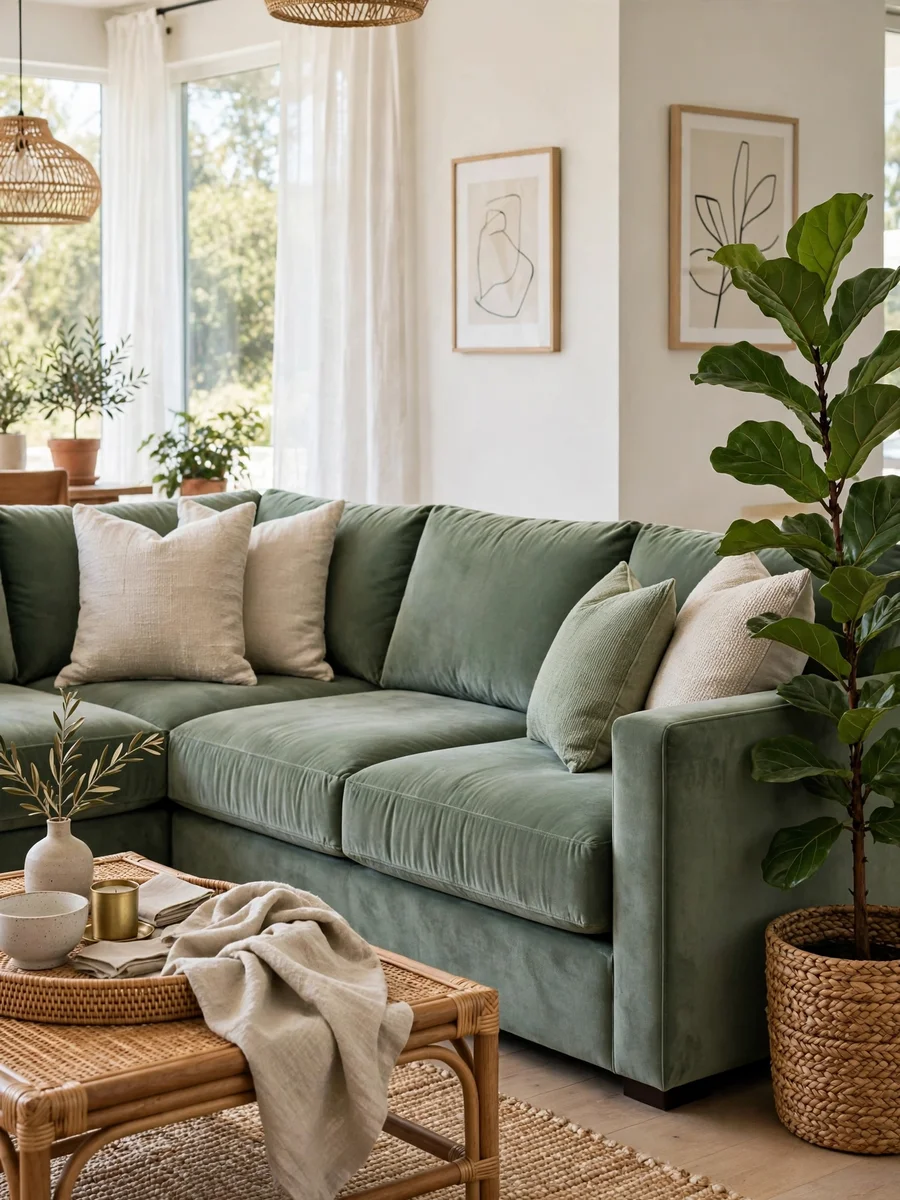
A large sectional can look heavy, and greenery is the simplest way to lighten it. A tall plant in the corner beside the sofa, a trailing plant on a side table, or a vase of fresh stems on the coffee table adds life and movement to the room.
Natural textures work the same way: rattan and linen soften the upholstery and stop the room from feeling too formal.
For example, a tall fiddle-leaf fig in a woven basket beside a sage velvet sectional makes the corner feel fresh and calm.
Quick tips:
- Choose one tall plant for the corner beside the sectional, not five small ones.
- Use a woven basket as a planter to add texture at floor level.
- Mix one natural texture, like rattan or jute, with soft upholstery for contrast.
12. Style a Sectional for a Small Living Room Without Crowding It
A sectional can work in a small living room if you choose the right scale and keep the styling light. Look for a low-profile design with slim arms, short legs that show a little floor underneath, and a chaise instead of a second full sofa section.
Keep the palette light and the pillows few, because dark, bulky styling closes a small room in. Leave one side open rather than boxing the sofa in with furniture on every side.
For example, a compact blush sectional in a small flat, styled with four pillows and a round glass coffee table, seats four comfortably and still feels open.
Quick tips:
- Choose a low-profile sectional with slim arms and visible legs.
- Keep the palette light and limit pillows to four or five.
- Use a round or glass coffee table to keep sightlines open.
FAQs
How do I decorate around a sectional sofa?
Start with a rug large enough to sit under the front legs, then add pillows, a throw, and one large piece of art above the sofa. Finish with a coffee table or ottoman and a floor lamp.
What colour pillows go with a grey sectional sofa?
Mustard, blush, sage green, and navy are the most reliable choices. Mustard and blush warm a grey sofa up, while sage and navy keep it calm. Pick one accent colour and repeat it in a throw or artwork.
Should a sectional be against the wall or in the middle of the room?
Against the wall in a small room, where it saves floor space and keeps walkways clear. In a larger or open-plan room, float it a few feet from the wall to create a separate seating zone and a walkway behind it.
What kind of coffee table goes with a sectional sofa?
A round or oval table suits an L-shaped sectional best, because it softens the corners and is easy to walk around. Choose one at seat height, about 40 to 45 cm from the sofa, and match its finish to another wood or metal tone in the room.
How do I make my sectional sofa look cosy?
Layer a chunky throw, add textured pillows in a warm accent colour, and use warm lighting from a floor lamp and a table lamp. A rug under the front legs and a soft ottoman for feet complete the cosy feeling.
Can I put a sectional sofa in front of a window?
Yes, as long as the back sits below the windowsill and does not block the light. A low-profile sectional works best, and sheer curtains on either side frame it nicely.
Conclusion
The best sectional sofa decor ideas all come back to one principle: let the sectional anchor the room, then soften and balance it with a generous rug, layered pillows and throws, one strong piece of art, and warm, layered light. Start with placement and the rug, add colour and texture a little at a time, and your sectional will stop being just a big sofa and become the favourite seat in the house.